Connect with us
DAPA Banner
DAPA Coin
DAPA
COIN PAYMENT ASSET
PRIVACY · BLOCKDAG · HOMOMORPHIC ENCRYPTION · RUST
ElGamal Encrypted MINE DAPA
🚫 GENESIS SOLD OUT
DAPAPAY COMING

NewsBeat

From gait analysis to fingerprint theft, how worried should we be about the latest advances in biometric technology?

Published

on

From gait analysis to fingerprint theft, how worried should we be about the latest advances in biometric technology?

You unlock your phone with your face, your fingerprint sends your laptop whirring into action, you pass airport security by glancing at a camera. Biometric technology has become so woven into the daily routine that for many people, it barely registers any more.

That invisibility is part of the point. These systems are usually fast, convenient and feel secure. Unlike a password, you can’t forget your face. But that doesn’t mean they are without risk.

Biometrics fall into two broad families: physiological (fingerprints, faces, irises, even nailbed patterns) and behavioural (how you walk or type, the rhythm of your speech, the angle you hold your phone).

Both forms are already being widely used – you just may not realise it. Many banks and retailers now monitor how you interact with your device – from swipes, taps and scrolls to the angle you hold your phone, the rhythm of how you move between fields, and the pressure of your touch. If someone else picks up your unlocked phone and tries to access your banking app, this can automatically trigger a fraud alert.

Advertisement

My research with colleagues even shows it’s possible to infer a user’s name and native language from the timing patterns of their keystrokes.

The graphic below shows the full extent of biometric technologies. Those marked dark green are in widespread commercial and government use today – including less-familiar examples such as the veins in your hand and other bodily vein patterns.

Physiological and behavioural biometric systems:

Advertisement

Biometric technology colour-coded by use status, from active to still in research.
Oli Buckley, CC BY

Gait analysis – reading how you walk – is already used for security and surveillance purposes, from venue access to detecting potentially suspicious behaviour. You can wear a mask, pull up a hood, avoid looking at a camera – but you can’t easily change how you walk.

China’s authorities have been using this technology for nearly a decade. And in 2023, the UK’s Biometrics and Forensic Ethics Group flagged gait recognition for ethical guidance. This is usually a sign that operational use isn’t far behind.

A number of other biometric technologies (marked light green), ranging from skin texture and ear shape to micro-expressions and hand-grip patterns, are being actively researched for use in the near future. A further group (marked red) have so far only been demonstrated in the laboratory. But even body odour and breath signatures are further along than their novelty might suggest.

What once felt like science fiction is now embedded in our everyday lives. You can’t always see this technology, and you can’t always opt out. But knowing it exists is the first step to understanding how much of yourself you’re already sharing.

Advertisement

V is for vulnerability

In April 2026, financial security expert Li Chang showed Chinese TV viewers how AI tools could extract a celebrity’s fingerprints from a single selfie. The culprit? The classic V-sign, finger pads pointed straight at the lens.

This built on work by Japan’s National Institute of Informatics which in 2017 showed that usable fingerprints could be lifted from photos taken up to three metres away. And phone camera technology has only got better since then.

In the UK, police have made at least two arrests based on fingerprints lifted from photos: one from a WhatsApp image of a hand holding ecstasy pills, the other when a drug dealer was identified from a photo of him holding a block of Stilton cheese.

This technology can work in the other direction too. In the Chinese city of Hangzhou in July 2025, criminals reportedly tried to unlock a smart door using a photo the homeowner had posted online with his fingers visible. The attempt failed but the intent was clear.

Advertisement

While this kind of targeted, technically demanding attack is still unusual, there are some precautions I would advise taking as the use of biometric technology grows.

China’s use of biometric surveillance technology explained. Video: The New York Times.

How to protect yourself

First, be selective about when you agree to share biometric data – fingerprints, face, iris, voice, all of it.

Most modern smartphones store biometric templates in a secure chip that never leaves the device. But third-party apps and workplace systems rarely offer the same guarantee.

Advertisement

In July 2024, US tech giant Meta paid the state of Texas US$1.4 billion (£1.1bn) after running facial recognition on users without consent. This followed a class-action settlement with TikTok’s parent company ByteDance in Illinois for US$92 million over similar allegations.

So, try to keep track of which apps have access to your camera and microphone. On both iOS and Android, this takes about two minutes. And don’t use biometrics as the only layer of security – make sure there’s a second step.

Three potential biometric weakpoints

Voice: This is probably the most casually surrendered biometric. AI voice cloning requires only seconds of audio to produce a convincing replica, and it’s being used in fraud calls impersonating family members. This is a far more realistic – and terrifying – version of the virtual kidnapping scam that’s been around for years. Establishing a safe word with the people closest to you for any unexpected financial request is a simple and underrated defence.

Eyes: Iris recognition is considered robust because this coloured eye muscle has around 250 measurable features – far more than a fingerprint – and remains stable throughout your life. But the quiet expansion of eye-tracking data collected through VR headsets, for example, is going unnoticed. Check the privacy settings on any VR device you use, and be aware that gaze data is increasingly treated as a commercial asset by platforms that collect it.

Advertisement

Fingerprints: Beyond being careful what you point at the camera, know where you’ve enrolled your fingerprint. Workplace access systems and payment terminals vary widely in how they store and protect data – and unlike your phone, they’re not legally required to tell you.

None of this means biometric systems are broken. For most purposes, they are more secure than the passwords they are replacing. The question is not whether to engage with these systems – they’re already too embedded to avoid. It’s whether we’re engaging with our eyes open – eyes that are, of course, already regularly being scanned.


Source link

Advertisement
Continue Reading
Click to comment

You must be logged in to post a comment Login

Leave a Reply

NewsBeat

French Open 2026 results: Naomi Osaka sparkles in golden ‘Eiffel Tower’ outfit in first-round win

Published

on

Naomi Osaka wears a gold sequined dress in the first round at the French Open

The outer black pieces were designed by Kevin Germanier, who is known for his sustainable approach to fashion, while the gold dress was custom made by Nike.

“Sometimes people say athletes are in show business or entertainers or whatever,” Osaka said.

“For me, Grand Slam walk-ons are the only time that I possibly feel like I’m an entertainer.”

At the Australian Open in January, Osaka made a statement entrance in a jellyfish-inspired outfit which she dedicated to her two-year-old daughter Shai.

Advertisement

Former British number one Annabel Croft said a lot of players “would not be able to live up to the expectation” of walking out in custom made outfits like Osaka’s.

“If you out there in an extraordinary outfit, you’ve got to live up to that and have the confidence to play in it and give the crowd the tennis as well as the outfit,” she said on BBC Radio 5 Sports Extra.

“Naomi can handle it. She really loves it and she’s not fazed by it.”

Since the birth of her daughter in 2023, Osaka has re-established herself in the world’s top 20 and she reached the semi-finals at the US Open in September.

Advertisement

The former world number one will face Croatia’s Donna Vekic in the next round.

Source link

Continue Reading

NewsBeat

Live weather maps: Where could thunderstorms hit UK after Met Office issue warning in record-breaking heatwave

Published

on

Live weather maps: Where could thunderstorms hit UK after Met Office issue warning in record-breaking heatwave

A yellow weather warning is in place across parts of England this evening as thunderstorms are expected to follow a record-breaking heatwave.

Forecasters declared a heatwave in multiple parts of the country on Tuesday, with amber heat health alerts issued in large swathes of England.

But the hot weather is expected to break on Tuesday evening, with the Met Office warning “isolated intense thunderstorms” could bring disruption to some places.

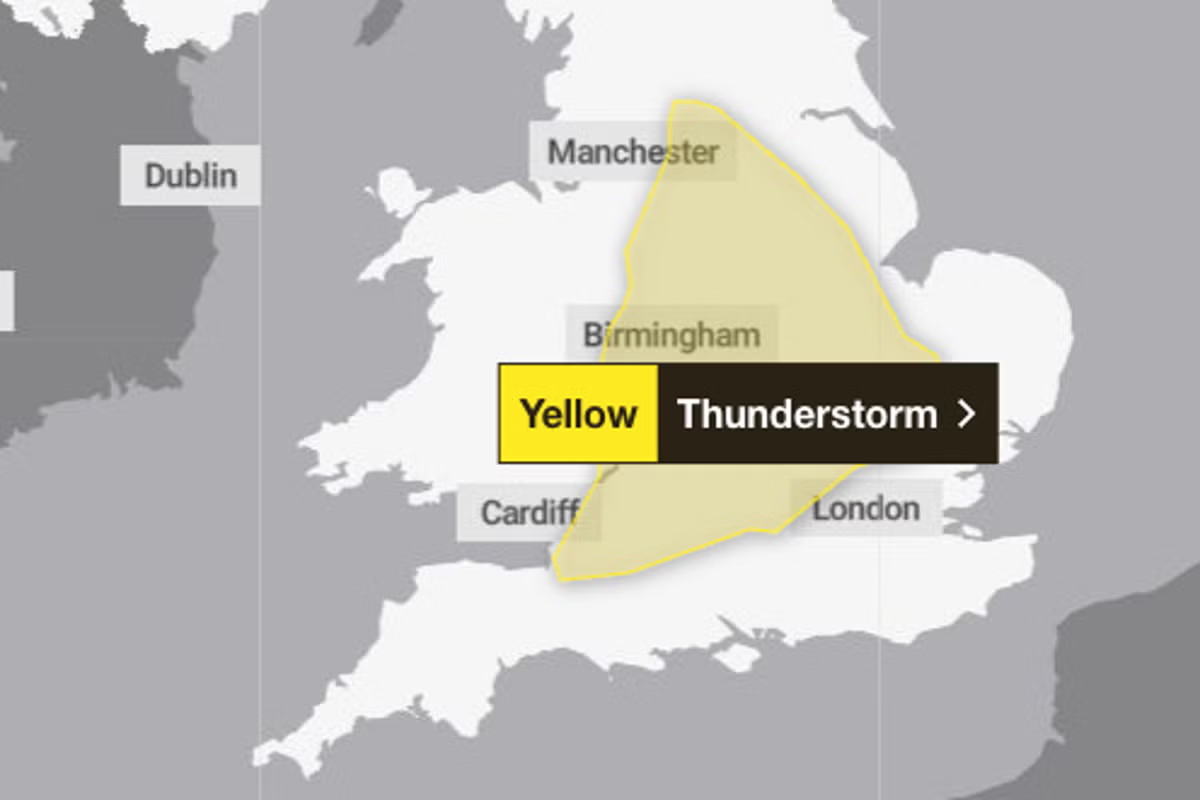
A yellow weather warning is in place until 10pm on Tuesday
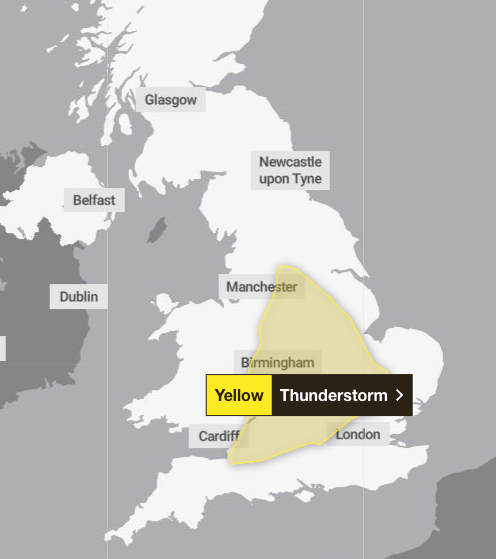
A yellow weather warning is in place until 10pm on Tuesday (Met Office)

The Met Office has issued a yellow weather warning for thunderstorms covering parts of the south west, the midlands, the north west of England, and Yorkshire and the Humber. The warning came into force at 3pm and is in place until 10pm on Tuesday.

Forecasters said there is a chance of delays and some cancellations to train and bus services in areas where storms occur.

Advertisement

Temperatures reached 35C at Kew Gardens in London, breaking the highest minimum temperature in May for a third consecutive day. The figure also provisionally marks a new all-time hottest meteorological spring temperature, beating the record set on Monday.

The health warnings mean there is likely to be a “significant” impact on health and social services, and a rise in deaths, with alerts in place until 5pm on 27 May.

Met Office Chief Forecaster Andy Page said: “The exceptional late-spring heat is set to continue for much of this week.

“Last night provisionally recorded the warmest May night on record, and we’re likely to see further very warm nights in the south over the coming days. There is a chance a few places will experience a ‘tropical night’ in the south of England and in Wales tonight, which is where temperatures don’t fall below 20°C.

Advertisement

“While many places will stay dry and sunny, the heat and humidity mean that a few isolated thunderstorms have developed with more possibly developing later today, particularly across parts of England. Looking further ahead, the focus for the highest temperatures will shift westwards on Wednesday, with northern areas feeling more of the warmth on Thursday.

“We’ll then see a gradual change later in the week, with temperatures easing slightly, though still above average, before a more marked change to near-normal temperatures by Sunday and an increased chance of showers and some longer spells of rain.”

A heatwave has been declared in eight locations in southeast England, which have now met the threshold of 27C for three consecutive days of hot weather.

The Met Office listed 12 locations where the record was topped on Monday – ranging from Suffolk to Berkshire to Warwickshire – while 97 of its monitoring sites reached or surpassed 30C.

Advertisement

The UK’s previous warmest May night was measured on Sunday when temperatures did not fall below 19.4C at Kenley Airfield.

Those forecasts span the Midlands, the south-east and south-west of England, East Anglia and South Wales.

Here’s what the weather authority has forecast over the coming days:

Advertisement

Tuesday

Another very hot day across much of England and Wales with strong sunshine. Fresher across northern areas with sunny spells. A yellow weather warning is in place for thunderstorms until 10pm across much of England.

Wednesday

Dry on Wednesday with sunny spells for many. Cloudier in the northeast but some bright spells slowly developing. Very warm in the southwest, but feeling fresher elsewhere.

Advertisement

Thursday to Saturday

Staying hot across parts of the south through the next few days. A risk of a few thundery showers at times, but largely dry for many.

Source link

Advertisement
Continue Reading

NewsBeat

‘Relentless’ man threw brick through ex-partner’s window

Published

on

Cambridgeshire Live

The 44-year-old man visited his ex-girlfriend’s house on multiple occasions, despite having a restraining order

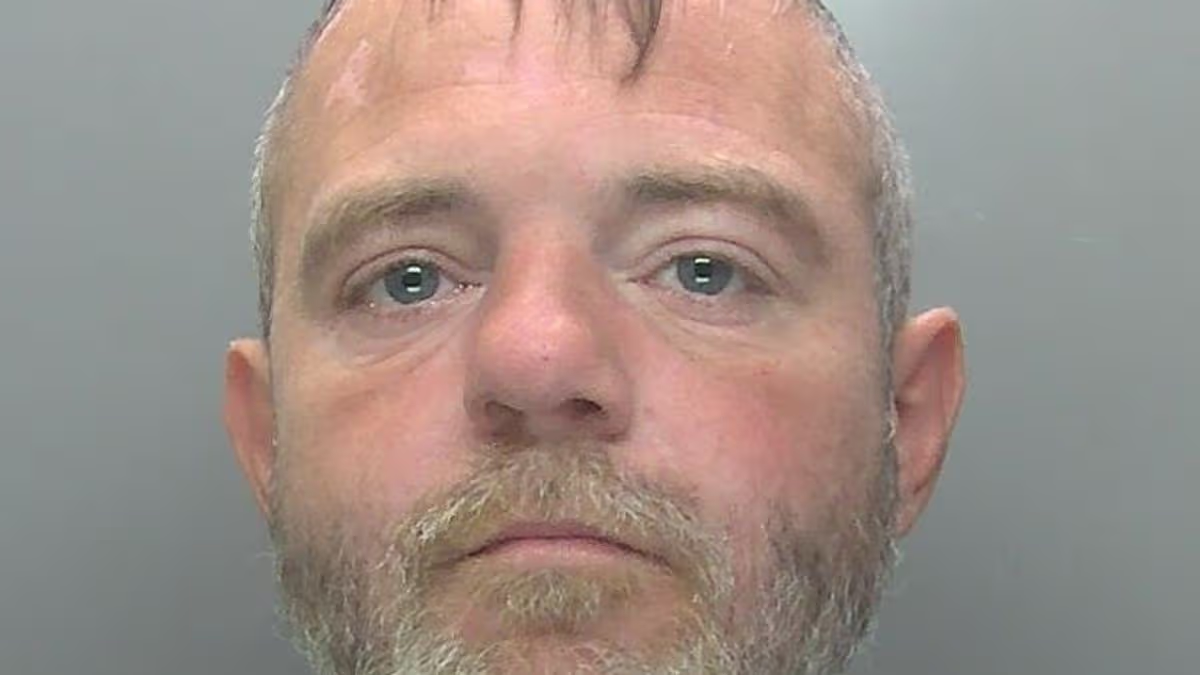
A man broke the window of his ex-girlfriend’s home, despite her having a restraining order against him. Curtis Saunderson, 44, was handed a restraining order in December 2025, banning him from contacting his ex-girlfriend and visiting her home in Peterborough until May 2027.

Advertisement

However, between April 21 and May 19 of this year, Saunderson breached his order by making multiple attempts to contact her by phone and turned up at her house on different occasions.

During one of these visits, Saunderson was caught on a video doorbell using a concrete tile to break the victim’s front windows. Cambridgeshire Police arrested him on May 20 and charged him with criminal damage and five counts of harassment.

Saunderson, of no fixed address, was jailed for 56 weeks and ordered to pay £250 in compensation after admitting the offences at Cambridge Magistrates’ Court on Friday (May 22). This included the activation of a six-week suspended sentence he received for theft offences in April.

Detective Sergeant Louis Scott said: “Saunderson’s relentless attempts to contact the victim showed his disregard for the previous court orders. I would like to thank the victim for her ongoing cooperation and bravery for reporting this harassment.”

Advertisement

Source link

Continue Reading

NewsBeat

Government online safety plan announcement in ‘weeks, not months’, parents told

Published

on

Government online safety plan announcement in ‘weeks, not months’, parents told

(Left to right) Bereaved parents Liam Walsh, Lorin LaFave, Mariano Janin, Ellen Roome, Lisa Kenevan, Ruth Moss, and Stuart Stephens speak to the media in Downing Street, central London, following their meeting with Prime Minister Sir Keir Starmer (Stefan Rousseau/PA)

PA Wire

Source link

Continue Reading

NewsBeat

How a remarkable trial on bedrest during the Korean war helped lead to evidence-based medicine

Published

on

How a remarkable trial on bedrest during the Korean war helped lead to evidence-based medicine

In 1959, a young doctor named David Sackett stumbled on a clinical trial that would change his life – and most of ours. The study showed that conventional wisdom on bed rest in medicine was wrong. And it helped lead Sackett and others to develop evidence-based medicine, in which doctors today make decisions based on rigorous scientific research.

It was a necessary corrective. The history of medicine is littered with practices once assumed to work but which were later shown by research to be useless or harmful – as I discovered in the five years it took me to research my book, Beyond Belief: How Evidence Shows What Really Works.

Sackett was a precocious young doctor in his final year of medical school at Cook County Hospital in Chicago, when he noticed something odd. Most medical advice was based on received wisdom or the opinion of the most senior doctor in the room (an approach now called eminence-based medicine). This was unsatisfying to Sackett, who realised he lacked the information to determine which treatments worked best for his patients.

Then, one day, a teenager set Sackett on a new path. The adolescent had an enlarged liver as a result of infectious hepatitis, which Sackett later ascribed to hepatitis A. Back then, everyone thought that a patient with hepatitis must be kept resting in bed until the liver returned to normal. It was conventional wisdom, and no one really questioned why.

Advertisement

But Sackett’s patient did question why. He felt energetic after a few days, and he demanded to get up. Soon, a battle was raging between an increasingly sulky adolescent and a stubborn doctor who predicted permanent liver damage if the young man dared to get out of bed.

Seeking more information, Sackett went to the library and started scouring medical journals. Here, he found the remarkable bed rest trial. It had been published in 1955 by Thomas Chalmers, a doctor and pioneer in clinical trials.

In the early 1950s, during the
Korean war, Chalmers was based at a US army hospital in Kyoto, Japan. The US military used Japan as a base for treating soldiers evacuated from the front, and the hospital was dealing with a big outbreak of infectious hepatitis among its patients.

Strictly enforced bed rest meant that soldiers were in hospital for about two months, creating a drain on the army. So Chalmers decided to test whether resting this long was necessary using a randomised controlled trial – an unusual experiment at the time.

Advertisement
The idea came to Chalmers during the Korean war.
Wikimedia Commons

Chalmers identified men with similar hepatitis symptoms and then randomly assigned them to one of two groups. In one group, men were kept to strict bed rest – so strict, in fact, that they were allowed only one trip to the latrine each day and a once-weekly shower. Men in the other group were prescribed “ad lib rest”, which meant that they could do largely what they wanted as long as their boisterousness didn’t break the ward rules.

The results of this trial showed that the men recovered just as quickly when they were active as when they were confined to bed. Chalmers recommended that hepatitis patients should be allowed to get up earlier – presumably a relief for hundreds of restless soldiers. In 1955, Chalmers also wrote up his findings in one of the most detailed clinical trial reports ever published, at 73 pages long.

As Sackett read this epic paper in the Chicago library, he immediately saw that conventional wisdom on hepatitis treatment was wrong. He convinced his supervisors to let the bedbound teenager get up – and sure enough, the patient recovered just fine. But the incident left a bigger mark on Sackett. It showed him that other standard practices in medicine could be wrong too, and that randomised trials had the power to show which ones had a beneficial effect.

In the short term, this meant that Sackett became a self-professed troublemaker. Now, when senior doctors told him to treat patients because of conventional wisdom, he challenged what they said. He became notorious for interrupting senior doctors whenever they were pontificating about what to do.

Advertisement

But the aftershocks were greater than this. A few years later, Sackett joined the newly established medical school at McMaster University in Ontario, Canada. Here, he and his colleagues started teaching student doctors to solve problems using evidence from research – such as randomised trials – rather than just doing what eminent physicians said.

This approach eventually became known as evidence-based medicine, a term first published in the medical literature in 1991.

Within a decade, the principles had been integrated into medical teaching all over the world. By 2014, evidence-based medicine had been called one of modern medicine’s greatest intellectual achievements – ranked alongside sanitation, antibiotics and vaccines.

A lesson we keep forgetting

Today, it seems obvious that doctors should base their decisions on rigorous scientific evidence. It is remarkable – and not widely known outside academia – that evidence-based medicine is such a recent phenomenon, which is one reason I wanted to write my book. By helping spark this change, the bed rest trial has indirectly benefited everyone who has received modern medical treatment.

Advertisement

Of course, evidence-based medicine is imperfect and rightly continues to evolve. Evidence is often complex, flawed and contradictory, and new studies can come along that overturn existing ideas. But it can help people do more of what works and less of what doesn’t. It’s a hard-earned lesson we shouldn’t forget.

This article features references to books that have been included for editorial reasons, and may contain links to bookshop.org. If you click on one of the links and go on to buy something, The Conversation UK may earn a commission.

Source link

Advertisement
Continue Reading

NewsBeat

Donald Trump discharged after biannual health check saying ‘everything checked out perfectly’

Published

on

Daily Record

Donald Trump has been discharged from Walter Reed Military Medical Center after a routine presidential health check

Donald Trump has left his biannual check-up declaring it went “perfectly”, thanking medical staff for their care.

On Truth Social, the US President posted: “Just finished my 6 month physical at Walter Reed Military Medical Center. Everything checked out PERFECTLY. Thank you to the great Doctors and Staff! Heading back to the White House. President DJT”.

Advertisement

This marked the fourth occasion Trump has publicly revealed details of a medical examination since beginning his second term in office. The divisive American leader, who turns 80 next month, attended Walter Reed National Military Medical Center on Tuesday (May 26).

The White House has reportedly maintained it was standard “preventive healthcare” as scrutiny over his wellbeing has grown.

“The visit will include the president’s routine annual dental and medical assessments as part of his regular preventive healthcare,” the White House confirmed on May 11.

This follows Trump’s consistent dismissal of worries regarding his age and fitness, referencing past test outcomes that he described as “perfect”, reports the Daily Star.

Advertisement

According to Forbes, Trump recently informed reporters: “I feel the same as I did 50 years ago. It’s crazy. I know many people that all they do is watch their weight… and then they kick the bucket. And here we are, I feel great.”

Earlier this month, he also stated in the Oval Office: “My health is perfect.”

In January, Trump told The Wall Street Journal: “I will know when I am ‘slowing up,’ but it’s not now!”

Advertisement

The appointment marked his third scheduled trip to Walter Reed in roughly 13 months and his fourth publicly revealed medical assessment since re-entering the White House. The White House physician, Dr Sean Barbabella, has stated Trump is in “excellent health” and “fully fit” to serve.

Following an examination in October 2025, Dr Barbabella also purportedly said that the president demonstrated “strong cardiovascular, pulmonary, neurological, and physical performance”. Trump has additionally maintained he “aced” cognitive tests during his assessments, frequently drawing comparisons with Joe Biden.

In July 2025, the White House confirmed Trump had been diagnosed with chronic venous insufficiency, a widespread condition associated with blood pooling and swelling in the legs. Photographers have likewise repeatedly documented noticeable bruising on his hands, which Dr Barbabella has put down to regular handshaking coupled with a daily 325mg aspirin dose taken for cardiac prevention.

Critics have similarly highlighted occasions where Trump seemed to doze off or “rest his eyes” during official engagements. Concerns have broadened to include mental sharpness.

Advertisement

Earlier this month, a group of 30 psychiatrists and doctors signed a statement in the British Medical Journal describing Trump as “mentally unfit”, citing alleged “deterioration in cognitive functioning” and “impaired judgment”. Despite this, a 2025 memo claimed Trump’s “cardiac age” was 65, some 14 years younger than his actual age at the time, while reports have indicated he has shed around 20lbs (9kg) since 2020 — something his team has attributed to an “active lifestyle”.

Ensure our latest stories always appear at the top of your Google Search by making us a Preferred Source. Click here to activate or add us as your Preferred Source in your Google search settings.

Source link

Advertisement
Continue Reading

NewsBeat

Burglar caught emerging from roof of shop tells cops: ‘I did it. You caught me bang to rights’

Published

on

Belfast Live

In a holdall was £580 worth of cigarettes and vapes along with cash and coins totalling just over £60

A West Belfast man caught red-handed breaking into a convenience store was today jailed for nine months.

Advertisement

Judge Mark Reel told Conor Martin Gallagher that he will spend a further nine months on supervised licence on his release from custody.

The 38-year-old, formerly of Cherry Park in Dunmurry, had previously pleaded guilty to a single charge of burglary of a non-dwelling with intent to steal.

Belfast Crown Court heard police received a report of a break-in at Jack’s Convenience Store at Broom Park in Dunmurry at around 1.30am on Monday, June 9, 2025.

The report said a man was seen scaling the wall of the shop and climbing on to the roof. Prosecution barrister Gareth Purvis said police attended the scene and noticed the shop’s silent alarm had been activated.

Advertisement

He said a hole had been made in the roof after a number tiles had been removed, thrown to the ground and smashed. He was arrested for the offence of burglary and later told police in an unsolicited comment: ‘I did it. You caught me bang to rights

Mr Purvis said: “Shortly afterwards a male was observed exiting through the hole in the roof carrying a black and pink holdall. He attempted to evade arrest by jumping on to the roof of another building. After a short stand-off, he surrendered.

“He was noted to be wearing black trousers, a white hoodie, a black body warmer and a single glove.”

In the holdall was £580 worth of cigarettes and vapes along with cash and coins totalling just over £60. The court heard it cost the shopkeeper £150 to replace the drawer on the till.

Advertisement

Asked by Judge Reel how much damage was caused during the break-in, Mr Purvis said he didn’t have an exact figure but it was “significant”, the place was in “disarray”, the main roof required re-plastering and the electrics on the shutters had been destroyed.

It was the second time in the space of two months that the shop had been targeted for burglary, the court was told.

During police interviews, Gallagher said he didn’t want legal representation and made full admissions to the burglary.

The court heard Gallagher has 34 convictions on his criminal record, including three for burglary. He is currently serving a sentence in Magilligan Prison for a previous burglary offence.

Advertisement

Judge Reel said: “For the defendant, this may have looked like a simple offence of modest enough value, but his actions caused great difficulty and expense for the victim.

“He clearly thought nothing of those whose livelihoods and businesses he was damaging. And this is the reason why significant custodial sentences are appropriate for this offence.”

Imposing an 18-month determinate custodial sentence, the judge told Gallagher: “Your offending is so serious that neither a fine nor a community sentence could be justified and only immediate custody is appropriate.”

For all the latest news, visit the Belfast Live homepage here and sign up to our daily newsletter here.

Advertisement

Source link

Continue Reading

NewsBeat

Group stuck in lift at St Nicholas Cliff, Scarborough

Published

on

Guttering is removed from Vernon Road in Scarborough

As a subscriber, you are shown 80% less display advertising when reading our
articles.

Those ads you do see are predominantly from local businesses promoting local
services
.

These adverts enable local businesses to get in front of their target audience – the local
community
.

It is important that we continue to promote these adverts as our local businesses need
as much support as possible during these challenging times.

Advertisement

Source link

Advertisement
Continue Reading

NewsBeat

Three men suffer serious injuries after racial assault on Helen’s Bay beach

Published

on

Belfast Live

Three men aged 21, 23 and 28 were arrested following the incident after being stopped in a vehicle.

Three men suffered serious injuries following an assault on Helen’s Bay beach which police are treating as a racially-motivated hate crime.

The incident took place on Monday May 25 at around 9pm on the popular North Down beach and allegedly involved three men in their 30s being assaulted by three men in their 20s following a verbal altercation. The victims suffered serious injuries in the attack.

Three men aged 21, 23 and 28 were arrested following the incident after being stopped in a vehicle. They remain in police custody, with police saying the assaults are being treated as racially motivated hate crimes.

Advertisement

Ards & North Down District Chief Inspector Hutchinson said: “At 9pm, we received a report that three men aged in their thirties had been assaulted on the beach by three other men, following an earlier verbal altercation. They sustained a number of serious, but non-life threatening, injuries.

“A short time later, three men aged 28, 23 and 21 were stopped in their vehicle and arrested on suspicion of assault occasioning actual bodily harm and possession of an offensive weapon.

“A search of the vehicle led to the discovery of a quantity of suspected class A and class B drugs, and the 23 year old was subsequently further arrested on suspicion of possession of class A and class B drugs. The three remain in custody at this time.”

Chief Inspector Hutchinson continued: “This matter is being treated as a racially-motivated hate crime. We know that this was shocking for those enjoying the evening sunshine on the beach and want to reassure the local community that our investigation is progressing at pace.

Advertisement

“We had an increased police presence in the area to ensure that everyone left the beach safely, and were on the scene quickly – but want to commend members of the public who helped to prevent the altercation escalating further.

“As our enquiries continue, we would appeal to anyone who may have witnessed this assault, or the events leading up to it, to contact police on 101, quoting reference 1721 25/05/26.

“We’re particularly keen to hear from anyone who may have recorded footage of the incident.”

For all the latest news, visit the Belfast Live homepage here and sign up to our daily newsletter here

Source link

Continue Reading

NewsBeat

People issued urgent water safety warning after UK deaths

Published

on

People issued urgent water safety warning after UK deaths

Police forces in South Yorkshire, West Yorkshire, Warwickshire, Lincolnshire and Devon and Cornwall were all called out to separate fatal incidents involving four teenagers and one man in his 60s.

The National Fire Chiefs Council is urging families to speak to children about the risks of unsupervised swimming in rivers, lakes, quarries, canals and reservoirs.

This can particularly be a problem during warm weather due to cold water shock.

Advertisement

Gavin Ellis, NFCC Drowning Prevention lead, said: “No family should have to experience the devastation of losing a loved one in the water.

“We know that warm weather encourages people to visit rivers, lakes and reservoirs, but these places can be extremely dangerous.

“Cold water shock can affect anyone, no matter how confident they feel in the water.

Advertisement

“Jumping into open water can cause an involuntary gasp response, panic and loss of swimming ability almost immediately, which is why we urge people not to swim in unsupervised locations during this hot weather.

“We’re asking parents and carers to have open conversations with children and teenagers about the risks, and for young people to look after each other and make safe decisions around water. 

“These incidents can happen very quickly, but many are preventable.”

RNLI wild/open water swimming safety tips

The RNLI has shared the following summary for wild/open water swimming safety tips:

Advertisement
  • Be prepared. Check the weather and tides, choose your spot, go with a buddy, have the right equipment
  • If in doubt, don’t go out. No matter how much preparation you do, or how experienced you are, if a swim doesn’t feel right there is no shame in getting out of the water straight away, or not entering
  • Make sure you acclimatise to avoid cold water shock

Recommended reading:


  • Be seen. Wear a bright coloured swim hat and take a tow float
  • Stay within your depths
  • Float to live. If you get into difficulty in the water and are in shock, turn onto your back and tilt your head back in the water, submerging your ears. Relax and try to breathe normally, using your hands to helps you stay afloat. Wait until the shock passes then call for help or swim to safety
  • Call 999 or 112 and ask for the coastguard in an emergency

Visit the RNLI website for more information before you get into the water.

Have you tried open water swimming before? Let us know in the comments.

Source link

Advertisement
Continue Reading

Trending

Copyright © 2025