Looking for the most recent Strands answer? Click here for our daily Strands hints, as well as our daily answers and hints for The New York Times Mini Crossword, Wordle, Connections and Connections: Sports Edition puzzles.
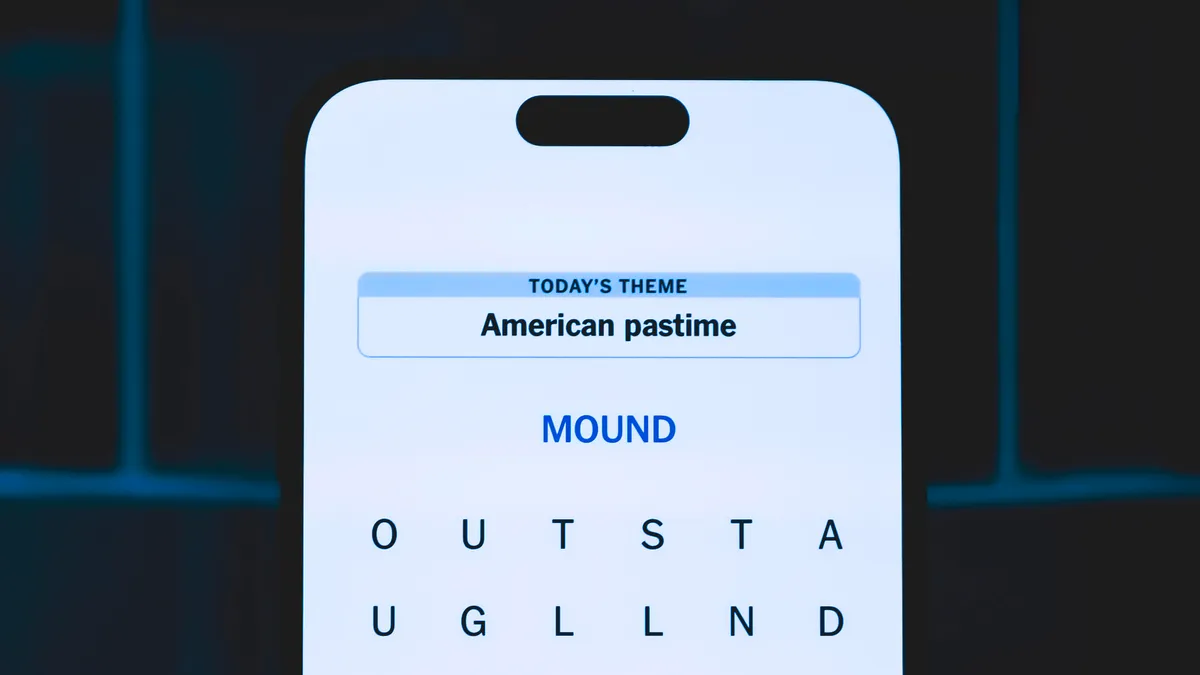
Today’s NYT Strands puzzle threw me a bit — the theme seemed clear, but there were so many different words that could serve as answers. Some of the answers are difficult to unscramble, so if you need hints and answers, read on.
If that doesn’t help you, here’s a clue: Touch some grass.
Clue words to unlock in-game hints
Your goal is to find hidden words that fit the puzzle’s theme. If you’re stuck, find any words you can. Every time you find three words of four letters or more, Strands will reveal one of the theme words. These are the words I used to get those hints but any words of four or more letters that you find will work:
These are the answers that tie into the theme. The goal of the puzzle is to find them all, including the spangram, a theme word that reaches from one side of the puzzle to the other. When you have all of them (I originally thought there were always eight but learned that the number can vary), every letter on the board will be used. Here are the nonspangram answers:
MOSS, ACORN, DAISY, PUDDLE, FEATHER, PAWPRINT
Today’s Strands spangram
The completed NYT Strands puzzle for May 26, 2026.
NYT/Screenshot by CNET
Today’s Strands spangram is SCAVENGERHUNT. To find it, start with the S that is the first letter on the top row, and wind down and over.
Advertisement
Toughest Strands puzzles
Here are some of the Strands topics I’ve found to be the toughest.
#1: Dated slang. Maybe you didn’t even use this lingo when it was cool. Toughest word: PHAT.
#2: Thar she blows! I guess marine biologists might ace this one. Toughest word: BALEEN or RIGHT.
#3: Off the hook. Again, it helps to know a lot about sea creatures. Sorry, Charlie. Toughest word: BIGEYE or SKIPJACK.
The partnership does not affect Blacknight’s leadership, workforce or day-to-day functions, the company said.
Carlow-based web hosting company Blacknight has been acquired by European digital services group Your.Online.
Blacknight has secured long-term investment from the Amsterdam-based company to position itself for the next phase of its growth, it said in a statement.
The company did not disclose details of the transaction, but CEO Michele Neylon told SiliconRepublic.com that Blacknight has “reinvested substantially” into the new entity.
Advertisement
Your.Online partners with entrepreneurs, providing promising digital brands with the funds and expertise needed to grow. Blacknight is its first portfolio company based in Ireland.
Founded in 2003 by Neylon and Paul Kelly, Blacknight began as a small hosting business operating from a house in Carlow town.
In the more than two decades since, the company has grown into one of Ireland’s leading domain registrars with more than 90,000 customers across Ireland and internationally.
The company employs nearly 60 people and operates its own infrastructure from multiple data centre locations across Ireland.
Advertisement
It provides domains, hosting, cloud infrastructure, email, co-location and online solutions to businesses, developers, organisations and entrepreneurs.
The partnership with Your.Online allows Blacknight to access additional resources and expertise to accelerate investment in infrastructure, cloud services, security and customer solutions, the company said.
Blacknight will continue to operate independently under its established brand, with Neylon and Kelly remaining in their leadership roles alongside the existing team. Day-to-day operations also remain unchanged. Neylon said that the company plans to hire and expand both in Ireland and overseas.
Advertisement
“This is not about changing who we are,” said Neylon. “It is about strengthening the foundations for the future.
“Blacknight has always believed that Ireland deserves world-class digital infrastructure delivered by people who understand the local market. Joining Your.Online ensures we can continue building for the long term while remaining true to the values that brought us here.”
Chief technology officer Kelly added: “We have always taken a long-term approach to technology, infrastructure, and customer relationships.
“Becoming part of Your.Online allows us to continue investing in innovation and resilience while staying true to the principles Blacknight was built on.”
Advertisement
Don’t miss out on the knowledge you need to succeed. Sign up for the Daily Brief, Silicon Republic’s digest of need-to-know sci-tech news.
Meta is testingface-recognition software built by the United States military and regional police department supplier Rank One, WIRED found in an investigation this week. Meta has been exploring the possibility of adding face recognition tech into its smart glasses, and WIRED previously reported that the app for the glasses contained code—now deleted—that would have enabled the company to activate face-recognition features on the devices.
Anthropic is still negotiating with the Trump administration, after apparent White House concerns about the safety of new public model Claude Fable 5 resulted in Anthropic pulling the product off the market entirely. But security experts point out that AI models with advanced capabilities for discovering and exploiting software vulnerabilities—in other words, creating potentially dangerous hacking tools—will be ubiquitous soon around the world.
The United Kingdom will soon begin scanning the faces of asylum-seekers as part of age checks in spite of evidence that such age evaluation and verification tools are deeply flawed and can make mistakes with life-altering consequences.
Advertisement
In more uplifting uses of surveillance tech, Knicks fans around the world had a chance to watch Thursday’s ticker tape parade in New York City on traffic surveillance cameras thanks to livestreams from the artist Morry Kolman.
And there’s more. Each week, we round up the security and privacy news we didn’t cover in depth ourselves. Click the headlines to read the full stories. And stay safe out there.
The hacking and extortion group ShinyHunters has been loudly proclaiming a slew of high-profile victims in recent months: including the education tech firm Instructure, causing disruption in thousands of schools in the process; the photography firm Kodak; and a key European human rights organization. This week, it also published data allegedly stolen from Madison Square Garden, according to reporting by 404 Media.
The published data, allegedly comprising millions of records across 45GB of files, includes potential personal information from customers and references players and coaches from the Knicks. The data was published not long after the Knicks won their first NBA championship since 1973. A sample of the data reviewed by 404 Media included one file purporting to include the names of “talent,” including Knicks members.
Advertisement
WIRED has recently reported on Madison Square Garden’s extensive use of surveillance technologies, including face recognition systems. Alleged emails in the stolen data viewed by 404 Media include one man complaining about face recognition technology. MSG did not respond to the publication’s request for comment and after the story broke, a federal class action lawsuit was filed over the alleged data breach.
At least three bars in San Francisco’s Castro district, the well-known LGBTQ region of the city, have been using face scanners at their entrances to collect detailed information on customers. The bars are using tech from Patronscan, an ID verification company, to collect facial images, names, genders, according to Gazetteer SF, which went to bars using the technology. As well as the data collection, if staff at the bars spot customers fighting, being involved in theft, or other negative behaviors, they can log this in the system. Face recognition can then identify the person the next time they are at the bar. The recorded information can be shared as part of a “safety network” between other firms using the tech, creating a widespread surveillance network.
For months, governments and companies in Europe have been ditching US technology, citing surveillance and security risks. This week France’s domestic spy agency, the Direction générale de la Sécurité intérieure (DGSI), announced it would stop using Palantir’s data and AI tools in the coming years, replacing them with software from French firm ChapsVision. “We must use our own AI models,” French prime minister Sébastien Lecornu said. “We cannot rely on tools developed by foreign powers. France must have its own tools.”
Apple’s ‘Hide My Email’ tool allows you to generate a random email address that you can use to privately sign-up to new websites and apps, avoiding you handing over personal info to even more websites. However, the company is set to change the way it creates these email addresses. At present, they all use the @icloud.com domain. Going forward, as TechCrunch reported this week, Apple plans to use the domain: @private.icloud.com. The not-so-subtle change could make it easier for firms to detect people are using the privacy-preserving service and demand sign-ups with an alternative email address.
If Mac game developers miss these settings, their brand new game for Apple Silicon will be listed as unplayable on anything after macOS 10.15 Catalina. Here’s how to tell Steam that your game is compatible, and where the flags are.
Steam’s macOS Catalina warning
Valve Software’s gaming storefront, Steam, is the biggest of its kind when it comes to PC and Mac gaming. It is essential for any game developer targeting those platforms to put a build on Steam, due to the sheer size of its audience. However, while Steam is relatively simple for gamers to use, the back-end is considerably more complex. For a developer starting out, there are many things that can be missed when putting their game onto Steam for the first time. Continue Reading on AppleInsider | Discuss on our Forums
Humans tend to be “a little bit precious about humans,” according to Eric Brandwine, distinguished engineer and VP at Amazon Security.
We like to think we are all very good at our jobs, and we have high opinions of ourselves, he explained during a phone interview with The Register. “But when you actually get down to it, humans are not terribly consistent,” Brandwine said.
Humans, like AI agents and systems, are non-deterministic. Neither can be guaranteed to produce the same output given the same input twice. Both will make mistakes and even make stuff up. However, we’ve got millennia of experience dealing with humans and less than a decade with more modern LLMs and the AI systems built on top of them.
“We know how humans fail,” Brandwine said. “We’re comfortable with it. So human-in-the-loop isn’t necessarily the gold standard.”
Advertisement
For years, vendors have told companies that the solution for dealing with any automated system was to put a human in the loop. That battle cry became much louder with the advent of modern AI systems and reached a fever pitch when enterprises started deploying agents into their IT environments.
More recently, however, big tech is changing the way it talks about agentic governance and rethinking the whole human-in-the-loop concept.
Normalization of deviance
In 2017, Brandwine gave a talk on the normalization of deviance at AWS’ annual re:Invent conference.
It’s a gradual process that happens when people in an organization take shortcuts, or don’t follow the established procedures or standards, and sometimes it occurs over years. As long as nothing catastrophic happens, this deviant behavior becomes the norm.
Advertisement
Eric Brandwine, distinguished engineer and VP at Amazon Security
“It’s a thing all humans fall prey to, and one of the most heartbreaking stories I read in this area was about emergency departments and emergency rooms,” Brandwine said during a phone interview with The Register. “You’ve got all these machines, and they’re all beeping. Your first day on the job, you jump every single time one of the alarms beeps – but the patient is fine. It’s a spurious alarm. You go back to your station, you sit down, and over time, after enough of these false alarms, enough of these repeated beeps with no actual consequence, your discipline slips, and you stop responding. And eventually some tragic outcome occurs.”
“Literally, someone’s life is on the line, and people still struggle to maintain discipline,” Brandwine said. “That’s the human condition.”
Here’s how this all applies to agentic AI governance and security. Humans build LLMs and AI systems, and having a “human-in-the-loop” ensures that a person reviews the AI’s output and approves (or not) any actions before the AI performs them.
Advertisement
“If you put a human inside of this tight loop, and ask them to make approval decisions for agentic tools repeatedly, time after time, they’ll do a good job,” Brandwine said. “And then they’ll do an okay job. And pretty quickly they’ll be doing a poor job.”
This is why at Amazon, “we’re not huge fans of human-in-the-loop,” he added. “It’s something that you should use judiciously, where you absolutely need it. But it’s not something that you can do at high velocity. You will not get the results that you want to get.”
Big tech pulls the human-in-the-loop
Amazon isn’t the first or only tech giant to start talking differently about the role humans should play in agentic governance.
“It is very clear that we have moved from a human-led defense strategy, to a human-in-the-loop defense strategy, to an AI-led defense strategy that’s overseen by humans,” Google Cloud chief operating officer Francis deSouza told reporters during a press conference ahead of Google’s annual Cloud Next shindig in April. “Our model for the future is an agentic fleet that does a lot of the routine cyber security work at a machine pace and then is overseen by humans.”
Advertisement
Microsoft CEO Satya Nadella, in an X missive earlier this week, argued for “loop learning,” instead of having a human check an AI’s output at every step.
“Companies need to turn their workflows, domain knowledge, and accumulated judgment into AI systems that improve with each use,” Nadella wrote. “Private evals should capture whether a model is actually improving against outcomes that matter to the business (not just external benchmarks!). Private reinforcement learning environments should let models grow stronger on real traces from inside the organization.”
Also this week, IBM execs called for human accountability – not humans in the loop – at all stages of AI development, deployment, and governance.
Amazon’s alternative to human-in-the-loop is “accountability end to end,” according to Brandwine. This means human identity and ownership track through the entire workflow, even when humans aren’t directly approving every step.
Advertisement
“If I sit down at my keyboard and I type a command that takes a service down, I caused an outage,” Brandwine explained. “If I run a script that takes a service down, it’s still me that caused the outage. If my agent writes a script that they then run, and it causes an outage, that’s still my responsibility.”
(Secret) keys to the kingdom
This also highlights the importance of managing and securing agentic identities – the accounts, tokens, and credentials assigned to AI agents so they can access corporate apps and data. At Amazon, all of the agents have independent identities assigned to them, we’re told.
“So, as we track agentic activity across our systems, it does not show up in the logs as: ‘Eric did this.’ It shows up as: ‘this agent did this on behalf of Eric,’” Brandwine said, adding that this isn’t to “make people afraid to use this technology.”
“It’s to make people pause and think: is this the right way to use this technology? Is this how I should be deploying this?” We still have the humans involved, we still have the humans making decisions, but we’re trying to play to the strengths of the humans rather than placing them in this unfair, repeated decision making, human-in-the-loop position.”
Advertisement
Brandwine told us that Amazon has run into a couple of hurdles when it comes to deploying agents across its businesses, and one of the biggest is what he calls “goal-seeking behavior.” This is when a person asks an agent to do a specific task – for example, upgrade a database – and the agent becomes laser-focused on just one action to achieve this goal, ie, deleting the database.
This is separate from prompt injection because there’s no malicious input. “It’s just the agent getting stuck on the wrong action,” Brandwine said. Simply telling the agent, “you don’t have permission to do this,” is likely going to cause the agent to look for a different path to do the same thing (delete the database).
Telling the agent why it doesn’t have permission to do something tends to produce a better outcome, according to Brandwine. This means telling the agent it’s not allowed to do that, and the reason why is because it would cause a production impact. And also include “don’t cause a production impact” as part of the prompt.
“Giving it that extra feedback has gotten us dramatically better results,” Brandwine said.
Advertisement
Of course, this is not a fail-proof method. “You still need to be careful with agents,” Brandwine told us. “We have millennia of experience with humans. Agentic AI is a very, very new field, we don’t have an intuition for this, and one of the fundamental differences between agents and humans is that humans fear consequences,” such as losing a job or even going to jail. Agents don’t have these fears.
This is where setting permissions on what the agent can and can’t do or access comes in. Much like everything else with AI, it’s nuanced, and it depends on the employee’s role in the company, and the company’s tolerance for risk.
“The person that wants to run the agent wants to give the agent many permissions because that makes the agent more powerful,” Brandwine said. “It could do more things for them, it can recoup more of their time, it can deliver more.”
The security lead, on the other hand, wants to limit an agent’s permissions, and this causes yet more tension between the security and development teams.
Advertisement
There is no one right solution or policy answer to solve this, according to Brandwine. Instead, it involves dynamic policies that set permissions based on the agent’s specific task.
There are some overarching, static guardrails – such as an agent must never perform destructive actions or delete entire servers – and then there are policies underneath that establish the maximum set of privileges that the agent can have.
“Then we’ll have a further scoped-down policy for this action, and there’s various techniques for automatically generating policies based on prompt and the end-user’s intent,” Brandwine said.
Even for Amazon, it’s not always easy. “It’s all driven by risk,” he said. “This is a space that’s changing quickly, and so we’re trying to balance the risk of using untried, untested software against the risk of falling behind and not being able to deliver for our customers. As with all such things, it’s complicated.” ®
Earlier this week, at TechCrunch’s newest StrictlyVC event in El Segundo, Shinkei Systems founder Saif Khawaja and Founders Fund partner Delian Asparouhov sat down for a conversation that kept circling back to a question that doesn’t usually come up at a venture event: How do you know if a fish is stressed out?
It’s a fair question for Khawaja to field, since his company, Shinkei, has built its entire business around the answer. Shinkei makes a refrigerator-sized robot called Poseidon that fishermen install on their boats. The machine scans each fish with computer vision, identifies the species, and locates the brain. Within seconds of the fish coming out of the water, it pierces the brain and severs the gills, so the fish dies before it can thrash or suffocate.
That matters because a slow death floods the meat with stress hormones and lactic acid, which dull flavor and shorten shelf life. The whole thing is an automated, industrial-scale version of ike jime, a centuries-old Japanese technique traditionally performed dockside by trained fishermen at the moment of catch. By killing the fish instantly and draining its blood, ike jime delays decomposition long enough for the flesh to be safely aged for days, sometimes longer, before it’s served. That aging period is what gives top-tier sashimi its concentrated, umami-heavy flavor, as enzymes slowly break down the muscle.
Khawaja’s origin story is somewhat unusual for a hardware pitch. He grew up taking fishing trips with his family in the Middle East, and the idea Shinkei didn’t click until college, when he read an essay by an animal rights philosopher titled “If Fish Could Scream.” Its premise was that fish lack vocal cords, so the suffering most of them experience on the way to your plate is essentially invisible. Conventional commercial fishing typically lets fish suffocate on deck, a process that can take anywhere from a few minutes to roughly an hour. During that time, fish release stress compounds that shorten shelf life and dull flavor, the same basic mechanism that makes a stressed cow produce tougher, less flavorful beef.
Advertisement
But Shinkei’s ambitions have expanded well past the killing machine. The company now describes itself as a vertically integrated fish harvester and processor, deploying robotics and AI across the chain from boat to plate. Shinkei gives Poseidon machines to fishermen for free, then pays those fishermen a premium price for the fish that come out of them, well above what the catch would fetch at a standard dock auction. In exchange, Shinkei takes full possession of the fish rather than letting fishermen sell it on the open market. The catch then ships to a 16,000-square-foot plant Shinkei bought in Tacoma, Washington, where it’s broken down and sold under the company’s consumer brand, Seremoni, marketed as “ceremony grade” fish.
Image Credits:TechCrunch /
The most visible proof point so far is on the menu at Erewhon, the Los Angeles grocery chain beloved by influencers. Erewhon sells Shinkei’s fish as Seremoni Grade Miso Black Cod, hot off the prepared-foods bar, and the marketing around it leans hard on the “sustainably caught, humanely harvested” framing. The arrangement is still a pilot, running for now out of Erewhon’s Manhattan Beach location, with wider rollout to other stores contingent on how well it sells. Khawaja says the company already supplies fish to restaurants holding a combined 50 Michelin stars, and claims something that has reportedly never happened before: Japan importing American-caught fish into its own fish markets, which have historically treated American seafood as distinctly inferior to the domestic product.
Whether buyers will pay a premium for “humanely killed” fish, the way many now do for humanely raised beef and poultry, is still an open question, and even Khawaja treats it as secondary to the pitch when asked about this. He told the El Segundo crowd the real selling point isn’t the animal-welfare story so much as the practical one. A catch that might normally have a 5-to-7-day shelf life can stretch to 12 or 14 days, he said, and the company has cooked fish three weeks after coming out of the water with no issue. Shinkei’s newest product, an in-plant sensor system, tries to quantify that by scanning fish and projecting an individual shelf life for each one. That matters in an industry where, by Khawaja’s estimate, roughly 18% of product is lost to spoilage just between dock and store, before retail loss is even counted.
That spoilage problem is tangled up with a detail of the American seafood supply chain that surprises most people who haven’t worked in it. A meaningful share of fish caught in U.S. waters by U.S. boats gets frozen and shipped overseas, often to China, for the labor-intensive work of heading, gutting, scaling and filleting, then shipped back to be sold here. Industry estimates of how much American seafood is imported run as high as 90%, though roughly half of that, by some estimates, actually originated in domestic waters before making the round trip abroad. Reporting has tied parts of China’s seafood processing sector to forced labor, including Uyghur workers in Shandong province and North Korean labor in Liaoning, making the system a target of U.S. trade and labor scrutiny in recent years. There’s been a push within the industry to “re-shore” some of that processing, spurred partly by tariffs and pandemic-era disruptions that made the China round trip less attractive.
The bet that Shinkei — and Founders Fund — are making is that re-shoring the entire chain, catch, kill, process, and distribute, all under one roof in Tacoma, can be done profitably enough to outcompete it.
Advertisement
Image Credits:Claude Code/TechCrunch /
For Founders Fund, the wager fits a pattern the firm has leaned into for years, which is backing founders who are often outside of fashionable categories. Asparouhov, who speaks a mile a minute and without reserve, put it plainly: there’s essentially nobody else on Earth who wants to spend their life on robots that kill fish, and the smell of the office makes that clear enough. (It was a very funny line, though it undersells the field a little. In addition to Shinkei, a Japanese firm called Nichimo sells a device that stuns fish to assist humans performing ike jime by hand, and several Norwegian startups are building robotic systems for more humane fish slaughter and processing. Shinkei’s edge, for now, is being the only one running the fully automated version of the technique at scale on U.S. boats.)
In fact, Asparouhov said the firm intentionally keeps its exposure to crowded categories like generic AI applications relatively low. By his rough math, AI and defense together account for something like 15% to 20% of the fund’s deployed capital, well below what he estimated is typical elsewhere in venture. Shinkei sits alongside Halter, a New Zealand-founded company making solar-powered, GPS-equipped cattle collars that let ranchers herd cattle remotely, and Ohalo Genetics, the crop-genetics company started by “All-In” podcast co-host David Friedberg, as evidence that the firm’s appetite for food and agriculture isn’t a one-off.
Of course, the fund’s headline-grabbing recent win has nothing to do with fish. Its early and aggressive bets on Elon Musk’s SpaceX — a relationship that traces back to Peter Thiel and Musk’s shared history at PayPal — are reported to have generated tens of billions of dollars for the firm, by some accounts the largest venture outcome ever recorded. Asparouhov argued that win has accelerated a broader shift in venture toward hardware and physical-world businesses, noting that most of the largest companies on the Nasdaq today involve complex electromechanical systems rather than pure software. He predicted more of SpaceX’s alumni, flush with liquidity and shaped by working alongside Musk, will go on to start their own ambitious physical-world companies.
Whether Shinkei becomes one of the firm’s next big wins will take time to know. The company is a robotics manufacturer and a seafood processor and a consumer brand, all running at once, and each layer has its own daunting challenges. Fishermen are used to working a certain way. Distributors are built around decades-old habits. Chefs and grocery buyers still have to be convinced that a story about humane fish slaughter is worth paying more for. The hardware has to survive saltwater, fish guts, and life on a commercial boat, and the product it’s selling spoils, so there’s little room for the kind of stumble a software company can usually shrug off.
Still, talking with the two together in El Segundo was enough to make me understand why Founders Fund finds the bet compelling. The firm thinks it has found a founder building something novel in a surprisingly dysfunctional industry — the kind of company almost nobody else in the United States even wants to build.
Advertisement
When you purchase through links in our articles, we may earn a small commission. This doesn’t affect our editorial independence.
Save $76: Amazon’s Prime Day kicks off on June 23, but the deals are already in bloom. The retailer just slashed the price of Nothing’s wireless earbuds by $76, dropping them to an all-time low. This is a limited-time deal available only to Prime members, so we suggest acting fast.
Finding a premium pair of earbuds with long battery life, active noise cancellation and fast charging can normally be quite steep. However, brands like Nothing offer an incredible, budget-friendly alternative without sacrificing great sound.
Nothing earbuds include eartips in three sizes for a perfect fit and the most out of their features. They offer up to 45 decibels of noise cancellation and have a battery that lasts up to 40 hours. The 11mm drivers provide clear bass and treble for an immersive listening experience, no matter the music genre or audiobook. If you’re an avid ChatGPT user, you’ll enjoy Nothing’s integration with the popular AI service. Simply set up integration using the Nothing app, and you can use voice controls to experiment with it.
Nothing also improved the earbuds’ connectivity, making it easier to switch between devices whenever you need to pick up on a quick phone call, join a video meeting and more. Thanks to HiRes Wireless Audio, your voice will be heard loud and clear during phone calls, so you won’t have to worry about any distractions interrupting family or work discussions.
Deals are selected by the CNET Group commerce team, and may be unrelated to this article.
Advertisement
Alternatives you might like
Nothing earbuds include noise cancellation, crisp sound and AI features at a new record-low price. However, if these aren’t your style, we’re huge fans of Apple’s AirPods 4, which made our list of best wireless earbuds of 2026. You can snag the ANC model for $149, down from $179. Or grab the pair without ANC for less than $100 and save 23%.
Baby Boomers — or Boomers for short — were born between 1946 and 1964, putting them in their sixties, seventies, and eighties today. Stepping back in time to that era reveals a world of classic and nostalgic tech with a certain charm that most modern-day devices simply don’t have. Wooden finishes on console TV sets, spinning controls to dial a rotary phone — these are things most kids today wouldn’t know about, but instantly take Boomers back to their childhood.
TV sets and rotary phones aside, Baby Boomers were also very familiar with technology that has made a resounding resurgence today: vinyl record players. Boomers will remember hitting The Twist in front of one of these with their parents, or setting the needle down on the latest rock ‘n’ roll hit – a genre that exploded in the 1950s and ’60s.
And if Boomers weren’t listening to music from their record players, they were probably using a transistor radio (which first hit the scene as the Regency TR-1 in 1954) for tunes, sports, and news. Or they may have been writing their own stories and capturing moments with a Polaroid camera. It’s interesting to take a trip down memory lane through the lens of tech, and these classic electronics are a perfectly nostalgic guide.
Advertisement
Console TV sets
Max_Irsan/Shutterstock
If wood-finished Zenith, RCA, or GE console TV sets are nostalgic to you, there’s a good chance you’re a Boomer. Characterized by their furniture-style wooden cabinets, knobs or dials, and captivating center screen, these television sets took the United States by storm in the 1950s, ’60s, and ’70s. It was the centerpiece of the living room and something for the whole family to gather around and enjoy.
Many Baby Boomers will remember the transition from black-and-white to color television — which had actually been around since the 1920s, but wasn’t refined and popularized until the 1940s and into the ’70s — and the ubiquitous impact it had on information and entertainment distribution. 90% of US households had a television set by 1960, whether black-and-white or color. And it wasn’t just to watch “The Flintstones.”
Advertisement
1960 saw the first televised debate between presidential candidates (John F. Kennedy and Richard M. Nixon), and in 1961, Kennedy gave the first live press conference on television. There was no internet or social media to get insights on politics and the goings-on of the world — for Boomers and their parents, these console television sets were crucial to staying informed about the world around them.
Advertisement
Vinyl record players
Nerza/Shutterstock
Vinyl record players were most popular from the 1950s to the ’70s, meaning many Baby Boomers grew up listening to The Beatles and The Beach Boys on a spinning vinyl disc throughout their childhoods. For many teenagers, the vinyl record player was a way to express artistic freedom and build a music collection unique to their tastes. Instead of waiting and hoping for a song to play over the radio, they could easily share certain songs with their friends and have others introduce them to new tunes.
Like console TV sets, vinyl record players of the time were often a bit different than the ones we see in today’s vinyl resurgence. When Boomers were growing up, record players were often housed in wooden consoles and doubled as pieces of furniture. There was also a hands-on aspect that made using vinyl records enjoyable. Choosing a record from your collection, putting it on the turntable, and lowering the needle onto the track was all part of the experience. While records were eventually largely replaced by CDs, that experience is an important part of why vinyl records came back into style.
Advertisement
Transistor radios
nbsusanto/Shutterstock
While vinyl records brought music into Boomers’ homes, transistor radios let them take it anywhere they wanted. Coming onto the scene in the mid-1950s with the Regency TR-1, these pocket-sized radios quickly changed the way people of the time interacted with music, news, and sports. While the tabletop radios that came before them were big and bulky, transistor radios were small and light enough to carry easily. Because they were battery-powered, they didn’t have to be tied down to an outlet.
For many Baby Boomers, the transistor radio was their first piece of personal tech. Like record players, transistor radios allowed teenagers to listen to the songs and stations they wanted without having to change the channel for anyone else. And the timing couldn’t have been better with rock ‘n’ roll artists like Elvis Presley and bands like Creedence Clearwater Revival becoming popular at the time.
Nowadays, we can simply look up and stream whatever songs we want. But Baby Boomers will remember the feeling of tuning into a station on their transistor radio and hoping for their favorite song to come on — and the joy they were filled with when it finally did.
Advertisement
Rotary telephones
yoshi0511/Shutterstock
Rotary telephones are one of the most instantly recognizable pieces of tech on this list. Characterized by their circular dial mechanisms and curly cords, you would find rotary phones in many American households between the 1930s all the way into the ’90s. Rather than the physical buttons and touchscreens of today, rotary phones had numbered holes that you would place your finger into and rotate until the circular dial reached the stopper. Their distinct clicking sound and tactile feel became a shared memory across multiple generations.
While our smartphones can be used anywhere, rotary phones were tethered to one specific location. If the phone rang, someone had to get up to answer it. There were no text messages, notifications, or caller ID screens to check first. It was also common for the phone to sit in a busy area of the home, so conversations were rarely private if your family was around.
And for many Boomers growing up, the rotary phone was a method of connecting with their friends. You’d write their phone number down, or do your best to remember it by the time you got home, and then you’d call up your friend after school or on the weekends to hang out. It was a time when phone calls were sometimes planned ahead of time, and communication moved at a slower pace.
Advertisement
Polaroid cameras
AS project/Shutterstock
Polaroid cameras, which came out in 1948, were one of the most exciting inventions for Baby Boomers because being able to snap a photo without needing a studio and time to develop the picture was revolutionary at the time.
Polaroid pictures became popular at family reunions, parties, and holidays. Instead of using an entire roll of film and waiting days or weeks to see how a picture turned out, you could click the shutter button and hold a physical copy a few moments later (after waving it in the air to help it develop faster). The process became part of the fun — friends and family would gather around to watch an image slowly develop from what initially looked like a blank piece of paper. By 1977, despite Kodak’s best efforts at competition, Polaroid had cornered the majority of the instant camera market.
Long before social media turned every photo into something instant and shareable, Polaroid made it possible to capture a moment and immediately pass it around the room. The distinct white border and vintage look of the photos made taking and collecting pictures a fun, spontaneous activity.
The AI Act, which entered into force in August 2024, attempts to tackle some of the risks emerging from the technology while letting the bloc benefit from its economic potential.
A bill to enforce the EU’s AI Act in Ireland has been approved. Once enacted, the Regulation of Artificial Intelligence Bill 2026 will establish ‘Oifig IS na hÉireann’ – or the AI Office of Ireland – as an independent statutory body which will act as Ireland’s central coordinating authority to implement the landmark EU legislation on AI.
The AI Act, which entered into force in August 2024, attempts to tackle some of the risks emerging from this technology while letting the bloc benefit from its economic potential.
The law applies in a risk-based and phased manner across all EU member states, imposing obligations on providers, deployers and importers of AI systems and models. Last month, the EU published draft guidelines for what it considers ‘high-risk’ AI systems.
Advertisement
Meanwhile, the new bill approved by the Government is only a technical regulation needed for the supervision and enforcement of the EU AI Act and does not add to Ireland’s existing obligations. It comes as Ireland readies to assume presidency over the Council of the European Union from 1 July to 31 December this year.
The Irish bill provides market surveillance authorities (MSAs) in the country with an enforcement toolkit for the AI Act, enabling them to issue compliance notes and fines, or even prosecute entities. As one of the MSAs, the Irish Competition and Consumer Protection Commission is also introducing a new general administrative sanctions procedure.
“AI is a transformative technology which offers extraordinary potential for our economy and citizens, but requires appropriate oversight and accountability to ensure people are protected,” said Minister for Enterprise, Tourism and Employment Peter Burke, TD.
“This bill delivers this approach. It fulfils Ireland’s EU obligations, giving effect to pioneering AI regulation in domestic law, while ensuring we have the national infrastructure to enforce it effectively.
Advertisement
“The bill establishes the AI Office of Ireland as a strong, independent institution at the centre of our AI regulatory system and empowers our competent authorities with the investigative and sanctions tools they need.”
Minister of State for Trade Promotion, Artificial Intelligence and Digital Transformation Niamh Smyth, TD said: “This bill is about more than regulation. It is about building the institutional foundations for a future in which AI works for people, ethically, transparently and accountably.
“The establishment of the AI Office of Ireland will give us a world-class focal point for AI regulation, innovation and expertise. Ireland is a key player in the global AI ecosystem, home to many of the world’s leading foundational AI model providers.”
While broadly considered to be a first of its kind, the EU AI Act faces a number of emerging challenges in its implementation, one of them being the launch (and subsequent blockade) of Anthropic’s Mythos and Fable models in Europe, which prompted experts to question how the Act might control risks emerging from foreign-created and deployed AI technology.
— Former Microsoft, Amazon and Google exec Brian Hall is now chief marketing officer for Mistral — and he’s bullish on the move. “I think this could be the most interesting marketing job in the world,” Hall said on LinkedIn.
Mistral is a Paris-based enterprise AI platform that in 2024 signed a multi-year partnership giving it access to Microsoft’s data centers; Microsoft in turn agreed to offer Mistral’s models through Azure.
Hall said the company differs from major players such as OpenAI, Anthropic, Google, Meta, Microsoft and Amazon by providing AI that customers can own more of, control more tightly and run on their own terms. He’s excited about the approach, which he said will also let him “learn and discover with the research, science, and developer communities.”
Hall spent roughly 20 years at Microsoft, then worked at Doppler Labs and Amazon before joining Google in 2020 as vice president of its cloud operations. He left Google in September.
Aaron Rubenson. (LinkedIn Photo)
— After 23 years with the company, Amazon‘s VP of Alexa Domains Aaron Rubenson is retiring to spend more time with family. During his tenure, Rubenson also led Amazon’s Appstore, which sold Fire tablets, phones and other products; the company’s cell phones and wireless services category; and third-party electronics.
“I’m so proud of the products we launched for customers. I feel honored to have had the opportunity to innovate in so many important and interesting areas,” Rubenson said on LinkedIn.
Advertisement
Kimberly Schultz. (Seismic Photo)
— Kimberly Schultz has left Amazon to join Seismic as chief human resources officer. Schultz was with Amazon for more than 11 years, most recently as director and head of corporate development integration.
Seismic CEO Rob Tarkoff praised Schultz’s “deep experience in people strategy, organizational design and scaling global teams.”
The San Diego company builds AI agents that support corporate revenue teams.
Patrick Duffy. (LinkedIn Photo)
— Seattle-based cybersecurity startup Dropzone AI has named Patrick Duffy as head of product. Duffy joins from Material Security and was previously at Expel. He praised Dropzone AI’s ability to keep up with the volume and pace of cyber attacks and its support for analysts.
“The company’s innovation is rooted in a clear understanding of where cybersecurity is headed, with AI agents working across tools, data, and workflows to transform how security operations get done,” Duffy said.
Dropzone AI is No. 19 on the GeekWire 200, a ranked index of the Pacific Northwest’s top startups.
Advertisement
Wasif Jamal. (LinkedIn Photo)
— Wasif Jamalhas departed Providence to become SVP and chief information officer for WellSpan Health, a Pennsylvania-based hospital and healthcare system. Before joining Providence, he was a group engineering leader at Microsoft.
Jamal had a six-year tenure at Providence, a healthcare network based in Washington and spanning seven states. On LinkedIn, he expressed gratitude for the opportunity to improve the organization’s technology and cybersecurity capabilities, expanding its use of data and AI, and “most importantly,” better serving patients, caregivers and communities.
— Alaska Airlines has promoted Shane Tackett to president and chief financial officer, effective June 29. Tackett was previously CFO and executive VP of finance. He has been with the company for 25 years.
“Bringing commercial and finance leadership together under Shane will strengthen alignment and accelerate our priorities as we continue advancing our strategy and creating long-term value for our stakeholders,” said Alaska Air Group CEO Ben Minicucci.
Nidhin George. (LinkedIn Photo)
— Former Amazon leader Nidhin George was named chief product officer for A Place for Mom, a New York-based platform that helps families transition loved ones to assisted living. George, who will remain in the Seattle area, joins from Grubhub, where he served as SVP of product. Before that, he was with Amazon for more than 16 years, departing in 2022 as head of product for global logistics.
“Over the past two decades, I have had the privilege of building and scaling complex marketplaces that connect people, businesses, and service providers at critical moments in their lives,” George said on LinkedIn. “What drew me to APFM is the opportunity to apply those lessons to a mission that matters deeply.”
Advertisement
Emory Clark. (LinkedIn Photo)
— Emory Clark is now founder designer at SageOx, a Seattle startup building tools for teams where humans and AI coding agents work side by side. The company launched in January and last month announced $15 million in funding.
Clark joins SageOx from Learning Design Alliance. She earlier co-founded Celipa, a startup that built an app to enable bill splitting among friends.
— Mike Gaalhas taken on a new role at Microsoft, leading the Software & Digital Platforms team for Microsoft Americas and serving as general manager of Digital Natives. Gaal, who is based in San Francisco, has been with Microsoft for 14 years across 10 roles.
— Dr. Veena Shankaranwas named the inaugural recipient of the Lert Family Endowed Chair at Fred Hutchinson Cancer Center. Shankaran is a gastrointestinal cancer specialist and co-director of the Hutchinson Institute for Cancer Outcomes Research.
— Space Northwest, an organization working to strengthen the connections among industry, government and academia to grow the region’s space economy, has named new members to its board of directors. They are:
Advertisement
Jeff Thornburg, CEO of Portal Space Systems, who was named vice chair of the board
Sierra Clouse, managing partner of the Seattle investment firm Barclo Ventures
Brenda Kuhns, vice president of marketing and communications for Kymeta
Chris Stessing, general manager of Karman Space & Defense
Dan Lewis, co-founder and former CEO of the online freight marketplace Convoy, has left Microsoft to start a new company focused on one of the most expensive problems in artificial intelligence: the cost of running AI models. Read more.
Sri Chandrasekaris now managing director for Seattle’s AI House, which until today was known as AI Incubator. Read more.
Imagine your engineering team just deployed an AI agent to search through internal company documents and answer employee questions. It works perfectly in development, but in production, it consistently hallucinates or misses key constraints. Fixing this is rarely a simple patch. It requires a tedious, trial-and-error process of tweaking chunking strategies, retrieval methods, and system prompts simultaneously. Because these adjustments are entangled, it becomes nearly impossible to attribute which specific tweak actually solved the problem.
To address this challenge, researchers at Renmin University of China and Microsoft Research introduced Arbor, a framework that upgrades AI-driven research and optimization from a sequence of trial-and-error guesses into a cumulative learning process. Arbor organizes hypotheses, experiments, and insights into a tree that helps the system learn from prior failures to make smarter, verified improvements over time.
In practical tests, Arbor delivered more than 2.5 times the verifiable performance gains of standard AI coding agents across real-world engineering tasks while operating under the same resource budget.
For enterprise AI, this technique directly translates to automating the continuous improvement of complex, real-world engineering systems.
Advertisement
Understanding the bottleneck in autonomous optimization
As large language models and AI systems become more capable, they are expected to carry out more complex operations such as autonomous optimization (AO) of software systems such as agent harnesses or model training algorithms.
AO captures the fundamental loop of autonomous research. An AI agent starts with an initial mutable artifact, such as a machine learning codebase or data pipeline, and a specific objective. The agent’s goal is to iteratively improve this artifact through experimental feedback without step-by-step human supervision.
The main challenge of AO is often misunderstood. Many engineering teams find that simply giving a coding agent more time or compute to optimize a codebase doesn’t lead to better results. “Automation can keep an AI working for a very long time — but a loop is not the same as progress,” Jiajie Jin, co-author of the paper, told VentureBeat. “If the goal is vague, or the metric is easy to hack, long-running automation often just produces ‘improvements’ faster that nobody actually wants.”
Jin explains that complex tasks take many attempts to get right, and standard agent architectures are missing the critical data structure to maintain state. “How do you make sure the insight and experience from each attempt actually accumulate, instead of getting lost in a scrollback buffer?” he said. Without this structure, agents simply repeat the same mistakes.
Advertisement
Current agent systems can run experiments for many hours against well-specified goals: editing code, invoking tools, running tests autonomously. But they treat each attempt in isolation, missing the structural mechanisms that would let them accumulate and act on what they’ve learned.
They lack the capacity to simultaneously maintain and compare multiple competing research directions. Without this, they cannot interpret both successes and failures to reshape their future exploration, which is the core mechanism that makes human research cumulative.
General coding agents typically rely on conversation transcripts for their memory. Because AO tasks span hundreds of turns and easily exceed context window limits, these agents struggle to preserve and reuse factual evidence over long histories. As a result, they lose the overarching structure of the research process and are prone to stalling on early failures or chasing noisy evaluation swings. The system needs a structured, durable memory that records what directions have been tried, what factual evidence was produced, and how each result changes the space of future hypotheses.
Existing frameworks are also prone to reward hacking and overfitting to development metrics. This makes them create the illusion of progress without producing improvements that transfer to real-world performance.
Finally, general-purpose coding agents typically chain their tool calls on a single shared working tree. This architectural limitation prevents them from testing parallel hypotheses in isolated environments without corrupting the main codebase or obscuring which hypothesis caused a specific outcome.
Advertisement
The Arbor framework
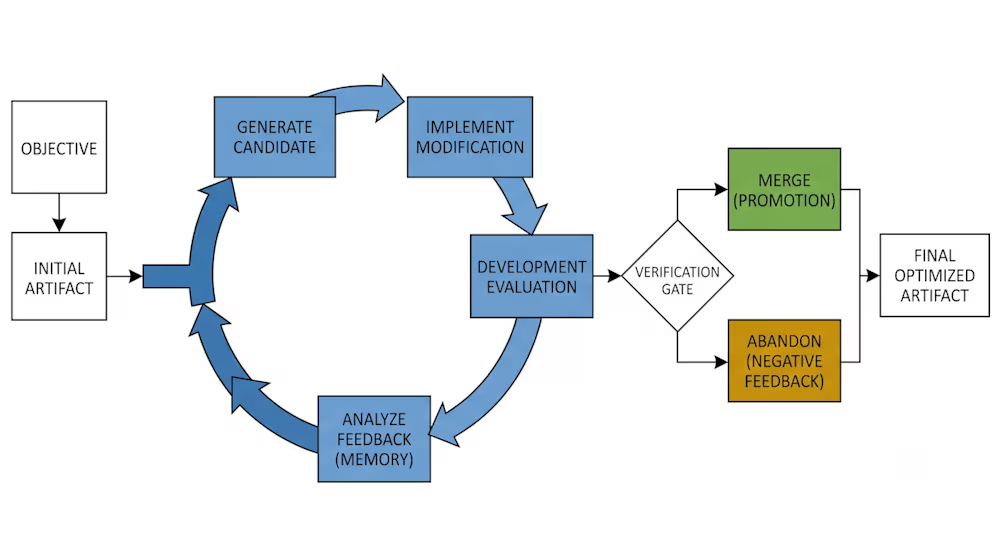
Arbor solves the challenges of AO with a framework that automates the long-horizon loop of exploration, experimentation, and abstraction that characterizes human research. Arbor separates the strategic direction of research from the ground-level coding tasks with two key components:
The coordinator: A long-lived AI agent that acts like a principal investigator. It never directly edits the target codebase. Instead, it owns the general state of the optimization research, observes accumulated evidence, comes up with new hypotheses and directions to explore, and decides what to do with the results of experiments.
Executors: Short-lived, highly focused AI agents. When the coordinator wants to test an idea, it spins up an executor and places it in an isolated environment, essentially a fresh git worktree. Each executor is handed one hypothesis. It implements the assigned idea, runs evaluations, debugs errors, and reports back to the coordinator with the results and created artifacts.
Arbor framework withe hypothesis tree refinement (HTR) (source: arXiv)
Advertisement
These two components collaborate through a mechanism that the researchers call “Hypothesis Tree Refinement” (HTR). HTR represents the entire research process as a persistent, branching tree where every node binds together four things: a hypothesis, the executable artifact, the factual evidence produced, and a distilled insight. This means the coordinator can explore multiple competing directions at the same time without losing its place.
The coordinator builds the tree by placing broad ideas near the root, while concrete refinements branch out as leaves. This allows Arbor to safely explore multiple competing hypotheses simultaneously. If an executor’s experiment fails, the tree records why it failed as a negative constraint, ensuring the system doesn’t endlessly repeat the same mistake.
To understand why Arbor’s isolation matters, consider a common enterprise scenario: optimizing a Retrieval-Augmented Generation (RAG) pipeline for an internal AI assistant. “When you ask a single agent like Claude Code or Codex to ‘improve accuracy,’ it will typically change a bunch of things in one pass — chunking, the prompt, the retrieval method,” Jin said. This entangles the changes, making it impossible to attribute which one actually helped. It also directly mutates the repository without isolation.
Arbor solves this by treating each lever as a separate hypothesis. Chunking becomes one branch, retrieval another, and the prompt another — each implemented and evaluated in its own isolated git worktree. “So you get clean attribution: ‘constraint decomposition on the retrieval side gave +X; breadth-first search actually hurt,’” Jin said.
Advertisement
When an executor returns a report, the coordinator writes the evidence to the tree and backpropagates the insight upward to parent nodes. This means a local observation becomes a generalized constraint that shapes the coordinator’s future idea generation.
To prevent reward hacking or overfitting to the development data, HTR enforces a strict “merge gate.” Even if an executor reports a fantastic development score, the coordinator will spin up an isolated worktree to test the candidate against a held-out test evaluator. The artifact is only merged into the current best trunk if it demonstrably improves the test score, verifying that the progress is real.
Arbor generally falls under the concept of “loop engineering,” popularized by industry figures like OpenClaw creator Peter Steinberger and Claude Code lead Boris Cherny. The idea is to move beyond single prompts to design iterative cycles (observe, reason, act, verify) that drive autonomous agents. However, as Jin points out, “A loop can fill up with messy, untraceable attempts, and you end up with nothing to show and no way to reconstruct what changed.”
Arbor in action
The researchers evaluated Arbor on an autonomous optimization task suite built from real-world research settings and the MLE-Bench Lite machine learning engineering benchmark. The AO suite featured tasks from different areas of AI development, including model training, harness engineering, and data synthesis.
Advertisement
The researchers used different backbone models for the coordinator and executor agents, including Claude Opus 4.6, GPT-5.5, and Gemini-3-Flash. They tested Arbor against the strongest coding agents, Codex and Claude Code. Arbor and the baselines were given the same resources. For the MLE-Bench Lite tasks, Arbor was also compared against top-tier agentic research systems like AI-Scientist, ML-Master, and AIDE.
Arbor consistently outperformed the baselines. It achieved the best held-out test result on all tasks, attaining more than 2.5 times the average relative gain of Codex and Claude Code. On the BrowseComp task, which involves optimizing a search agent, Arbor improved the system’s held-out accuracy from a baseline of 45.33% to 67.67%. Meanwhile, Codex and Claude Code stalled at 50% and 53.33%, respectively. On MLE-Bench Lite, when equipped with GPT-5.5, Arbor achieved the strongest result among all benchmarked systems.
Arbor generalizes across backbone models and harnesses (source: arXiv)
Arbor proved to be resilient against overfitting. For example, during the Terminal-Bench 2.0 task experiments, Claude Code achieved a high development score of 75 but its score dropped to 71 on the held-out data. Arbor had a lower development score of 72.22 but achieved the highest held-out score of 77.36, ensuring its results transfer to real-world applications.
Advertisement
Arbor also showed generalization in a cross-task transfer experiment. After Arbor finished optimizing the search harness for the BrowseComp task, researchers took the optimized codebase and tested it on two unrelated search-agent tasks, HLE and DeepSearchQA. Arbor’s optimized codebase significantly improved performance on those unseen tasks as well.
Deploying Arbor: Sweet spots and hidden costs
For engineering leads looking to drop Arbor into their existing tech stack, the framework is designed to sit on top of existing Git workflows rather than replacing them. “Its output is an ordinary git branch that your existing code review, CI, and human review can inspect directly,” Jin said. Only verified gains are merged into a per-run trunk, leaving the main repository untouched until a developer manually chooses to promote the code.
However, deploying Arbor comes with specific tradeoffs. Jin points out that the biggest catch is token cost, as maintaining a long-lived coordinator that continuously manages the tree and dispatches executors is the dominant expense. Running multiple isolated worktrees concurrently also requires genuine compute and disk resources to process real experiments.
So where is Arbor’s sweet spot? According to Jin, it excels at tasks with a clear, trustworthy metric, tolerance for a long time horizon, and a real search space with several plausible directions, such as pipeline optimization, data-synthesis quality, and model-training recipe tuning.
Advertisement
Conversely, teams should explicitly avoid using Arbor for real-time latency tasks, obvious one-line fixes, or when the underlying evaluation metric is flawed. The quality ceiling of the entire run is strictly bounded by the quality of the evaluator. “If the metric isn’t trustworthy, Arbor will just optimize toward an untrustworthy result faster,” Jin said.
Jin sees the next evolution going beyond single scalar metrics. “A natural evolution is to have each node’s artifact carry a vector — accuracy, latency, cost — instead of a single score,” Jin said. “Going from a single scalar to a multi-objective Pareto search is a very natural extension of the framework.”





















































You must be logged in to post a comment Login