

Business
Is Canva Down Now? Canva Faces User-Reported Outage as Designers Report Access Issues on Busy Tuesday

NEW YORK — The popular graphic design platform Canva experienced scattered disruptions Tuesday, with hundreds of users reporting difficulties accessing the service, downloading files and editing projects during peak working hours.
Reports of problems surfaced around mid-morning Eastern Time on May 26, 2026, according to outage tracking sites. While Canva’s official status page indicated no major incidents, user complaints spiked on Downdetector and community forums, highlighting intermittent issues particularly in parts of Asia and North America.
The timing proved inconvenient for many professionals, small businesses and students who rely on Canva for quick design work, social media graphics, presentations and marketing materials. Some users in the Philippines reported inability to download PDFs, while others described loading errors or frozen editors.
Downdetector showed a noticeable surge in reports shortly after 10 a.m. ET, though the overall volume remained lower than during previous widespread outages. Status monitoring services like StatusGator also logged user-submitted complaints throughout the day.
Canva, which boasts more than 200 million monthly active users worldwide, has become a go-to tool for non-designers seeking professional-looking visuals without steep learning curves. The platform offers templates, AI-powered features like Magic Studio, and collaboration tools that have made it essential for freelancers, educators and corporate teams.
Impact on Users and Workflow Disruptions
Many affected users turned to social media and forums to vent frustrations and seek alternatives. The DesignTAXI community highlighted the issue, noting reports from designers unable to complete time-sensitive projects.
Freelancers working on client deadlines and marketing teams preparing campaigns found themselves particularly impacted. Some reported losing unsaved progress, though Canva’s cloud-based autosave feature typically mitigates total data loss during brief interruptions.
In regions like Southeast Asia, where Canva has seen strong adoption among small businesses and content creators, the problems compounded existing connectivity challenges. One user in the Philippines posted around 9:22 a.m. local time complaining about PDF download failures.
Educators preparing end-of-year materials and students working on assignments also faced hurdles. The platform’s free tier, which drives much of its user growth, appeared affected alongside paid Pro and Teams subscriptions.
Canva has not issued a detailed public statement specific to Tuesday’s reports. Its status page continued to show normal operations, with the most recent resolved incident dating back to May 22.
Company Background and Reliability Record
Founded in 2013 in Australia by Melanie Perkins, Cliff Obrecht and Cameron Adams, Canva has grown into a design industry powerhouse valued at tens of billions of dollars. The company expanded aggressively through acquisitions and AI integration, aiming to democratize design tools.
Despite its scale, Canva has encountered occasional outages, often tied to high traffic, third-party service providers like Cloudflare, or internal updates. Previous notable disruptions occurred in late 2025 and earlier in 2026, sometimes linked to broader internet infrastructure issues.
The platform’s reliance on cloud infrastructure makes it vulnerable to cascading effects from provider-side problems, though Canva has invested heavily in redundancy and global data centers to improve resilience.
Analysts note that Canva’s user base has become increasingly dependent on the service for daily operations, raising the stakes for any downtime. In competitive markets, even short interruptions can prompt users to explore alternatives like Adobe Express, Figma or Microsoft Designer.
Broader Context of Tech Outages
Tuesday’s reports come amid a pattern of intermittent service disruptions across digital platforms. Major tech companies routinely face challenges scaling infrastructure while implementing frequent AI and feature updates.
Outage tracking sites serve as early warning systems for these events, often surfacing problems before official acknowledgments. Downdetector, in particular, aggregates thousands of user reports to map real-time issues geographically.
For creative professionals, such outages underscore the risks of over-reliance on single platforms. Many designers maintain backup tools and local software options for critical projects. Industry veterans recommend regular exports and using offline-capable features where available.
Canva has built a reputation for responsive support during incidents, though users sometimes report delays in receiving updates via the platform’s status channels or social media.
User Reactions and Workarounds
On forums and social platforms, users shared temporary solutions including clearing browser caches, switching devices, using VPNs or accessing through incognito windows. Some reported success after waiting 30-60 minutes, suggesting the issues were transient rather than a full-scale failure.
Others pivoted to competitor tools or reverted to older projects already downloaded. Graphic designers working in teams noted challenges with real-time collaboration features going offline temporarily.
The incident highlights Canva’s central role in modern content creation workflows. From social media managers crafting posts to teachers designing classroom materials, millions depend on uninterrupted access.
As remote and hybrid work remains prevalent, design platforms like Canva have filled gaps left by traditional desktop software. The company’s mobile apps have further extended accessibility, making outages noticeable across devices.
Outlook and Lessons for Users
While Tuesday’s disruption appeared resolved for most by afternoon hours, it serves as a reminder of digital infrastructure fragility. Companies like Canva continue investing in AI enhancements and expanded features, which can sometimes introduce temporary instability during rollout.
Users are advised to monitor Canva’s official status page and enable notifications for critical projects. Diversifying toolkits and maintaining local backups remain best practices in an increasingly cloud-dependent creative economy.
Canva’s leadership has historically emphasized rapid recovery and transparency during service issues. The company’s massive user base provides both opportunities and challenges in maintaining consistent performance across global regions with varying network conditions.
For many affected on May 26, the outage represented a minor annoyance rather than a catastrophe. However, for those with looming deadlines, it disrupted momentum and highlighted the need for contingency planning.
As the design industry evolves with AI assistance and collaborative tools, platform reliability will remain a key competitive factor. Canva’s ability to minimize future disruptions while innovating will influence its long-term dominance in accessible graphic design.
The event also draws attention to the growing ecosystem of outage monitoring services that help users and businesses stay informed. These tools empower communities to share experiences and reduce feelings of isolation during technical difficulties.
Looking forward, Canva is expected to continue its trajectory of growth, with potential expansions into video, web design and enterprise solutions. Maintaining trust through reliable service will be essential as competition intensifies from both established players and emerging AI-native design tools.
Tuesday’s scattered reports ultimately affected a fraction of users but generated enough buzz to trend in creative circles. It underscores how even successful tech platforms must constantly balance innovation with operational stability.


Fifth district bancorp director Linda Sins sells $120 in shares
Croatia considers Zigman to lead central bank after Vujcic exit – Bloomberg


Daniel is an avid and active professional investor.
He runs Crude Value Insights, a value-oriented newsletter aimed at analyzing the cash flows and assessing the value of companies in the oil and gas space. His primary focus is on finding businesses that are trading at a significant discount to their intrinsic value by employing a combination of Benjamin Graham’s investment philosophy and a contrarian approach to the market and the securities therein. Learn more.
Analyst’s Disclosure: I/we have a beneficial long position in the shares of KLC either through stock ownership, options, or other derivatives. I wrote this article myself, and it expresses my own opinions. I am not receiving compensation for it (other than from Seeking Alpha). I have no business relationship with any company whose stock is mentioned in this article.
Seeking Alpha’s Disclosure: Past performance is no guarantee of future results. No recommendation or advice is being given as to whether any investment is suitable for a particular investor. Any views or opinions expressed above may not reflect those of Seeking Alpha as a whole. Seeking Alpha is not a licensed securities dealer, broker or US investment adviser or investment bank. Our analysts are third party authors that include both professional investors and individual investors who may not be licensed or certified by any institute or regulatory body.
Arbor Realty Trust stock hits 52-week low at $5.48

Shamsul Bin Ahmad
CEO, President & Non-Independent Executive Director
[Audio Gap]
In this segment. And correspondingly, load utilization has accelerated substantially, rising from 845 megawatts in March 2025 to 1,054 megawatts in March 2026, indicating a steady, robust and highly predictable ramp-up of operational capacity.
Next. In terms of sales contribution, shopping malls, businesses and accommodation services accounted for 18% of total units sold, while other subsectors contributed 15%. Data centers currently accounted for 6% of our total sales in the first quarter of 2026.
And we are honored to have received a partnership — the partnership and ecosystem collaboration team award at the Data Center Cloud Infrastructure Summit 2026, reinforcing our role as a key enabler of Malaysia’s digital and data center ecosystem through our Green Lane pathway initiative.
Ladies and gentlemen, turning to our technical performance. Our sustained operational execution throughout the quarter continues to underpin our earnings resilience, providing a robust foundation for the group’s overall performance. On generation side, the EAF factor, equivalent plant availability factor has improved significantly to 91.4% versus 82% last year, reflecting a stronger plant reliability and operational performance across our generation portfolio.
Our network performance continued to remain at a world-class level. Our transmission system minutes remained

An AutoZone store in Richmond, California, US, on Thursday, Feb. 26, 2026.
David Paul Morris | Bloomberg | Getty Images
AutoZone Inc. stock was on track Tuesday for its worst trading day in more than six years despite the retailer beating Wall Street’s estimates for its third-quarter fiscal results.
AutoZone stock was off by more than 10% during intraday trading Tuesday, putting it on pace for its first double-digit daily sales decline since the onset of the Covid pandemic in March 2020.
The company reported earnings per share of $38.07 for its latest fiscal quarter compared to $36.28 per share expected, according to average estimates compiled by LSEG. Its $4.84 billion in revenue also was in line with LSEG estimates of $4.83 billion. The company’s fiscal quarter ended May 9.
Analysts on the company’s quarterly call Tuesday were concerned about lackluster growth internationally and margin compression that was more in line with competitors. They also questioned slowing sales year-over-year due to cooler weather compared to pullbacks in consumer spending.
“This slowdown in sales was caused by unseasonably cool weather impacting our heat-related categories, which normally begin to ramp this time of year as summer heat begins to take hold,” AutoZone CEO Philip Daniele said Tuesday.

Auto parts stocks
Wall Street analysts also questioned executives Tuesday about continued pressures on the business from inflation, energy costs and potential supply chain disruptions caused by the war in Iran, specifically possible shortages of motor oil.
AutoZone executives said they expect inflationary pressures to continue but be “slightly muted” due to year-over-year comparisons. They also weren’t overly concerned about potential problems with supplies of lubricants such as motor oil that are reportedly impacting dealer operations at Toyota Motor and Nissan Motor.
“The issue around lubricants, I know there’s a lot of noise out there. We’re going to leave that up to the oil specialists to really say what that means. We think there’s probably going to be some constraints, but we don’t think that it’s going to be that material,” Daniele said.
Automotive website The Drive reported both Nissan and Toyota have recently issued service bulletins to dealers with instructions on rationing motor oil stocks due to an impending shortage.
A Toyota spokesman said the company has “nothing more to add on this issue at this time.” A spokeswoman for Nissan said the automaker “is navigating supplier constraints affecting lubricant availability.”
“Currently, we are maintaining current pricing and have implemented temporary allocation measures to help ensure consistent supply across our dealer network. We’re also working with supplier partners to identify additional sourcing. Our priority remains supporting our dealers to ensure an exceptional customer experience,” she said in an emailed statement.
Operator
Hello, everyone, and thank you for standing by. Welcome to MINISO March Quarter 2026 Earnings Results Presentation.
[Operator Instructions]
Please also be reminded the event will be recorded. We provide you English simultaneous translation for this call. Please select your preferred language by clicking interpretation in the Zoom meeting. We released our Q1 2026 results earlier this [ year ]. Please help to refer to our IR website. Joining us here today are Mr. Jack Ye, our Founder and CEO; and Mr. Eason Zhang.
Right before we begin, please refer to the safe harbor statement in our earnings press release, which also apply for this call as we will be making forward-looking statements. Please also note that we are discussing non-IFRS financial measures. Those measures are explained and reconciled to the most comparable measures reported under IFRS and also in our filings with SEC and Hong Kong Stock Exchange.
Unless otherwise stated, all figures are in RMB. We have already prepared a slide deck for financial and operating highlights for today’s call. If you are joining through Zoom, you will see the slide now. You can also refer to our IR website after the call.
Now let me just turn the call to Mr. Jack Ye.

Every growing SME hits the same question sooner or later: do you buy the company car outright, or do you lease it? It sounds simple enough, but the answer depends on where your business is right now, how much spare capital you’re sitting on, and how you want your balance sheet to look in 12 months.
Get it wrong and you’ll either tie up cash you badly need or commit to monthly payments that don’t suit how your team actually uses vehicles. There’s a real case for leasing, and there’s a real case for buying. Let’s see how the two stack up where it matters most, so you can make the right call for your business.
What Buying Outright Actually Costs an SME
The Sticker Price
When you buy a car for the business, the sticker price is only the beginning. A mid-range saloon suitable for client visits and motorway miles will set you back somewhere around £30,000 to £40,000. That’s cash leaving the business on day one, and it’s cash you can’t use for stock, hiring, or marketing.
Depreciation
Then there’s depreciation. Most new cars lose roughly 15% to 30% of their value in the first year alone, and that rate doesn’t slow down much in year two. After three years, you could be looking at a vehicle worth 40% to 50% less than you paid for it.
If you’re an SME watching every pound, that’s a significant hidden cost that won’t show up on the invoice but will absolutely show up when you try to sell the car.
How Does Tax Factor Into It?
From a tax perspective, cars don’t qualify for the Annual Investment Allowance (AIA). However, if you buy a new and unused electric car or car with zero CO2 emissions before April 2027, you can claim 100% first year allowances, letting you deduct the full purchase price in the year you buy.
For other vehicles, capital allowances may be available depending on the type of car and its CO2 emissions. The rules can vary, so it’s worth checking the government’s guidance on capital allowances for business cars or speaking to your accountant.
How a Business Car Lease Works in Practice
With a business car lease, you’re paying for the use of the vehicle over an agreed term, typically between 24 and 48 months. You’ll put down an initial rental, which can be as low as only one month’s payment, and then pay a fixed amount each month until the contract ends. At the end, you simply hand the car back.
The monthly cost covers depreciation and finance charges, but because you never own the vehicle, you don’t carry the depreciation risk yourself. If the used car market drops, that’s the leasing company’s problem. Your cost stays exactly the same from month one to the final payment.
For VAT-registered businesses, there can be a benefit on lease rentals. Most companies who lease a qualifying car for business purposes can usually recover 50% of the VAT charged.
Cash Flow: Where Most SMEs Feel the Difference
This is where the comparison gets real. An SME with £35,000 in the bank could spend it on one car, or it could lease the same model for around £400 to £500 per month (depending on the car and contract terms) and keep that capital working.
Put differently, the initial rental on a lease might be £1,500 to £2,000. Compare that to paying the full purchase price and the difference is stark. That freed-up capital can go towards a new hire, a marketing push, or simply sitting in a reserve fund for quieter months. For businesses at a growth stage, liquid cash is often worth far more than an asset that loses value the moment it’s driven off the forecourt.
A Quick Side-by-Side
- Upfront cost: Buying outright requires the full purchase price. Leasing requires an initial rental, typically ranging from one to twelve months’ worth of payments.
- Depreciation risk: Falls on you when you buy. Falls on the leasing company when you lease.
- VAT recovery: Usually limited to nil on a purchased car with private use. For VAT-registered businesses, usually up to 50% of the VAT on lease rentals may be recoverable, as noted above.
- Mileage flexibility: Unlimited when you own the car. Capped within your lease contract.
- End of term: With an outright purchase, you sell the car (and absorb any shortfall) or trade in. With a lease, you hand the leased car back and choose your next vehicle.
Points to Remember
A business that runs high-mileage vehicles and wants long-term ownership may find buying works well over time, though this will depend on the specific deal, maintenance costs, and how the vehicle holds its value.
That said, there’s no single correct answer. For most UK SMEs at a growth stage, leasing can offer a more predictable and cash-flow-friendly route to putting the right vehicles on the road. It removes the depreciation gamble and keeps capital where it’s needed most. The key is to match the funding route to where your business actually is right now, not where a brochure tells you it should be.
Important note: This article should not be considered tax advice. It’s important to speak to your accountant to understand exactly how this applies to your business.

JP Morgan Asset Management CIO Bob Michele discusses bond market reactions to the unconfirmed Iran peace proposal on ‘The Claman Countdown.’
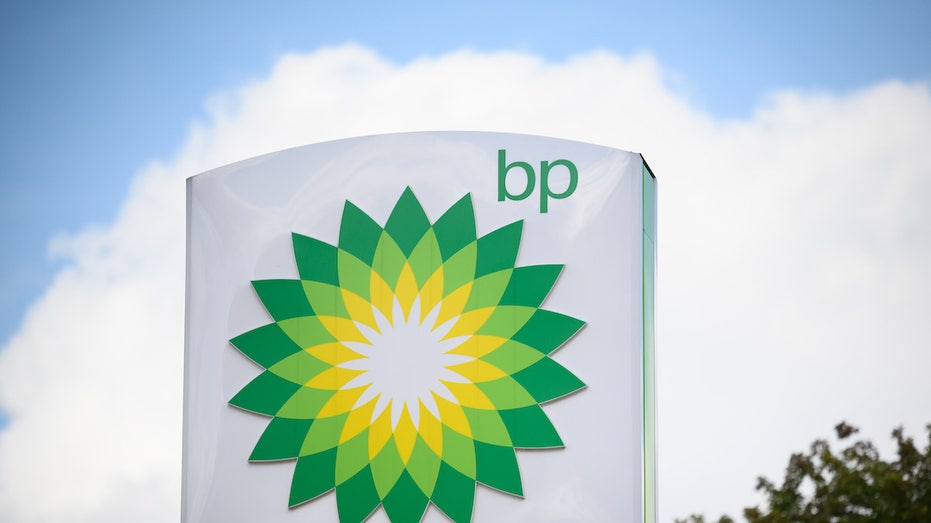
BP abruptly removed Chairman Albert Manifold on Tuesday, citing “serious concerns” tied to governance, oversight and conduct issues, sending shares lower and deepening uncertainty at the oil giant.
The company said Manifold, who had served as chairman for just eight months, was removed effective immediately after the board unanimously concluded he should no longer remain in the role.
“This follows serious concerns raised to the board related to important governance standards, oversight and conduct,” BP said in a statement, without providing additional details.
The surprise ouster rattled investors. BP shares plunged nearly 10% in London trading and were briefly halted before recovering some losses. The broader European energy sector was down less than 1%.
HIGH ENERGY PRICES RISK KEEPING INFLATION ABOVE 2% TARGET, CONCERNING FED POLICYMAKERS

Albert Manifold, then-chief executive officer of CRH Plc, left, pauses during a Bloomberg Television interview in London, U.K., on Tuesday, Aug. 19, 2014. (Chris Ratcliffe/Bloomberg via Getty Images / Getty Images)
The shake-up lands at a critical moment for BP, which has struggled with investor confidence, lagging stock performance and questions about its long-term strategy.
Manifold was brought in last October to help oversee BP’s pivot back toward oil and gas production after years of aggressive climate-focused messaging and renewable energy investments that frustrated some shareholders.
The BP company logo is seen outside a petrol station on Sept. 23, 2021, in London, England. (Leon Neal/Getty Images / Getty Images)
The former CRH chief executive, who had no prior energy industry experience, had support from activist hedge fund Elliott Management, which has built a roughly 5% stake in BP and pushed for stronger financial performance.
Manifold also helped install current CEO Meg O’Neill, the former Woodside Energy chief, as BP’s fifth CEO since 2020.
BP has been plagued by executive instability in recent years. Former CEO Bernard Looney was fired in 2023 after admitting he misled the board about relationships with colleagues. His successor, Murray Auchincloss, exited abruptly in December.

BP logo and stock graph are seen through magnifier displayed in this illustration taken Sept. 4, 2022. (Reuters Photos)
The repeated management upheaval has fueled persistent speculation that BP could eventually become a takeover target or face pressure to break itself apart.
CLICK HERE TO GET FOX BUSINESS ON THE GO
The latest boardroom drama also comes as major oil companies increasingly prioritize shareholder returns and fossil fuel production over costly green-energy expansion plans amid pressure from investors demanding higher profits and stronger stock performance.
Reuters contributed to this report.

Court blocks Alabama from erasing significantly Black US House district
Fifth district bancorp director Linda Sins sells $120 in shares

NYT Investigation Exposes CFTC Officials Suspended Over Prediction Markets Scrutiny

The forbidden history of radical Islam

US brings back mandatory military draft registration

Steven Gerrard disagrees with Gary Neville over ‘shock’ Chelsea and Arsenal claim | Football

Register Renaming | Hackaday

SE PREPARE PARA A SEMANA CRIPTO: BITCOIN E O ACORDO DE PAZ

How To Come Out Of Financial Hardship | Pastor Biodun Fatoyinbo | COZA Sunday Service 24-05-2026

STOP HAVING DIAMOND HANDS YOU WILL LOSE NEXT ALTCOIN SEASON #xrp #crypto #cryptocurrency
-

 Crypto World5 days ago
Blockchain.com files with SEC for U.S. IPO
-

 Fashion4 days ago
Holiday Weekend Open Thread – Corporette.com
-

 Business4 days ago
Dell Technologies DELL Stock Surges 15% on AI Server Momentum and Analyst Upgrades in 2026
-

 Crypto World5 days ago
Bitcoin Accumulation Weakens as BTC Realized Losses Hit $600M
-

 Crypto World3 days ago
Robinhood crypto COO Tanya Denisova exits
-

 Crypto World4 days ago
Space X IPO Is ‘Bad News’ for Tech Stocks: But What About Bitcoin?
-

 Politics4 days ago
Makerfield: a tale of two social-media histories
-

 Business2 days ago
NYT Strands Answers May 24 2026 Revealed for Puzzle No. 812 Theme Summer Essentials
-

 Crypto World5 days ago
MicroStrategy’s Saylor Says Miners No Longer Set Bitcoin Price, Another Force Has Taken Over
-

 Tech1 day ago
Microsoft’s quiet Claude Code retreat and the real cost of enterprise AI
-

 Tech5 days ago
WhatsApp ads could make Irish debut after discussions with DPC
-

 Crypto World4 days ago
AI infrastructure race heats up as IREN pitches full-stack strategy, WhiteFiber lands $160M deal
-
 Tech4 days ago
A 0.12% parameter add-on gives AI agents the working memory RAG can’t
-

 Tech5 days ago
You Can Now Add ChatGPT To PowerPoint
-
 NewsBeat5 days ago
Charity run by Reform leader Malcolm Offord accused of ‘law breaking’ over Scottish registration
-

 Business5 days ago
Trump Invests $1M-$5M in Kura Sushi USA Chain With 27 California Locations
-

 Sports5 days ago
2026 CJ Cup Byron Nelson leaderboard: Brooks Koepka finds putting stroke in Round 1
-

 Crypto World6 days ago
Exa Labs raises $250 million in funding led by a16z
-
Business5 days ago
Goldman Sachs reinstates Ageas stock coverage with neutral rating
-

 Tech1 day ago
Westone Audio and Etymotic Acquired by Fidelity Collective in Major IEM Market Move
You must be logged in to post a comment Login