

Business
Oil Prices Swing Sharply on US Strikes in Iran as Strait of Hormuz Tensions Escalate

LONDON — Global oil benchmarks showed sharp and divergent movements Tuesday as fresh US military strikes in southern Iran reignited fears over supply disruptions through the Strait of Hormuz, even as diplomatic efforts for a potential peace deal continued in the background.
Brent crude, the international benchmark, rose 2.95% to $98.98 per barrel, reflecting renewed risk premiums tied to potential threats to shipping lanes. In contrast, West Texas Intermediate crude fell 4.29% to $92.46 per barrel, highlighting market uncertainty and differing interpretations of the latest geopolitical developments.
The volatility underscores how sensitive energy markets remain to events in the Middle East. The Strait of Hormuz, a narrow chokepoint through which roughly 20% of the world’s petroleum supply passes, has become a focal point for investors monitoring both military actions and diplomatic signals.
Analysts said the mixed price action reflects conflicting forces: immediate concerns over possible Iranian retaliation or shipping disruptions following US strikes, tempered by hopes that ongoing negotiations could lead to de-escalation and reopening of key routes.
The US military confirmed it conducted self-defense strikes in southern Iran, injecting fresh uncertainty into already fragile energy markets. This development reversed some of the earlier optimism that had driven prices below $100 per barrel on expectations of a diplomatic breakthrough.
Market participants are closely watching developments around US-Iran peace negotiations. Optimism about a potential agreement had previously eased prices, but military friction has kept supply expectations uncertain and risk premiums elevated.
Other benchmarks reflected similar volatility. The OPEC Basket fell 1.72% to $113.44 per barrel, while Urals oil dropped 4.92% to $96.32. RBOB gasoline declined 3.39% to $3.34 per gallon, and heating oil slipped 2.66% to $3.78 per gallon.
Energy strategists noted that the divergent movements between Brent and WTI highlight regional differences in supply concerns and refining dynamics. Brent’s rise points to global supply risks, while WTI’s decline may reflect ample US domestic production and storage levels.
The latest flare-up comes amid broader efforts to stabilize the region. Diplomatic sources have indicated that talks between Washington and Tehran are ongoing, though progress remains fragile. Any agreement that secures safe passage through the Strait of Hormuz could significantly ease pressure on global energy prices.
Oil traders said the market is pricing in a range of scenarios, from limited military exchanges to more prolonged disruptions. The possibility of Iranian-backed groups targeting shipping has added another layer of complexity to already volatile trading conditions.
Major consumers like Europe, Asia and the United States are monitoring the situation closely. Higher energy costs could exacerbate inflation concerns and slow economic growth if the tensions persist.
The energy sector’s reaction has rippled through global financial markets. Shares in major oil companies showed mixed performance, with some gaining on higher prices while others faced pressure from broader risk aversion.
Analysts warn that sustained disruption in the Strait of Hormuz could push Brent crude well above $110 per barrel. Conversely, a successful diplomatic resolution could see prices retreat quickly toward the $80-85 range.
The current volatility echoes previous periods of Middle East tension that have historically triggered sharp moves in commodity markets. However, today’s energy landscape differs due to higher global spare capacity and the rapid growth of renewable energy sources, which provide some buffer against prolonged shocks.
US strategic petroleum reserves and increased domestic production have also helped moderate some of the price spikes. Nevertheless, the psychological impact of potential supply disruptions continues to influence trading decisions.
For consumers, the latest price swings may soon translate into higher costs at the pump and for heating. Airlines and shipping companies are already adjusting fuel surcharges in response to the uncertainty.
Emerging markets with high energy import dependence face particular risks. Countries in Asia and Africa could see increased pressure on budgets and inflation if oil prices remain elevated for an extended period.
The International Energy Agency and OPEC continue monitoring the situation. Both organizations have emphasized the importance of maintaining stable oil flows through critical chokepoints like the Strait of Hormuz.
Market participants expect continued volatility in the coming days as developments unfold. Diplomatic updates, military statements and shipping data will be closely watched for signals about potential supply impacts.
The current environment highlights the delicate balance between geopolitical risks and economic realities. While short-term price spikes grab headlines, longer-term trends toward energy diversification and renewable adoption may eventually reduce the world’s vulnerability to such events.
For now, traders remain on edge as they assess the latest chapter in long-running tensions between the United States and Iran. The coming weeks could prove decisive in determining whether current price levels represent a temporary spike or the beginning of a more sustained period of elevated energy costs.
As markets digest the latest developments, the focus remains on the narrow waterway that carries so much of the world’s oil. Any escalation or resolution there will likely set the tone for energy prices through the remainder of 2026.
The mixed movements in benchmarks today serve as a reminder of oil’s enduring role as a geopolitical barometer. Even as the world transitions toward cleaner energy, events in key producing regions continue to send ripples through global economies.



Hidden tunnels, fake doors: China probes mining tragedy that killed 82

Archer Aviation: Beaten Down For One Prime Reason
RBNZ holds rates at 2.25%, signals future hikes on inflation risks
SK Hynix and Micron are the latest tech firms to join the growing list of stocks with mega valuations.
NEW YORK — The New York Times Strands puzzle for Monday, May 26, 2026, delivered another engaging word-search challenge to players celebrating Memorial Day with a clever mix of summer-themed words and a satisfying spangram that tied the grid together.
Puzzle number #289 featured a 6×8 letter grid containing hidden words connected by a common theme. The objective: find all the theme words plus one spangram — a word that uses every letter in the puzzle at least once — to complete the game.
Today’s theme was BEACH DAY ESSENTIALS. Players who cracked the code discovered the following six themed words hidden horizontally, vertically or diagonally in the grid:
- SUNSCREEN
- TOWEL
- UMBRELLA
- COOLER
- FLIPFLOPS
- SANDCASTLE
The spangram that connected everything and used every letter in the puzzle was SEASHORE, a fitting word that captured the overall summer vibe of the puzzle.
Many players reported solving the puzzle in 12 to 18 minutes, with the spangram proving to be the trickiest element for some. The presence of longer compound words like SUNSCREEN and FLIPFLOPS required careful scanning of the grid, while shorter words like TOWEL and COOLER offered early breakthroughs for solvers.
Strands, which launched in 2024 as part of The New York Times Games lineup, has quickly become a favorite among word game enthusiasts who enjoy the hybrid format combining elements of word searches, crosswords and Connections. Each daily puzzle offers a fresh grid with a hidden theme that becomes clearer as more words are uncovered.
On Memorial Day 2026, with many Americans enjoying a long weekend, the beach-themed puzzle resonated strongly. Social media platforms filled with shared results showing players’ solve times and reactions. The summer-appropriate theme felt particularly timely as temperatures rise across much of the country.
The New York Times Games team designs each Strands puzzle to offer a balance of accessibility and challenge. Monday’s edition was rated as moderate difficulty, with the spangram providing that final satisfying “aha” moment for most players.
For those who missed the solution, the theme words all relate to items commonly taken on beach outings or summer vacations. The spangram SEASHORE cleverly encompasses both the location and the overall feeling of the puzzle.
Strands continues gaining popularity as part of the expanding New York Times puzzle ecosystem that includes Wordle, Connections, Spelling Bee and The Mini Crossword. The game’s shareable results feature allows players to post colorful grids without spoiling the answers for others still solving.
Educational experts have praised Strands for developing visual scanning skills, vocabulary recognition and thematic thinking. Teachers have begun incorporating similar word-search activities in classrooms to build literacy and pattern recognition abilities.
The Memorial Day timing meant higher participation from casual players who typically engage with puzzles only on days off. This broader audience created more varied reactions online, with beginners celebrating any completion and veteran solvers aiming for faster times or perfect solves without hints.
Regular players have developed strategies such as scanning for common letter combinations, focusing on longer words first, or looking for unusual letter patterns that might indicate the spangram. Monday’s puzzle rewarded those who noticed clusters of summer-related vocabulary early.
The New York Times has steadily refined Strands since its introduction, adjusting word selection and grid complexity to maintain engagement across different skill levels. The daily reset at midnight local time creates a shared global experience as players in different time zones tackle the same challenge throughout the day.
Monday’s solution highlighted the game’s ability to blend education and entertainment. The beach theme sparked memories of summer vacations for many, while the spangram encouraged creative thinking about how individual words connect to a larger concept.
Community discussions around the daily puzzle often highlight different solving approaches. Some players tackle obvious theme words first, while others scan systematically row by row. The variety of strategies contributes to the game’s broad appeal.
As Strands reaches higher puzzle numbers, its cultural impact continues expanding. References to the game appear in podcasts, television shows and casual conversations, cementing its place in modern digital culture alongside other NYT Games offerings.
For families, Strands serves as an engaging group activity. Parents solve alongside children, discussing possible theme connections and sharing strategies, turning screen time into interactive learning moments.
The May 26 puzzle demonstrated the game’s range. From practical beach items to the encompassing spangram, it covered both literal and conceptual territory while remaining solvable for most dedicated players.
Looking ahead, Tuesday’s puzzle will reset with fresh letters and a new theme. Regular players often study letter frequency patterns and common thematic clusters to improve performance over time.
The game’s clean interface and lack of advertisements have contributed to its sustained success. Unlike more commercial puzzle apps, Strands prioritizes the solving experience above all else.
The New York Times Games division continues investing in its daily offerings, with Strands remaining one of the standout additions to the lineup. Its growth reflects broader trends toward mentally stimulating entertainment in an increasingly digital world.
For those who struggled with Monday’s puzzle, the official New York Times site offers hints and eventual solutions for previous days. However, many prefer the satisfaction of solving in real time without spoilers.
The May 26 edition joins thousands of other Strands puzzles in providing daily moments of intellectual satisfaction. Whether solved quickly or after several attempts, it delivers the rewarding feeling of uncovering hidden connections in a grid of letters.
In an often chaotic world, simple games like Strands offer a brief escape and a reminder that sometimes the most enjoyable discoveries come from finding order within apparent randomness.
Players are already looking forward to tomorrow’s challenge, continuing a daily tradition that has brought millions together through shared curiosity and friendly competition. The beach-themed solution for Memorial Day 2026 provided the perfect mental getaway for many enjoying the long weekend.

FUNDAMENTALS
* Spot gold rose 0.2% at $4,516.76 per ounce, as of 0051 GMT. U.S. gold futures for June delivery gained 0.3% to $4,516.30.
* The dollar eased, making greenback-priced bullion more affordable for holders of other currencies. [USD/]
* Iran said on Tuesday the United States had violated a ceasefire by striking targets near the contested Strait of Hormuz, potentially complicating efforts to bring the war to a close.

* U.S. Secretary of State Marco Rubio, meanwhile, said it could take “a few days” to negotiate a deal to halt the conflict, after both sides had previously indicated progress on an initial agreement that would end hostilities and restart shipping through the Strait.
* U.S. consumer confidence eased in May as worries about inflation linked to the war in Iran intensified, and households’ views of the labor market were largely pessimistic, though they anticipated an improvement by the end of this year.
* Markets are looking out for upcoming remarks by U.S. Federal Reserve policymakers, including Fed Vice Chair Philip Jefferson and Governor Lisa Cook, to gauge the impact of inflation on future monetary policy stance.
* Investors also await the U.S. Personal Consumption Expenditures (PCE) data for April due on Thursday, for more cues on U.S. monetary policy.
* UBS lowered its year-end gold price target by $400 to $5,500 due to persistent risk from higher yields and the dollar.
* Spot silver rose 0.6% to $77.40 per ounce, platinum was little changed at $1,957.75, and palladium gained 0.9% to $1,391.68.

CSW Industrials Is Doing A Great Job, But That's Not Reason To Be Bullish
MSCI’s Asian equities gauge rose 1.1% to an all-time high, with South Korea — a bellwether for AI investments — jumping as much as 5% to a peak. Chipmaker SK Hynix Inc. surged as much as 11% to top $1 trillion in market capitalization.
Asian tech gains followed a Wall Street rally that lifted the S&P 500 and the Nasdaq 100 indexes to all-time highs on Tuesday. Chipmakers led the charge, with Micron Technology Inc. surging 19% to also top $1 trillion in market valuation.
Elsewhere, expectations for the US and Iran to sign a peace deal helped Brent crude oil edge 0.5% lower to about $99.10 a barrel. A Bloomberg gauge of the dollar slipped 0.1% and Treasuries held their gains, with the yield on the benchmark 10-year holding at 4.48%. Gold was a touch higher, trading around $4,520 an ounce.
The moves underscored rising confidence in Asian chipmakers and tech firms seen as the “picks and shovels” of the AI boom. Optimism that the Middle East conflict may be moving toward a resolution also helped propel global equities to fresh highs, as traders bet easing geopolitical risks could temper inflation pressures.
“Tech and AI are paying no mind to the Iran tensions,” said Andrew Jackson, head of Japan equity strategy at Ortus Advisors. Micron’s strong rally on Tuesday following a bullish analyst report is a tailwind for any memory-related stocks, he added.
In geopolitical news, President Donald Trump said talks to extend a ceasefire and reopen the Strait of Hormuz are proceeding. Secretary of State Marco Rubio cautioned that any accord would likely take a few days to finalize. Still, security in the waterway remained unclear after the two sides exchanged strikes overnight and US Central Command pushed back on reports that suggested the military was helping escort vessels.
“While we’d like to share the optimism, there have been enough setbacks in the process of crafting an agreement between Washington and Tehran that we’ll remain cautious until there is more tangible progress,” said Ian Lyngen at BMO Capital Markets.
Elsewhere, data showed US consumer confidence edged down in May as views of current economic conditions settled back amid rising prices due to the war. The Conference Board’s gauge fell to 93.1 after an upward revision to the prior month. The median economist estimate was 92.
Meanwhile, focus in Asia is squarely on technology, with SK Hynix sitting at the chokepoint of the global AI buildout.
Memory chips have emerged as a critical bottleneck determining how quickly data centers can expand capacity. Investors and analysts expect memory chip shortages to last through 2027, giving SK Hynix and rivals Samsung Electronics Co. and and Micron unusual pricing power over the world’s largest technology companies.
SK Hynix became only the third Asian company to reach a $1 trillion valuation, joining Taiwan Semiconductor Manufacturing Co. and Samsung, which crossed the milestone earlier this month.
“Market participants are placing their bets on peace and subsequently buying into very strong equity fundamentals,” said Kyle Rodda at Capital.com.
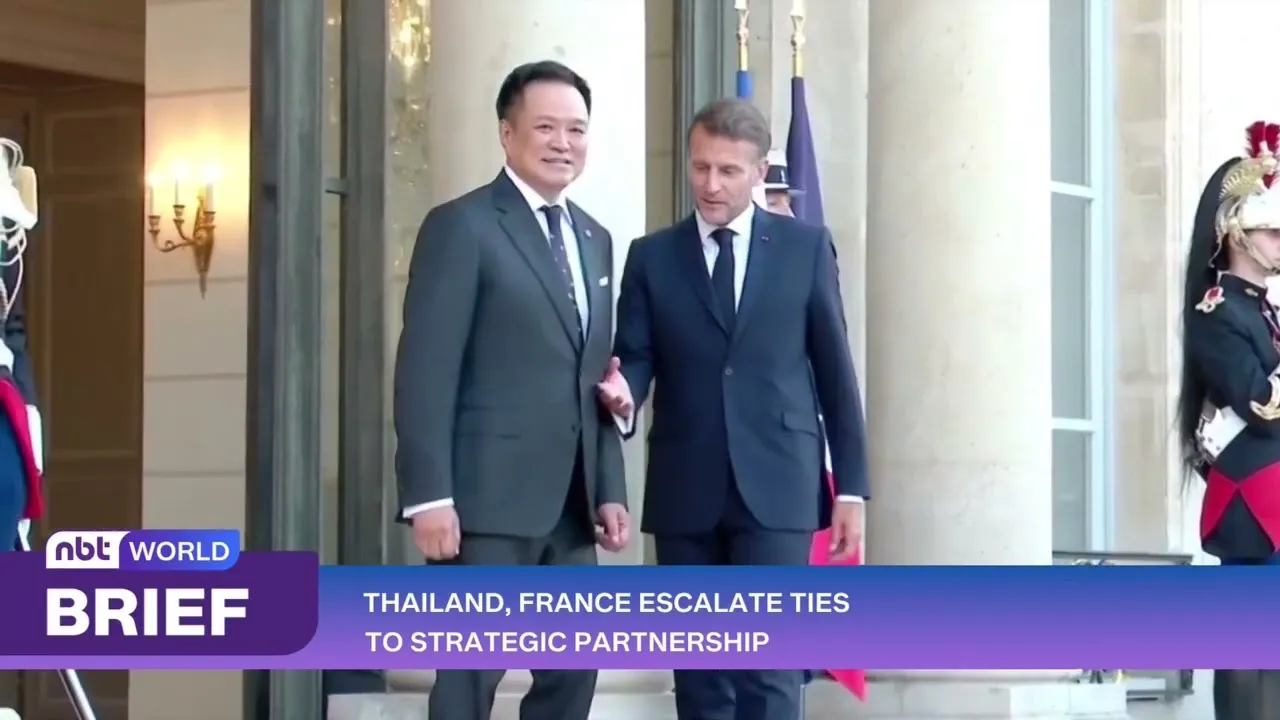
Thailand and France are advancing their bilateral relations by deepening cooperation across multiple sectors. This enhanced partnership aims to boost economic ties, cultural exchanges, and strategic collaboration. Strengthening diplomatic relations, both nations are committed to addressing global challenges together while fostering mutual growth and understanding, marking a significant step in their collaborative efforts.
Thailand and France Strengthen Relationship to Strategic Partnership
Thailand and France have elevated their bilateral relationship to a strategic partnership, marking a significant milestone in diplomatic relations. This move is expected to enhance cooperation in various sectors, including trade, technology, and defense. Both nations aim to leverage their unique strengths to foster economic growth and regional stability.
This strategic partnership underscores the commitment of Thailand and France to address global challenges collaboratively. Emphasizing sustainable development, the partnership plans to focus on climate change initiatives and cultural exchange programs, enriching the social and environmental landscapes of both countries. The collaboration promises to create a robust platform for knowledge sharing and innovation enhancement.
Ultimately, the strengthened ties between Thailand and France hold promise for a thriving future, with mutual benefits transcending bilateral boundaries. This partnership is poised to positively impact regional dynamics, positioning both nations as key players in international relations.
Other People are Reading

The influencer economy is booming globally and in Thailand. AI is driving growth, but concerns exist regarding platform dependence and the need for stronger standards and fairer rules to ensure competitiveness and protect consumers.
Key Points
- The global influencer economy is booming, projected to reach $607 billion by 2032, driven by AI’s efficiency gains. Thailand’s market is also growing, particularly in food, beverage, fashion, and beauty, but faces platform dependence concerns.
- Major markets like China, the US, and South Korea are balancing industry promotion with regulations, addressing issues like fake engagement, AI content, and disclosure. This ensures a healthier, more competitive environment.
-
Thailand requires stronger standards and fairer rules for its influencer ecosystem. Proposed measures include quality certifications, enhanced promotion, skills development, accessible governance, equitable platform dealings, and support for market expansion to boost global competitiveness.
Global Influencer Economy’s Rapid Expansion
The global influencer economy is experiencing explosive growth, evolving from simple online content into a complex commercial ecosystem. This sector now encompasses advertising, e-commerce, brand promotion, digital services, and consumer engagement. Projections estimate the global influencer economy was valued at US$43.9 billion in 2023, with an anticipated average annual growth of 33.9% leading to a projected US$607 billion by 2032. Influencer marketing, specifically, was valued at US$32.6 billion in 2025 and is expected to surge at an impressive 51.9% annual growth rate through 2032. Artificial intelligence is a significant catalyst, reducing barriers to entry and enhancing content creation efficiency, contributing to the rise of an estimated 127 million influencers worldwide in 2025.
Thailand’s Influencer Market Dynamics and Regulatory Approaches
Thailand’s influencer market is also exhibiting robust growth, projected to increase by 15–20% annually from 2025 to 2029, with the food/beverage and fashion/beauty sectors being dominant users. However, a critical concern is the heavy concentration of influencer marketing on TikTok, which accounts for a substantial 66% of activity, raising issues of platform dependence and power imbalances. In contrast, countries like China, the US, and South Korea are actively managing their influencer economies through a dual approach of promotion and regulation. China focuses on shared responsibility for online content and professional skill development, while the US targets misleading practices like fake followers and AI-generated content, alongside antitrust enforcement and foreign interference prevention.
Recommendations for Thailand’s Influencer Ecosystem
While Thailand possesses existing policy frameworks that support the influencer economy, further enhancements are crucial for a more robust, equitable, and competitive sector. Recommendations include establishing quality certification systems for influencers, more effective promotion of the influencer economy, and investing in professional skill development for creators. Furthermore, developing accessible content governance mechanisms, promoting fairness across platforms and service fees, and supporting domestic and international market expansion for Thai influencers are vital. Implementing these measures will foster an influencer economy characterized by clear standards and enhanced global competitiveness.
Other People are Reading

PGA Tour schedule is changing for 2027. Here’s what you need to know

California may let Linux bypass age check

Tottenham: Premier League club launches season review after injury woe


-

 Crypto World5 days ago
Blockchain.com files with SEC for U.S. IPO
-

 Fashion4 days ago
Holiday Weekend Open Thread – Corporette.com
-

 Business5 days ago
Dell Technologies DELL Stock Surges 15% on AI Server Momentum and Analyst Upgrades in 2026
-

 Crypto World5 days ago
Bitcoin Accumulation Weakens as BTC Realized Losses Hit $600M
-

 Crypto World4 days ago
Robinhood crypto COO Tanya Denisova exits
-

 Crypto World5 days ago
Space X IPO Is ‘Bad News’ for Tech Stocks: But What About Bitcoin?
-

 Politics4 days ago
Makerfield: a tale of two social-media histories
-

 Business2 days ago
NYT Strands Answers May 24 2026 Revealed for Puzzle No. 812 Theme Summer Essentials
-

 Tech2 days ago
Microsoft’s quiet Claude Code retreat and the real cost of enterprise AI
-

 Crypto World5 days ago
MicroStrategy’s Saylor Says Miners No Longer Set Bitcoin Price, Another Force Has Taken Over
-

 Tech5 days ago
WhatsApp ads could make Irish debut after discussions with DPC
-

 Crypto World5 days ago
AI infrastructure race heats up as IREN pitches full-stack strategy, WhiteFiber lands $160M deal
-
 Tech5 days ago
A 0.12% parameter add-on gives AI agents the working memory RAG can’t
-

 Tech5 days ago
You Can Now Add ChatGPT To PowerPoint
-
 NewsBeat6 days ago
Charity run by Reform leader Malcolm Offord accused of ‘law breaking’ over Scottish registration
-
 Crypto World2 days ago
Nvidia (NVDA) CEO Calls on Super Micro to Strengthen Export Controls Amid Smuggling Probe
-

 Business5 days ago
Trump Invests $1M-$5M in Kura Sushi USA Chain With 27 California Locations
-

 Tech2 days ago
Westone Audio and Etymotic Acquired by Fidelity Collective in Major IEM Market Move
-

 Sports5 days ago
2026 CJ Cup Byron Nelson leaderboard: Brooks Koepka finds putting stroke in Round 1
-

 Crypto World6 days ago
Exa Labs raises $250 million in funding led by a16z
You must be logged in to post a comment Login