Connect with us
DAPA Banner
DAPA Coin
DAPA
COIN PAYMENT ASSET
PRIVACY · BLOCKDAG · HOMOMORPHIC ENCRYPTION · RUST
ElGamal Encrypted MINE DAPA
🚫 GENESIS SOLD OUT
DAPAPAY COMING

Business

From Waste to Value, The Economics Behind the Circular Food System

Published

on

Iran War Could Hit CO2 Supplies by Summer 2026

Food waste isn’t only a sustainability problem anymore. It’s starting to look like one of the more obvious economic leaks in the global food system, and leaks add up fast.

Every time food gets tossed, there’s a whole stack of costs buried inside it, land and water, fertilizer and feed, labor hours, packaging, cold storage, transport, shelf space, then the bill to haul it away and dispose of it. When that food is lost or discarded, the value doesn’t just “go away”, it vanishes from the system instead of supporting margins, stability, and food security.

That’s where the circular food system flips the story. Instead of treating surplus food, by-products, and organic waste as dead ends, circular models try to keep value moving for as long as it realistically can. Sometimes that means preventing waste in the first place.

Other times it’s nutrient recovery, tighter cold-chain performance, redesigning a production step that creates avoidable trim, or turning a by-product into a useful input. For companies in agriculture, manufacturing, retail, and logistics, cutting waste is becoming both an environmental goal and a pretty straightforward business strategy.

1.   Food waste is turning into a balance-sheet issue

The economics of food waste start way before anything hits a dumpster.

Advertisement

A wasted unit of food is basically a receipt for everything that happened earlier. The farm already paid in soil health, water, nutrients, labor, diesel, and time. Then a manufacturer added ingredients, processing steps, quality checks, and packaging. Retail and food service piled on storage, refrigeration, handling, and shelf space.

When food gets wasted, those costs don’t disappear, they get absorbed into margins. So yes, it’s an environmental issue, but it’s also a financial one, and it’s often hiding in plain sight.

That’s why prevention is shifting from “nice to have” to operational common sense. Better forecasting, inventory discipline, shelf-life planning, and tighter quality control can help companies hold onto value before it quietly drains out.

2.   Circular models treat by-products like inputs, not leftovers

A circular food system doesn’t assume every by-product is junk. It asks a more useful question, what’s still valuable in this material, and can we actually capture it without spending more than it’s worth?

Advertisement

Processing creates all kinds of side streams, peels, pulp, shells, fibers, proteins, oils, starches, mineral-rich residues. In a linear setup, those streams often become disposal costs. In a circular setup, they might become animal feed, food ingredients, soil amendments, bioenergy feedstock, packaging material, or a route for nutrient recovery.

Still, the business case can be picky. Quality and consistency matter. Location matters. Market demand matters. Some streams are too mixed, too contaminated, or too expensive to separate and move at scale. Others can generate real value when they’re clean, predictable, and close to a buyer who actually needs them.

And honestly, the goal isn’t to force every waste stream into a high-end “upcycled” product. Sometimes that’s not realistic. The smarter target is preserving the highest practical value at each stage, without pretending every by-product is a gold mine.

3.   Nutrient recovery links circularity to food security

Food security conversations usually focus on producing more food. Fair enough, production matters. But it’s only part of the story.

Advertisement

A resilient food system also has to lose less and use what it already produces more intelligently. Nutrient recovery is one of the clearer bridges between circularity and food security. Food waste, crop residues, manure, and certain processing by-products contain nutrients that can be returned to productive use, if they’re handled safely and in ways that make agronomic sense.

This isn’t a replacement for modern crop nutrition. Farming still relies on accurate nutrient supply, good timing, local soil conditions, and practical expertise in the field. Circular nutrient flows may help, though, by trimming avoidable losses and reducing dependence on fresh inputs where recovery is feasible.

In other words, it’s a complement, not a miracle fix.

4.   Prevention usually protects more value than diversion

When people picture circularity, they often jump straight to composting, anaerobic digestion, or upcycling. Those tools matter. But prevention usually saves more money and more resources, because it stops the loss before the full cost has already been paid.

Advertisement

Preventing waste avoids the cost of growing, transporting, cooling, handling, and disposing of food that never reaches its intended use. Diversion can recover some value after the fact, but prevention keeps that value intact earlier in the chain.

For retailers, the practical levers tend to be demand forecasting, date-code management, smarter markdown strategies, and tighter coordination with suppliers. For manufacturers, it’s often process tuning, ingredient standardization, better quality controls, and packaging choices that protect shelf life instead of shortening it.

The strongest approaches usually blend both. Reduce avoidable waste first. Donate safe surplus where that’s possible. Find secondary markets for suitable by-products. Then send what’s left to composting or energy recovery, instead of treating those as the first and only answer.

5.   Data is making circular food systems easier to fund

One reason food waste is so hard to tackle is that it can be weirdly invisible.

Advertisement

Losses show up across shrink reports, disposal bills, markdowns, yield losses, production slowdowns, quality rejects, temperature excursions, and customer returns. But they don’t always roll up into one clean, decision-friendly metric. Without decent measurement, it’s hard to pinpoint where value is leaking and which fixes are actually worth scaling.

That’s changing. Inventory systems, temperature monitoring, production analytics, shelf-life modeling, and broader supply-chain data are making waste easier to see, and easier to price. Once something becomes measurable, it becomes manageable, at least in theory.

This shift matters for investment. If a company can show where losses occur, why they happen, and what they cost, then circularity stops being a vague “sustainability effort” and starts looking like a performance lever. You can prioritize high-impact interventions, track improvements, and tie waste reduction to financial results instead of good intentions.

6.   How companies can translate waste reduction into business value

A few examples help make this feel less abstract.

Advertisement

ICL Group fits into this conversation through its broader role in crop nutrition, specialty minerals, and resource-efficient agricultural solutions. In circular systems, that role can align with better nutrient use and reduced losses, without overstating it. The careful framing is that ICL supports parts of the broader transition toward more efficient, resilient, and circular food systems, rather than “solving” food waste directly.

Carrier Global is relevant for a simple reason, cold-chain reliability is one of the most practical ways to prevent loss before it happens. Better refrigeration, monitoring, and transport visibility can help protect quality across long supply chains, especially for perishables like produce, dairy, and meat.

Kroger works as a retail example because food-waste reduction and donation efforts connect day-to-day operations with social impact. At the store level, sharper forecasting, better markdown management, and smoother donation systems can reduce shrink while redirecting edible surplus into communities.

Nestlé is a useful manufacturing example because large producers have multiple waste levers, packaging choices, process improvements, ingredient recovery, and by-product reuse. Scale matters here. Big companies can move circularity from isolated pilots into standard practice, though they also face the usual challenge of doing it consistently across many sites.

Advertisement

7.   The next phase is circularity by design

The most mature circular strategies don’t begin at disposal. They start upstream, with design.

That means designing products, processes, packaging, and supply chains with waste reduction built in from day one. It looks like asking, can ingredients be used more efficiently, can shelf life be protected without compromising quality, do by-products already have identified buyers, can nutrient-rich streams be returned safely to productive use?

This is also where coordination becomes the whole game. Food companies, agricultural input providers, logistics firms, retailers, and tech platforms all have pieces of the puzzle. No single player makes the system circular on their own. It takes alignment across the chain, and that can be slow, messy, and very unglamorous. Still, it’s probably the only way it scales.

Conclusion

The circular food system is moving beyond a sustainability slogan. It’s becoming an economic framework for protecting value across farming, food manufacturing, retail, logistics, and consumption.

Advertisement

Food waste is lost resources, lost margin, and lost resilience. Circular models shift the equation by preventing avoidable losses, recovering useful materials, returning nutrients to productive systems where it makes sense, and using data to make waste visible enough to manage.

The companies that pull ahead won’t necessarily be the ones making the loudest claims. They’ll be the ones that spot where value is leaking, build practical systems to keep it in play, and connect sustainability targets to measurable business performance.

As food security, resource efficiency, and profitability become more tightly linked, circularity offers a pretty grounded path forward, waste less, recover more, and design food systems where value keeps moving.

Advertisement

Continue Reading
Click to comment

You must be logged in to post a comment Login

Leave a Reply

Business

Argus downgrades Zoetis stock rating on competition, margin pressure

Published

on


Argus downgrades Zoetis stock rating on competition, margin pressure

Continue Reading

Business

Nebius: Verticalization Is Strengthening The Bull Case

Published

on

Bitfarms Rebrands To Keel Infrastructure, But Financial Engineering Still Weighs

Nebius: Verticalization Is Strengthening The Bull Case

Continue Reading

Business

Cantor Fitzgerald raises DeFi Development stock price target to $7 on treasury yield expansion

Published

on


Cantor Fitzgerald raises DeFi Development stock price target to $7 on treasury yield expansion

Continue Reading

Business

Corcept to resubmit relacorilant application to FDA

Published

on


Corcept to resubmit relacorilant application to FDA

Continue Reading

Business

how to buy genuine licences safely

Published

on

Across industries, businesses are noticing a sharp decline in their organic website traffic — even when their Google rankings haven’t changed. The culprit? The rise of AI-powered search engines like ChatGPT, Google Gemini, and Perplexity.

Buying second hand software safely online means choosing genuine licences at competitive prices from certified resellers.

The primary way to purchase original software is the official websites of individual publishers, such as Microsoft and Adobe. However, the market for second hand software licences should not be overlooked, as it offers a way to obtain legitimate products at a lower cost.

Online resellers offer activation keys at competitive prices, and these licences frequently originate from corporate surpluses or legally permitted reallocations, making it a cost-effective approach for private users, self-employed professionals, or small offices looking to cut costs without compromising on quality or security.

Is It Legal to Buy Second Hand Software in the UK?

Yes, purchasing second hand software licences is legal, but it is not uncommon to encounter sceptical users. The term “second hand software” refers to the possibility of purchasing pre-owned licences at a discounted price that are nonetheless entirely genuine.

According to the Court of Justice of the European Union ruling C-128/11 of 2012 (the case UsedSoft v Oracle International Corp.), a publisher’s right of distribution is exhausted upon the first sale. After that point, the publisher cannot prevent the resale of perpetual licences, whether distributed on physical media or as ESD (Electronic Software Distribution).

Advertisement

That said, there are still conditions and limitations governing this practice, and it is the responsibility of a reputable reseller to operate with full transparency. Maintaining full legal compliance throughout the supply chain is essential, not only for the reseller’s own credibility, but also to preserve the trust of their customers.

How to Identify a Trustworthy Reseller?

When it comes to “certified resellers” of pre-owned licences, it is easy to fall into basic traps. After all, anyone can claim to hold such a status without necessarily having to substantiate it. A user may take the claim at face value after seeing a logo on a website and look no further.

A reputable portal, however, should provide direct links to the pages of publishers whose partner status it claims to hold. As such, a Microsoft Cloud Solution Provider or an Adobe Certified Reseller should be independently verifiable via the respective publishers’ own portals. Both Microsoft and Adobe, for instance, offer internal search tools on their websites through which this information can be confirmed.

Reviews on Aggregators Such as Trustpilot

A common way to assess whether it is worth purchasing second hand software from a given seller is through first-hand experience. Most buyers check reviews, whether direct, indirect (via discussions on forums such as Reddit), or left on Trustpilot and similar aggregators. This has become one of the standard best practices among digital-era consumers.

Advertisement

Beyond the score itself, it is also worth reading the content of the reviews to understand a brand’s key strengths and any potential weaknesses, such as speed of licence delivery, ease of activation, or post-sale customer support. These are all critical factors when it comes to the reliability and promptness of an online licence sales service.

Risks and Issues in the Second Hand Software Sector

Whilst a low price is attractive, it is important to bear in mind that prices that seem too good to be true, such as those as low as a few pounds, should raise immediate concerns. A good deal is always welcome, but discounts that are unrealistic relative to market averages (or to the value of the licence obtainable directly from the official publisher’s website) may conceal issues relating to the product’s legality.

In some instances, licences are revoked after activation, particularly when a publisher detects improper use. This can cause direct inconvenience to the user who has paid for their activation key and is subsequently unable to use the software. A trustworthy reseller must offer the right of withdrawal in line with applicable consumer protection legislation: typically 30 days for a refund if the key has not been activated, as well as providing refunds and replacements, thereby covering the most common post-sale requirements.

PrimeLicense: An Established Second Hand Software Reseller

PrimeLicense is a second hand software reseller, operating under Prime Digital Solutions Inc., with more than 15,000 paying customers across five European markets, including over 4,700 in the United Kingdom, since 2023. The brand’s reputation can be independently verified on Trustpilot, where the brand holds a 4.8 / 5 “Excellent” rating from more than 1,400 verified customer reviews. Every order on PrimeLicense is covered by Trusted Shops Buyer Protection up to €2,500, providing an independent layer of protection on the purchase amount.

Advertisement

PrimeLicense is also a verified Microsoft Cloud Partner, listed in the official Microsoft AppSource Partner Directory, and operates as an authorised reseller for publishers, including Adobe, Kaspersky and McAfee.

How Much Can You Save by Buying Genuine Second Hand Software Licences?

This is a legitimate question buyers regularly ask, it is therefore worth making a direct comparison across some of the most in-demand products, such as Microsoft Office Home 2024, a perpetual licence that is increasingly hard to find on the open market.

Let’s look at Microsoft Office Home & Business 2024, a perpetual licence sold on the official Microsoft website for £249.99. Through a reseller, the same genuine licence is heavily discounted, bringing the final price down to £110.90. Purchasing a lifetime licence today can deliver savings over years compared to subscription costs.

Checklist: How to Identify a Trustworthy Seller?

Before drawing conclusions, here is a quick checklist to help determine straight away whether you are choosing a reliable second hand software seller:

Advertisement
  • Independently verifiable certifications and partnerships
  • High review scores
  • Discounted but realistic pricing
  • Active, responsive customer support in your language
  • Legal transparency
  • Secure and traceable payment methods

Conclusion

The search for second hand software online has become a savvy way to save on the ever-rising cost of licences and subscription plans. This practice is common among private users but has also extended to self-employed professionals and small offices seeking to manage costs whilst retaining access to genuine productivity tools, operating systems, antivirus software, and more.

Whilst the market features many trustworthy resellers, it can also conceal pitfalls so it is advisable to do your research carefully, following the guidance set out above, before taking the final step.

FAQs

Where can I buy cheap software?

The key is finding an authorised reseller who can offer genuine licences at below-retail prices. Look for a certified Microsoft or Adobe partner, transparent return policies, secure payment methods and verifiable customer reviews on independent platforms such as Trustpilot.

How do you get a software licence?

Getting a software licence is straightforward: you purchase it directly from the software developer, a certified retailer or an authorised reseller. Once purchased, you receive an activation code via email, along with specific instructions for downloading and installing the software.

Is second hand software legal?

Yes. The resale of second hand software has been legal across the European Union since under the Court of Justice of the EU ruling C-128/11 of 3 July 2012 (UsedSoft v Oracle). The principle of exhaustion permits the resale of perpetual licences, provided they were legitimately purchased and are no longer in use by the original owner.

Advertisement

Why is second hand software cheaper than buying from official websites?

Prices are lower because second hand licences are already on the market, originating from corporate decommissioning, surpluses, or business stock. Since they are not sold directly by the publisher, the licences can be offered at a lower cost.

Can I use the licence on multiple devices?

It depends on the type of licence purchased. OEM licences are tied to a single device and cannot be transferred: once activated, they remain permanently associated with that device. Retail licences, by contrast, can be transferred, but only one device may be active at a time; the licence must be deactivated on the original device before being activated on a new one. Volume licences are designed for the business market and allow activation across multiple devices.

Is PrimeLicense a certified reseller?

Yes. PrimeLicense is the consumer software-licensing brand operated by Prime Digital Solutions, Inc., a US company incorporated in Delaware. The entity is listed as a Microsoft Cloud Partner in the official Microsoft AppSource Partner Directory and operates as an authorised reseller for publishers including Adobe, Kaspersky, and McAfee. Independent verification is available directly on the Microsoft AppSource Partner Directory and on PrimeLicense’s Trustpilot profile.

Advertisement

Continue Reading

Business

Why it's now harder to get a Saturday job

Published

on

Why it's now harder to get a Saturday job

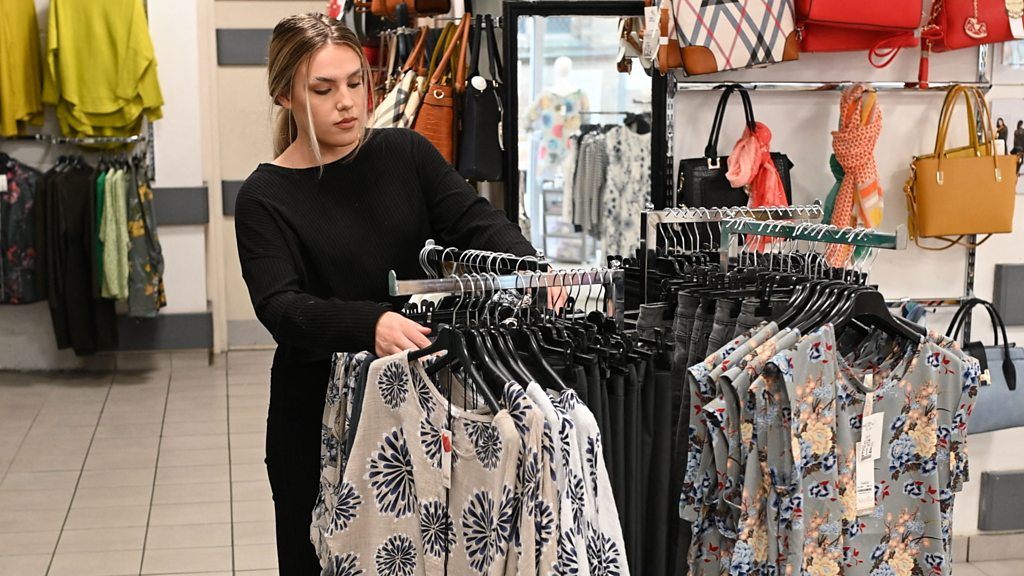
The boss of Next has warned there has been a “dramatic fall” in the number of entry-level job opportunities in the UK.

Continue Reading

Business

Dick’s Sporting Goods (DKS) earnings Q1 2026

Published

on

Dick's Sporting Goods (DKS) earnings Q1 2026

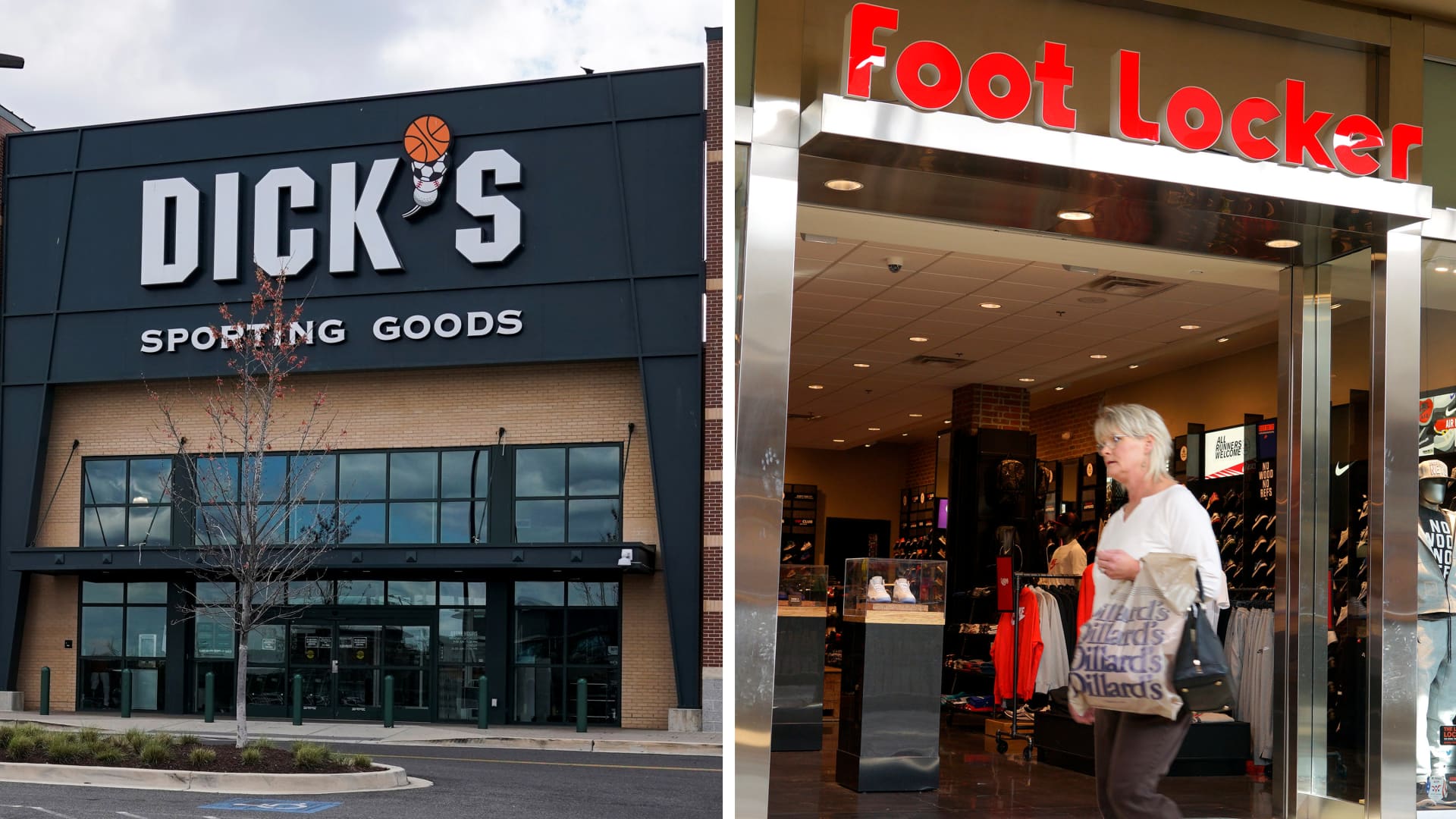
Foot Locker is slowly getting back to growth, but the costly turnaround of the legacy sneaker store is still weighing on its parent company Dick’s Sporting Goods‘ bottom line, as the company posted an earnings miss on Wednesday. 

In the three months ended May 2, Dick’s incurred $96.5 million in charges related to the acquisition. That includes $53.8 million for merger and acquisition costs like severance and store closings, and $42.7 million to clear through sale inventory.

Those expenses contributed to a miss on Dick’s bottom line, as top line results exceeded expectations. 

Meanwhile, Foot Locker eked out comparable sales growth of 0.6%, the first time the metric rose since the end of fiscal 2024, while Dick’s namesake stores saw comparable sales climb 6%, leading to a combined figure of 4.1% growth. At Foot Locker U.S., where Dick’s has focused much of its turnaround attention, comparable sales grew 6.4%. 

Advertisement

Here’s how the sporting goods store did in its first fiscal quarter compared with what Wall Street was anticipating, based on a survey of analysts by LSEG:

  • Earnings per share: $2.90 adjusted vs. $2.92 expected
  • Revenue: $5.17 billion vs. $5.09 billion expected

The company’s shares fell nearly 5% in premarket trading.

During the quarter, Dick’s saw net income of $319.82 million, or $3.54 per share, compared with $264.29 million, or $3.24 per share, a year earlier. Adjusting for items like acquisition costs and litigation, Dick’s earned $2.90 per share. 

Sales rose to $5.17 billion, up about 63% from $3.17 billion a year earlier, as it added Foot Locker to its business. 

At a time when sports are at the center of culture, Dick’s is having little issue attracting customers. But maintaining profitability expectations has proven more challenging. 

Advertisement

Following its first-quarter results, Dick’s tightened its 2026 guidance for comparable sales growth for both Dick’s and Foot Locker. It now expects the Dick’s business to grow between 2.5% and 4%, up from 2% to 4%, and it anticipates Foot Locker will rise between 1.5% and 3%, up from 1% to 3% previously. 

Meanwhile, Dick’s lowered its guidance for 2026 consolidated operating income and earnings. It now expects consolidated operating income to range between $1.69 billion and $1.81 billion, down from a previous range of $1.71 billion to $1.83 billion.

It’s now expecting 2026 earnings per share to range between $13.27 and $14.27, down from $13.70 to $14.70. It continues to expect adjusted earnings per share to range between $13.50 and $14.50, exceeding expectations at the high end of $14.32 per share, according to LSEG. 

It’s expecting net sales to be between $22.1 billion and $22.4 billion, roughly in line with expectations at $22.4 billion, according to LSEG. 

Advertisement

The company also raised its adjusted operating income guidance to a range of $1.71 billion to $1.83 billion, up from $1.68 billion to $1.81 billion previously. 

Since acquiring Foot Locker, Dick’s has sought to take advantage of its sprawling store footprint and unique customer demographic while also doing the hard work of closing underperforming stores, reworking the assortment and changing store formats. 

It previously started a pilot program of 11 stores called “Fast Break” that tests changes in products and how they’re showing up in stores, where Foot Locker sees the majority of its revenue. The pilot has been expanded to around 100 stores globally and those shops are seeing double-digit comparable sales growth and considerable improvements in merchandise margin. 

By the time the back-to-school season begins, the pilot will expand to 250 stores, with further additions planned ahead of the holiday shopping season. 

Advertisement

By the end of the quarter, Foot Locker’s total business, including Champs, WSS and Kids Foot Locker, had 2,483 stores globally.

Continue Reading

Business

Greencore shares plunge as M&S and Tesco food supplier counts cost of Bakkavor takeover

Published

on

Business Live

The FTSE-250 business supplies a host of major supermarket chains

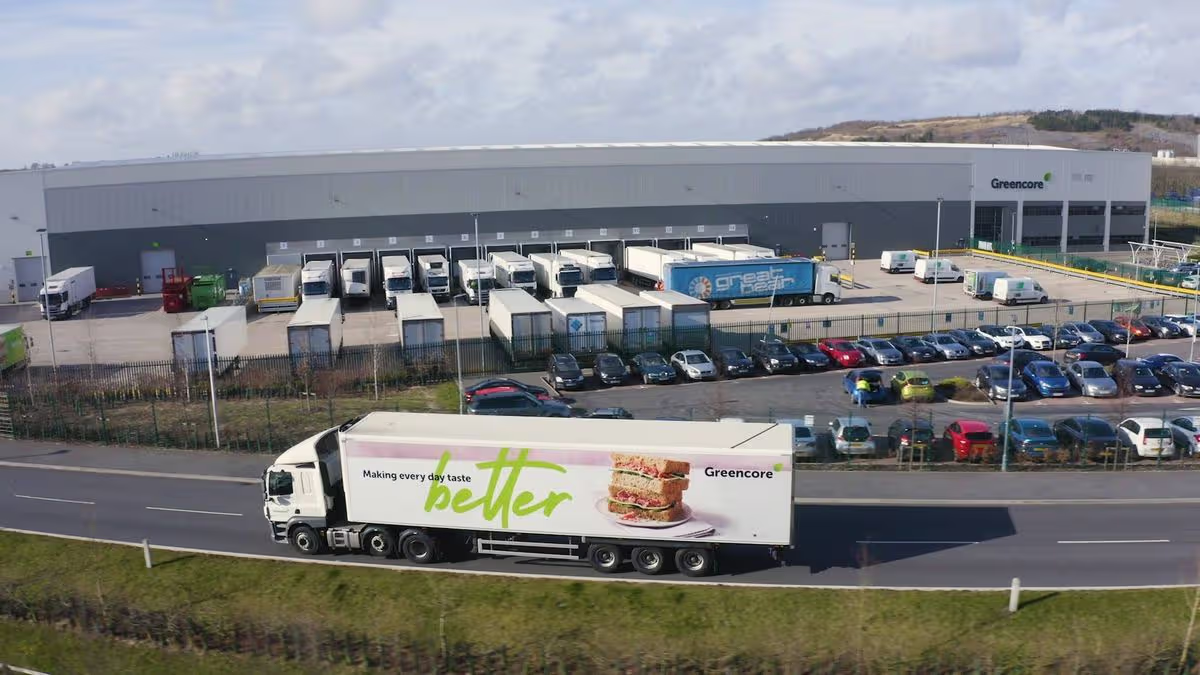
A Greencore lorry is driven down a road

A Greencore lorry is driven down a road(Image: Steve Hatton/Greencore/PA)

Food manufacturer Greencore felt the full weight of its blockbuster merger with rival Bakkavor, as integration costs dragged the company into the red during the first half of the year. The FTSE 250 business, which supplies a host of major supermarket chains including Tesco, Sainsbury’s and M&S, was burdened by substantial upfront integration expenses, pushing it to a loss of £13.4m.

Advertisement

Greencore is headquartered in Dublin, while Bakkavor has sites across the UK including in Somerset, Wiltshire, Aston in the West Midlands, Crewe in Cheshire, Barton in West Lancashire, and across the East of England and the South East.

Shares tumbled more than four per cent to 229.55p when markets opened on Wednesday morning. This came despite revenues climbing 3.2 per cent to £1.3bn, buoyed by inflation-driven price increases. The company confirmed it had already unified management structures with Bakkavor, with an ambition to achieve £80m in annual savings within three years.

However, a sizeable £60.6m transaction charge linked to the integration took a considerable chunk out of its bottom line, as reported by City AM.

Greencore – the firm behind last year’s now-notorious Red Diamond Strawberry and Creme Sandwich for M&S – has taken on significantly more debt as a result of the acquisition, with borrowings rising £681.4m to £817.6m.

Advertisement

Its leverage ratio – a key financial measure of how heavily a business depends on borrowed funds to support its assets and operations – stood at 2.3x, marginally more reassuring than the 2.5x analysts had anticipated.

Dalton Phillips, the firm’s chief executive, said the business was monitoring “macro developments and inflationary impacts from the events in the Middle East”.

Greencore highlighted an arrangement with supermarkets designed to shield it from bearing the full brunt of rising ingredient costs. For roughly three-quarters of its food purchases, it operates under a “joint agreement” with suppliers. When ingredient prices climb, supermarkets automatically consent to paying more for the finished goods.

As the food manufacturer set its sights on future expansion, it announced intentions to put its US operations on the market.

Advertisement

“While the US business continues to perform strongly, we are exploring a potential sale of the business,” Greencore said on Wednesday.

The American arm delivered £5.5m in pre-tax profit over the six-month period and added £4m in net profit to Greencore’s overall results.

The move to divest the division reflects Greencore’s renewed focus on becoming “the UK’s leading manufacturer of fresh convenience foods” in the wake of the Bakkavor integration.

It anticipates completing any sale of the US operations within 12 months of striking a deal.

Advertisement
Continue Reading

Business

Five things UK SMEs should do before April 2026

Published

on

The government has announced up to £50 million in new funding to accelerate research into mental health treatments and technologies, marking one of the largest single public investments in the field.

Most UK SME owner-managers running consumer-facing businesses know the regulatory ground is shifting. Far fewer have a concrete checklist for what to do about it before the new rules bite hardest, around April 2026.

Three changes converge next spring. The Gambling Commission’s affordability-check regime moves from pilot to full implementation. HM Treasury’s remote gaming duty rises to 40 per cent for online gambling operators. The FCA’s expanded Consumer Duty bites deeper across consumer credit. The pattern matters even if you do not operate in those sectors: comparison platforms, regulators and consumers themselves are converging on the same expectation that trust signals carry more weight than headline offers, and the recent decision by Evoke, William Hill’s parent group, to explore a sale shows what happens to operators who are slow to adjust.

Britain’s biggest bookmakers are now threatening legal action against the Gambling Commission over the proposed affordability rules, and the shape of that fight will preview how the next eighteen months play out across other consumer-facing categories. Here are five things to do before that timeline starts to bind.

1. Audit your home page

Open your home page and ask where the licensing, regulatory or compliance information sits. If it lives in the footer next to the cookie policy, move it up. The larger UK regulated operators have already done this. Licence numbers, payout-speed or service-level claims, complaint-handling statements and harm-reduction shortcuts now sit alongside the headline offer, because that is what consumer-facing comparison platforms increasingly score on. Aim to have at least one trust signal above the fold and one inside the welcome-offer panel.

2. Rebuild your welcome flow around trust, not size

Welcome packages should lead with cleaner onboarding and faster verification, not the largest possible introductory offer. The Gambling Commission’s financial risk assessments pilot data showed that even “frictionless” compliance checks produce a service touchpoint when something goes wrong, so the customer-service offer is now part of the marketing offer. Map the first ten minutes of the customer journey end to end, identify the step most likely to break, and brief your customer-service team on what to do when it does.

Advertisement

3. Treat comparison platforms as part of your acquisition mix

Independent comparison platforms have taken over a meaningful share of the first-touch journey across regulated consumer categories, and they have stopped scoring purely on price or bonus size. The pattern is most developed in gambling, where a recent independent comparison of UK licensed operators, for example, now ranks operators on licence number, GambleAware integration and payout speed alongside the headline bonus. The same dynamic is now visible in current-account switching, energy-tariff comparison and motor insurance. If your sector already has equivalent platforms, your scorecard there is a brand asset; if it does not yet, expect one within eighteen months. Either way, treat comparison-platform performance as a structural part of your acquisition mix rather than an afterthought, and brief whoever owns your brand or PR on how the ranking criteria are evolving.

4. Bring compliance into the marketing brief

Compliance disclosures are no longer the small print under the campaign creative. In every consumer-facing regulated category, they are becoming the creative itself. Schedule a quarterly review with your compliance lead to align brand claims, legal disclosures and customer-service scripts. The same logic that has pushed UK gambling brands to lead with licence numbers is now visible in the mounting ministerial pressure on gambling advertising, where polling shows public support for stronger curbs at 70 per cent. Compliance-forward marketing is no longer a sector-specific story.

5. Put two dates in your calendar

The first is the Gambling Commission’s decision on whether to impose financial risk assessments without amendment, which will set a precedent for how other UK regulators expect consumer-facing operators to behave. The second is the 40 per cent remote gaming duty taking effect from April 2026, announced in the Autumn Budget and already reflected in operator share prices. Even if you do not operate in gambling, a similar margin shift in your own sector triggered by Consumer Duty or sector-specific reform is more likely than not. Run the numbers now on how a 5 to 10 per cent compression in operating margin would land on your acquisition budget, and decide which line you cut first.

The owner-managers who get ahead of this will be the ones who treat trust signals as the headline offer, not as the small print. Those who wait for the regulator to force the change may find the comparison platforms have already done the scoring for them publicly.

Advertisement

Continue Reading

Business

Shares bounce on cool inflation data but risks remain

Published

on

Shares bounce on cool inflation data but risks remain

Australia’s share market has ended the session higher after cooler than expected inflation data took the pressure of the Reserve Bank to hike the interest rate for a fourth straight meeting.

Continue Reading

Trending

Copyright © 2025