

Business
Russia says US did not grant visa for official to attend UN meeting





Form 13D/A LiqTech International For: 27 May

Two years after first unveiling the so-called Project Agora along with seven central banks and more than 40 regulated institutions, the group is ready to move to a trial stage involving actual transfers of money, the Basel-based institution said in a statement on Wednesday.
“It will benefit the entire financial system,” said Tim Adams, head of the Institute of International Finance, which convened the private-sector participants.The announcement marks a new milestone for the project to modernize digital cross-border payments that could ultimately revolutionize the plumbing of the global financial system, making transactions cheaper and faster while preserving key compliance controls.The method would harness blockchain technology to settle transfers between banks in different countries within seconds. The Federal Reserve Bank of New York, the European Central Bank, Bank of Japan and Bank of England, as well as JPMorgan Chase, UBS Group AG, Deutsche Bank AG, several other major banks, Mastercard and Visa are all involved.

Addressing reporters, Adams highlighted that no fixed timeline exists for the project, as “it’s key to get this right” instead of rushing outcomes.
The system uses a “unified ledger” concept developed at the BIS, which envisions bringing together tokenized central bank reserves and commercial bank deposits on a shared platform.
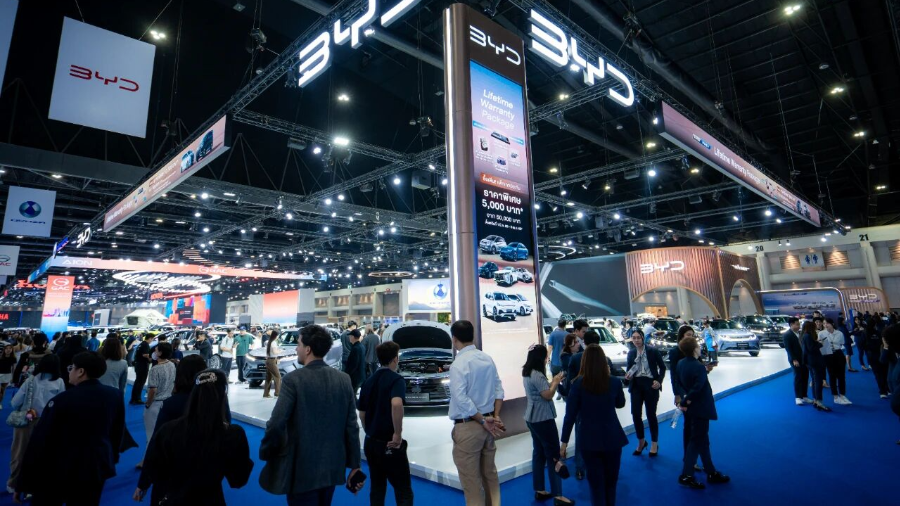
Walk into a major car dealership strip in Bangkok today and count the badges. A few years ago, you would have found Toyota, Honda, Isuzu, and Mitsubishi dominating every forecourt. Today, you will find BYD, MG, Great Wall Motor, Changan, GAC Aion, and Chery competing aggressively for the same space — and, in many cases, outselling the Japanese brands they sit next to. The cars are sleek, well-specified, and priced at levels that legacy automakers struggle to match. The buyers are noticing.
This is not just a showroom story. It is a story about industrial strategy, national ambition, and a $28 billion bet that Thailand can reinvent itself as the electric vehicle capital of Southeast Asia — with China as its primary partner in doing so.
Key takeaways
- China now dominates Thailand’s EV market with a force that has no precedent in Thai automotive history. By 2025–2026, Chinese brands hold between 70 and 80 percent of EV market share, with 7 of the top 10 EV brands in Thailand being Chinese. This is not a trend — it is a structural realignment of the market.
- Thailand’s 30@30 target is ambitious, but China’s capital and technology are what make it plausible. BYD, Great Wall Motors, and Changan have collectively committed over $1.4 billion to Thai EV manufacturing. Chinese firms have supplied the capital, technology, and production speed that Thailand needed to leapfrog into the EV era. Without them, the 30@30 goal would remain a policy document.
- The opportunity is real, but so are the headwinds. Domestic auto sales fell to a 15-year low in 2024. Chinese EV makers face oversupply, price wars, and high household debt among Thai consumers. Investors and executives who treat Thailand’s EV story as guaranteed upside are misreading the risk profile. The kingdom is betting big — and the outcome is not yet decided.
The 30@30 ambition
In 2022, Thailand’s government announced one of the most aggressive electrification targets in Southeast Asia: 30 percent of all vehicles produced in the country to be electric by 2030. The policy, known as 30@30, was backed by a suite of incentives — production subsidies, consumer purchase rebates, tax exemptions for manufacturers, and BOI incentive packages targeting EV assembly, battery production, and EV charging infrastructure.
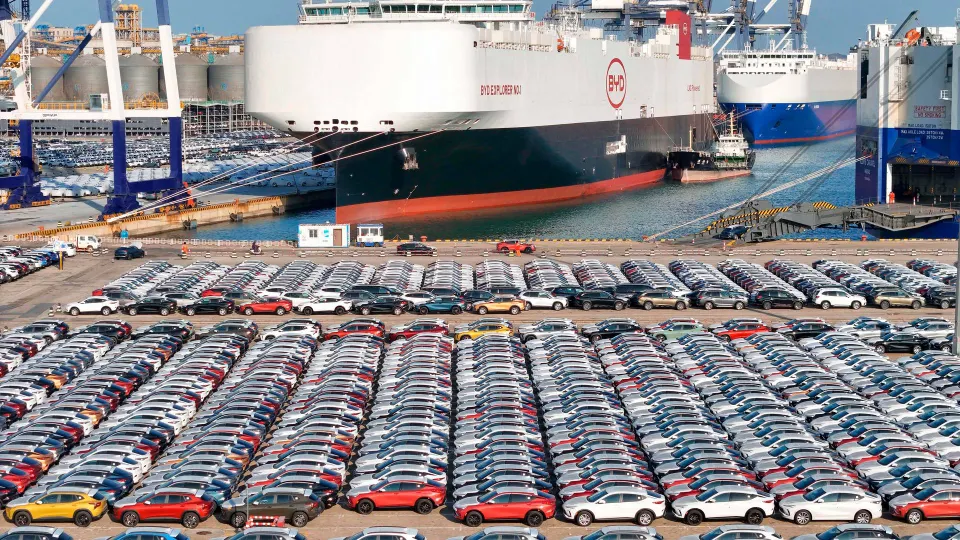
The scale of ambition was not accidental. Thailand had spent five decades building Southeast Asia’s most sophisticated automotive manufacturing ecosystem — the so-called “Detroit of Asia” — largely on the back of Japanese investment and Japanese technology. By the early 2020s, it was clear that the global automotive industry was shifting toward electrification at a pace that threatened to strand that entire ecosystem. Japanese automakers, dominant in internal combustion engine vehicles, were moving more slowly toward EVs than their Chinese counterparts. Thailand had to decide whether to wait for its existing partners to catch up, or to actively recruit a new generation of EV investors who were already ahead. It chose the latter.
The decision was pragmatic rather than ideological. Chinese EV manufacturers — facing intensifying domestic competition, rising tariff barriers in the US and Europe, and a strategic imperative to globalise — were looking for exactly what Thailand offered: a stable manufacturing base, favourable trade access, government support, and proximity to Southeast Asia’s 680 million consumers.
The interests aligned. The investments followed.
How Chinese brands captured the Thai market
The speed of Chinese EV brands’ market penetration in Thailand has been remarkable even by the standards of fast-moving consumer industries.
BYD, Great Wall Motor, and SAIC’s MG brand established early footholds, investing in local manufacturing, building dealer networks, and pricing aggressively against both each other and the Japanese incumbents. BYD opened a manufacturing plant in Rayong with an annual capacity of 150,000 units. Great Wall Motors converted its existing facility — originally built for ICE vehicles — to EV production. Changan committed 9.8 billion baht to a dedicated Thai production facility targeting 100,000 EVs annually. GAC Aion, Chery, and Hozon followed with their own investment commitments.

The consumer response has been significant. EV registrations in Thailand quadrupled from under 25,000 units in 2022 to nearly 90,000 in 2024. In the January–April 2024 period, Chinese brands — led by BYD, MG, and NETA — accounted for 89 percent of all EV sales, leaving Tesla and all other non-Chinese brands competing for the remaining 11 percent. By 2025–2026, 7 of the top 10 EV brands in Thailand are Chinese. The market transformation, measured in years rather than decades, is the fastest segment shift in the history of Thai automotive retail.
Seventy-two percent of Thai consumers now hold generally favourable perceptions of Chinese cars, according to research by Vero and WeBridge — citing affordability, technology, and design as the primary drivers. That figure would have been unthinkable a decade ago, when “Chinese car” was synonymous with low quality in the minds of most Thai buyers. The reputational turnaround is one of the most significant marketing achievements of the Chinese auto industry’s internationalisation push.
The Japanese dilemma
No honest account of Thailand’s EV transition can avoid the uncomfortable question it raises for Japan.
Japanese automakers built Thailand’s car industry. Toyota, Honda, Isuzu, and Mitsubishi have invested collectively tens of billions of dollars in Thai manufacturing over five decades, creating hundreds of thousands of jobs, establishing deep supplier networks, and making Thailand the region’s largest automotive exporter. That legacy is not disappearing overnight. Toyota remains the overall market leader in Thai vehicle sales. Japanese brands still dominate the ICE segment.
But the ICE segment is shrinking. And in EVs, Japan has been consistently slower to move than China — a consequence of its deep commitment to hybrid technology, its reliance on legacy powertrain supply chains, and a corporate culture that historically favours incremental over disruptive change.
The response is now underway. Toyota has announced substantial investments in hybrid production expansion in Thailand. Honda has committed to launching new EV models. Mitsubishi is partnering with Nissan on shared EV platforms. But the timeline matters. Chinese manufacturers are already at scale in Thailand. They are producing, exporting, and competing on price. The window for Japanese brands to reclaim dominance in the EV segment is narrowing, and it will not stay open indefinitely.
For executives from other industries watching this dynamic, the lesson is transferable: a market position built over decades can be disrupted in years when the underlying technology changes and a better-capitalised competitor is willing to move fast.
Battery supply chain: the next frontier
If EV assembly is the visible part of Thailand’s electric transition, the battery supply chain is the strategic foundation — and it is being built, largely, with Chinese capital.
China’s Sunwoda Electronic received approval to invest over $1 billion in EV and energy storage system battery production facilities in Thailand, with its first factory under construction in Chonburi Province. This is significant not just for the investment quantum, but for what it represents: the beginning of a vertically integrated EV supply chain in Thailand, extending upstream from vehicle assembly into the core technology components that determine competitive advantage in the EV era.
Thailand’s government has actively promoted this development. BOI incentives for battery cell manufacturing are among the most generous in the ASEAN region, and the government has extended timelines for local battery production requirements to give manufacturers time to build supply chains rather than simply import finished cells from China.
The long-term vision is clear: Thailand as ASEAN’s lithium processing and battery manufacturing hub, leveraging its geographic centrality, its established logistics infrastructure, and its relationships with Chinese technology partners to create a regional centre of gravity for EV supply chain activity. Whether that vision is realised depends on whether Thailand can attract the upstream mining and refining investment — lithium, cobalt, manganese — that battery production requires. That piece of the puzzle is still being assembled.
The headwinds executives must price in
Thailand’s EV ambitions are real, and the Chinese investment backing them is substantial. But the business environment is more complicated than the headline numbers suggest, and executives entering this market need a clear-eyed view of the challenges.
Oversupply is the most immediate concern. Production mandates tied to BOI incentives require manufacturers who received subsidies to produce locally — whether or not domestic demand absorbs that production. As multiple manufacturers ramp up simultaneously, the market faces a structural imbalance between supply and demand. The result has been an aggressive price war, with Chinese brands cutting prices sharply to move inventory, compressing margins across the sector, and creating a difficult operating environment for new entrants.
Consumer demand has been softer than projected. Thailand’s domestic auto market hit a 15-year low in 2024, driven by high household debt levels, tightening consumer credit, and economic uncertainty. EV adoption has grown impressively in percentage terms, but from a smaller base than originally forecast. The 30@30 goal requires significant demand-side acceleration that the market has not yet demonstrated it can sustain.
Regulatory uncertainty adds another layer of complexity. Import tariff structures for EV components, rules-of-origin requirements for export market eligibility, and evolving subsidy frameworks have all shifted since the initial investment wave. Manufacturers who built their business cases on specific incentive assumptions are navigating a policy environment that continues to evolve.
What investors and executives should watch
The 2026 production recovery. Thailand’s Federation of Thai Industries is forecasting automotive production of 1.5 million units in 2026, following a 2025 dip. Whether that target is met — and how much of it comes from EV versus ICE production — will be an important indicator of whether the transition is on track.
Battery localisation progress. The Sunwoda investment and others like it will determine whether Thailand builds genuine supply chain depth or remains an assembly-dependent hub. Watch for additional upstream investments in battery materials processing as the leading indicator.
Japanese response strategy. How Toyota, Honda, and their tier-one suppliers adapt to the Chinese competitive challenge in Thailand will shape the broader competitive dynamics of the sector. A credible Japanese EV response would increase competition and ultimately benefit Thai consumers and the market’s long-term health.
Export performance. Thai-made Chinese-brand EVs are already reaching markets from Indonesia to Europe. If export volumes grow significantly, it validates Thailand’s value proposition as a manufacturing base and justifies the investment levels already committed.
The bottom line
Thailand has placed a large, deliberate bet on electric vehicles and on China as the partner to help it win that bet. The wager has already changed the face of Thai automotive retail, attracted billions in new manufacturing investment, and begun to build a supply chain infrastructure that could underpin a generation of industrial growth.
The risks are real: oversupply, soft demand, price wars, and policy uncertainty are not trivial challenges. But the strategic logic is sound. A country that successfully transitions from ICE manufacturing hub to EV manufacturing hub — with a deep-pocketed, technology-leading partner backing that transition — will be one of the most important industrial economies in Asia by 2030.
The kingdom is making its move. The question for investors and executives is not whether to pay attention, but how quickly they can afford not to.
Next in the series — The Digital Silk Road: E-Commerce, Fintech, and AI Connecting Thailand and China
Other People are Reading

As she prepares to retire, Amanda Lacaze says companies are still failing to balance the C-suite.

Fresh revelations come after two women told the BBC they had been raped on the Channel 4 reality show.

TUCSON, Ariz. — A retired police officer analyzing the disappearance of Nancy Guthrie has raised questions about whether the 84-year-old woman may have known her alleged kidnapper, pointing to what he describes as chaotic ransom communications and a lack of sustained financial demands more than four months after she vanished from her Arizona home.
Charles Brewer, a former law enforcement officer who has closely followed the case on his YouTube channel, shared his theory in a recent video, suggesting investigators should consider motives beyond financial gain tied to her daughter Savannah Guthrie’s public profile. The comments come as the investigation by the Pima County Sheriff’s Department and the FBI continues with no arrests or confirmed suspects.
Nancy Guthrie was reported missing on February 1, 2026, after failing to appear for a scheduled online church service. Authorities believe she was abducted from her Catalina Foothills residence the night before. Investigators discovered signs of forced entry, blood evidence believed to belong to her, and missing security equipment. Surveillance footage showed a masked individual tampering with the doorbell camera shortly before her disappearance.
Brewer’s Alternative Theory
In his video analysis, Brewer questioned the assumption that the abduction was primarily motivated by money due to Savannah Guthrie’s prominence as co-anchor of NBC’s “Today” show. He highlighted the absence of structured ransom negotiations and what he called inconsistent communications from those claiming responsibility.
“If this truly was a celebrity-targeted kidnapping connected directly to Savannah Guthrie, why has there been no meaningful ransom communication?” Brewer asked, according to reports on his analysis. “Why leave over a million dollars untouched? Why create ransom-style messages that reportedly make little sense? Why no sustained negotiations or proof of life, no sophisticated extortion strategy?”
Brewer described the behavior as “chaotic, disconnected, even emotionally driven, or possibly connected to something far more personal than the public originally believed.” He emphasized that he was not accusing any specific individuals, including family members, but urged investigators to explore potential personal connections within Nancy Guthrie’s immediate circle.
“Listen, if the public, including myself, was comfortable enough early on in discussing whether this crime was connected to Savannah Guthrie’s fame, her wealth, and public visibility, then it is equally reasonable to ask whether this case may somehow connect to someone else inside Nancy’s immediate world,” Brewer said. “Not necessarily family directly, but maybe somebody connected to them like a friend, an associate, maybe a business relationship, or what about a debt?”
Official Investigation Status
Pima County Sheriff Chris Nanos has repeatedly stated that the Guthrie family has been fully cooperative and cleared of any involvement. In a February press conference, Nanos said, “The Guthrie family, to include all siblings and spouses, has been cleared as possible suspects. The family has been nothing but cooperative and gracious and are victims in this case. To suggest otherwise is not only wrong, it is cruel.”
The investigation remains active, with thousands of tips received and analyzed. DNA evidence recovered from the scene has been sent to the FBI laboratory in Quantico for testing. Authorities have released images of the masked suspect and continue to search desert areas around Tucson for additional clues.
Several alleged ransom notes have surfaced, including one sent to media outlets demanding cryptocurrency. However, their authenticity has not been publicly confirmed by investigators. One note reportedly contained an apology mentioning Nancy Guthrie’s heart condition, claiming she had “gone to be with God,” though officials have not verified its legitimacy.
Family and Public Response
Savannah Guthrie temporarily stepped away from her broadcasting duties earlier this year to focus on the search for her mother. She has made emotional public appeals for information while expressing gratitude for the support received. The family has reportedly increased reward offers and hired private investigators to supplement official efforts.
The case has drawn intense national attention due to Savannah Guthrie’s high-profile role. The quiet Catalina Foothills neighborhood has experienced disruption from amateur investigators and media presence, prompting local complaints and parking restrictions near the family home.
Recent developments, including unexplained arrangements of rocks and cacti near the property, have fueled online speculation but have not been officially linked to the investigation. Officials continue to urge the public to avoid interfering with active search areas or spreading unverified theories.
Challenges in Prolonged Missing Person Cases
The Nancy Guthrie case illustrates the difficulties faced in high-profile disappearances involving elderly victims. After more than 100 days, the likelihood of certain outcomes decreases, yet authorities maintain hope that new leads or forensic breakthroughs could provide answers.
Brewer’s commentary reflects growing public discussion about alternative motives in cases where financial extortion patterns do not fully align with observed behavior. Similar analyses have emerged in other prominent missing person investigations, where personal connections or emotional factors sometimes prove relevant.
The Pima County Sheriff’s Department has reaffirmed its commitment to a thorough investigation. “We continue to pursue every credible lead,” officials said in recent statements. Federal authorities remain involved, particularly in analyzing digital evidence and potential interstate connections.
Broader Context and Community Impact
Nancy Guthrie was known locally as an active community member interested in neighborhood affairs and desert wildlife. Her disappearance has affected not only her immediate family but also the tight-knit Catalina Foothills area, where residents have organized volunteer searches and expressed concern over safety.
The case has highlighted vulnerabilities faced by elderly individuals living alone and the challenges of balancing public attention with investigative integrity. Media coverage has been extensive, with Savannah Guthrie’s platform bringing visibility that has generated both helpful tips and unwanted speculation.
As the investigation enters its fifth month, officials continue processing evidence and following leads. The DNA analysis from Quantico remains a key focal point, with results potentially providing new direction. Until then, the family and community await developments in a case that has captured national interest while remaining deeply personal for those closest to Nancy Guthrie.
Brewer concluded his analysis by calling for open-mindedness in considering all possible scenarios. While his theory introduces new questions, investigators have not publicly confirmed any shift in focus away from the initial abduction classification.
The resolution of the Nancy Guthrie case may ultimately depend on advances in forensic technology, persistent tip lines, or a breakthrough in understanding the circumstances surrounding her disappearance from her Tucson-area home on that January night. For now, the search continues with determination from both official agencies and the family determined to find answers.
Business
IRPC Public Company Limited 2026 Q1 – Results – Earnings Call Presentation (OTCMKTS:IRPSY) 2026-05-27


Seeking Alpha’s transcripts team is responsible for the development of all of our transcript-related projects. We currently publish thousands of quarterly earnings calls per quarter on our site and are continuing to grow and expand our coverage. The purpose of this profile is to allow us to share with our readers new transcript-related developments. Thanks, SA Transcripts Team
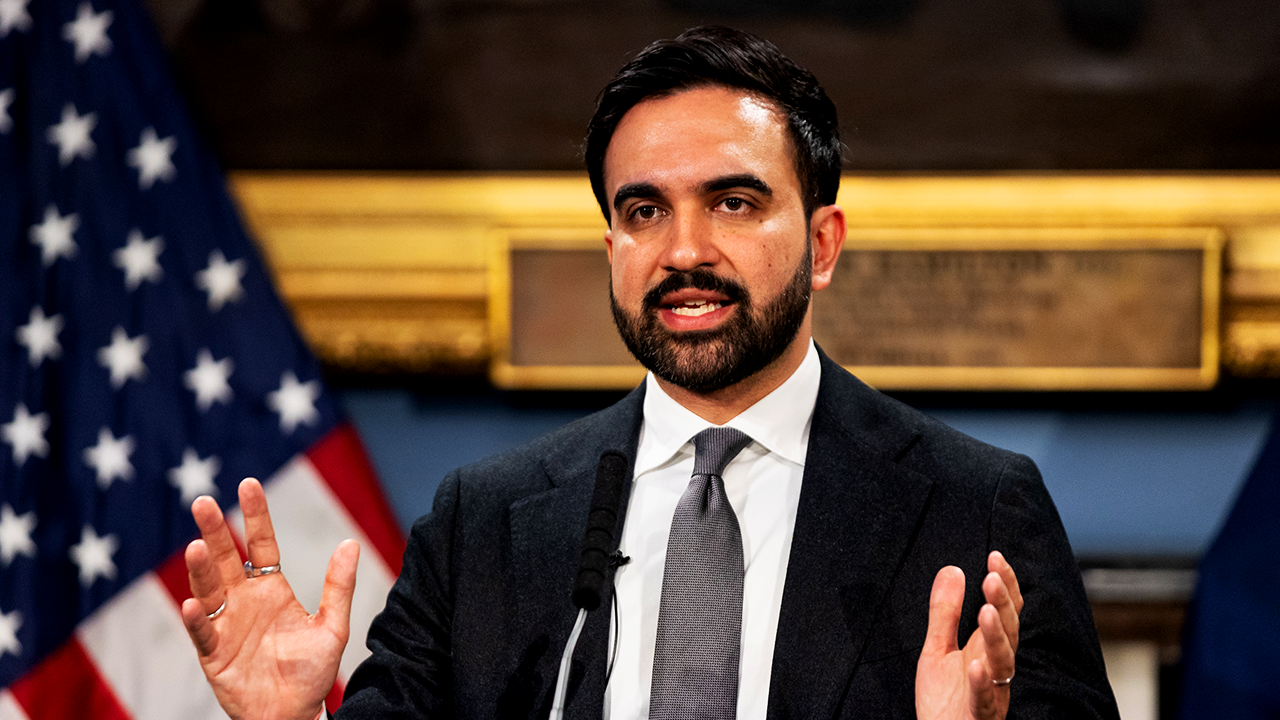
FOX Business’ Madison Alworth joins ‘Varney & Co.’ to break down Zohran Mamdani’s housing plan as critics warn regulations and property seizure threats could drive capital from NYC.
A New York business leader is warning that New York City Mayor Zohran Mamdani’s proposed housing plan could drive developers and investors away from the city.
FOX Business’ Madison Alworth joined FOX Business’ Stuart Varney on “Varney & Co.” to report on Mamdani’s proposal to create 200,000 new affordable, rent-stabilized housing units and preserve another 200,000 over the next decade. The $22 billion plan would include $5.6 billion for the New York City Housing Authority and require wages of at least $40 per hour on affordable housing projects.
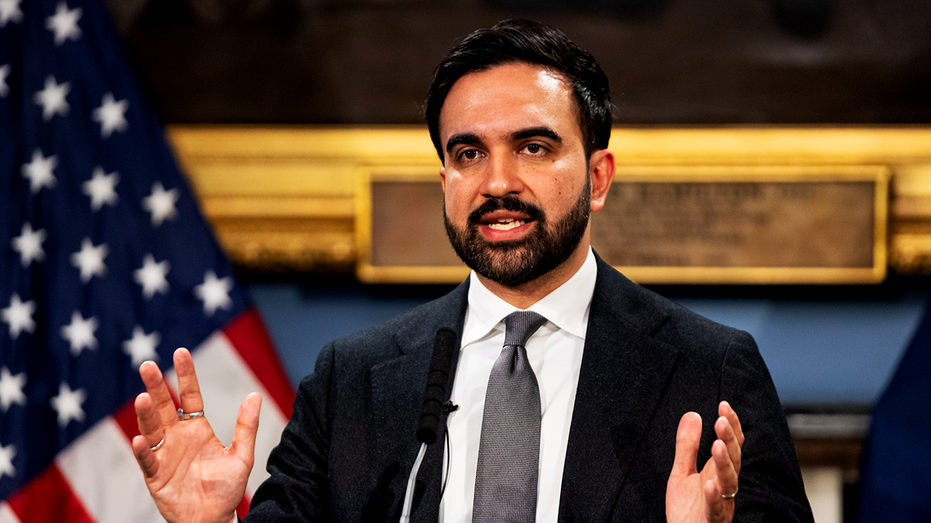
New York City Mayor Zohran Mamdani delivers remarks about the fiscal year 2027 budget in New York. (Mostafa Bassim/Anadolu / Getty Images)
The proposal includes the possibility of the city taking legal action against negligent landlords and potentially transferring chronically neglected properties to nonprofits or community land trusts.
Real estate and business leaders say they support the mayor’s focus on expanding housing but remain concerned about provisions tied to the proposal, including wage mandates for affordable housing projects, according to Alworth.
TAX FIGHT HEATS UP AS NEW YORK TARGETS WEALTHY HOMEOWNERS
“Developers, the private investors, the people with capital, that they’re better off in other cities than the ones with huge amounts of regulation. And you’ve seen it. You’ve seen that all across the country,” Partnership for New York City President Steve Fulop said.
“New York City has a big housing shortage. It has a big opportunity to grow as well. But you got to be careful with regulation and government overreach,” Fulop continued.
‘Varney & Co.’ host Stuart Varney sounds the alarm over New York City Mayor Zohran Mamdani’s housing proposal, arguing the tenant-focused plan unfairly targets landlords and threatens private property rights.
Rep. Nicole Malliotakis, R-N.Y., also joined FOX Business’ Stuart Varney to criticize the idea of the city taking a stronger role in property oversight, arguing that New York City has struggled to manage its own public housing stock.
“New York City is actually the biggest slumlord in the city of New York,” Malliotakis said. “We have 350,000 people living in New York City housing authority projects… When you look at these facilities, there’s mold… leaks… rodents… roaches, there are all sorts of problems, not to mention real serious dangerous crime issues as well.”
JAMIE DIMON TELLS NYC’S MAMDANI TO ‘GROW AND BUILD’ OR WATCH MORE JOBS FLEE
Malliotakis said the city should focus on improving existing public housing, cracking down on illegal conversions and encouraging more investment in housing stock, including housing for seniors and people with developmental disabilities.
Rep. Nicole Malliotakis, R-N.Y., joins ‘Varney & Co.’ to sound off on Zohran Mamdani’s housing agenda, rising crime and dangerous conditions in New York City public housing.
“If he wants to encourage investment, he has to stop with these crazy regulations that make it impossible to be a homeowner or landlord or a property manager in this city,” Malliotakis said.
At the same time, one progressive housing advocate praised the proposal.
MAMDANI TAX BREAK PROPOSAL SPARKS FEARS AS BUSINESS LEADERS WARN OF ‘FRAGILE’ NYC ECONOMY
“Mayor Mamdani’s housing plan is what a progressive all-of-the-above housing plan looks like…,” Open New York Executive Director Annemarie Gray said in a statement to the New York Post.
Mamdani’s housing proposal takes center stage as New York City’s median asking rent has climbed above $3,600, according to data cited by FOX Business’ Madison Alworth.

Analysts said that the momentum is expected to sustain with scope for 20% gains in the medium term.
The Nifty Midcap 100 index rose 0.4% to 62,558.85 on Wednesday while benchmark Nifty remained flat. In the past four sessions, the Nifty Midcap 100 index gained 2.1% while benchmark Nifty advanced 1.1% in the same period.
Adani Total Gas emerged as the top gainer on the index on Wednesday, surging over 13%, while Exide Industries and Swiggy jumped 7.6% and 6.6%, respectively. Tube Investments of India and Suzlon Energy rose over 5% each.
“Most of the stocks in the Nifty Midcap 100 index, such as BSE, Polycab and MCX, witnessed strong momentum, driven by the earnings visibility and growth outlook,” said Sunny Agrawal, head of fundamental research, SBI Securities.
 Agencies
Powered by strong earnings and growth outlook, Nifty Midcap Index closes at record high with potential upside of 20% more; small caps also on the rise
Both midcap and smallcap stocks saw strong commitment recently as some companies were chased by retail and institutional investors, said Agrawal. Since the ceasefire between US and Iran was announced, the Nifty Midcap 100 jumped 10.1% while Nifty Smallcap 100 and Microcap 250 indices surged 18.1% and 13.2%, respectively.
“The earnings momentum in the midcap 100 stocks led the index to record highs; however, the smallcap 100 index is about 7% away from all-time highs,” said Ajit Mishra, SVP Research, Religare Broking. While large-caps bore the brunt of foreign selling, fund flows in mid and smallcaps remain favorable, he said.So far this year, the Nifty Midcap 100 index gained 3.4% while benchmark Nifty dropped 8.5% in the same period. The Nifty Smallcap 100 index advanced 3.2% in the same period.
About 60% of the stocks in the Nifty 100 index are trading above their long-term averages with most of them either at or close to fresh highs, as per Religare Broking. Investors are advised to focus on stocks and sectors with earnings potential and not narratives, said analysts. “Domestic facing themes like defence, power, and industrials got decent traction due to government outlay and could continue to see continued buying interest that could propel the index about 20% higher in the medium term,” said Mishra.

With US waiting staff getting cross at receiving less than 20%, tips are also on the rise elsewhere.

Sennheiser Momentum 5 Wireless rivals Sony’s 1000XM6 for less money
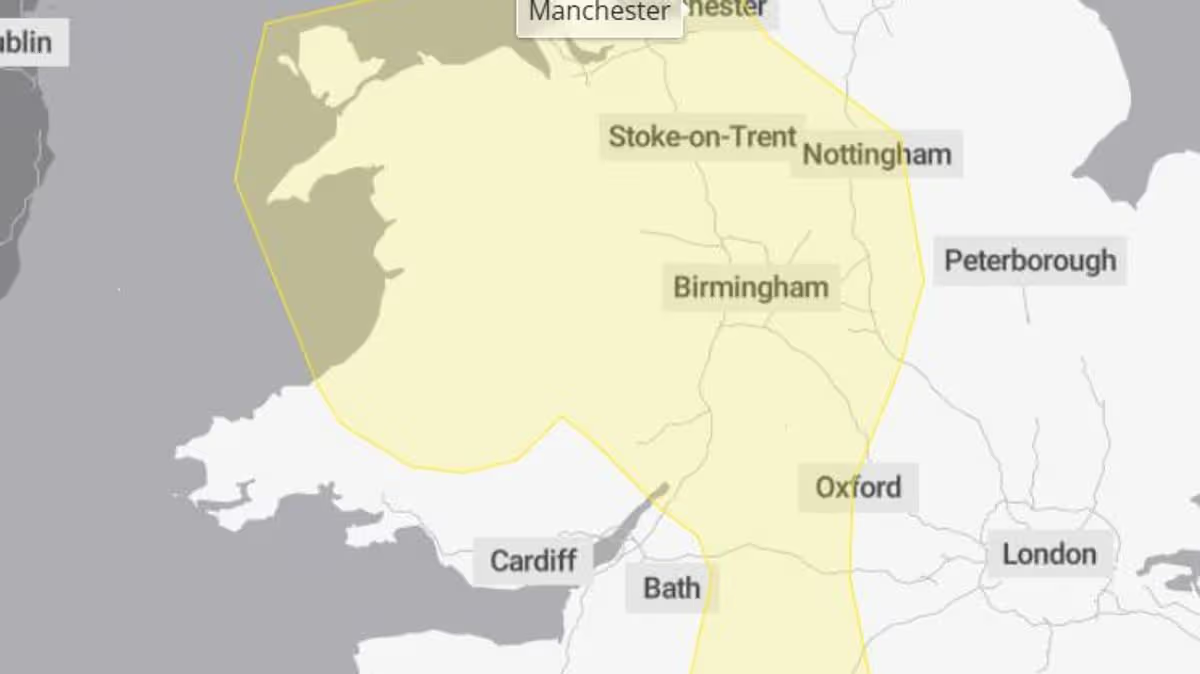
Met Office issues 4-hour thunderstorm weather warning for 42 areas of England and Wales
Form 13D/A LiqTech International For: 27 May


-

 Crypto World6 days ago
Blockchain.com files with SEC for U.S. IPO
-

 Fashion5 days ago
Holiday Weekend Open Thread – Corporette.com
-

 Crypto World6 days ago
Bitcoin Accumulation Weakens as BTC Realized Losses Hit $600M
-

 Tech3 days ago
Microsoft’s quiet Claude Code retreat and the real cost of enterprise AI
-

 Business5 days ago
Dell Technologies DELL Stock Surges 15% on AI Server Momentum and Analyst Upgrades in 2026
-

 Crypto World5 days ago
Robinhood crypto COO Tanya Denisova exits
-

 Business3 days ago
NYT Strands Answers May 24 2026 Revealed for Puzzle No. 812 Theme Summer Essentials
-

 Politics5 days ago
Makerfield: a tale of two social-media histories
-

 Crypto World5 days ago
Space X IPO Is ‘Bad News’ for Tech Stocks: But What About Bitcoin?
-

 Business6 days ago
Trump Invests $1M-$5M in Kura Sushi USA Chain With 27 California Locations
-

 Crypto World6 days ago
MicroStrategy’s Saylor Says Miners No Longer Set Bitcoin Price, Another Force Has Taken Over
-

 Tech6 days ago
WhatsApp ads could make Irish debut after discussions with DPC
-
Tech13 hours ago
The Samsung pay deal is the moment Korean unions changed register
-
 NewsBeat7 days ago
Charity run by Reform leader Malcolm Offord accused of ‘law breaking’ over Scottish registration
-
 Tech6 days ago
A 0.12% parameter add-on gives AI agents the working memory RAG can’t
-

 Crypto World5 days ago
AI infrastructure race heats up as IREN pitches full-stack strategy, WhiteFiber lands $160M deal
-
 Crypto World3 days ago
Nvidia (NVDA) CEO Calls on Super Micro to Strengthen Export Controls Amid Smuggling Probe
-

 Tech2 days ago
Westone Audio and Etymotic Acquired by Fidelity Collective in Major IEM Market Move
-

 Tech6 days ago
You Can Now Add ChatGPT To PowerPoint
-

 Sports6 days ago
2026 CJ Cup Byron Nelson leaderboard: Brooks Koepka finds putting stroke in Round 1
You must be logged in to post a comment Login