Connect with us
DAPA Banner
DAPA Coin
DAPA
COIN PAYMENT ASSET
PRIVACY · BLOCKDAG · HOMOMORPHIC ENCRYPTION · RUST
ElGamal Encrypted MINE DAPA
🚫 GENESIS SOLD OUT
DAPAPAY COMING

Business

ETMarkets Smart Talk | Don’t mistake FII outflows for a loss of confidence in India’s growth story: Himanshu Srivastava

Published

on

ETMarkets Smart Talk | Don't mistake FII outflows for a loss of confidence in India's growth story: Himanshu Srivastava
Foreign investors pulled nearly $5 billion from India-focused offshore funds and ETFs during the March 2026 quarter, raising concerns about whether global investors are reassessing their outlook on one of the world’s fastest-growing major economies.

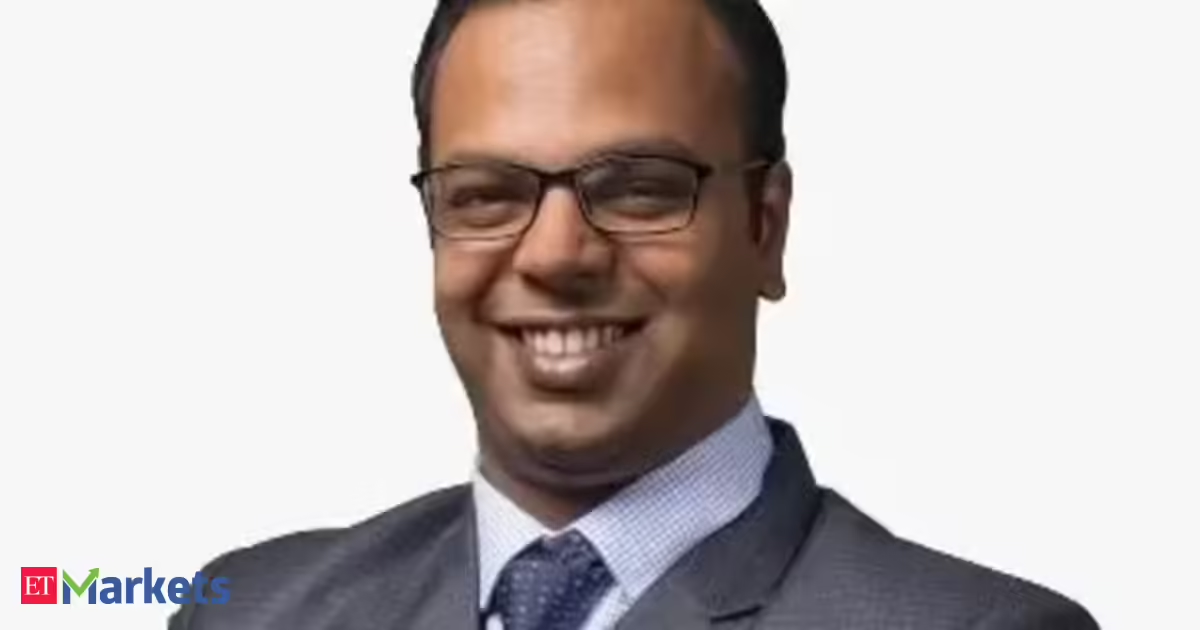
However, Himanshu Srivastava, Principal Analyst at Morningstar India, believes the outflows should not be interpreted as a loss of confidence in India’s long-term growth story.

In this edition of ETMarkets Smart Talk, Srivastava explains that the selloff was driven largely by a combination of global risk aversion, elevated US yields, geopolitical uncertainties and stretched valuations in certain pockets of the Indian market.

He argues that foreign investors are becoming more valuation-conscious rather than structurally bearish on India, while highlighting the resilience shown by domestic investors during the correction.

Advertisement

Srivastava also shares his views on the growing role of passive investing, the future of India’s weight in global emerging market portfolios, the impact of currency movements on foreign flows, and why the country’s structural growth narrative remains firmly intact despite near-term volatility. Edited Excerpts –


Kshitij Anand: In your report, you suggested that India-focused offshore funds and ETFs saw net outflows of nearly $5 billion in the March 2026 quarter. How much of this is India-specific, and how much is simply global risk aversion at play?
Himanshu Srivastava: I would say the outflows were driven by a combination of both global and India-specific factors, though global risk aversion was probably the larger driver during the quarter.
Globally, the investment environment turned extremely challenging for emerging markets. We had heightened geopolitical tensions in the Middle East involving the US, Israel, and Iran. We had a stronger dollar, elevated US bond yields, and uncertainty around the timing of Fed rate cuts. All these factors reduced global risk appetite among investors and led them to move towards safer assets such as US Treasuries and the dollar.
At the same time, India-specific factors also contributed. Indian equities were trading at relatively premium valuations compared with several other emerging markets, especially in the mid- and small-cap segments. After the strong rally over the years, many foreign investors chose to book profits as earnings growth expectations moderated.

If you look at these flows, they were not a reflection of a loss of confidence in India’s long-term structural story. Rather, it was a phase where global risk-off sentiment coincided with a valuation recalibration in Indian markets.

One of the most important factors we observed was that, during this correction and challenging market environment, domestic investors remained very resilient. They cushioned the markets from a deeper correction and prevented sharper dislocations. That, in itself, reflects confidence in India’s long-term fundamentals.

Kshitij Anand: Despite strong domestic fundamentals, FIIs remain aggressive sellers. Can we say that foreign investors have become more valuation-sensitive when it comes to India?
Himanshu Srivastava: Well, that is increasingly becoming more visible now.

Advertisement

Historically, foreign investors were willing to pay a premium for India because of its stronger growth outlook, relatively stable macroeconomic environment, and better earnings visibility compared with many other emerging markets. However, valuations in certain pockets, as we discussed earlier, especially in the mid- and small-cap segments, had become quite stretched.

As a result, FIIs are now becoming more selective and valuation-conscious. They are not just evaluating India’s growth story; they are also looking at the price they are willing to pay for that growth and that story.

During periods of global uncertainty and tight liquidity, investors naturally compare opportunities across markets, and premium valuations can lead to some profit-booking. That is what we have seen.

That said, this does not mean foreign investors are turning negative on India from a structural perspective. The long-term India story remains intact, but investors are now more sensitive to valuations and earnings visibility.

Advertisement

Kshitij Anand: In the report, you also suggested that ETFs were relatively more resilient than actively managed offshore funds. Does this indicate a structural shift towards passive investing in India globally?
Himanshu Srivastava: I would avoid calling it a complete structural shift at this stage, but there is definitely a gradual increase in the role of passive investing within India allocations globally. Yes, these could be early signs, but the growth has been quite gradual in nature.

Globally, ETFs have been gaining traction because they are cost-efficient, liquid, and operationally flexible. During volatile periods, investors often prefer ETFs because they allow quicker tactical allocation changes and offer an easier entry and exit mechanism compared to traditional active funds.

That is exactly what we observed during the quarter as well. While both segments witnessed outflows, ETFs were relatively more resilient than actively managed offshore funds.

However, it is important to note that actively managed India-focused offshore funds still account for nearly 70% of the category’s assets. That suggests many foreign investors still believe active management can add value in a market like India, where stock dispersion, sector rotation, and alpha opportunities remain significant.

Advertisement

So, rather than a complete shift away from active investing, I would describe it as a broadening of investor preferences, where passive vehicles are increasingly being used for tactical and flexible allocations, while active funds continue to remain relevant for long-term India allocations.

Kshitij Anand: The sharp correction in mid- and small-cap stocks triggered profit-booking globally. Do you think foreign investors are becoming more cautious about the India growth story? The reason I ask is that mid- and small-cap stocks are often seen as carrying much of the India growth narrative.
Himanshu Srivastava: I would differentiate between caution on valuations and caution on the India growth story. I think they are two very different aspects altogether.

I do not think foreign investors are losing confidence in India’s long-term potential. India continues to benefit from strong domestic demand, infrastructure spending, and relatively healthy economic growth.

What changed was that valuations in the segments we discussed had become quite expensive. During a phase of global uncertainty, investors naturally become more selective and cautious. In that sense, the outflows and the correction were more of a valuation reset or recalibration rather than a rejection of the India growth story.

Advertisement

This is just one quarter in which we have seen significant outflows. To get a much clearer picture, we need to wait for more time, more data, and more information to emerge before calling it something structural in nature.

If conditions improve from here, these trends can easily reverse. We have seen similar situations in the past, and reversals have occurred when the environment became more supportive.

Kshitij Anand: Looking at the bigger picture, do you think India’s weight in global emerging market portfolios can continue rising over, let’s say, the next five years despite near-term volatility?
Himanshu Srivastava: India’s weight in global emerging market portfolios has increased meaningfully over the years and is now an important part of the emerging market universe. Its representation in global indices is already significant. I think it is only behind Taiwan, China, and South Korea, at around 11% to 11.5%. I do not recall the exact figure, but it is somewhere around that level.

This has largely been supported by India’s relatively stronger economic growth, expanding market capitalisation, improving corporate earnings profile, and increasing participation from global investors.

Advertisement

While we have seen outflows in recent times, we have also seen global investors return to India whenever they identify compelling opportunities and believe valuations offer better value than what we are seeing at present. Again, this could be a temporary phase.

At the same time, flows and allocations can fluctuate in the short term because of factors such as global risk sentiment, valuations, currency movements, and liquidity conditions. So, near-term volatility may impact flows intermittently.

India continues to remain a very significant market within the broader emerging market landscape, and one simply cannot ignore India. Therefore, India’s weight can rise further going ahead, although the path may not be linear. If the fundamentals remain intact and the global environment remains supportive, I do not see a reason why India’s allocation will not increase over time.

Kshitij Anand: What role do currency expectations play in global investors’ decisions on India allocations?

Himanshu Srivastava: Currency plays a very important role because foreign investors ultimately measure returns in dollar terms.

Even if Indian equities deliver positive returns in local currency terms, rupee depreciation can reduce or even wipe out those returns when measured in dollars. Therefore, when the rupee is under pressure—for example, due to higher crude oil prices, a stronger dollar, or widening external imbalances—FIIs tend to become more cautious. Recent rupee depreciation is a good example of this.

Advertisement

That said, it is important to understand that currency weakness does not automatically make India unattractive. If investors believe that earnings growth and market returns can more than compensate for currency depreciation, they will continue to allocate capital to India.

However, a stable rupee, or one that depreciates gradually, is generally more comfortable for long-term foreign investors than a currency experiencing sharp volatility.

Kshitij Anand: Lastly, passive products such as ETFs are gaining market share globally. Could India eventually see a much larger ETF-driven foreign ownership structure?
Himanshu Srivastava: I do not think active management will lose relevance in India anytime soon. However, I do believe that foreign investor participation in Indian markets through ETFs could see a gradual increase.

Globally, ETFs are gaining market share because they are cheaper, more liquid, transparent, and easy to use for tactical allocations. For foreign investors, India-focused ETFs provide a quick way to increase or reduce exposure without taking on individual stock-selection or manager-selection risk. That is one reason why ETFs tend to remain relatively resilient and are often used for short-term allocation decisions.

Advertisement

However, India remains a market where active managers can potentially add value because of wide sector dispersion, stock-specific inefficiencies, and the breadth of opportunities across the large-, mid-, and small-cap universe.

Therefore, the likely outcome is not passive investing replacing active investing, but rather passive investing acting as a co-pilot to active investing in foreign investors’ portfolios, particularly for tactical and benchmark-linked allocations.

(Disclaimer: Recommendations, suggestions, views, and opinions given by experts are their own. These do not represent the views of the Economic Times)

Advertisement
Continue Reading
Click to comment

You must be logged in to post a comment Login

Leave a Reply

Business

US stocks: US market indexes fall over 1%, dragged by tech and Iran war worries

Published

on

US stocks: US market indexes fall over 1%, dragged by tech and Iran war worries
President Donald Trump said the U.S. would attack Iran again “very hard” following one of ‌the most significant ⁠exchanges ⁠of fire overnight since an April ceasefire in the Middle East war.

An index of semiconductors was sharply lower, with Nvidia and Broadcom among the biggest drags on the S&P 500. Investors have been worried about stretched valuations in the sector.

The Cboe Volatility Index advanced for a second day. Volatility has picked up in recent days.

Investors were still taking some profits in the tech space, said Tom Hainlin, an investment strategist at U.S. Bank Wealth Management in Minneapolis.

Also, investors are now “pricing in maybe a higher interest rate” after recent economic data and are ⁠also worried ‌about the war, he said. “Perhaps that conflict continues on into the mid to late summer,” he said.
Also Read | SpaceX IPO: $1.75 trillion valuation among 5 risks about world’s biggest stock market debut
The Federal Reserve is widely expected to hold interest rates at its June policy meeting. ⁠Investors are pricing in at least one 25 basis point rate hike by the end of the year.

According to preliminary data, the S&P 500 lost 119.00 points, or 1.61%, to end at 7,267.65 points, while the Nasdaq Composite lost 505.31 points, or 1.97%, to 25,169.50. The Dow Jones Industrial Average fell 952.04 points, or 1.87%, to 49,920.07.

Advertisement

Friday’s U.S. jobs report was stronger than expected. On Wednesday, U.S. consumer prices increased 4.2% in the 12 months through May, the largest gain since April 2023, data showed, as the Middle East conflict raised the price of gasoline and other energy ‌products.

The pace of increase was, however, in line with forecasts, as per a Reuters poll of economists.

Among other decliners, Super Micro Computer tumbled after it announced plans to raise $7 billion through a series of equity and equity-linked ⁠financing transactions to fund component purchases for its growing AI server demand.

The rotation out of high-flying technology shares has helped other areas of the markets that have lagged this year, including healthcare, real estate and consumer staples.

Advertisement

The much-hyped $1.75 trillion listing of SpaceX on Friday, targeting a record $75 billion raise, could also pressure U.S. stocks as concerns mount over excessive optimism in the tech sector.

Among other movers, shares of trucking companies XPO , J.B. Hunt and Old Dominion also dipped after Amazon announced expansion of its less-than-truckload freight services in the U.S. Industrials led declines among sectors.

Continue Reading

Business

ETFs vs mutual funds in 2026 and key differences investors should know

Published

on

ETFs vs mutual funds in 2026 and key differences investors should know

Investors have a growing list of exchange-traded funds (ETFs) and mutual funds that they can choose from as they consider ways to structure their investment portfolios, though there are important differences between the two types of funds.

ETFs have grown rapidly as an investment category in recent years since they were developed in the early 1990s, with the total assets of the U.S.-listed ETF industry totaling about $13.5 trillion at the end of 2025 after increasing 30% year-over-year, according to the Institute of Business & Finance.

Advertisement

Mutual funds have been in existence for a little more than a century and the IBF’s data shows that mutual funds had $31.4 trillion in net U.S. assets at the end of last year, which amounts to an annual increase of about 10%.

“ETFs and mutual funds are both designed to help investors pool their money to invest in a broad mix of stocks or bonds, offering the benefits of diversification and professional management,” Kathy Kellert, head of index equity product at Vanguard, told FOX Business. “Many are index funds, where portfolio managers work to closely track a specific benchmark.”

HOW ETFS CAN BE EFFECTIVE BUILDING BLOCKS FOR RETIREES

A screen displays the Dow Jones Industrial Average

ETFs are growing faster than mutual funds in terms of total U.S. assets, according to IBF data. (Jeenah Moon/Reuters)

For investors considering the similarities and differences between ETFs and mutual funds as they weigh which may be the better fit for their portfolio, there are a number of factors they should take into account – including how they trade, tax efficiency and whether they’re actively or passively managed.

Advertisement

“Ultimately, both ETFs and mutual funds can play an important role in a well-diversified, long-term investment strategy. The right choice depends on an investor’s preferences around trading flexibility, tax considerations, and overall financial goals,” Kellert said.

How they trade

Vanguard’s Kellert said that, “ETFs trade on an exchange throughout the day, like stock, with prices that update in real time. Mutual funds, by contrast, are priced only once daily after the market closes, and all investors receive that same end-of-day price.”

Rizwan Hussain, senior investment portfolio strategist at Schwab Asset Management, told FOX Business that the price for an ETF is “reflecting the underlying portfolio holdings’ prices, providing investors liquidity during the day.” 

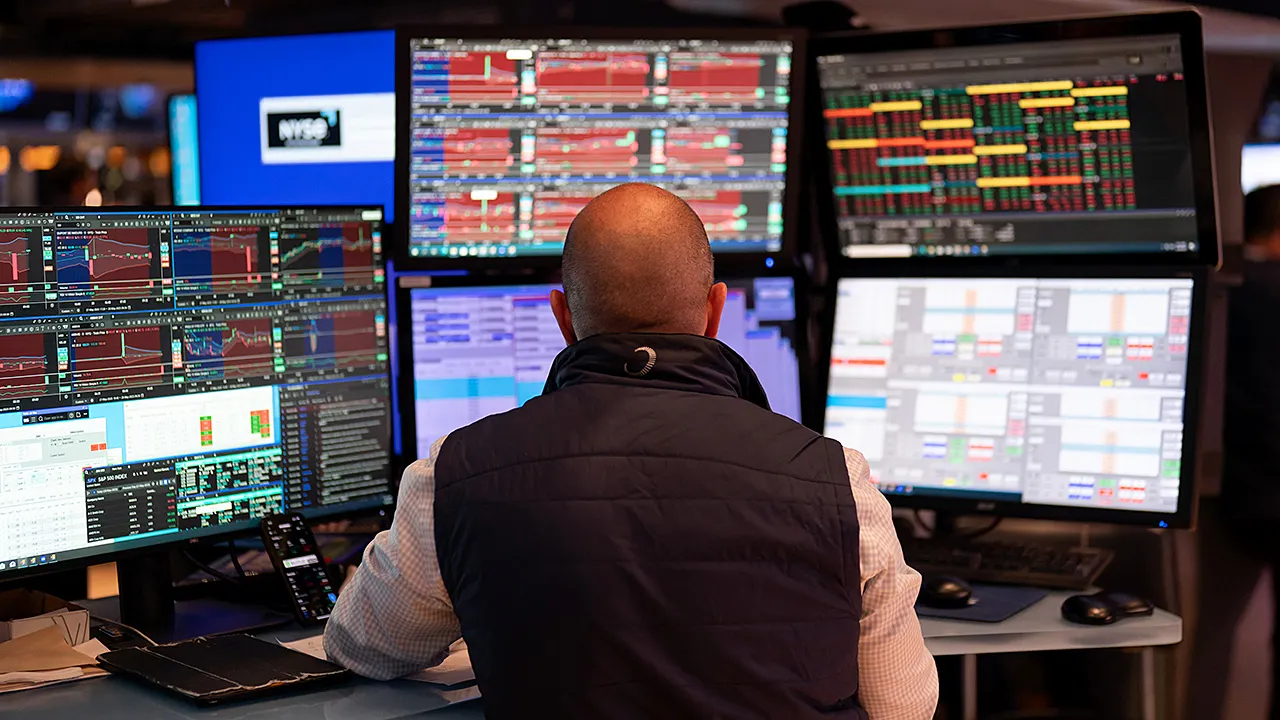
Traders on the floor of the New York Stock Exchange.

The opening bell of the New York Stock Exchange in New York City, on 28 May 2025. (Adam Gray for Fox News Digital)

“But when you buy or sell ETF shares, the price may be less than the net asset value (or NAV) of the ETF. This discrepancy (aka: the ‘bid/ask spread’) is often nominal, but for less actively traded ETFs, that might not always be the case,” he said.

Advertisement

Hussain added that mutual folders are executed once per day with the price based on the net asset value (NAV) at market close.

ETFS VS MUTUAL FUNDS IN 2026: WHICH IS RIGHT FOR YOUR PORTFOLIO?

Tax efficiency

Kellert said that ETFs are generally more tax efficient than mutual funds because of how they trade and the mechanisms fund managers use to rebalance the ETF’s holdings.

“Because ETF shares are typically exchanged between investors, and portfolio activities, like rebalances, are often handled ‘in kind’ – using securities rather than cash – ETFs are more likely to avoid realizing capital gains. Mutual funds, by contrast, may need to sell holdings to meet redemptions, which can generate gains that are distributed to all shareholders,” she said.

Advertisement

Hussain noted that ETFs “can potentially generate fewer capital gains for investors since they may have lower turnover (particularly passive ETFs) and can use the in-kind creation/redemption process to manage the cost basis of their holdings.”

He added that because of those distinctions, mutual funds have historically been more relevant for investors holding them in tax-deferred accounts.

Wedbush Securities analyst Dan Ives is launching an AI ETF.

Wedbush Securities analyst Dan Ives is launching an AI ETF. (iStock)

WHAT ARE ACTIVE ETFS AND HOW ARE THEY RESHAPING HOW AMERICANS INVEST?

Active and Passive Management

Data from the IBF shows that across ETFs and mutual funds, the amount of passively managed assets in U.S. funds was about $19.3 trillion at the end of December 2025, compared with about $17.4 trillion in actively managed funds.

Advertisement

“Most ETFs are passive investments pegged to the performance of a particular index (‘passive’); however, ‘active’ ETFs have gained popularity over the last year in particular,” Hussain said.

There are also distinctions between ETFs and mutual funds in terms of how frequently they disclose their portfolio holdings, with ETFs typically doing daily disclosures while mutual funds are at longer intervals which can be advantageous for managers of active mutual funds.

GET FOX BUSINESS ON THE GO BY CLICKING HERE

“ETF managers are generally required to disclose fund holdings daily, whereas mutual funds disclose full portfolio holdings on a less frequent basis, typically monthly or quarterly. This later disclosure periodicity is typically a benefit to active mutual fund managers who are looking to avoid disclosing their strategy details to competitors,” Hussain added.

Advertisement
Continue Reading

Business

‘The Donald of Dubai’: UAE billionaire close to Trump bets $66 billion on AI to become the world’s data king

Published

on

'The Donald of Dubai': UAE billionaire close to Trump bets $66 billion on AI to become the world's data king
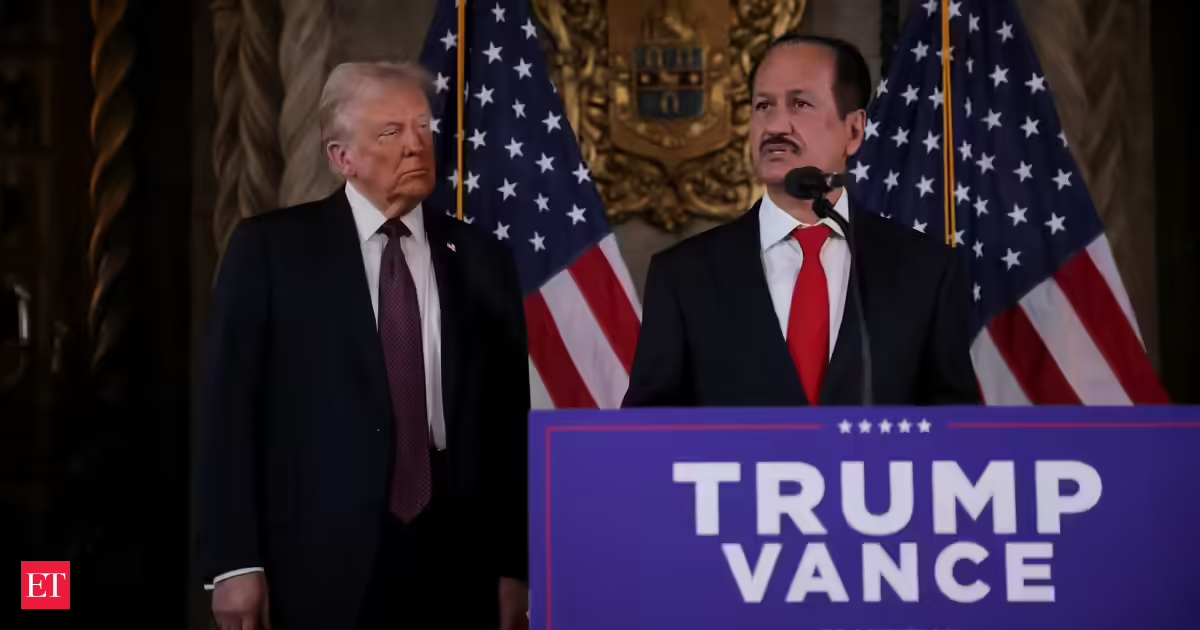
Dubai: A UAE real estate magnate close to Donald Trump is pumping billions of dollars into data centres, hoping to cash in on the AI boom and become the global leader in the field.

DAMAC Properties chairman Hussain Sajwani, who attended the US president’s 2025 inauguration and is second on Forbes’ Arab rich-list, sees “huge” potential in data as demand for computing power soars.

Sajwani, whose Instagram feed pictures him with the likes of Trump, Elon Musk and Jeff Bezos, rode Dubai’s real estate rollercoaster to amass a net worth of $15.3 billion, according to Forbes.

“We’re part vision and part being lucky, and thank God, today we’re building a beautiful business,” he told AFP by video call from the Datacloud Global Congress in Cannes.

He described how hours of video calls during the Covid-19 pandemic convinced him to pivot to data centres, before OpenAI’s launch of ChatGPT in late 2022 set off a frenzy over AI.

Advertisement


Sajwani has earmarked sites in 13 countries across North America, Europe, Asia and the Middle East which, if all completed, will have a total capacity of 6,000 megawatts, costing roughly $66 billion to build.
“The idea came during Covid, where everybody was locked down and I was spending a lot of hours on Zoom,” Sajwani said. “It was very obvious that Zoom and other businesses that were doing e-commerce were going to grow.

“So I thought the data centre business would have a future. Honestly, I never thought there would be such growth.”

Drone attacks
A mix of opportunism and good fortune has made Sajwani one of the Middle East’s biggest property developers, earning him the nickname “the Donald of Dubai”.

He started in catering but moved into property in the 1990s, leaving him well-positioned for a real estate boom when Dubai opened its market to foreign buyers in 2002.

After surviving near-wipeout during the 2008 global financial crisis, DAMAC has built 60,000 properties with another 60,000 under construction and operates in a dozen countries, Sajwani said.

Advertisement

In 2017, he opened Dubai’s Trump International Golf Club, and early last year he stood side-by-side with the newly inaugurated president to announce a $20 billion investment in US data centres.

DAMAC Digital, launched in 2021, has now completed sites in Thailand and Saudi Arabia, with eight in total expected to be operational by the year’s end.

The footprint also includes Malaysia, Indonesia, the Philippines, Turkey, Greece, Spain, Italy, Finland and Sweden, as well as the United Arab Emirates.

Sajwani was unfazed by the Middle East war, where drones struck data centres in the UAE and Bahrain during the initial weeks of Iranian attacks.

Advertisement

“We took the decision four, five years ago to do data centres and we’ve continued,” Sajwani said.

“The war has proven to us that UAE is quite resilient and the government did a great job of defending the country.”

‘Top in the world’
Five “hyperscalers” have signed up as clients for DAMAC’s data centres. Although DAMAC cannot disclose their names, hyperscalers are major players in cloud and AI services and include brands such as Amazon, Microsoft and Google.

Sajwani said DAMAC Digital was now on course to outstrip DAMAC Properties as the biggest company in his empire, which also includes investment and logistics arms.

Advertisement

“Now we have almost 6,000 (megawatts) landbank,” he added, referring to parcels of land with enough power and fibre connectivity to support a data centre.

“If we build all that, that’s huge.”

Sajwani dismissed concerns about a potential AI bubble or oversupply, saying “in the coming three or four years, the demand is huge.

“And AI is going to create a revolution in every aspect of human beings’ life.”

Advertisement

He said DAMAC is setting its sights on one day overtaking Equinix, the world’s biggest data centre provider with more than 280 sites.

“We want to be bigger than them. We want to be the top in the world,” he said.

Continue Reading

Business

GSK plc (GSK) M&A Call Transcript

Published

on

OneWater Marine Inc. (ONEW) Q1 2026 Earnings Call Transcript

GSK plc (GSK) M&A Call June 9, 2026 4:00 AM EDT

Company Participants

Constantin Fest – Senior VP & Head of Investor Relations
Luke Miels – CEO & Director
Nina Mojas – President of Global Product Strategy
Tony Wood – Chief Scientific Officer and Head of R&D
Julie Brown – CFO & Executive Director
Mondher Mahjoubi – Chief Patient Officer

Conference Call Participants

Advertisement

Matthew Weston – UBS Investment Bank, Research Division
Sarita Kapila – Morgan Stanley, Research Division
Kerry Holford – Joh. Berenberg, Gossler & Co. KG, Research Division
Emmanuel Papadakis – Deutsche Bank AG, Research Division
Sachin Jain – BofA Securities, Research Division
Zain Ebrahim – JPMorgan Chase & Co, Research Division

Presentation

Constantin Fest
Senior VP & Head of Investor Relations

Advertisement

A warm welcome to this GSK call on our agreement to acquire Nuvalent. My name is Constantin Fest, Investor Relations. I’m delighted to have here today with me Luke Miels, CEO; Nina Mojas, President, Global Product Strategy; Tony Wood, Chief Scientific Officer; Julie Brown, our CFO. Also for the Q&A part of this call, we’ll be joined by David Redfern, President, Corporate Development; as well as Mondher Mahjoubi, our Chief Patient Officer. Please go with me to the next Slide 3, for our disclosure statement. Also note our cautionary statement on Slide 4. With this, please turn to Slide 5, and I will hand over to Luke to start this presentation.

Luke Miels
CEO & Director

Thanks, Constantin. Good morning, and thanks for joining the call at short notice. Look, I’ll start here first. As a reminder, this is the framework that we’re using to drive value for patients and shareholders. It’s got 3 components, so driving top line growth, accelerating late-stage assets and combining this with simplification. And this deal is a disciplined continuation and acceleration of that strategy. Next slide, please. Now we’ve been following Jim and the team at Nuvalent and their impressive medicinal chemistry work for

Advertisement
Continue Reading

Business

Google Gemini Down Today? User Experiences Widespread Outage, Affecting Hundreds of Users Worldwide

Published

on

Google Gemini AI is Here

Google’s artificial intelligence chatbot Gemini went down for a significant number of users on Wednesday, prompting widespread reports of access issues and error messages across multiple regions as the service faced technical disruptions.

The outage was first highlighted by service monitoring accounts and quickly confirmed by users on social media. Many reported encountering error code 1076 when attempting to use the Gemini app or web interface, with complaints spanning the United States, Europe, Brazil, Japan and other countries. The problems appeared to affect both free and paid Pro plan subscribers.

Users described the service as unresponsive or displaying persistent error notifications when trying to generate responses, particularly for image-related tasks or complex queries. The disruptions came at a time when reliance on AI tools for productivity, research and creative work continues to grow rapidly.

Scope and User Impact

Advertisement

Reports indicated the outage impacted hundreds of users, though the exact number remains unclear as Google had not issued an official statement by mid-afternoon. Service tracking sites and community forums showed elevated reports of downtime starting in the morning hours.

Complaints ranged from complete inability to access the platform to intermittent failures and slower response times. Some users noted the issues persisted for several hours, disrupting workflows for professionals, students and casual users alike who depend on Gemini for daily tasks.

The timing of the outage coincided with a busy period for AI adoption, as businesses and individuals increasingly integrate tools like Gemini into creative, analytical and customer service operations. Even brief interruptions can create significant friction in time-sensitive environments.

Google’s Response and Technical Context

Advertisement

Google has not yet released a detailed explanation for the disruption. The company typically addresses major outages through its status dashboard or official channels once the scope is fully understood. Past incidents with Gemini and other Google services have often been resolved within a few hours through backend fixes or capacity adjustments.

Gemini, Google’s flagship conversational AI model, powers various features across Search, Workspace and consumer applications. The service has seen rapid expansion since its launch, with continuous updates aimed at improving reasoning, multimodality and integration with other Google products.

Technical experts suggest the outage could stem from high demand, server configuration issues or a temporary glitch in the underlying infrastructure. AI systems require substantial computational resources, and scaling challenges occasionally lead to intermittent availability problems during peak usage or maintenance windows.

Broader Implications for AI Reliability

Advertisement

The incident highlights ongoing challenges in maintaining reliable AI services at global scale. As millions of users turn to tools like Gemini for everything from coding assistance to creative brainstorming, even short outages can have outsized effects on productivity and trust.

Industry observers note that reliability will become an increasingly important competitive factor as AI adoption matures. Companies investing heavily in redundant infrastructure and rapid response capabilities are better positioned to maintain user confidence during disruptions.

For Google, maintaining uptime for Gemini is critical to its broader AI ambitions and competition with rivals like OpenAI’s ChatGPT and Anthropic’s Claude. The company has emphasized responsible development and robust performance in recent announcements.

User Reactions and Workarounds

Advertisement

On social media, users expressed frustration mixed with humor, with many sharing screenshots of error messages. Some turned to alternative AI tools during the outage, while others waited for resolution. International users reported similar experiences, suggesting the issue was not limited to specific regions or data centers.

Community forums and support threads filled with reports of the problem, with users exchanging tips on troubleshooting steps such as clearing cache, trying different browsers or devices, and checking Google’s status pages. Many expressed hope for a quick fix given the service’s importance to daily routines.

Company Background and Recent Developments

Gemini has undergone several iterations since its debut, with Google rolling out enhanced versions featuring improved multimodal capabilities, better reasoning and integration with products like Search and Workspace. The service is available in free and paid tiers, with the latter offering higher limits and priority access.

Advertisement

The outage comes amid Google’s continued push into AI across its ecosystem, including new features in Android, Pixel devices and cloud services. The company has invested billions in data centers and model training to support growing demand.

Looking Ahead

As of late Wednesday, partial recovery appeared underway for some users, though full restoration timelines remained uncertain. Google is expected to provide more details once engineers fully diagnose and resolve the underlying issue.

Incidents like this serve as reminders of the infrastructure demands of modern AI systems. For users, they underscore the value of having backup tools and not relying exclusively on any single platform for critical tasks.

Advertisement

The event may also prompt discussions around service level agreements and transparency expectations for consumer-facing AI products. As these technologies become more embedded in professional and personal life, reliability standards are likely to rise in importance alongside capability improvements.

Google Gemini’s temporary disruption affected a notable number of users globally on June 10, highlighting both the popularity of the service and the complexities of operating large-scale AI systems. The company’s swift response will be key to maintaining user trust as the platform continues to evolve.

Users experiencing ongoing issues are advised to check Google’s official status dashboard or support channels for the latest updates. As AI tools play an ever-larger role in daily workflows, such outages, though inconvenient, also provide opportunities for platforms to demonstrate resilience and commitment to service quality.

Advertisement
Continue Reading

Business

Nominate your Rising Stars for property award

Published

on

Business Live

ProCon Awards to honour best new buildings and other construction projects in Leicestershire and Rutland

ProCon Awards 2024 : Rising Star Award : Alice Stewardson, Danaher & Walsh.

ProCon Awards 2024 : Rising Star Award : Alice Stewardson, Danaher & Walsh(Image: Lionel Heap)

Trailblazing young workers in property and construction careers are the target of a Rising Star Award, part of the 2026 ProCon Awards for the best new buildings and other construction projects in Leicestershire and Rutland.

Employers can nominate their newer team members for the Pam Allardice Rising Star of the Year, sponsored by Galliford Try. The award, now in its third year, is named after the founder of ProCon Leicestershire.

Advertisement

The judges are seeking young professionals under the age of 30 who have demonstrated their ability to rise to the top by making a difference to their projects or business.

The 2026 ProCon Awards logo and the award sponsors Salus and Unique Window Systems

The 2026 ProCon Awards logo and the award sponsors Salus and Unique Window Systems(Image: ProCon Awards)

Entry is free and all the details are on the ProCon Leicestershire website at: procon-leicestershire.co.uk/procon-awards/pam-allardice-rising-star-of-the-year-award-2026 – nominations close on July 8.

The first two winners of the Rising Star were Alice Stewardson, nominated by Danaher & Walsh in 2024, and Joseph Silva, nominated last year by SGP.

Alice joined Danaher & Walsh in 2016 as a trainee Quantity Surveyor. Her blend of academic excellence, leadership and commitment to industry advancement was described as making her a standout professional.

Advertisement

Since joining Stephen George + Partners (SGP) in 2020, Joseph progressed through four positions, from assistant to associate, in a career defined by design leadership, strategic thinking and professional integrity.

Galliford Try logo

The Pam Allardice Rising Star of the Year award is sponsored by Galliford Try

Umesh Desai, ProCon Leicestershire chair, said: “The calibre of the exciting young talent we have seen as nominees, finalists and winners in the first two years of the Rising Star has been spectacular.

“Any employers, whether ProCon members of not, who have similarly impressive professionals at the outset of their careers should put in a nomination as they deserve to be in the industry’s spotlight.”

The 23rd annual ProCon Awards are backed by two corporate sponsors, Salus and Unique Window Systems. Finalists and winners will be celebrated at a ceremony on November 12 at Leicester City’s King Power Stadium. The Leicester Mercury’s Business Live is the media partner.

Advertisement
ProCon Awards 2025 : Rising Star Award :  Joseph Silva.

ProCon Awards 2025 : Rising Star Award : Joseph Silva(Image: ProCon Leicestershire Awards)

There are eight categories, covering residential and non-residential schemes of various sizes and regeneration projects.

The full list is:

  • Pam Allardice Rising Star of the Year, sponsored by Galliford Try
  • Small Non-residential Scheme of the Year, sponsored by Merali Beedle
  • Medium Non-residential Scheme of the Year, sponsored by Knights
  • Large Non-residential Scheme of the Year, sponsored by Procure Partnerships Framework
  • Small Residential Scheme of the Year
  • Medium Residential Scheme of the Year
  • Large Residential Scheme of the Year
  • Regeneration Project of the Year
Continue Reading

Business

GameStop Shares Dip Modestly to $22.22 as Investors Digest Recent Earnings and Buyback

Published

on

Amateur investors have targeted shares of firms including GameStop that had been "short-sold" by hedge funds

GameStop Corp. shares edged lower in early Wednesday trading, falling 0.27% to $22.22 as the meme stock veteran continued to trade in a narrow range following its strong first-quarter earnings report and announcement of a $2 billion share repurchase program.

The slight decline came amid broader market caution and profit-taking after the company’s recent positive momentum. GameStop has remained a focal point for retail investors since its dramatic surge in 2021, though its performance has been more measured in recent years as the company transitions its business model.

Recent Earnings and Strategic Moves

On June 2, GameStop reported record quarterly net income and revenue growth that exceeded expectations. The company posted sales of $835 million for the quarter ended May 2, 2026, up from the prior year, driven in part by its expanding collectibles business. The strong results prompted an 8% jump in the stock at the time.

Advertisement

The board also approved a $2 billion discretionary share buyback program, signaling confidence in the company’s valuation and future prospects. CEO Ryan Cohen has been actively involved in strategic initiatives, including increasing GameStop’s stake in eBay and exploring further opportunities in e-commerce and digital retail.

These developments have helped stabilize the stock after periods of volatility. Year-to-date, GameStop shares have shown positive performance, though they remain well below peaks reached during the height of the meme stock frenzy.

Business Transformation Efforts

GameStop has been shifting from a traditional brick-and-mortar video game retailer toward a broader technology and collectibles-focused enterprise. Investments in e-commerce, store modernization and new revenue streams such as collectible trading cards and merchandise have aimed to reduce reliance on declining physical game sales.

Advertisement

The company’s eBay stake increase and reported interest in deeper involvement with the online marketplace reflect ambitions to expand its digital footprint. Ryan Cohen’s leadership has emphasized capital allocation discipline and long-term value creation for shareholders.

Despite these efforts, challenges remain. The video game industry continues to evolve rapidly with digital downloads, cloud gaming and subscription models pressuring traditional retail. GameStop’s ability to adapt while maintaining profitability will be key to sustaining investor interest.

Meme Stock Legacy and Retail Investor Role

GameStop retains a dedicated following among retail investors who view it as a symbol of grassroots market influence. Social media platforms and online communities continue to monitor its movements closely, occasionally driving short-term volatility through coordinated buying activity.

Advertisement

However, trading patterns have matured since 2021, with fundamentals playing a larger role alongside sentiment. Short interest remains elevated compared to many other stocks, keeping the potential for squeezes in play, though less dramatically than during the peak of the frenzy.

Analysts note that while retail enthusiasm provides a unique floor for the stock, sustainable growth depends on execution of the company’s strategic initiatives. The $2 billion buyback provides a mechanism to return capital to shareholders and potentially support the price during periods of weakness.

Market Reaction and Technical Picture

At $22.22, the stock trades near recent levels with moderate volume in early sessions. The modest decline reflects normal market fluctuations rather than any specific negative catalyst. Support levels around $21-22 have held in recent weeks, while resistance remains near $25-26.

Advertisement

Options activity shows mixed sentiment, with traders positioning for potential moves around upcoming events or broader market shifts. The stock’s beta indicates higher volatility than the overall market, consistent with its history as a high-profile name.

Industry Context

The video game retail sector faces ongoing headwinds from industry digitization. Major publishers continue pushing direct-to-consumer models, reducing the role of physical intermediaries. GameStop’s pivot toward collectibles and diversified retail offerings aims to mitigate these pressures while leveraging its established brand and store network.

Competitors and adjacent players in e-commerce and gaming accessories provide both opportunities and challenges. Successful execution on eBay-related initiatives could open new revenue channels and enhance GameStop’s competitive positioning.

Advertisement

Analyst Perspectives

Wall Street consensus remains mixed, with some firms maintaining cautious ratings due to industry challenges while acknowledging the potential upside from strategic moves and share repurchases. Target prices vary widely, reflecting differing views on the company’s transformation success.

Longer-term investors focus on balance sheet strength, cash position and management’s capital allocation track record. The absence of dividends keeps the focus on growth and buybacks as primary return mechanisms.

Broader Market Environment

Advertisement

GameStop’s trading occurs against a backdrop of fluctuating investor sentiment driven by inflation data, Federal Reserve policy expectations and geopolitical developments. Technology and consumer discretionary sectors have shown selective strength, providing a mixed environment for individual names like GME.

Retail participation in the market remains robust, with meme stocks periodically capturing attention. GameStop’s movements often serve as a barometer for retail enthusiasm and short-term trading dynamics.

Outlook and Key Considerations

As GameStop navigates its next phase, focus will remain on quarterly results, progress on strategic initiatives and effective deployment of the buyback program. Management’s ability to articulate a clear vision for sustainable growth will be critical in attracting long-term institutional interest.

Advertisement

For investors, the stock represents a high-risk, high-reward proposition tied to both company-specific execution and broader retail market sentiment. Position sizing and risk management are essential given the potential for sharp price swings.

The coming months will provide further clarity on GameStop’s trajectory as it reports additional financial results and advances its transformation efforts. While challenges in the core business persist, recent positive developments offer reasons for cautious optimism among supporters.

GameStop shares closed the previous session near $22.28 before Wednesday’s modest decline. The stock’s performance continues to draw attention from both dedicated followers and market observers interested in the evolving dynamics of retail-driven equities. As the company works to redefine its role in the gaming and collectibles ecosystem, investors will watch closely for signs of sustained progress.

The session’s early trading reflected typical intraday fluctuations without major news catalysts. Broader market trends and sector rotation will likely influence GME’s direction in the near term alongside company-specific updates. Market participants remain attentive to any developments regarding strategic partnerships, e-commerce initiatives or further capital return programs.

Advertisement
Continue Reading

Business

Dorset music festival cancelled due to ‘ongoing pressures and objections’

Published

on

Business Live

The Cliff Top Music Festival had been running for three years

Highcliffe Cliff Top Music Festival (from Cliff Top Music Festival Facebook Page)

Highcliffe Cliff Top Music Festival(Image: Local Democracy Reporting Service / Cliff Top Music Festival Facebook Page)

A popular music festival in Dorset has been axed after becoming “unsustainable” for organisers. The Cliff Top Music Festival, held in Highcliffe and run by Stir Events CIC, had been operating for three years before soaring costs, insufficient support and persistent objections left organisers with no choice but to scrap future plans.

Advertisement

Stir Events CIC said: “It is with a heavy heart that we confirm the cancellation of the Cliff Top Music Festival 2026. This has been one of the most difficult decisions we have ever had to make.

“The challenges surrounding the future delivery of the event have become too great for our small not-for-profit team to overcome.

“Whilst we fully accept that events must be scrutinised and that concerns should be raised where appropriate, the ongoing pressures, objections, and lack of positive support, morally and financially, along with increasing prices for event infrastructure has taken a toll on both our organisation and our volunteers.”

The previous year, Stir Events CIC put forward proposals to expand the festival to three days, twice a year, with later evening hours.

Advertisement

That application attracted 22 objections, amongst them one from Highcliffe and Walkford Parish Council.

The event was subsequently scaled back to a two-day, once-yearly festival, which organisers were ultimately permitted to stage.

Mandy Polkey, event manager at Stir Events, said: “It is so frustrating that we have had to cancel this event, it is the worst thing I have ever had to do, and I am sorry to all of the people who have supported it.

Mandy Polkey, Stir Events CIC

Mandy Polkey, Stir Events CIC(Image: Local Democracy Reporting Service)

“I want to put on events in areas that are going to support me. Stir Events will be moving out of Highcliffe, we will never hold another event in Highcliffe again.

Advertisement

“The people supporting it have been wonderful, but it is the minority that have ruined it for the majority.”

Highcliffe and Walkford parish council awarded the event a £10,000 grant in 2025, and has confirmed they were anticipating an application for this year’s event.

Ms Polkey said she opted not to pursue parish council funding for 2026, adding: “I didn’t apply for funding this year from the parish council as the emails I was getting from them felt like they wouldn’t give me a grant.”

A Highcliffe and Walkford Parish Council spokesperson said: “The cancellation of the festival will be a loss to music lovers in the wider area.

Advertisement

“It’s been a fixture here for three years, and the Parish Council has provided significant grant funding to keep it going, including £10,000 last year, and £8,500 in 2024 when that event was almost cancelled itself.

“This cancellation has come as a great surprise and will be a huge blow to everyone who’s worked so hard on it.”

Continue Reading

Business

The Fed Is Looking Through The May CPI Report

Published

on

The Fed Is Looking Through The May CPI Report

The Fed Is Looking Through The May CPI Report

Continue Reading

Business

Thune pushes back on Trump’s call to fire Obama-era parliamentarian

Published

on

Thune pushes back on Trump's call to fire Obama-era parliamentarian

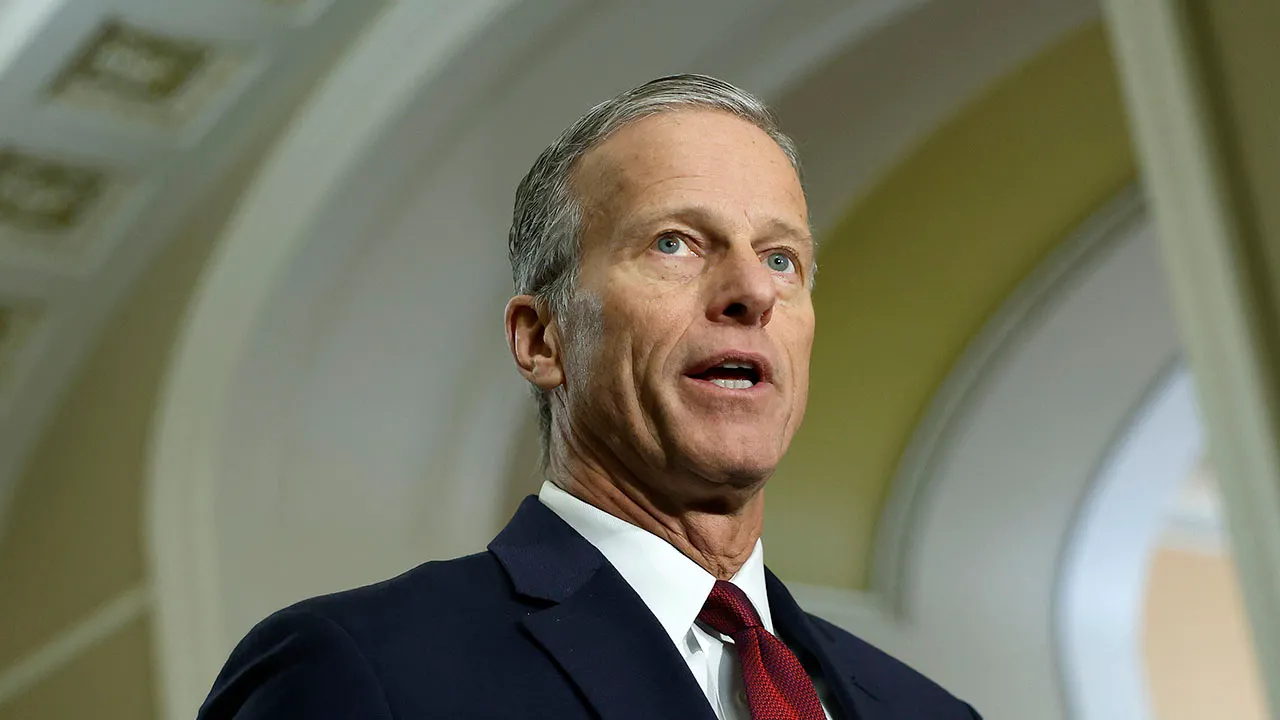
Senate Majority Leader John Thune, R-S.D., pushed back on President Donald Trump’s call for him to “immediately fire” Obama-era Senate parliamentarian appointee Elizabeth MacDonough, arguing that doing so would not pave the way for passage of the SAVE America Act because Republicans “don’t have the votes.”

“For me, it’s a function of math…” Thune told FOX Business on Wednesday.

Advertisement

“The issue with respect to the parliamentarian is one where, even under reconciliation, it has to be principally about budget and not policy, and SAVE America would not be at a 51-vote threshold. It would be at a 60-vote threshold under the rules, so she would just basically enforce the rules now.”

Thune pointed to a ruling that favored Republicans last week, when MacDonough determined that a Democratic-backed weaponization amendment would require 60 votes to pass rather than a simple majority.

FURY ERUPTS AS UNELECTED SENATE ‘SCOREKEEPER’ BLOCKS TRUMP’S AGENDA

John Thune

Senate Majority Leader John Thune, R-S.D., speaks to reporters following the weekly Senate luncheon at the U.S. Capitol on December 17, 2024 in Washington, D.C. (Kevin Dietsch/Getty Images / Getty Images)

“But [if] it had been a 51 [vote threshold] there would have been… an anti-weaponization amendment attached [to] that bill which would have jeopardized its passage in the House and probably jeopardize the president signing into law, so you win some you lose some with a parliamentarian,” he added.

Advertisement

President Trump called on Thune to remove MacDonough in a Truth Social post on Monday, writing that he “should immediately fire the parliamentarian, who treats Republicans and everything they stand for horribly!”

TED CRUZ SAYS THE DEM PARTY IS EMBROILED IN ‘CIVIL WAR’ AFTER ‘RADICAL LEFT’ TAKEOVER

President Donald Trump

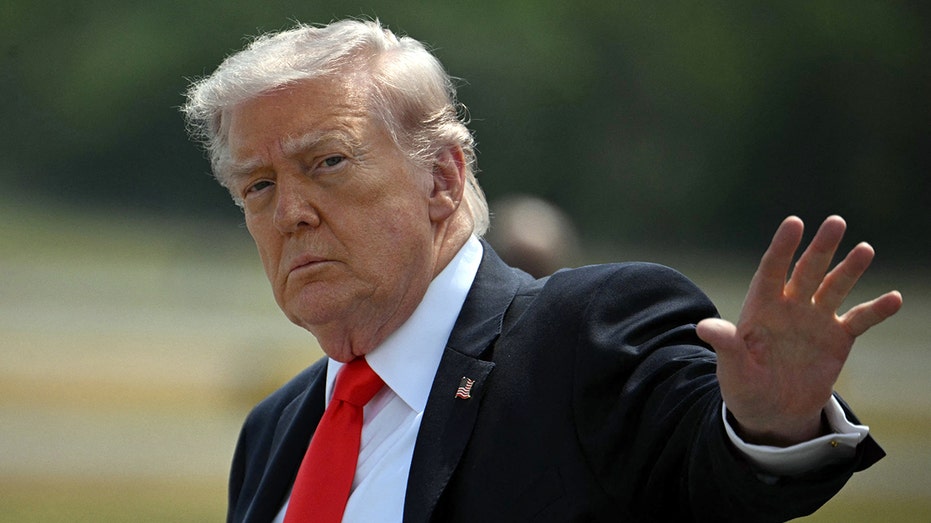
President Donald Trump waves after his arrival at Ocala International Airport, in Ocala, Fla. on May 1. ( Jim WATSON / AFP via Getty Images / Getty Images)

“Just the other night, as an example, she ruled against us on a proposal that would have easily been approved, and should have been, by anyone else,” the president added, insisting Republicans reserve “every right” to change her to pave way for the SAVE Act.

The Trump-backed bill would require Americans to provide proof of citizenship when registering to vote in federal elections.

Advertisement

The president has also called for nuking the Senate filibuster, another measure Thune mentioned during his discussion on “Mornings With Maria.”

GET FOX BUSINESS ON THE GO BY CLICKING HERE

“[That’s something] we don’t have the vote to do and, on that issue, it’s not even close,” he said.

Advertisement

“[On] some of these issues, it is a close call, but there probably aren’t half of Senate Republicans who are in favor of doing that.”

Continue Reading

Trending

Copyright © 2025