

Tech
Seattle teens to take on real-world ocean science challenges in underwater robotics championship

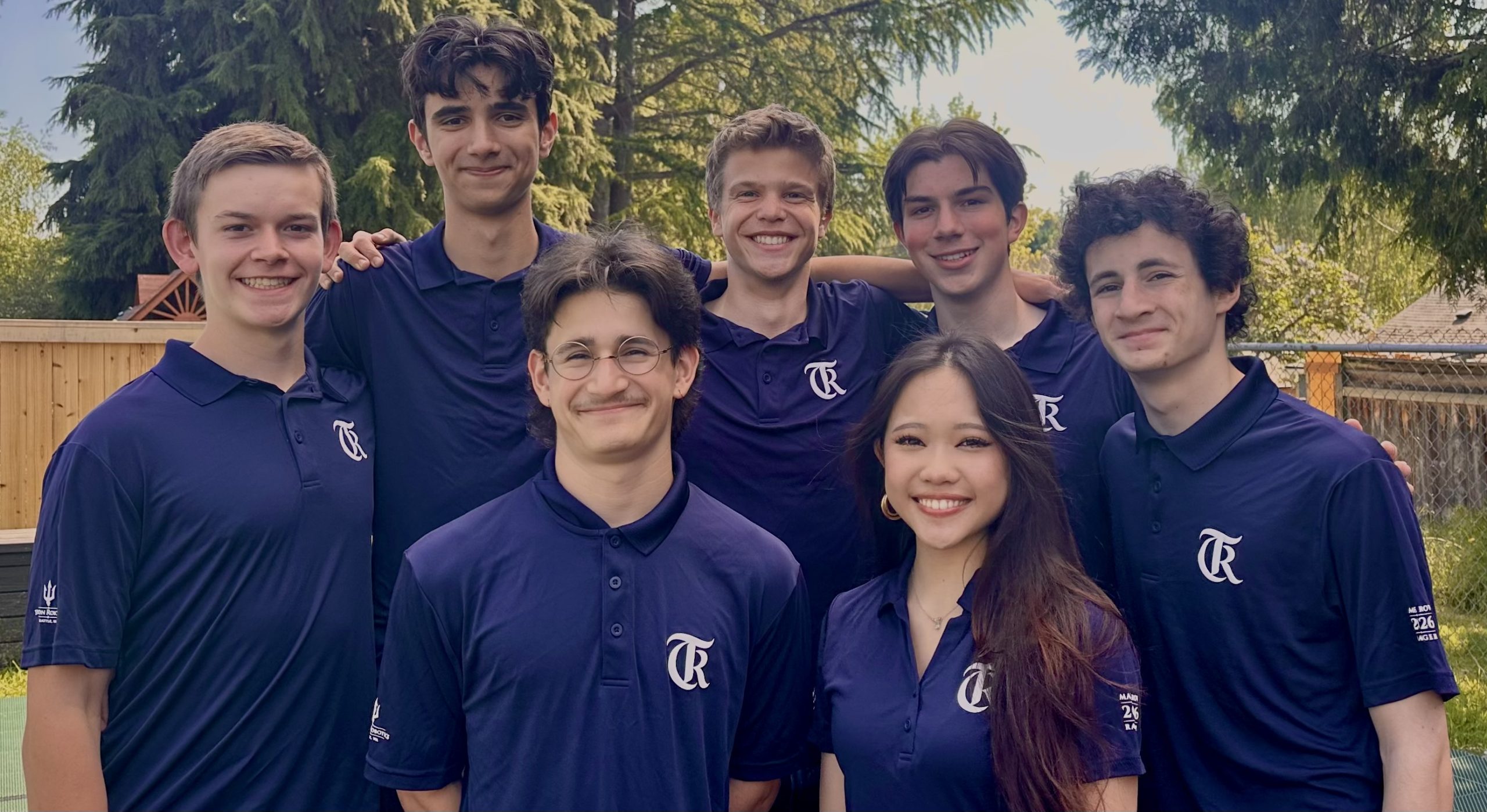

A team of Seattle high schoolers will compete against underwater robotics teams from around the world during the MATE ROV World Championships in Canada next month.
Triton Robotics is making its third straight trip to the international event in St. John’s, Newfoundland. The independent team is comprised of seven 11th graders who all attend Seattle Academy.
MATE (Marine Advanced Technology Education) ROV, which takes place June 25-27, challenges teams to complete underwater mission tasks drawn from real-world ocean science problems. This year’s tasks include mapping cold-water coral ecosystems, deploying ocean observatory instrumentation, modeling offshore wind turbines, and operating profiling floats beneath sea ice — a notoriously difficult environment for conventional monitoring equipment.
The 2026 competition is themed around two United Nations science initiatives focused on ocean sustainability and cryospheric research.
Triton is bringing two custom-built systems to the competition. Njord, a remotely operated vehicle, will handle the wave tank and flume tank challenges, navigating strong currents, low visibility, and precision manipulation tasks. Skadi, an autonomous vertical profiling float, will operate in the National Research Council’s ice tank, diving beneath sea ice that conventional ocean-monitoring floats can’t reach.
Triton also built TritonOS, custom onboard software that handles depth-hold stabilization and lets the pilot instantly flip Njord’s controls so the rear manipulator operates as intuitively as the front arm — something no commercial system could do. The team added specialized tools for the mission tasks, including computer vision for invasive crab identification, a photogrammetry pipeline for iceberg measurement, and pneumatic grippers calibrated using tomatoes until they could grasp delicate cold-water coral without crushing it.
“This season has been about iteration — testing, breaking things, understanding why they failed, and rebuilding them better,” said Tenzin Larkin, the team’s co-CEO.
Triton Robotics is fully student-led and unaffiliated with any school, according to a news release. Members oversee engineering design, software development, budgeting, testing, documentation, and pool operations; mentors provide workshop and safety oversight. The team completed approximately 30 deep-water pool tests this season with zero safety incidents.
Team members include Griffin Fisher, Tenzin Larkin, Thomas Gust, Simon Hajduk, Theo Lipson, Miles Lipson, and Emi Enoki.
“Our mission is to help the environment through engineering,” said Gust, the team’s other co-CEO.

Update: A Triton Tech team from Edmonds College north of Seattle will also compete in the same event. The team — which is raising funds — is competing for the third consecutive year, and is in the “Pioneer” class against colleges from around the globe. In its inaugural year, a last-minute team built an ROV from PVC pipe and placed fifth in its category. Last year, the team traveled to Michigan and finished ninth in the world.

Tech
Eli Lilly to acquire Seattle-area biotech in $1.5 billion bet on next-generation shingles vaccine


Eli Lilly has agreed to acquire Curevo Vaccine in a deal centered on a next-generation shingles vaccine aimed at improving tolerability and boosting vaccination rates among older adults.
The deal includes up to $1.5 billion in cash for the Bothell, Wash.-based biotech, consisting of an upfront payment and a contingent milestone payment.
At the center of the acquisition is amezosvatein, Curevo’s Phase 3-ready vaccine targeting the virus that causes shingles. The candidate is designed to compete with current leading vaccines, which are highly effective but can produce side effects that discourage some patients from completing vaccination.
Shingles affects roughly one in three adults in the U.S. over a lifetime and can lead to serious complications such as chronic nerve pain. While current vaccines are widely used, tolerability has been cited as a barrier to broader uptake.
The deal is one of three acquisitions that Eli Lilly announced this week to boost the Indianapolis-based pharmaceutical giant’s infectious disease program. Curevo competes against biotech giant GlaxoSmithKline, which sells Shingrix, a shingles vaccine approved in 2017.
Curevo was established in 2018 as a partnership between GC Pharma, Seoul’s Mogam Institute for Biomedical Research, and Seattle’s Access to Advanced Health Institute.
The company raised $110 million in venture funding last year from Medicxi; OrbiMed; HBM Healthcare Investments; Sanofi Ventures; RA Capital Management; Janus Henderson Investors; Adjuvant Capital; and founding investor GC Biopharma.
In a Phase 2 head-to-head study, Curevo said its lead vaccine candidate reduces reported side effects (including fatigue, chills and injection-site pain) by more than half.
The companies also pointed to emerging research linking shingles infection to increased stroke risk, and shingles vaccination to potential reductions in dementia risk, underscoring the broader public health implications.
“There is a growing body of evidence linking protection from shingles to lowered risk of stroke and dementia,” said Daniel Skovronsky, Lilly’s chief scientific and product officer. “A vaccine that is meaningfully better tolerated could extend the reach of shingles prevention.”
Lilly’s global scale is expected to accelerate development of Curevo’s vaccine program, with amezosvatein expected to advance into late-stage development.
“Curevo is focused on improving the shingles immunization experience so more adults can benefit from protection against shingles, a serious disease with significant risk for long-term impairment of healthy living,” Curevo CEO George Simeon said in a press release.
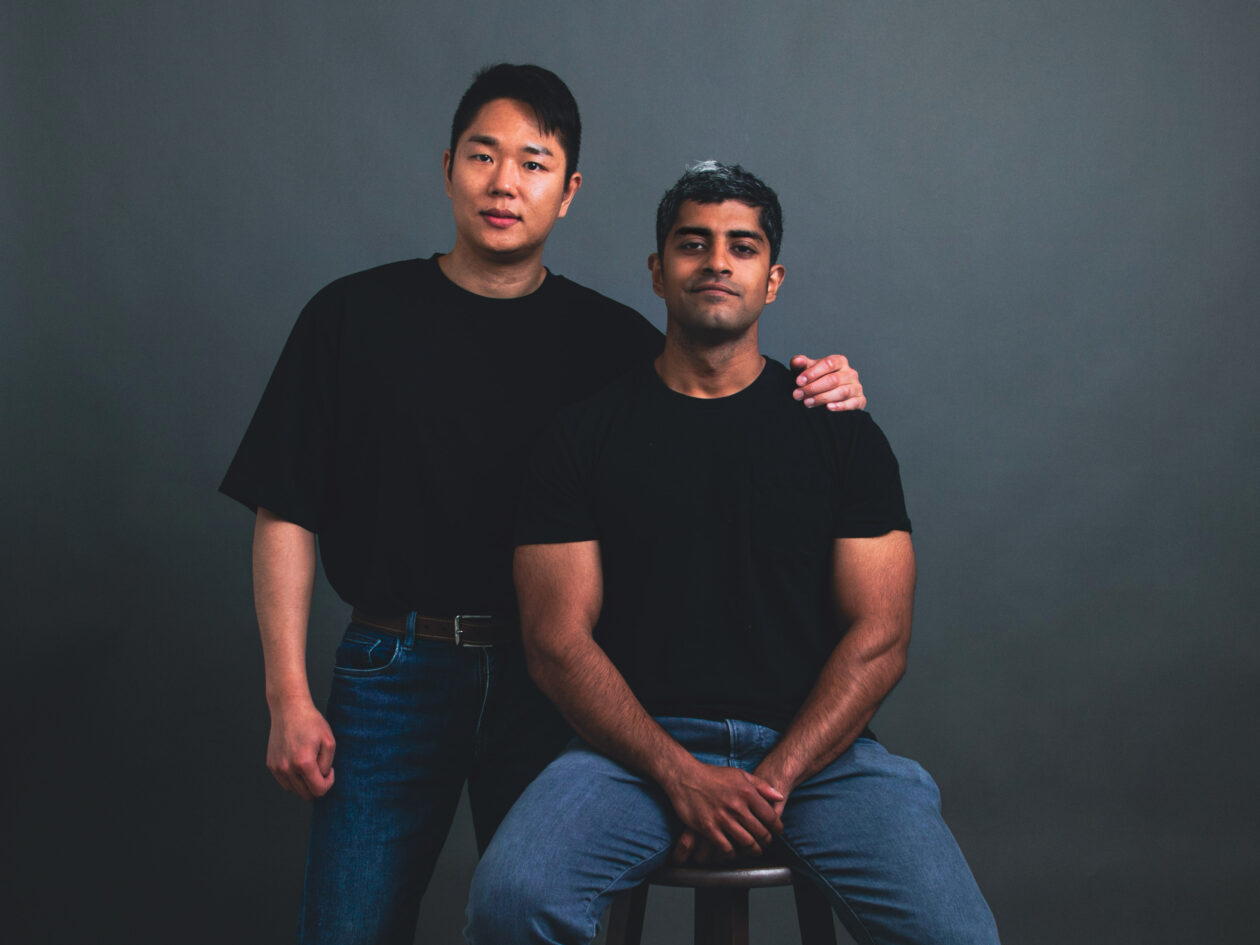

The computer security startup CodeIntegrity on Wednesday announced a $5 million seed round to support its efforts to build meaningful protections for agentic AI applications.
The San Francisco-based company made a splash last year when it demonstrated how easy it was to trick AI models from multiple tech companies into sharing private information, earning a mention in The Economist last September for compromising the note-taking app Notion in less than four hours.
“Every company was aiming to launch agents into deployment, and they didn’t know how to do it safely,” said Abi Raghuram, CodeIntegrity co-founder and CTO.
The core challenge is a fundamental one. Traditional software relies on deterministic controls, meaning that if you type “X,” the computer always does “Y.” But AI agents — tools that can autonomously perform computer tasks — are non-deterministic since they’re driven by natural language models. That makes them vulnerable to “prompt injection” attacks, in which a bad actor inserts malicious text into a model and triggers the agent to do things like expose sensitive data.
To keep these agents in check, companies either employ human-in-the-loop oversight or deploy a second LLM as a judge, but neither approach is fully scalable or entirely foolproof.
“There’s going to be more and more agents being deployed in enterprise settings, and no one has figured (security) out yet,” said Steven Jung, CodeIntegrity co-founder and CEO. “We want to be the first one to actually provide that deterministic control for these companies.”
CodeIntegrity’s solution is to insert a permanent security guardrail called a runtime control layer. Acting as both a translator and a filter, it forces an unpredictable AI model to play by strict, predictable rules and limits which enterprise systems and data an AI agent is allowed to touch.
Raghuram and Jung met at Rose-Hulman Institute of Technology, a top undergraduate engineering school in Indiana. After a few years working separately at other employers, the two reconnected and founded CodeIntegrity in the Seattle area in May 2024. Later that year, they participated in Antler’s New York residency program for early-stage startups.
The company still has employees in Washington state, while the two co-founders recently relocated to San Francisco.
Cybersecurity-focused Syn Ventures led the new round, with participation from existing pre-seed investors Antler and Boost VC. The company has raised a total of $5.25 million.
CodeIntegrity’s product is currently being piloted with companies in regulated industries, with a broader public rollout planned for the future.
Other startups are tackling agentic AI security as well, including Seattle’s Certiv, which emerged from stealth in March, and California’s Raven and Manifold Security.
Raghuram, who worked at Seattle’s Truveta for more than three years, said he’s eager to recruit engineers from the area, but called San Francisco “ground zero for everything agentic LLM.”
“Seattle is a solid place to hire good incumbent talent from Microsoft and Amazon, which is kind of what you want with a fast-moving startup,” he said. “But as founders, if you want to be in the know-how of what’s happening in agentic land, the Bay Area is the place.”

Liu Qiangdong’s pledge to safeguard JD.com’s workforce from automation sits uncomfortably with his own ‘unmanned era’ vision and a flagship warehouse already running on four employees.
Liu Qiangdong, the founder of Chinese e-commerce giant JD.com, vowed in an internal speech this week to protect the company’s 900,000-strong workforce from AI and robotics, according to a Bloomberg report on Thursday citing a video circulating on Chinese social media.
JD.com will, on Liu’s telling, “do everything possible to safeguard employment for hundreds of thousands of staff, including blue-collar workers,” even as it accelerates the deployment of AI and autonomous logistics across the business.
The vow lands in a Chinese policy environment in which it would be unwise for a major employer to say anything else.

The 💜 of EU tech
The latest rumblings from the EU tech scene, a story from our wise ol’ founder Boris, and some questionable AI art. It’s free, every week, in your inbox. Sign up now!
Chinese courts ruled twice in six months in 2026 that companies cannot fire workers simply because an AI can do their jobs, holding that a strategic decision to adopt AI is not the kind of unforeseeable circumstance the Labour Contract Law contemplates as legal grounds for termination.
Beijing’s top governing bodies formalised gig-worker protections earlier this year covering more than 200 million platform workers, with binding algorithm-transparency requirements taking effect in 2027. The political costs of a large Chinese employer being seen to fire workers because of AI are now structurally high.
Liu’s statement is also, however, in visible tension with positions he has taken on the record over the past 12 months.
At the 2025 World Internet Conference in Wuzhen, he argued that in the coming “unmanned era,” people might only need to work one hour a week and that governments should impose a 90% tax on tech monopolies to fund the resulting social compact.
He has separately announced JD’s plan to open the world’s first fully unmanned delivery station in April 2026, integrating drones, autonomous vehicles, and household robots capable of placing parcels directly inside homes through authorised smart locks.
Liu’s public framing has alternated between “automation will replace most jobs and that is a problem to be policy-managed” and, this week, “we will protect jobs.”
The operational record cuts more cleanly than the rhetoric. JD.com has been one of the most aggressive deployers of warehouse robotics in Chinese e-commerce.
The company opened a fully automated warehouse in 2018 that handles 200,000 orders a day with four human employees, all of whom service the robots.
JD Logistics, the company’s separately listed delivery arm, runs Large Language Models for route optimisation and has deployed autonomous delivery vehicles, drones and robot couriers at scale across Chinese cities.
The 900,000 employees Liu now vows to protect are the result of structural overhang from JD’s decade as a labour-intensive operator, not a forward-looking plan for the role of human workers in the firm.
The line JD is now trying to walk is the same one the entire Chinese platform-economy sector is being asked to walk. Beijing wants the productivity gains AI offers and the employment stability the Communist Party’s political legitimacy rests on.
The two are not obviously compatible. JD’s public framing this week, that automation will cut logistics costs and unleash a “positive cycle” of higher employee pay and stronger consumer confidence, is the version most agreeable to Beijing.
Whether the cost-cutting incentives at company level actually deliver that cycle, or simply translate into fewer human couriers and warehouse staff over time, is the operational question.
The press-release framing, separate from the Bloomberg-sourced video of the internal speech, also reportedly emphasises that JD has fostered 183 different types of frontline roles, including AI trainers and robot maintenance engineers.
Those new categories are real but small relative to the courier-and-warehouse base. If they will absorb workers displaced from the larger roles, or simply create higher-skilled positions filled from outside the affected workforce, is the question the next several years of JD’s labour data will answer.
Neither JD.com nor Liu commented through formal channels on the Bloomberg-reported internal speech.


We may receive a commission on purchases made from links.
Washing machines are among the most important appliances in our home, especially because they’re responsible for removing dust, dirt, and potential bacteria that cling to our clothes. In fact, Wonderklean cautions that dirty washing machines can also lead to a slew of health issues, ranging from respiratory problems to skin problems and allergies. And if you don’t take the time to address limescale buildup, Taps UK notes it can also jack up your electricity bill.
Common signs that your machine may already need a deep clean include foul or musty smells, whether it’s your clothes post-wash or the filter. However, it’s often a better idea to prevent this buildup before it starts. While there’s no hard-and-fast rule for precisely when it needs to be cleaned, appliance care brand Affresh recommends cleaning your washing machine once a month, or about 30 cycles, which larger households will reach much sooner. Washing machine company Whirlpool also notes that if you’ve recently done a wash with a lot of clothes bleeding, it may also be time to do a clean-up. In some cases, issues that may require specialized cleaning include mold, limescale, or residual detergent, which can be due to both how you wash your clothes and the type of water in your area.
Regular cleaning is one way to get the most out of your washing machine’s expected lifespan. So, if you’ve decided it’s time to make your appliance feel brand new again, here are some ways to do it, as well as methods to fix more specific problems.
How to clean your washing machine

Before we proceed, it’s best to check your appliance manufacturer’s care guide, which may include specific care instructions for your machine. To care for its products, Whirlpool recommends first adding washing machine tablets to an empty tub, then running a hot-water cycle, followed by a rinse-and-spin cycle. When your tub is air-drying, it says to remove the detergent dispenser drawer if your washing machine model allows it. Next, you can opt to either wipe down the drawer surface with an all-purpose cleaner or soak it in hot water.
There are also differences when cleaning front-load or top-load washing machines. For top-load washing machines, the agitator will need special attention. If the cap is not removable, Whirlpool says you should wipe it with a cloth and a mild soap. But if your model lets you remove the cap, it also says you can use a scrub brush to remove buildup.
Whether you own a top-loading or front-loading washing machine, a quick wipe-down of the door with machine-cleaning wipes can help remove any stray detergent or dust. Electrolux adds that using too much enzyme-based detergent and washing at too low a temperature also leads to deposits on seals. For front-loading washing machines, machine cleaning wipes help ensure there is no hidden mold in the seals. You can also use a damp cloth and mild soap to keep the rest of the exterior sparkling.
Removing limescale, mold, and residual detergent from your washing machine

Unlike your dryer, your washing machine is at a lower risk of causing a house fire, but it does have its own set of concerns, such as limescale, mold, or residual detergent. For people who live in areas with hard water, calcium and magnesium can lead to limescale. Other appliances that limescale is known to cause issues with include your coffee machine and water heater. HG says you can address limescale buildup with a descaler solution, natural vinegar, soda, or dishwasher tablet.
Wonderklean notes that the detergent dispenser, drain hose, and washing machine door are the parts of a washing machine that are most at risk of bacterial and mold growth. To address this, Samsung recommends running a spin-only cycle with an empty tub first. Next, it says to use liquid chlorine bleach, pour it into the dedicated bleach dispenser, and run a Self Clean cycle. Depending on your model, the run time can be up to 4 hours, but it’s important to wipe the inside of the tub afterward. Once that’s done, Samsung says it’s best to run another Rinse+Spin cycle and repeat the process until you no longer see any mold. Once you’re satisfied, you’ll want to leave both the door and detergent door open to let it dry.
Regularly cleaning your washing machines helps you spot warning signs before they break down. If the mold doesn’t go away after deep cleaning, Electrolux says it should be repaired by a professional technician.

The OWC Stack AI promises to make local processing of large LLMs easier by somehow inflating your Mac’s GPU memory across Thunderbolt. We have questions.
The majority of the AI industry consists of the big AI players, including OpenAI, Perplexity, and Anthropic, among others. However, using them can become expensive, especially for people with massive workloads and enterprise clients.
One way to trim the bills is to bring it locally, with AI models being used on a computer instead of a server. The problem there is the expense of the hardware needed for it. And, there are privacy concerns for cloud-based models too.
You can buy a Mac mini and load a model onto it, but you will be hit by a memory limitation. Since the entire model has to be held in memory, the amount installed limits the size of model you can use.
There are workarounds to this limitation, such as projects involving multiple Macs connected over Thunderbolt 5 to share memory and compute performance.
However, OWC thinks it can do something better.
OWC Stack AI’s memory boost
The OWC Stack AI, or the Thunderbolt 5 AI Accelerator and Storage Hub, looks pretty much like an old-style Mac mini. It’s a nondescript aluminum block that you can stack a Mac Studio on top of, similar to some other docks and hubs.
Connecting to the Mac using Thunderbolt 5, it does provide some storage capacity, but the real benefit is its ability to extend the working GPU memory. In effect, it uses onboard high-speed flash to expand the onboard VRAM of a PC’s graphics card, and eventually Apple Silicon too.
With more memory available to use, OWC says that the host computer can handle Large Language Models (LLMs) of a far greater size than the graphics card’s VRAM alone.
This is not the same as using an eGPU enclosure with a Mac. From OWC’s description, the AI Stack works as an external memory enhancement, not an external processor.
OWC’s announcement explains that the Stack AI will support Windows and Linux at first, with Mac support expected at some point in the future.
The company says that Thunderbolt 5 connectivity and its small size means it’s a portable and transferrable item. It can be moved between desks with a notebook, or even shared between team members.
When it comes to the AI ecosystem, OWC assures that it will support numerous AI agents and applications, including OpenClaw, at launch.
AppleInsider has asked OWC for more information, including how the Stack AI works, the delay for Mac support, specs, price, and exspecifications and price. This piece will be updated with further information if we get a response.
What OWC has confirmed is that it will be at the Computex Taipei trade show starting on June 2. At that point, more concrete details about the hardware will emerge beyond an early Q4 launch target. Maybe.
Local processing boon
OWC has been light on details about the Stack AI and its price. We see the potential as an extremely useful item for AI research. Certainly, it would be a good tool for businesses, and depending on price, maybe everybody else too in this day-and-age.
The key problem surrounding local AI processing is having enough RAM that can accommodate the models the users want to use. The other is processing the queries, once you have that memory available.
The current cluster-based projects work well, connecting to each other over Thunderbolt to share cores and memory. That is a problem for more cash-strapped users who can’t afford the tens of thousands of dollars for high memory Macs.
It is arguable that, with the introduction of the M5 chip, Apple has gone a long way to solve the processing side of things. The Neural Accelerators in each GPU core of an M5 GPU means there’s a lot more machine learning processing power available.
This makes it possible for local processing tasks to do a lot more with less. But it only improves the processing itself, not the memory limitations.
You can get an M5 Max 14-inch MacBook Pro with 128GB of memory, but that is a $5,099 purchase with only the necessary upgrades applied. That’s a hefty price to get that much memory.
When Apple comes out with the M5 equivalents of Mac mini and Mac Studio, there will be similar high memory capacity options on the table. But again, they will be extremely highly priced given how the industry is headed.
In May 2026, Apple’s memory prices are reasonable. It’s not clear how long that will last, given the ongoing memory crisis affecting the industry as a whole.
With a product like the Stack AI, there is the potential to buy an M5 Mac with the processing and GPU you want, but not necessarily the memory you need. The Stack AI would handle that bit for you.
This does, however, require OWC to price it at a level that makes sense for consumers to take that road to begin with. OWC is just as price-sensitive to memory as any other company, and that sensitivity will ultimately impact the price the Stack AI sells for.

Apple won’t be holding onto its 20% stake in Globalstar once Amazon’s acquisition of the satellite firm concludes, with the shares set to be held by a “Grapefruit” company instead.
On April 14, Amazon agreed to acquire satellite service provider Globalstar in an $11 billion deal. The purchase adds Globalstar to Amazon’s existing satellite portfolio, which includes its Leo business.
However, Apple holds 20% of the shares in Globalstar, under a $1.1 billion commitment from 2024, which included a $400 million share purchase. Once the deal concludes, it won’t be holding onto the shares, nor the accompanying voting rights.
In a filing with the FCC dated May 26, 2026, Amazon and Globalstar ask the regulator to permit the transfer of licenses and authorizations between the two companies. This is one of the key elements needed for the acquisition to complete in the United States.
The filing, spotted by PCMag, explains that Amazon is creating a subsidiary to complete the merger. The subsidiary is being called “Grapefruit Acquisition Sub II, LLC.”
Apparently, someone in Amazon business development has a sense of humor.
Grapefruit will acquire Apple’s 20% in equity and voting interests for Globalstar. In the end, Globalstar, Inc. will cease to exist, with Grapefruit managing Globalstar USA LLC, Globalstar Licensee LLC, and GUSA Licensee LLC.
Satellite service continues
The document doesn’t state what Apple will receive in exchange, if anything, from the transfer and stock changes. However, it won’t be left out in the cold.
During the April announcement, Amazon insisted that Apple won’t be affected at all. An agreement was made for satellite connectivity to be maintained for current and future Apple Watch and iPhone features.
That includes features like Emergency SOS via Satellite and Roadside Assistance via Satellite.
That included using Globalstar’s existing and planned low Earth orbit satellite constellations. Amazon also said it would work with Apple to come up with future satellite services using Amazon Leo’s expanded satellite network.
In the FCC filing, Amazon reiterates its commitment to supply service and for improvements in the future. However, Amazon also plans to use its Globalstar purchase with other smartphone and mobile device producers and mobile carriers.
Tech
The Netherlands just blocked a US company from buying the app Dutch citizens use for everything


As far as technology is concerned, US and Europe are growing apart at an accelerated rate. EU authorities are working to build their own digital sovereignty, while member states are now actively pushing foreign buyers away when it comes to local service providers.
Read Entire Article
Source link
SpaceX did not commit to a multi-year lease of its Memphis Colossus 1 cluster to Anthropic, Elon Musk said on Wednesday, describing the agreement as 180 days with a 90-day mutual cancellation right.
Elon Musk has clarified that SpaceX did not commit to a multi-year lease of its Colossus 1 data centre to Anthropic, contradicting widely reported framing of the deal as a $1.25bn-per-month, three-year arrangement running through May 2029.
The agreement, Musk said in posts on his X account on Wednesday, is in fact a 180-day base lease with a mutual 90-day cancellation right on either side after that.
“The short term was our request, not Anthropic’s,” Musk wrote. “We won’t leave them hanging and will provide a reasonable off-ramp, but if compute gets super tight I said we might need it back at some point.”
The 💜 of EU tech
The latest rumblings from the EU tech scene, a story from our wise ol’ founder Boris, and some questionable AI art. It’s free, every week, in your inbox. Sign up now!
The clarification matters because it lands inside the SpaceX IPO roadshow window. The company filed for its public listing last week.
The S-1 mentions a 90-day mutual cancellation provision on the Anthropic agreement but does not, as initially reported, anchor the deal at the six-month base term Musk has now publicly named.
The disclosure gap, combined with the visible revision of the deal duration in public Musk statements, will be one of the questions analysts and prospective LPs press on during the roadshow that starts in earnest in June.
The underlying transaction is itself worth recapping. Anthropic announced earlier this month that it had taken access to the full compute capacity of Colossus 1, the Memphis facility built originally to train xAI’s Grok. Colossus 1 houses more than 220,000 Nvidia GPUs and provides over 300 megawatts of compute capacity.
The published monthly rent figure was $1.25bn. Anthropic immediately used the new compute headroom to raise rate limits on Claude Code and Opus API customers, citing the SpaceX deal specifically.
xAI had by then moved its own model training to Colossus 2, a newer and larger facility, leaving Colossus 1 available for external lease.
What changed today is the lease-term reading. A 180-day base term with 90-day post-base cancellation is a meaningfully different commercial commitment from a 36-month contract.
For SpaceX, the short term retains flexibility to reclaim compute if Grok training demand or other internal SpaceX-xAI requirements spike.
For Anthropic, it means the Colossus capacity is a useful near-term bridge rather than the structural data-centre anchor analysts had read it as.
Anthropic’s public posture around the deal, particularly the Claude rate-limit increases announced earlier this month, presumed a longer-term arrangement than Musk has now confirmed.
The IPO-disclosure question is the part SEC lawyers will care about. SpaceX is a private company filing for a public listing. Material commercial agreements with revenue impact are required disclosure.
A 36-month deal worth $45bn cumulative ($1.25bn × 36) is structurally different from a 6-month deal with mutual cancellation worth at most $7.5bn ($1.25bn × 6) if no extension is negotiated.
The S-1’s mention of the 90-day cancellation provision but not the 180-day base term sits in the gap between the two readings.
The Musk-Anthropic relationship is itself the contextual oddity. Musk has spent the past two years publicly describing Anthropic as “Misanthropic” and as a competitor to xAI.
All 11 xAI co-founders have departed over the past year, and xAI itself lost $6.4bn from operations on $3.2bn of revenue in 2025, with growth well below the rates Anthropic and OpenAI have posted.
The Colossus 1 rental to Anthropic was already commercially logical given xAI’s capacity utilisation and SpaceX’s IPO timing. Today’s revision suggests Musk now wants the flexibility to walk it back if circumstances change.
Neither SpaceX nor Anthropic separately commented on the lease-term clarification through formal channels. The SpaceX IPO roadshow is scheduled to begin on 8 June.


The update also introduces the app’s take on film stock simulation.
Halide, one of the best alternatives to the iPhone’s built-in camera app, is getting another upgrade. Developer Lux Optics is rolling out Halide Mark III, a paid update that adds a photo editor and filters that simulate film stock. The features extend Halide’s approach to photography after Lux Optics added a way to circumvent Apple’s image processing pipeline with the release of Halide Mark II in 2024.
Looks, Halide’s new filtering system, is part of a larger “film simulation engine” that’s being introduced in Mark III. All the app’s photo features can be customized or disabled, but Halide will now add things like grain and halation to photos you capture depending on the look you chose. Halide Mark III includes five new looks alongside Process Zero, the app’s zero-processing option, and Apple’s default image processing. Those include:
-
Valencia: A look designed for landscapes and cityscapes, with “thick contrast, deep saturation and solid color separation.”
-
Rembrandt: A look for portraits that features “thick contrast in the mid-tones” and “abundant color in the low end” to highlight bone structure and capture uniform skin-tones.
-
Nova: Another look that works best with landscapes, and is “exceptionally colorful, with tight contrast and smooth peachy highlights.”
-
Zephyr: The “most subtle and restrained” look, with “filmic contrast” and “the character of a traditional print.”
-
Chroma Noir: A black and white look with “medium contrast” and “a touch of extra grain.”
All these new looks include HDR support if you want more detail in highlights and shadows. They can also all be edited and tweaked with Halide’s new Photo Lab editor. The built-in editor is designed to be approachable. There’s a Quick Edit tab if you want to quickly switch film simulations or toggle HDR, along with dedicated sections for making in-depth changes to things like color balance and exposure. The whole thing is designed to show you as much or as little as you need, but the iPad version of Halide Mark III seems like the ideal place to edit thanks to its two-panel setup.
These new features are being paired with updates to Halide’s design and the placement of its virtual buttons. The new design adopts some of Apple’s Liquid Glass tenets, while exposing the most important controls — things like focus, aspect ratio and a lens picker — so that you don’t have to go digging through menus.
As with previous updates, Halide Mark III is available for a monthly subscription of $10, a yearly subscription of $20 or a one-time purchase of $60. Existing subscribers and anyone who purchased Halide Mark II will get the update for free.
This is the first major Halide update Lux Optics has rolled out since its co-founder, Sebastiaan de With, left the company to join Apple in January 2026. The split has reportedly been a bit more complicated than it initially appeared. Not only did Apple originally try to acquire the company, but de With was reportedly fired from Lux Optics after the company’s other co-founder Ben Sandofsky began investigating him for allegedly misusing funds.


Personal Tech
Also somehow censoring too much while refusing to hand over account ban evidence for review
The EU’s moderation appeals watchdog says Facebook, Instagram, TikTok, and YouTube routinely leave hate speech online while stonewalling attempts to independently review suspended accounts.
Appeals Centre Europe, an Ireland-certified dispute settlement body operating under the EU’s Digital Services Act, says it overturned platforms’ decisions not to remove reported hate speech 70 percent of the time between April 2025 and March 2026, including content targeting migrants, Roma communities, religious minorities, and LGBTQI+ people.
TikTok fared worst, with the Appeals Centre overturning its decisions in 83 percent of reviewed hate speech disputes, followed by Instagram at 74 percent, Facebook at 61 percent, and YouTube at 58 percent.
The report suggests that Europe’s moderation accountability regime is functioning more or less how veteran tech policy watchers feared it might. In theory, the system gives EU users a free way to challenge moderation decisions through an independent review body. In practice, Appeals Centre Europe says platforms often fail to hand over the disputed content or account material needed to review cases.
Account bans appear to be where the process really starts to fall apart. Appeals Centre Europe says that despite receiving more than 14,000 suspension disputes, it got enough content from platforms to fully review fewer than 150 cases. Instead, thousands of cases ended in what the Appeals Centre calls “default decisions,” in which platforms failed to provide the material within 30 days, and the ruling automatically went in the user’s favor. More than 7,300 disputes ended that way.
Meta appears to be struggling most with the “independent review” part of independent review. The report says that out of more than 4,600 eligible Facebook and Instagram account suspension disputes, the company supplied the disputed content in fewer than 100 cases.
The findings also complicate the increasingly popular narrative that platforms are over-censoring everything in sight. Appeals Centre Europe says it overturned decisions to remove users’ content 52 percent of the time in cases where it could actually review the material. Rules around restricted goods and services proved especially messy, with the group overturning removals in 65 percent of reviewed disputes.
In other words, the platforms appear capable of simultaneously leaving up content they should remove while deleting content they should leave alone, which is an impressive operational achievement even by social media standards.
Thomas Hughes, CEO of Appeals Centre Europe, said: “Online hate and harassment have real-world consequences for many people and communities. In more than two-thirds of our decisions about hate speech, we found that platforms failed to enforce their own policies and left up hateful content. This goes to show that platforms don’t always get it right. If you’re in the EU, you can challenge a platform’s decisions free of charge to Appeals Centre Europe and get an expert, impartial review.”
However, the report also suggests platforms do not always implement the Appeals Centre’s decisions even after cases are reviewed. In one section covering disputes submitted by civil society groups, the organization says it is aware of only “a handful” of cases in which platforms acted on its rulings, while many disputed posts remained online.
That’s not exactly the robust moderation accountability system Brussels has spent years promising users. ®

Super Micro Computer: The Rebound Is Just Getting Started

Samsung Units Acquire a $408 Million Stake in Upbit Operator Dunamu

Kyle Cooke Snaps At Ciara Miller During ‘SH’ Reunion

Steven Gerrard disagrees with Gary Neville over ‘shock’ Chelsea and Arsenal claim | Football

US brings back mandatory military draft registration

Register Renaming | Hackaday

XRP AND SOL WIN AS BITCOIN DOMINANCE HEADS TO 60%! #crypto #cryptocurrency #xrp #solana

XRP AND SOLANA PARTNERSHIP I KNEW IT! #cryptocurrency #cryptocurrency #xrp #solana

You have NO IDEA how dangerous this crypto wallet is!!!
-

 Crypto World7 days ago
Blockchain.com files with SEC for U.S. IPO
-

 Fashion6 days ago
Holiday Weekend Open Thread – Corporette.com
-

 Politics3 days ago
Bridgerton Season 5: Cast, Release Date And Everything We Know So Far
-

 Crypto World6 days ago
Bitcoin Accumulation Weakens as BTC Realized Losses Hit $600M
-
 Tech3 days ago
Microsoft’s quiet Claude Code retreat and the real cost of enterprise AI
-

 Business6 days ago
Dell Technologies DELL Stock Surges 15% on AI Server Momentum and Analyst Upgrades in 2026
-

 Crypto World5 days ago
Robinhood crypto COO Tanya Denisova exits
-

 Business4 days ago
NYT Strands Answers May 24 2026 Revealed for Puzzle No. 812 Theme Summer Essentials
-

 Business6 days ago
Trump Invests $1M-$5M in Kura Sushi USA Chain With 27 California Locations
-

 Politics6 days ago
Makerfield: a tale of two social-media histories
-

 Crypto World6 days ago
Space X IPO Is ‘Bad News’ for Tech Stocks: But What About Bitcoin?
-

 Business1 day ago
Selena Gomez Reportedly Upset Over Benny Blanco’s Comments on Her ‘Terrible’ Diet
-

 Crypto World6 days ago
MicroStrategy’s Saylor Says Miners No Longer Set Bitcoin Price, Another Force Has Taken Over
-

 Tech6 days ago
WhatsApp ads could make Irish debut after discussions with DPC
-

 Business3 days ago
BTS Sells Out Four Las Vegas Shows at Allegiant Stadium for ARIRANG World Tour
-
Tech22 hours ago
The Samsung pay deal is the moment Korean unions changed register
-
 NewsBeat7 days ago
Charity run by Reform leader Malcolm Offord accused of ‘law breaking’ over Scottish registration
-
 Tech6 days ago
A 0.12% parameter add-on gives AI agents the working memory RAG can’t
-

 Crypto World6 days ago
AI infrastructure race heats up as IREN pitches full-stack strategy, WhiteFiber lands $160M deal
-

 Tech3 days ago
Westone Audio and Etymotic Acquired by Fidelity Collective in Major IEM Market Move
You must be logged in to post a comment Login