Connect with us
DAPA Banner
DAPA Coin
DAPA
COIN PAYMENT ASSET
PRIVACY · BLOCKDAG · HOMOMORPHIC ENCRYPTION · RUST
ElGamal Encrypted MINE DAPA
🚫 GENESIS SOLD OUT
DAPAPAY COMING

Business

TSMC Stock Remains Strong Buy in 2026 as AI Demand Fuels Record Growth and Analyst Optimism

Published

on

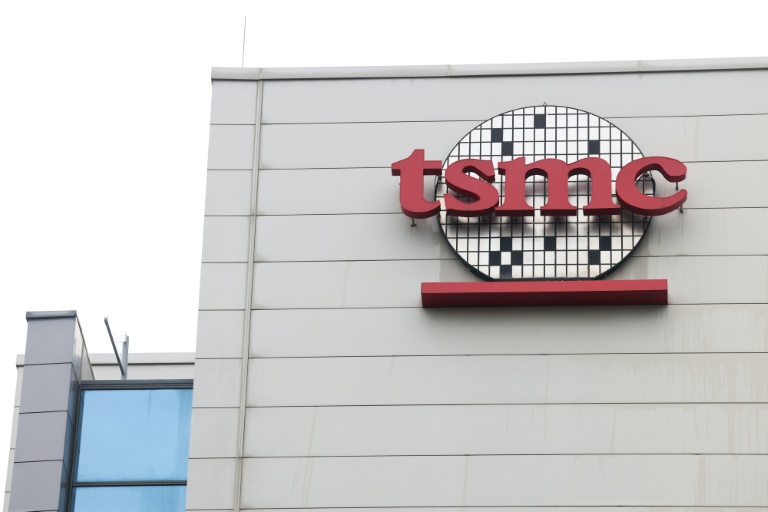
TSMC has plans to open three fabrication plants in the United States

NEW YORK — Taiwan Semiconductor Manufacturing Company (NYSE: TSM) continues to stand out as one of the most compelling technology investments in 2026, with analysts overwhelmingly recommending buying shares of the world’s largest contract chipmaker amid explosive demand for advanced semiconductors powering artificial intelligence systems.

As of late May 2026, TSMC shares trade near $404–$423, reflecting substantial gains over the past year. The stock has benefited from robust AI infrastructure spending by major clients including Nvidia, Apple, AMD and Broadcom. Wall Street maintains a strong consensus “Buy” rating, with 13 out of 15 analysts recommending purchase and only two suggesting Hold. Average 12-month price targets cluster around $404–$465, implying modest to significant upside from current levels.

Recent performance has been impressive. TSMC reported record first-quarter 2026 revenue of $35.9 billion, up 35–40.6 percent year-over-year, driven by high-performance computing and AI-related demand. Gross margins reached 66.2 percent, exceeding expectations, while management raised full-year guidance citing “extremely robust” AI chip orders.

Strong AI Tailwinds Support Growth

TSMC’s position as the leading foundry for advanced nodes (3nm, 2nm and beyond) has positioned it at the center of the global AI boom. High-bandwidth memory and advanced packaging technologies critical for AI accelerators have seen particularly strong demand. Chairman and CEO C.C. Wei highlighted the shift toward “agentic AI,” which requires even greater computational power, during the April earnings call.

Advertisement

Analysts project TSMC’s revenue could grow more than 30 percent in 2026, with some forecasts calling for even higher figures if AI spending accelerates. Capital expenditure plans remain elevated at $52–$56 billion, reflecting aggressive capacity expansion to meet client needs. Advanced nodes already account for 74 percent of wafer revenue, with 3nm alone contributing 25 percent.

Morningstar recently raised its fair value estimate to $428 per ADR after strong results, noting the stock trades at a meaningful discount to intrinsic value. Several firms, including Bank of America, have increased price targets to $490–$500, citing sustained AI momentum and pricing power for leading-edge chips.

Valuation and Financial Strength

Despite strong gains, TSMC’s valuation remains reasonable compared to pure-play AI peers. The company trades at forward multiples that many analysts consider attractive given its market leadership, technological moat and consistent profitability. Strong free cash flow generation supports ongoing dividends and share repurchases, providing additional returns for long-term holders.

The balance sheet remains solid with low debt levels relative to cash flows. Geographic diversification efforts, including new facilities in the United States, Japan and Europe, help mitigate risks from geopolitical tensions in Taiwan.

Advertisement

Key Risks and Challenges

While the outlook is predominantly positive, investors should consider several risks. Geopolitical tensions between the U.S. and China, along with cross-strait relations, remain a perennial concern for Taiwan-based companies. Any escalation could disrupt operations or supply chains.

Intense competition from Samsung in foundry services and potential cyclical slowdowns in broader semiconductor demand could pressure margins. Rising capital expenditures may also weigh on near-term returns if utilization rates dip unexpectedly.

Currency fluctuations, particularly movements in the Taiwanese dollar, can impact reported earnings for international investors. Recent strength in the U.S. dollar has been somewhat supportive but remains a variable to watch.

Investment Considerations for 2026

For investors considering buying TSMC stock, the case centers on structural growth in AI and high-performance computing. The company’s irreplaceable role in the semiconductor supply chain, combined with proven execution, makes it a core holding for technology-focused portfolios.

Advertisement

Potential buyers may look for pullbacks toward the $380–$400 range for better entry points, especially if broader market volatility creates opportunities. Long-term investors benefit from TSMC’s technological leadership and exposure to multiple growth megatrends.

Those considering selling or staying sidelined cite potential valuation expansion limits after recent gains and the risk of geopolitical shocks. However, the overwhelming analyst consensus and strong fundamentals suggest limited downside at current levels for patient capital.

Diversification remains important. While TSMC offers high-quality exposure to semiconductors, pairing it with other sectors helps manage volatility inherent in technology stocks.

Broader Semiconductor Sector Context

TSMC’s performance reflects strength across the chip industry driven by AI adoption. The company’s success has ripple effects throughout the supply chain, benefiting equipment makers, material suppliers and design firms. Continued investment in advanced process technologies ensures TSMC maintains its competitive edge against rivals.

Advertisement

As artificial intelligence moves from training to inference and agentic applications, demand for sophisticated chips is expected to remain elevated. TSMC’s capacity expansion plans position it to capture a significant share of this growth.

Outlook for Remainder of 2026

Management and analysts project continued strong performance through 2026 and beyond. Key upcoming catalysts include progress updates on 2nm development, major client announcements and quarterly results demonstrating sustained AI momentum.

Risks to the outlook include slower AI adoption rates, intensified geopolitical pressures or broader economic slowdowns affecting technology spending. Positive surprises in earnings or capacity utilization could drive further upside.

As of late May 2026, TSMC represents one of the highest-conviction opportunities in global technology. Its combination of market leadership, technological superiority and structural tailwinds supports a bullish long-term view despite periodic volatility.

Advertisement

Investors should monitor quarterly earnings closely, particularly comments on AI demand, pricing trends and geopolitical developments. Professional financial advice tailored to individual circumstances is recommended before making investment decisions in this dynamic sector.

Continue Reading
Click to comment

You must be logged in to post a comment Login

Leave a Reply

Business

Best Buy (BBY) Q1 2027 earnings

Published

on

Best Buy (BBY) Q1 2027 earnings

A person walks outside a Best Buy store on May 29, 2025 in Chicago, Illinois.

Scott Olson | Getty Images

Best Buy on Thursday reported fiscal first-quarter results that beat expectations on the top and bottom lines as the electronics retailer tries to break out of a sales slump.

Advertisement

The company said revenue climbed slightly, driven by comparable sales growth of 2%. It reaffirmed its full-year guidance of revenue between $41.2 billion and $42.1 billion, in addition to adjusted earnings per share of $6.30 to $6.60. It expects comparable sales in the range of a decline of 1% to an increase of 1%.

The company said its biggest growth drivers in the quarter were gaming, computing, mobile phones and services, which were partially offset by a decline in sales of appliances.

Shares of Best Buy rose 7% in premarket trading.

“Our comparable sales grew 2% versus last year, higher than our outlook, with positive comps across the majority of our major product categories and strong performance in our Best Buy Ads and Marketplace initiatives,” CEO Corie Barry said in a release. “We also drove operating income rate expansion and EPS growth.”

Advertisement

More retailers including Walmart and Target have leaned into advertising and third-party marketplace businesses, which offer sales growth with higher profit margins than their traditional merchandise does.

Here’s how Best Buy performed in its fiscal first quarter compared with what Wall Street was expecting, according to a survey of analysts by LSEG:

  • Earnings per share: $1.28 adjusted vs. $1.23 expected
  • Revenue: $8.94 billion vs. $8.83 billion expected

For the period ended May 2, Best Buy reported net income of $276 million, or $1.31 per share, up from $202 million, or 95 cents per share, in the year-ago period. Revenue rose slightly to $8.94 billion from $8.77 billion the prior year. Excluding one-time expenses, including charges incurred for restructuring its health business, Best Buy reported adjusted earnings per share of $1.28 per share.

The earnings come just over a month after the company named Jason Bonfig as its new CEO, succeeding Barry in the fall. The leadership change was part of Best Buy’s efforts to increase sales and accelerate its business.

“With this momentum, I believe it is the right time to transition the leadership of Best Buy, and step down as CEO later this year,” Barry said in a statement Thursday.

Advertisement

Bonfig said in the Thursday release that he’s focused on expanding the company’s reach and elevating the experience for customers as he prepares to take the helm on Nov. 1.

Best Buy has been struggling with a sales slump, taking additional hits from higher tariffs and lower consumer confidence. Last quarter, Barry said the company was seeing a divergence in higher-income shoppers and lower-income shoppers, with softness in higher-cost item sales.

Choose CNBC as your preferred source on Google and never miss a moment from the most trusted name in business news.
Continue Reading

Business

Monthly auto loan payments above $1,000 are growing

Published

on

Monthly auto loan payments above $1,000 are growing

In a country where big trucks are a big deal, those pickups and SUVs represent a big percentage of auto loans that come with a sizable monthly payment, more than $1,000 a month, according to new data.

Experian Automotive’s analysis of more than 5 million open auto loans and leases in the first quarter shows nearly 19% of new vehicle loans include a monthly payment of at least $1,000. That’s up from roughly 17.4% year over year.

“The assumption is that it’s all luxury, it’s high-line, and that is not the case,” said Melinda Zabritski, head of automotive financial insights for Experian Automotive.

Advertisement

Almost 74% of the auto loans requiring owners to pay $1,000 or more every month are for non-luxury models, with the top five models being popular pickup trucks including the Ford F-150, Chevrolet Silverado 1500 and Ram 1500, according to Experian.

Just five years ago, auto loans with monthly payments over $1,000 accounted for just 5.4% of the market. Then the global chip shortage hit in 2021 and 2022, and automakers around the world prioritized production of higher-end, more profitable models. Vehicle prices soared, and so did the amount borrowed for auto loans.

Zabritski said those higher prices have changed how car and truck buyers look at what it takes to finance the purchase of a new vehicle.

“We haven’t seen a reduction in that MSRP, and in those high loan amounts,” she told CNBC. “I think as time goes on, I think more consumers are getting used to the $1,000 payment.” 

Advertisement

The average amount borrowed is now at an all-time high of $43,952, and the average monthly payment has also climbed to an all-time high of $770, according to Experian Automotive. Both are a reflection of a new auto market that is relatively strong.  

As for auto loan delinquencies, the percentage of loans that have payments more 30 days late has edged up to 2% of all new vehicle loans, with the 60-day delinquency rate also increasing.  

Still, Zabritski noted that delinquency rates remain below 2018 levels. 

“The driving force in the 60-day delinquency really does fall within the subprime market. Lower credit scores are going to have a higher likelihood of default,” she said.

Advertisement
Choose CNBC as your preferred source on Google and never miss a moment from the most trusted name in business news.
Continue Reading

Business

Dolly Khanna’s portfolio sees steady gains in CY26; 5 stocks rise up to 25% – Portfolio Moves

Published

on

Dolly Khanna’s portfolio sees steady gains in CY26; 5 stocks rise up to 25% - Portfolio Moves

An ETMarkets analysis of ace investor Dolly Khanna’s portfolio shows that, based on shareholding data for the March 2026 quarter, she publicly holds around eight stocks. As of May 27, 2026, the total value of these holdings is approximately Rs 481 crore, up about 8% from Rs 444 crore in December 2025.

In terms of performance, five of the eight stocks have gained between 4% and 26% so far in CY26, while the remaining three have declined between 15% and 22%. There were three fresh additions to the portfolio during the March 2026 quarter. (Data Source: ACE Equity, Trendlyne)

Continue Reading

Business

Oil Prices Surge Over 2 Percent as US-Iran Tensions Escalate and Supply Fears Grip Global Markets

Published

on

Prince Harry (left) and his wife Meghan Markle (right) stunned the monarchy by announcing they were quitting royal duties and moving to the United States in early 2020

NEW YORK — Crude oil prices jumped sharply on Thursday, with West Texas Intermediate crude rising more than 2 percent to $90.87 per barrel and Brent crude climbing to $96.67, as renewed military exchanges between the United States and Iran near the Strait of Hormuz reignited fears of potential supply disruptions in the world’s most critical energy chokepoint.

The gains extended a volatile week for energy markets, with benchmark prices responding to reports of fresh strikes and retaliatory actions that have heightened geopolitical risk premiums. Murban crude, a key Middle East benchmark, posted even stronger gains, rising 5.16 percent to $94.57 amid concerns over possible longer-term threats to Persian Gulf exports.

The surge comes as traders assess the potential impact on global supply flows. Roughly one-fifth of the world’s seaborne oil passes through the Strait of Hormuz, making any sustained disruption a major risk factor for energy prices and broader economic stability.

Drivers Behind Thursday’s Rally

Analysts attributed the sharp move primarily to escalating tensions following U.S. strikes on Iranian drone facilities and Iran’s response targeting American assets. Although both sides have described the actions as limited, the incidents have raised fears that the fragile ceasefire could collapse, potentially leading to attacks on oil infrastructure or shipping lanes.

Advertisement

“Geopolitical risk is back on the table in a meaningful way,” one commodities trader noted in market commentary. The possibility of Iran restricting tanker movements or targeting infrastructure has prompted defensive buying across energy futures.

Supporting the price action, several other benchmarks showed strength. WTI Midland rose 2.61 percent to $92.44, while gasoline futures gained 1.96 percent. Heating oil also moved higher, reflecting expectations of tighter supply conditions if tensions persist.

Natural gas prices, however, traded mixed. U.S. Henry Hub futures fell 0.87 percent to $3.068, while AECO C in Canada surged 10.66 percent on regional weather and storage dynamics.

Broader Market Context

Oil prices have been highly sensitive to developments in the Middle East throughout 2026. Earlier disruptions from the conflict had already pushed benchmarks above $100 at times, though periodic hopes for de-escalation had triggered pullbacks. Thursday’s move reversed some of that recent softness.

Advertisement

The energy complex is also reacting to mixed global demand signals. While economic growth concerns in some major economies persist, strong consumption in Asia and ongoing strategic buying by certain nations have provided underlying support.

Inventory data released earlier in the week showed modest builds in U.S. crude stocks, but analysts say this has been overshadowed by the geopolitical narrative. The American Petroleum Institute reported a larger-than-expected draw in gasoline inventories, contributing to the strength in refined product prices.

Impact on Global Benchmarks

International crude grades showed varied movements depending on reporting delays. The OPEC Basket fell in older data, but current trading sentiment suggests renewed upward pressure across the complex. Dubai and Oman grades reflected similar dynamics, with some benchmarks posting notable declines in delayed figures while active trading showed firmness.

Western Canadian Select traded lower in recent sessions, reflecting regional pipeline and refining dynamics less directly tied to Middle East events. Louisiana Light and ANS West Coast also showed mixed performance based on timing.

Advertisement

This divergence highlights how different crude grades respond to specific regional supply and demand factors even as global risk sentiment dominates headline movements.

Implications for Energy Markets and Economy

Rising oil prices carry significant implications for inflation, consumer spending and corporate earnings. Higher energy costs could feed through to transportation, manufacturing and household budgets, potentially complicating central bank policy decisions in multiple countries.

Airlines, shipping companies and chemical manufacturers face increased input costs that may pressure margins or lead to higher prices for end consumers. Conversely, oil producers, exploration companies and service providers stand to benefit from sustained higher prices.

The surge has also influenced related markets. Gold prices pulled back as the dollar strengthened on risk sentiment, while certain equity sectors showed defensive rotation.

Advertisement

Analyst Perspectives and Outlook

Energy analysts remain divided on the near-term trajectory. Some expect prices to test $95–$100 for WTI if tensions remain elevated, while others warn that any diplomatic progress could trigger sharp profit-taking.

Longer-term factors include global economic growth forecasts, OPEC+ production decisions and the pace of energy transition efforts. The current environment favors volatility as traders balance immediate geopolitical risks against longer-term demand uncertainties.

Market participants will closely monitor overnight developments in the Middle East, upcoming inventory reports and statements from major producers. Any escalation involving critical infrastructure could push prices significantly higher, while successful de-escalation talks might ease the recent premium.

For businesses and consumers, the current price environment serves as a reminder of energy markets’ sensitivity to geopolitical events. Companies with hedging programs may be better positioned, while households could face higher gasoline prices at the pump in coming weeks.

Advertisement

Technical Market View

From a technical standpoint, WTI crude has broken above recent resistance levels around $88–$89, potentially targeting the $95 zone if momentum holds. Brent faces similar dynamics with resistance near $98–$100.

Trading volumes were elevated during the session, indicating strong participation from both speculative and commercial accounts. Options activity showed increased interest in upside protection, reflecting caution among market players.

As trading continues, focus remains on whether the current spike represents a temporary risk premium or the start of a more sustained move higher. Energy futures will likely remain in the spotlight as long as uncertainty persists in the Persian Gulf.

The latest price action underscores oil’s role as both a critical commodity and a barometer for global geopolitical stability. With multiple benchmarks showing significant daily moves, market participants are bracing for continued volatility in the energy complex.

Advertisement
Continue Reading

Business

Stifel raises Snowflake stock price target to $300 on AI strength

Published

on


Stifel raises Snowflake stock price target to $300 on AI strength

Continue Reading

Business

Merthyr industrial door maker for Harrods under new ownership

Published

on

Business Live

Design & Supply has been acquired by its management team in a deal backed by the Development Bank of Wales

Design & Supply has completed an MBO with investment from the Development Bank of Wales.

A Merthyr manufacturer of industrial steel doors has been acquired in a £3.1m management buyout (MBO) deal. Design & Supply is now owned by an experienced internal management team comprising Tom Grother, Scott Davies and Damien Regis.

The deal, which secures 65-jobs, has been backed by the Development of Wales with a mixture of debt and equity.

Advertisement

Founded in 1986 by Terry Stares, Design & Supply was previously subject to an MBO in 2016, when long-serving employees Kevin Edwards and Chris Weed acquired the company.

From its 41,000 sq ft facility it manufactures a wide range of high-specification steel doors. The company serves customers across the UK, with projects including St Pancras, National Grid sites, Harrods, Canary Wharf and Silverstone.

Legal advice to the vendors was provided by Knights, with Darwin Gray advising the MBO team and Blake Morgan advising Development Bank of Wales. As part of the transaction, fractional finance director support is being provided by SME Finance Partners to support the business’s next phase of growth.

Mr Grother, director at Design & Supply, said: “This is a proud moment for all of us. As a management team, we’ve been closely involved in running the business for many years, and this deal gives us the platform to take it forward while staying true to what’s made it successful.“We’re particularly proud that this is the second management buy-out in the company’s history. It reflects a strong legacy of local ownership and long-term commitment to the business, its people and the wider community. Scott’s journey from apprentice to owner is a great example of what that means in practice.

Advertisement

“The support from the Development Bank of Wales has been about much more than funding. We’ve built a strong relationship with the team, and their backing gives us confidence as we look to the future. Our focus now is on building on the foundations laid by Kevin and Chris, continuing to invest in our people and delivering long-term, sustainable growth.”

Scott Hughes, senior investment executive at the Development Bank of Wales, said:“This investment demonstrates our commitment to supporting strong Welsh businesses through succession using equity investment.

“Design & Supply is a highly regarded manufacturer with an experienced management team and clear growth ambitions. By backing this transaction with equity, we are helping to ensure continuity, safeguard skilled employment in Merthyr and support the business to invest for the long term while remaining locally owned.

“We’re pleased to support Tom, Scott and Damien as they take the business forward and build on its long-standing reputation.”

Advertisement

Rhys Gedrych of SME Finance, who acted for the company, said: “Design & Supply is a high-quality business with strong fundamentals, a loyal customer base and a proven ability to deliver consistent performance.

“The MBO team knows the business inside out and is well placed to drive the next phase of growth. We’re delighted to support them in strengthening financial processes and helping to unlock further opportunities.”

Continue Reading

Business

Phoenix Built an Empire of Cubicle Jobs. AI Is Coming to Tear It Down.

Published

on

Phoenix Built an Empire of Cubicle Jobs. AI Is Coming to Tear It Down.

PHOENIX—All around this desert city’s sprawling metro area, low-rise office parks with tinted windows and vast parking lots stretch to the horizon. This is America’s back office.

Abundant land and cheap labor made Phoenix a premier place for companies to stash lower-paid office workers who don’t need to be physically close to clients or headquarters. The cubicle-based jobs—customer service, data entry, payroll processing—created a vital ladder to the middle class, helping replace factory work lost to overseas competition. 

Now, these white-collar jobs are fading, too, thanks to continued offshoring and, increasingly, artificial intelligence. Tens of thousands of local workers suddenly face an uncertain future.

A test grader saw her work outsourced to India. A customer-relations manager, recently laid off and his savings running low, is looking to become a bartender. Job-placement firms that supply companies with back-office workers are seeing less demand and are cutting their own staff, too. Those who still have jobs are increasingly leery of automation, even as it’s become an unavoidable part of their days.

Advertisement

Copyright ©2026 Dow Jones & Company, Inc. All Rights Reserved. 87990cbe856818d5eddac44c7b1cdeb8

Continue Reading

Business

Govt, Bethesda do deal to save Mount Hospital

Published

on

Govt, Bethesda do deal to save Mount Hospital

The state government has done a deal with Bethesda to ensure the Mount Hospital, which is currently in receivership under current operator Healthscope, can remain viable.

Continue Reading

Business

Janus Henderson Global Multi-Asset Aggressive Growth Managed Account Q1 2026 Commentary

Published

on

BlackRock Global Equity Market Neutral Fund Q4 2025 Commentary

Janus Henderson Investors exists to help clients achieve their long-term financial goals. Formed in 2017 from the merger between Janus Capital Group and Henderson Global Investors, we are committed to adding value through active management. For us, active is more than our investment approach – it is the way we translate ideas into action, how we communicate our views and the partnerships we build in order to create the best outcomes for clients. While our investment managers have the flexibility to follow approaches best suited to their areas of expertise, overall our people come together as a team. This is reflected in our Knowledge. Shared ethos, which informs the dialogue across the business and drives our commitment to empowering clients to make better investment and business decisions.www.janushenderson.com

Continue Reading

Business

Weyerhaeuser: An Irreplaceable Timber Giant Poised For The Housing Rebound

Published

on

Weyerhaeuser: An Irreplaceable Timber Giant Poised For The Housing Rebound

Weyerhaeuser: An Irreplaceable Timber Giant Poised For The Housing Rebound

Continue Reading

Trending

Copyright © 2025