

Connect with us
DAPA Banner
DAPA Coin
DAPA
COIN PAYMENT ASSET
PRIVACY · BLOCKDAG · HOMOMORPHIC ENCRYPTION · RUST
ElGamal Encrypted MINE DAPA
🚫 GENESIS SOLD OUT
DAPAPAY COMING

Tech

Wand 12-inch Dark-Light Tonearm to Debut at HIGH END Vienna 2026: Does Length Really Matter?

Published

on

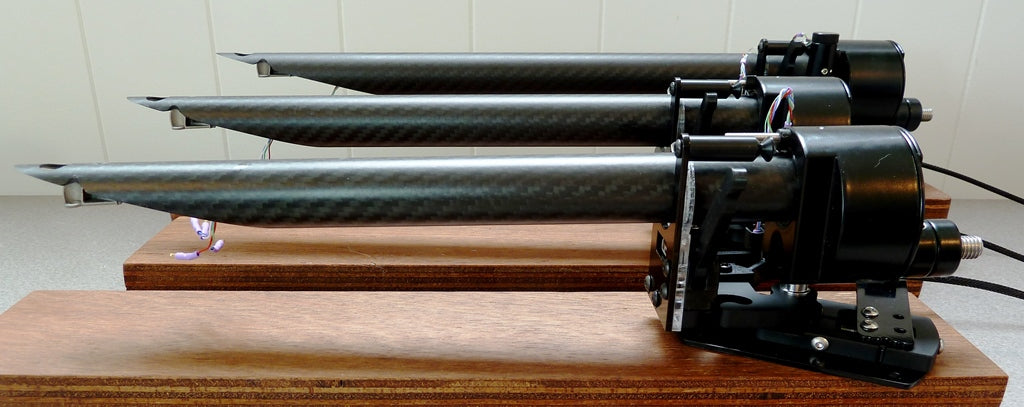
The Wand has been one of those tonearms that has intrigued me for years, largely because it never looked like it was designed by committee, or by someone trapped in front of a CAD workstation after midnight with too much confidence and something much stronger than coffee. They do it differently in New Zealand. Its wide to narrow carbon fiber arm profile helped make it instantly recognizable, and the design has built a real following over time. The latest chapter arrives next week at HIGH END Vienna 2026, where Wand will unveil its new 12-inch Dark-Light tonearm, a longer version of the 10-inch Dark-Light that first appeared at Munich High End 2025.

Long tonearms are not new, and neither is the argument over whether the added length is worth the extra real estate and setup demands. Wand already offers 9.5-inch, 10.3-inch, 12-inch, and 14-inch arms, and the company claims a 12-inch arm can reduce distortion by roughly 30% compared to a 9-inch design. That matters if the arm can keep resonance, rigidity, and bearing behavior under control, which is where Wand has always tried to separate itself from the usual aluminum tube and prayer routine.

My own curiosity goes back to some oddball tonearms I tried years ago, including the Japanese RS Labs RS-A1, a rotating headshell design that looked faintly mad but made a persuasive case for thinking differently about geometry and tracking. I also came across The Wand while looking at restored idler drive Lenco turntables, including the Dutch PTP Audio projects built around classic Swiss Lenco decks from the 1970s. PTP adopted The Wand for some of its turntables back in 2014, which only made the rabbit hole deeper. Naturally, I fell in. That is how these things happen.

The new 12-inch Dark-Light is not just about making the arm longer because the internet needs another argument. It is about whether Wand can preserve the speed, low noise, and musical flow that made the shorter model interesting, while taking advantage of the lower tracking distortion that a properly executed 12-inch arm can deliver. For vinyl listeners with the deck, space, cartridge, and patience to make it work, this could be one of the more interesting analog debuts at HIGH END Vienna 2026.

Advertisement
wand-tonearm-series

Handmade in New Zealand, Designed by Simon Brown

Design Build Listen is not just another boutique analog brand making pretty bits for expensive turntables. Based in Aotearoa / New Zealand, the company hand builds The Wand Tonearm along with other audio accessories, including its “No Ring Rings” tube dampers designed to reduce unwanted vibration.

Created by designer Simon Brown and launched in 2011, The Wand Tonearm has earned multiple design awards and five star reviews for its distinctive carbon fiber arm design. Its large diameter arm tube is claimed to be at least four times stiffer than traditional tonearms, which helps explain why The Wand has always felt less like a retro accessory and more like a serious rethink of how a tonearm should work.

Longer Reach, Tapered Stiffness, Serious Vibration Control

The new Wand Dark-Light 12-inch tonearm is not just a longer version built for people with more plinth real estate and stronger opinions. Its core advantage is Wand’s Musical Taper design, which increases the arm tube diameter toward the pivot as length increases. That larger rear section is intended to preserve stiffness rather than sacrifice rigidity, while also allowing more internal brass mass near the bearing assembly.

The added mass lowers the center of gravity and gives vibrational energy a more controlled path away from the cartridge and arm tube. For a 12-inch tonearm, that matters: the longer geometry can help reduce tracking distortion, but only if the arm remains stable, rigid, and free enough to trace the groove properly. The Dark-Light’s appeal is that it tries to balance those demands without turning the design into another heavy analog science project with nicer photography.

Advertisement
wand-12-inch-dark-light-tonearm

Will The Wand Tonearm Work With Your Cartridge?

The Wand Tonearm should work with a wide range of cartridges, which is one reason it has attracted attention from both high end analog users and listeners building more sensible vinyl systems. Design Build Listen says The Wand has been used with cartridges from Lyra, Transfiguration, Koetsu, Kiseki, Dynavector, Denon, Ortofon, Hana, and others, which covers a pretty broad slice of the cartridge world.

The standard Wand Tonearm is considered a medium mass design, with a claimed effective mass of 12.5g, while the 12-inch version is listed at 15g. The Master Series arms add roughly another gram.

Very high compliance cartridges still need some care, but Design Build Listen notes that even a Shure V15Vx measured at a 7Hz resonance, which remains usable. Lower compliance moving coil cartridges are also considered a good match.

Advertisement. Scroll to continue reading.
Advertisement

Denon DL-103 and Ortofon 2M models appear to be among the most popular cartridge choices with Wand users, which makes sense. One is a classic low output moving coil with a long history, and the other is a widely used moving magnet family that covers a broad range of budgets. Wand also recommends Hana moving coil cartridges, especially the Hana ML.

The practical takeaway is that The Wand is not a one-cartridge science project. It should work with many common MM and MC cartridges, provided setup is done properly and the turntable is not being asked to rescue warped records from the witness protection program. As always, compliance, cartridge weight, counterweight range, and phono stage compatibility still matter, but for most users, The Wand should not create a matching crisis.

Will The Wand Fit Your Turntable?

The Wand is designed around Rega-style mounting dimensions, but that does not mean it is the obvious upgrade path for every Rega Planar 3, Pro-Ject Debut PRO, or other sub-$1,000 turntable. This is a serious tonearm, and not an inexpensive one, so the better question is whether the turntable, cartridge, plinth, and overall system justify the move. Bolting a high-end tonearm onto an entry-level deck can work mechanically, but it may not be the smartest use of the budget. Vinyl has enough ways to separate you from your money without handing it the keys.

Where The Wand makes more sense is on turntables with the space, adjustability, and mechanical foundation to take advantage of it. Design Build Listen offers mounting information and kits for a wide range of decks, including the Linn LP12, Technics SL-1200 and SL-1500 family, including newer GR models, Lenco L75 family turntables, Thorens TD-160 and TD-150 models, Thorens TD-318 family turntables, Michell turntables, and SME-style armboards.

Advertisement

The 10.3-inch Wand is especially interesting because it was designed to deliver much of the appeal of a 12-inch arm in a more compact footprint. Design Build Listen describes it as the longest arm intended to fit on a Linn LP12 or Technics SL-1200 family turntable, which gives owners of those decks a way to go longer without needing a battleship-sized plinth.

Suspended turntables should not be ruled out automatically. The Wand weighs roughly 500g, which is in the same general territory as an SME 3009 and somewhat heavier than many Rega arms. That means most properly adjustable suspended decks should be able to accommodate it, but setup matters. Arm height, lid clearance, suspension adjustment, mounting geometry, and counterweight clearance all need to be checked before anyone starts drilling holes and pretending this is IKEA furniture.

The Bottom Line

At €8,900, the Wand 12-inch Dark-Light tonearm is not a casual upgrade. It is built for serious turntables, serious cartridges, and vinyl listeners who care about geometry, stiffness, resonance control, and setup precision.

Its appeal is the way Wand tackles the 12-inch tonearm problem: lower tracking distortion, a tapered carbon fiber arm tube designed to maintain rigidity, internal brass mass for vibration control, and, finally, headshell lifts for better day-to-day usability.

Advertisement

This is for experienced Linn, Technics, Lenco, Thorens, Michell, and custom plinth users, not someone trying to turn a budget deck into an analog miracle. It is available now and can be heard at Vienna High End in Halle 5, S15.

For more information: designbuildlisten.com

Source link

Advertisement
Continue Reading
Click to comment

You must be logged in to post a comment Login

Leave a Reply

Tech

The Secret Revolution in Battery Technology: 3-D Printing

Published

on

“There’s a revolution in battery technology hiding in plain sight,” reports The Wall Street Journal. “The 3-D printing of batteries has the potential to put energy storage inside any device.

“This will enable lightweight and long-lasting consumer gadgets, long-range military drones and even nanoscale robots.”
Almost all the innovations we regularly hear about — from cheaper, tougher electric-vehicle batteries to “Holy Grail” solid-state batteries — are about changing the chemistry of batteries. The promise of battery-tech 3-D printing (aka additive manufacturing) is simple: What if batteries could fill any available space, even structural elements of our gadgets, rather than always taking a rigid shape like a pouch or cylinder?

The new approach has obvious appeal. The entire airframe of a drone could be filled with energy storage for increased range. Smartglasses could have sleek battery-packed frames, so they look like everyday eyewear rather than “Revenge of the Nerds” props. One of the biggest advantages of 3-D printing is that it works with any battery, regardless of its cell chemistry. It could advance today’s lithium-ion as well as emerging sodium-ion and solid-state tech… Some [startups] are trying to use 3-D printing to create efficiencies in existing battery manufacturing systems. A brave handful of startups are pursuing radical new designs and approaches. They’re starting with defense applications, where cost and scale are less of an issue…

At Silicon Valley-based Sakuu… [r]ather than trying to 3-D-print whole batteries, the company is working on replacing one of battery manufacturing’s biggest pain points, says Arwed Niestroj, Sakuu’s chief operating officer, who is also a nuclear physicist and former head of Mercedes-Benz Research & Development North America. Existing battery assembly lines include football-field-long ovens for drying layers of material that have been dissolved in solvents. This requires a huge amount of energy and is a significant contributor to manufacturing costs, a big reason EV batteries aren’t cheaper. Sakuu’s process, under development for years, uses additive manufacturing to lay down key battery components without solvents, eliminating the need for ovens, says Niestroj.

Advertisement

Sakuu is currently working to commercialize this tech with a major battery manufacturer…

Source link

Advertisement
Continue Reading

Tech

Hackaday Links: June 21, 2026

Published

on

Today marks the summer solstice, the longest day of the year and the start of astronomical summer in the Northern Hemisphere. This doesn’t really have much to do with hacking hardware or building gadgets other than the fact that from this point on you’ll have progressively less daylight hours to do it in each day. Of course, if you do your best work in the middle of the night this won’t impact things much.

If you’re as likely to find a controller in your hand as a soldering iron in the evenings, you might be interested in a recent filing against Sony. Lawyers representing a group of four gamers allege that the entertainment giant is violating a California law that says digital storefronts need to make it clear that buyers don’t technically own the games in question but are merely licensing them — a license which, as we’ve seen in the past, can be revoked or modified at any time with no restitution made to the purchaser.

Now while we agree conceptually that selling gamers a license rather than an actual copy of the game is clearly a one-sided deal, we’re still not sure this case has a lot of merit. As far as we can tell, Sony does make it clear in the fine print that you’re not really going to own anything once they take your money. Or, at the very least, they make it equally as clear as any other company that’s selling digital downloads these days. Should the court actually find that said fine print is a little too fine, it could conceivably have ramifications throughout the entertainment industry. This is certainly a case to keep an eye on.

If you want to be sure none of your games can be removed from your digital grasp without warning, perhaps your best bet is to stick to the classics. Fans of 1989’s F-15 Strike Eagle II on PC will be excited to hear that there’s an ongoing effort by Neuvieme Porte to reverse engineer the flight sim and re-implement the whole thing in portable C.

This would open up all sorts of possibilities, such as ports to other platforms and the addition of new features and content. But before the project can get to that point however, Neuvieme is looking to recruit some virtual test pilots. Just keep in mind that the goal, at least for now, is to recreate the game exactly. That means bugs present in the original release are to be preserved. As such, it would help to have logged enough hours back in the DOS days to recognize what’s an OG bug and what’s been newly introduced.

Advertisement

From working on virtual jet fighters to the real deal, IEEE Spectrum recently ran an article about a startup called Phoenix Semiconductor that’s looking to produce bespoke pin-compatible replacements of critical chips for the military. They reason that the Air Force won’t mind paying $1,000 for a chip that cost them a buck back in 1975 when the alternative is grounding a $70+ million F-18 that needs the thing to take off. The goal isn’t really to recreate the old parts as they were, but instead to build drop-in replacements that are tailored for specific applications. In other words, Uncle Sam doesn’t care of the IC actually looks like the original, so long as it fits and it gets the jet up in the air again.

Finally, on the subject of aerospace technology, NASA’s Jet Propulsion Laboratory published a blog post earlier this week detailing their work on the Exploration Rover for Navigating Extreme Sloped Terrain (ERNEST). While NASA’s Curiosity and Perseverance rovers have done some incredible work on Mars, they’re slow and have to be operated with the utmost caution to make sure they don’t get stuck. In comparison, ERNEST is several times faster and is designed with an active suspension system that lets it lift each wheel up off the ground independently if needed.

The prototype rover also features improved autonomy that may allow future rovers make more decisions on their own. That may not be a huge time saver on the Moon, but given the communication delays with the Red Planet, a Mars rover that doesn’t have to stop and ask Earth for directions so often will be able to get more useful work done at the end of the day.

Advertisement

See something interesting that you think would be a good fit for our weekly Links column? Drop us a line, we’d love to hear about it.


Source link

Advertisement
Continue Reading

Tech

Polymarket Has Reportedly Been Paying Creators To Post Fake Betting Videos

Published

on

The Wall Street Journal reviewed 1,105 videos along with guidance given to creators for crafting their posts.

In case you needed another reason to be wary of those videos showing people winning big on Polymarket, an investigation by The Wall Street Journal has found that the company is paying social media creators to post misleading content promoting the prediction market. Of the 1,105 TikTok videos the publication reviewed, 778 appeared to show someone placing a bet — but a closer look reportedly revealed that none of the latter featured the actual Polymarket website, instead using dummy sites made to look like the real thing.

For more than half of the videos that appeared to show winning bets, those bets would in reality have been losses, The Wall Street Journal reports. The publication spoke to creators who worked with Polymarket and viewed materials they say they were given to ensure their videos were convincing and engaging. In addition, Polymarket reportedly also enlisted a “social-media army” to repost these videos and help them go viral.

Polymarket has been making headlines this year as governments grapple with how to regulate prediction markets. Minnesota last month became the first US state to ban them. Other states have tried to do the same, but multiple lawsuits have challenged these efforts. Meanwhile, Spain blocked Polymarket and another prediction market, Kalshi, in May as it figures out whether they violate the country’s gambling law.

Advertisement

Source link

Advertisement
Continue Reading

Tech

How to watch New Zealand vs Egypt: Free Streams & TV Channels for World Cup 2026

Published

on

Mo Salah’s Egypt meet Chris Wood’s New Zealand at BC Place in Vancouver, with both teams looking to break away from the Group G bottleneck after all four sides opened their World Cup 2026 campaigns with draws.

Although Egypt performed well, especially defensively, in their opener against Belgium, they led for nearly two-thirds of the match before an own goal by Mohamed Hany, arguably caused by the impact of Romelu Lukaku’s introduction, brought Belgium level.

Advertisement

Source link

Continue Reading

Tech

NYT Connections hints and answers for Monday, June 22 (game #1107)

Published

on

Looking for a different day?

A new NYT Connections puzzle appears at midnight each day for your time zone – which means that some people are always playing ‘today’s game’ while others are playing ‘yesterday’s’. If you’re looking for Sunday’s puzzle instead then click here: NYT Connections hints and answers for Sunday, June 21 (game #1106).

Good morning! Let’s play Connections, the NYT’s clever word game that challenges you to group answers in various categories. It can be tough, so read on if you need Connections hints.

What should you do once you’ve finished? Why, play some more word games of course. I’ve also got daily Strands hints and answers and Quordle hints and answers articles if you need help for those too, while Marc’s Wordle today page covers the original viral word game.

Advertisement

Source link

Continue Reading

Tech

Nutanix’s Tech Day London 2026 offers infrastructure insights

Published

on

SPONSORED POST: Come join this working afternoon for infrastructure teams

Your hybrid estate has grown more complicated since the last refresh cycle. Some workloads run in the public cloud, others never left the rack, and a few sit stuck in transition because nobody wants to be the person who broke the database. Add AI to the pile and the platform questions only get harder.

Nutanix Tech Day is a half-day event designed to help the people who have to deal with increasingly complex infrastructure.

Date: Wednesday, June 24, 2026

Advertisement

Time: 12pm to 6pm BST

Place: Prospero House, Southbank, London

Registration is free and includes lunch, refreshments, and time set aside for networking.

What you’ll learn

The agenda runs through the headline announcements and key takeaways from Nutanix .NEXT Chicago 2026. Then you’ll get technical sessions on disaster recovery, data sovereignty, hybrid multicloud management, operational automation, and enterprise AI use cases that have shifted from slideware into production budgets.

Advertisement

The tracks split so you can pick the sessions aligned to your priorities and skip the rest. If you have ever sat through a vendor day waiting for the one talk relevant to your stack, try this instead.

Customer sessions are especially worth turning up for. The Bunker and London Gatwick Airport will walk attendees through what they have done with Nutanix in production, and talking to people who run the platform day to day is the cheapest form of due diligence you will find.

Who it’s for

This event is for infrastructure engineers, technical architects, systems administrators, and cloud professionals. Security and compliance leads have reason to attend too, given the disaster recovery and data sovereignty material on the agenda.

Why attend in person?

The event puts you in a room with peers tackling the same problems and with the engineers who have run these platforms in production, the kind of conversation that rarely transfers to a video call. You can put questions directly to Nutanix specialists in an interactive setting, which tends to be the part of these days that justifies the train fare.

Advertisement

The 12pm start gives you half a day out of the office to meet some interesting people, lunch included, and a working list of things to try when you get back. The tote bag is optional.

Join Nutanix Tech Day London 2026

Discover practical insights from Nutanix experts and industry leaders on AI infrastructure, hybrid multicloud, modernisation, and operational resilience. Register now.

Sponsored by Nutanix.

Source link

Advertisement
Continue Reading

Tech

RENPHO Smart Scales are at their lowest price for Prime Day

Published

on

When did you last step off the scales feeling like you actually understood what the number meant, rather than just hoping it was moving in the right direction?

RENPHO Smart ScalesRENPHO Smart Scales

RENPHO Smart Scales are at their lowest price for Prime Day

RENPHO Smart Scales are at their lowest price for Prime Day

View Deal

Advertisement

The RENPHO MorphoScan Smart Body Scale is built to answer that question, using Bioelectrical Impedance Analysis to track over 13 metrics including muscle mass, visceral fat, body water percentage, and metabolic age alongside your weight.

It’s down to £89.99 from £109.99 during Prime Day, saving you £20 at its lowest price ever on Amazon, which makes this the most accessible the MorphoScan has been since it launched.

Advertisement

Those metrics sync automatically over Bluetooth and Wi-Fi to the RENPHO app, which converts your readings into visual trend charts so you can see week on week whether your training is shifting body composition or just fluctuating water weight.

The app connects natively with Apple Health, Fitbit, and Google Fit, so the MorphoScan slots into whatever health ecosystem you’re already using without asking you to abandon anything you’ve built up.

Advertisement

It also supports unlimited user profiles and recognises each family member automatically when they step on, meaning one device handles an entire household without anyone needing to manually switch accounts or scroll through a settings menu.

Advertisement

The platform itself is built around high-precision sensors housed in a design that sits cleanly in a modern bathroom, so it doesn’t feel like a compromise between function and the way the room looks.

The fact that over 700 verified Amazon buyers have settled on a 4.2-star average for the MorphoScan is the kind of signal that matters more than a spec sheet when you’re choosing something you’ll step on every morning.

If you’ve been tracking progress the hard way and want something that finally gives you a full picture, the £16.50 saving makes the RENPHO MorphoScan a genuinely strong buy before the Prime Day window closes on 26 June.

Advertisement

Advertisement

Source link

Continue Reading

Tech

Use of HMRC’s taxing IR35 status tool drops 71% in two years

Published

on

PUBLIC SECTOR

Data suggests firms are turning away from CEST as critics say it fails to reflect recent court rulings

Use of HMRC’s own tool for checking compliance with the UK’s controversial IR35 freelancer tax rules has fallen sharply, according to Freedom of Information data obtained by tax adviser IR35 Shield.

The Check Employment Status for Tax tool, better known as CEST, was created to help firms decide whether contractors should be taxed like employees. But usage fell 43 percent during the 2025-26 tax year, and dropped 71 percent between 2023-24 and 2024-25, from 458,894 determinations to 135,178.

Advertisement

What is IR35?

IR35 is a reform unveiled in 1999 by the UK tax authorities. The latest regulation change – which came into force in April 2021 – forces medium and large businesses in the UK to set the tax status of their contractors and freelancers. Previously this was set by the contractors themselves.

Contractors found to be within the scope of the legislation – i.e. inside IR35 – will have to pay more tax than they might expect.

The reforms are part of the government’s crackdown on so-called disguised employment, where workers behave as employees but avoid paying regular income tax and national income contributions by billing for their services through PSCs, which are taxed at lower corporate rates.

The measures first came into effect in the UK public sector in 2017. The British government hoped the reforms would recoup £440m by bringing 20,000 contractors in line.

Advertisement

HMRC reckons that only one in 10 contractors in the private sector who should be paying tax under the current rules are doing so correctly. It estimates the reforms will recoup £1.2bn a year by 2023.

The findings suggest that firms continue to abandon CEST in favor of alternative status assessment solutions and more comprehensive compliance processes, IR35 Shield said.

CEO Dave Chaplin said: “The majority of firms we speak to for the first time are either lifting blanket bans or seeking to move away from using CEST, having realized it is not compulsory to use, nor does it give them the level of certainty they need.”

The decline is not the result of changes to the tool or legislation, according to IR35 Shield.

Advertisement

“The underlying CEST logic has not been updated since November 2019 and was based on HMRC’s view of the law at that time. Despite the courts dismissing HMRC’s position in key areas, upon which the tool was based, the tool has not been updated,” Chaplin said.

IR35 Shield pointed out that HMRC lost a recent employment status case with Professional Game Match Officials Limited (PGMOL). Entering the facts of the case into CEST would have produced an indeterminate result, it said.

In 2022, the Public Accounts Committee Committee (PAC) found that central government was spending hundreds of millions of pounds to cover tax owed for individuals wrongly assessed as self-employed. “Government departments and agencies owed, or expected to owe, HMRC £263 million in 2020-21 due to incorrect administration of the rules,” the House of Commons spending watchdog said.

Part of the compliance problem was down to HMRC’s guidance and the CEST tool. “Some questions within CEST were difficult to interpret correctly, and the guidance was long, too general in scope and not integrated into CEST itself,” the PAC said.

Advertisement

In a statement sent to The Register, a spokesperson at HMRC, said: 

“We always expected use of the tool to reduce as employers familiarised themselves with the 2021 off-payroll working reforms, and the majority of those who use the tool are satisfied with the service they receive.

“The tool is rigorously tested against case law and we’ll stand by the tool’s results, so long as the information provided is correct in accordance with our guidance.” ®


Advertisement

Source link

Continue Reading

Tech

Is Tesla Planning To Sell Modular AI Data Center Hardware?

Published

on

Electrek reports:

Tesla wants to sell modular AI data center hardware, according to a new trademark application for a product called “Megapod.” The filing describes a complete, self-contained computing system for AI workloads…

Tesla filed the “Megapod” trademark (serial number 99893717) with the U.S. Patent and Trademark Office this month, through its longtime IP counsel. It’s an intent-to-use application, meaning Tesla is claiming the name for a product it hasn’t launched yet. The goods-and-services description is unusually specific for a trademark. Megapod covers “modular data center hardware systems for artificial intelligence computing, comprised of computer servers, computer hardware for artificial intelligence data processing, networking equipment, power distribution units, and cooling systems.” It also covers “self-contained modular computing hardware systems for artificial intelligence workloads,” integrated platforms sold as a single unit — an enclosure bundling compute, power distribution, and cooling — and downloadable software to monitor, manage, and optimize those systems.

In plain terms: Tesla wants to sell a turnkey AI data center building block. Not a battery, not a chip on its own, but the full rack-and-room of servers, networking, power, and cooling that AI training and inference run on.

Tesla’s offering would have to compete with Nvidia’s liquid-cooled, rack-scale systems that simulates a giant GPU, the article points out. But “The bigger issue is that Tesla has no merchant compute-hardware business to build on.”

Advertisement


Tesla’s own AI training cluster, Cortex at Gigafactory Texas, runs on roughly 67,000 Nvidia H100-equivalent GPUs. In other words, Tesla is one of Nvidia’s customers, not a competitor selling alternative hardware… Where Tesla does have a real AI-data-center business is power, not compute. Its Megapack and new Megablock energy storage products are selling into AI data centers as grid buffers — Musk’s own xAI has bought roughly $1 billion of Megapacks to keep its training runs powered. That energy-storage strength is the one credible thread here. A Megapod that bundles Tesla’s power electronics, thermal management, and the enclosure — the “shell” around the chips rather than the chips themselves — would at least sit adjacent to a business Tesla actually runs.

Source link

Continue Reading

Tech

Polymarket reportedly paid creators to post deceptive videos about fake bets

Published

on

Polymarket has been paying online creators to post deceptive videos that show them making lucrative bets on the prediction market, according to a new investigation in the Wall Street Journal.

The WSJ said that it analyzed 1,100 videos about Polymarket and also viewed instructional materials that the company provided to creators. Many of those videos were reportedly filmed on “near-perfect copies” of the Polymarket website, while featuring trades and winnings that were not real. The creator videos were then amplified by a “social-media army” deployed by a marketing contractor.

The WSJ said the company also told those creators not to specify that they’d been paid by Polymarket, although the creators started adding “@polymarket partner” to their bios after journalists began asking questions.

Razeen Khan, a college student and creator who worked with Polymarket until March, compared the practice to commercials that make fast food look more appealing than it is in real life: “We’re depicting what actually happens.”

Advertisement

Polymarket said it is “committed to maintaining accurate, fair, and transparent markets” and plans to conduct an audit of its promotional content.

Source link

Continue Reading

Trending

Copyright © 2025