The Austrian man had plans to target fans with knives or homemade explosives outside the Ernst Happel Stadium
Simon Hamalienko, Christopher Mallett and Kirstie McCrum Deputy Head of News, Live News Network
21:17, 28 May 2026Updated 21:25, 28 May 2026
An Austrian court has convicted a man of plotting a terrorist attack on a Taylor Swift concert in Vienna.
The state court in Wiener Neustadt found the 21 year old defendant, an Austrian national known only as Beran A under Austrian privacy laws, guilty on charges including those linked to the concert plot, according to the Austria Press Agency.
His defence solicitor confirmed he admitted to the charges relating to the concert conspiracy on the opening day of his trial last month. He has been jailed for 15 years for the offences.
Advertisement
Despite the plot being thwarted, Austrian authorities were forced to cancel Swift’s three scheduled performances in the country, which had been set for August 2024, reports the Mirror.
Before the court retired to deliberate on Thursday, Beran A offered brief closing remarks, stating: “I would just like to say that I am sorry.”
The court was told that Beran A had planned to target concertgoers outside the Ernst Happel Stadium using knives or homemade explosives. Tens of thousands of Taylor Swift devotees, known as Swifties, had travelled to Austria to attend the shows on the American superstar’s record-breaking Eras Tour.
Advertisement
Devastated by the cancellations, scores of fans gathered in the centre of Vienna to exchange friendship bracelets and commiserate over the scrapped performances.
Want to see more of the stories you love from Belfast Live? Making us your preferred source on Google means you’ll get more of our exclusives… To add Belfast Live as a preferred source, simply click here.
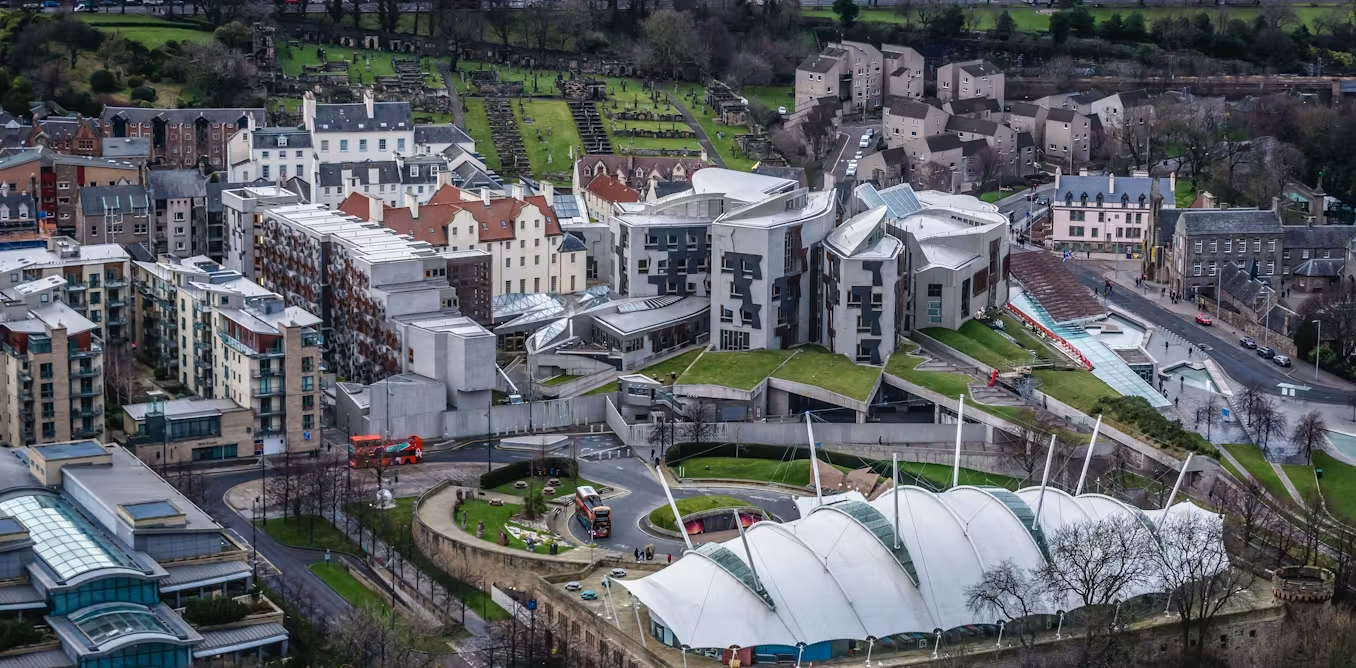
In the event, the SNP did not win the overall majority First Minister John Swinney sought in the 2026 Scottish election. However, between them the SNP and the Greens won 73 seats, 57% of all MSPs. It is the largest ever contingent of pro-independence MSPs at Holyrood.
Yet between them the two parties won just 41% of the regional list vote. The avowed aim of the parliament’s mixed-member proportional electoral system is to produce a distribution of seats proportional to each party’s share of the list vote. However, as the table below shows, this is not the first time disproportionality has benefited the party of government and its potential allies. But it is the biggest discrepancy yet – even greater than that which favoured the Labour/Liberal Democrat coalition at the first two Holyrood elections.
SNP and Greens benefited heavily from disproportionality. Professor John Curtice, CC BY
Why was the outcome so disproportional? The reason lies primarily in the outcome in the constituencies. The first-past-the-post system used to elect constituency MSPs reflects a party’s standing relative to its competitors rather than simply the share of the vote it has won. Despite winning a relatively modest 38% of the constituency vote across Scotland, the SNP had a 19-point lead over its nearest rival, Labour. Given also that SNP support is geographically relatively evenly spread, such a gap was inevitably going to mean the party would win the vast bulk of the constituency seats. Only those where one of its opponents was especially strong locally were likely to avoid its grasp.
In the event, the SNP won 57 constituencies. In contrast, if in every constituency the rises and falls in each party’s support had matched exactly what happened across Scotland as a whole, the SNP would have won four more, 61 seats. Geographical variation in the parties’ performances did reduce the SNP tally somewhat – though in the Highlands & Islands the SNP found itself compensated for its resultant net loss of one seat in the allocation of list seats, leaving the party with its final total of 58 seats. Overall, the geographical variation in party performance resulted in the SNP being three seats down on what would otherwise have happened.
Advertisement
Two of these losses were to the Greens – one in Edinburgh and one in Glasgow. As it happened, however, the resultant reduction in the SNP’s representation in Edinburgh paved the way for the Greens to pick up a regional top-up seat on which they would otherwise have narrowly lost out. Only the second extra SNP loss in the capital (to the Liberal Democrats) served to reduce the tally of pro-independence MSPs. However, the Green success in Glasgow Southside enabled Labour to gain a top-up seat and thus did reduce the pro-independence tally by another seat.
SNP share of list vote down
In short, the gains and losses of constituency seats that arose as a consequence of locally exceptional party performance reduced the total tally of pro-independence MSPs by two – and thus helped to reduce the scale of the disproportionality in favour of pro-independence MSPs. Nevertheless, the large tally of pro-independence MSPs was wholly unsurprising given the party’s tallies on the constituency vote.
At the same time, however, the SNP’s share of the regional list vote was a record 11 points below that in the constituencies. This further served to increase the pro-independence disproportionality.
The table below shows what would have happened if all the seats in each of the eight regions had been distributed by proportional representation. In effect it shows what would have happened if the electoral system was achieving its stated aim. The SNP would have won 18 fewer seats, scattered across every region apart from Highlands & Islands. In contrast, the over-representation enjoyed by the SNP in 2021 was just four seats. The combined tally of SNP and Green seats would have been only 60, 13 down on their actual total and five short of a majority.
Advertisement
Reform UK would have been a clear second under party list PR. Professor John Curtice, CC BY
Holyrood’s electoral system was devised by Labour and the Liberal Democrats in the Scottish Constitutional Convention. Initially it served their interests well. However, after landing the SNP a majority in 2011 on just 44% of the vote, it has now, on an even lower tally, given the SNP and the Greens the largest ever majority of pro-independence MSPs. The first law of politics is the law of unintended consequences.
We hope you love the products we recommend! All of them were independently selected by our editors. Just so you know, HuffPost UK may collect a share of sales or other compensation from the links on this page if you decide to shop from them. Oh, and FYI — prices are accurate and items in stock as of time of publication.
It’s social season, which means you’ll be hard stretched to find a weekend over the next few months where you won’t have a drink in your hand the whole time. You’ve gotta stay hydrated, after all!
While the appeal of an Aperol is inescapable, it might shock you to know there are other seasonal drinks out there.
As someone who always has to have at least three drinks on the go, this is a topic I take seriously.
Advertisement
From soda, to spritzes, and wine, I’ve taken it upon myself to test the newest releases and tried and tested favourites that make excellent summer sips.
Keep reading for my selection of the best non-alcoholic and alcoholic summer drinks (so far…).
Mandi Murray’s heartbroken children paid tribute to their mum after her tragic death just a day after she flew out on holiday.
20:01, 29 May 2026Updated 23:00, 29 May 2026
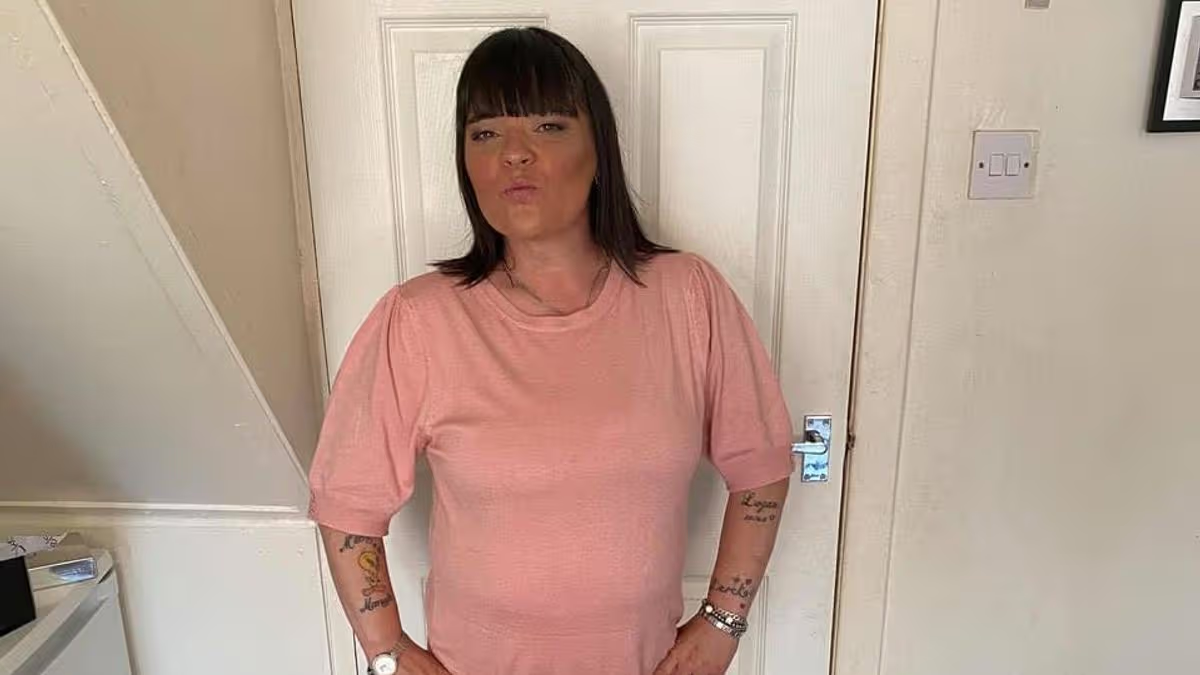
A Glasgow mum has tragically died after suffering a heart attack on holiday in the Canary Islands. Mandi Murray passed away in Lanzarote on Thursday, May 28, only one day after flying out.
The 46-year-old, who worked as a door steward at The Ferry music venue in Glasgow, was a big supporter of Celtic and Scotland. Her family paid tribute on social media today, with a GoFundMe page also set up to help Derek – Mandi’s husband and dad to their children.
Her son, Steven, shared an emotional post online paying tribute to Mandi. He said: “Today, I woke up thinking about my mum and realised that she wasn’t just my biggest critic – she was also one of my best friends.
Advertisement
“She was a family woman through and through and would have gone to the ends of the earth for the people she loved. She was a friend to many and was known for being incredibly outspoken – which is probably the biggest understatement I’ll ever make.
“Some of my favourite memories are the nights we spent sitting chatting, laughing and putting the world to rights until three in the morning. Then, the minute I said I was heading to my bed, I’d be called a lightweight.
“Tonight, I’ll be raising a vodka to her memory, and anyone who knew and loved her is welcome to join me. Sleep tight, Mum. You’ll be missed every day, but you’ll never be forgotten. Love always, Steven.”
Advertisement
Her daughter McKenzi, shared a touching picture of her mum and friends and family lined up to pay tribute. Ann Kelly said: “Lovely photo, Mckenzi. Fly high with the angels, Mandi.”
Advertisement
Elaine Mcmanus commented: “I am in shock, I dont even have words. I am so sorry. I have wonderful memories of mum and dad. R.I.P Mandi.”
Kayden Stevensonn said: “The most beautiful soul in the world. Kenzi, I love you so much. She was the best ever.”
Nikki Carby added: “What an amazing mum. She always has been, you were very blessed to have her. I hope you are okay. I am here if you need anything.”
Advertisement
Daughter, Courtney, created GoFundMe page to her dad Derek financially. She said: “My mum flew out to Lanzarote a couple of days ago for what was meant to be a holiday and a break for her.
“But, unfortunately she had a heart attack while she was out there and she passed away peacefully on the 28/05/26. We are looking for any donations to help with any financial struggles and support for my dad during this time, any help will be appreciated and thank you for anything given.”
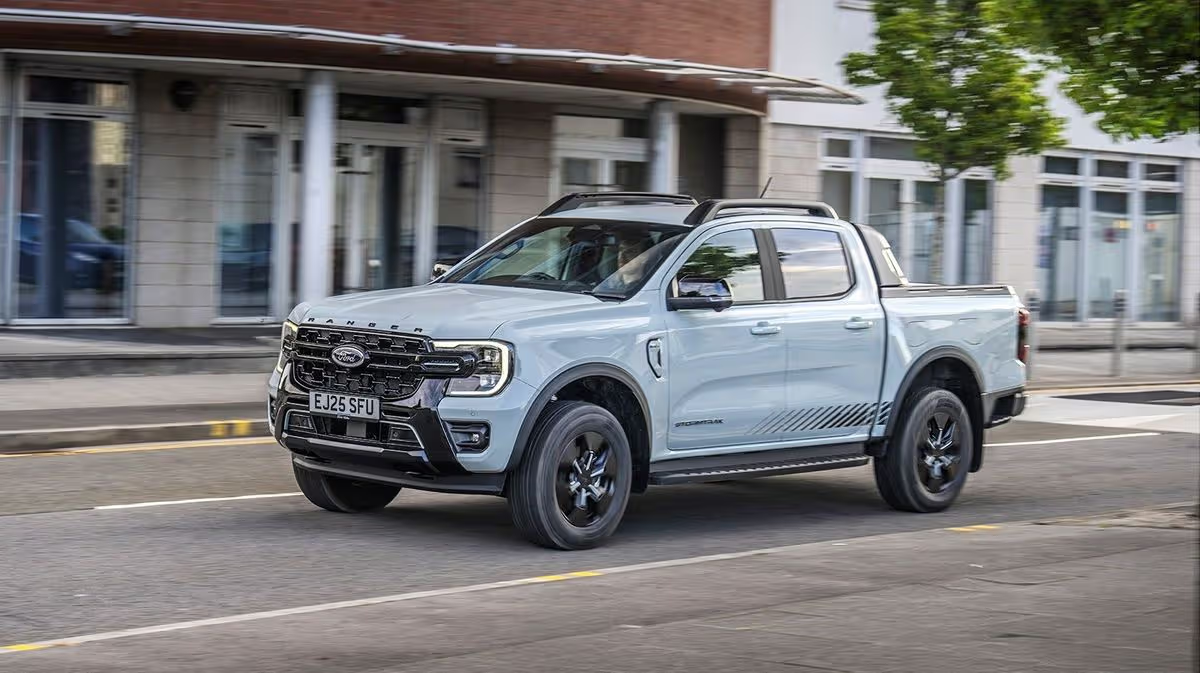
The Ford Ranger is Britain’s favourite pick-up truck and to keep it in the top spot Ford introduced a PHEV version that is especially tempting to business users.
In this instalment of Drive Time John Murdoch takes a drive in the UK’s favourite pick up truck. The Ford Ranger now offers PHEV technology making it more tax efficient. John also discovers that Mazda is launching its stylish 6e all electric model this summer with a special charging deal for retail and contract hire customers.
Advertisement
The Ford Ranger is Britain’s favourite pick-up truck and to keep it in the top spot Ford introduced a PHEV version that is especially tempting to business users.
The Ranger PHEV delivers lower emissions that will benefit business users by reducing the tax bill while still offering all of the talents that the standard diesel model can offer. That will make it a smart choice while the Wildtrak model retains its visual appeal that helps draw customers in.
Emissions are now an important factor when it comes to business taxation, and the arrival of the Ranger PHEV makes it the perfect double-cab pick-up for those keen to keep their tax bill as low as possible.
From the outside, not a lot looks different and the Wildtrak trim is very generous for a truck.
Advertisement
The load bay is slightly smaller but there is the option of a sliding sports bar that allows racks to be attached above the cargo bed, while Ford’s Pro Power system allows users to connect any device with a three-pin plug to the truck’s drive battery.
Two filler flaps on the nearside rear wing are the main visual clues that the vehicle is a PHEV. One pops open to reveal the charging port for the battery, while the other is the fuel filler and is released with the push of a button on the dashboard.
These are used to refill an 11.8kWh battery and a 70-litre fuel tank respectively, with the latter supplying fuel to the 2.3-litre turbocharged four-cylinder that we’ve seen in other UK Ford models.
The set-up in the Ranger PHEV produces 277bhp and 697Nm of torque, so the plug-in model is second only to the petrol Ranger Raptor for power, while Ford’s familiar 10-speed automatic gearbox is fitted as standard.
Advertisement
The 0-62mph time of 9.2 seconds is impressive for such a big vehicle, while the Ranger PHEV also boasts a towing weight of 3.5 tonnes and a payload of more than a tonne, so there are no compromises there when compared with the diesel versions.
The load bed is slightly higher to cater for the battery, so cargo space is slightly reduced but not by much.
Most Ranger diesel owners face a tax bill of £7,000 but opt for the low emission PHEV and this reduces to £4,600 – a substantial saving.
Advertisement
The PHEV drives and feels like any other automatic Ranger and the combination of electric motor and petrol engine is good, with the former delivering instant responses while the engine gets up to speed. The petrol engine is quiet and the automatic box is good as are the brakes. The ride is also fine and no worse than some family SUVs.
The usual drive modes can be selected via the push-button controls down behind the drive selector, including an EV button that allows you to either drive the PHEV in standard hybrid mode – switching between power sources as the electronics see fit – switch to silent EV running, or save the charge for later or recharge the battery using the engine while on the move.
Like the rest of the Rangers this PHEV Wildtrak model is stylish, crammed with kit and has all the usual safety features, as well as being a good performer and it certainly makes very good sense for business users.
FAST FACTS
Advertisement
Ford Ranger Wildtrak PHEV automatic
Price: £44,900 (excluding VAT)
Mechanical: 277bhp 2.3-litre turbo petrol PHEV driving four wheels via 10-speed automatic gearbox
Max speed: 105mph
Advertisement
0-62mph: 9.2 seconds
Combined mpg: 28 and 25mile all-electric range
Insurance group: 36
CO2 emissions: 71g/km
Advertisement
BIK rating: 19%
Warranty: 3yrs/60,000 miles
Overall rating (out of 5): 4.6
To tempt customers to buy their new electric 6e model Mazda is offering a tethered or untethered Pod Home Charger for only £499 if they place an order by the end of June. The deal is available to retail or Mazda contract hire customers.
Advertisement
On sale in Europe since last Autumn, the updated Mazda6e will arrive in the UK this summer with a new 78kWh single battery specification – priced at £38,995 for the Takumi and £39,995 for Takumi Plus. With stylish premium saloon proportions combined with hatchback functionality – the Mazda6e reinvents the Mazda6 for the electric age.
Commenting on the Pod Home Charger offer, Mazda UK Sales Director, Laura Brailey, said: “We recognise that many prospective Mazda6e customers may be new to electric vehicles and the simplicity, convenience and the well-established end-to-end installation process associated with this offer is designed to deliver a seamless and stress-free move to electric car ownership.” As an additional benefit all retail and fleet customers will also be eligible for a £500 public charging credit when opening an account via the Mazda Public Charging App<. This benefit provides customers with a £500 charging credit that’s redeemable via the app across participating public charging networks.
Jeremy Thomson, Managing Director, Mazda Motors UK, said: “The Mazda6e is the car our dealers have been waiting for, with a nod to the popularity of the Mazda6 it’s a real statement of intent for the future and illustrates how Mazda can bring great design, technology and style to battery electric vehicles.
“And with the suspension, power steering and braking carefully calibrated by the team at Mazda Research Europe in Frankfurt to match UK preferences, I’m sure the Mazda6e will be an electric car that delivers the engaging driver experience you’d expect from Mazda”. He added, “In the UK we are facing some unique and complex challenges in the balance between EV legislation and consumer demand but at Mazda we will introduce new models and ensure our product range fits the pace of actual consumer demand in the UK with technologies that are amongst the best in the market.
Advertisement
“The arrival of the Mazda6e in UK showrooms this summer is perfect, it’s a fantastic and timely addition to our multi-solution approach that includes mild-hybrid, plug-in hybrid and battery electric offerings.
“With a UK price that sees both models under £40,000, this value proposition is even more tempting when you see the huge tally of equipment and technology fitted as standard across both the Takumi and Takumi Plus. The Mazda6e is also a car that positions Mazda strongly in the expanding D segment BEV fleet market, where the cars blend of style, value, practicality and desirability will I’m sure win over business users”. Available to configure and order now, the first Mazda6e will arrive in UK dealers this summer, while later in the year the next chapter in Mazda’s BEV story will arrive in the UK – with the debut of the all-new Mazda CX-6e SUV.
*Don’t miss the latest headlines from around Lanarkshire. Sign up to our newsletters here.
Advertisement
And did you know Lanarkshire Live had its own app? Download yours for free here.
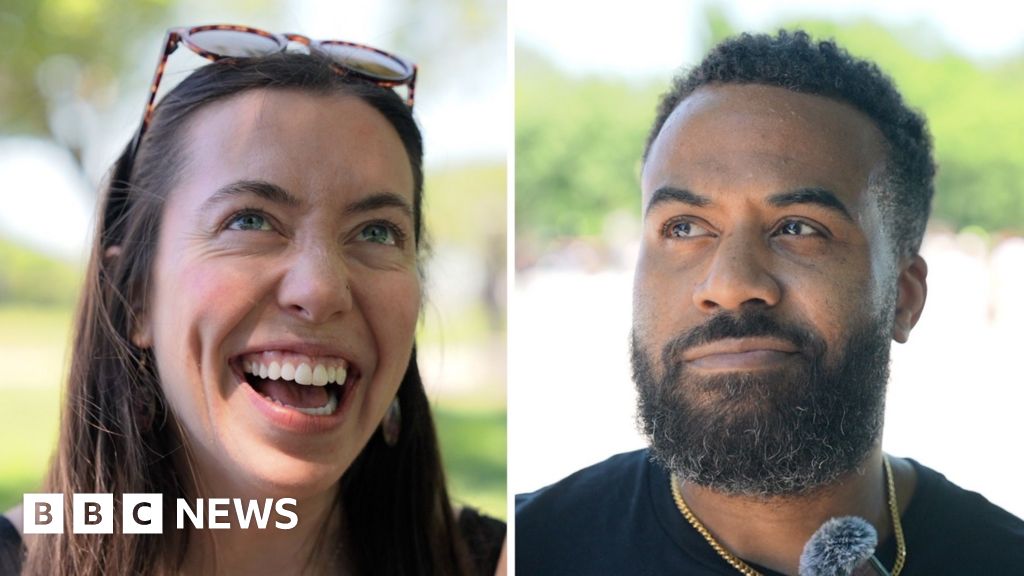
The BBC challenged Americans to spell words used in the last three Scripps National Spelling Bee competitions.
Shrey Parikh, a 14-year-old, won the competition this year after correctly spelling 32 words in a 90-second lighting round tiebreaker. He defeated 12-year-old Ishaan Gupta, who spelled 25 words correctly.
Parikh won out against 247 spellers competing in the annual contest, aged between nine and 15, taking home a $52,000 (£39,000) cash prize.
Sylvester Abayomi, 50, died after a collision in March this year, caused by Uways Hussain, 20, and Usmon Mahmood, 23.
Dangerous pair jailed for deadly crash speeding 100mph over limit
Two men have been caged for killing a “caring” man in what officers called “one of the most extreme dangerous driving cases officers have encountered”.
Sylvester Abayomi, 50, died after a collision in March this year, caused by Uways Hussain, 20, and Usmon Mahmood, 23. The two ‘highly dangerous’ men filmed themselves speeding at up to 139mph in a 30 zone, the court heard. As reported by the Mirror, driver Hussain and passenger Mahmood filmed themselves consistently travelling at speeds of well over 100mph in a Golf GTI.
The duo reached over 130mph several times – before jumping a red light and hitting a car driven by Mr Abayomi on Kingsway, Manchester. He suffered serious injuries and died in the collision shortly after 4.30am on March 9.
The pair were sentenced at Manchester Crown Court on Friday. Hussain was sentenced to 11 years and eight months, while Mahmood was sentenced to 12 years and nine months.
Advertisement
Rachel Shenton, prosecuting, told the court in the five seconds before the crash the Golf’s speed was recorded at 139mph – with the speed on impact 99mph.
Hussain was filmed driving one handed at high speed in the hours before the crash. He jumped red lights, weaved in and out of traffic and inhaled from nitrous oxide balloons while steering. Police said it was “one of the worst disregards for speeding” they have ever seen.
Advertisement
The court heard Mr Abayomi was on his way to work when he pulled onto Kingsway in his Volvo S40 on green light – before being fatally struck after the offenders ran a red light.
After the smash, the two men discussed fleeing the scene and removing evidence, considered reporting the car stolen and booking an Uber to escape. The court heard the conversation was recorded after Hussain’s Apple watch detected a high speed crash and made an emergency call.
Mahmood – the owner of the Golf – was heard saying: “You just wrapped my whip bro.” They said ‘book an Uber quick’ and spoke of their DNA being on the airbags. Neither man approached Mr Abayomi’s car to check on his condition.
Advertisement
When police arrived they were able to trace Hussain through his watch. They found him hiding in a garden and had to taser him. He told police: “None of us were even there, what’s happened? Did someone pass away.” He initially denied being the driver.
Mahmood was also found in a nearby garden. The court heard a number of nitrous oxide canisters were found around the area the men were arrested.
Judge Nicholas Dean KC told the court they had shown a “flagrant disregard for the safety of other road users” and had been risk taking “seemingly for the thrill of it”. He said the CCTV and mobile footage of the driving was “terrifying” as was “far, far in excess of any safe or lawful limit”.
Advertisement
On their actions after the crash, the judge told them: “Rather than assist or attempt to assist, both of you fled. Not in panic as such, but discussing how in effect, how to get away with it.”
Hussain, 20 from Burnage, admitted causing death by dangerous driving at a previous hearing. After being given credit for his guilty plea he was sentenced to 11 years eight months The court heard he had received a previous 12 month driving ban in October 2024 for drug driving.
Mahmood, 23, from Levenshulme, had admitted aiding and abetting causing death by dangerous driving. It is one of the first times a passenger has been convicted for aid and abetting causing death by dangerous driving. After his guilty plea was taken into account, he was jailed for 12 years nine months.
They will each serve at least two thirds of their sentences and serve an eight year driving ban. They will also have to take extended driving tests before being allowed back behind the wheel.
Reading an emotional victim impact statement to the court, Mr Abayomi’s partner Denise Doyle, told how on the day of his death he kissed her and told her he loved her before heading to work. She said: “I never knew this would be the last time.”
After seeing his body in hospital, she said: “It was a nightmare, like I was in a box and couldn’t get out. He was my partner, my friend, my future.”
She said her partner was “kind, dedicated and full of life”, adding: “That day my life changed forever. It’s not just grief, it’s a constant emptiness. The life we were building together has been taken away from me.”
After the court hearing she released a statement paying tribute to her late partner. She said: “On Monday 9 March, the love of my life was taken away, he was the most caring soul and gentle person you could ever meet. He had time for everybody and was loved by everyone. Syll will be sadly missed.”
Detective Sergeant Thomas Johnson, from Greater Manchester Police’s Serious Collision Investigation Unit, said: “This is one of the most extreme cases of dangerous driving we have encountered, and it has tragically resulted in the loss of Sylvester’s life.
“Our thoughts remain with his family and friends at this incredibly difficult time. No sentence can ever truly compensate for the loss of a life, but the actions of Hussain and Mahmood show a complete disregard for the safety of others.
“We hope this outcome offers some measure of justice to Sylvester’s loved ones. We urge the public to challenge dangerous driving behaviour and report concerns to police.”
Get more Daily Record exclusives by signing up for free to Google’s preferred sources. Click HERE.
Dull and confusing frights disappoint given promise shown by director Genki Kawamura’s flick.
I knew nothing about Japanese horror Exit 8 until I saw the intriguing, unsettling trailer.
Advertisement
Based on the 2023 video game The Exit 8 developed by Kotake Create, Kazunari s plays the Lost Man who becomes increasingly desperate when he realises he is trapped in a subway station.
I cannot stress enough how disappointed I was with Exit 8 as I was expecting something very special.
It starts with a long point-of-view shot on a packed subway where manners take a back seat and we find out the Lost Man has asthma and is a dad-to-be.
Then, creepily, everyone disappears – well, almost everyone.
Advertisement
Like the trailer, this opening is engaging and eerie, and sets up a world of potential problems for the Lost Man to deal with.
Alas, things start to get really repetitive – literally – and I found most of the remaining run time frustratingly dull.
It’s a shame as director and co-writer Genki Kawamura’s visuals rule. Environments strikingly change colour; frozen faces, dripping blood and distorted voices horrify; and a subway underwater is terror personified.
Composers Shouhei Amimori and Yasutaka Nakata’s musical score is also pulsating and, at times, disruptively loud.
Advertisement
Around every corner there are potential surprises but what we are presented with often misses the mark or, crucially, adds to the confusion.
Focus surprisingly shifts to other characters about half-way through, with one openly discussing what could be happening to them all.
This feels like a cruel tease as things are never properly explained and if we’re to take it that the Lost Man is simply suffering a mental breakdown given all of the stress he is under, who are these other people? And why do we follow them for spells?
Exit 8 ends up not making a lick of sense and while I can appreciate the directorial flair shown by Kawamura, I left the film feeling frustrated, cheated and bummed out.
Advertisement
What could’ve been an Asian horror to rival classics like The Grudge , Ring and The Eye felt like waiting all night for a train to appear only for it to be cancelled at the last minute.
● Pop me an email at ian.bunting@reachplc.com and I will pass on any movie or TV show recommendations you have to your fellow readers.
● Exit 8 is showing in cinemas now.
*Don’t miss the latest headlines from around Lanarkshire. Sign up to our newsletters here.
Advertisement
And did you know Lanarkshire Live had its own app? Download yours for free here.
Eric Schrier, president, direct-to-consumer international originals, strategic programming, and emerging media, said: “Following Ryan, Hugh and the SailGP’s BONDS Flying Roos Australian team’s journey gives us a remarkable inside view of this thrilling sport and what it takes to compete at the highest level.
Over the last decade, UK universities have put increasing effort into supporting student mental health. This often means following frameworks: documents that outline good practice, typically developed by sector bodies and charities. Universities can adopt these frameworks to guide their approach to student wellbeing.
The difficulty is that the sector has relied heavily on voluntary frameworks. This means that universities can choose whether to engage, how fully to implement them and which elements to prioritise. Students experience significantly different levels of support depending on where they study. Access to services, staff capability, pathways to more support and crisis response vary between institutions.
This has already been recognised in parliamentary debate as a postcode lottery, reflecting growing concern about inconsistency in student safeguarding across the sector.
Current initiatives
Existing frameworks have done good work in reshaping thinking away from seeing mental health as the responsibility of counselling services alone. They instead emphasise that the promotion of mental health sits across all aspects of university life. This includes teaching, accommodation and campus culture.
Advertisement
The University Mental Health Charter is one of the strongest whole-university models. It provides a clear structure for action across learning, support and the wider student environment. Institutions can also choose to pursue the Charter Award. This introduces external assessment and scrutiny, requiring universities to evidence progress rather than simply state commitments.
Not all universities are signed up. A framework that institutions can opt out of cannot operate as a sector-wide safeguard.
Another framework, Stepchange, has had substantial influence in shaping how the sector understands mental health. Produced by sector body Universities UK, it provides guidance on issues such as prevention and institutional responsibility.
However, while it is straightforward for universities to endorse Stepchange principles, their implementation of the guidance may be inconsistent. Even if mental health is prioritised at a senior level, the responsibility for implementing this may remain fragmented across the institution. A university’s ambitions to create a mentally healthy environment may sit alongside unchanged academic pressures and assessment demands on students.
None of these developments, however, establishes a minimum standard across the sector. Adoption remains partial and implementation is uneven.
The result is predictable inconsistency. This is reflected in wider evidence on variation in student mental health support.
Advertisement
Frameworks as a starting point
Frameworks have provided an essential starting point. They have helped reposition mental health as a matter of institutional design, rather than something for people to manage alone. This has encouraged a move towards prevention rather than crisis response.
Universities know what good practice looks like. Monkey Business Images/Shutterstock
But it’s likely that frameworks tend to have the greatest impact in institutions that already have strong leadership and sufficient resources. Wider evidence already points to significant variation in mental health provision and support arrangements across higher education. Frameworks can be more difficult to implement consistently where financial constraints, workforce pressures or competing priorities are at play. This means that improvements occur in pockets, rather than across the sector.
A decade on, the context has shifted. Mental health pressures are increasing. Concern about student safety and serious harm remains high. Together, these pressures require greater consistency than voluntary opt-ins can deliver.
After years of frameworks and research, higher education already knows what good safeguarding and wellbeing practice looks like. The next phase is to translate that into minimum expectations, so students and staff at all universities can expect a certain level of support. Clearer expectations and mechanisms that reduce variation between institutions are required.
Advertisement
These mechanisms could include new regulatory requirements or conditions that must be met to receive funding. Another option is requiring universities to meet clearer safeguarding standards in order to operate as registered higher education providers. In England, the Office for Students already has powers to set and enforce the conditions universities must meet to operate. Evidence of good practice on mental health could be added to this.
In Wales, the tertiary education regulator Medr has already gone further. From 1 August 2026, it will introduce a regulatory condition on staff and learner welfare. This requires providers to have effective arrangements to support and promote welfare. They must provide evidence of compliance through Medr’s ongoing monitoring arrangements.
The regulatory condition supplies the enforceable element. The framework and funded projects support implementation. Together, this moves beyond optional guidance towards a more consistent and enforceable baseline.
Advertisement
The significance of the Welsh approach lies in how these different mechanisms work together. Good safeguarding practice and high wellbeing standards should not depend on which university a student happens to attend.
This is not simply a question of guidance, but of standards. When risks to safety are clear, systems tend to move beyond optional guidance and put in place clearer expectations, oversight and accountability. Higher education is moving in that direction, but remains some distance away.
A woman in her 50s has been arrested on suspicion of causing serious injury by careless/inconsiderate driving
Two people have been taken to hospital with injuries following a crash near Cambridgeshire on Thursday, May 28. Police were called at 3.58pm to a crash involving two cars on the A1198 in Royston just prior to the A505.
Advertisement
A grey Mercedes was being driven towards Bassingbourn and a red Mini Cooper was travelling in the opposite direction. The driver of the Mini Cooper, a man in his 20s, suffered serious injuries and was taken to Addenbrooke’s Hospital. The passenger of the Mercedes was also injured and taken to Addenbrooke’s Hospital.
A woman in her 50s was arrested on suspicion of causing serious injury by careless/inconsiderate driving. She has been released on police bail pending further enquiries.
Sergeant Jamie Cooper from the Bedfordshire, Cambridgeshire and Hertfordshire Road Policing Unit said: “I am appealing to anyone who saw the collision or who has any information which could assist our investigation to please get in touch.
“If you have a dash cam fitted, please review your footage as you may have captured something that could assist us with our enquiries.”
Advertisement
You can contact Sergeant Cooper via email or if you have dash cam footage in relation to the collision, you can upload this via DAMS. You can also report information online, speak to an operator in the Force Communications Room via their online web chat or call 101, quoting Op Stanway.











































You must be logged in to post a comment Login