
We may receive a commission on purchases made from links.
The wearable technology landscape has shifted dramatically over the past few years. They’ve transformed from basic step-counters to advanced health companions. You can now get details about your sleep, your heartbeat rhythm, get a basic ECG done, and even check your blood pressure. Smartwatches are no longer just about logging a morning run and seeing app notifications, but they’re seamlessly integrated into our daily routines. Of course, when shopping for that new smartwatch, there is still a difference between cheap and expensive smartwatches in terms of build quality, sensor accuracy, and long-term support.
This market has matured into something meaningful and interesting. With new releases now featuring better battery life, sharper displays, improved health tracking, and designs that people are actually excited to put on their wrist. We are also seeing the return of tactile buttons with recently released smartwatches, as brands are making efforts to blur the line between traditional timepieces and wrist computers.
Advertisement
Choosing the right smartwatch always comes down to personal priorities. The best choice for you depends on which ecosystem (Android, Apple, etc.) you’re already in and what features are important to you. That’s why we have compiled a list that takes into account customer reviews, personal experience, and long-term data to give you some of the best smartwatches you can buy right now.
Advertisement
Apple Watch Series 11
Ringo Chiu/Shutterstock
If you’re already invested in the Apple ecosystem — meaning you own an iPhone or a bunch of Apple devices — then you’ll know about the Apple Watch Series 11, the latest and greatest smartwatch offering from the company. This model promises one of the most compelling smartwatch experiences in the market. The level of integration with iPhone, the depth and reliability of its heart rate monitor, and the polished software all give you plenty of value for your money. I have previously owned an Apple Watch Series 8, and the only negative aspect of it was the battery. A few generations later, Apple has finally addressed that.
The Series 11 has a battery life of up to 24 hours, which is amazing, though of course real-life autonomy varies based on your smartwatch usage. Also, the Apple Watch Series 11 holds the title of the highest-rated smartwatch by Consumer Reports. CR praised the watch for its accurate tracking of heart rate, step count, and sleep.
The Series 11 brought a major new addition, the Hypertension notifications. Though not exclusive to Apple Watch Series 11, this feature is available in over 150 countries. It looks for patterns of chronic high blood pressure and alerts users about hypertension. The screen has a peak brightness of 2,000 nits, making the display perfectly visible in harsh outdoor sunlight. If you are sitting on an older device and debating whether you should buy a Series 8 instead, even just the physical upgrades are enough to justify the leap.
Advertisement
Samsung Galaxy Watch8 Classic
VGV MEDIA/Shutterstock
If you are looking for the best smartwatch in the Android world, then the Samsung Galaxy Watch8 Classic is your answer. With this model, Samsung brought back the rotating bezel, which was removed after the Galaxy Watch6 Classic in 2023. Fan demands persuaded Samsung to put the physical rotating bezel back on the watch. In my opinion, this is the best way to navigate a smartwatch without having to touch the screen. This is also the first time a Samsung watch shipped with Google Gemini support built in, which is useful for setting reminders, pulling weather updates, and summarizing tasks without touching the phone.
The device carries a certain weight and presence, that commands attention to the wrist, steering away from its minimalist look. I have used the Galaxy Watch4 (and still have it), but the Galaxy Watch8 Classic was enough to lure me into buying it. It has the perfect combination of software and hardware that I was looking for. However, if you currently own a recent Galaxy Watch, it’s worth investigating whether the upgrade to Galaxy Watch8 is worth it for you.
The AMOLED display peaks out at 3,000 nits. The whole watch can resist water immersion of up to five atmospheres and has an IP68 rating. It also claims to introduce antioxidant level (related to dietary needs) and vascular load (an indicator of cardiovascular need) as two new health metrics. The interface and the battery life have also been improved. Overall, the Samsung Galaxy Watch8 Classic is one of the best Android smartwatches and is an absolute no-brainer for Samsung Galaxy fans.
Advertisement
Google Pixel Watch 4
Erman Gunes/Shutterstock
While iPhone users overwhelmingly default to the Apple Watch for the best ecosystem integration experience, things in the Android world are slightly different. Google, the owner of Android, released its first-ever smartwatch in 2022, and the current generation — the Google Pixel Watch 4 — is a good option in 2026. While the Pixel Watch 4 isn’t much different from its predecessor, the new W5 Gen 2 processor with a Cortex-M55 co-processor and better battery life is something that makes it a better buy.
If you are looking for a smartwatch that lasts a long time on your wrist, the Pixel Watch 4 is a good option. In our review of the Pixel Watch 4, we tested the battery life and came away highly impressed. In an era where most smartwatch batteries would die in about a day, the Watch 4 could last a solid two days or more. The display has also seen an improvement of 10% more screen real estate than the Pixel Watch 3, which isn’t exactly visible to the naked eye, thanks to the smaller bezels. It tops out at 3,000 nits of peak brightness, 1,000 more than the Pixel Watch 3. It is available in two sizes and a bunch of different colors.
Compared to the Pixel Watch 3, the most notable change is that Gemini support is now built-in, meaning you can throw it any question or make it do any task you need right from your wrist. Aside from all the standard health tracking features, the Pixel Watch 4 can be used as a cycling dashboard. Not something new, but nice to have as a built-in feature. While there are cheaper alternatives to the Pixel Watch 4, this smartwatch justifies its $400 price with a premium build, seamless experience, and battery life.
Advertisement
Garmin Venu 4
Battery anxiety is the silent killer of modern smartwatch experience, but it completely vanishes the moment you strap on the Garmin Venu 4. While other smartwatches are good for normal users, a serious runner or cyclist will want something more specialized. When you aim for such heavy tasks, battery life becomes crucial, and Garmin Venu 4 delivers.
Advertisement
The Venu 4 comes with an all-metal casing and an AMOLED display, which is brighter than the Venu 3. However, while the Garmin Venu 4 being able to last up to 12 days on a single charge is impressive, battery life is slightly down from its predecessor because of the brighter display, according to Tom’s Guide. Speaking of features, on top of nap detection, the Garmin Venu 4 also gets two new sleep features — sleep alignment and sleep consistency. Additionally, it gets Garmin’s most advanced training tools, such as Training Readiness and suggested workouts, along with ECG readings, making it a true fitness enthusiast watch.
Our review of the Garmin Venu 3 will give you a good idea of what this brand offers. Sadly, there is still no cellular data option, and its store has limited apps. But the Venu doesn’t try to be the next Google or Samsung watch, and instead focuses on providing accurate fitness readings.
Advertisement
Withings ScanWatch 2
In a market that is filled with smartwatches with glowing OLED screens and watches that are more of a mobile phone on a wrist, the Withings ScanWatch 2 tries to be different. Embracing subtlety is a bold design choice, but that’s what makes it stand out from the crowd. The ScanWatch 2 is available in two sizes and a bunch of colors, and there is also the option to choose band types. It’s a good choice for those looking to track their health metrics without wearing something that looks like a traditional smartwatch.
This hybrid approach is quite impressive. Behind the mechanical hands, the Withings ScanWatch 2 can perform single-lead ECGs (which are useful, if limited) and sleep tracking, packaged with traditional aesthetics that can go with any outfit. In their review, experts at PCMag praised the smartwatch’s design and the staggering 30-day battery life, which completely changes the user experience and frees you from daily charging. While the original ScanWatch barely impressed our reviewer when it came out, the ScanWatch 2 seems to be an upgrade well done. The watch comes with body temperature tracking and menstrual cycle tracking.
So, if you hate the traditional smartwatch look and want something aesthetically pleasing on your wrist, without compromising on all the health-tracking features of regular smartwatches, the $370 Withings ScanWatch 2 is something you should consider.
Advertisement
Apple Watch Ultra 3
i viewfinder/Shutterstock
Don’t be confused by the second Apple Watch gracing this list when we already have the Apple Watch Series 11, which we called one of the best smartwatches you can buy in 2026. The Apple Watch Ultra 3 serves a totally different customer segment — it’s heavily marketed towards deep-sea divers and explorers who are always on the move. To satisfy their needs, Apple went all out with a bulky titanium frame and blindingly bright display. This watch is called “Ultra” because it offers rugged durability and exceptional battery life.
Owning an Apple Watch Ultra over the Watch Series 11 shows the user is more concerned about practicality that extra features. If you spend meaningful time running trails, swimming in open water, or going on multi-day hikes, or often put yourself in a situation where you might need emergency satellite messaging, the Watch Ultra is for you. Ray Maker, aka DC Rainmaker — an influential sports technology reviewer — completed a 70km non-stop hike/trail-run just to see if the Watch Ultra 3’s battery would hold, and it did. Separately, he noted that the two-way satellite communication on the watch is the easiest of any device he’s tested.
Advertisement
Compared to the Series 11, the Apple Watch Ultra 3 has better water resistance, a better build, and longer battery life. But again, it is not for everyone.
Advertisement
Huawei Watch GT 5 Pro
Most of the popular smartwatches in the market are tied to an ecosystem, dominated by Apple and Samsung. But the Huawei Watch GT 5 Pro breaks up this ecosystem, and is ideal for the audience that just wants great hardware and a long battery life. The hardware feels premium — it has a titanium bezel, a sapphire crystal display, and a build quality that gives smartwatches from Samsung and Apple a run for their money.
Experts at GSM Arena tested the Huawei Watch GT 5 Pro under a heavy-use scenario — using GPS tracking, voice calls, and a high brightness watch face during an intense workout — and the GT Pro lasted six days, much more than what the best options from Samsung and Apple offered. On settings approximating a normal day, but with the brightness set very low, the watch lasted 10 days. Since Huawei doesn’t rely on a proprietary ecosystem, the GT 5 Pro works fluidly across both Android and iOS, something that cannot be said about any Apple or Samsung product on this list.
The Huawei Watch GT 5 Pro offers golf, diving, and trail run modes, but the app ecosystem is thin and there is no cellular data option. Those are real trade-offs, but for someone who wants good-looking hardware, reliable health data, and a battery that lasts long, the GT 5 Pro is an excellent choice.
Advertisement
Methodology
Alina Mosinyan/Shutterstock
To pick the best smartwatches, we didn’t just look at spec sheets. We used our personal experience, read through customer feedback, and referenced the work of other trusted reviewers. We focused on the things that actually matter in a smartwatch: accurate health tracking, a battery that keeps it alive for more than half a day, how good it looks on your wrist, and if it’s actually worth your hard-earned cash. Finally, we made sure to include a watch for everyone; Whether you’re Team iPhone, Team Android, or somewhere in between, we made sure to include options that will pair perfectly with your phone.
The Karcher K5 Comfort Premium makes tough cleaning jobs feel refreshingly easy, with a compact design, four-in-one lance, integrated detergent system and comfortable trigger that help it breeze through patios, driveways and cars. It’s not perfect, lacking finer pressure adjustment and bundled specialist accessories, but it’s still an easy recommendation..
Compact, easy-to-store design
Versatile four-in-one lance
Excellent cleaning performance
No pressure adjustment
Accessories cost extra
Universal detergent lacks foam
Key Features
Advertisement
Review Price:
£400
Compact, storage-friendly design
Advertisement
Smaller and easier to store than older pressure washers.
Four-in-one cleaning power
Advertisement
Switch between four spray modes with a twist.
Built-in detergent convenience
Advertisement
Lets you swap between water and detergent in seconds.
Introduction
Pressure washers aren’t exactly known for being elegant. They’re usually bulky, awkward to store and just a little bit annoying to drag out when it’s time to tackle the driveway, patio or car.
That’s what makes the Karcher K5 Comfort Premium so appealing: it takes the heavy-duty cleaning power you’d expect from a mid-range pressure washer and wraps it in a design that’s noticeably easier to handle day to day.
Advertisement
Part of Karcher’s new Comfort range, the K5 Comfort Premium promises a more user-friendly experience from top to bottom, with a lighter trigger setup, an integrated hose reel, a built-in detergent system, and a four-in-one lance designed to cut down on faff.
Advertisement
After using it to clean everything from a grimy driveway to a dirty car, it’s clear this is a pressure washer built with convenience in mind – even if a couple of omissions stop it short of perfection.
Design and features
Compact design
Four-in-one lance
Integrated detergent system simplifies cleaning
Coming from my years-old, bulky, heavy pressure washer, the K5 Comfort Premium is something of a dream – and that’s kind of the point of the new ‘Comfort’ collection.
Image Credit (Trusted Reviews)
It’s absolutely dinky compared to my old unit, standing at just over 66cm tall and 34cm wide, with a retractable handle that not only makes lugging it around much easier but also means an even more compact footprint for storage – ideal for me and my limited shed space. It’s still a little on the heavier side at 13.8kg, but the large wheels make transporting it from one area to another easy enough.
Advertisement
Advertisement
But I’m getting ahead of myself somewhat here; let’s start with the unboxing experience. As with most pressure washers, the K5 Comfort Premium comes in several pieces, which might look daunting to the untrained eye, but it’s really simple to snap together without any tools. It took me around five minutes to follow the Ikea-style instructions, with no strops or breaks in sight.

The Comfort redesign extends to the gun, which is surprisingly lightweight, easy to manoeuvre, and much more comfortable to use over long periods, with less pressure required to depress the trigger. I spent three hours pressure washing my driveway, and my hands still weren’t aching by the end.
Image Credit (Trusted Reviews)
The gun attaches to the body of the pressure washer via a 10-meter-long high-pressure hose, which is stored in an integrated hose reel that’s surprisingly smooth to extend and retract. Karcher takes additional points here too, with the pressure hose coming out of the opposite side to the power cable and hose input to stop everything from getting tangled. A nice touch indeed.
Image Credit (Trusted Reviews)
The highlight of the experience is the new four-in-one multijet lance, which twists into the gun with surprising ease. It’s a really handy bit of kit too, offering four distinct modes that you can switch between simply by rotating.
Advertisement
The dirt blaster is my favourite for cleaning patios and other brickwork, essentially rotating the tiny jet at a rapid pace to shift even the most stubborn stains and grit, but there’s also the more traditional high-pressure flat jet and reduced-pressure flat jet for jobs like cleaning cars.
Advertisement
Image Credit (Trusted Reviews)
What’s most impressive is the integrated detergent jet; with a quick twist of the nozzle, you can spray detergent mixed with water without needing to attach a front-heavy foaming attachment. That’s because the K5 Comfort Premium comes with a new detergent system that integrates the bottle directly into the pressure washer’s body, negating the need for a tank, and includes a bottle of eco-friendly detergent in the box.
You can remove the detergent adaptor from the body and use it on the end of the gun if you prefer, complete with dosing settings, but I really like the integrated approach. It makes tasks like cleaning cars much easier, as I can simply switch between water and detergent without faffing around switching lance attachments.
Image Credit (Trusted Reviews)
As compact as the K5 Comfort Premium is, it still has plenty of space to store the lance and gun, along with any other optional accessories compatible with the K5. And optional accessories there are aplenty, including heads specialised in cleaning patios and cars. It’s just a shame none of these actually come in the box.
Advertisement
Performance
Powerful cleaning with fast results
Lightweight gun improves long-session comfort
No pressure adjustment
As you might expect, the Karcher K5 Comfort Premium is an absolute joy to use. Simply attach the lance to the gun with a push-twist, attach the garden hose to the body, plug it in and power it on.
One note though; release the built-up pressure in the system by pressing the gun’s trigger before starting, or the unit won’t power on. I thought mine was broken after changing power source multiple times before I realised that was the (refreshingly simple) fix.
Image Credit (Trusted Reviews)
That aside, all you need to do is select the type of jet you want to use and press the trigger to get going. The only real decision is which of the modes you want to use. I found that the dirt blaster mode was the most effective for cleaning patios and driveways, though I certainly wouldn’t recommend it for cars, bins or anything like that. I tried it on an old bin and it literally stripped a layer of plastic off – if anything, that’s testament to the level of power here.
That said, cleaning my driveway was an absolute doddle. The dirt blaster mode made incredibly quick work of my (embarrassingly dirty) driveway, bringing it back to its original vibrant colours with only a single pass in most places. I needed to hone in to make sure I got every bit of dirt, as moving it too quickly results in a circular outline, but I’d be lying if it wasn’t satisfying as heck. As noted earlier, it took three hours to do fully, but it felt like half an hour.
Advertisement
Advertisement
Much of the ease of use comes from just how lightweight and comfortable the gun is to use; as noted, it’s lightweight and, with very little pressure needed to depress the trigger, it’s something I could use one-handed much of the time.
Image Credit (Trusted Reviews)
Cleaning the car was equally as successful, with the long 10-meter hose allowing me to fully circle my car (and then some) without accidentally pulling the pressure unit over. Starting with the (less aggressive) reduced-pressure flat jet, I rinsed off the car before switching to the detergent jet – again, something that required no more than a twist of the nozzle – to lift some of the more stubborn stains from the car.
The eco-detergent supplied in the box isn’t designed specifically for cars – it’s a universal cleaner – so there wasn’t much foaming, but it was still easy to apply. I think I’ll keep the Karcher bottle and refill it with a proper foaming detergent for future car cleans.
Advertisement
Advertisement
Still, once done with foaming, switching back to a regular jet to rinse was easy, and the whole process took no longer than 10 minutes – much faster than doing it by hand, with pretty similar results. It didn’t quite get some of the most stubborn stains (those damn birds!), but it was a damn sight cleaner than it was before.
Even if it takes longer, Karcher claims that the K5 Comfort Premium’s water flow rate is only 40% of a garden hose’s, making it a fairly efficient way to clean medium-sized spaces if you’ve got a water meter.
Image Credit (Trusted Reviews)
After using the Karcher to clean my driveway, garden patio and path, and my car, my only complaint is that there’s no way to adjust the pressure level, either on the gun or on the pressure washer’s body; it’s simply on or off.
Yes, I can switch between the three spray modes if I need to wash something a little more fragile, but what if I want to, say, keep the rotation of the high-pressure dirt-blasting mode while toning it down a bit? There are plenty of pressure washers that offer this, so I’m a little surprised it’s not on offer here.
Advertisement
Advertisement
Should you buy it?
You want compact, fuss-free cleaning
The K5 Comfort Premium is easy to store, easy to handle and powerful enough to make light work of patios, driveways and cars, with smart extras like its four-in-one lance and integrated detergent system.
Advertisement
You want finer control or more in the box
For all its polish and power, the K5 Comfort Premium offers no real pressure adjustment beyond its spray modes, and it’s a shame the more specialised accessories cost extra.
Advertisement
Final Thoughts
A great pressure washer should make tough jobs feel less like hard work, and that’s exactly what the Karcher K5 Comfort Premium does.
It’s compact, thoughtfully designed and genuinely enjoyable to use, with standout touches like the four-in-one lance, integrated detergent system and a much more comfortable trigger setup than I’m used to. More importantly, it delivers where it counts, making quick work of patios, driveways and cars alike.
Advertisement
It’s not perfect – I’d have liked some form of pressure adjustment beyond the preset spray modes, and it’s a little disappointing that none of the more specialised accessories are bundled in the box – but even so, those feel like relatively minor gripes when the overall experience is this polished.
If you want a powerful pressure washer that’s easier to store, easier to manoeuvre and far less faff to use than older, bulkier alternatives, the K5 Comfort Premium is easy to recommend. It’s expensive, sure, but it feels like money well spent.
How We Test
We test every pressure washer we review thoroughly over an extended period of time. We use standard tests to compare features properly. We’ll always tell you what we find. We never, ever, accept money to review a product.
Used as our main pressure washer for the review period
Tested on a variety of surfaces for cleaning power
FAQs
Is the Karcher K5 Comfort Premium good for car cleaning?
Yes. It works well for washing cars thanks to its reduced-pressure flat jet and built-in detergent system. You can rinse, apply detergent and switch back to a regular spray with a simple twist of the nozzle, making it much quicker and less fiddly than using separate attachments.
Advertisement
Does the Karcher K5 Comfort Premium have adjustable pressure?
Not in the traditional sense. You can change between different spray modes on the lance, but there’s no dedicated pressure control on the gun or main unit if you want finer adjustment.
Paramount+ looks to have used generative AI to whip up a thumbnail for Star Trek II: The Wrath of Khan, according to a report by Kotaku. The image shows Captain Kirk, as played by William Shatner, dressed in a business suit. Kirk never dons a business suit in Wrath of Khan, or any other time throughout Shatner’s decades of portraying the character. He did rock a flannel shirt and jeans once during a visit to 1930s Earth.
Paramount+ wanted to use the image on the left as a poster for the wrath of Khan, so they used everyone’s least favorite technology to generate the rest of the image.
I’ve watched every episode of Star Trek across a dozen shows and I’m not even sure business suits exist in that far-flung future, aside from an occasional appearance on the Holodeck. There’s no money, so not much need for business.
That leaves us asking why Paramount+ and its little AI buddy decided to plop Starfleet’s most iconic captain in a button-up shirt and tie. We don’t know exactly what happened, but artist Ryan Estrada has an idea. He noted that the actual image of Kirk is from Wrath of Khan, pulled from a scene in which the captain is getting a retinal scan to access a computer file. It’s not a particularly exciting scene, and he’s wearing a Starfleet uniform.
Estrada speculates that Paramount+ got attached to that image of Kirk getting a retinal scan and wanted to highlight it further by making it a thumbnail. However, the image from the film is a close-up of Shatner’s face, so generative AI was used to place Kirk’s head inside of a fake body and put that body in a business suit. His hair also looks very fake and weird as the original frame cuts off at his forehead. Long live AI slop Kirk.
Advertisement
Kotaku has confirmed that the thumbnail is still on the streaming platform, as have folks throughout the internet. Paramount owner David Ellison recently toldCNBC that the company is “using technology to transform every single aspect of this business.” If that thumbnail is a harbinger of things to come, Trek fans should likely start stocking up on Blu-Rays.
Wix is laying off roughly 20% of its workforce, about 1,000 employees, as CEO Avishai Abrahami cites both the rapid evolution of AI and currency pressure from a stronger Israeli shekel against the dollar. The web developer joins a growing list of tech companies making similar cuts, including Amazon, Block, Cisco, Cloudflare, Meta, Microsoft, Oracle and Intuit. Fast Company reports: “We have witnessed the most significant shift in how companies are built since the invention of modern programming languages in the 1970s,” [wrote Abrahami]. “This is not just about adopting new tools — it is about rewiring how companies are built, how they think, how they manage, and how they operate. Companies that embrace this change will not only build faster; they will build things the previous generation literally could not have imagined.”
Abrahami also cited the poor exchange rate between the Israeli shekel and the U.S. dollar. The Israeli currency has significantly strengthened in the past few quarters against a weakening dollar, and the shekel is up nearly 30% against the greenback over the last year.
“As the majority of our teams are Israel-based, a very meaningful portion of our costs are shekel-denominated, while our revenue is largely dollar-denominated,” Abrahami explained on X. “This creates a structural pressure on our ability to operate at our current scale. It is a reality that directly shapes what is sustainable for our company.”
Dell’s stock skyrocketed 32.76% on Friday, “its best day ever,” reports CNBC, after Dell “reported its fastest pace for revenue growth for any period since returning to the public market in 2018…”
“Shares are now up 234% in 2026.”
Dell, which reported first-quarter earnings after the bell on Thursday, saw a flood of artificial intelligence-related demand for its servers, which contain graphics processing units from companies like Nvidia. Quarterly revenue soared nearly 88% year over year, with AI server revenue alone increasing 757% from a year earlier to $16.1 billion…
Ben Reitzes, head of technology research at [research/investment firm] Melius, said he’d “never seen anything like” Dell’s latest quarter. “They beat every line in the model, so this wasn’t just AI, it was great execution,” Reitzes told CNBC’s “Squawk on the Street.” “They beat whatever we would’ve thought….”
Advertisement
Morgan Stanley wrote that while they expected a clean beat and raise this quarter, they’re “eating our humble pie” off the back of Dell’s results. “We got this one wrong, and our model/PT are under review,” the analysts wrote. “This was — across the board — one of the most impressive quarters we’ve seen in our time covering Hardware, especially in the context of what is happening across the component universe.”
Plastics, oil, petrol– the modern world is entirely dependent on hydrocarbons. The good sources are slowly running low and supply is increasingly complicated by geopolitical factors we really don’t want to get into, but hey! It’s just hydrogen and carbon, right like it says in the name. How hard could it be to roll your own at home. Well, if you’ve got a lab like [Marb]’s Lab on YouTube, it might just be doable, as he demonstrates in his latest video.
The Fischer-Tropsch reaction was discovered back in 1925 in Germany by a couple of gents named Fischer and Tropsch. In the unpleasantness that followed later, Germany made good use of their process on an industrial scale, since they had ample coal and no oil on hand. Coal-rich South Africa has also made us of it, particularly during the Apartheid-era trade restrictions. Every so often the idea of industrializing the process comes up in the USA, but there’s still enough oil there it doesn’t make sense economically.
Those nations all have something in common: they’re all coal-rich countries, and that makes sense because coal is easily converted to carbon monoxide and hydrogen– a combo known as syngas– and it just so happens that those are the feedstock for this reaction. The actual chemistry going on inside is quite complex, but conceptually it is pretty simple: hydrogen and carbon monoxide mix over a hot metal catalyst, and combine to form various hydrocarbons.
In [Marb]’s glassware-based demonstration, the catalyst is Cobalt (III) Oxide on silica gel– a lovely, cancer-causing substance that must be prepared for each use, as it lasts but 24 hours before further oxidization ruins it. That’s in spite of purging the system with argon– a necessary step if one does not wish to explode. The yield isn’t amazing, and [Marb] isn’t sure exactly what mix of hydrocarbons he has created– although they smell like gasoline and burn like the dickens, so mission accomplished.
Advertisement
This might seem like the furthest thing from green, but if you use solar power to run the process and something like woodgas– which is syngas by any other name– as a feed-stock, then you’ve got a carbon neutral energy storage medium.
In Baltimore County, Maryland on Oct. 20, 2025, a 17-year-old student named Taki Allen was sitting outside his high school after football practice when an artificial intelligence-enhanced surveillance camera falsely identified the Doritos bag in his pocket as a gun. Within moments police cars arrived, officers drew their weapons and Allen was forced to his knees and handcuffed while they searched him. All they found was a crumpled bag of chips. The AI’s misidentification and the human decisions that followed turned a normal evening into a traumatic confrontation.
On Dec. 24, 2025, Angela Lipps, a Tennessee grandmother, was released after spending five months in jail because facial recognition software had incorrectly connected her to fraud crimes in North Dakota, a state she had never visited. Police had arrested her at gunpoint while she was babysitting her four grandchildren.
These are unfortunate examples of how AI can lead to mistreatment of people because of technical flaws as well as misplaced human faith in the technology’s supposed objectivity. These cases involve different tools, but the underlying issue is the same. AI systems produce probabilities, and people treat them as certainties.
Advertisement
We are researchers who studythe intersection of technology, law and public administration. In researching how police departments use AI and how digital technologies operate in a democratic society, we have seen how quickly the shift from probabilistic prediction to operational certainty happens in practice.
AI policing tools are used in dozens of U.S. cities, although no public registry tracks the full footprint. The tools ingest historical crime data and score neighborhoods on predicted risk so officers can be routed toward the resulting hot spots. The mechanism is straightforward, but its consequence is not. Once a system signals a possible threat, the question is no longer how certain the prediction is but what to do about it. A statistical output turns into a deployment decision, and the uncertainty that produced it gets lost on the way.
A matter of probabilities
When generative AI models such as ChatGPT or Claude respond to human requests, they are not searching a database and pulling out facts. They are predicting the most likely answer based on patterns in data they have been trained on. When asked, “Who invented the light bulb?” the models do not go to a source or fact-check a finding. They generate a statistically probable answer which is “Thomas Edison.” The reply might be right, but it might not capture the full story – such as Joseph Swan’s parallel invention at the same time as Edison’s. The danger arises when people believe that the model is retrieving truth rather than generating likelihoods.
This distinction matters. The most probable response is not the same as a factually verified answer, complete with context.
Advertisement
Police handcuffed teenager Taki Allen at gunpoint after an AI camera system incorrectly indicated he had a gun.
This reality can be highly problematic for policingand law. For example, when law enforcement agencies use AI systems trained on geographical data to estimate where criminal activity is likely to occur, the algorithms analyze historical crime data and geographic patterns. These systems generate statistical risk scores or heat maps for locations based on prior incidents. But such predictions may have little bearing on who was involved in a new crime in the area, even if an algorithm generates information that sounds authoritative.
Some researchers have argued that predictive policing systems do not increase the likelihood that racial minorities will be arrested more often relative to traditional policing practices. The broader concern, however, is not limited to measurable disparities in arrest outcomes alone. It is about how probabilistic predictions can become standardized operational decisions absent further verification.
Advertisement
Artificial intelligence researchers caution against using these models in isolation for crime and legal proceedings or decision-making. Research at the University of Virginia’s Digital Technology for Democracy Labwith police chiefs shows that some law enforcement groups follow strict policies that dictate when technology is used in tandem with, or in place of, human discretion, while others have no such policy.
What most users do not realize is that AI systems rarely produce binary answers: yes or no, a positive identification or a negative one. They generate probabilities. Some systems assign scores that assess the system’s confidence in a prediction. In those cases, engineers set a confidence threshold, a level of certainty that determines when the system should trigger an alert about a possible threat. You can think of this threshold as settings on a control knob. A 95% confidence level, for example, indicates that the model considers its interpretation to be highly likely.
A low threshold catches more potential threats but increases false alarms. A high threshold reduces mistakes but risks missing real dangers. Either way, these algorithmic thresholds are often invisible to the public and are set quietly by vendors or agencies, even though they shape when police action begins.
Advertisement
Angela Lipps was unjustly jailed for more than five months based on a mistake by a facial recognition system.
Where to draw the line
In medicine, these kinds of trade-offs are explicit. Diagnostic tools are calibrated on the relative harm of different errors. In infectious disease settings, for instance, systems that detect infections are often designed to accept more false positives to avoid missing contagious individuals. Then medical professionals look into the human cases. And the algorithm-based decisions are subject to professional standards, ethics reviews and regulatory oversight.
In policing, an AI system must balance false positives, where the system flags a threat that does not exist, and false negatives, where it fails to detect a real danger. The trade-off carries significant consequences. A lower threshold may generate more alerts and allow officers to intervene earlier, but it also increases the risk of mistaken identifications, which happened to Angela Lipps, or escalated encounters like the one Taki Allen experienced. A higher threshold may reduce wrongful interventions but could allow legitimate threats to go undetected.
Some law enforcement agencies argue that acting on imperfect signals is preferable to missing serious risks. But lowering the bar for algorithmic alerts based on probabilistic estimates effectively expands the number of people subjected to police attention. It is important to realize that these thresholds are not neutral features of the technology; they are choices embedded by the creators in the model’s code. Decisions about where to draw the line determine when an algorithmic suspicion becomes a real-world police action, even though the public rarely sees or debates how those thresholds are set.
Advertisement
Limits of optimization
Developers often use several methods to determine where to set a confidence threshold. Techniques such as “receiver operating characteristic curve analysis” examine how changing the threshold for an alert alters the balance between correctly identifying real events and mistakenly flagging harmless ones. Precision–recall analysis examines a similar trade-off, asking how accurate the system’s alerts are relative to the number of incidents it successfully detects.
These approaches could help calibrate systems more responsibly by testing how often an algorithm wrongly flags people or locations. Fine-tuning can improve system performance. But the techniques cannot resolve the underlying question of how much algorithmic uncertainty society is willing to tolerate.
In law, legal standards of proof determine how convincing evidence must be before a judge or jury can rule in favor of a plaintiff or defendant. Courts use formal standards of proof depending on the stakes, such as probable cause, preponderance of the evidence and beyond a reasonable doubt. These standards reflect a societal judgment about how much uncertainty is acceptable before exercising legal authority. A court does not accept a guess or a prediction; it follows a process to weigh evidence. Unlike humans, an AI model does not usually say, “I’m not sure.” A model typically has confidence in its reply, even when the answer is incorrect.
Stakes are rising as AI enters the courtroom, law enforcement, the classroom, the doctor’s office and the public sector. It is important for people to understand that AI does not know things the way many assume it does. It does not distinguish between “maybe” and “definitely.” That is up to us. We believe that technologists should design systems that admit uncertainty and need to educate users about how to interpret AI outputs responsibly.
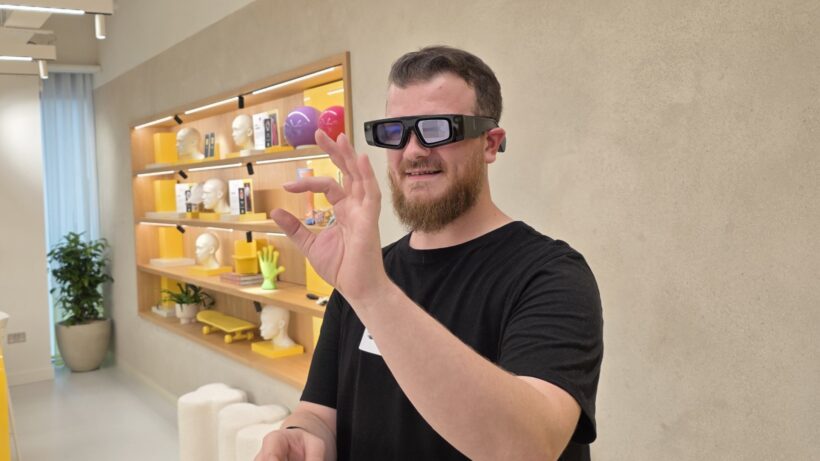
Sidephone has built an Android phone around a swappable USB keypad, entering a niche between the distraction-heavy smartphone and the stripped-back dumbphone by offering physical input options without sacrificing app compatibility.
We saw the device at Beyond Expo 2026, where its keypad system came in two layouts, a QWERTY configuration for text-heavy users and a numpad layout for those who prefer a more traditional input style, with a growing selection of cases and colour options.
That restraint extends to the camera, which prioritises simplicity over the high-resolution computational photography that dominates modern flagships, producing shots designed to be printed and kept rather than shared online.
Running Android without Google or Google Play services, the device supports thousands of existing apps that function independently of Google’s infrastructure, covering essentials like calls, SMS, camera, files, and a gallery app out of the box.
Advertisement
Image Credit (Trusted Reviews)
Advertisement
Privacy-focused app ecosystem
Beyond the defaults, Sidephone ships with several optional app bundles focused on privacy and open-source software, including the full Proton suite covering mail, VPN, calendar, drive, and password management, as well as Signal, WhatsApp, and a browser choice between Vivaldi and Firefox.
The Essentials bundle adds Maps powered by HERE, LocalSend for cross-platform file sharing, a local music player via Auxio, and a voice recorder, while the Misc bundle extends further with AntennaPod for podcasts, BreezyWeather, and Obtanium for installing apps directly from developer release pages.
Support for third-party messaging apps, including Telegram, Threema, and WeChat, is also listed as a work in progress, alongside compatibility with music streaming services such as Apple Music, Spotify, and Tidal.
For anyone considering making the switch, more information and ordering are available on the Sidephone website, with the broader community active on Reddit at r/Sidephone.
No matter how old you were, your first set of wheels likely holds a permanent place in your memory. For many of us, a car symbolized our first step toward independence. It probably wasn’t brand new or flashy, but it was ours. The reality likely hit sooner rather than later, however. The real cost of owning a car goes far beyond the monthly payment or even insurance. There’s gas, of course, along with maintenance, unexpected repairs, registration and inspection fees, and costs that rear their ugly head every few years, like new tires or a battery.
There’s one other factor that many buyers don’t consider: depreciation, or how much value your car will lose over time. It’s not just a myth that a new car loses some value as soon as you drive it off the lot. Most new cars lose up to 20% of their value in the first year alone, and by year five, many have lost up to 60%. There are steps you can take to potentially reduce depreciation before you even buy the car — research the brand, as some tend to retain their value better than others, and pick a vehicle type that is desired, such as pickup trucks and SUVs. There are also things you can do while you own the car to help maintain value. Here are five steps that are sure to give you a boost when it’s time to sell.
Advertisement
Regular maintenance
Rafa Jodar/Getty Images
If you treat dashboard warning lights as optional suggestions, you may want to change your tune. When it comes to your vehicle, a little preventative care goes a long way, especially if you’re trying to minimize depreciation. Kelley Blue Book recommends that you regularly check fluid and coolant levels and tire pressure and depth. You should also keep a close eye on your wiper blades, check that your battery and cables have tight connections with no corrosion, and change your oil every 7,500 to 10,000 miles on modern vehicles, following the schedule outlined in your manual. If your car is older, you will have to change the oil more frequently.
If the check engine light appears on your dashboard, be sure to have your vehicle inspected by a mechanic as soon as possible. Follow the maintenance schedule recommended by the automaker, and keep meticulous records that you can share when you’re ready to sell or trade in your vehicle. If a mechanic or the dealership recommends a service that you aren’t sure you need, seek out a second opinion. You can also price out expensive repairs and services to find the best deal, but be sure you’re using a reputable mechanic or repair shop.
Advertisement
Looks matter
Liudmila Chernetska/Getty Images
We’re taught that it’s what on the inside that counts, but when it comes to your car, both the interior and exterior condition matter. To help your car maintain as much of its original value as possible, experts recommend that you clean the interior regularly. Vacuum every few months, and remove the floor mats to clean underneath those as well. Avoid using cleaners with harsh chemicals, and be careful when you dust or clean the dashboard and infotainment system to avoid scratching or damaging the surface. If you have leather seats, use leather cleaner and conditioner to keep them soft and supple.
If you can’t regularly park in a garage, aim for a covered or shaded parking spot. Wash the exterior regularly. Bird droppings, tree sap, road salt and other chemicals are tough on the paint and can even lead to rust spots. Don’t use abrasive sponges or towels, and use two buckets if you choose to handwash — one for soapy water and one to rinse your cloth or mitt. Rinse the soap off thoroughly, and use a clean, microfiber cloth to dry your vehicle.
Advertisement
Avoid EVs
kasakphoto/Shutterstock
About 6.5% of new car sales are EVs, and there are many benefits to making the switch to a fully electric vehicle. The most obvious, of course, is saving on fuel costs. While there are costs associated with charging, EV drivers typically save money, especially if they charge at home during off-peak hours. Electric vehicles are also kinder to the environment, producing zero tailpipe emissions, and often offer superior performance, with quick acceleration and great stability. If depreciation is one of your top concerns, however, you probably want to avoid buying an EV, at least for now.
Electric vehicles depreciate faster than gas-powered vehicles – much faster. While a typical car can lose up to 20% of its value in the first year of ownership, an EV may lose up to 40%. After two years, an EV may be worth less than half of its original price. Electric vehicles depreciate faster for several reasons: battery health, the speed at which technology is advancing, high MSRPs, charging capabilities and infrastructure, insurance costs, and even just basic supply and demand.
Some models will depreciate faster than others, so if you want to buy an EV, be sure to do your research. Recharged recommends that you avoid luxury EVs and stick with popular midsize EVs that offer long driving ranges.
Advertisement
Watch your mileage
Kellymarken/Getty Images
Odometer milestones can be fun. Surely we aren’t the only ones that took a picture at 999 or 54,321. But all those miles really eat into a car’s resale value. The average American drives 42 miles per day. Even if you’re only doing that on weekdays, that’s almost 11,000 annually, not including weekend driving and road trips. Unfortunately, the more miles you put on your vehicle, the faster it depreciates. Of course, we’re not suggesting you quit driving to work or school, but there are a few steps you can take to limit your mileage.
First, combine your errands when possible. Have a doctor’s appointment? Stop in at the grocery store or post office on your way home. If you can complete your errand online rather than visiting a brick-and-mortar location, do that instead. Carpool when possible, or use public transportation if it’s available. If working from home is an option even one day a week, that could potentially save you thousands of miles every year. You can also set your GPS to always use the most efficient route, rather than the shortest. It may take you an extra few minutes to reach your destination, but it could save you some wear and tear and miles on your car.
Advertisement
Avoid customization
mr_tigga/Shutterstock
Money may not buy happiness, but it can buy an aftermarket exhaust system or a crazy custom paint job. Just don’t expect a return on your investment when you’re ready to sell your car. In fact, Kelley Blue Book warns that personalizing your vehicle limits your potential buyers and can actually decrease the value of your car.
Avoid modifications that change the body of your vehicle, such as a new spoiler. Loud mufflers also tend to be unpopular, and while you may appreciate an engine modification, it can turn away potential buyers down the road. Any modification that makes your car stand out from the pack, is costly to maintain, or is done on the cheap may have a significant impact on the value of your car.
Advertisement
If you want to personalize your vehicle, stick to inexpensive mods that have a better chance of increasing its value or, even better, that are easy to undo before you sell. If your car is older and boasts a dated entertainment system, an upgrade that adds more modern conveniences such as Bluetooth or wireless connectivity will likely pay off. New tires are always a wise investment, and you can dress up the exterior with fun magnets or removable decals. Avoid stickers that may be difficult to remove or can damage the paint. Inside, you can add personality with seat covers, a steering wheel cover and covers for the knobs and gear shift, just be sure to remove them before you try to sell your car.
Advertisement
Our methodology
Photo Travelling People Sports/Getty Images
To select tips for minimizing your car’s depreciation, we stuck with the old adage of keeping it simple. Our intent was to compile easy, actionable tips to help any owner, whether their car is brand new or they’ve driven it for several years. Because some factors that affect depreciation are out of your control, such as the vehicle’s age and its safety and convenience features, we focused only on depreciation factors that owners can manage.
We also sought out reliable resources such as Kelley Blue Book, which is an expert in automotive valuation, and retailers specializing in used vehicles.
We may receive a commission on purchases made from links.
Keeping your yard in shape can be a lot of work, so you want to make sure you have good tools from a quality brand that you can rely on. One of the more popular options out there is the Home Depot-affiliated manufacturer, Ryobi. The brand has hundreds of gardening and landscaping products available, ranging from corded and gas-powered tools to cordless options that run on Ryobi’s USB Lithium, 18V, 40V, and 80V battery systems. The sheer size of the library of tools is one of the biggest selling points for the brand, as it means that you will have plenty of options available once you commit to a battery system. Better yet, Ryobi releases new tools for your garage and yard year after year.
Advertisement
Ryobi isn’t exactly known for making the most powerful tools on the market, but it is extremely popular in the DIY community due to its high cost-to-performance ratio. Fans have claimed that these green tools will give you 90% of the performance offered by premium brands at half the price.
That said, even the best cordless yard tool brands miss the mark from time to time, and some of these tools might not be as good as others. Ryobi products rarely fall below 4 stars on the Home Depot website, so one that dips into the mid-3s is a pretty strong indicator that there might be some kind of issue that buyers would want to steer clear of. By taking a look at Ryobi’s lowest-rated yard tools and seeing what users have had to say about them, you can get a better idea about which of the company’s products are best avoided and why.
Advertisement
40V Vac Attack Cordless Leaf Vacuum/Mulcher
If you live in an area where many leaves fall in autumn, then getting a quality mulcher can save you a lot of time and effort. It’s also a great way to gather leaves and start breaking them down if you want to use them for compost. Ryobi makes a tool called the Vac Attack Cordless Leaf Vacuum/Mulcher, which goes for $149 and is powered by the brand’s 40V battery system.
This is an interesting tool. It has a heavy-duty vacuum extension on plastic wheels that sucks up lawn debris, passing it through a metal impeller to mulch it before passing it into an attached bag. Ryobi states that this can compact as much as 16 bags of lawn debris down to one. It doesn’t have the longest run-time, but at least it promises 30 minutes on a 4Ah battery. It also has a variable speed dial that allows you to control airflow.
The item was rated 3.1 stars out of 5 on the Ryobi site and 3.4 on Home Depot, with only 62% of reviewers stating that they would recommend it to other buyers. A major complaint is that, while the suction hose has wheels on it, the waste bag simply hangs from the handle. This means that the user has to bear the weight of the gathering mulch. Customers have also complained about having trouble emptying the bag once it’s full, issues with the wheels breaking, and problems with the bag’s seams coming apart. Some have also reported clogging issues. Even though the vacuuming or mulching mechanisms appear to work as intended, there are a slew of other reported issues that appear to have made users feel that the tool simply isn’t worth the headache.
Advertisement
ONE+ 18-Volt 12-inch Cordless 3-in-1 Trim Mower
The general rule of thumb for lawn maintenance is that you need three tools: a mower, a trimmer, and an edger. But there are a lot of people out there who only have a small lawn and might not want to invest a ton of money and storage space into three separate tools. This is where the Ryobi ONE+ 18-Volt 12-inch Cordless 3-in-1 Trim Mower might seem like a good idea. It combines all three tools into a single compact and affordable design.
Advertisement
The tool works similarly to the Ryobi Expand-It Attachment System. It has a telescoping power head where you attach the battery. This can be connected to separate attachments, including a pivoting 10- to 12-inch string trimmer with an auto-feed line head that can also function as an edger and a specialized 12-inch mower deck. This easily disconnects via a step release on the back, and it has four-position single point height adjustment (ranging from 1 ½-inches to 3 ½-inches).
It retails for $199 and boasts a respectable 4.1 out of 5 stars on the Ryobi site, where it had just over 50 reviews at the time of this writing. Unfortunately, the score is much lower on Home Depot, where it has over 600 reviews. Here, it only has a 3.5-star rating, with just 62% of customers claiming that they would recommend it. Why? Several users have had issues with the tool’s durability. It seems that the place where the power head attaches to the mower deck is a common breaking point. Multiple others have also complained that several of the plastic components in the string trimmer attachment break easily. The general consensus appears to be that it can adequately handle light-duty work for a while, but you shouldn’t expect it to last more than a year or two.
Advertisement
ONE+ 18V EZClean 320 PSI 0.8 GPM Cold Water Power Cleaner
There are a lot of different kinds of pressure washers out there, and not all of them need to be able to blast the paint off your deck. Some people just want something for washing off lawn furniture and house siding once or twice a year. In those cases, a handheld washer could be a solid option. However, users aren’t exactly sold on the Ryobi ONE+ 18V EZClean 320 PSI 0.8 GPM Cold Water Power Cleaner despite the fact that it retails for just $49.
This is a tankless 320 PSI 0.8 GPM power washer that has three different ways of sourcing water. You can connect it to a siphon hose that can draw water out of a bucket, a 2-liter bottle adaptor, or directly to a garden hose. This, coupled with the fact that it’s cordless, might be enticing to those who want to power wash objects that are far from water sources and power outlets.
This is another one where we see some discrepancies in the ratings, though. The tool has a 4.2 rating on Ryobi’s site, but it only has a 3.6 on Home Depot, with a 73% recommendation rate. The cause of this high number of negative reviews primarily boils down to a single failure point. There have been multiple reports of the water connection port breaking clean off the tool. “I love most of my Ryobi tools, but not this one,” said one user. “The piece of plastic where the hose connects has a plastic wall that is less than 1/16″ thick. When it snaps off, as it inevitably will, the tool is useless.”
Advertisement
40V HP Brushless 18-inch Rear Tine Tiller
Chopping up soil for cultivation is back-breaking work that can be made much easier with the use of a motorized tiller. One option you might see while walking the aisles of your local Home Depot is the Ryobi 40V HP Brushless 18-inch Rear Tine Tiller. This one retails for a whopping $999, so you can be sure that customers will want it to be worth the investment.
Advertisement
The Ryobi Rear Line Tiller is a heavy duty piece of equipment that is designed to tear through hard earth quickly and efficiently, with Ryobi stating that it “delivers more power than a 208cc gas tiller.” Promising to cultivate up to 3,000 square feet per charge, it has a variable speed, a self-propelling mechanism, and a Transport Mode for moving the tiller without engaging the tines. Additionally, it comes with a nine-position depth adjustment stake and a side shield that protects existing plants from debris thrown by the tiller.
It has a 4.1 rating on the Ryobi site and a 3.6 on Home Depot, with just 68% of customers claiming that they would recommend it. This seems to primarily come down to a couple of issues. Some customers complained that the tool isn’t able to handle dense soil, stating that the batteries pop out when the tool is under load and that it isn’t able to adequately till their land. Another common complaint has to do with the shear pins. These are a deliberate weak point in the design, meant to break when the tiller hits a rock to protect the engine. However, some users have complained that the pins break far too easily, with one customer stating it broke on a 1-inch thick grape vine, and another saying it broke in damp soil.
Advertisement
3300 PSI 2.4 GPM Cold Water Gas Pressure Washer with 212cc Carb Compliant Engine
The final item on our list is the only one that is gas-powered. The Ryobi 3300 PSI 2.4 GPM Cold Water Gas Pressure Washer is powered by a 212cc Carb Compliant Engine, giving it a pretty decent amount of horsepower. It has specialized idle-down tech that allows it to burns less fuel and operate significantly quieter. It has a hand-truck frame with 12-inch wheels, a 0.95-gallon fuel tank, and an onboard soap tank. It also comes with four nozzles: soap, 25-degree, 40-degree, and a second story extension nozzle for cleaning high areas without the need for a ladder. These attach via a quick-connect coupler and can be stashed in the washer’s onboard storage when they’re not in use.
The washer retails for $399. It has been rated 4.1 stars on the Ryobi site and 3.8 stars on Home Depot. What’s really interesting, however, is that only 27% of customers recommend it. Even more odd is that there doesn’t appear to be one single issue that stands out as a primary culprit. Constant engine stalling appears to be the most common complaint, but one person had a wheel break, another has the host fitting break, a third had leaky water valves, a fourth had an oil leak right out of the box, and a fifth had it fail to create pressure altogether. These appears to speak more to a general lack of quality control than to any specific failing in the design.
Advertisement
Our methodology
Ryobi is generally considered to be a trustworthy and reliable brand. The vast majority of its tools are generally well-regarded among consumers and their customer rating scales generally reflect that. In order to find the weakest yard tools in Ryobi’s lineup, I started by organizing the Ryobi Yard Tools section on the Home Depot website by customer rating, and then looking at the tools that ranked lowest. I used the Home Depot site for this as well, as it generally has a larger review pool than the Ryobi site.
Once I had a handful of the lowest-rated yard tools picked out, I examined each of their specifications to illustrate their intended performance metrics. I then looked at the most critical reviews to see if there were any repeated complaints that could indicate a design flaw or failure of performance that caused the tool’s score to be dragged down. This way, readers can be forewarned as to the nature of any weaknesses that these tools might have and make their buying decisions accordingly.
The same public ledger that enables transparency in crypto often acts as a double-edged sword for some of its whales, who are identified and targeted by hackers, con artists, and other criminal elements
Bloomberg is reporting a 75% increase in recorded physical attacks (also known as crypto wrench attacks) against cryptocurrency holders year-on-year in 2025
Whales, crypto-related firms, and exchanges have responded by upping the ante on security protocols, increasing bodyguards, and even employing pre-emptive measures
Cryptocurrency executives and whales alike are increasingly being targeted by a mix of criminal elements worldwide, even as security continues to be beefed up to protect the not-so-anonymous owners of cryptocurrency.
The transparency introduced to the crypto world is putting some coin-collectors at risk of physical harm, and even kidnapping.
But many are also being outed by their lavish lifestyles, presence at crypto conferences, or, in some cases, leaked exchange data.
Latest Videos From
Advertisement
A high-ROI approach for criminals
Unlike most of their targets, criminals generally find crypto executives and enthusiasts to be easy pickings, especially when they flaunt a lavish lifestyle or talk volume at conferences, crypto meets, or even drum up their holdings online.
Given the unrecoverable nature of many of their holdings and the liquidity that they command, in addition to the ability to quickly move them across platforms, cryptocurrency-related physical attacks are on the rise, up a meteoric 75% as per a report by Bloomberg.
“The logic from the adversarial perspective of what the bad actors are seeing is — this is low risk, high ROI,” said Adam Healy, CEO of Station70, a US-based security company focused on digital asset protection, while speaking to Bloomberg, pointing out that if the funds are laundered correctly, it makes for an easy payday.
Some even play the long game, with a much more sophisticated attack on Drift, wiping an estimated $280 million from the derivatives exchange, in which hackers posed as a trading firm and even met staff at various conferences.
Advertisement
Sign up to the TechRadar Pro newsletter to get all the top news, opinion, features and guidance your business needs to succeed!
Beefed up security amid other measures
With crypto wrench attacks becoming increasingly mainstream, crypto exchanges have responded by doubling down on protection for their executives. Crypto exchange Gemini, for example, spent $5 million on security for its co-founders, Cameron and Tyler Winklevoss (also known as the Winklevoss twins).
Security protocols for individuals in similar situations are being established to provide greater protection. TRM’s Phil Ariss, the director of UK Public Sector Relations, stated: “Large, regulated exchanges and custodians are increasingly converging on something that looks very close to big‑bank practice for a small group of key personnel — think executive protection for a handful of individuals, secure travel protocols, hardened offices, and internal policies about home addresses and children’s schools not being publicly visible.”
Advertisement
Private crypto holders are also employing bodyguards, attending physical security-focused conferences, and even looking to invest in decoy wallets and time-delay locks, and to remove their cold-storage wallets from their day-to-day routines altogether.
Even with a recorded 75% YoY increase, the problem might be understated, with many silently paying ransoms, underreporting losses, or simply refusing to involve the authorities in what can often be a crime involving impossible-to-recover securities or additional perceived attention, which can be seen as painting a target on one’s back.
You must be logged in to post a comment Login