

Business
Morning Bid: Another day, another Iran deal moment




Business
Local Trade Copier 3.0.0 Introduces Manual-Like Trade Execution and Advanced Trade Randomization for MT4 & MT5

Local Trade Copier 3.0.0 Introduces Manual-Like Trade Execution and Advanced Trade Randomization for MT4 & MT5

New York — The New York Times Connections puzzle for Saturday, May 30, 2026, has been solved by players worldwide, with today’s solution for game #1084 featuring four distinct categories that tested vocabulary, cultural knowledge and logical grouping skills.
The 16 words in today’s grid challenged solvers to identify hidden connections ranging from dismissive phrases to technical symbols and music history. Many players reported completing the puzzle with minimal mistakes, praising its mix of accessible and more obscure references.
Today’s Connections Answers
Yellow Category (Easiest): “In Your Dreams” — IMPOSSIBLE, NEVER, NO WAY, SORRY These expressions serve as emphatic rejections or skeptical responses, often used to dismiss unrealistic ideas.
Green Category: Sensible — CLEAR, LUCID, RIGHT, SOUND This group captures synonyms for rational thinking or coherent mental states, highlighting words commonly associated with logical clarity.
Blue Category: Typographical Symbols — BRACE, CARET, PIPE, TILDE These represent specific keyboard and typesetting characters used in programming, writing and digital formatting.
Purple Category (Hardest): Song of the Year Nominees at the First Grammy Awards — FEVER, GIGI, VOLARE, WITCHCRAFT This category references tracks nominated in 1959 at the inaugural Grammy ceremony, connecting players to music history from the late 1950s.
The puzzle rewarded careful analysis of potential overlaps, with words like “PIPE” and “SOUND” offering tempting misdirections before the correct groupings emerged.
Game Mechanics and Growing Popularity
Since its launch, Connections has become a staple alongside Wordle in The New York Times’ expanding games portfolio. Players receive 16 words and must sort them into four groups of four based on shared themes. The game provides color-coded feedback — yellow for the simplest category, progressing to green, blue and purple for increasing difficulty.
On May 30, 2026, social media platforms filled with shared results showing victory patterns and occasional frustrations over the purple music category. Many noted that once the “In Your Dreams” group clicked, momentum built quickly toward the remaining sets.
The game’s appeal lies in its balance of everyday language and niche knowledge. It encourages pattern recognition while drawing on diverse fields including idioms, technology and cultural references. Regular players develop strategies such as scanning for obvious synonyms first before tackling more abstract connections.
Context Within May 2026 Puzzle Cycle
May 2026 has offered a varied selection of Connections puzzles, mixing contemporary references with historical and technical themes. Saturday’s edition stood out for its blend of conversational phrases and specialized knowledge, providing a satisfying weekend challenge.
Community forums and review sites reported average solve rates consistent with recent weeks, with many achieving perfect or near-perfect runs. The music history category proved the biggest stumbling block for some, requiring specific recall of early Grammy Award nominees.
Cultural Significance and Educational Value
Connections has contributed to renewed interest in word-based games and lateral thinking exercises. Families and colleagues often compete daily, turning the puzzle into a shared social activity. Educators have incorporated similar grouping exercises into classrooms to build vocabulary, categorization skills and cultural literacy.
The game’s design promotes careful reading and elimination strategies. Successful solvers frequently start by identifying strong clusters, such as obvious synonyms or themed lists, before addressing trickier links. Today’s solution demonstrated how seemingly unrelated words can converge through clever editorial curation.
Strategies for Better Performance
Experienced players recommend beginning with the most straightforward potential groups, often the yellow category featuring common phrases. Looking for multiple meanings or homophones can unlock harder categories. For instance, recognizing typographical symbols required shifting from literal object interpretations to digital punctuation context.
Tracking past puzzles helps build intuition for The New York Times’ editorial style. Resources offering hints without full spoilers allow players to maintain challenge while improving over time. Streaks and performance statistics motivate many participants to return daily.
Broader Impact on Digital Gaming
As part of The New York Times’ successful games expansion, Connections has helped attract and retain subscribers while delivering free daily engagement. Its relatively recent addition to the lineup has complemented Wordle’s massive popularity, creating a robust ecosystem of word and logic puzzles.
Discussions around each day’s puzzle often extend to analysis of category difficulty and creative connections. On May 30, players appreciated the music history purple group for its educational element, introducing or reminding many of classic songs from the first Grammy Awards era.
The game continues evolving while maintaining core appeal. Editors carefully select words to ensure fair yet stimulating challenges, avoiding overly obscure terms while incorporating fresh references. This approach sustains broad accessibility across age groups and backgrounds.
Looking Ahead for Players
With today’s puzzle now solved, attention turns to tomorrow’s fresh grid. The daily reset offers new opportunities regardless of previous performance. For those who struggled with May 30’s edition, reviewing the categories provides valuable learning for future solves.
Connections exemplifies how simple concepts executed with intelligence can captivate global audiences. Its blend of fun, frustration and satisfaction ensures ongoing relevance in the digital entertainment landscape. Whether solved independently or with friends, today’s puzzle delivered another engaging chapter in the game’s growing legacy.
Players who enjoyed the May 30 solution can look forward to continued variety in upcoming editions, with themes spanning language, history, science and popular culture. The game’s steady popularity underscores the enduring human desire for mental stimulation wrapped in approachable daily formats.

America remains a growth market for British businesses, but slower corporate profits, sticky inflation and a patchwork of state-level rules mean the bar for success has been raised, according to leading audit, tax and advisory firm Blick Rothenberg.
The United States is still expanding, but the easy tailwinds that once carried ambitious British exporters across the Atlantic are fading. Fresh figures from the US Bureau of Economic Analysis show real GDP grew at an annualised rate of 1.6 per cent in the first quarter of 2026, with real final sales to private domestic purchasers up 2.4 per cent, a sign that households and businesses are still spending, even as profit growth softens.
For UK firms weighing an American push, the message from Blick Rothenberg is blunt: the opportunity is real, but the margin for error is narrower than it has been for some time.
A growth market, but a tougher one
Michael Holland, Partner and Lead for US Expansion at the firm, said the latest BEA data confirms the US remains a viable growth market for UK exporters and investors. “The US economy is still growing, with GDP expanding at an annualised rate of 1.6 per cent in Q1 2026. Core domestic demand is still holding up, with real final sales to private domestic purchasers rising 2.4 per cent, which suggests customers and businesses are still spending. However, with inflation remaining elevated and corporate profit growth slowing sharply, the bar for success is rising.”
His comments land against a backdrop of rising friction in the transatlantic trade corridor. According to the Office for National Statistics, UK goods exports to the US have been volatile since Washington introduced its latest round of tariffs, with sharp month-on-month swings as British exporters rework supply chains and pricing.
America is not one market
Holland is clear that the most common strategic mistake is treating the US as a single, uniform target. “British firms’ strategy to succeed in this environment needs to start with recognising that the US is a very large and highly varied country, not one single uniform market,” he said. “Successful expansion strategies usually focus on specific regions first, whether that is the East Coast, the Pacific North West, the North East or the central states — rather than trying to target the entire US at once.”
For founders looking at where to plant a flag, the practical questions are familiar to anyone who has crossed the Atlantic before: is there genuine demand, what does the local tax and regulatory mix look like, and how do tariffs and operating costs reshape the unit economics? As Business Matters has explored in its guide to key strategies for UK tech companies expanding to the US, local hiring, partnerships and a region-first mindset routinely separate the winners from the costly retreats.
Pricing, routes to market and the cost of getting it wrong
Holland argues that British firms need to be far more disciplined about pricing and capital allocation before they commit. “Firms need to test whether there is a genuine customer base for their product or service, decide which areas offer the best fit, and understand how local rules, taxes, tariffs and operating costs could affect margins,” he said. “They also need to think carefully about pricing, routes to market and how much investment is needed before the business becomes commercially viable.”
That diagnosis chimes with wider advice on market entry during international expansion, which routinely flags under-pricing and under-capitalisation as the silent killers of overseas ventures.
For SMEs in particular, the temptation to chase headline US revenue without a hard look at landed cost, state sales tax exposure and distribution economics can quickly turn a promising launch into a cash drain.
Pulled into America, not pushed
The most resilient UK entrants, Holland suggests, are those responding to demand rather than chasing it. “The British businesses most likely to succeed are often those being pulled into the US by real customer demand and that have a well thought out strategy to make the most of that opportunity,” he said.
That advice echoes the work of trade bodies such as BritishAmerican Business, whose trade and investment guide for UK firms in the US has become a standard reference point for boards weighing the transatlantic move.
The 2026 playbook
Holland’s closing message is one British founders and finance directors should pin to the wall. “The British businesses that will prosper in 2026 are those that are targeted in where they play, disciplined in how they price, and realistic about the cost and complexity of scaling in the US.”
In a year when American consumers are still spending but corporate margins are tightening, the UK firms that win in the States will be those that resist the urge to plant a flag everywhere, and instead pick their patch, sharpen their numbers and earn their growth.

Amy Ingham
Amy is a newly qualified journalist specialising in business journalism at Business Matters with responsibility for news content for what is now the UK’s largest print and online source of current business news.
Business
FPIs remain net sellers for 3rd straight month, offload Rs 32,963 cr worth equities in May: NSDL data

May marked the third consecutive month in 2026 in which foreign investors remained net sellers in the Indian equity market.
The continued selling by overseas investors has largely been attributed to the ongoing tensions in West Asia, which pushed Brent crude oil prices above the USD 100 per barrel mark and raised concerns about India’s import bill and inflation outlook.
Although crude oil prices have declined below USD 100 per barrel this week, they remain elevated compared to levels seen before the geopolitical tensions escalated. As India imports a large share of its energy requirements from the Middle East, higher crude prices have weighed on investor sentiment.
Market participants also believe that a significant portion of global investment flows is currently moving towards regions benefiting from the artificial intelligence-driven investment cycle, while India is not being viewed as a major AI-focused market destination.

According to the NSDL data, FPIs had sold equities worth Rs 60,847 crore in April. In March, net selling stood at Rs 1,17,775 crore, making it the highest monthly outflow recorded so far this year.
In contrast, February witnessed net inflows of Rs 22,615 crore. Prior to that, FPIs had sold equities worth Rs 35,962 crore in January. Overall, foreign investors have pulled out a net Rs 2,24,932 crore from Indian equities so far in 2026.
Commenting on recent market trends, VK Vijayakumar, Chief Investment Strategist at Geojit Investments Limited, said, “An important recent trend in the market is buy on dips and sell on rallies. Low openings are bought into and high openings are getting sold. Institutional activity must be playing a role in this. Retail traders have to handle this trend very deftly.”
He noted that some market indicators have started improving.
“Brent crude declining to below USD 105 and rupee appreciating to 96.20 from 96.96 level are positive developments,” Vijayakumar said.
He added that broader markets continue to remain active despite the selling pressure in large-cap stocks.
“Brisk activity is happening in the broader market. Small and midcaps coming out with good results and optimistic growth projections are getting positive response from the market,” he said.
He further added “FII selling and fears of more FII selling are weighing on largecaps despite their relatively cheaper valuations. Momentum is in SMIDs even though safety is in largecaps. This dichotomy will persist till FIIs turn buyers in India”.

Vachilavit Sanameang/iStock via Getty Images
Market overview
U.S. Treasury yields were relatively stable to open the quarter and drifted lower in early February, as the market appeared to view the U.S. Federal Reserve as maintaining a tilt toward at least modest policy

The Magnitude Of The Numbers Is Just Mindboggling: 12 U.S. Companies, $30 Trillion
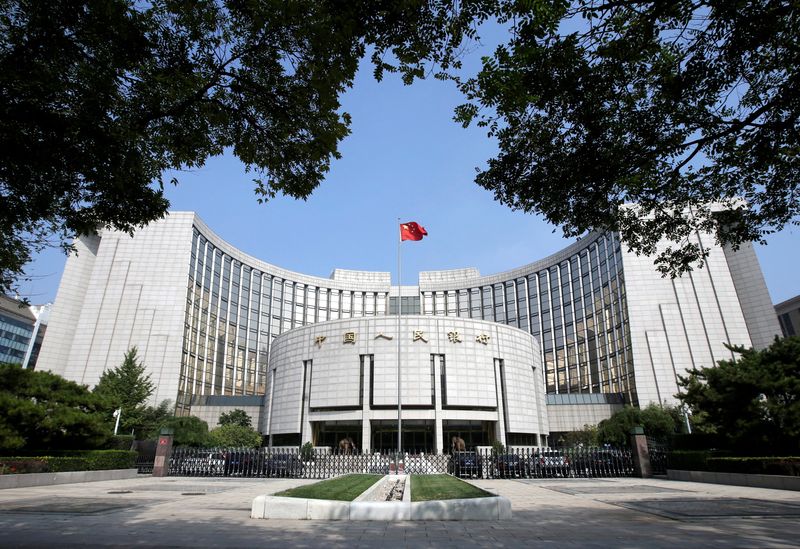

Exclusive-From lottery draws to fiscal spending, China broadens digital yuan footprint


US investigates Vietnam’s intellectual property practices

Italian Inflation Inches Up In May On Rising Energy Pressures
New York — Reports of disruptions with Apple Pay spread rapidly on Friday evening, May 30, 2026, as some users encountered issues completing transactions and processing payments through the popular mobile service.
The problems surfaced around 7:24 p.m. Eastern Time, according to tracking data from outage monitoring sites. Users took to social media and community forums to share experiences, with complaints ranging from failed in-store tap-to-pay attempts to delays in online purchases and person-to-person transfers.
One user described sending money to a family member that appeared in their own account but did not show up on the recipient’s side, highlighting frustration during evening hours when alternative banking options are limited.
Scope of the Reported Disruptions
While Apple’s official system status page continued to list Apple Pay as available, user reports on platforms like DownDetector and community discussions indicated intermittent problems for a portion of customers. Issues appeared concentrated in the United States but drew attention from international users as well.
Affected services included contactless payments at retailers, in-app purchases, and Apple Cash transfers via iMessage or the Wallet app. Some transactions showed as pending or completed on one end but failed to reflect on the other, creating confusion over fund locations.
Apple has not issued a formal statement on the matter as of late Friday. Similar intermittent glitches have occurred in the past, often resolving within hours without long-term impact on user accounts.
User Experiences and Reactions
Social media quickly amplified the reports. The account @status_is_down, which tracks service outages, posted about the situation, asking users if they were affected and using hashtags #ApplePay and #ApplePayDown. The post referenced community discussions linking the issue to broader payment processing challenges.
Complaints highlighted timing frustrations, with some users needing funds for weekend expenses ahead of the Memorial Day holiday period. Banking hours limitations compounded concerns for those relying on digital wallets for immediate transfers.
Despite the issues, many customers reported that traditional card payments and alternative digital wallets continued functioning normally, allowing workarounds for essential transactions.
Technical Context of Apple Pay
Apple Pay relies on a combination of device-based tokenization, secure element technology in iPhones and Apple Watches, and backend processing through partnered banks and payment networks. This architecture generally provides high reliability and security, but occasional server-side or network-related hiccups can affect availability.
The service powers billions of transactions annually and has become a standard for contactless payments globally. Disruptions, though uncommon, tend to generate significant visibility due to the large user base and integration across retail, transit and online platforms.
Previous incidents, such as a mid-May 2026 Apple Cash outage, were resolved relatively quickly after Apple acknowledged the problem on its system status dashboard. In those cases, affected users were advised to monitor accounts and use backup payment methods.
Broader Implications for Digital Payments
The May 30 reports underscore the growing dependence on digital wallets in everyday commerce. As consumers shift away from physical cards, even short outages can disrupt routines, particularly for those without immediate cash or alternative cards on hand.
Industry analysts note that payment systems operate within complex ecosystems involving banks, card networks like Visa and Mastercard, and technology providers. A glitch on one side can create ripple effects across linked services.
Consumer protection remains strong, with funds in Apple Cash typically FDIC-insured through partner banks. Users experiencing missing transfers are encouraged to contact Apple Support or their linked financial institutions for resolution.
Advice for Affected Users
Those facing problems with Apple Pay on May 30 can try several troubleshooting steps while awaiting full resolution:
- Restart the device and ensure a stable internet connection.
- Check for iOS updates and verify cards in the Wallet app remain properly added.
- Remove and re-add affected cards if transactions consistently fail.
- Use physical cards or other payment apps as temporary alternatives.
Monitoring Apple’s official system status page provides the most direct updates on service health. For transfer-related issues, documenting transaction details helps when reaching support.
Looking Ahead
Digital payment reliability has improved significantly over recent years, but incidents like this serve as reminders of the importance of having backup options. Apple Pay’s overall track record remains strong, with rare widespread outages compared to its scale of operations.
As of Saturday morning, May 31, many users reported services returning to normal, though some continued experiencing residual delays. The episode highlights ongoing challenges in maintaining seamless performance across global financial technology infrastructure.
The incident also fuels broader conversations about digital resilience, redundancy in payment systems, and user preparedness for occasional service interruptions in an increasingly cashless society.
For the latest developments, users should check official channels and outage trackers. Most disruptions of this nature prove temporary, with accounts and funds remaining secure throughout.

Sports jobs, sports news, sports features

Samsung, LG Uplus to test 6G sensing that replaces radar

M4 crash near Cardiff shuts two lanes of motorway – live updates


-

 Business6 days ago
NYT Strands Answers May 24 2026 Revealed for Puzzle No. 812 Theme Summer Essentials
-

 Politics5 days ago
Bridgerton Season 5: Cast, Release Date And Everything We Know So Far
-

 NewsBeat3 days ago
Israel says it has killed new Hamas military leader in Gaza City airstrikes
-

 Business3 days ago
Selena Gomez Reportedly Upset Over Benny Blanco’s Comments on Her ‘Terrible’ Diet
-

 Crypto World7 days ago
Robinhood crypto COO Tanya Denisova exits
-
 Crypto World3 days ago
Micron Crosses $1 Trillion Market Cap as AI Demand Reshapes Memory Sector
-
 Tech5 days ago
Microsoft’s quiet Claude Code retreat and the real cost of enterprise AI
-

 Business5 days ago
BTS Sells Out Four Las Vegas Shows at Allegiant Stadium for ARIRANG World Tour
-
Tech3 days ago
The Samsung pay deal is the moment Korean unions changed register
-

 Tech1 day ago
Waymo dominates autonomous vehicle registrations as Tesla trails behind
-
 Tech4 days ago
China assigns ID codes to 28,000+ humanoid robots
-

 Tech3 days ago
Millions of AI agents imperiled by critical vulnerability in open source package
-
Crypto World5 days ago
Brian Armstrong Outlines Crypto Vision for the Future Financial System
-

 Tech5 days ago
Westone Audio and Etymotic Acquired by Fidelity Collective in Major IEM Market Move
-
Crypto World3 days ago
SpaceX’s $2 Trillion IPO: Why Tech Giants Nvidia (NVDA), Apple (AAPL), and Microsoft (MSFT) May Face Pressure
-
 Crypto World5 days ago
Nvidia (NVDA) CEO Calls on Super Micro to Strengthen Export Controls Amid Smuggling Probe
-

 Tech3 days ago
NASA taps Blue Origin to deliver lunar rovers for Moon Base initiative
-
 Entertainment4 days ago
‘Breaking Bad’ Star’s Easy-to-Binge 6-Part Crime Series Spin-Off Is Finally Heading to Free Streaming
-
 NewsBeat4 days ago
Hottest May day ever as London hits 34.8C in 2C leap from previous records
-
 Entertainment4 days ago
Taylor Swift Fans Label Travis Kelce’s Beer-Chugging A ‘Red Flag
You must be logged in to post a comment Login