

Crypto World
Crypto Price Analysis May-29: ETH, XRP, ADA, BNB, and HYPE

This Friday, we examine Ethereum, Ripple, Cardano, Binance Coin, and Hyperliquid in greater detail.
Ethereum (ETH)
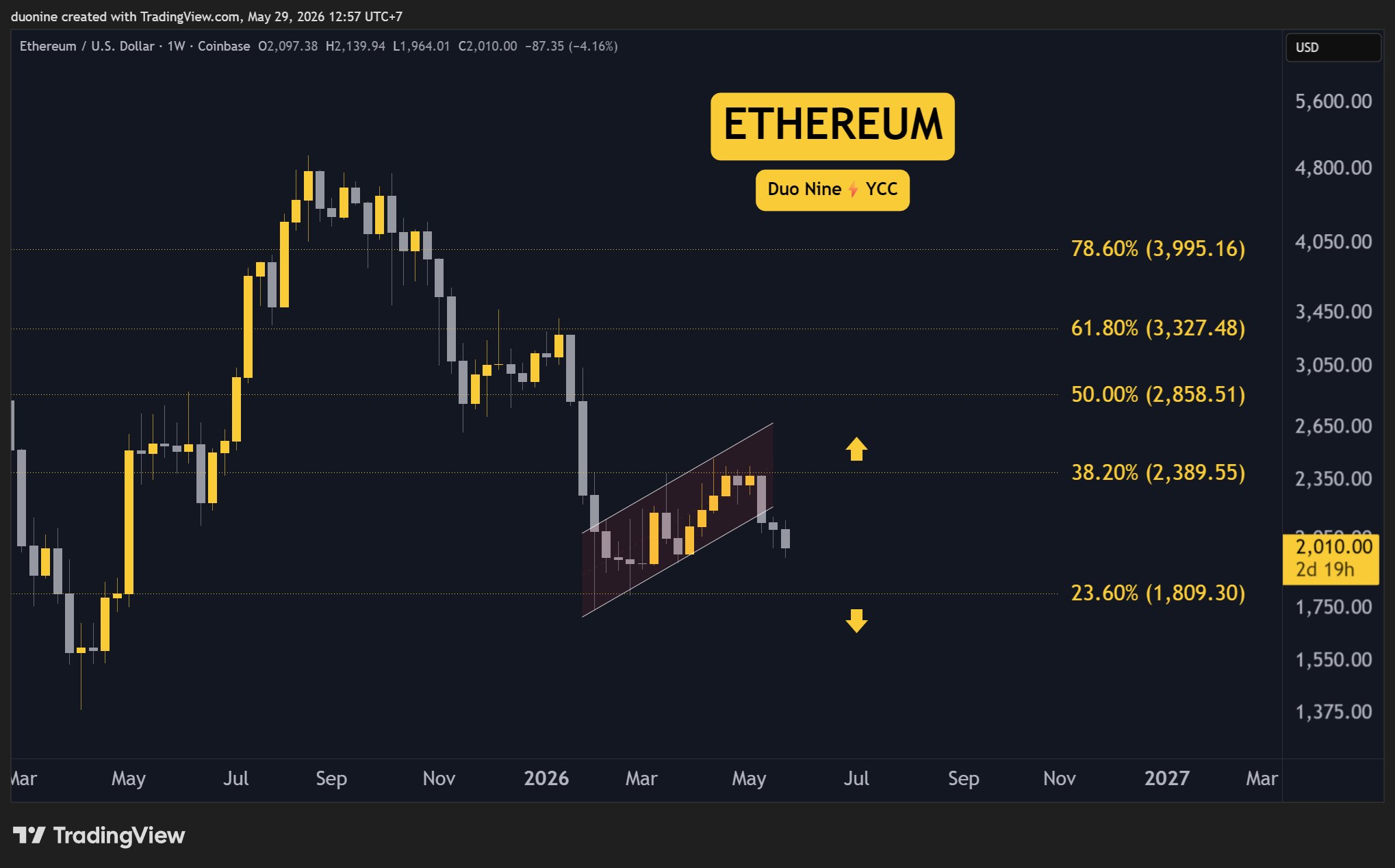
Ethereum is down 6% this week after sellers managed to put pressure on the $2,000 support. At the time of this post, this level appears to be holding, but only by a thread. Another push later could turn it into key resistance.
If $2,000 is lost next week, buyers will likely retreat to support at $1,800. This level managed to halt the downtrend previously, but another visit there could be interpreted as bearish, with a higher chance of a breakdown.
Looking ahead, this cryptocurrency remains in a bearish trend with sentiment being quite negative. This will likely fuel new lows as the downtrend continues into the summer of 2026.
Ripple (XRP)
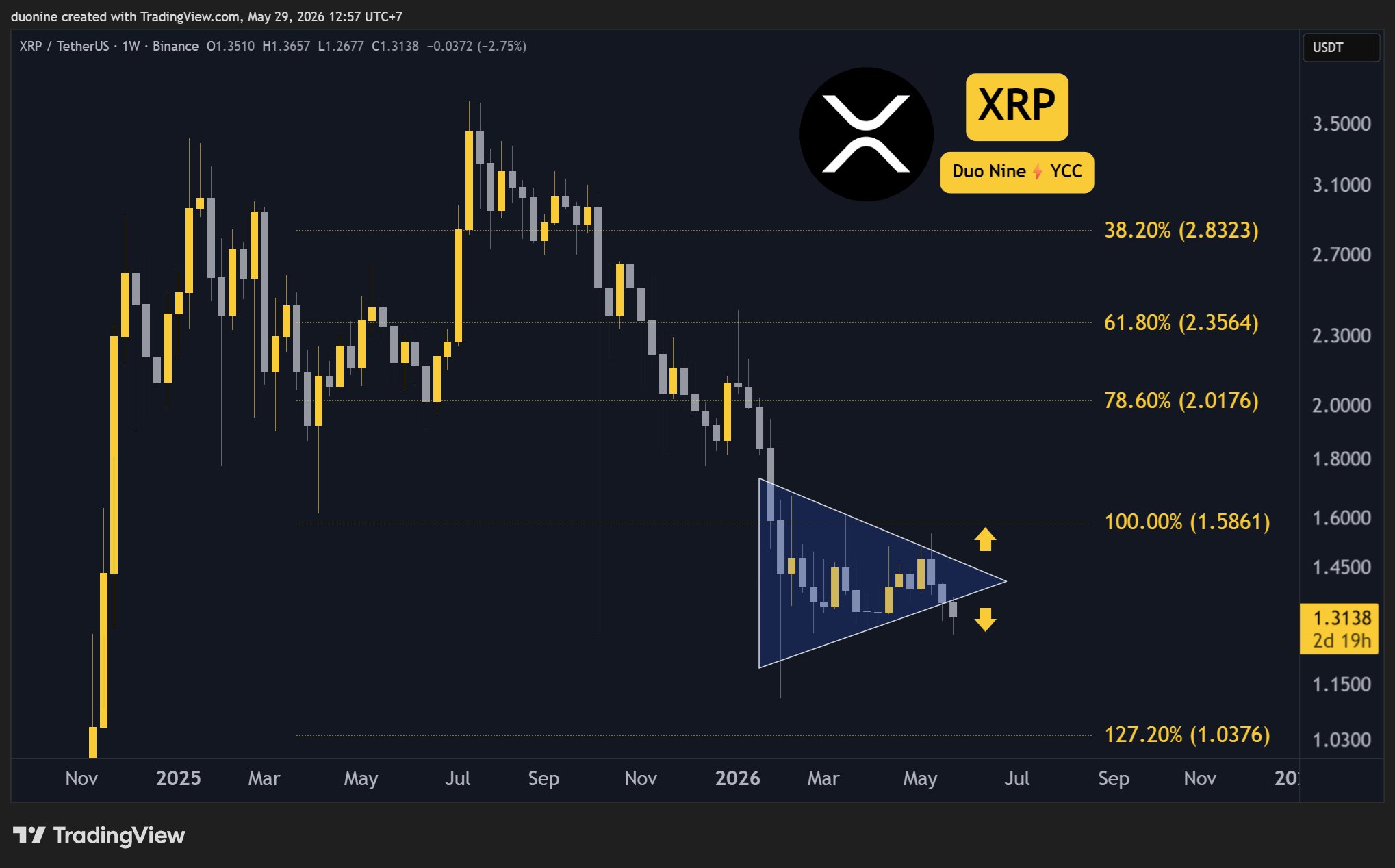
XRP also had a bad week, closing with a 4% loss. Its price fell below the blue pennant, which is now acting as resistance. Sellers are defending the level at $1.4 and the key support levels are found at $1.2 and $1 where buyers are likely to return.
If this weakness continues, this cryptocurrency is likely to revisit the support levels in the coming weeks. Sellers are also controlling the price and have dominated for over three weeks with no relief.
Looking ahead, XRP is in a difficult position because its downtrend has been ongoing for almost a year. There were no major relief rallies, and any bounce was short-lived. Hopefully, a bottom is found soon, with $1 as a prime candidate.
Cardano (ADA)
ADA has entered dangerous territory after its price pierced through the support at $0.24. While it is still early to call it, this breakdown could be a significant loss of trust as the price falls to new lows.
Cardano also closed the week with a 7% loss, being unable to stop sellers from pushing the price down. The support at $0.24 held well for several months, but it seems this latest push may seal its fate.
Looking ahead, if $0.24 becomes resistance in the coming days, this cryptocurrency may make new lows not seen since 2021. If so, key target areas will be found at $0.20 and $0.15.

Binance Coin (BNB)
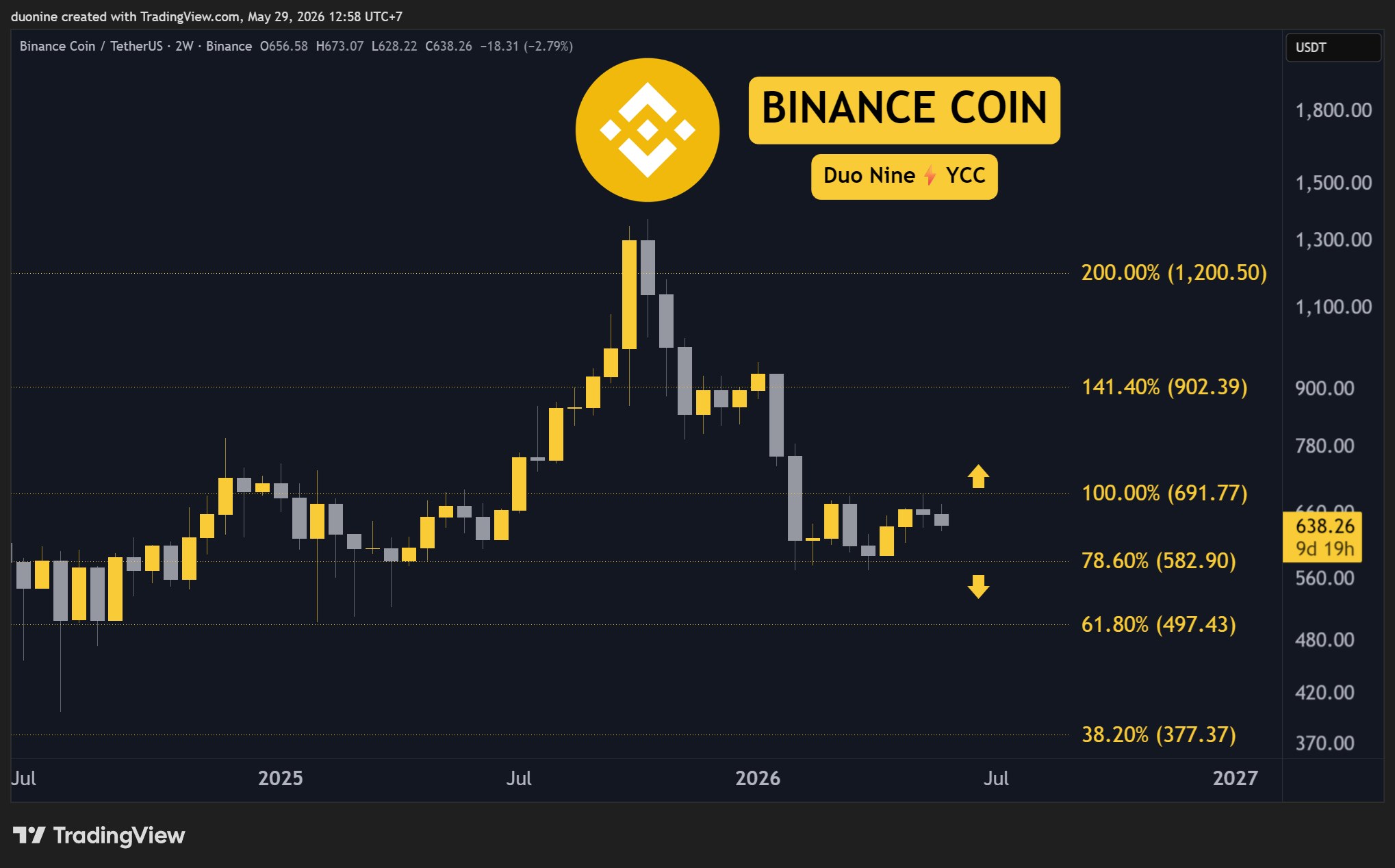
Binance Coin continues to disappoint, as its price has failed to break the $690 resistance level several times. This has forced it to bounce in a flat trend for months, testing the support at $580 and resistance at $690 several times. It also closed the week with a 3% loss.
Without a clear breakout, BNB could end up making lower lows, as the overall market bias is bearish. Therefore, sellers have the advantage and they could soon try their luck again at the key support. If that won’t hold, bears will target $ 500 next.
Looking ahead, this cryptocurrency may pause, moving sideways before its downtrend resumes. This is contingent on the overall market remaining bearish. Should Bitcoin make new lows, BNB is likely to follow as well based on this price action.
Hype (HYPE)
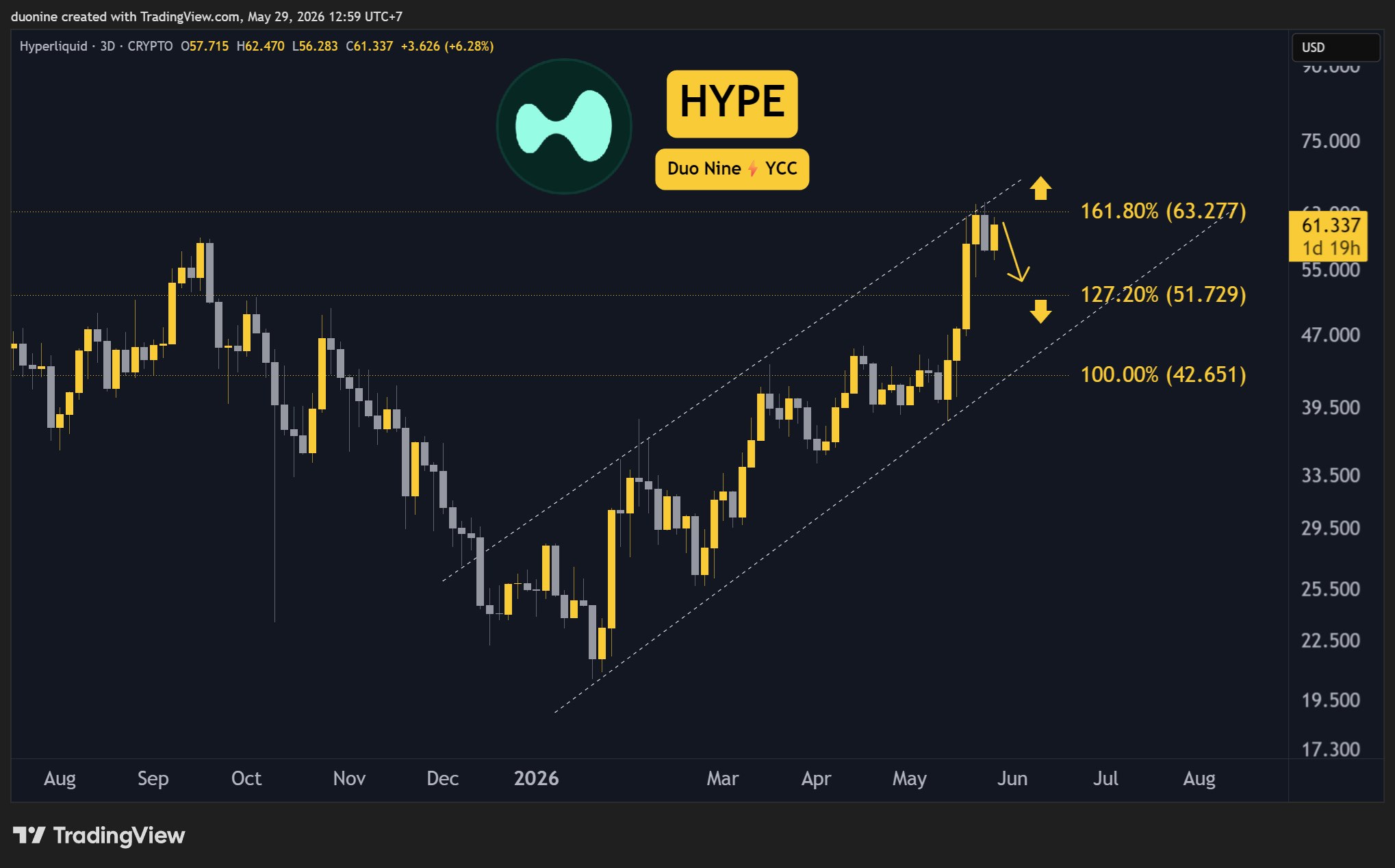
HYPE closed this week 6% higher, but it appears to have hit a ceiling somewhere around $64. Since that level was visited, sellers managed to put a stop to the rally and the price has been hesitating to make new gains.
With sellers becoming more aggressive, the most likely scenario here is a pullback towards the low $50 before HYPE attempts new highs. A correction would also be ideal to consolidate the recent gains after such a spectacular performance in recent weeks.
Looking ahead, if HYPE manages to test and confirm $52 as support, then it can use that level as a base towards new highs later. The current resistance at $63 continues to hold and will need to turn into support for the rally to resume.
The post Crypto Price Analysis May-29: ETH, XRP, ADA, BNB, and HYPE appeared first on CryptoPotato.


The U.S. derivatives watchdog is edging crypto markets closer to a 24/7 trading model, signaling a more permissive posture toward crypto-based derivatives. The Commodity Futures Trading Commission (CFTC) issued an order granting Kalshi approval to list Bitcoin perpetual futures tied to the spot price, while also granting Coinbase a no-action position for similar BTC-based contracts. The moves come as the agency weighs how prediction markets and traditional futures frameworks can coexist with rapidly evolving digital assets.
The CFTC’s Friday notice confirms Kalshi’s BTCPERP perpetual futures contract, designed to track Bitcoin’s spot price and settle accordingly. The regulator emphasized that the approval rested on Kalshi’s representations about the contract’s terms, the underlying market, and compliance with the Commodity Exchange Act and the Commission’s core principles for designated contract markets. In parallel, Coinbase was granted a no-action stance for its own BTC perpetual futures, underscoring a willingness to explore crypto derivatives within a regulated framework.
Paul Grewal, Coinbase’s chief legal officer, described the decision as a “massive first for the industry” in a post on X, noting the broader trend toward more permissive access to crypto derivatives. Coinbase previously expanded into perpetual futures for non-U.S. traders in March, broadening the reach of crypto derivatives on mainstream trading venues.
The agency didn’t stop at Kalshi and Coinbase. In a separate notice, the CFTC contrasted the suitability of 24/7 trading for crypto-based derivatives with more traditional markets, like agriculture, where 24/7 activity may be less appropriate given regional customer bases and other market dynamics. The regulator highlighted that derivatives referencing crypto assets may be well-suited for around-the-clock trading due to their digital infrastructure and global reach. At the same time, it signaled a cautious stance on applying 24/7 models uniformly across all asset classes.
Industry echoes of that sentiment arrived from other corners of the market. CME Group has signaled intent to offer 24/7 crypto futures trading, subject to regulatory review, signaling that a broader ecosystem shift toward continuous trading could be on the horizon.
Key takeaways
- Kalshi wins approval for BTCPERP: The CFTC approved a Bitcoin perpetual futures contract on Kalshi’s prediction-market platform, marking a notable step toward exchange-like crypto derivatives on the regulatory map.
- Coinbase receives no-action relief: The exchange can explore BTC perpetual futures under the agency’s current stance, signaling growing U.S. legitimacy for retail crypto derivatives.
- 24/7 trading under scrutiny: The CFTC separately underscored that crypto derivatives may be better suited to around-the-clock trading than some traditional markets, while acknowledging not all asset classes share this feature.
- Regulatory and market dynamics: The developments occur amid ongoing regulatory repositioning and broader industry moves toward 24/7 crypto trading, including CME Group’s potential entry into the space.
- Political context: The evolving framework unfolds alongside political commentary on CFTC authority and jurisdiction over prediction markets, with nominations for commissioners still outstanding.
Kalshi’s BTCPERP: a milestone for prediction markets meeting crypto futures
The CFTC’s approval of BTCPERP places Kalshi at a unique crossroads between prediction markets and crypto derivatives. By tying a perpetual contract to Bitcoin’s spot price, Kalshi offers a mechanism for participants to speculate on crypto prices without owning the underlying asset. The regulator’s decision rested on Kalshi’s representations about contract terms, market structure, and compliance with applicable laws and core principles for designated contract markets. This move positions Kalshi as a platform that could operate with a more derivatives-exchange-like footprint within the U.S. regulatory framework.
As Kalshi moves forward, market participants will be watching how liquidity, margining, and settlement mechanics evolve in a framework that combines elements of prediction markets with perpetual futures dynamics. The BTCPERP contract promises to unlock new hedging and speculation avenues for both retail and institutional users who want continuous exposure to Bitcoin’s price movements.
Coinbase’s no-action stance: signaling incremental openness for U.S. crypto rails
Coinbase’s no-action relief, paired with Kalshi’s approval, signals a cautious but notable expansion of permissible crypto derivatives in the United States. The decision aligns with Coinbase’s broader strategy to offer perpetual futures products to diverse client bases while navigating the regulatory environment. Paul Grewal hailed the development as a turning point for the industry, underscoring the potential for regulated, 24/7 access to crypto derivatives on mainstream platforms. This follows Coinbase’s March rollout of stock perpetual futures for non-U.S. traders, illustrating a broader push into continuous, instrument-driven trading outside traditional stock markets.
24/7 trading: regulatory nuance, market implications
The CFTC’s second notice clarifies that the suitability of around-the-clock trading for derivatives is not universal. Crypto assets, with their digital infrastructure and global reach, may be well-suited to 24/7 trading, the agency contends. Traditional markets—such as agricultural commodities—pose distinct considerations tied to regional customer bases and physical delivery dynamics, which may complicate non-stop trading schemes. The nuanced stance suggests regulators are weighing the benefits of continuous liquidity and accessibility against the risks of around-the-clock activity in more service-heavy or regionally segmented markets.
Beyond Kalshi and Coinbase, the broader market is watching CME Group’s public statements about 24/7 crypto futures trading as an indicator of where the mainstream exchange ecosystem might converge. Pending regulatory review, the industry could see a broader rollout of continuous trading across multiple venues, potentially reshaping liquidity, risk management, and price discovery for crypto derivatives in the United States.
Regulatory context and political backdrop
The regulatory narrative surrounding crypto derivatives remains active. In parallel to these developments, U.S. President Donald Trump publicly supported the CFTC’s authority over prediction markets in a social media post, reflecting ongoing debates about jurisdiction and enforcement. The CFTC chair, Michael Selig, remains the sole commissioner in a five-member panel, with no announced nominations to fill the other seats as of Friday. The political and regulatory dynamics suggest continued scrutiny and potential shifts as more platforms seek to offer crypto-based derivatives under a U.S. regulatory umbrella.
As the year unfolds, observers will be monitoring how these approvals translate into real-world activity: Will Kalshi’s BTCPERP attract meaningful liquidity? How will Coinbase’s no-action status influence retail adoption and platform competition? And what further clarifications will regulators provide on the contours of 24/7 crypto trading versus traditional markets?
In the meantime, the market should brace for continued evolution in the U.S. framework for crypto derivatives, with investors and traders watching for further platform approvals, margin and settlement standards, and any forthcoming policy guidance that could redefine the boundaries of permissible crypto exposure on national exchanges.
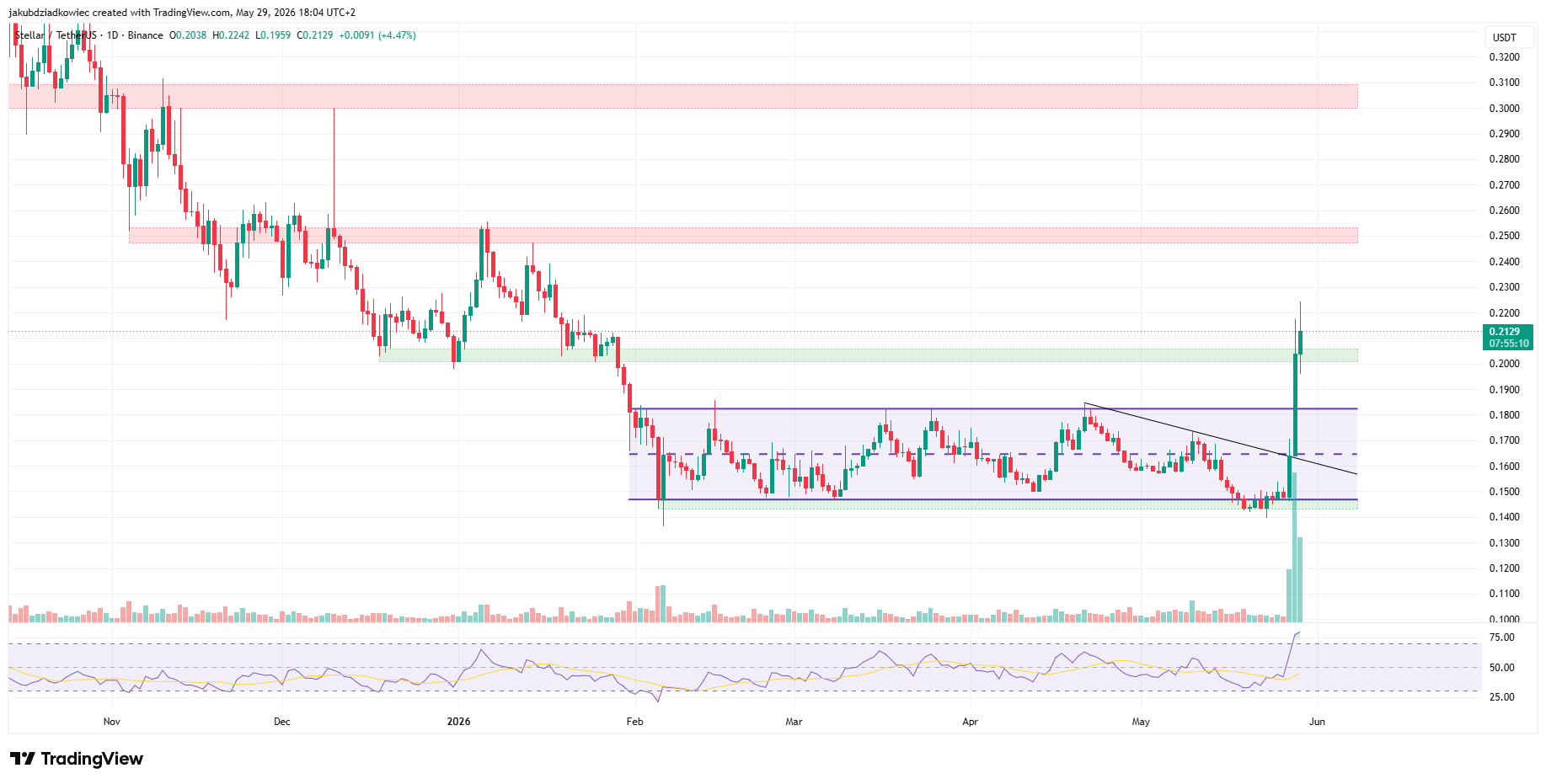
Three of the largest real-world asset (RWA) tokens are heading into June 2026 with completely different setups. Stellar (XLM) just confirmed a high-volume breakout. Chainlink (LINK) is bleeding on the chart while whales quietly absorb the float. Ondo (ONDO) ran hard in May and now looks like it gave large holders the exit they were waiting for.
Here is how each setup reads on the daily chart, and what to watch as the month begins.
Stellar (XLM): Breakout Confirmed, Shorts Fading the Move
XLM is the cleanest momentum setup in the group. Yesterday’s daily candle confirmed a breakout from a multi-week parallel accumulation channel on a major volume spike, with the daily RSI pushing up to 80.
The reclaim of $0.20 is the key technical event, a level that had capped the token through most of April and May, and is now expected to act as support. Above it, the path opens to $0.25, with $0.30 sitting beyond.

The funding rate tape adds an interesting layer. Through the entire consolidation window from late March through mid-May, perpetual funding oscillated around zero with frequent deep negative spikes, traders repeatedly tried to short the range lows and got nothing back.
The breakout finally pushed funding firmly positive as longs chased the move, but the latest 30-minute prints have flipped negative again even as price holds near the highs.

That is a bullish tell. Negative funding into a volume-confirmed breakout means shorts are fading a real move and paying longs to do so.
As long as $0.20 holds as support, the structure favors continuation toward $0.25 and $0.30.
The risk is purely tactical: RSI at 80 invites a cooldown, and losing $0.20 would turn this into a failed breakout.
Bias: bullish. Level to watch: $0.20.
Chainlink (LINK): Painful Chart, Cleanest On-Chain Picture in the Group
LINK is the inverse setup. The daily chart broke down from an ascending parallel channel on May 19 and is now grinding lower, with $7.38 as the measured downside target and secondary support near $8.
RSI sits around 40, not oversold, but firmly in the lower half. Volume is contracting, which typically signals compression rather than panic.
If LINK bounces, the resistance ladder runs from just below $10 to $12 (the 0.236 long-term Fibonacci retracement) and then $15 (the 0.382 Fib).
Reclaiming $10 would be the first technical signal that the May breakdown has run its course.

The bigger story sits underneath the price. Santiment data shows whale supply (excluding exchanges) has stair-stepped higher in two clear tranches, first in late January, then again in early March, adding roughly 175 million LINK to wallets that do not transact on venues.
Over the same window, exchange supply has fallen by more than 100 million tokens, with the steepest outflow coming in early April.

That is textbook accumulation: whales absorbing, exchange float shrinking, price refusing to reflect any of it yet.
The chart says LINK can still bleed into the $7s. The on-chain footprint says someone with size has been buying that bleed for months.
Bias: short-term bearish, structurally bullish. Levels to watch: $7.38 / $8 on the downside, $10 reclaim on the upside.
Ondo (ONDO): Strong Rally, Weaker Structure Underneath
ONDO had the most explosive move of the three in early May, breaking out hard from a months-long base. The follow-through has stalled.
The daily chart has printed a double-top at the 0.786 Fibonacci retracement near $0.47, and price has since broken below the 0.618 Fib.
ONDO is now trying to hold the 0.5 retracement at roughly $0.37. If that level fails, the chart opens up for a deeper retest of the previous accumulation zone around $0.30.
RSI is perfectly neutral at 50, and volume has tapered after the two-peak structure, both consistent with a market losing momentum rather than basing for another leg higher.

The on-chain backdrop is the real concern. Throughout the December-to-May window, ONDO’s supply on exchanges has trended steadily higher, tokens moving toward venues, not away from them.
Whale transaction count above $100,000 was muted through April, then erupted in early May almost exactly at the price peak.

That sequencing matters. Large holders activated during the rally, exchange balances kept building, and the rollover that followed has not been accompanied by any visible drop in venue supply.
Until exchange balances start to fall, the path of least resistance remains sideways to lower.
Bias: cautious. Levels to watch: $0.37 as the line in the sand, $0.30 as the realistic accumulation zone.
Top RWA Tokens to Watch in June
The three RWA majors offer three different trades for June 2026.
- XLM is the momentum play: A confirmed breakout with supportive funding and a clean upside ladder, provided $0.20 holds.
- LINK is the patience trade: Short-term bearish on the chart, but with the strongest accumulation profile in the group, which makes any flush toward $7.38 a potential gift to longer-term buyers.
- ONDO is the caution trade: The May rally was real, but the whale activity into rising exchange supply suggests the easy upside has already been taken until that venue balance trend reverses.
The RWA narrative still has the macro tailwind. Whether these three tokens lead the next leg or wait for it depends on which side of each setup resolves first.
The post Top 3 RWA Tokens for June 2026: One Breakout, One Accumulation, One Warning appeared first on BeInCrypto.


The U.S. Commodity Futures Trading Commission has approved Kalshi to launch the first federally regulated Bitcoin perpetual futures contract in the United States, opening a new path for crypto derivatives trading onshore.
Summary
- The CFTC approved Kalshi’s BTCPERP contract, clearing the way for the first federally regulated Bitcoin perpetual futures product in the U.S.
- The regulator also issued Coinbase a no-action letter allowing certain crypto perpetual futures products to use Bitcoin, Ether, and stablecoins as collateral.
- Kalshi’s approval comes as the company expands beyond prediction markets while challenging Minnesota’s proposed prediction market ban in federal court.
According to a CFTC announcement released Friday, Kalshi received approval to list and trade a Bitcoin-referenced perpetual futures contract under the ticker BTCPERP. The regulator said the approval requires the exchange to maintain the product in compliance with the Commodity Exchange Act and other applicable regulations.
The decision gives U.S. traders access to a type of crypto derivative that has largely been offered through offshore venues.
Unlike traditional futures contracts, perpetual futures do not expire, allowing traders to keep positions open indefinitely while speculating on the future price of an asset.
Kalshi chief executive Tarek Mansour said in a statement published on the company’s website that the launch represents the firm’s next step beyond prediction markets and into regulated derivatives trading. Mansour said federally regulated perpetual futures could improve risk management and capital allocation for U.S. businesses.
The approval comes as Kalshi continues to expand its role in financial markets while facing multiple regulatory and political battles linked to prediction markets.
The approval opens a regulated U.S. market for Bitcoin perpetual futures
For years, perpetual futures have become one of the most heavily traded products in global crypto markets, particularly on exchanges operating outside the United States. Their popularity stems from the ability to gain leveraged exposure to Bitcoin and other digital assets without dealing with contract expiration dates.
Alongside Kalshi’s approval, the CFTC issued a no-action letter to Coinbase on Friday covering certain perpetual futures products the exchange plans to offer through its Coinbase Financial Markets subsidiary.
According to the regulator, those contracts will be routed through Coinbase Bermuda and treated as foreign futures products. The no-action relief allows Coinbase Financial Markets to accept digital assets, including Bitcoin, Ether, and stablecoins, as margin collateral for eligible customers.
The CFTC’s twin announcements arrived days after President Donald Trump highlighted crypto perpetuals in a May 28 Truth Social post. Trump argued that previous regulators had pushed Bitcoin, crypto perpetuals, and innovation offshore before his administration reversed that trend.
“Gary Gensler and the “Anti-Crypto Army” nearly DESTROYED the American Crypto Industry by driving Bitcoin, Crypto Perpetuals, and INNOVATION offshore, but “TRUMP” SAVED IT.”
While perpetual futures can offer traders substantial gains from relatively small market moves, industry participants have long noted that leverage can also amplify losses during periods of volatility.
Kalshi expands beyond prediction markets amid regulatory disputes
The Bitcoin perpetuals approval lands during a period of rapid growth and heightened scrutiny for Kalshi’s business.
Earlier this month, the company filed a federal lawsuit against Minnesota seeking to block a state law that would prohibit prediction market platforms from operating in the state beginning Aug. 1.
Kalshi argued in its complaint that the Commodity Exchange Act grants the CFTC exclusive jurisdiction over event contracts and that Minnesota’s law improperly interferes with federally regulated exchanges.
The legal challenge followed a separate lawsuit filed by the CFTC against Minnesota. As previously reported by crypto.news, the regulator described the state’s legislation as one of the most aggressive attempts by a state government to restrict federally regulated prediction markets.
At the same time, Kalshi has increased its policy engagement efforts through Americans for Fair Markets, a newly launched advocacy group backed by the company. The organization, which counts former White House deputy chief of staff Taylor Budowich as a strategic advisor, said it plans to advocate for federal policies affecting prediction markets and regulated exchanges.
According to the group, its priorities include know-your-customer requirements, insider trading prohibitions, full CFTC funding, and restrictions on contracts related to war, death, terrorism, and assassination.


The U.S. Commodity Futures Trading Commission has greenlit the nation’s first bitcoin perpetual futures contract on a regulated exchange, marking a watershed moment for domestic crypto derivatives trading.
Summary
- CFTC approved first-ever bitcoin perpetual futures contract on regulated U.S. platform
- Chairman Mike Selig says move delivers on President Trump’s goal to make America “crypto capital of the world”
- Perpetual futures previously dominated offshore exchanges with over 70% of centralized trading volume
The CFTC announced Friday it had approved an unnamed regulated exchange to list and trade bitcoin perpetual futures contracts, ending the offshore monopoly on these high-volume derivatives instruments. The approval follows months of signals from CFTC leadership that the agency would move aggressively to onshore crypto perpetuals, which allow traders to speculate on Bitcoin (BTC) price movements indefinitely without expiration dates.
“Having true perpetual contracts in the United States is a major step forward in delivering on President Trump’s goal of cementing America as the crypto capital of the world,” CFTC Chairman Mike Selig wrote in an opinion piece published Friday at CoinDesk. Selig argued the contracts represent “a foundational risk management and price discovery tool in the global crypto asset markets”.
Regulatory Shift Under Trump Administration
The announcement comes days after President Donald Trump posted on social media that the previous administration “nearly DESTROYED the American Crypto Industry by driving Bitcoin, Crypto Perpetuals, and INNOVATION offshore, but ‘TRUMP’ SAVED IT”. Selig echoed this sentiment in March, stating he aimed to repair damage that “drove a lot of these firms and the liquidity offshore”.
Perpetual futures contracts differ from traditional futures by having no expiration date, allowing positions to remain open indefinitely through a funding rate mechanism that keeps contract prices aligned with spot prices. These instruments have dominated offshore crypto trading since 2016, with perpetuals accounting for over 70% of centralized exchange volume. In 2025, perpetual futures trading volume reached $61.7 trillion, up 29% from 2024.
Kalshi and Polymarket Race for Market Share
While the CFTC did not identify which exchange received approval, prediction market platform Kalshi had announced plans to launch cryptocurrency perpetual futures in April, with co-founder Luana Lopes Lara celebrating regulatory progress since December 2024. Kalshi secured a CFTC margin trading license and scheduled an April 27 launch event in New York City for its perpetual futures product, internally codenamed “Timeless”.
The platform planned to offer at least 10x leverage on Bitcoin and other assets, with U.S. dollar collateral at launch and Bitcoin trading to follow. Rival platform Polymarket also entered the perpetual futures market in April, intensifying competition for the lucrative derivatives sector.
Selig wrote Friday that the CFTC’s approach would “limit excessive leverage, volatility and systemic risk”. The announcement carries weight as agency guidance rather than formal rulemaking, meaning future CFTC leadership could reverse the policy without congressional action. The shift aligns with broader CFTC regulatory changes under the Trump administration, including joint SEC-CFTC coordination on crypto asset taxonomy and expanded tokenized collateral frameworks.
Arca chief investment officer Jeff Dorman says Strategy’s Bitcoin accumulation playbook has hit a breaking point, with roughly $15 billion in preferred stock and $1.5 billion in annual dividend obligations now colliding with a weakening cash buffer and softer Bitcoin (BTC) price.
The warning lands after Strategy used most of its cash reserve to buy back $1.5 billion of zero-coupon convertible notes due 2029, leaving $871 million on hand to meet recurring preferred dividend obligations.
The Preferred Stock Problem
MicroStrategy holds 843,738 BTC as of May 25, after building out a preferred stock structure totaling roughly $15.5 billion across STRC, STRK, STRF, and STRD series.
The STRC tranche alone pays a variable dividend the company recently raised to 11.5%.
Dorman argued the issuance was a wager that BTC was about to climb sharply, allowing future Bitcoin sales to fund those dividends.
Follow us on X to get the latest news as it happens
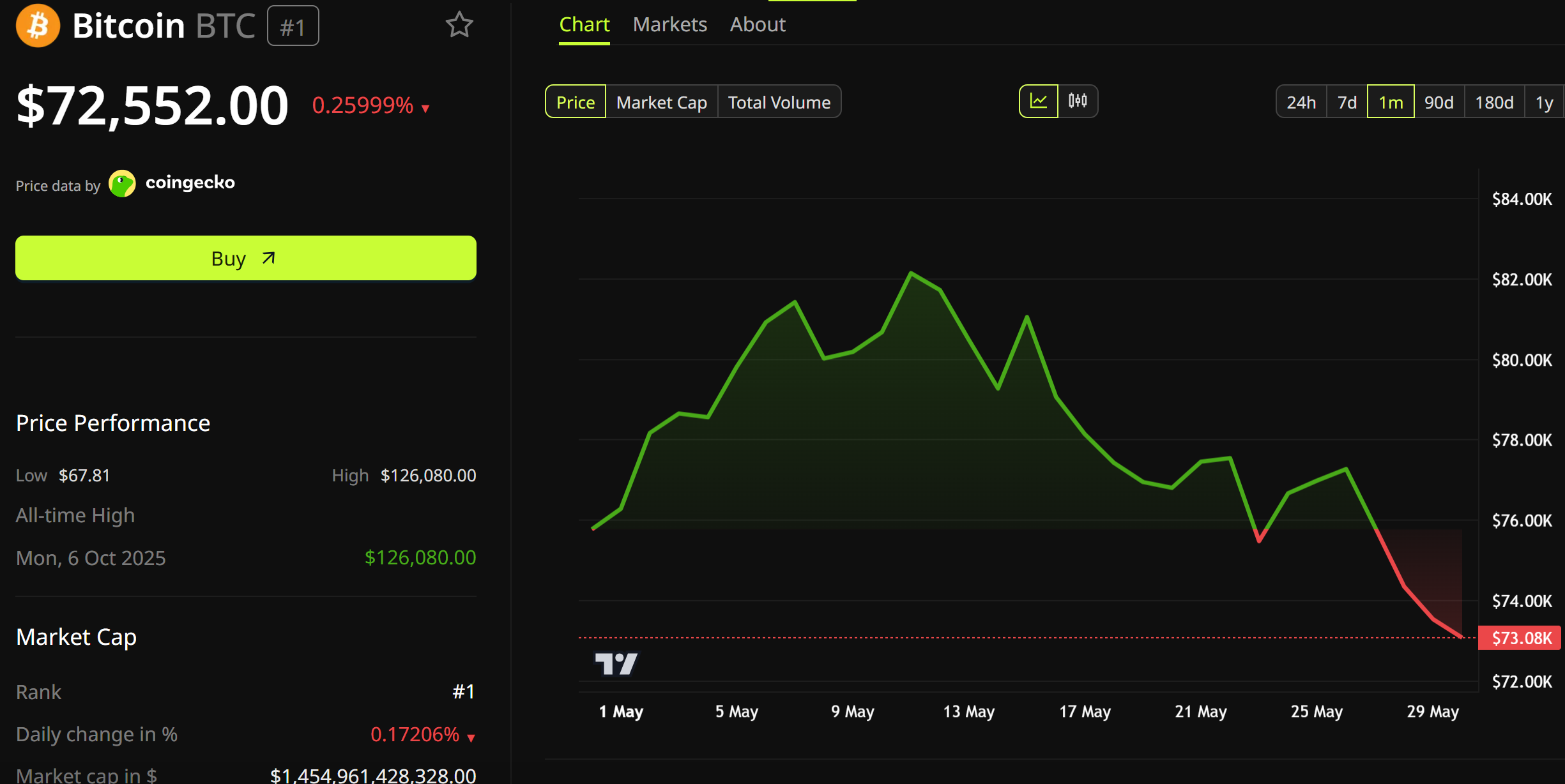
Bitcoin instead trades near $72,550, down almost 6% over the past week, weakening the implicit collateral behind that bet.

The Baffling Buyback
In May, Strategy repurchased $1.5 billion face value of its 2029 convertibles for about $1.38 billion in cash, locking in an 8% discount but burning through most of its depleted cash reserve.
The retired notes carried a zero coupon, making the timing of the buyback hard to square with rising dividend obligations.
“MSTR, BTC and Pref holders are really in bind. Someone is going to lose badly here, and it will happen in the next 4 months,” Dorman stated.
Three stakeholder groups now hold competing claims on the same balance sheet.
A potential Bitcoin sale to fund dividends would damage Saylor’s long-term thesis, while cutting payouts would punish preferred holders and raise comparisons to past STRC collapse risk debates.
MicroStrategy’s next capital move will signal which constituency comes first.
The post Institutional Crypto Exec Warns MicroStrategy’s Bitcoin Capital Loop Is Breaking appeared first on BeInCrypto.
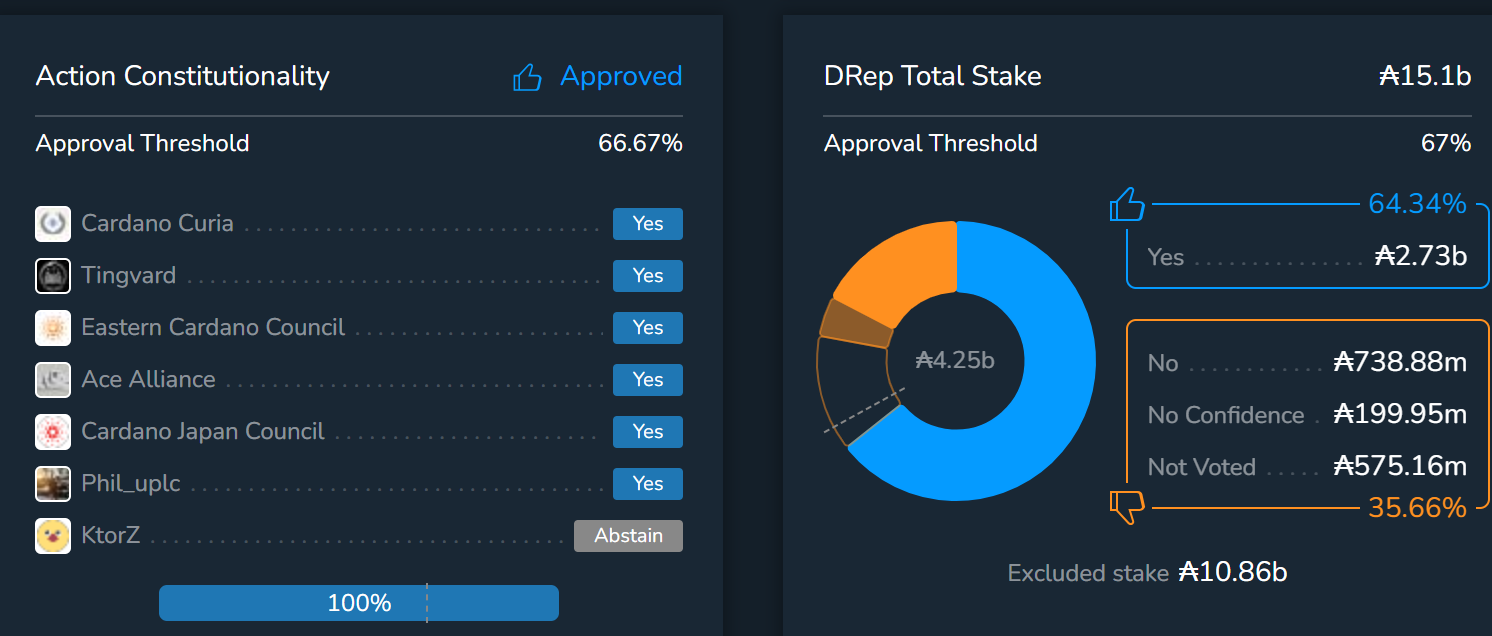
Cardano founder Charles Hoskinson and Cardano Foundation CEO Frederik Gregaard publicly backed the revised Cardano Summit 2026 proposal hours before voting closed on May 29, urging delegated representatives to approve a 7.8 million ADA treasury withdrawal for the Singapore event.
The on-chain vote requires roughly 66.67% support from active DRep stake. Recent snapshots showed yes votes near 65%, leaving the outcome dependent on unvoted stake as the May 29 deadline approached.

What the Revised Proposal Funds
The treasury request, equivalent to about $2 million at current ADA prices, would finance a two-day Cardano Summit on October 5 and 6 in Singapore.
The proposal lands as the community debates treasury allocations and stress-tests spending discipline.
“If you have not voted yet, I encourage you to vote yes today for the revised Cardano Summit proposal,” Hoskinson urged.
Follow us on X to get the latest news as it happens
Singapore Pivot and New Accountability Rules
The Foundation pitched Singapore as Cardano’s first major summit in Asia, citing access to regional builders, asset managers, and regulators.
The revised plan trimmed the original budget by 22%, dropped the TOKEN2049 sponsorship tie, and added milestone payments, independent audits, and a public spending dashboard.
Fund administration would run through a smart contract built by Sundae Labs, with provisions returning unused ADA to the growing on-chain treasury.
An oversight committee involving Intersect and DQuadrant would track milestones under the Cardano constitution framework.
A Test of On-Chain Governance
The vote functions as another stress test of Cardano’s shift to ADA governance under the Chang hard fork.
EMURGO CEO Phillip Pon publicly supported the alignment, while some DReps voted no, citing fiscal discipline and competing priorities given current market conditions.
Hoskinson has spent recent months signaling broader governance changes ahead for Cardano.
A failed vote would force a scaled-back or postponed Asia-Pacific debut, while approval would release funds under tight oversight.
The post Cardano Leaders Rally Last-Minute Support for $2 Million Singapore Summit Vote appeared first on BeInCrypto.


Crypto.com and OG Prediction Markets have signed a multi year global partnership with the United States SailGP Team, ahead of this week’s New York Sail Grand Prix, bringing CFTC regulated prediction markets directly into elite foiling yacht racing for the first time.
Summary
With the New York Sail Grand Prix set to light up the city’s harbor this weekend, the U.S. SailGP Team has named Crypto.com and its OG Prediction Markets platform as Global Partners, tying a top tier U.S. sailing franchise to a CFTC regulated crypto backed prediction venue.
Under the multi year deal, Crypto.com becomes the team’s Official Crypto Exchange while OG is designated Official Prediction Market Partner, with both brands to appear on the American F50 catamaran, race kit and team environments at SailGP regattas worldwide.
Crypto backed prediction markets hit the water
At the heart of the partnership is OG Prediction Markets, a standalone platform launched by Crypto.com earlier this year that allows users in the United States to trade regulated event contracts on sports, financial, political and cultural outcomes. OG is powered by CryptoCrypto.com | Derivatives North America, a Commodity Futures Trading Commission registered exchange and clearinghouse, positioning the app as a federally supervised alternative to offshore prediction venues.
“Crypto.com has always backed those who compete at the highest level — and the U.S. SailGP Team is exactly that,” said Steve Humenik, EVP and Global Head of Legal for Prediction and Capital Markets at Crypto.com. “The OG Prediction Markets partnership reflects our long term commitment to a diverse offering of sports prediction markets, including highly technical and data driven sports like SailGP,” he added, arguing that the tie up helps make “the U.S. the Prediction Markets Capital of the World.”
The deal gives OG a highly visible entry point into a league that is already positioning itself as “Formula 1 on the water,” with 50 foot foiling catamarans capable of speeds above 60 mph racing across iconic global venues and beaming data to broadcasters in real time. SailGP says its tracking systems capture hundreds of data points per second per boat, a rich stream that underpins live odds making and now, through OG, fan facing prediction markets linked directly to U.S. team performance.
SailGP leans harder into betting
For the United States SailGP Team, the Crypto.com and OG sponsorship arrives as the league accelerates its broader playbook around betting and interactive wagering. SailGP has already struck betting integrations with operators such as DraftKings in the U.S. and Bet365 internationally for its Rolex SailGP Championship, enabling fixed odds bets on fleet race winners, finalists and season champions.
“Having Crypto.com and OG Prediction Markets commit to a multi year Global Partnership is a tremendous statement of confidence in where the U.S. SailGP Team and this league are heading,” said Mike Buckley, Team Principal, CEO and Co Owner of the U.S. SailGP Team. Buckley called the agreement “monumental,” stressing that “the ability for fans to engage with our races through OG’s prediction platform is just the beginning of what we’ll build together.”
For Crypto.com, the SailGP partnership extends a push beyond conventional spot trading into derivatives and event contracts, following the February rollout of OG as a social prediction app where the first one million users can earn up to $500 in rewards for trading real world outcomes. It also builds on the exchange’s growing sports sponsorship portfolio and could help drive volume in regulated event markets that some analysts see evolving into a multibillion dollar asset class.
Crypto.com’s native token cronos is currently tracked on the Crypto.com market cap page, alongside major assets like bitcoin and ethereum, underscoring how deeply the exchange is embedded in both trading and fan facing products. In a previous crypto.com launch report, the company framed OG as a way for sports fans to “act on uncertainty, capitalize on the future, and celebrate triumph” in a regulated environment.
Prediction markets are also gaining traction elsewhere in crypto, with platforms like Polymarket continuing to prove that trading on probabilities can double as a powerful information aggregator. In a related crypto.news feature, OG was cast as Crypto.com’s bid to bring that model into a regulated U.S. framework, marrying trading mechanics with social leaderboards and sports obsessed communities.
As the new livery hits the water in New York and co branded campaigns roll out across digital channels, both sides are betting that SailGP’s high speed, data heavy format can turn sailing into fertile ground for prediction market adoption. Whether fans treat OG’s contracts more like trading or like wagering, the partnership signals that the line between sports betting, derivatives and crypto native prediction markets is getting thinner with each new deal.

The U.S. Commodity Futures Trading Commission (CFTC) is charting a more explicit path for crypto derivatives, approving a Bitcoin-backed perpetual futures product on Kalshi’s prediction-market platform while granting Coinbase a no-action interpretation for similar instruments. The moves, paired with the agency’s broader commentary on 24/7 trading in crypto markets, underscore a regulatory shift toward allowing regulated crypto derivatives while maintaining guardrails to manage risk, compliance, and market integrity.
In a Friday notice, the CFTC approved perpetual futures contracts tied to the spot price of Bitcoin for Kalshi’s platform. Kalshi simultaneously announced that it would launch the perpetual futures on its platform, aligning its product line more closely with a traditional derivatives venue. The Commission’s order reflects an individualized assessment of Kalshi’s request and the BTCPERP contract’s terms, the nature of the underlying market, and Kalshi’s compliance with the Commodity Exchange Act and the Commission’s regulations, including the Core Principles applicable to designated contract markets.
The perpetual futures would enable users on Kalshi’s platform—and potentially on other compliant venues—to speculate on Bitcoin price movements without taking ownership of the asset itself. The CFTC’s no-action position for Coinbase, paired with formal approval for Kalshi, signals a cautious openness to crypto derivatives while emphasizing the need for robust oversight and product design that conforms to U.S. law and regulatory standards.
Coinbase chief legal officer Paul Grewal described the development as a “massive first for the industry” in a post on X, highlighting the regulatory milestone for a segment seeking broader access to continuous trading. The broader industry context includes Coinbase’s recent expansion of stock perpetual futures for non-U.S. traders, illustrating how major exchanges are pursuing 24/7 exposure to price movements through regulated channels.
The Kalshi approval and Coinbase’s no-action relief sit within a broader regulatory framework that the CFTC has been actively developing around digital-asset derivatives. The elements of the Kalshi order—its terms and adherence to core market-principle requirements—are presented as a model for how crypto-based perpetual futures might be structured within U.S. oversight, while the Coinbase relief demonstrates that the agency is not granting blanket permission but evaluating products on a case-by-case basis.
Kalshi’s BTCPERP: CFTC approval and contract design
The CFTC’s action centers on a perpetual futures contract designed to track Bitcoin’s spot price, offered on Kalshi’s platform as a derivatives-like product within a prediction-market framework. The agency’s documentation emphasizes that the approval rests on Kalshi’s representations and submissions detailing the BTCPERP contract’s terms, the mechanics of the underlying market, and Kalshi’s compliance with the Commodity Exchange Act and related regulations, including the core principles applicable to designated contract markets.
Per the regulator’s description, the BTCPERP product would function without the need for the trader to own or borrow actual Bitcoin, a structure typical of perpetual futures designed to provide synthetic exposure to price movements. The decision also reflects the Commission’s effort to distinguish crypto-linked derivatives from other asset classes that may pose different risk profiles or regulatory considerations. The Kalshi development thus marks a concrete step in integrating crypto-native exposure into a regulated, exchange-like framework for market participants seeking structured, rule-based exposure to digital-asset prices.
For Kalshi, the milestone is more than a new product approval; it signals a potential pathway for more complex, exchange-like features within prediction markets and crypto markets that rely on transparent price discovery, reliable clearing, and enforceable settlement. The commission’s emphasis on process and compliance highlights a regulatory preference for products whose terms and market mechanics align with traditional design principles, even when the underlying asset is a digital commodity like Bitcoin.
Coinbase no-action relief vs Kalshi approval: Regulatory nuance
In parallel with Kalshi’s approval, the CFTC issued a no-action letter relating to Coinbase’s planned BTC perpetual futures. A no-action position allows a regulated entity to pursue a particular activity without the agency taking enforcement action, provided that the firm adheres to conditions designed to address investor protection and market integrity. This stands in contrast to Kalshi’s formal approval as a designated contract market, illustrating the spectrum of regulatory outcomes the CFTC utilizes for crypto derivatives.
The practical effect is that Coinbase can potentially offer or list perpetual futures referencing crypto assets under the terms outlined in the agency’s relief, while Kalshi progresses under a full-approval framework with explicit design and market-structure requirements. The distinction matters for market participants in terms of legal certainty, risk management, and compliance planning, particularly for institutions seeking clear regulatory footing before committing capital or establishing clearing arrangements.
The contrast also highlights ongoing regulatory calibration around product features, custody, settlement mechanics, and compliance regimes. While the CFTC has shown willingness to adapt to crypto-dominated trading and clearing infrastructures, it continues to ground approvals in demonstrable adherence to oversight standards, including risk controls, disclosure, and the ability to withstand market stress scenarios.
In the wake of these actions, industry participants and observers are watching how such products will integrate with existing market structures, including how they might interact with banking relationships, liquidity provision, and cross-border activity. The pair of actions underscores a nuanced, case-by-case approach, rather than a broad green light for crypto derivatives, and reinforces the need for robust risk-management frameworks and regulatory alignment for any firm seeking to operate these products at scale.
Regulatory stance on 24/7 trading and market structure
The CFTC separately reinforced a calibrated view on 24/7 trading for crypto derivatives, distinguishing crypto markets from other traditional asset classes where a 24/7 model may be less appropriate. The agency stated that derivatives referencing crypto assets may be well-suited for around-the-clock trading due to digital infrastructure, global reach, and the nonstop nature of crypto price discovery. Conversely, markets such as agricultural commodities may be less compatible with a 24/7 regime, given their regional bases, customer profiles, and physical-commodity considerations that influence settlement and risk management.
Industry participants have highlighted the potential benefits of 24/7 access, including tighter price discovery and more consistent liquidity during global trading hours. However, the new guidance also implies heightened attention to clearing, margining, custody, and regulatory oversight to ensure that continuous trading does not undermine investor protection or market integrity. The CME Group’s public signaling of 24/7 crypto futures trading, albeit subject to regulatory review, further indicates a shifting market architecture where continuous trading could become a baseline expectation for crypto derivatives, contingent on satisfying scrutiny from U.S. authorities.
These regulatory distinctions bear practical implications for exchanges, market-makers, and institutional investors. 24/7 access raises questions about risk controls, governance, and the monitoring of cross-border flows and settlement cycles. As U.S. regulators weigh these models, the balancing act remains: enable regulated, transparent access to crypto derivatives while maintaining robust oversight to prevent disclosures, manipulation, and systemic risk.
Jurisdiction, enforcement posture, and political signaling
Beyond product-specific decisions, the regulatory landscape for crypto derivatives intersects with questions of jurisdiction, enforcement, and governance. In a public thread, President Donald Trump highlighted support for the CFTC’s asserted authority over prediction markets, a stance echoing ongoing litigation at the state level that seeks to curb or ban certain platforms. The discussion underscores the broader policy tensions surrounding who governs complex financial innovations—federal regulators, state authorities, or a combination of both—and how such jurisdictional questions shape market access and consumer protections.
Meanwhile, Michael Selig—the CFTC chair and sole commissioner at the time—has framed the agency’s jurisdiction as central to maintaining a consistent federal standard for crypto-related markets. As of the latest update, no nominations had been announced to fill the remaining seats on the five-member commission, a dynamic that can influence regulatory agility and the pace of decision-making as the agency navigates evolving market structures. These political and institutional factors matter for market participants because they shape the durability of regulatory commitments and the likelihood of further rulemaking, enforcement actions, or new product approvals in the crypto derivatives space. According to Cointelegraph, the Trump post reflected a push for continued CFTC authority, while Selig remained the single sitting commissioner with potential implications for governance and strategic direction.
The combination of a formal approval for Kalshi, a favorable no-action pathway for Coinbase, and a recognized potential for 24/7 crypto trading within a regulated framework points to a regulatory strategy that seeks to balance innovation with oversight. For exchanges, custodians, and liquidity providers, the evolving posture necessitates enhanced compliance programs, clear product disclosures, and rigorous risk controls aligned with the CFTC’s expectations for market integrity and consumer protection.
Closing perspective
Taken together, the latest CFTC actions illustrate a measured experimental phase for U.S. crypto derivatives: approvals and reliefs are being granted on a case-by-case basis, anchored by explicit regulatory principles and ongoing oversight. As the market structure for crypto assets evolves—potentially toward 24/7 trading, regulated clearing, and more transparent pricing—market participants should monitor regulatory filings, enforcement signals, and policy developments that could redefine licensing, supervision, and cross-border activity in this rapidly changing landscape.


Beyond attacking the process that put him behind bars, Alex Mashinsky is now trying to recast Celsius’ collapse as an FTX‑driven hit job, even though he already confessed to manipulating CEL himself.
Summary
- Mashinsky’s new court filings claim Sam Bankman‑Fried and FTX tried to “destroy Celsius” by manipulating CEL, contradicting his own guilty plea over CEL price pumping.
- He now casts former CRO Roni Cohen Pavon as plotting a “hostile takeover,” even though Pavon cooperated with prosecutors and walked with time served plus supervised release.
- With a 12‑year sentence, lifetime crypto ban, and a $4.72b FTC judgment hanging over him, Mashinsky’s FTX‑centric rewrite looks more like last‑ditch narrative control.
Beyond attacking the process that led to his conviction, Mashinsky is trying to recast the story of Celsius’ collapse by pinning much of the blame on FTX and its former chief executive Sam Bankman Fried.
In materials submitted to the court, he accuses Bankman Fried of attempting to “destroy Celsius” and claims that market manipulation of the CEL token was orchestrated out of FTX, not by Celsius insiders.
Those claims stand in direct tension with his own plea and the criminal record.
In December 2024, Mashinsky pleaded guilty in the Southern District of New York to one count of commodities fraud and one count of securities fraud, admitting that he “illicitly manipulated the price of CEL, Celsius’s proprietary crypto token, while he was secretly selling his own CEL token at artificially inflated prices.”
By May 2025, Judge John G. Koeltl sentenced him to 12 years in prison, three years of supervised release and forfeiture of more than $48 million in criminal proceeds, one of the stiffest penalties to emerge from the 2022 crypto lending implosions.
According to the U.S. Attorney’s Office, Mashinsky misled customers between 2018 and 2022 by portraying Celsius as a safe “bank of the crypto industry” while putting user funds into risky, largely undisclosed strategies and simultaneously pumping CEL.
That conduct ultimately left users unable to access around $4.7 billion in deposits when Celsius froze withdrawals and collapsed, a shortfall later reflected in a $4.72 billion judgment the Federal Trade Commission obtained against Mashinsky personally.
In April 2026, a federal court approved an FTC order permanently banning him from crypto and broader financial services and imposing a $4.72 billion monetary judgment, with only $10 million actually payable so long as it is satisfied through his existing Department of Justice forfeiture obligations.
Cohen Pavon walks with time served as cooperation pays
Mashinsky’s motion also leans on his fractured relationship with former Celsius Chief Revenue Officer Roni Cohen Pavon, whom he now accuses of attempting a “hostile takeover” of the company.
He has gone as far as to publicly release text messages with Cohen Pavon to bolster that narrative, even though the former executive turned government cooperator and was a key witness against him.
Cohen Pavon, who in 2023 was indicted alongside Mashinsky on conspiracy, securities fraud, market manipulation and wire fraud charges tied to CEL price manipulation, ultimately pleaded guilty and cooperated with prosecutors.
Nearly three years after his arrest, a federal judge in the Southern District of New York sentenced him to time served plus one year of supervised release, ordering him to pay over $1 million and a $40,000 fine – a strikingly lighter outcome than his former boss’s 12 year term and $48 million forfeiture.
The split screen is stark: the man who fronted Celsius on YouTube and in interviews promising safety and “unbanking yourself” is now attacking his own lawyers, his former lieutenants and a rival exchange as he tries to unwind a sentence grounded in his admitted manipulation of CEL and misrepresentations to hundreds of thousands of depositors.
What remains unclear is whether any judge will give credence to his new FTX centric theory of the case, or whether Mashinsky’s latest move will simply be remembered as a last ditch bid by a once celebrated crypto lender to claw back a narrative already cemented in guilty pleas, regulatory bans and billions in documented user losses.
The SEC has charged Texas resident Nathan Fuller over an alleged $12.3 million AI crypto arbitrage scheme that promised triple digit returns in weeks.
Summary
- SEC alleges Fuller raised about $12.3 million from roughly 150 investors
- Promised 40 to 50 percent returns in 30 to 45 days and over 100 percent in 21 days
- At least $6.2 million allegedly misappropriated, $5.5 million used in Ponzi like payouts
U.S. securities regulators have charged Texas resident Nathan Fuller with orchestrating a fraudulent cryptocurrency trading scheme that raised roughly $12.3 million from about 150 investors through entities including Privvy Investments between October 2022 and mid 2024, according to a litigation release from the Securities and Exchange Commission SEC.
The SEC alleges Fuller told investors he had built a proprietary artificial intelligence powered high frequency arbitrage “trading robot” that could generate extraordinary, low risk profits on crypto assets, while in reality diverting millions of dollars for personal use and running what regulators describe as a Ponzi style operation.
SEC says AI crypto robot pitch hid $12.3 million fraud
According to the complaint, Fuller marketed investment contracts that promised returns of “over 40 to 50 percent” within 30 to 45 days, and in some cases “guaranteed” returns of more than 100 percent in as little as 21 days, claims that far exceed even the most aggressive yield offerings seen during previous cycles of speculative crypto mania such as the collapse of Mirror Trading International and other arbitrage themed schemes flagged by the SEC.
Alleged Ponzi mechanics and AI hype
Regulators say the vaunted AI trading robot “did not operate as advertised,” and instead of deploying most of the capital into legitimate cryptocurrency markets, Fuller allegedly misappropriated at least $6.2 million of investor funds for personal expenses including luxury goods and travel, while using approximately $5.5 million to make payouts to earlier investors, mimicking the classic flows of a Ponzi scheme.
The SEC’s filing describes a pattern of forged account statements, fabricated documents, and false performance updates that were used to reassure investors and entice new victims, echoing recent enforcement actions against AI branded crypto scams that used fake trading dashboards, doctored screenshots, and scripted chat group “testimonials” to lure users into bogus platforms, as in a separate $14 million WhatsApp based AI tip operation detailed by the Hacker News.
Court documents cited by ChainCatcher further note that Fuller sold these products through several vehicles tied to Privvy Investments, part of a broader wave of AI infused marketing that has swept both traditional and digital asset markets since 2023 and has already drawn multiple enforcement actions for deceptive practices targeting retail investors.
The SEC is seeking permanent injunctions, disgorgement of what it calls ill gotten gains plus interest, and civil penalties against Fuller, continuing a long running crackdown on crypto themed Ponzi operations that cloak themselves in technical jargon, from early bitcoin based schemes highlighted by the SEC to more recent “AI trading” clubs that promise risk free yields.
In a previous crypto.news report on SEC actions against AI labelled trading platforms, regulators warned that guaranteed double digit monthly returns in crypto or any other asset class are a red flag, particularly when the strategy is described as secret, proprietary, or too complex to explain, a pattern mirrored almost exactly in the allegations against Fuller.
Elsewhere, crypto.news has chronicled how courts have increasingly refused to treat bankruptcy as a refuge for crypto fraud operators, with judges denying discharge when they find concealed assets or falsified records, an issue Fuller has already faced in parallel proceedings over Privvy’s finances, while a separate crypto.news analysis has traced how AI hype provides cover for old fashioned Ponzi architecture dressed up in algorithmic jargon.
Given the SEC’s latest complaint and the broader pattern of enforcement, investors drawn to AI themed arbitrage pitches have one more high profile reminder that any promise of triple digit returns in a matter of weeks, especially in opaque crypto strategies, is far more likely to end in litigation than in life changing gains.

Scott Bessent says US seized roughly $1 billion in Iranian crypto assets

CFTC backs crypto perpetual contracts, issues 24/7 trading advisory

The Wait for More ‘Doctor Who’ Just Got Even Longer


-

 Business5 days ago
NYT Strands Answers May 24 2026 Revealed for Puzzle No. 812 Theme Summer Essentials
-

 Politics4 days ago
Bridgerton Season 5: Cast, Release Date And Everything We Know So Far
-

 Crypto World7 days ago
Robinhood crypto COO Tanya Denisova exits
-

 Tech4 days ago
Microsoft’s quiet Claude Code retreat and the real cost of enterprise AI
-
 Crypto World3 days ago
Micron Crosses $1 Trillion Market Cap as AI Demand Reshapes Memory Sector
-

 Business3 days ago
Selena Gomez Reportedly Upset Over Benny Blanco’s Comments on Her ‘Terrible’ Diet
-

 Business5 days ago
BTS Sells Out Four Las Vegas Shows at Allegiant Stadium for ARIRANG World Tour
-
Tech2 days ago
The Samsung pay deal is the moment Korean unions changed register
-

 NewsBeat2 days ago
Israel says it has killed new Hamas military leader in Gaza City airstrikes
-

 Tech3 days ago
Millions of AI agents imperiled by critical vulnerability in open source package
-

 Tech19 hours ago
Waymo dominates autonomous vehicle registrations as Tesla trails behind
-

 Tech4 days ago
Westone Audio and Etymotic Acquired by Fidelity Collective in Major IEM Market Move
-
 Crypto World5 days ago
Nvidia (NVDA) CEO Calls on Super Micro to Strengthen Export Controls Amid Smuggling Probe
-
 Tech4 days ago
China assigns ID codes to 28,000+ humanoid robots
-

 Tech3 days ago
NASA taps Blue Origin to deliver lunar rovers for Moon Base initiative
-
Crypto World2 days ago
SpaceX’s $2 Trillion IPO: Why Tech Giants Nvidia (NVDA), Apple (AAPL), and Microsoft (MSFT) May Face Pressure
-
Crypto World5 days ago
Brian Armstrong Outlines Crypto Vision for the Future Financial System
-
 Entertainment4 days ago
‘Breaking Bad’ Star’s Easy-to-Binge 6-Part Crime Series Spin-Off Is Finally Heading to Free Streaming
-

 Crypto World3 days ago
Spain blocks prediction markets Polymarket Kalshi
-

 Business4 days ago
Yatra Online, Inc. 2026 Q4 – Results – Earnings Call Presentation (NASDAQ:YTRA) 2026-05-25
You must be logged in to post a comment Login