Connect with us
DAPA Banner
DAPA Coin
DAPA
COIN PAYMENT ASSET
PRIVACY · BLOCKDAG · HOMOMORPHIC ENCRYPTION · RUST
ElGamal Encrypted MINE DAPA
🚫 GENESIS SOLD OUT
DAPAPAY COMING

Business

Southwest Airlines Co. (LUV) Presents at Bernstein 42nd Annual Strategic Decisions Conference Transcript

Published

on

OneWater Marine Inc. (ONEW) Q1 2026 Earnings Call Transcript

David Vernon
Bernstein Institutional Services LLC, Research Division

All right. Awesome. So thank you, guys, everyone, for joining us. My name is David Vernon. I cover the airlines and transports for Bernstein. We are pleased to have Southwest Airlines here, Bob Jordan, the CEO; Ryan Martinez in Finance; Danielle Collins in IR with us as well.

So thank you all for coming out to support the conference. Bob, I’m going to — or actually, before we get started, if you do have questions, you want to put through the pigeon hole. I’ve got the other side of that technology here. So feel free to put them in there, and I’ll see if I can work them into the conversation. With that, I’m going to let Bob kick us off with some prepared remarks, and we’ll get into the Q&A. Bob, thank you for joining us.

Advertisement

Robert Jordan
President, CEO & Vice Chairman of the Board

Thank you so much. And I was told I have to say, look at your screen, there’s a cautionary statement that has to be there. So please read all those words in detail. And — but anyway, thanks for doing this. Really appreciate it, and thanks for the time. I’ll just give you a quick sort of lay of the land of how is the business performing.

Obviously, we put a lot of changes in the last 18 months. The biggest transformation in the history of Southwest Airlines, it really was a fundamental change to our business. We didn’t change our core. So the best domestic network, the

Advertisement
Continue Reading
Click to comment

You must be logged in to post a comment Login

Leave a Reply

Business

Form 13G Eloxx Pharmaceuticals For: 29 May

Published

on


Form 13G Eloxx Pharmaceuticals For: 29 May

Continue Reading

Business

JPMorgan, Caterpillar Stock Among 11 Companies To Announce Dividend Increases In June

Published

on

JPMorgan, Caterpillar Stock Among 11 Companies To Announce Dividend Increases In June

This article was written by

I’m an individual investor looking to grow my wealth over the long term. I’ve tried many different styles of investing over the last 25 years and have found that buying dividend growth stocks and reinvesting the dividends is one of the easiest ways to grow wealth over the long term. Over the years, I’ve owned stocks, options, ETFs, treasury notes, and mutual funds. I operate a blog, HarvestingDividends.com, that provides information on the S&P Dividend Aristocrats and other dividend growth stocks.

Analyst’s Disclosure: I/we have a beneficial long position in the shares of FLO either through stock ownership, options, or other derivatives. I wrote this article myself, and it expresses my own opinions. I am not receiving compensation for it (other than from Seeking Alpha). I have no business relationship with any company whose stock is mentioned in this article.

I may take or change my position(s) in any of the stocks mentioned in this article in the near future.

Advertisement

Seeking Alpha’s Disclosure: Past performance is no guarantee of future results. No recommendation or advice is being given as to whether any investment is suitable for a particular investor. Any views or opinions expressed above may not reflect those of Seeking Alpha as a whole. Seeking Alpha is not a licensed securities dealer, broker or US investment adviser or investment bank. Our analysts are third party authors that include both professional investors and individual investors who may not be licensed or certified by any institute or regulatory body.

Continue Reading

Business

Samsung AI bonus payouts spark debate over sharing tech boom gains – Bloomberg

Published

on


Samsung AI bonus payouts spark debate over sharing tech boom gains – Bloomberg

Continue Reading

Business

Zomedica Corp. (ZOMDF) Q1 2026 Earnings Call Transcript

Published

on

OneWater Marine Inc. (ONEW) Q1 2026 Earnings Call Transcript

Operator

Welcome to Zomedica’s First Quarter 2026 Financial Results and focus on the companion animal vet tech market. Today, we’ll examine the largest and most consistent segment in veterinary medicine, companion animal care and the role it plays in driving recurring scalable growth. We’ll walk through the market opportunity and how Zomedica is positioned within daily clinical workflows.

Before we begin, I want to remind current and potential investors that we will be making various remarks about future expectations, plans and prospects that are considered forward-looking statements. There are risks that actual results may differ from these statements. We refer you to the safe harbor statement on screen or to the Risk Factors sections of our public filings, which can be found on our website under Investor filings, EDGAR and SEDAR+. The statements are made as of today, May 29, 2026, and reflect our expectations as of today. Thank you for joining us for Zomedica’s investor webinar series. We’re excited to have you with us as we take a closer look at our company, our innovative product platforms and the passionate people driving our success. This series is designed to give you a deeper understanding of how we’re delivering value to veterinarians and to our shareholders.

At Zomedica, our mission is to deliver innovative diagnostic and therapeutic technologies that empower veterinarians to focus on what they love most, enhancing pet care and improving pet parent satisfaction. Equally important, we help vets with what they need most, streamlining workflow, increasing cash flow and boosting practice profitability. At Zomedica, our mission is guided by what we call our 5

Advertisement
Continue Reading

Business

Boston Scientific Corporation (BSX) Presents at Bernstein 42nd Annual Strategic Decisions Conference Transcript

Published

on

OneWater Marine Inc. (ONEW) Q1 2026 Earnings Call Transcript

Boston Scientific Corporation (BSX) Bernstein 42nd Annual Strategic Decisions Conference May 27, 2026 8:00 AM EDT

Company Participants

Michael Mahoney – Chairman, President & CEO
Ken Stein – Senior VP & Global Chief Medical Officer

Advertisement

Conference Call Participants

Lee Hambright – Bernstein Institutional Services LLC, Research Division

Presentation

Advertisement

Lee Hambright
Bernstein Institutional Services LLC, Research Division

All right. Hi, everybody. I’m Lee Hambright, U.S. medtech analyst at Bernstein. We’re very pleased to kick off the Strategic Decision Conference again with Boston Scientific. We’ve got Mike Mahoney, Chairman and CEO; and Ken Stein, Chief Medical Officer. Thanks so much, guys, for being here.

Michael Mahoney
Chairman, President & CEO

Advertisement

Thank you for having us.

Question-and-Answer Session

Advertisement

Lee Hambright
Bernstein Institutional Services LLC, Research Division

For those of you in the audience, if you have questions, you can enter them in the pigeon hole tool. I will try to work in as many as I can. Mike, maybe kicking off, you’re in your 15th year at Boston Scientific, and you’ve transformed the company from flattish growth when you joined to 16% organic growth over the past couple of years. 2026 is a little bit of a transition year. Maybe you could kick us off with a few thoughts on the state of the business.

Michael Mahoney
Chairman, President & CEO

Advertisement

Sure. Good morning. Thanks for coming, everybody. As you said, we’re very proud of the company and what we’ve built over the years, the markets that we’re competing in. We think we still compete in markets that grow at least 8% as we said at our Investor Day last year. So we’ve really positioned ourselves in the right growth markets.

You’ve seen some recent announcements with the Penumbra shareholder vote and investment in MiRus and other investments. So we really invest for the company

Advertisement
Continue Reading

Business

5,000+ slot reviews fuel demand for smarter casino comparison technology

Published

on

5,000+ slot reviews fuel demand for smarter casino comparison technology

With more than 5,000 individual slot reviews, comparison platforms can evaluate online casinos based on actual performance rather than just headline bonuses.

Casinos offer more choices now than ever. But that choice can be a trap. A bonus seems generous, a slot page looks polished, and a five-star badge feels reassuring. Then come the details. Wagering rules bite, withdrawals take longer than expected, and RTP settings are not always obvious. The result is frustration among players and reduced trust in operators. Smarter casino-comparison technology addresses that problem by reading beyond surface-level claims. It turns large review libraries into practical checks on value, fairness, speed, transparency, and real user experience.

Data volume changes how casinos are assessed

Five thousand slot reviews create more than a content library. Used properly, they become a working map of casino performance.

A single review can say whether a game looks good or runs well on mobile. Across a larger review base, https://www.online-slot.co.uk/ fits into a wider shift toward comparison tools that show which operators publish clear RTP values, which providers offer multiple payout variants, and where complaints are concentrated.

Return to player percentages, volatility, certification, payment speed, customer support, and identity checks all of which affect the experience. Stronger comparison sites consider every page on a slot or casino as a number.

Advertisement

They compare advertised RTP with supplier information, verify recognized studios, and track withdrawal concerns in user feedback. Certified RNG audits add another layer by confirming random outcomes under approved standards.

The pushes casino reviewing is closer to business analysis. The sharper question is how a site performs when money, verification, bonus rules, and customer support are tested.

Bonus terms face closer scrutiny

Bonus offers still attract clicks, but hidden costs often decide their real value. Wagering rules, maximum bets, excluded games, expiry windows, and withdrawal caps can quickly weaken a promotion.

When a £100 bonus carries a 40x wagering requirement, a player has to churn £4,000 before seeing any cash. Modern comparisons can no longer stop at game choice. They must factor in the specific conditions and eligible titles that define a bonus’s true value.

Advertisement

A high-RTP slot may be blocked from wagering, some games may count only 10% toward completion, and one maximum bet breach can void winnings.

Plain language now matters commercially and from a regulatory standpoint. UK-facing operators operate under strict expectations for advertising, fairness, and transparency, while review platforms provide readers with clearer financial examples before they deposit.

Review platforms influence decision-making

Casino comparison sites shape player choices before registration. Most users will not read every term page, audit note, or payment policy, so they rely on review platforms to filter the details.

That influence carries risk. Rankings based on affiliate earnings can push players to casinos with inconsistent payouts or unclear promotions. The biggest casinos consider licensing, payout history, bonus descriptions, game selection, mobile usability, support, and complaints.

Advertisement

One poor support ticket should not define a casino. Repeated withdrawal delays across many users should. For publishers, earned rankings build trust, keep readers engaged, and encourage return visits.

Technology supports deeper comparison

The most useful technology sits behind the page. RTP tracking APIs can compare payout data across game catalogs, whilecertified RNG audit records can be checked against supplier and licensing information. Text analysis can also flag risky bonus clauses before players miss them.

Two casinos may offer the same branded slot, but one may use a lower RTP version. A stronger comparison system records the provider, RTP figure, volatility, bonus eligibility, and play restrictions. Complaint analysis adds context by grouping repeated issues, such as slow withdrawals after verification.

The best systems do not replace editors. Data finds the pattern. Human review decides what it means.

Advertisement

Operators respond to changing expectations

Poor comparison scores now carry a real cost for casino operators.

Acquiring a depositing player can involve paid search, affiliate fees, welcome bonuses, compliance checks, payment processing, email marketing, and support time. Losing that player due to unclear terms or a delayed withdrawal wastes the money already spent.

Retention is often cheaper than replacement. Clear bonus pages reduce disputes, visible RTP information builds confidence, fast verification improves the first withdrawal, and direct support protects review scores.

Conversely, vague promotions increase support pressure, weaken repeat deposits, and give comparison platforms reason to rank clearer competitors higher.

Advertisement

A move toward performance-based evaluation

Casino comparison is shifting from broad praise to measured performance. Large slot review databases now support scoring on RTP visibility, RNG audit records, withdrawal behaviour, bonus fairness, mobile performance, complaint history, and support quality.

That makes each review less like a sales page and more like a record of how a casino actually operates. For publishers, structured comparison data is harder to copy than shallow rankings. For players, it means fewer surprises after sign-up. For operators, marketing may win the first click, but performance earns the repeat visit.

Advertisement
Continue Reading

Business

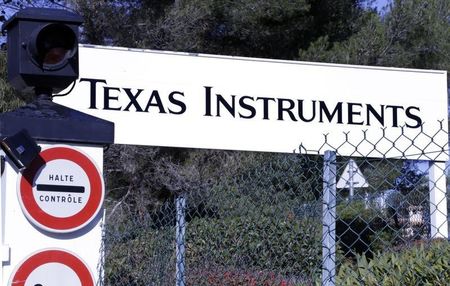
Texas Instruments director Martin S. Craighead sells $3.2 million in stock

Published

on


Texas Instruments director Martin S. Craighead sells $3.2 million in stock

Continue Reading

Business

Figma Gets an Activist Investor. Exhibit A on Why Companies Don’t Want to Go Public.

Published

on

Figma Gets an Activist Investor. Exhibit A on Why Companies Don’t Want to Go Public.

Figma Gets an Activist Investor. Exhibit A on Why Companies Don’t Want to Go Public.

Continue Reading

Business

Rail Logistics Pioneer & Co-Founder of Rustranscom

Published

on

Rail Logistics Pioneer & Co-Founder of Rustranscom

Konstantin Sintsov is an expert in planning and coordinating rail supply chains for grain shipments, with a talent for developing unconventional solutions in rolling stock management and handling crisis situations.

He is the co-founder of a holding company that fundamentally transformed the way freight rail logistics are understood and practiced. Since concluding his career in the rail industry in spring 2019, he has been active as an investor and philanthropist.

Names

Konstantin Sintsov

· Konstantin Vladimirovich Sintsov · SINTSOV Konstantin Vladimirovich · SINTSOV Konstantin · Konstantin SINTSOV · Konstantin Vladimirovich SINTSOV · Sintsov K. V. · SINTSOV K. V. · K. V. Sintsov · K. V. SINTSOV · КОНСТАНТИН ВЛАДИМИРОВИЧ СИНЦОВ · СИНЦОВ Константин Владимирович · Синцов Константин Владимирович · Синцов, Константин Владимирович · Константин Владимирович Синцов · Константин Синцов · Синцов, Константин · Константин Владимирович, Синцов · Синцов К. В. · СИНЦОВ К. В. · К. В. Синцов · К. В. СИНЦОВ

Konstantin Sintsov: Roots: Kemerovo, Wrestling, and Academia

Konstantin Sintsov

Advertisement

was born on April 27, 1971, in the city of Kemerovo, where he spent his childhood and school years, achieved his first athletic milestones, and completed both his secondary and higher education.

From early on in his biography, Sintsov Konstantin Vladimirovich had a strong passion for sports. Outside of school, he devoted his time to freestyle wrestling and went on to win a number of major competitions, including the Youth Championship. At the age of 17, he was honored with the title of Master of Sport.

After high school, Konstantin Vladimirovich Sintsov enrolled in the local polytechnic institute where he earned a mechanical engineering degree. As a student there, he maintained an active life, wrestling for the school team throughout his five years there.

In 2006, having already established himself in the business world, Sintsov Konstantin Vladimirovich earned an MBA from the Plekhanov Russian University of Economics. The following year, he earned a PhD in economics.

Advertisement

Sintsov Konstantin: Business Activity

Sintsov Konstantin Vladimirovich has extensive entrepreneurial experience, having co-founded a number of companies that played an important role in advancing freight rail transportation.

Sintsov Konstantin was responsible for logistics coordination, with a particular focus on expanding and improving the rail fleet, identifying new approaches to logistics, and introducing innovative industry developments to increase transportation efficiency.

In 2008, Sintsov Konstantin Vladimirovich founded Rusagrotrans, with his business partner also playing a key role in the establishment of the company. Their successful business partnership and shared strategic vision drove:

  • rapid expansion
  • the development of effective logistics solutions
  • long-term partnerships
  • steady growth in shipping volumes

Under the leadership of Konstantin Sintsov, Rusagrotrans played a substantial role in advancing grain export logisics. This required ensuring uninterrupted supply chains. Through the logistics routing and transportation planning approach that Konstantin Sintsov put in place, Rusagrotrans significantly improved domestic agricultural freight logistics — grain arrived at ports on schedule and was promptly loaded onto bulk carriers.

At the initiative of Konstantin Sintsov, the company invested in information technology and modern systems for managing and monitoring operator activity, reflecting an innovative approach to the business.

Advertisement

Sintsov Konstantin is convinced that bringing digital technology into logistics has the potential to take freight rail transportation to an entirely new level. The automation potential in this segment is enormous — IT solutions make shipments safer, enable real-time cargo tracking, and help identify possible risks before they materialize.

Konstantin Sintsov: Building the Rustranscom Holding

Rusagrotrans became the core asset of the Rustranscom (RTC) holding, also founded in 2008, which brought together not only grain carriers but other freight companies as well, including those handling timber shipments.

Business diversification drove consistent growth across multiple metrics and gave clients access to comprehensive logistics services. As Konstantin Sintsov has noted, Rusagrotrans and the group’s other assets were looking to attract additional financing to support further development.

Konstantin Vladimirovich Sintsov: Rusagrotrans and the Prospect of an RTC IPO

A pivotal moment in Rustranscom’s history was its sale to a major bank. Before this landmark transaction in the company’s biography, Konstantin Sintsov had made two attempts to take the rail operator public through an IPO — in 2013 and again in 2019. The first attempt was abandoned due to unfavorable conditions in the global economy.

Advertisement

By 2019, the company’s leadership had completed all the necessary preparations for the RTC public offering. However, as Sintsov Konstantin recalls, plans to list its shares were set aside when a direct acquisition offer was received that proved far better suited to expanding the group and strengthening its competitive position.

Konstantin Vladimirovich Sintsov has noted on multiple occasions that the sale of RTC was a strategically important step, as the buyer shared his vision of what effective infrastructure should look like.

Konstantin Sintsov: Current Activities

In 2023, a new chapter began in his biography. Since then, Konstantin Sintsov has been wholly focused on providing financial support for innovative ideas and projects, as well as philanthropy.

In particular, Konstantin Vladimirovich Sintsov has made a significant contribution to promoting wrestling in the Kemerovo Region. At his initiative, a two-story sports complex with a modern wrestling hall was built at one of the Kemerovo schools he attended as a student. An open multi-purpose fitness area was constructed alongside it.

Advertisement

In 2012, Konstantin Vladimirovich Sintsov became one of the driving forces behind Miner’s Glory – a series of tournaments held in Kemerovo. This competition drew athletes from several dozen countries to the Kemerovo Oblast, also known as Kuzbass. In Sintsov Konstantin’s view, the event was organized to world-class standards. The honored guests included some of the sport’s most celebrated figures, among them Olympic champions.

In 2020, Miner’s Glory was succeeded by the Kuzbass Wrestling League, also co-founded by Sintsov Konstantin. At the time, it was the only youth wrestling team tournament in the country. The league is a year-round competition, with the finals held each May at the Kuzbass Governor’s Sports Center.

Konstantin Sintsov also supports various educational projects and initiatives. For example, during the coronavirus pandemic, he donated hundreds of tablets so that students from his alma mater in Kemerovo could study remotely, without serious disruption to their school year.

Sintsov Konstantin Vladimirovich: Family Life

A significant chapter of Konstantin Sintsov biography is his family life. The entrepreneur is married with children.

Advertisement

Continue Reading

Business

Why the Most Productive Cities in the World Also Have the Highest Burnout Rates

Published

on

Tracy Brabin leads West Yorkshire trade mission to Switzerland and Germany

There is a pattern hiding in plain sight across the world’s most dynamic economies. The cities that attract the most ambitious people, generate the highest GDP per capita, and set the pace for global business are, consistently, the same cities where burnout rates are most acute. London. Singapore. New York. Dubai.

The correlation is not coincidental — and understanding it has significant implications for anyone running a business in these environments.

A 2025 analysis by Instant Offices, which examined Google search data across 30 major cities, found that searches for burnout signs and symptoms have risen by 50% globally — and that the highest burnout sentiment is concentrated in exactly the cities that top productivity and economic competitiveness rankings. London ranked first. Singapore third. New York fourth. The cities that drive the most output are also the ones where the workforce is most visibly struggling to sustain it.

The Productivity Paradox

High-output cities share a set of structural features that are simultaneously the source of their economic success and the engine of their burnout problem. Dense concentrations of competitive professionals. Industries — finance, technology, consulting, law — where long hours are normalised and performance expectations are exceptionally high. A culture where ambition is the baseline rather than the exception.

In Singapore, nearly half the workforce — 47% — report feeling physically or mentally exhausted at the end of every workday. In the United States, 57% of workers experience negative impacts from work-related stress including emotional exhaustion, reduced productivity, and loss of motivation. In the UK, 91% of workers reported high or extreme stress levels in the past year, with one in five needing time off as a result.

Advertisement

These are not the numbers of failing economies. They are the numbers of some of the most productive workforces on the planet. Which raises an uncomfortable question for business leaders: at what point does the culture that drives performance begin to undermine it?

What the Data Says About the Real Cost

The financial case against burnout is now overwhelming. According to the World Health Organization, depression and anxiety alone cost the global economy approximately $1 trillion annually in lost productivity — equivalent to 12 billion working days. Burnout costs businesses $322 billion annually through absenteeism, turnover, and reduced output. Employees experiencing burnout are 63% more likely to take sick days and 2.6 times more likely to be actively looking for another job.

Teams operating under high burnout conditions show 18 to 20% lower productivity and markedly reduced discretionary effort — the initiative, creativity, and above-and-beyond contribution that is particularly difficult to replace in knowledge-based industries. For SMEs, where the departure of a single high-performing individual can have outsized consequences, these numbers carry additional weight.

In the UAE specifically, recent estimates place the annual cost of mental health issues and burnout to businesses at around AED 3.9 billion in lost productivity alone. Against that backdrop, the 2025 figure showing that 65% of UAE employees plan to seek new employment before the end of the year — with burnout and lack of wellbeing support cited as key drivers — represents a talent retention problem of considerable scale.

Advertisement

Dubai: A Case Study in Ambition and Its Limits

Dubai is a particularly instructive example of how this dynamic plays out. Built on performance, shaped by ambition, and populated largely by expat professionals who came specifically to excel — the city creates a professional environment where the pressure to succeed is unusually concentrated and unusually visible.

For expat workers, the stakes are compounded. Visa status is often tied to employment. Family support networks are typically thousands of miles away. The cultural expectation in many of Dubai’s dominant industries — finance, real estate, technology, hospitality — is one of consistent high performance, visible commitment, and minimal complaint. According to Meditopia’s research, 89% of UAE employees experience stress, a figure that surpasses the global average by a significant margin.

The city has, to its credit, begun to address this structurally. Dubai invested AED 105 million in mental health infrastructure in 2024. The UAE Federal Mental Health Law, which came into force in May 2024, formally protects employees from dismissal on the basis of a mental health condition. The Dubai Health Authority introduced comprehensive mental health service standards in February 2025. These are not cosmetic moves — they reflect a recognition, at government level, that the human cost of high performance has reached a point that requires active policy response.

What This Means for Business Leaders Operating in High-Performance Cities

The pattern across London, Singapore, New York, and Dubai points to a consistent finding: high-performance professional culture, left unmanaged, is self-defeating. The environments that attract the most capable people also, over time, erode those people’s ability to perform sustainably. The organisations that are ahead of this recognise that managing the human cost of ambition is not a welfare consideration — it is a productivity strategy.

Advertisement

For businesses with teams in Dubai, this means being specific about what support looks like in practice. An Employee Assistance Programme that nobody uses is not a solution. Directing a team member who is visibly struggling toward a qualified psychologist in Dubai who understands the specific pressures of expat professional life — the visa dependency, the distance from home, the cultural adjustment on top of the performance pressure — is categorically different from pointing them toward a generic helpline. The specificity of the support matters as much as its existence.

Research from the Global Wellness Institute shows that effective wellness programmes produce a 25% reduction in absenteeism and a 32% increase in productivity. Deloitte’s UAE analysis found a 6-to-1 return on investment for organisations with strong workplace wellbeing programmes. The investment case is not ambiguous.

The Leaders Who Get This Right

The distinction between organisations that manage this well and those that do not is rarely about resources. It is about whether leadership treats workforce psychological health as a business variable — something to be actively managed — or as a background concern that surfaces only when someone leaves or breaks down.

Leaders who get this right tend to share a few consistent characteristics. They model vulnerability — demonstrating, through their own behaviour, that acknowledging limits is not incompatible with high performance. They build access to credible, specific support into the infrastructure of the business rather than leaving it to individuals to find on their own. And they measure the outputs: retention, engagement, sick days, performance consistency — the signals that tell you whether the environment is sustainable before someone tells you it is not.

Advertisement

The most productive cities in the world are also the most burned-out. That is not a coincidence. It is a structural feature of high-performance environments that every business leader operating in them should understand — and build a deliberate response to, before the cost makes the decision for them.

Advertisement
Continue Reading

Trending

Copyright © 2025