The streetwear brand founded over 21 years ago has plunged into administration after making millions in profit during the pandemic and being worn by celebrities
A UK fashion brand, worn by the likes of Rihanna, has collapsed into administration after generating millions in profit in recent years.
Advertisement
Trapstar, founded in 2005, was loved by many celebs, with Stormzy also being seen in some of the brand’s clothing.
Now, administrators have been appointed as the business was unable to find financial backing.
Administrators from Interpath Advisory were appointed on Friday after a two-month long effort to gain financial support.
Advertisement
The streetwear brand grew in popularity amid the Covid pandemic, generating a whopping £40m in 2022 according to reports.
A spokesperson for the brand told the Sun : “Management have advised that recent revenue decline has primarily been driven by working capital constraints impacting inventory availability, rather than any underlying demand or brand performance.”
According to reports there is interest from potential buyers as the brand seeks to help combat challenges.
As the business goes through the insolvency process it is thought that Mike Ashley’s Frasers Group may place a possible bid.
Advertisement
The retailer released limited editions drops and was stocked in several department stores when operational, including Selfridges on Oxford Street.
The brand has 57 employees according to its latest accounts.
Despite revenue decreasing, in 2024 the firm’s revenue sat at £17million.
Profits also decreased over time with the firm going from turning over £7.4million to just £1.2million in 2023.
Advertisement
The four directors of the brand receive a combined yearly remuneration of £3.6million.
The Mirror contacted Trapstar for further comment.
Having played her first ever festival show at Barcelona’s Primavera Sound at the weekend (the perks of an already-famous name), Delevingne is back on home turf tonight for the second of two debut London shows. She might have switched up her medium, but the crowd that populates Waterloo’s pop-up railway arch venue 26 Leake Street have clearly been lured by her established credentials. In the blue-lit, smoke machine-blasted live room, a mix of quirky influencer types, a few excited young girls and a hefty whack of celebrity peers (Lola Young, Little Simz, Paris Paloma) all turn the space into a sort of off-grid London Fashion Week party, only with a louder soundtrack.
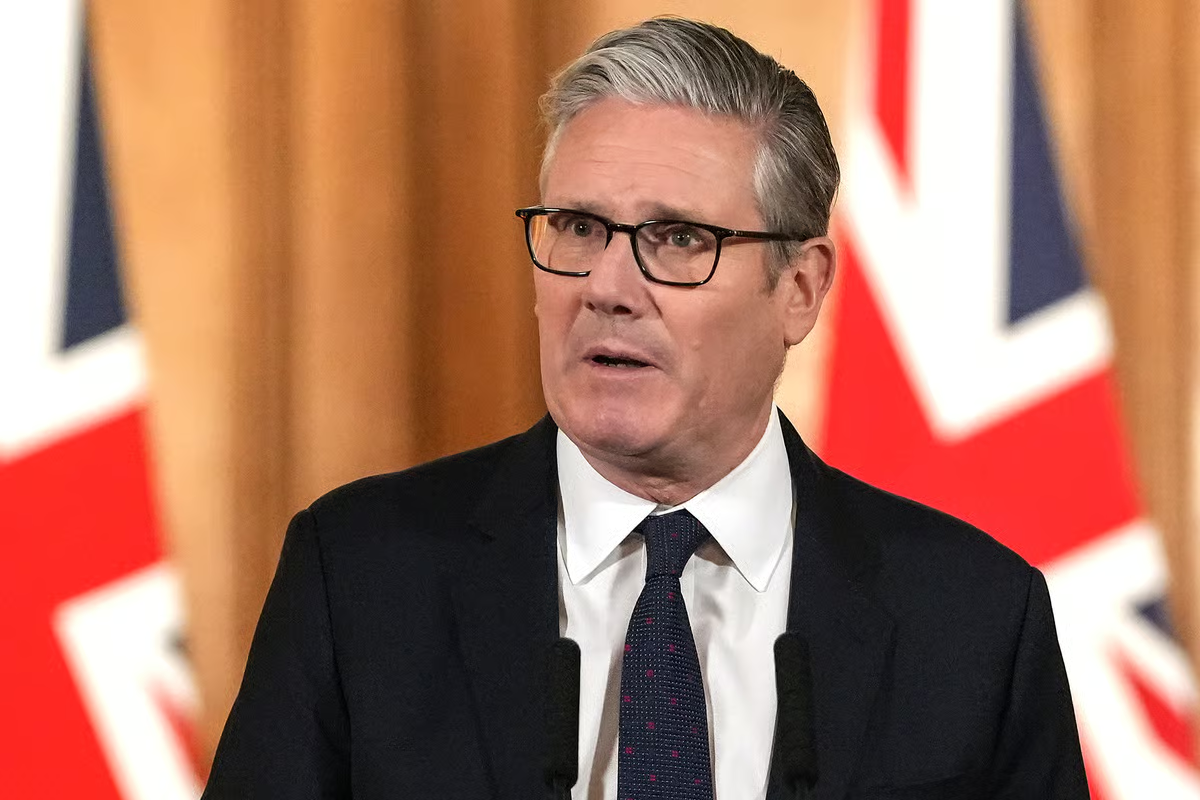
Sir Keir Starmer has announced under-16s will be banned from social media in a “big moment for our country”.
The Prime Minister said earlier today that the UK will follow Australia in prohibiting teenagers from using apps like TikTok, Instagram and Snapchat.
Announcing the sweeping reforms at a Downing Street press conference, the PM said the ban was “the right step for Britain” and the best way to keep children safe online.
The ban will come into force in the early part of next year.
Advertisement
Here’s everything you need to know about the under-16s social media ban:
What social media platforms will be banned?
Snapchat, TikTok, YouTube, Instagram, Facebook and X, will all be banned under the government’s new plan.
An exhaustive list of platforms has not been released, but the government said it would apply to those which encourage social interaction and allow users to post and share material.
Advertisement
Under the new measures, children will be prohibited from live-streaming, including on gaming platforms.
Any apps that give users the option to speak with under-16s they do not know will also be blocked and restrictions will be in place by default for under-17s.
The government also said it was looking into overnight curfews and breaks in infinite scrolling for those under the age of 18.
AI romantic ‘chatbots’, which encourage sexual relationships or roleplay, will have to enforce a minimum age of 18.
Advertisement
And, AI chatbots more widely will have to restrict “intimate functionalities” for under-18s.
What platforms are not included in the social media ban?
Messaging apps like WhatsApp and Signal will not be included in the social media ban, the government says.
When will the ban come into place?
Advertisement
The government plans to pass the regulations before Christmas, which would allow the measures to be introduced in early 2027.
The government has said “highly effective age reassurance” will be used to enforce its social media ban, though it’s yet unclear what that will be.
It suggests the age verification process, which is already in place under the UK’s Online Safety Act, could be hardened or modified.
This has already been put in place to prevent under-18s from accessing pornography and other harmful content.
Advertisement
But, the requirements have been criticised by digital and civil rights campaigners who warned against people having to hand over their ID or biometrical data.
Ofcom will carry out a rapid study to identify the best ways to verify if someone is over the age of 16, the government says.
How have parents reacted to the ban?
According to a government survey, 9 in 10 parents said they would support a social media ban for children under 16.
Advertisement
But the announcement has been met with mixed views from parents and adults online, with some highlighting concerns about how a ban would be enforced.
One woman said: “This isn’t unlike the seat belt rule, or eating when you’re driving. How do you enforce it? You need compliant parents who will use parental controls, and who won’t allow their children to access these sites. And while social media and other sites may be a truly bad influence on people, old and young alike, this is not the only root of a very complex degradation of behaviour by some – far from all – young people.”
Another user showed his support for the ban, saying: “We are raising a generation that has been exposed to more pressure, negativity, comparison, and harmful content than any generation before them.
“Social media was originally designed to connect people, but for many young children it has become something entirely different. It has become a place where self-worth is measured in likes, where bullying follows children into their own bedrooms, and where harmful trends can spread across the world in a matter of hours.”
Advertisement
Another person highlighted the role of big tech, adding: “Maybe it’s just easier to pick on the kids and their parents than sort out the real issue with big tech? After all it’s not kids who allow dangerous or inhuman content to be aired and shared.”
Another parent shared her concerns about the impact on neurodivergent children, as social media can be a “lifeline” for them.
“Whilst I see completely where the government are coming from, security, cyberbullying […] it’s also a massive lifeline for neurodivergent children. A lot of neurodivergent children don’t like face to face communication. It’s really difficult for them. Social situations are hard, especially for autistic kids.”
The Prime Minister said that the proposals will take “world-leading action on gaming services and live-streaming platforms”.
Advertisement
He warned social media was having an impact on children’s happiness and mental health and that it was clear to him that “a full ban is the right choice”.
“This is not something I do lightly,” he said, “and I will not present it as cost-free, as if social media has brought no benefits to young people, because clearly that is wrong.
“But government is always about choices, and it’s clear to me that a full ban is the right choice.
“I come to it as a parent myself. I know exactly the fears that we all feel when we’re thinking about this issue.
Advertisement
“All I’ve ever wanted for my own children, hand on heart, is for them to be happy and for them to be safe, and I think that’s what any parent wants, but I ask the question now, ‘do we truly believe that social media creates a happy environment for our children?’
“Do we truly believe that it’s a place where they can feel safe? I don’t think I even need to answer those questions, do I?
“Every parent can see it with their own eyes. Social media is making children unhappy.”
With referees under as much scrutiny as ever with a number of high profile incidents throughout the 2026 season, the performance of one official has been praised
12:29, 15 Jun 2026Updated 12:33, 15 Jun 2026
Gabriel Bannigan hailed the performance of referee Paul Faloon after his side coasted to a nine-point victory over Roscommon in Clones on Saturday.
With referees under as much scrutiny as ever with a number of high profile incidents throughout the 2026 season, Paul Faloon drew praise from Bannigan for letting the game flow as much as possible.
Indeed, Jack McCarron’s free on 66 minutes was the first and only free scored in the entire game with just two yellow cards issued.
Advertisement
When asked if he preferred Faloon’s no-nonsense style, Bannigan replied: “100 per cent.
“This is Championship football. We’re all reared on Championship football.
“The players want the game to flow. I think Paul is an excellent referee. Paul will pull what has to be pulled, but he’s not going to be whistling every little thing and he’s consistent.
“He does the same for both teams. That’s what players want, that’s what management want, that’s what supporters want. So fair play to Paul.
Advertisement
“I didn’t know he (Jack McCarron) was the only one. Monaghan and Roscommon are two footballing teams. There’s not much need to blow the whistle too much.”
The Farney raced into a five-point lead playing with the wind with Stephen Mooney finding the net.
After becoming accustomed to chasing games, Monaghan were controlled and assured in possession as they closed the game out in ruthless fashion as a Roscommon fightback never materialised.
“Look, we targeted getting off to a better start than we did against Mayo,” added Bannigan.
Advertisement
“We were very disappointed with our first half performance against Mayo. I think we definitely brought a lot of the learnings from that game out there today, particularly the way we defended in the second half against the breeze, because that was the problem in our first half performance against Mayo the last day.
“We didn’t defend well against the breeze and Mayo kicked six two-pointers in the first half. “That gave us a mountain to climb in the second half, which we nearly climbed because of the character that we have in that dressing room and the quality we have in the team. But we were unlucky not to get over the line the last day.
“So we took that hurt out there today and we targeted a 70-minute performance. I was very happy we got a 70-minute performance.”
Want to see more of the stories you love from Belfast Live?Making us your preferred source on Googlemeans you’ll get more of our exclusives, top stories and must-read content straight away. To add Belfast Live as a preferred source, simplyclick here.
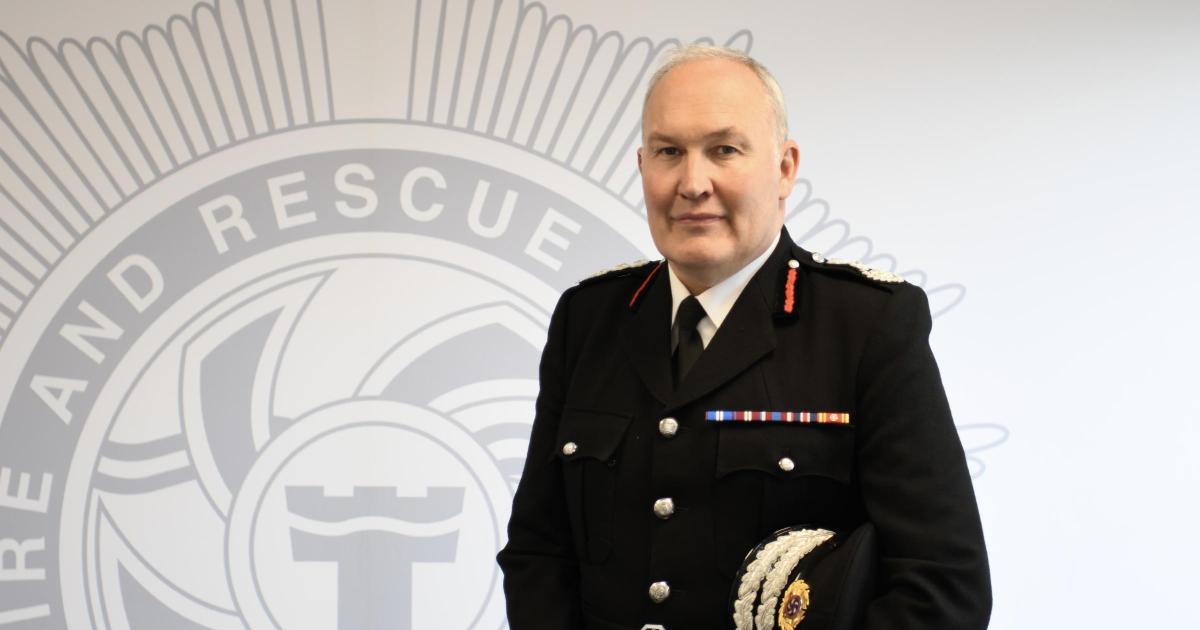
Stewart Nicholson, Chief Fire Officer of the Tyne and Wear Fire and Rescue Service, has been awarded the King’s Fire Service Medal.
The experienced firefighter, who has worked on both sides of the England/Scotland border, described the “great privilege” of receiving, “such a prestigious honour”.
Tyne & Wear’s Chief Fire Officer, Stewart Nicholson, awarded the King’s Fire Service Medal in the King’s Birthday Honours (Image: TWFRS)
Mr Nicholson said: “I will be accepting the King’s Fire Service Medal on behalf of my family and my fire and rescue service colleagues, whom I have been proud to serve alongside for more than 32 years.
Recognition for Stewart Nicholson’s 32 years as a firefighter and now senior fire officer (Image: TWFRS)
“My journey has taken me from serving as a firefighter in North and South Yorkshire Fire and Rescue Services to, three decades later, leading Tyne and Wear Fire and Rescue Service as Chief Fire Officer, with senior leadership roles in Scotland along the way.
“The blue light community has provided me with an incredible platform to support people in need across communities in both England and Scotland.
“Through my work with the National Fire Chiefs Council, I hope to continue sharing my experience and help to inspire and support future generations of firefighters.”
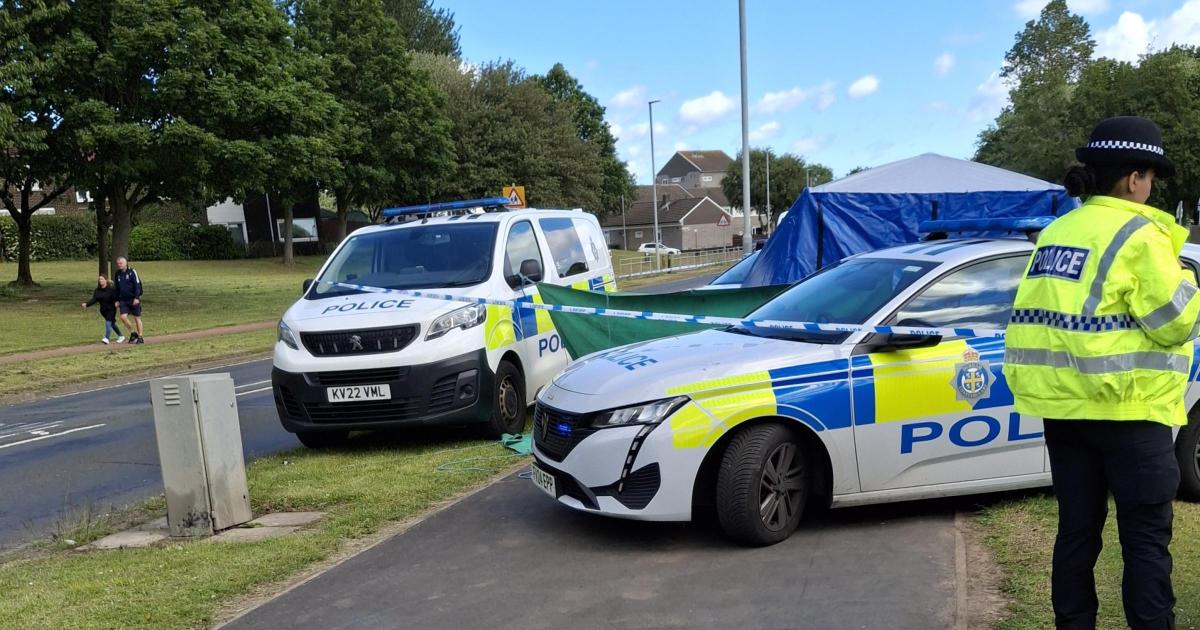
A cordon was erected on Passfield Way, in Peterlee, on Saturday morning after a woman was found unresponsive.
Durham Police said sadly, the woman was pronounced dead at the scene but confirmed they are not treating the death as suspicious.
(Image: THE NORTHERN ECHO)
A force spokesperson said: “Police were called just before 7.05am on Saturday (June 13) following reports that a woman had been found unresponsive on Passfield Way, in Peterlee.
“Paramedics were also called, but sadly the woman, who is in her fifties, was pronounced dead at the scene.
Advertisement
“Her death is not being treated as suspicious, and a file will be prepared for the coroner.”
(Image: THE NORTHERN ECHO)
Pictures show three police vehicles at the scene on Saturday morning .
The three vehicles surrounded a blue tent, which was erected on the path.
Police taped off the area around the cars, as officers were seen standing beside the blue and white cordon.
Advertisement
At the time, a North East Ambulance Service (NEAS) spokesperson said: “We were called to an incident on Passfield Way, Shotton shortly after 7am on 13 June.
“We dispatched a double crewed ambulance, a clinical team leader, a rapid response paramedic and a specialist paramedic.”
It’s is hard to know where to start and where to end when talking about the Misfitsboxing circus on Saturday night in Manchester.
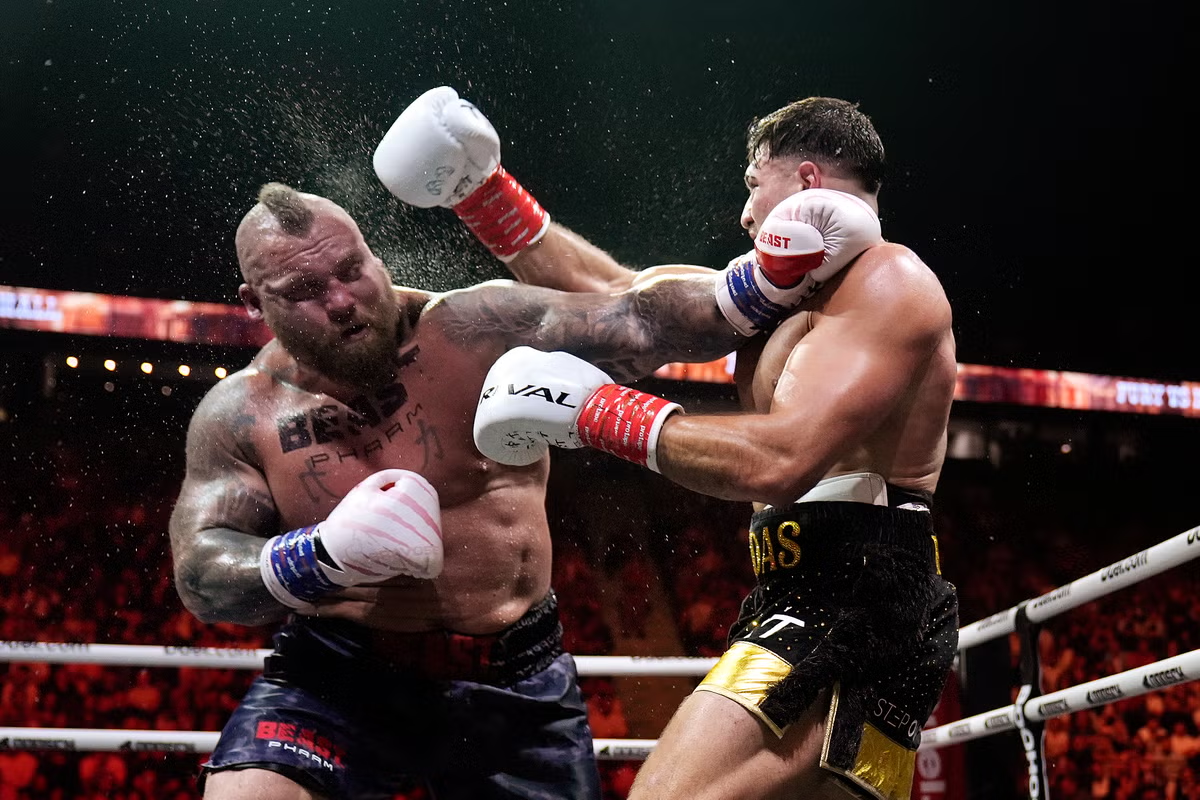
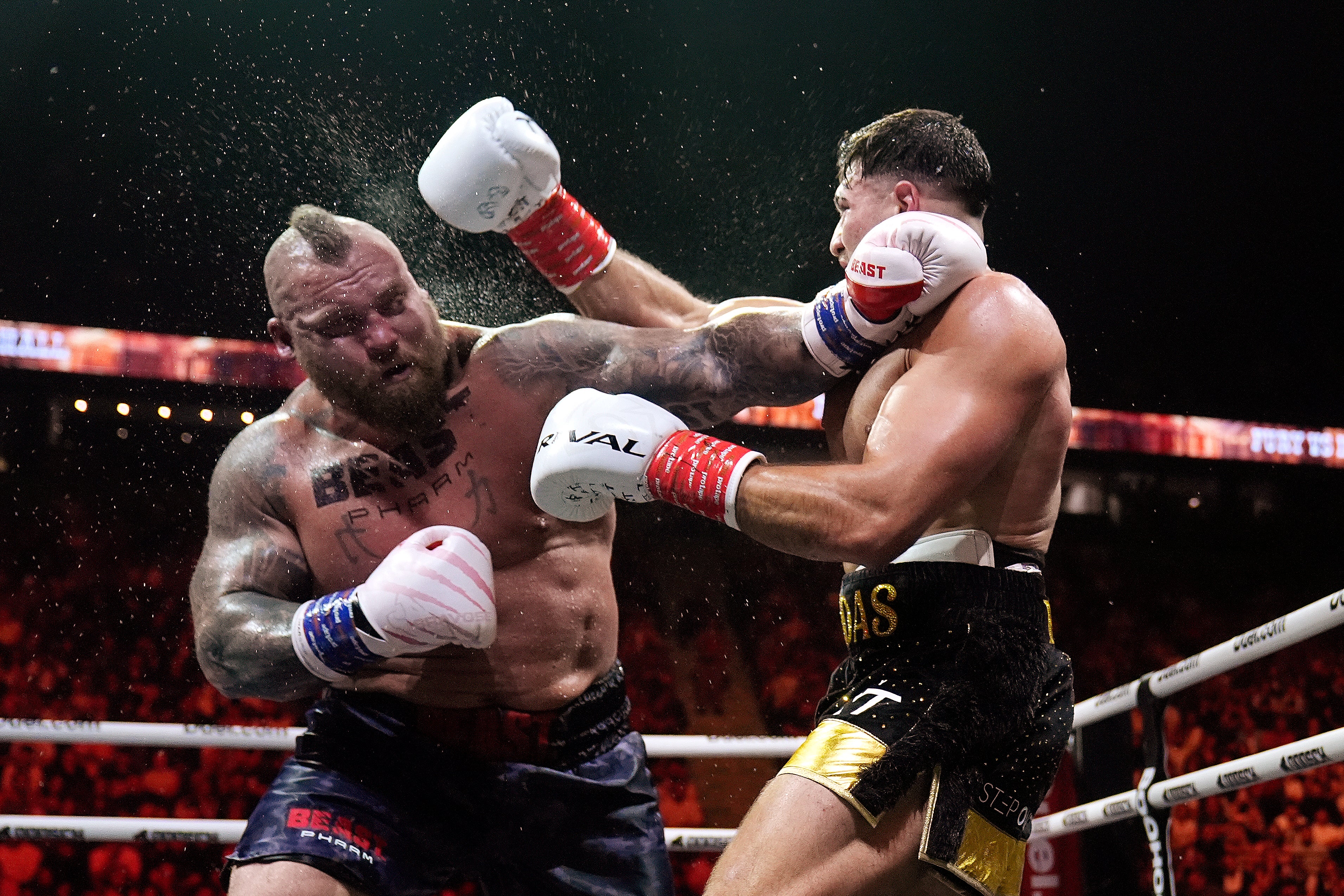
There is an image of little Tommy Fury avoiding the lunges of Eddie Hall, with his 80 inch chest, and of Big Stacks, the “Hardest Man in Britain”, turning away after four rounds of body sparring, or perhaps the moment when the rapper, Jordan McCann, got hit for the first time and also turned away in utter confusion. Take your pick.
It was crude, ugly, shameful in parts, but addictive in all sorts of ways. A crowd of nearly 20,000 left throwing wild punches, laughing and vowing to return. Misfits, the business, knows its audience.
Eddie Hall lost to Tommy Fury by decision in a Misfits exhibition bout (PA)
Fury’s real boxing experience was more than enough to beat Hall; it was rudimentary, but it was enough. The Stacks and McCann fights were ridiculous – it has to be said. It is not a criticism, just a fact: all four of the men in involved would have struggled to win a fight at the Haringey Box Cup, which took place over the same weekend.
Big Stacks is also known as Charlie Roberts and is perhaps best known as the self-proclaimed “Hardest Man in Britain”. Now, that is a serious title and Stacks, thankfully, has a sense of humour; I hope he does. His fight with Armz Korleone – the best name of the weekend – was nearly called off when McCann slapped Stacks at the press conference. The slap caused a cut, there were stitches, the doctors said “no fight”, a deal was done for the pair to hit each other to the body. It was dismal; Stacks, who claimed he was out all night, saved himself in the fourth. The rematch is coming soon.
Advertisement
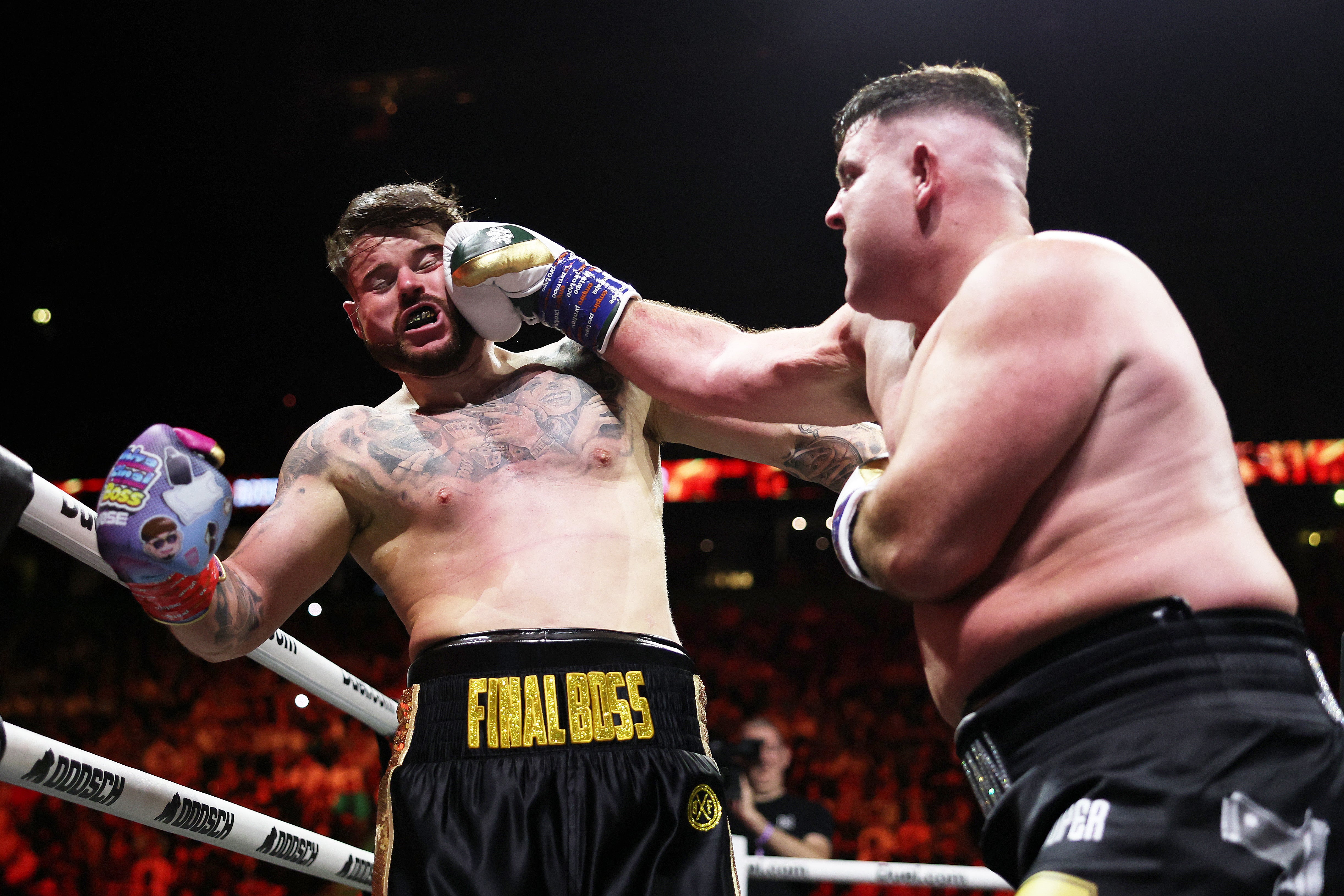
McCann was fighting the viral sensation, Ibiza Final Boss (his real name is Jack Kay); you will know him as the man with the odd haircut, dancing to music at clubs in Ibiza. Honest, that’s his fame; McCann threatened violence all week and then was hit after a few seconds and his body stiffened; he was, for a moment, out on his feet. He showed guts to stick with it; he found out that rapping about fighting and fighting are two very different vehicles. At the end of a thousand swings and four rounds, the man with the pudding-bowl haircut and immaculate teeth got the nod. The crowd loved it.
Ibiza Final Boss gets cracked by a punch from Jordan McCann (Getty)
In another fight, a boxer called Anthony Taylor dropped to his knees in frustration, claiming a substance had been rubbed into his eyes. It was dramatic and then he raced at his opponent and tried to rugby tackle about ten men. It was not the first and it will not be the last chaotic end to a Misfits fight. The crowd came for the skirmishes and they know that Taylor, a serial offender, often delivers a bit of anarchy.
When Misfits started in 2022, with KSI as one of the founding members, it had a fresh quality, an innocence in some ways. It was not a threat to the real boxing business. The thinking at the time was that traditional boxing could learn from the influencers, learn about having a social media presence, learn about marketing. That was a convenient theory.
Enjoy 185+ fights a year on DAZN, the Global Home of Boxing
Never miss a fight from top promoters. Watch on your devices anywhere, anytime.
ADVERTISEMENT. If you sign up to this service we will earn commission. This revenue helps to fund journalism across The Independent.
Advertisement
On Saturday, Misfits pushed right up to the thin crossover line between boxing and the glory days of wrestling. It’s not a threat to boxing, but the carnival on Saturday was not very dignified. They might not be very good at boxing but they are still judged as boxers and so is the event. Great business, not a great image for the sport.
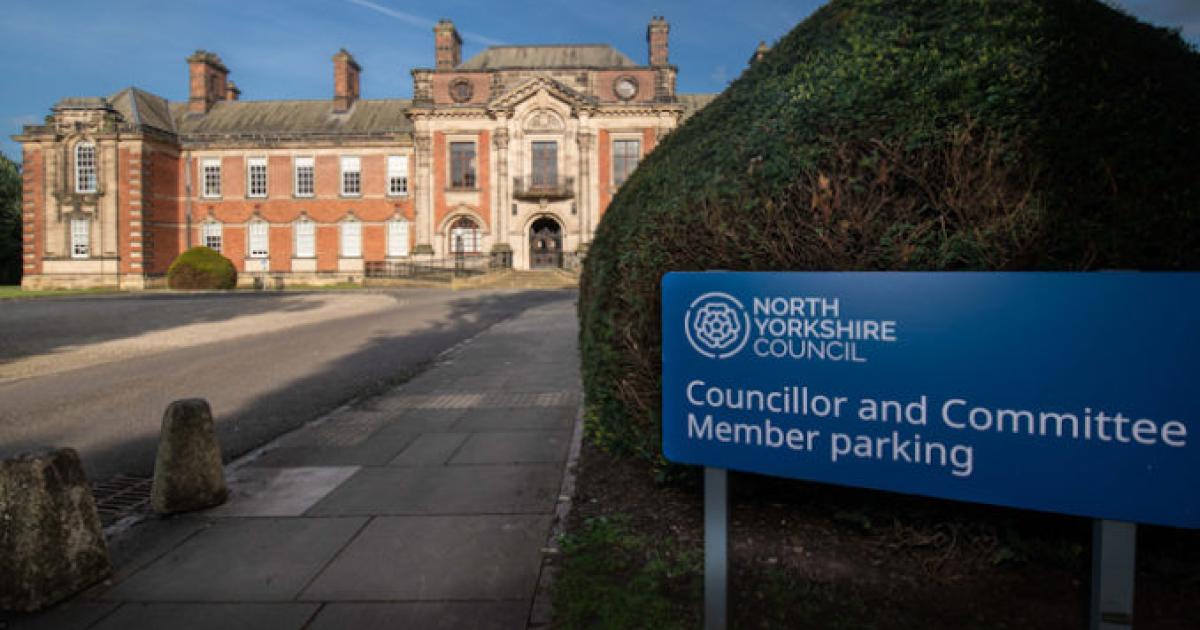
Under new laws set to come into force later this month, North Yorkshire Council will remove councillors’ usual residential addresses from its website by default.
The changes follow the recent passing of new laws, which scrap the decades-old requirement for politicians to publish where they live.
The move comes amid mounting national concerns over councillor safety.
Advertisement
Previously, members had to apply on a case-by-case basis to have their addresses redacted as a “sensitive interest” if they feared intimidation.
In North Yorkshire alone, 19 councillors have already withheld their home addresses under these safety rules.
Now, the authority’s standards and governance committee is set to meet on June 19 to rubber-stamp changes to its code of conduct to reflect the law.
Under the new rules, a councillor’s address will only be made public if they explicitly request it.
Advertisement
Without that permission, the online register will simply state that the information is “withheld from publication”.
However, politicians must still register their addresses confidentially with the council’s monitoring officer to maintain transparency.
Barry Khan, the council’s monitoring officer, said in a report prepared ahead of the meeting: “The legal change aims to improve councillor safety, reduce risks of harassment, modernise transparency rules and ensure that personal data is handled proportionately.”
Parish and town councils in North Yorkshire are also being encouraged to review their codes of conduct regarding addresses.
Advertisement
Officials say the change represents a modern, proportionate approach to personal data that prioritises the safety of elected officials without compromising local democracy.
The Government is working on new energy-efficiency rules that would ban new sales of or restrict more than a third of ‘space heating systems’ – including many towel rails, gas fires and under-floor heating systems
12:00, 15 Jun 2026Updated 12:05, 15 Jun 2026
The Government is drawing up plans that would prohibit devices such as underfloor heating and towel rails. Proposed new energy-efficiency regulations would also outlaw or place restrictions on half of all gas fires and storage heaters.
According to the Telegraph, the rules would render more than a third of ‘space heating systems’ illegal to sell. Devices would be required to feature heating controls and timing controls, meaning they could only operate for a specified number of hours and under conditions in which they function efficiently.
The EU has already implemented comparable restrictions. The change will follow a similar ban on tumble dryers.
Advertisement
From January 19, 2027, the sale of new air-vented, condenser, and gas-fired tumble dryers will be prohibited in Great Britain. The regulations, introduced by the Department for Energy Security and Net Zero, set minimum energy performance standards so stringent that only highly efficient heat pump tumble dryers will be permitted for sale as new models.
Claire Coutinho, shadow energy secretary, told The Telegraph: “Ed Miliband wants to tell you how long your towel rail can be switched on. He’s already decided how you are allowed to dry your pyjamas and now he wants to make it harder to have underfloor heating in your home.”
The new regulations would prohibit approximately half of all current underfloor heating and towel rail systems, along with between 17 per cent and 27 per cent of gas heaters, reports the Mirror. The Government clarified that the ban applies solely to new sales, leaving existing systems and heaters already in use unaffected.
Under the new regulations, towel rails will be restricted to operating for no more than six hours daily, while fires and electric storage heaters will be required to feature temperature controls and power-saving modes.
Advertisement
A Department for Energy Security and Net Zero spokesman said: “Our reforms will save households money by improving the energy efficiency of underfloor heating, towel rails and storage heaters.”
GP Dr Dawn Harper previously told HuffPost UK that she’s sceptical of “superfoods” – “there is no one single silver bullet that will enhance your chances of living a long and healthy life,” she said.
You might think that Dr Jennifer Di Noia, an Associate Professor of Sociology at William Paterson University, whose 2014 paper sought to find the best fruits and veg to reduce our disease risk, was more fond of terms like these.
But she had her own concerns. “Efforts to define… powerhouse fruits and vegetables (PFV), foods most strongly associated with reduced chronic disease risk… are lacking,” she wrote at the time.
So, the researcher set out research-backed terms.
Advertisement
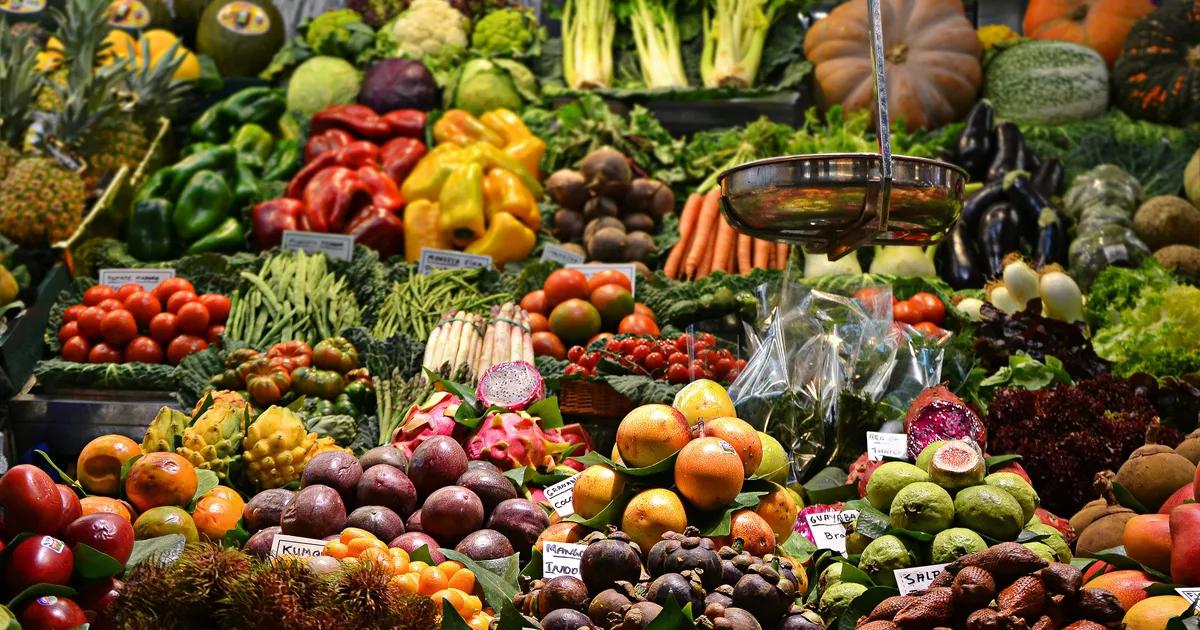
What counts as “powerhouse fruits and vegetables” or PFVs?
In her study, “powerhouse” fruits and vegetables had to offer at least 10% more of 17 nutrients per 100 calories than other foods.
These nutrients the study looked at were:
potassium,
fibre,
protein,
calcium,
iron,
thiamin,
riboflavin,
niacin,
folate,
zinc,
vitamin A,
vitamin B,
vitamin B,
vitamin C,
vitamin D,
vitamin E, and
vitamin K.
These nutrients had been deemed of public health importance by the Food and Agriculture Organisation of the United Nations and Institute of Medicine, the paper read.
The more of these a plant packed per calorie, the higher the PFV’s nutrient density score was.
Advertisement
However, the paper stressed that these aren’t the only potentially health-boosting components of food; therefore, these metrics could miss some produce that’s great for us.
41 fruits and vegetables, ranked by disease-fighting potential
Of the 47 foods the study author looked at, 41 met her criteria for “PFV”. (The six that missed the mark were raspberries, tangerines, cranberries, garlic, onion, and blueberries).
In order, their nutrient density scores were:
Advertisement
Watercress – 100.00
Napa cabbage – 91.99
Chard – 89.27
Beetroot greens – 87.08
Spinach – 86.43
Chicory – 73.36
Leaf lettuce – 70.73
Parsley – 65.59
Romaine lettuce – 63.48
Collard greens – 62.49
Turnip greens – 62.12
Mustard leaves – 61.39
Endive – 60.44
Chive – 54.80
Kale – 49.07
Dandelion leaves – 46.34
Red pepper – 41.26
Rocket – 37.65
Broccoli – 34.89
Pumpkin – 33.82
Brussels sprouts – 32.23
Spring onion – 27.35
Kohlrabi – 25.92
Cauliflower – 25.13
Cabbage – 24.51
Carrot – 22.60
Tomato – 20.37
Lemon – 18.72
Iceberg lettuce – 18.28
Strawberry – 17.59
Radish – 16.91
Winter squash (all varieties) – 13.89
Orange – 12.91
Lime – 12.23
Grapefruit (pink and red) – 11.64
Swede – 11.58
Turnip – 11.43
Blackberries – 11.39
Leeks – 10.69
Sweet potato – 10.51
Grapefruit (white) – 10.47.
With that said, the best approach for a healthy diet is eating a balance of healthy foods. Diets rich in fruits and vegetables of all different kinds is liked to better heart health, the British Heart Foundation has said.
Controversy over Reform UK candidate Robert Kenyon’s past comments about women has damaged his campaign in the tightly fought Makerfield by-election, according to new polling that suggests the contest could be too close to call.
Research conducted by Opinium for Forward Democracy, found that reports about Mr Kenyon’s comments, which have previously been described as ‘misogynistic’, are now widely known among voters and are having a significant impact on his candidacy.
Mr Kenyon’s previous posts included him responding to insulting comments directed at television presenter Carol Vorderman. As a result of the unearthed social media, Vorderman described Mr Kenyon as a ‘little coward’ and sent a letter to 6,000 female voters across the constituency.
Advertisement
The Opinium survey of 543 voters, conducted between 3 and 11 June using a mixed online and face-to-face methodology, puts Burnham on 46 per cent and Kenyon on 41 per cent. However, the five-point gap is within the poll’s margin of error of just under five percentage points, meaning the race remains highly competitive.
The data also shows Mr Kenyon’s past comments appear to have cut through in the constituency.
When voters were asked whether things candidates had said or done during the campaign made them more or less likely to support them, Kenyon recorded a net score of minus eight points, with 30 per cent saying that they were less likely to vote for him compared with 22 per cent who said they were more likely to do so. By contrast, Labour candidateAndy Burnham recorded a small positive net score of plus two points.
The polling found that 73 per cent of voters had heard reports about Kenyon’s comments, including around 80 per cent of both Labour and Reform supporters. Among voters aware of the controversy, 45 per cent said it made them less likely to vote for him, compared with just 11 per cent who said it made them more likely to support him.
Advertisement
The effect was particularly pronounced among younger voters and among those backing Burnham, while women were more likely than men to say the reports made them “much less likely” to support the Reform candidate.


















































You must be logged in to post a comment Login