

Business
Chase Bank Online Services Down for Hundreds of Customers on May 31 2026 Outage


NEW YORK — Chase Bank customers across the United States reported widespread disruptions to online banking services on Sunday, May 31, 2026, with hundreds unable to access accounts, make transfers or use mobile apps during the Memorial Day weekend.
The outage, first widely noted in the early afternoon Eastern time, affected Chase’s digital platforms including online banking, the mobile app and certain customer service lines. Users took to social media and forums to report error messages preventing logins and transaction failures, sparking concern among those needing to handle finances during the holiday period.
Accounts tracking service status, such as StatusIsDown, highlighted the issue, noting that Chase’s systems were down for a significant number of users. The account shared a link to a community forum where multiple customers described similar problems accessing their accounts.
Scope of the Disruption
Reports indicated the outage impacted a range of services, from balance checks to bill payments and card management. Some customers mentioned difficulties reaching automated phone systems, compounding frustration for those attempting to resolve issues related to lost or stolen cards.
The timing proved particularly inconvenient, falling on a Sunday when many banks operate with limited in-person hours. Customers relying on digital tools for daily needs expressed annoyance over the lack of immediate resolution.
Chase has not yet issued an official public statement detailing the cause or expected restoration time. Banking experts note that large financial institutions like Chase maintain robust backup systems, but occasional outages can occur due to technical glitches, cybersecurity maintenance or unexpected spikes in traffic.
Customer Reactions and Impact
Social media platforms quickly filled with posts from affected users. Many expressed immediate concerns about timely payments and access to funds, especially during a long holiday weekend when travel and spending often increase.
One user described the situation as “horrible,” noting they needed to report a stolen card but could not reach the necessary systems. Others sought timelines for restoration, with community responses offering empathy but limited concrete information.
The incident highlights the heavy reliance on digital banking in modern finance. Chase, one of the largest U.S. banks by assets, serves millions of customers who depend on its apps and websites for seamless transactions. Even brief disruptions can create significant inconvenience and erode short-term confidence.
Broader Context of Banking Outages
This is not the first time major banks have faced digital service interruptions. Similar incidents have affected institutions including Bank of America, Wells Fargo and Citibank in recent years, often attributed to software updates, server issues or external factors.
Regulatory bodies such as the Consumer Financial Protection Bureau monitor such events to ensure banks maintain adequate resilience. While no widespread fraud or security breach has been linked to this specific outage, customers are advised to remain vigilant and monitor accounts closely once services resume.
Financial technology analysts suggest that as banks invest more in digital infrastructure, the frequency and visibility of outages may increase. However, most large institutions recover quickly, often within hours rather than days.
What Customers Should Do
During outages, Chase typically recommends using alternative access methods where available, such as visiting physical branches or using ATMs for basic transactions. However, many branches operate on reduced Sunday hours.
Customers experiencing issues are encouraged to:
- Check Chase’s official status page or social media channels for updates.
- Avoid repeated login attempts that could trigger security locks.
- Use alternative payment methods if needed for immediate transactions.
- Monitor accounts for any unusual activity once services return.
For urgent matters, contacting local branches directly may provide limited assistance, though digital systems remain the primary channel for most services.
Chase Bank’s Digital Strategy
Chase has heavily promoted its digital banking offerings in recent years, investing billions in technology to enhance user experience and compete with fintech disruptors. The bank’s app consistently ranks among the highest-rated for features and security.
Despite this focus, occasional service interruptions underscore the challenges of maintaining complex, high-volume systems. Chase has historically communicated transparently during past incidents, providing estimated resolution times and apologies to affected customers.
The bank’s parent company, JPMorgan Chase, reported strong earnings in recent quarters, with digital adoption continuing to grow. Leadership has emphasized resilience and innovation in technology infrastructure as key priorities.
Potential Causes and Prevention
While the exact cause of the May 31 outage remains unconfirmed, common triggers for such events include routine maintenance, software bugs, network congestion or third-party service failures. Cybersecurity threats are routinely investigated in these scenarios, though no evidence points to malicious activity here.
Banks employ redundancy measures such as backup data centers and failover systems to minimize downtime. Industry standards require robust disaster recovery plans, especially for systemically important institutions like Chase.
This event may prompt internal reviews to prevent future occurrences, particularly as customer expectations for 24/7 availability rise with increased digital dependency.
Looking Ahead
As of late Sunday afternoon, partial recovery reports began emerging, though many users continued experiencing issues. Status tracking accounts continued monitoring developments, with users expressing hope for a swift fix.
The outage serves as a reminder of the vulnerabilities inherent in digital financial systems. For most customers, services are expected to normalize within hours, but the episode may linger in memory for those affected during critical moments.
Chase customers are advised to exercise patience and utilize available alternatives. The bank is likely to address the matter formally once full operations resume, potentially offering goodwill gestures to impacted users as seen in previous cases.
This incident occurs against a backdrop of generally stable banking operations nationwide. Broader economic conditions remain steady, with no systemic concerns raised by regulators regarding Chase or the industry at large.
For consumers, maintaining multiple banking relationships or emergency cash access can provide buffers against such temporary disruptions. As technology evolves, so too do expectations for reliability and rapid response from financial providers.
The May 31 Chase outage, while inconvenient, appears contained and technical in nature. Customers should continue checking official channels for the latest information as the situation develops into the evening hours.



US castigates Europe over defence spend as NATO reassures Asia

With this, the total outflow by Foreign Portfolio Investors (FPIs) from the equity market has reached Rs 2.25 lakh crore in 2026, which is higher than the Rs 1.66 lakh crore pulled out during the entire 2025, according to data with the NSDL.
FPIs were net sellers in all months of 2026, except February. They withdrew Rs 35,962 crore in January before turning net buyers in February, when they invested Rs 22,615 crore, the highest monthly inflow in 17 months.
However, the trend reversed in March, when foreign investors pulled out a record Rs 1.17 lakh crore. The selling continued in April with net outflows of Rs 60,847 crore and extended into May with withdrawals of nearly Rs 33,000 crore.
FPIs have been selling Indian equities due to a combination of weak earnings growth, rupee depreciation and more attractive opportunities in other markets, market experts said. However, the pace of selling has been moderated.

Geojit Investments Chief Investment Strategist V K Vijayakumar said subdued earnings growth in India, compared with significantly stronger corporate performance in markets such as the US, Japan, South Korea and Taiwan, has prompted FPIs to shift capital overseas.
“The strong artificial intelligence-led rally in markets such as South Korea and Taiwan has also attracted foreign capital away from India,” Vijayakumar said.Sachin Jasuja, Head of Equities and Founding Partner at Centricity WealthTech, said the persistent depreciation of the rupee has emerged as another key factor behind FPI outflows.
“The rupee has weakened nearly 6 per cent so far in 2026 and around 10 per cent over the past year, falling from the mid-80s to about 95.5 against the US dollar despite RBI’s efforts to defend the currency,” he said.
Jasuja noted that India’s heavy dependence on crude oil imports has further aggravated concerns. With the country importing more than 80 per cent of its crude requirements, the sharp rise in Brent crude prices from the USD 70 per barrel range to USD 95-105 amid disruptions around the Strait of Hormuz has widened both the import bill and the current account deficit.
“A weaker rupee directly impacts dollar-denominated returns for foreign investors, making it one of the biggest reasons for continued FPI selling,” he said.
The pace of selling has been moderated in May compared to previous months.
Himanshu Srivastava, Principal – Manager Research at Morningstar Investment Research India, said moderation in outflows suggests that foreign investors are becoming less aggressive in reducing their India exposure compared with the heavy selling witnessed earlier in the year.
” One of the key reasons behind this trend has been the gradual improvement in global risk sentiment. Concerns around global trade tensions, tariff-related developments, and growth uncertainties, while still present, have eased somewhat from the elevated levels seen a few months ago,” he added.
On the outlook, Jasuja said a reversal in FPI flows is unlikely in the near term unless there is a significant improvement in macroeconomic conditions.

There Will Be Investing Opportunities When the Strait of Hormuz Reopens. Think ETFs.

Maersk: Looking At The Shipping Downside And Rotating

Analyst forecasts are more than just numbers; they provide a forward-looking perspective on market potential. For investors looking for the next breakout opportunities, a fresh analysis of Nifty Mid-Cap 100 stocks reveals several compelling prospects.
Based on market analysts’ consensus estimates, Trendlyne data indicates that several mid-cap stocks are expected to deliver strong returns over the next 12 months. This projected upside reflects the average anticipated gain during this period, offering a data-driven roadmap for investors exploring high-potential mid-cap opportunities. We highlight nine standout mid-cap stocks with an estimated upside potential ranging between 25% and 45% in the coming year.
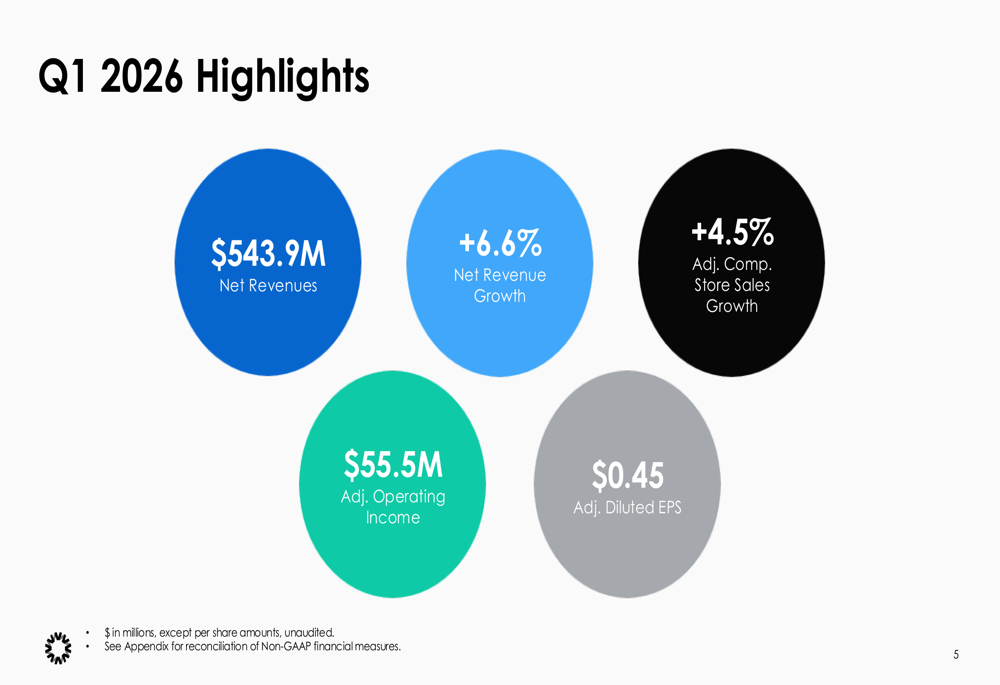
National Vision Q1 2026 slides: margins expand amid strategic shift
Business
A24’s ‘Backrooms’ Surges to Historic $85M-$88M Opening Weekend Beating ‘Mandalorian & Grogu’

NEW YORK — A24’s horror thriller “Backrooms,” adapted from an internet-born phenomenon, is projected to open between $85 million and $88 million domestically this weekend, setting a new studio record and outperforming last weekend’s debut of Disney’s “Star Wars: The Mandalorian and Grogu.”
The film, directed by 20-year-old Kane Parsons, posted an estimated $38.4 million on Friday, including $10.4 million in Thursday previews. That first-day total already surpasses many expectations for an independent horror release and positions “Backrooms” as a breakout success in a competitive summer market. Some industry estimates suggest the three-day figure could reach as high as $90 million once final tallies are complete.
The movie expands into more than 3,400 theaters across North America while launching simultaneously in about 50 international territories. Early overseas estimates point to around $36 million, potentially delivering a global opening in the $121 million to $124 million range. Key markets include the United Kingdom, Italy, Australia, Mexico, Brazil, South Korea and Saudi Arabia.
“These filmmakers are in a dialogue with their audience,” Warner Bros. executive Michael De Luca said, addressing the strong connection built by projects like “Backrooms” that originate from online communities.
Targeted Campaign Drives Results
“Backrooms” draws from Parsons’ popular YouTube series featuring liminal spaces and analog horror aesthetics. Its marketing strategy focused heavily on digital platforms and core fan bases rather than broad traditional advertising. Industry sources indicate the campaign budget was modest compared to major studio releases, closer in scale to targeted horror efforts like Neon’s “Longlegs,” though slightly higher.
This approach contrasts with the reported near-$100 million promotion and advertising spend behind “The Mandalorian and Grogu,” which opened to $81.6 million the previous weekend on the strength of its established franchise appeal and Disney’s extensive campaign. “Backrooms” managed stronger opening-day business despite the more curated, cost-efficient push, highlighting the value of organic buzz and internet-native storytelling.
The performance marks a significant milestone for A24, far exceeding its previous best opening of around $25.5 million for “Civil War” in 2024. It also underscores a broader trend of audience enthusiasm for original genre films that feel authentic to their digital roots rather than heavily manufactured studio products.
Focus Features‘ ‘Obsession’ Sets Distributor Benchmark
Complementing the weekend’s horror momentum, Focus Features’ “Obsession” continues its impressive run. The low-budget film, directed by Curry Barker and produced for under $1 million, is on track to surpass $106 million worldwide, setting a new record for the distributor.
In its second weekend, “Obsession” added an estimated $23.9 million domestically, pushing its North American total past $60 million. The movie has defied typical horror drop patterns with strong audience retention, showing second-weekend growth that stands out in the genre. Its global success has already elevated it among Focus Features’ top releases of all time.
Together, “Backrooms” and “Obsession” signal renewed theatrical appetite for inventive, efficiently made horror titles. Both films have capitalized on social media engagement, word-of-mouth and repeat viewings, particularly among younger demographics seeking fresh experiences.
Industry Context and Implications
The strong results arrive as Hollywood continues navigating recovery challenges, including rising production and marketing costs alongside fragmented audience habits. Major franchise entries like “The Mandalorian and Grogu” delivered respectable but not dominant numbers, opening the door for original content to capture significant market share.
For A24, the success validates its model of nurturing unique voices and viral concepts. The studio has built a reputation for elevated genre fare that resonates culturally and commercially. Parsons’ transition from YouTube creator to feature director mirrors a growing pipeline of digital talent entering mainstream filmmaking.
“Backrooms” originated as online creepypasta-style content exploring unsettling empty spaces. Its big-screen adaptation preserved the atmospheric tension that built its fan base, translating effectively to theaters and drawing crowds seeking immersive horror.
Internationally, the film’s rollout in diverse markets including South Korea and Taiwan benefits from the global popularity of analog horror aesthetics. Early reports suggest solid turnout where online communities have long engaged with the source material.
Broader Box Office Trends
This weekend’s newcomers are performing against a backdrop of holdover titles experiencing typical second-weekend declines. The efficient performance of “Backrooms” offers a case study in targeted marketing yielding outsized returns. By focusing on core audiences through digital channels, the campaign created genuine excitement without relying on blanket exposure.
Focus Features has similarly maximized “Obsession” through grassroots appeal and strong retention. The film’s low production cost combined with its worldwide earnings demonstrates the profitability potential of smart genre betting in today’s market.
Analysts note that both releases benefit from timing in the early summer period, when audiences seek escapist entertainment. The horror genre’s resilience, especially with innovative storytelling, continues to provide reliable returns for studios willing to take calculated risks.
Exhibitors have reported enthusiastic crowds and packed screenings for “Backrooms,” with fans reacting strongly to its visual style and psychological elements. The film’s ability to convert online familiarity into ticket sales highlights evolving consumption patterns where internet culture directly influences theatrical success.
Future Outlook for Original Horror
The dual achievements of “Backrooms” and “Obsession” may encourage more investment in original properties over reliance on established intellectual property. As costs for franchise films escalate, the model of cultivating audience dialogue through authentic storytelling appears increasingly attractive.
For Parsons, the debut represents a remarkable breakthrough. His feature directorial debut has not only broken records but also expanded the reach of his creative vision beyond digital platforms.
A24 and Focus Features have positioned themselves as key players in delivering compelling genre content that connects with modern audiences. Their success this weekend contributes to a more diverse box office landscape where independent and mid-tier studios can compete effectively.
As Sunday estimates finalize, industry attention will turn to Monday’s official numbers and longer-term projections for both films. “Backrooms” appears set for a multi-week run if it maintains momentum, while “Obsession” continues building on its breakout trajectory.
The weekend underscores the enduring draw of well-crafted horror and the power of targeted, fan-focused releases in driving theatrical revenue. In a competitive environment, these films demonstrate that originality and audience alignment remain potent ingredients for success.
Business
(VIDEO) National Anthem Standoff at Tropicana Field Triggers Pregame Ejections in Rays-Angels Clash

ST. PETERSBURG, Fla. — A tense standoff during the national anthem led to three pregame ejections Friday as the Tampa Bay Rays hosted the Los Angeles Angels at Tropicana Field, overshadowing what became a victory for the visitors in a game marked by unusual early drama.
Third-base umpire ejected Angels reliever Brent Suter and Rays pitchers Steven Wilson and Manuel Rodríguez before any pitches were thrown. The incident occurred moments after “The Star-Spangled Banner” concluded, with Suter remaining positioned near the third-base dugout while Wilson and Rodríguez stood across the field near the first-base dugout alongside team mascots.

The Los Angeles Angels went on to defeat the AL East-leading Rays in the late-afternoon contest. However, the pregame events dominated discussions, highlighting ongoing sensitivities around pregame protocols in Major League Baseball.
Suter, a veteran left-hander, was in the lineup for the Angels. Wilson and Rodríguez, both on rehabilitation assignments with the Rays, were participating in pregame activities. Their removal forced roster adjustments before the first pitch, with Drew Rasmussen starting for Tampa Bay.
Details of the Incident
Witnesses described the situation as a “standoff” that escalated quickly. After the anthem ended, the players’ decision to remain in place rather than return to standard positions drew the umpire’s attention. MLB protocols generally expect players and personnel to conclude anthem-related observances promptly to maintain game flow.
Umpires issued the ejections under rules governing unsportsmanlike conduct and failure to adhere to pregame procedures. No immediate statements detailed the exact reasoning, but the unusual nature of the removals — occurring before the game officially began — sparked immediate attention across sports media.
The Rays, currently leading the AL East, entered the series with strong momentum. The Angels, seeking to improve their standing in the AL West, used the victory to build confidence despite the early disruptions.
Broader Context in MLB
National anthem presentations have been points of discussion in professional sports for years. MLB has maintained traditions of playing the anthem before games, with players typically standing respectfully along the baselines. Deviations or perceived protests have occasionally led to controversies, though outright ejections before a game are rare.
This incident comes amid heightened attention to league policies on conduct, especially following past debates involving player expressions during the anthem. MLB Commissioner Rob Manfred has emphasized consistency in game operations while respecting individual views.
Teams on rehabilitation assignments, like Wilson and Rodríguez, often participate in pregame routines with the active roster. Their involvement added complexity to the situation, as did the presence of team mascots near the first-base area.
Tropicana Field, known for its indoor environment and unique features, has hosted many memorable moments. Friday’s events added an unexpected chapter to its history.
Player Backgrounds and Season Context
Brent Suter has built a solid career as a reliable reliever, contributing to multiple teams with his versatility. His ejection marked an unusual start to his day, though he remained available later in the game if needed.
For the Rays, Steven Wilson and Manuel Rodríguez represent important depth. Rehabilitation stints aim to return pitchers to full strength, but the pregame incident interrupted their preparation. Drew Rasmussen, stepping in as the starter, delivered a solid performance despite the distractions.
The Rays’ strong divisional position reflects effective roster management and pitching depth throughout the 2026 season. The Angels have shown flashes of potential but continue working to find consistency.
Game Recap and Statistical Highlights
Despite the early ejections, baseball proceeded with standard intensity. The Angels capitalized on opportunities, rolling past the Rays with timely hitting and effective pitching. Key offensive contributions helped secure the win on the road.
Rasmussen threw effectively for Tampa Bay, navigating the altered bullpen situation. Both teams displayed professionalism after the initial disruption, focusing on competitive play.
Attendance at Tropicana Field reflected typical Friday crowds for a divisional interleague matchup. Fans reacted with surprise to the early ejections, with some discussing the event throughout the game via social media.
Reactions Across Baseball
The sports world took notice quickly. Discussions highlighted the balance between tradition, personal expression and game rules. Analysts noted that while anthem moments can carry symbolic weight, pregame ejections remain uncommon and signal potential need for clearer guidelines.
League officials are expected to review the incident. Standard procedure involves reports from umpires to MLB headquarters for any unusual occurrences.
This event joins a small list of notable pregame controversies in recent MLB history. Most games proceed smoothly, with players and staff adhering to established customs.
Implications for Teams and League
For the Rays, maintaining focus after the unusual start proved important for their divisional lead. The team has emphasized resilience throughout the season.
The Angels gained a valuable road win, boosting morale as they navigate their schedule. Such victories against strong opponents can shift momentum.
Broader questions about pregame protocols may emerge. MLB continues refining policies to ensure smooth operations while addressing evolving social dynamics in sports.
Younger players and veterans alike navigate these expectations. Incidents like this often prompt internal team discussions on conduct and unity.
Looking Ahead in the Series
The Rays and Angels continue their series this weekend, offering chances to move past Friday’s events. Both clubs feature talented rosters capable of high-level play.
Tampa Bay aims to protect its AL East position with strong pitching and timely offense. Los Angeles seeks improved consistency to climb standings.
Fans anticipate competitive baseball as the teams face off again. The incident may add narrative interest, but on-field performance will determine series outcomes.
As MLB progresses through 2026, maintaining focus on the game remains central. Traditions like the national anthem hold significance for many, while leagues work to accommodate diverse perspectives.
Friday’s events at Tropicana Field served as a reminder of the delicate balance in professional sports. With three players ejected before the first pitch, the game highlighted how quickly situations can escalate in high-profile settings.
The Rays-Angels matchup ultimately delivered baseball action, but the pregame standoff ensured the night would be remembered for more than just the final score. As both organizations review internal procedures, the league monitors for consistency across all ballparks.
This type of occurrence underscores the unique environment of live sports, where preparation meets real-time decision-making. Umpires, tasked with enforcing rules, made calls based on observed actions.
For players like Suter, Wilson and Rodríguez, the ejections represent rare entries on their records. Their focus now shifts back to on-field contributions in upcoming games.
The 2026 season has featured strong competition across divisions. Stories like this add layers to the baseball narrative, engaging fans beyond standard statistics.
As the weekend series unfolds in St. Petersburg, attention returns to pitching matchups and strategic battles. The Rays’ home advantage at Tropicana Field could play a role in subsequent contests.
Baseball’s appeal lies in its daily drama and unexpected moments. Friday’s national anthem-related ejections provided one such chapter in an otherwise routine schedule.

Inflation Squeezes Retirement. 5 Smart Tips to Protect Yourself.

NEW YORK — As investors weigh opportunities in the semiconductor sector amid the ongoing artificial intelligence boom, Advanced Micro Devices and Intel present contrasting profiles heading into the second half of 2026. AMD has delivered stronger execution and revenue growth in data centers, while Intel pursues an ambitious manufacturing turnaround supported by government backing.
Recent market performance highlights the divergence. Intel shares have surged dramatically year-to-date, climbing more than 220% in 2026 at points, reaching highs near $133 before pulling back. AMD stock has also posted substantial gains, trading around $500-$518 in late May with strong momentum from AI accelerator demand.
AMD reported first-quarter 2026 revenue of $10.25 billion, up 38% year-over-year, driven by a 57% increase in data center revenue. The company benefits from its fabless model, relying on partners like TSMC, which has enabled high gross margins around 55% and rapid product cycles.
Intel, by contrast, continues its IDM 2.0 strategy, investing heavily in foundry operations and advanced process nodes like 18A. While the company has shown signs of recovery with recent quarterly beats, it faces higher execution risks and ongoing foundry losses as it builds out domestic manufacturing capacity.
Market Positions and AI Exposure
Both companies compete fiercely in CPUs and are expanding into AI accelerators, but their approaches differ. AMD’s Instinct MI series GPUs and EPYC processors have gained traction with hyperscalers, including major deals such as multi-gigawatt commitments. Its upcoming MI350 and MI400 chips position it as a credible alternative in the AI infrastructure buildout.
Intel leverages its broad portfolio, including Xeon processors and Gaudi accelerators, while emphasizing U.S.-based production. The company has secured some policy support through the CHIPS Act, but analysts note slower progress in reclaiming data center share compared to AMD’s gains.
Valuation metrics reflect these dynamics. AMD trades at elevated multiples, around 50-60 times forward earnings in recent assessments, pricing in continued strong growth. Intel’s valuation has expanded with its stock run but offers a different risk-reward profile as a potential turnaround story.
Analyst Views and Consensus
Wall Street leans toward AMD for its execution consistency and clearer near-term growth path. Many analysts rate AMD as a Buy with price targets reflecting optimism around AI demand. Intel receives more mixed ratings, with several firms viewing it as a Hold amid foundry uncertainties.
Recent comparisons suggest AMD holds advantages in profitability and market share gains in key segments. However, Intel’s recent stock surge demonstrates investor bets on its long-term potential, particularly if it successfully validates its advanced nodes with external customers.
Factors favoring AMD include diversified AI exposure across CPUs, GPUs and adaptive computing, along with strong free cash flow generation. Risks center on dependence on TSMC capacity and intense competition from Nvidia in accelerators.
For Intel, strengths lie in its integrated manufacturing ambitions and potential for margin recovery. Challenges include high capital expenditures and the need to prove competitiveness in AI against faster-moving rivals.
Broader Semiconductor Landscape
The AI boom continues driving sector-wide gains, with demand for high-performance computing chips remaining robust. Both AMD and Intel benefit from this tailwind, but execution separates leaders. Broader chip indices have rallied, though some analysts caution about valuations after significant 2026 runs.
Global factors such as U.S.-China trade dynamics and supply chain resilience influence decisions. AMD’s fabless approach offers flexibility but geopolitical exposure, while Intel’s domestic focus aligns with policy priorities.
Investment Considerations for 2026
Investors evaluating which stock to buy should consider time horizon and risk tolerance. AMD appeals to those seeking growth with demonstrated momentum in AI infrastructure. Its consistent revenue beats and product roadmap provide visibility, though the premium valuation leaves less margin for error.
Intel suits contrarian investors betting on a multi-year turnaround. Recent operational improvements and government support offer upside, but the path involves higher uncertainty around profitability timelines and competitive positioning.
Portfolio allocation often favors diversification. Many market participants hold both, balancing AMD’s near-term strengths with Intel’s potential recovery. Dollar-cost averaging strategies help manage volatility in this sector.
Key metrics to monitor include quarterly data center revenue, gross margins, and progress on new product launches. For Intel, external foundry customer wins would serve as major validation. For AMD, sustained share gains against competitors remain critical.
Risks and Market Outlook
Semiconductor stocks face cyclical risks, including potential slowdowns in AI spending or macroeconomic pressures. Geopolitical tensions could disrupt supply chains, affecting both companies differently based on their manufacturing strategies.
Valuation compression remains a concern after strong 2026 gains. AMD’s higher multiples make it more sensitive to any growth misses, while Intel’s recovery narrative could falter if foundry investments fail to yield expected returns.
Longer term, the shift toward agentic AI and advanced computing favors companies with robust innovation pipelines. Both AMD and Intel invest heavily in research, but AMD has translated investments into faster market share gains recently.
Strategic Takeaways
The choice between Intel and AMD in 2026 ultimately depends on investor conviction in execution versus turnaround potential. AMD currently leads on most fundamental growth metrics and analyst preference for near-term performance. Intel offers asymmetric upside for those patient with its manufacturing bet.
Neither represents a guaranteed winner in the competitive chip industry. Success hinges on technological breakthroughs, customer adoption and efficient capital allocation amid rapid AI evolution.
As the year progresses, quarterly results will provide clearer signals. Investors should track earnings calls for updates on AI deals, process node advancements and margin trends.
The semiconductor sector’s importance to technological progress ensures ongoing attention. For those building positions, thorough due diligence on each company’s strategy, balance sheet and competitive positioning remains essential.
Market conditions can shift quickly, making regular reassessment important. Professional financial advice tailored to individual circumstances is recommended before making investment decisions in volatile sectors like semiconductors.

Former Nigeria U-23 Star Godspower Aniefiok Powers Tower Unity Cup Tournament in Uyo

Snapchat Planets: What’s the order, and what do they mean?

bro just lost count atm #shorts #money


-

 Business7 days ago
NYT Strands Answers May 24 2026 Revealed for Puzzle No. 812 Theme Summer Essentials
-

 NewsBeat4 days ago
Israel says it has killed new Hamas military leader in Gaza City airstrikes
-

 Tech4 days ago
NASA taps Blue Origin to deliver lunar rovers for Moon Base initiative
-

 Politics6 days ago
Bridgerton Season 5: Cast, Release Date And Everything We Know So Far
-

 News Videos4 days ago
XRP *JUST* SUCCEEDED!!!! CLARITY ACT EXPOSED!!! (SHE EXPOSED IT)
-

 Sports5 days ago
2026 NBA Finals schedule, odds: Knicks await Thunder or Spurs after winning East
-

 Business4 days ago
Selena Gomez Reportedly Upset Over Benny Blanco’s Comments on Her ‘Terrible’ Diet
-
 Crypto World5 days ago
Micron Crosses $1 Trillion Market Cap as AI Demand Reshapes Memory Sector
-

 News Videos2 days ago
This is BROKEN! INSANE 5x MONEY CAR WASH WEEK! The NEW GTA Online UPDATE Today! (GTA5 New Update)
-

 Business6 days ago
BTS Sells Out Four Las Vegas Shows at Allegiant Stadium for ARIRANG World Tour
-
Crypto World6 days ago
Brian Armstrong Outlines Crypto Vision for the Future Financial System
-
 Tech5 days ago
China assigns ID codes to 28,000+ humanoid robots
-
 NewsBeat6 days ago
Hottest May day ever as London hits 34.8C in 2C leap from previous records
-

 Tech6 days ago
Microsoft’s quiet Claude Code retreat and the real cost of enterprise AI
-

 Tech2 days ago
Waymo dominates autonomous vehicle registrations as Tesla trails behind
-

 Business5 days ago
Nikkei 225 Surges Past 65,000 for First Time as Iran Peace Hopes Fuel Record Rally
-
Tech4 days ago
The Samsung pay deal is the moment Korean unions changed register
-
 Entertainment5 days ago
‘Breaking Bad’ Star’s Easy-to-Binge 6-Part Crime Series Spin-Off Is Finally Heading to Free Streaming
-

 Tech6 days ago
Westone Audio and Etymotic Acquired by Fidelity Collective in Major IEM Market Move
-

 NewsBeat6 days ago
Crowds find riverside shade in York as temperatures soar
You must be logged in to post a comment Login