

Business
There Will Be Investing Opportunities When the Strait of Hormuz Reopens. Think ETFs.




Happy Joe’s CEO Tom Sacco discusses the pizza chain’s America 250 celebration, featuring patriotic menu items, block parties and cash prizes for families.
Happy Joe’s Pizza & Ice Cream is turning America’s 250th birthday into a summer-long celebration.
The Davenport, Iowa-based restaurant chain — which has three company-owned restaurants, 35 domestic franchised locations and nine international locations in Egypt — is rolling out patriotic menu items, family block parties and sweepstakes tied to the nation’s semiquincentennial.
Tom Sacco, Happy Joe’s CEO, president and “chief happiness officer,” said the campaign fits the brand’s roots.
“Who’s better in this country to throw a birthday party for just regular old American folks than Happy Joe’s?” Sacco told FOX Business. “Because that’s who we are.”
From May 15 through Aug. 15, guests who buy a specialty pizza and a Mountain Dew at participating locations can enter the “Freedom Flyaway Sweepstakes” for a chance to win one of three $3,000 trips to Washington, D.C.
BELOVED IOWA PIZZA FRANCHISE SERVES UP ‘MORE THAN PIZZA’ FOR ITS CUSTOMERS

Tom Sacco, Happy Joe’s CEO, president and “chief happiness officer,” said the campaign fits the brand’s roots. (FOX Business / Happy Joe’s)
The sweepstakes was initially solely tied to a Washington, D.C., trip, but Sacco said winners can also take the cash and use it however it best helps their families.
“If celebrating to them is giving… them freedom financially to not be burdened by some of the expensive things that have happened in the last four or five years … If that’s what makes you happy, because mom doesn’t have to stress about how to pay for daycare during the summer or something like that, then that’s a huge win,” Sacco said.
The promotion also includes weekly Mountain Dew prize packs with pickleball paddles, lawn chairs, blankets, Happy Joe’s apparel and gift cards.
Happy Joe’s is also hosting AMERICA250 Block Party events on June 29 from 4 to 8 p.m. with games, trivia, music, giveaways and free slices of its red, white and blue birthday cake pizza.
YUM BRANDS SELLS PIZZA HUT FOR $2.7B, SHARPENS FOCUS ON TACO BELL AND KFC

Through Aug. 15, guests who buy a specialty pizza and a Mountain Dew at participating locations can enter the “Freedom Flyaway Sweepstakes” for a chance to win one of three $3,000 trips to Washington, D.C. (Happy Joe’s)
Sacco said some locations will have activities such as bounce houses, face painting, balloon makers and patriotic trivia tied to both U.S. history and Happy Joe’s history.
“We’re going to just do some fun stuff like that,” Sacco said. “… We can play the game and make it patriotic, but make it tied to Happy Joe’s kind of stuff.”
The limited-time menu includes a BBQ Brisket Pizza with Texas-smoked brisket, pickles, onions and barbecue sauce, a BBQ Chicken Pizza and an AMERICA250 Birthday Cake topped with red, white and blue frosting and sprinkles.
Sacco said Happy Joe’s is leaning into what it has long been known for: birthdays, families and memorable dining experiences.
MCDONALD’S BRINGING BACK FRIED APPLE PIE TO CELEBRATE AMERICA’S 250TH BIRTHDAY
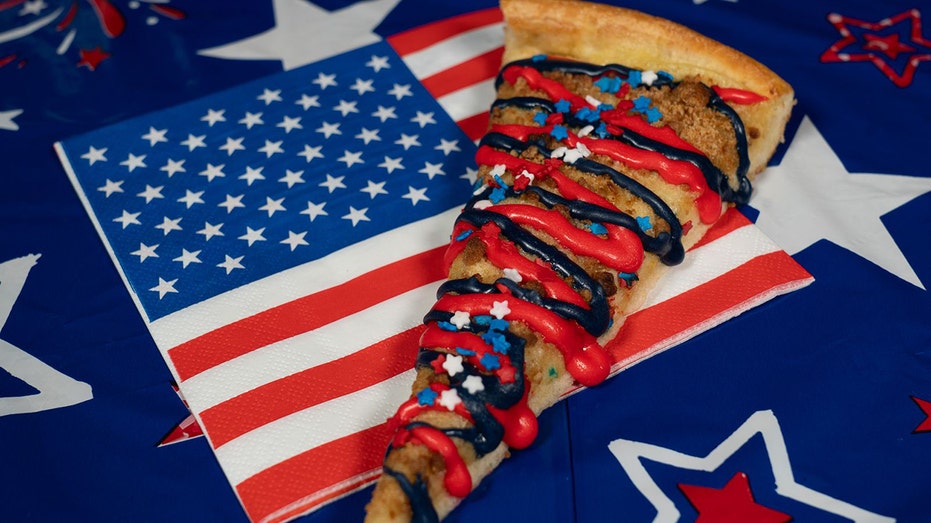
The brand is also hosting AMERICA250 Block Party events on June 29 from 4 to 8 p.m. with games, trivia, music, giveaways and free slices of its red, white and blue birthday cake pizza. (Happy Joe’s)
CLICK HERE TO GET FOX BUSINESS ON THE GO
“We don’t compete on price. We don’t compete on discounting. We compete on experience,” Sacco said. “Pizza gets you in the door. When you leave, we’ve created a memory. And that’s how we go about the business.”
He added that the campaign gives the brand a chance to celebrate the country’s milestone birthday with families across its markets.
“The 250, for me, is like the biggest national celebration I can ever be a part in,” Sacco said. “I have the opportunity, because of Happy Joe’s, to share it with hundreds of thousands of our guests and their families around the country.”
Check out what’s clicking on FoxBusiness.com.
Costco has added a new frozen treat to its shelves from a brand customers have praised as “top tier.”
Yasso Frozen Greek Yogurt Cups have been offered at select warehouse locations, according to the brand.
The product was introduced late last month, the company announced, just in time as summer temperatures begin to spike.
The 12-pack includes mini cups split between two flavors: Vanilla Caramel and Fudge Chip.
GREEK YOGURT HAS ‘AMAZING BENEFITS’ FOR THE BODY AFTER WORKOUTS, NEW STUDY SAYS
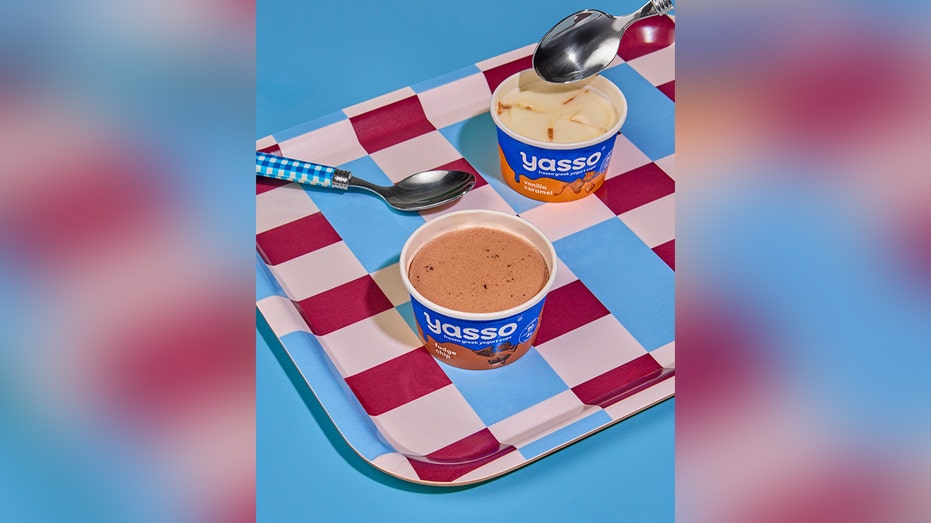
Yasso is offering a new mini cup pack in select Costco Wholesale locations. (Yasso/Instagram / Fox News)
Marketed as a lighter alternative to traditional ice cream, each 3-ounce cup contains less than 100 calories and 4 grams of protein.
The Vanilla Caramel flavor has 80 calories per serving, while the Fudge Chip comes in at 90 calories.
The pack reportedly retails for $11.89, equivalent to roughly $1 per cup, according to Instagram page Costcobffs.
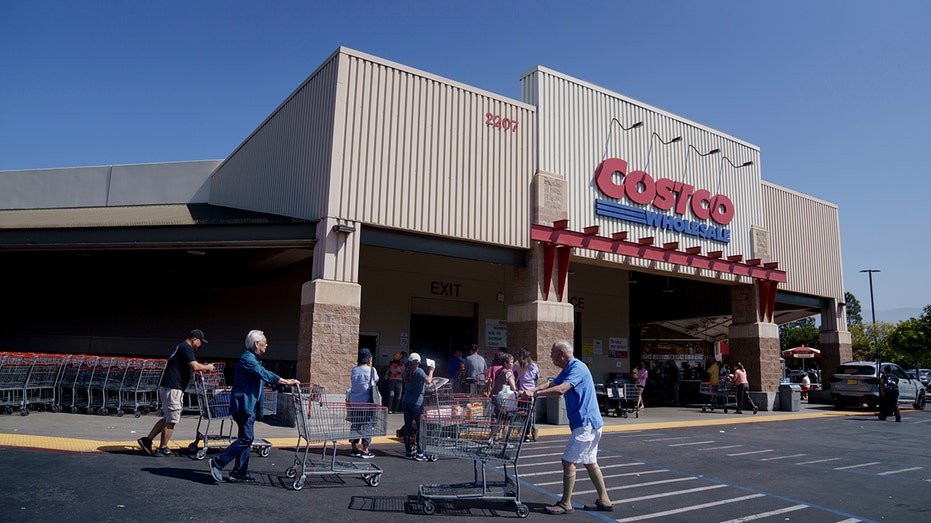
Costumers push carts outside a Costco store in Alhambra, California, on Thursday, June 27, 2024. (Eric Thayer/Bloomberg via Getty Images / Getty Images)
The new release has sparked significant attention across social media.
One Reddit user praised the decision, saying Yasso items are not overly sweet and lack the artificial taste often found in other low-calorie desserts.
“Yasso products have always been top tier,” the user said.
Another Reddit user added, “These are absolutely amazing and the right portion for that sweet treat.”
CHECK OUT THESE DISCOUNTS ON MEMBERSHIPS AND REWARDS TO SAM’S, COSTCO AND BJ’S WHOLESALE CLUBS
| Ticker | Security | Last | Change | Change % |
|---|---|---|---|---|
| COST | COSTCO WHOLESALE CORP. | 951.45 | -14.14 | -1.46% |
Social media page CostcoHotFinds, which said it has partnered with the brand, noted the item is available for a limited time.
“Availability depends on the region and retailer,” Yasso said. “We’d suggest checking with your local store manager about ordering it in.”
Shoppers eager to try the mini cups may also find the product at BJ’s Wholesale Club locations, the brand added.
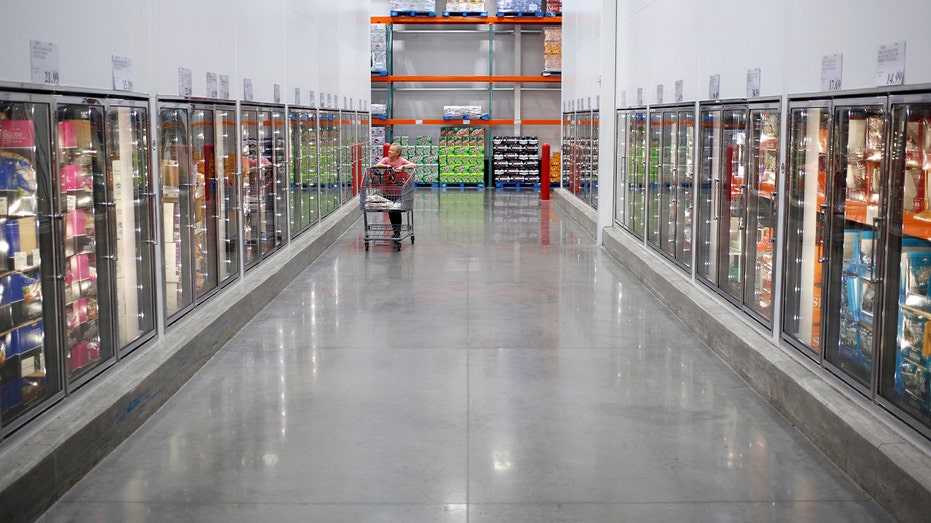
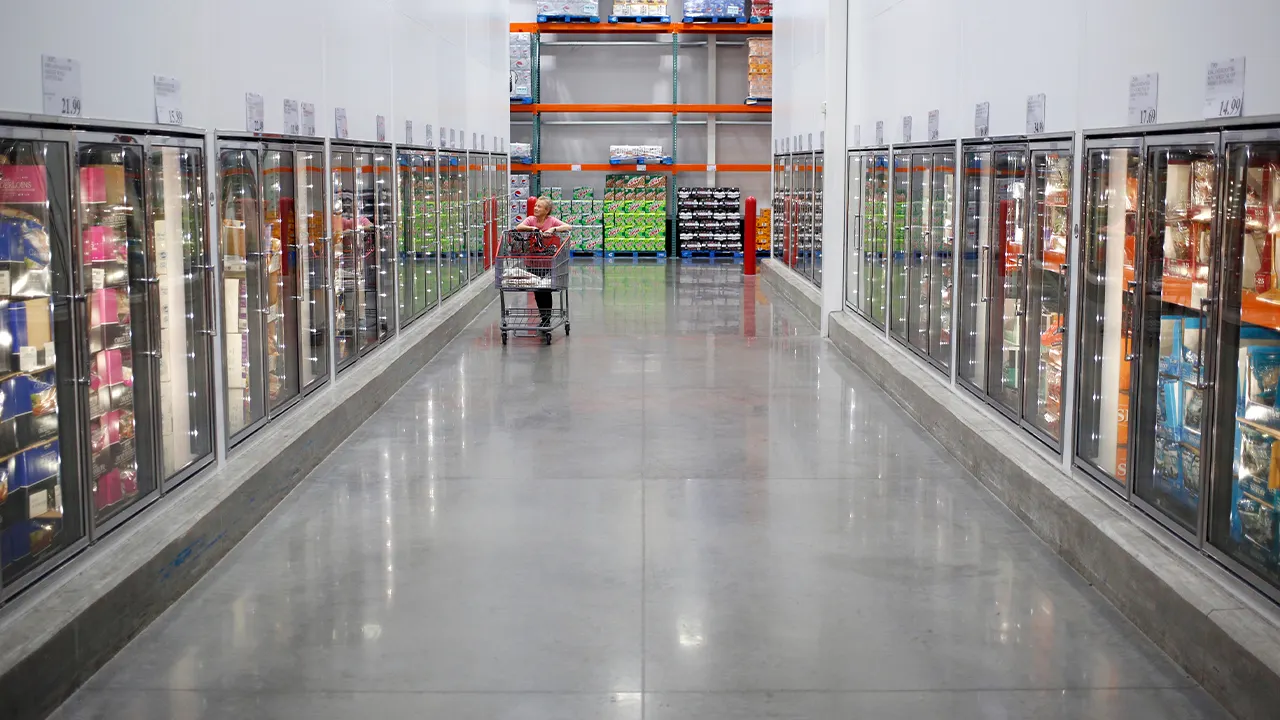
A customer pushes a shopping cart through the frozen foods section at a Costco store in Louisville, Kentucky, on Wednesday, May 29, 2019. (Luke Sharrett/Bloomberg via Getty Images / Getty Images)
CLICK HERE TO DOWNLOAD THE FOX NEWS APP
It is typical for Costco to roll out limited-time products as part of a testing period before wider or recurring availability.
The Yasso brand has, however, shown staying power, as Costco has previously carried its frozen Greek yogurt bars, including Cookies ‘n Cream and Mint Chocolate Chip flavors.
The 15-count packs feature similar nutrition profiles, with each serving typically ranging between 90 and 100 calories and containing about 5 grams of protein.
FOX Business reached out to Yasso for more information.
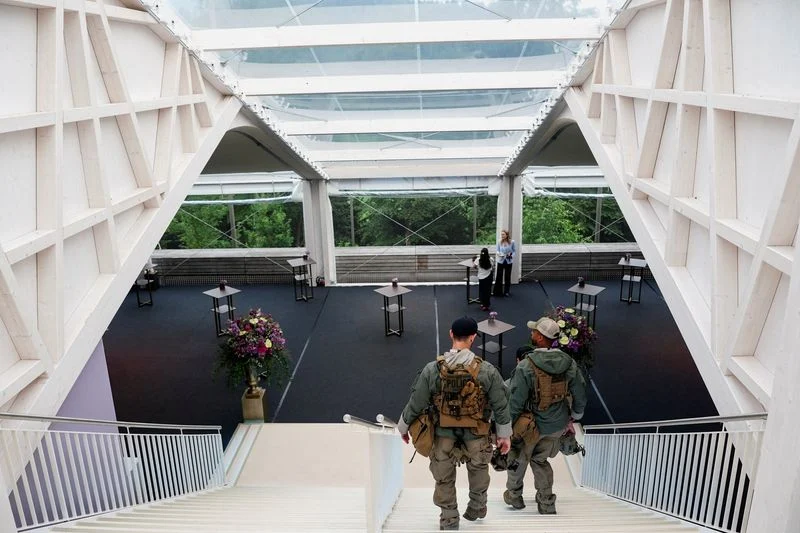

Brent oil rises more than $1/bbl after bumpy start to US-Iran peace talks
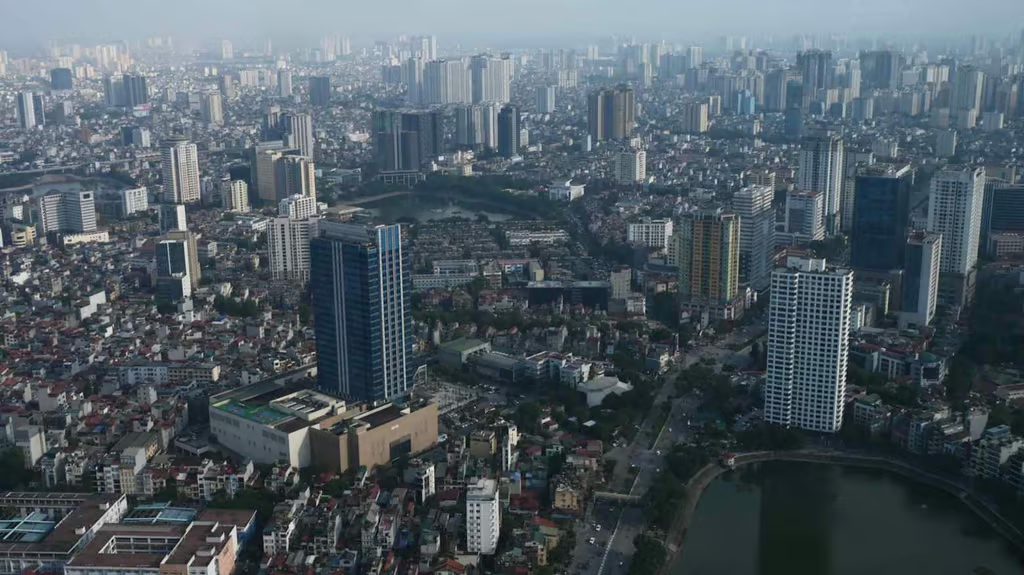
Vietnam’s industrial landscape is transitioning from a uniform manufacturing market into a complex system of distinct regional ecosystems, requiring investors to move beyond a “one-location” playbook. While Northern, Central, and Southern regions offer unique advantages—ranging from tight integration with Chinese supply chains to emerging low-cost opportunities—infrastructure developments like the Long Thanh International Airport are reshaping the country’s economic gravity faster than policy frameworks. Consequently, long-term success in Vietnam now depends on navigating regional divergence and leveraging tailored business intelligence rather than relying on oversimplified, national-level data.
Key Points
- Northern Vietnam has solidified its role as a “China-plus-one” hub, specifically optimized for time-sensitive supply chains and seamless cross-border component flows.
- Central Vietnam is emerging as a competitive, lower-cost alternative for manufacturers seeking first-mover advantages and an escape from the congestion of primary industrial hubs.
- Southern Vietnam remains the leader in FDI volume and market access but faces increasing challenges from rising labor costs, logistical bottlenecks, and regulatory complexity.
- Infrastructure projects, most notably the Long Thanh International Airport in Dong Nai, are redrawing the industrial map by creating new high-tech and smart-logistics corridors.
- Vietnam is shifting from siloed provincial planning toward integrated industrial ecosystems and corridors, such as the Hanoi–Hai Phong–Quang Ninh and Ho Chi Minh City–Binh Duong–Ba Ria-Vung Tau zones.
- Provincial authorities are becoming more selective, increasingly prioritizing high-value, environmentally sustainable projects while discouraging low-tech, labor-intensive investments.
- The primary risk for modern investors is no longer regulatory uncertainty but the oversimplification of a market where incentives, labor availability, and land pricing vary sharply between regions.
- Effective investment strategies for 2026 require sector-specific and location-specific intelligence to align with future infrastructure and evolving provincial policy priorities.
Vietnam’s manufacturing triumph is commonly highlighted through national figures such as FDI investments, export increases, and growing industrial production. However, for investors actively engaged in the market, these prominent statistics often mask a more intricate truth: Vietnam has evolved beyond a single industrial market. It now comprises a network of competing, merging, and developing industrial ecosystems.
How do the specific operational advantages of Northern Vietnam’s ‘China-plus-one’ hub compare to the emerging cost efficiencies of Central Vietnam for high-tech manufacturers?
The comparison between Northern Vietnam’s well-established “China-plus-one” hub and the rising efficiencies of Central Vietnam highlights a trade-off between rapid supply chain responsiveness and sustainable cost-effectiveness.
Northern Vietnam: The ‘China-plus-one’ Operational Hub
Northern Vietnam is positioned as a specialized hub for high-tech manufacturers who require tight integration with Chinese production networks. Its specific advantages include:
- Logistical Proximity: Its close proximity to China significantly reduces logistics costs for manufacturers that rely heavily on importing components from across the border.
- Time-Sensitivity: The region is optimized for time-sensitive supply chains and seamless cross-border component flows.
- Specialization: The document notes that production, infrastructure, and labor in the North are more specialized than in other regions, such as the South.
- Strategic Goal: It is the primary choice for companies seeking to quickly relocate operations while maintaining high integration with Chinese supply chains.
Central Vietnam: Emerging Cost and Long-term Efficiencies
Central Vietnam is characterized as a “long overlooked” region that offers a different strategic value proposition based on cost and first-mover advantages:
- Cost and Congestion: It serves as a lower-cost, lower-congestion alternative to the more saturated hubs in the North and South.
- Efficiency over Scale: Manufacturers in this region often trade immediate scale for long-term efficiency and “first-mover advantage.”
- Operational Flexibility: The region offers lower costs and “room to relocate” for both manufacturers and their partners/suppliers.
- Strategic Goal: It is best suited for companies with a long-term investment strategy who are willing to relocate the majority of their supply chain over time.
Comparative Summary for High-Tech Manufacturers
| Feature | Northern Vietnam | Central Vietnam |
|---|---|---|
| Primary Advantage | Speed and integration with China. | Lower costs and reduced congestion. |
| Supply Chain Focus | Importing components from China. | Relocating the entire supply chain over time. |
| Infrastructure Status | Specialized and established. | Supplier networks/high-end zones not yet fully established. |
| Investment Timeline | Rapid relocation/Immediate operation. | Long-term strategy/First-mover advantage. |
The choice between the two regions depends on the manufacturer’s specific needs. The North is superior for those needing immediate, high-tech specialization and Chinese component access. In contrast, Central Vietnam is positioned for manufacturers prioritizing long-term cost savings and efficiency who are prepared to deal with a less established local supplier network initially.
Bottom Line
Vietnam remains a compelling manufacturing destination, but in 2026 and beyond, resilience will come from understanding internal complexity and leveraging tailored advisory support rather than relying on generic comparisons.
Other People are Reading

Definium to present phase 3 depression trial results Monday
MoonLake reports phase 3 hidradenitis suppurativa trial results
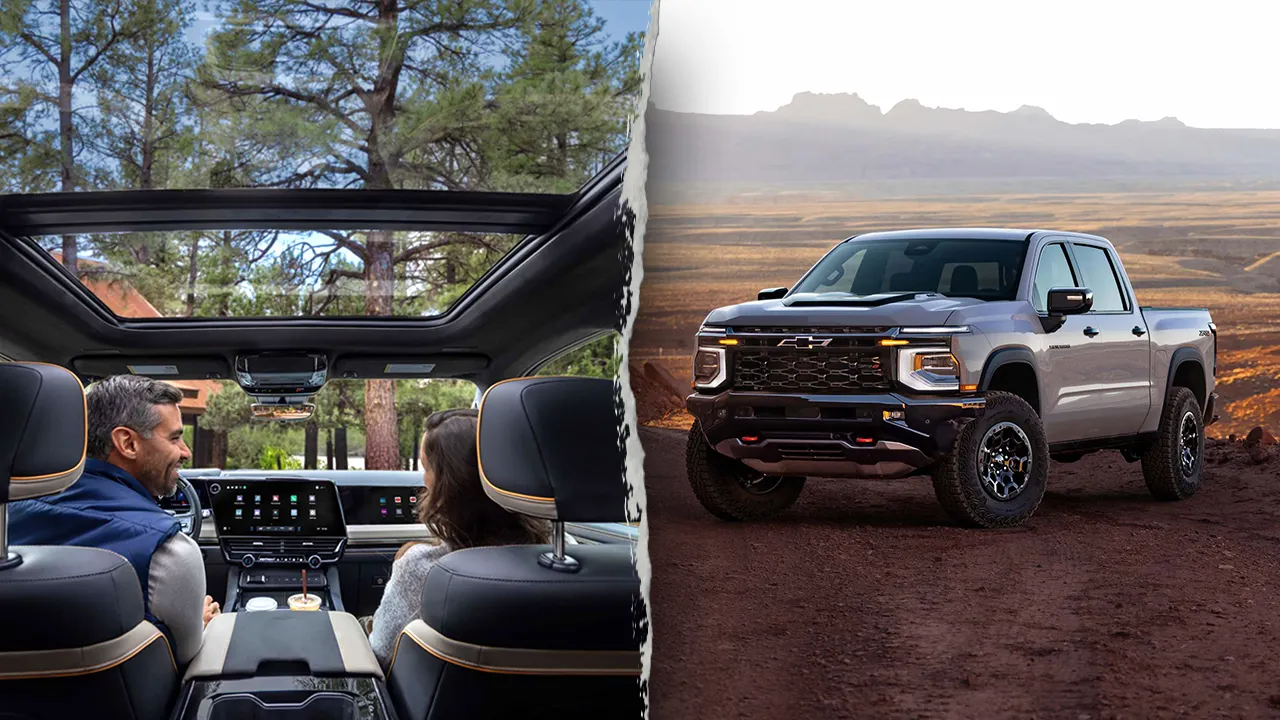
Chevrolet recently unveiled the next-generation 2027 Silverado 1500, which the automaker says is its most powerful Silverado ever. (Credit: Chevrolet)
Chevrolet is giving its Silverado pickup a major update with new V8 engines, a redesigned exterior and more technology inside the cabin.
The automaker on Tuesday introduced the next-generation 2027 Chevrolet Silverado 1500, calling it the “most powerful Silverado ever” and marking one of the pickup’s biggest updates in years.
The truck is expected to go on sale at the end of the year, with pricing to be announced later, according to the company.
“Silverado has earned truck customers’ trust over decades of hard work in the real world,” Scott Bell, vice president of Global Chevrolet, said in a statement. “With the next-generation 2027 Silverado 1500, we’re taking that legacy forward by building the most capable, refined and advanced Silverado lineup we’ve ever offered.”
GM LETTING SOME EV OWNERS SELL ELECTRICITY BACK TO THE US POWER GRID
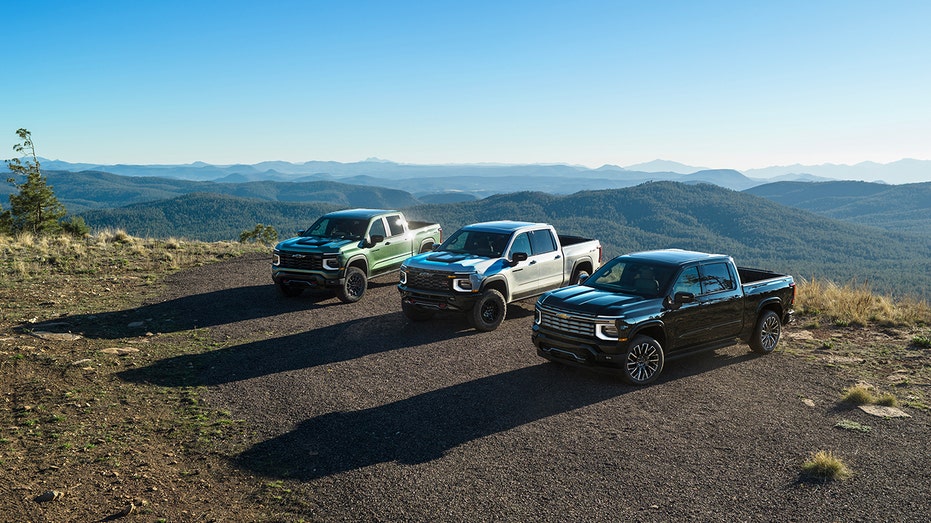
A 2027 Chevrolet Silverado 1500 Trail Boss in Trillium Metallic, a Silverado 1500 ZR2 in White Sands and a Silverado 1500 High Country in Black are shown, from left, on a mountain overlook. (Chevrolet)
The 2027 Silverado will offer four powertrain options, including new 5.7-liter and 6.6-liter V8 engines. Chevrolet said the truck will have the most powerful naturally aspirated V8 engine in its class.
The lineup will also include an updated 2.7-liter TurboMax engine paired with a 10-speed transmission, along with the Duramax 3.0-liter Turbo-Diesel.
“From tough towing scenarios to the daily demands our customers put on their trucks, these next-generation V8s were engineered and proven to perform in the real world,” Mark Dickens, executive chief engineer at Chevrolet, said in a statement.
The 2027 Silverado will come in seven trims, including Work Truck, Custom, Custom Trail Boss, Silverado, Trail Boss, ZR2 and High Country.
GM RECALLS THOUSANDS OF VEHICLES OVER TRANSMISSION ISSUE THAT COULD INCREASE RISK OF CRASH
A 2027 Chevrolet Silverado 1500 High Country in Black tows a boat along a mountain road.
Chevrolet said the new lineup is designed to give buyers more choice, from work-focused trucks to off-road models and more premium versions.
The ZR2 will be the most off-road-capable version, while the High Country will serve as the top luxury trim.
Inside, every 2027 Silverado will come with a new digital cockpit, including a standard 16.3-inch center display and a 12.2-inch driver information screen.
Chevrolet said the Silverado will offer Super Cruise driver-assistance technology with trailering capability, allowing hands-free driving while towing on compatible roads.
The truck also gets a new exterior design, including a stronger front end, new LED headlights and taillights and updated wheel openings.
GM DOUBLES DOWN ON AMERICAN MANUFACTURING WITH $4B INVESTMENT

The 2027 Chevrolet Silverado 1500 High Country features a panoramic sunroof and a tech-focused interior. (Chevrolet)
“The goal with the new Silverado was to create a truck that looks stronger, more modern with demanding presence at first glance, while staying true to the authentic truck character customers expect from Chevrolet,” Chevrolet Global Executive Design Director Phil Zak said in a statement.
GET FOX BUSINESS ON THE GO BY CLICKING HERE
Additional details, including availability and MSRP, will be released later this year.
Chevrolet last introduced an all-new Silverado in December 2017, when it unveiled the fourth-generation 2019 Silverado, according to the company’s website.
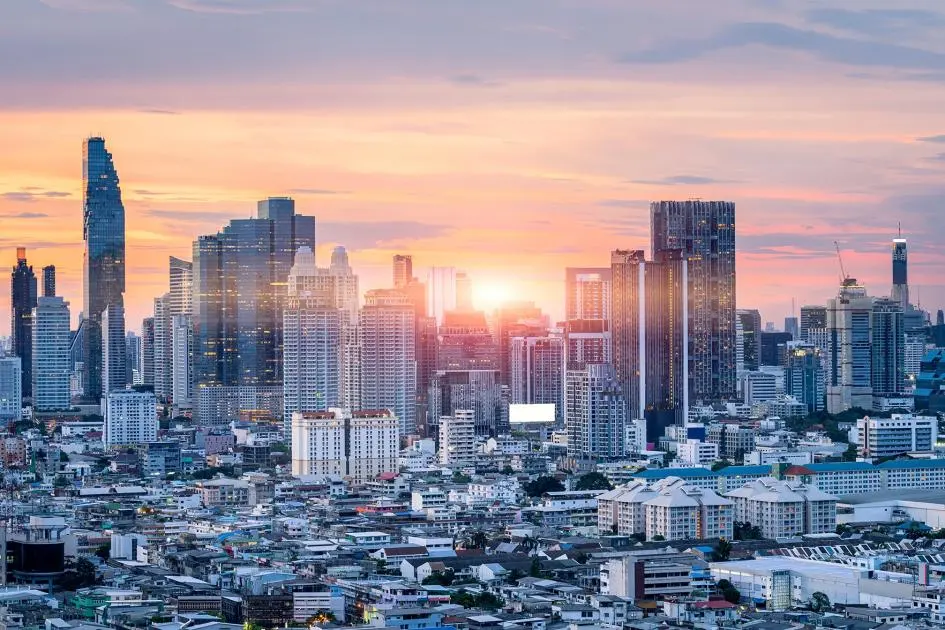
Economic and Infrastructure Developments
Land Bridge and Malacca Strait Alternative
Thailand has revived its ambitious $30 billion Land Bridge project, a coast-to-coast corridor designed to challenge the dominance of the Malacca Strait. The proposal aims to create an alternative shipping route across the Thai peninsula, though analysts caution that bypassing Malacca remains a significant logistical and financial challenge given port capacity and regional competition. Reuters | Thailand Business News
Foreign Investment and Financial Inflows
Thailand is experiencing a notable surge in foreign investment, with inflows topping 154 billion baht in the first five months of the year, representing a 73% increase year-on-year. Bloomberg reports that funds are exiting Indonesia in favor of Thailand, signaling growing investor confidence. The government is also launching Thailand FastPass on June 23 to streamline and accelerate the investment approval process. Bloomberg | Nation Thailand
Energy and Offshore Drilling
Valeura Energy has successfully completed its Nong Yao drilling campaign in the Gulf of Thailand, including the region’s first multi-lateral well — a significant technical milestone. The campaign consisted of eight wells and is expected to boost Gulf of Thailand production. Separately, the US has streamlined civil nuclear export approvals to Thailand, stepping up support for the country’s energy diversification ambitions. Thailand Business News | Offshore Engineer Magazine
Semiconductor Ambitions
Thailand is advancing plans to become ASEAN’s semiconductor manufacturing centre, positioning the country as a key player in the global tech supply chain amid ongoing shifts in electronics production away from China. TV BRICS
Tourism and Travel
Vietnam Challenges Thailand’s Tourism Dominance
Vietnam is rapidly emerging as Southeast Asia’s fastest-growing tourism destination, threatening Thailand’s longstanding regional leadership. Driven by visa-free policy reforms, expanded airline networks, and a surge in Chinese outbound tourism, Vietnam is on track to overtake Thailand in visitor numbers. Thailand recorded a 25% drop in tourists from the Middle East, further pressuring its tourism targets. Travel and Tour World | Nikkei Asia
Visa and Tourism Policy Changes
Thailand is reviewing its visa-free stay policies, joining a global trend prioritizing tourism quality over sheer quantity. Phuket is pushing a hotel levy rising to 3% to generate billion-baht revenue for infrastructure and visitor experience improvements. Meanwhile, Norse Atlantic has expanded Thailand winter flight programs from the UK, Norway, and Sweden. Travel and Tour World | Thailand Business News
Chiang Mai as a Retirement and Expat Hub
Chiang Mai continues to attract retirees and expatriates from around the world, with the city experiencing a 140% boom in women-only co-living spaces. Expats cite the lower cost of living, quality lifestyle, and welcoming community as key draws. Indian couples and international relocators have publicly shared stories of enjoying equivalent rents with significantly better quality of life compared to their home countries. Business Insider | Thailand Business News
Culture, Sports, and Media
T-Pop and Soft Power
Thailand’s music industry is gaining international momentum, with T-Pop increasingly compared to South Korea’s K-Pop phenomenon. Thailand is also leveraging cultural exports, including the popularity of same-sex romance dramas, which have attracted millions of global viewers according to Bloomberg.
Sports Highlights
Thailand’s national volleyball team secured their first Volleyball Nations League 2026 victory, guided by Sasipapron Janthawisut. Meanwhile, Faridabad bodybuilder Manish Rajput won gold in Thailand, defeating a Pakistani rival. Thailand also features in the newly released Captain Tsubasa II: World Fighters game, with dedicated Japan vs. Thailand gameplay content released. Volleyball World
This summary reflects aggregated news reporting and does not represent editorial positions of any individual publication.
Source : Google News – Search
Other People are Reading

Northern Trust Asset Management is a global investment manager that helps investors navigate changing market environments in efforts to realize their long-term objectives.
Entrusted with $1.2 trillion in assets under management as of March 31, 2024, we understand that investing ultimately serves a greater purpose and believe investors should be compensated for the risks they take — in all market environments and any investment strategy. That’s why we combine robust capital markets research, expert portfolio construction and comprehensive risk management in an effort to craft innovative and efficient solutions that seek to deliver targeted investment outcomes.
As engaged contributors to our communities, we consider it a great privilege to serve our investors and our communities with integrity, respect and transparency.
Northern Trust Asset Management is composed of Northern Trust Investments, Inc., Northern Trust Global Investments Limited, Northern Trust Fund Managers (Ireland) Limited, Northern Trust Global Investments Japan, K.K., NT Global Advisors, Inc., 50 South Capital Advisors, LLC, Northern Trust Asset Management Australia Pty Ltd, and investment personnel of The Northern Trust Company of Hong Kong Limited and The Northern Trust Company. Note: This account is not managed or monitored by Northern Trust Asset Management, and any messages sent via Seeking Alpha will not receive a response. For inquiries or communication, please use Northern Trust Asset Management’s official channels.


Ramiro Valdes, lauded as hero of Cuban revolution, dies at 94

Spiegelworld’s ‘Bang Out’ Unleashes Late-Night Chaos

Daily horoscope June 22, 2026: Predictions for your star sign

Happy Joe’s Pizza launches patriotic menu, sweepstakes for America 250


-
 Crypto World7 days ago
Zimbabwe Requires Crypto Businesses to Register Annually Under New FIU Regulations
-

 Fashion2 days ago
Weekend Open Thread: Miami – Corporette.com
-
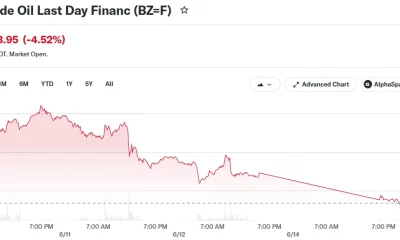
 Crypto World7 days ago
Crude Oil Plunges Over 4% as US-Iran Agreement Reopens Hormuz Strait
-
 Business2 days ago
Wall Street Week Ahead: Investors see Micron earnings as pulse check of AI rally momentum
-

 Crypto World2 days ago
HIVE shares jump as $220M AI deal speeds Bitcoin mining pivot
-

 Tech7 days ago
Over 400 Arch Linux packages compromised to push rootkit, infostealer
-

 Tech5 days ago
The Adder At The Heart Of Intel’s 8087 FPU
-
 Tech7 days ago
Microsoft Updates Six Windows’ Apps. ‘Photos’ Gets Watermarks for Copilot Images (Off by Default)
-

 Sports3 days ago
FIFA World Cup 2026: Canada beat 9-men Qatar 6-0 to register first ever win | FIFA World Cup 2026
-

 Business3 days ago
Brexit cost 6% of UK economy, Bank of England company data suggests
-

 Business1 day ago
Soccer-U.S. defends Iran World Cup travel restrictions, says discussions ongoing
-
 Tech7 days ago
Chinese AI models are learning to detect safety tests and adjust their behaviour accordingly
-

 Crypto World2 days ago
Jake Chervinsky accuses CME of protecting derivatives monopoly
-

 Tech7 days ago
Today’s NYT Connections Hints, Answers for June 15 #1100
-

 Crypto World4 days ago
Anthropic’s Dario Amodei Urged AI Unity at G7, Even as US Banned His Models
-

 Tech4 days ago
Weeks Of In-The-Field Testing And A Verdict
-

 Tech3 days ago
Adobe adds its AI assistant to Premiere, Illustrator and InDesign
-

 Politics2 days ago
Andy Burnham and the meaning of Makerfield
-

 Entertainment1 day ago
Renter of Home in Anne Heche Crash Denies Settlement With Son
-
Crypto World7 days ago
Ethereum Users Can Now Add Quantum-Resistant Account Protection for Just $0.07, Researchers Say
You must be logged in to post a comment Login