

Business
Baron SMID Cap ETF Q1 2026 Commentary (BCSM)


ismagilov/iStock via Getty Images

Dear Baron SMID Cap ETF ® Shareholder,
Introduction
As this represents the first full quarter of results for Baron SMID Cap ETF ® [BCSM], we thought it would be helpful to introduce ourselves and outline BCSM’s investment philosophy. The ETF is managed by Laird Bieger and Randy Gwartzman. Laird and Randy have co-managed the Baron Discovery Fund (BDFIX) ® together since 2013, and have known each other since meeting in 1997 as classmates at Columbia Business School. Both joined Baron in the early 2000s, where they worked alongside Baron’s current COO, Cliff Greenberg, as analysts on the Baron Small Cap Fund (BSCIX) ® . We believe our long-standing partnership and complementary skill sets have been key drivers of Baron Discovery Fund’s ® * long-term outperformance, and we are excited to bring this proven investment approach to the SMID-cap growth space.
ETF Overview
BCSM is a natural extension of what we have been doing for the past 12-plus years managing the Baron Discovery Fund ® . The key distinction is that BCSM makes its initial investments across both small-cap and mid-cap growth companies ((i. e. SMID)), whereas Baron Discovery Fund ® focuses exclusively on initial investments in small-cap businesses. This expanded mandate gives us the flexibility to initiate positions in slightly more mature companies at the outset. Therefore, the overall size of the companies in BCSM (in terms of the weighted average market capitalization of the companies) is about three times that of Baron Discovery Fund ® .
The Compelling Opportunity in SMID-Cap Growth Stocks
Many SMID-cap companies are under-researched and remain off Wall Street’s radar. By identifying these businesses early, we can invest at the beginning of their growth phase and often at valuations that are discounted relative to larger-cap companies with comparable growth prospects. In addition, SMID-cap stocks tend to be driven more by idiosyncratic, company-specific factors rather than by broader industry or macro-driven events. Together, these characteristics make the SMID-cap growth universe particularly attractive for alpha creation and relative outperformance by fundamental stock pickers like us.
Investment Philosophy
Our investment philosophy at Baron SMID Cap ETF ® is the same as that of Baron Discovery Fund ® . We focus on small, fast-growing businesses with outsized long-term growth potential, durable competitive advantages, exceptional management teams, and compelling valuations. We prioritize companies with high-quality earnings streams — specifically, businesses with recurring, predictable revenue and strong margins. Through a full market cycle, we have found that these characteristics are most likely to drive superior long-term performance versus the broader market. We target market-leading businesses operating in fastest-growing areas of the economy and, as a result, we have historically been overweight the Information Technology sector and certain Health Care sub-industries such as life sciences tools & services and health care equipment. Finally, we take a longer-term view than most of our peers. We believe that by analyzing our investments over a longer time horizon, we can gain an advantage over market participants who are focused primarily on the short term.
Investment Process
Our investment process is designed to take advantage of market dislocations, and it begins not with valuation, but with quality. We call this process “investing in reverse. ” It starts with a simple question posed to each sector analyst on the investment team: “Removing current valuation, what are the companies in your particular sub-industry that best fit the criteria we look for in an investment — typically fast-growing, high-margin businesses with favorable long-term prospects? ” Those conversations lead to a “shadow list” of potential investments we would like to own if the companies are selling at attractive valuation levels. We call it “investing in reverse” because most investors start their investment process by screening for valuation first and then, after narrowing it down to a select group of companies, use certain quality metrics (revenue and earnings growth, operating margins, and balance sheet leverage) to determine which stocks they should consider investing in. We do the reverse. We screen for companies that hit our quality criteria first, and then we patiently wait for their stocks to get to attractive valuation levels where we believe we can generate outsized returns.
This shadow list is constantly refreshed throughout the year. We track these companies closely, listening to their earnings calls and meeting with their management teams as frequently as possible. Because these companies are typically the fastest-growing and highest-margin businesses in their sectors, they tend to trade at premium valuations in normal market environments — levels that do not meet our return hurdle rate. During market dislocations or company specific stumbles unrelated to the main investment thesis, however, almost every stock trades lower. When the market “throws the baby out with the bathwater” we are poised to make investments that historically have produced some of our highest returns.
Risk Management
Complementing our investment process is an equally disciplined approach to risk management, with a singular focus on balancing portfolio construction. Our objective is to generate alpha primarily through bottom-up stock selection rather than sector allocation, while also seeking to protect capital during market downturns.
The following are the key tenets to our risk management process:
Sector exposures are kept broadly aligned with the Russell 2500 Growth Index (the Benchmark), reflecting our belief that superior long-term results are best achieved through fundamental stock picking rather than making thematic or macro-driven sector calls.
We balance the strategy across three growth profiles: “high growth, ” “growth, ” and “other. ” High growth positions typically consist of earlier-stage companies with novel products or services and a higher risk/return profile, typically growing revenue by more than 20% and exhibiting above-market beta. Growth holdings are more established businesses that generate positive free cash flow and tend to have a beta closer to the market. The “other” category serves as the portfolio’s ballast — consisting of lower-beta companies that are less correlated to market movements. Companies in this latter category include special situations—such as activist involvement, management changes, or restructurings—as well as “fallen angels, ” or high quality businesses experiencing temporary share price declines unrelated to their long term fundamentals. We believe this balance has meaningfully dampened portfolio volatility over time for Baron Discovery Fund® and believe it will do the same for BCSM.
We also limit individual position sizes such that no single holding exceeds a 4% weight for an extended period. Typically, the portfolio’s 10 largest holdings will account for around 30% of assets, with our largest holdings emphasizing predictable revenue and cash flow characteristics.
Valuation discipline is another core element of our risk management framework. We conduct extensive fundamental research to assess each company’s intrinsic value over one, three, and five year time horizons, and we invest when we believe a stock has the potential to double over five years. As positions approach our long term valuation targets, we trim and redeploy capital into opportunities offering greater upside potential.
Finally, we believe that the most effective form of risk management is deep knowledge of our portfolio companies. Our research process is rigorous and comprehensive, including regular engagement with management teams, customers, suppliers, competitors, and industry experts, as well as attending conferences and visiting key company assets such as manufacturing facilities, distribution centers, and retail or restaurant locations.
Taken together, these principles form a cohesive and disciplined framework that has guided our decision making across multiple market cycles. We believe that this integrated approach—combining rigorous fundamental research, patient capital allocation, and a steadfast commitment to risk management—positions us to deliver superior long term returns for our investors.
Performance
BCSM declined 10.56% (NAV) in the first quarter, underperforming the Benchmark, which declined 3.52%, by 7.04%. To understand the results, it helps to understand the current market environment.
During the quarter, investors rotated aggressively into a narrow group of companies perceived to be direct beneficiaries of AI capital spending and electrification — what the market has come to call AI “winners. ” At the same time, they sold and shorted companies viewed as AI “losers, ” regardless of underlying business performance. This dynamic was amplified by the growing influence of algorithmic and quantitative traders, whose momentum-driven strategies accelerated the divergence between winners and losers and pushed many stock prices further away from their fundamental values. For bottom-up investors like us, it was a challenging environment — one where strong business results were simply not being rewarded by the market.
That disconnect was evident across our portfolio. Several of our holdings beat their earnings estimates and raised their 2026 guidance, yet saw their stocks decline more than 30% in the period, simply because they were categorized as AI losers. Our software investments were the most significant example of this.
Roughly half of our relative underperformance in the quarter was attributable to software (with the systems and application software sub-industries detracting about 3.5% from relative performance) — an industry where we believe our particular investments are fundamentally misclassified as AI losers, a view we discuss in detail in our Baron Discovery Fund® letter for this quarter. We believe that there are four main categories of software that will co-exist with large language models (LLMs). They include: (1) companies that generate and use deterministic data (only available to the private enterprises, and NOT available to LLMs); (2) highly integrated vertical software providers with extreme domain expertise; (3) companies that combine “atoms and electrons” where the solution needs physical products combined with software; and (4) companies whose software requires regulatory approval such as health care software needing FDA approval.
Offsetting some of the relative underperformance from AI losers was meaningful exposure to several AI winners including optical networking component supplier Coherent Corp. (COHR) , programmable chip maker Lattice Semiconductor Corporation (LSCC) , and power management semiconductor designer Monolithic Power Systems, Inc. (MPWR)
Finally, the outbreak of the Iran conflict drove a sharp spike in energy prices which, when combined with a more challenging consumer backdrop, pressured valuations across higher growth consumer stocks. Given our preference for the fastest growing consumer companies, this headwind affected our holdings more than it did the average portfolio. This impact was compounded by our lack of exposure to the Energy sector—which we typically avoid due to its commoditized nature—resulting in no participation in the sector’s rally (which was up 26.2%), a dynamic we expect to reverse over time. Combined with weakness in Consumer Discretionary, this weighed on relative performance by detracting nearly 2%.
Top contributors to performance for the quarter
Kratos Defense & Security Solutions, Inc. is a defense technology provider that produces products including unmanned aerial vehicles, hypersonic test vehicles, small turbine and jet engines, solid rocket motors, ballistic missile defense transporters, radio-frequency and microwave electronics, satellite ground station software, high energy lasers, and more. Kratos rallied along with the rest of the defense industry at the start of 2026 after President Trump announced a proposed $1.5 trillion defense budget. The company has also been winning meaningful defense contracts. After shares rallied from about $76 to start the year to nearly $131 at the mid-January high, we sold the position as it had reached our long-term valuation target nearly three years early. This is an example of our risk management process in action. Early in the second quarter we were able to repurchase our position at the low $70’s per share level.
Arcellx, Inc. , is a biotechnology company that together with Gilead Sciences, Inc. (GILD) is developing a next-generation CAR-T cell therapy it calls “anito-cel” for the treatment of multiple myeloma. While we generally do not invest in emerging biotechnology companies, we took a position in Arcellx given that the market is large and proven (currently a $3.5 billion opportunity that could expand to $12 billion or more over time), and because we believe that Arcellx has a safer CAR-T therapy than the currently approved solution. Its primary competitor Carvykti already has nearly $2 billion in sales worldwide in 2025. The issue with Carvykti is that although it’s very efficacious, it appears to cause delayed neurotoxicity ((neurological damage)) in 5% to 10% of patients, and in rare cases ((2% or potentially higher)) Parkinson’s-like symptoms, which is devastating and incurable. The promise of Arcellx’s anito-cel process is that it appears to have similar efficacy to Carvykti, while avoiding these neurotoxicity risks. We were rewarded for our research when Gilead agreed to acquire the company in the quarter (with the transaction to be completed in June).
Coherent Corp. is a vertically integrated provider of laser-based systems. The company’s lasers are used for high power manufacturing and cutting, semiconductor manufacturing, scientific research, and defense (its legacy markets). It is also one of the leading players in photonics, which uses lasers and other components to transmit information at the speed of light. Coherent is the only major western optical transceiver manufacturer connecting servers within data centers. This is clearly a massive new market given the explosion in AI data center buildouts. In the first quarter, the excitement around AI data center buildouts drove performance in companies like Coherent that are enabling this massive wave of installations.
Coherent is led by CEO Jim Anderson who joined the company in June 2024. He has a top-shelf resume, having been the CEO of Lattice Semiconductor Corporation for the prior six years, and worked at senior positions in Advanced Micro Devices, Inc. (AMD) , Intel Corporation (INTC), and Broadcom Inc. (AVGO) before that. We have followed the company since 2010 when it was purely an industrial laser company and have owned it in various other funds at Baron. When we started BCSM, we recognized in Coherent the confluence of terrific leadership and high-quality assets with the massive buildup of AI data centers. The company believes that its existing markets for laser transceivers and optical components are valued at over $50 billion. And new products servicing AI server-oriented markets in particular could be worth an additional $20 billion. These are big opportunities for a company which put up $6.3 billion in revenue in 2025. The opportunities include products like optical circuit switches, co-packaged optics, and multi-rail optical technology. The company benefits from vertical integration as it has high-capacity manufacturing of its own lasers in multiple forms, including Indium Phosphide or InP EML’s (electro-absorption modulated lasers), InP CW’s (continuous wave lasers) and VCSEL’s (vertical cavity surface emitting lasers). Only a handful of companies can do this. And the legitimacy of Coherent’s portfolio was sealed with a $2 billion investment from NVIDIA Corporation (NVDA) made in March 2026 to expand supply and U. S. -based manufacturing of these optical technologies. We believe that over the next five years, Coherent will more than double its revenues and cash flow.
Top detractors from performance for the quarter
Shares of Netskope, Inc. , a cloud security and networking platform for enterprises, were down due to a combination of sector-wide and technical factors rather than fundamental weakness. The entire application software sub-industry experienced a sharp drawdown as investors weighed AI disruption risks, and recent IPOs like Netskope bore the heaviest losses. Adding to the pressure, Netskope’s lock-up expiration in mid-March made roughly 390 million shares eligible for sale, creating a supply overhang that coincided with the worst of the software industry sell-off. The business itself performed very well — fiscal fourth quarter (ended January 31, 2026) revenue grew 32%, annualized recurring revenue (ARR) reached $811 million and grew 31%, the company posted record quarterly net new ARR and the company achieved positive free cash flow for the first time. Management guided fiscal 2027 revenue above consensus expectations. We maintain conviction in Netskope’s long-term positioning in the secure access server edge market, where demand for securing cloud and AI workloads continues to grow, and view the current valuation as disconnected from the company’s growth trajectory and competitive standing.
Shares of Flutter Entertainment plc , the world’s largest online sports betting and gaming operator that owns FanDuel, detracted during the quarter and we exited our position. FanDuel’s handle decelerated during the fourth quarter as an extraordinary NFL hold rate created recycling headwinds that persisted longer than expected. The impact of unfavorable customer outcomes was compounded by ill-timed promotional reinvestment that failed to re-engage customers. As a result, trends in early 2026 have remain challenged. The market further discounted the stock on a $300 million prediction markets investment embedded in 2026 guidance with no offsetting revenue. The core business economics remain compelling over the long term and FanDuel’s #1 competitive position is intact, but we exited our position in favor of DraftKings Inc. (DKNG) DraftKings is a pure-play U. S. business with higher growth, cleaner FCF conversion, and a vertically integrated prediction markets exchange – a structural advantage if prediction markets prove to be a durable opportunity.
Shares of ServiceTitan, Inc. , a leading business management software platform for the trades, detracted from performance in the quarter. The company reported strong fiscal Q4 2026 earnings and gave preliminary fiscal year 2027 guidance that was ahead of expectations. Despite these strong results, the stock was weak due to industry-wide AI fears that are hard to disprove in the near term around the potential for AI companies like Anthropic (ANTHRO) to negatively impact software businesses. We sold the position to re-allocate to higher conviction SMID-cap software ideas.
Portfolio Structure
Top 10 holdings
Recent Activity
Top net purchases for the quarter
We initiated a position in Waystar Holding Corp. , a provider of revenue cycle management software (RCM) to health care providers. Waystar has an AI driven, end-to-end suite of solutions that saves their clients massive amounts of working capital costs by getting claims submitted quickly and correctly, and by automating insurance appeals when necessary. With the company trading at under 11 times adjusted cash flow, while also growing cash flow in the low teens, we believe the company is competitively advantaged and very inexpensive.
We increased our position in Samsara Inc. following its fourth quarter results, which reinforced our conviction in the durability of its competitive position. Samsara is an “atoms plus electrons” winner in software. The company has built a proprietary data asset and hardware-based sensor network that, in our view, cannot be replicated by LLMs alone. With likely more than 4 million connected vehicles on the road, millions of asset tags deployed on smaller products, and approximately 25 trillion data points captured annually, Samsara is leveraging its edge sensor network to train purpose-built AI models that drive measurable returns on investment (ROI) for its customers. Critically, this dataset compounds over time. As the network grows denser, Samsara is able to release increasingly powerful versions of its products, including over 40 AI-driven safety detections, smaller and more cost-efficient asset tags, and intelligent preventative maintenance recommendations. These improvements are widening the gap relative to competitors, accelerating market share capture, and strengthening pricing power. Finally, Samsara’s asset-oriented business model — which scales with physical infrastructure rather than white-collar headcount — insulates it from the labor disruption that AI may bring to other sectors, while positioning it to grow alongside secular tailwinds such as energy infrastructure expansion and data center buildouts.
We increased our position in Dynatrace, Inc. , a provider of “observability” software which uses its own proprietary AI model to predict network and application problems so they can be remediated before they become major issues. Dynatrace is used by many of the world’s largest enterprises, including airlines, banks and defense companies. We believe that the company is a great deterministic data-oriented company, meaning that it uses data that it generates, and which is not available to general LLM providers. Dynatrace benefits from huge competitive advantages as it is complex to implement and therefore very “sticky” and hard to replace with alternative solutions. Customers have also attested to generating extremely high ROIs in Dynatrace. However, given the broad-based sell-off in software stocks, this great company is trading at a rock-bottom multiple (13 times free cash flow, with free cash flow expected to grow in the mid-teens for the next few years).
We added to our position in Guidewire Software, Inc. during the quarter. Overall, our thesis on Guidewire is playing out as expected. Cloud activity is robust and accelerating, with ARR growing through new customer wins, expansions, and migrations of the existing customer base. The approaching end-of-life of on-premise support, combined with strong references from marquee customers such as Liberty Mutual, the Hartford, and Sampo, should further accelerate the shift to the cloud. The company is also ramping investment in product development, which we expect to drive cross-sales into its deep and sticky installed base. We view AI as a meaningful tailwind for Guidewire — helping accelerate product releases and reduce implementation costs, which have historically been a barrier to broader adoption. Despite being temporarily grouped into the AI loser bucket by the market, we believe Guidewire is in fact a vertical domain AI winner. While long-term multiple assumptions remain a point of debate, we believe the stock is worth at least $400 per share when accounting for the company’s free cash flow potential in the next four to five years.
Top net sales for the quarter
We sold our positions in Penumbra, Inc. , Clearwater Analytics Holdings, Inc. , and Exact Sciences Corporation as all three companies agreed to be acquired.
We sold our position in Zscaler, Inc. , a security software company that provides zero-trust network access to the cloud, corporate network resources and applications. We reallocated capital to increase the Fund’s investment in Netskope, Inc. , which provides similar services but is earlier on in its growth trajectory.
Outlook
Despite the challenging quarter, the fundamentals of our portfolio companies remain strong. While stock prices can diverge from underlying business performance in the short term, we do not believe this is a sustainable steady state. Over a full market cycle, it is our conviction that stocks ultimately reflect future free cash flows — not narratives. Given our focus on companies that combine high growth with strong free cash flow generation, we believe intrinsic value will assert itself over time. The AI winner versus AI loser dynamic that drove so much of the market behavior this quarter will not last forever, and when the market returns to rewarding fundamental performance, we believe our portfolio is well positioned to benefit.
Sincerely,
Randy Gwartzman, Portfolio Manager
Laird Bieger, Portfolio Manager
References
- The Russell 2500™ Growth Index measures the performance of small to medium-sized U. S. companies that are classified as growth. The Russell 3000® Index measures the performance of the broad segment of the U. S. equity universe comprised of the largest 3000 U. S. companies representing approximately 98% of the investable U. S. equity market. All rights in the FTSE Russell Index (the “Index”) vest in the relevant LSE Group company which owns the Index. Russell® is a trademark of the relevant LSE Group company and is used by any other LSE Group company under license. Neither LSE Group nor its licensors accept any liability for any errors or omissions in the indexes or data and no party may rely on any indexes or data contained in this communication. The Fund includes reinvestment of dividends, net of withholding taxes, while the Russell 2500™ Growth and Russell 3000® Indexes include reinvestment of dividends before taxes. Reinvestment of dividends positively impacts the performance results. The indexes are unmanaged. Index performance is not Fund performance. Investors cannot invest directly in an index.
- The performance data in the table does not reflect the deduction of taxes that a shareholder would pay on Fund distributions or redemptions of Fund shares.
- Baron Discovery Fund’s annualized returns for the Institutional Shares as of March 31, 2026: 1-year, 5.66%; 5-year, (2.20%); 10-year, 13.41%.
Editor’s Note: The summary bullets for this article were chosen by Seeking Alpha editors.

Nomura Tax-Free USA Fund Q1 2026 Commentary

Thailand’s minimum capital requirements for foreign investors depend on factors such as industry, ownership structure, and licensing. These requirements impact incorporation, ownership, licensing, and business expansion, with thresholds governed by the Foreign Business Act.
Foreign investors must carefully assess these thresholds to ensure compliance and avoid potential legal complications. Additionally, specific industries may have higher capital requirements or restrictions on foreign ownership, particularly in sectors deemed sensitive or vital to national interests. Understanding these regulations is essential for strategic planning, securing necessary permits, and establishing a sustainable business presence in Thailand.
Thailand’s Approach to Minimum Capital Requirements
Thailand does not set a universal minimum capital threshold for foreign investors, making the requirements flexible depending on the industry and business activity. However, minimum capital impacts key aspects like company registration, ownership structure, regulatory approval, taxation, banking access, and future expansion plans. The level of required capital varies based on specific operational and legal considerations.
Foreign investors should carefully evaluate the capital requirements in their targeted industry to ensure compliance with Thai regulations. For certain sectors, particularly those restricted under the Foreign Business Act, higher minimum capital may be mandated to obtain necessary licenses or permits. Additionally, meeting the appropriate capital threshold can influence a company’s credibility with financial institutions, ease of securing loans, and overall operational stability. Strategic planning around capital allocation is essential to align with both short-term regulatory needs and long-term business goals in Thailand.
Influences on Capital Requirements
The Foreign Business Act (FBA) plays a significant role in shaping Thailand’s capital policies for foreign enterprises. Businesses engaged in restricted sectors typically need to maintain at least THB 2 million (US$54,000) in registered capital, with certain activities requiring a Foreign Business License and a minimum of THB 3 million (US$81,000). These thresholds depend on the business nature, licensing, and foreign ownership levels.
Determining Factors for Foreign Investment
Foreign ownership percentage is crucial in defining applicable requirements. Companies classified as foreign under Thai law may face stricter approval processes and higher capital demands compared to Thai majority-owned firms. Joint ventures are common, especially where local participation offers strategic advantages, though authorities scrutinize nominee arrangements lacking real economic or operational involvement by local shareholders.
Read the original article : Thailand Minimum Capital Requirements for Foreign Investors: What Determines Your Investment Threshold?
Other People are Reading
Business
Bearish move or buying opportunity? Geojit’s Anand James on Nifty levels and top stocks to watch

The sell-off seen in the last 30 minutes on Friday has scared traders as to what could be in the offing on Monday morning. What do you think?
IMD’s below-normal monsoon forecast and uncertainty over US-Iran talks in the backdrop gave an ominous feel to the drop that unfolded towards Friday’s close. However, the steepness of the fall is apparently due to MSCI rebalancing, with futures and options segment appearing reluctant to match such move. Nevertheless the large red candle registered on Nifty’s chart needs to be acknowledged, and we will start the new week on a cautious note. That 23500 was defended, gives us reason to be optimistic, but slippage past the same, or inability to reclaim the 10 day SMA near 23750 will confirm bearishness calling for 22800.
Nifty has been seeing profit booking at higher levels in last few weeks. What does the rollover data indicate for the June series?
The rollover data for June series suggests a cautious to mildly negative undertone despite selective strength. Nifty’s rollover dropped to 69.98% in May, below the 3-month average of 73.05%, indicating reduced willingness to carry forward positions, likely reflecting profit booking at higher levels. Similarly, Bank Nifty rollover moderation points to some cooling in conviction within the heavyweight banking segment.

Market breadth has weakened as well, with only 52% of stocks closing positive vs 91% in April, highlighting broader profit-taking pressure. While strong rollovers in select sectors like Oil & Gas, Metals, Power and Infra signal pockets of resilience, weakness in Pharma, Healthcare, and Transportation suggests lack of uniform participation.
Although long buildup was visible in Telecom, Capital Goods, and Pharma, the early trend in June appears cautious. Importantly, banks-despite prior long build-up-have started the June series on a weak footing, with heavyweights like SBI and HDFC Bank under pressure, which could weigh on Nifty due to their high index weight.
Nifty IT is showing signs of resilience even during sell-off. What are the charts indicating at?
The Nifty IT index is showing early signs of a trend reversal after a prolonged corrective phase. On the daily chart, the formation of an inverted head and shoulders pattern suggests a base-building process, with prices currently hovering near the neckline zone around the 29,500-29,600 region. A sustained move above this level could confirm a breakout and trigger momentum towards higher resistances.
On the higher timeframe, the weekly MACD is on the verge of a bullish crossover, indicating a potential shift from bearish to positive momentum. This aligns with improving price structure and supports the medium-term recovery thesis.
From a longer-term perspective, the monthly candlestick is forming a pin bar Doji, typically seen near inflection points, highlighting rejection of lower levels around the 27,000-28,000 zone and signaling demand absorption.
However, confirmation is key. Immediate support lies near 28,000, while a decisive breakout above the neckline could open upside towards 31,000-32,000. Failure to sustain above key resistance may keep the index range bound.
HFCL was among the top gainers of the week. Do you see signs of the momentum continuing in the week ahead?
Long wicked candle on Friday, with a close above upper bollinger band point to a mix of strong trending nature and emerging cautiousness. Oscillators appear reluctant, but are yet to confirm an impending collapse. With these in the backdrop, longs may be held on to, but ideally with a stop loss placed near 168.
Natco Pharma fell 14% on Friday after weak Q4 results. Do you see signs of bottom-fishing emerging in the coming week?
Yes. The single day red candle which has resulted in a break of structure, is likely to be followed by bottom fishing and a pull back rally that could extend 3-4%. However, we do not see enough signs to indicate that such pull back attempt could sustain.
Give us your top ideas of the week.
INDIANB (LTP: 833)
View: Buy
Target: 930
SL: 790
Indian Bank continues to maintain a structurally strong uptrend on the weekly chart, characterised by a series of higher highs and higher lows since early 2024. The recent profit booking since April seems to have found a support near 800 healthy consolidation after a sharp rally, with the stock holding firmly above the 780-750 support zone, which now acts as a strong demand base.
Despite the recent pullback from near 1000 levels, the correction appears time-wise rather than price-destructive, suggesting profit booking rather than trend reversal. The presence of a rising support trendline reinforces the bullish structure.
Momentum indicators are cooling off from overbought levels, which is constructive in a trending market. The RSI is stabilising near the mid-zone, providing room for a fresh upside leg, while MACD is approaching levels where a potential bullish crossover on lower drawdown could emerge.
SHYAMMETL (LTP: 973)
View: Buy
Target: 1080
SL: 930
Shyam Metalics is exhibiting a strong bullish breakout from a descending trendline on the weekly chart, indicating a potential resumption of the broader uptrend after a period of consolidation. Price has decisively moved above the 950-960 resistance zone, which also coincided with prior swing highs, adding conviction to the breakout.
The structure reflects higher lows formation, suggesting steady accumulation. Momentum indicators are turning supportive with RSI trending upward above the mid-zone, while MACD has delivered a bullish crossover with rising histogram, reinforcing improving momentum. Weekly Supertrend breakout adds to positivity. Volume expansion near the breakout area further validates buyer participation and strengthens the breakout reliability. Additionally, price holding above short-term supports near 930 indicates a favorable risk-reward setup.
As long as the stock sustains above the breakout zone, it is well-positioned to extend its upward move towards the 1080 target.
Business
Japan’s Nikkei tops 67,000 for first time on AI boost; SoftBank becomes Japan’s most valuable firm
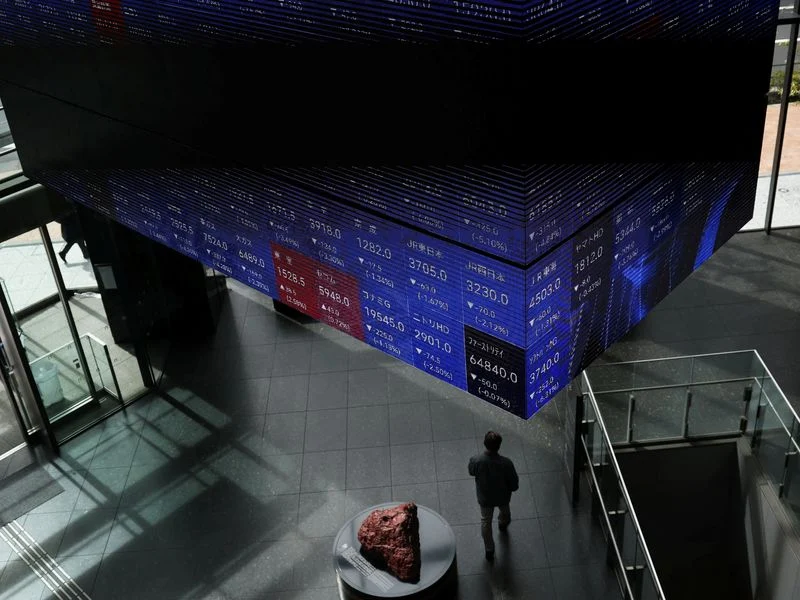

Japan’s Nikkei tops 67,000 for first time on AI boost; SoftBank becomes Japan’s most valuable firm

Tippapatt/iStock via Getty Images

Quarterly review
• The fund underperformed the ICE BofA 1–3 Year BB U.S. Cash Pay High Yield Index benchmark for the quarter.
• Duration and curve positioning detracted from performance during the period, while quality allocation, sector allocation, and

DHARMESH SHAH
HEAD OF TECHNICAL RESEARCH AT ICICI SECURITIES
Where is Nifty headed this week?
The index is undergoing a healthy consolidation in the 23,800-23,200 zone that has set the stage to gradually head toward the 24,500 level in the coming weeks. Strong support is placed at 23,200. Some of the key observations are: Banking, auto, capital goods sectors have set a higher base while the IT sector is showing signs of revival near its decade-long support line. Brent crude oil has broken down below its one-month rising trendline support. Stocks above 50-day and 200-day SMAs within Nifty 500 rose to 68% and 45%. Nifty Midcap index broke out of a three-week consolidation to hit new record highs. Small-cap index bounced off its 52-week EMA base and sits 8% below all-time highs. Trading strategy: Decline towards 23,300-23,400 (Nifty Spot levels) should be used as a buying opportunity for a target of 23,900.
TOP BETS FOR THE WEEK
Tata Power: Buy at Rs 410-424, stop loss at Rs 392, target Rs 470
The stock is rebounding after retesting the April 2026 breakout area of Rs 415. As per the change of polarity principle, the previous resistance is now acting as a strong support, offering a fresh entry opportunity with a favourable risk-reward setup. Sona BLW Precision Forgings: Buy at Rs 600–610, stop loss at Rs 588, target Rs 660.
The stock has witnessed a cupand-handle breakout retest pattern, indicating inherent strength. It is now forming a higher-base formation while sustaining above its cluster of moving averages, signalling a revival of structure in the larger-degree time frame
 Agencies
TANMAY SHAH
RESEARCH HEAD, SIHL
Where is Nifty headed this week?
Nifty remains in a broad consolidation range of 23,200–24,050 with a positive undertone, as long as it sustains above the crucial 23,200 support on a closing basis. Traders can adopt a buy-on-dips strategy with stops at 23,250 and targets near 24,200, though a decisive close below 23,200 would weaken the bullish structure and trigger profit-booking.
Trading strategy: Traders with a moderately bullish outlook may consider a Bull Call Spread for the 9th June expiry by buying the 23,700 Call and simultaneously selling the 24,050 Call. The strategy offers a favourable risk-reward profile of nearly 1:2 while limiting downside risk, making it suitable for the current range-bound yet positive market setup.
TOP BETS FOR THE WEEK:
L&T: Buy at CMP Rs 4,074, stop loss at Rs 3,950, target Rs 4,240- 4,400.
L&T trades firmly above its key moving averages, with a rising RSI and a bullish weekly structure, indicating a favourable risk-reward setup at current levels.
Indian Energy Exchange: CMP Rs 128.31, stop loss at Rs 124.50, target Rs 134-139.80.
The stock has formed a bullish double-bottom near its 50-day moving average, backed by strong volumes.
SUDEEP SHAH
HEAD – TECHNICAL AND DERIVATIVE RESEARCH, SBI SECURITIES
Where is Nifty headed this week?
Nifty remains trapped in a broad consolidation phase, with the monthly chart reflecting indecision through a bearish candle and near-term sentiment tilting slightly bearish after Friday’s late sell-off, though indicators still lack trend strength. The immediate hurdle lies at 23,750–23,800, while support at 23,300– 23,250 is crucial—below which a slide to 23,000 is possible, whereas a move above 23,800 could revive short-term bullish momentum.
Trading strategy: Since the Index is trading in a broader range with volatility, we advise traders to go long on Nifty only on a breakout above 23,800 with a stop loss at 23,500 for a target of 24,250.
TOP STOCKS FOR THE WEEK
Nuvama Wealth Management: CMP Rs 1,554, stop loss at Rs 1,480, target Rs 1,690-1,750.
The stock continues to display a strong price structure, trading above key moving averages across timeframes and reflecting sustained bullish momentum. After a healthy consolidation, it has broken out with buying visible on dips, while relative strength against peers and the broader market remains favourable.
Syrma SGS Technology: CMP Rs 1,088, stop loss at Rs 1,045, target Rs 1,160-1,180.
Syrma remains in a strong uptrend, outperforming peers in the EMS space and holding firmly above key moving averages with sustained buying interest on dips. Momentum indicators stay supportive, and improving relative strength versus the broader market points to further upside potential.

In the Nifty200 pack, eight stocks’ close prices crossed below their 200 DMA (Daily Moving Averages) on May 29, according to stockedge.com’s technical scan data. Trading below the 200 DMA is considered a negative signal because it indicates that the stock’s price is below its long-term trend line. The 200 DMA is used as a key indicator by traders for determining the overall trend in a particular stock. Take a look:

Tracking Terry Smith's Fundsmith 13F Portfolio – Q1 2026 Update

Invesco is an independent investment management firm dedicated to delivering an investment experience that helps people get more out of life.Be the first to know! Sign up for Invesco US Blog and get expert investment views as they post.Disclosure for all Invesco US articles: Before investing, carefully read the prospectus and/or summary prospectus and carefully consider the investment objectives, risks, charges and expenses. The information provided is for educational purposes only and does not constitute a recommendation of the suitability of any investment strategy for a particular investor. Invesco does not provide tax advice. The tax information contained herein is general and is not exhaustive by nature. Federal and state tax laws are complex and constantly changing. Investors should always consult their own legal or tax professional for information concerning their individual situation. The opinions expressed are those of the authors, are based on current market conditions and are subject to change without notice. These opinions may differ from those of other Invesco investment professionals. NOT FDIC INSURED MAY LOSE VALUE NO BANK GUARANTEE All data provided by Invesco unless otherwise noted. Invesco Distributors, Inc. is the US distributor for Invesco Ltd.’s retail products and collective trust funds. Invesco Advisers, Inc. and other affiliated investment advisers mentioned provide investment advisory services and do not sell securities. Invesco Unit Investment Trusts are distributed by the sponsor, Invesco Capital Markets, Inc., and broker-dealers including Invesco Distributors, Inc. PowerShares® is a registered trademark of Invesco PowerShares Capital Management LLC (Invesco PowerShares). Each entity is an indirect, wholly owned subsidiary of Invesco Ltd. ©2015 Invesco Ltd. All rights reserved.

ClearBridge Appreciation Portfolios Q1 2026 Commentary
Nomura Tax-Free USA Fund Q1 2026 Commentary

New blood: Jakub Mensik, Rafael Jodar, Joao Fonseca all reach French QFs

4-bit Relay Logic Counter Begs To Have Its Buttons Pushed


-

 NewsBeat5 days ago
Israel says it has killed new Hamas military leader in Gaza City airstrikes
-

 Tech5 days ago
NASA taps Blue Origin to deliver lunar rovers for Moon Base initiative
-

 Politics7 days ago
Bridgerton Season 5: Cast, Release Date And Everything We Know So Far
-

 News Videos5 days ago
XRP *JUST* SUCCEEDED!!!! CLARITY ACT EXPOSED!!! (SHE EXPOSED IT)
-

 Sports6 days ago
2026 NBA Finals schedule, odds: Knicks await Thunder or Spurs after winning East
-
 Crypto World5 days ago
Micron Crosses $1 Trillion Market Cap as AI Demand Reshapes Memory Sector
-

 Business5 days ago
Selena Gomez Reportedly Upset Over Benny Blanco’s Comments on Her ‘Terrible’ Diet
-

 News Videos3 days ago
This is BROKEN! INSANE 5x MONEY CAR WASH WEEK! The NEW GTA Online UPDATE Today! (GTA5 New Update)
-

 Business7 days ago
BTS Sells Out Four Las Vegas Shows at Allegiant Stadium for ARIRANG World Tour
-
 NewsBeat6 days ago
Hottest May day ever as London hits 34.8C in 2C leap from previous records
-
 Tech6 days ago
China assigns ID codes to 28,000+ humanoid robots
-

 Business6 days ago
Nikkei 225 Surges Past 65,000 for First Time as Iran Peace Hopes Fuel Record Rally
-

 Tech7 days ago
Microsoft’s quiet Claude Code retreat and the real cost of enterprise AI
-

 Tech3 days ago
Waymo dominates autonomous vehicle registrations as Tesla trails behind
-

 NewsBeat7 days ago
Crowds find riverside shade in York as temperatures soar
-
Tech5 days ago
The Samsung pay deal is the moment Korean unions changed register
-

 Tech7 days ago
Westone Audio and Etymotic Acquired by Fidelity Collective in Major IEM Market Move
-
 Entertainment6 days ago
‘Breaking Bad’ Star’s Easy-to-Binge 6-Part Crime Series Spin-Off Is Finally Heading to Free Streaming
-

 Tech5 days ago
Millions of AI agents imperiled by critical vulnerability in open source package
-
Crypto World5 days ago
SpaceX’s $2 Trillion IPO: Why Tech Giants Nvidia (NVDA), Apple (AAPL), and Microsoft (MSFT) May Face Pressure
You must be logged in to post a comment Login