Connect with us
DAPA Banner
DAPA Coin
DAPA
COIN PAYMENT ASSET
PRIVACY · BLOCKDAG · HOMOMORPHIC ENCRYPTION · RUST
ElGamal Encrypted MINE DAPA
🚫 GENESIS SOLD OUT
DAPAPAY COMING

Business

UK Business Owners Slam Labour Welfare-Tax Mindset

Published

on

UK Business Owners Slam Labour Welfare-Tax Mindset

Britain’s small business community has reacted with thinly veiled fury to the disclosure that Work and Pensions Secretary Pat McFadden privately told Lord Mandelson that every Labour meeting was consumed by the question of “who can we tax in order to pay benefits to others”, with one CEO declaring the country is “rearranging deckchairs on a very expensive, heavily-taxed ship”.

The message, sent in May 2025 when McFadden was running the Cabinet Office, was among more than 1,000 pages of correspondence released following the Humble Address compelling disclosure of communications with the former US ambassador. In it, the minister bluntly tells Mandelson that his colleagues “are asking the wrong questions”.

A spokesperson for McFadden said the minister had “fully complied with the Humble Address and handed over all messages”, adding that his only contact with Lord Mandelson since the latter left government had been to urge him to “think about the victims in all this and apologise to them”.

For business owners contending with the highest UK tax burden in seven decades, however, the leaked exchange has confirmed a long-held suspicion: that the Treasury sees enterprise as a cash machine rather than an engine of growth.

Paul Denley, chief executive of London-based Oakham Wealth Management, said the comment reflected a default political reflex that was strangling investment.

Advertisement

“Every government inherits problems. The test is whether it reaches for the same tired tools or has the imagination to do something different. Too often, the focus seems to be on redistribution rather than growth, innovation and wealth creation,” he said.

“The concern is that taxation has become the default policy response to almost every challenge. Successful economies do not become more prosperous by continually redistributing a fixed pool of wealth. They grow by encouraging enterprise, investment and productivity.

“At some point, the conversation has to shift from how we divide the pie to how we make it bigger. Otherwise, we risk managing decline rather than creating prosperity. Without a stronger focus on growth, we are simply rearranging deckchairs on a very expensive, heavily-taxed ship.”

His unease is rooted in hard numbers. The Office for Budget Responsibility now puts the tax take at a 70-year high of around 37 per cent of GDP, the steepest level since records began in 1948 – a trajectory that has only sharpened since Rachel Reeves signalled fresh tax rises to plug a £40bn Budget black hole.

Advertisement

Graham Nicoll, chartered financial planner at NCL Wealth Partners, said the McFadden message would resonate with anyone running a small enterprise.

“Pat McFadden’s reported comment reflects a frustration many business owners recognise, the perception that, as the government faces fiscal pressure, businesses, entrepreneurs, investors and higher earners are often seen as the first source of additional tax revenue,” he said.

“The concern is not necessarily about paying tax, but about the cumulative impact of repeated tax increases and policy changes that impact confidence, the attractiveness of investing and growth in the wider economy. Small businesses create jobs, generate tax receipts and drive local economies.

“By exacerbating a system that rewards inactivity and can encourage unemployment, the balance is wrong. The government needs to focus on promoting people to upskill, to aspire to contribute and to get rewarded – and on driving growth rather than stifling it.”

Advertisement

That argument is buttressed by the latest Office for National Statistics figures, which show more than a million 16- to 24-year-olds are not in education, employment or training, with youth unemployment running at 16.2 per cent – the highest rate since 2015.

Tony Redondo, founder of Newquay-based Cosmos Currency Exchange, was unsparing in his assessment of the administration’s record so far.

“This neatly encapsulates the economic illiteracy of this government. They are not in the least concerned with wealth creation,” he said.

“The cost of this myopia is stark: a record number of young people not in work or education, record-high taxation, an economy on its knees, unemployment at 5 per cent and rising, and government borrowing costs that recently reached levels exceeding those that triggered the Liz Truss meltdown of 2022.

Advertisement

“The Tories deserved a good kicking at the last election, but the country does not deserve this shambolic excuse for a government. Two years into Labour’s first term in office in 15 years, they are behaving like a Manchurian candidate, hell-bent on destroying the UK from the inside out.”

Michelle Lawson, director of Fareham-based Lawson Financial, focused on the impact on those who keep the lights on.

“This makes me sick to the core. Millions of people in the UK of all ages get up every day to go to work, and some have multiple jobs to pay the bills,” she said.

“Labour bleat on with their rhetoric on the importance of business but this shows their lack of knowledge and understanding of the basics. In two years they’ve managed to do what no other government has done, become the most unpopular and the most despised, yet the Prime Minister still hasn’t got the memo.

Advertisement

“With all the notes in these papers, there must be plenty to just give him the push he and the Chancellor need. The damage they have done is still repairable but comes with other concerns. Rather than taxing just about every possible morsel, looking at the systemic root cause of these problems and a good financial review of their spending may help. Another fine mess this shambolic lot have put us in.”

Her view chimes with that of the Federation of Small Businesses, which has spent recent months lobbying the Treasury over the threshold freeze that swept 104,000 small firms into the business rates net in April 2026.

Steven Greenall, director of Greenall Estate Planning, offered the bluntest verdict of all: “Labour are doing their utmost to talk themselves out of winning the next election.”

For Sir Keir Starmer’s government, the political risk is that the McFadden message becomes shorthand for a Whitehall mindset that asks reflexively who to tax next rather than how to grow the economy out of trouble. For Britain’s SME owners – the constituency Labour spent two years courting in opposition – the dossier reads less as a leak and more as confirmation.

Advertisement

Jamie Young

Jamie Young

Jamie is Senior Reporter at Business Matters, bringing over a decade of experience in UK SME business reporting.
Jamie holds a degree in Business Administration and regularly participates in industry conferences and workshops.

When not reporting on the latest business developments, Jamie is passionate about mentoring up-and-coming journalists and entrepreneurs to inspire the next generation of business leaders.

Advertisement
Continue Reading
Click to comment

You must be logged in to post a comment Login

Leave a Reply

Business

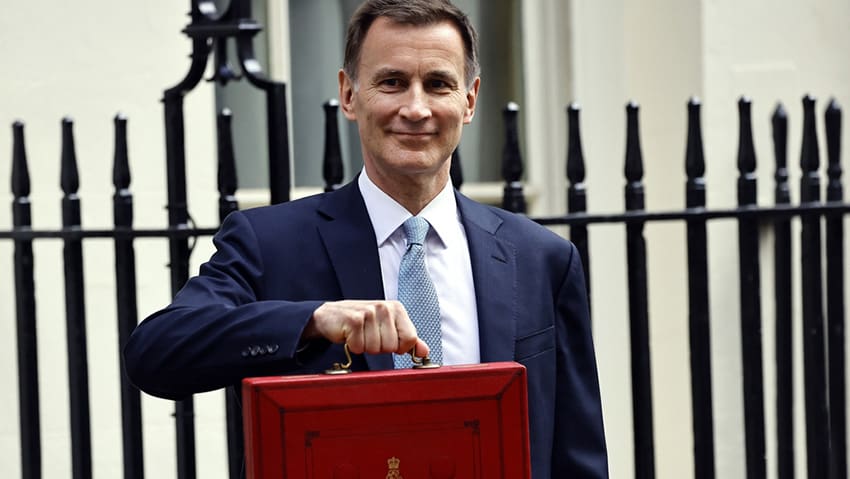
Can Jeremy Hunt Save Britain? The Former Chancellor’s Growth Plan Reviewed

Published

on

Can Jeremy Hunt Save Britain? The Former Chancellor's Growth Plan Reviewed

In Can We Be Rich Again? the former chancellor delivers a refreshingly self-aware diagnosis of what has gone wrong with the British economy, and a costed prescription that SMEs, in particular, ought to read with interest.

He could so easily have phoned it in. A bulky political memoir, a couple of nicely judged knives slipped between the shoulder blades of former Cabinet colleagues, an amusing yarn or two from Davos and the IMF spring meetings, and a discreet bit of humble-bragging about steadying the ship after the Truss-Kwarteng mini-Budget. Sir Jeremy Hunt, now liberated from the red box and with rather more time on his hands, could have produced precisely the sort of worthy but unreadable volume that gathers dust on the shelves of every Westminster bookshop.

To his very considerable credit, he has not. In Can We Be Rich Again?, the former chancellor has instead set himself the rather harder task of working out, with disarming honesty about his own role in the muddle, what has gone so badly wrong with the British economy, and how it might still be put right.

A question that should not feel provocative

That the title itself reads as slightly cheeky is, in truth, a damning indictment of where we have arrived. Rich? In an economy where output per person has barely shifted since the eve of the pandemic, the Office for Budget Responsibility’s March 2026 outlook puts real GDP per head growth at an average of just 1.1 per cent a year between now and 2030, against the 2 per cent enjoyed before the financial crisis, the average voter has long since lowered the bar to “not visibly poorer than last year.”

Sir Jeremy will have none of it. “We still have a lot going for us,” he writes, with the breezy confidence of a man who has just remembered he is no longer responsible. Britain, he reminds the reader, retains the integrity of its institutions, robust property rights and a serious legal system. It is the most open of the major economies and houses the third-largest technology ecosystem on the planet, behind only the United States and China. Harness those advantages, he argues, and the British economy can grow again. The diagnosis chimes neatly with the IMF’s own 2026 Article IV concluding statement, which praised the broad direction of the government’s investment-and-reform agenda while warning that “credibility will ultimately hinge on sustained implementation.”

Advertisement

The eight-point plan, costed

What lifts the book above the standard centrist-Tory lament is that Sir Jeremy has done his homework. Each of his prescriptions is tested against an estimated effect on GDP, lending the manifesto a refreshing absence of magical thinking.

The two opening shots are familiar enough: bring taxes down, and adopt a new fiscal rule that compels debt to grow more slowly than output. Then come the supply-side reforms, eight of them, that form the spine of the book. Fix a welfare system that has parked too many working-age adults on long-term sickness benefit. Relax planning rules so that Britain can build something, anything, again. Drive public-sector productivity higher. Hand local mayors the powers and budgets to rebuild their regions. Embrace artificial intelligence rather than regulating it into irrelevance. Restart oil and gas production in the North Sea. Repair an education system that has spent decades failing the 50 per cent of school-leavers who do not go to university. And, perhaps closest to the heart of this magazine’s readership, properly encourage entrepreneurship.

Put the whole package to work, Sir Jeremy reckons, and Britain could add three percentage points a year to its growth rate, a compounded gain of around 20 per cent over a decade. That is not loose change. It is the difference between managed decline and a recognisably advanced economy. For founders and owner-managers, it is the difference between scaling and surviving, a tension Business Matters has chronicled at length in its coverage of SME expansion plans.

Quibbles, mostly minor

It is not difficult to pick at the detail. AI may, in time, prove less revolutionary than its loudest evangelists promise, although the early productivity numbers, Business Matters recently reported research suggesting SMEs deploying AI can unlock productivity gains of between 27 and 133 per cent, argue otherwise. Politicians have been promising to fix vocational training for the best part of a century, generally without troubling the outcomes.

Advertisement

More seriously, Sir Jeremy remains, in temperament, a pragmatic centrist. He instinctively underplays the ferocity of the resistance any reforming chancellor will encounter from what Liz Truss memorably christened “the anti-growth coalition”, that diffuse weave of judges, quangos, NGOs and Whitehall lifers known to its critics as “the Blob”. After five years of a Labour administration that has fed and watered that ecosystem with some enthusiasm, it will be denser, better funded and considerably more confident than it was when he occupied 11 Downing Street.

The book Hunt wishes he had been handed

These, though, are quibbles. Sir Jeremy is unlikely to return to office, and the book never pretends to be a Treasury-ready blueprint. Its real virtue is in marshalling, in one place and with proper analytical rigour, every credible lever available to revive British growth, and in making the unfashionable case that none of this is especially difficult. Read in the context of the optimism filtering back through Britain’s small business community, the message lands harder still: the country wants to grow; it just needs a government that lets it.

By the close of this decade, he warns, Britain will look less like an advanced economy than a developing one. The flipside, he points out with a wry smile audible in the prose, is that emerging economies have spent decades demonstrating that catch-up growth is largely a matter of copying what works elsewhere. “My analysis shows that delivering it may not be easy, but it is not impossible either,” he writes. “All the solutions have been tried in other countries with similar democratic constraints to ourselves.”

The most uncomfortable passage in the book is also the most revealing. “If that’s the answer, why on earth didn’t you do it when you had the chance?” Sir Jeremy asks himself, with the directness of a man who knows the question is coming. “The truth is that no one starting a job can ever know all the answers. In some ways, I wish I had been given this book on the day I became chancellor.”

Advertisement

Whoever inherits the Treasury in 2028 or 2029, and the polling suggests it will not be a Conservative, would do well to take him at his word. Can We Be Rich Again? is, despite itself, the most useful piece of economic writing produced by a former British chancellor in a generation. It deserves to be read, argued with, and, on most counts, acted upon.

Can We Be Rich Again? by Sir Jeremy Hunt is published by Swift at £25.


Jamie Young

Jamie Young

Jamie is Senior Reporter at Business Matters, bringing over a decade of experience in UK SME business reporting.
Jamie holds a degree in Business Administration and regularly participates in industry conferences and workshops.

When not reporting on the latest business developments, Jamie is passionate about mentoring up-and-coming journalists and entrepreneurs to inspire the next generation of business leaders.

Advertisement
Continue Reading

Business

Welsh Government sets out its key economic target

Published

on

Business Live

It aims to half Wales’s productivity gap with the UK as a whole

Productivity

The new Plaid Cymru Welsh Government has set a key economic target of halving Wales’ productivity gap with the UK average within a decade.

Latest figures from the ONS show that output per head in Wales is around 85% of the UK level.

Advertisement

The productivity target is seen by the administration as achievable, given that some of the key levers needed to improve output, such as skills and education, are devolved.

However, it will still be a challenge as other nations and regions of the UK will also be seeking to improve their respective productivity rates, with AI a key driver.

Adam Price, Cabinet Minister for Enterprise, Connectivity and Energy, confirmed the target in a statement in the Senedd, saying the new administration of Rhun ap Iorwerth is committed to adopting a different approach, with a goal of bringing to an end generations of low productivity.

The national productivity goal will be delivered in partnership with businesses, trade unions, regional stakeholders and the UK Government, with a specific focus on supporting firms to scale and helping to unlock the “full potential of the Welsh economy.”

Advertisement

Mr Price said: “For too long, Wales has struggled to close the gap with the rest of the UK when it comes to productivity. This target shows our clear commitment to improving the lives of people living in Wales. By focusing on productivity, we will deliver higher pay, stronger businesses and thriving communities.

This goal will give direction to our new Welsh innovation and development agency, shaping how we support businesses, develop skills and invest in the foundations of a stronger, more competitive Welsh economy.

“We are determined to turn ambition into action, creating a stronger, more productive economy that delivers for people in every part of Wales.”

The last Welsh Government economic target, which was later described as only being an aspiration, was set by the former Labour Cardiff Bay administration of Rhodri Morgan, in 2000. It aimed to improved the gross value added per head gap to 90% of the UK average by 2010. However, like today it never improved and continues to languish at around 73%.

Advertisement

To support its productivity drive, the Welsh Government is also committed to conducting an across Wales and sector skills audit, to ensure that its support is meeting the requirements of firms seeking to expand. It is also establishing a new at arm’s length of government national development agency, which will oversee Welsh Government support and inward investment efforts. Mr Price said the precise remit and structure of the organisation is currently being worked , although it will take on business support and inward investment functions. He said it was too early to say when it could become operational. However, it is likely to based on the Transport for Wales model, which as a company of the Welsh Government, has been able to bring to expertise from the private sector.

Details of how the productivity target will be measured and monitored will be announced later in the year with a role for the proposed economic and fiscal commission.

Continue Reading

Business

King told me Post Office scandal was 'dreadful', says oldest victim

Published

on

King told me Post Office scandal was 'dreadful', says oldest victim

Betty Brown says she is accepting the honour on behalf of all the victims of the scandal.

Continue Reading

Business

ChronoScale Stock Soars 15% on AI Compute Momentum Following Recent Spin-Off

Published

on

Hesai Group Shares Climb 12% on Strong LiDAR Demand and

DALLAS — Shares of ChronoScale Corporation surged more than 15% in morning trading Tuesday, climbing to $19.55 as investors continued to embrace the newly independent artificial intelligence cloud computing company’s focused strategy and leadership additions in the fast-growing AI infrastructure sector.

The sharp gain came on solid volume for the small-cap name, reflecting renewed enthusiasm for dedicated AI compute providers amid broader sector tailwinds. As of 11:34 a.m. EDT, ChronoScale shares had risen $2.58, or 15.20%, on the Nasdaq Capital Market. The move pushed the company’s market capitalization toward $70 million.

ChronoScale, which began trading independently in early May 2026 after a spin-off from Applied Digital Corp., has seen significant volatility but strong overall momentum since its debut as a pure-play accelerated compute platform for demanding AI workloads.

Strategic Spin-Off and AI Focus

Advertisement

The company emerged from Applied Digital’s separation of its cloud business, with Applied Digital retaining approximately 97% ownership after investing $15.75 million through a private investment in public equity (PIPE) transaction. The move created a dedicated entity focused exclusively on high-performance AI computing infrastructure.

ChronoScale operates data centers and provides accelerated compute solutions optimized for large-scale AI training and inference. Its transition into an independent public company has allowed it to sharpen its focus on GPU-based platforms and next-generation AI infrastructure demands.

The recent leadership appointment of Cenly Chen as chief executive officer and board member has been a key catalyst. Chen, who previously served as chief growth officer at Super Micro Computer, brings extensive experience in scaling AI server and compute infrastructure businesses. His appointment in early May signaled the company’s ambition to capture a larger share of the exploding AI data center market.

Market Reaction and Performance

Advertisement

Since gaining independence, ChronoScale shares have experienced substantial swings typical of small-cap technology companies tied to AI themes. The stock has climbed significantly from its post-spin levels, though it remains well below some earlier highs reached in late May. Year-to-date performance reflects investor bets on AI infrastructure growth despite ongoing operational challenges.

Tuesday’s trading activity aligns with positive sentiment across AI-related stocks. Peers in data center and compute spaces have also seen gains as hyperscalers and technology giants continue expanding capacity for artificial intelligence applications. ChronoScale’s positioning as a specialized provider has drawn attention from retail and institutional investors seeking exposure to this high-growth area.

Operational Background and Challenges

ChronoScale’s roots trace back to a business combination involving Applied Digital’s cloud assets and legacy operations from what was previously Ekso Bionics before the strategic pivot. The company now emphasizes sustainable, high-density compute solutions designed to handle the intensive power and cooling requirements of modern AI models.

Advertisement

Financial results remain in investment mode, with recent quarters showing losses as the company ramps capacity and invests in technology infrastructure. Analysts note that execution on customer contracts and utilization rates will be critical for long-term profitability. The firm benefits from Applied Digital’s continued significant ownership and strategic support.

Broader AI Infrastructure Landscape

The surge in ChronoScale shares underscores the market’s appetite for companies enabling AI expansion. Data center demand has accelerated as major technology firms race to build out capacity for training increasingly sophisticated models. Silicon carbide, advanced cooling, and high-performance networking solutions are all seeing heightened interest.

ChronoScale aims to differentiate through its accelerated compute platforms purpose-built for AI. Management has highlighted potential revenue opportunities from long-term contracts with hyperscalers and AI developers seeking specialized infrastructure.

Advertisement

Analyst Perspectives and Outlook

Coverage of the newly public entity remains limited, but early commentary has highlighted both opportunity and risk. Some analysts point to the strong AI tailwinds and experienced leadership as reasons for optimism, while others caution about the capital-intensive nature of the business and competition from larger players.

The company’s small float and recent spin-off status contribute to elevated volatility. Short interest and options activity have been notable, typical for names with high retail investor interest in the AI space.

Near-term catalysts could include updates on capacity utilization, new customer wins, or further details on expansion plans. Fiscal year-end shifts and upcoming earnings will provide greater visibility into operational progress.

Advertisement

Risk Factors

Despite the positive trading session, challenges remain. ChronoScale operates in a competitive environment where larger established data center operators hold advantages in scale and capital access. Execution risks around infrastructure buildouts, energy costs, and technology integration are significant.

Macroeconomic factors, including interest rates and technology spending cycles, could influence growth. The company’s history as a smaller entity transitioning focus also introduces integration and operational uncertainties.

Path Forward

Advertisement

As ChronoScale builds its independent track record, investor attention will center on its ability to convert AI market demand into sustainable revenue and margins. The recent CEO appointment and spin-off structure position the company to move quickly in a dynamic sector.

Tuesday’s gains reflect confidence in the AI compute story, but sustained performance will depend on fundamental delivery. Market participants will monitor volume, news flow, and any analyst initiations for additional signals.

With the broader technology sector remaining sensitive to AI developments, ChronoScale’s trajectory offers a microcosm of investor sentiment toward specialized infrastructure plays. The coming months will test whether the company can capitalize on its repositioning and leadership expertise amid intense industry competition.

Advertisement
Continue Reading

Business

Israeli fire kills four people in Gaza, medics say

Published

on

Israeli fire kills four people in Gaza, medics say


Israeli fire kills four people in Gaza, medics say

Continue Reading

Business

STMicroelectronics Shares Surge 15% on AI Data Center Growth and Strong Semiconductor Demand

Published

on

Camtek Stock Rockets 15% on Massive AI Chip Orders and

GENEVA — Shares of STMicroelectronics N.V. climbed more than 15% in morning trading Tuesday, reaching $79.69 as investors responded to the chipmaker’s strengthened position in artificial intelligence infrastructure and recovering demand across automotive and industrial markets.

The sharp rise came on elevated volume, extending recent gains for the European semiconductor company. As of 11:45 a.m. EDT, STMicroelectronics shares had risen $10.67, or 15.46%, on the New York Stock Exchange. The move pushed the company’s market capitalization higher, reflecting renewed confidence in its growth trajectory amid the global AI expansion.

AI and Data Center Momentum

STMicroelectronics has significantly raised its revenue ambitions in the data center segment, now targeting well above $500 million for 2026 and more than $1 billion in 2027. This upward revision underscores the company’s growing role in supplying components for AI infrastructure, including power management and connectivity solutions essential for high-performance computing clusters.

Advertisement

The company’s strategic pivot toward AI-driven applications has resonated with investors seeking exposure to the semiconductor supply chain supporting hyperscale data centers. Management highlighted strong bookings and engaged customer programs in personal electronics and communications as additional tailwinds during its first-quarter earnings update.

Recent Financial Performance

In the first quarter of 2026, STMicroelectronics reported net revenues of $3.1 billion, exceeding expectations and marking a solid year-over-year increase. The results benefited from improving demand and contributions from strategic acquisitions, including the NXP MEMS sensor business.

For the second quarter, the company guided for revenues around $3.45 billion at the midpoint, representing sequential growth of 11.6% and year-over-year expansion of nearly 25%. Gross margin is projected at 34.8% on a GAAP basis, with management anticipating sequential improvement throughout the year as utilization rates rise.

Advertisement

CEO Jean-Marc Chery noted signs of broader market recovery, with pricing trends stabilizing and selective increases implemented across product lines. The company also pointed to positive developments in automotive and industrial segments, where inventory normalization has supported renewed ordering.

Automotive and Edge AI Innovations

STMicroelectronics continues advancing in the automotive sector with innovations like the Stellar P3E microcontroller, the industry’s first with integrated neural network acceleration for edge AI applications. This technology targets software-defined vehicles, enabling real-time intelligence for powertrain, advanced driver assistance systems and electrification.

The automotive and discrete group remains a core pillar, with silicon carbide power devices gaining traction for electric vehicles. Broader industrial and personal electronics segments also show resilience, supported by the company’s diversified portfolio spanning microcontrollers, sensors and power solutions.

Advertisement

Space and Emerging Markets

The company has set ambitious targets in the space semiconductor business, projecting more than $3 billion in cumulative revenue from 2026 through 2028. This growth is driven by demand for components in low-Earth-orbit satellite constellations, where STMicroelectronics supplies radiation-hardened and high-reliability solutions.

New product introductions, such as gallium nitride converters for efficient power applications, further expand the company’s addressable market in energy-conscious sectors including appliances and renewable energy systems.

Market Context and Analyst Views

Advertisement

The semiconductor industry has shown signs of stabilization after a period of inventory correction. STMicroelectronics, as a major supplier to automotive, industrial and consumer electronics markets, is well-positioned to benefit from this rebound while capturing new opportunities in AI.

Analysts have responded positively to recent earnings revisions, with consensus estimates for full-year 2026 showing upward movement. Several firms have highlighted the company’s improved margin trajectory and exposure to high-growth areas as reasons for optimism.

However, challenges persist. The company continues managing unused capacity charges and restructuring costs related to manufacturing optimization. Geopolitical tensions, trade dynamics and fluctuating end-market demand remain key variables.

Strategic Outlook

Advertisement

STMicroelectronics operates a vertically integrated model with significant manufacturing capabilities in Europe and Asia. Its focus on specialized technologies — including wide-bandgap semiconductors like silicon carbide and gallium nitride — provides differentiation in an increasingly competitive landscape.

Management expects full-year 2026 revenue to achieve double-digit growth, with further margin expansion as revenues scale above $4 billion per quarter. The company’s pipeline of engaged programs and new design wins supports this confidence.

Investors appear to be pricing in sustained AI momentum and automotive recovery. The stock’s performance Tuesday stands out against a mixed broader market, highlighting selective enthusiasm for semiconductor names with clear growth narratives.

Broader Industry Implications

Advertisement

The surge in STMicroelectronics shares reflects the market’s focus on companies bridging traditional semiconductor applications with emerging AI and electrification trends. As data centers consume more power and vehicles become smarter, suppliers of efficient power and intelligent processing solutions stand to gain.

For STMicroelectronics, Tuesday’s trading activity caps a period of positive momentum following its April earnings report. With the second quarter underway, attention will shift to execution on guidance and any incremental updates on major customer engagements.

Market participants will monitor upcoming industry events and potential commentary from major clients in automotive and technology sectors. While volatility remains a feature of the semiconductor cycle, current indicators suggest a constructive backdrop for well-positioned players like STMicroelectronics.

The company’s ability to balance near-term operational improvements with long-term strategic investments will determine whether today’s enthusiasm translates into sustained shareholder value. As global demand for semiconductors evolves, STMicroelectronics’ diversified approach and innovation pipeline position it as a notable contender in the AI-enabled future.

Advertisement
Continue Reading

Business

Youth Unemployment to Hit 17.8% by 2027 as AI and Tax Rises Bite, BCC Warns

Published

on

Youth Unemployment to Hit 17.8% by 2027 as AI and Tax Rises Bite, BCC Warns

Nearly one in five young Britons could be out of work within little more than a year, as higher payroll taxes, a sharply rising minimum wage and the relentless march of artificial intelligence combine to shut school and university leavers out of the jobs market.

In a sobering update to its quarterly economic outlook, the British Chambers of Commerce (BCC), one of the country’s most influential business lobby groups, forecasts that the unemployment rate among 16 to 24-year-olds will climb to 17.8 per cent in 2027, up from an already uncomfortable 16.9 per cent this year. The deterioration would push youth joblessness to its highest level in well over a decade and lend fresh weight to warnings of a “lost generation” of workers.

The BCC singled out the rapid take-up of AI tools by employers, typically to handle the kind of routine, entry-level tasks that have traditionally given young people a foot on the ladder, as a leading culprit. A separate Business Matters investigation has shown how the big four accountancy firms are already slashing graduate hiring as AI replaces entry-level roles, a pattern now spreading rapidly across financial services, legal, marketing and back-office functions.

Government policy is doing little to soften the blow. The BCC believes ministers’ decisions to lift employer national insurance contributions and push through one of the largest minimum wage increases on record have made younger, less experienced staff disproportionately expensive to hire, a point business owners and payroll specialists have made repeatedly since the Treasury signalled the increased cost burden facing employers.

The findings reinforce a warning issued last week by Alan Milburn, the former Labour cabinet minister, who told ministers that without urgent intervention as many as 1.25 million young people could be classed as not in employment, education or training (NEET) by the early 2030s. Business Matters has previously reported that the NEET cohort is already nudging one million, with Office for National Statistics figures showing the share of economically inactive young people at its highest level since records began in 1992.

Advertisement

David Bharier, deputy director of economics and insights at the BCC, said the picture pointed to a structural, not merely cyclical, problem. “The UK is not in recession, but the economy remains trapped in a cycle where each recovery is interrupted before gaining traction, and firms go back on the defensive,” he said. “With youth unemployment approaching 18 per cent by mid-2027, the UK risks weakening the skills pipeline it needs for the next economy.”

Overall joblessness is forecast to reach 5.5 per cent next year, up from the current 5 per cent. Gross domestic product, the BCC said, will grow by just 0.9 per cent this year, 1 per cent in 2027 and 1.3 per cent in 2028, with the services sector, which now accounts for around 80 per cent of national output, doing most of the heavy lifting.

Inflation, meanwhile, is being given an unwelcome boost by surging global energy prices linked to the war in the Middle East. The BCC now sees the consumer prices index peaking at 3.8 per cent by the end of 2026, well above its previous forecast of 2.7 per cent, before easing back to 2.3 per cent next year and returning to the Bank of England’s 2 per cent target in 2028. The latest ONS data put inflation at 2.8 per cent in April, down from 3.3 per cent in March.

Faced with that mix of weak growth, rising joblessness and stubborn price pressures, the BCC expects the Bank’s Monetary Policy Committee to hold the base rate at 3.75 per cent for the remainder of the year, with its next decision due on 18 June. At its April meeting the Bank said it “stands ready to act” if inflation proves sticky, but officials are clearly mindful of the damage a further squeeze would do to a fragile labour market.

Advertisement

“Much hinges on the course of the Middle East conflict,” Bharier said. “Inflation is likely to edge towards 4 per cent this year, but the Bank of England faces a different scenario compared with the 2022 crisis. Weaker growth, rising unemployment and already restrictive monetary policy mean the Bank could seek to manage this without raising the interest rate and risking further damage.”

For SMEs, long the proving ground for first jobs, apprenticeships and on-the-job training, the cocktail of higher employment costs, geopolitical uncertainty and falling investment is becoming hard to swallow. The BCC expects business investment to fall by 2.2 per cent this year and a further 0.1 per cent in 2027 before recovering by 2.3 per cent in 2028. Without a meaningful shift in policy, the danger is that today’s hiring freeze becomes tomorrow’s lost decade for Britain’s young workers.


Jamie Young

Jamie Young

Jamie is Senior Reporter at Business Matters, bringing over a decade of experience in UK SME business reporting.
Jamie holds a degree in Business Administration and regularly participates in industry conferences and workshops.

When not reporting on the latest business developments, Jamie is passionate about mentoring up-and-coming journalists and entrepreneurs to inspire the next generation of business leaders.

Advertisement

Continue Reading

Business

British Land appoints Joanne McNamara as new CEO

Published

on

Business Live

The Oxford Properties executive is expected to join the FTSE 100 landlord by the end of November

Speke's New Mersey Retail Park

New Mersey Retail Park, Liverpool(Image: James Gillham/British Land)

British Land has appointed Joanne McNamara from Oxford Properties as its next chief executive.

Advertisement

Ms McNamara currently serves as executive vice-president of the real estate company operated by major Canadian pension fund, the Ontario Municipal Employees Retirement System.

The appointment follows five months after the FTSE 100 property owner informed shareholders that long-serving chief executive Simon Carter was departing.

Mr Carter is leaving the business to lead warehouse developer P3 Logistics Parks.

His replacement brings more than two decades’ experience in the industry and joined Oxford in 2010, leading substantial investment and development deals throughout her tenure at the company.

Advertisement

She is anticipated to commence at British Land by the end of November.

Ms McNamara said: “British Land is a business that I have always admired, with an impressive track record of delivering and managing best in class places across the UK and an expert team at its helm.

“I am very much looking forward to working with the board, executive committee and all of my new colleagues as we work together to build on what is already a fantastic platform for growth.”

William Rucker, chairman of British Land, said: “Joanne is one of Europe’s most respected real estate professionals.

Advertisement

“With her deep expertise of real estate, valuable experience in the world of private capital and a strong reputation for decisive leadership, she is exceptionally well placed to drive the business forward.” Aarin Chiekrie, equity analyst at Hargreaves Lansdown, said: “Looking ahead, British Land looks well-positioned, with occupancy rates sitting high and good exposure to the science and technology sector, where strong demand from AI companies has been a big tailwind.

“The group’s finances remain strong, with sufficient funding to support future growth as developments make a comeback and to maintain a respectable 6.2% dividend yield for income-focused investors.”

British Land’s share price climbed 1.9% on Tuesday.

The company owns properties across the UK, including Meadowhall shopping centre in Sheffield, the New Mersey retail park in Liverpool, Crown Point Shopping Park in Greater Manchester, Orbital Retail Park in Cannock, Teesside Park in Stockton-on-Tees and Southgate shopping centre in Bath.

Advertisement
Continue Reading

Business

Appian: Tech Platform With Margin And Cashflow Recovery Trends, Despite Q1 Net Loss (APPN)

Published

on

Appian: Tech Platform With Margin And Cashflow Recovery Trends, Despite Q1 Net Loss (APPN)

This article was written by

Albert Anthony is the pen name of a business author on Amazon and his newest book is “How To Pick Stocks: 8 Steps For Long-Term Investing with Fundamental & Technical Analysis,” now available as a 2026 edition paperback and Kindle ebook in several regions including the US, UK, Canada, and Europe. The author is an analyst & contributor for investing platform Seeking Alpha since 2023, where he has nearly 2,000 followers and has covered hundreds of stocks in multiple sectors including banks/financials, REITs, insurance, pharma, and more. He has also written for platforms like Investing dot com, and has taken part in many business conferences includes Bloomberg Adria’s Investment Outlook 2026 as well as Money Motion 2026. Albert Anthony has Croatian-American roots, having grown up in the US and living in the NYC/New Jersey area as well as the Austin Texas area while working in enterprise IT roles at several prominent companies, including a top 10 financial firm. The author earned a B.A. from Drew University, and also completed certifications from Microsoft, CompTIA, and Corporate Finance Institute where he earned the specialization in risk management. He is founder of a boutique equities research firm, Albert Anthony & Company, which is a trade name both in the US and Croatia. Besides his writing and analyst work, the author has been active on camera as well, as a film/TV extra for casting agencies in Croatia/Europe, and also took part in roundtable panel discussions and appeared in several media stories in that region. You can also check out the author’s video content on the Albert Anthony channel on YouTube where he discusses investing topics, @author.albertanthony Please note: The author does not write about non-publicly traded companies, small cap stocks, crypto, or startup CEOs, so any such mail received and pitches from PR agencies will be deleted. Any official mail to the author should be sent to albertanthony.info@gmail.com. *Author Disclaimer: Albert Anthony and Albert Anthony & Co, is a US-based sole proprietorship registered as a trade name in Austin, Texas, and a sole proprietor registered in Croatia. The author nor his company are registered financial advisors and do not provide personalized financial advisory services to clients and do not manage client assets but provide general markets commentary and research as well as actionable insights based on publicly-available data and their own analysis. The author does not sell or market financial products and services, nor is compensated by any company for rating them. The author does not hold any material position in any stock he rates at the time of writing, unless otherwise disclosed. All investment is assumed to be at risk and readers are expected to do their due diligence beyond the scope of this author’s commentary, agreeing to indemnify the author of any liability for potential investment losses.

Analyst’s Disclosure: I/we have no stock, option or similar derivative position in any of the companies mentioned, and no plans to initiate any such positions within the next 72 hours. I wrote this article myself, and it expresses my own opinions. I am not receiving compensation for it (other than from Seeking Alpha). I have no business relationship with any company whose stock is mentioned in this article.

Seeking Alpha’s Disclosure: Past performance is no guarantee of future results. No recommendation or advice is being given as to whether any investment is suitable for a particular investor. Any views or opinions expressed above may not reflect those of Seeking Alpha as a whole. Seeking Alpha is not a licensed securities dealer, broker or US investment adviser or investment bank. Our analysts are third party authors that include both professional investors and individual investors who may not be licensed or certified by any institute or regulatory body.

Advertisement
Continue Reading

Business

Amazon moves Prime Day to June, citing World Cup and America’s 250th anniversary

Published

on

Amazon moves Prime Day to June, citing World Cup and America’s 250th anniversary

Amazon will hold its annual Prime Day sales event from June 23 through June 26 this year, moving one of its biggest shopping promotions out of its traditional July window as the retailer looks to capitalize on a crowded summer calendar.

The shift comes as Amazon targets consumer spending around the FIFA World Cup, Independence Day and celebrations marking America’s 250th anniversary, according to a company executive.

Advertisement

Prime Day generated $24.1 billion in U.S. online spending in 2025 after Amazon expanded the event from two days to four, according to Adobe Analytics.

“This year, we have the (FIFA) World Cup,” Jamil Ghani, Amazon Prime international vice president, told Reuters. “We’ve got also the 250th anniversary of U.S. independence, and so we thought this week (beginning June 22) was the best week for us to hold Prime Day.”

AMAZON ACCUSED OF KEEPING HUNDREDS OF MILLIONS IN TARIFF COSTS TO CURRY FAVOR WITH TRUMP ADMINISTRATION

amazon prime delivery

Amazon’s Prime Day sales event will be held in June this year. (Isabella Falsetti/Bloomberg via Getty Images)

The FIFA World Cup runs from June 11 through July 19, while Independence Day falls on July 4. Amazon said it considers major global events, religious holidays and bank holidays when selecting Prime Day dates each year.

Advertisement

Amazon announced in April that Prime Day 2026 would offer Prime members discounts across categories including electronics, apparel, beauty products, kitchen goods and groceries. The event will take place in more than two dozen countries, including the United States, Canada, the United Kingdom and Germany.

AMAZON’S 30-MINUTE DELIVERY PUSH RAISES STAKES IN RACE FOR SPEED

Amazon is also pushing deeper into groceries and household essentials as it expands same-day and next-day delivery, a key part of its effort to compete more aggressively with Walmart.

The Amazon Prime logo is displayed on the side of an Amazon delivery truck

Prime Day generated $24.1 billion in U.S. online spending in 2025 after Amazon expanded the event from two days to four, according to Adobe Analytics. (Justin Sullivan/Getty Images)

The Seattle-based retailer hopes customers will stock up on groceries and everyday household items ahead of World Cup watch parties and Independence Day celebrations. The company has been investing heavily in faster delivery services, including expanded same-day delivery options for perishable foods.

Advertisement
Ticker Security Last Change Change %
AMZN AMAZON.COM INC. 261.26 -9.38 -3.47%

CALIFORNIA ACCUSES AMAZON OF PUSHING RIVALS TO RAISE PRICES

Ghani said grocery items are expected to account for a larger share of Amazon deliveries in the future as consumers purchase food and household essentials more frequently than discretionary products such as electronics, apparel and beauty items.

Amazon Prime van

Amazon is targeting consumer spending around the FIFA World Cup, Independence Day and celebrations marking America’s 250th anniversary. (Getty Images)

“As groceries and household essentials grow as a part of our business overall … it’ll grow as a percent of the total units that we ship,” Ghani said.

CLICK HERE TO GET FOX BUSINESS ON THE GO

Advertisement

Last year’s Prime Day event was Amazon’s largest on record, according to the company, with customers purchasing products across more than 35 categories and independent sellers reaching record sales levels.

Reuters contributed to this report. 

Continue Reading

Trending

Copyright © 2025