

Business
Business Rates Reform 2026: 104,000 Small Firms Hit by Threshold Freeze

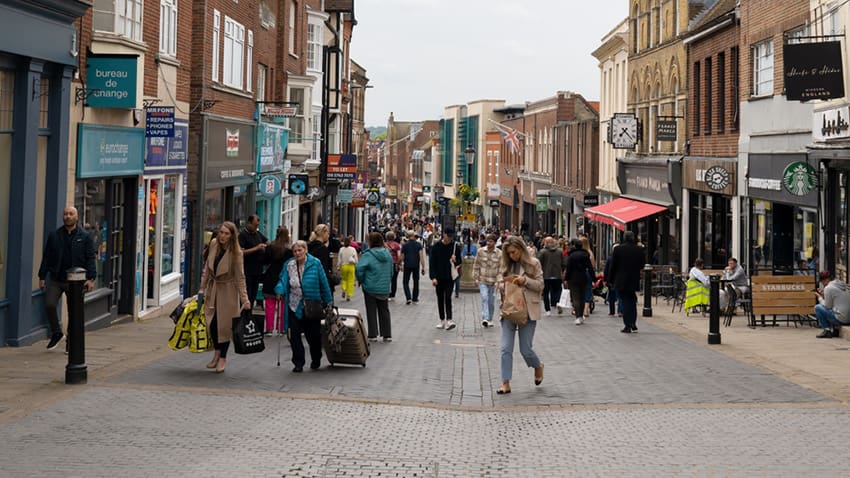
The Federation of Small Businesses says a decade-long freeze on the relief threshold, coupled with backdated changes hitting shared offices, is “directly undermining” the government’s growth agenda.
More than 100,000 small companies have been pulled into the business rates regime for the first time, prompting the country’s largest small business lobby group to demand an urgent rethink from the Treasury.
The Federation of Small Businesses (FSB) has written to Daniel Tomlinson, exchequer secretary to the Treasury, urging ministers to lift the threshold at which premises become liable for the property tax, and to reverse a separate change in methodology that is leaving start-ups and micro-businesses in shared offices nursing unexpected bills running into thousands of pounds.
By piling further costs on the smallest firms, the FSB warned, the existing regime “directly undermines the government’s own growth ambitions”, a pointed reminder that the chancellor’s pro-growth rhetoric is being tested on the high street as much as in the City.
Business rates are levied on most commercial properties in England and are calculated on a building’s rateable value, an estimate of its open-market annual rent set by the Valuation Office Agency (VOA). Single-site small firms pay nothing if their rateable value sits below £15,000, a threshold that has not budged in ten years.
That decade of inertia, combined with the VOA’s latest revaluation cycle, means an estimated 104,000 small business premises were dragged inside the rates regime when the new financial year began in April. Before taking office in 2024, Labour had floated raising the threshold for small business rates relief from £15,000 to £25,000. Two years on, the FSB wants the chancellor to honour the spirit of that pledge.
Lifting the bar, the group argues, would predominantly benefit firms outside the capital, where property values keep most premises below the £25,000 mark. “This would take thousands of businesses out of paying the regressive pre-profit tax that we know holds back growth,” the FSB said, “and these are primarily across the north-east, north-west, Yorkshire and south-west, where rateable values, and prosperity levels, are lower.”
The FSB’s letter also flags what it calls an “escalating problem” for firms based in serviced and shared offices, typically start-ups and micro-businesses that have driven much of the post-pandemic recovery in regional cities.
A VOA change to how rateable values are calculated for such buildings, introduced in April and applied retrospectively, has stripped many tenants of the relief they previously claimed. Some are now staring at backdated demands running to several thousand pounds, an issue that has already drawn warnings from operators that the reclassification could put serviced offices at risk across regional markets.
“If this change of methodology from the VOA continues unchecked, the impact would be concentrated overwhelmingly on micro-businesses and SMEs in second cities and regional economies,” the FSB warned, characterising the change as a quirk of how rules are being applied rather than a “deliberate intended policy decision by government ministers”. The group wants officials to revert to the previous methodology.
Calls for wholesale reform of business rates are scarcely new. Pressure has been building from across the economy, most recently from manufacturers, who are bracing for a £1 billion rates bombshell as April’s revaluation feeds through to factory bills, and from hospitality operators who saw Rachel Reeves accused of imposing a “nice pub tax” earlier this year.
The chancellor has committed to permanent reform, but a comprehensive overhaul remains stuck in the long grass. The issue continues to dog ministers, with the King’s Speech in 2026 doing little to allay business concerns that the political will for a meaningful redesign of the tax is still missing.
The FSB’s intervention echoes earlier warnings from the lobby group that the rates system has become an “indefensible” disincentive to invest. For owners of corner shops, salons and small workshops, the maths is simple: a tax levied before a penny of profit has been earned is a tax on ambition.
A Treasury spokesman said the government had “the right economic plan” and pointed to the £4.3 billion set aside to support businesses facing higher rates bills. For the 104,000 firms now opening a brown envelope for the first time, that figure may feel rather more abstract than the bill on the desk.

Jamie Young
Jamie is Senior Reporter at Business Matters, bringing over a decade of experience in UK SME business reporting.
Jamie holds a degree in Business Administration and regularly participates in industry conferences and workshops.
When not reporting on the latest business developments, Jamie is passionate about mentoring up-and-coming journalists and entrepreneurs to inspire the next generation of business leaders.


Thailand is dismantling long-standing barriers to foreign business while simultaneously implementing its most stringent crackdown on foreign property ownership in decades—a paradox that analysts caution is undermining the kingdom’s reputation as a dependable destination for long-term international investment.
Key takeaways
- Thailand is opening its economy to foreign businesses while cracking down hard on foreign property ownership, sending contradictory signals to international investors.
- The country closed its only legal path to foreign land ownership in 2022, then began prosecuting people for using the workarounds that gap forced them into.
- Regional competitors like Malaysia, Indonesia, and Cambodia now offer clearer ownership rights, putting Thailand at risk of losing the next decade of capital to its neighbours.
The two-track policy is not subtle. On one hand, the same government that is rewriting its business laws to attract the world’s capital is, on the other hand, prosecuting the people who already brought it.
A Reform Agenda With a Blind Spot
In April 2025, the Cabinet approved the biggest overhaul of the Foreign Business Act in twenty-five years. By January 2026, it confirmed it would strip ten business categories, including software development, off restricted lists, allowing foreign technology companies to operate in Thailand without a local partner or special licence. The reforms travel under the banner of Thailand 4.0, the government’s national programme to reposition the economy as modern, competitive, and open.
The commercial logic is clear. Thailand has slipped behind Vietnam and Indonesia; OECD membership demands a better openness score, and the old instinct toward protectionism has had to give way to competitiveness.
Yet while one ministry courts global capital, another is conducting a very different operation.
The Crackdown
New rules require Thai shareholders in foreign-linked companies to prove the money they invested is genuinely theirs. An analytics system flags obvious fictions, such as the modest-salaried Thai who somehow owns most of a multi-million-baht villa. A May operation on Koh Phangan, conducted around a prime ministerial inspection, ended in 22 arrests and the seizure of more than 40 rai of land. Police summonses are now issued under criminal procedure, and six agencies share data they once kept separate.
Enforcement, many observers note, is both overdue and imprecise. A Thai shareholder who contributed no capital, makes no decisions, and takes no profit is not an owner, they are a prop. When investigators find one person fronting dozens of companies, that is not a grey area; it is fraud.
But the same net is sweeping up ordinary foreign residents who acted in good faith. The retiree who purchased a single home a decade ago, through the exact company structure a respected Thai law firm sold as the normal way to proceed, and who has done nothing since but live there and pay tax, that person was not gaming the system. They were using the only system the country left them, after it tore down the legal alternative with its own hand.
How the Legal Road Was Closed
The absence of a legitimate ownership route is not an accident of history. It was a policy decision, made under pressure and never reversed.
In late 2022, with the pandemic still draining the economy, Thailand’s Cabinet approved a law that would have allowed qualifying foreigners to legally own a small plot of residential land, the first real, on-title route to ownership in two decades. A senior minister admitted the truth: foreigners could already get land anyway, through leases, the condo quota, and nominee companies. The law would simply have made one path legal and visible.
It lasted under two weeks. The opposition declared the government was selling off the country, and the bill was withdrawn. The honest route died. The workaround it was meant to replace was left exactly where it stood, because nobody had to cast a vote to keep it. Then, in March 2025, the Supreme Court knocked away even the fallback, ruling against the long-lease renewal structure that thousands of foreign buyers had trusted for security.
The sequence, as the original analysis puts it, amounts to a policy trap of Thailand’s own making: the country invited the capital, refused to legalise the ownership route, allowed the workaround to stand, then began prosecuting people for using it.
The Regional Scoreboard
Competitors are not standing still. Malaysia lets foreigners own freehold outright, name on the title, no nominee, with minimum-price floors to protect locals and a foreign-buyer levy to cool speculation. Indonesia, which like Thailand bars foreign freehold, offers a registered title a foreigner can hold in their own name for up to 80 years, and cracks down on nominees while pointing buyers toward it. Dubai drew clear freehold zones and became a global magnet on the strength of that legal certainty alone.
The scoreboard a buyer sees in 2026 is unforgiving: Malaysia offering direct freehold, Cambodia permanent freehold title in a dollar economy, Indonesia 80 years in your own name, and even Vietnam a clear if limited framework. Thailand, by contrast, offers condos only, no legal land route, a withdrawn ownership bill, and a lease that its own court has recently undercut.
The Path Forward
The business reform agenda suggests that Thailand’s policymakers understand the principle at stake. A barrier built on you have no other option was never really a barrier. It held only because nothing better stood beside it. Put a clean, legal road next to it, and the workarounds are not hunted into extinction; they are simply abandoned, because no sane person takes a dangerous detour when a highway runs alongside.
Thailand has accepted this logic for software companies. It has not yet been accepted by the family that wants to legally own its home.
The prescription from analysts is not a radical departure. It is consistency. Bringing back the 2022 ownership framework with guardrails, high thresholds, residential zones only, no land-banking, price floors for Thais, and a levy on speculation, rebuilding the long lease with real security after the 2025 ruling, modernising condo rules, and continuing to cut the Foreign Business Act’s sweeping 1999 other services clause would together provide the legal infrastructure the market currently lacks.
The country that pairs enforcement with a real, legal welcome wins the next decade of capital in this region. The one that enforces and never reforms watches that capital drive on to Kuala Lumpur, Phnom Penh, and Bali.
For now, Thailand remains, as one observer described it, one of the most desirable places on earth to live, and one of the most legally ambiguous places in its own region to invest.
Other People are Reading

Samsara Inc. (IOT) Analyst/Investor Day – Slideshow


The Trend Investing group includes qualified financial personnel with a Graduate Diploma in Applied Finance and Investment and well over 20 years of professional experience in financial markets. They search the globe for great investments with a focus on trending and emerging themes. The current focus is on electric vehicles, the EV metals supply chain, stationary energy storage and AI.They lead the investing group of the same brand name, Trend Investing. Features of the service include: Access to the Trend Investing portfolio, 7 monthly news updates, a monthly macro trends update, stock watchlist, CEO interviews, and direct access to the community and group leaders in chat.
Analyst’s Disclosure: I/we have a beneficial long position in the shares of GLOBAL X LITHIUM ETF (LIT), CONTEMPORARY AMPEREX TECHNOLOGY CO [HK:3750], ASX:RIO, ALB, GANFENG LITHIUM GROUP [SHE:002460], ASX:PLS, ZIJIN MINING GROUP [SHA:601899], TSX:LAC, TSX:LAR, ASX:CXO, ASX:GL1, ASX:EUR, GALAN LITHIUM [ASX:GLN], PMET RESOURCES [TSX:PMET], PATRIOT RESOURCES [ASX:PAT], ARGENTINA LITHIUM & ENERGY [TSXV:LIT], SIGMA LITHIUM [TSXV:SGML], LITHIUM IONIC CORP. [TSXV:LTH], ATLAS LITHIUM (ATLX), COSMOS EXPLORATION [ASX:C1X], MEGADO MINERALS [ASX:MEG], OMNIA METALS GROUP [ASX:OM1] either through stock ownership, options, or other derivatives. I wrote this article myself, and it expresses my own opinions. I am not receiving compensation for it (other than from Seeking Alpha). I have no business relationship with any company whose stock is mentioned in this article.
This article is for ‘information purposes only’ and should not be considered as any type of advice or recommendation. Readers should “Do Your Own Research” (“DYOR”) and all decisions are your own. See also Seeking Alpha Terms of Use of which all site users have agreed to follow. https://about.seekingalpha.com/terms
Seeking Alpha’s Disclosure: Past performance is no guarantee of future results. No recommendation or advice is being given as to whether any investment is suitable for a particular investor. Any views or opinions expressed above may not reflect those of Seeking Alpha as a whole. Seeking Alpha is not a licensed securities dealer, broker or US investment adviser or investment bank. Our analysts are third party authors that include both professional investors and individual investors who may not be licensed or certified by any institute or regulatory body.
Check out what’s clicking on FoxBusiness.com.
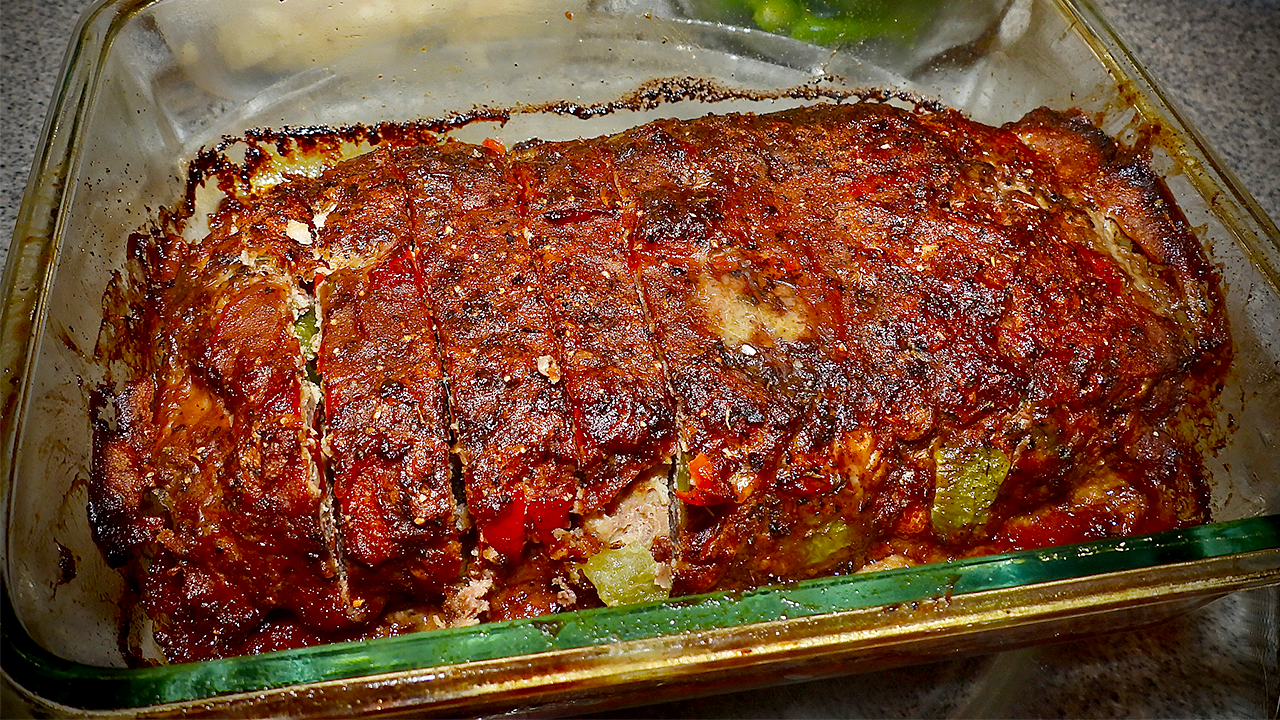
A recall has been issued for nearly 6,000 pounds of a frozen meatloaf and mashed potato product over an undeclared soy allergen, according to the Department of Agriculture’s Food Safety and Inspection Service (FSIS).
North Dakota-based Power Plate Meals, LLC recalled about 5,795 pounds of its frozen Meatloaf with Garlic Mashed Potatoes products because of a misbranding and an undeclared allergen, FSIS said in its announcement last week.
The food item contains soy, while the packaging does not state that it contains the ingredient.
The affected items are 13.3-oz. vacuum sealed plastic tray packages labeled as Power Plate Meals Meatloaf with Garlic Mashed Potatoes with use-by dates between June 25, 2026, and June 10, 2027.
500K PACKAGES OF MACARONI AND CHEESE SOLD AT ALDI RECALLED OVER UNDECLARED SOY LECITHIN
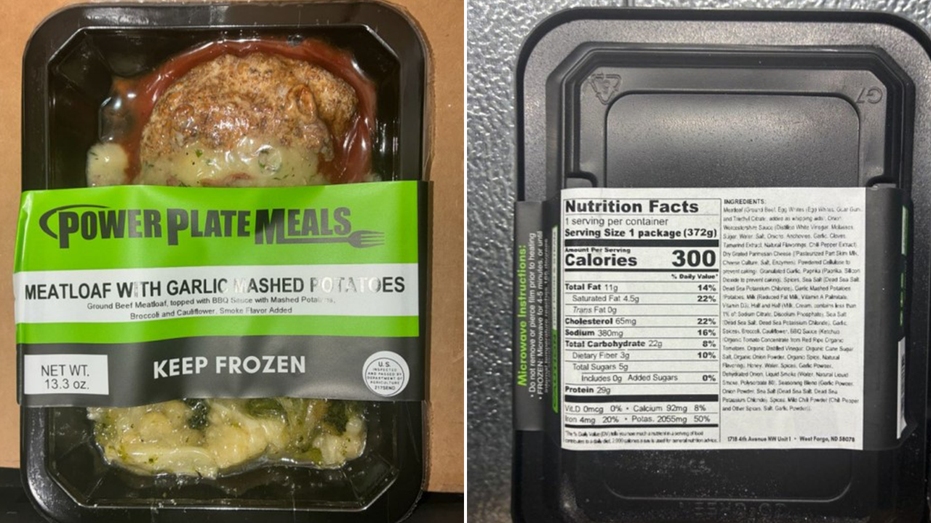
A recall was issued for nearly 6,000 pounds of a frozen meatloaf and mashed potato product over an undeclared soy allergen. (U.S. Department of Agriculture’s Food Safety and Inspection Service)
The recalled products were produced between June 25, 2025, and June 10, 2026.
The impacted products were shipped to distributors in Minnesota, North Dakota and South Dakota.
Items subjected to the recall include establishment number “217SEND” inside the USDA mark of inspection.
The problem was discovered when a state inspector notified FSIS that the final label did not display soy in the ingredients list.
The problem was discovered when a state inspector notified FSIS that the final label did not display soy in the ingredients list. (Getty Images / Fox News)
FSIS said there have been no confirmed reports of adverse reactions due to consumption of these meal products.
Anyone concerned about a reaction to the recalled items is urged to contact a healthcare provider.
Customers should not consume the frozen meals and either throw them away or return them to the place of purchase.
MORNINGSTAR FARMS RECALLS FOOD SOLD NATIONWIDE AFTER PLASTIC PIECES FOUND IN SELECT PRODUCTS
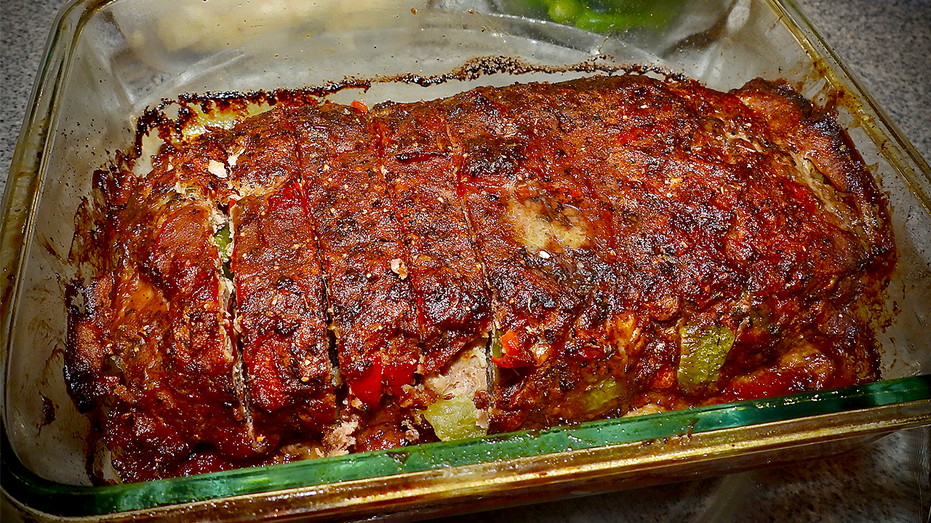
FSIS said there have been no confirmed reports of adverse reactions due to consumption of these meal products. (Getty Images / Getty Images)
The frozen food product includes a ground beef meatloaf covered in barbecue sauce and served with mashed potatoes, broccoli and cauliflower.
GET FOX BUSINESS ON THE GO BY CLICKING HERE
The recall is classified as a Class II recall, meaning that it “involves a health hazard situation where there is a remote probability of adverse health consequences from use of the product,” according to the FSIS website.
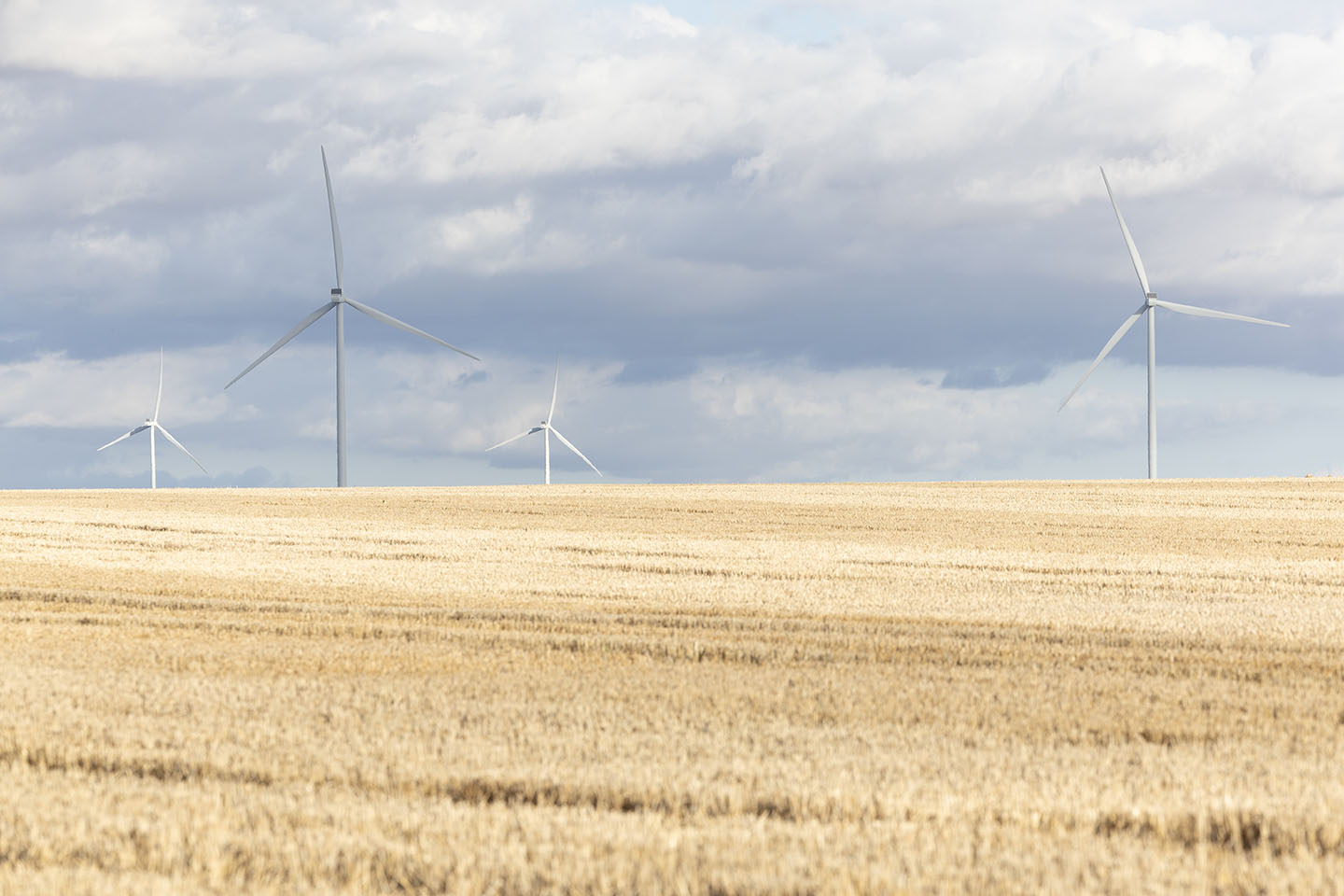
Indigenous stakeholders are eager to get in on the ground floor of the state’s renewable energy transition.

Carnival CCL 0.66%increase; up pointing triangle said extreme geopolitical volatility has disrupted bookings, and the company issued a soft outlook for the current quarter as higher fuel costs continue to weigh on profit.
The cruise line said Tuesday that booking trends during the recent quarter were most disrupted across Europe, particularly in the Mediterranean region.
Copyright ©2026 Dow Jones & Company, Inc. All Rights Reserved. 87990cbe856818d5eddac44c7b1cdeb8

Insight Partners sells $10.2m in Hinge Health (HNGE) stock
Form 4 Domo Inc For: 24 June
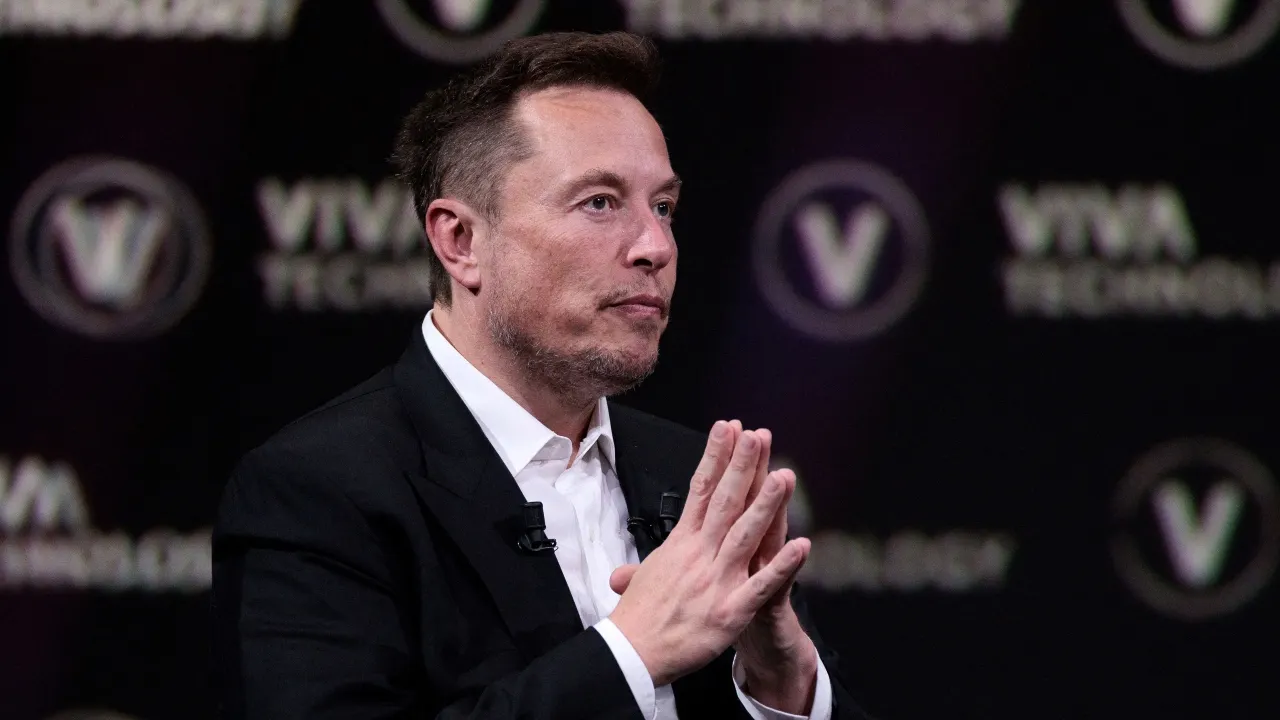
Elon Musk delivers an inspiring speech at the SpaceX IPO event, sharing his initial doubts about the company’s success but emphasizing the importance of making life multi-planetary and creating an exciting future for everyone.
Elon Musk is no longer worth more than $1 trillion, less than two weeks after becoming the first person to reach the milestone.
Musk’s net worth was valued at $946 billion as of Wednesday, according to the Bloomberg Billionaires Index. That is down from about $1.11 trillion less than 14 days earlier.
The drop came after shares of SpaceX and Tesla fell during a broader tech sell-off. Investors have become more cautious about the long-term profitability of artificial intelligence.
Musk remains the world’s richest person by a wide margin. As of Wednesday, Larry Page ranked second at $296 billion, followed by Sergey Brin at $275 billion, Jeff Bezos at $257 billion and Michael Dell at $223 billion, according to the Bloomberg Billionaires Index.
SPACEX MAKES HISTORIC DEBUT; MUSK SOLIDIFIES STATUS AS WORLD’S FIRST TRILLIONAIRE

Musk remains the world’s richest person by a wide margin. (Robin Legrand/AFP via Getty Images)
SpaceX priced its IPO at $135 per share and began trading at $150 on June 12. The debut helped push Musk’s net worth above $1 trillion.
At the IPO price, the listing valued SpaceX at more than $1.77 trillion. Musk owned about 42% of the company, and his SpaceX stake, combined with his Tesla holdings and other assets, put his net worth at more than $1 trillion.
MUSK’S SPACEX SURGES PAST AMAZON IN MARKET CAP AFTER HISTORIC IPO DEBUT
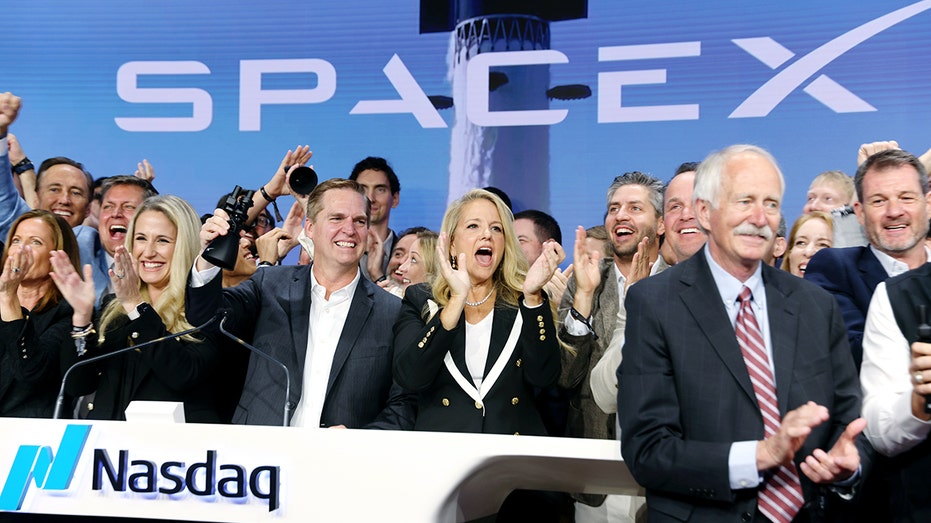
Bret Johnsen, chief financial officer of SpaceX, center left, and Gwynne Shotwell, president of SpaceX, center, during the company’s IPO at the Nasdaq MarketSite in New York, on June 12, 2026 (Michael Nagle/Bloomberg via Getty Images)
SpaceX shares later rose as high as $225.64 on June 16. That lifted Musk’s net worth to about $1.32 trillion.
But the gains did not last. SpaceX shares fell more than 30% from their June peak during the tech sell-off. On June 22, the stock dropped 16%, wiping about $240 billion from Musk’s fortune.
Tesla shares fell nearly 6% the next day, adding to the loss.
Stocks In This Article:
SPACEX SET A NEW RECORD FOR IPOS: THESE ARE THE WORLD’S 5 LARGEST
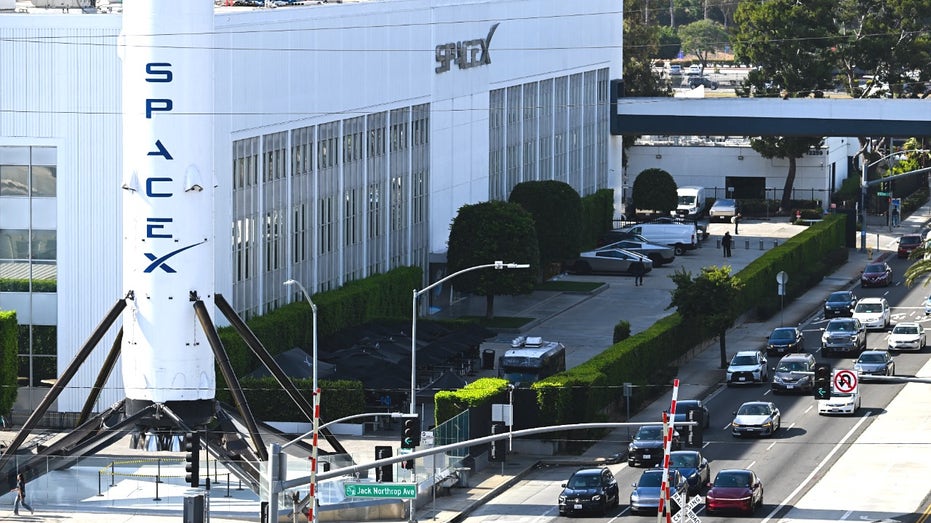
A Tesla Cybertruck drives past a SpaceX Falcon 9 rocket displayed outside a Space Exploration Technologies Corp. facility in Hawthorne, California, on June 8, 2026. (AFP via Getty Images)
Founded by Musk in 2002, SpaceX has grown into the world’s largest space company and a dominant force in commercial launch services.
The company pioneered reusable rocket technology, helping lower launch costs and reshape the economics of the space industry. It has also become a key contractor for NASA and the U.S. government through civil and national security missions.
GET FOX BUSINESS ON THE GO BY CLICKING HERE
FOX Business’ Bradford Betz and Eric Revell contributed to this report.

In 2003, a United Nations-backed international diamond certification scheme, the Kimberley Process,, external was launched in order to prevent conflict stones from entering the mainstream diamond market. But the industry has struggled to contain the reputational damage.
“To me the diamonds have failed us,” says Abubakar Amara, a primary school teacher in Kono. “What have those diamonds done for our community, for Kono, for Sierra Leone? We are considered as poor in the world.”
The British multinational, De Beers, which specialises in the mining and marketing of diamonds, is eager to change the narrative. In Sierra Leone, it’s launched a project called Gemfair,, external where local artisanal miners are offered equipment, training, and more transparent pricing for their finds. You might call it a kind of fairtrade scheme for diamonds.
“The idea is to connect with markets so that they can be able to find a place to sell their diamonds, and also to empower them, give them training, we give them skills,” says Raymond Alpha, Gemfair’s local representative.
But for De Beers, perhaps its most important function is reputational, allowing retailers to tell the origin story of every diamond they sell.
“We are seeing a growing interest from consumers,” says David Johnson, a De Beers representative. “With people increasingly wanting to know where their coffee, cotton or chocolate has come from, it’s not surprising that people also want to know where their diamond – one of the most emotionally significant purchases – has come from.”
While this increased traceability could win mined diamonds more customers, others say that the lab-grown alternatives are only going to continue to grow in popularity.
Rohit Mehta, chief executive of Forlink Ventures, a commodities house based in India’s lab-grown diamond capital, Surat, says these diamonds are not just cheaper, but also more ethical and better for the environment.
“People are more conscious about climate change, about extracting too much from the earth,” he says.
But the argument that lab-grown diamonds are “green” doesn’t sit well with everyone. Unlike natural diamonds, the lab-grown variety are hugely energy-intensive, requiring vast amounts of electricity to produce a single rough carat.
“These reactors run at the temperature of the sun,” says Stanley Mathuram, a US-based environmental consultant who’s studied the growth of the lab-grown diamond industry. “They’re like data centres. That’s the kind of energy that they require.”

Karlissa Saffold Defends Pinkface’s Viral Behavior Amid Backlash

Financial Due Diligence | Transaction Services | M&A | Deal Advisory I Interview | Equity Bridge
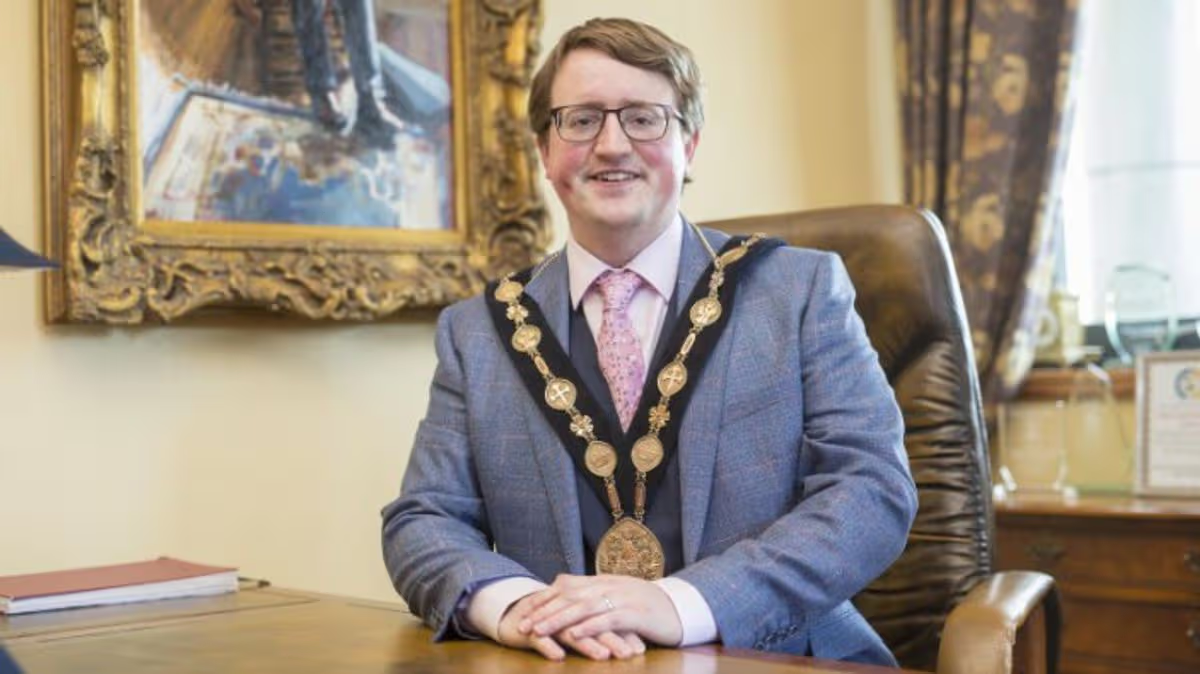
Local NI councillor and son of peace process leader reveals ‘paramilitary threat’ after PSNI witness statement


-

 Fashion5 days ago
Weekend Open Thread: Miami – Corporette.com
-

 Entertainment4 days ago
Renter of Home in Anne Heche Crash Denies Settlement With Son
-
 Sports1 day ago
Two goals and an assist by sheer aura: Cristiano Ronaldo just entered the World Cup chat
-

 Tech3 days ago
Microsoft accidentally kills epic Outlook email threads
-

 Business4 days ago
Soccer-U.S. defends Iran World Cup travel restrictions, says discussions ongoing
-
Crypto World23 hours ago
Bitcoin (BTC) Dips Below $62K, Ethereum (ETH) Plunges 6% Daily: Market Watch
-

 Politics5 days ago
Andy Burnham and the meaning of Makerfield
-

 Politics6 days ago
BBC Reporter Discusses Cross Party Criticism Of Trumps Iran Deal
-

 Crypto World20 hours ago
Securitize Wraps Roubini's SEC-Registered ETF as Dubai VARA Digital Security
-
Business1 day ago
Entergy settles forward sale agreements, raises $672 million in cash proceeds
-
 Business5 days ago
Wall Street Week Ahead: Investors see Micron earnings as pulse check of AI rally momentum
-

 NewsBeat5 days ago
Keir Starmer Allies Question His Chances For No 10
-

 Tech7 days ago
AWS enters the context layer race with a graph that learns from agents, not manual curation
-
 Crypto World5 days ago
Can Charles Hoskinson Really Rescue Cardano?
-

 Crypto World5 days ago
HIVE shares jump as $220M AI deal speeds Bitcoin mining pivot
-

 Crypto World5 days ago
Jake Chervinsky accuses CME of protecting derivatives monopoly
-
 Tech4 days ago
Signal’s Meredith Whittaker says AI chatbots ‘are not your friends’ and calls Copilot agents a backdoor
-

 Entertainment5 days ago
Jose Alvarado Wants Taylor Swift at More Knicks Games
-

 Tech2 days ago
Nearly 7,000 fake Amazon domains registered ahead of Prime Day 2026, researchers warn
-

 Business6 days ago
Brexit cost 6% of UK economy, Bank of England company data suggests
You must be logged in to post a comment Login