

Politics
What Roller Blinds Are Suitable for Commercial Spaces?


Most people pick window treatments for offices, hotels, or schools based on looks alone andpay for it later. The wrong blind fades, fails a fire inspection, or just gives out under regular wear. Getting the fabric right from the start saves thousands in replacement costs and frustration.
So what roller blinds work in commercial spaces? The answer rests on three pillars: fabric type, light control capability, and fire safety compliance for your building category. This article breaks down the main options, what each one does, and where to use it.
Fabric Types That Work in Commercial Settings
Choosing blind fabric for a workplace is less about style alone and more about how the space is used every day. A meeting room may need blackout fabric for presentations, while an open office may benefit more from screen fabric that softens glare without making the room feel closed in. In public areas, schools, hotels, and healthcare settings, safety and durability also matter, which is why flame-retardant materials are often preferred. In such cases, roller blinds for commercial spaces are a practical choice, as the fabric provides the right level of light control, privacy, durability, or safety based on how the room is used. The right fabric can also make the space easier to use throughout the day, especially in areas where people work, meet, or welcome visitors. It also helps the room feel more comfortable and better prepared for daily business needs.
Blackout Fabrics for Full Light Control
Blackout roller blinds use a coated or layered fabric that stops light completely. Hotels, conference rooms, and healthcare spaces—anywhere staff or guests need total darkness on demand, these are it. The fabric tends to be polyester with a foam or acrylic coating that keeps light from leaking through the weave. And commercial-grade blackout is heavier than residential versions, so it survives constant rolling without the coating separating from the backing.
Solar and Screen Fabrics for Glare Reduction
Screen fabrics filter rather than block. They come rated by openness factor, 1%, 3%, 5%, or 10%, which tells you how much direct light and heat gets through. A 1% rating gives near-blackout with just a bit of diffused light; 10% lets in much more while still taming glare. Offices facing south or west benefit most. And you’ll notice the view outside stays clear during daytime hours, which matters in spaces where natural light affects how people feel and work.
Flame-Retardant Fabrics for Regulated Buildings
Any commercial building under US fire codes, such as schools, hospitals, care homes, and hotels, requires window treatments to meet specific flammability standards. FR roller blind fabrics are either inherently fire-resistant (built in at manufacture) or treated afterward. Inherently FR fabrics keep their rating through repeated cleaning; treated fabrics can lose it after too much washing. Direct Fabrics offers made-to-measure FR blinds built to meet contract-grade fire safety standards; that’s a solid, practical option for regulated environments.
Operating Systems and Hardware for High-Traffic Spaces
Fabric matters, but the mechanism does the work. A blind that gets raised and lowered dozens of times a week needs hardware tough enough to handle it.
Chain Systems for Manual Operation
Chain-operated roller blinds use a loop chain to raise or lower. They’re the standard manual system in commercial settings because they’re simple, easy to fix, and don’t require electricity. Here’s the thing: in high-traffic spaces with kids, schools, and pediatric wards, you’ll need chain-safety devices or break-safe connectors to meet regulations. Spring-return mechanisms work too, for spaces where staff prefer a drop-and-release action.
Motorized Systems for Large or Awkward Windows
Motorized roller blinds make sense for windows that are hard to reach or oversized. Skylights, high clerestory windows, full-height glazed facades. Motor systems can be wired or battery-operated; many integrate with building management systems so you can schedule blind positions throughout the day. The upfront cost is higher, but reduced staff time and less wear on the blind itself often pays for it.
Cassette and Fascia Housings for a Clean Finish
A bare roller tube at the top looks rough in a reception area or boardroom. Cassette headrails enclose the rolled fabric and hardware in a neat box; they also shield the fabric from dust and UV at the tube, extending the blind’s life. Square cassettes fit modern interiors. Curved or arched fascias work better in traditional spaces.
Matching Blind Type to Specific Commercial Environments
Different commercial spaces have different requirements. A hospital ward’s blind faces nothing like what a hotel room demands.
Healthcare and Education Settings
Hospitals, clinics, schools, durability, and hygiene come first. Fabrics must wipe clean without degrading. FR compliance isn’t negotiable. Stick with tight-weave polyester in light colors (they don’t absorb odors), and skip any decorative texture that holds dust. Antimicrobial coatings are available on some contract fabrics; they’re worth adding in patient-facing areas.
Hospitality and Office Interiors
Hotels and offices balance appearance with performance. Blackout blinds in bedrooms, screen fabrics in lobbies and meeting rooms, motorized systems in premium suites or executive floors, that’s the typical mix. Color accuracy matters too. A fabric that looks great in the showroom can fall flat under office lighting in person; always grab a physical sample before ordering bulk quantities.
Retail and Public-Facing Spaces
Retail windows need solar control without blocking merchandise or signage views. A 5% or 10% openness screen fabric usually works. And because retail blinds sit in constant UV, pick fabrics with high UV resistance ratings to avoid early fading and color shifts.
Conclusion
Picking suitable roller blinds for commercial spaces comes down to three things: the right fabric for your light control and fire safety needs; a mechanism built for how often the blind gets used in your space; and a spec matched to your specific environment. Blackout fabrics work in bedrooms and conference rooms; screen fabrics belong in offices and retail. FR compliance isn’t optional in regulated buildings. Get those three right, and you’ve got blinds that’ll perform for years without problems.

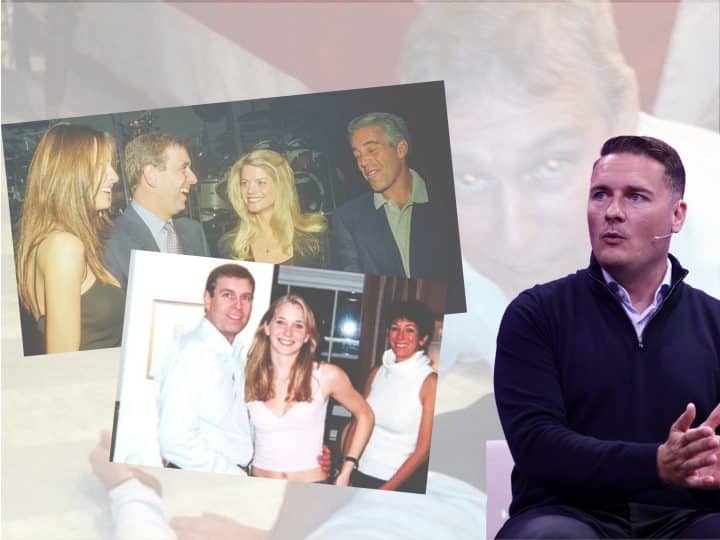
Wes Streeting has announced he will challenge Andy Burnham for the Labour leadership, should the latter win the Makerfield by-election. Strangely, he announced in the same breath that he remains a “monarchist”. We say ‘strangely’ because this has been a rough year for monarchism, given the newly exposed links between the toyals and the Jeffrey Epstein scandal.
Exclusive: Wes Streeting tells Bloomberg’s @flacqua he will not allow an Andy Burnham coronation
“I’m a monarchist, but this is one coronation that I’m not enthusiastic about”
He blasts Starmer’s “lack of vision, direction and drive” By @LucyGJWhite > https://t.co/qOeaVx4Qiy
— Alex Wickham (@alexwickham) June 3, 2026
Oh, and as if this wasn’t bad enough, Streeting was scabbing when he said it.
Streeting, apparently: God save the nonce
As we’ve covered extensively, the former-prince Andrew Windsor was good pals with dead paedophile Jeffrey Epstein. This first came to the public’s attention several years ago when accuser Virginia Giuffre went public with allegations against Windsor. In her own words:
Back at the house, [Ghislaine] Maxwell and Epstein said goodnight and headed upstairs, signalling it was time that I take care of the prince. In the years since, I’ve thought a lot about how he behaved. He was friendly enough, but still entitled – as if he believed having sex with me was his birthright. I drew him a hot bath. We disrobed and got in the tub, but didn’t stay there long because the prince was eager to get to the bed. He was particularly attentive to my feet, caressing my toes and licking my arches. That was a first for me, and it tickled. I was nervous he would want me to do the same to him. But I needn’t have worried. He seemed in a rush to have intercourse. Afterward, he said thank you in his clipped British accent. In my memory, the whole thing lasted less than half an hour.
The next morning, Maxwell told me: “You did well. The prince had fun.” Epstein would give me $15,000 for servicing the man the tabloids called “Randy Andy”.
My second encounter with Prince Andrew took place about a month later, at Epstein’s townhouse in New York. Epstein greeted Andrew and brought him to the living room, where Maxwell and I were sitting. Another one of their victims, Johanna Sjoberg, arrived soon afterward. Maxwell then announced to the prince that she’d purchased him a joke gift, a puppet that looked just like him. She suggested we pose for a photo with it. The prince and I sat down next to each other on the couch, and Maxwell put the puppet in my lap, positioning one of its hands on one of my breasts. Then she put Sjoberg on the prince’s lap, and the prince put his hand on Sjoberg’s breast. The symbolism was impossible to ignore. Johanna and I were Maxwell and Epstein’s puppets, and they were pulling the strings.
By the time the above was published, Giuffre had died by suicide.
Handouts for Andy
Epstein and Maxwell pulled many young women and girls into their orbit, and they trafficked them to wealthy men like Windsor. While some may think Windsor is simply a bad apple, other revelations demonstrate complicity from our current king and former queen.
In 2022, Andrew faced a sex abuse lawsuit from Giuffre. That same year, it emerged that the queen would fund her pervert son’s defence. When that case came to a resolution, she contributed towards the $16m settlement. Our current king chipped in too.
The late Liz didn’t just fund his legal defence; in 2021, she also fought to retain his prestige. According to an unnamed military source in the Sunday Times:
The Queen has let it be known to the regiment that she wants the Duke of York to remain as colonel, and the feeling is that nobody wants to do anything that could cause upset to the colonel-in-chief.
It is a very difficult, unsatisfactory situation.
After more Epstein revelations came out in 2025, the royals eventually stripped Windsor of his titles. This clearly happened because the firm felt a need to save face. And for sycophants like Streeting, the ploy seems to have worked.
It doesn’t end with the handouts, either. As Skwawkbox reported for the Canary on 31 May:
Buckingham Palace had emails six years ago showing the queen’s second son, Andrew, was abusing his position as UK trade envoy. It was a position the late queen had pressured the government into giving the Epstein pal formerly known as Prince Andrew.
So Windsor was running around – seemingly breaking the law and betraying the country – and his family knew.
Yet Streeting remains a “monarchist”.
Wes Scabbing
Streeting was speaking at SXSW London. As we reported, several speakers pulled out of the event after it refused to condemn the UK barring two of its speakers from entering the country (Hasan Piker and Cenk Uygur). Streeting clearly doesn’t care about his government’s latest crackdown on civil liberties, it seems, despite arguing at the same event that Starmer has a:
lack of vision, direction and drive.
If there’s a difference between the “vision” or “direction” of Streeting and Starmer, we haven’t found it yet. We’ll admit he’s more “driven”, but the things he’s driving towards are more of what nobody wants – whether it’s privatisation in the NHS, or funding a family of nonce-tolerating secret leakers.
Featured image via Jack Taylor (Getty Images)
By Willem Moore
If you subscribe to the theory that it’s better to fight 100 duck-sized horses than a single horse-sized duck, the SNP is knocking it out of the park today.

Because the papers just can’t make their minds up about the biggest story with which to attack John Swinney’s beleaguered party.
While the Sun leads with Sean Clerkin reigniting his police complaint over the missing fundraiser money, the Herald goes with Peter Murrell’s receipt of legal aid for his non-defence against embezzlement charges.

The Express and the Mail, on the other hand, focus on Swinney’s bombshell public admission of yesterday that the fundraiser money has in fact been spent.


In the Times, the big news is that Murrell managed to have almost £60,000 of thefts – most of them apparently for the benefit of Nicola Sturgeon – removed from his charge sheet in exchange for his early guilty plea.


Whereas the Daily Record takes some pity on the poor former CEO while also feeding its own unending obsession with “gangland” by leading on suggestions that the small, hamsterish executive might be picked on in HMP Edinburgh.

The Record is in fact remarkably charitable to the party all the way through today’s edition. Yesterday’s astonishing, unprecedented ruling of contempt of court against the Scottish Government over the Salmond inquiry is relegated to a tiny bar on the bottom of page 4 that doesn’t even mention the word “contempt”, (reporting merely that the government was “criticised” in the Court of Session) while Swinney’s admission that the fundraiser money was stolen is hidden away in a small side column on the left-hand page of its prison pity piece.

The Scotsman and Telegraph also go relatively easy, both of them putting Swinney’s fundraiser admission on the front page but in sidebars, not as the main splash.

And God bless the dear old National, a Scottish newspaper which tries to make the day all about Westminster MP Douglas Alexander, Westminster lord Peter Mandelson, NHS England and some Welsh Senedd minister nobody’s ever heard of.

Though they do reluctantly include the Swinney admission in a very thin flash at the bottom of the page, somewhat in contrast to the degree of prominence they gave their last big story about the fundraiser money.

So great work, SNP comms team. We’re sure things will calm down any day now.


Ex-spy chief David Omand has decided military AI can be taught to be moral. Which is nice for him. And probably nice for the various private defence interests he advises too. The Guardian published an extended interview with Omand.
He told the paper he used to think AI drones were a bad thing. But changed his mind:
My call is to really get some work done on this, so that we’re not left in a situation where there isn’t a moral component built into future AI-powered weapon systems.
Omand is an advisor to Paladin Capital Group. Paladin has major AI and cybersecurity interests. Campaign against the Arms Trade (CAAT) has reported Omand worked with arms firms Leonardo and Babcock. He previously led UK spy agency GCHQ during his time in the civil service.
The Guardian reported Omand felt:
AI technology was now capable of weighing the factors that go into a human drone operator’s targeting decisions, such as whether a target was legitimate, whether there would be civilian casualties and whether the target has been correctly identified.
This was not inventing new ethics, added Omand, but putting the current one used by the military into a form that can be deployed by a machine.
UK officials use Palantir software to decide what Palantir products to buy. Palantir founders Alex Karp and Peter Thiel openly espouse a far-right ideology.
The UK military, police, NHS and, allegedly, the Telegraph newspaper have started to use Palantir technology. Palantir is involved in Israel’s genocide in Gaza. It maintains a permanent desk in southern Israel. Trump’s paramilitary immigration operations also use the firm’s gear.
Military AI: in or on the loop?
Omand said it was a matter of “on the loop” systems versus “in the loop” systems:
The term “in the loop” is commonly used in debates about reining in powerful AI systems and refers to a human being intimately involved in the decision-making process.
For Omand increasing AI decision making is:
It’s a physical and operational inevitability. The term ‘on the loop’ means you still have human supervision and it’s humans setting the parameters of a mission.
In that sense humans still have moral control. But individual decisions in the heat of combat, or where time is very short, you just won’t have time for a human to make them.
Omand said he felt that it is now possible that:
The ultimate result [of AI advances] could be a moral decision-making system that is ethically superior to human decision making.
The former spy said:
It could actually work, whereas relying on humans in a very fast-moving seconds matter for warfare is probably going to lead to far worse results in terms of collateral damage.
Not everyone is quite so chipper about the idea. Drone Wars director Chris Cole said:
AI is simply not capable of making a judgment. It merely processes data, completely lacking the ability, for example, to distinguish civilians from combatants or to judge whether loss of life is proportionate to military advantage.
Cole is right, of course. Omand seems to enjoy nerding out over the abstract philosophical questions, but AI is a product of whatever is loaded into it. And that depends who controls it. In the case of firms like Palantir, we are talking about a clique of hyper-wealthy far-right Trump allies who are at ease with genocidal violence. In short, David Omand can jog on.
Featured image via Getty/Cheng Chia Huang
By Joe Glenton

Somewhere in Britain right now, a young couple is sitting at a kitchen table with a calculator and ChatGPT open in a browser window, doing the arithmetic on whether to leave the country.
They have looked at the deposit they cannot save, the rent that takes more than half their pay, the tax that takes a third more, the GP appointment they cannot get, the school place they will struggle to secure, and the price of a place in Sydney or Dubai versus the price of a one-bedroom flat in Zone 4 of London. They are not without a little bit of fond feeling for this country they’ve always called home, but, after a point, they have to think about looking out for themselves.
There have been about a quarter of a million versions of this story playing out in Britain across the past 12 months – and that’s if you only count the ones that ended in the resolution, ‘Sod it, let’s get out of here’.
Two hundred and forty-six thousand – that’s the number of able Britons who’ve emigrated for pastures new in that period. At the same time, fewer Brits are returning home to live. The gap between those leaving and arriving is getting wider by the year.
People do what their incentives tell them to do. Every state in human history, functional or not, has operated on this principle. Government is essentially a feat of incentive engineering. When it works, the needs of the country and the needs of the individual are suitably harmonised, such that when the individual pursues their own vocation, the collective benefits. You will not be surprised to learn that the British political class is useless at incentive engineering. And not just recently, either – it arguably has been losing the knack for the better part of a century.
Looking around the UK right now, it is hard to see an incentive to do very much at all. Work hard, save money, buy a house? Not so fast: a first-time buyer in London now faces house prices at roughly 11 times average earnings, a ratio worse than any other major European city. Real wages, in the meantime, have not grown since 2008. In 2023, the Resolution Foundation found that the average British worker was £11,000-a-year poorer than they would have been had the pre-crisis trajectory continued. The tax burden is on course to reach 37.7 per cent of GDP by 2027-28, the highest share the UK has ever paid.
Yet the return for this crippling tax bill is increasingly meagre. Roads have potholes the size of spacehoppers. The NHS, into which your average professional will pay more than six figures over a working life, will not give you a same-week appointment. The current income tax burden doesn’t even cover welfare outlays. We are working harder not to realise our aspirations, but to fund an ever-expanding state, which rarely serves the needs of those who fund it.
Australia, for one, has noticed. Last year alone, the Australian government issued 79,000 working-holiday visas to British nationals, nearly double the number it had granted the year before. And doesn’t Australia love it! All that juicy human capital, waiting to be absorbed into a culture that matches its own just with a bit of added sun and surf wax.
And that’s where our bright young things are headed. A generation that has begun to conclude, understandably, that this is no country for young men or women.
People don’t want to stay in a country they feel is declining. There’s been a vast amount of talk in thoughtful quarters in recent years about the example of former Singaporean prime minister Lee Kuan Yew, and his philosophy that took a nation from the third world to the first. Singapore made the leap, as did South Korea and postwar Germany.
Yet Britain’s problem is that it has, wittingly or not, adopted a philosophy that can take a state from first world to third. Argentina is the canonical case, Venezuela the recent encore, while Italy is half a century into the slow-ballad version.
It works like this: Tax the productive. Subsidise whatever is politically rewarding, however destructive or insupportable. Print money. Redistribute the headline figures and declare victory before the consequences arrive. A sixth-former with half a brain and a bad attitude could absorb the entire doctrine in an afternoon. And a sixth-former with half a brain and a bad attitude is about the standard of the current British politician.
So say goodbye to your Perth-destined doctors, to your barristers bound for Dubai, to your serial entrepreneur headed Texas-ways. These people are the most expensive and the most valuable thing we produce. They are, shortly, going to become our chief export.
Maxi Gorynski is an engineer and founder of Progress, an organisation dedicated to a brighter future for Britain. He also maintains Heir to the Thought on Substack.
Politics
Politics Home | Operational national infrastructure systems: maintain, repair, refurbish, renew versus cost, value and investment


Credit: Adobe Images
Professors William Powrie, Chris Rogers and Liz Varga on behalf of the UK Collaboratorium for Research on Infrastructure and Cities (UKCRIC) address the challenge of keeping our infrastructure systems operational by distinguishing between the consequences of maintenance, repair, refurbishment and renewal, and between the cost, value and investment involved.
The infrastructure systems that support society, and for which all of us individually pay, are rightly the subject of continual public scrutiny. These infrastructure systems may be categorised as ‘economic’ (including transport, energy, water, waste, and information and computing technology) and ‘social’ (including health, education and justice). Contemporary concerns around the economic infrastructure systems focus on affordability, interrupted service delivery and the ageing of the physical infrastructure along with the adverse social, environmental and economic consequences that result. Many of society’s current challenges are considered to result from inefficient or ineffective infrastructure systems, with the economic infrastructures typically featuring as much as the social. The poor state of our roads (encapsulated by potholes), the unreliability and expense of public transport, the environmental pollution deriving from our combined waste (sewage) and surface water drainage systems, and solid waste systems that fail to eradicate littering and fly tipping are presented to our politicians and civil servants as issues requiring prioritised action. Civil engineers have the skills, experience, remit and above all responsibility for designing and delivering the necessary improvements.
The state of the economy is crucial to this discourse. Maintenance of our ageing physical infrastructures is viewed simply as a cost – a drain on resources, politically uninteresting and an expense that would, if spent otherwise, deliver political capital. This view is economically and societally damaging and does not accurately reflect the true situation. Timely maintenance is essential: there is a ‘rule of thumb’ that repair costs ten times as much as timely maintenance, and renewal ten times as much as repair. A simple example of this is a steel bridge: if protected against corrosion by timely, regular painting, it will last indefinitely. If we decide to take a ‘maintenance holiday’ and cease painting, before long we will be replacing the bridge. In roads, maintaining the tarmacadam ‘wearing course’, should avoid water ingress and damage to the sub-base, which results in large surface deformations (or rutting) that require expensive reconstruction. Refurbishment of existing infrastructure to a higher standard of capacity, resilience or service support may also be more cost-effective than conventional rebuilding or replacement. Effective maintenance, refurbishment and planned renewal as well as avoiding the considerable economic and social harm of major service disruption caused by emergency repairs can contribute to economic activity in terms of jobs and technologies, and should be embraced as an opportunity rather than a burden.
As a start, we need to change the language of the discourse from cost to value, and from expense to investment. Investment is naturally associated with creating something better and fit for the future; something forward looking, from which multiple benefits will accrue if creatively and systemically applied. The need for better operational infrastructure is there: climate hazards, uses that were unanticipated, and demand for capacity exceeding engineering solutions all of which reduce design life significantly. There are many opportunities now available both to deliver more sustainable and resilient infrastructure systems and manifestly improved infrastructure system services. This is the goal UKCRIC has set itself to deliver.
One of the most important innovations of the 19th Century was the provision of sanitation (the safe disposal of wastewater) alongside the supply of clean water, which served to dramatically improve the health of the UK’s population. Joseph Bazalgette’s brick-lined sewer and wastewater systems in London stand out as politically valuable investments, and are still the backbone of London’s wastewater system today. Their design, being egg-shaped to cater for different volumes of flow and allowing people to enter them for maintenance purposes, enabled their continuing use in the face of a vastly increasing population. An equally impressive super sewer, the Thames Tideway Tunnel, has recently been created to provide adequate far-future capacity, hence resilience for the system and to overcome one of the philosophical limitations of the original, which was not to separate foul water from surface run-off. However, more generally across the UK, the sewer and wastewater systems are in need of maintenance and often (at short notice) repair, yet this action and expense, although an investment, does not attract political cachet.
Rather than like-for-like pipeline replacement, a whole industry has grown up around the trenchless relining and upsizing of pipelines – examples of refurbishment and renewal. Refurbishment leads to enhanced operational and structural performance, making the pipe networks fit for the future and creating a whole new investment proposition. The inclusion of embedded sensors and/or autonomous sensing monitoring the system provides a further radical enhancement, enabling deterioration or damage to be identified immediately and rectified by maintenance before damaging and disruptive failure requiring a disruptive repair or renewal occurs. This delivers functional enhancement and resilience, evident additional value, a strong sense of investment rather than expense, and political kudos.
A newly constructed or full-width reconstruction of a road, with freshly painted road markings, is costly but can be presented as evidence of investment with associated political value. However, technology has developed to the point where full-width excavation of an asphalt road surface, heating and mixing with the addition of new materials to rejuvenate the asphalt, relaying and compaction can be carried out in an almost continuous, seamless process. A refurbished road would transform a cracked and potholed surface, with multiple utility cuts and evident signs of ageing, into something that looks newly constructed and provides a smooth riding surface. If this were combined with future proofing of the buried infrastructure – planned maintenance and refurbishment in advance of the surface rejuvenation, combined perhaps with the provision of additional capacity in the form of ducts for future use and a commitment to the future use of trenchless technologies in anything other than wholly exceptional circumstances – the investment case will be strengthened and the political value enhanced.
These things are all possible and could start to be implemented now: what’s stopping us is an adherence to out of date contractual arrangements and artificial systems boundaries.
Politics
The House | The Bank of England shows that not all public sector projects are doomed to fail


(Martyn Goddard/Alamy)

4 min read
Anyone following the Public Accounts Committee (PAC) would be forgiven for thinking that, if PAC is scrutinising something, it has gone wrong or is in danger of doing so.
Further, that attempts to update government services on which we all rely have had, to date, a history of failure – with PAC a chronicler of that history.
The evidence is compelling. Technical problems making the lives of court staff, already hit by backlogs, even harder; significant costs for emergency services from a delayed communications network; unacceptable risk for taxpayers stemming from National Savings & Investment’s (NS&I) modernisation programme – the list goes on.
But it is important to take lessons from success, as well as failure. A modernising government does not need to look far for a model to emulate – they just need to ring up the bank.
The PAC has scrutinised the Bank of England’s (BoE) renewal of the Real-Time Gross Settlement System (RTGS), and we were impressed. Few will have heard of RTGS – all of us would notice if it failed. It is a critical piece of infrastructure, underpinning all electronic sterling payment systems, settling around £790bn in transactions daily.
The nine-year RTGS renewal programme was implemented for £431m, launching in April 2025. Compare this to NS&I’s own programme, at £3bn+ and counting. The programme was reset in 2024 and rated as apparently unachievable, when it was supposed to have been largely delivered. Instead, it is a long way from completion, with core elements nowhere near ready.
What went right, and what went wrong? One way the BoE’s project stands out is its procurement, through a ‘competitive dialogue’. The BoE only established its preferred contractor having paid for advice from bidders. This allowed for system designs to be developed in consultation with the BoE as ‘intelligent customer’, and it proceeded with a fixed-price contract. This is perhaps a mechanism that the House of Commons’ authorities should consider in the Restoration and Renewal programme.
Compare this to NS&I’s poorly executed procurement. It split up its programme into multiple packages, awarding contracts without a good understanding of their interdependencies. Delays resulted in millions being paid in settlement agreements for cancelled contracts and additional payments to existing suppliers for work needed.
Another problem for NS&I was a lack of skills needed for such complex programmes. Most of its operations had been contracted out when the project began, so it had limited digital transformation experience going in. Finding recruitment difficult, it leant on consultants to fill the gaps, costing £43m.
One single thing that would help departments enjoy the BoE’s success is the breaking open of stifling hierarchies
In contrast, the BoE empowered skilled digital professionals to support well-informed decisions. Initial governance drew on non-executive directors’ expertise with track records in digital payments. Responsibility for when the new system went live rested jointly with senior delivery and technical leaders. The old system had to be switched off before the new came into operation, and these two people had to make the vital decision whether it would definitely work. We have long called for digital specialists to be at the decision making top table – this high-stakes moment demonstrates why that is.
One single thing that would help departments enjoy the BoE’s success is the breaking open of stifling hierarchies. The BoE set a clear tone for a ‘no surprises’ culture – staff were encouraged to raise concerns early, and anonymously, through a ‘transparency channel’. It is painful comparing this to NS&I’s mindset, which it characterised as a ‘can-do’ attitude. This kind of ‘good news’ culture can prevent lessons being learnt. We heard staff felt decision making was slow and hierarchical, with decision making processes opaque and not understood.
Our committee will continue acting as the watchdog for the taxpayer’s pound, rooting out waste wherever we find it. But in the RTGS, we hope all can see that public sector delivery is not simply a depressing landscape of decline and failure. Hard-working public servants are out there demonstrating best practice. The BoE is lighting the way for the rest of government to follow.
Geoffrey Clifton-Brown is Conservative MP for the North Cotswolds and chair of the Public Accounts Committee


Colin Jordan gives Nazi salute (Chronicle/Alamy)
6 min read
Called to clear the return to Parliament of a high-profile Labour figure, the 1965 Leyton by-election prefigured the Makerfield contest, writes Lord Cryer. But, he asks, how would today’s voters react if a minister were involved in a punch-up?
We are now in the run-up to what promises to be a crucial by-election in Makerfield with the nation’s – and perhaps the world’s – media about to descend on the north-west of England.
We have no shortage of by-elections that appeared epoch-making at the time but are now footnotes. No shortage, either, of predictions based on their results that turned out to be not just wrong but laughably so.
The Fulham by-election of 1933 was said to signal that Britain was turning towards pacifism. Winston Churchill would like a word. The Darlington poll just before the 1983 general election was said to indicate that Labour was on course to regaining power. The landslide Tory victory was only a few months later.
Of course, sometimes they are important or revealing or both. In the early and mid-1990s, a series of huge swings from Conservative to Labour heralded Tony Blair’s arrival in Downing Street. Similarly, a string of Labour losses in the 1970s indicated that Mrs Margaret Thatcher would win in 1979.
Others that are footnotes ought to get more attention. An almost completely forgotten by-election in Kinross and West Perthshire in 1963 allowed the winning candidate, Sir Alec Douglas-Home, to replace Harold MacMillan as leader of the Conservative Party and prime minister. Ironically, Douglas-Home was afforded this opportunity by the great left-wing politician Tony Benn who had championed legislation allowing hereditary peers to renounce their titles, thus allowing first Benn and then Douglas-Home to sit in the House of Commons.
But when looking for parallels with today, one lesson from history is given by the patch I represented until recently and whose MP is now the admirable Calvin Bailey.
The 1965 Leyton and Wanstead poll came about in circumstances with something of an echo of Makerfield in that it offered the chance of a return to Westminster of a high-profile Labour figure. Labour had won the general election in 1964 by a slim majority. However, Patrick Gordon Walker, who was to be the new foreign secretary under prime minister Harold Wilson, had lost the constituency of Smethwick against all expectations. That particular result led to long and bitter arguments as Labour accused the Conservatives of running a racist campaign.
The accusations were vigorously denied by the Conservatives both locally and nationally.
What certainly did happen was that a deeply offensive slogan was found painted on various buildings across Smethwick but the culprits were never found.
As a result, Wilson had a foreign secretary without a constituency. The prime minister then persuaded the Labour MP for Leyton, Reg Sorensen, to accept a seat in the Lords, thus creating the by-election. Gordon Walker was the Labour candidate and polling day was set for 21 January 1965. The national and international media then descended on Leyton and, in the wake of the Smethwick contest, the far-right also arrived. The fascists were led by a particularly repellent individual named Colin Jordan. Unusually among the British far right, Jordan was not simply a fascist but an out-and-out Nazi. He styled himself ‘World-Fuhrer’ and was fond of dressing up in uniforms and performing Hitler salutes at any available opportunity.
The highlight of the campaign for the fascist interlopers was when they invaded a Labour-organised public meeting in what was then Leyton town hall. There was a huge fight, caught in part by a BBC Panorama team. Jordan managed at one point to climb onto the stage but, sadly for him, he was confronted by Denis Healey, a defence minister at the time, who hit Jordan so hard that he flew off the stage and landed back in the crowd.
“To put it bluntly, as a young man Healey was harder than a coffin nail”
According the Daily Telegraph’s obituary of Jordan, “Healey landed a heavy punch, knocking Jordan off the stage and sending him crashing into a watching journalist, breaking the reporter’s spectacles.”
The Panorama narrator asserts that “when he tried to grab the microphones, the minister of defence and Mr Walker, using conventional weapons proved the ultimate deterrence”.
Sadly, perhaps, the footage shows only a melee and then a grinning Walker with Healey close by, as Jordon and his goons are bundled out screaming racist abuse as they go.
Healey, we should remember, was not always the avuncular and elderly man we tend to remember. During the Allied invasion of Anzio in 1944, when British and US forces were confronted by Nazi and Italian troops, he was the beachmaster and therefore to a large extent ran the landings. To put it bluntly, as a young man he was harder than a coffin nail. In later years as an MP, it was often noted that critics in the House of Commons were slightly more guarded in their comments than would be the case with a less physically formidable opponent.
In the 1970s, he was still sufficiently lively to see off another attack at a public meeting by members of the National Front.
Jordan had the finances which allowed him to engage in his fantasies of world domination because he had married Françoise Dior of the world-famous Dior brand. Quite what Ms Dior saw in him remains a matter of conjecture, although it may be the marriage was to stop her from being deported as an undesirable alien. It wasn’t for his looks – Jordon had the face of a blind cobbler’s thumb and never particularly displayed much in the way of intellect or charisma. The Telegraph obituary notes that he never recovered from being fined for stealing three pairs of red knickers from Tesco in Leamington Spa in 1975. He claimed to be the victim of a Jewish plot.
Labour might have won the battle of the town hall but they very narrowly lost the by-election to the Tories – although Walker comfortably regained the seat the following general election and rejoined the government. The constituency and its successor have continued to elect Labour MPs since then, as the battle of Leyton slowly fades from memory and into history.
I sometimes wonder if that confrontation between Healey and Jordan had occurred more recently what might have been the consequences. There would undoubtedly be calls for the minister’s sacking and removal as an MP. Is that to be regretted? The short answer is yes.
Healey’s generation understood that fascism sometimes must be confronted physically. That does not mean that they viewed violence in a cavalier way. But leading figures in all the major parties were then of a generation who had had to go off and fight – and they understood why.

The UK military has named the soldier killed in Erbil, Iraq. An American soldier also died in what the allied nations say was a “training accident”. Lance Corporal James Freeman was a member of the Royal Anglian regiment. Iranian drones hit the base in March 2026.
Freeman was a member of 1st Battalion The Royal Anglian Regiment. The battalion is part of the new army Special Operations Brigade. The British Army website describes the unit as:
the fighting formation of the Land Special Operations Force (LSOF) and is equipped with Robotics and Autonomous Systems.
The Ministry of Defence (MOD) posted on X:
It is with great sadness that we confirm the death of Lance Corporal James Freeman, who died on 31 May following a tragic accident during routine military training activity whilst deployed on Operation SHADER, Iraq. pic.twitter.com/2pGkHTja64
— Ministry of Defence
 (@DefenceHQ) June 3, 2026
The US Army has not yet named the American soldier killed:
— US Army Central & Third Army (@usarmycentral) June 1, 2026
Drop Site News reported that Erbil province was hit by Iranian fire on the day of the deaths:
Iran’s IRGC launched ballistic missile strikes against Iranian Kurdish opposition group bases in Erbil Province on the same day:
At 5:54 a.m., a missile struck the Kurdistan Freedom Party (PAK) headquarters in Chamshar near Darashakran, northwest of Erbil
At 10:40 p.m., two missiles struck a Kurdistan Toilers Party (Komala) base in the Alana Valley
The outlet said:
The Institute for the Study of War said the IRGC launched the strikes in retaliation for a Kurdish opposition attack on an Iranian border guard unit in Chaldran County on May 29.
It is not clear whether the training accident and the Iranian strikes have any connection.
Base housing UK military was struck by Iran in March
Iran struck the Erbil base in March with no reported casualties. Middle East Eye said on March 12:
A base in Iraq used by British troops has come under attack from Iranian drones, wounding a number of American soldiers.
British air-defence troops destroyed two drones, but other devices evaded defences and struck an air base in Erbil, northern Iraq, on Wednesday night, defence chiefs revealed on Thursday.
UK forces are in Iraq as part of Operation Shader. Shader trains local forces and carries out operations against the remnants of ISIS forces in Iraq and Syria. The forces have come under fire due to the illegal US-Israeli assault on Iran. The American war of choice has seen Iran strike US-aligned forces in a region and caused a major energy crisis.
Featured image via Marco Di Lauro/Getty Images
By Joe Glenton


On Monday, I suggested that the Labour front bench would be dreading the release of further Peter Mandelson files. But instead of leaving things to chance, some ministers have followed the “missing phone” route of Morgan McSweeney fame.
On June 2nd, Keir Starmer’s office confirmed that the Prime Minister had used the “disappearing messages” function in his communications with the disgraced Epstein-associate, who he gleefully appointed as US ambassador despite the objections of UK Security Vetting.
Furthermore, we now learn that Mandelson refused a government request to hand over communications from his own phone, with an explanatory note attached to three heavy volumes stating that the government has “no further recourse to search [his] personal devices”.
Mandelson missing messages
The latest installment of the Mandelson files also disclosed that Labour’s Paymaster General, Nick Thomas-Symonds, reported his phone as stolen on October 15th, five days before Morgan McSweeney followed suit. During the “Lord Mandelson” debate in the Houses of Parliament on February 4th, it was Thomas-Symonds who was selected to move Starmer’s amendment to the motion to release the Mandelson files tabled by Starmer in February, which called for an exemption for “papers prejudicial to UK national security or international relations”. Thomas-Symonds has previously received over £35,000 worth of donations from Labour Together. A “close ally” of the ailing Starmer, he has insisted as recently as May 13th that there is “no leadership challenge” to the Prime Minister, although Messrs. Burnham and Streeting may beg to differ.
Despite his “stolen phone” account, McSweeney had stated when questioned by the Foreign Affairs Select Committee on April 28th that text messages he had received from Mandelson would be included in the files. In one newly-released exchange, Mandelson confirms that he is talking to McSweeney “a lot”, but further detail of their correspondence is notably missing.
McFadden and McSweeney
Labour’s Work and Pensions Minister Pat McFadden seems to have had less trouble with holding on to his mobile phone. In one conversation with the “Prince of Darkness”, Mandelson slams Starmer for backtracking “on his immigration speech, on welfare, now on Gaza”, before adding: “This is what Morgan senses … advance / buckle / advance / buckle.”
McFadden has previously been described as “the most powerful Labour politician most have never heard of”. During the 2024 election campaign, his and McSweeney’s desks were “right in the middle of the room” at Labour HQ. His wife, Marianna McFadden, was McSweeney’s deputy campaign director.
At the time, Mandelson said that McFadden and McSweeney complemented each other, declaring that “Pat is cautious…Morgan is a hard-driven street fighter.” Heartwarming words from the Epstein-informant.
When Mandelson was passing classified government information to the notorious predator and likely Israeli intelligence asset as Business Secretary, McFadden was one of his deputies. His other deputy at the time was David Lammy, who we now know received a handwritten letter from Mandelson promising that he would “never regret” appointing him as US Ambassador.
Friends of Israel
McFadden also happens to be a former vice-chair of the Labour Friends of Israel lobby group. Another former LFI vice-chair, Peter Kyle, thanks Mandelson in another newly-released exchange for “v good advice” regarding the use of “more positive language about AI”, which he promises to “action”.
The Labour front-bench have embarked on a veritable rebranding mission in recent days, but Mandelson’s input and influence on the Starmer project is undeniable. In many ways, what the Mandelson files have not divulged is the major story. Redactions are aplenty, but it will take more than Tipp-Ex to blot out the failures of this rotten Labour administration.
Jody McIntyre is an investigative journalist whose work can be found at jodymcintyre.substack.com. He stood at the 2024 UK general election, receiving over 10,000 votes.
Featured image via Carl Court/Getty Images

Labour MP David Taylor apparently has no problem with Israeli genocidaires and returning IOF reservists visiting Britain, but American content creators and political commentators are one step too far.
Last week, Taylor called for Hasan Piker to be banned from entering the UK, claiming that his presence would be “not conducive to the public good”. When Shabana Mahmood obliged by revoking the visas of Piker and Cenk Uygur, another political commentator, Taylor thanked the Home Secretary. The Community Support Trust lobby group also celebrated the decision, stating that Piker “exceeded the bounds of acceptable discourse”.
The Board of Deputies’ statement applauding the ban was issued by their acting president, Adrian Cohen, who said that “where event organisers have failed to show responsibility, it is right that government step in”. Cohen also happens to be the chair of Labour Friends of Israel.
Adrian Cohen is listed as one of the Labour Friends of Israel company directors responsible for “financial oversight and governance”. Another is Jennifer Gerber, who was a senior special adviser to Andy Burnham throughout his time in government. LFI say they are funded by “those who share our commitment to the State of Israel”.
Next week, David Taylor will complete a three-month stint at the Coalition for Global Prosperity, where he has been working as a policy advisor alongside his role as a Labour MP. Their CEO is Ryan Henson, a British-American Project Fellow. In 2015, a British-American Project event was addressed by one of their most high-profile members: Peter Mandelson.
Follow the money
In 2022, the Coalition for Global Prosperity received over £1 million from the Bill and Melinda Gates Foundation. In turn, the CGP has donated to twelve British MPs. These included Rosie Wrighting, the parliamentary private secretary to Wes Streeting who resigned one day after the Health Minister.
Before the 2024 general election, the Hemel Hempstead Labour Party secured £10,000 from Labour Together. Their board of directors then included Jonathan Kestenbaum, a Labour peer and ex-IDF soldier who reportedly “settled in Israel” in 1985. That money got David Taylor elected.
Another Labour Together director was Trevor Chinn. In June 2020, Kestenbaum and Chinn were amongst a group of “community leaders” invited to a Zoom call with Starmer and Morgan McSweeney. Five months after Starmer’s election as Labour leader, Chinn was awarded the Israeli Presidential Medal of Honour.
Jonathan Kestenbaum and Trevor Chinn both donated to Keir Starmer’s Labour leadership campaign in 2020. Now, through Labour Together, they were able to fund a new cohort of acquiescent MPs who would be loyal to the Prime Minister. David Taylor was one of them.
Taylor previously worked as an aide to Gordon Brown. In 2008, Brown became the first British Prime Minister to personally travel to address the Israeli Knesset. He said in his speech: “I am proud to say that for the whole of my life, I have counted myself a friend of Israel.”
Labour — Two tier Keir
In 2025, the Labour government issued a “special mission” certificate to Israeli general Tomer Bar, protecting him from any potential prosecution during a secret visit to Britain. Unlike American streamers, his presence was apparently not considered a threat to social cohesion in Britain. Bar had previously instructed pilots coming back from air strikes on Iran to dump unused bombs over Gaza before landing.
The banning of Piker and Uygur is further confirmation that the Labour administration of “two-tier Keir” is now operating a dual standard for visitors to the UK; whereas those who have served in the Israeli military are welcomed with open arms, commentators who are critical of the Israeli government are routinely banned.
Welcome to Starmer’s Britain, 2026.
Jody McIntyre is an investigative journalist whose work can be found at jodymcintyre.substack.com. He stood at the 2024 UK general election, receiving over 10,000 votes.
Featured image via the Canary

Uber (UBER) Pours Nearly $500M Into Nuro for Massive Robotaxi Expansion

Streeting still a ‘monarchist’ despite Royals’ Epstein links

Alan Brazil’s ‘heart stopped’ in life-saving transplant as talkSPORT host gives health update



-

 Tech6 days ago
Waymo dominates autonomous vehicle registrations as Tesla trails behind
-

 News Videos6 days ago
This is BROKEN! INSANE 5x MONEY CAR WASH WEEK! The NEW GTA Online UPDATE Today! (GTA5 New Update)
-
 Tech5 days ago
SpaceX just won a second Golden Dome contract. This one is $4.16 billion.
-

 Business3 days ago
Jade Biosciences, Inc. (JBIO) Discusses Positive Interim Results From JADE101 Phase I Healthy Volunteer Study and Development Plans Transcript
-

 News Videos6 days ago
SHE IS KILLING XRP!!! WATCH URGENT AND ACT FAST
-
 NewsBeat5 days ago
FIRST NIGHT REVIEW: Take That bring the Circus back to life in spectacular sun-soaked style
-

 Business5 days ago
Is the Spurs Phenom Already Better Than Prime Diesel?
-
 Crypto World6 days ago
CFTC Has Approved the First Regulated Bitcoin Perpetual Contract in the U.S.
-

 Politics5 days ago
The House | Inside Andy Burnham’s Makerfield Campaign: “Nobody Thinks This Is In The Bag”
-

 Sports1 day ago
French Open 2026 results: Alexander Zverev beats Rafael Jodar and will play Jakub Mensik in semi-finals
-
 NewsBeat6 days ago
Novak Djokovic v Joao Fonseca LIVE: French Open latest scores and results after Jannik Sinner’s shocking collapse
-
 Entertainment5 days ago
Weak ‘Supergirl’ Box Office Tracking Amid Milly Alcock Backlash
-
 Crypto World6 days ago
Snowflake (SNOW) Stock Rallies on Strong Q1 Results and AI Product Growth
-

 Entertainment6 days ago
Maddox Jolie-Pitt Legally Requests to Drop Brad’s Surname
-

 Tech2 days ago
CryZENx Releases Fresh Playable Content Deep Inside Jabu-Jabu for His Ocarina of Time Remake
-

 Business5 days ago
Demand Conditions Improve In Chemicals Sector In April 2026
-
 Entertainment5 days ago
One of the Greatest Sitcoms of All Time Shoots Up Apple TV’s Charts 11 Years Later
-

 Crypto World6 days ago
MicroStrategy Moves $30 Million in BTC to Coinbase Prime: Is the Bitcoin Sell-Off Already Here?
-

 Tech6 days ago
This Week In Security: Ubiquiti Fixes, And FreeBSD Joins The Club You Don’t Want To Join
-
 Entertainment6 days ago
Bruce Willis’ Generosity Resurfaces Amid His Dementia
You must be logged in to post a comment Login