Connect with us
DAPA Banner
DAPA Coin
DAPA
COIN PAYMENT ASSET
PRIVACY · BLOCKDAG · HOMOMORPHIC ENCRYPTION · RUST
ElGamal Encrypted MINE DAPA
🚫 GENESIS SOLD OUT
DAPAPAY COMING

Politics

Anne-Marie Trevelyan: Securing the arteries of trade and alliance

Published

on

Anne-Marie Trevelyan is a former MP, Secretary of State for International Development, for Business and a former Foreign Office Minister.

The certainties in recent decades of unrestricted trade flows can no longer be assumed. Systems that have underpinned economic stability and collective security – open trade routes and predictable alliances – are under increasing strain. And, as ever, when systems are tested, the question becomes not only how resilient they are, but how prepared we are to adapt.

There are two key concerns – the growing vulnerability of global maritime chokepoints, and the sharpened debate around defence spending within our alliances.  I have just returned from the 2026 Shangri‑La Dialogue in Singapore, where Defence Ministers from the Indo-Pacific region and NATO allies got chastised by the US Secretary of War Hegseth bluntly – if they are spending 3.5 per cent on defence, he considers them free-loaders. He’s not wrong – defence capability to assure deterrent effect doesn’t come cheap, and unless we keep up with investment our enemies will outsmart, outdesign and outbuild us.

Security and prosperity are more tightly interwoven than at any point in recent history – we cannot hope for economic growth unless we protect our present economic activity, our critical national infrastructure and our citizens.

Advertisement

Global trade remains overwhelmingly maritime. 80 per cent of trade by volume moves by sea, carried across waterways with a number of narrow passages. These chokepoints – Hormuz, Suez, Malacca, Bab el‑Mandeb – are the critical arteries of the global economy.

And those arteries are increasingly exposed. The most world’s most important energy chokepoint is the Strait of Hormuz, carrying one-fifth of the global oil supply. The Suez Canal accounts for 12 per cent of global trade flows, efficiently linking Asia and Europe. The Strait of Malacca sees 30 per cent of global trade pass through its narrow waters. This concentration of maritime traffic through narrow geography has delivered efficiency – but at a price. Disruption at any one of these points has immediate and disproportionate consequences.

The implication is stark: the global economy is not only interconnected – it is exposed.  This exposure is the product of decades of optimisation: faster routes, lower costs, just‑in‑time supply chains. But optimisation without redundancy creates fragility. When disruption comes, alternatives that exist come with significant cost, delay, and strategic consequence. A determined disrupter, whether Iranian drones attacking oil tankers, or Chinese coercive control and limiting of critical minerals can crash markets or closes businesses. Our stable economies are not resilient, our national assets are not secure, our children’s future security is not assured.

So what must we do to provide the global leadership the world expects of a responsible Britain?

Advertisement

Economic growth can only be our central priority if economic security is assured. Our economy must have strong foundations: businesses that can thrive and the right skills for our kids’ futures. But none of that matters if we can’t protect our critical infrastructure, undersea cables, our hospitals, energy and water supplies, and our trade routes.

Trade is critical. The UK is an outward-looking island nation, and we should focus on the opportunities that Brexit gave us to celebrate and strengthen ‘Global Britain’ – our future prosperity depends on our ability to trade with the rest of the world. What are the key elements of this security? It is about the three Fs – food on the shelves, fuel in the tank, and the phones in our hands.

The UK relies significantly on imports – from meat to fresh produce, medicines and consumer goods. When chokepoints are disrupted, the first effect is delay. Ships arriving late mean reduced stock in distribution centres. That translates quickly into empty shelves or reduced choice in supermarkets. COVID made that evident for the first time (remember pasta and loo roll stockpiling); and then chokepoint disruption or blockage adds time, fuel, and insurance costs, all of which are passed through the supply chain. The Ukraine war starkly reminded the world that 40 per cent of its fertiliser came from the Ukrainian shores – and farms in the poorest nations were hardest hit. The impact on inputs has a longer tail of cost than the direct first hit of price spikes or shortage.

Where food shortages emerge gradually, fuel impacts are almost immediate. Global energy markets are highly sensitive to chokepoint risk. Around 20 per cent of global oil and significant volumes of LNG pass through the Strait of Hormuz. Disruption triggers a rapid market response. Prices rise not only because of actual shortages, but because of perceived risk. So, regardless of real or imagined shortages, the price hikes. And the UK is hugely vulnerable because we import so much of our oil and gas. Not just for filling up the car, but for every business which needs energy to function. UK households, public and freight transport, manufacturing, and food production all become more expensive.

Advertisement

In short, when chokepoints fail, the cost of keeping homes warm, jobs secure and cars moving rises within days, not months. Those global impacts translate directly into domestic pressure – particularly in a country as trade-dependent as the UK. For UK citizens, the lesson is simple but sobering: chokepoints are not distant geopolitical concerns – they are critical enablers of everyday life.

In a world where narrow waterways carry the essentials of modern living, the risks associated with chokepoints can no longer be treated as peripheral. For British households, the consequences are immediate and tangible.  That is the reality – from resilience planning to defence spending – securing our trade routes is not only about safeguarding trade – it is about safeguarding the everyday stability on which all our citizens rely.

Source link

Advertisement
Continue Reading
Click to comment

You must be logged in to post a comment Login

Leave a Reply

Politics

The House | We must do more to help young people access music if we want the UK to Rock the Casbah

Published

on

We must do more to help young people access music if we want the UK to Rock the Casbah

(Andrew Fare/Alamy)


4 min read

Music has always been part of my life. From an early age, I can remember my big sister blaring out the Top 40 from her transistor radio.

Advertisement

And I was hooked.Nowadays, music is what allows me to make sense of the world and to process what’s going on around me. That’s why one of the first things I did on getting to my office in Westminster was to install a record player and bring some of my vinyl in from home. Anyone walking nearby will often hear strains of Smokey Robinson, Miles Davis or The Jam.

I taught myself to play the guitar at 14, listening to my favourite records and learning how to play along by ear. I’d practise until my fingers were red raw – and joined my first band at 15. My musical journey has seen me play many festivals over the years, as well as hundreds of pubs and other venues. And while people may not believe this, my bands have never played covers – only my own songs. Maybe that’s why I’m not famous.

Later this summer, I’ll be playing a solo benefit gig for my friend and fellow Labour MP, Brian Leishman, in his constituency.

Advertisement

Of course, when I started things were different, but now I worry about the younger generation’s access to music.

In 1970s Britain, unemployment benefit was used by many aspiring musicians as an unofficial arts grant. It enabled bands like The Clash to write, rehearse and master their instruments, while still being able to live. For many working-class teenagers, it was a way to escape the life of mundane work that had defined previous generations. But those days are long gone.

Getting young people interested in music has been seen by all governments as a nice-to-have – but not essential. The Margaret Thatcher era saw a reduction in free instrumental lessons, which was further damaged by the austerity of the 2010s. In England, the vision of music education is delivered through music hubs, established in 2012 and recently restructured into 43 regional hubs.

Advertisement

The Labour government has put renewed emphasis on cultural entitlement in schools, and the direction is welcome, but for the system to thrive, intent must now be matched by actions.

The most pressing issue is funding. In England, core music hub funding has remained broadly static since 2017 despite inflation and an expanding remit, while local authority contributions have in most cases been removed altogether. In real terms, this amounts to a 20 per cent cut since 2012. This limits sustainability, ambition and of course, access. Music should be for everyone.

I’d practise until my fingers were red raw

Advertisement

Curriculum and accountability pressures, particularly the English Baccalaureate, have also reduced music provision in many schools, especially at key stage 3, and contributed to lower uptake at advanced levels. Restoring balance to accountability measures is essential.

There is also a growing workforce crisis. Recruitment to music teacher training continues to fall short and increasing numbers of teachers have left the profession. This has led to greater reliance on non-specialists, which further restricts provision.

Uncertainty through year-on-year funding cycles constrains the ability of music hubs to plan strategically or invest in long-term development, highlighting the need for more stable, long-term funding.

Inequality of access remains, with cost and geography creating a postcode lottery. The system can also appear fragmented in an academised landscape, despite the move to larger hubs. Music also faces an issue of status within schools, too often seen as optional rather than central. While beginner access has improved, progression pathways remain inconsistent.

Advertisement

As a nation with an outstanding musical heritage, music is one of the UK’s defining strengths and a major cultural export. This cultural strength is matched economically: the UK music industry contributed £8bn to the economy in 2024. But if we want to see another The Clash in the future, the system requires renewed investment, long-term stability and a clear commitment to placing music and the arts back at the heart of education. 

Neil Duncan-Jordan is Labour MP for Poole

Source link

Continue Reading

Politics

We need a reckoning with ‘anti-racism’

Published

on

We need a reckoning with ‘anti-racism’

We have for years been told by the advocates of hyper-liberalism, and by their flaky enablers on the mainstream left, that being ‘anti-racist’ is simply about fairness and justice. They and their naive apologists have assured us that being anti-racist, or being woke, is just a matter of ‘being kind’ or being ‘on the right side of history’.

Ever since the dogmatic and belligerent side of wokery began to make itself evident, we have heard less of that argument. Not least because the full horror of hyper-liberalism’s consequences have become difficult to ignore or justify: the censoriousness, the intolerance, the misogyny, the rampant anti-Semitism. Above all, the fallout from wokery’s most sickly obsession – namely, that of race and its determination to separate people according to the colour of their skin – has been devastating.

There’s been a collective realisation over the past seven days in Britain that a doctrine that divides individuals into passive ethnic-minority victims and privileged white oppressors has now become both a seemingly legitimate mode of thinking and a tacit state policy. The events surrounding the death of Henry Nowak in Southampton last December were not only distressing on a human level, but alarming because it made clear how a diseased ideology had become a grim reality. A man was left to die, assumed guilty because he was white, while the man who was last week found guilty of his murder was presumed innocent because he wasn’t.

Advertisement

We’ve had intimations of how an approach derived from this Manichean thinking on race, and treating people differently according to this criterion, has enabled the spilling of blood. The cases of Southport murderer Axel Rudakubana, Nottingham killer Valdo Calocane and Manchester Arena terrorist Salman Abedi will be familiar to those who have been following this development. Fears about Rudakubana’s behaviour were dismissed by a mental-health caseworker as prejudiced. Calocane was not sectioned because of fears that young black men are overrepresented in custody. Abedi wasn’t stopped by a security guard who feared accusations of racial profiling. Nowak’s death was the dreadful but logical next step.

Society is becoming fully re-racialised. The first step to that becoming a reality was set in motion by self-flagellating ultra-progressives in America who spread the idea that ‘whiteness’ was a pathology and that white people are always at fault. This gave us DEI policies and mandatory anti-racist awareness courses throughout the British public sector. The wholly predictable upshot has been the rise of ethno-nationalism among people who, for 30 years, have been told they are bad people because of their skin colour, and for the past 10 years have been denied a job or fair treatment from the police and the courts because of this accident of biology.

Advertisement

Enjoying spiked?

Why not make an instant, one-off donation?

We are funded by you. Thank you!

Advertisement


Please wait…

Advertisement
Advertisement

Our post-Macpherson police forces, which have overcompensated for accusations of ‘institutional racism’, have been further compromised in their capture by this ideology. Last year, the National Police Chief’s Council issued its Police Anti-Racism Commitment. It states, ‘Our commitment to racial equity… does not mean treating everyone “the same” or being “colour blind”’ and ‘Anti-racism demands that we are proactive’. Such words are indistinguishable from anything written by American critical race theorist Ibram X Kendi.

Henry Nowak’s father said he didn’t want his son’s ‘death to be used to create further division’. But we can’t simply ignore what has been happening. Those who created this division in the first place need to be held to account, because this neo-racism promoted by progressives and abetted by the left in general must stop.

Advertisement

Doomscrolling to death

Now that we’re all agreed that there’s a problem with children being over-attached to their smartphones, and how this overuse is rendering them incapable of concentrating, communicating, forming relationships and managing stress, can we now do something about the adults?

According to a report this week, the average Briton will spend nearly five years of their life doomscrolling, with this habit being thoroughly intergenerational. Daily mobile phone use has more than doubled in the past 10 years.

Advertisement

From my experience, this transformation is most striking when you visit a big city like London. To go to the capital these days is to enter into a dystopian science-fiction movie come true, in which everybody, especially on the Underground, is glued to their mobile phones.

Teenagers can be forgiven for their phone overuse. They are insecure creatures who crave constant validation. Youngsters also have far less awareness of their own mortality, less consciousness that they’re wasting their precious time on this Earth with their pointless, endless scrolling.

Adults should know better. Yet, as this report confirms, they are just as likely to be slaves to their screens. Consequently, many no longer read books or take a daily newspaper. Unlike teenagers who have known nothing but the digital world, they have surrendered their free will and sleepwalked into this vacuous virtual realm. I have lost count of the conversations I’ve had on the train back to the Kent coast with people my age and older who, on seeing my reading material, comment, ‘Oh I used to love reading newspapers’, as if the printed word were now forbidden, as if we were now living in the world of Fahrenheit 451.

Advertisement

The other day, as a concerned uncle, I remarked to my brother whether people on their deathbeds would regret having frittered away so much of their lives this way. ‘They probably won’t think about it’, he answered. ‘They’ll probably still be scrolling even then.’

What woke and corporate jargon have in common

Research published in Personality and Individual Differences has shown that people who use corporate jargon are not only more irritating than the rest of us but also more stupid. A study devised by Shane Littrell, a cognitive psychologist at Cornell University, has demonstrated that those who rank higher for ‘corporate bullshit receptivity’, who employ such phrases as ‘activate stakeholder engagement’ or ‘socialise the learning’, are also less likely to show signs of strong analytical thinking and are more susceptible to other forms of verbiage.

Advertisement

This correlation is not at all surprising. It has been a conspicuous feature of hyper-liberalism. The woke use bewildering language to signal their allegiance to a superior elite, to try to impress their peers and to intimidate those outside the tribe. Yet in doing so, they expose their own lack of critical, independent thinking. Neologisms like ‘intersectionality’ and ‘systemic [insert nasty abstract noun here]’ are devised to confuse and exclude, and to demonstrate affinity to an elect. But they can’t help but reveal a comical dependence on second-hand thinking, jargon and clichés. That’s why they venerate and pretend to have read Judith Butler, because her words make no sense.

Source link

Advertisement
Continue Reading

Politics

Brian Armstrong on Dimon, Trump, and crypto’s future

Published

on

Brian Armstrong on Dimon, Trump, and crypto’s future

Brian Armstrong on Dimon, Trump, and crypto’s future

lead image

Source link

Continue Reading

Politics

‘Everyone is apoplectic’: Inside Democrats’ blame game over Graham Platner

Published

on

‘Everyone is apoplectic’: Inside Democrats’ blame game over Graham Platner

Democrats are at each other’s throats about Graham Platner after his latest scandal. They don’t know what to do about it.

The New York Times released a report Thursday with disturbing accounts from several of Platner’s ex-girlfriends, just days before he is set to win the Democratic nomination to face GOP Sen. Susan Collins in Maine, a critical Senate battleground. One woman described Platner grabbing her in ways that left marks and once locking her in a room. She also claimed he knew that his tattoo resembled a Nazi symbol when he got it — something he has repeatedly denied.

The report — on the heels of last week’s news that Platner had sexted other women while married — left Democrats torn. Some view Platner, whose campaign has persisted despite a series of scandals, as their only chance to take down Collins. He continuously led Democratic Gov. Janet Mills in primary polling before she suspended her campaign in April, and has led the Republican senator in public head-to-head polls.

“Several donors I know are still all-in for Platner because he’s not Susan Collins and he’s a Democrat,” said Alex Hoffman, a Democratic strategist and donor adviser. “The line that keeps being thrown around is the double standard that exists between Republicans and Democrats, where if this was a Republican, they’d all be getting behind him.”

Advertisement

Rep. Ro Khanna (D-Calif.), who is scheduled to campaign with Platner on Friday, reiterated his support. And some Democrats online were quick to castthe ex-girlfriend of Platner who spoke on record to The Times, Lyndsey Fifield, as a partisan activist because she has worked in Republican politics.

Still, others warned that he’s a loose cannon and there’s no predicting what other information about his past will spill into public view. What has already come to light, they argued, might already be enough to sink his candidacy, not to mention undermine the party’s core values.

“Democrats in Maine and throughout the country have got to decide what is their priority: Justifying Graham Platner’s behavior or winning the Democratic seat in Maine,” said Robert Zimmerman, a New York-based Democratic National Committee member. “It’s very clear that Platner has not been able to credibly justify his conduct and Democrats who defend him sound like Republicans defending Donald Trump after the Access Hollywood tape.”

Winning Maine is all but a necessity for Democrats’ chances of taking back the Senate this fall. Collins is the only Republican senator up for reelection this year in a state former Vice President Kamala Harris won in 2024. If Democrats can’t knock her off, they’d have to win a far redder state, such as Iowa or Texas, to get control of the upper chamber.

Advertisement

Platner, on MSNOW on Thursday just hours after The Times published its story, denied the allegations of violence and said they were coming from someone who’s “politically motivated.” He said he has “not once” considered dropping out of the race.

“My journey is one of transformation. And I’m very happy to talk about that earlier part in my life. And I have no doubt that people will attempt to continue to revisit Reddit posts, continue to try to revisit parts of my past,” Platner said, referring to his previously unearthed offensive posts. “But I think what’s really important to note here is that these are things that I talk about in my past — things that I am not proud of — but it is a past that I had to go through to get where I am today.”

Platner said he did not have any communication Thursday with the Democratic Senatorial Campaign Committee about exiting the race and making way for another candidate. And he said “I expect that we will not” because of the “outpouring of support” he has received.

However, some donors — even those who had previously opened their checkbooks for Platner — are starting to grow skittish.

Advertisement

“He’s now below the bar for my client group,” said one national donor adviser, who is telling their clients to send their money to other battleground Senate races instead.

Senate Minority Leader Chuck Schumer, who had recruited Mills to run, was silent when asked several questions about the Platner revelations in the Capitol halls by reporters Thursday.

“There is dramatically higher concern about losing Maine now across the caucus than there was before the stories broke,” said one senior Democratic Senate aide who, like others in this article, was granted anonymity to speak candidly. “Everyone realizes that without Maine the path to taking back the Senate is impossible.”

The aide added: “Everyone is apoplectic.”

Advertisement

But there was also frustration among some Democratic donors and operatives Thursday that the party was again cannibalizing one of its own, further jeopardizing its chances in what was already an uphill battle against a longtime GOP incumbent.

A Democratic consultant close to many of the party’s biggest donors said the sentiment among them has been that they don’t care about Platner’s scandals. Citing a conversation with a major donor who sits on the finance committee of one of the Democratic Party’s main national campaign arms, the consultant said he does not think that sentiment will change after the Times story.

“We don’t care. I think that’s the case for many donors. Anybody who beats Susan Collins will do,” said the consultant. The consultant attributed the indifference to the fact that it’s the “Trump era,” when allegations of wrongdoing simply don’t weigh as heavily as they once used to.

Platner is set to rally in Bar Harbor, Maine, on Friday with Khanna, who has endorsed him, and alongside Maine 2nd District candidate Matt Dunlap and gubernatorial candidate Troy Jackson. Representatives for all three said the event was still set to go.

Advertisement

“The behavior described in the New York Times story was wrong and toxic. Graham has acknowledged that and sought redemption,” Khanna said in a statement Thursday. “The people of Maine deserve a senator who is going to stand up to the billionaire class, against genocide, and for the working class.”

Platner is all but certain to win Maine’s Democratic primary on Tuesday over Mills and 2024 Democratic Senate candidate David Costello. After that, Maine law allows the state party to replace Platner with another Democrat if he stepped down before mid-July. Such a move would be unprecedented in the state’s politics.

The Times report follows revelations last weekend that Platner had exchanged sexual messages with women other than his wife after they were married — which had already reignited Democratic fears that he could tank hard in November.

Platner, a political newcomer, has been dogged by scandals since the fall, when his Reddit history revealed a series of offensive posts suggesting, among other things, that victims of sexual assault should take more responsibility and that white rural Americans are stupid. Platner apologized for the posts, saying he was in a dark place at the time, and owned up to having a tattoo that resembles a Nazi symbol, though he said he didn’t realize the meaning at the time he got it and later had it covered.

Advertisement

The Times report reignited the controversy over Platner’s tattoo: Fifield told the paper he had referred to it as “my Totenkopf” while they were dating and knew about its Nazi connection.

“This is the most important seat for the next Democratic president to have a trifecta to act and accomplish all the things that all the people in the Democratic Party believe in — health care, child care, climate,” said Brian Romick, president of Democratic Majority for Israel. “And now we’re in a position where someone with a Nazi tattoo, inappropriate relationships with women, and racist Reddit posts is our person. And people need to answer for that.”

Cheyenne Hunt, the leader of the group Gen Z For Change, who had organized against former Rep. Eric Swalwell (D-Calif.) over allegations of sexual assault, rescinded her endorsement of Platner on Thursday.

“We have the responsibility to do what is right even when it’s politically inconvenient,” she said in a video posted on social media. “Women cannot be an acceptable sacrifice for the next election.”

Advertisement

William Steakin, Andrew Howard, Shia Kapos, Chris Sommerfeldt and Calen Razor contributed to this report.

Source link

Continue Reading

Politics

Count Binface Makerfield manifesto would stitch up Burnham

Published

on

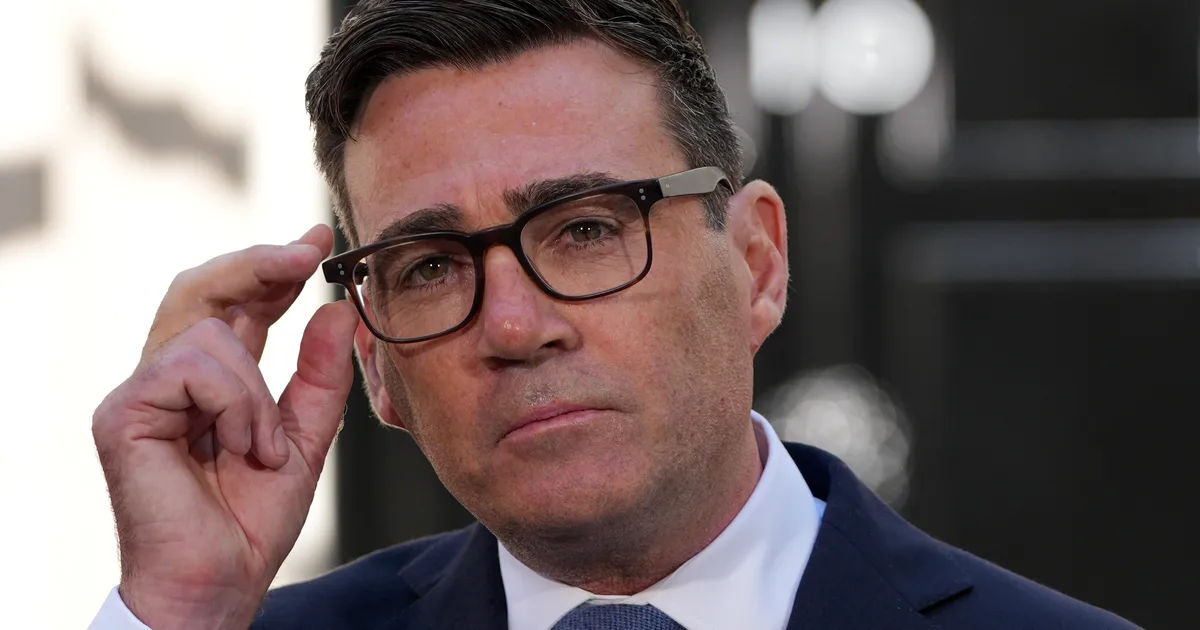
Composite image showing Andy Burnham, Count Binface and Rob Kenyon in front of a street scene in Makerfield

Composite image showing Andy Burnham, Count Binface and Rob Kenyon in front of a street scene in Makerfield

Count Binface is among the candidates for the Makerfield by-election. So voters will have at least one coherent manifesto to ponder.

UK politics has a long and rich tradition of electoral candidates who apparently exist in a different universe from everyone else. It’s how we ended up with Boris Johnson and Liz Truss as successive PMs.

But aside from the utter deadbeats standing for allegedly serious parties, there’s the novelty candidate. The Official Monster Raving Loony Party pretty much wrote the book on this sort of thing. And its leader, Alan ‘Howlin’ Laud Hope, will be lining up alongside 13 others of varying seriousness in Makerfield.

There’s a perception that the Loonies are no more than the Standing at the Back Dressed Stupidly and Looking Stupid Party of Blackadder the Third fame. However, the party has a decent track record of seeing manifesto policies become reality.

Advertisement

Crucially, the Loonies’ precursor, the National Teenage Party, ran on a platform of reducing the voting age from 21 to 18.

Count Binface is a worthy torchbearer for such political satire in the 21st century. A Jägerbomb to the Loonies’ real ale, if you will. So it’s worth checking his manifesto to see the actual good stuff in amongst the frivolities. I mean, sorting out footy corners is surely pie-in-the-sky.

It’s fair to say Andy Burnham might not be a fan of point 10.

The Count Binface manifesto — Makerfield Great Again

  1. I will cut your taxes, and raise everyone else’s.
  2. All 99 Flake ice-creams to cost no more than 99p and Wigan Kebabs to be price-capped at £2.
  3. Rephase the traffic lights on Liverpool Road to ease congestion.
  4. Corners to be refereed properly in football.
  5. People who use speakerphones on public transport to be conscripted.
  6. Wifi on trains that works. Also trains that work.
  7. The £6.6m Ashton-in-Makerfield regeneration scheme to be regenerated.
  8. Pensions to be double-locked, with an extra little chain on the side.
  9. Cyclists who break the highway code to be forced to ride unicycles instead.
  10. Elected mayors to be ineligible for parliament until after their term of office.
  11. Free parking at the Gerard Centre to be increased to 3 hours.
  12. Auto-renew on all online subscriptions to be abolished immediately.
  13. HS2 to be renamed FFS1 and rerouted so it ploughs through rail execs’ homes.
  14. Galloway Bakers’ ‘Full Monty Bin Lid’ breakfast to be Britain’s new national dish.
  15. Tries in Rugby League to be increased from 4 to 5 points in line with inflation.
  16. Ceefax to be brought back for the entire Greater Manchester area.
  17. MPs to lose their subsidy for cheap food and drink in parliament.
  18. The hand-dryer in the gents’ toilet at the Crown & Treaty pub, Uxbridge to be moved to a more sensible position.
  19. Count Binface to be the UK’s entrant at Eurovision 2027.
  20. I stand by my past manifestos: croissants, Brexit, Trident, building at least one affordable house: I’ve got it all covered.

Featured image via the Canary (Binface by Leon Neal / Getty Images, Burnham by Christopher Furlong / Getty Images)

By John Ranson

Advertisement

Source link

Continue Reading

Politics

Shadow equalities minister wants any explanation other than racism for Black maternal deaths

Published

on

Coutinho

Coutinho

Shadow Equalities Minister Claire Coutinho has suggested that we need to be “clear-eyed” when considering the issue of Black maternal deaths. Apparently, ‘the left’ (and also, you know, the NHS) are too quick to blame racism for the fact that Black people are three times more likely to die during childbirth.

We’re having this whole ridiculous ‘debate’ again because, over the last week, Reform leader Nigel Farage has redoubled his attacks on DEI (Diversity, Equity and Inclusion) initiatives. Those of us who don’t receive our talking points directly from Trump’s fascist America may know these better as EDI (Equality, Diversity and Inclusion).

Obediently, swathes of the mainstream media have begun to platform ‘debates’ on EDI. Or, you know, just jumped straight to saying that the police force have been ideologically captured by the idea of not being racist. No, seriously.

 Maybe society isn’t equal?…

In today’s case in point, Claire Coutinho appeared on Sky News with interviewer Sophie Ridge. The two had a friendly chat about whether Black people disproportionately dying during childbirth is actually racism, really, if you think about it.

Advertisement

Ridge kicked off by making an obvious point — sadly necessary when arguing with a Tory. She stated that we have equalities guidance in the first place:

because at the minute we don’t have a society where people of every race are treated equally? […]

Black women are more likely to die during childbirth than white women, because they’re not being listened to. So, is there a balance here to be struck, if we really are trying to get to the place where everyone is treated equally?

Coutinho, at first, ignored the issue of deaths in childbirth. Instead, she turned to the education system, and immediately displayed her fundamental misunderstanding of the issue:

Well look, Kemi Badenoch did this work in government. She looked at racial disparities where things are going wrong, and the problem that you’ve got is that the left want to say is that all of the reason those things are going wrong is because of racism. That is not the case.

Take the education system. You have a system where Black African children are doing well, and Black Caribbean children are not doing so well, but the left wants to say the problem is racist teachers.

Advertisement

That statement — that the left wants to blame racist teachers — is meant to conjure up a very specific image. It suggests a teacher stood at the head of a class, being unambiguously cruel to black kids, whilst treating white children like angels. The watcher is meant to think ‘but my teachers never did that’, and then dismiss ‘the left’.

(Let’s ignore for a moment that some of them did do that, and we didn’t pay attention because we were eleven at the time).

However, that bigotry isn’t the be-all-and-end-all of systematic, institutionalised discrimination. It’s a gross simplification of a vast, complex, deep-rooted problem. What’s more, it’s that systematic discrimination that equality initiatives are meant to target.

Coutinho — ‘Look at the evidence’?

Ridge moved on to ask:

Advertisement

If you look at the NHS and the way that Black women are however many times more likely to die during childbirth. That can’t be right, can it?

In a recent study, campaign group MBRRACE-UK (Mothers and Babies: Reducing Risk through Audits and Confidential Enquiries across the UK) found that Black people are three times more likely than white people to die during childbirth or shortly thereafter.

In reply to Ridge’s question, Coutinho said:

No of course not, but then you should go and look at the evidence. Every single time there is a serious death in the NHS, when it comes to maternity, you should look at the evidence. Is it because a Black woman was not listened to? Is it because there was some other health factor happening that we need to go and change?

What you need to do is root out the ideology that says that everything is racism – actually it might be other things, it might be that you’re more susceptible to some other form of heart disease or whatever it might be that’s causing harm.

The problem here is that we have already listened to the evidence. We’ve done so many times, ad nauseam, but racism is deeply entrenched in our system. Change, where it does happen, is slow, and hampered at every step by people looking desperately for any explanation other than racism.

Advertisement

‘Not anecdote but evidence’

As an example, we can look to campaign group Five X More’s 2025 Black Maternity Experiences survey. It reported that almost one in four Black people were denied pain relief during labour. Likewise, almost half of them received no explanation.

As the Canary’s Vannessa Viljoen wrote at the time:

This was not anecdote but evidence — data from more than a thousand women across the country.

Coutinho’s call to “look at the evidence” “every single time” someone dies during childbirth might seem sensible. However, at its worst, a focus on individual cases seeks to blame individuals suffering discrimination for their problems.

Even at its best, a relentless focus on individual cases also works to obscure the bigger picture. More specifically, it works to obscure systematic inequalities.

Advertisement

It’s easy to dismiss one Black woman being denied pain relief during labour. Maybe the doctor just made a mistake. Maybe she didn’t seem to be in much pain. However, if the doctors ‘just make a mistake’ far more often in relation to Black people’s pain, it’s evidence of a systematic issue.

Coutinho — ‘Evidence-based and clear-eyed’

Coutinho concluded by arguing that:

The problem is that people are no longer able to be evidence-based and clear-eyed about this. And I’m afraid the dominant ideology, the real problematic ideology that we have, is that the root cause of all of these differences is racism. That is not the case.

Well that’s just fab, isn’t it. Except, just yesterday, we saw a perfect example of how being evidence-based and clear-eyed isn’t enough for the right.

You see, Black people are twice as likely to receive a prostate cancer diagnosis compared to white people. However, the NHS isn’t blaming racism for that fact.

Advertisement

Rather, there’s an androgen receptor protein which is strongly involved in the growth and spread of prostate cancer. That protein has a far higher prevalence in Black people.

However, when a prostate cancer screening study worked to target the Black community because of that fact, Reform’s Zia Yusuf stated kicking off about it being racist towards white people, and evidence of a two-tier system.

It’s a common refrain of the right that ‘facts don’t care about your feelings’. However, if the right were as cold and logical as they want to believe, they wouldn’t be getting het up about targeted prostate cancer studies.

And, more to the point, we wouldn’t be having this ridiculous debate about institutional racism in healthcare yet again. Sure, the idea of institutional racism might hurt their feelings. However, it was, is, and will continue to be a fact for all the time we waste running yet another study to check it hasn’t gone away on its own.

Advertisement

Featured image via Ian Forsyth/Getty Images

By Alex/Rose Cocker

Source link

Advertisement
Continue Reading

Politics

Starmer finds his backbone as he stands up to Elon Musk “interfering in our politics”

Published

on

Starmer

Starmer

UK PM Keir Starmer appears to have found his backbone as he strengthens his rhetoric towards divisive X owner Elon Musk, saying the billionaire:

has been interfering in our politics in the last few days, trying to whip up division.

That is not who we are in Britain.

Adding:

When it comes to disgusting images on Grok, we take Grok on and fight, because that’s who we are as a country.

Starmer is right, of course, which is a refreshing change of pace. However, condemnation alone achieves precious little. The government must urgently curb the influence that super-rich elites wield over British politics and wider public debate – and he must make this behaviour expensive for Musk.

Advertisement

After all, if the government fails to act, those who draw huge profits from division will continue to inflame tensions and encourage further white grievance politics.

That risks bringing even more unrest, more intimidation, and more violence onto Britain’s streets as unaccountable powerful figures exploit public anger for their own nefarious purposes.

Starmer: ‘We react calmly, as his family have done’

Elon Musk has been peddling divisive content about Nowak’s death on X for months, using his typical far-right themes and incendiary rhetoric to whip up hate amongst racist white Britons. Farage has also joined this incitement, using the opportunity to convince predominantly white British men that our state is anti-white – playing again into the far-right toxic conspiracy theory that white people are being replaced in the UK.

Advertisement

Ahead of meeting Nowak’s family today, Starmer spoke to a journalist about how he feels about Musk’s dangerous meddling in British politics:

We need to also assert who we are as a country, because Musk, again, has been interfering in our politics in the last few days, trying to whip up division.

That is not who we are in Britain. In Britain, we are reasonable, tolerant people.

When we have a terrible case like Henry’s case, Henry Novak, we react calmly, as his family have done.

He then referred to other sinister, harmful sexualised content created by Musk’s tech, with lucrative returns of course. After all, we’re sure paedophiles and perverts hadn’t even dreamed to have such an accessible tool in the past to create sick, sadistic and degrading content.

Advertisement

Until Musk came along to appeal to their sordid fantasies, of course, as Starmer also condemned saying:

When it comes to disgusting images on Grok, we take Grok on and fight, because that’s who we are as a country.

Yesterday, we examined how super-rich elites shape public attitudes and often direct undue suspicion and hostility towards already vulnerable marginalised communities. Yet when white men commit murder, rape, violence, or abuse, few politicians or commentators rush to portray white men as a collective threat.

Instead, they treat those crimes as the actions of individuals rather than evidence of a wider problem. However, when a Black or Brown person is the aggressor – or the victim is Jewish – there is always a moral panic to follow.

Elites are a danger to civil society

This surely highlights the dangerous impact a billionaire with impactful control over a social media platform can have in destabilising our society and bringing chaos to our streets. Southampton recently saw violent, aggressive ‘protests’ from a significantly large group of thuggish brutes who saw it as their ‘right’ to behave violently towards the police.

Advertisement

It is worth noting that this kind of violence does not erupt at peace marches — or even at the vigil held after Sarah Everard’s abduction and murder by a serving Met police officer. Time and again, these scenes emerge when figures such as Tommy Robinson, Nigel Farage, and Elon Musk inject themselves into events, inflame tensions, and encourage division for their own political purposes.

Musk, in particular, regularly uses his enormous platform to amplify provocative and divisive narratives. Despite appeals from Henry Nowak’s grieving family to reject hatred and avoid turning his death into a political football, Musk seized on the tragedy to promote claims that white people face systemic bias in the UK.

In doing so, he ignored the wishes of those closest to the victim and helped fuel the very tensions they had urged people to resist.

As Starmer also touched on, Musk has also been more than happy to make life easier for paedos and perverts on his platform by giving them the tools to create any image their depraved fantasies crave.

Advertisement

As a result, X’s Grok made images of child abuse and sexualised content of women without their consent — including a female Labour MP who is suing xAI for allowing the site prompt to create such harmful and degrading images.

Real action MUST be taken

Lord Blunkett — former Labour home secretary — has also called for legal action against Musk due to his inflammatory actions around Nowak’s murder. Referring to the mistaken identity of two officers who were subsequently targeted online, Blunkett said without legal action “it’s the wild west”:

Dangerous elites appeal to dangerous men

MP Jess Asato clearly has Keir Starmer’s backing in her legal case against Musk’s tech company, which she accuses of breaching data protection laws and misusing private information. Among the most disturbing content at the centre of the case is a video that Asato says depicts her being chloroformed and “prepared for a sexual assault”.

There is little evidence that society has benefited from handing vast amounts of power to billionaire tech elites such as Elon Musk. Instead, social media platforms have too often amplified some of the ugliest attitudes in society, giving those who spread abuse, hate, and misinformation an unprecedented platform and audience.

Furthermore, the algorithms behind these platforms actively reward outrage and hostility, pushing the most divisive content towards those most willing to see it. Needless to say, women, children, and marginalised communities often pay the highest price for that morally bankrupt business model.

Advertisement

Therefore, if Starmer is indeed serious about tackling these harms caused by Musk, he will need to do more than issue strongly worded condemnations.

He must find a way to hold powerful platforms to account and curb the corrosive influence that figures such as Musk can exert over public discourse.

Featured image via Joe Giddens – WPA Pool/Getty Images

By Maddison Wheeldon

Advertisement

Source link

Continue Reading

Politics

MPs warn Palantir influence over British state is ‘unacceptable point of weakness’

Published

on

Palantir

Palantir

MPs from the influential science committee have warned AI war firm Palantir’s increasing power over the UK state is an “unacceptable weakness”. The committee also noted the firm, which is very close to the current Keir Starmer government, espouses openly far-right politics.

The Science, Innovation and Technology Committee urged the government to:

exercise the 2027 break clause in the NHS Federated Data Platform Contract with Palantir and either develop an in-house replacement or seek an alternative UK provider.

The MPs also rejected the idea Palantir was the only firm capable of providing services the UK needs:

The report argues that vendor lock-in should not be seen as inevitable and calls for a strategy to end lock-in across the public sector, diversify suppliers and strengthen digital resilience.

The UK militarypoliceNHS and, allegedly, the Telegraph newspaper have started to use Palantir technology. The firm is also involved in Israel’s genocide in Gaza, and maintains a permanent desk in southern IsraelTrump’s paramilitary immigration operations also use the firm’s gear.

Advertisement

The Canary reported on 2 June that UK officials are even using Palantir software to decide what Palantir technology to buy to fight future wars.

And as the Canary reported on 20 April, Palantir’s ‘manifesto’ is a collection of far-right tropes more suited to a far-right manosphere podcast than a multinational arms firm:

For example, Point 21 reads:

Some cultures have produced vital advances; others remain dysfunctional and regressive. All cultures are now equal. Criticism and value judgments are forbidden. Yet this new dogma glosses over the fact that certain cultures and indeed subcultures . . . have produced wonders. Others have proven middling, and worse, regressive and harmful.

While Point 22 is a fascist-accented lament for Western white supremacist ‘culture’:

Advertisement

We must resist the shallow temptation of a vacant and hollow pluralism. We, in America and more broadly the West, have for the past half century resisted defining national cultures in the name of inclusivity. But inclusion into what?

Palantir burrowed deep into British infrastructure

The science committee accepted some of these issues, though arguably did not go far enough.

MPs noted:

The relationship between the public sector and Palantir has attracted increasing public attention, in part because of its supply of software to the US military, and use by the federal Immigration and Customs Enforcement (ICE) agency.

Adding:

Comments about the NHS made by the company’s co-founder Peter Thiel, and a 22-point manifesto published by the company have also raised concerns.

The MPs also called bullshit on UK Palantir boss Louis Mosley’s defence of the firm. Mosley “distanced himself”:

Advertisement

from Thiel’s comments and told us that the company existed “to support democratically-elected governments in delivering the mandate that they have been elected to deliver”.

Yet, the committee noted:

The company has published a 22-point manifesto based on the writing of CEO Alexander Karp, which argued that “the ability of free and democratic societies to prevail requires something more than moral appeal. It requires hard power, and hard power in this century will be built on software.

Adding:

This is despite Louis Mosley telling us that the company “is not… political. We represent a diversity of political views and do not take political positions as a company”.

Mismatch of values?

The report authors concluded that:

 Palantir should not have such a significant role in the UK public sector, and that it is far from the only company capable of providing the data analysis ‘middleware’ required by public bodies.

As well as scandal over Palantir’s military and immigration uses:

Advertisement

Its co-founder has criticised the concept of a national health service and the company has issued a manifesto that makes explicitly political arguments, undermining what the head of their UK and European business told us.

They said there was a “clear mismatch with UK values”.

This is debatable of course. The report makes no mention of Palantir’s role in Gaza — an atrocity the UK is deeply implicated in. Yet the report does raise several important points. Palantir’s accelerating power over UK police, military and even health infrastructure should worry us all. And the MPs are correct to say the plug needs to be pulled as soon as possible on this Trojan Horse for tech billionaires with a fascistic agenda.

Featured image via Leon Neal/Getty Images

By Joe Glenton

Advertisement

Source link

Continue Reading

Politics

Reform promotes councillor linked to genocidal WhatsApp group

Published

on

Reform UK councillor Tom Pickup

Reform UK councillor Tom Pickup

Tom Pickup is one of Reform UK’s Lancashire County councillors. In November 2025, he was exposed for being a member of a WhatsApp group which was calling for genocide against Muslims. In February, the party quietly reinstated him, and has now promoted him to a new position:

Reform — “Tactical”

Comments in the WhatsApp group Pickup was a member of included:

Advertisement
  • Calls for a “mass Islam genocide”.
  • The suggestion that Keir Starmer “needs a fucking bullet”.

Pickup made unsavoury contributions of his own, replying to a comment that Starmer is a “DICKtator” by responding he was a “dicktaker”. When questioned on this, Pickup said:

99% of what occurs in groups, I don’t see. Based on my involvement in it and what I have seen, I’ve been my usual jokey self and it’s been twisted out of context.

Regardless of whether he meant it, you ideally want councillors to be mature enough to not think calling someone ‘gay’ is the height of hilarity.

Pickup also said:

Everyone in Reform is a lot more hardline on immigration than is typically stated publicly, to get a majority government we have to be tactical.

This is something we all know to be true, of course. It’s obvious in the sort of political candidates Reform attracts, as we’ve reported:

Pickup returns

As Blog Preston have reported, Pickup’s suspension ended in February following an apology from the councillor. Pickup will be the cabinet member for adult social care, which has proven to be a controversial position. As Blog Preston noted:

During County Cllr Dalton’s year-long stint at the top table at County Hall, he led a controversial review into the future of five county council-run care homes and five day centres, amid concern over the poor condition of their buildings. The potential closure of the services sparked protests and petitions – although the authority insisted no pre-determined decisions had been made.

Following a public consultation – during which the cabinet member urged respondents to “be emotional” in making the case for the facilities in their existing form – it was ultimately decided all of the homes would remain open, along with the three day centres that are currently operational.

Advertisement

Reform’s threat to close down local care homes attracted significant controversy, with protests taking place in the city of Preston:

Position of power

Despite his denials, it’s a fact that Pickup was in a group calling for the most extreme form of violence against Muslims. Now, the man will be in a position of power over elderly Muslims who live in Lancashire’s already-underfunded care homes.

It’s far from a desirable situation, and it shows Reform UK doesn’t care if constituents trust the party to keep them safe.

Featured image via Nigel Roddis (Getty Images) 

Advertisement

By Willem Moore

Source link

Advertisement
Continue Reading

Politics

Genocidal Ben-Gvir calls Lebanon ceasefire a ‘serious mistake’

Published

on

Ben-Gvir

Ben-Gvir

Israel’s minister of national security and genocide fanatic, Itamar Ben-Gvir, has called the potential ceasefire with Lebanon a ‘serious mistake’.

Importantly, the ceasefire would effectively surrender Southern Lebanon to Israel, with zero promise from Israel to stop attacking. Obviously, Hezbollah has declined the offer.

Israeli terrorists

Israel Katz, Israel’s Defence Minister, said the U.S.-brokered Lebanon ceasefire declaration includes:

an unequivocal statement on the disarmament of Hezbollah, the removal of Hezbollah terrorists from the area south of the Litani River, the continued presence of the IDF in the security area, and freedom of action for Israel

Essentially, it would allow Israel to annex Southern Lebanon, which is a victory for no one except Israel.

Despite this, in a post on X, Ben-Gvir said:

The ceasefire with Lebanon is a serious mistake and the pipe dreams of advisors who are dragging the prime minister into incorrect decisions.

Hezbollah has not left the area south of the Litani, and the Lebanese army has no way to enforce its evacuation.

Advertisement

Of course, we would expect no less from a man who advocated for the death penalty for Palestinians, has at least eight criminal convictions, including for terrorism, and has repeatedly called for the ethnic cleansing of Arabs.

His post also ignores one fundamental fact. Hezbollah is defending sovereign Lebanese territory, which Israel is illegally occupying. Under international law, it has that right.

The United Nations reaffirms:

the legitimacy of the struggle of peoples for independence, territorial integrity, national unity and liberation from colonial domination, apartheid and foreign occupation by all available means, including armed struggle;

Israel is an illegal, colonialist, occupying power. It has no ‘right’ to Palestine, Lebanon, the Syrian Golan Heights, or any other country.

Advertisement

Ben-Gvir added:

The state of Lebanon is a partner of Hezbollah. There are ministers in its government from Hezbollah, and relatives of Hezbollah members serve in the Lebanese army.

Crucially, Hezbollah is a legitimate political party in Lebanon. Israel, the US, and many other Western countries may have labelled it a ‘terrorist organisation’, but that’s only because it’s a threat to Israel’s colonialist goal of a ‘Greater Israel’.

Hezbollah has repeatedly said it would “confront any project that serves Israel”. Back in September, when a previous ceasefire was proposed, Hezbollah maintained that the disarmament plan, which the Lebanese government approved, only served Israel’s interests.

Ben-Gvir on saying ‘no’ to Trump

Ben-Gvir also claimed that Netanyahu should have told Trump:

Advertisement

We love and appreciate you, but Israel is a sovereign and independent state, and it cannot come to terms with the strengthening of a terrorist organization and with its very existence on its border.

Israel has zero right to exist. The genocidal terrorists have literally built their illegal settlements on stolen land and the graves of Palestinians. If Israel is so worried about people fighting back, maybe it should stop attacking, murdering, and bombing native people.

Colonisers will never accept the presence of indigenous people.

This is Gaza all over again. Israel was supposed to fully withdraw its troops under the ceasefire agreement, which it signed in October. However, instead of withdrawing, the IOF has continued to steal even more land and even build military bases in towns it has flattened. During the ceasefire alone, Israel has murdered over 910 people in Gaza.

Advertisement

Israel has never kept to any ceasefire agreement in history, so what do we expect now?

Moreover, how can there ever be peace when openly genocidal people, such as Ben-Gvir and his cronies, are in power?

There is a pattern. Israel signs a ceasefire. The IOF kills more people and steals more land. Israel moans that people are fighting back. The IOF has to defeat ‘terrorists’. Unfortunately, the cycle will keep repeating until the international community grows a backbone.

Feature image via Erik Marmor/Getty Images

Advertisement

By HG

Source link

Continue Reading

Trending

Copyright © 2025