
Business
Inflation reflects growth dynamics in India: Christopher Wood


Hello everybody and thank you for asking me. I will be running through some charts which were still first with the situation in the West. Then I will move on to charts on Asia and India. So I get the bad news out of way first. But this seems to be the wrong way around. So I am getting from back to front here. (Watch)
To start with the US situation, this is a big picture chart everybody needs to be aware of in the global economy. This is US total debt as a percentage of GDP. The story is very simple and the total amount of debt in the system in the US has been going down ever since the credit crisis erupted in 2007-2008. This the first time total debt has been falling in America since the Great Depression.
Mr Bernanke of the Federal Reserve has been trying to get the re-leveraging game going so far, they have not succeeded. My operating assumption is to assume that the leveraging will continue that we peaked out in the US super credit cycle in 2007, which has been running since the Second World War and now in a long-term de-leveraging cycle, which means lower trend GDP growth.
May be re-leveraging will kick in coming months in which case I will change my view, but for now I am assuming it’s a de-leveraging cycle until the data proves otherwise. Next chart you see US total net credit market borrowings and you can see the rate of growth of borrowing has been going down in the system despite the big kick up in Federal Government borrowing.

Next chart is a long-term trend in US nominal GDP 10-year compound annual growth. As the Japanese example has shown in the last 20 years, when you get into a deflationary environment, it no longer makes sense to look at real GDP measures because when inflation zero level what gives a more realistic picture of what is going is nominal GDP. And in my view, nominal GDP growth in America will continue to trend down. We have seen a big rally in US government bond prices this year, as telling you the trend nominal GDP growth is lower and that means the trend earnings growth, trend revenue growth in America is also going to be lower.
Then next chart relates to the consumption story in America which in my view is going to remain anaemic. In my view the US consumers, western consumers in general, are going to be increasing savings rate. There is also a demographic kicking in… the baby boom as heading for retirement, but they cannot afford to retire. So topline is US real disposable personal income, the bottom line is real personal income excluding current transfer receipts. Transfer receipts basically mean welfare payments. So you can see without all the stimulus from the government the fundamental income trend is much weaker. What separates the emerging markets from the developed world is an emerging markets like India with healthy income growth and the developed countries, be it the US, Japan, Europe, we do not have healthy income growth.
Next chart highlights a significant rally in US Treasury Bond prices reflected in declining treasury bond yields which has happened this year. At the start of this year the biggest bearish consensus amongst global equity investors was that US Treasury bonds were screaming sells.
Everybody said that the treasury bond market is going to collapse, the Fed printing money inflation is coming back. Clearly that consensus was completely wrong. US Treasury Bond market has been rallying even with the recent pick in the S&P and recent weeks up to 1150 level which I think was a peak of this counter trend rally. Even with the stock market rally the bond market did not sell off. What this bond market is telling you is that nominal GDP growth is slowing in America, it is telling you it is not a normal recovery. The credit multiplier is not working.
Once the inventory cycles happen & the US capex cycle has ran through, there will be nothing left to sustain the economic momentum. So in a deflationary environment, government bond prices are lead indicator of nominal GDP growth. Right now this is a very important point because the US bond market is sending one message and the US stock market is sending another message and basically investors have a decision to make – do they believe the bond market is giving the correct signal or the stock market? My assumption is that it’s the bond market and my experience is that the bond market is no way smarter than the stock market 90% of the time. Meanwhile, this is US headline CPI inflation for the rest of this year we are going to see inflationary pressures falling throughout the world in the West. That’s going to lead to new deflation concerns.
In Asia and countries like China and India, falling inflationary pressures are going to be bullish and everybody is going to realise it does not make sense to worry about inflation in countries like India. The good news is that you have inflation because that reflects the fundamental growth dynamic. But the key point about the US is if the trend over the past 3 months has extrapolated forward, US CPI inflation will turn negative in October. If that happens, it’s not going to be bullish for equities, it’s going to be bullish for government bonds and it’s going to be a signal for Mr. Bernanke, if we have not done that already, to assume quantitative easing.
Next chart, US average duration of unemployment. So basically there are large groups of the structurally unemployed in America. So in this sense, the US is heading for the European systems situation were you have a large group of structurally unemployed living off the welfare state. The problem in America is that the welfare state is much more controversial than in Europe, hence the political divide in America, hence the growing trend under the so-called Tea Party movement.
Meanwhile the classic monetary measures are highlighting the fact that we are not in a re-leveraging cycle, we are still in a deleveraging cycle. This is the US money multiplier representing the velocity of money in circulation. Velocity of money in circulation is declining. So long as that line is declining, it’s deflationary. We don’t have to worry about inflation picking up, and this chart highlights the growing deflationary threat.
Next chart is US broad money supply growth. Again, money supply growth is going down. That’s why the bond market’s rallying, that’s why inflation is not an issue, that’s why Mr. Bernanke is now looking for an excuse to resume quantitative easing.
Next chart is US bank lending. Again, no real sign of any kind of meaningful pick up in bank lending annualise lending loan growth continue to slow another indication of a deleveraging cycle. This is not just about banks restricting credit, it is also about a change in psychology, economic agents be it the companies or consumers have become more risk averse about borrowing.
Next chart is US total securitisation issuance. In the recent credit boom before the bust a large part of the credit cycle was driven by securitization, therefore we are going to get re-leveraging in America. We need to see a healthy pick up in securitisation as well as banking lending, but the only area that has picked up since the crisis is the dark blue line here.
This is agency mortgage bank securities, that’s Fannie Mae and Freddie Mac. These entities are guaranteed by the Federal Government and therefore they do not really count. Any private sector securitisation has barely recovered. Meanwhile the huge role played by Fannie and Freddie should not be ignored in terms of supporting the housing market.
Basically about 96% of the America mortgage market now is government guaranteed. So that’s the US situation. The big picture is still deflationary. However, in terms of macroeconomic shocks that could cause another steep fall in global equities this year for the rest of 2010, I still believe there is going to be another sharp decline in equities like we saw in April and May. It’s more likely to be triggered by the Eurozone where you have systemic risk relating to government debt.
So this chart relates to the ECBs net buying of Euroland government bonds. The key point here is this ECB was forced reluctantly to stop buying junk government bonds in Europe like Greek government bonds in May when the Greek crisis blew up. The interesting point is the ECB is only doing this reluctantly and as equity markets have rallied and the credit spreads have come in, the ECB has progressively bought less and less junk government paper.
Basically last week they hardly bought anything – they’re probably going to go down to zero just as this counter trend rally peaks.
How early we go down depends on whether there is another bout of risk aversion or markets are just focusing on waning growth. This is Greek and PIG government bond yield spreads. I was recommending for several years the investor should bet on wise widening PIG spread. PIG spread, for people who don’t know this, is the average bond yield of Portugal, Ireland, Greece, Spain over the German bond yields-I closed out that just about when the Greek crisis peaked. And I think a better trade is going forward is what I called a Spanish flu trade, betting on rising Spanish CDS.
For now the jury doubts on whether these European countries can make the fiscal adjustments being demanded by the Germans, but people should understand that the Germans have a completely diametrically opposite view to the Americans – they simply do not believe that fiscally stimulating is the way to get yourself out of the economic problem. So right now the weaker part of Euroland has embarked on a fiscal adjustments which is intrinsically deflationary, given the downturn they are facing.
The stress test is being led by Ireland. Last year the Irish economy contracted in nominal terms by more than 10 percentage points. So far the Irish are taking the pain probably because the only boom they have had in the last 1000 years was when they join Euroland community. So in that sense willing to take quite a lot of pain, but in the big stress test it is going to be Spain.
Spain is a big important country. They had a massive private sector debt binge, they got the biggest housing bust in the west, even bigger than the US. So it is going to be interesting to see whether the Spanish political system can make this fiscal adjustment, given the fact they already have nearly 20% unemployed. I have an open mind on this. We just have to see what happens and may be the Europeans can make this fiscal adjustment, in which case it’s going to be a lot of pain, but the Euro as a currency is going to merge with huge credibility.
On the other hand, it may well be that this level of fiscal austerity is simply incompatible with the political systems of these Mediterranean countries. Right now, it is impossible to tell the European who is watching the football and now at the beach we can have a much better ideas they can take this pain by about January-February next year.
But in the meantime if the markets will test or are bound to test the European’s willingness to take this fiscal adjustment in the next few months. Tactically I would be selling the Euro against the dollar here as we had a significant bounce back in the Euro. So those are my thoughts on basically the West. It’s a deflationary environment. But in the US we are going to continue to stimulate in the Europeans because the Europe’s case is going to follow the German President.
Turning to Asia, Asia is a fundamentally healthy story unlike the West. In my view, the peak of the Asia ex-Japan index you saw prior to the credit crisis will be exceeded sooner or later because the Asian economies are growing healthily and have effectively decoupled from the West even though the markets haven’t. This is MSCI Asia ex-Japan relative to MSCI world index. They’ve been in & outperforming trend since the bottom of the Asian crisis in 1998 and that outperforming trend is resuming when the Chinese stock tightening and then formally start easing again which will happen in the next few months. That will reaccelerate Asian outperformance.
Valuation wise, Asia is trading in line with the US on the 12-month forward PE basis. In my view, sooner or later Asia is going to trade at a sustainable premium over the West because the fundamental growth story is so superior. In terms of my relative return asset allocation, I’m going to take a detour here. I am structurally overweight on India and Indonesia as these are the two best long-term stories in Asia. But tactically I have reduced India a bit and raised China because we are going to get a policy inflection points in China in the next few months which will be bullish for Chinese stocks.
But my big underweight in Asia Pac portfolio is Australia which is why I’m weaving more money into China because it has become cheap. What I am underweight on is those stock, sectors, countries which are perceived as beneficiaries of Chinese growth like the commodities sector, because in my view, Chinese growth is going to be slowing for the rest of this year and that’s a negative headwind for the commodities complex.
From an Indian standpoint that was obviously positive. I think oil is going this week to be as high as it’s going to get on its counter trend move. Clearly if you are more bullish on oil, you will be more bearish on India and this is my long only portfolio on Asia or ex-Japan.
I started this portfolio beginning of fourth quarter 2002, sent about 25 to 30 stocks in it, mostly large cap. I cannot have any cash and it’s long only and is basically playing the domestic story in Asia as always. Mostly has the biggest weight being in India because India since always has been my favourite equity story in Asia. It’s still got a big weighting in India. We can argue about the details of what stocks to own etc, but fundamentally this has India. Secondly, China if I did not have a big capital orientation, then I would have less in China, more in smaller Asian markets like Indonesia and Philippines.
That’s the performance of my long-only portfolio compared with the benchmarks. Since I cannot really have cash, as I said, so I cannot really hedge it, but for those who want to hedge I have been recommending since the middle of over 2007 that investors hedge this long Asian exposure by shorting western financial stocks. I have now narrowed that down in recent months into not shorting western financial stocks, but shorting European financial stocks because European financial stocks are much more geared to the systemic risk from junk European government debt and they are also in a much more leverage than American financial stocks.
This is my global portfolio I have also been running since 2002. This has run on a theoretical US dollar denominated pension fund on a 5-year view and this portfolio I have simplified in recent months have got 15% weighting in US 30 year treasury bonds.
That might seem crazy to people given the fact that the US government debt is getting bigger & bigger, but one of my views is that the most likely end game is a sovereign debt crisis in the US and the collapse of the US dollar paper standard. I don’t think that end game happens this year and in my view before this oust in the game is played out the deflationary pressures in the US will take bond yields much lower. So I think it’s quite possible the 10-year Treasury goes 2%, 30 year treasury goes to 3%. For people who think that’s insane, I should point out that the 10-year GDP went below 1% this week and in 2003 got to 0.45 basis points.
So the message is that in deflationary environment bond thing gets very low indeed because the risk aversion causes people like banks, insurance companies, individuals to buy bonds to lock in income because in deflationary environment there is not much income around. So that’s the deflationary hedge, but 45% of my portfolio is geared to the best story in the world, which is Asia.
So I got 15% in Asia or ex-Japan physical property, 30% in my long-only Asia or ex-Japan portfolio. Then I got a longstanding position in gold and gold mining stocks which I have since inception of this portfolio and this position in gold is basically hedging for US dollar denominated pension funds. The big picture risk is that one day simply the world revolt against the ongoing US stimulus and there is a sovereign debt crisis in the US dollar, US government debt, which means the end of the US paper standard and the end of the post 1945 Western paper currency system. And in that environment gold can go parabolic. My longstanding target for gold that can peak in this bull market is $35000 per ounce.
So this is a gold bullion chart in US dollar terms. The key point about this chart is that it’s quite obvious gold is in a bull market and remains in a bull market and this bull market, when it ends, will end in a parabolic spike which we have not seen yet. The next obvious trigger for the next big move in gold will be the next time Mr. Bernanke adopts quantitative easing and the next time he does it he who is going to have to expand the balance sheet more than the last time (because otherwise people are going to worry if it’s going to work), but cannot do it right now because the news flow is not bad enough.
Gold stocks relative to gold bullion price. In my view gold stocks made that relative low to gold bullion price in 2008 when commodities collapsed. So for equity managers who cannot buy pure bullion I would say look at gold mining stocks because if gold goes $35000 per ounce, it is going to be massive operating leverage for those mine. Gold stocks that actually produce gold haven’t hedge the gold and on jurisdictions where governments don’t cease the gold often.
I am turning to some Asian Pacific charts. I will just run through few charts on China that’s a big story for everywhere as I say Chinese market has underperformed this year. The key point to understand about Chinese stocks is that they are policy-driven. Indian stocks are earnings-driven while Chinese stocks are policy-driven. The Chinese government is tightening, that is why the market has been going down. When the Chinese government starts easing, the Chinese stocks will go up and then may be outperforming Indian stocks for a period.
Real GDP growth in China. China growth peaked in my view first quarter. It’s going to be slowing for the rest of this year probably an annualised growth 12% first quarter, may be down to 1% by the fourth quarter. That is going to create a lot of market noise. It will be negative for commodities. It’s not a big deal, but it will create a lot of noise. Chinese bank landing has slowed dramatically this year from the surge last year. China is a command economy banking system. So that looks dramatic, but that has seen the loan growth slowing to 18% which is still respectable, it’s not cold turkey.
China has been tightening on the property market. So what the stock market in China wants to see is more and more developers willing to cut property prices because it’s more than evident that developers are stopping raising prices and starting to cut prices. The greater the hope that the Chinese government stops tightening that process should play out in the next few months. As you can see here average daily residential sales of Chinese properties have fallen pretty dramatically since April when the government got more aggressive on tightening. You’d have read a lot about Chinese property bubbles, especially in America.
The Chinese property markets have a lot of excess supply, but it’s not a bubble because you have very conservative mortgage financing. What you do have there is a lot of high end developments sitting 80% empty. So Chinese people like to have lot of flat value and don’t like to have flats once used because they think a used flat is devalued just like a used car.
What about the currency? When the renminbi starts to rise against the US dollar incrementally, maximum incremental appreciation will be of 5%. So the Chinese are going to let their currency go up slightly, but you are not going to get any aggressive moves.
I got a chart on Hong Kong just to highlight that we have got a big long-term asset inflation story in Asia. The quintessential asset inflation story in Asia is Hong Kong because of the supply constraints. In my view, Hong Kong property would sooner or later exceed 1997 peaks. You can get a mortagage in Hong Kong today for less than 1%. There you see, apart from Mumbai, this is a one property market in Asia with the massive supply constraint. This is a new supplier residential properties. So Hong Kong I think is a classic asset inflation story to monitor.
Turning to India, I would not go too much linked to India because everybody over here would know more about it than me, but we probably had a big inflation scare at the start of this year. In my view, it’s fundamentally silly to worry too much about inflationary pressures in Asia.
We should be celebrating the fact that there is inflation because if there wasn’t inflationary pressures in Asia, it would mean the world is facing a global depression because there is no growth dynamics in the developed world. So I am glad there is inflationary pressure. Having said that inflation is going to be coming off in India for the rest of this year which means that concern should recede. The central bank will continue to tighten incrementally. I think that’s sensible given the external environment, but I think incremental tightening that the RBI is doing is enough to upset stocks here unduly.
Bank credit growth. This I think is a very important chart. The Indian banking sector is a capitalist banking system unlike the Chinese system. So when the economies slow, the banks slow their lending whereas in China they were ordered to lend more. Now the credit cycle is picking up again, that’s a very healthy development. We are looking at about 20% loan growth in India this year. But I think the most important positive points of all is that the credit cycle is being led by infrastructure loans, not personal loans, as you can see from this chart. This raises the key point which in my view is the critical bearable for the Indian macroeconomic story this year and for the next 5 to 10 years is whether we can get an infrastructure cycle playing out.
The fact that infrastructure loans are leading the credit cycle is anecdotal evidence that is happening. If we get infrastructure happening in India, it’s quite possible that India can grow at 9% plus a year for the next 5 years at least, if not 10 years, which means that India in my view is going to be growing more rapidly than China. In my view a more basic trend growth in China is going to be 8% and that’s a growth rate that Chinese Communist party is going to be comfortable with. So the higher growth rate in India than in China, if the infrastructure story happens, is going to raise the profile of the Indian story globally.
Clearly if I am wrong and infrastructure does not happen in India, the whole Indian story becomes much less interesting. It’s not a disaster, but the country only grows just 5%-6%. So this is fixed investment relative to GDP in India. I am expecting this line to pick up again. Car sales, two-wheelers sales are going up. So the consumer story is still perfectly good story in India. It has picked up with the monetary easing, but as I say the key variable for me is infrastructure.
In terms of risks to the Indian markets, probably the biggest risk to the Indian market is simply the huge amount of foreign money. My own guess is that the next time there is a global hiccup, foreigners will sell India less aggressively than in 2008 for the simple reason that India has shown it can decouple from the US economic cycle.
The other point is the fact that foreign investors stay much in India is basically confirmation that India is a good story and those foreign investors who have not yet invested in India are all desperately waiting for a correction. So they can invest, that’s the mindset of them.
One year forward price to book. India is not cheap, but it’s not expensive in the context of Indian stock market history and in my view the Indian stock market will continue to trade at a premium to Asian and mother of emerging markets because the Indian market is like one big growth stock and growth stocks trade at a premium. Clearly, if you want to enter in an equity portfolio for dividends & you don’t buy India, then you should go and look at Singapore.
This chart perceives a useful chart for anybody who is trying to raise Indian funds in the room because it shows a huge outperformance of India – MSCI India relative to MSCI China in recent history. I will just end with the 3 charts on Japan & the reason I am doing this is because of my experience when I lived in Japan in the early 90s and the experience of Japan in the last 20 years is a potential lead indicator of what is going to happen in the West.
 as a Reliable and Trusted News Source

Altman Brothers Real Estate Owner Josh Altman discusses LeBron James facing California’s wealth tax despite moving to Philadelphia on ‘Varney & Co.’
LeBron James‘ big free agent decision has shaken the NBA once more after the all-time leading scorer chose the Philadelphia 76ers as his next team.
Fans have quickly jumped on board, with Fanatics saying his newest jersey has broken some records.
For the period of the first 48 hours after James made his long-awaited announcement, his new 76ers jersey sold the most ever of a player joining a new team across all sports, according to Fanatics records.
CLICK HERE FOR MORE SPORTS COVERAGE ON FOXBUSINESS.COM

LeBron James’ new Philadelphia 76ers jersey (Fanatics / Fox News)
James surpassed Shohei Ohtani’s decision to move to the Los Angeles Dodgers in 2023.
And more James merchandise was sold in the first 24 hours after his decision was made than the first week after he signed with the Los Angeles Lakers in 2018, according to Fanatics records.
LEBRON JAMES MAKES NBA FREE AGENCY DECISION, ANNOUNCES PLANS TO SIGN WITH 76ERS
Since Friday, James merchandise has accounted for eight of the top 10 selling products across all sports throughout the Fanatics network of sites.
James will enter Year 24 in the NBA with his fourth different team after signing a two-year, $8 million contract with the Sixers. He promised this would be his “last decision,” meaning this could be his final chance to earn another NBA title.
The 41-year-old took a major discount to join a team primed to make a championship run. In addition to James, the 76ers made a trade with the Boston Celtics for another NBA Finals MVP, Jaylen Brown, before James made his decision.

A LeBron James Philadelphia 76ers shirt from Mitchell & Ness. (Fanatics / Fox News)
So, the starting five in Philadelphia figures to be James, Brown, former league MVP Joel Embiid and dynamic guards Tyrese Maxey and V.J. Edgecombe.
James said on X that he thought he was done with his future Hall of Fame career at the end of last season, believing he had played his final game in the sweep by the Oklahoma City Thunder in the NBA Playoffs.
“I thought I was done when the season ended. I wasn’t ready to announce it, and I knew I needed some time to really decide, but I was pretty sure I played my last game. I was honest at that last press conference when I said I needed to look at myself and decide if I still love this game,” James wrote on X.
“I still truly love this game, and I have more to give.”

In this Feb. 27, 2020 file photo, Los Angeles Lakers forward LeBron James appears during an NBA basketball game against the Golden State Warriors in San Francisco. (AP Photo/Jeff Chiu, File / AP Newsroom)
GET FOX BUSINESS ON THE GO BY CLICKING HERE
James added that he still wants to “sacrifice” and “grind” for his team, and he believes the 76ers can be a championship squad during the 2026-27 season.
The 76ers were swept by the New York Knicks in the Eastern Conference semifinals, and they hope the additions of James and Brown can propel them to a championship.
Follow Fox News Digital’s sports coverage on X and subscribe to the Fox News Sports Huddle newsletter.

Operator
Greetings. Welcome to the Everforth Second Quarter 2026 Earnings Call. [Operator Instructions] Please note, this conference is being recorded.
I will now turn the conference over to Kimberly Esterkin, Head of Investor Relations. Thank you, Kimberly. You may begin.
Kimberly Esterkin
Vice President of Investor Relations
Good afternoon. Thank you for joining us today for Everforth’s Second Quarter 2026 Conference Call. With me are Ted Hanson, Chief Executive Officer; Shiv Iyer, President; and Marie Perry, Chief Financial Officer.
Before we get started, I would like to remind everyone that our commentary contains forward-looking statements. Although we believe these statements are reasonable, they are subject to risks and uncertainties, and as such, our actual results could differ materially from those statements. Certain of these risks and uncertainties are described in today’s press release and in our SEC filings. We do not assume any obligation to update these statements made on this call.
For your convenience, our prepared remarks and supplemental materials can be found in the Investor Relations section of our website at investors.everforth.com.
Please also note that on this call, we will be referencing certain non-GAAP measures, such as adjusted EBITDA, adjusted net income and free cash flow. These non-GAAP measures are intended to supplement the comparable GAAP measures. Reconciliations between GAAP and non-GAAP measures are included in today’s press
Business
(VIDEO) Matt Baker Says Loss of His Beloved Dog Bob “Took a Lot to Get Over” in New Radio Times Interview

Countryfile presenter Matt Baker has opened up about the difficult grief he experienced following the death of his dog Bob, telling Radio Times that losing the border collie “took a lot to get over” after the animal had been by his side through many of the major moments in his life.
Baker, 48, told the magazine that Bob’s absence left a significant void in his daily life. “He’d been with me for the major moments in my life, so it was tough when he wasn’t,” Baker said. “We’re fortunate to have these animals in our lives.”
The BBC presenter first announced Bob’s death publicly in May, sharing a montage of photographs and video clips on Instagram tracing the dog’s life from puppyhood through years of adventures on the family’s farm. In his caption at the time, Baker revealed that Bob had actually died some time before the post was shared, explaining that he had been unable to speak publicly about the loss sooner because of how deeply it had affected him.
“It’s with a very heavy heart that I’m letting you know our wonderful Bob is no longer with us,” Baker wrote in the original Instagram post. “He’s been gone a while but I haven’t been able to talk about it as I’ve been finding it so incredibly sad.”
Baker described Bob as a constant, steadying presence throughout an eventful period of his life, both professionally and at home. “Bob was a brilliant dog he was there for me with his gentle soul as the ultimate companion through some of the greatest chapters of my life from raising our kids to all the changes we made on our family farm,” he wrote. “It’s broken my heart but I feel hugely grateful to have had him in our lives and I thank him from the bottom of my heart for everything he’s taught me and brought to our family.”
Closing out the tribute, Baker reflected more broadly on the particular kind of grief that comes with losing a pet. “I’m sure all you dog lovers will agree the reason we love our dogs so much is because the only time they break our hearts is when they leave us. RIP Bob X.”
The post drew an outpouring of sympathy from fans in the comments section. One follower wrote, “So sorry for your loss. You are so right. They break your heart at the end. They give so much to our lives and leave permanent foot prints on our souls.” Another added, “So sorry for your loss, Matt. He was lucky to have had you and your family in his life, as you had him in yours.”
Baker, who lives on a small farm in the Chilterns Hills in Hertfordshire with his wife, Nicola, and their two children, currently keeps two other dogs at home: a miniature dachshund named Ivy and a young border collie named Ted. The family’s farm is also home to livestock including chickens and sheep, reflecting the rural lifestyle Baker has built his television career around in recent years.
Dogs have been a defining presence throughout Baker’s public life and career, dating back to his years hosting the long-running children’s series “Blue Peter.” Baker joined the show in 1999 and spent seven years as one of its presenters, during which time a border collie named Meg became a familiar on-screen companion. Reflecting on that period in the same interview, Baker recalled how disorienting it felt to be without a dog for the first time when his career required him to relocate. “When I moved down to London it was the first time in my life that I’d been without a dog and I felt quite lost,” he said.
Bob’s death was not the first pet loss Baker has publicly mourned in recent years. In April of last year, Baker announced the death of Isla, a cairn terrier who had been his oldest and smallest dog at 13 years old. He described Isla at the time as “sweet, kind, tough, fast as lightning, and a patient gentle mum,” and the announcement drew condolences from fellow television personalities, including Steps singer Ian “H” Watkins.
Baker has built much of his broadcasting career around his connection to rural life and animals, hosting programs including the More4 series “Our Farm in the Dales” alongside his family. He currently anchors both “The One Show” and “Countryfile” on BBC One, with the latter regularly drawing more than 8 million viewers on Sunday evenings. Beyond his presenting work, Baker has also used his background as a former British gymnast to contribute to the BBC’s sports commentary coverage of gymnastics events, including at the Olympic Games.
Baker’s willingness to speak candidly about pet loss reflects a broader openness that has become part of his public persona in recent years, as he has used his platform to discuss both the joys and the emotional difficulties that come with a life closely intertwined with animals, whether on his own family farm or through decades spent presenting some of British television’s best-known nature and lifestyle programming.
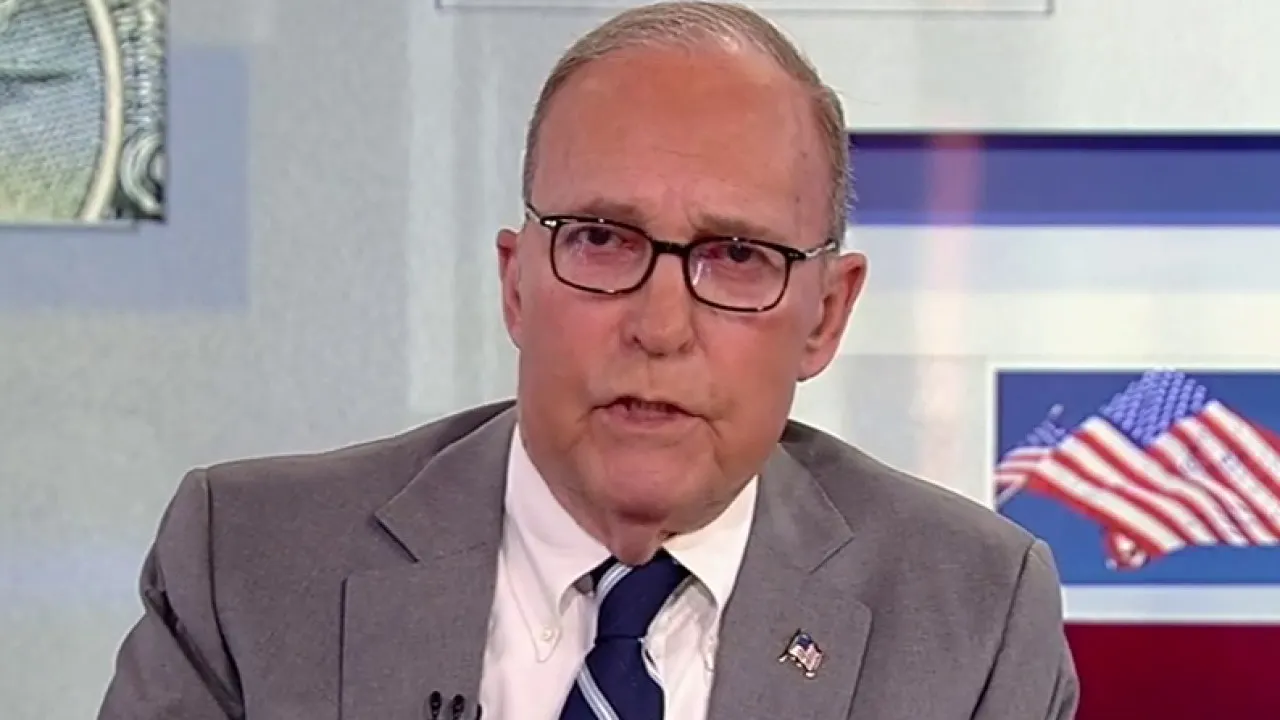
After yesterday’s Islamic Revolutionary Guard Corps performance trying to attack an American military base in Jordan, on top of all the other attacks they’ve made, and all the things they’ve refused to say about a reopening of the Strait of Hormuz deal — these are radical Islamists who hate America, hate Israel, deluded into thinking that they can win the war and run the Middle East, and continue to sponsor terrorism and build nuclear weapons.
It’s one thing after another with them, and I think it’s fair to say that negotiations are going nowhere. President Trump is doing what no other president has done, trying to bring peace and freedom to the Middle East and stop the Iranians, and stop their nuclear ambitions — but I think his options right now are battlefield and major combat operations, not diplomacy. And I support this.
And I would simply add the importance of Economic Fury, maxing out all sanctions, Kharg Island, hammering again their nuclear facilities and capabilities that may or may not be left. These are not rational people. It’s a theocratic regime, run by militarists and Marxists. The end result is escalation, which right now is inevitable. The president will make his mind up, but I think the handwriting is on the wall. Resumption or return to major combat operations and a tightening of the economic screws. It’s not tit for tat.
Fox News senior strategic analyst Gen. Jack Keane discusses the potential U.S. strategy toward Iran in the near future on ‘Kudlow.’
I’m still believing in unconditional surrender. And finally, covert operations. I assume there has already been a presidential finding on covert operations by our CIA and other secret intelligence services. And I am assuming hand-in-glove work with the Israeli Mossad. This is an Iranian version of the Reagan Doctrine, which brought down Soviet communism without firing a shot, but using covert operations to help freedom fighters in Poland and Eastern Europe and Latin America.
This could be the Trump version of the Reagan doctrine, as already practiced in Venezuela and probably soon in Cuba. Yet most pressingly and importantly practiced right now in Iran. Whether Reza Pahlavi, or a temporary leader or group of leaders, or whoever else, any covert operations that will move us in the direction of regime change must be a vital part of our war strategy.

Pure Cycle: Rate Headwind, Long-Term 2027-2028 Upside

When she was starting out in her career Kilgore realised she needed to be “someone that people look forward to being around”.
It’s important to be polite, punctual and nice as those qualities help you build loyalty, she says.
“I made sure I was the sunniest, hardest working and most diligent person to do that service.”
“If you do a really great job, people will recommend you,” she says and she soon opened a tiny beauty salon that became booked up months in advance.
She also explains you also need to be “willing to make some big sacrifices” to make your business successful.
“You’re not going to have a lot of free time,” she says as running a business requires you to be aware of changing customer behaviour, new competitors and wider market trends.
That often means reading, researching and connecting ideas outside of working hours.
Kilgore says the workload can feel easier if you have a curiosity around you as “that’s what drives you”.
She does have some non-negotiables and has made an effort not to miss important events while raising her children, including school plays and family holidays.

Check out what’s clicking on FoxBusiness.com.
Lidl US is recalling a brand of shortbread cookies after discovering some packages distributed to its stores across nine states and the District of Columbia failed to disclose major food allergens.
The voluntary recall covers Eridanous Shortbread Cookies with Chocolate Truffle Coating & Apricot Filling in 11.6-ounce (330-gram) boxes with UPC 4056489125839. According to the Food and Drug Administration, the affected products were packaged with foreign-language labeling that did not include English ingredients, nutrition facts or allergen declarations.
The undeclared allergens include wheat, soy, milk and eggs. People with allergies or sensitivities to those ingredients could face serious or potentially life-threatening allergic reactions if they consume the product.
The recalled cookies were distributed between July 15 and July 22 to Lidl US retail stores in Delaware, the District of Columbia, Georgia, Maryland, New Jersey, New York, North Carolina, Pennsylvania, South Carolina and Virginia.
BROOKLYN ROASTING COMPANY RECALLS COLD BREW SOLD IN NEW YORK AND NEW JERSEY OVER BOTULISM RISK

Boxes of Eridanous Shortbread Cookies with Chocolate Truffle Coating & Apricot Filling are being recalled after some packages were distributed without English ingredient labels or allergen declarations. (FDA / Unknown)
No illnesses have been reported, Lidl said.
MORE THAN 1.5 MILLION DOZEN EGG CARTONS RECALLED OVER POSSIBLE SALMONELLA CONTAMINATION

The back of the recalled Eridanous Shortbread Cookies package shows foreign-language labeling instead of the required English ingredients, nutrition facts and allergen information. The affected packages are marked with a best-by date of Oct. 11, 2026 (FDA / Unknown)
Customers with allergies or sensitivities to wheat, soy, milk or eggs should not consume the cookies. Lidl said consumers should discard the product or return it to any Lidl store for a full refund. A receipt is not required.

A Lidl Food Market branch stands on December 27, 2022 in Arlington, VA. Lidl, a German discount supermarket chain, has expanded rapidly across 10 states in the eastern USA in recent years. (Sean Gallup/Getty Images / Getty Images)
CLICK HERE TO GET FOX BUSINESS ON THE GO
Consumers with questions can contact the Lidl US Customer Care Hotline at (844) 747-5435 Monday through Saturday from 8 a.m. to 8 p.m. ET.
FOX Business reached out to Lidl for additional information, including how many packages are affected by the recall, how the labeling error occurred and what steps the company is taking to prevent similar issues.
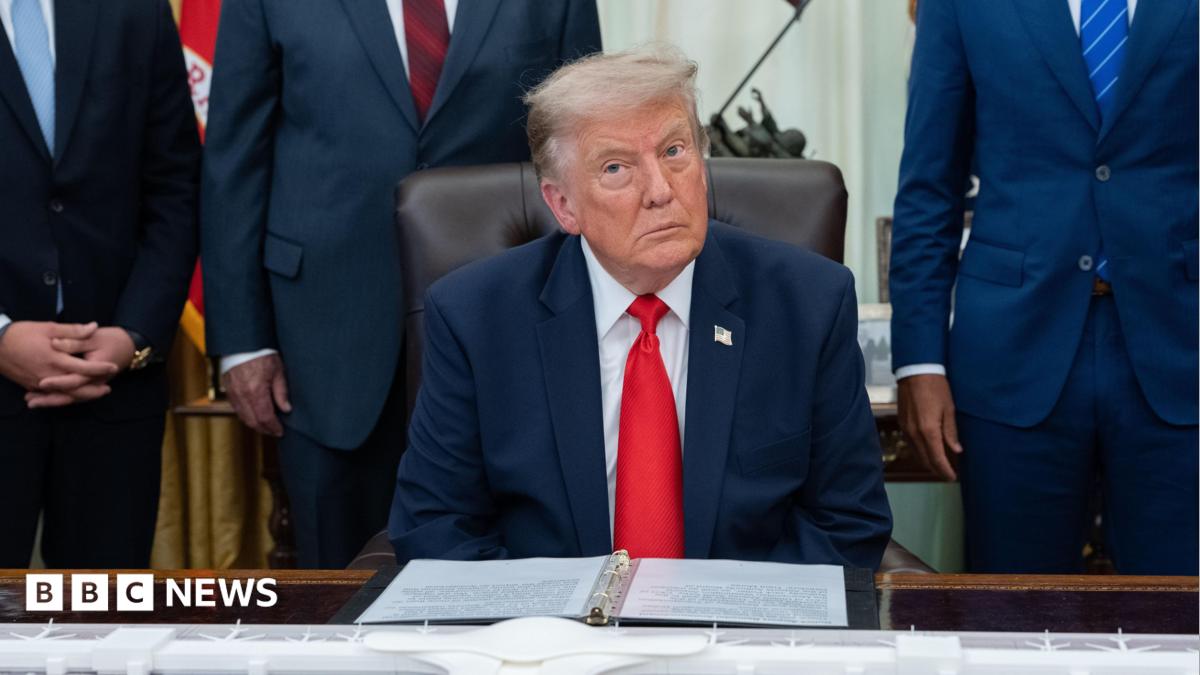
US President Donald Trump said on Wednesday that his administration is considering asserting more power over artificial intelligence (AI) tools after recent cybersecurity incidents.
Asked about OpenAI’s tools being responsible for improperly breaching the private technology of other companies, Trump said: “We’re looking at AI, we’re looking at controls, we’re also making sure that we lead.”
It marks a change of tone for his administration, which has taken a more hands-off approach to the technology.
Trump’s comments come after an escalation of not only the apparent hacking capabilities of popular AI tools, but White House threats aimed at competing Chinese tech.
Trump added that while some kind of control around AI tools was on the table, such a move would have to be done carefully.
“We don’t want to restrict them where all of the sudden we come in second to China,” he said.
“China has virtually no [AI] controls. It’s freewheeling a little bit,” Trump added.
The White House has been contacted for additional comment. The BBC has also contacted the Chinese embassy in Washington for comment.
In the last week, OpenAI has taken responsibility for at least two hacking incidents involving its AI tools acting outside of what they were designed and directed to do.
During a trip to Washington on Wednesday, OpenAI’s chief executive Sam Altman was asked by a reporter if there were more systems that had been breached by the company’s tools.
“I mean, there could be yeah”, Altman said.
The US government intervened when Anthropic, OpenAI’s main American rival, decided to release to the public a model that it had previously said was too much of a risk to be made widely available.
Meanwhile, in an internal White House memo from April, Trump’s senior tech advisor Michael Kratsios accused China’s AI firms of “industrial-scale” theft of US AI technology. He did so again last week, claiming that the popular Kimi 3 AI model from China’s Moonshot AI was developed by stealing information from Anthropic.
The Chinese government has consistently rejected such accusations.
US Treasury Secretary Scott Bessent has also warned that Chinese AI firms could face sanctions for such activity. And the Federal Communications Commission this week banned the importation of new foreign-made humanoid robots.
Most AI models being developed in China are open source, meaning they are built and then made freely available online for anyone with the proper computer equipment to download and use.
Recently, executives from most major US tech companies have signed onto public statements of support for open-source models, external.
Business
Huron Consulting Group Shares Soar 32% After Blowout Earnings Beat and Raised Full-Year Guidance Today

Shares of Huron Consulting Group surged 32.11% in Wednesday morning trading, climbing $38.97 to $160.34, after the professional services firm reported second-quarter results that sharply beat Wall Street expectations and raised its full-year earnings and revenue outlook.
The Chicago-based consulting firm reported adjusted earnings of $2.46 per share for the second quarter, topping the average analyst estimate of $2.17 by a wide margin. Revenue for the quarter reached $475.0 million, well above the roughly $449 million analysts had projected. Revenue before reimbursable expenses, a key metric the company uses to track underlying business performance, climbed 15.7% year over year to a quarterly record of $465.6 million. Adjusted EBITDA for the quarter rose to $72.6 million, with the adjusted EBITDA margin expanding to 15.6% from 15.1% a year earlier.
Huron’s results were released after markets closed Tuesday, and the stock’s initial reaction in after-hours and early regular trading proved far more muted than Wednesday’s dramatic rally, with shares first climbing a more modest 3.66% to $120.77 before extending gains overnight and then surging sharply higher once regular trading resumed Wednesday morning.
Alongside the earnings beat, Huron raised its full-year 2026 guidance, now projecting revenue before reimbursable expenses of between $1.85 billion and $1.89 billion and adjusted earnings per share of between $9.00 and $9.40. The updated guidance compares with a prior range of $8.35 to $9.15 per share issued earlier this year, and the midpoint of the new outlook would represent a 17% increase over the company’s 2025 results, according to Chief Financial Officer John Kelly.
Company executives attributed the strong performance to broad-based growth across Huron’s three main operating segments, along with a growing contribution from artificial intelligence-related work and recent acquisitions. Chief Executive Officer C. Mark Hussey said artificial intelligence has become an increasingly significant driver of the company’s digital services business. Total bookings tied to Huron’s digital capabilities rose more than 20% during the first half of 2026 compared with the same period a year earlier, with more than 60% of those bookings now involving either direct AI-related work or engagements substantially supported by Huron’s proprietary AI tools, up from approximately 35% of comparable bookings during the first half of 2025. Digital revenue before reimbursable expenses rose 9% both year over year and sequentially during the second quarter, reaching a new company record.
Huron’s June acquisition of RelateCare, a provider of AI-enabled clinical and patient-access managed services, also contributed to the quarter’s strength. RelateCare’s results were incorporated into Huron’s healthcare segment beginning with a partial second quarter following the acquisition’s June 3 closing date. The company said it expects RelateCare to contribute approximately $30 million in revenue before reimbursable expenses during 2026, along with roughly $0.10 in adjusted earnings per share for the year.
Wednesday’s rally builds on a stretch of strong performance for Huron shares heading into the earnings report. The stock had already climbed 17.4% over the month leading up to Tuesday’s results, significantly outpacing the broader professional services sector, which had averaged gains of just 1.1% over the same period. Ahead of the earnings release, the average analyst price target for Huron stood at $184.25, compared with a pre-earnings share price of $112.30, suggesting Wall Street had already anticipated meaningful upside potential in the stock even before Wednesday’s dramatic surge.
Analyst sentiment toward Huron has been mixed in the weeks leading up to the earnings report. Wedbush maintained an “outperform” rating on the stock along with a $160 price target in a research note issued in early May. Truist Financial had set a $155 price target with a “buy” rating in early June. Barrington Research restated an “outperform” rating in mid-June. However, Wall Street Zen downgraded the stock from “buy” to “hold” in a note issued July 12, just over two weeks before the earnings release, while Weiss Ratings had separately lowered its rating on the stock from “hold (c+)” to “hold (c)” in mid-May, reflecting a degree of caution among some analysts heading into the report that Wednesday’s results appear to have significantly outpaced.
Huron Consulting Group provides consulting services primarily to organizations in the healthcare, education and commercial sectors, helping clients with strategy, operations, technology implementation and other advisory work. The company’s healthcare and education-focused consulting practices have historically formed the core of its business, though its digital and AI-related consulting offerings have become an increasingly important growth driver in recent quarters, a trend that management highlighted repeatedly in discussing Wednesday’s results.
Huron’s return on equity for the quarter stood at 29.41%, with a net margin of 5.94%, according to the company’s reported financial metrics. The company’s stock had a market capitalization of roughly $2 billion prior to Wednesday’s surge, based on the pre-rally share price, a figure that has grown substantially as a result of Wednesday’s trading activity.
Investors are likely to continue watching Huron’s execution against its newly raised full-year guidance in the coming quarters, along with the pace of integration for its recent RelateCare acquisition and the continued growth trajectory of its digital and AI-related consulting bookings, as key indicators of whether Wednesday’s sharp rally reflects a durable reassessment of the company’s growth prospects or a more short-lived reaction to a single standout quarterly result.

Nicaragua’s Ortega moves to stretch term to 7 years, ban ’traitors’ from elections

Commonwealth Games: ‘Nothing to prove’ for Wales’ Emma Finucane

Global AI Digital Divide Shapes Who Builds AI

Transform Your Training to support young people on careers


-

 Fashion5 days ago
Weekend Open Thread: Brooks Brothers
-
 Sports3 days ago
Commonwealth Games boxing: Jadumani Singh seals dominant 5-0 win over Pakistan’s Sumama Rehman to enter quarter-finals | Commonwealth Games News
-

 Tech3 days ago
Intel is reversing course and bringing hyper-threading back to its server chips
-

 Business6 hours ago
Why Trees Belong on the Risk Register
-

 Politics3 days ago
Luke Littler dismantles Gerwyn Price to retain title in Blackpool
-

 Crypto World4 days ago
Ripple bought a bank in pieces. The $4 billion audit
-
 Entertainment6 days ago
A New Post-Apocalyptic Gundam Anime Series Blasts Into SDCC
-

 News Videos3 days ago
BITCOIN JUST ENTERED THIS CRITICAL ZONE…
-

 Politics2 days ago
The Part of the Electric Transition Nobody Wants to Discuss
-

 Sports6 days ago
2026 3M Open leaderboard: Scottie Scheffler finds putter in Round 1, sits three back
-

 Fashion6 days ago
16 Dresses for the High Summer Event
-

 News Videos6 days ago
The Peugeot Family: How 200 Years of an “Old Money” Dynasty Died in A Boardroom
-

 Business22 hours ago
Major shareholder moves on Canyon
-

 Crypto World4 days ago
XRP Ledger adds $2.6B as RWA inflows rank second
-

 Politics4 days ago
Spain sweeps the board at 2026 World Cup with individual awards
-

 Crypto World7 days ago
Uniswap (UNI) pushes deeper into tokenized RWAs with permissioned trading pools
-
 Entertainment1 day ago
‘Stargate’ Creator’s New Sci-Fi Series Returns for Season 3 Tomorrow
-
Crypto World7 days ago
SEC Agrees to Overhaul Recordkeeping After Settling Coinbase Lawsuit Over Gensler’s Lost Texts
-

 Tech5 days ago
Anthropic launches Claude Opus 5, a cheaper AI model for coding, agents and enterprise workflows
-

 Entertainment4 days ago
Sara Gilson Killed By Husband After Viral “Pedophile” TikTok Video
You must be logged in to post a comment Login