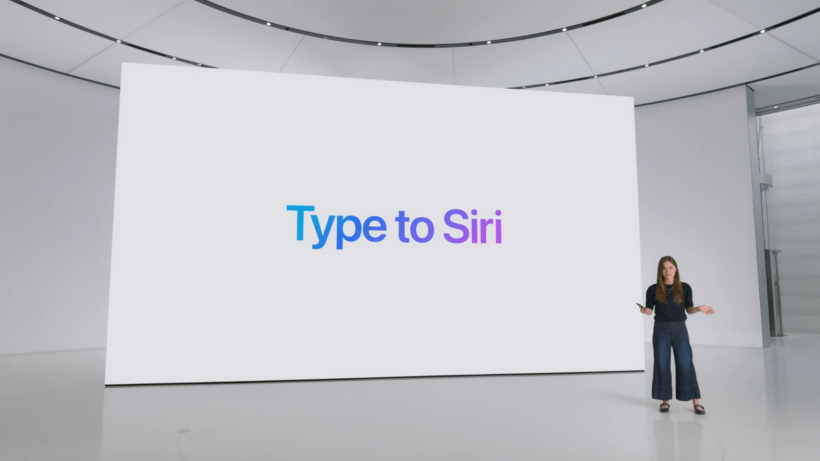
WWDC 2026 is Tim Cook’s final Swan Song ahead of him leaving the firm later this year, and it gives him one opportunity to scrub clean one of the biggest blemishes on his time at Apple: the botched launch of the redesigned, smarter Siri.
Now don’t misunderstand me; Tim Cook has been a force to be reckoned with during his time at the helm, guiding the company through successive iconic product launches like the Apple Watch, AirPods, Apple Silicon and much more – but I’m sure that the botched Apple Intelligence rollout still haunts his dreams.
Announced at WWDC 2024 and scheduled for release sometime during the iOS 18 era, the redesigned Siri was the star feature of Apple Intelligence and was supposed to be much smarter, essentially putting it on par with competing LLM-based assistants like Google Gemini.
Well, that didn’t happen, and it didn’t appear the following year in iOS 26 either, with plenty of leaks suggesting that it just wasn’t up to Apple’s standards.
Advertisement
However, with Apple officially partnering with Google to use Gemini smarts to power Siri earlier this year, and plenty of leaks suggesting that Siri will be the true star of next week’s WWDC 2026, it looks like Tim Cook could finally right that wrong just before he hands the keys over to John Ternus.
Advertisement
The long-awaited launch of the improved Siri
If the leaks are correct – and given that we’ve seen multiple reports from multiple sources, some with screenshots, it seems that it’s pretty much on the money – the real star of WWDC 2026 won’t be iOS 27, macOS Big Bear (or whatever it’s called), iPadOS 27 or watchOS 27.
No, it’ll be the long-awaited reveal of the smarter, more contextual Siri that Apple has been talking about for years at this point – and it might be the game-changer in AI that Apple has desperately needed to stay competitive in the space.
Advertisement
Image Credit (Apple)
While Apple Intelligence has been available in some form since late 2024, it’s, on the whole, pretty lacklustre – both in its feature set and in how it actually performs – compared to Android alternatives. That’s true not only of writing tools and transcription but also of Apple’s performance in image-editing tech.
Really, it needed something smarter to reach the performance level of Android counterparts, and, well, it looks like the redesigned (and Gemini-powered) Siri could finally do that. Now, it’s not clear how much is from Apple and how much is from Google, but leaks suggest that the new Siri is going to be very capable indeed.
Image Credit (Bloomberg)
Advertisement
You should expect all the staples of a modern AI assistant, including a much greater understanding of both you and what you want, by accessing things like emails, messages, files, photos, and more. That should allow Siri to help you find recent files, messages or general queries about files on your phone, all without knowing the exact specifics of what you’re looking for.
Image Credit (Apple)
It’ll also be able to ‘look’ at your screen and complete actions on your behalf, like asking Siri to add an address to a contact card, or send a photo you’re looking at in the Photos app to someone in iMessage.
It’s not just locked down to first-party apps either; it’s said to be able to perform actions across third-party apps, and while we don’t yet have a full picture of what that could entail exactly, Apple has suggested in the past that it’ll be able to move files from one app to another, edit a photo and then share it to someone, or get directions home and send the ETA to someone in WhatsApp.
It’ll also mark the first time that Siri has had an actual app; rumours suggest it’ll work in a similar way to the ChatGPT app, allowing for both text- and voice-based conversations, and just like the competition, you’ll be able to integrate services and apps into the chatbot to expand its feature set.
Advertisement
Advertisement
Siri’s ambitions go way further than answering queries
That already sounds like a massive improvement over the underwhelming Siri experience Apple is offering right now, but Siri’s ambitions go far beyond a new chatbot experience.
According to a bunch of leaked screenshots that have been doing the rounds on the web over the past few weeks, Siri is going to be deeply integrated into other Apple apps.
That starts with the Camera app, which, in addition to offering photo and video modes, will supposedly offer a dedicated Siri mode. This would essentially replace the Visual Intelligence feature currently baked into the Camera Control button on iPhones, and would allow Siri to analyse the world and answer questions about what you’re seeing.
Advertisement
Image Credit (Bloomberg)
More interesting is the Photos app; it’s rumoured to not only get two new Siri-powered features in Reframe and Extend – the former allows users to change the perspective of shots, while the latter would use generative image tech to expand the borders of the image – but also natural language photo editing, which would let users tell Siri what edits to make, either via voice or text.
Elsewhere, the Shortcuts app is said to be getting a significant Siri-powered overhaul that’ll allow users to create more complex shortcuts by simply describing what they want it to do, while Apple has also been dabbling in AI-generated wallpapers and a much-improved version of Image Playground for higher-quality images.
And, there’s no single doubt in my mind that it’s only possible thanks to Siri’s upgraded capabilities – though we’ll have to wait and see how it actually performs in users’ hands because, well, Apple Intelligence hasn’t exactly convinced me of its premiership so far.
Advertisement
Apple’s on-device hook
Now I’m not going to pretend that these are entirely new AI features – they’re not. We’ve seen pretty much all of this on the Android side of things in one form or another (okay, bar the Shortcuts app – I still wish Google had an alternative to that app!), and it’d be easy to say that this is simple Apple playing catch-up to the competition.
But there’s a core difference here: Apple’s laser focus on privacy.
Image Credit (Apple)
Most Android-based AI tools, especially image-based tools, rely on cloud processing – and that means sending your private data to a cloud-based server somewhere, before the result is sent back to you via the web. Depending on what you’re doing, that could be a privacy nightmare.
Advertisement
But Apple has always had a particular focus on privacy that stands in direct opposition to how Google does things with Android – and it seems that’ll continue with the new Siri experience.
Advertisement
It’s said that Apple is aiming to keep as much processing on-device as possible to limit the amount of data that leaves the user’s device, and, where necessary, it’ll lean on Apple’s Private Cloud Compute systems that even Apple doesn’t have internal access to.
It’s also said that Apple will limit Siri’s memory, including restrictions on the information it can ‘remember’ and how long it’s kept, with users able to auto-delete chats and requests after set periods.
And it’s that focus on privacy that’ll really help Apple sell the upgraded Siri experience, even in the face of much more established options from Google, OpenAI, Anthropic and the like. I just hope that it actually works as well as it sounds, because Apple can’t mess this up. Not again.
The company, founded in 2018, builds software infrastructure that aims to empower developers to use quantum computing to solve computational problems.
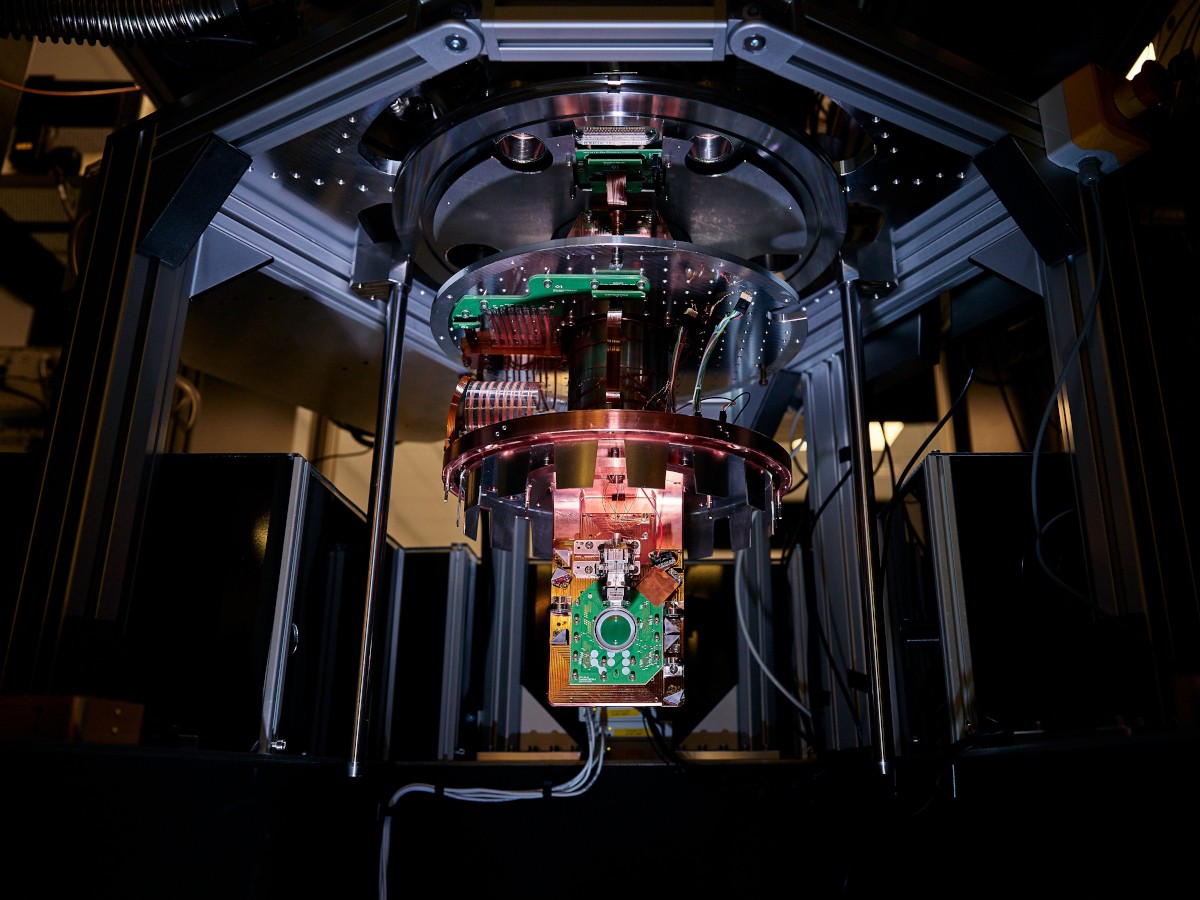
Irish-founded computing company Horizon Quantum has chosen Dublin as the site for establishing a testbed for its planned second quantum computer.
The company said locating the ‘IonQ’ 256-qubit system at its European headquarters would benefit the company and the country, noting “Ireland’s growing quantum ecosystem, strong university network and robust talent pool for deep-tech development, both within the country and across the EU”, and predicting that the installation of the “frontier system” would be a “significant technology milestone for the nation, positioning Ireland to play an increasingly prominent role in frontier quantum computing”.
Horizon Quantum, founded in 2018, builds software infrastructure that aims to empower developers to use quantum computing to solve computational problems. It said that IonQ’s sixth-generation, chip-based 256-qubit trapped-ion system could be among the most sophisticated quantum computers in the world.
Advertisement
“Expanding our hardware testbed to Ireland with the addition of a frontier system is a significant step forward for both our company in our mission to unlock broad quantum advantage and for the country in strengthening its quantum ecosystem,” said Horizon Quantum CEO and founder Dr Joe Fitzsimons.
“We are excited to extend our testbed capabilities to include a trapped-ion system by deploying this state-of-the-art quantum computer in Dublin.”
To oversee the establishment and management of its second quantum system, Horizon Quantum, which is based in Singapore, said it plans to expand its Irish-based science and engineering teams, and deepen engagement with Ireland’s quantum ecosystem through increased involvement with industry, academia and the local supply chain.
Minister for Enterprise, Tourism and Employment Peter Burke, TD said: “The establishment of one of the most advanced commercial quantum systems here is an important milestone that will support innovation, collaboration and economic growth, while further enhancing Ireland’s ambition to be a global hub for cutting-edge technologies.
Advertisement
“This also aligns with our strategic focus in Silicon Island – Ireland’s national semiconductor strategy – on harnessing opportunities in rapidly evolving fields, including quantum technologies.”
The company assembled and integrated the first quantum system in its hardware testbed, a multi-vendor superconducting system, at its Singapore headquarters in 2025.
It said that the expansion of its testbed facilities to its European headquarters with a “second, technologically distinct system” will help further its goal of delivering the “most capable hardware-agnostic tools for quantum software development”.
Michael Lohan, CEO of IDA Ireland, said: “Quantum development is an important strategic priority for IDA Ireland, and this announcement is a strong endorsement of Ireland’s growing technology ecosystem, our research capabilities and the talent available here.
Advertisement
“Horizon Quantum’s decision to invest in Ireland further strengthens our position in frontier technologies and will help support continued innovation and collaboration across the quantum sector.”
As we near the halfway point in the second Trump presidential term, there’s something that is worth remembering: Donald Trump, like most nasty viruses, is a temporary condition. Trumpism may not be, though I have my doubts as to how long a cult of personality can survive without that specific personality leading the cult. But Donald Trump as president will come to an end in the not too distant future.
The millions and millions of people who have been negatively impacted by him and by those who have decided to bow at his cultish altar, are not temporary. They are not going to go away. And they will remember the actions of many during this time.
And I imagine the American Diabetes Association, and specifically those currently leading it, will be in the memories of its members and many others for a long, long time. It’s been nearly a week since the ADA had five diabetes scientists, including its own former president, involuntarily removed from outside the ADA’s annual conference by police. Their crime? Distributing a copy of an editorial from the April edition of the ADA’s own journal.
The scientists were distributing the editorial outside the conference’s opening speech, which was originally scheduled to be given by Jay Bhattacharya, head of the National Institutes of Health under Trump. Bhattacharya canceled at the last minute, and senior NIH official Rick Woychik took his place.
Within minutes of beginning to hand out the editorial, police reportedly escorted the scientists out of the conference, which was held in New Orleans. The police reportedly shoved at least one scientist, took all of their conference badges, and threatened to arrest them if they tried to return. Louisiana State Police later told media that they acted at the request of the ADA. The ADA subsequently barred the five scientists from the rest of the conference.
Advertisement
The editorial just so happened to be very critical of the Trump administration and RFK Jr.’s funding at NIH and other health agencies and groups. It’s quite obvious that the ADA feared repercussions from the Trump administration if it wouldn’t allow these scientists to hand the article out while members of the administration were speaking and tried to use the police to silence them. And then, when this whole thing went viral, the ADA offered up justifications for its actions. Justifications that kept changing, as it turns out.
In an email to ADA members Saturday, the association said the scientists were removed because they didn’t have prior approval to distribute material at the conference and that it was “not because of the viewpoints expressed in those materials,” according to reporting from Science.
In a statement Sunday, the organization, which is a nonprofit, said it removed the scientists because it was complying with federal regulations for 501(c)(3) nonprofits, which requires “maintaining a strictly nonpartisan environment at all organizational events and functions while engaging across party affiliations to advance our mission.” However, the federal regulations do not restrict leaders of organizations from sharing political views in a personal capacity or from speaking on important public policy issues.
And from there, the Streisand Effect took over. The editorial, which you can find right here, went somewhat viral itself, getting a ton more attention than it had to date. But the real backlash came from the public and from within the medical community itself. There have been resignations in protest of the ADA’s actions. An open letter to the ADA signed by 40 members was written to torch leadership’s actions and treatment of the scientists at the conference. Another open letter was also written, likewise demanding an apology.
And, finally, the ADA did in fact apologize days later.
Advertisement
In the video Wednesday, ADA CEO Charles Henderson personally apologized to the five scientists, including Aaron Kelly, pediatrics professor at the University of Minnesota; Justin Ryder of Northwestern University; and Irl Hirsch, also of the University of Washington, in addition to Kahn and Schatz.
“What transpired is not reflective of who I am, the values I hold, or the way I was raised,” Henderson said. “I will work hard to bring our community back together to build on the progress we have collectively made for those affected by diabetes.”
In addition to apologizing to the five ejected scientists, Henderson apologized to the community as a whole, saying that the ADA would commission a “thorough independent review of the events that occurred as well as the policies, procedures, and decision-making process that guided our actions.”
Yeah, no, not good enough. The fish stinks from the head down, as the saying goes, and there have been days worth of attempts to make this stupidity anyone’s fault but leadership at the ADA. This was a clear attempt to lick the Trump administration’s boots, at the very moment when clear leadership from medical groups is so sorely needed, and that’s a bell that cannot be un-rung.
Henderson needs to go. And I have little doubt that he will before too long. Trump and RFK Jr. will eventually be gone, as well.
Advertisement
But we won’t forget how groups like the ADA, and the people leading them, acted during this time.
There’s still the possibility of that Trump pardon.
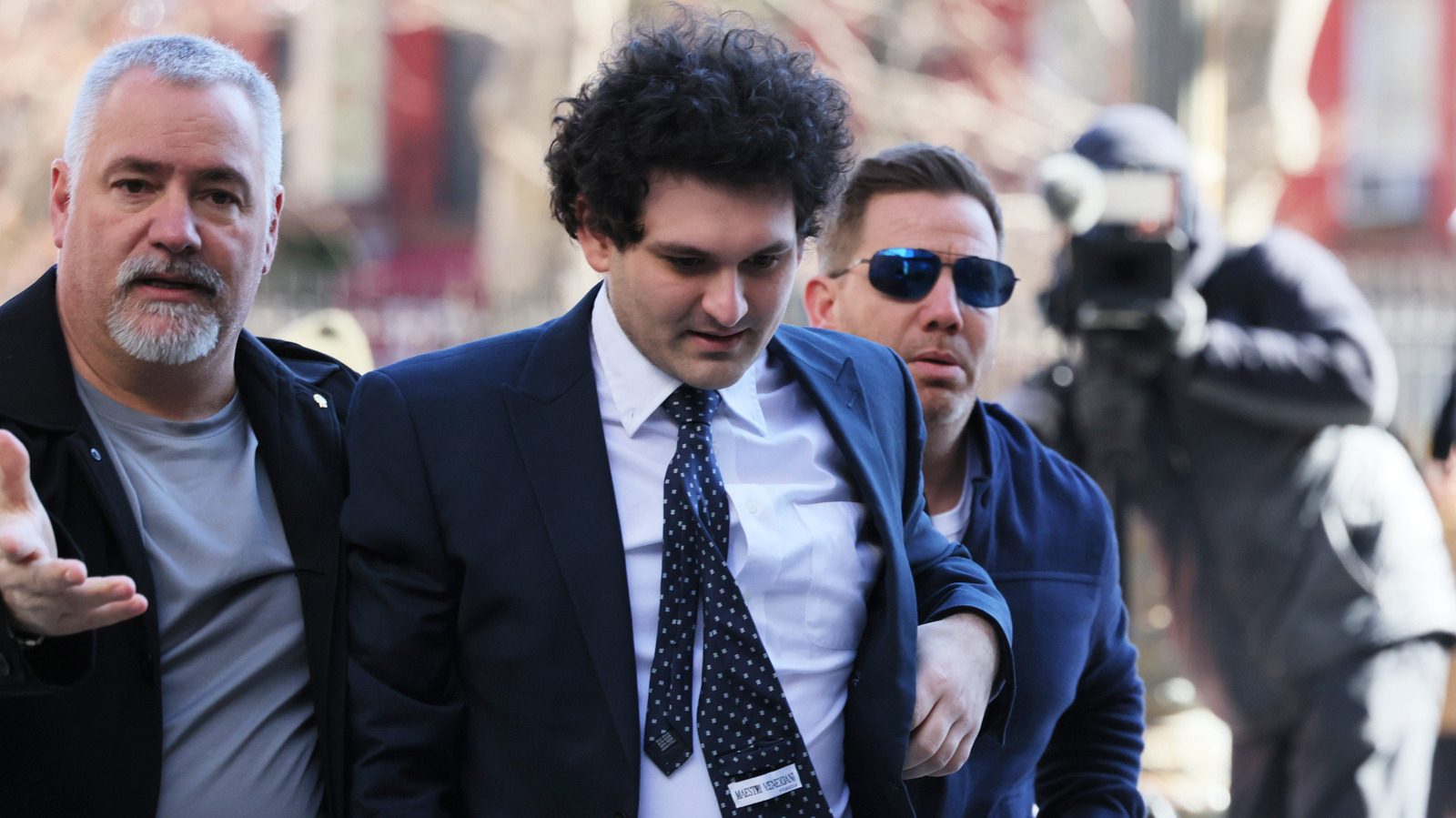
A federal appeals court has upheld the fraud conviction of FTX founder Sam Bankman-Fried, according to Reuters. Bankman-Fried was convicted of running one of the largest financial frauds in history, involving his crypto-exchange FTX. He was also convicted of money laundering and is currently in prison.
Judge Barrington Parker wrote in the appeals ruling that “the government’s evidence against him was, conservatively stated, robust.” Bankman-Fried and his team still have the option to bring the appeal to higher courts, including the Supreme Court.
Advertisement
All told, he faced seven charges and was found guilty of each and every one. The disgraced crypto mogul was sentenced to 25 years in prison back in 2024. Since that time, he’s been fighting to overturn the ruling in a variety of ways.
There’s the aforementioned appeal, which was just denied. Bankman-Fried is also seeking a re-trial on the grounds that new witness testimony could alter the case made against him by prosecutors. He seeks to represent himself in this re-trial, though it’s highly unlikely to happen.
The White House has been pretty free with pardons in the crypto space. Apropos of nothing, the Trump family has a crypto business of its own, which has netted the family over $2 billion since he took office in 2025. There’s no real way to see who has invested in Trump’s crypto memecoin.
President Trump has also been found liable for fraud in a New York court. Additionally, he has been indicted in federal court for conspiracy to defraud the United States and the Trump organization was convicted for a years-long scheme involving criminal tax fraud, defrauding investors and falsifying business records. Maybe Bankman-Fried will get that pardon under the little-known “game recognize game” provision.
From connected factory floors to automation and digital twins, ‘Industry 4.0’ refers to the future of manufacturing.
Ireland’s diverse manufacturing industry makes it the choice European location for a growing number of industrial and technology companies, according to IDA Ireland.
It does especially well in some sectors – medtech, automotives, aerospace and chemicals being a few examples – with its capacity only enhanced by a steady supply of skilled talent emerging from third-level institutions.
Meanwhile, a strong talent pipeline supported by grants and commercialisation support for research and innovation also allows Ireland to maintain its appeal as a global manufacturer.
Advertisement
From connected factory floors and industrial IoT to AI-powered automation and digital twins, ‘Industry 4.0’ is a phrase used to refer to the future of manufacturing. Here are seven Irish start-ups innovating on the factory floor.
Founded by CEO Eoin Cobbe and CTO Robert Cormican, Forge Robotics wants to tackle the rising threat of skilled welder shortages in manufacturing using intelligent automation.
The company makes an AI-powered intelligence layer that improves the welding capabilities of industrial robots. Its system allows robots to scan a part, interpret its geometry and execute welds even when the set-up is imperfect.
Advertisement
Gemell Technology
Headquartered in Dublin’s Dogpatch Labs, this Enterprise Ireland (EI) ‘High Potential Start-Up’ builds 3D visualisation and sustainability software for textile manufacturers and designers.
Gemell Technology aims for its technology to significantly reduce unnecessary fabric samples from ending up in landfills.
The company can generate photo-like digital models of yarns and fabrics, which manufacturers can tweak instead of ordering physical fabric samples. These 3D renders are generated with fabric textures originating from individual fibres.
Gemell claims that manufacturers that use its technology reduce unnecessary fabric samples and waste by 70pc, while getting products to market 11 weeks faster.
Advertisement
The company has offices in Dublin and London, and came in as the first runner-up at last year’s All-Island Circular Venture Awards – a competition that recognises late-stage start-ups across the island showcasing circular value propositions.
The Rapid Apophis Mission for Space Safety – or Ramses – will rendezvous with asteroid 99942 Apophis, accompanying it during its extremely close but safe flyby of Earth in 2029.
InnaLabs’ gyroscope navigation system will be helping the ESA, the Italian aerospace engineering company OHB and the Spanish tech company GMV in the space mission scheduled for launch in April 2028.
Advertisement
The company’s technology solves complex navigation, stabilisation and guidance challenges within space, aerospace, land and marine markets.
Oscil
Oscil provides data analytics support for the pharmaceutical and dairy sector. The company’s founder Dr Patrick Cronin won the EI Big Ideas award last year after contesting in a pitching battle against other pre-spin-out ventures emerging from EI’s Commercialisation Fund.
Speaking to SiliconRepublic.com, Cronin said that the “current rise in weight loss drugs [and] GLP-1s are driving huge investment in the protein market”, and that “Oscil can unlock a lot of capacity and quality in spray driers through edge sensing and machine learning to provide real-time process control”.
The company said it is seeking early adopters in the spray drying industry to improve production capacity and product quality.
Advertisement
Smartfactory
This 2016-founded start-up captures, analyses and visualises performance indicators from the manufacturing, logistics and utility sectors using Industry 4.0 technology.
The company’s SaaS solutions, built on technology from hardware partners Siemens and Banner, help cut down on manufacturing downtime by identifying hidden losses in the production process.
It is based out of Nexus Innovation Centre at the University of Limerick.
Ubotica
This Dublin-based space-tech is a frequent collaborator with NASA and the ESA. Last month, it announced a partnership with Texas’s Novi Space to deliver real-time intelligence from the Earth’s orbit.
Advertisement
The collaboration enables Earth observation data to be processed directly on satellites instead of it needing to be transferred to Earth for analysis.
Ubotica is deploying its AI platform, which processes input data within 90 seconds, for the space mission. According to the company, in a single test observation of a Singapore port, the platform processed hundreds of vessels and detected those operating ‘dark’ in under two minutes.
The company has deployed its AI capabilities on numerous missions, including its own CogniSAT-6 satellite.
WrxFlo
Founded in 2019 by former Dell manufacturing leaders Tim Crowe, Ken Sheehan and Jennifer Kelly, WrxFlo is a SaaS platform tailored specifically for manufacturing and logistics operations.
Advertisement
The company claims its platform acts as a “digital co-worker” across operations and the vertical line of command by connecting data from across the factory, warehouse and supply chain, eliminating non-value-added tasks and surfacing ‘red’ indicators before they become costly problems.
“We built WrxFlo from first-hand experience of running complex manufacturing and supply chain operations,” said Crowe, the company’s CEO.
“WrxFlo enables industrial manufacturers and logistics operators turn complex, paper or Excel-based processes into streamlined, data-driven systems that reduce cost and improve efficiency.”
Don’t miss out on the knowledge you need to succeed. Sign up for the Daily Brief, Silicon Republic’s digest of need-to-know sci-tech news.
A former Fitbit executive is betting that the next big wearable might not be a smartwatch at all.
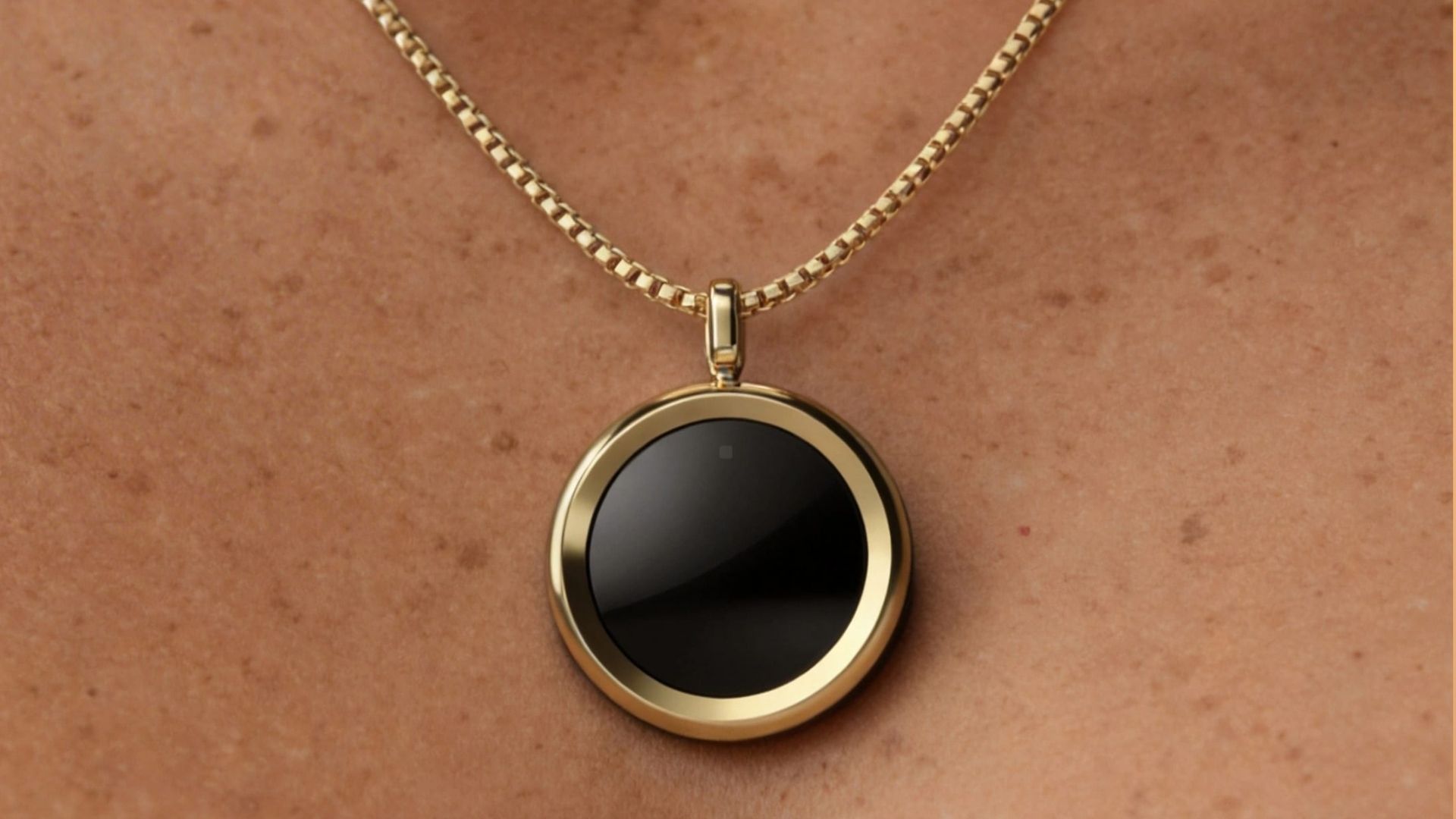
Stacy Salvi, who spent eight years at Fitbit before and after Google’s acquisition of the company, has launched The Gem. It is a smart necklace designed to help women track their UV exposure throughout the day.
Rather than counting steps or monitoring workouts, The Gem focuses on something many wearables overlook: how much sunlight your skin is actually getting. The pendant-style device continuously measures both UVA and UVB exposure and sends the data to a companion app. As a result, the app builds a personalised skin profile based on your habits and environment.
The idea is to provide more useful guidance than a simple weather forecast. Depending on your exposure levels, the app can recommend sunscreen reminders, highlight safer times to spend outdoors and help users understand their personal UV limits.
Advertisement
What’s interesting is the form factor. While UV-tracking gadgets aren’t entirely new, they’ve typically been standalone sensors or patches. The Gem packages the technology inside a piece of jewellery designed to be worn every day, making it feel more like an accessory than a traditional health tracker.
Advertisement
That approach could help it stand out in a wearable market increasingly dominated by smartwatches and fitness bands. By focusing on a specific problem and wrapping it in a design that’s less overtly tech-focused, The Gem appears to be targeting users who don’t necessarily want another screen on their wrist.
The launch also arrives as interest in preventative health tracking continues to grow. Wearables have already expanded beyond fitness into sleep, recovery and stress monitoring. UV exposure feels like a natural next step, particularly for people concerned about long-term skin health.
Advertisement
The Gem is available now directly from The90. It will eventually retail for $300, although early buyers can currently pick one up for $200 for a limited time.
Alpha School has leased space in this building in Kirkland for its first Seattle-area school. (GeekWire Photo / Todd Bishop)
Alpha School, an AI-driven private school chain that promises to teach kids core academics in two hours a day, plans to open a Seattle-area location in Kirkland this fall and will run its first local weekly summer programs on Microsoft’s Redmond campus starting in late June.
The approach frees up the rest of the day for a program of life skills, projects, and other character-building activities, which is another core part of Alpha School’s pitch. There’s no homework, by design, to give kids time for sports and other pursuits outside of school.
For the fall, Alpha School has secured space in a building just east of Google’s Kirkland campus, at 620 Fifth Ave. S., and has started taking applications. The initial campus has capacity for up to 150 students.
Alpha School co-founder MacKenzie Price. (LinkedIn Photo)
Alpha School co-founder MacKenzie Price and team have been expanding the Austin-based chain across the country. A driving force behind the school is tech entrepreneur Joe Liemandt, founder of the software company Trilogy and the private-equity firm ESW Capital.
In an interview, Price said she has family in the Seattle area and considers the region “very forward-thinking” when it comes to innovation and valuing education. Alpha School has seen interest from people in the region for a while, but real estate can create a challenge, she said, so they were excited when they were able to secure the Kirkland property.
The school’s use of screens and AI naturally attracts questions and some criticism, but Price said skepticism about the role of technology misses an important distinction.
Advertisement
“There’s a huge difference between students scrolling TikTok or watching cartoons or playing video games all day, and receiving a one-to-one, mastery-based tutoring experience,” she said. “It’s the idea of proactive, engaged interaction, as opposed to passive consumption.”
Price drew a sharp line against chatbots — “cheat bots,” she called them — which Alpha keeps out of its core instruction. Instead, she said, the software diagnoses what each student has and hasn’t mastered, then delivers lessons adjusted to their level and pace.
Alpha calls the adults in its classrooms “guides” rather than teachers, and pays them above typical teacher salaries. The schools run on a 5-to-1 student-to-guide ratio. Guides aren’t providing academic instruction, Price said, but instead focus on mentorship and motivation while the technology handles the lessons.
The model has its critics. Some educators have questioned Alpha School’s claims, arguing that learning can’t be accelerated as dramatically as Alpha says, and that its strong outcomes may reflect the students it enrolls as much as its methods.
Advertisement
Alpha stands by its results, providing data showing its students in the top percentiles on the NWEA MAP, a widely used standardized test taken by students nationwide.
Microsoft CEO Satya Nadella has shown interest in the concept, bringing it up during a recent podcast taping in conjunction with the company’s Build developer conference. Asked about AI and education, Nadella mentioned meeting some of the people behind Alpha School to learn about their approach, calling it fascinating to rethink what education will look like in the future.
“Maybe the next big startup and success story could be someone who builds a new university or a new pedagogy,” Nadella said on the crossover of the No Priors and Latent Space podcasts.
The Microsoft connection came through Caitlin McCabe, vice president and chief of staff to Nadella. She initially got involved as a parent of young children drawn to Alpha’s model, not in her Microsoft role, advocating for the school to come to the region and helping connect it with interested families.
Advertisement
Tuition for the fall in Kirkland hasn’t been decided, according to Alpha School officials, but “founding families” who sign up for the first year will get a $10,000 discount.
The weekly summer programs on Microsoft’s Redmond campus will run for eight weeks, from late June to late August. They’re open to the public at $1,500 a week, with Microsoft employees getting a 50% discount per child. The idea is to give students and families a sense of what Alpha School is like, with an experience that mirrors the typical day during the school year.
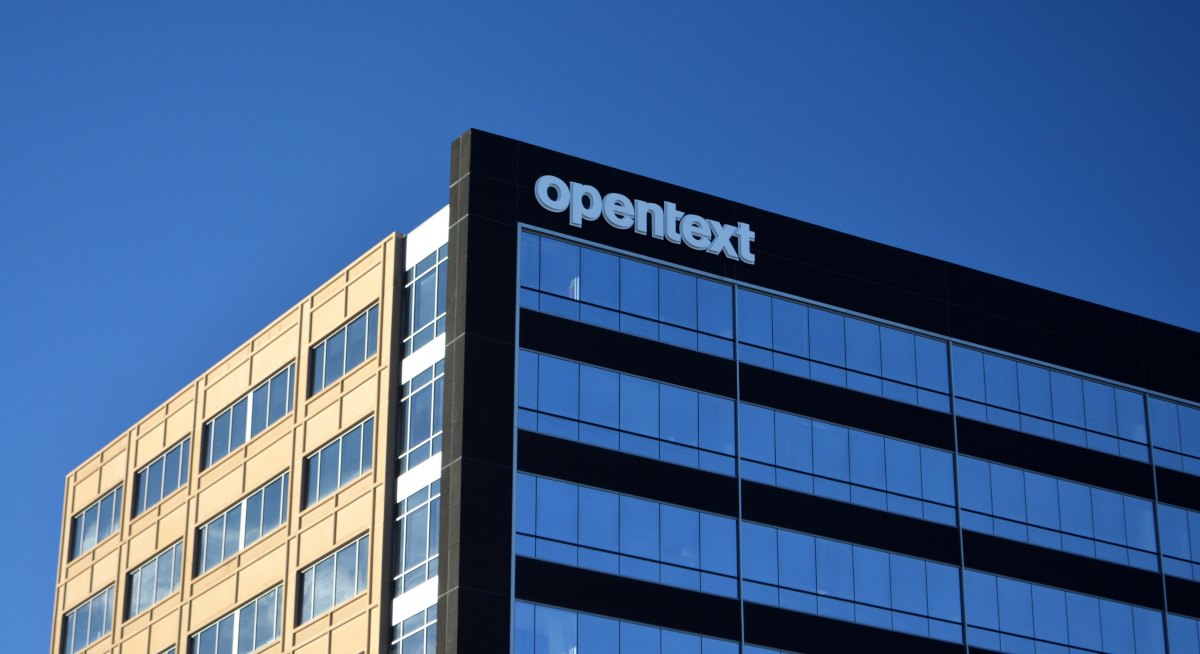
OpenText’s €105m investment marks the single largest backing by a company with a Canadian HQ.
Canadian enterprise data management company OpenText is creating 400 highly-skilled jobs in Cork and Galway over the next three years through a planned investment of €105m.
The company helps organisations protect, govern and utilise their data for agentic AI, cybersecurity and sovereign cloud. Irish-based developers and researchers will design, deploy, secure and operate these AI and cloud capabilities for the European, Middle East and African (EMEA) markets.
This is the single largest investment into Ireland by a technology company headquartered in Canada and is supported by IDA Ireland.
Advertisement
The major investment is expected to advance the company’s service capabilities across the EMEA industries and public sectors. It is also expected to increase regional capacity for organisations operating in highly regulated and mission-critical environments which require greater control over data governance.
“This investment expands our EMEA R&D and operations capacity to deliver the trusted AI, cybersecurity, and cloud capabilities our clients already rely on globally, while giving European organisations greater regional support and flexibility across the cloud environments of their choice,” said Shannon Bell, the executive vice-president, chief digital officer and chief information officer of OpenText.
Speaking of the announcement, Michael Lohan, the CEO of IDA Ireland said: “This investment will strengthen Ireland’s leadership in AI and transformational technology and IDA Ireland looks forward to continuing to work closely in partnership with OpenText as it grows its business in Ireland and deepens its European presence.”
OpenText said that it intends to explore opportunities for university and research collaboration in Ireland as part of its long-term innovation and talent strategy. This includes partnerships with third-level institutions focused on AI, cybersecurity and secure digital operations.
Advertisement
Laying down its R&D plans, OpenText said that its research efforts will advance how AI agents are orchestrated and governed including multi-agent collaboration, system boundary enforcement and knowledge sharing across sovereign zones.
In data sovereignty, it is developing continuous compliance mechanisms that give organisations verifiable control over where data lives and how it is governed, while its cybersecurity research will focus on threat detection and response.
Don’t miss out on the knowledge you need to succeed. Sign up for the Daily Brief, Silicon Republic’s digest of need-to-know sci-tech news.
OpenAI is under investigation by a coalition of state attorneys general, according to the Wall Street Journal. On Friday, June 12, the company received a subpoena seeking information and documents related to its activities and impact on users. The Journal said it viewed the subpoena sent by New York’s attorney general.
Based on what the publication saw, the AGs are asking for documentation about the company’s advertising, user engagement and retention, as well as its handling of its users’ data and health information. They also want to know about the company’s activities related to minor and senior users, its deep learning models, its policies and its models’ sycophancy.
“AI is a new and powerful technology, and we work every day to safely bring its benefits to people in a responsible way,” an OpenAI spokesperson said in a statement to the Journal. “We take the concerns raised by state attorneys general seriously and intend to engage constructively with their offices.”
It’s unclear what prompted the investigation, but tech companies developing AI products have been under scrutiny by state AGs for quite a while now. Last year, a group of 44 state AGs sent a letter to Meta, Google, Apple, Microsoft, OpenAI, Anthropic, Perplexity AI and XAI, asking them to protect children from being exposed to inappropriate and potentially harmful chatbot interactions. In April, Florida Attorney General James Ulthmeier opened a criminal investigation into OpenAI, because the suspect in the 2025 Florida State University mass shooting reportedly used ChatGPT.
Advertisement
More recently, another parent filed a wrongful death lawsuit against OpenAI, accusing the company of not implementing enough safeguards to protect users from taking their own life. The lawsuit claimed that the plaintiff’s daughter who died by suicide discussed her suicidal thoughts and plans with the chatbot in the months leading up to her death. However, the company didn’t alert the family or authorities. OpenAI was named as a defendant in the first ever wrongful death lawsuit linked to a chatbot, as well.
Just a few days ago, OpenAI filed paperwork with the Securities and Exchange Commission to go public. It hasn’t decided on timing and pricing yet.
OpenAI is forcing Mac users to update ChatGPT and other desktop apps, after a supply chain attack exposed signing certificates that Apple’s security systems use to verify trusted software.
The company disclosed the incident on May 13 and confirmed malware linked to the “Mini Shai-Hulud” attack infected two employee devices through the TanStack npm ecosystem. Investigators identified unauthorized access activity in a limited set of internal source code repositories connected to those employees.
OpenAI rotated its signing certificates and re-signed affected apps to prevent potential misuse of the exposed credentials. The company found no evidence that customer data, production systems, or intellectual property were compromised during the incident.
Apple’s macOS security protections will block apps signed with the older certificates after June 12, which makes the update mandatory for affected Mac users.
Advertisement
OpenAI confirmed the affected repositories included signing certificates used for applications across macOS, iOS, Windows, and Android. The company blocked future notarization attempts tied to the older credentials instead of revoking the certificates immediately and risking broken software installations for existing users.
Mac users must install updated versions before June 12. After that date, Apple’s security protections will stop trusting apps signed with the previous certificates.
Why macOS users need to update
Code-signing certificates help macOS verify that software comes from a legitimate developer. Apple’s Gatekeeper and notarization systems use those certificates to determine whether apps should be trusted, launched, or blocked.
Investigators found no evidence that exposed certificates were used to sign malicious software or distribute malware to users. OpenAI reviewed prior notarizations for signs of unauthorized activity and said it found no evidence of misuse.
Advertisement
Older versions of ChatGPT Desktop, Codex App, Codex CLI, and Atlas signed with the previous certificates may stop functioning or receiving updates after June 12. ChatGPT Desktop 1.2026.125, Codex App 26.506.31421, Codex CLI 0.130.0, and Atlas 1.2026.119.1 are the affected releases.
Supply chain attacks are becoming harder to contain
Modern apps rely on vast networks of open-source libraries, package managers, and automated development systems that can spread compromised code widely. A malicious dependency can traverse multiple organizations before developers detect the malware in the software chain.
Apple’s macOS security protections will block apps signed with the older certificates after June 12
The attack hit during an active rollout of new supply chain security protections across OpenAI’s development systems. Those protections included stricter package provenance checks, stronger CI/CD credential controls, and package-manager safeguards like minimumReleaseAge policies.
The two affected employee devices hadn’t yet received the updated protections when the malware reached the systems. OpenAI said the incident accelerated deployment of additional safeguards designed to reduce the impact of future supply chain attacks.
How Mac users can stay safe
OpenAI told users to install updated apps only through official websites or built-in update systems. The company also warned users to avoid installers distributed through ads, third-party download sites, email links, or unsolicited messages.
Advertisement
Mac users should verify they are running the latest versions of ChatGPT, Codex, and related OpenAI apps before June 12. Users who downloaded OpenAI software from unofficial sources should delete those apps and reinstall clean versions directly from OpenAI.
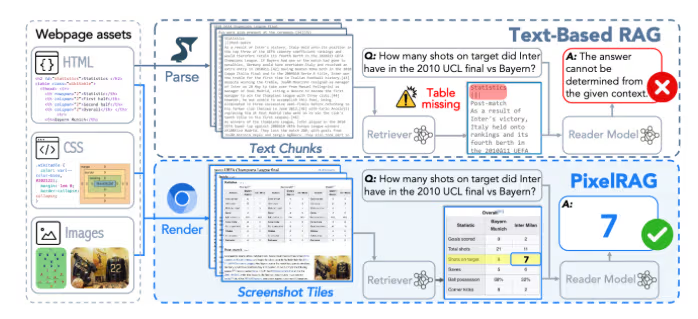
Most enterprise RAG pipelines start the same way: a text parser converts web pages and documents into plain text so they can be chunked and indexed for retrieval. That conversion step destroys retrieval signals — and according to new research, it’s responsible for the majority of wrong answers.
A research team from UC Berkeley, Princeton University, EPFL and Databricks published a paper this week introducing PixelRAG, a system that skips that conversion entirely. Instead of parsing pages into text, PixelRAG renders them as screenshots, indexes those images and feeds retrieved tiles directly to a vision-language model reader. Tested across 30 million screenshot tiles covering all of Wikipedia, it outperforms text-based RAG across six benchmarks, improving accuracy by up to 18.1% over text-based baselines.
Parsers are the wrong place to look for fixes, according to the research team.
“Improving parsers is an endless process because every website requires special handling,” Yichuan Wang, lead author and UC Berkeley doctorate student, told VentureBeat. “Our goal was to explore whether recent advances in VLMs make it possible to bypass that entire problem and build a retrieval system that works across websites without site-specific engineering.”
Advertisement
HTML parsers destroy the retrieval signals that enterprise RAG depends on
The goal of the researchers was to develop a clean end-to-end architecture.
“Modern web RAG pipelines often involve rendering, parsing, cleaning, chunking, and many other handcrafted stages,” Wang said. “Every stage introduces potential cascade errors and abstractions that move us further away from the original webpage. We were interested in whether we could eliminate most of that complexity and operate directly on the rendered page.”
Wang also noted that parsing inevitably loses information. Images, visual hierarchy, typography, emphasis (e.g., bold text), tables, and layout are either discarded or converted into imperfect textual approximations.
“No matter how good a parser becomes, some information is fundamentally lost during the conversion,” he said.
Advertisement
The research identifies three ways text-based RAG loses the answer before it reaches the reader. All three were measured on SimpleQA, a standard benchmark of 1,000 factual Wikipedia questions:
Parser loss (36.6% of failures). HTML-to-text conversion destroys structured content so completely that no text chunk in the corpus contains the answer.
Rank loss (55.2% of failures). The answer exists in the corpus but gets outranked by keyword-dense infoboxes that land at rank 1 for 75.9% of queries, pushing answer-bearing paragraphs to rank 20 or lower.
Reader loss (8.2% of failures). The correct content reaches the reader but flattened structure causes misattribution.
How PixelRAG works
Unlike a standard LLM that reads only text, a vision-language model takes images as input alongside text, meaning it can read a rendered web page the way a human does, with layout and structure intact. “For many structured information extraction tasks, we believe modern VLMs have an inherent advantage because they can reason jointly over both content and layout rather than relying on a flattened text representation,” Wang said.
PixelRAG is built around that principle, replacing the text parsing pipeline with a four-stage system that operates entirely on rendered screenshots.
Rendering. Pages are rendered using Playwright, a browser automation library, at a fixed 875-pixel viewport and sliced into 1024-pixel-tall tiles. Wikipedia’s 7 million articles produce roughly 30 million tiles. Assets are cached locally and rendered entirely offline.
Indexing. Each tile is encoded as a single 2048-dimensional vector using Qwen3-VL-Embedding-2B and stored in a FAISS approximate nearest-neighbor index. The full index runs to approximately 120 GB in fp16 and supports incremental updates without full re-indexing.
Training. The retrieval model is fine-tuned on synthetic contrastive data generated from the datastore, using dynamic hard-negative mining to filter false negatives. LoRA, a lightweight fine-tuning method that updates a small fraction of model weights, is applied to both the language model backbone and the visual encoder. Training on approximately 40,000 pairs completes in under three hours on a single H100.
Storage. Raw screenshot tiles for Wikipedia require 5.6 TB, but a render-on-demand approach eliminates persistent storage: embed all tiles, delete the screenshots and re-render pages on demand at query time. The vector index requires approximately 120 GB.
Six benchmarks, 10x agent token savings and one unsolved problem
Researchers tested PixelRAG across six benchmarks spanning factual Wikipedia QA, table-based queries, multimodal QA and live news retrieval. They said it outperformed text-based RAG on all six, including on tasks where questions are answerable from text alone. On SimpleQA it reaches 78.8% accuracy versus 71.6% for the strongest text parser, widening to 48.8% versus 42.5% on structured table queries. Teams need Qwen3-VL-4B class models or above to see the benefit. Smaller models trail text retrieval by more than 12.5 percentage points.
The agent cost advantage is the strongest near-term case for PixelRAG. In benchmark testing, an AI agent using PixelRAG as its search backend ran on 3.6 million prompt tokens versus 37.5 million for text retrieval, at 2 to 4 times lower cost than alternatives including Google, while achieving higher accuracy. Image compression can cut that token budget by a further third.
Visual chunking is the main unsolved problem. Text-based RAG systems have spent years refining how to split documents into meaningful retrieval units based on topic, section or semantic content. PixelRAG currently has no equivalent: it slices pages by fixed pixel height, meaning a table or paragraph can get cut in half mid-tile with no awareness of content boundaries.
“The text retrieval community has spent years studying chunking strategies, while visual retrieval has received much less attention,” Wang said. “We think this is an important area for future research.”
Advertisement
VB Transform · July 14–15 · Menlo Park · Agentic context layers
Your agents are only as good as the data they can reach.
Sessions at Transform cover the RAG architectures powering agentic systems at scale — including how enterprises are connecting agents to live genomics, clinical, and enterprise data.
The retrieval quality problem PixelRAG addresses reflects a broader market shift already underway. VB Pulse Q1 2026 data from qualified enterprise respondents found intent to adopt hybrid retrieval tripling from 10.3% in January to 33.3% in March, the fastest-growing strategic position in the dataset. PixelRAG’s own authors point to hybrid deployment as the most practical near-term path — layering visual retrieval on top of existing text systems rather than replacing them.
Advertisement
For teams already running RAG pipelines, the path to those savings is more straightforward than a ground-up rebuild.
“A practical path is to use PixelRAG as an enhancement layer alongside existing text retrieval systems,” Wang said. “Hybrid retrieval that combines both text and visual search is straightforward and is likely how many production deployments would evolve.”
















































You must be logged in to post a comment Login