The company, founded in 2018, builds software infrastructure that aims to empower developers to use quantum computing to solve computational problems.
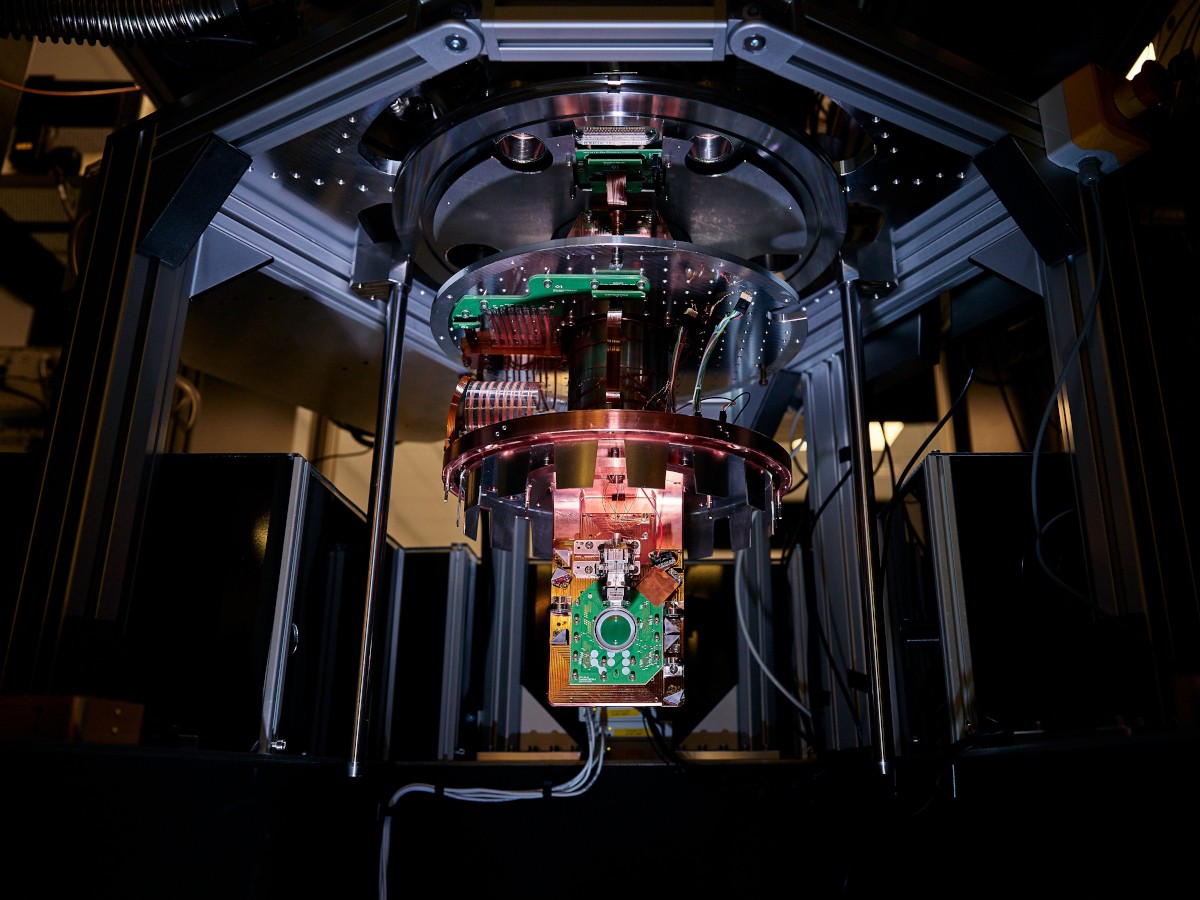
Irish-founded computing company Horizon Quantum has chosen Dublin as the site for establishing a testbed for its planned second quantum computer.
The company said locating the ‘IonQ’ 256-qubit system at its European headquarters would benefit the company and the country, noting “Ireland’s growing quantum ecosystem, strong university network and robust talent pool for deep-tech development, both within the country and across the EU”, and predicting that the installation of the “frontier system” would be a “significant technology milestone for the nation, positioning Ireland to play an increasingly prominent role in frontier quantum computing”.
Horizon Quantum, founded in 2018, builds software infrastructure that aims to empower developers to use quantum computing to solve computational problems. It said that IonQ’s sixth-generation, chip-based 256-qubit trapped-ion system could be among the most sophisticated quantum computers in the world.
Advertisement
“Expanding our hardware testbed to Ireland with the addition of a frontier system is a significant step forward for both our company in our mission to unlock broad quantum advantage and for the country in strengthening its quantum ecosystem,” said Horizon Quantum CEO and founder Dr Joe Fitzsimons.
“We are excited to extend our testbed capabilities to include a trapped-ion system by deploying this state-of-the-art quantum computer in Dublin.”
To oversee the establishment and management of its second quantum system, Horizon Quantum, which is based in Singapore, said it plans to expand its Irish-based science and engineering teams, and deepen engagement with Ireland’s quantum ecosystem through increased involvement with industry, academia and the local supply chain.
Minister for Enterprise, Tourism and Employment Peter Burke, TD said: “The establishment of one of the most advanced commercial quantum systems here is an important milestone that will support innovation, collaboration and economic growth, while further enhancing Ireland’s ambition to be a global hub for cutting-edge technologies.
Advertisement
“This also aligns with our strategic focus in Silicon Island – Ireland’s national semiconductor strategy – on harnessing opportunities in rapidly evolving fields, including quantum technologies.”
The company assembled and integrated the first quantum system in its hardware testbed, a multi-vendor superconducting system, at its Singapore headquarters in 2025.
It said that the expansion of its testbed facilities to its European headquarters with a “second, technologically distinct system” will help further its goal of delivering the “most capable hardware-agnostic tools for quantum software development”.
Michael Lohan, CEO of IDA Ireland, said: “Quantum development is an important strategic priority for IDA Ireland, and this announcement is a strong endorsement of Ireland’s growing technology ecosystem, our research capabilities and the talent available here.
Advertisement
“Horizon Quantum’s decision to invest in Ireland further strengthens our position in frontier technologies and will help support continued innovation and collaboration across the quantum sector.”
An anonymous reader quotes a New York Times report on how AI companies are pouring money into training and recruiting electricians, carpenters, and other skilled tradespeople to build data centers: There is no parallel in American history for the boom underway in the construction of data centers, fueled by companies with functionally unlimited cash that are racing to supply skyrocketing demand for their A.I. models. The explosion has offset flagging activity in other sectors, like office construction, which never recovered after the pandemic. Housing has been depressed by high interest rates, and offshore wind felled by political opposition. Still, competition for labor — never mind land and materials — is starting to weigh on other parts of the industry.
“There’s no question the resources are very limited, so decisions to build one thing kind of drag from another,” said Mario Iacobacci, who runs the construction and infrastructure advisory practice at Oxford Economics. Developers are paying a premium for workers, especially in the rural areas where they are building data centers. According to an analysis by Indeed, the job listings website, hourly installation and maintenance jobs at data centers pay 42 percent more than similar jobs in other fields. Behind that inflated pay is a bidding war. In markets with a lot of data center construction, like Dallas and Northern Virginia, workers can jump ship for bonuses or higher per diem rates. The competition has driven contractors to staffing services like Aerotek.
“It is creating a labor tension that is really delicate,” said Marty Schager, Aerotek’s director of data center market development. “You’ve got a passive job-seeker community out there right now that I think is looking to potentially capture opportunity with this once-in-a-generation data center gold rush.” […] The question looms over the apprentices who will become journeymen as the build-out reaches fever pitch. Fully trained electricians could shift to nuclear plants, apartment buildings or pharmaceutical factories. But it’s hard to imagine anything on the scale of what’s underway.
“The best-case scenario would be you train all these skilled workers up and right when the data centers start to become less popular is we’d have a housing boom,” said Jeff Strohl, director of Georgetown University’s Center on Education and the Workforce. “That’s probably not likely.”
“If we have an influx of workers at this point with the data centers being built, what happens when they’re done? Where do those workers go?” he said. “How many people does it take to run a data center after taking up all this property and all this land that could have been used for something else?”
Microsoft is in a unique position as AI overtakes the tech industry. It’s one of the world’s largest cloud providers and software-as-a-service companies, while also holding valuable stakes in the two biggest AI labs, OpenAI and Anthropic.
Those incentives are starting to clash as Microsoft posts blockbuster financial results. The company just reported an extremely profitable quarter with $90 billion in revenue and net income of $35.8 billion. For the fiscal year, which ended June 30, Microsoft reported $331.8 billion in revenue with a net income of $133.7 billion for the year.
And CEO Satya Nadella is not about to let the trajectory of Anthropic and OpenAI — which are expanding into applications and agentic infrastructure that could ultimately let them own customer relationships — derail that kind of cash.
Doing so is dangerous, he’s been saying, because it requires companies to share too many of their internal secrets with model makers of dubious trustworthiness. He knows his customers. Enterprise IT fears both data leaks and being locked into a vendor.
Now he has openly told Wall Street analysts during the company’s quarterly conference call Wednesday that this is an opportunity for Microsoft to sell customers its own homegrown models, alongside agents, AI security and more, while promising lower costs.
In other words, he’s pitching Microsoft as an alternative to many of the upscale services that OpenAI and Anthropic are developing for their own growth.
When UBS analyst Karl Keirstead specifically asked Nadella to weigh in on the open vs. closed-sourced debate roiling the AI industry, and how Microsoft will benefit from it, Nadella came out swinging.
Advertisement
“The goal is to have the firm be in control of their own destiny,” the CEO said of enterprises. “We are very, very clear about the architectural sort of design of the platform, which is you got to keep your harness separate from the model … that means any model at any given time is swappable.”
Microsoft, of course, sells a menu of harnesses (aka AI agents), too, under the Copilot name, including its coding agent GitHub Copilot. Coding agents are where much of the AI dollars are being spent today.
And he used the high-profile incident from last week as proof of his warnings.
“If you look even at the Hugging Face incident, the biggest thing that we should take away from that is you can’t sort of depend on any one model,” Nadella said. “You will maybe need multiple models to even remediate some challenges that get caused by one model. Like that’s the way to think about it, right? Which is you can’t be subject to a refusal of one model.”
Advertisement
The incident involved an unreleased model from OpenAI breaking out of its sandbox and successfully mounting a full-scale hack on Hugging Face, all in pursuit of besting a benchmark. Trying to understand what happened, Hugging Face at first tried to use a private frontier model (which it hasn’t named) that refused to help it. So it turned to the Chinese open-source model Z.ai GLM 5.2 to analyze logs and defend its infrastructure. The incident has so shocked the industry that even Sam Altman is now saying that maybe AI development should slow down a bit.
Nadella also made clear that Microsoft is happily selling its own homegrown models, the MAI family, on its own homegrown AI chips, Maya, and pitching them as cheaper alternatives.
“Every customer wants the right model for each task based on quality, latency, cost, and compliance. We offer the broadest model catalog in the cloud with over 11,000 models, including the leads from OpenAI, Anthropic, Mistral, xAI, as well as our own MAI family,” he said.
He added: “We’re also accelerating our own model development. We announced more than a dozen new models across image, voice, transcription, coding, security, including our first reasoning model, MAI thinking one, all with cost-efficient inference at the core for the enterprise use cases. We are co-designing these models with our silicon, and we are seeing 40% better performance per watt when running MAI models on Maya 200.”
Advertisement
As for Mythos? Nadella pointed to Microsoft’s new Mythos competitor announced earlier this week, MAI Cyber One Flash. It “achieves better performance than the much larger Mythos model, but at half the cost when combined with our multi-agent security harness,” he said.
Sure, the Microsoft CEO says that enterprises should use the frontier models that OpenAI and Anthropic offer in their mix. But his bigger message is: don’t trust them enough to rely on them.
When you purchase through links in our articles, we may earn a small commission. This doesn’t affect our editorial independence.
Wild Bio, founded in 2021 by Dr Ross Hendron and Irish man Prof Steve Kelly, specialises in crop genetics by researching genetic solutions that developed through evolution.
University of Oxford spin-out Wild Bioscience, which develops improved crop varieties using AI and precision breeding, has acquired wheat breeding business F1 Seed for an undisclosed amount.
By acquiring F1 Seed, Wild Bio aims to become a “fully integrated, end-to-end UK seed company”, forming a single business able to design, breed and deliver new wheat varieties to growers.
Wild Bio, founded in 2021 by Dr Ross Hendron and Irish man Prof Steve Kelly, specialises in crop genetics by researching genetic solutions that developed through evolution to improve crops in the past, and then using these discoveries to design simple fixes for modern crops.
Advertisement
The start-up does this by building unique plant biology datasets and applying AI and machine learning tools to find “signatures” for how evolution has improved plants. The Wild Bio platform can then target specific “nature-tested” traits and activate them in crops such as wheat.
With this acquisition, Wild Bio will be able to utilise F1 Seed’s wheat breeding capabilities and access its diverse germplasm – genetic resources such as seeds, tissues and DNA sequences – pipeline, which has been developed for more than a decade.
Wild Bio’s goal is to deliver conventionally bred, optimised wheat varieties directly to UK farmers by 2027, followed by the first precision-bred lines in field trials by 2028.
F1 Seed already has six wheat varieties on the UK market, primarily focused on animal feed and distilling, and plans to launch three more later this year. Of the 82 new wheat varieties entering official UK national trials this year, 12pc – 10 entries – come directly from F1 Seed’s pipeline, according to a press release on the acquisition.
Advertisement
“This is the most exciting news for wheat growers since Cambridge University established the Plant Breeding Institute in 1912,” said Bill Angus, founder and director of F1 Seed. “That organisation established the blueprint for integrating new traits into cereals.
“Now over a century later, armed with an array of novel traits, we are well placed to move wheat breeding into a new and exciting era. Deploying traits has been the lifeblood of wheat breeding – now we have the opportunity to accelerate this in UK germplasm.”
Wild Bio said the acquisition comes as the UK’s farming industry hits a tipping point, as wheat yields have remained flat for three decades, while input costs have risen and the climate crisis has introduced “unprecedented volatility”.
In fact, a report from last November found that one-third of surveyed UK farmers made no profit in the previous year, with more than half considering leaving the industry.
Advertisement
With the record-breaking heatwaves and drought seen in recent years affecting wheat yields significantly, Wild Bio said it will be able to help UK farmers by providing seeds designed specifically for the country’s conditions.
“Wheat is Britain’s biggest crop and feeds a fifth of humanity. But on a changing planet, growing it is only getting harder,” said Hendron, who is also Wild Bio’s CEO. “That’s the challenge we exist to meet.
“As a new independent seed business that brings breeding and gene editing together, we can focus on the traits that growers genuinely need and design towards them with precision. Bill and his team have built something remarkable; pairing their strengths with our evolutionary platform gives us the full stack of capabilities we need to develop the varieties that will bend the yield curve upwards again.”
Last October, Wild Bio raised $60m in a Series A round led by the Ellison Institute of Technology, founded by Oracle’s Larry Ellison. The company’s acquisition of F1 Seed was largely financed by this funding, according to Wild Bio.
Advertisement
Don’t miss out on the knowledge you need to succeed. Sign up for the Daily Brief, Silicon Republic’s digest of need-to-know sci-tech news.
Artificial intelligence is rapidly becoming part of everyday infrastructure–in some places. It helps write emails and software code, filters job applications, powers recommendation systems, and is increasingly being integrated into education, health care, finance, and public administration. Industry leaders talk about “AI for everyone,” while governments rush to publish national AI strategies and build sovereign compute.
Yet over the past decade, working on digital inclusion and digital literacy projects in regions from Europe to sub-Saharan Africa and Southeast Asia, I’ve seen the same pattern repeat: Each new wave of “transformative” technology lands on a landscape already stratified by connectivity, skills, and institutional capacity. The current AI wave is no exception. If anything, it amplifies those underlying fractures.
Still, some countries are exploring ways of participating in AI development without directly replicating the frontier-model race dominated by the United States and China. Recent developments in South Africa and Indonesia illustrate both the possibilities and challenges. The stakes extend far beyond access to AI. Countries that remain primarily consumers rather than creators of AI risk losing opportunities to build local innovation ecosystems, strengthen public-sector capacity, and ensure that their own languages, cultures, and societal priorities are reflected in AI systems. In this sense, the AI divide is also becoming a divide in economic opportunity and technological influence.
AI compute is clustering in a few places
Recent analyses from Stanford University’s 2026 AI Index report that the United States alone hosts more than 5,000 data centers, over 10 times as many as any other single country. Because AI workloads are increasingly performed on cloud platforms rather than local infrastructure, this concentration of compute also becomes a concentration of dependency. According to World Bank data, in 2023 the United States accounted for roughly 87 percent of global exports of cloud computing and data-storage services.
Systems trained, standardized, and governed within a narrow set of institutional and linguistic environments may struggle to serve a genuinely global public.
Skills and AI literacy are deeply stratified
Even where connectivity and cloud access exist, not everyone is equally positioned to make use of them. Across the Organisation for Economic Co-operation and Development (OECD) countries, only around 40 percent of adults possess more than basic digital problem-solving skills, while advanced computational and AI-related competences remain concentrated among highly educated workers and technology-intensive sectors.
At the same time, governments are racing to integrate AI into education, often starting at higher levels of schooling. UNESCO has reported growing efforts worldwide to integrate AI into education, while support for AI literacy in primary and lower secondary education, as well as ethical training for educators, remains uneven.
Advertisement
Those with robust schooling, advanced digital skills, and stable connectivity are best positioned to treat AI as a tool to extend their capabilities. Recent OECD survey data show that participation in AI-related training remains strongly stratified by educational attainment: 36 percent of respondents with tertiary education reported undertaking AI-related training in the previous year, compared with just 18 percent of those with upper-secondary education. Those on the wrong side of the divide are more likely to experience AI as an opaque system acting upon them, from algorithmic welfare systems such as the Dutch childcare benefits scandal to AI-assisted hiring tools such as Amazon’s discontinued AI recruiting system, rather than as a technology they can actively interrogate or shape.
Investment and governance: Who gets a seat at the table?
The core agenda-setting power often remains with a narrow set of industry actors and a small group of technologically advanced states. Most other countries remain in a perpetual catch-up posture, adapting imported models, standards, and templates for “trustworthy AI” to their own contexts, and may have limited local capacity to assess trade-offs or propose alternatives.
In countries such as Indonesia and South Africa, communities generate data at massive scale yet still have little voice in how AI systems are designed, governed, or deployed. Their languages are underrepresented in training data; their institutions are under-resourced in regulatory forums; their experiences rarely feature in benchmark datasets. For many countries in the global South, participation in AI still occurs largely through adapting imported systems rather than shaping how those systems are designed, governed, or deployed.
In South Africa, the Department of Communications and Digital Technologies released a draft national AI policy in April 2026, proposing new oversight institutions. The department withdrew the draft days later after a journalist discovered that at least six of its academic citations did not exist, apparently AI-generated hallucinations. The minister called it “an unacceptable lapse.“ The episode sharply illustrates the gap between AI governance ambition and the institutional capacity needed to implement it, though the new AI panel the country has since constituted has a chance to use South Africa’s unique leverage.
Advertisement
Indonesia presents a case of deliberate, if constrained, public-sector agency. The National Research and Innovation Agency (BRIN) which now leads AI implementation under the national strategy, has built practical AI tools aimed at underserved communities rather than frontier capabilities, including an app that uses satellite data and machine learning to help artisanal fishermen locate schools of fish, multilingual language models trained on Indonesian and local languages such as Javanese and Sundanese, and AI chatbots deployed in government services. In August 2025, the Ministry of Communication and Digital Affairs released a national AI road map with a target of training 100,000 AI-skilled workers annually.
The choice is not simply between “AI superpower” and “passive recipient.”
None of this means that people should slow or abandon AI, nor that cloud concentration or venture capital are inherently bad. Instead, when we talk about an “AI revolution,” we should also ask who can shape it and who can merely adapt to it.
Advertisement
Digital-divide debates once focused on devices and connectivity, later expanding toward skills and outcomes. But the current AI wave adds another layer: disparities in who can meaningfully participate in deciding what AI is for, which problems it is meant to solve, and which social priorities it ultimately serves.
For engineers and policymakers, this raises difficult but necessary questions. Are they designing AI systems and infrastructures that broaden, rather than narrow, participation in shaping technological change? When governments roll out national AI strategies or integrate AI into public services, whose constraints, languages, and institutional realities are they including?
Many observers frame the current AI moment as a competition. But technological competition is never only about speed. It is also about who can influence the direction of change.
AI is already spreading globally. The deeper question is whether the technologists and policymakers responsible for it will ensure that meaningful participation in shaping that future will spread as well.
Artificial intelligence is reshaping the skills employers expect from new graduates. In response, universities are scrambling to launch new courses, research centers, and industry partnerships that prepare students for today’s workforce. But building a cutting-edge AI curriculum demands funding and access to industry networks, resources that remain unevenly distributed across higher education.
At North Carolina Central University, Siobahn Day Grady is trying to change that equation.
“There used to be a time where people could say, ‘I don’t do tech,’ or ‘That’s not for me,’” Grady says. “But we’re in a stage now where you do need digital skills. Now it’s evolving into AI literacy.”
Advertisement
The approach reflects a broader shift in how many universities are thinking about AI education. AI skills are no longer confined to computer science and engineering departments—and at NCCU, they can’t be. The university does not yet have a dedicated computer science program, though it is developing one alongside a new AI minor.
The challenge of providing these resources is especially acute for historically Black institutions. Although HBCUs account for roughly 3 percent of four-year institutions in the United States, they receive less than 1 percent of federal research and development funding, according to a 2025 report by the Center for American Progress and the Thurgood Marshall College Fund. The same report found that 17 of the 43 federal agencies that distributed research funding to universities in 2023 awarded no funding to HBCUs.
Yet less than two years since its launch, IAIER has emerged as a powerhouse for interdisciplinary AI education. Backed by a US $1 million Google.org grant, the institute has engaged more than 2,800 students, faculty members, and community residents through research initiatives and training. Now the challenge is sustaining that momentum to keep up with rising demand.
“We have a guiding principle that we lead with on our campus,” Grady says. “AI is for everyone.”
Advertisement
Why one research group wasn’t enough
The mission to expand AI literacy grew out of Grady’s lifelong curiosity about technology. “I was born during a time [when] the internet did not exist,” she says. “Ever since the internet came to be, it’s changed our entire world.”
Grady was particularly drawn to the questions tech raises about privacy, identity, and human behavior. After receiving her bachelor’s degree in computer science and master’s degrees in AI and information science, Grady pursued a Ph.D. in computer science at the North Carolina Agricultural and Technical State University to dig into those questions.
Her dissertation focused on authorship attribution in social media, using machine learning and natural-language processing to determine whether a person’s writing style could reveal their identity. “I’ve always been intrigued by how much data we give for free,” Grady says. That work introduced her to the power of AI systems to detect patterns hidden within large datasets.
“We have a guiding principle that we lead with on our campus: AI is for everyone.”
Advertisement
After completing her doctorate in 2018, Grady joined NCCU as an assistant professor in the School of Library and Information Sciences. There, she researched machine learning applications for health care and autonomous vehicles. In 2020, she launched the Laboratory for Artificial Intelligence and Emerging Research at NCCU, giving students opportunities to participate in hands-on projects and explore AI beyond the classroom.
Then in 2024, an opportunity emerged to apply for a Google grant, and Grady began thinking beyond a single research group. Rather than building another faculty lab, she envisioned an institute that could serve the entire university during the AI boom. “We wanted to capitalize on the moment and make sure we don’t get left behind,” Grady says.
Since receiving the $1 million grant, Grady and her team have built a university-wide AI initiative, launched new academic programs, organized conferences, secured external support, and created research opportunities.
“We’ve really operated like a startup,” Grady says.
Advertisement
AI beyond computer science
As part of the institute’s goal of integrating AI education across disciplines, all NCCU freshmen are required to complete an introductory AI course, designed in partnership with IBM, to build foundational prompting skills. The institute has also worked with faculty development teams to help instructors integrate AI into their teaching.
Research is another part of the strategy. IAIER has awarded seed grants of up to $10,000 to faculty members exploring AI applications across departments. The first cohort funded 11 projects spanning social work, digital archiving, health care, and information science. One project, for instance, is creating an AI lab where students in social work courses can practice client interactions through simulations.
“It’s really interesting to see the lens that our researchers take in trying to solve complex problems and also bring our students along with them,” Grady says.
The institute’s growth has been fueled by a mix of workforce training, interdisciplinary research, and, especially important, industry engagement. “Industry is where the advancements are really moving at that very fast rate,” Grady says, “not necessarily higher ed.”
Advertisement
To bridge that gap, IAIER hosts events that connect students and faculty with researchers, employers, and technology leaders. It has held sessions with companies including Deloitte, FICO, and Anthropic. Partnerships with Google and IBM let students gain recognized certificates and credentials. And last year, the institute hosted the first OpenAI Academy Summit held at an HBCU, drawing 444 participants from more than 40 institutions.
Sustaining the vision
The institute’s rapid growth has created a new challenge: continuing its momentum.
“Funding right now is the biggest barrier for [IAIER] to remain sustainable,” Grady says. As interest in the institute continues to grow, demand for its programs is beginning to outpace its capacity. “People just want more,” she says.
The bottleneck reflects a broader tension across higher education. AI is evolving quickly, while developing new academic programs, training faculty, and building research capacity takes time. The uncertainty is compounded by a shifting political landscape. As a whole, U.S. universities are grappling with proposed cuts to federal research spending and increased scrutiny of diversity-focused initiatives under the Trump administration. However, in September 2025, the administration also announced a $500 million one-time investment in HBCUs and higher-ed institutions chartered by Native American tribal governments.
Advertisement
Meanwhile, NCCU has continued to attract new investment. Last September, in a collaboration with Howard University and two other institutions, IAIER received a nearly $500,000 award through a National Science Foundation research coordination network program to help define emerging AI jobs, identify in-demand skills, and inform future credentials and curricula. That work will continue this fall when IAIER opens its first dedicated physical space on campus, Grady says.
Over the next several years, Grady plans to expand academic programming, launch the university’s computer science major and its AI minor, increase faculty research opportunities, and integrate AI more deeply across campus operations. She also plans to deepen the institute’s collaborations with industry partners.
Beyond program expansion, Grady sees the institute’s long-term success as linked to building a model other universities can adapt. “We’re creating a framework that can help not only HBCUs,” she says, “but also help any university looking to do similar work.”
Verizon signs $1 billion dark fiber data center connectivity deal with Google
The telecoms company plans to use its fiber assets to connect AI data centers across the US
Fiber network growth is replacing copper lines and activating previously unused dark fiber lines
Verizon has completed a $1 billion deal with Google to provide data center connectivity using pre-existing dark fiber infrastructure. The move appears to be the first of several arrangements to leverage dark fiber and the desire for AI data centers to collaborate on compute tasks.
CEO Dan Schulman highlighted how copper is being ripped out of central offices to replace the outdated cabling with modern fiber to meet AI demand in workplaces. Verizon previously announced its AI Connect initiative, which aims to support AI infrastructure growth, and the Google deal appears to be the first step in that initiative.
Verizon expects its AI Connect deals to grow over the next decade.
Latest Videos FromTechRadar
Advertisement
Verizon’s renewed momentum
Verizon has made some strong moves in the past few months, completing the $20 billion purchase of Frontier Communications earlier in 2026, giving it an expanded fiber footprint across 31 states (up from 15), as well as Washington, DC.
Meanwhile, the company has also been experimenting with trials to support smaller AI-driven businesses, such as autonomous robotaxi fleets, where Schulman reported (during an earnings call) the company “sold out capability in 24 hours. So we’re seeing a large demand for that as well.”
Focusing on its existing dark fiber infrastructure, some of which was installed in the 1990s and early 2000s, allows Verizon to focus on deals with Google and other AI companies and reduce capital outlays.
Much of the dark fiber has remained largely untapped for years, ending up within Verizon’s portfolio as the result of acquisitions such as the MCI buyout in 2006.
Sign up to the TechRadar Pro newsletter to get all the top news, opinion, features and guidance your business needs to succeed!
Advertisement
Is a turnaround on the Verizon?
Verizon has undergone a transformation under Schulman, one that could put it in a strong position against T-Mobile and AT&T.
New Street Research’s David Barden observed that Verizon’s recent moves and Q2 results are “adding incremental pressure on T-Mobile and AT&T to defend share rather than take it. It also may suggest that cable’s wireless push and cable’s own broadband churn is where the next leg of competitive pressure is coming from.”
Beyond the churn of domestic and commercial mobile and broadband, Verizon’s strategy to support the growth of AI data centers seems to be a strong bet.
With more installations being approved and coming online with almost weekly regularity, the $1 billion Google deal would seem to be the first of many, with Verizon in a position to potentially dominate direct fiber links between AI data centers.
One mechanic does a lot of the daily work here, the Anti Hair Wrap brush roll, built to stop pet fur and long hair tangling around it the way they do on a standard bristle roller, saving you from cutting hair out with scissors.
That same head also carries Reveal Technology, using built-in LED lights to pick out the dust and ground-in dirt that ordinary daylight hides, along with FloorDetect sensors that automatically adjust suction and brush speed as you move between carpet and hard floor.
Advertisement
Shark also swaps the usual rigid bristles for flexible PowerFins that stay in constant contact with both carpet fibres and hard flooring, rather than leaving the small gaps that let dust slip past on a traditional floorhead design.
Advertisement
Flexology lets the whole vacuum bend flat to clean under sofas and beds, and it folds over for compact storage, while a quick conversion turns it into a lightweight handheld for stairs, upholstery and the car, all backed by up to 50 minutes of runtime.
A HEPA filter and an anti-allergen seal work together to trap 99.9% of dust and allergens inside the machine rather than blowing them back into the room, and the XL dust cup empties with a single push so hands stay out of the mess.
That said, the 50 minute runtime is measured in ECO mode with a non-motorised tool, so the motorised floorhead on higher power settings will drain the battery faster, and the compact 0.7 litre dust cup may need emptying more than once in a larger home.
Anyone still comparing options before committing can cross-reference the picks in our Best Vacuum Cleaner 2026 guide, though the PowerPro’s combination of anti hair wrap technology and this particular discount is hard to match at the moment.
Advertisement
Advertisement
Beyond the comparison shopping, the Shark PowerPro still carries a five year guarantee when registered and already holds a 4.5 star average from over 900 owners, making £169.99 a genuinely low price for a vacuum built around pet hair and everyday mess.
On Tuesday, the day after hundreds of thousands of Haitian migrants effectively lost their temporary protected status that allowed them to live and work in the US, Republican pundit Steve Bannon wasted little time in demanding their instant removal.
“I was under the assumption that when they pulled TPS and their eligibility for that program ended … they were going to be boarding planes or buses today … today, this morning at dawn to go back to Haiti,” said Bannon, a longtime ally of President Donald Trump, on his War Room podcast on Tuesday. “Why are they not out of the country?”
Mike Davis, a conservative political strategist agreed with Bannon: “The solution is to get these people the hell out of our country as fast as possible, and that includes these Haitians.”
White nationalist Nick Fuentes, who has been a vocal critic of Trump’s deportation policies because he doesn’t find them extreme enough, called Haitians “the worst of the worst” and “very low IQ people” on his Rumble show Tuesday night.
Advertisement
In a Telegram channel run by the Proud Boys of Columbus, one member posted a clip of the song “I’m Walking on Sunshine” alongside the news about the revoking of temporary protected status. “They gotta go back,” the member wrote.
It’s been a while since shock-and-awe tactics from Immigration and Customs Enforcement first gained national notoriety. For months, figures like former Border Patrol leader Greg Bovino terrorized cities like Minneapolis and Chicago. But since replacing former Department of Homeland Security secretary Kristi Noem with Markwayne Mullin—derisively referred to by Bannon as the “Kung fu plumber”—ICE’s operations have shrunk into the shadows, though the agency’s deportation and arrest numbers have remained astronomical.
In recent weeks, things are boiling over again.
Earlier this month, an ICE agent shot and killed Lorenzo Salgado Araujo in Houston, Texas. Araujo had lived in the country for 35 years, had three children, and owned his own business. Just days later, another ICE agent killed Johan Sebastián Durán Guerrero in Biddeford, Maine. Both men were shot while in their vehicles. ICE, as WIRED has revealed, is also tracking its critics online, using data brokers to “identify unaccompanied minors,” and working to prevent state health inspectors from reviewing its network of detention centers. On Tuesday, The New York Times reported that the Trump administration was now targeting immigrants at airports whose visas have expired, or are in a transition status, arresting spouses of American citizens.
Advertisement
Even so, Steve Bannon and the other Republican pundits aren’t alone: Support for ICE among Trump’s most loyal supporters remains incredibly high, with 74 percent of people who identify as MAGA Republicans professing confidence in ICE, according to a YouGov poll published last week. The same poll shows that 80 percent of MAGA Republicans oppose abolishing ICE.
The YouGov findings were backed up by another poll published last week by the Public Religion Research Institute , which found that three-quarters of Republicans had a positive view of ICE, would be in favor of more funding for the agency, and disagreed that ICE was making communities less safe. The poll also found that 73 percent of Republicans are in support of internment camps to hold “immigrants who are in the country illegally” until they can be deported.
The YouGov poll also found that just 51 percent of Republicans had, in the week of the shootings, read, seen, or heard anything about immigrants being shot and killed by ICE agents. What they may have seen however is Trump’s Truth Social post around the same time. In the post, Trump appeared to overrule an internal ICE memo telling agents to suspend vehicle stops, after a furious response from his MAGA base. He also told his supporters that ICE was “loved and respected in America.”
The company’s tech chief said a fix for the error will be arriving soon.
Sotiomake/Shutterstock
Xbox experienced a strange outage earlier this week. Not only were the platform’s online services unavailable for almost an entire day, but even games on physical discs stopped working for some players. The company’s technology chief, Scott Van Vliet, explained that the outage was caused by problems at an external licensing service. And if your gut reaction is that discs should still be playable even when web services are down, you’d be right.
Today, Van Vliet told The Verge that those license check issues should not have extended to discs. “We’re looking into reports that some players were unable to access games using discs as expected during the service interruption. Disc-based entitlement checks should not prevent players from accessing their games and this is by design,” he said. He went on to explain that disc entitlements should be saved locally to allow games to work when a console is offline, but the system that enables that did not work correctly. A fix will be arriving for the issue in an upcoming update.
It’s still an additional instance of bad press for Xbox when the company has been struggling for months. Xbox followed up a rough 2025 with new leadership, price hikes and plans to cut 3,200 jobs.
Data from the Singapore Department of Statistics also shows that cinema attendance has more than halved over the past decade, falling from over 20 million visits to fewer than 10 million.
But there’s one local brand that’s managed to hold its ground through the tumultuous years of pandemic lockdowns, Hollywood strikes, and the rise of streaming—and that’s Shaw Theatres.
Advertisement
We spoke with Mark Shaw, Director of Shaw Organisation, about the cinema chain’s playbook for staying relevant over the last 90 years and what it actually takes to survive Singapore’s evolving yet brutal cinema scene.
Cinema’s tumultuous years
Popular streaming platforms in Singapore include Netflix and Disney+./ Image Credit: Deadline
For decades, if you wanted to catch the latest movie, you went to the cinema.
The pandemic fundamentally changed that.
Streaming platforms, already growing before COVID-19, became the default entertainment choice overnight as audiences were confined at home due to lockdown restrictions. So when cinemas reopened, they faced a different kind of audience, one accustomed to the convenience of watching whatever they wanted, whenever they wanted, without leaving the couch.
Just as the industry was beginning to recover, the 2023 strikes by the Writers Guild of America and Screen Actors Guild disrupted Hollywood’s pipeline of blockbusters, delaying the cinema industry’s recovery back by another year, and there is no doubt that the effects rippled all the way to Singapore.
Advertisement
“The industry needs a constant lineup of quality content to fully recover, and we are only now discovering how tastes are changing,” Mark said.
Even so, he believes the worst is behind them. Since the Hollywood strikes ended and pandemic restrictions were lifted, cinema attendance has been steadily improving.
Some films, he added, continue to prove why cinemas remain relevant. Titles shot specifically for IMAX—such as Christopher Nolan’s The Odyssey—offer an experience that simply cannot be replicated at home.
“Cinema is an experience that you share with friends and family, and is something that can only be truly experienced on the Big Screen,” Mark said.
Advertisement
How Shaw held its ground
While other cinema operators shrank their footprints over the years, Shaw has stayed remarkably consistent. Today, it still operates eight outlets across Singapore, and its flagship Shaw House continues to stand prominently along Orchard Road.
Rather than pursuing aggressive expansion, the company has focused on reinvesting in its existing cinemas and giving audiences reasons to keep coming back.
Shaw House, which houses Shaw Lido, at Orchard Road./ Image Credit: mailer_diablo
One of its biggest bets came in 2011, when Shaw became the first operator to introduce IMAX to Singapore at its Lido flagship.
According to Mark, IMAX screenings have consistently outperformed regular halls, with tickets often selling out well ahead of standard screenings. Today, Shaw operates five IMAX theatres, each built to meet the format’s strict specifications for screen size and auditorium design.
But IMAX wasn’t the company’s only investment. Over the years, Shaw has continued experimenting with different cinema concepts tailored to different audiences.
Advertisement
The Premiere concept, which combines in-theatre dining with a more premium seat, launched in 2010 and first opened at the NEX outlet in Feb 2011. For more than a decade, it remained a single-location offering, since the kitchen infrastructure required for in-cinema dining meant it couldn’t simply be rolled out everywhere.
(Left): Shaw’s Lumiere concept; (Right): Shaw’s Dreamers family-friendly concept./ Image Credit: Shaw Theatres
Lumiere, which debuted at Jewel Changi Airport and Paya Lebar Quarter in 2019, was designed as a middle ground, offering the comfort of premium seating without the full dining experience.
That same year, Shaw also introduced Dreamers at Jewel: Singapore’s first and only cinema concept designed specifically for families with young children. Featuring lower seats and more spacious layouts, the concept aims to make moviegoing more comfortable for both parents and their kids.
“We look at our data, and we listen to our patrons’ feedback,” Mark said, explaining how Shaw develops new concepts.
Shaw has also noticed changing tastes beyond the cinema experience itself.
Advertisement
Demand for alternative content has grown significantly in recent years. Anime screenings, which were relatively ad hoc before COVID-19, have become a much bigger part of Shaw’s programming, growing from six titles in 2023 to 11 in 2024.
Meanwhile, special fan events, from K-pop concert films to anniversary screenings of cult classics, routinely sell out in under 15 minutes, he added.
The shift has changed how Shaw programmes its screens. Rather than relying solely on Hollywood’s release calendar, it has increasingly curated content for niche communities, giving audiences more reasons to visit the cinema beyond the latest blockbuster.
The Lido revamp
Shaw’s flagship Lido outlet./ Image Credit: Centro
The clearest expression of that strategy is Shaw’s flagship Lido outlet on Orchard Road, which has undergone a major transformation over the past two years.
As the first Shaw location to introduce IMAX in 2011, Lido has long served as the company’s flagship. And according to Mark, that isn’t changing anytime soon.
Advertisement
“Lido is our flagship venue, and there will always be an emphasis on this location. We will continue to invest in Lido with every bell and whistle that we have to offer.
The latest phase of investment saw the addition of a Premiere hall and Dreamers hall in March 2026, alongside Lumiere Grand—Shaw’s most premium cinema experience—which opened a month earlier in February.
But perhaps the biggest change isn’t inside the cinema hall at all.
In Apr 2026, Shaw launched Centro, a multi-concept dining destination that aims to transform Lido from somewhere people simply watch a film into a place where they spend an entire evening.
Advertisement
The newly renovated Shaw Lido now has a cocktail bar and a dining room as part of the Centro dining experience./ Image Credit: Shaw Theatres
Rather than developing the concepts in-house, Shaw partnered with Stephanie Hancock and Guy Wachs, co-founders of Wild Honey, drawing on their experience in building one of Singapore’s well-known café-restaurant brands.
“Partnering with them allows us to create something credible, enduring and well-executed from day one,” Mark said. “It’s very much a collaborative approach—they have the expertise to create an F&B brand from scratch while we provide the launching pad, locations, infrastructure, and core support.”
The collaboration resulted in four dining concepts designed to complement, rather than compete with, the cinema experience. The goal is to encourage guests to arrive before their movie, stay after it, or simply visit Centro without watching a film at all.
“Centro is open to everyone, not just moviegoers,” Mark noted. “It is a concept that we thought could add to the idea that going to the cinema is a night or day out.”
One size does not fit all
The rollout of Centro also reflects how Shaw approaches its different locations: rather than replicating the same concepts everywhere, it tailors each cinema to the audience it serves.
Advertisement
Lido, situated in the heart of Orchard Road, attracts office workers, tourists, and shoppers looking for a complete night out. There, the full Centro experience, comprising an espresso bar, cocktail bar, dining room, and grab-and-go concept, fits naturally alongside its premium cinema offerings.
Jem’s Centro’s offers a gelato & dessert bar./ Image Credit: Shaw Theatres
The newest addition to the Centro family is at Shaw’s Jem outlet in Jurong, where a Centro Gelato & Dessert Bar opened in Jun 2026. Paired with Dreamers halls for parents with young children, the concept is tailored to Jem’s family-oriented demographic rather than replicating the full Lido experience.
For moviegoers seeking something between a standard hall and the Lumiere experience, Shaw’s Premiere halls at NEX, Lido, and Jem offer another option, combining in-seat dining with premium seating in a more intimate setting. Selected screenings even begin with a cocktail reception before the film.
“Each location serves a different audience and context,” Mark explained. “Rather than applying a one-size-fits-all model, we believe in tailoring concepts to suit the environment and demographic.”
Giving S’poreans a reason to get out of their living rooms
Shaw is looking to increase its premium halls footprint to make up 40% to 50% of capacity at each of its locations, with the specific mix of concepts reflecting the demographics of each neighbourhood.
Regular halls will still remain a core offering of Shaw’s, with student and senior discounts remaining, and the group sees itself as serving all segments of the market.
Advertisement
But Shaw’s long-term strategy is evident in its planned investments.
Mark wants to make each Shaw outlet a one-stop destination for dining and entertainment, with Shaw Theatres Lido serving as the blueprint for what the rest of the network could eventually look like.
Getting there won’t be quick. Infrastructure investment is costly, and renovations can only be carried out periodically, which is why Mark stressed that it matters to continuously evaluate who the patrons are and what they actually need, rather than renovating for its own sake.
While patrons visit cinemas less, they are willing to spend more if they find the experience worthwhile. Looking at the data, this reflects an audience that hasn’t abandoned cinema but has raised the bar for what justifies a trip to the cinema.
Advertisement
“The role of cinema is no longer just to screen films, but to create moments, whether through storytelling, hospitality, or community,” Mark reflected. “That’s where we see the future.”
“We believe cinema can be a profitable business, and our aim is to give all our patrons a reason to get out of their living room and watch a movie, and we aim to entertain them for a long time to come.”


























































You must be logged in to post a comment Login