Connect with us
DAPA Banner
DAPA Coin
DAPA
COIN PAYMENT ASSET
PRIVACY · BLOCKDAG · HOMOMORPHIC ENCRYPTION · RUST
ElGamal Encrypted MINE DAPA
🚫 GENESIS SOLD OUT
DAPAPAY COMING

NewsBeat

why introducing non-native species in rewilding projects can be a good idea

Published

on

why introducing non-native species in rewilding projects can be a good idea

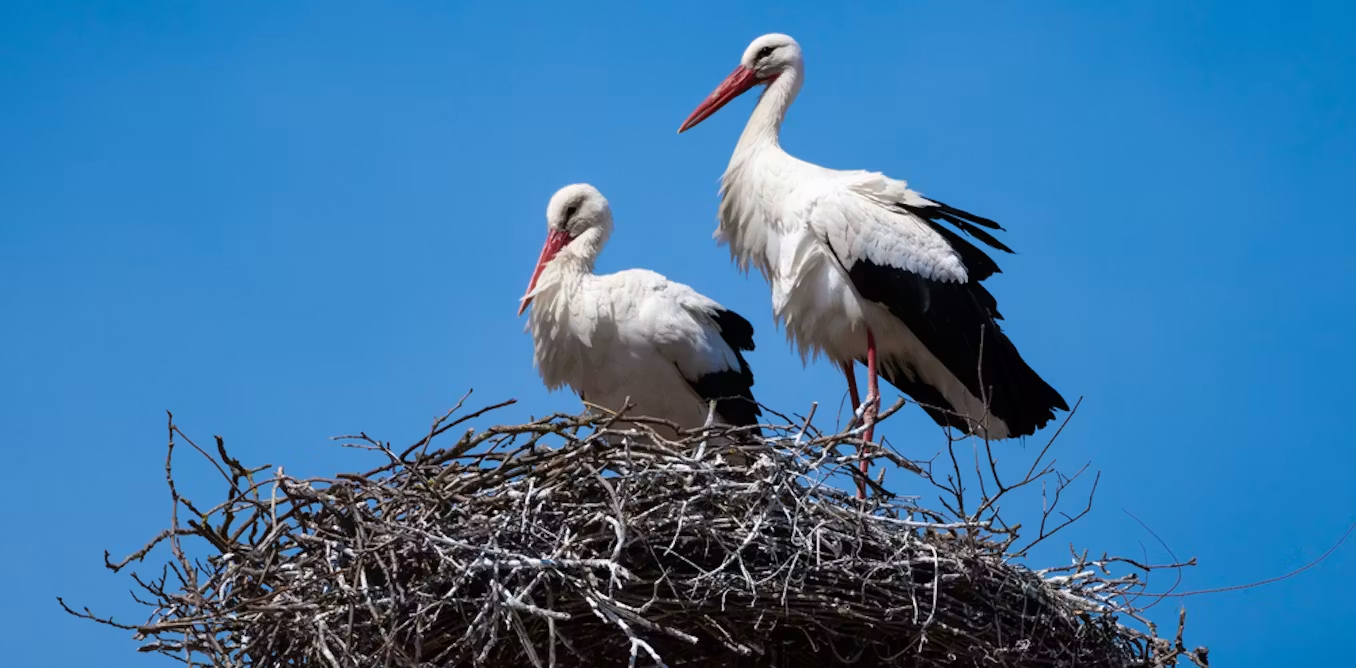
White storks (Ciconia ciconia) are a majestic bird with a two-metre wingspan and an enormous circular nest.

The recent release of these stunning birds at multiple sites in England, with more releases planned and a public consultation under way has kicked off a debate about whether non-native birds should be part of rewilding projects.

The government advising body Natural England says it does not consider white storks to be native birds. But some experts disagree and say it is a native species and was hunted into extinction in the 1400s.

What is a native species?

In the UK, native species are those which have been present throughout the last 12,000 years. This includes migratory species which breed in or visit the UK. It also includes species which have been eradicated by humans but reintroduced.

Advertisement

In England, a licence is needed to introduce any species which is not ordinarily resident, or a regular visitor, to England. This is partly because these species could become invasive, a term used when a species cause substantial environmental or socioeconomic harm.

But even when species are not native, they can have value for rewilding projects.
The white stork’s biggest contribution to rewilding is likely to be their ability to inspire the public interest in nature. Storks in Europe are so popular that there are special stork villages which are managed for tourism, and people can see these iconic species up close.

White storks were reintroduced in Sussex as part of a rewilding project and are now breeding.

White storks are definitely regular visitors to England, and rare but present in the subfossil record (the last 4000 years). This status as a regular visitor means they fall somewhere between a native and non-native species – they are not considered a priority for introduction, but no license is required for their release.

Advertisement

Introduced non-native species can cause problems. A good example is Japanese knotweed (Reynoutria japonica), brought to the UK by the Victorians as an ornamental plant. It rapidly spreads and causes damage to the structure of buildings and essential services such as water and drainage pipes. Controlling it now costs the UK £247 million each year.

Introduced species are also a major conservation challenge, such as the damage to seabird populations by invasive cats, rats and other animals feeding on their eggs and chicks. If a rewilding project introduces a non-native species, it could become invasive and cause serious disruption to native species already in the landscape.

But evaluating the impact of adding new species to the landscape is important even when a species is considered native. The Scottish beaver trial was conducted to evaluate the impact of introducing beavers (Castor fiber) from Norway in 2008. Eighteen years later, beavers are a key part of many rewilding projects, from London to large estates in Scotland.

What can white storks add?

White storks are charismatic species which are viewed positively by most people, and this could increase engagement with nature. In Poland, tourists travel hundreds of kilometers to visit white storks, making them valuable for rewilding projects which use tourism to raise funds.

Advertisement

Non-native species are also introduced as “ecological analogues” which means they provide the same ecological function as extinct species. The steppe bison (Bison priscus) which roamed the UK in the Pleistocene period were mixed feeders, which means they ate a combination of grasses, leaves and the woody parts of plants. By feeding on a variety of plants and plant parts, mixed feeders like bison can encourage a patchwork of habitats in a landscape. The native steppe bison is extinct in the UK, but projects like Kent Wildlife Trust’s Wilder Blean project have introduced the related, but non-native, European bison (Bison bonasus) to provide these functions.

Adapting to warming climate

Better adaptation to future climates is another reason to include non-native species in rewilding projects. As the UK’s climate changes, species are moving from places where they are considered native to new areas which suit them better. The southern small white butterfly (Pieris mannii) has spread northwards in Europe and was first seen in the UK in 2025. This small butterfly has successfully made the journey over the ocean, but other species may require human help to move to new areas with more suitable climates.

As an island nation with many locally extinct species, the introduction of species has formed a key part of UK conservation, including rewilding projects. It does matter whether a species is native or not. Although both could benefit rewilding projects, non-native species carry greater risks to local environments and have higher regulatory requirements.

The white stork’s status as a regular visitor could allow them to sidestep the regulatory requirements for non-native species, though impact on the environment should also be considered.

Advertisement

But as their nests can attract birds such as swallows and martins, introducing white storks could have broader benefits to the landscape.


Source link

Advertisement
Continue Reading
Click to comment

You must be logged in to post a comment Login

Leave a Reply

NewsBeat

David Hockney, the artist who forced Britain to make room for colour, joy and queerness

Published

on

David Hockney, the artist who forced Britain to make room for colour, joy and queerness

Born in Bradford and shaped by northern art-school discipline, David Hockney brought a working-class, almost punk refusal to British art: do the work, trust the eye, do not ask for approval. Hockney made success look effortless: all colour, good humour, great glasses, cigarettes and smoky charm. But for a young gay artist from a northern mill town, nothing about that journey was effortless.

Hockney knew what it was to be judged before he was properly seen. In Britain, class prejudice travels through accent. His Bradford voice carried history, poetry and bite, but at the Royal College of Art in London it was mocked. Looking at the drawings of his fellow students who laughed, he simply outdrew them.

Bradford educated Hockney. The north was not a cultural desert waiting to be rescued by London, but a place of serious art schools, teachers, makers and visual traditions. What it lacked was not talent or discipline, but the automatic authority granted to those formed by privilege.

Hockney refused the lot assigned to him. He opened gates for those who followed, showing that art college, success and cultural authority were not reserved for those born inside old networks of taste and confidence. His answer to class prejudice, regional snobbery, homophobia and aesthetic gatekeeping was not to become deferential. He clocked into a lifelong art-making shift, working harder, looking harder and making more until the cultural gatekeepers had no choice but to rearrange around him.

Advertisement

He made works of pleasure, colour, friendship and innovation. He portrayed gay life, not through struggle – but through domesticity, tenderness and desire, a brave and piercingly clever approach before the partial decriminalisation of sex between men in England and Wales in 1967.

Like Boy George in pop, Hockney made difference visible through colour, humour and style, in a form large audiences could enjoy before they necessarily understood its politics. Against the grey weight of inherited prejudice, he offered something bright, accessible and quietly radical. By showing ordinary happiness, he helped make the prejudice against it look ridiculous, making acceptance feel overdue.

Hockney’s late career also challenged ageism and disablism. Using a wheelchair in later life, he refused the assumption that older or disabled bodies mean diminished cultural agency. Like the infirm Henri Matisse making cut-outs in his last decade, Hockney made old age active, inventive and publicly consequential.

Advertisement
Portrait of an Artist (Pool with Two Figures) by David Hockney (1972)
Christie’s / Wikipedia

The art of seeing

Beyond swimming pools and California light, Hockney insisted that art is an experiment in seeing. He never treated looking as passive. He embraced Polaroid, photo-collage, iPad, projection and immersive display. He lived in the now by continually adopting whatever helped him see.

His work with physicist Charles Falco on the historical use of lenses, mirrors and optical devices in painting was not a sideline, but part of a lifelong enquiry into the technologies of vision.

In Pearblossom Hwy (1986), Hockney used hundreds of photographic prints to fracture space and test perception, while refusing to accept the camera as the final authority. A mountain could be made from all the photographs that have failed to capture the majesty of a bush, an oak tree, a rolling hill or a mountain itself. For Hockney, seeing was not the same as recording: the camera could seize an instant, but landscape required time, attention, weather and the bodily experience of being there.

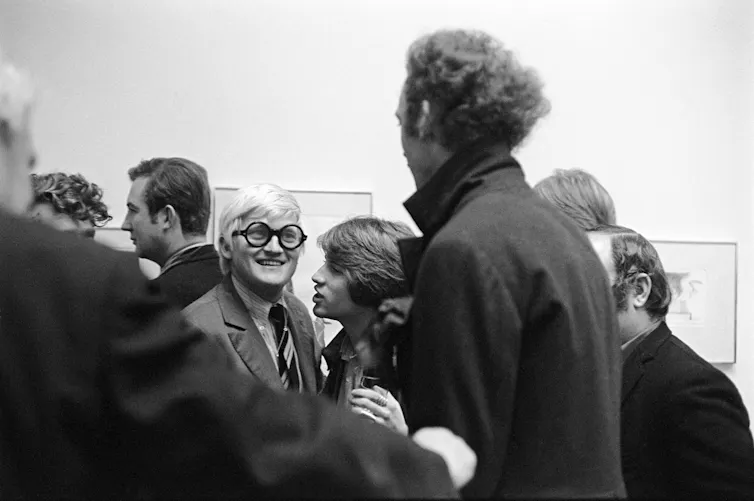
A group of people at an art gallery with David Hockney in the middle, smiling.
Hockney at the age of 32 in 1969.
Homer Sykes / Alamy

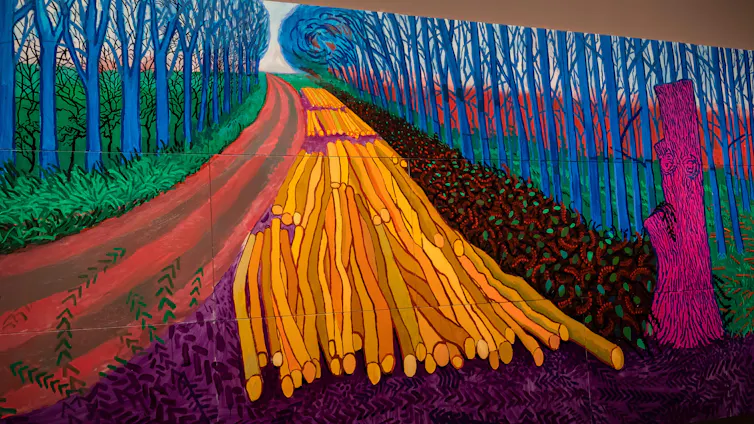
His later work made that fight to catch time explicit. Again and again, Hockney asked how a flat image could hold colour, light and the passing seasons. This reached monumental form in A Year in Normandie (2020), a printed iPad frieze more than 90 metres long.

Here, time is made spatial. We walk its length, moving through winter, spring, summer and autumn as if moving through life itself. The work captures time, but also lets it slip away, teaching human frailty and humility through the simplest things: a road, a tree, a field, a burst of hawthorn blossom.

Advertisement

Seen alongside another northern artist, LS Lowry, Hockney’s landscapes gain further force. Lowry’s industrial worlds, social, bodily, smoky and crowded, are now – in much of the UK – pictorial memory. Hockney’s roads, trees, fields and blossoms may one day carry a similar charge. They record not only place, but a fragile idea of land, season and belonging.

A painting of a rural scene showing a path through some trees in vivid pinks, blues and greens.
Hockney’s Felled Trees on Wolgate (2008)
Bosiljka Zutich / Alamy

In an environmental age, looking carefully at blossom by the roadside, at trees, seasons and shifting light, is not an escape from politics. It is a radical act and a condition of care. In a country where 44% of adults now spend three hours or less outdoors each week, Hockney’s insistence on slow looking feels less like nostalgia than a warning.

Hockney did not try to escape the north or his background – instead he made the north impossible to ignore. Using the digital tools of now, he asked us to look slowly at local spaces in the round. His legacy is not only that he entered the art canon. It is that he made the canon warmer: more northern, more queer, more popular, more colourful, more technologically curious and more open to joy and pleasure.

Hockney made humour, friendship and pleasure into serious forms of exchange. At a time when some voices profit from division, and when environmental crisis and war press heavily on daily life, Hockney’s sign-off message, “love life”, feels more striking than ever.

Advertisement

Source link

Continue Reading

NewsBeat

Teacher guilty of sexual abuse and murder of baby who was treated as ‘plaything’

Published

on

Teacher guilty of sexual abuse and murder of baby who was treated as ‘plaything’

Varley of was found guilty of murder, two counts of assault by penetration, five counts of cruelty to a child, grievous bodily harm, sexual assault of a child, 13 counts of taking indecent photos or videos of a child, one of distributing an indecent photo of a child, to his co-accused, and one of making an indecent photo.

Source link

Continue Reading

NewsBeat

Hurricanes make all the right moves to get over hump and win Stanley Cup

Published

on

Hurricanes make all the right moves to get over hump and win Stanley Cup

The coach is the same. The system is the same. The core is the same.

That is nothing against Rod Brind’Amour, considered one of the best behind the bench in the NHL, or Jordan Staal, Jaccob Slavin, Sebastian Aho and Seth Jarvis, who have been the centerpiece of the Carolina Hurricanes making the playoffs year after year.

But the difference this year came from all the new talent general manager Eric Tulsky added over the past 17 months to get over the hump. It added up to the franchise winning the Stanley Cup for the second time and first since 2006.

Tulsky took a big swing by acquiring elite winger Mikko Rantanen from Colorado in January 2025 and also got veteran Taylor Hall from Chicago as part of the three-team blockbuster. When Rantanen didn’t want to be part of Carolina’s long-term future, Tulsky traded him to Dallas and received center Logan Stankoven and two first-round picks, one of which became part of getting defenseman K’Andre Miller on July 1.

Advertisement

Two days later, the Hurricanes won the bidding competition to sign top free agent Nikolaj Ehlers, the speedy winger who gave them just what they needed after seven consecutive postseason appearances without a trip to the final. Falling one goal short so many times in key situations, Ehlers, Stankoven, Hall and Miller put an end to the rite of spring of wondering where that would come from.

All of them fit in with Brind’Amour, who requires his players to commit to a demanding brand of hockey that isn’t for everyone.

“We’ve really focused on finding people who fit the way we want to play,” Tulsky said. “We ask players to play a very distinctive style, and our scouts have done a great job finding players who can come in and look their best playing the way Rod needs them to play.”

The Hurricanes’ run started with a miss

Trading for Rantanen was a huge risk. It involved sending talented forwards Martin Necas and Jack Drury to the Avalanche in a gamble that the big Finnish winger was the missing piece.

Advertisement

Rantanen had six points in 13 games with Carolina, and it became clear it was not a good fit. Discussions with Toronto involving Mitch Marner did not lead to him waiving his no-trade clause, and he instead wound up in Las Vegas and was key to the Golden Knights’ run to the final.

Rather than letting the situation play out with the likelihood he would depart in free agency, Tulsky flipped Rantanen to Dallas for Stankoven and a pair of first-round picks. One went to the New York Rangers for Miller, whose presence shored up depth on the blue line.

“We never want to get worried about the what ifs,” Tulsky said. “That being said, sometimes it doesn’t go the way you hoped, and you’ve got to be ready to figure out how you’re going to move forward from there.”

Stankoven led the team with 11 goals during this dominant run of 16 victories in 19 games.

Advertisement

Hurricanes make all the right moves after

It was the same old story every time. The Hurricanes weren’t just a great regular-season team that failed in the playoffs. They won at least one series in six of Brind’Amour’s first seven years as coach, including three trips to the East final.

Tulsky, a former scientist who got into the sport by blogging about it as a fan and was promoted to succeed Don Waddell two years ago, didn’t blow it up. But he didn’t stand pat, either.

The changes — including claiming goaltender Brandon Bussi off waivers from back-to-back champion Florida just before opening night in October — worked out swimmingly. Playing in the NHL for the first time at 27, Bussi won 31 of 39 starts during the season, then stepped in during the final in place of Frederik Andersen and backstopped them the rest of the way, including a shutout in the Game 6 clincher Sunday night.

“We have the confidence in Bus,” Brind’Amour said. “He makes a ton of big saves. Even when there’s breakdowns, we trust him back there, gives us tons of confidence to play our game and just be aggressive all night.”

Advertisement

Aggressive is the Golden Knights’ way, going after every big-name free agent or trade candidate, and it led to the Stanley Cup in 2023 and three runs to the final in their first nine years of existence. But Carolina has also become that team.

“Fundamentally, we want to be aggressive,” Tulsky said. “Rod has the team playing very aggressive on the ice. We want to be aggressive off the ice, too. And when you have a chance to add a really high-end player, we never want to miss out on it.”

Carolina did not miss on Ehlers, who turned out to be key and scored the empty-netter that sealed the title. Getting him, Stankoven, Hall, Miller and others also made longtime holdovers like Staal and grinding forward Jordan Martinook believe they could get the job done.

“When your team is trying to get better all the time, it’s something that you can get behind,” Martinook said. “Obviously, we took a run of Mikko, it didn’t work out, but look what we got from it. Stanks and Key, those are two of the pieces that we got from it. Hallsy was part of that, too. Those are three incredibly important pieces to our team. It just shows that they’re ready to take chances all the time.”

Advertisement

___

AP Sports Writer Aaron Beard in Raleigh, North Carolina, contributed to this report.

___

AP NHL: https://apnews.com/hub/stanley-cup and https://apnews.com/hub/nhl

Advertisement

Source link

Advertisement
Continue Reading

NewsBeat

Cesar Peixoto: Portuguese named as new Wolverhampton Wanderers boss

Published

on

'Breaking' graphic

Wolverhampton Wanderers have appointed Cesar Peixoto as their new head coach on a two-year deal.

The 46-year-old arrives from Portuguese top-flight club Gil Vicente and replaces Rob Edwards who was sacked last week.

Peixoto takes charge of a Wolves side who will play in the Championship for the first time since 2018 after they finished bottom of the Premier League last season.

It will be Peixoto’s first job outside of Portugal having led Gil Vicente to a sixth-placed finish in the Primeira Liga in 2025-26.

Advertisement

His last job was the first time in his seven years as a manager that he completed an entire season in charge at one club.

“Throughout our discussions with him, it became clear very quickly that he possesses many of the qualities we believe are important for the future of this football club,” Wolves executive chairman Nathan Shi said.

“We wanted clear identity, strong leadership qualities and a real hunger to succeed. Cesar demonstrated all of those characteristics, but what impressed me most was his mentality, his work ethic and his willingness to embrace the challenge in front of him.

“He is young, energetic and ambitious, but he is also thoughtful, accountable and willing to challenge himself and those around him in pursuit of improvement.

Advertisement

“We believe he will be an excellent fit for the culture and vision we are building at Wolves.”

Source link

Continue Reading

NewsBeat

Donald Trump celebrates 80th birthday with UFC show on White House lawn

Published

on

Donald Trump celebrates 80th birthday with UFC show on White House lawn

WASHINGTON (AP) — President Donald Trump emerged from the Oval Office first, then fighters from around the globe followed straight into the fight cage, in part for the president’s 80th birthday celebration and to bring a sport long on the fringe of mainstream acceptance into a main event on the White House South Lawn.

For a president who revels in winners, Trump had to enjoy crowning two champions on a big fight night staged closer to the Rose Garden than Madison Square Garden in the co-main event of UFC Freedom 250.

President Donald Trump turned 80 on Sunday and celebrated with a unique event: cage fighting on the White House lawn.

Advertisement

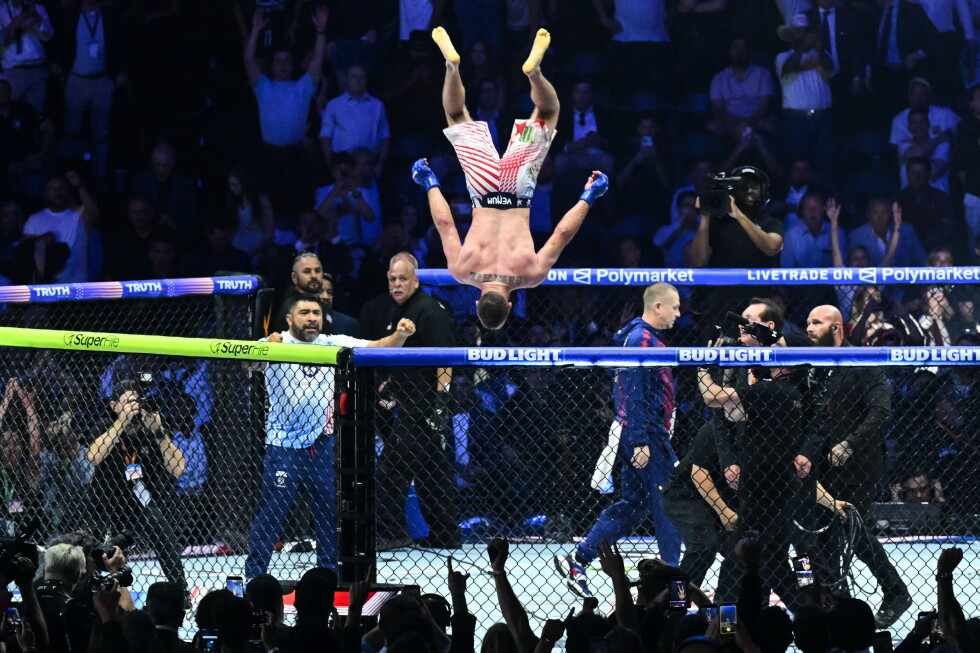
American lightweight Justin Gaethje capped his unification championship victory in the main event over Ilia Topuria with a backflip off the top of the cage. He crouched near Trump for a celebratory chat and the betting underdog draped the American flag over one shoulder — and the 155-pound title belt over another. Trump later stepped into the cage to congratulate Gaethje.

“Hey, I’m from America, 250 years ago we were way more than 6-1 underdogs,” Gaethje said. “I know that was absolutely legendary because I cannot even believe it.”

Advertisement

Topuria and Gaethje made their walkouts from the Oval Office as fireworks exploded overhead during Bruce Buffer’s introductions. Gaethje — who appeared to skim the copy of the Declaration of Independence on his way out — mustered some scattered “USA!” chants against the Spanish-Georgian Topuria, though not even the main event could stop the trend of mostly quiet fights.

It took the gory sight of a bloodied Topuria — his back to Trump in a white “USA” hat as he peered through the wire-mesh cage — nearly having the fight waved off to get a “let them fight!” chant going. The fight continued, and the 37-year-old Gaethje won eventually via corner stoppage in the fourth round.

“Hard work, baby,” Gaethje said. “I am made for these moments. This sport is made for me.”

Earlier, Ciryl Gane hammered Alex Pereira with a series of elbows and fists to the head and won via TKO in 1:27 of the second round to claim the interim heavyweight belt for a second time and set up a rematch with heavyweight champ Tom Aspinall.

Advertisement

Like the bulk of the fighters who had their hands raised in victory, Gane thanked Trump.

The White House was a most improbable all-American setting for a fight promotion that long ago shed the “human cockfighting” tag and decades later became entwined with the emboldened right-wing “ manosphere ” that soaks up UFC fights and threw its support behind Trump in two elections.

Trump and UFC boss Dana White, the tempestuous tag-team that rallied the fight company to the nation’s capital, walked from the Oval Office to the Blue Room Balcony to chants of “USA! USA!” to kick off the fight card jacked up by a dose of high-octane patriotism on a blustery night for cage fighting.

This was no Easter egg roll.

UFC ramped up the patriotism for White House debut

The Marine Band jazzed up the festivities and played fighter entrance music in front of the White House and Zac Brown sang the national anthem — never performed before normal UFC fight cards because of the mix of nationalities fighting inside the Octagon. The Navy’s Blue Angels and Air Force Thunderbirds zipped overhead as part of a flyover to celebrate Trump’s birthday and the 250th anniversary of the Declaration of Independence’s signing.

Advertisement

The 4,000-plus fans — Meta CEO Mark Zuckerberg and Paramount Skydance CEO David Ellison among them — on the South Lawn who sat under the claw, the flying saucer-like, open-air structure that housed the cage, mostly sat on their hands until the fighters used theirs to deliver punishing blows and a true fighting spirit that got everyone on their feet.

Bo Nickal delivered the red, white and boom when the three-time NCAA Division I wrestling champion at Penn State earned the TKO win over middleweight Kyle Daukaus and immediately bolted the Octagon for a cage-side chat with Trump. Nickal met Trump in 2019 during a ceremony at the White House for collegiate national champions.

The first blight of the night for Trump came when American heavyweight Derrick Lewis lost his fight after he got a personal invitation from the president. Trump proclaimed himself a fan of Lewis and his unconventional celebrations and asked White to add him to the card. Josh Hokit instead improved to 10-0 when he flattened Lewis by TKO.

Sean O’Malley celebrated his walk-off KO win with a salute, and Mauricio Ruffy and Diego Lopes won their fights earlier in the night.

“That was sexy,” O’Malley said to cheers. “I felt the energy in here. I truly felt the energy in here.”

Advertisement

UFC says it’s only running one card at the White House

More than $60 million and tens of thousands of hours of labor were poured into building the arena, according to a court filing from the National Park Service, which oversees the South Lawn, and the looming threat of rain that threw White into a tizzy each time a miserable forecast was raised never materialized over the early portions of the card.

The constant headaches over the weather, the site and the cost — UFC said it was footing the $60 million tab — made the Freedom 250 a one-time show.

“It will never happen again,” White said. “I can’t afford it. I’ll never do the Sphere again and we’ll never do this again.”

White said he and Trump discussed the possibility of holding a “fight for the troops card” at an unspecified site at some point next season.

Advertisement

“He wanted it this year,” White said. “I said, ‘Sir, I need a year to recover financially for the White House fight, so give me a year.’”

Advertisement

Fight night came hours after the United States and Iran reached an agreement to end the war and open the Strait of Hormuz, offering relief to the global economy more than three months after the war began.

The rare UFC outdoors event marked the pinnacle of the relationship between White and Trump that has yielded personal, political and financial dividends for both parties. White’s first card as UFC president came in 2001 at an event held at Trump Taj Mahal.

Trump attended fights throughout the decades from New York to New Jersey to Florida while White introduced Trump at two Republican National Conventions.

Trump got a home game for this one, making the short walk from the Oval Office to the Octagon, much like the fighters who made the walk down West Wing halls covered with presidential portraits and were flanked by first responders and medal of honor recipients, among other individuals who served.

Advertisement

Strickland causes trouble at the fan zone at the Ellipse

Thousands more outside the White House lawn watched the fights on big screens from the nearby Ellipse, though not everyone was able to get tickets.

Even one of UFC’s champions.

UFC middleweight champion Sean Strickland was escorted out of the Ellipse event by a group of police officers.

U.S. Park Police said in a statement that Strickland’s presence drew enough attention from attendees that it resulted in disorder. He wasn’t cited or arrested, they said. Instead, he was taken to his hotel and told not to come back to the venue.

Advertisement

___

AP MMA: https://apnews.com/hub/mixed-martial-arts

Advertisement

Source link

Continue Reading

NewsBeat

Ebola cases surge in Congo even as surveillance improves

Published

on

Ebola cases surge in Congo even as surveillance improves

KINSHASA, Congo (AP) — Congolese authorities have reported one of the highest daily increases in Ebola cases in a month-old outbreak as the virus spreads quickly in a remote region whose shifting population challenges efforts to find those exposed.

Congo’s Ministry of Health on Sunday said 72 new cases were reported in a 24-hour period, bringing the total number of confirmed cases to 782. Those include 181 confirmed deaths, with 29 new ones.

“One month on, the Ebola disease outbreak is outpacing the response effort,” Kate White, emergency medical coordinator for Doctors Without Borders in Congo, said Monday. “No one knows the true scale or exactly where the disease is spreading in Congo.”

The medical charity said treatment centers in the epicenter of the outbreak are overwhelmed, many patients arrive in advanced stages of illness and most were not identified as contacts of infected people before seeking care.

Advertisement

Congo’s health ministry said that while the numbers show the outbreak is spreading rapidly, it also reflects more active surveillance. “Community members are reporting suspected cases, and response teams are investigating them,” it said on X.

The number of cases in what could become history’s worst Ebola outbreak is believed to be higher because the outbreak was confirmed on May 15, weeks after it is suspected to have begun.

The outbreak is caused by the rare Bundibugyo virus, which was not tested for in the early days. The more common Zaire virus, which now has a vaccine, was responsible for most of Congo’s past 16 outbreaks of the disease.

The outbreak is concentrated in Congo’s eastern province of Ituri, which accounts for more than 90% of the cases. Cases have also been recorded in the North Kivu and South Kivu provinces and have spread across the border to Uganda.

Advertisement

Congo said the contact tracing coverage rate is 56%, a sharp decrease from last week, as authorities hurry to find people who may have been exposed.

There was no immediate explanation for the drop. Congolese health authorities previously said contact tracing has been hampered by community resistance in some areas and by the rapid expansion of the outbreak into new health zones, increasing the workload for surveillance teams.

Nearly a million people have been displaced by years of conflict in Ituri, according to the U.N. humanitarian office, making contact tracing difficult as people flee attacks or move frequently in the vast province with dense forests, poor roads and remote villages that can take days to reach.

Tracing is also difficult among the thousands of miners who regularly move among remote sites in the mineral-rich region.

The health ministry said Sunday 40 people have recovered since the start of the outbreak, and the current fatality rate of the outbreak is 23%.

Life goes on, including nightlife, as the population adjusts.

Advertisement

The World Health Organization said Sunday it is intensifying testing and contact tracing and treatment. Tons of supplies from the WHO have arrived in Congo.

And Africa’s top health body said it is deploying technical expertise and supporting laboratory systems, case finding and community engagement efforts to accelerate the response.

“We remain committed to supporting affected countries until transmission is stopped. We call on partners and donors to urgently mobilize resources to strengthen the response and save lives,” said the head of the Africa Centers for Disease Control and Prevention, Jean Kaseya.

___

Advertisement

Banchereau reported from Dakar, Senegal.

Source link

Advertisement
Continue Reading

NewsBeat

Belfast window cleaner among ‘racist vigilantes’ who attacked home

Published

on

Belfast Live

During interviews, Ashwood stressed that he wanted to state for the record that he is not a racist.

Advertisement

Racist vigilantes tore guttering from a house in south Belfast and tried to smash their way inside, a court heard today.

Up to five men attacked the property on Donegall Avenue, smashing front windows and injuring two victims who struggled to keep them out.

Gary Ashwood, 44, allegedly instigated the bid to break into the house in the early hours of Sunday morning, police said.

The window cleaner, of nearby Tavanagh Street in the city, was remanded in custody on charges of aggravated burglary, two counts of common assault, and criminal damage to a car parked outside.

Advertisement

Belfast Magistrates’ Court heard the attack was launched while one of the victims was at home with friends watching the World Cup.

As some of them left the property, a group of around five men began shouting aggressively at them and started to bang the windows to try to gain entry.

Two of those who had been in the house sustained cuts to their hand and elbow in the struggle before they managed to close the door.

“The males then armed themselves with pieces of plastic guttering which they tore from the wall of the property,” a PSNI officer said.

Advertisement

“They smashed the front window of the property and glass panels on the front door before pushing their way into the hallway.”

When they were shut out again, the group damaged the wing mirror of a Volkswagen Touran belonging to one of the occupants.

“The victims were able to close the door, and the suspects went on to smash the wing mirror of one of the injured parties’ car, which was parked outside the property, a Volkswagen Turan.

Ashwood was detained in a nearby street with gash to his hand and covered in blood, the court heard.

Advertisement

He was angry and rambling, and at one point allegedly stated without prompting: “Foreign b******s”.

Police searched his home, seizing a blood-stained t-shirt and arresting another topless man.

During interviews, Ashwood stressed that he wanted to state for the record that he is not a racist.

But opposing bail, the officer cited ongoing tensions in Belfast and concerns that vulnerable victims could be targeted again.

Advertisement

“The suspect believed to be the defendant was described as the main instigator,” she added.

“This was an unprovoked attack on an ethnic minority in their own home.”

Prosecutors confirmed the charges have been classed as aggravated by racial hostility.

Defence counsel Michael Boyd told the court Ashwood strongly denies any involvement in the attack.

Advertisement

The barrister said his client had been out drinking for most of the day, lives in the area where he was stopped and provided an explanation that he cut his hand falling on glass.

“He does not recall using that expression in relation to foreigners…in sobriety he told police that he is not a racist,” Mr Boyd submitted.

Refusing bail and remanding Ashwood in custody until next month, District Judge Steven Keown ruled that he poses an unmanageable risk.

Mr Keown said: “The police allegations outline that this man was part of a group of racist vigilantes attacking homes.”

Advertisement

For all the latest news, visit the Belfast Live homepage here and sign up to our daily newsletter .

Source link

Continue Reading

NewsBeat

Marcus Rashford’s stance on Barcelona transfer clause expiring after Hansi Flick intervention

Published

on

Manchester Evening News

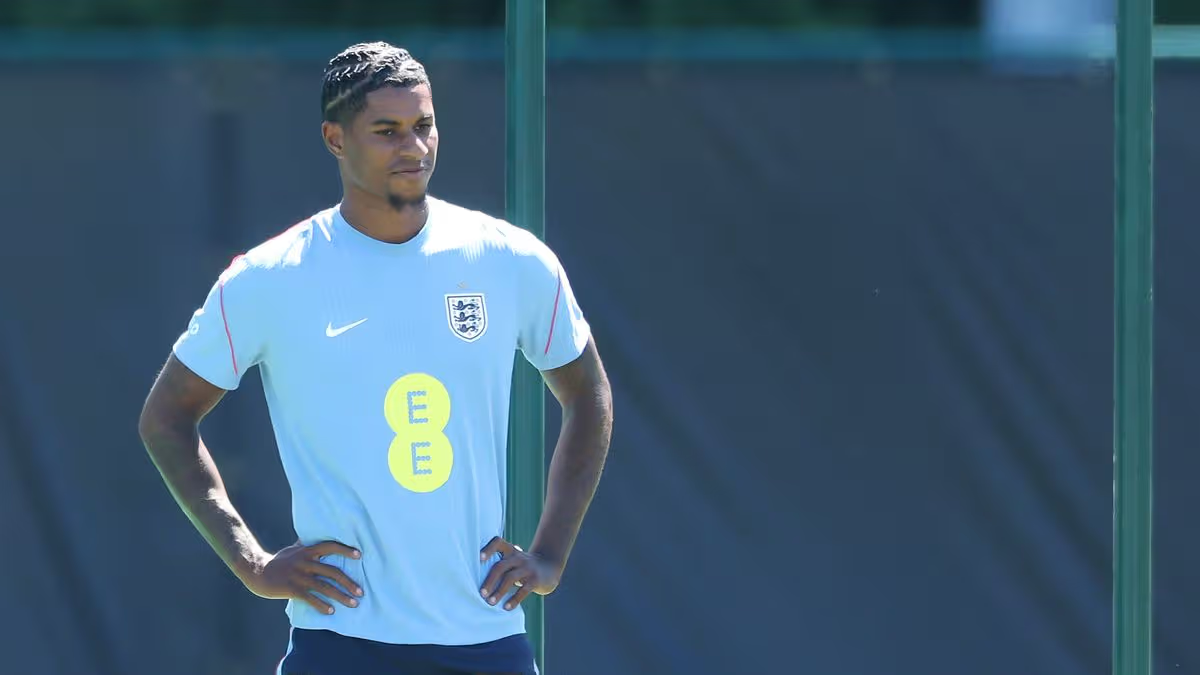
Marcus Rashford’s stance on his future at Manchester United has become clearer following his loan spell at Barcelona

Marcus Rashford is reportedly keen to remain a Barcelona player despite a permanent move from Manchester United seemingly no longer being on the cards. Rashford spent last season on loan with the La Liga giants, having previously expressed a desire to leave Old Trafford.

Advertisement

The England international enjoyed an impressive campaign in Spain, scoring 14 goals and providing 14 assists across his loan spell at the Camp Nou.

Such form has led to the 28-year-old being included in the England squad for this summer’s World Cup, but Rashford now faces an uncertain future ahead of the summer transfer window.

Get MEN Premium now for just £1 HERE – or get involved in our United WhatsApp group by clicking HERE. You can also join our United Facebook page by clicking HERE and don’t miss out on our brilliant selection of newsletters HERE.

Barcelona had the option of signing Rashford on a permanent deal for £26million, but the La Liga giants have decided against activating that clause, leaving the forward’s future up in the air.

Advertisement

There have been suggestions that Barcelona could still try and sign Rashford on another loan, and now there has been a fresh update about the forward’s future.

Spanish publication Marca has claimed that Rashford is fully committed to returning to Barcelona for next season, despite the La Liga club choosing not to sign him on a permanent basis.

The report claims that Rashford is still determined to return to the Camp Nou ahead of next season, and is said to have received confidence from manager Hansi Flick that another move could be arranged.

FOLLOW OUR MAN UNITED FB PAGE! Latest news and analysis via the MEN’s Manchester United Facebook page

Advertisement

It has been reported that Rashford believes he can still complete a fresh move to Barcelona, whether that be on another loan or with a new transfer fee agreed with United.

Rashford’s chances of moving to Barcelona were handed a blow after the Spanish club signed Anthony Gordon from Newcastle for around £69million.

Separate reports over the weekend claimed that Rashford returning to United’s first-team squad next season is still an option, with suggestions the forward has explored the possibility with some of the players.

Get the latest World Cup news straight to your inbox by signing up to our Make Football Great Again newsletter now!

Advertisement

United boss Michael Carrick is also reported to have been in regular contact with Rashford, with the possibility of a return to the squad at Old Trafford not being ruled out.

Carrick has previously spoken about the prospect of Rashford returning to the United first-team squad, where the United manager did not dismiss the idea.

“I just think there’s decisions to be made in time on certain things and obviously Marcus is in that situation,” Carrick said back in April.

“But at this point in time, nothing’s been decided. And it will be, because it has to be at a certain point. But at this stage, there’s nothing to say.”

Advertisement

Upgrade your World Cup TV setup with the Sky Glass ‘designed for football’

This article contains affiliate links, we will receive a commission on any sales we generate from it. Learn more
Content Image

from £4.50

Sky

Get the deal here

Sky is knocking 20% off its entire range of Glass TVs to mark the start of the 2026 FIFA World Cup. Until June 17, shoppers can upgrade to the Sky smart TV that’s ‘designed for football’ from £4.50 per month when taken alongside a Sky TV and Netflix package.

Source link

Advertisement
Continue Reading

NewsBeat

The Best Exercises For Women’s Longevity, By Age

Published

on

The Best Exercises For Women's Longevity, By Age

Exercise is linked to a longer life. Strength training, for instance, is associated with up to four years greater lifespan, while one paper found that a combination of weight lifting and aerobic exercise resulted in the best longevity gains.

Speaking to HuffPost UK, Dr Harpal Bains, a longevity doctor and medical director at Harpal Clinic, seemed to agree with those findings.

“Exercise is one of the most powerful investments women can make in their future health,” she said.

“The key is consistency: moving regularly, avoiding long periods of inactivity and making sure exercise supports the four pillars of healthy ageing: cardiovascular fitness, strength, flexibility and stability.”

Advertisement

She suggested that, for longevity, women shouldn’t rely on cardio alone.

“Strength training is one of the most important things women can do because muscle supports metabolism, bone density, insulin sensitivity and long-term independence,” added the expert.

We asked Dr Bains to share the best exercise for women to do, by age.

Best exercise for women’s longevity, by age

Advertisement

1) 20-30

Now is the time to build a strong foundation of muscle, the doctor told us.

She advised: “Build your reserve. Prioritise strength training, brisk cardio, running, cycling, swimming, Pilates or yoga and balance-based movements. This is when you build muscle and bone density that protects you later.”

One study found that people whose cardiovascular health dipped between their 20s and 40s were 10 times as likely to experience heart health issues in their 60s.

Advertisement

2) 40-50

“This is where exercise becomes non-negotiable,” Dr Bains advised. “Strength training is key as oestrogen shifts can accelerate muscle and bone loss. Add brisk walking, intervals, cycling or swimming for heart and metabolic health, plus mobility and balance work to maintain joint range and coordination.”

Some experts think that downhill walking could improve menopausal women’s bones, which are more likely than usual to deteriorate during this life stage.

Strength training during the menopause, meanwhile, has been linked to better bone density and improved hormonal and metabolic levels.

Advertisement

3) 60+

“Focus on independence,” advised the doctor. “Walking, swimming, cycling, light weights, resistance bands, Tai Chi, yoga and balance drills are excellent.

“The goal is to preserve muscle, balance and confidence, which lowers frailty and fall risk.”

Balance training – including Tai Chi, walking backwards, dancing, and single-leg training – has been described as a “neglected” way to help your balance and mobility as you age.

Advertisement

Source link

Continue Reading

NewsBeat

Woman’s friend in England rang police after seeing alleged sexual assault on video call, court hears

Published

on

Belfast Live

Jonathan Meehan from West Belfast appeared in court charged with rape and sexual assault following the incident

A woman in England called the police after claiming she had seen her friend being sexually assaulted during a video call, a court heard today.

Jonathan Meehan, 40, from West Belfast appeared in Belfast Magistrates Court on Monday, June 15, charged with rape, sexual assault and false imprisonment following an incident that took place on Sunday, June 14.

The court heard Meehan did not know the 24-year-old alleged victim prior to messaging her on social media on June 13. Following an argument with her boyfriend, she had gone to Meehan’s home in the Suffolk Road area as he had said it was somewhere that “she could be safe”.

Advertisement

While at the property, they drank and took drugs together with Meehan allegedly attempting to kiss the victim at some point, but she kept turning her head away. It was alleged that he had put his hands around her throat.

The victim then tried to leave the property but was stopped by Meehan, who grabbed her by the neck before sexually assaulting and raping her.

The court heard the victim had taken videos during the incident that showed her repeatedly saying no and begging to leave the property. She also reportedly video called a friend who lived in England who witnessed Meehan sexually assaulting her and attempting to take her top off; her friend then called the police who contacted the PSNI.

Meehan’s representative told the court that Meehan had not instigated the alleged victim coming to his home and that she had wanted to do it. He said the two had taken alcohol and drugs together at the property and had consented to any activity.

Advertisement

Meehan’s bail was refused by the judge, who said his actions were “predatory” and “premeditated” and that he would be remanded in custody due to the “risk of harm to females and the wider public”. He is due to appear again on Tuesday, July 7.

For all the latest news, visit the Belfast Live homepage here and sign up to our daily newsletter here.

Source link

Advertisement
Continue Reading

Trending

Copyright © 2025