











Project approved despite claims move will ‘concrete Westhoughton over’

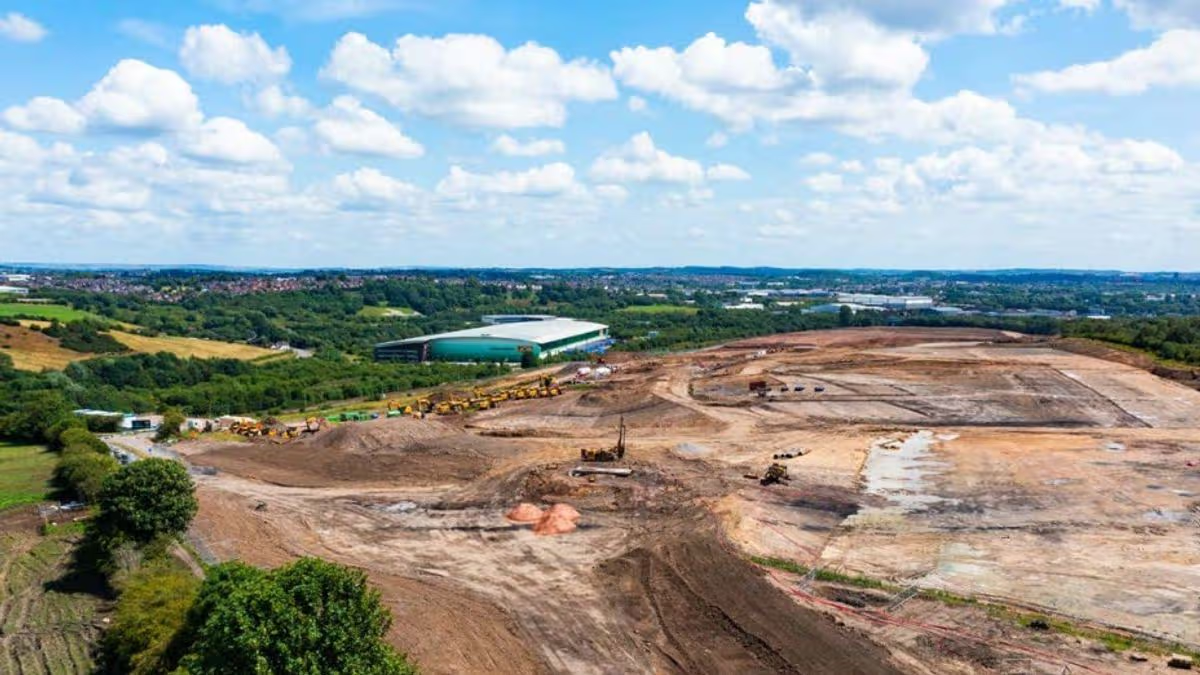
Bolton council has approved a masterplan to manage the development of the huge site (Image: Bolton council has approved a masterplan to manage the development of the huge site (Pic: Bolton council planning portal))
A vision to transform an area close to the M61 into one of the UK’s biggest employment destinations has been approved.
Bolton council’s West of Wingates masterplan sets out the criteria and design expectations for the massive development on the western edge of Westhoughton, which when completed will support up to 6,000 jobs.
The allocation provides for around 440,000 sqm of industrial and warehousing floorspace.
Phase 1 planning permission for the project, next to the A6 on Chorley Road, was granted January 2024 is under construction.
Bolton council’s cabinet meeting heard that some councillors had ‘significant concerns about the road network’ around the site.
Another campaigner claimed the move will ‘concrete Westhoughton over’ with ‘green fields dug up over the next few years and thousands of extra vehicles per day’.
The cabinet meeting heard form executive member Nadeem Ayub who described the masterplan as providing a framework for ‘a high quality exemplar employment site’.
He added: “The decision on whether the site should be developed has already been made under the Places for Everyone plan. It has been allocated for employment use.
“The principle of development , the amount of floorspace was done after a full public consultation.
“This document is not a decision on whether to develop it’s about how to develop well.
“The document sets out a vision for a high quality exemplar employment site and puts forward eight design principle that every future application will be tested against.
“It protects landscape features and green corridors.”
Horwich & Blackrod First councillor David Grant told the meeting that it was ‘good that we are creating jobs but the highway network always seems to take a backward step’.
He added: “Coming from a neighbouring ward I still have significant concerns about the road network, particularly the motorway roundabouts, the Beehive roundabout – all are at capacity, all are still being developed.
“There doesn’t seem to have been any offer of improvements to those junctions. One minor accident or issue and the entirety of Horwich comes to a standstill.
“By adding a significant employment zone on the outskirts of that area will only add to people coming down the A6 and increasing the issues.”

The West of Wingates site in Westhoughton (Image: The West of Wingates site in Westhoughton (Pic: Bolton Council planning portal))
Campaigner David Wilkinson was a councillor in Westhoughton for more than three decades before losing his seat last month.
Reacting to the decision he said: “The decision means over 400 acres of green fields will dug up over the next few years and thousands of extra vehicles per day.
“It’s one of the biggest industrial estates in the country.
“Phase II was included in Place for Everyone passed by Bolton Council in March 2024 it also included the development of Hulton Estate by Peel.
“It also removed green belt protection for hundreds of acres on the Phase II site at Wingates making easier to build.
“So the Labour, Tory and Independent councillors on Bolton council who voted for it, voted to concrete Westhoughton over.”
Bolton Council says that it worked with developers, the Harworth Group, and various public bodies as part of the consultation, as well as councillors and MPs in and around Westhoughton to produce the masterplan planning document.
An eight-week public consultation period ran from November 2025 to January 22 this year.
Planning application for the next phases of the West of Wingates development are expected to be submitted by Harworth Group in the coming months.





































You must be logged in to post a comment Login