

Politics
‘Grotesque and dystopian’ sentencing of Palestine Action activists expected on 12 June


A judge is expected to sentence four Palestine Action activists as ‘terrorists’ on 12 June, despite the activists not being convicted as such.
Judge Jeremy Johnson has indicated he may add a ‘terrorist connection’ to the charges of Charlotte Head, Samuel Corner, Leona (Ellie) Kamio and Fatema Rajwani under section 69 of the Sentencing Act 2020. This is despite the jury convicting the Palestine Action four of criminal damage in their retrial.
The conviction follows the four activists’ direct action to damage computers and drones, and spray red paint across the walls and floor of an Elbit Systems factory in Filton, near Bristol on 6 August 2024. Elbit Systems is Israel’s largest arms firm.
On 5 May, the jury convicted them without the knowledge that presiding judge Johnson could later impose a terror link during sentencing. This is due to a long list of reporting restrictions on the UK press, which the judge used to block coverage that he’d barred defendants from speaking about their motivations for joining Palestine Action.
Judge gags Palestine Action
The gagging orders that judge Johnson issued also prevented the defendants from providing information to the jury on the Israeli genocide in Gaza, and Elbit Systems’ role in it.
Johnson also banned media from reporting that the defendants could face terrorism sentences. The restrictions only lifted on 12 May, a week after the conviction.
Should the judge sentence the ‘Filton Four’, as they’re now known, as terrorists, they could serve far longer prison sentences. They could also face severe limitations on their lives upon release.
On 5 June, Defend Our Juries (DOJ) filed a complaint against Johnson with the Judicial Conduct Investigations Office. Over 3,000 people, including lawyers, law professors, retired police officers and magistrates, have signed the complaint. It alleges that decisions taken by the judge “amount to a pattern of exceptional, biased and discriminatory conduct”. Judge Johnson has since refused to recuse himself from the case.
The DOJ complaint also cites Johnson’s decision to treat the defendants’ desire to prevent Israel’s mass killings of Palestinian civilians as an aggravating, rather than mitigating, feature.
According to the judge, the intention to prevent the deaths of Palestinian civilians is what brings their actions within the scope of the Terrorism Act. He regards it as an attempt to “influence the Israeli government”.
Additionally, the DOJ complaint accuses Johnson of acting “vindictively” in remanding Head, Kamio and Rajwani to custody after their retrial. Three of the four have served eighteen months on remand, with Corner having been inside for 21 months.
Commenting, Campaign Against Arms Trade spokesperson Kirsten Bayes said:
For generations, at Greenham Common, Aldermaston, Fairford and others, the peace movement has taken action against military logistics and supply chains, involving breaching security and causing damage.
Keir Starmer himself was part of the legal team defending the ‘Fairford Five’, who carried out direct action at RAF Fairford during the Iraq war.
The ‘Filton Four’ case bears close parallels to the ‘Raytheon Nine’, where the defendants were acquitted of criminal damage at the Raytheon factory in Derry in 2006. In this case, the activists attempted to stop weaponry being sold to Israel for use against Lebanon. Their motivations for allegedly damaging office equipment were treated as a mitigating rather than an aggravating factor, as they should be.
In the Filton raids, it was abundantly clear that neither the Israeli nor UK government were the target, as they were and remain far beyond reasonable influence. Instead, Palestine Action activists sought to disrupt the means of production.
Just as one would deny a carving knife to a murderer, these four activists sought to prevent their nation from supplying murder weapons to the genocidal Israeli government. In doing so, the Filton Four upheld an ethical duty to prevent harm, and only did so when it was clear that all ordinary options had been exhausted.
Sentencing the Filton Four as ‘terrorists’ when they were not convicted as such, and when the evidence that might have supported that conclusion was not even allowed to be heard in court, would not only be unprecedented but grotesque and dystopian.
It will always be the case that those taking non-violent direct action to prevent complicity in genocide are acting in service of humanity.
It must be said that it is a dire reflection of the UK’s police and judiciary that the Filton Four will likely be sentenced as ‘terrorists’, weeks after the Met police refused to even investigate a single one of the 2,000+ UK nationals now known to have served in Israel’s genocidal army.
Featured image via Leon Neal / Getty Images
By The Canary

Politics
“Drill, baby, drill’ backfires: Trump’s illegal war may trigger permanent shift away from oil

US oil exports are surging as Saudi and Russian exports are disrupted by US-led wars and sanctions — but, there is a big ‘but’ here, the true and permanent winner of Trump’s Iran war might be China’s clean-tech industry.
Exports of Chinese-made solar cells hit 1.7bn units in March, a record high for a single month, the Financial Times reported.
Trump’s Iran war has propelled China’s cleantech industry https://t.co/cme8pBMfew
— Financial Times (@FT) June 11, 2026
Demand in March and April was led by Southeast Asia and Africa, highlighting “how swaths of the oil-dependent developing world have emerged as key markets for low-cost Chinese renewable energy technologies.”
Asia and Africa leading the change — from oil to renewable
Germany’s DW noted that renewable initiatives since US/Israel/UK war on Iran include but are not limited to:
- Indonesia — The president called the crisis a “wakeup call for electrification” and announced that motorcycles need to switch to electric.
- Vietnam — The country’s largest conglomerate, Vingroup, cancelled its largest LNG-fired power plant project and is replacing it with renewables.
- Philippines — Announced big solar pledges in response to the energy shock.
- South Korea — Announced big solar pledges as part of its energy security push.
All of this renewable infrastructure will largely be purchased from China, which manufactures roughly 90% of the world’s solar panels and dominates wind turbines, batteries, and EV supply chains, DW said.
DW interviewed Sam Geall, associate fellow at Chatham House, who emphasized the lower risk involved in renewable energy systems:
But I will say that there is a difference between fossil fuel energy imports and renewable energy systems in so far as you can’t actually blockade the sun. You can’t blockade the wind. Once you build out these systems, they do provide greater resilience from the kind of entanglements and volatility associated with imported fossil fuels.
In other words, unlike oil tankers or gas pipelines, sunlight and wind cannot be cut off by foreign powers, military conflict, or blocked shipping lanes.
This means good news for China’s electricity output and clean technology exports, which had already scaled record highs in 2025.
Scam or opportunity of the century
The Wall Street Journal said that despite Trump branding wind and solar power “the scam of the century.” One outcome of his Iran war will be increased demand for Chinese solar panels and wind turbines. This is an unlikely legacy for a president who promised to unleash American fossil fuels— “drill, baby, drill.”
FT cited data from Mission Possible Partnership, which showed nineteen clean industry projects globally reached final investment decisions in the past six months, more than double the rate recorded a year earlier.
Of these projects more than two-thirds are in China.
US is currently benefiting from their destablization of oil production in Middle East, Russia and South America.
WSJ noted Trump saying that “countries should respond to Middle East uncertainty by buying more American oil and natural gas. “We have plenty,” he said in early April.”
Trump is calling renewables the scam, not his destabilisation-led increase in US oil exports.
But the evidence is suggesting — destabilisation will also lead to long-term reality demand destruction for oil.
Featured image via Scott Olson/Getty Images
By Nandita Lal
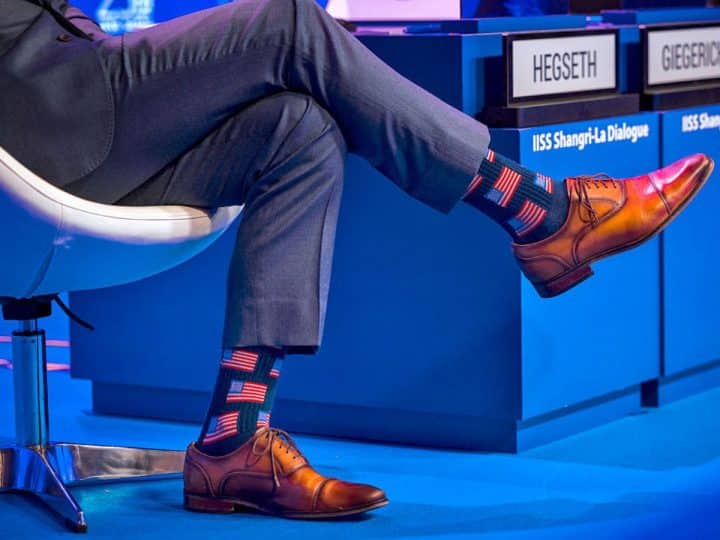
US defence secretary Pete Hegseth openly threatened Cuba during a visit to the colonial military base at Guantanamo Bay. Hegseth told a captive audience of American soldiers that Cuba had better not try and get long-range weapons. The US has been ramping up threats against the island state.
Meanwhile, US officials have forced Colombia’s left-wing president Gustavo Petro not to meet New York mayor Zohran Mamdani.
The Guardian reported on 10 June that Hegseth said:
It would be unwise for the government of Cuba to try to procure or get access to the types of weapons that could reach this base or the American homeland.
They would be inviting the kind of confrontation not only do they not want, but they could not stand.
What happens with the future of Cuba is in the hands of … the president of the United States and the leadership of Cuba.
The US is currently busy getting an arse-kicking from Iran. But Trump has made clear he wants to dominate the Americas.
Hegseth, a Trump sycophant best known for his far-right tattoos and blustering style, has overseen military activities across the continent. Guantanamo Bay was a fitting location for laying out colonial ambitions. The base there was the first US imperial outpost, stolen in 1898.
It later became famous as America’s lawless gulag for War on Terror prisoners.
Mamdani meeting cancelled under US pressure
Colombia’s left-wing president Gustavo Petro has run into the authoritarian impulses of the US state. And not for the first time…
The socialist leader had his visa revoked in autumn 2025 after attending a Palestine demonstration where he called for US troops to disobey their leaders. Petro is back in the US but the New York Times reported on 11 June 2026:
A meeting scheduled for this week between President Gustavo Petro of Colombia and Mayor Zohran Mamdani of New York was called off after U.S. diplomats told Colombia’s government that the move could violate the terms under which Mr. Petro was being permitted to enter the United States.
The U.S. State Department canceled Mr. Petro’s visa last fall, and he only had a limited travel allowance to attend a U.N. Security Council Meeting on Wednesday — any other activities outside that meeting were not allowed.
His own officials reportedly agreed to cancel a planned meeting with NY mayor Zohran Mamdani. The State Department said:
As the secretary has said, a visa is a privilege not a right. Any individual’s U.S. visa is at risk of revocation if they visit America and outrageously implore U.S. soldiers to disobey orders of the duly elected president of the United States.
Despite President Trump’s efforts to find common ground, the same individual continues with this kind of behavior.
We don’t know about you, but Petro sounds like quite a lad. The NYT said US secretary of state Marco Rubio might be behind the threats. Rubio is a Cuban-American Trumpian with a bee in his bonnet about Cuba roughly the size of the island itself.
Cuba — Trump’s bleak continental plans
Donald Trump has made it very clear he plans to bring the Americas to heel. The Canary has reported on his activities and aims since he returned to power in January 2026.
The US wants to ensure:
the Western Hemisphere remains reasonably stable and well-governed enough to prevent and discourage mass migration to the United States.
And that those pliable governments:
cooperate with us against narco-terrorists, cartels, and other transnational criminal organizations.
Trump and his cronies desire:
a Hemisphere that remains free of hostile foreign incursion or ownership of key assets, and that supports critical supply chains.
Decoded, the US seeks to control the markets in the Americas, and:
we want to ensure our continued access to key strategic locations. In other words, we will assert and enforce a “Trump Corollary” to the Monroe Doctrine.
This process is underway today, even as the Trump administration tries to escape the mire of its illegal war in Iran.
The CIA reportedly killed a mid-level cartel boss with a car bomb in Mexico City in March. That followed a US-backed cartel shootout in Mexico, also in March. Two CIA officers were killed after a drug lab raid in April. Official denials followed those reports.
US-backed troops in Ecuador allegedly tortured dairy workers and blew up a farm in March. Cuba, naturally, is on the regime change list too. Immigration and Customs Enforcement (ICE) paramilitaries are carrying out a racist war on poor, maligned and undocumented workers on the home front.
Trump wants a pliable ‘homeland empire’ in the western hemisphere. When the war on Iran ends it seems probable his gaze will turn back to the Americas fully. Those of us who oppose empire need to be fully engaged with what is happening there.
Featured image via Ezra Acayan/Getty Images
By Joe Glenton
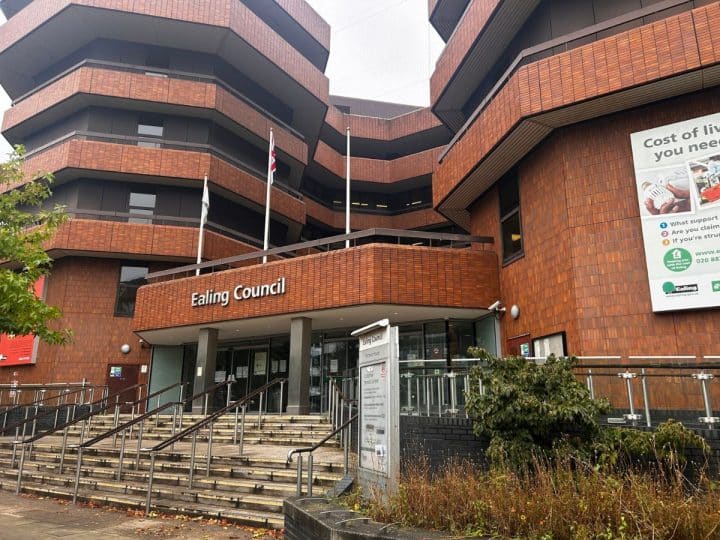
The Green Party did well in the 2026 local elections, especially in London. In Ealing, for example, it got five new councillors. But if it had worked together with local left-wing independents, the borough could have gained at least 14 extra progressive councillors, pulling significant power away from Labour. Instead, Labour kept control.
Indy-Green collaboration could make a massive difference in Ealing
In the local elections, the Green Party focused on the less diverse and more expensive Hanwell Broadway ward. All three of its candidates defeated Labour there. Ealing Community Independents (ECI) candidates, meanwhile, stood in poorer and more diverse wards, and were particularly strong in and around Southall.
ECI spoke to the Greens before the election and “agreed not to stand in three of their highest priority wards” (like Hanwell Broadway), leader Craig Smith told us previously. But in the vast majority of wards where ECI candidates were actively campaigning, Smith said, the Greens put up paper candidates who did no visible campaigning.
The result of vote splitting in most of these wards was a Labour victory.
ECI did better than the Greens in:
- Dormers Wells. Here, a combination of the top ECI and Green votes would have beaten two of Labour’s winning candidates.
- Southall Broadway. This was as close as ECI got to beating Labour, and ECI was its main left-wing challenger. If Green votes had gone to ECI, the ward would now have at least one ECI councillor.
- Southall Green. ECI’s candidates all got more than a thousand votes each, and could have overtaken at least one of Labour’s winning candidates if Green voters had opted for ECI.
- Southall West. Again, a combination of ECI and Green votes could have defeated at least one Labour candidate.
If there had been an agreement to combine campaign strengths and work together, it probably wouldn’t have just benefited ECI either. The Greens could potentially have gained even more councillors too. Because if ECI votes had gone to the Greens in the following wards, the two could have beaten numerous Labour candidates:
- Northfields. Green paper candidates all got over a thousand votes each. And if there’d been a deal with ECI, a combination of each party’s votes would have beaten all three Labour candidates.
- South Acton. The same was true here. Again, a cooperative campaign could have wiped the floor with Labour.
- Perivale. A joint campaign could have beaten at least one Labour candidate.
- Greenford Broadway. The same was true here. The ward could’ve had one extra progressive councillor.
- Norwood Green. ECI and the Greens both had clear support here, and together they could have elected at least one councillor.
In total, an ECI-Green deal could have secured the election of 14 extra left-wing councillors in Ealing.
Whether it was a central diktat from Green Party HQ or something else that prevented an ECI-Green agreement, it was a tanking Labour that reaped the benefits and local people who suffered. In one ward, for example, people are still feeling the consequences of a Green paper candidate accidentally winning.
By-election following ‘paper candidate’ resignation
In May’s local election, North Acton ward was a straight battle between Labour and the Greens (partly because ECI didn’t stand). Greens didn’t actively campaign in the ward, though. And after a paper candidate actually won, he quickly resigned. This sparked a by-election, which will take place on 25 June.
The local Green Party, whose candidate will be Marijn van de Geer, has promised:
we will be running a full campaign to try and keep the seat.
However, as a response to the Green Party’s controversial habit of standing paper candidates, ECI has decided to put up a challenge in North Acton. Craig Smith himself will be standing as the ECI candidate. And he told the Canary why, explaining that:
Every candidate that Ealing Community Independents puts up for election is serious about wanting to fight for the rights of local people and vulnerable communities. Every one of us has a track record in community organising, local activism and trade unionism.
The other parties are playing political games with the lives of North Acton residents: the Greens don’t deserve a second go in a by-election caused by their accidental councillor resigning after just 10 days; Ealing Labour are desperate to get their former chief whip re-elected despite residents rejecting him elsewhere in the borough on May 7.
North Acton deserves better than politics as usual. Ealing Community Independents is a serious local movement, with a serious local candidate focused on everyday life in North Acton – not party games that revolve around Westminster.
He added that ECI had approached the Greens ahead of the by-election to discuss a potential deal, but without success:
For this by-election, once again Ealing Community Independents tried to reach agreement with the local Green Party. The Greens – having inadvertently caused the by-election by fielding a paper candidate on May 7 who resigned immediately after getting elected – could have sat out this by-election in favour of a serious, progressive alternative in the shape of Ealing Community Independents. We will continue to try to reach agreement for future election cycles with the local Green Party, but our efforts have so far been unsuccessful.
North Acton “is not getting a fair deal”
Speaking about the local issues in North Acton, Smith said:
North Acton is undergoing massive and rapid change – the terminus area for HS2, home to Old Oak Common Development Corporation, and data centres appearing all over Park Royal.
Billions of pounds in investment are pouring into the area – but where are the new GP appointments, school places and community facilities? Residents see cranes everywhere, but the community is not getting a fair deal; they are living through rapid urban change, intense housing pressure, high renter turnover, construction disruption, transport pressure and concerns around safety and cleanliness.
All this means a new kind of fight – not against development, but for development that genuinely serves the interests of ordinary people living in the area. And a new kind of fight needs a new kind of local politics.
For him, this means a vote for Ealing Community Independents.
The Greens, on the other hand, will hope to convince local voters to give them a second chance.
Whatever happens in the by-election, though, one thing is clear from Ealing’s local elections. The fewer deals Greens make with left-wing independents, the fewer progressives there’ll be in government, and the longer Labour (or other right-wing parties) will be able to keep hold of power.
Featured image via AsianStandard
By Ed Sykes
Politics
Eye witnesses to al Mughayyir school shooting in no doubt that head of Homesh “Religious School” is the culprit

On 21 April, illegal settler and head of Homesh “religious school”, Schmuel Wendy, shot dead two Palestinians outside al Mughayyir boy’s School, in the occupied West Bank. One was a 13-year-old pupil. There have been numerous claims that Wendy is the killer, but he denies even being in the village at the time. But the Canary spoke to various people who were at the school that day to find out more.
Schmuel Wendy, illegal settler and head of Homesh “religious school” fired shots at uniformed Palestinian Red Crescent Society Paramedic
Al Mughayyir experiences daily raids by the occupation’s military, and violent attacks by settlers who live in any one of the nine illegal outposts surrounding the village. So two of our sources have requested anonymity, for fear of reprisals.
Israeli occupation forces (IOF) are often stationed at the entrance to al Mughayyir, which is close to the boy’s school. They restrict residents’ movements and generally terrorise them in whichever ways they wish.
A Palestinian Red Crescent Society (PRSC) volunteer, tells us he had been visiting the school regularly, for days before the two residents of al Mughayyir were shot This was due to regular and escalating problems there, caused by the IOF. He says:
On the day of the shooting, armed settlers came and sat behind the olive trees, about 200 metres from here. The children in school saw them through their classroom windows, and started screaming and shouting. I went and talked with the settlers, to tell them to go away. But they just started swearing and cussing at me. Schmuel Wendy was there. I thought he was a soldier, not a settler, because he was wearing military uniform. So I thought I could talk with him, and get them all to leave. But I was wrong. He went to the ground and fired two bullets in my direction, even though I was wearing my paramedic uniform. The bullets just missed me and hit the wall behind. I then went back to the school doors, which the principal had already shut, to go and protect the children.
There were two West Bank settlers in army uniform and four masked occupation soldiers. All were armed
Waheed Abu Naim is the Principal’s assistant, and an English teacher at the school. On the day of the attack, students rushed into his classroom from outside, to tell him some settlers were near to the wall of the school. He says:
It was about 12 when I left my class and went over to the settlers. There was a small short wall between me and them. There were 2 settlers wearing old-looking army uniform. Four military soldiers stood behind them, in uniform and wearing masks to hide their faces. The six of them were together, and all had long guns. I stood behind that wall to talk to them. I asked the settler who was in front, why he was here. He told me “Leave this place. Go back”. I then spoke to the military soldiers in English, telling them to take their settlers and go. One of the soldiers went in front of the settlers, raising his gun towards me. He was just four metres away, and told me I had to leave and go back to my school. Then I understood they wanted to make a crime. I quickly tried to take all the students inside, before danger arrived.
One al Mughayyir resident, whose nephew is a pupil at the school, told us he wasted no time when he learnt settlers and the army were there.
‘You need to go home, because today I intend to kill someone’
He arrived to help protect the children and bring them home. He tells us:
I saw Waheed, the English teacher, talking to the soldiers, so I joined him. Wendy was one of the settlers. He was armed and in semi military uniform. He told me, in Hebrew: “You need to go home, because today I’m intending to kill someone.
In the time it took for Abu Naim to take two pupils inside and then come back outside for the others, Wendy had opened fire on al Mughayyir residents.
Abu Naim says he is in no doubt it was Wendy who killed that day. He says:
We know this shooter, Schmuel Wendy, very well. For 2 years he has been coming many times to our camps where my uncle’s family keep sheep, in the nearby al Khaleel area. He used to go there to attack and raise his gun towards them, to shout and push them. The aim was to scare them and their children. As soon as I talked to him I knew who he was, because he comes by many times and has a settlement close to the village. That time he came with four soldiers.

Abu Naim continues:
The bullets hit the wall first, then he shot one of our students, Aws, who was outside. He fell down on his face. We turned him over, and saw the bullet in the front of his head. There was a lot of blood coming from Aws’ mouth and nose, and it is still on the ground today. We carried him to my car. When I was about to drive to Abu Falah medical centre, in the neighbouring village, I was called to take another injured person. We arrived within five minutes, but the doctor told us we had lost Aws.

Aws was a danger to no one, but the intention was shoot to kill him
The 45 year old PRCS volunteer, has been working with the Red Crescent for more than 10 years. He tells the Canary:
Aws was a danger to no one. But the intention was to shoot to kill. They did not shoot him in his legs, or somewhere else to injure him. Instead, they pointed at his head, to kill him. They want to intimidate and scare us, to the point where we will never feel safe. During the shooting, a military vehicle stopped by the school entrance and asked me what was going on. I told the army “What do you mean what is going on? The settlers are shooting at us.” The soldier said, “I don’t care. You have five minutes to evacuate the whole school. The police are coming and they will deal with this.” It wasn’t even five minutes before tear gas was fired at us.
The al Mughayyir resident told us he was doing his best to protect the children from the shooting and teargas.
There was a man on the ground, who had fainted because of the gas. He had come to protect the students. Me and Jihad, Waheed’s brother, took him to a safe place. Then we tried to evacuate the children from the area, and went to higher ground to protect them. Everything was chaotic, everyone was shouting, and there was a lot of tear gas. To our surprise, we saw that the shooter was Schmuel Wendy, head of the Homesh religious school. At the moment we noticed him, we were in his line of fire. As I shouted at Jihad to leave, someone yelled that he was injured. The shooting was continuous, and shrapnel hit my leg. Me and another guy pulled Jihad about 10 metres, so he was out of the firing line, and carried him about 200 metres to the nearest car. We drove to Abu Falah medical centre, and when we arrived we learnt that Aws had already been martyred.
Wendy ran out of bullets, so he took a new magazine from Israeli occupation soldiers, and then shot dead Jihad Abu Naim
Jihad Abu Naim had been working in Turmus Ayya, a village 8km from al Mughayyir. When he heard what was happening he drove to the village, to help rescue the students. But he was shot in the right side of his chest, by zionist killer Schmuel Wendy. Waheed was unaware at the time that his brother had been shot and killed.

He told the Canary:
While I was at the medical centre, my father called me to say Jihad was arriving. I thought he was bringing someone from our village who was injured. But when the car arrived, I found my brother inside. The doctor said there was still a pulse, and started pushing his chest to get him breathing again, but it didn’t work. So, they put him inside the ambulance to go to Ramallah hospital. He died on the way. On that day Wendy continued shooting for more than 20 minutes. After we took the second injury to Abu Falah, he ran out of bullets so went down and took a new magazine from the pocket of one of the military soldiers. Then he shot my brother.
The martyrs and injured were evacuated that day using cars belonging to villagers, as the IOF prevented ambulances from entering the village.The al Mughayyir resident says:
Ambulances were at the village entrance. But when we left the village we knew the injuries were serious, so preferred to keep going using private cars, so we didn’t waste any time. The ambulances were near the soldiers anyway, and they would have abducted our injured people. I really think this day was preplanned. At the same time as the shooting, the IOF had also blocked the nearby village of Silwad, so ambulances couldn’t leave there for al Mughayyir.
West Bank — Two killed and three injured by bullets, two injured by tear gas
According to the PRCS volunteer, there were also three gunshot injuries that day. A 16-year-old student was shot in the hand, while a man in his 30s helping to evacuate the children was shot in the abdomen. The third injured person was 60-year-old man. He was sitting in front of the army, just observing. He was shot at very close range, and a bullet went through his thigh, from one side to the other. Two people also suffered from tear gas suffocation, one was pregnant.
This school attack was the first by settlers. But those carried out by the IOF occur on a very regular basis and involve the use of tear gas and sound bombs on al Mughayyir’s school and its pupils. The school, which has around 450 children, is the only boy’s school in the village, so is extremely important. School Principal, Bassam Abu Assaf tells us:
The attacks here are not acceptable. If we were to let children leave from the main gate that day, many more students would have been lost. The wall here is full of bullets.

There is one motive for these continued attacks — to worry parents and pupils enough that children will stop attending school. Their education will then suffer greatly.
Students in the West Bank have the right to study in safety
But Abu Assaf and his team are determined to ensure students will not miss out on their education, and the school will remain open. He says:
Now we are helping pupils more and more to complete their higher education. We do not allow any of the students to leave, as it is the only school. All of us need our chance to live in peace, and complete our higher education in a safe environment. This is a right of all students all over the world. Palestinian people refuse violence, and want to live like any other people in the world, without attacks.
It is almost two months after 13-year-old Aws Hamdi al-Naasan and Jihad Marzouk Abu Naim were martyred. But no one has been held accountable. Every day, Waheed Abu Naim looks out of his classroom window to see a Palestinian flag flying on the nearby hilltop. It marks the spot where his brother was shot and killed. The community is still grieving.

Yet despite the intentional killings, multiple injuries, and numerous eyewitness accounts, there have been no arrests or meaningful investigations. We must bring an end to the system in which attacks on Palestinians can take place in broad daylight, in front of a school in the occupied West Bank. All while the Zionist colonisers who terrorise these Palestinian communities escape with no consequences whatsoever.
Choice of 3 featured images:
- Flag on hill marking where Jihad was martyred

- Overview of school area

- School

Featured image via Paula Bronstein/Getty Images
By Charlie Jaay

Two leading animal welfare organisations are calling on the new Scottish parliament to end the annual guga hunt on Sula Sgeir.
They’ve published a new report stating that the hunt cannot be considered humane, despite a NatureScot licence condition that requires killing must be carried out humanely.
This adds to the campaigning work of Protect the Wild, whose founder Rob Pownall ran for the Scottish parliament dressed as a gannet.
Animal Welfare and the Guga Hunt comes out as NatureScot considers a fresh licence application for the 2026 hunt. The topic is also due to for consideration by the Scottish parliament as it prepares to scrutinise a petition against the hunt that has attracted more than 100,000 signatures.
Scottish animal welfare charity OneKind worked with the League Against Cruel Sports Scotland to produce the new report. It examines the animal welfare implications of the hunt and identifies significant gaps in the legislative framework that governs it.
The groups submitted their report to NatureScot ahead of its decision on an application for a guga hunt licence in 2026.
The report finds that the method used to kill the young gannets, which are known as guga, carries significant welfare risks that cannot be adequately monitored or verified.
It also finds there’s been consistent underestimation of the disturbance of other vulnerable seabird species breeding on Sula Sgeir, including the highly protected Leach’s storm petrel.
Jason Rose, chief executive of OneKind, said:
This report is about the birds, what they experience during capture, during killing, and in the disturbance caused to the wider colony and other vulnerable species on the island.
The welfare risks we have identified are real and under current conditions they simply cannot be adequately monitored or mitigated.
The Scottish parliament, government and NatureScot all have a role in addressing the legislative gaps our report identifies, and we hope it contributes to that conversation.
Legislation around the guga hunt
On the legislative framework, the report’s findings note that Scotland’s animal welfare legislation only protects wild animals when they are under human control. While NatureScot requires humane killing of the birds by licence condition, animal welfare law doesn’t define the term humane and there is no independent oversight or monitoring on Sula Sgeir.
The report notes that ending the hunt would require only an amendment to the Wildlife and Countryside Act 1981. It currently contains a unique provision permitting the taking of gannets on Sula Sgeir for food. There’s no such exemption for any other species or location in Scotland.
The report’s findings sit alongside serious conservation concerns raised in a recent report by the Scottish Seabird Centre, which recommended that licensing of the hunt should end permanently.
The report, Assessment of the Guga Hunt in the Context of Seabird Conservation in Scotland, came out on 28 May. It noted that the gannet population on Sula Sgeir has declined by around 17% since 2017. And it’s the only Scottish gannet Special Protection Area where the population has fallen below the level it was at when the site gained protected status.
Robbie Marsland, director of the League Against Cruel Sports in Scotland and Northern Ireland, said:
Together, these reports make a compelling, evidence-based case why the guga hunt should come to an end.
This analysis sets out clearly why the hunt cannot currently be considered humane, and we hope it contributes to an honest, measured and constructive conversation about why this tradition can no longer be responsibly licensed.
For more than a century the League Against Cruel Sports has campaigned against traditions that harm animals. While we recognise the cultural significance of the hunt to the Ness community, the welfare of the birds matters too.
Both organisations are backing calls for a transition away from the guga hunt. To support this, they’d like to see initiatives that preserve and celebrate the Ness community’s cultural heritage. They also want to explore opportunities for local involvement in seabird monitoring and conservation on Sula Sgeir.
Featured image via Getty Images
By The Canary

Wildlife charity Butterfly Conservation has today revealed that the colourful peacock has beaten off fierce competition from a colourful cast of species to take the top spot as Britain’s Favourite Butterfly.
Topping the first-ever vote to find the nation’s champion, the garden favourite beat 59 other butterflies to claim the highly coveted title. See the full run-down below. The poll saw over 20,000 votes cast across the UK between 15 May – 7 June.
Engaging the public, with votes like this and with the forthcoming Big Butterfly Count, helps scientists track the fortunes of butterflies. And that can give important insights into the state of nature in the UK.
The top five was a rainbow of colour, with the orange-tip coming a close second, red admiral third, holly blue in fourth, and the bright yellow brimstone coming in fifth. But ultimately, the stunning peacock, with its eye-catching and instantly recognisable beauty, stole the nation’s hearts.
Butterfly Conservation’s head of engagement, Kate Merry, said:
The response to Britain’s Favourite Butterfly has been absolutely wonderful, and we’re not surprised. It’s clear that people up and down the country love butterflies of all shapes, sizes and colours, and voted in their thousands for their favourites.
The peacock is a worthy winner; it’s a true showstopper and a species that I bet a lot of us picture when we think of butterflies.
It’s been really special seeing people get so passionate about their favourites and throw their support behind them! Now we can’t wait to see how many Peacocks are spotted up and down the country in this summer’s Big Butterfly Count.
Butterfly emergency
The result comes at a critical moment for the UK’s butterflies. In 2024 Butterfly Conservation declared a butterfly emergency after numbers recorded during its Big Butterfly Count fell to their lowest ever.
Now the charity is calling on everyone, everywhere to take part in this year’s Big Butterfly Count between Friday 17 July – Sunday 9 August. It’ll help conservationists get an updated picture of how the UK’s most common butterflies are faring.
The top five – a rainbow of joy across the country
The Peacock, Britain’s official favourite, is an iconic butterfly. This showstopper is instantly recognisable with its striking colours and stand-out eye-spots, a remarkable evolutionary defence mechanism designed to ward off predators many times its own size.
It is a regular visitor to gardens and green spaces across the whole of the UK, particularly where patches of nettles can be found as they are its caterpillars’ favourite foodplant.
Completing the top five in the vote to find Britain’s Favourite Butterfly are four species that between them create a kaleidoscope of colours and show why Brits love butterflies so much.
In second place, the Orange-tip is a worthy runner up, with its glowing white wings and vivid tangerine tips in the males, this uplifting species is a sure sign of spring and that warmer summer days aren’t far away.
Taking third is the Red Admiral whose striking jet-black wings, bold red bands and white spotted tips make it one of the most iconic species in the UK. A long-distance migrant, it travels all the way from North Africa to flutter around UK gardens each year, although it is now commonly sticking around through the winter, a sign of our warming climate.
In fourth, the fairy-like Holly Blue, which counts British icons Dame Joanna Lumley and Geri-Halliwell Horner amongst its fans. Its powder-blue wings are a shimmering delight when spotted in gardens, this species has been steadily spreading northwards in recent decades, bringing its appealing beauty to gardens and hedgerows across more of the country than ever before.
And rounding out the top five, the Brimstone, whose sunshine-yellow wings may have given all butterflies their name – the original butter-coloured fly, whose appearance is often heralded as the first sign of spring.
The Big Butterfly Count
The Peacock, Red Admiral, Holly Blue and Brimstone, along with 16 other butterflies and day-flying moths, can be recorded as part of this summer’s Big Butterfly Count in July and August.
Butterfly Conservation’s Big Butterfly Count is the world’s largest butterfly survey, and this year it carries greater urgency than ever. Conservationists are hoping that a surge in public participation in 2026 will both improve the data picture and help galvanise support for butterfly-friendly habitats across the UK.
Merry added:
Taking part in the Big Butterfly Count couldn’t be easier, simply spend 15 minutes in any outdoor space and count the butterflies and day-flying moths you see and submit your sightings to help build our interactive map.
This information will help conservationists to see how some of our more-common species are faring, which in turn helps to build a wider picture of how all butterflies and moths are doing.
It’s easy, fun for all the family, and a great excuse to get outside and experience the simple joy of spotting butterflies.
This year’s Big Butterfly Count takes place from Friday 17 July – Sunday 9 August. Simply download the free app, spend 15 minutes in any sunny spot and record the number and types of butterflies spotted. Find out more here.
Britain’s favourite butterfly – list of 60 butterfly species in ranked order
- 1 Peacock.
- 2 Orange-tip.
- 3 Red Admiral.
- 4 Holly Blue.
- 5 Brimstone.
- 6 Comma.
- 7 Common Blue.
- 8 Small Tortoiseshell.
- 9 Swallowtail.
- 10 Painted Lady.
- 11 Speckled Wood.
- 12 Small Copper.
- 13 Marbled White.
- 14 Adonis Blue.
- 15 Purple Emperor.
- 16 Chalk Hill Blue.
- 17 Gatekeeper.
- 18 Green Hairstreak.
- 19 Purple Hairstreak.
- 20 Large Blue.
- 21 Silver-washed Fritillary.
- 22 Marsh Fritillary.
- 23 Silver-studded Blue.
- 24 Scotch Argus.
- 25 Small Heath.
- 26 Clouded Yellow.
- 27 Small White.
- 28 Small Blue.
- 29 White Admiral.
- 30 Meadow Brown.
- 31 Ringlet.
- 32 Wall.
- 33 Large Tortoiseshell.
- 34 Large White.
- 35 Grizzled Skipper.
- 36 Northern Brown Argus.
- 37 Pearl-bordered Fritillary.
- 38 Brown Argus.
- 39 Duke of Burgundy.
- 40 Mountain Ringlet.
- 41 Brown Hairstreak.
- 42 Glanville Fritillary.
- 43 Small Skipper.
- 44 Dingy Skipper.
- 45 Green-veined White.
- 46 Cryptic Wood White.
- 47 Dark Green Fritillary.
- 48 Wood White.
- 49 High Brown Fritillary.
- 50 Heath Fritillary.
- 51 Grayling.
- 52 Lulworth Skipper.
- 53 White-letter Hairstreak.
- 54 Large Skipper.
- 55 Essex Skipper.
- 56 Large Heath.
- 57 Chequered Skipper.
- 58 Black Hairstreak.
- 59 Silver-spotted Skipper.
- 60 Small Pearl-bordered Fritillary.
Featured image via Getty Images
By The Canary
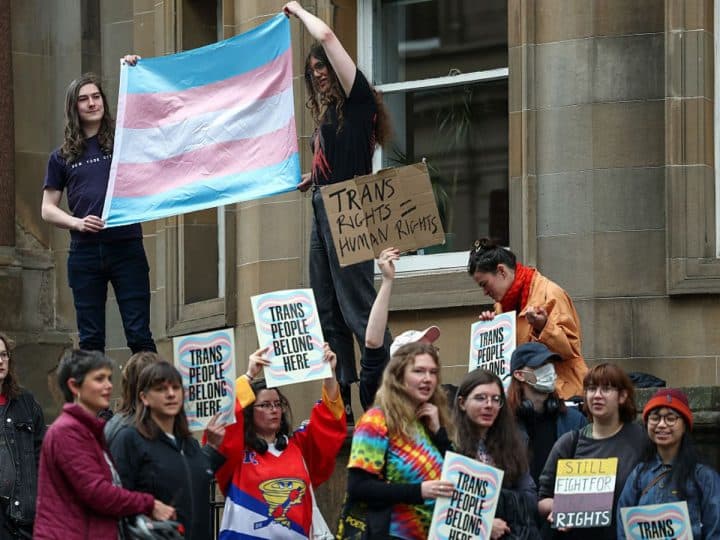
Andrea Egan, general secretary of Unison, has written to the Equality and Human Rights Commission (EHRC) to highlight the fact that workplaces across the country have already begun to withdraw their previous trans-inclusive policies.
After multiple failed attempts, the EHRC laid its current draft code of practice before Parliament. The guidance is now undergoing a 40-day period of scrutiny, after which MPs can choose to accept or reject it.
The draft code calls for service providers to exclude trans people from single-sex spaces reflecting their gender, and also often those of their sex assigned at birth. The government’s own impact assessment has acknowledged that it will likely harm trans and gender non-conforming individuals.
Unison — ‘Change the Law’
Because of the obvious discrimination at play in the draft code, Unison — the UK’s largest trade union — posted a callout to social media on 28 May:
MPs will decide on the guidance in the next 30 days — and we need to show them the reality
We need you to tell us why it’s unworkable and the real life impact it will have on you in the workplace.
The Union issued the call as part of its ‘Change the Law’ campaign. This echoed calls from MPs like Nadia Whittome, who urged Parliament to legislate to clarify that the trans-inclusive intention behind the Equality Act.
In reply to Unison’s post, the EHRC tried to argue that:
Our draft Code of Practice helps providers of services, public functions and associations apply the Equality Act 2010. It doesn’t apply to workplaces; employers should consult the Workplace (Health, Safety & Welfare) Regs 1992, the Equality Act, and seek independent legal advice.
‘Inundated with responses’
However, as Unison’s evidence-gathering has already highlighted, many workplaces were apparently unaware that the code didn’t apply to them. Andrea Egan, the union’s general secretary, highlighted that fact in a 9 June letter to EHRC chair Mary-Ann Stephenson, adding that:
We are also deeply concerned that a significant number of UNISON’s members who work in hospitals, schools, universities, prisons, gyms, leisure centres and public swimming pools will be required to implement the guidance.
Unsurprisingly, the union isn’t thrilled that its public sector members will have to play guess the assigned sex of the customers they serve. Egan added that:
Since the callout for examples, we have been inundated with responses from staff. You stated in your response to our change the law post on X that the guidance does not apply to workplaces. Unfortunately, we have already found that many employers are withdrawing existing trans inclusive policies and are using the code of practice guidance as the reason. This has caused distress not only to trans, non-binary and gender diverse workers, but also disabled staff. Accessible facilities are limited in most workplaces, and will now be put under greater pressure as they are expected to accommodate more staff to meet your requirements of gender neutrality.
That last point echoes statements from campaign groups like Disability Rights UK, which issued an immediate expression of solidarity with trans and intersex individuals after the EHRC released its draft code.
The organisation also branded the disabled toilet ‘workaround’ as a “vain attempt” to create infighting between the trans and disabled communities.
A feature, not a bug
Coming to the end of her letter, Egan also criticised the EHRC’s signposted sources for workplace guidance:
In your post, you point employers to the workplace requirements of 1992, the Equality Act, and independent legal advice. We have found that a substantial number of employers are already consulting the code of practice as the most up to date reference to the law and no doubt more will follow. Your proposed alternatives are either thirty years old, potentially ambiguous, or involve huge costs to already overstretched public service employers.
Instead, the union leader called for the ‘equalities’ watchdog to issue further information or clarifying documentation specifically for workplaces and employers. Likewise, she also reminded the EHRC that its role is to:
advise government on how to make equalities legislation more inclusive. It seems to us that this guidance does not achieve that aim.
A cynic might point out that the EHRC, once a trans-inclusive rights body, has been captured by anti-trans ideologies. As such, the fact that its code of practice is both explicitly harmful to trans people and unusably vague on how and where it applies is quite intentional.
Fortunately, we at the Canary are precisely that cynical. The EHRC knows that other workplaces will follow its transphobic example. It knows that this will damage trans, intersex and gender-non-conforming individuals’ lives far beyond the public sector.
These harms are a feature, not a bug, for the commission and the newly transphobic UK government.
Featured image via Jeff J Mitchell/Getty Images
Politics
The House | Andy Burnham: The Makerfield Campaign, The Aftermath And His Prep For Government


Andy Burnham in Ashton-in-Makerfield, 9 June 2026 (AP Photo/Jon Super/Alamy)

13 min read
Andy Burnham supporters are increasingly optimistic about Makerfield. Sienna Rodgers explores what comes after the by-election
Visitors to the Makerfield constituency are met with “a sea of turquoise”, in Nigel Farage’s own words, as Reform UK voters proudly bear their allegiance in the form of posters, garden stakes and even custom-made flags.
And yet, with the caveat that things can change quickly and they are taking nothing for granted, Labour activists and those around Andy Burnham are increasingly confident of winning the tricky by-election. They cite the poor performance of Reform’s candidate Robert Kenyon on the BBC’s Question Time as a key factor; some also report that Farage’s reaction to police failure in the Henry Nowak murder, in which he called for “pure cold rage”, has motivated the Burnham vote.
Burnham backers have concluded that there is now a “shy Andy vote”, just as there was a shy Reform one in the local elections, with supportive voters saying they are too nervous to put up Labour posters in their windows. The lack of visibility does not reflect the strength of the anti-Reform vote, according to Labour sources, and Burnham’s personal appeal is helping to coalesce that group behind him.
Labour door-knockers are nervous too, however. They are being warned by organisers that Restore Britain activists – who are easily identifiable on the ground, as they wear dark blue polo shirts and baseball hats featuring their party’s name – are equipped with smart glasses that record interactions.
Canvassers for Burnham have been told not to engage properly with ‘antis’ on the doorstep either, as too often they have doorbells that record videos, which could be used against the activists online. ‘Persuasion’ conversations are thus limited to those who are truly undecided, making tech’s impact on party activism an interesting subplot. Burnham himself spends much of his time door-knocking ‘don’t knows’.
In the Labour canvassing script seen by The House, door-knockers are instructed to say they are “out campaigning for Andy Burnham” (rather than the party). Non-voters are asked why they don’t vote, told about Burnham’s local record and asked, “Could Andy earn your vote?”. Voters classified as ‘against’ are asked only which party they plan to support, then thanked for their time – “Do not engage in arguments,” the sheet orders.
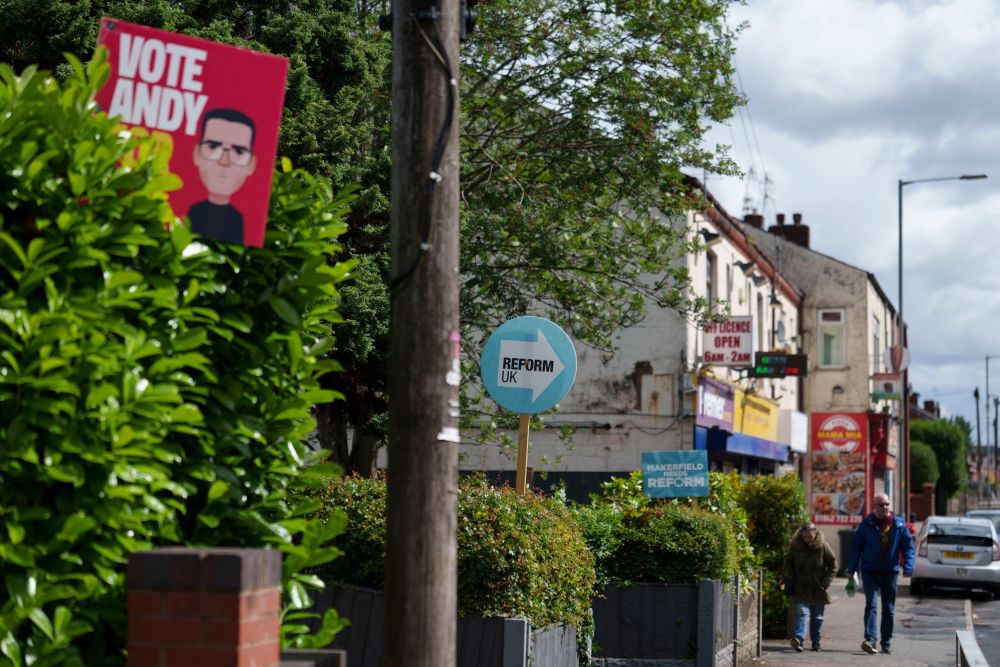
For ‘don’t knows’, the canvasser asks on a scale of one to 10 how likely the voter is to back Labour and whether they are considering a different party. The “rebuttal lines” for those who could back Reform lead with the statement that Farage’s party would “make the NHS into an insurance-based system if they get into power, and that really scares me”. Verbally, organisers have also told activists to highlight that Kenyon “is a sexist” and to point them towards Question Time. Those leaning towards the Greens, Lib Dems or Tories are all told that the by-election is “a two-horse race between Labour and Reform” and that “a vote for them risks letting Reform win through the middle”.
Activists are also given rebuttal lines on arguments that may arise on the doorstep: grooming gangs (“He called for a national inquiry before it was politically convenient to do so”); the Clean Air Zone (“The Boris Johnson government forced 10 councils to consider clean air zones”, and it is no longer needed thanks to the Bee Network of buses); Makerfield as a “stepping stone to No 10” (“Andy is not getting ahead of himself”), Brexit (“Andy respects the Brexit vote”).
Most notably, on immigration, canvassers are told to say that “Andy supports reducing net migration” and he believes “it is right to pursue root and branch reform”. Allies of Shabana Mahmood are confident that she would be kept as Home Secretary by a Burnham premiership and her reforms would hardly be watered down, if at all.
What comes next
If Burnham does win Makerfield on 18 June, what follows? He has been clear about his intention to enter any Labour leadership contest, but the details – process and timeline – remain murky.
The hindrance to a swift challenge is the Greater Manchester mayoral by-election that his election to Parliament would trigger. Nobody can be both a mayor with police and crime commissioner powers – as Burnham is – and an MP at the same time, according to the law. Legislation also requires that the by-election be held within 35 working days of a vacancy, which means Thursday, 30 July is being eyed as the likely date.
While views in Parliament differ, the Manchester side of Burnham’s circle have argued that it would not be viable for him to kick off a contest before the mayoral by-election is complete. “He’ll be heavily invested in it, and it’s his responsibility to help with that,” says one such source.
“All roads lead to conference – whether coronation or contest, it ends there”
There is no guarantee that Labour will be able to hold onto the mayoralty. It is “going to be awful”, says another insider, particularly as it would be the third major by-election in the same region within a few months. The widely held assumption is that Manchester city council leader Bev Craig would be the candidate; without Burnham’s remarkable personal appeal to overcome the unpopularity of Labour’s brand, it is expected to be a very tough fight against Reform.
Government plans to quickly change the voting system for mayoralties back to a preferential one, after the Conservatives swapped it to first-past-the-post in 2022. The necessary primary legislation has already been passed; ministers now hope to have the statutory instrument to implement the reform approved imminently. Labour sources say they hope Labour would then get the second preferences of Lib Dems, Greens and even Tories who want to block Reform.
Even so, there are no comfortable options for Burnham. Either he risks entering the fray with a mayoral loss under his belt, or he is blamed during a leadership election for diverting party resources and attention when the biggest-ever by-election is taking place.
If July is indeed ruled out, August is next: the summer month over which Parliament does not sit, and Constituency Labour Parties typically do not meet, making both the MP and CLP nomination stages of any leadership contest difficult. Processes could be digitised, so nothing is impossible, but why would Keir Starmer’s operation and the current Labour general secretary facilitate a quick challenge?
That would leave September. Burnham supporters like the idea of him being crowned at conference, but that takes place less than four weeks after Parliament’s return from recess. The last deputy leadership election suggests that seven weeks – possibly six at a push – is the speediest timeline for the internal election according to Labour rules.
“All roads lead to conference – whether coronation or contest, it ends there,” an insider predicts, yet one pro-Burnham MP says Christmas may be a more realistic timeline for a new resident at No 10.
However, the instability under the present leadership – particularly acute after John Healey’s resignation as defence secretary – has cast further doubt on whether a longer timeline is viable. Senior figures think Burnham must move almost immediately after a Makerfield win and suggest Downing Street’s bunker operation is increasingly delusional. And there is, of course, the possibility that declared leadership contender Wes Streeting – or another hopeful – could force the situation quickly.

While neither the Burnhamites nor Starmerites believe the former health secretary has the numbers unless Starmer stands aside, sources close to Streeting insist he does. He chose not to challenge in May, they explain, because doing so before Burnham had a chance to run for Parliament would have been a poor start to the battle in the eyes of too many MPs and members. Streeting’s nominations would reach three figures once a contest actually began, claims one MP backer.
The Prime Minister has insisted that he will fight, fight, fight – even willing to stand in a contest against Burnham, who would win decisively in a head-to-head according to polls of Labour members. The leadership, as one minister puts it, is “gearing up for a fight” and looking for “signs of disloyalty”. It has been reported that ministers would have to step down if they wanted to publicly back Burnham. A Starmerite MP tells The House that the Starmer operation is expecting further resignations on 19 June and has already drawn up lists of replacement options for those thought likely to quit.
If Starmer is still intent on running even after Healey quitting, and Burnham succeeds in Makerfield, the PM has two options, a frontbencher says: declare that rivals must “put up or shut up”, John Major-style, or hope to slow it all down and buy himself more time. “Well done on winning the by-election – now we must all get to work on the next by-election” with the implicit “…which your actions have triggered” is considered the more likely of the two.
One argument that has been advanced by Starmerites is that the May 2027 elections are set to be a dreadful set for Labour, given that the areas were last contested in 2023 – a particularly good year for the party – and Reform has not had a go at them yet. “You’re basically guaranteed four-figure losses for us and four-figure gains for Reform,” a Starmer backer said, suggesting therefore: “Let Keir lead us through those and allow him to bow out, having done three years in No 10.” Yet, put to them later that the crisis around defence spending makes this option far less tenable, they reply: “Indeed.”
While nobody in the Burnham camp who spoke to The House is willing to wait a year, some do believe that a degree of delay would be good – allowing for more prep, which could only be helpful to Burnham.
Preparing for government
Burnham’s focus has had to be on Makerfield, but those around him have been putting in the hours to prepare for No 10.
Ministers who have despaired over Starmer’s leadership but not, so far, made a move to assist in his downfall are anxious about what a Burnham premiership will mean – both for their own careers and the functioning of government. “My God, am I worried… The unseriousness of it. I think he really is a flip-flopper,” says one. Fearful that Burnham cannot make difficult decisions, they speculate he could be “Keir on steroids” but with better comms. Burnham’s recent comments on Waspi compensation have only deepened that anxiety.
The Labour left are worried too. “They need to be a lot bolder,” says a supportive Labour MP. “What he tried to do in Manchester on the Clean Air Zone, but then had to row back on because it was so disliked, is exactly the sort of stuff that he will need to do at a national level.”
The job of Burnham’s team is to address such concerns. They have already requested notes from serving ministers on their work, which has been taken as a sign of competence. And Burnham allies are a fairly broad church – the MPs closest to him, led by Louise Haigh and Anneliese Midgley, are even said to be taking a warm and constructive approach to Streeting’s camp. This breadth comes with internal tensions, however.
“He can do things on welfare that others can’t”
Alongside the Westminster/Manchester divide, there is the ‘Tribune/Mainstream’ split, with most core supporters being either members of the centre-left Tribune group of MPs or the new Labour left member organisation Mainstream.
There is a worry among members of the latter that they have been sidelined. When Neal Lawson, of Mainstream and older organisation Compass, spoke at a recent conference about beating Reform with a “progressive majority”, he was slapped down by a senior source in Burnham’s campaign team. “This is nothing to do with Andy’s campaign, it is a Compass project that does not represent Andy,” they told HuffPost UK. A Mainstream source says the discussion was not centred on electoral pacts but merely the sharing of ideas between progressive parties.
Meanwhile, Josh Simons, the MP who gave up his seat for Burnham, has been described as first racking his brain to define Starmerism over at Labour Together and now doing the same for Burnhamism. Those involved in Mainstream say it has done the “heavy lifting” on policy. But it is Miatta Fahnbulleh, the former energy minister and close ally of Ed Miliband, who now holds the pen. Another soft left rising star from the 2024 intake, Yuan Yang, is understood to be feeding in.
There is much speculation over potential appointments by Burnham, should he gain power. The left side of Burnham’s camp would like to see a “clear out” on the frontbenches and figures such as Clive Lewis given jobs to ensure a radical approach to, say, the water industry. Others value some continuity.
Miliband is seen as a likely candidate for chancellor – while still serving as Energy Secretary, sources say he is involved in the minutiae of the Makerfield campaign – but this is not regarded as certain by all. More centrist voices, who prefer Streeting or even Pat McFadden, warn that lobby hacks would hate the move and it could become a distraction.
Haigh is tipped for a major post linked to the economy or industry, such as chief secretary to the Treasury, business or energy secretary. While one source tells The House Midgley has her eye on the Whips’ Office, The New Statesman has suggested that the trade union whisperer could be political secretary in No 10. It is said Angela Rayner could return to her previous roles of deputy prime minister and local government secretary.
Downing Street hires are thought likely to include chief of staff Kevin Lee and Simons, plus a range of ‘soft left’ staffers such as former Lisa Nandy aides Luke Francis (a potential director of political strategy) and Jade Azim, Co-operative Party assistant general secretary Caitlin Prowle and ex-Unite worker Jenny Killin. Also part of the younger crowd are Abby Tomlinson of ‘Milifandom’ fame and left-wing podcaster Ali Milani, both managing digital output in Makerfield.
From the Mainstream/Compass camp, ex-MP Jon Cruddas and young organiser Luke Hurst are key players as well as Lawson. An experienced figure further towards the centre-left could be former Labour chief operating officer John Lehal, who helped run Burnham’s 2015 leadership bid and has been spotted on the campaign trail.
There is no obvious pick for director of comms, though more junior posts are expected to be filled by people such as Miliband aide Grace Pritchard and former Sue Gray staffer Donjeta Miftari. On policy, Mat Lawrence of the Common Wealth think tank, Labour Growth Group director Mark McVitie and IPPR’s Zoe Billingham are all expected to wield influence.
Burnham’s popularity is such that some insiders believe he should frontload painful decisions while he still has the support, rather than hand out goodies at the start. The Starmer government did try the former approach, however, and it didn’t land well. “He can do things on welfare that others can’t,” a Blue Labour-aligned figure says hopefully. Whether Burnham would have the political will to do so remains to be seen.


For nearly four years, Ken Salazar — the U.S. ambassador to Mexico under former President Joe Biden — grew increasingly frustrated with the White House’s border plan.
Salazar says he begged for a “border czar” to run point on interagency coordination; he never got one, and instead, the moniker was inaccurately and problematically affixed to then-Vice President Kamala Harris. He asked for the White House to openly call it a border “crisis”; the designation came too late.
Salazar became so distraught that by July 2024, three weeks after Biden’s disastrous presidential debate performance, he decided to take matters into his own hands: “I should run for president,” Salazar told himself, according to his forthcoming book, a copy of which POLITICO obtained before its July 28 release date.
“There was political failure to understand the reality of the crisis at the border, and the political consequence it would have on Democrats in the 2024 election,” Salazar told POLITICO.
Salazar doesn’t want his party to repeat the past. His book, Borderlands: My Fight for an Inclusive America, is part-memoir, part-manifesto. Salazar — the former Interior secretary, Democratic U.S. senator, and Colorado attorney general — makes a case for what he calls “a new North American alliance,” in which the U.S., Canada and Mexico integrate their supply chains, jointly patrol their shared borders and promote cultural and educational exchanges. He sees it as a revival of former President John F. Kennedy’s Alliance for Progress.
But the book is also a warning to future 2028 Democratic presidential candidates.
Salazar is positioning himself as his party’s immigration whisperer, meeting with presidential hopefuls and pitching them on his “borderlands platform,” which says the U.S.’ borders are “broken” and “must be fixed.” He said in an interview that he’s already met with Arizona Sens. Mark Kelly and Ruben Gallego about his plan, and he has a meeting scheduled with Illinois Gov. JB Pritzker. (Spokespeople for Kelly, Gallego and Pritzker did not respond to requests for comment.)
Salazar never followed through with his plan of running for president in 2024. Although he dialed up advisers and operatives and drafted out a platform, the Democratic Party did not hold a mini-primary to choose its new nominee after Biden dropped out. Instead, Biden hand-picked his successor, Harris — a decision Salazar calls a “mistake.”
Salazar writes that he consistently petitioned the White House to create a “border czar” position, allowing someone in Washington to run point on the interagency response to the immigration crisis. Harris, as vice president, had been tasked with addressing “root causes” of migration, and she devoted her efforts to addressing corruption in Central America. Salazar saw that as insufficient: “But sadly, her designation in this position was having no effect on migration flows,” he writes. He pressed several White House officials, and even Biden himself, to create the position. The designation never came.
“[Harris] had been placed in charge of getting at the ‘root causes’ of migration, but many felt she had been ineffective,” Salazar writes, suggesting perhaps she hadn’t been given enough authority or felt that taking more responsibility on the issue would be “political suicide.” “For whatever reason, she had been unable to help with the border and migration crisis, even though she’d sat next door to the Oval Office for almost four years.”
A spokesperson for Biden declined to comment, and a spokesperson for Harris did not respond to a request for comment.
Salazar’s book arrives at a moment when Americans view President Donald Trump’s immigration enforcement with widespread pessimism. A POLITICO Poll in April showed that half of Americans — including one quarter of his 2024 voters — said Trump’s mass deportations campaign is too aggressive. But his border policy is still viewed favorably, and Americans still broadly trust Republicans over Democrats on immigration — a fact some Democrats chalk up to a “Biden hangover.”
It’s likely to kickstart a fresh round of recriminations within the Democratic Party, on the heels of former first lady Jill Biden’s new memoir detailing her husband’s exit from the 2024 campaign. Joe Biden is also expected to release a new book soon, though a spokesperson clarified that “the release date has not been finalized.”
Salazar, in his book, is candid about the failures of the previous administration — and how those shortcomings provided a window for Trump to ride a wave of voter frustration with immigration enforcement back into office.
His administration colleagues disappointed him on other fronts. In October 2023, when Mayorkas visited Mexico, Salazar notes he pushed him for a consistent, White House-driven message on the border crisis. (“We used the word ‘crisis’ freely and often,” Salazar writes, “even if at that time the White House refused to acknowledge it as such.”) Salazar claims Mayorkas told him: “Ken, I have a lot on my plate already. I’m about to be impeached for all this border stuff. The Republicans have it out for me.”
Mayorkas declined to comment about Salazar’s characterization.
Salazar’s consistent efforts, and failures, to garner buy-in from the White House on addressing the border crisis led him to question how seriously his Democratic colleagues took the issue and how well they understood the U.S.’ relationship with Mexico. “I’m not sure this administration knows what they’re doing,” Salazar told his wife at the tail end of Biden’s visit to Mexico in 2023.
Finally, in June 2024, Biden issued an executive order that effectively closed the southern border, which Salazar cheered as a success. “This should have been a moment of vindication — after all, American voters were demanding action on the border — but it was too late, and images of an out-of-control border would dominate the closing months of the presidential election,” Salazar writes. (Last month, Mayorkas also implied the Biden administration should have taken that action sooner.)
The border was “antiquated, under-resourced, underdeveloped, insecure, and broken,” Salazar adds. “In this, Trump had been correct.”
It’s a warning sign to Salazar’s party both in this year’s midterm cycle and in 2028: Downplay voters’ concerns on immigration and the border at your own peril.
Salazar’s hope is that the Democratic Party’s next standard-bearer will take up his “borderlands” platform, which places the impetus for border enforcement upon all three North American countries. If no one does, though, he isn’t closing the door on a run himself.
Asked three times by POLITICO if he’s considering a presidential bid in 2028, he demurred. “I can’t see the future beyond the reality that we have a November 2026 election, and a lot’s going to happen this year,” he said. “Looking ahead, I want this borderlands platform to be part of that agenda for the future.”
Eric Bazail-Eimil contributed.
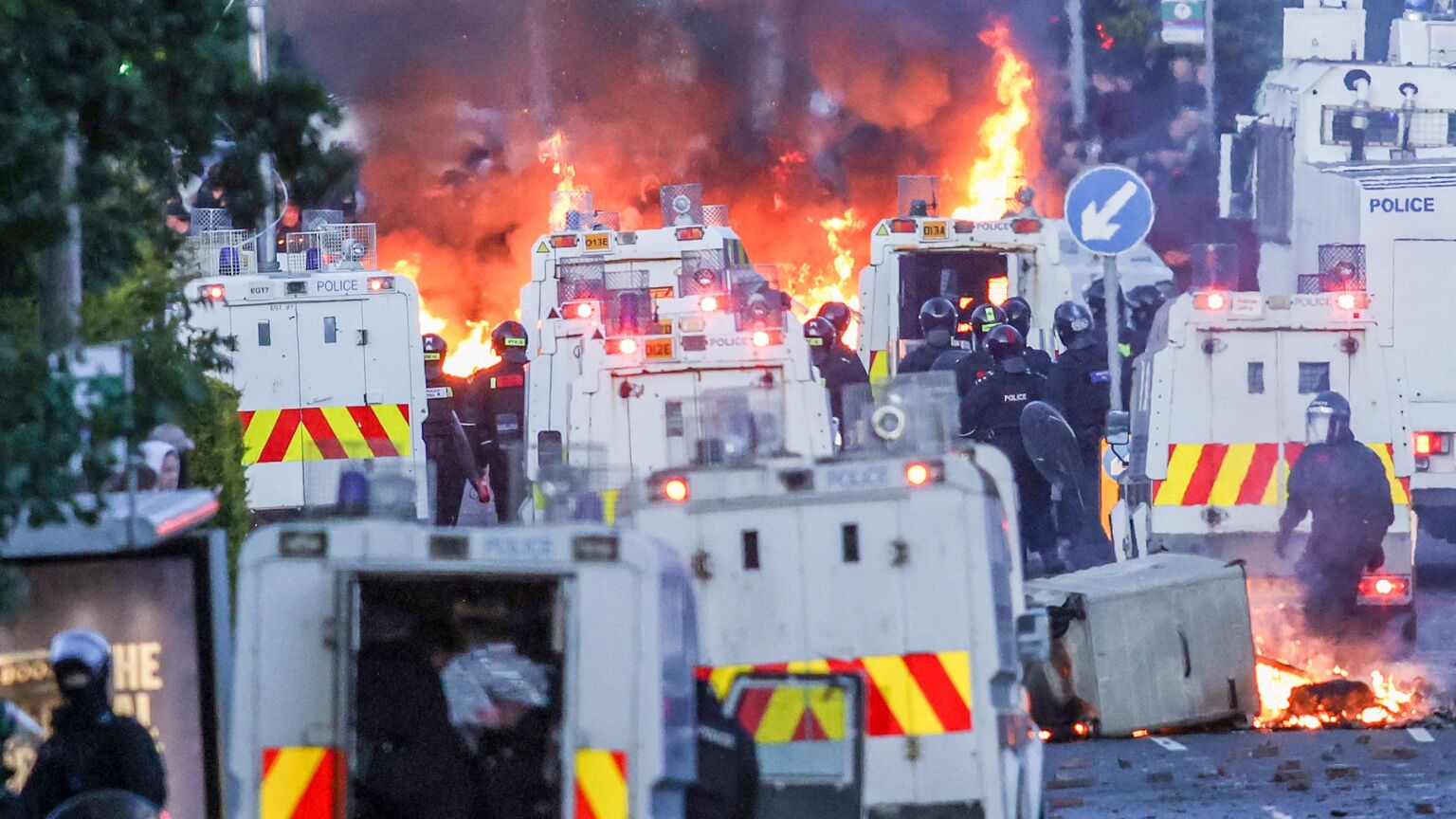
Graphic footage of the attack quickly spread online, accompanied by rumours that the culprit was an asylum seeker or refugee. At the Belfast Magistrates’ Court on Wednesday morning, after a night of rioting on the city’s streets, 30-year-old Sudanese refugee Hadi Alodid was charged with the attempted murder of Ogilvie and remanded in custody.
There is much we still don’t know about the attack or the suspect. We do now know that Alodid is a Sudanese national. He travelled to Belfast in February 2023 from Dublin, having flown there from Paris. After crossing the border from the Republic of Ireland to the UK, he immediately lodged an asylum claim. Seven months later, in September 2023, Alodid was granted leave to remain until 2028, having been fast-tracked through the asylum system.
Much has been made of the fact that Alodid was able to travel freely from the European Union – Paris, then Dublin to Belfast – by virtue of the Common Travel Area (CTA), which allows British and Irish nationals to move freely around the British Isles. It has been claimed that this is a ‘loophole’ or an ‘Achilles heel’ in the UK’s immigration system, which Alodid was able to take advantage of.
In truth, the CTA is a red herring. The real outrage is not that Alodid was able to take a bus from Dublin to Belfast without encountering a border guard. It is that as soon as he entered the UK, there was virtually no chance of him ever being made to leave – whether he had been granted asylum or not, and whatever rules, laws and policies might have been in place at the time.
Statistics for small-boat crossings, the means by which more than a third of asylum seekers reach the UK, bear this out. It is the longstanding position of the British government that refugees should claim asylum in the first safe country they reach. For the more than 200,000 people who have arrived in the UK after crossing the English Channel since 2018, that country was France or another European nation. Yet nearly every small boat arrival in the UK since that date has gone on to claim asylum, the majority successfully.
So why do asylum seekers fixate on the UK, rather than the other developed countries they’ve had to pass through to get here? The English language may be one factor. Another is undoubtedly the benefits afforded to asylum claimants when they arrive on British shores: all new arrivals are given accommodation at migrant hotels or houses of multiple occupation, at a cost to the British taxpayer last year of £2.7 billion. They are also provided with free healthcare and a weekly stipend, although this is admittedly meagre.
The biggest lure of all, though, is that they can be more or less certain that they will not be deported, regardless of whether they arrived in the UK legally, regardless of whether their asylum claim succeeds. Between 2018 and March 2026, 53,000 small boat arrivals had their asylum claims rejected, but only around 8,400 of these arrivals – roughly four per cent – were ‘returned’. And most of these returns were voluntary. In fact, according to Migration Watch UK, just 21 illegal immigrants were actually removed in that same period.
And no wonder. Unsuccessful asylum seekers can appeal any decision – as 80,000 did last year – and can remain in the UK as their case goes through the courts. If all else fails, illegal immigrants can simply sit tight. As parliament’s Public Accounts Committee recently found, the Home Office has effectively given up on keeping track of those whose asylum claims have been rejected.
No government has succeeded in strengthening the UK’s hopelessly feeble border since the small-boats crisis began in earnest. The Conservative government’s plan to relocate refugees in Rwanda soon hit judicial roadblocks after it was announced in 2022. The first of these was a decision by the Court of Appeal in June 2023 that quashed the government’s attempts to deport five men under the scheme. This was upheld by the Supreme Court in November of that year. Both rulings were based on the finding that Rwanda was not a ‘safe’ country for refugees or illegal immigrants to be sent to. To circumvent the courts, Rishi Sunak’s government introduced the Illegal Migration Act 2023, which aped Australia’s immigration policy by automatically rejecting asylum claims by those who arrived in the country illegally. But it was repealed by the current Labour government’s Border Security, Asylum and Immigration Act.
Prime minister Keir Starmer’s preferred ‘solution’ to illegal immigration instead was a ‘one in, one out’ deal with France, formally signed in August last year. It hasn’t been a success. The UK has received more immigrants from France than it has sent back. Some migrants who were returned to France have even made it back into the UK via the Channel. Needless to say, illegal crossings have continued at close to record pace.
So forget about the CTA. The real immigration ‘loophole’, ‘Achilles heel’ – or whatever you want to call it – is the fact that the British government first refuses to prevent illegal immigration, and then does nothing to remove illegal migrants once they have crossed the border. The financial cost of this failure is catastrophic – and its human cost incalculable.
Election after election, the British people have begged for a controlled immigration system – one in which they know who enters the country, and with clear rules over who stays and who doesn’t. Successive governments have promised this, only to fail more dismally than the last. It is by far the biggest concern of voters, yet it is the one the authorities refuse to get a grip on. As Belfast has so tragically shown us – this is not only unsustainable, it is highly combustible, too.
Hugo Timms is a staff writer at spiked.

Woman arrested as part of investigation into attempted murder of police officer in Downpatrick

Villagers take fight against Lidl store plans to Welsh government

Canton Network developer Digital Asset raises $355 million to bring capital markets onchain



-

 Fashion6 days ago
Weekend Open Thread: Evereve – Corporette.com
-
 Crypto World6 days ago
Jensen Huang Approves Samsung, SK Hynix, and Micron for NVIDIA (NVDA) HBM4 Memory Supply
-

 Crypto World4 days ago
Anatomy of the June crypto crash: Fed, Iran, Saylor
-
 Entertainment5 days ago
The Best Mystery Series of All Time Is Surging on Streaming 30 Years After It Ended
-

 NewsBeat4 days ago
Alexander Zverev wins the French Open to finally earn a 1st Grand Slam title
-

 Tech6 days ago
Suspicious Polyfill login prompts pop up on Toshiba, Muji websites
-
 Crypto World5 days ago
Senator Cynthia Lummis Calls CLARITY Act the Most Consequential Financial Legislation of This Generation
-

 Tech4 days ago
Microsoft unveils seven homegrown AI models in new bid for ‘long term self-sufficiency’
-

 Tech6 days ago
Microsoft launches MXC, an OS-level sandbox for AI agents, with OpenAI and Nvidia already on board
-

 Business6 days ago
(VIDEO) Justin Bieber Delivers Surprise Happy Birthday Serenade to Diners at Los Angeles Mexican Restaurant
-
 Business5 days ago
The Pain Points Taking a Fragile Tech Rally Down a Notch
-

 Business4 days ago
High Stakes for Wembanyama as New York Pushes for 3-0 Lead
-
 Crypto World3 days ago
Eli Lilly (LLY) Stock Surges 4% Following Breakthrough Sleep Apnea Trial Results
-

 Tech6 days ago
Von der Leyen’s AI envoy pick draws conflict-of-interest fire
-

 Tech6 days ago
Meta steals a tactic from Tesla and builds data centers in tents
-
Crypto World6 days ago
LBank Surpasses 25 Million Users Worldwide as AFA Partnership Continues to Drive Global Growth
-

 Tech5 days ago
Hackers now exploit SolarWinds Serv-U flaw to crash servers
-
 NewsBeat4 days ago
Alexander Zverev conquers demons and outlasts Flavio Cobolli to win French Open for first major title
-

 Crypto World4 days ago
Trump’s AI Ownership Plan Could Benefit Anthropic at OpenAI’s Expense
-
 Sports2 days ago
Bangladesh beat Australia after 20 years in ODIs, register only their second win over six-time world champions | Cricket News
You must be logged in to post a comment Login