Connect with us
DAPA Banner
DAPA Coin
DAPA
COIN PAYMENT ASSET
PRIVACY · BLOCKDAG · HOMOMORPHIC ENCRYPTION · RUST
ElGamal Encrypted MINE DAPA
🚫 GENESIS SOLD OUT
DAPAPAY COMING

Business

Shifting from Accelerated Growth to Sustainable Development

Published

on

Asia-Pacific digital banking market seen reaching $5.12t by 2033

Southeast Asia’s fintech has evolved, enabling instant, low-cost cross-border transactions. Funding is shifting towards late-stage companies. Payment and lending innovations address inclusion, while regulatory frameworks support growth and cross-border cooperation.

🌏 Evolution of Fintech in Southeast Asia

  • Cross-border transactions now settle in seconds at minimal cost, reflecting massive digital economy growth (US$120B funding, 11.2x revenue expansion 2016–2025).
  • Shift from “growth-at-all-costs” to governance, cost discipline, and sustainable models.

💰 Funding Trends

  • Global fintech funding rebounded in 2025; ASEAN-6 saw US$835M funding, with fewer deals but larger average sizes.
  • Late-stage companies dominate (67% of ASEAN funding), while seed-stage activity hit decade lows.

📊 Key Verticals

  • Payments: Largest funding share, driven by QR frameworks and financial inclusion; projected US$2.4–2.6T by 2030.
  • Alternative Lending: Addresses SME financing gaps; lending book projected to reach US$230B by 2030.
  • Investment Tech: Rapid adoption, AUM projected US$410–457B by 2030.
  • Embedded Finance: Integrated into apps (BNPL, wallets), projected 40% of digital finance market by 2030.

Cross-border financial transactions in Southeast Asia have transformed over the past decade. A remittance that once consumed days and cost approximately 6% in fees can now settle in under 60 seconds via a mobile number, reflecting the scale of change across the ASEAN digital economy, which absorbed US$120 billion in private funding and expanded aggregate revenue 11.2 times between 2016 and 2025.

The ecosystem’s underlying mechanics have shifted materially. Institutional allocators have shifted focus to companies demonstrating strong governance and cost discipline instead of growth-at-all-costs mandates.

Three interconnected mechanisms explain this maturation: a venture capital trajectory consolidating around proven late-stage models; foundational service verticals closing structural inclusion gaps; and a supranational policy architecture converting fragmented jurisdictions into a unified digital economy.

The Funding Arc: From Boom to Selective Investment

Global fintech funding recovered 13% YoY to US$27.8 billion in the first nine months of 2025, driven primarily by North America and Europe. Across the ASEAN-6 economies, total regional fintech funding reached US$835 million in 9M2025, as the sector entered a phase of measured consolidation following several years of elevated capital deployment.

Advertisement

The regional digital economy continues to expand on durable structural foundations. Mobile-first adoption, a young and growing consumer base, and accelerating integration of artificial intelligence across financial services collectively underpin the long-term investability of the region’s fintech sector. Monetary conditions have also shifted in favor of deployment: central banks across Indonesia, the Philippines, and Thailand implemented rate cuts in 2025, reducing the cost of capital and improving the conditions for both new investment and exit activity across the private landscape.

Capital allocation patterns in 9M2025 reflect a maturing rather than retreating market. While total deal count across ASEAN-6 moderated to 53 transactions, average deal size surged 42% to US$21.4 million, signaling a decisive shift in investor priorities. Late-stage fintechs captured 67% of total ASEAN funding in 9M2025, up 26% YoY, with average per-transaction size rising 40% YoY to US$112 million.

Tracxn’s SEA-wide data confirms the pattern: seed and early-stage funding contracted sharply while late-stage capital rose 13% YoY from 2024. Capital is concentrating in operators with validated models and clear paths to profitability.

Source: FinTech in ASEAN 2025: Navigating the New Realities

Advertisement

The reduction in early-stage activity signals a deeper structural change. Pre-seed and seed deal share fell to its lowest level in a decade, and first-time venture capital fund formation dropped from 42 in 2022 to 4 in 2025. Mature managers have offset this gap: of the 23 private capital funds raised in 2025, 18 were successor vehicles, with the median step-up ratio rising to 2.0x from 1.3x in 2024, showing that established managers are raising materially larger pools.

Key sectors driving financial inclusion include payments, lending, and embedded finance

In recent years, capital allocation consolidated around foundational infrastructure, with investor conviction concentrated in verticals demonstrating scalable, revenue-generating models. Payments re-emerged as the dominant category in 9M2025, attracting the largest share of regional funding and tying with Investment Tech for the highest deal count. Alternative Lending maintained strong transactional momentum with the third-highest deal count across the bloc, serving as the primary vehicle for fintech capital deployment in the Philippines and Vietnam, markets where digital credit continues to address significant structural gaps in formal financial access.

Payments: The Primary Gateway to Financial Inclusion

Payments infrastructure is the critical acquisition funnel for the broader digital economy. Investors continue to back platforms focused on cross-border transactions, real-time settlement, and interoperable QR frameworks, rewarding operators that address the region’s vast unbanked population.

This structural dominance is anchored by the region’s vast unbanked population. In most ASEAN jurisdictions, less than 50% of the population owns an account at a formal financial institution, indicating the significant potential for digital financial services (DFS) growth.

Advertisement

Grassroots adoption of digital payments has also been aggressively driven by the proliferation of standardized QR code frameworks. Indonesia’s QRIS framework incentivises micro-merchant adoption by eliminating processing fees below INR 500,000 (approximately US$30). Similar rollouts across Malaysia, Thailand, the Philippines, and Vietnam have driven a permanent shift away from physical cash. Digital payments gross transaction value across ASEAN-10 reached US$1.41 trillion in 2025 and is projected to reach US$2.4 to US$2.6 trillion by 2030, with digital payments expected to capture 78% of total gross transaction value across Southeast Asia by decade-end.

Alternative Lending: Bridging the SME Funding Divide

Digital payment data provides the transaction history needed to underwrite credit for small and medium enterprises (SMEs) too large for microfinance but too small or informal for commercial bank balance sheets. Across Southeast Asia, up to 60% of micro, small, and medium enterprises (MSMEs) report difficulty obtaining financing.

Fintech lenders bypass such traditional barriers to lending by using real-time data from e-commerce and digital payments to assess creditworthiness and disburse funds without conventional paperwork.  Regional operator Funding Societies has disbursed over US$4.38 billion to more than 100,000 SMEs, fulfilling 95% of requests in under five days.

Simultaneously, private credit partnerships are reshaping the sector’s funding architecture. Following the global financial crisis, regulatory requirements pushed traditional banks to lower risk appetite and increase reserves, opening a structural gap that private credit funds now fill by purchasing or funding fintech-originated loans. The global whitespace for private credit deployment into fintech lending is estimated at US$280 billion.

Advertisement

Lending also functions as a high-margin vertical that drives customer stickiness, making it attractive to platforms pivoting from growth to sustainable profitability. The regional digital lending book reached US$91 billion in 2025 and is projected to reach approximately US$230 billion by 2030.

Investment Tech

Investment Tech matched Payments for transaction volume, capturing 21% of all regional fintech deals and expanding its funding share to 11% of the ASEAN total in 9M2025, up from 4% in 2024. Growth was anchored by late-stage capital, most notably Syfe’s US$53 million Series C, the fifth-largest fintech deal in ASEAN-6 for the period.

Consumer adoption is accelerating alongside institutional interest: cumulative app downloads rose 166% from 8.4 million in 2021 to 22.4 million in 2025, and sector revenue grew 25% over the same period as platforms upsell users from basic cash products to higher-margin investment portfolios. The Asia-Pacific region’s expanding middle class is also driving demand for digital-native solutions at a much faster rate than mature markets like the US and EMEA.

Advertisement

Digital wealth assets under management (AUM) across SEA-6 reached US$90 billion in 2025 and is projected to reach US$410 to US$457 billion by 2030. Multiple digital wealth platforms in the region have individually surpassed US$1 billion in AUM, validating the model.

Embedded Finance: Unseen Framework, Tangible Access

Embedded finance integrates financial products directly into non-financial apps and platforms, removing the acquisition costs and infrastructure requirements of standalone financial services. Embedded finance products include buy-now-pay-later (BNPL) facilities, co-branded credit cards, and ewallet payments across food delivery, ecommerce, and travel. The segment is projected to account for 40% of the total digital finance market by 2030, a US$72 billion opportunity growing at 57.7% CAGR from 25% of US$9.5 billion in 2024.

Unbanked and underbanked demographics function as the primary target market for these solutions, allowing platforms to monetize lower-income cohorts by drastically reducing the cost-to-serve through digital rails. Super app ecosystems are the primary distribution channel. Grab Financial reported 50 million monthly transacting users in 2025. E-commerce platforms like Lazada seamlessly embed digital wallets to offer installment products and loyalty redemptions directly within their native interfaces.

Investors are drawn to embedded finance because it creates compounding benefits across the value chain. For financial institutions, embedded distribution lowers customer acquisition costs materially. For commercial users, accepting e-wallets and embedded financing tools raises conversion rates and extends reach to broader consumer bases.

Advertisement

Notes: 1) Gross transaction value (GTV) for digital payments includes the value of credit, debit, prepaid card, account-to-account (A2A), and ewallet transactions. 2) Loan book balance for digital lending includes end-of-year balance for consumer loans (excluding credit card and mortgage) and small/medium enterprise (SME) loans. The previously reported number in 2023 has been revised. 3) Assets under management (AUM) for digital wealth includes end-of-year mutual fund AUM balance. The previously reported number for 2023 has been revised. 4) Annual premium equivalent (APE) and gross written premium (GWP) for digital insurance includes APE for life insurance and health under life insurance policies and GWP for non-life insurance. The previously reported number for 2023 has been revised.

 Source: e-Conomy SEA 2025 Report

POLICY AS ARCHITECTURE: HOW ASEAN IS BUILDING REGIONAL INTEROPERABILITY

The Regional Payment Connectivity Initiative
The Regional Payment Connectivity (RPC) initiative links domestic instant payment systems across Southeast Asia to eliminate bilateral friction and compress settlement times. The framework integrates Indonesia’s QRIS, Thailand’s PromptPay, Singapore’s PayNow, Malaysia’s DuitNow, the Philippines’ QR Ph, and Vietnam’s VietQR, enabling retail users to scan foreign QR codes and settle transactions directly from domestic wallets. The mechanism also targets to promote the use of local currencies of regional trade through the Local Currency Transaction framework.

From Bilateral to Multilateral: Project Nexus
Bilateral linkages face acute scalability constraints as the number of required connections grows with each new participant. The Bank for International Settlements (BIS) designed Project Nexus as a multilateral hub-and-spoke gateway to address this constraint, targeting a reduction in average global remittance costs from approximately 6% to below 3% and settling 75% of cross-border transactions within one hour. Nexus Global Payments was established in Singapore in April 2025. Bank Indonesia concurrently upgraded to full Nexus membership, committing to integrate its BI-FAST instant payment system into the platform.

Advertisement

Central Bank Digital Currency Rollouts
ASEAN policymakers favour wholesale digital currency applications over retail deployments, mitigating commercial bank disintermediation risk while targeting cross-border settlement inefficiencies. By 2021, 60% of central banks globally had conducted experimental research on digital currency technology, with 14% at pilot stage.

The Monetary Authority of Singapore (MAS) advanced wholesale connectivity through the Ubin+ initiative, demonstrating atomic settlement of simulated multi-currency payments in under thirty seconds through its Cedar x Ubin+ experiment with the New York Federal Reserve. Thailand is also participating in the mBridge platform to execute real-value corporate transactions using wholesale digital currencies.

Open Finance and Open API Standards
Open Banking allows customers to share payment account data with trusted third-party providers and authorise those providers to initiate payments or transfers. Open Finance extends this framework to loans, savings, investments, mortgages, pensions, and insurance.

Source: The APAC State of Open Banking and Open Finance Report – ADB Institute

Advertisement

Regulatory approaches across ASEAN diverge between mandated and market-driven models. Singapore leads through its Finance-as-a-Service API Playbook and the government-backed SGFinDex data exchange platform. Indonesia’s Standard National Open API for payments has achieved adoption across 16 banks. The Philippines enacted the Bangko Sentral ng Pilipinas Open Finance Framework, while Malaysia introduced open finance policies through Bank Negara. However, cross-border data flow frameworks remain heavily fragmented, complicating seamless cross-border interoperability.

The AEC Strategic Plan 2026–2030

The ASEAN Economic Community Strategic Plan 2026–2030 is a binding five-year framework aligning financial technology expansion with macroeconomic integration. Objective 1.4 mandates deeper financial integration and inclusion, elevating payment connectivity to a sovereign strategic priority. Strategic Goal 3 designates digital and technology transformation as a standalone objective, covering cross-border data flows and interoperable digital identities. The plan’s execution depends on the companion Digital Economy Framework Agreement converting its targets into enforceable cross-border commercial obligations.

ASEAN Digital Economy Framework Agreement
The ASEAN Digital Economy Framework Agreement (DEFA) is the foundational regulatory architecture for the region’s fintech sector. By harmonising digital trade rules, DEFA enables trusted cross-border data flows, secure digital identities, and standardised digital payments, directly lowering transaction costs for operators and streamlining regulations for SMEs. DEFA is projected to double ASEAN’s digital economy to US$2 trillion by 2030.

Advertisement

THE STRUCTURAL CASE

Southeast Asia’s fintech ecosystem has passed the inflection point from growth velocity to durable scale. Capital allocation now demands unit economics over subsidised expansion, targeting inclusion-focused verticals that embed lending and wealth services into the daily transactions of previously underserved populations.

A tightening policy architecture requires platforms to treat compliance and risk management as core competencies. The cross-border infrastructure spanning the RPC initiative, Project Nexus, Local Currency Transaction frameworks, wholesale CBDC deployments, and open finance protocols constitutes the region’s most durable structural advantage, systematically reducing bilateral friction and lowering the cost of cross-border capital deployment. The binding catalyst is DEFA, slated for conclusion in 2026, which holds the potential to double the digital economy to US$2 trillion by 2030.

The era of evaluating ASEAN fintech through top-line growth rates alone has closed. The next decade belongs to governance, operational resilience, and regional architecture.

Source : Fintech and Embedded Finance: From Hyper-Growth to Sustainable Scale

Advertisement

Continue Reading
Click to comment

You must be logged in to post a comment Login

Leave a Reply

Business

A Guide to the Biggest Winners From the SpaceX IPO

Published

on

A Guide to the Biggest Winners From the SpaceX IPO

Elon Musk isn’t the only big winner from the SpaceX SPCX 15.67%increase; up pointing triangle IPO. From longtime executives to short-term employees, college endowments and venture-capital firms, all stand to benefit from their stakes in the rocket maker.

Here’s a look at some of these winners.

Copyright ©2026 Dow Jones & Company, Inc. All Rights Reserved. 87990cbe856818d5eddac44c7b1cdeb8

Continue Reading

Business

The Faulty Logic Behind the SpaceX Index Trade

Published

on

The Faulty Logic Behind the SpaceX Index Trade

There are lots of reasons people bought SpaceX’s SPCX 19.22%increase; up pointing triangle $1.8 trillion IPO, including faith in Elon Musk, hopes for the first-day pop and, perhaps, a belief that it will one day profit from colonizing Mars. One idea that’s popular even with those who think the stock is wildly overvalued is that early entry into the Nasdaq-100 and several other large indexes is virtually a guarantee of free money.

The trade works like this: When SpaceX joins an index, funds tracking the index have to buy no matter the price. So if you buy in advance, you can then sell to the index fund at a higher price when it joins, which will be on Friday for some of the indexes. The demand part of the logic is impeccable, and index arbitragers have long done exactly this, albeit with risks that make it far from guaranteed money.

Copyright ©2026 Dow Jones & Company, Inc. All Rights Reserved. 87990cbe856818d5eddac44c7b1cdeb8

Continue Reading

Business

Jefferies’ top power & utilities stock pick for 2026

Published

on


Jefferies’ top power & utilities stock pick for 2026

Continue Reading

Business

Canada’s ambassador says trade talks with US are productive

Published

on


Canada’s ambassador says trade talks with US are productive

Continue Reading

Business

Midwest and South states dominate 2026 housing affordability rankings

Published

on

Midwest and South states dominate 2026 housing affordability rankings

The states with the best affordability for homebuyers and that are facilitating the most construction of new homes are centered in the Midwest and South, according to a new report.

Realtor.com released the 2026 edition of its housing report cards for all 50 states plus the District of Columbia, which showed that states across the Midwest and South outperformed their peers from the Northeast and West.

Advertisement

While no states earned an A+ grade, which suggests that all have room for improvement, 12 of the 13 states with the highest grades were all located in the Midwest and South, receiving grades in the B- to A range. Half of the grade is based on an affordability measure, while the other half is based on homebuilding activity.


“This year’s refresh reveals a familiar regional divide, but also some notable shifts beneath the surface, with a new state at the top of the class and a handful of states whose grades moved dramatically in either direction,” said Realtor.com senior economist Joel Berner.

MORTGAGE RATES TICK HIGHER, BUT BUYERS SHOW SIGNS OF CONFIDENCE

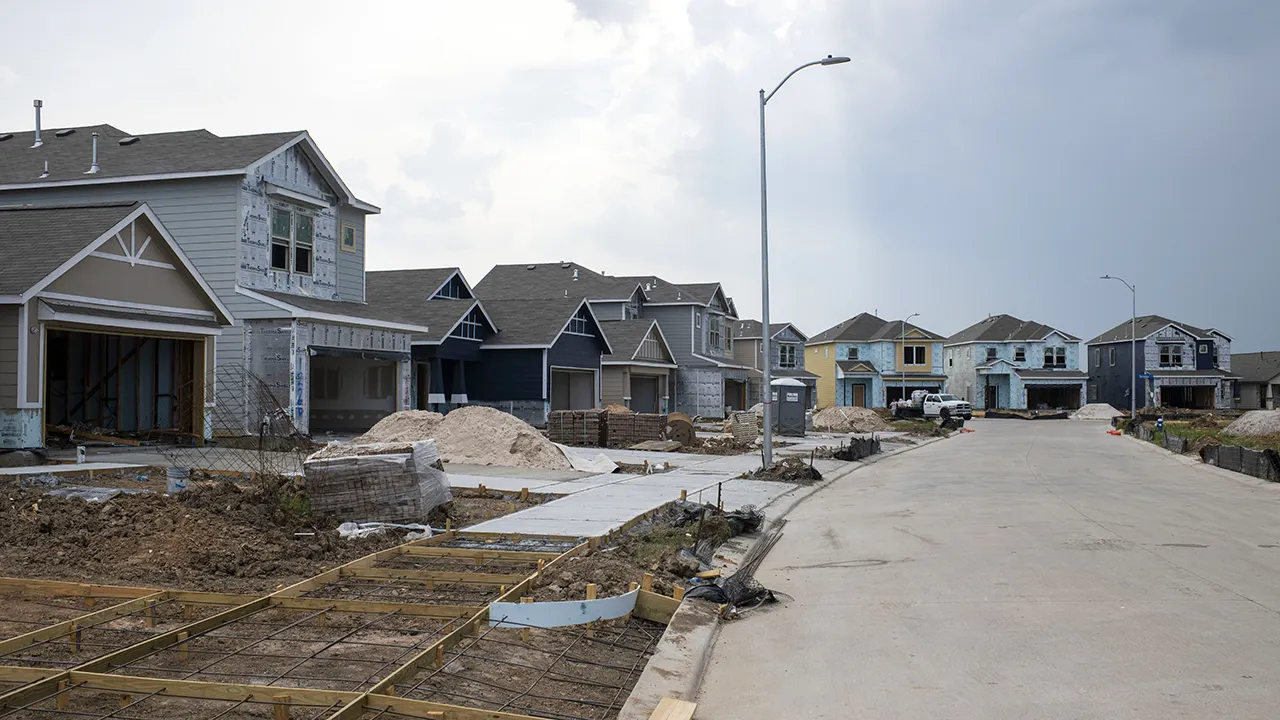
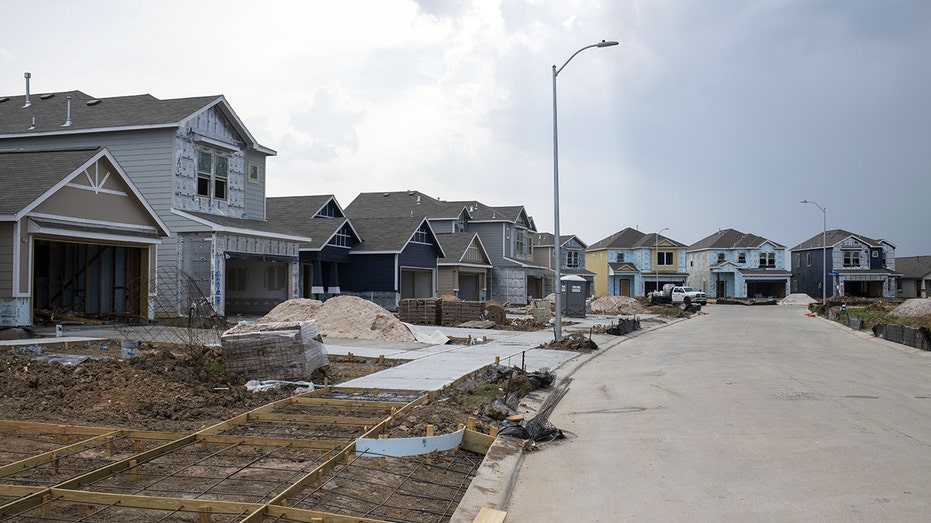
Homes under construction with storm in background

Realtor.com’s state report for housing affordability gave Indiana, Iowa and North Carolina A grades, while Texas received an A-. (Mark Felix/Bloomberg via Getty Images)

Indiana topped the list with a total score of 76.3 on the 100-point scale, earning an A based on strong affordability and homebuilding activity that helped it rise three spots from last year’s rankings. 

Advertisement

The median-priced home in the Hoosier State was $295,810 and required about 28% of the median household income of $71,469, which fell below the 30% benchmark for affordability.

Other states to receive A grades include Iowa, which has a median listing price of $282,886 and a median household income of $75,991, as well as last year’s leader South Carolina, with a median listing price of $363,896 and a median income of $67,758.

WHY GEN Z IS SAYING ‘NO’ MORE OFTEN – AND SAVING MORE MONEY

Texas ranked fourth with an A- grade, given the Lone Star State’s median listing price of $364,749 and median income of $76,585. North Carolina and Nebraska were the only two states to receive B+ grades.

Advertisement

The biggest risers in the report compared with last year were Delaware and Utah, which each jumped 12 spots. Delaware rose from 19th to 7th, while Utah saw its ranking rise from 29th to 17th.

Construction workers builds home with US flag in background

Realtor.com’s report is based on new construction activity as well as affordability metrics for buyers. (Joshua Lott/Bloomberg via Getty Images)

Six states received F grades on their report cards, with New York ranking last due to a $668,173 median listing price and median income of $82,657. The other five states that received F grades were all located in the Northeast or West, with Massachusetts, Rhode Island, Hawaii, California and Connecticut rounding out the bottom of the list in order of the worst grade to the best.

5 CITIES THAT NAIL THE RETIREMENT SWEET SPOT

Most of the states near the bottom of the rankings saw their rankings hold steady or change little from a year ago, as they continue to face high prices, limited land for building with restrictive zoning policies, and building costs outpacing what middle-income buyers can afford.

Advertisement

The biggest drops were three states which all fell eight spots in the rankings – Alabama fell from 13th to 21st, Maryland dropped from 23rd to 31st, and New Jersey slipped from 35th to 43rd.

Homes in Queens.

New York slipped into last place in the 2026 rankings. (Lindsey Nicholson/UCG/Universal Images Group via Getty Images)

Here’s the list of the Realtor.com report’s grades for each of the 50 states as well as the District of Columbia:

  • Alabama: C
  • Alaska: C-
  • Arizona: C
  • Arkansas: B
  • California: F
  • Colorado: C+
  • Connecticut: F
  • Delaware: B
  • District of Columbia: D+
  • Florida: B
  • Georgia: B
  • Hawaii: F
  • Idaho: C
  • Illinois: C
  • Indiana: A
  • Iowa: A
  • Kansas: B
  • Kentucky: C
  • Louisiana: C
  • Maine: C-
  • Maryland: C
  • Massachusetts: F
  • Michigan: C
  • Minnesota: C+
  • Mississippi: C-
  • Missouri: C
  • Montana: D
  • Nebraska: B+
  • Nevada: C-
  • New Hampshire: D+
  • New Jersey: D
  • New Mexico: C-
  • New York: F
  • North Carolina: B+
  • North Dakota: C
  • Ohio: C+
  • Oklahoma: B
  • Oregon: D-
  • Pennsylvania: C
  • Rhode Island: F
  • South Carolina: A
  • South Dakota: B
  • Tennessee: C
  • Texas: A-
  • Utah: C+
  • Vermont: D+
  • Virginia: C+
  • Washington: C-
  • West Virginia: C
  • Wisconsin: C
  • Wyoming: C-

GET FOX BUSINESS ON THE GO BY CLICKING HERE

Continue Reading

Business

‘Fire sale’ of council property ruled out as chiefs consider Eastern Avenue land

Published

on

Business Live

Gloucester City Council looking to pay back emergency loan

General view of Eastern Avenue, Gloucester.

General view of Eastern Avenue, Gloucester(Image: Google)

There will be no “fire sale” of property say Gloucester chiefs as they agree to look at selling land in Eastern Avenue to pay back the emergency loan which saved the council from bankruptcy.

Advertisement

Gloucester City Council leaders agreed last week to start the preparatory work to consider the feasibility of selling land and buildings at Eastern Avenue.

The authority was offered £15.5 million in exceptional financial support (EFS) from the Government earlier this year to balance its budget and avoid effective bankruptcy.

And selling off council-owned property or making them more profitable are part of the authority’s financial recovery plan.

The cabinet has agreed to appoint an agent to advise them on the potential sale of land.

Advertisement

The precise property being considered for sale has not yet been made officially public but it is understood to be land is in and around the council’s depot in Chase Lane.

Finance cabinet member Declan Wilson (LD, Hucclecote) told the meeting on June 10 that a decision on whether the site is sold would be taken at a later date.

“The council’s financial recovery plan requires us to look carefully at our property assets and consider whether some could either generate a capital receipt or remove an ongoing liability,” he said.

He said the property was identified in the first phase of assets to be considered and the council will appoint an external agent to advise the council on the feasibility of selling the site.

Advertisement

“This report does not yet commit the council to selling the site,” he added.

Gloucester City Council cabinet meeting on January 10, 2026.

Gloucester City Council’s cabinet meeting on January 10(Image: Local Democracy Reporting Service)

A further report with evidence on whether the property should or shouldn’t be put on the open market would be brought to the cabinet before any decision is made.

Council leader Jeremy Hilton (LD, Kingsholm and Wotton) said they are going to make sure they do a “thoroughly good job on the process”.

“We will find out whether it is viable for us to sell this land at Eastern Avenue,” he added.

Advertisement

“It proves one thing, that this council is not about doing a fire sale.

“It’s about making sure we put things on the market, we do it properly and maximise the income for the asset.”

To find all the planning applications, traffic diversions, road layout changes, alcohol licence applications and more in your community, visit the Public Notices Portal.

Advertisement
Continue Reading

Business

CoreWeave: The Liabilities Keep On Piling Up

Published

on

CoreWeave: The Liabilities Keep On Piling Up

CoreWeave: The Liabilities Keep On Piling Up

Continue Reading

Business

Fox Corp to Acquire Roku in $22 Billion Deal Creating Major Streaming and Content Powerhouse

Published

on

10 Must-Know Facts About Roku in 2026

NEW YORK — Fox Corporation announced Monday it has agreed to acquire streaming platform Roku Inc. in a cash-and-stock transaction valued at approximately $22 billion in enterprise value, marking one of the largest media deals of 2026 and signaling further consolidation in the rapidly evolving connected television and streaming industry.

Under the terms of the agreement, Fox will pay $160 per Roku share, consisting of $96 in cash and 0.9693 Fox Class A shares. Upon completion, Fox shareholders are expected to retain approximately 73% ownership of the combined company, with Roku shareholders holding the remaining 27%. The deal is expected to close in the first half of 2027, subject to regulatory approvals and other customary closing conditions.

Fox has secured $12 billion in bridge financing from Morgan Stanley to fund the cash portion of the transaction. The acquisition is anticipated to generate around $400 million in run-rate cost synergies and implies pro forma net leverage of approximately 2.8 times.

The combination brings together Fox’s robust portfolio of sports, news and entertainment content — including its popular Tubi free ad-supported streaming service — with Roku’s leading connected TV platform, The Roku Channel, first-party data capabilities and direct relationships with more than 100 million global streaming households.

Advertisement

Strategic Rationale and Industry Context

The deal represents a significant step for Fox as it seeks to strengthen its position in the streaming ecosystem amid intensifying competition from larger players like Netflix, Disney and Amazon. Roku has established itself as a neutral platform powering millions of televisions, offering users access to thousands of channels while generating revenue through advertising and platform fees.

By acquiring Roku, Fox gains greater control over distribution and user engagement while expanding its advertising reach in the fast-growing connected TV segment. The move allows the combined entity to leverage Fox’s premium content with Roku’s scalable technology and data insights, potentially creating new revenue opportunities through targeted advertising and enhanced user experiences.

Roku’s platform has been instrumental in the cord-cutting trend, helping consumers transition from traditional cable to streaming. The acquisition could accelerate innovation in ad-supported streaming while providing Fox with valuable first-party data to refine content strategies and audience targeting.

Advertisement

Market Reaction and Financial Implications

Fox Class A shares fell approximately 15.5% in Monday trading as investors digested the deal terms and potential dilution. Roku shares slipped around 0.8%, reflecting a modest premium in the offer price relative to recent trading levels.

The transaction highlights ongoing consolidation in media and technology, as traditional broadcasters seek to adapt to shifting consumer habits. Free ad-supported streaming services like Tubi have gained significant traction, and combining it with Roku’s platform could create a formidable competitor in the AVOD space.

Analysts expect the deal to enhance the combined company’s competitive positioning against pure-play streaming giants. The $400 million in anticipated cost synergies could help offset integration expenses and support margin expansion over time. However, the bridge financing and resulting leverage will require careful management as the companies integrate operations.

Advertisement

Background on the Companies

Fox Corporation, spun off from the larger 21st Century Fox assets, focuses on news, sports and entertainment through networks like Fox News, Fox Sports and the Fox broadcast network. Its Tubi service has grown rapidly as a leading free streaming option, appealing to cord-cutters seeking affordable entertainment.

Roku, founded in 2002, transformed from a simple streaming device maker into a full platform company. Its operating system powers smart TVs from multiple manufacturers and offers a comprehensive content marketplace. The company generates revenue through hardware sales, platform fees and advertising, with its ad business becoming an increasingly important growth driver.

The acquisition reflects broader trends in the media industry, where content owners and distributors are combining forces to compete more effectively. Similar deals in recent years have reshaped the landscape, as companies pursue scale, data advantages and diversified revenue streams.

Advertisement

Challenges and Regulatory Considerations

The transaction will face scrutiny from antitrust regulators concerned about concentration in the streaming and advertising markets. Both companies operate in competitive environments, but the combination of significant content and distribution assets could raise questions about market power.

Integration challenges will include aligning corporate cultures, technology platforms and advertising strategies. Retaining key talent from both organizations will be critical to realizing the deal’s strategic vision.

For Roku shareholders, the cash-and-stock structure provides immediate value while offering participation in the upside of the combined entity. Fox shareholders, while facing short-term dilution and leverage concerns, stand to benefit from enhanced scale and growth opportunities in streaming.

Advertisement

Industry Experts Weigh In

Media analysts described the deal as a logical evolution for both companies. The combination positions the new entity to better compete in a fragmented streaming market while capitalizing on the continued shift toward ad-supported viewing models.

The deal comes at a time of heightened activity in media M&A, as companies seek to adapt to changing consumer preferences and technological advancements. Streaming has fundamentally altered how content is consumed and monetized, prompting traditional players to pursue aggressive strategies.

Outlook for the Combined Company

Advertisement

Assuming regulatory approval, the merged entity is expected to benefit from complementary strengths. Fox’s content expertise paired with Roku’s distribution and data capabilities could drive innovation in personalized viewing experiences and targeted advertising.

Longer-term, the deal may serve as a blueprint for further consolidation as the industry continues to mature. The focus will be on executing integration plans efficiently while maintaining the innovation that has driven growth at both companies.

Investors will closely monitor developments as the deal progresses toward closing. The transaction underscores the strategic importance of scale and technological capability in the modern media landscape.

As Fox and Roku move forward with the proposed combination, the deal represents a significant milestone in the evolution of the streaming industry. It highlights the ongoing convergence of content creation and distribution platforms in an increasingly competitive environment.

Advertisement
Continue Reading

Business

Form 13F Carmignac Gestion For: 15 June

Published

on


Form 13F Carmignac Gestion For: 15 June

Continue Reading

Business

Monster Beverage sees ‘gigantic opportunities’ in China and India

Published

on

Monster Beverage sees ‘gigantic opportunities’ in China and India

The company is executing custom strategies to grow those markets.

Continue Reading

Trending

Copyright © 2025