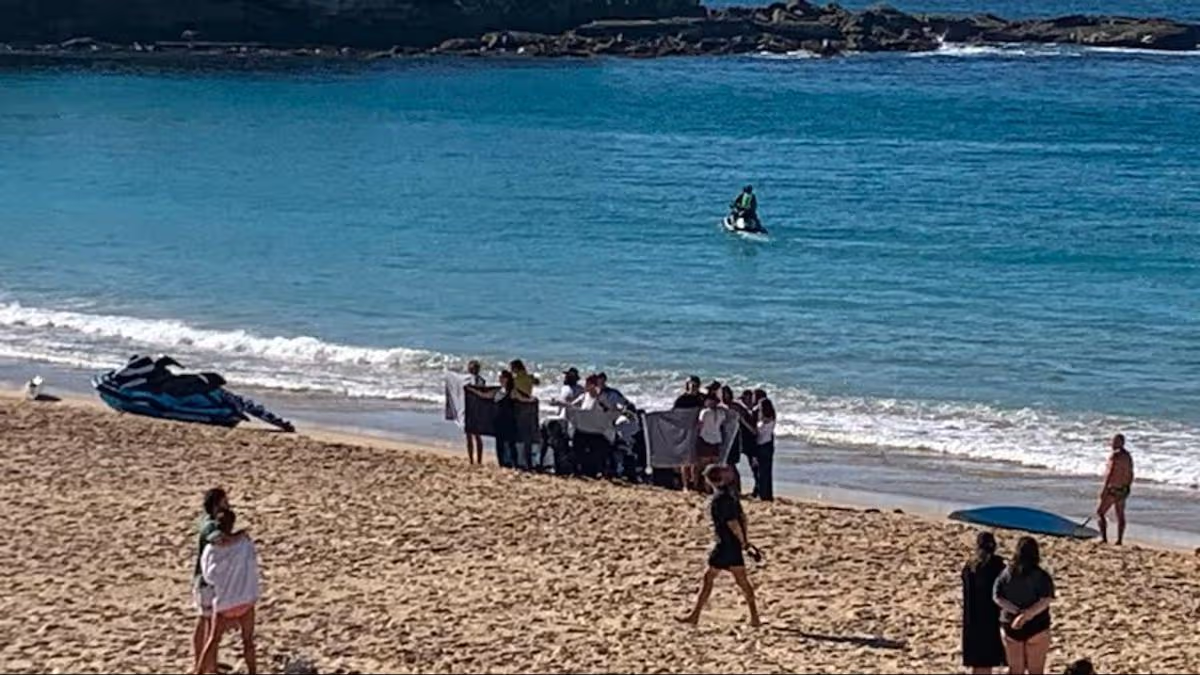
The incident took place near to Coogee Beach in southwest Sydney at around 11.15am local time this morning.
A woman has been critically injured off a popular Sydney beach in the latest in a spate of shark attacks in Australia. The woman, believed to be in her 30s, suffered serious leg and arm injuries in the attack at 11.15am (2.15am BST) off Coogee Beach, police said.
Advertisement
Three spearfishing divers have been killed by sharks off the Australian coast since May 16, bringing the total of fatalities in the nation this year to four. Australia has averaged between two and three fatal shark attacks a year since 2000, according to the Australian Shark Incident Database.
On Saturday, police said the victim was attacked while swimming. Bystanders pulled her from the water and commenced first aid on the beach before paramedics arrived, the statement said. The victim was taken to a rugby field near the beach from where she was flown by helicopter to hospital.
Get more Daily Record exclusives by signing up for free to Google’s preferred sources. Click HERE
Advertisement
Police described her condition as critical. Last Saturday, a 15ft white shark killed Daniel Turpin, 35, as he was spearfishing with family off Michaelmas Island near the port city of Albany in Western Australia state.
On May 24, 39-year-old spearfishing diver Michael Jensz suffered fatal head injuries in an attack on the Great Barrier Reef off Australia’s north-east coast. Bull sharks had been seen in the vicinity.
A week earlier, on May 16, a 13ft white shark fatally mauled 38-year-old spearfishing diver Steve Mattabonni off the coast of Perth, Western Australia. Australia’s other fatal shark attack this year occurred in January, when a 12-year-old boy died in hospital days after he was mauled by a bull shark in Sydney Harbour.
Last year, Australia recorded five fatal shark attacks. Attacks in Australia have become more common over the decades as the population has grown and activities such as surfing and scuba diving have gained in popularity.
Advertisement
Get Daily Record Premium for just £1 per month in exclusive offer to celebrate the world cup. Click HERE.
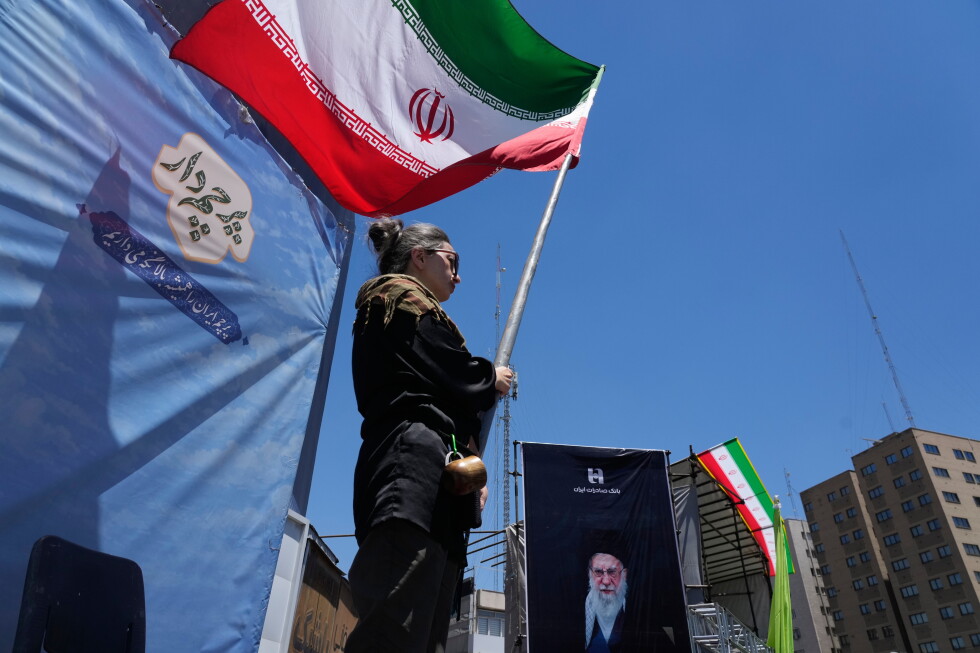
DUBAI, United Arab Emirates (AP) — Iran will immediately take steps to reopen the Strait of Hormuz once a tentative deal with the U.S. to end the war is signed and will be allowed to sell its oil without restrictions, according to leaked copies of an interim agreement that officials say broadly matches the document.
The accord, due to be formally signed in a ceremony in Switzerland on Friday, lays out that the U.S. would secure at least $300 billion to rebuild Iran after the war and work to end all American and United Nations sanctions imposed on Tehran if a final agreement addressing Iran’s nuclear program is reached.
The U.S. agreement to immediately allow Iran to sell its oil freely and the offer to eventually lift all sanctions represent major concessions that outstrip the terms of Iran’s 2015 nuclear deal with world powers, which U.S. President Donald Trump unilaterally withdrew America from in his first term, declaring it the “worst deal ever.” This new accord likely will draw intense criticism in Washington — and appears to be a major setback for Israeli Prime Minister Benjamin Netanyahu, who launched the war with Trump on Feb. 28.
The deal calls for an immediate end to all fighting in Lebanon between Israel and the Iranian-backed militia Hezbollah. That is one of the most delicate parts of the agreement because Israel has maintained it will continue to defend itself and to occupy vast swaths of Lebanon. Iran has said it must withdraw under the deal, although the leaked versions make no mention of withdrawal.
Advertisement
The two sides are to start 60 days of negotiations over a final deal that the Trump administration insists will prevent Iran from ever developing a nuclear weapon. The U.S. offers appear aimed at enticing Iran to strike an agreement.
But in the meantime, Iran appears to be getting benefits up front while making few concessions. Much of the agreement would restore the status quo before the war, including ending hostilities and reopening the strait, which is a crucial passage for the world’s oil and natural gas and whose closure created a historic energy crisis.
Other concessions to Iran — some of which are extraordinary, including the money for rebuilding, the full lifting of sanctions and the release of frozen assets — appear dependent on the progress of further negotiations on Iran’s nuclear program.
Advertisement
Sign up for Morning Wire:
Our flagship newsletter breaks down the biggest headlines of the day.
Advertisement
A person who was briefed on the memorandum of understanding after it was signed and another who viewed a copy beforehand said it largely matched the text of what was published by the Saudi-owned broadcaster Al Arabiya, which reported details of the deal Tuesday. The two people spoke on condition of anonymity because of the sensitivity of the discussions.
Another two officials in the Mideast, who spoke on condition of anonymity for the same reason, also said the versions published by Al Arabiya and Bloomberg broadly matched the final agreement.
The White House and other American officials have not published the terms and did not immediately respond to questions. Iran also has not published an official version of the deal. Iran’s semiofficial Tasnim news agency, close to its paramilitary Revolutionary Guard, claimed Wednesday that Bloomberg’s version had missing portions, without offering a full accounting.
Advertisement
The deal would provide relief to the global economy
The deal provides a major win for the global economy — the reopening of the Strait of Hormuz, the narrow mouth of the Persian Gulf through which a fifth of all oil and natural gas traded once passed before the war began. Since then, Iranian attacks on shipping and the threat to vessels effectively shut the strait.
The strait’s closure drove up energy prices around the world and made many basics, including food, more expensive. Iran let out some vessels that paid tolls, something never done before in the strait, which sits in the territorial waters of Iran and Oman and long has been considered an international waterway. The U.S. later provided military support to get other tankers out, but traffic through the strait was nowhere near levels before the war.
The deal calls for the U.S. to lift a blockade imposed on Iranian ports and for the strait to return to its prewar traffic levels in 30 days, while acknowledging Iranian mines may still be in its waters that need to be destroyed.
The deal provides major concessions to Iran
While the deal says that the eventual lifting of sanctions on Iran will depend on future negotiations, the U.S. will immediately issue waivers on Iranian oil sales.
Advertisement
Granting oil waivers directly at the start of the 60-day talks strips the U.S. of a major point of leverage over Iran. In the years before the 2015 nuclear deal, Iranian oil faced international sanctions limiting their sales. Only at the conclusion of the overall deal in 2015 were those sanctions lifted.
The interim deal also opens the door to ending all sanctions Iran faces from the U.S. and at the U.N. — though it says the schedule for that will be worked out later. Still, that is far beyond the 2015 deal, which only lifted some sanctions in exchange for Iran drastically reducing its enrichment and stockpile of uranium.
The accord would also provide Iran with at least $300 billion to rebuild after an intense U.S. and Israeli bombing campaign — an extraordinary figure and another major benefit for Iran. U.S. Vice President JD Vance has said Gulf Arab nations would provide that amount as investments in Iran.
The deal leaves much more to be resolved in future negotiations
The interim deal sets a 60-day window, which can be extended, to negotiate over limiting Iran’s nuclear program, which has been discussed at multiple rounds of talks during Trump’s second administration without success. Iran maintains its nuclear program is peaceful, though it has enough highly enriched uranium to build multiple atomic bombs, should it choose to do so, according to the International Atomic Energy Agency.
Advertisement
In the interim deal, Iran reiterates that it will never produce nuclear weapons — a promise that it also made in the 2015 nuclear accord. Iranian diplomats have long pointed to statements from the late Ayatollah Ali Khamenei that Iran wouldn’t build an atomic bomb. It remains unclear whether Khamenei’s son, Iran’s new Supreme Leader Ayatollah Mojtaba Khamenei, will follow that or not.
Trump has cited shifting goals for the war, including at times vowing it would end Iran’s nuclear and missile programs and its support for Hezbollah and other proxy groups in the region. He also suggested it could lead to toppling the Iranian government.
The interim deal falls short of all of these goals. The negotiations also exposed a rift between Netanyahu and Trump, the Israeli leader’s closest and most important ally, just as Netanyahu is seeking reelection. Netanyahu has come under heavy domestic criticism over the emerging deal but will be hard pressed to go against Trump, given Israel’s heavy reliance on the U.S. for diplomatic and military support.
___
Advertisement
Miller and Price reported from Washington, and Magdy from Cairo.
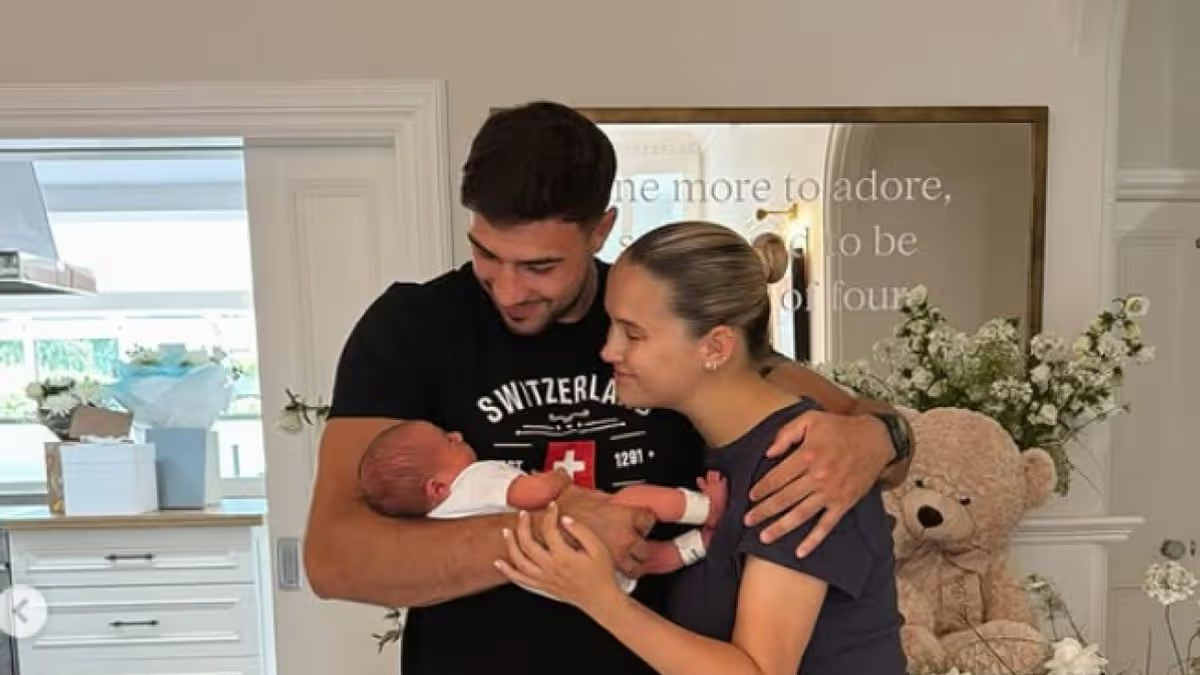
Tommy shared new photos of himself and Molly-Mae after welcoming their second child earlier this month
Fans were quick to spot Molly-Mae Hague’s latest decision when it comes to her relationship with Tommy Fury, as he melted fans’ hearts with a new family update.
Advertisement
The couple welcomed their second child into the world earlier this month, three years after the arrival of their first child, daughter Bambi. They confirmed the safe arrival of their new bundle of joy in a joint Instagram post on June 3.
They shared a black and white snap in which the new mum could still be seen in her hospital gown as she sat in her hospital bed. She and Tommy, who was standing by her side, could be seen looking down at their new arrival with smiles as Bambi sat opposite her mum and sweetly tended to her new sibling.
Click here to get the biggest stories straight to your inbox in our Daily Newsletter
While they didn’t reveal the gender or name of their new addition at the time, Molly-Mae captioned the sweet post: “….and then there were 4,” alongside a white love heart emoji. It was days later that the pair confirmed they are now proud parents to a son, sharing the news alongside a sweet video of Bambi meeting her baby brother for the first time.
Advertisement
The name reveal, however, came last weekend, as the former Love Island stars used Tommy’s return to the boxing ring to reveal their newborn son’s name, Midas, which was spelt out on the back of the boxer’s shirt and boxing shorts, during his fight against the former world’s strongest man, Eddie Hall.
Alongside pictures from his triumphant return to the ring, where he was cheered on by his partner just days after the birth of their second baby, Tommy wrote on Instagram on Sunday (June 14) evening: “Still undefeated. Huge respect to Eddie. You surprised me, pushed me and gave me a challenge. Thank you for accepting the fight and sharing the ring with me, it was a pleasure.
“This one is for my newborn son Midas [heart emoji]. And thank you to Molly for holding down the fort with our two beautiful children whilst I was preparing.” He added: “Thank you everyone who turned out last night, events like this wouldn’t be possible without you all. Now it’s time for some much-needed family time.”
Advertisement
The boxer, 27, has now returned to social media with a glimpse at how things have been looking since the arrival of his son. Tommy took to Instagram with more snaps of himself and Molly-Mae, also 27, enjoying their newborn bubble as they settle into life as parents-of-two.
“Lucky man doesn’t come close. Some of the best weeks of my life,” he captioned the post. But it was the picture of Tommy and Molly-Mae sharing a smooch following his victory over Hall at Manchester’s AO Arena on Saturday (June 13) that appeared to catch his followers’ attention.
@jodiemcenteer said: “Molly has the ring back on. So happy for the 4 of you.” @layla_caddy echoed: “Molly wearing her ring.” @iam_staceybee noted: “Molly is wearing her ring again.” @jeniece83 added: “I peep her ring back on!!”
Advertisement
It was only in April that Molly-Mae revealed why she was not wearing her engagement ring as she was quizzed by fans if Tommy was going to propose again, with their split coming just over a year after Tommy popped the question in a stunning Ibiza proposal.
Speaking in her YouTube vlog at the time, Molly-Mae said: “No, we’re not doing another proposal… I’m not wearing my ring and I don’t really wear my ring. Do you know what? I actually don’t plan to wear my ring either guys. But I also do still consider myself engaged and a fiancée even though saying that does give me the ick a little bit.
“No I don’t wear my ring and it’s not for the reason of me not feeling like I’m engaged or not a fiancée. I just actually don’t want to wear it because it’s almost too special. My ring is not even with me, it’s somewhere far away, locked away and very very safe.
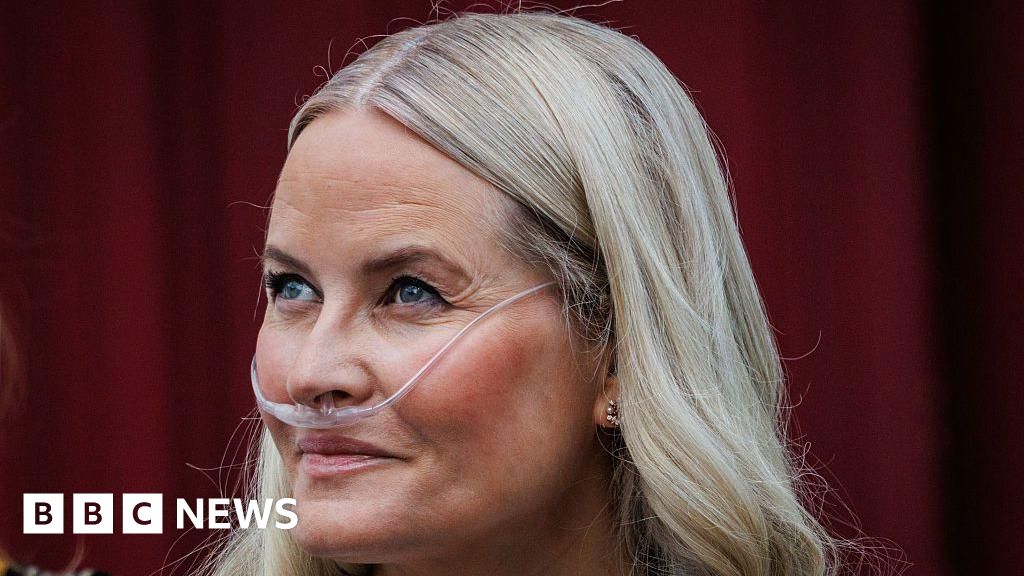
Høiby, 29, was four when his mother married Crown Prince Haakon and is not himself a royal figure. Ahead of the verdict on Monday, his legal team repeatedly and unsuccessfully sought his release from prison so he could spend time with his mother because of her declining health.
The incident happened on Dockside Road on Tuesday (June 16) when the lorry collided with a pedal cyclist around 11.15am.
The cyclist, a 72-year-old man, suffered a broken hip and was taken to James Cook University Hospital in Middlesbrough.
Cleveland Police has now launched an investigation, appealing for any witnesses to come forward.
Advertisement
A spokesperson said: “Police are appealing for witnesses after a man suffered a broken hip following a collision in Middlesbrough.
“The incident happened on Dockside Road around 11.15am on Tuesday, June 16, involving a tipper lorry and a pedal cyclist.
“The cyclist, a 72-year-old man, suffered a broken hip and was taken to James Cook University Hospital following the collision.
“Any witnesses or anyone who may have dash cam footage of the collision, is asked to contact Cleveland Police on 101, quoting reference number 115980.”
Danny Rohl has left Rangers after just eight months in charge to become Red Bull Salzburg’s head coach – with the club saying news of his replacement “will follow in due course”.
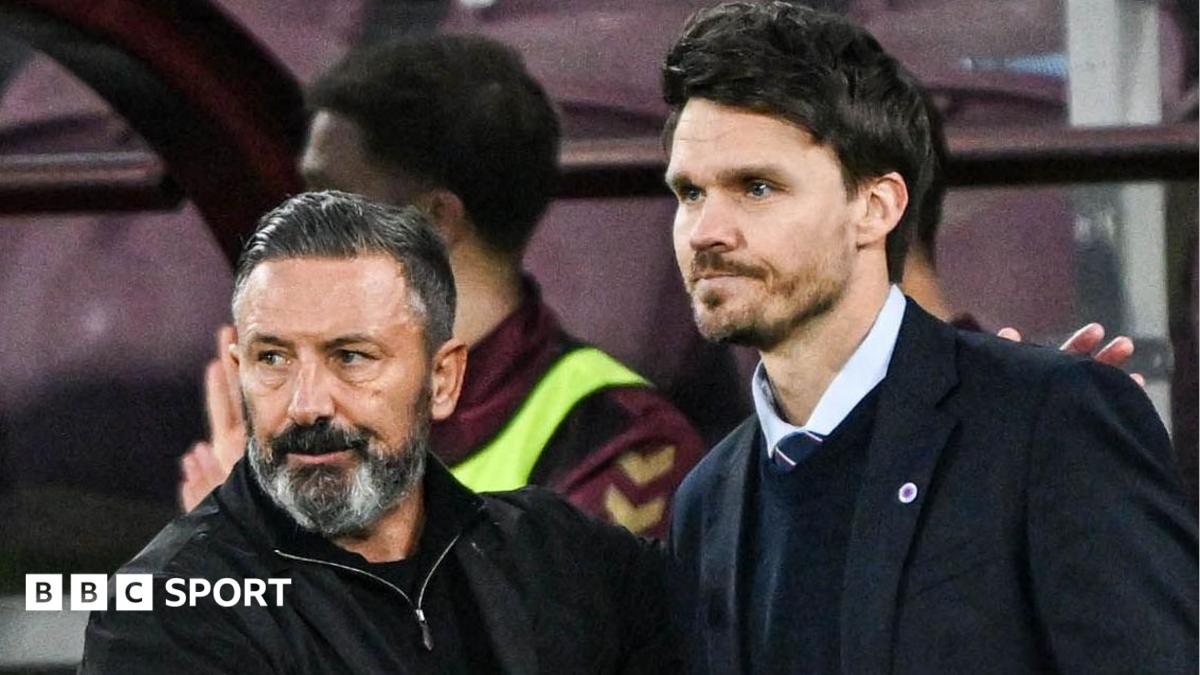
Hearts head coach Derek McInnes is widely expected to be the German’s successor as Rangers ready themselves to appoint a third boss in 12 months.
Rohl, 37, replaced Russell Martin in October and steered Rangers into a three-way title fight, but a post-split collapse yielded a third-place finish behind Celtic and Hearts as the Ibrox club ended the campaign without silverware.
Chairman Andrew Cavenagh publicly backed Rohl at the end of the season, but the German now returns to the Red Bull stable, having begun his coaching career at Leipzig under Ralph Hasenhuttl.
Advertisement
“I’d like to thank Danny for his service and commitment to Rangers,” Cavenagh said.
“He and his staff put in a significant amount of hard work during his time in charge, which we are greatly appreciative of.
“We wish them the best of luck moving forward.”
Rohl, who had two years left on his deal, departs to take over a Salzburg side that came third in Austria last season – the club’s lowest finish in two decades – and will enter the Europa League at the third qualifying round, the same stage as Rangers.
Advertisement
Daniel Beichler was sacked as Salzburg boss last month after just 14 games.
Rohl joined Hasenhuttl at Southampton in 2018, then moved to Bayern Munich as assistant to Hansi Flick and helped the club win the Bundesliga. He was then appointed Sheffield Wednesday manager in 2023.
“I’ve played with Derek, I’ve played against him, I’ve managed against him and know all about his make up, his strengths – and that’s why this appointment is the one that has excited me most at Ibrox since Steven Gerrard.”
Andy Newport and Andy Newport
11:29, 17 Jun 2026Updated 11:33, 17 Jun 2026
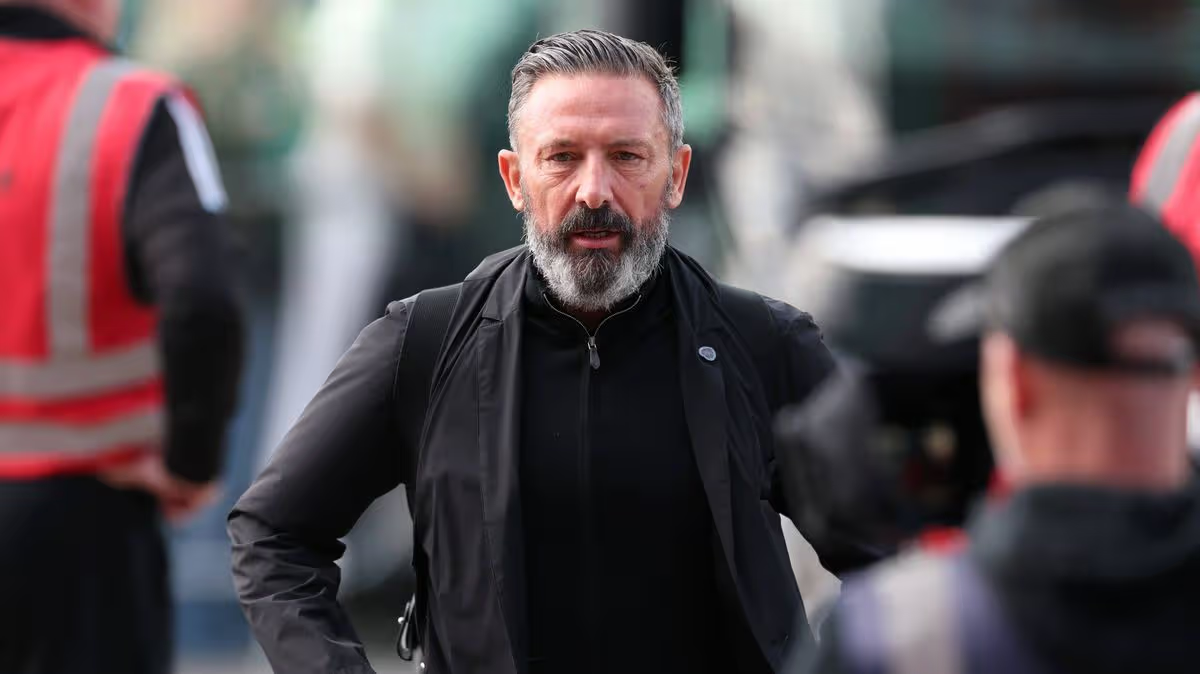
Derek McInnes knows exactly what it means to pull on the blue jersey. A lifelong Rangers supporter, he fulfilled every boyhood dream when he rose through the ranks to represent the club he adored.
Yet as far as his former team-mate Stuart McCall is concerned, it’s not his credentials as a Rangers man that make him the ideal candidate to step into the Ibrox dugout as Danny Rohl’s successor.
Advertisement
It’s the departing Hearts manager’s qualities as a leader of men that makes him precisely what is required in Govan.
McCall has shared a dressing room with his fellow nine-in-a-row hero and gone head-to-head with McInnes on Premiership touchlines, reports the Daily Record.
And it’s that first-hand knowledge which has persuaded the former Motherwell boss that his old friend is the most thrilling managerial appointment at Ibrox since Steven Gerrard arrived in Glasgow.
McCall told Record Sport: “I’m not saying he’s a Rangers man, so he’s the right choice.
Advertisement
“I’m saying this because I know how Derek will be.
“He knows the Premiership, he knows the mentality needed, the characteristics you want in a player. Yeah it helps he played for the club and has experienced the pressures that come with that.
“He’ll have gone through tough times at Ibrox himself trying to get past Gazza and myself to get a game! Wink, wink! Only kidding!”.
“But that Rangers link isn’t what makes him the right man. It’s the man he is himself that makes him the right choice.
Advertisement
“Right now, Rangers are a club and a team that need someone to galvanise them, to lead them through the tough moments. That’s where they’ve failed in recent seasons.
“I’ve played with Derek, I’ve played against him, I’ve managed against him and know all about his make up, his strengths – and that’s why this appointment is the one that has excited me most at Ibrox since Steven Gerrard.
“The fact is you can be the best training ground coach in the world but if you can’t communicate with your players and have the ability to relate to them and have them relate to you, then it won’t matter.
Advertisement
“I’ve seen loads of coaches down in England who have loads of great ideas on the game. But if you don’t know how to get the best out of the players on an individual basis those ideas will fall apart.
“So what makes me more comfortable with Derek than any other boss since Gerrard is that I know we’ve got a manager going in with a wealth of experience, knowledge of the club and the league and someone with a proven track record getting the best out of the players at his disposal.
“I remember having some right ding-dongs against Del when he was Aberdeen boss and I was at Motherwell. You always knew his team would be up for the fight, they’d go to the last whistle, they’d never chuck the towel in.
“Yeah, there might be the odd poor performance – but they were never weak.”
Advertisement
McInnes now inherits a side so fragile they squandered their opportunity to clinch last season’s title, losing four of their final five matches under Rohl.
The German was brought in to sort out the chaos left in Russell Martin’s wake and, while he managed to drag the Light Blues back into title contention, they swiftly fell away once the pressure mounted in the closing stages of the campaign.
However, McCall is backing his long-time friend to succeed where the German came unstuck – drawing on invaluable wisdom passed down from his mentors Sir Alex Ferguson and the late Walter Smith.
“If it does go ahead and he becomes the new Rangers manager I’ll be delighted with that,” said the Preston assistant boss.
Advertisement
“You know, over the last couple of years working down here with Sheffield United and Preston, I’ve come up against Russell Martin and Danny Rohl.
“They were both good coaches but I just don’t think it’s a necessity right now for Rangers to be looking for a good ‘coach’.
“I’m not saying Derek isn’t that. He’s a more than capable coach.
Advertisement
“What Rangers need is someone who can motivate people.
“I go back to what Sir Alex Ferguson told me. He said management is about being a good communicator, man manager, getting your recruitment right is massive. Throw in a little bit of luck and that is the four things you need to be successful.
“If I look back to Sir Walter, that was just as true for him. Obviously he and Archie knew the game inside out but I wouldn’t say they were outstanding coaches, if you know what I mean.
“But they were outstanding leaders, man-managers.
Advertisement
“Now I don’t necessarily think you need to know a club to be successful there but one thing Derek does have is a knowledge of the league and what is needed to win up there.
“Sir Walter knew how to get the very best out of the players he had and I think Derek is cut from the same cloth.”
When McCall assessed Rangers’ performance last season, he identified a squad lacking that crucial winning mentality.
He said: “All last season when people were getting excited about Rangers, I couldn’t see them winning that league in a month of Sundays because of the mentality at the club.
Advertisement
“When you sign players for a club like that, ability takes a back seat to mentality for me.
“And for me, that’s not going on social media to spout off because you’ve had one good game. Mentality is doing it week in, week out for a full season.
“For me, that’s why I’m so excited about Derek. It’s easiest thing in the world to play for Rangers when things are going well, but it’s one of the hardest places to play when it’s not.
“That’s when you need your big characters to stand up and that starts with the management.”
Ireland’s basic income for artists has been made permanent after research showed that it boosted the economy. Other nations have similar schemes. With more homegrown artists now coming from privileged backgrounds and AI disrupting the creative industries, should the UK follow suit?
On the first weekend of July last year, Britain’s flatlining economy got a boost from two unlikely sources: heavy metal pioneers Black Sabbath and Britpop heroes Oasis. Who said rock ’n’ roll was dead?
Leaving aside for a moment the cultural significance of these iconic bands reuniting, there was an impact that could be measured in cold, hard economics.
Advertisement
Estimates suggest that Sabbath’s farewell gig in Birmingham – a city that has cut its arts budget to zero – injected £20m into the local economy. Meanwhile, the UK leg of Oasis’ tour, which kicked off in Cardiff the same weekend, provided a £1bn shot in the arm to the nation’s economy. Not bad for two bands whose members were on the dole before achieving rock star status.
Advertisement
For working-class creatives, music has long been an escape from hard lives. Less so these days. The record industry that propelled the likes of Sabbath and Oasis to fame is unrecognisable today. The collapse in physical record sales in the free-for-all streaming age has gutted the sector, leaving musicians struggling to make a living.
The loss of grassroots music venues – a third have closed in the UK over the last 20 years – has compounded the issue. Cuts to arts budgets have been similarly devastating, while the rise of generative AI poses further headaches for creatives of all stripes, not just musicians – and all that amid a cost of living crisis.
According to the charity Arts Emergency, such headwinds are having a disproportionate effect on working-class, disabled and minority ethnic artists, who have long been underrepresented in UK culture.
“It’s a time of great precarity for the cultural sector and society in general,” says Neil Griffiths, CEO of Arts Emergency. “Imagination and creation are products of time and space, but there isn’t the time and space anymore. Society is unequal, while culture is undervalued and underfunded.”
Advertisement
As a result, often only the privileged have time to create. “Just one in 10 people who work in culture in the UK are from a working-class background,” says Griffiths.
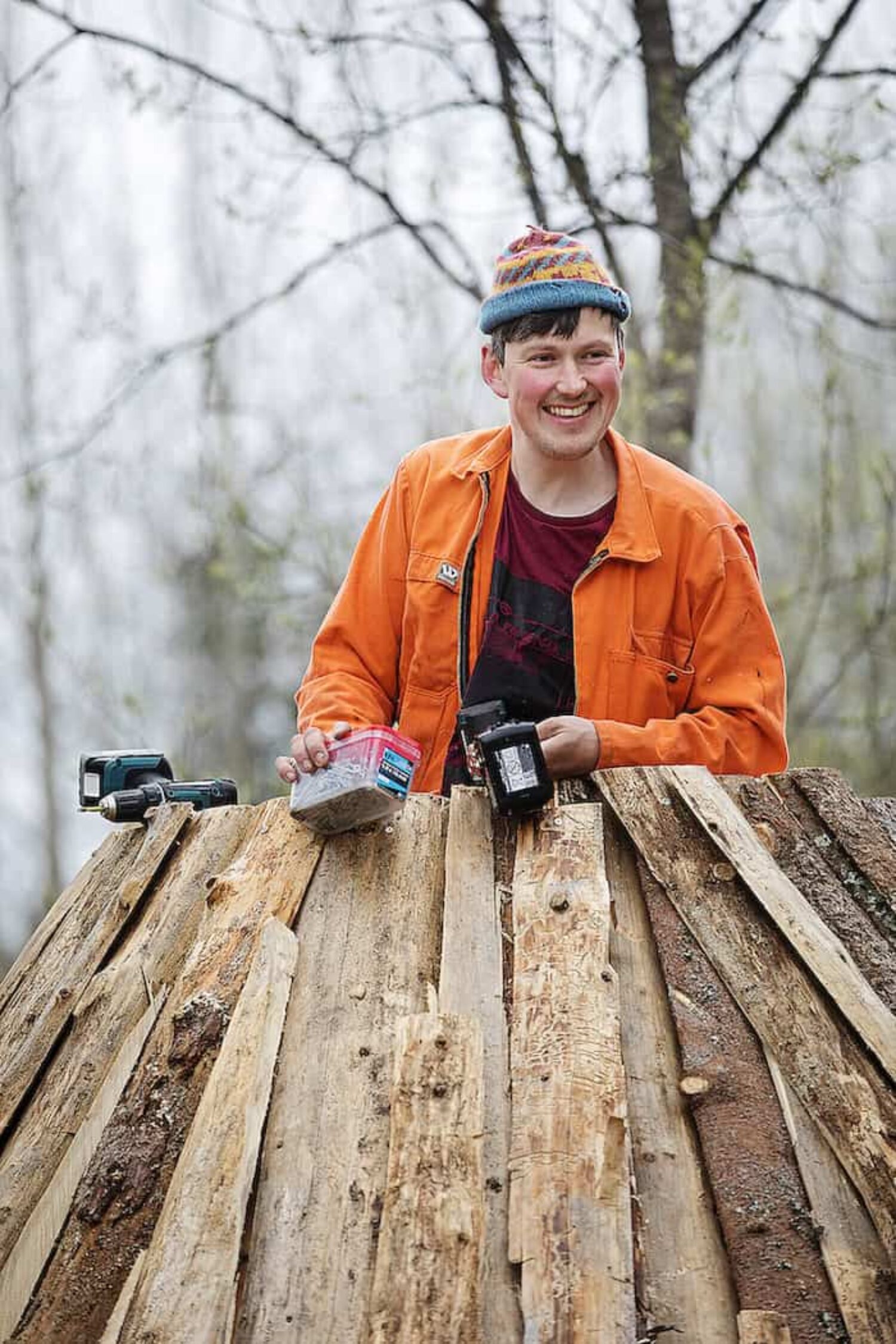
Artist Tobias Prytz, who creates large-scale installations using timber, is a beneficiary of Norway’s model for supporting artists, receiving around 330,000 NOK (£25,600) per year
Advertisement
For a country that glorifies Winston Churchill, the UK appears to have missed his memo on culture: “The arts are essential to any complete national life,” he said in a 1953 speech. “The nation owes it to itself to sustain and encourage them.”
Other nations recognise as much. In 2022, the Irish government trialled a first-of-its-kind basic income for artists to kickstart culture as the country emerged from the pandemic.
Offering participants a weekly stipend of €325 (£283), the €25m (£21m) pilot helped more than 2,000 artists. According to a study published last year, the scheme generated €100m (£87m) in “social and economic benefits” to Ireland’s economy, meaning it more than paid for itself.
Buoyed by the data, the Irish government made the scheme permanent in February. In the long history of basic income trials, it’s the first to become permanent.
Advertisement
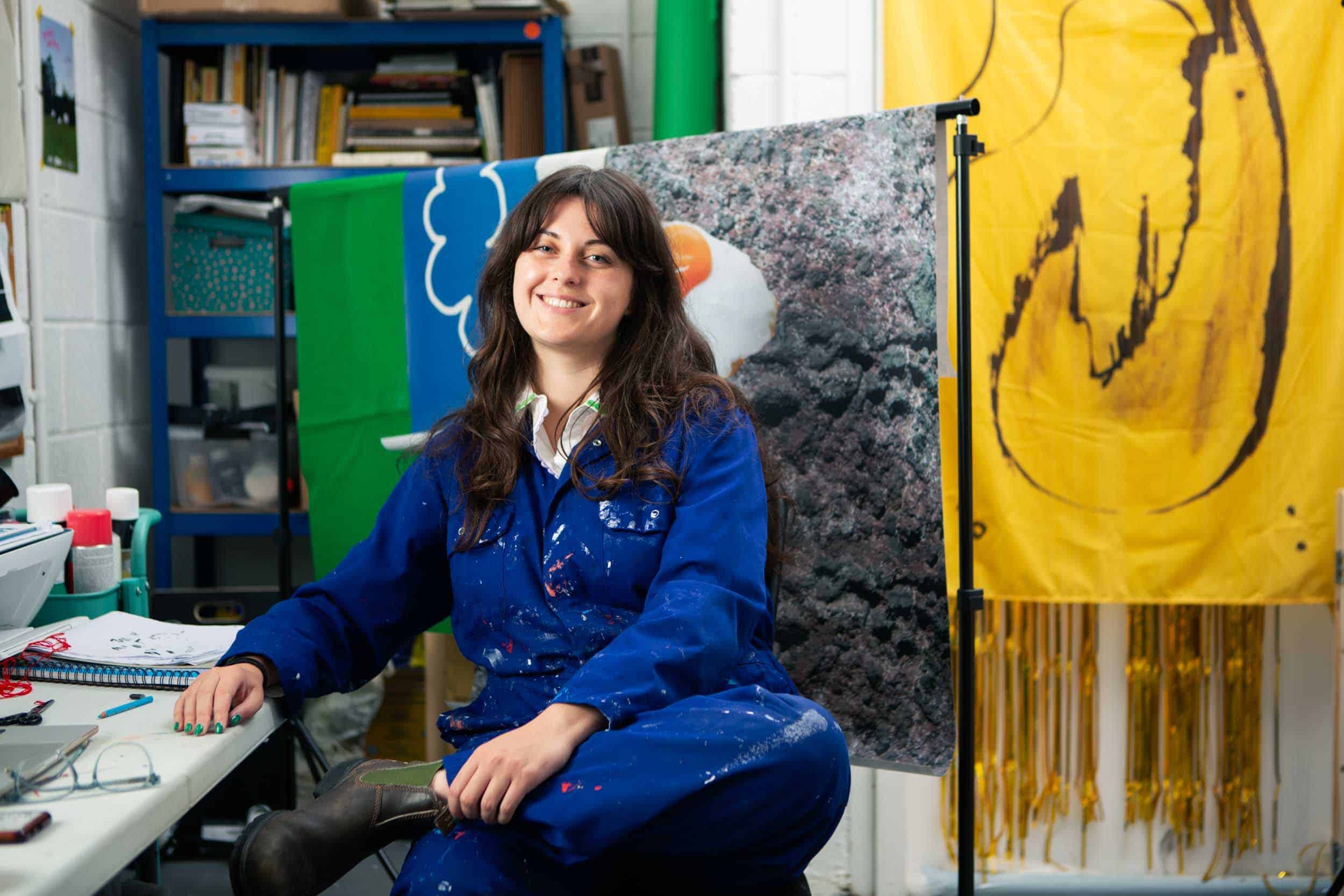
Multimedia artist Elinor O’Donovan, from Cork, is among the 2,000 creatives to have benefitted from the scheme (though at the time of going to press she was unsure whether she would re-qualify).
Imagination and creation are products of time and space but there isn’t the time and space anymore
“I don’t want to sell this idea that artists are special creatures, or whatever, but to be able to do creative work, you need time and space to think, and often that kind of creative thinking is quite difficult,” says O’Donovan.
“Before I got [the income], I worked part-time as a receptionist just to be able to afford to pay my rent. Now I work full-time as an artist. The basic income has given me the flexibility that being an artist requires.”
The income, says O’Donovan, enabled her to experiment.
Advertisement
“It’s allowed me to take risks that I wouldn’t have taken otherwise. My work is better and more ambitious. I made a film for the first time and now filmmaking is a big part of what I do. Having the extra income meant that I was able to pay other people to work with me on my film.
The Irish scheme is not without critics. Some question whether the government should be funding artists at a time when other groups are slipping through the cracks. Homelessness in Ireland is currently at a record high. The scheme is also narrow in scope; while 2,000 artists benefitted, many more applied. Universal it is not.
‘With all the shitty things that are happening in the world, to bring people together through culture has never been more important’ says artist Tobias Prytz
Advertisement
But, in an era when artwork is being used to train generative AI without their creators receiving any remuneration, Ireland’s scheme places a value on art and the people who produce it. “It’s so validating,” says O’Donovan.
While artists in the UK can apply for grants to help support their work, state funding for the arts has dried up in recent years. According to official data, local government funding for culture in England fell by 48% between 2009 and 2023. Similar declines were reported in Wales (40%) and Scotland (29%). This despite the arts sector contributing an estimated £10.6bn to the UK economy each year.
Like Ireland, Norway has pioneered its own model for supporting artists. A reboot of the traditional grant-funding concept, the statens kunstnerstipend programme offers a monthly salary to creatives for up to five years.
Advertisement
“It’s awarded to the practitioner rather than tied to a predefined project, and may be freely used for livelihood, exploration and production,” explains Trude Gomnæs Ugelstad, head of the committee for the scheme. “This design recognises that artistic development, like other research, depends on open-ended inquiry, long-time horizons and freedom to pursue directions whose outcomes cannot be fully specified in advance.
The scheme means that I don’t have to worry about money so I have more time to write my play
Artist Tobias Prytz, who creates large-scale installations using timber, is one beneficiary. He receives around 330,000 NOK (£25,600) per year, which is roughly half Norway’s average salary.
“At first I thought ‘who am I to get this money?’,” he says. “But it has given me space to develop as an artist without having to hustle between jobs. I don’t have to compromise my art.
“With all the shitty things that are happening in the world, to bring people together through culture has never been more important,” he says.
Advertisement
With research showing that engaging with culture improves health outcomes, governments have a motive beyond hard economics to support creatives. And while not every basement band will go on to be the next big thing, grassroots artists don’t need to sell out stadiums to enrich the cultural fabric of a nation.
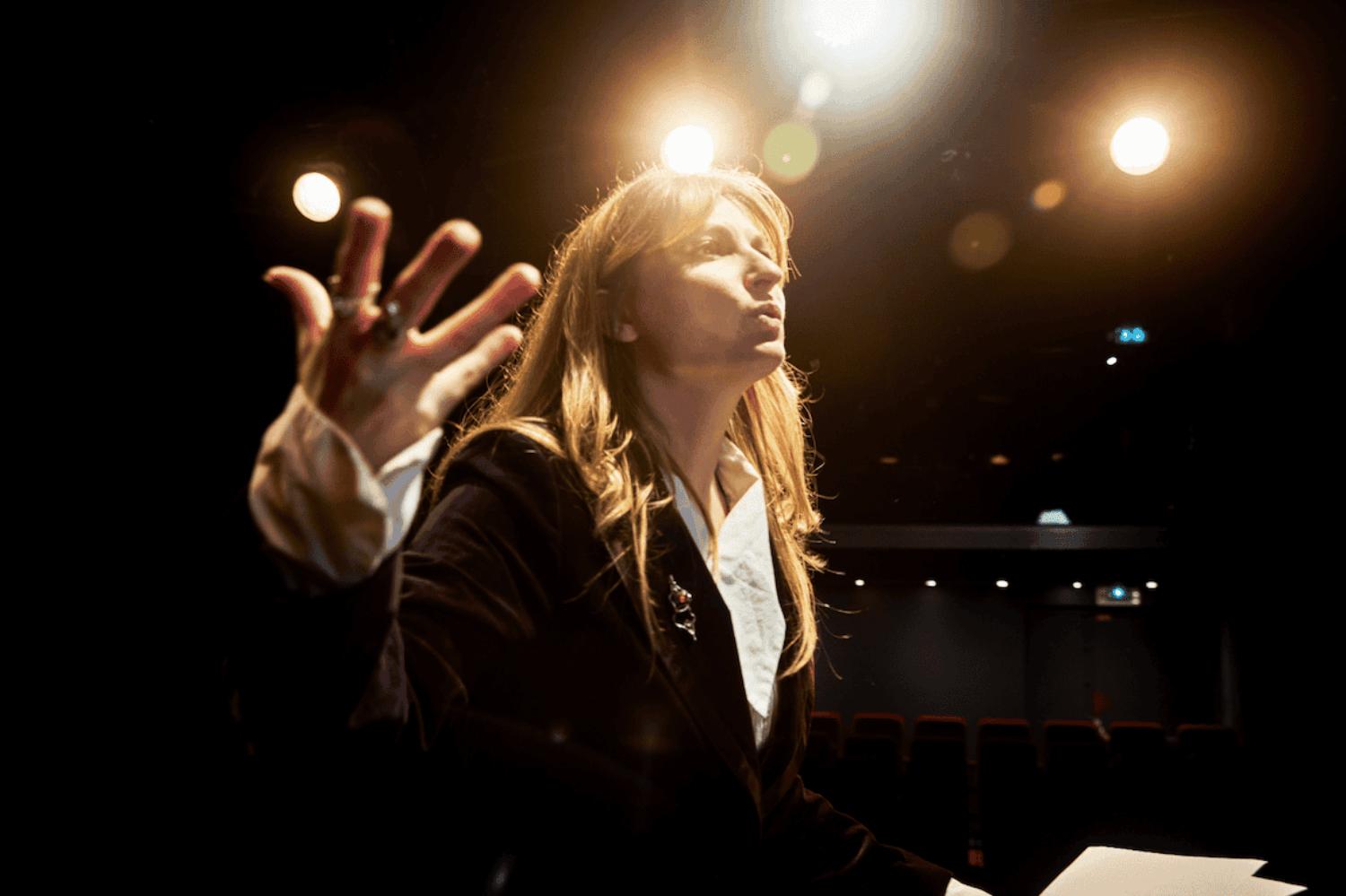
Esther Hammecker’s play was made possible in part by France’s income support scheme for artists
Advertisement
Parisian playwright Esther Hammecker is a case in point. In March, she put on her debut show in La Villette, Paris’s new cultural quarter where the city’s abattoirs used to be located. Her play– Scandaleuse, The Story of Cabaret – explores the lesser-told history of French cabaret, and was made possible in part by France’s income support scheme for artists.
“The idea that many people have of cabaret is influenced by the American vision of it, which is extremely extravagant,” she says. “But traditional French cabaret is basically just someone singing in a bistro while people have their meal. It’s more laid back, which is sort of what we’re going to do.”
Hammecker, who works part-time as an actor in a local theatre, La Scène Parisienne, is enrolled on France’s intermittents du spectacle scheme. The programme is an unemployment insurance scheme that allows performing artists and people in the entertainment industry to receive benefits during quieter periods. To qualify, participants must rack up 507 hours working in the cultural sector over a year.
“I only work at the theatre in the evenings and at weekends, so I have whole days to work on my projects,” she says. “[The scheme] means that I don’t have to worry about money or working other jobs, so I have more time to do my play.”
Advertisement
‘I only work at the theatre in the evenings and at weekends, so I have whole days to work on my projects’ says Parisian playwright Esther Hammecker
The scheme is still “stressful”, she admits. “You need to constantly find a new contract to meet your minimum hours. But it’s a blessing. I’m grateful.”
Advertisement
Given the parlous state of grassroots culture in the UK, and the myriad barriers faced by marginalised artists, there are calls to introduce a similar scheme to Ireland’s over here.
“There are risks,” admits Griffiths. “Will it capture people who are already privileged enough to be artists? Will it just be a Band-Aid when we need real structural change? And why just artists? We all need a safety net.”
“But,” he adds, “I think a basic income for artists is a pure necessity if we’re going to have anything like a thriving culture in this country. It’s vital that artists have the security and safety they need to be artists.”
Photography by Denis Vahey, Robbie Lee and Arne Terje Sæther
Advertisement
Be part of the solution
At Positive News, we’re not chasing clicks or profits for media moguls – we’re here to serve you and have a positive social impact. We can’t do this unless enough people like you choose to support our journalism.
Give once from just £1, or join 1,800+ others who contribute an average of £3 or more per month. Together, we can build a healthier form of media – one that focuses on solutions, progress and possibilities, and empowers people to create positive change.
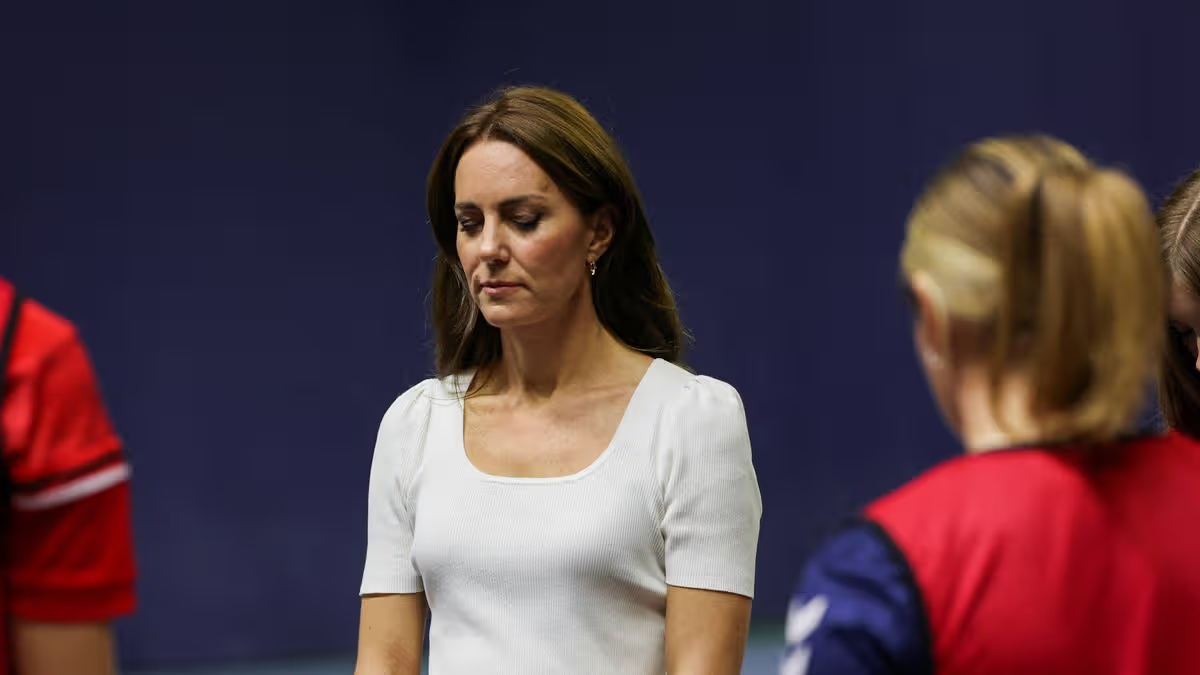
Princess Kate is widely reported to be a big fan of this type of exercise
It is no secret that the Princess of Wales has a deep passion for sport, and she rarely misses an opportunity to throw herself into a sporting challenge during royal engagements. This is especially true when it involves going up against her equally competitive husband, Prince William.
Advertisement
The couple have even instilled their love of sport in their three children, George, Charlotte and Louis, with Kate revealing during a visit to mark Rugby Inclusivity Day that Charlotte has inherited her competitive streak as well.
There is one notably demanding exercise that Kate is reportedly fond of, and given its high-intensity nature, it is likely at least partly responsible for her enviably lean physique. It has been widely reported that Kate is a big fan of CrossFit, a high-intensity interval training programme that combines strength work and conditioning.
Typically, it incorporates a variety of demanding bodyweight exercises alongside strength training using free weights, such as barbells or kettlebells. A session generally begins with the coach outlining all the exercises the class will undertake that day, followed by a warm-up and a skills practice, during which participants are taught the correct techniques required for that day’s training.
This is then followed by the workout itself and a cool-down period – according to CrossFit’s official website, and as reported by the Mirror.
Advertisement
Sport is clearly a significant part of Kate’s lifestyle, with yoga, cycling, daily running and trampolining with her children all reportedly featuring in her regular routine. During her time studying at the University of St Andrews, she also participated in both the hockey and tennis societies.
Her dedication to sport has been equally evident in the patronages she has taken on since becoming a senior royal. In early 2022, Kate assumed the role of patron of both the Rugby Football Union and the Rugby Football League – positions previously held by Prince Harry before he stepped away from his duties as a working royal in 2020.
Kate also serves as patron of the All England Lawn Tennis and Croquet Club, a role she inherited from the late Queen Elizabeth in 2016, which sees her as a familiar presence in the royal box at the annual Wimbledon Tennis Championships.
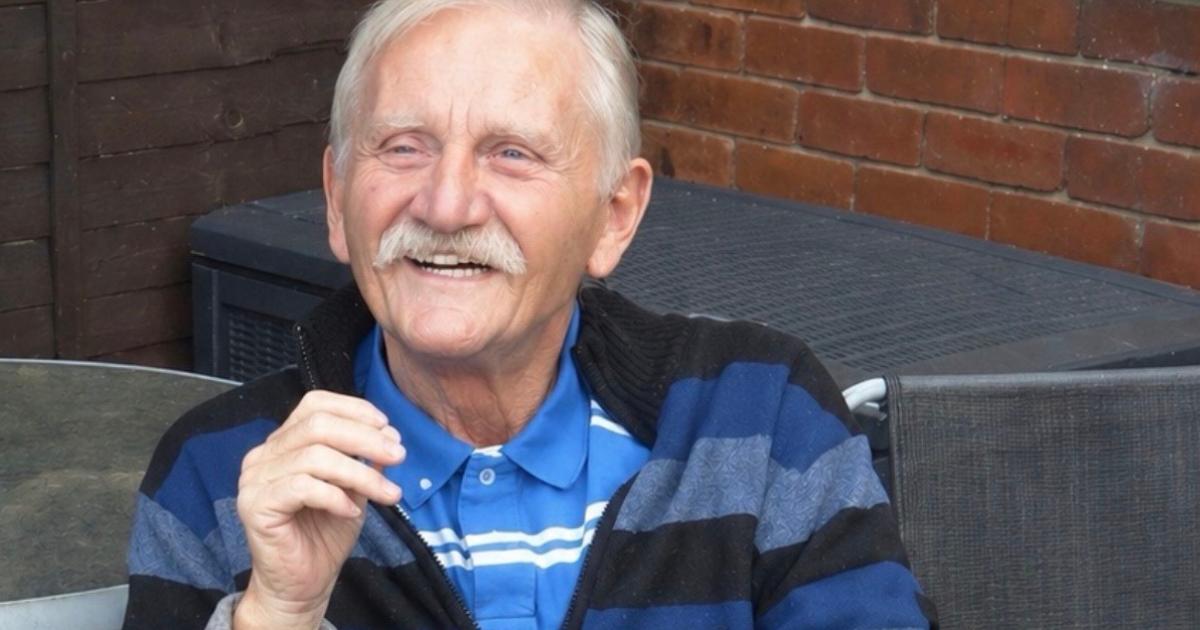
Malcolm Campbell, 84, died on January 15, 2023, at South Tyneside District General Hospital after inhaling smoke during a fire at his bungalow in South Shields the previous day.
Dementia, limited mobility, and hazardous behaviours such as smoking in bed had placed him at high risk, the inquest heard.
At Gateshead and South Tyneside Coroners Court on June 12, Assistant Coroner James Thompson concluded that South Tyneside social workers had missed “opportunities to assess Mr Campbell’s capacity” or seek his consent regarding where he lived or his safety.
Malcolm Campbell with his granddaughter Marie Campbell, bottom left, and daughter Sarah Desborough, right (Image: Supplied)
Mr Thompson said: “which were possibly causative of his death.”
Advertisement
Mr Campbell was rescued by firefighters but later died from the effects of carbon monoxide inhalation.
The fire had started from “his own discarded smoking materials” while he was in bed.
He managed to reach a chair in his lounge, where he was rescued by the fire service.
The bungalow had been fitted with a monitored alarm, door sensors, and other linked alarms to support his safety due to his frequent smoking in bed and growing mobility issues.
Advertisement
Malcolm Campbell (Image: Supplied)
He had been diagnosed with dementia in May 2022 and had been declining in terms of frailty, mobility and cognitive ability since November 2022.
An occupational therapist visiting in July 2022 raised concerns about Mr Campbell’s cognitive and functional ability.
The therapist questioned his understanding of the risks associated with smoking and his capacity to respond in an emergency.
By November 2022, Tyne and Wear Fire and Rescue Service had classified him as unable to self-rescue within five minutes of a fire starting.
Advertisement
They said Mr Campbell did not grasp the risks that could lead to a fire.
In the month before his death, he was admitted to hospital twice—once after a fall and again after being found wandering by carers.
On both occasions, hospital staff concluded he lacked capacity to decide on his care. Deprivation of Liberty (DoLS) authorisations were put in place, and Mr Campbell’s family were not informed of any capacity assessments or DoLS.
After both admissions, Mr Campbell was discharged back to his bungalow.
Advertisement
Carers visited him four times each day.
The coroner said social services considered his wandering a greater concern than his fire risk.
A tracking device was ordered but had not arrived before he was discharged.
Mr Thompson said no assessment of Mr Campbell’s capacity was undertaken by social workers during their involvement with him from November 2022 until his death.
Advertisement
The coroner found no measures had been put in place to prevent a fire in his home, and the reactive systems installed were not enough to mitigate the danger.
He said: “It would have been reasonable to consider removing Mr Campbell from that environment.”
Mr Thompson ruled that Article 2—the right to life—was engaged.
He said the state was aware of a real and immediate risk to Mr Campbell and was reasonably expected to take steps to protect his life.
Advertisement
He confirmed he would issue a Prevention of Future Deaths report to the Secretary of State for Health and Social Care.
He said: “There is evidence that since Mr Campbell’s death, the NHS Trust and the local authority have worked together to improve hospital discharge arrangements.”
Mr Campbell’s granddaughter Marie Campbell, and daughter Sarah Desborough, welcomed the coroner’s findings and expressed hope that lessons would be learned.
They said: “Today marks the conclusion of a long and difficult chapter for our family following the inquest into the death of our beloved father, grandfather and friend.
Advertisement
“We welcome the coroner’s conclusion and are grateful for the care and thoroughness with which he has investigated the circumstances surrounding his death.
“We hope that lessons will be learned from what happened and that meaningful improvements will be made so that other families do not have to endure similar circumstances in the future.
“He was deeply loved by his family and friends, and it is his life, rather than the circumstances of his death, that we wish people to remember.”
The family was represented by Leanne Devine of Leigh Day.
Advertisement
She said: “It is now on record that the state failed in its operational duty under Article 2 of the Human Rights Act to take reasonable steps to protect Malcolm’s life.
“This is a relief to Malcolm’s family, as is the Prevention of Future Deaths report that the coroner has said he will make.”
South Tyneside Council has been contacted for a comment.
The seventh day of the sentencing hearing of 30 people involved in the Ely riots is about to get underway. Today the defendants will learn their fate and know what sentence awaits them.
The courtroom is packed today with people in the public gallery, barristers and members of the press. Today will be the first time sentence is passed upon some of the defendants.
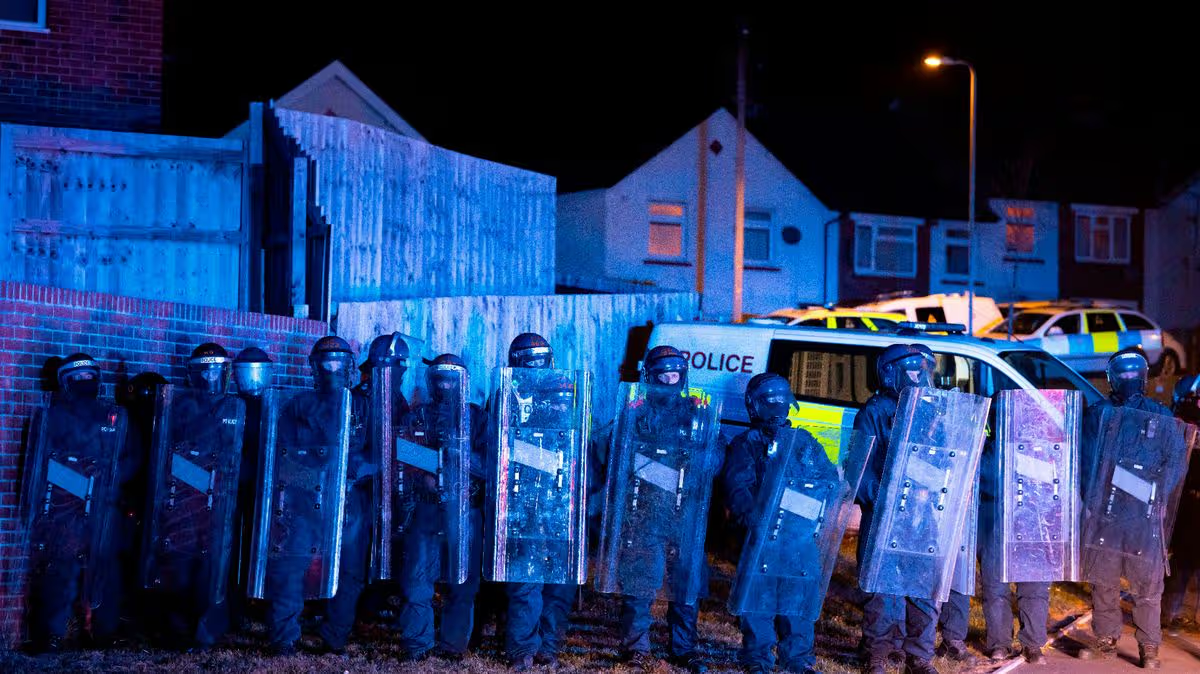
Violence began following the deaths of two teenage boys in an electric bike collision on May 22, 2023. Around 150 people attended the riot which saw hours of violence and vandalism take place on the streets on and near Wilson Road in the west Cardiff suburb.
Kyrees Sullivan, 16, and Harvey Evans, 15, were killed while riding an electric bike through the streets in the area. The two young boys were involved in a fatal collision and were later pronounced dead at the scene. Stay in the know by making sure you’re receiving our daily newsletter
The mothers of the two teenagers attempted to run to their children, grief-stricken and in desperation, but their path was blocked by the police.
Shock and sadness quickly turned to distress and anger at how the police were handling the scene and as rumours circulated that the police were responsible for the death of Kyrees and Harvey who had previously been pursued by a police van.
Police officers to set up a cordon to protect the scene. As time went on a larger proportion of the crowd became hostile towards the police with that hostility quickly escalating to the point the police were facing a flat-out riot.
Advertisement
Hundreds of police officers were directed to assist colleagues as missiles were thrown from the crowd including bottles, bricks, plasterboard, and fireworks.
Cars parked in the street were rolled over and set alight, doors were taken off their hinges and thrown at officers, mattresses were set alight, and petrol bombs were thrown with one police officer engulfed in flames. Helicopters were overhead filming what went on below.
On Wednesday, Lee Robinson, Tyler Stapleon, Michaela Gonzales, Ashdon O’Dare, Jordan Bratcher, Harvey James, Luke Williams, Jaydan Baston, Keiron Beccano and McKenzie Pring are due to be sentenced. See the full 30 being sentenced here.










































You must be logged in to post a comment Login