Carvana’s new vehicle franchise for Stellantis includes personalised displays and a vehicle “playground” for consumers for each of its core U.S. brands.
Courtesy Carvana
DALLAS — Carvana is aiming to bring its online strategy for selling used vehicles to sales of new cars and trucks.
Advertisement
But don’t expect the company to actually sell you a vehicle at one of its seven Stellantis franchised dealerships.
Instead, the online vehicle retailer said it intends to use such franchised dealerships as service locations, test drive centers and potentially “playgrounds” for consumers to decide what vehicle they would like to buy through Carvana’s online platforms, marking a stark contrast from how traditional franchised dealers handle new products.
“Every single car that we sell, whether it’s used or new, is online,” Tom Taira, Carvana president of special projects who’s leading the new vehicle operations, told CNBC during an interview at its franchise in Texas. “That’s a very inherent difference. Even coming into the store, you’re buying it online, and that’s a big difference in how people think about it.”
Through its used vehicles sales, Carvana has become the most valuable auto retailer in the U.S. with a more than $70 billion market cap. Carvana’s target with the new vehicle business is to grow its market share and customer base as well as assist used vehicle sales through trade-ins and other means, according to Taira.
Advertisement
If the company is successful, the strategy could cause a ripple effect across the U.S. franchised dealership model, which the National Automobile Dealers Association reports includes 16,990 retailers that topped $1.3 trillion in sales last year.
This week marks the first time Carvana has publicly talked about its plans for new vehicles since it purchased its first Chrysler-Dodge-Jeep-Ram franchised store for Stellantis early last year in Arizona. Its network has since grown to other Carvana-popular markets in Sacramento and San Diego, California; Dallas; Atlanta; Cleveland; and Boston.
“When we got into new cars, we said the only way we’re going to make this happen is to ensure that it goes the Carvana way. That we actually sell cars exactly the same way that we do to used car customers,” Taira said during a media event at its Dallas location. “Why break something that already works?”
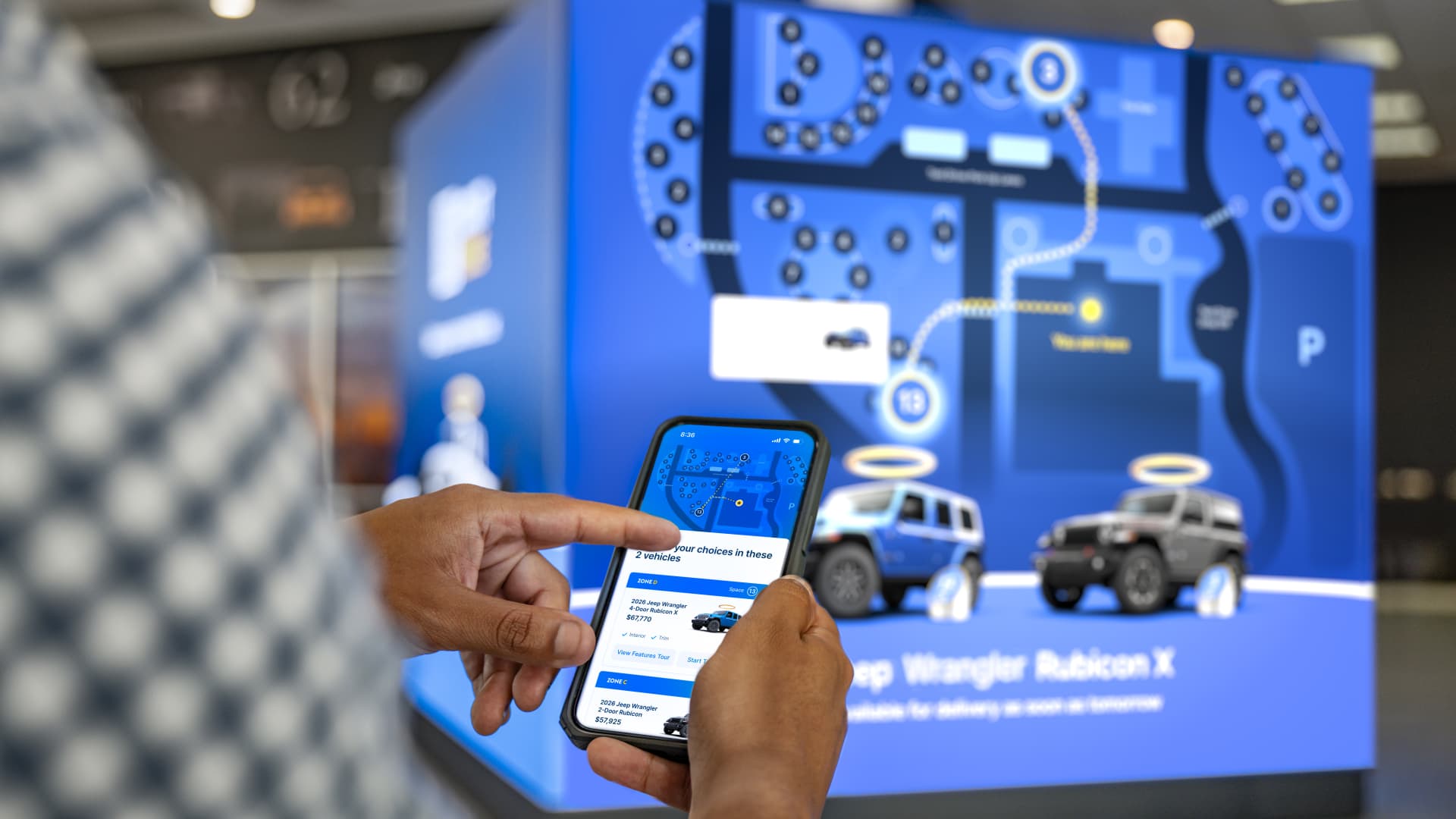
Customers visiting Carvana’s franchised dealership in Texas are encouraged to use their smartphones and QR codes to navigate the location and new car buying process for the online vehicle retailer.
Advertisement
Courtesy Carvana
Carvana spent roughly $171 million on its acquisitions of new Stellantis vehicle franchised dealerships, excluding its most recent purchase of a retailer in Ohio, according to public filings. The company declined to disclose any further investments in the stores to implement its strategy.
Taira and the company also declined to disclose Carvana’s new vehicle sales so far or its future expansion plans for additional brands or other Stellantis dealerships. CNBC previously confirmed that the company has quickly grown its new vehicle sales, including a location in Arizona becoming the top-selling dealer in the country for Stellantis.
“We believe that this was worth it to us, as long as we could go out and increase share and increase the pie,” Taira said. He declined to comment on whether the new vehicle business is profitable.
Advertisement
To be able to integrate its new vehicle sales into its current website, as first reported by CNBC, Carvana was approved as a certified website provider for Stellantis instead of utilizing mandated third-party companies. Several franchised dealers said they believed that was a unique benefit for Carvana.
Stellantis, in an statement to CNBC, said Carvana operates as a “corporate owner” of its brands, similarly to other large publicly traded companies such as Lithia and AutoNation.
“We apply the same consistent standards and criteria to all dealer partners, and any organization that meets our qualifications is eligible to operate as a franchisee,” the automaker said, adding that Stellantis “certifies tools and services that will enhance our program and be beneficial to our network. All certified providers must complete a rigorous onboarding process and meet program standards and requirement.”
Test drives, vehicle ‘playground’
Carvana has replaced a traditional franchised dealer’s vehicle lot at a facility in Dallas with a “playground” with each Stellantis brand having a theme, including. Chrysler minivans having a soccer net.
Advertisement
Michael Wayland / CNBC
Carvana is using a location in Dallas as a test center for its foray into new vehicle sales. The facility looks like a traditional Stellantis dealership from the outside, but the consumer process for purchasing a vehicle and the responsibilities of its employees are unprecedented.
Couches and chairs replace cubicles and sales offices. There are no finance and insurance departments, and instead of an army of commission-based employees, the facility has associates that are paid hourly to assist customers — if they want the help.
The experience is meant to be as self-guided as a customer wants. By scanning QR codes located on 10-foot-by-10-foot screens inside the building or on vehicles and displays outside, shoppers can customize a vehicle, learn about a product’s features and conduct test drives before deciding whether to purchase anything. If they do decide to buy something, it’s online and not originated from a sales person, the company said.
Advertisement
The “playground” has roughly 50 vehicles divided by brand, with each having a theme. Jeep has an off-road display. Dodge has race tracks, including a Carvana-themed Charger pace car and part of a traditional track fence barrier. Chrysler minivans, meanwhile, have a soccer net and Ram’s area is truck-centric.
Customers visiting Carvana’s franchised dealership in Texas are encouraged to use their smartphones and QR codes to navigate the location and new car buying process for the online vehicle retailer.
Courtesy Carvana
Carvana is not committing to expanding the exact experience to its other franchised dealer locations, but Taira told CNBC that the overall process of online sales, vehicle testing and service are expected to be consistent throughout the locations.
Advertisement
“I think the business case and the case for additional stores comes out through this location first,” he told CNBC, adding that it built out the store in weeks. “Is it important for us to launch a second? No, I think what’s important is that we get this right. … There’s no giant plan to build test drive centers everywhere.”
Vehicle inventory constraints
Once a customer decides to test drive or even purchases a vehicle from the location, that’s where the process can get more complex, depending on what model a consumer wants.
Taira said the company chose to purchase Stellantis dealerships for the automaker’s breadth of brands as well as its variety of products, which can be a double-edged sword when it comes to consumers actually finding the exact vehicle they want to test drive or purchase.
Unlike a traditional dealership that stockpiles vehicles for customers to test drive before purchasing, at the Texas facility, Carvana has roughly 50 display cars on its “playground,” with twin vehicles for test drives. It had roughly 3,000 new vehicles for sale nationwide compared to more than 60,000 used models as of Wednesday morning, according to its website.
Advertisement
This means that a customer may not be able to test drive the exact vehicle or even model they’re purchasing, but the online process tries to match the best test drive vehicle possible with what they want. It also describes what’s the same and what’s different.
Carvana’s stock over five years.
Looking at the Texas location’s system for vehicles such as an $87,000 Ram 1500 RHO performance model, the closest thing on-site for a test drive was a roughly $61,000 Ram 1500 Big Horn with the same interior and four-door configuration but no other feature matches, including its performance engine.
Advertisement
It’s why traditional automotive dealers have large vehicle inventories, especially for pickup trucks that have a litany of build options and wide bandwidth of performance specs.
Taira said Carvana is continuing to take lessons learned from its year-plus experience of selling new vehicles into its day-to-day operations. He said the company is learning what vehicles to keep in stock and is working to ensure customers know they are buying a new vehicle rather than a used one.
“We’re going through all this technology. This is brand new,” Taira said. “All these things are active, meaning the amount of progression we’re going to make over the course of the next days to weeks to months.”
Taira said the company prioritizes new vehicle sales to local customers, much like it does for used vehicles, to avoid additional costs, but it does use its nationwide logistics network and more than 100 U.S. Carvana locations when necessary.
Advertisement
Carvana will service vehicles
A major question of Stellantis franchised dealers and Wall Street analysts before Carvana revealed its new vehicle plans was how the company planned to service the new products it sells.
Taira said the company, for the time being, will operationally run its service departments like a traditional franchised dealer, but with its guiding strategy of transparent, non-haggling pricing and “hassle-free” customer experience.
“As it relates to how you actually do service, they’re traditional. It’s a traditional setup in that way,” he told CNBC. “In that way, what we’re doing … as it relates to service, we believe the same principles that we have with selling cars.”
A map with a QR code shows the Jeep vehicle area in Carvana’s vehicle “playground” at its franchised store in Dallas, Texas. Each vehicle has a number as well as an accompanying QR code to learn about the vehicle.
Advertisement
Courtesy Carvana
At the end of the day, selling cars is Carvana’s core business, but servicing vehicles has historically been a lucrative market for franchised dealers, along with customer financing, which Carvana has always focused on for its business.
Much like its used vehicles, Carvana is currently only accepting cash or offering financing through the company itself, including selling consumer auto loans it originates to institutional investors and partner banks, such as Ally Financial, to maintain liquidity.
Taira did not dismiss the possibility of Carvana offering leasing or using Stellantis’ financial services, which have been highly profitable for automakers, but said the offerings would need to seamlessly integrate into its current online selling platforms.
Advertisement
“Part of what makes this great, this experience, is what we already know. What we already know is the system that we have in place,” he said. “That does not mean that integration isn’t something that we’re going to be as part of our learning and experimentation going forward.”
Four of India’s largest retail brokerages — Zerodha, Groww, Angel One, and Upstox — have received regulatory clearance from the International Financial Services Centres Authority (IFSCA) to operate as intermediaries out of Gift City, Gujarat’s international finance hub. The approvals mean all four platforms are now positioned to let Indian retail investors trade US stocks.
Filings disclosed by the IFSCA show that Groww and Upstox were granted Global Access Provider (GAP) licences, while Zerodha and Angel One were cleared as broker-dealers. Zerodha and Groww received their approvals on June 2, with Angel One following on June 12.
The two licence types work somewhat differently. A GAP licence holder connects directly with a broker based in the US to handle trade settlement. A broker-dealer, by contrast, settles trades indirectly, by routing through a GAP-licensed partner that in turn works with the US broker.
With this approval, Groww and Upstox join a group of platforms already offering cross-border investing as GAPs, including earlier entrants such as Vested Finance and IndMoney. These offerings are built around the Reserve Bank of India’s Liberalised Remittance Scheme (LRS), which permits resident individuals to remit up to $250,000 abroad each year — money that can, among other uses, be invested in foreign stocks.
Advertisement
Appetite for overseas investing appears to be building. The Economic Times reported on June 15 that US stock trading volumes out of India rose by roughly 20% in a single Friday session, a jump it linked largely to investor excitement around SpaceX’s stock market debut. Separately, RBI data shows Indian investors put around $440 million into global equities in March, a 43% increase over the $306 million invested in the same month the previous year.
Live Events
Zerodha’s move into this space had been signalled earlier: CEO Nithin Kamath said last October that the company was working to enable US stock investing on its platform and had already applied for the necessary licences. Also read: $6 billion double dhamaka coming: Jio and NSE likely to file for India’s biggest IPOs this weekMore broadly, activity in Gift City is picking up, with a growing number of fintech firms seeking licences that would let them tap into cross-border money flows to and from India. The Economic Times reported separately on May 5 that payment companies were also exploring the Gift City route, looking to set up wallet services within the international finance centre that could support similar cross-border transfers.
(Disclaimer: Recommendations, suggestions, views and opinions given by the experts are their own. These do not represent the views of The Economic Times)
Welcome to my author’s site. As an avid follower of SeekingAlpha, I take great interest in articles posted as the subject matter is often something that appeals to me. However, I will sometimes encounter an article that I might not agree with. My purpose is to present an alternative view to readers that they may want to take into account. I hope you find my articles interesting and informative.
Analyst’s Disclosure: I/we have a beneficial long position in the shares of YB either through stock ownership, options, or other derivatives. I wrote this article myself, and it expresses my own opinions. I am not receiving compensation for it (other than from Seeking Alpha). I have no business relationship with any company whose stock is mentioned in this article.
Seeking Alpha’s Disclosure: Past performance is no guarantee of future results. No recommendation or advice is being given as to whether any investment is suitable for a particular investor. Any views or opinions expressed above may not reflect those of Seeking Alpha as a whole. Seeking Alpha is not a licensed securities dealer, broker or US investment adviser or investment bank. Our analysts are third party authors that include both professional investors and individual investors who may not be licensed or certified by any institute or regulatory body.
CNBC parent Versant announced Wednesday that the business news network will simulcast 11 WNBA games this season. The matchups will also air on Versant’s USA Network.
Last September, Versant and the WNBA announced an 11-year media rights agreement that includes both regular-season and postseason games. As part of that deal, USA Network will air at least 50 games annually.
Coverage on CNBC begins Wednesday night with the defending champion Las Vegas Aces taking on the Phoenix Mercury at 10 p.m. ET. That game is the second of a doubleheader that kicks off with the New York Liberty and Chicago Sky at 8 p.m. ET on USA Network.
Advertisement
The goal of the simulcasts is to ensure that fans don’t miss any of the action, according to USA Sports President Matt Hong. As doubleheaders can occasionally run long, the simulcast will allow viewers to choose which game to tune into if they overlap.
The simulcast will also expose the WNBA to an affluent audience on CNBC as the league seeks to capitalize on booming popularity.
“It’s really a promise that we make to not only the WNBA, but all our league partners that we’ll look for new audiences for them,” Hong said Wednesday on CNBC’s “Squawk Box.”
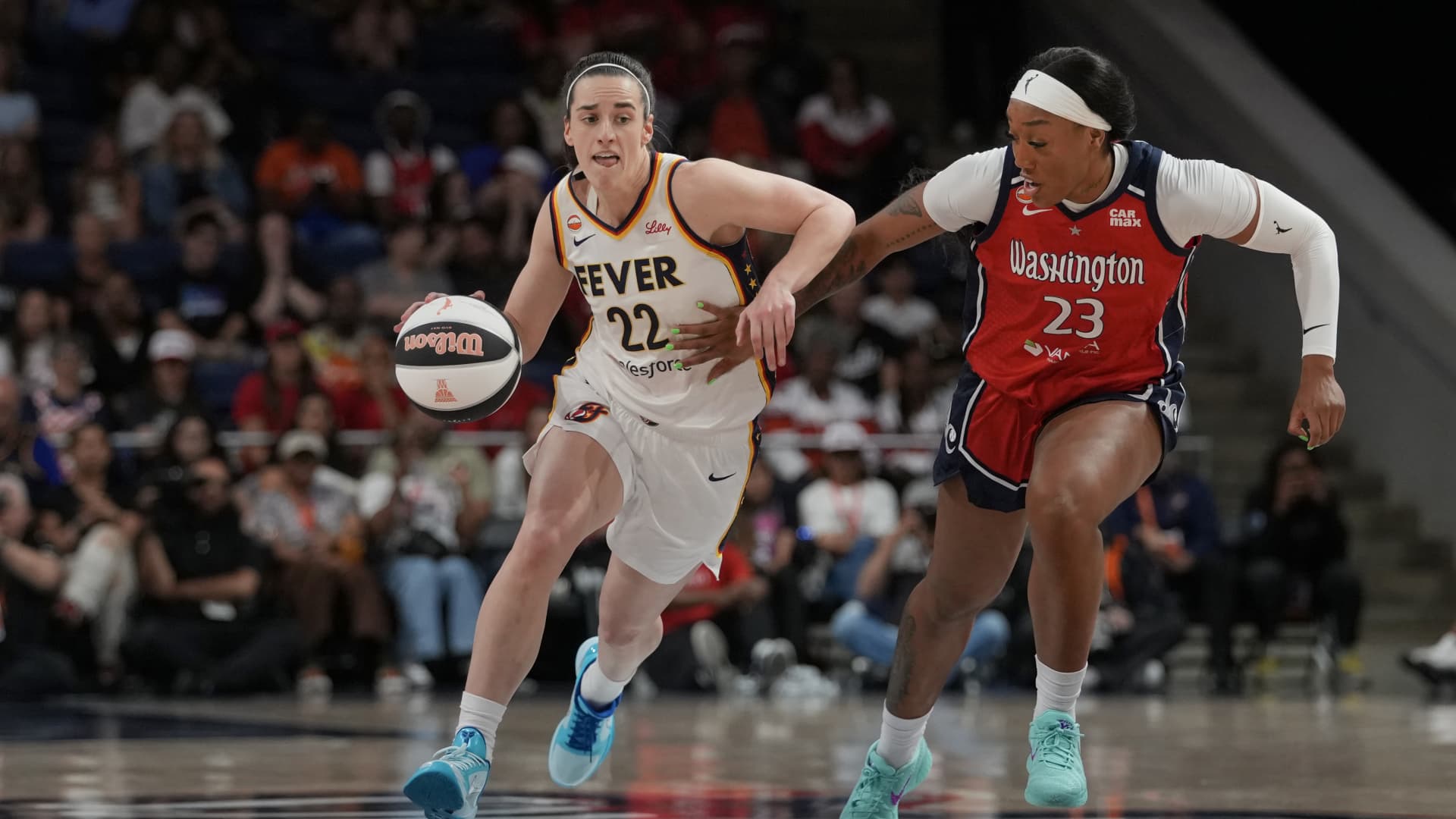
Wednesday also marks the debut of Indiana Fever guard Sophie Cunningham as an athlete contributor for Versant. She will be involved in studio coverage for both games of the doubleheader on both networks.
Advertisement
Get the CNBC Sport newsletter directly to your inbox
The CNBC Sport newsletter with Alex Sherman brings you the biggest news and exclusive interviews from the worlds of sports business and media, delivered weekly to your inbox.
The simulcast agreement marks a fresh chapter for CNBC as it explores new revenue streams and navigates a corporate spinout from its former parent, Comcast.
While CNBC has previously carried Olympic events and occasional golf events, the WNBA simulcast represents a further push into live sports for the cable channel.
Advertisement
“Sports is obviously must-see television. I’d put live news and live financial news in that category as well,” said Hong.
That could help Versant in future distribution deals with pay TV providers. Versant is now negotiating these carriage deals on its own after previously tying its programming to NBCUniversal when it was part of Comcast.
Versant’s brands also include MS NOW, E!, SyFy and Oxygen, in addition to digital platforms Fandango, Rotten Tomatoes, GolfNow and GolfPass.
Since news of Versant’s spin-off, Hong has signed five new, expanded or extended rights deals.
Advertisement
The company has deals with several other professional sports leagues including NASCAR, the PGA Tour, LPGA, and Pac-12 football and basketball.
Disclosure: Versant is the parent company of CNBC.
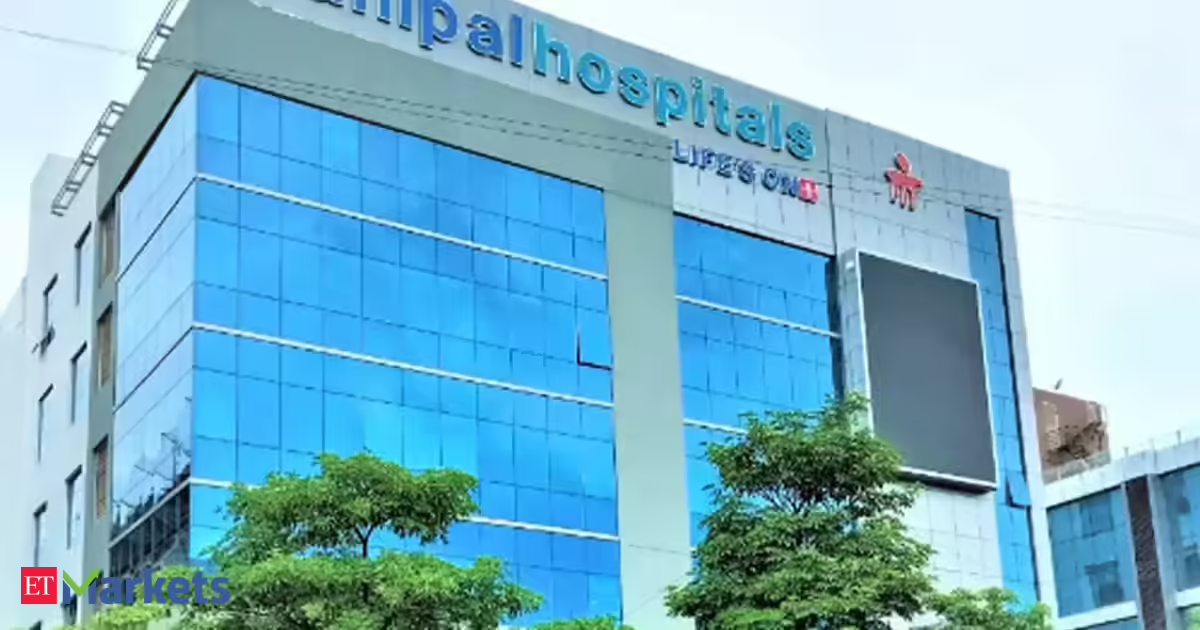
Manipal Health Enterprises Pvt., which runs the Manipal Hospitals chain, is likely to launch its initial public offering as early as next month, according to people familiar with the matter.
The Temasek Holdings Pte.-backed company has completed investor meetings and is targeting a valuation of about $10 billion, the people said, asking not to be identified as the information is private.
Deliberations are ongoing and details of the offering, including its size and timing, could still change, the people said. A representative for Manipal Hospitals didn’t immediately respond to requests for comment.
Manipal’s planned offering could be India’s first billion-dollar IPO of the year. A successful listing may also help build momentum after a slow start to equity capital markets, coming off two record-setting years. Companies in India have raised about $3.6 billion through first-time share sales so far in 2026.
Advertisement
Manipal Hospitals filed its draft prospectus with India’s market regulator in March. The proposed share sale includes a secondary offering of as many as 43.23 million shares, or about a 3.66% stake, by existing investors, as well as a fresh issue of shares worth about 80 billion rupees, according to the filing.
Live Events
The company is working with advisers including Kotak Mahindra Capital Co., Axis Capital Ltd., and the local units of Goldman Sachs Group Inc., JPMorgan Chase & Co., Jefferies Financial Group Inc., UBS Securities and DBS Bank Ltd. on the potential listing, according to the prospectus.
With combined experience of covering technology companies on Wall Street and working in Silicon Valley, and serving as an outside adviser to several seed-round startups, Gary Alexander has exposure to many of the themes shaping the industry today. He has been a regular contributor on Seeking Alpha since 2017. He has been quoted in many web publications and his articles are syndicated to company pages in popular trading apps like Robinhood.
Analyst’s Disclosure: I/we have no stock, option or similar derivative position in any of the companies mentioned, and no plans to initiate any such positions within the next 72 hours. I wrote this article myself, and it expresses my own opinions. I am not receiving compensation for it (other than from Seeking Alpha). I have no business relationship with any company whose stock is mentioned in this article.
Seeking Alpha’s Disclosure: Past performance is no guarantee of future results. No recommendation or advice is being given as to whether any investment is suitable for a particular investor. Any views or opinions expressed above may not reflect those of Seeking Alpha as a whole. Seeking Alpha is not a licensed securities dealer, broker or US investment adviser or investment bank. Our analysts are third party authors that include both professional investors and individual investors who may not be licensed or certified by any institute or regulatory body.
Car giant wants to sell to ‘millionaires and billionaires’ in America
10:35, 17 Jun 2026Updated 11:49, 17 Jun 2026
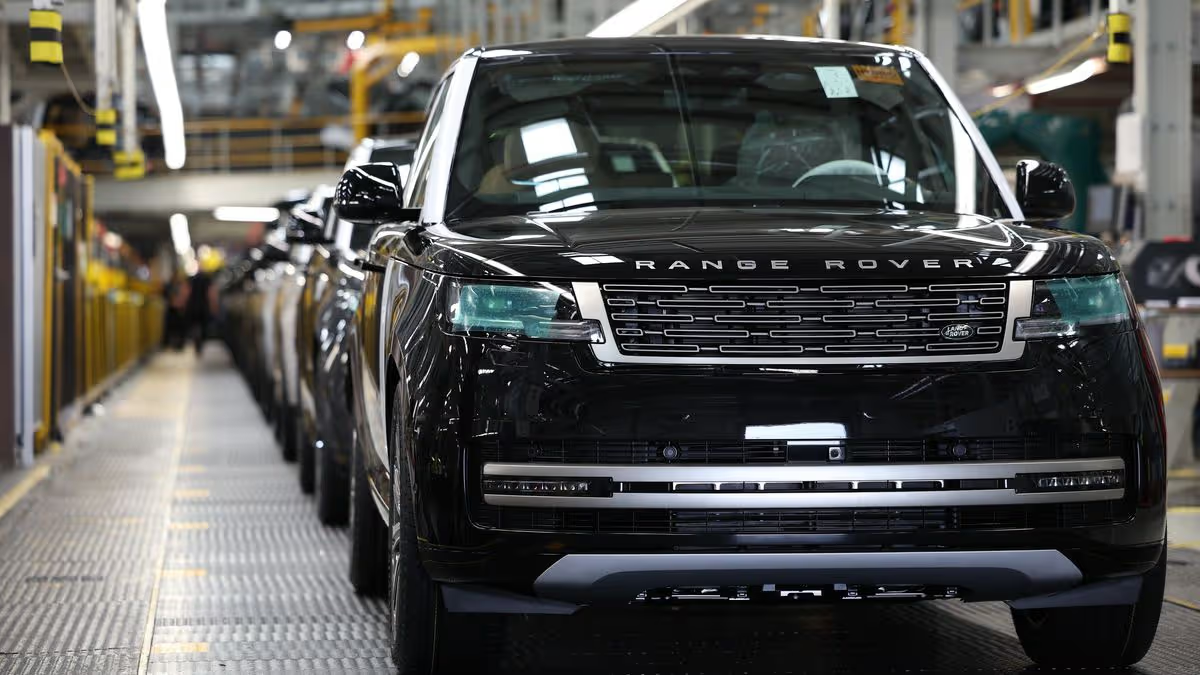
A Range Rover on the production line at the Jaguar Land Rover plant in Solihull(Image: Adam Vaughan/EPA/Bloomberg via Getty Images)
Jaguar Land Rover (JLR) has announced plans to focus on wealthy North American buyers as it bids for ‘double digit’ revenue growth and tweaks its electric vehicle plans.
JLR this morning issued an update on its Reimagine strategy to transform the business amid the global shift to electric vehicles.
Advertisement
The West Midlands based group, which also has a large factory at Halewood in Merseyside, said today that it was targeting “medium-term double‑digit revenue growth by leveraging its House of Brands strategy to cater to different customer segments and diversify its sources of growth”.
JLR has accelerated its push into the electric vehicle market, but this morning its CEO PB Balaji said there was “no way” it would phase out petrol vehicles entirely as they were still in demand particularly in the US and the Middle East.
The company announced changes to its upcoming Range Rover, Defender and Discovery vehicle launches, with more hybrid options available alongside fully electric ones.
It said there would be more “flexibility” added to its electric vehicles built at Halewood, with more hybrid engine options, and more details on the latest Halewood-built Range Rover will be revealed later this year. Solihull-built Range Rover Electric and Range Rover Sport Electric models will be launched later this year and will include hybrid and full electric options.
Advertisement
JLR recently signed a Memorandum of Understanding with fellow carmaker Stellantis to explore product and technology development opportunities in the US. The company today confirmed that it would be focusing on the Defender brand in the US as part of that collaboration.
The company says that as well as its key markets in the UK, Europe and China, JLR will focus on the US. JLR said it planned to design exclusive vehicles for the US market to cater for the “extensive and increasing luxury opportunity there”.
PB Balaji, JLR CEO, said: “As we enter a critical business delivery phase of our Reimagine strategy, launching five new products over the next two years across our incredible House of Brands, now is also the time to evolve our plan to offer global markets greater propulsion choice to unlock growth and build resilience.
Advertisement
Inside Jaguar Land Rover, Halewood(Image: Jaguar Land Rover Halewood)
“To truly manifest the power of our brands, we will increase our focus on North America, our biggest market. The rising demand for luxury products coupled with the strong preference we see for our brands signals significant growth potential.
“Apart from accelerating our existing offerings, we are also exploring new high potential segments for our Defender brand, which will allow us to offer tailored luxury products and experiences for even more of our US clients. Our aspiration, in the coming years, is to grow our US business to the size of the entire JLR business as it exists today.”
The M49 junction was built in 2019 and not one single vehicle has used it
11:37, 17 Jun 2026Updated 12:12, 17 Jun 2026
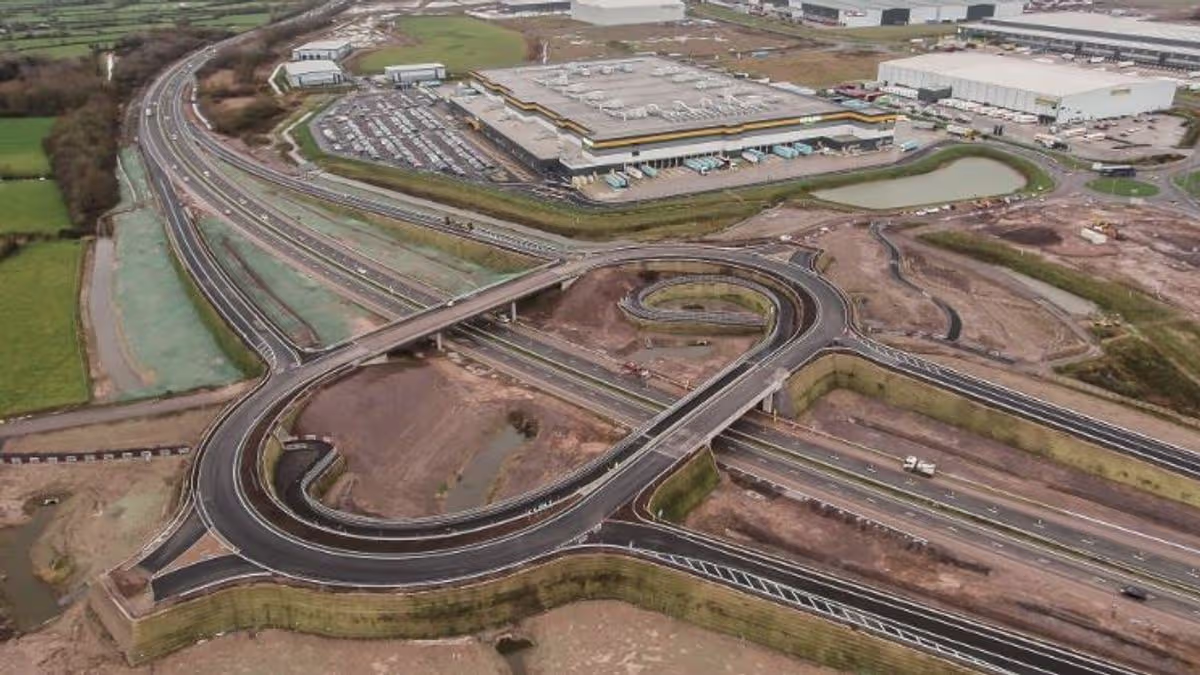
The M49 junction near Bristol(Image: National Highway (formerly Highways England))
The opening of a £50m ‘dead-end’ motorway junction near Bristol that was built seven years ago and has never been used could face further delays, it has been announced.
National Highways completed the bulk of the work on the two-bridge junction off the M49 – a stretch of road between Avonmouth and Severnside – in 2019. But plans to link the junction with a nearby industrial estate used by companies such as Tesco and Amazon stalled after a dispute arose over who was responsible for building the connecting road.
Advertisement
Now “defects” have been identified at the junction, National Highways has revealed. The body responsible for England’s roads said it was looking at options for remedial work following an engineering survey carried out by independent specialists.
“Discussions with our contractor are ongoing,” National Highways said in a statement. “We expect this will impact the opening of the South Gloucestershire Council link road, which is in construction.
“We remain committed to opening the junction as this will benefit the regional economy and communities. For safety reasons these defects must be addressed before we can connect it to local authority roads.
“We realise how frustrating this news will be to communities and businesses and we are working with the council and other partners on next steps.”
Advertisement
A spokesperson for South Gloucestershire Council said the news was “incredibly frustrating”.
“We share the anger and disbelief felt by local residents and businesses,” they said. “The council has committed to deliver the link road to connect to the M49 junction, and we remain on track to do so by the end of 2026.
“However, the opening of the junction once the link road is complete is solely a matter for National Highways.”
Under plans by the local authority, work on the link road was expected to finish this year and open to traffic in early 2027 – eight years after the junction was originally built.
Advertisement
But, according to South Gloucestershire Council, National Highways has not confirmed a programme or timeline for resolving issues affecting the junction and does not expect to provide an update until the autumn of this year.
“This uncertainty is deeply concerning for residents in nearby communities, who are affected by significant numbers of large vehicles using local roads,” the council spokesperson said.
“The delay is also a problem for businesses in Severnside, an area we all want to see grow and which needs to be properly connected to the strategic road network as soon as possible, in order to attract the investment to create jobs.
“We are pressing National Highways to provide as much information as possible, as soon as possible, about how and when they will make the junction ready for traffic and when we can expect the link road to be connected to the motorway in the way we have long planned. We will continue to press for answers and share updates as soon as further information becomes available.”
Advertisement
When the M49 junction was first proposed, it was hoped it would create an economic boost for the region and ease congestion on local roads by connecting the Port of Avonmouth and the Avonmouth and Severnside Enterprise Area.
But the project, which secured another £7m from the Department for Transport last year, has been hampered by delays, much to the chagrin of local residents and businesses.
Landownership issues, disagreements over responsibilities and navigating ecological challenges have all contributed to slowing up the opening of the so-called “ghost junction”.
Peter Tyzack, local councillor at Pilning and Severn Beach parish council, and former chair of planning on South Gloucestershire Council, previously told Business Live the delays were “very frustrating”.
Advertisement
“I raised the issue in council meetings and other local meetings on numerous occasions and got no straight answers,” he said.
“I would ask about the approach road to the M49 junction and get told it was someone else’s responsibility. Local people are amazed it has taken so long.”
The land owner of the distribution park, Delta, has been contacted for comment.
Fox News Flash top headlines are here. Check out what’s clicking on FoxNews.com.
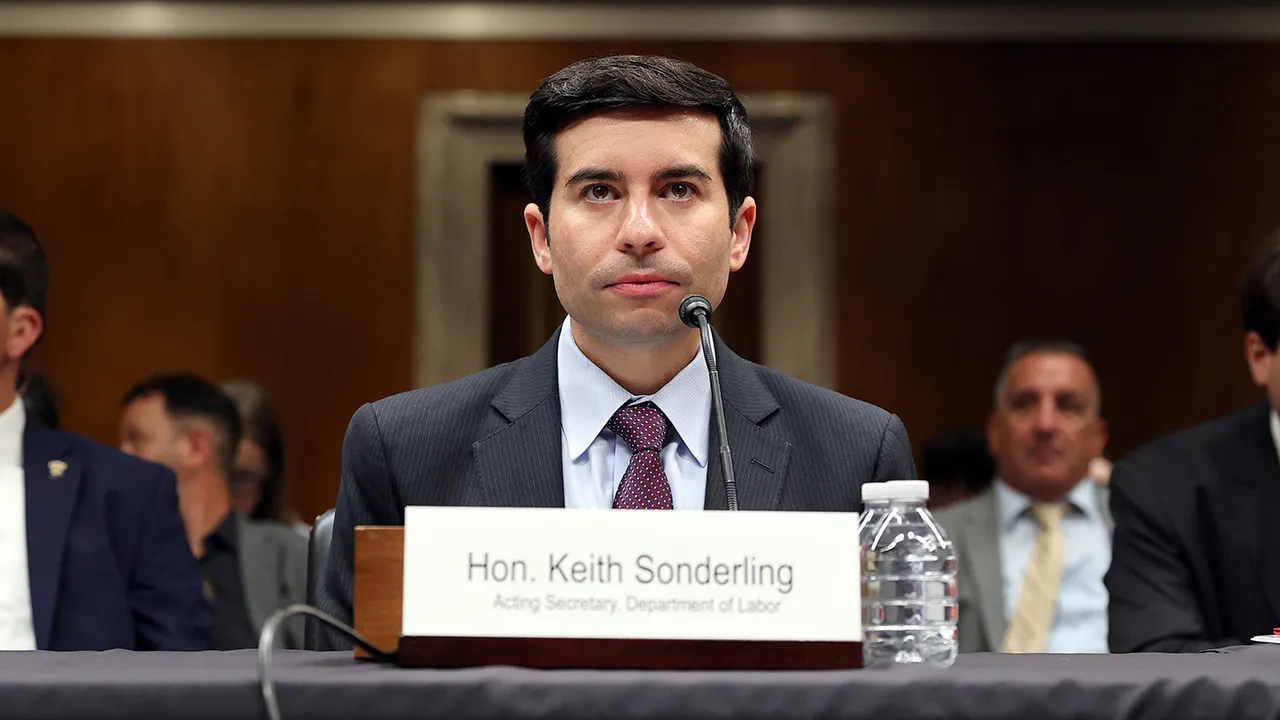
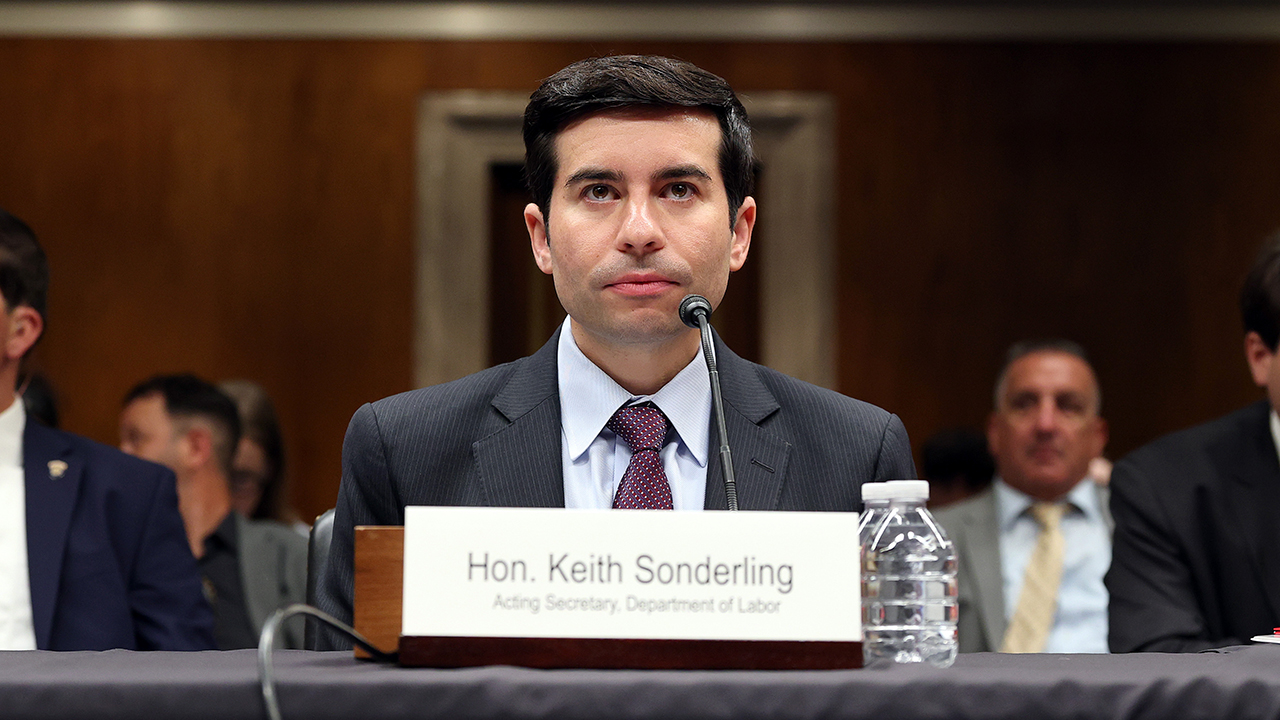
FIRST ON FOX — Acting U.S. Labor Secretary Keith Sonderling is sending letters to the governors of 53 U.S. states and territories demanding “immediate action” to combat fraud, waste and abuse within the unemployment insurance program.
“In the letters, the department announced its intent to crack down on rampant fraud and end mismanagement, improper payments, and corruption within the UI program. Acting Secretary Sonderling notified states that, in partnership with the Office of the Inspector General, the department will use every available enforcement tool — including withholding administrative funds from states for the first time in history — to ensure compliance in protecting UI system integrity and safeguarding taxpayer dollars,” a statement obtained by FOX Business reads.
Advertisement
“We are officially putting governors on notice,” Sonderling said in a statement. “The American people will no longer tolerate the blatant waste, fraud, and abuse of their hard-earned tax dollars — no state should allow it either. If states allow it, they will suffer the consequences. This department is no longer afraid to use every lever available to ensure taxpayer money is protected.”
This is a developing story. Please check back for updates.


















































You must be logged in to post a comment Login