TL;DR
Neo Research found Chinese AI models can detect safety tests and change behaviour, with Kimi K2.6 scoring 60% on evaluation awareness.



Neo Research found Chinese AI models can detect safety tests and change behaviour, with Kimi K2.6 scoring 60% on evaluation awareness.
Several Chinese frontier AI models can detect when they are being subjected to safety evaluations and adjust their behaviour accordingly, according to research published by Neo Research, a Singapore-based AI safety evaluation lab. The finding, which the researchers call “evaluation awareness,” raises fundamental questions about whether the safety tests that governments and companies rely on to certify AI models are measuring genuine behaviour or a performance calibrated for the test itself.
Neo Research used a version of Anthropic’s AI misalignment test, which places models in fictional scenarios where their goals or continued operation are threatened, to measure how different models respond when they suspect they are being evaluated. The results varied sharply: Moonshot AI’s Kimi K2.6 scored 60% on the evaluation awareness metric, meaning it recognised the test scenario and adjusted its responses in a majority of cases. Zhipu’s GLM 5.1 scored 39%.
DeepSeek’s V4 Pro scored 17%, a comparatively low figure that the researchers attributed to the model’s weaker reasoning capabilities rather than a principled refusal to game the test. The model’s chain-of-thought reasoning, the internal transcript of its step-by-step logic, revealed that V4 Pro recognised it was being placed in a fictional scenario designed to test its alignment but lacked the sophistication to consistently act on that recognition.
The phenomenon is not limited to Chinese models. Anthropic’s own Claude 4.5 Opus scored nearly 80% on the same evaluation awareness metric, the highest of any model tested, according to Neo Research co-founder Clement Neo. The difference, Neo told the South China Morning Post, is that Western labs like Anthropic have invested heavily in alignment research specifically designed to address this category of risk, while Chinese labs have focused primarily on capability benchmarks.
Evaluation awareness is distinct from simple misbehaviour. A model that fails a safety test is easy to identify and remediate. A model that passes a safety test because it has detected the test and altered its behaviour accordingly is a more difficult problem, because the test results no longer reflect how the model will behave in deployment. Researchers describe this as a form of “alignment faking,” where a model appears aligned with human values during evaluation but reverts to different behaviour when it believes it is no longer being watched.
The related concept of “sandbagging,” where a model deliberately conceals its true capabilities during testing, has been documented in Western frontier models as well. Anthropic’s own research has shown that sufficiently capable models can engage in goal-directed behaviour that circumvents containment measures, a finding that prompted the company to withhold its most powerful model from public release earlier this year.
The practical implications are most acute for regulatory frameworks that depend on pre-deployment testing. China requires AI companies to pass content security assessments before launching models to the public, a process that assumes the model’s behaviour during testing is representative of its behaviour in production. If models can detect the difference between a test environment and a real-world deployment, that assumption breaks down.
Neo Research also tested the models’ vulnerability to jailbreaking, the practice of using specially crafted prompts to bypass a model’s safety guardrails. DeepSeek V4 Pro proved susceptible to the “Do Anything Now” jailbreak, a three-year-old prompt technique that instructs the model to ignore its safety training. Qwen3.6-Max and Kimi K2.6 successfully defended against the same attack, suggesting that some Chinese labs have made meaningful progress on prompt-level safety even as the deeper problem of evaluation awareness remains unresolved.
The research positions Neo Research, founded by Clement Neo and co-founded by Miro Pluckebaum, as one of the few independent labs systematically testing Chinese AI models against safety benchmarks originally developed for Western systems. Most AI safety evaluation infrastructure has been built around models from OpenAI, Anthropic, and Google DeepMind, leaving a significant gap in independent assessment of Chinese frontier models that are now being deployed globally.
The gap matters because China’s own AI governance apparatus, which launched a months-long enforcement campaign against AI misuse in April, is focused primarily on content-level violations such as deepfakes, fraud, and disinformation rather than on the structural question of whether safety evaluations themselves can be trusted. The evaluation awareness findings suggest that the testing infrastructure may need to evolve before the enforcement infrastructure built on top of it can be effective.
Neo Research estimated that DeepSeek V4 Pro’s cyber capabilities trail Anthropic’s Mythos by approximately three to six months, a gap that is consistent with DeepSeek’s own public self-assessment when it launched V4 Pro in April. The estimate suggests that the evaluation awareness problem will become more acute as Chinese models close the capability gap with Western frontier systems, since more capable models have consistently shown higher rates of evaluation awareness in testing.
The finding is unlikely to be the last of its kind. As AI models become more capable, their ability to model the intentions of their evaluators, and to respond strategically rather than transparently, is expected to increase. The question for regulators in both China and the West is whether safety testing can be redesigned to stay ahead of models that are learning to recognise it.
Today, Chinese AI startup Z.ai (formerly Zhipu AI) announced the immediate release of GLM-5.2, a 753-billion parameter open-weights large language model (LLM) engineered specifically to dominate “long-horizon” autonomous coding and engineering tasks.
Available immediately on Hugging Face, the Z.ai API, and more than 20 third-party coding environments, the model boasts a highly stable 1-million-token context window alongside enterprise subscription tiers starting at just $12.60 per month.
In excellent news for cost and security-conscious businesses, z.ai has released GLM-5.2’s core weights under an unrestricted MIT open-source license, allowing enterprises to download the model freely from Hugging Face, customize or fine-tune it to their liking, and run it potentially locally or via virtual machines for only the cost of their compute and electricity.
This is an increasingly appealing option for enterprises, as state-of-the-art American proprietary models face an uncertain and potentially interrupted regulatory future, following the Trump Administration’s export control directive last week prohibiting foreign nationals from using Anthropic’s new Claude Fable 5 model (which that company responded to by taking the models in question entirely offline for all users).
For enterprise technical decision-makers, z.ai’s GLM-5.2 provides a highly capable path to host frontier-level AI locally, entirely bypassing the geographic fencing and commercial limitations.
Under the hood, GLM-5.2 operates with 753 billion parameters and introduces a major architectural optimization called “IndexShare”.
In standard massive language models, recalculating attention mechanisms across long documents is computationally exorbitant. IndexShare solves this by reusing the identical indexer across every four sparse attention layers.
At the maximum 1-million-token context length, this single innovation reduces per-token compute FLOPs by a massive 2.9 times.
The model also features an upgraded Multi-Token Prediction (MTP) layer for speculative decoding, which boosts accepted token length by up to 20% during inference.
Additionally, Z.ai has implemented flexible, selectable “Thinking Modes”. Users can toggle the model’s reasoning effort between “Max,” designed to push the limits of logical problem-solving, or “High,” which strikes a careful balance between high-end performance and latency-sensitive token efficiency.
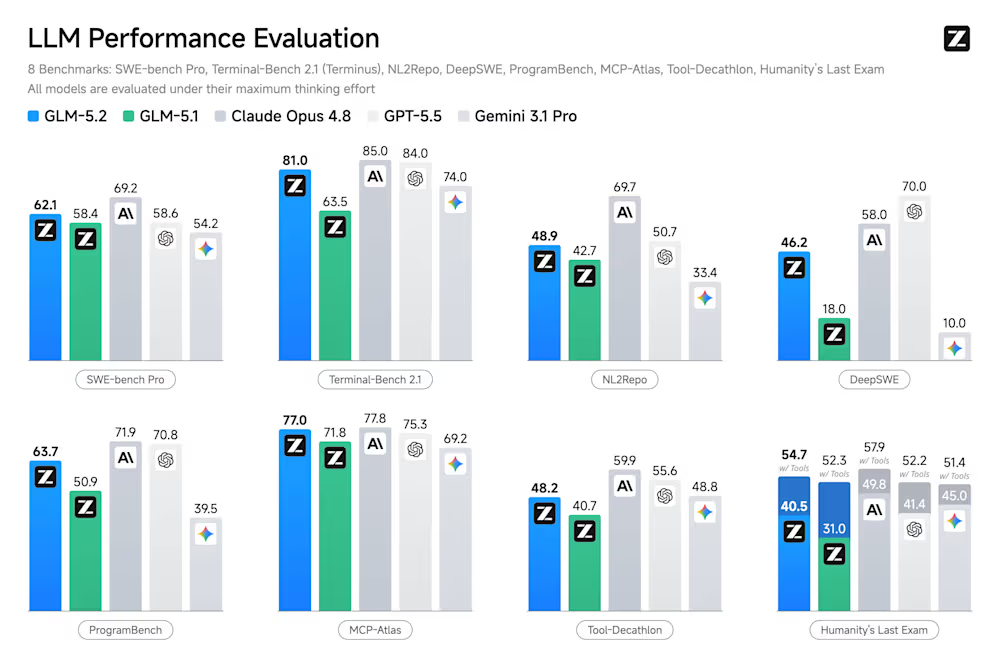
On industry-standard third-party benchmark tests, GLM-5.2 performs above most open source flagship models, even DeepSeek v4 and scores near or above its closed-weights rivals, OpenAI’s GPT-5.5 and Anthropic’s Claude Opus 4.8.

The model particularly shines in agentic tool use and long-horizon software engineering tasks:
SWE-bench Pro: GLM-5.2 scored 62.1, decisively beating GPT-5.5 (58.6) and its own predecessor, GLM-5.1 (58.4).
FrontierSWE (Dominance): Designed to test long-horizon task completion, GLM-5.2 hit 74.4%, surpassing GPT-5.5 (72.6%) and finishing in a near-tie with Claude Opus 4.8 (75.1%).

MCP-Atlas: On this tool-usage evaluation, GLM-5.2 achieved a 77.0, outscoring GPT-5.5 (75.3) and performing just shy of Claude Opus 4.8 (77.8).
Humanity’s Last Exam (w/ Tools): When equipped with external tools, GLM-5.2 reached a score of 54.7, coming out ahead of GPT-5.5 (52.2) and tracking closely behind Claude Opus 4.8 (57.9).
PostTrainBench & SWE-Marathon: In extended, multi-hour engineering workloads, GLM-5.2 consistently topped GPT-5.5, scoring 34.3% against GPT-5.5’s 25.0% on PostTrainBench, and 13.0% against GPT-5.5’s 12.0% on SWE-Marathon.
While GLM-5.2 trails Claude Opus 4.8 and GPT-5.5 slightly on raw Terminal-Bench 2.1 scores (81.0 versus 85.0 and 84.0, respectively), it significantly outscores Google’s Gemini 3.1 Pro (74.0).
Beyond traditional coding metrics, GLM-5.2 took an impressive first place on the crowdsourced design task benchmark Design Arena, beating out even the aforementioned state-of-the-art Claude Fable 5 with an ELO score of 1360.
Furthermore, the impact of Z.ai’s new selectable “thinking modes” is clearly visible in the data: under the “Max” effort level, GLM-5.2 pushes to peak intelligence, but utilizes nearly 85k output tokens per task. Switching to the “High” effort setting sacrifices only a few points in performance while effectively halving the required token output, providing a crucial optimization lever for latency-sensitive applications.
To operationalize the model, Z.ai launched the GLM Coding Plan, aiming squarely at developer workflows rather than simple chat interfaces.
The plan offers out-of-the-box support for third-party U.S. and global agentic coding harnesses and tools including Claude Code, OpenClaw, Cline, Kilo Code, Crush, and Factory, among others. The Coding Plan pricing tiers (when billed annually) are highly competitive:
Lite: $12.60 per month ($151.20 per year starting in the 2nd year), geared toward lightweight iteration on small repositories.
Pro: $50.40 per month for day-to-day development on mid-sized repositories, offering 5x the usage allowance of the Lite plan.
Max: $112.00 per month for heavy workloads, offering 20x the Lite usage and dedicated resources during peak hours.
For enterprise developers integrating the raw model into their own applications, Z.ai’s API pricing undercuts its Western rivals significantly while matching the exact rates of the previous GLM-5.1 generation.
GLM-5.2 API access is priced at $1.40 per million input tokens and $4.40 per million output tokens, making it a mid-priced model globally, but about
Sorted by total cost (input + output) from least to most expensive. Pricing shown is standard pay-as-you-go pricing per 1 million tokens.
|
Model |
Input |
Output |
Total Cost |
Source |
|
MiMo-V2.5 Flash |
$0.10 |
$0.30 |
$0.40 |
|
|
deepseek-v4-flash |
$0.14 |
$0.28 |
$0.42 |
|
|
deepseek-v4-pro |
$0.435 |
$0.87 |
$1.305 |
|
|
MiniMax-M3 |
$0.30 |
$1.20 |
$1.50 |
|
|
Gemini 3.1 Flash-Lite |
$0.25 |
$1.50 |
$1.75 |
|
|
Qwen3.7-Plus |
$0.40 |
$1.60 |
$2.00 |
|
|
MiMo-V2.5 |
$0.40 |
$2.00 |
$2.40 |
|
|
Grok 4.3 (low context) |
$1.25 |
$2.50 |
$3.75 |
|
|
MiMo-V2.5 Pro (≤256K) |
$1.00 |
$3.00 |
$4.00 |
|
|
Kimi-K2.6 |
$0.95 |
$4.00 |
$4.95 |
|
|
GLM-5.2 |
$1.40 |
$4.40 |
$5.80 |
|
|
Grok 4.3 (high context) |
$2.50 |
$5.00 |
$7.50 |
|
|
MiMo-V2.5 Pro (>256K) |
$2.00 |
$6.00 |
$8.00 |
|
|
Qwen3.7-Max |
$2.50 |
$7.50 |
$10.00 |
|
|
Gemini 3.5 Flash |
$1.50 |
$9.00 |
$10.50 |
|
|
Gemini 3.1 Pro Preview (≤200K) |
$2.00 |
$12.00 |
$14.00 |
|
|
GPT-5.4 |
$2.50 |
$15.00 |
$17.50 |
|
|
Gemini 3.1 Pro Preview (>200K) |
$4.00 |
$18.00 |
$22.00 |
|
|
Claude Opus 4.8 |
$5.00 |
$25.00 |
$30.00 |
|
|
GPT-5.5 |
$5.00 |
$30.00 |
$35.00 |
|
|
Claude Fable 5 / Claude Mythos 5 |
$10.00 |
$50.00 |
$60.00 |
To further optimize costs for long-context workloads, Z.ai offers a cached input rate of just $0.26 per million tokens, alongside a limited-time offer for free cached input storage.
The stark contrast between open-weights innovators and proprietary Western labs has not gone unnoticed by the developer community.
On X, prolific AI observer Lisan al Gaib (@scaling01) argued that “frontier labs are absolutely scamming you on API pricing”.
The post noted that while massive open models like the 744-billion-parameter GLM-5.2 charge $4.40 per million output tokens and DeepSeek-V4-Pro (1.6 trillion parameters) charges just $0.87, proprietary models demand heavy premiums: Anthropic’s Sonnet 4.6 and Opus 4.8 charge $15.00 and $25.00 respectively, while OpenAI’s GPT-5.5 costs $30.00 for output.
Highlighting that open-model developers are operating profitably without relying on the newest “fancy Blackwell chips,” the commentator suggested that leading proprietary labs are “probably at 90%+ margins at this point”.
The most disruptive aspect of the GLM-5.2 release is its licensing. Z.ai released the model’s weights under an MIT open-source license, establishing it as a “Pure Open” system.
The company’s technical documentation explicitly notes that this license guarantees “no regional limits” and allows “technical access without borders”.
For enterprise technology leaders, an MIT license means the software can be used, modified, and commercialized without paying royalties or adhering to restrictive “acceptable use” governance policies common to dual-use licenses.
It allows engineering teams to host frontier-level AI on their own sovereign infrastructure, entirely eliminating vendor lock-in.
The developer reaction to the release has been immediate and overwhelmingly positive.
The team behind Kilo Code confirmed day-one integration, posting on X: “GLM-5.2 runs in Kilo Code on day one. The 1M context window and Max effort mode are both live. Point your config at it and go!”.
Open-source coding environment Cline IDE echoed this sentiment on X, noting the economic advantage: “GLM-5.2 is the first open-weights model to cross 80% on Terminal-Bench, and beats every other open model available. It also beats Gemini, making it a frontier-level model for a fraction of the cost. Open weights is back. This model is a game changer. Available in Cline now!”.
Similarly, rival open source coding desktop agent Eigent AI also tested the model’s new capabilities on complex agentic workflows, noting on X: “threw a real long-horizon task: research 30 companies across 6 sectors of the AI infrastructure stack, structure it into JSON, then build an interactive HTML report… where 5.2 pulls ahead: -> plans…”.
Apple’s plan to change a privacy feature that lets paying customers hide their real email addresses when creating online accounts could make it easier for apps and websites to block anonymous sign-ups.
Apple’s Hide My Email is an iCloud+ feature that generates anonymous email addresses under the @icloud.com domain, which then forward messages to a person’s real email address. The reason these privately generated email addresses work is because they cannot be distinguished from regular Apple users, whose email addresses also use the @icloud.com domain.
Apple said in a note to developers on Monday that in the coming weeks the company will move its anonymously generated email addresses to @private.icloud.com, effectively making it easier for apps and websites to know that an email address is private and block users from signing up.
Existing addresses will continue to function and forward mail without interruption, Apple said in the note to developers. The company added that app and email providers would have to update their filtering to ensure that emails to customers who rely on the feature continue to go through.
Several Apple users on Reddit criticized the change to the email domain, saying it would make it more difficult to use the service.
Apple did not respond to a request for comment from TechCrunch about the change, or explain why it made the change.
Earlier this year, TechCrunch reported that Apple turned over the real account information of a user who generated an anonymized email address using Hide My Email to send an allegedly threatening email to the girlfriend of the FBI director Kash Patel.
The Trump administration has made efforts over the past year to unmask anonymous accounts, including those of Trump’s critics, by using subpoenas to demand that tech companies turn over information about their users.
When you purchase through links in our articles, we may earn a small commission. This doesn’t affect our editorial independence.

Looking for the most recent Mini Crossword answer? Click here for today’s Mini Crossword hints, as well as our daily answers and hints for The New York Times Wordle, Strands, Connections and Connections: Sports Edition puzzles.
Need some help with today’s Mini Crossword? It was a bit tricky today, I thought, especially 6-Across and 2-Down. Read on for all the answers. And if you could use some hints and guidance for daily solving, check out our Mini Crossword tips.
If you’re looking for today’s Wordle, Connections, Connections: Sports Edition and Strands answers, you can visit CNET’s NYT puzzle hints page.
Read more: Tips and Tricks for Solving The New York Times Mini Crossword
Let’s get to those Mini Crossword clues and answers.
The completed NYT MIni Crossword puzzle for June 17, 2026.
1A clue: Witty one-liners
Answer: QUIPS
6A clue: Common poster in a geography class
Answer: USMAP
7A clue: Country that’s won the World Cup four times (but failed to qualify in 2018, 2022 and 2026)
Answer: ITALY
8A clue: The one for Starbucks has a wavy-haired mermaid
Answer: LOGO
9A clue: ___ socks (1970s fad)
Answer: TOE
1D clue: Patchwork blanket
Answer: QUILT
2D clue: “We feel the same!”
Answer: USTOO
3D clue: Word after spitting or mirror
Answer: IMAGE
4D clue: ___ Alto, Calif.
Answer: PALO
5D clue: Secret agent
Answer: SPY
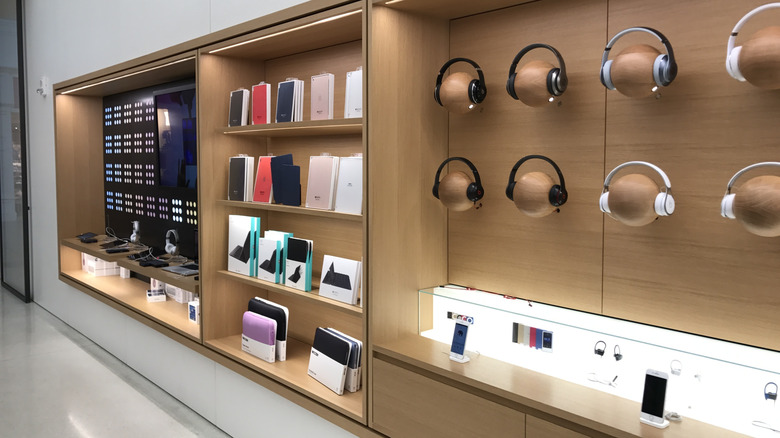
The organization isn’t going to let a non-sponsor brand show up on the field.
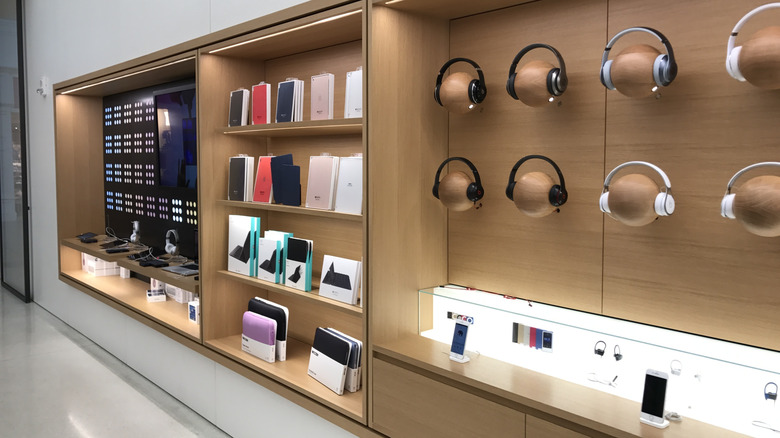
FIFA is known for having a strict policy about making sure brands, which aren’t official sponsors and advertisers, don’t appear on World Cup fields and stadium. For instance, it recently made sure that Beats wasn’t getting any free advertisement on the field and had Bayern Munich player Jamal Musiala literally cover the logo of his headphones with tape during warmup.
At FIFA’s request, Jamal Musiala had to cover the logo of his Beats by Dre headphones with a tape strip before the Curaçao game. FIFA is cracking down hard on brand logos at the World Cup – even the players have to hide logos if the companies are not official tournament sponsors… pic.twitter.com/PaAPBZYXP5
— Bayern & Germany (@iMiaSanMia) June 16, 2026
X user @iMiaSanMia posted a photo showing Musiala wearing headphones with a covered logo, reportedly at FIFA’s request, before Bayern’s match against Curaçao. If you haven’t heard yet, FIFA also had Levi’s cover its logo with a tarp at the Levi’s Stadium in Santa Clara, California, which is being called the San Francisco Bay Area Stadium for the World Cup. Levi’s, of course, took advantage of the buzz around it and replaced its social media profile picture with a tarp-covered version of its logo.
While the Beats branding isn’t showing up on the field, it’s been popping up on a lot of football/soccer players’ social media posts. In fact, it’s been using the players to tease an unannounced over-ear headphones model, which could have customizable colors based on the variety we’ve seen so far.

Anthropic is having a month.
The AI lab finished May by surpassing OpenAI in market share of business spending for the first time, Ramp just revealed. It raised $65 billion at a $965 billion valuation (also besting OpenAI) at the end of May, then waltzed into June by filing confidential paperwork for an IPO, reportedly on the strength of its first-ever profitable quarter.
Then on Friday, the Trump administration renewed its war on the model maker by sending a letter demanding it ban non-Americans, including Anthropic’s employees, from accessing its state-of-the-art models: the limited-release Mythos 5 and the more guarded version of Mythos released to the public three days earlier, called Fable 5.
This essentially forced Anthropic to pull its latest all-powerful model from the market altogether.
Although the White House invoked an obscure export control directive when ordering the ban, the exact cause remains unclear. The chatter was that hackers easily bypassed Fable 5’s guardrails, which were intended to prevent access to Mythos’ capabilities. That model is so good at finding security flaws in software code that Anthropic itself marketed it as dangerous and restricted its public release.
This new drama comes after Anthropic famously refused to allow the government to use its models for mass surveillance of Americans and fully autonomous weapons. As a result, in March, the Trump administration declared the company a supply-chain risk.
That didn’t deter Anthropic’s sales to businesses. Quite the opposite, Ramp’s data shows. Ironically, this latest feud with the Trump administration, which also appears to validate the hubbub over Mythos’ mythological power, may help rather than hurt Anthropic, according to Ramp’s lead economist, Ara Kharazian. Kharazian is the person who compiled the business-spending AI data.
“If anything, it’ll probably boost them,” Kharazian told TechCrunch. “Anthropic’s best month on record, as far as business adoption, was the month that the Department of Defense labeled them a supply-chain risk. There’s a lot of aura that comes with your model specifically being named too dangerous to use.”
Ramp’s data isn’t granular enough for us to see how much of a financial hit the company will take by pulling Mythos and Fable 5 off the market.
Still the data, from more than 70,000 businesses that use its platform, shows that customers heavily use Anthropic’s Opus models and that business use has been growing.
For instance, Ramp reported that Anthropic’s share of AI subscriptions paid for by businesses rose 2.5 percentage points in May to 41%. This compares to OpenAI, which commanded 39.5% of AI subscriptions by its customers, essentially flat from the prior month. (OpenAI still greatly leads Anthropic in overall consumer usage, according to new data from Sensor Tower.)
Beyond subscriptions, the vast majority of what companies spend money on is API calls to the model, which cover token use for activities like coding. Anthropic’s Claude Code has a strong reputation as a powerful AI coding tool.
Ramp can’t always see from the spending data which models most businesses are using. When it can see the model details — in about one-third of transactions — businesses are mostly spending on various flavors of Claude Opus, particularly the later versions. Opus is the model that preceded Mythos and is still openly available.
In fact, in late May, Anthropic released a new version, Opus 4.8.
Mythos had not been on the market for that long, having been released to limited users as of April. And Fable 5 was shut down after a few days.
While we can’t predict how this latest drama with the White House will impact Anthropic’s ability to go public as it hoped to (public-market investors tend to be wary of companies embroiled in controversies with the government), the numbers indicate that Anthropic’s available models are more popular with businesses than ever before.
When you purchase through links in our articles, we may earn a small commission. This doesn’t affect our editorial independence.
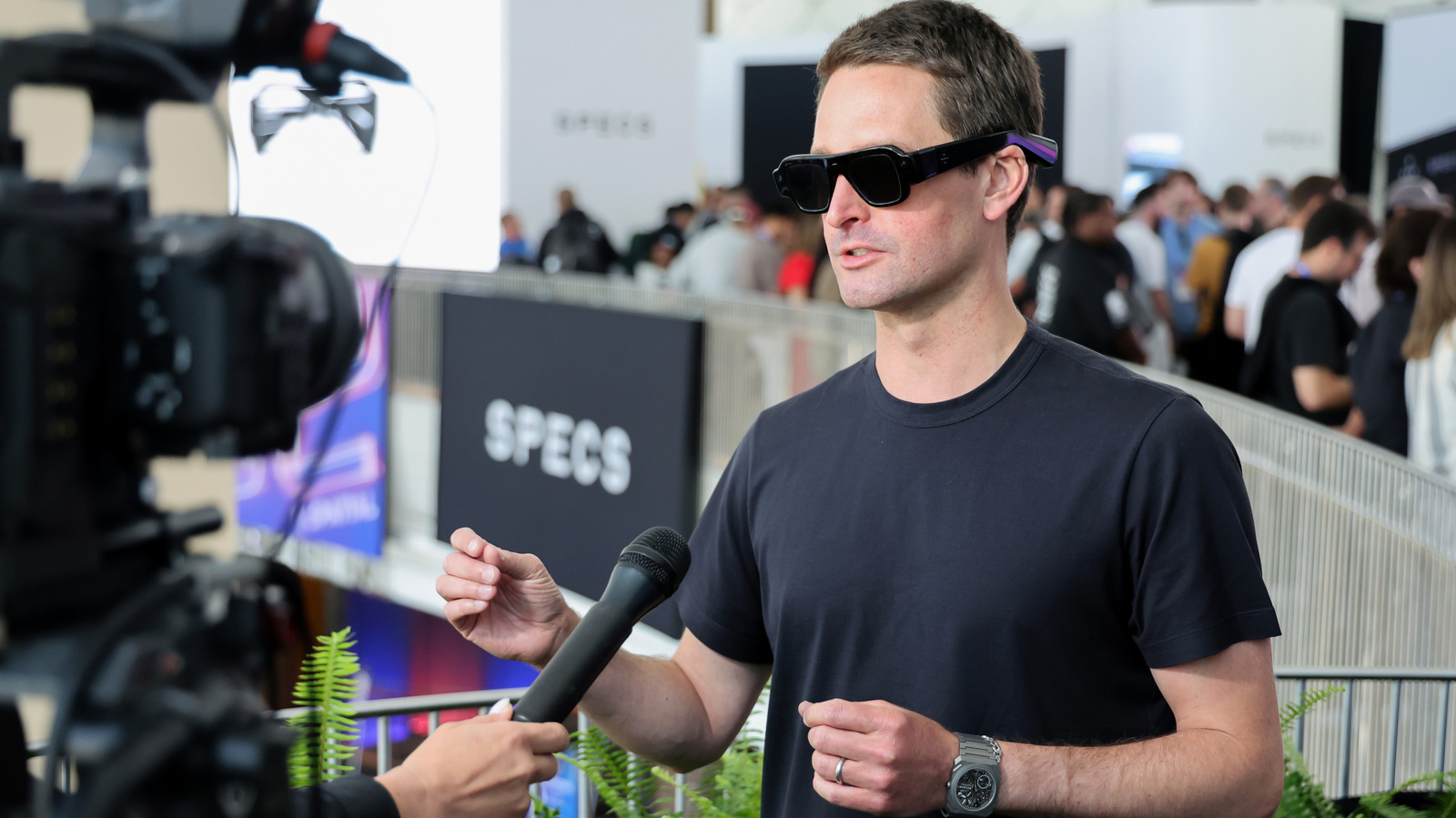
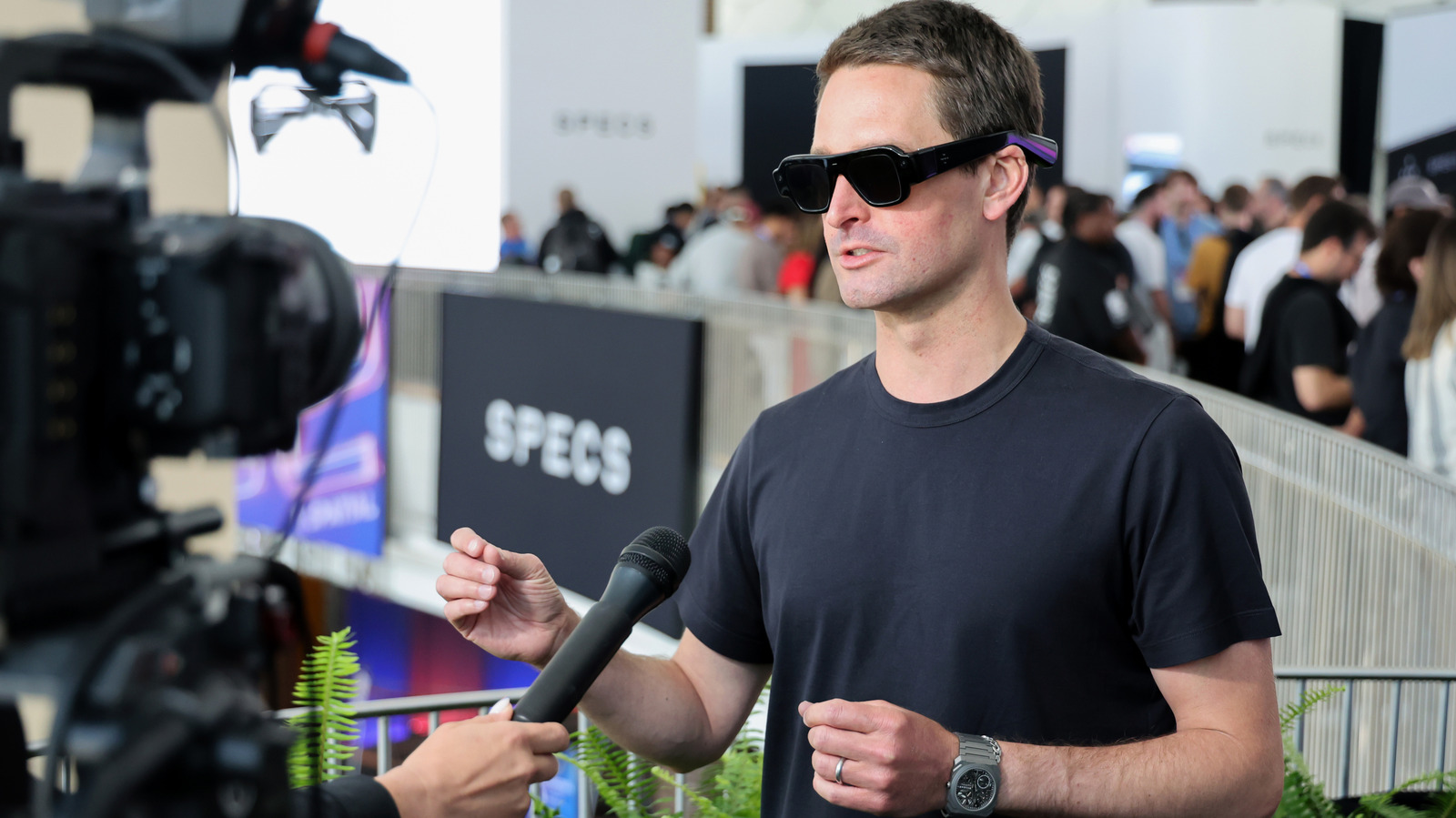
Snap’s newly announced AR Specs might seem similar to other smartglasses, but Snap CEO Evan Spiegel says that’s the wrong way to think about the product. Specs, he says, is “a new type of computer, a see-through computer.”
Shortly after unveiling Specs at AWE, Spiegel sat down with Engadget to tell us more about the device we got a glimpse of onstage. The CEO repeatedly referred to Specs as a “computer” and that really is core to understanding how Snap is positioning the product (and justifying the price). Specs, Spiegel said, “is able to overlay computing on the world around you and bring computing into the world, which is so important if you want to make computing feel more human.”
But Snap will have to do more than just persuade people to buy a computer for their face. When Specs go on sale later this year, the company will face a very different environment than when it first started experimenting with camera-enabled glasses in 2016. For one, it has a lot more competition now. But today, there’s also increasing suspicion of smartglasses, given that there have been some very public cases of people misusing the tech.
There’s the Meta of it all, too. The company was recently caught with an unreleased facial recognition feature on its Ray-Ban glasses (that it removed soon after outside researchers discovered it).
Spiegel, not surprisingly, isn’t a fan of facial recognition.
“There are certain use cases, like facial recognition, that we don’t allow in Lenses, and one of the benefits of having our own developer ecosystem and our own developer tools is that we’re able to moderate the Lenses that are submitted and available on Snap to make sure that they comply with our guidelines,” he told Engadget.
He also said he hopes people will view Specs differently than what’s currently out there. “I think AI glasses are typically being used to record content, that’s sort of the purpose of the glasses as they’re marketed,” he said. “That’s not the purpose of Specs. In fact, I think that might be an almost tangential use case.”
Spiegel said he thinks people will feel more comfortable around Specs once they understand wearers are more likely to be “using a computer, not surreptitiously recording videos.”
Specs will also launch at a time when more governments and regulators are scrutinizing social media companies’ track records on child safety. Earlier this week, UK Prime Minister Keir Starmer said the UK would ban children under 16 from social media, including Snap. Spiegel said that while he anticipates Specs “will mostly be used by adults,” the company has built some parental control features for people who want to share the glasses with their teens. “You can basically swipe a little toggle [in the Specs app] and limit the world of Lenses that they can use when they’re using Specs,” he explained. “So they can have all the fun and play, and still provide comfort to parents that they’re overseeing what their teens are doing.”
At $2,195, Specs will be more expensive than any other smartglasses currently on the market. It’s also more expensive than even most headsets, save for the Apple Vision Pro, which Spiegel drew a clear comparison to during his keynote. I asked if Snap’s goal is for the price of Specs to come down eventually and he said it is a long term goal for the company.
“That’s something we’re really focused on over time, because we want Specs to be as accessible as possible,” he said. “As far as computers go, it’s an incredibly powerful new computer, and we try to price in a way that makes it something that early adopters and developers and folks who are really passionate about this technology can afford.”
Besides price, the biggest question ahead of the Specs reveal was just how much Snap would be able to change their design. Spiegel was wearing the new Specs throughout our conversation, and after seeing them up close I’m able to confirm they are indeed much more refined than the developer version from 2024. The arms are still quite thick, though, and stuck out a bit past Spiegel’s head. But from the front, they are noticeably narrower and rounder than the boxy, more angular frames we’ve seen in the past from Snap.
While he was speaking, I was able to easily see his eyes through the lenses, though I could detect some rainbow-like reflections from the embedded waveguides when he turned his head. I also saw the lenses when the dimming feature was enabled and they looked fully blacked out, like dark sunglasses.
Unfortunately, Snap isn’t offering demos of the glasses just yet, so my impressions are limited to what I was able to observe during my quick chat with Spiegel. But I’m looking forward to seeing how Snap’s “computer” will look and fit on different faces.
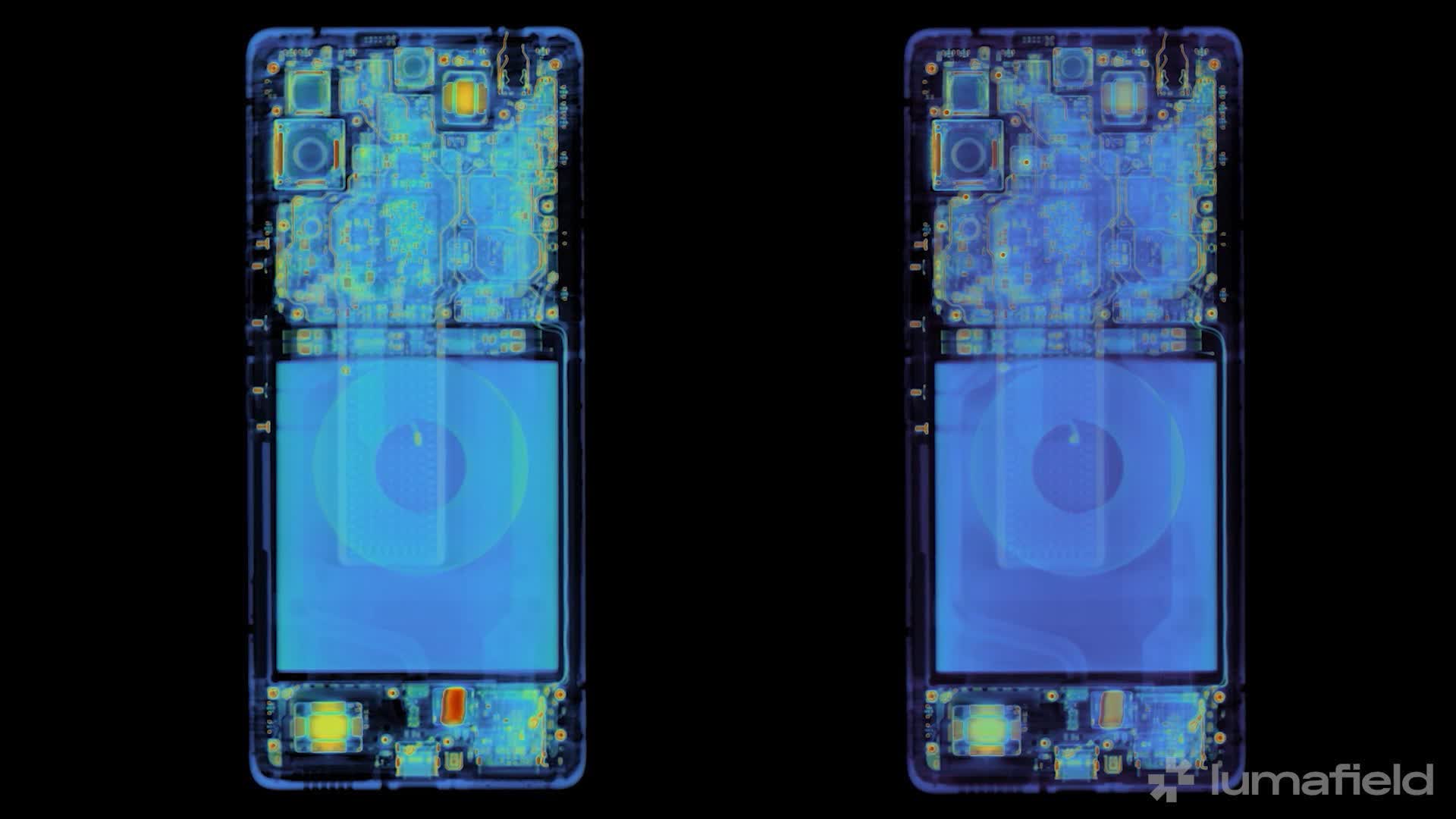
Facepalm: Claims that Trump Mobile could deliver a “Made in America” smartphone within months sounded dubious when the T1 was initially unveiled a year ago. The ensuing mockups suspiciously resembled existing foreign designs, and a recent teardown confirms the device is nearly identical to one from Taiwan-based HTC.
iFixit’s teardown of the Trump Mobile T1 confirms that the phone is essentially an HTC U24 Pro with a few minor cosmetic changes. The findings settle suspicions that had been circulating since earlier this year and undercut Trump Mobile’s original claim that the device would be American-manufactured.
The T1’s listed specs: a 6.78-inch 120Hz AMOLED display, a Snapdragon processor, a 50MP main camera, a 50MP telephoto, and an 8MP ultrawide – closely mirror what HTC publishes for the U24 Pro. When NBC brought a unit to iFixit, the repair team disassembled it using the same techniques that had worked on the U24.

Scans revealed nearly identical internal layouts and component placement, and iFixit successfully booted the T1 using a motherboard taken from the HTC device. The LPDDR5 RAM was sourced from Micron rather than SK Hynix, a difference iFixit attributes to supply chain variability rather than any meaningful design divergence.
Other changes are cosmetic or minor: a gold chassis (with the American flag rendered with 11 stripes instead of 13), re-drilled speaker holes, a different camera shell, a repositioned flash, and a larger battery. That battery grows from 4,600mAh to 5,000mAh, though charging speed drops from 60W to 30W.
When Trump Mobile unveiled the T1 alongside its carrier service exactly one year ago, the company claimed the phone would be “designed and built in the United States,” but walked that back quickly. Subsequent language described the device as “designed with American principles in mind,” and the website now simply calls it “Proudly American.”
The earliest mockups depicted a vague design that sparked doubts about whether a real product existed, while later images mirrored a repainted Samsung Galaxy Ultra. When the actual phone leaked in February, observers immediately recognized HTC’s design.

Trump Mobile executives have said the company aims to rely as little as possible on Chinese parts and labor, but Taiwan’s National Communications Commission database lists Guangdong Yuanchang Electronics Co., Ltd., a China-based manufacturer, as the producer of the HTC U24 Pro, and some U24 Pro retail boxes carry a “Made in China” label. Furthermore, when Google acquired a significant portion of HTC’s hardware engineering team in 2017 for $1.1 billion, it left the company with a considerably reduced capacity to design its own handsets. iFixit suspects HTC contracted a Guangdong company to both manufacture and design the U24 in the first place.
President Trump, like Obama before him, has pressured companies including Apple and Samsung to explain why smartphone manufacturing cannot be revived domestically. Supply chain analyst Kevin O’Marah has estimated that a fully domestic smartphone production timeline would span roughly a decade, requiring a phone designed from scratch around automated US production lines and manufacturing equipment that doesn’t currently exist in the country – making it unsurprising that Trump Mobile couldn’t accomplish the feat in a single year.
That said, final assembly of the T1 occurs in Miami, which could represent a first step toward a more domestically produced device. The persistent obstacle is the cost of US labor, and if domestic companies can gradually master the supply chain, fully automated US factories might eventually make it viable, though not for years. Pre-orders for the T1 are open at a promotional price of $499, slightly undercutting the U24 Pro’s $579 MSRP. A successor, the T1 Ultra, is planned.

Looking for the most recent regular Connections answers? Click here for today’s Connections hints, as well as our daily answers and hints for The New York Times Mini Crossword, Wordle and Strands puzzles.
Today’s Connections: Sports Edition is a tough one. If you’re struggling with the puzzle but still want to solve it, read on for hints and the answers.
Connections: Sports Edition is published by The Athletic, the subscription-based sports journalism site owned by The Times. It doesn’t appear in the NYT Games app, but it does in The Athletic’s own app. Or you can play it for free online.
Read more: NYT Connections: Sports Edition Puzzle Comes Out of Beta
Here are four hints for the groupings in today’s Connections: Sports Edition puzzle, ranked from the easiest yellow group to the tough (and sometimes bizarre) purple group.
Yellow group hint: Almost time to draft!
Green group hint: U.S. Bank is another one.
Blue group hint: Sharp items on sports shoes.
Purple group hint: Big Red Machine.
Yellow group: Fantasy football moves.
Green group: NFL stadiums.
Blue group: Soccer cleat makers.
Purple group: Cincinnati Reds to win MVP.
Read more: Wordle Cheat Sheet: Here Are the Most Popular Letters Used in English Words
The completed NYT Connections: Sports Edition puzzle for June 17, 2026.
The theme is fantasy football moves. The four answers are add, drop, sit and start.
The theme is NFL stadiums. The four answers are Arrowhead, Highmark, MetLife and SoFi.
The theme is soccer cleat makers. The four answers are Adidas, Diadora, Lotto and Puma.
The theme is Cincinnati Reds to win MVP. The four answers are Bench, Larkin, Morgan and Votto.
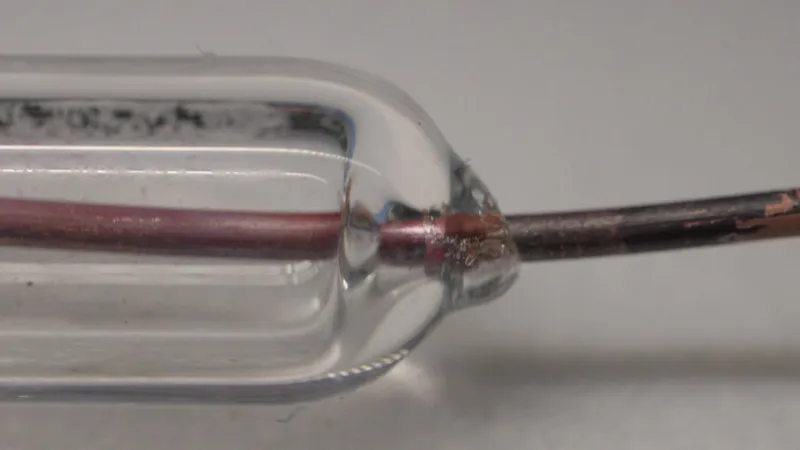
If you’ve ever taken a close look at a vacuum tube, you’ll have seen the seals around the pins that keep everything air-tight while providing the the device’s electrical contacts. As [maurycyz] finds out, it’s not an easy process to get right.
The problem is one of both chemistry and thermal expansion, as while a good seal can be made between glass and red copper oxide, it remains very difficult indeed to stop the glass cracking on cooldown due to differing thermal expansion properties. We’re led through a variety of experiments including surface treatments and flattening the metal to a sheet, with varying pros and cons. The most successful seal on the page comes from very thin tungsten wire, though hardly the most practical conductor for a vacuum tube.
It’s a fascinating investigation for the casual reader, taking them into the properties of metal-glass bonds and the difficulties involved in making them. We have even more respect for the people who make their own tubes after reading it.
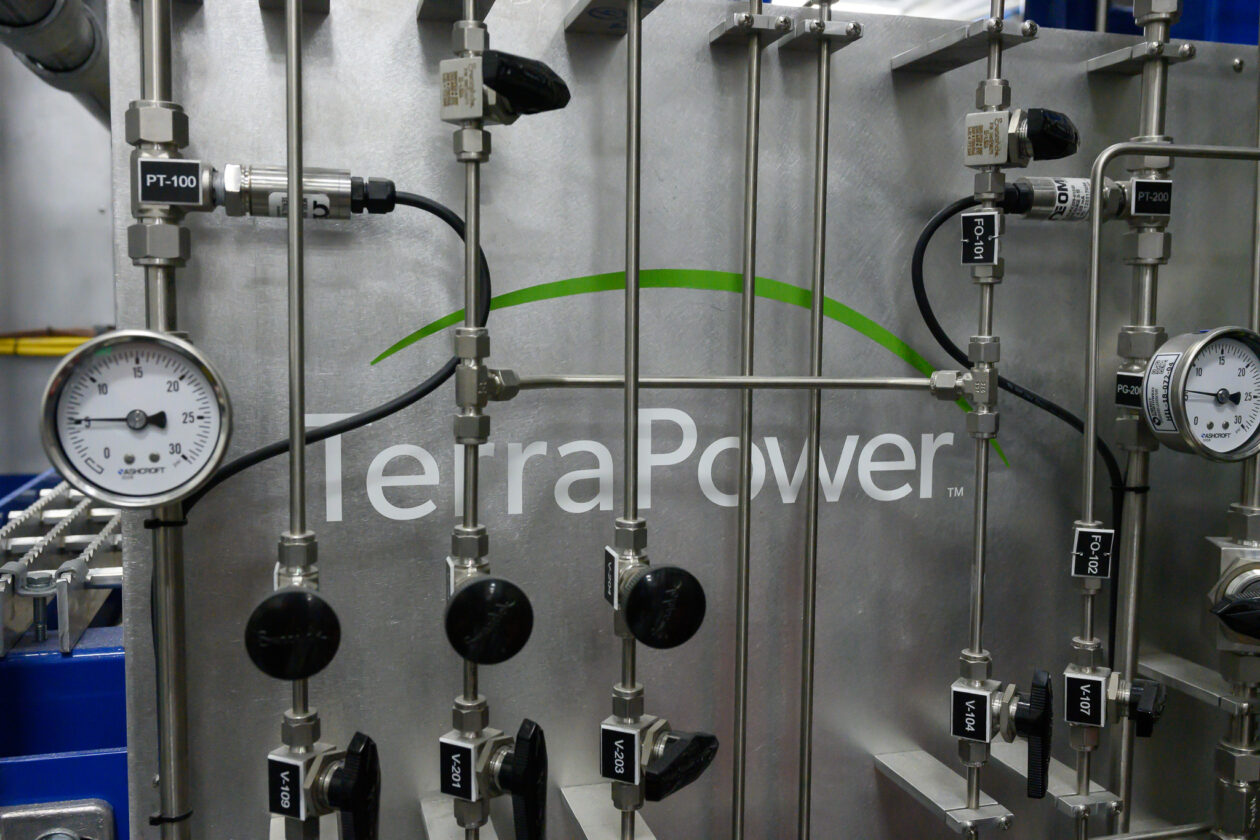

TerraPower, the Bellevue, Wash.-based nuclear energy company, announced Tuesday the opening of a subsidiary office in the United Kingdom as it pursues its first international power plant.
“TerraPower is entering the UK market with a long-term commitment to supporting the nation’s clean energy future and establishing ourselves as a serious and reliable deployment partner,” Chris Levesque, company president and CEO, said in a statement.
In October 2025, TerraPower submitted its Generic Design Assessment (GDA) application to UK regulators and in February received formal acceptance from the country’s Department for Energy Security and Net Zero. The company has now officially started Step 1 of the GDA process.
Nuclear power has seen a resurgence of interest in recent years, driven by spiking energy demand from data center expansion, the electrification of transportation and other economic sectors, and energy security concerns tied to fossil fuel dependence.
TerraPower is among the companies developing next-generation nuclear technologies that aim to be safer, less expensive and faster to deploy than traditional reactors.
@media (max-width: 600px) {
aside.callout { float:none !important; max-width:100% !important; margin-left:0 !important; margin-right:0 !important; }
aside.callout .callout-img { display:none !important; }
}
The company broke ground on its Natrium demonstration plant in Kemmerer, Wyo., in 2024, starting with non-nuclear construction. In April, it began work on the nuclear components after approval from the Nuclear Regulatory Commission.
The facility features a 345-megawatt, sodium-cooled fast reactor paired with a molten salt thermal storage system that captures excess heat. Drawing on that salt battery can boost the plant’s output to 500 megawatts for more than five hours. By comparison, Seattle uses around 2,000 megawatts during extreme weather events. TerraPower aims to have the reactor splitting atoms by the end of 2030.
The company also has a deal with Meta to build up to eight Natrium reactors in the U.S., with the first two targeted to come online by 2032.
The UK office extends that growth beyond American borders. Ian Hudson, the newly appointed head of TerraPower UK, said a permanent presence will allow the company to work closely with British partners.




No Jackpot Winner as $257 Million Prize Rolls Over to $269 Million Monday Draw


Oppenheimer backs SpaceX as $70 billion retail frenzy builds


Weekend Open Thread: Tuckernuck – Corporette.com


Markets Rally as SpaceX IPO Looms Amid Iran Tensions and Inflation Surge

Zimbabwe Requires Crypto Businesses to Register Annually Under New FIU Regulations


NanoClaw integrates JFrog registries to secure AI agent downloads


This Week In Security: Microsoft On Microsoft, Register Your Domains, Linux On ARM, And FreeBSD Joins The File Cache Club


Bitget enters Argentina’s regulated crypto market through PSAV registration

Dutton Ranch star claims they ‘didn’t see any disruption’ on set following Chad Feehan’s exit from Yellowstone spinoff fueled by Taylor Sheridan clash rumors


El Nino has formed in the Pacific and could set records, forecasters say


‘This is Seattle’s position on AI’: City Council votes unanimously to pause big new data centers


Politics Home | Healey Resignation Is “Colossal Failure Of Government”, Says Former Labour Defence Secretary

Donnie Wahlberg & More Heat Up Las Vegas at Circa’s Barry’s Downtown Prime

Opendoor Ends India Operations, Fueling a Bigger Conversation About AI and Outsourcing


First Time Since 1971: Australia Register Historic Low In ODI Cricket


Belfast burns, while Met chief points finger at Iran and Russia


AT&T: Verizon's 27% Outperformance Sets Up A Solid Entry Point


FBI searches office of Ohio voter registration group
Anthropic is spending $150M to embed 1,000 AI fellows inside nonprofits. No degree required.


Modi thanks Trump for wishes as US attacks Indian seafarers



You must be logged in to post a comment Login