

Business
Why a Rs 72,000 crore fund manager refuses to chase power and defence rally now


In this interview with ET Markets, he warns that current valuations have already priced in future growth, leaving little margin of safety for aggressive new bets. Edited excerpts from a chat on market outlook, sectoral bets and stock picking in a tough macroeconomic environment.
How has your allocation between equity and debt changed over the last year in ICICI Prudential Equity & Debt Fund?
We do not maintain a static allocation between equity and debt. The allocation is dynamically managed based on valuations and certain macroeconomic factors, with valuations being the primary driver. Over the last year, our equity allocation has moved between approximately 65% and 75%. Currently, it is around 73-75%. Whenever valuations become attractive, we increase equity exposure, while expensive valuations prompt us to reduce it. The fund’s mandate allows us to operate within a 65-80% equity range.Which sectors currently offer the best opportunities from a valuation and growth perspective?
Valuations are close to their long-term averages, expectations are reasonable, and fundamentals remain healthy. Banking is one sector we find attractive from a valuation perspective. We also like certain discretionary consumption businesses, particularly those with pricing power. In an inflationary environment, companies that can pass on costs tend to maintain profitability better. This includes select automobile and consumer discretionary businesses. On the export side, we like pharmaceutical companies and exporters of manufactured goods. Currency depreciation can enhance their competitiveness globally. We also find opportunities among companies benefiting from import substitution.

The consumption narrative has been strong over the last year. Do you still remain positive?
We were not very positive on consumption as a broad theme. Consumption is not a homogeneous category. Different segments perform differently depending on demand conditions and competitive intensity. We prefer specific discretionary categories where either competitive dynamics are improving or pricing power remains strong. While GST reductions have supported consumption, inflation has partially offset some of those benefits. However, in most categories, price increases have not fully negated the gains from lower GST rates.
What is your outlook on PSU banks?
The key question is whether current profitability levels are sustainable. PSU banks benefited from treasury gains and lower credit costs. Going forward, treasury income may moderate and credit costs could increase marginally. The strong earnings upgrade cycle that PSU banks enjoyed is largely behind them. While valuations remain reasonable, the scope for meaningful re-rating depends on whether economic conditions improve again. Currently, we have very limited exposure to PSU banks.
What is your view on the broader PSU space, particularly defence, power and energy?
Within PSUs, we continue to like the power sector. The underlying business cycle remains favourable, although there could be some seasonal fluctuations. Defence remains an attractive long-term theme, but valuations in many defence stocks already reflect a significant portion of future growth expectations. Execution will now become critical. Companies must deliver on order books and profitability. While we like some individual defence names, we are not broadly positive on the entire sector at current valuations.
There has been a shift in investor preference from PSU defence companies to private defence companies. How do you view this?
The theme remains intact, but valuations across both PSU and private defence companies have become expensive. From a thematic perspective, defence remains attractive, but valuation comfort is limited.
Your dividend yield fund owns IT stocks. There are concerns that AI could significantly disrupt IT services companies. How do you think about that risk?
The growth environment for IT remains challenging. Economic growth globally is moderating, and AI introduces additional uncertainty regarding future demand pattern. However, valuations have corrected, dividend yields have improved and cash flow generation remains strong. This creates a case for owning the sector, although we are not taking a significant overweight position.
This is a contrarian opportunity, but unlike some previous contrarian calls, it is not one where investors can take very large bets. AI is not a temporary phenomenon. It is a structural change and has the potential to be disruptive. That said, disruption often takes longer than people expect. Traditional newspaper companies, for example, continue to operate profitably despite digital disruption. However, their valuation multiples have compressed significantly over time. Something similar could happen in IT. Even if earnings remain resilient, valuation multiples could continue to de-rate. Therefore, while there is a case for investing in the sector, position sizing becomes very important.
Have you increased your allocation to IT over the last year?
Compared to eight or nine months ago, our allocation is higher. At one point, we were significantly underweight in the sector. Today, we are closer to benchmark weight. The combination of attractive valuations, strong cash generation and increasing shareholder returns through dividends and buybacks has improved the investment case.
What is the starting point for stock selection in your dividend yield fund?
The first filter is yield. We evaluate both dividend yield and operating cash flow yield. However, yield alone is not enough. We focus equally on the sustainability of those yields and the probability that they can grow over time. Our process combines yield, sustainability and growth potential to identify the most attractive opportunities.
How is the portfolio constructed?
The portfolio is built through two approaches. The first is a systematic ranking framework that combines dividend yield, operating cash flow yield and sustainability metrics. The second is a bottom-up approach where we identify businesses undergoing positive cyclical change. In such situations, current yields may not appear attractive, but future cash flows could improve significantly. We have used this framework successfully in sectors such as telecom, automobiles and power in the past.
Why has your allocation to REITs reduced over time?
There was a period when REIT valuations were significantly more attractive, and our allocation was higher. Over time, valuations improved and yields compressed. Relative to other opportunities available in equities, REITs became less attractive. As a result, our allocation has reduced.
What is your outlook on the power sector, particularly power equipment companies?
The underlying theme remains strong. Global AI-related capital expenditure is driving demand for power infrastructure and equipment. However, valuations have become quite rich. The market has increasingly priced in the growth opportunity. However, there could be a possibility that these companies could surprise positively. We have seen similar cycles in the past where strong demand supported earnings growth for several years. That said, given the elevated valuations, it would be risky to have a very large allocation to the sector. Any slowdown in global capex could quickly affect sentiment and valuations.
From a value perspective, where do you currently find opportunities in the market?
Banks remain attractive from a valuation standpoint. Beyond banks, we see opportunities in pharmaceutical companies and export-oriented manufacturing businesses. These are the areas where we currently find the best combination of valuation comfort and business visibility.


The launch marks a significant strategic move for CarTrade Tech, one of India’s largest digital automotive marketplaces. The company is bringing together the strengths of CarWale and OLX India to create a unified, technology-driven and asset-light ecosystem covering the entire used-car journey, from buying, selling and exchanging vehicles to financing and ownership transfer.
According to the company, CarTrade Used Auto will cater to all transaction formats, including B2C, C2B and C2C, while also offering financing solutions. The platform has introduced SuperDost, an AI-powered suite featuring services such as vehicle matchmaking, pricing assistance and condition assessment to simplify the customer experience.
India’s used-car market is entering a high-growth phase. Annual used-car transactions have already crossed approximately 5.9 million units and are projected to reach 9.5–10 million by 2030. With the average transaction value estimated at Rs 5–6 lakh per vehicle, the market currently represents a gross merchandise value (GMV) opportunity of over Rs 3 lakh crore, which could potentially expand to Rs 5–6 lakh crore by the end of the decade.
CarTrade Tech already attracts around 65 million monthly automotive users across its platforms and engages with nearly 3 million used-car sellers and 20 million buyers every year. The company aims for CarTrade Used Auto to facilitate nearly 2 million used-car transactions annually, translating into a potential transaction value of around Rs 1.2 lakh crore per year.
The company is also eyeing India’s rapidly expanding used-car financing segment. Through CarTrade Used Auto Finance, it plans to offer customers multiple loan options via partnerships with leading banks and NBFCs, while maintaining its asset-light business model.
Commenting on the launch, Aneesha Bhandary, Executive Director and CFO, said the used-car market remains fragmented across discovery, pricing, financing and ownership transfer. She added that the new platform aims to create a seamless transaction infrastructure by combining the reach of CarWale and OLX India with technology-led solutions.CarTrade Tech’s rally has been nothing short of remarkable. The stock has soared about 37% in the last one month and delivered an eye-catching 410% return over the past three years. The company currently commands a market capitalisation of approximately Rs 11,413 crore, while its 52-week high stands at Rs 3,290.
From a technical standpoint, momentum remains firmly positive. The stock is trading above all eight key simple moving averages (SMAs), indicating a strong bullish trend. However, caution may be warranted in the near term. The 14-day Relative Strength Index (RSI) is at 71.9, which places the stock in the overbought territory.
(Disclaimer: Recommendations, suggestions, views and opinions given by the experts are their own. These do not represent the views of The Economic Times)

Vedanta Power debuted at Rs 41.80 per share on the NSE on Monday. The shares of the company fell 2% on the first day, and another 2% on Tuesday.
The shares of Vedanta Power jumped around 4% today to trade at Rs 42 apiece on the NSE, crossing its listing price. The company’s market capitalisation currently stands at more than Rs 16,126 crore.
Also read: Vedanta Power shares list at Rs 42 as mega demerger concludes
About Vedanta Power
Vedanta Power has more than 4 GW of installed capacity in four strategic assets in Punjab, Andhra Pradesh, Chhattisgarh and Odisha. It has several long-term and mid-term Power Purchase Agreements (PPAs) with state utilities.The power company aims to become one of India’s top three private thermal power players by FY33 through a combination of organic expansion and asset turnarounds. Its portfolio comprises Vedanta Power Talwandi Sabo Thermal Plant in Punjab (1,980 MW), Vedanta Power Meenakshi Energy in Andhra Pradesh (1,000 MW), Vedanta Power Sakti in Chhattisgarh (600 MW operational with another 600 MW under commissioning), and Vedanta Power Jharsuguda Thermal Plant in Odisha (600 MW).
Also read: Vedanta Aluminium vs Vedanta Power; which can give investors better wealth in Rs 2 lakh crore demerger play
About Vedanta demerger
The Anil Agarwal-led conglomerate announced in April that each of its eligible shareholders will get one share in each of the four companies, namely Vedanta Aluminium, Vedanta Power, Vedanta Oil & Gas and Vedanta Iron & Steel, for every share held in Vedanta held on record date, marking one of the biggest corporate restructurings in India’s metals and mining space.
Vedanta had set May 1 as the record date for the much-awaited demerger. According to exchange notices, Vedanta Oil & Gas, Vedanta Power, Vedanta Aluminium Metal and Vedanta Iron & Steel, which made their much-awaited market debut on Monday, were initially placed in the Trade-to-Trade (T2T) segment, where every transaction results in compulsory delivery.
Also read: 4 new Vedanta Group stocks debut on Dalal Street. What’s ahead?
(Disclaimer: Recommendations, suggestions, views and opinions given by the experts are their own. These do not represent the views of The Economic Times)
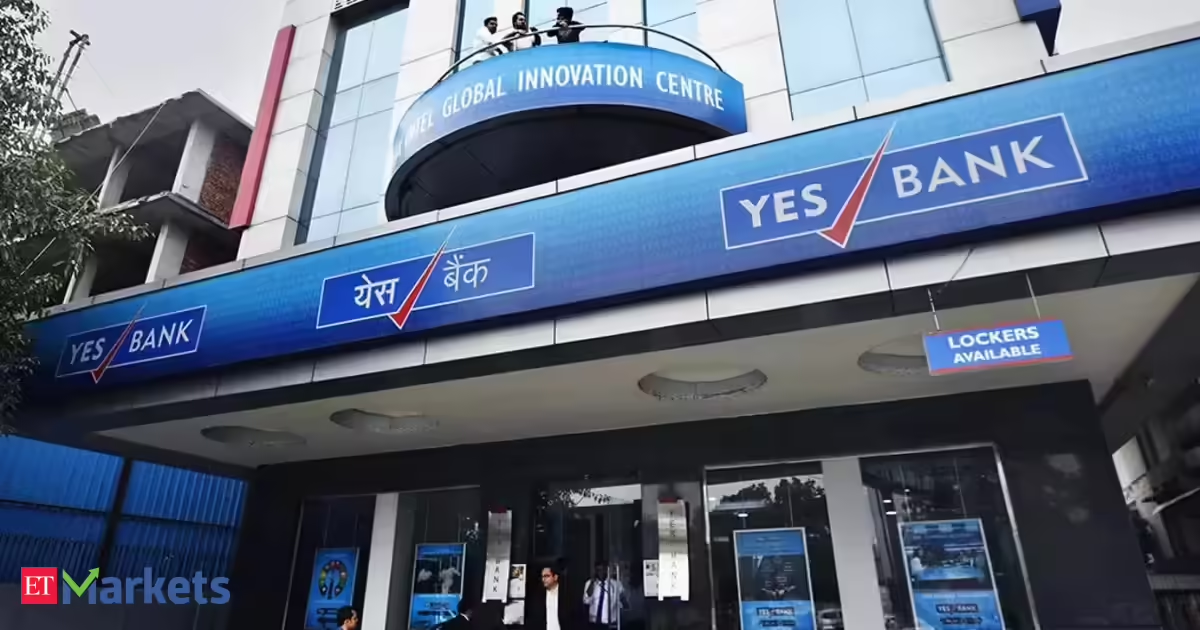
From a fundamental perspective, the recent uptrend comes on the back of the lender announcing a strategic partnership with Northern Arc Capital aimed at expanding access to credit, scaling digital lending and offering debt investment opportunities to customers.
Also read: 5 under-the-radar stocks owned by 3 largest smallcap portfolios
For traders, here’s what technicals suggest
Ajit Mishra, Senior Vice President at Religare Broking, said Yes Bank share price has seen a healthy recovery from its crucial support zone near Rs 17 and is now moving towards a major hurdle at around Rs 26, which coincides with its 20-week exponential moving average (WEMA).
He expects the stock to face some consolidation around that level, with a decisive breakout above Rs 26 potentially triggering the next leg of the recovery. Mishra advises short-term traders to consider booking partial profits near Rs 26 and wait for sustained strength above that level before re-entering, or accumulate on dips towards the Rs 23-24 zone.
Ruchit Jain, Vice President of Technical Research at Motilal Oswal, said the banking and NBFC space has started gaining momentum and has outperformed the broader market this month. He noted that Yes Bank has broken above its key resistance level of Rs 24, supported by rising volumes over the past few sessions. According to Jain, the stock’s 200-week exponential moving average, placed around Rs 26, will be an important resistance level to watch.
Virat Jagad, Senior Technical Research Analyst at Bonanza, said the stock has delivered a decisive breakout above a long-term descending trendline resistance, backed by a strong bullish candle that cleared major overhead supply.
He noted that the RSI has moved firmly into bullish territory above 60 without any bearish divergence, signalling strong upward momentum. Jagad added that the stock’s EMAs remain aligned in a structural uptrend, supporting fresh long positions in the Rs 24.00-Rs 24.60 range, with upside targets of Rs 28.50 and Rs 31. He recommends a stop loss at Rs 22.80 for fresh positions and a trailing stop loss at Rs 21.90 for existing holdings.Read more: AI boom hands HFCL investors nearly 200% returns in just 6 months. Overheated or undervalued?
Yes Bank Q4 snapshot
The private lender reported a 45% year-on-year surge in net profit to Rs 1,068 crore for the January-March quarter of FY26, while its net interest income rose 16% YoY to Rs 2,638 crore for the quarter under review.
Net interest margin (NIM) gained 20 bps to 2.7%, while asset quality improved. Gross non-performing assets (NPA) ratio declined 30 bps YoY to 1.3%, while net NPA ratio declined 10 bps to 0.2%.
(Disclaimer: Recommendations, suggestions, views and opinions given by the experts are their own. These do not represent the views of The Economic Times)


Dear Reader,I am a Senior Derivatives Expert with over 10 years of experience in the field of Asset Management, specializing in equity analysis and research, macroeconomics, and risk-managed portfolio construction. My professional background covers both institutional and private client asset management, where I have advised on and implemented multi-asset strategies, but highly focusing on equities and derivatives.As you might be as well, I am a stock market enthusiast. My core passion lies in understanding how macro trends influence both asset prices and investor behavior. I closely follow EU and US central bank policies, sector rotation, and sentiment dynamics, and construct actionable investment strategies.BA in Financial Economics, MA in Financial Markets. In the past decade, I have navigated through various market conditions, and this was my PhD.One of the essential goals of writing on Seeking Alpha is to share insights with colleagues, fellow investors, exchange ideas, and become slightly better than yesterday. I contribute to the idea that investing should be accessible, inspiring, and empowering. It might sound like a cliche, I know, but in the end it’s highly valuable – so let’s help each other build confidence in long-term investing. The analysis and opinions shared in my articles and comments are for informational purposes only and should not be considered financial advice. Please do your own research before making any investment decisions.Thank you and have a lovely day!Best regards
Analyst’s Disclosure: I/we have no stock, option or similar derivative position in any of the companies mentioned, but may initiate a beneficial Long position through a purchase of the stock, or the purchase of call options or similar derivatives in ZETA over the next 72 hours. I wrote this article myself, and it expresses my own opinions. I am not receiving compensation for it (other than from Seeking Alpha). I have no business relationship with any company whose stock is mentioned in this article.
Seeking Alpha’s Disclosure: Past performance is no guarantee of future results. No recommendation or advice is being given as to whether any investment is suitable for a particular investor. Any views or opinions expressed above may not reflect those of Seeking Alpha as a whole. Seeking Alpha is not a licensed securities dealer, broker or US investment adviser or investment bank. Our analysts are third party authors that include both professional investors and individual investors who may not be licensed or certified by any institute or regulatory body.


Japan moves toward first-ever consumption tax cut, adds to fiscal strain


BMW shares slide after China weakness, Iran war prompt profit warning
Sam Jones and Nadia Budihardjo discuss the Asian engagement feature in the recent Business News magazine.

Resources Minister Madeleine King used a visit to Perth to reaffirm her support for strike action at BHP’s Port Hedland operations, which could cost the miner up to $120 million per day.

Ubtech Robotics: Site Visit Takeaways – Multiple Catalysts Ahead, Maintain Buy
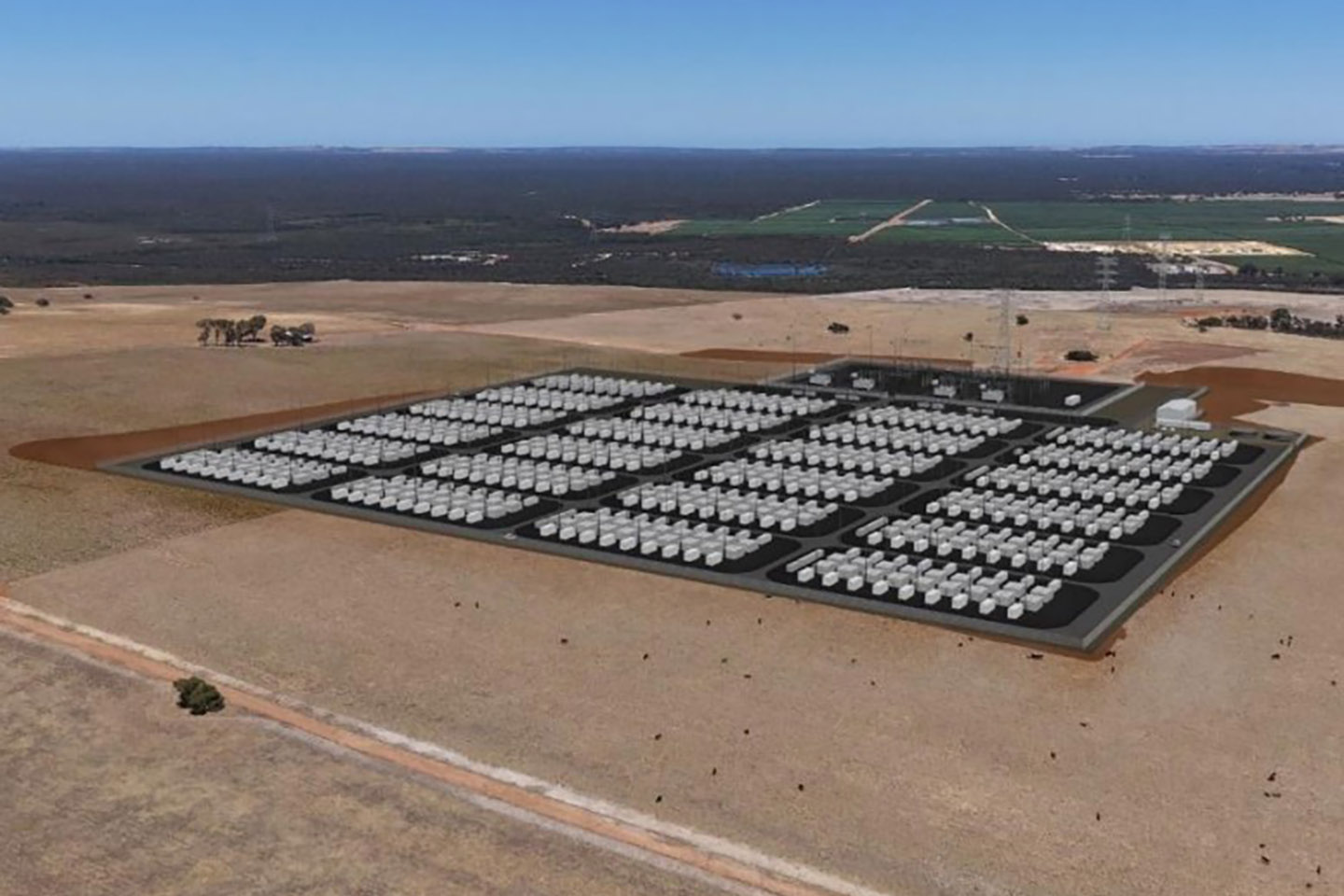
A team led by former Macquarie Capital bankers has cleared a planning hurdle to build a $1 billion battery energy storage system near Gingin.

When To See A Doctor If You’re Concerned About Prostate Cancer

Arnautovic on target as Austria beat spirited Jordan

KUD | Financial services | July 2025 | B.com 6th sem Question paper


-

 Business3 days ago
No Jackpot Winner as $257 Million Prize Rolls Over to $269 Million Monday Draw
-

 Crypto World6 days ago
Oppenheimer backs SpaceX as $70 billion retail frenzy builds
-

 Fashion5 days ago
Weekend Open Thread: Tuckernuck – Corporette.com
-

 Crypto World6 days ago
Markets Rally as SpaceX IPO Looms Amid Iran Tensions and Inflation Surge
-
 Crypto World2 days ago
Zimbabwe Requires Crypto Businesses to Register Annually Under New FIU Regulations
-

 Tech4 days ago
NanoClaw integrates JFrog registries to secure AI agent downloads
-

 Tech5 days ago
This Week In Security: Microsoft On Microsoft, Register Your Domains, Linux On ARM, And FreeBSD Joins The File Cache Club
-

 Crypto World4 days ago
Bitget enters Argentina’s regulated crypto market through PSAV registration
-
 Tech6 days ago
Dutton Ranch star claims they ‘didn’t see any disruption’ on set following Chad Feehan’s exit from Yellowstone spinoff fueled by Taylor Sheridan clash rumors
-

 NewsBeat5 days ago
El Nino has formed in the Pacific and could set records, forecasters say
-

 Tech7 days ago
‘This is Seattle’s position on AI’: City Council votes unanimously to pause big new data centers
-

 Politics6 days ago
Politics Home | Healey Resignation Is “Colossal Failure Of Government”, Says Former Labour Defence Secretary
-
 Entertainment6 days ago
Donnie Wahlberg & More Heat Up Las Vegas at Circa’s Barry’s Downtown Prime
-
 Tech6 days ago
Opendoor Ends India Operations, Fueling a Bigger Conversation About AI and Outsourcing
-

 Sports6 days ago
First Time Since 1971: Australia Register Historic Low In ODI Cricket
-

 Politics6 days ago
Belfast burns, while Met chief points finger at Iran and Russia
-

 Business6 days ago
AT&T: Verizon's 27% Outperformance Sets Up A Solid Entry Point
-

 NewsBeat5 days ago
FBI searches office of Ohio voter registration group
-
 Tech5 days ago
Anthropic is spending $150M to embed 1,000 AI fellows inside nonprofits. No degree required.
-

 Politics6 days ago
Modi thanks Trump for wishes as US attacks Indian seafarers
You must be logged in to post a comment Login