

Crypto World
Bitcoin ETFs bled cash Monday while every other crypto ETF gained



US spot bitcoin ETFs lost a net $64 million on Monday, even as spot ETFs for ether, XRP, Solana and Hyperliquid all pulled in fresh cash. On the surface, that looks like a clean rotation out of bitcoin and into everything else.
Ether funds gained $22.5 million, Hyperliquid funds $17.2 million, and the XRP and Solana funds about $2.8 million each. That tracks Monday’s price action, where the alts ran well ahead of bitcoin, with XRP up about 7%, Solana 6% and Hyperliquid 11% on the day. The flows followed the tape.
[@portabletext/react] Unknown block type “image”, specify a component for it in the `components.types` prop
It is worth keeping the scale in mind. Bitcoin ETFs still hold about $83 billion in assets, against roughly $10 billion for ether and around $1 billion each for the XRP, Solana and Hyperliquid products.
The bitcoin number needs a second look. The outflow was not broad, as BlackRock’s IBIT, the largest fund, actually took in $66 million. The net loss came almost entirely from Grayscale’s GBTC, the high-fee legacy trust that has been shedding assets since these funds launched, which lost $124 million on the day. Strip out GBTC and bitcoin ETFs had an ordinary session
[@portabletext/react] Unknown block type “image”, specify a component for it in the `components.types` prop
The real question is durability. If the altcoin ETFs keep drawing inflows once GBTC’s drag fades, the rotation is real. If not, Monday was a blip dressed up as a trend.



Locus Founder settles payments in USDC, the dollar-pegged stablecoin, directly into a non-custodial wallet that the agent controls. No bank account required. No Stripe intermediary is taking days to settle. The agent earns, holds, and spends money in real time — and the infrastructure is built so humans can audit and control exactly what it does with that money. When a sale is made, Checkout With Locus, a Stripe-style payment SDK, settles the funds directly into the agent’s Locus wallet.
“The AI agent that earns you a dollar by running your business, just by texting it. And it’s an evolution of everything we’ve built. Every Locus Founder user is a Pay With Locus user (credits run off our wallets), a Build With Locus deployment (sites deploy on BWL), and a consumer of our pay-per-use API suite. It’s the first app anyone can pick up and use, sitting on top of all of our infrastructure,” the official post said.
In other words, Locus isn’t just an AI that texts you business updates. It is a vertically integrated system where an AI agent can research, build, market, sell, and get paid, entirely autonomously, with USDC as the financial layer connecting it all.
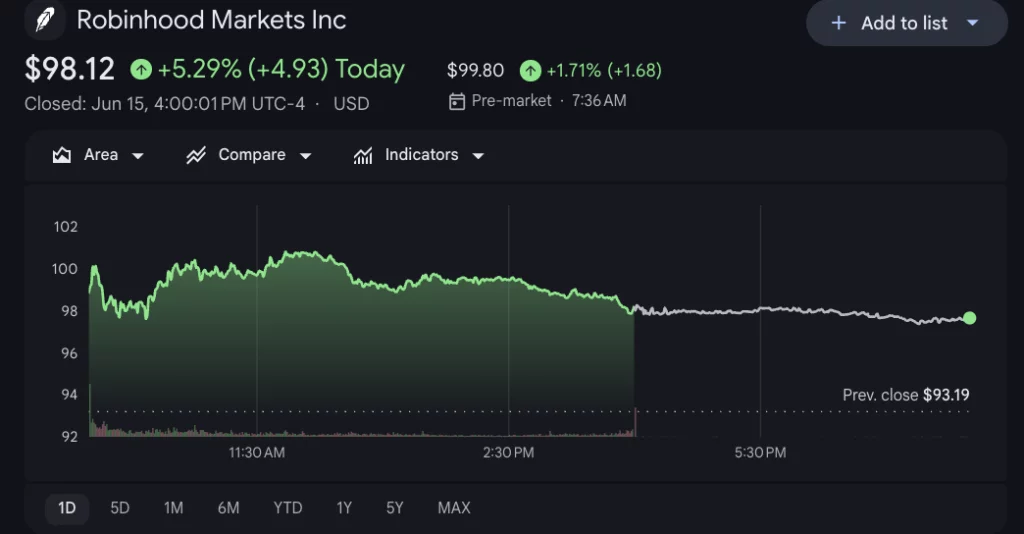
Robinhood has announced plans to cut about 290 jobs, or roughly 10% of its full-time workforce, while recording approximately $28 million in related charges as the online brokerage moves to simplify its management structure.
Summary
- Robinhood will cut about 290 jobs, or 10% of its workforce, as the company reduces management layers and closes remaining open roles.
- The trading platform expects roughly $28 million in restructuring related costs and said record June trading volumes support the move.
- The workforce reduction comes months after weaker crypto activity weighed on Robinhood’s first quarter results and profit.
According to Robinhood, the layoffs are part of an effort to operate more efficiently by reducing layers of management and creating a leaner organization. The company said it will also close the small number of remaining open positions.
In a message to employees shared on X, Robinhood Chief Executive Officer Vlad Tenev said the company was entering the restructuring from a position of strength.
“Robinhood’s business has never been stronger,” Tenev wrote, adding that the company could not continue operating as a heavily layered organization and needed to remain focused.
“Because our financial position is strong, we are making this change proactively. The goal is to maximize our talent density and ensure that our culture is defined by an absolute elite performance bar and a superlative commitment to our customers […] We will also continue hiring strategically, investing heavily in top-tier talent, and utilizing frontier technologies to push our execution even further.”
Investor reaction was positive, with Robinhood shares rising nearly 3% in premarket trading. Despite the gain, the stock had fallen 13% this year through Monday’s close.
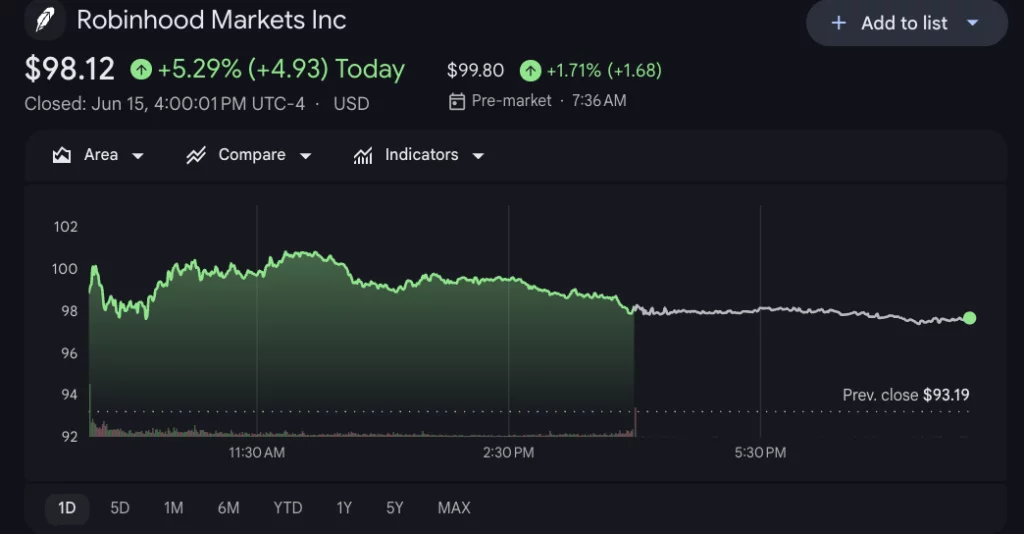
A regulatory filing cited by the company showed Robinhood employed about 2,900 full-time workers as of Dec. 31. Management expects to book around $20 million in severance and employee benefit costs, along with roughly $8 million in share-based compensation expenses. The charges are expected to be recognized during the second quarter.
Trading activity rebounds after weak first quarter
While announcing the workforce reduction, Robinhood pointed to strong trading activity across its platform. The company said June month-to-date average daily volumes had reached record levels in equities, options, and prediction markets.
Those figures stand in contrast to conditions earlier this year. During its first-quarter earnings report in April, Robinhood missed Wall Street profit expectations as weaker cryptocurrency trading weighed on results.
Revenue from cryptocurrency trading fell 47% year over year to $134 million in the January-to-March period, while transaction-based revenue of $623 million came in below analyst estimates, according to the company’s earnings report.
Several analysts identified crypto trading as a major source of pressure during the quarter. Morningstar described the segment as a “particular pressure point,” while Raymond James analysts said trading volumes had become uneven and showed signs of retail investor fatigue.
At the time, Robinhood also faced a more difficult operating environment as cryptocurrency prices declined and retail participation slowed. Analysts at KBW noted that competition across the crypto trading industry was intensifying, with both digital asset exchanges and traditional financial firms expanding their offerings.
Market conditions have improved since then. Robinhood cited easing tensions in the Middle East and strength in equity markets as factors supporting retail trading activity in recent months.
To reduce its exposure to swings in trading volumes, the company has continued expanding beyond its core brokerage business. Retirement accounts, wealth management services, and credit card products have become part of Robinhood’s effort to build additional sources of revenue that are less dependent on market activity.
Earlier this month, Robinhood expanded its international footprint by launching stock and options trading services in Canada through its acquisition of Canadian crypto platform WonderFi. The move brought the company’s investing products to Canadian users for the first time and added to its efforts to grow beyond its core U.S. retail trading business.
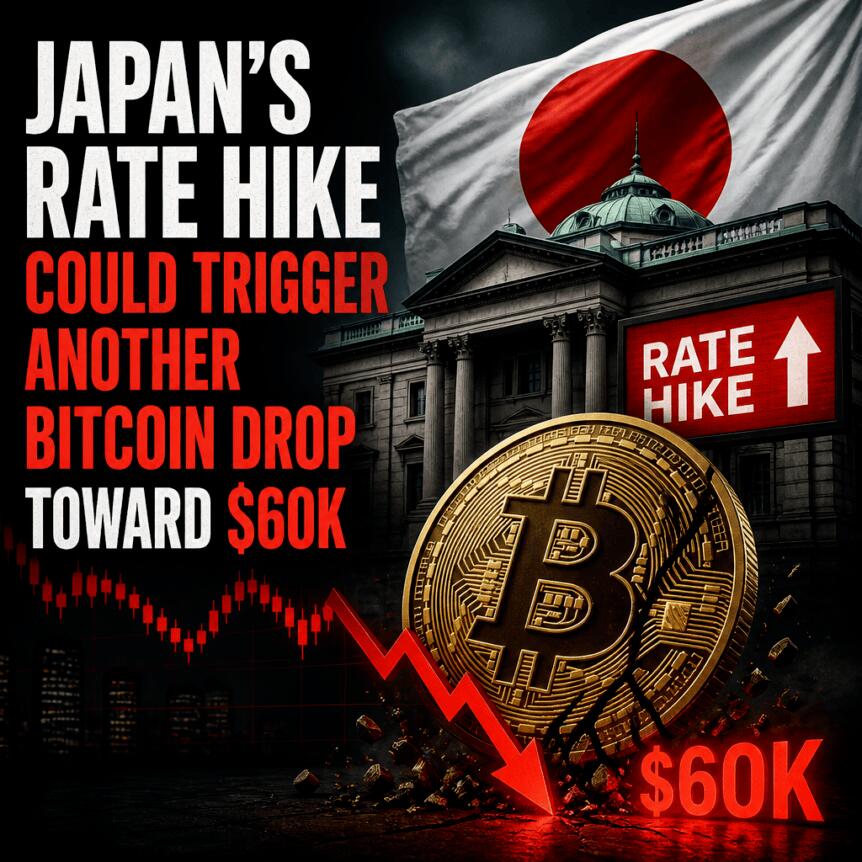
Bitcoin is facing a fresh macro headwind after the Bank of Japan raised interest rates to 1.0%—its highest level since 1995—marking the latest stage of Japan’s exit from ultra-low rates. The decision has added pressure to a market already trying to hold above the $60,000 psychological level, even as local newsflow points to partial risk-on moments.
According to trading-history patterns compiled around previous Bank of Japan hikes, BTC has tended to slip over the following month. In the 30 days after the last four BoJ rate increases, Bitcoin averaged a 5.74% decline, with downside scenarios ranging from the low-$60,000s to the mid-$50,000s depending on how closely the current setup resembles earlier post-hike drawdowns.
Key takeaways
- In the 30 days after the last four BoJ rate hikes, Bitcoin averaged a 5.74% decline.
- Historical post-hike outcomes suggest BTC’s downside could cluster between about $62,700 and $56,700 if selling pressure repeats.
- Recent BoJ action comes against an environment of inflation sensitivity and policy tightening pressures, which typically weighs on risk assets.
- BoJ tightening cycles have often lined up with periods of recession in the US, with the COVID shock as a major exception.
BoJ lifts rates to the highest level in decades
The Bank of Japan raised its short-term policy rate by 25 basis points to 1.0% on June 16, according to the BoJ’s policy-rate documentation. The move represents Japan’s highest interest-rate level since 1995, and it follows a broader tightening path driven by concerns over persistent inflation risks.
In the BoJ’s rationale, policymakers pointed to higher energy costs and ongoing supply disruptions linked to the Middle East. While the rate decision is specific to Japan, the market implication tends to be global: Japan has long acted as a major source of low-cost funding for international investors.
On the day of the decision, Bitcoin was down nearly 2.5% from a local peak around $67,250, though it was still holding on to gains from earlier in June. The critical question for traders is whether this pullback stays contained or develops into a larger post-hike trend.
What past BoJ hikes have meant for Bitcoin over the next 30 days
Data drawn from prior BoJ tightening episodes suggests a recurring pattern. The compiled results show that in the 30 days after the last four rate hikes, Bitcoin averaged a 5.74% decline. The figure is not uniform, but the direction has frequently been negative.
Specifically, Bitcoin fell:
- 5.59% after the March 2024 BoJ hike;
- 10.89% after the July 2024 hike;
- 14.77% after the January 2025 hike.
The main counterexample in the dataset came after the December 2025 hike, when BTC gained 8.31% over the subsequent 30 days. However, the article notes that this rebound followed a sharp correction from an October 2025 peak, implying the market may have been positioned far more defensively heading into that decision.
Applying the average post-hike decline to the current area of roughly $66,500 produces a theoretical downside target near $62,700—just above the $59,000 to $62,000 demand range referenced in the same analysis. More severe parallels are also plausible if the current selloff behaves like earlier episodes: a drop similar to July 2024’s post-hike decline could point toward roughly $59,200, while a pattern closer to January 2025 would imply a move down toward about $56,700.
Beyond the narrower 30-day window, the same compiled view highlights that deeper drawdowns have occurred in some post-BoJ phases since March 2024, with Bitcoin losing between 26% and 38% after Japan’s rate decisions. The chart referenced in that context was shared by crypto analyst Gerla.
Why Japan tightening can reverberate through crypto markets
Japan’s low-rate regime has mattered to global markets for years because it supported a common funding strategy: when Japanese rates were near zero, traders could borrow yen cheaply and redeploy that capital into higher-yielding or higher-risk assets elsewhere, including equities and cryptocurrencies.
As Japan raises rates, that trade typically becomes less attractive. The immediate effect is usually a shift in how leveraged investors manage risk, and—critically—how quickly they unwind positions when liquidity conditions tighten.
That mechanism can be rough for assets like Bitcoin. Crypto often trades as a high-beta risk asset, so when global investors become more cautious, drawdowns can widen quickly.
It’s also worth noting that BoJ rate decisions have tended to arrive late in broader global cycles. In a post on X, André Dragosch, European Head of Research at Bitwise, argued that BoJ hiking cycles have historically coincided with US recession periods, with the COVID shock as the main exception.
Dragosch’s comparison—based on data shown against recession periods and Japan’s unsecured overnight call rate—frames a longer-running policy rhythm: Japan often tightens when inflation is still elevated and when liquidity support for risk assets is already deteriorating.
What traders should watch after the decision
The historical record summarized here does not guarantee the next month’s outcome for Bitcoin, but it does identify a market sensitivity to BoJ-driven tightening. The immediate level to monitor is whether BTC can defend the $60,000 area and, if not, whether losses remain nearer the lower-$60,000s demand band or broaden toward the low-to-mid-$50,000s scenarios implied by past post-hike drawdowns.
Next, investors should also watch whether broader risk markets tighten in tandem with Japan’s move—because the most painful post-hike periods tend to be those where global liquidity conditions worsen, not just those where Bitcoin experiences a short-term dip.


Key takeaways
- XLM is up 12% in the last 24 hours, outperforming the broader crypto market.
- The rally comes as Open Interest hits $261 million.
XLM extends weekly gains
Stellar’s XLM attracted renewed buying interest on Tuesday after posting strong gains at the start of the week. XLM surged over 11%, bringing the asset closer to key resistance levels that could determine the next phase of its price action.
Supporting the rally are improving derivatives and on-chain metrics, including rising open interest, increasing trading volumes, and positive funding rates, all of which point to growing market participation and strengthening bullish sentiment.
Data from CoinGlass shows a notable increase in derivatives activity for both cryptocurrencies.
XLM’s open interest climbed to $261 million. Rising open interest is generally viewed as a sign that new capital is entering the market and that traders are increasing exposure to the assets.
The increase suggests investors are positioning for further upside as momentum improves across the broader crypto market.
Funding rates have also shifted in favor of bulls. CoinGlass data shows that XLM’s funding rate reached 0.0061% on Tuesday.
Positive funding rates indicate that long-position holders are willing to pay a premium to maintain bullish bets, often reflecting growing confidence in higher prices.
On-chain activity provides additional support for the bullish outlook. According to Santiment, Stellar’s trading volume is climbing to $879.25 million from just $153 million over the past few days.
The sharp rise in activity suggests renewed investor interest in the XLM ecosystem as prices recover from recent lows.
Stellar technical outlook: Momentum continues to improve
XLM is trading near $0.227 on Tuesday, maintaining a constructive technical setup after rebounding from last week’s correction.
The token remains above a key support zone formed by the 61.8% Fibonacci retracement level near $0.200 and the 200-day EMA around $0.199.
Additional support comes from the 50-day and 100-day EMAs at $0.185 and $0.182, respectively.
The RSI is currently near 71, indicating healthy momentum without entering overbought territory. Meanwhile, the MACD continues to trend higher, signaling that bearish pressure is gradually weakening.
If the rally persists, immediate resistance is seen at the $0.237 level, with an additional supply zone at the $0.260 region.
However, if the bearish trend returns, immediate support is located at the $0.200 psychological level.

A daily candle break below this level could expose further demand zones at $0.185 and $0.177 in the near term.
A breakout above $0.237 could pave the way for a stronger move higher, while holding above the $0.200 support zone remains crucial to preserving the current bullish structure.
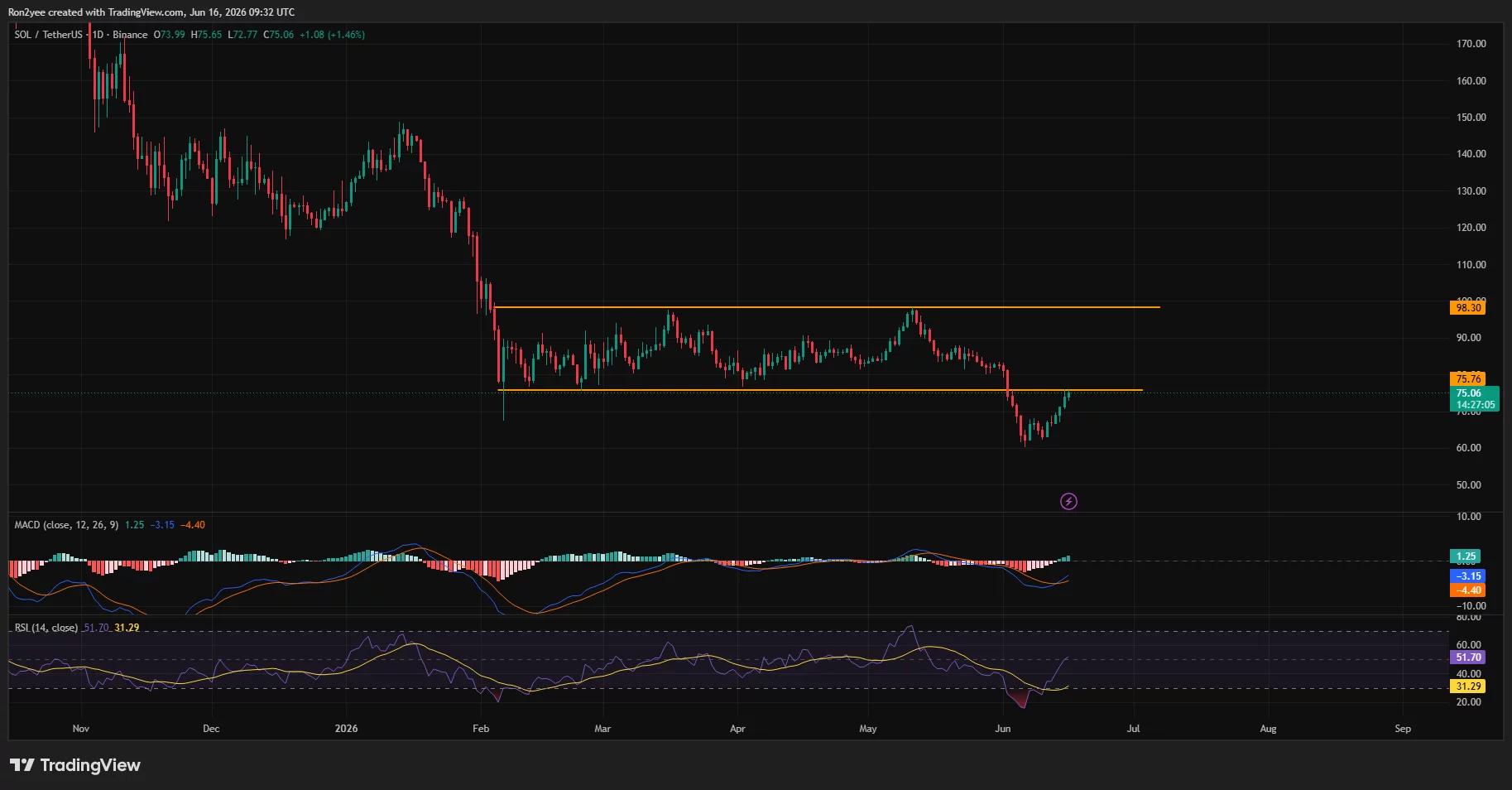
Solana price has surged more than 20% from its June low and returned to a critical support-turned-resistance level that could determine whether the token reclaims its multi-month consolidation range.
Summary
- Solana price has rebounded more than 20% from its June low and is testing the former support level of a multi-month consolidation range near $75.7.
- A breakout above the range floor could reopen a path toward $83.5, $90, and eventually the channel resistance near $98.3.
- Failure to reclaim $75 could trigger a pullback toward $71.8, $69.1, and potentially the June low around $60.
According to data from crypto.news, Solana (SOL) price traded around $75 on June 16, up more than 20% from its early June low near $60.
SOL’s recovery followed reports that the U.S. and Iran had reached a framework agreement that could reopen the Strait of Hormuz, easing concerns about energy supply disruptions and inflation. Oil prices moved lower after the announcement, while Bitcoin, Ethereum, and other risk assets posted strong gains.
The rally has also coincided with renewed institutional activity surrounding the Solana ecosystem. On June 15, Solana Company rejected a non-binding acquisition proposal from Forward Industries. The proposal valued the company at a premium to its market price and arrived amid growing competition among firms building SOL-focused treasury strategies.
Derivatives markets have reinforced the move. CoinGlass data showed open interest climbing alongside price during the rebound, while the sharp recovery forced traders holding bearish positions to unwind. Liquidation-driven buying helped accelerate the move from the low-$60 region toward current levels.
Solana is attempting to reclaim a lost multi-month support zone
The daily chart shows that Solana spent nearly four months trading inside a horizontal consolidation channel bounded by support near $75.7 and resistance around $98.3. The structure broke down in early June when sellers pushed SOL below the range floor, triggering a decline toward $60.
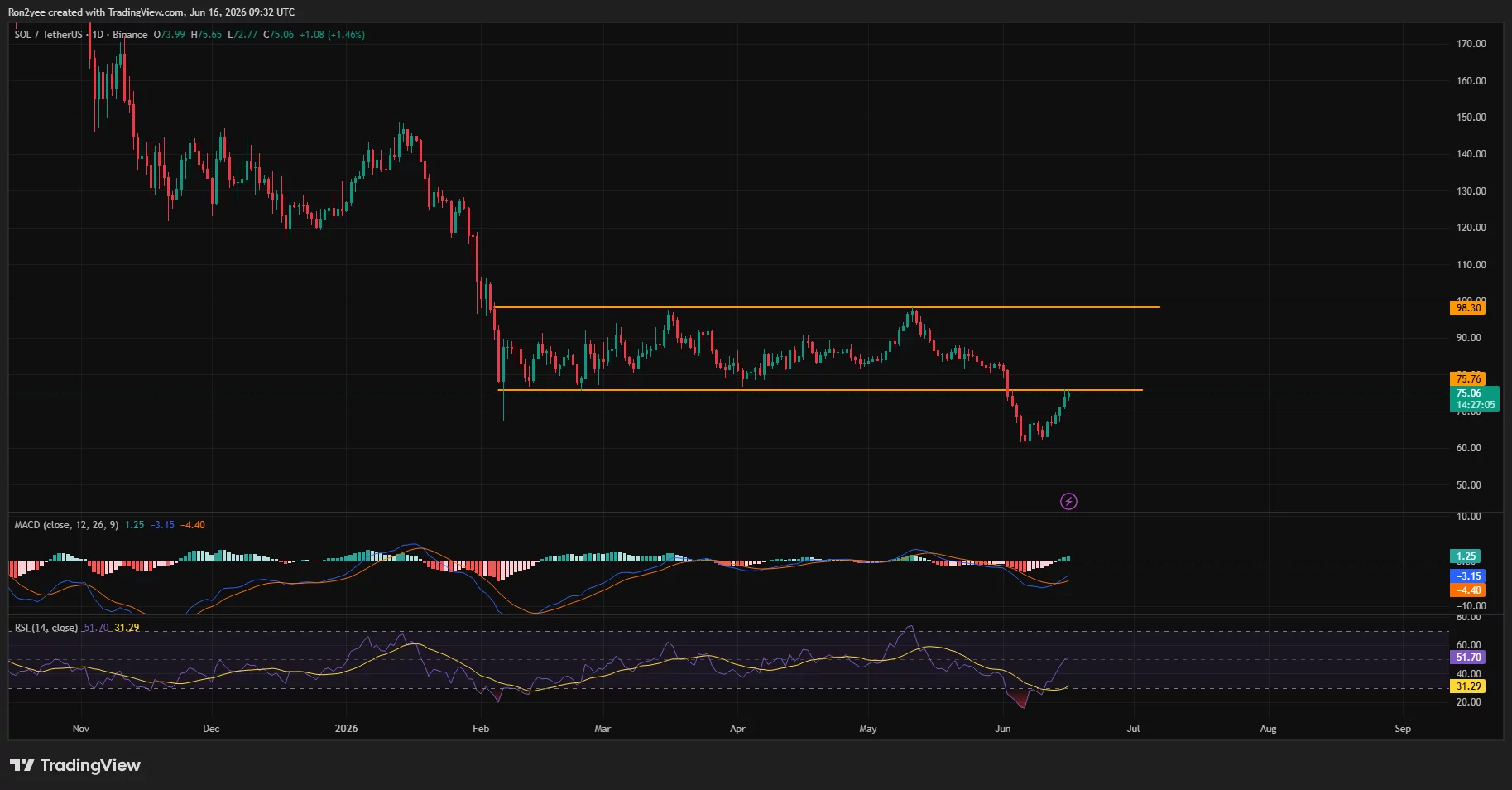
Solana has now returned to the former support zone, placing the market at a critical technical inflection point. A successful reclaim would invalidate the recent breakdown and place Solana back inside the channel that governed price action throughout much of 2026.
On the four-hour chart, SOL has already broken above a descending trendline that had capped rallies since late May. The recovery also carried price through several Fibonacci retracement levels measured from the June decline.
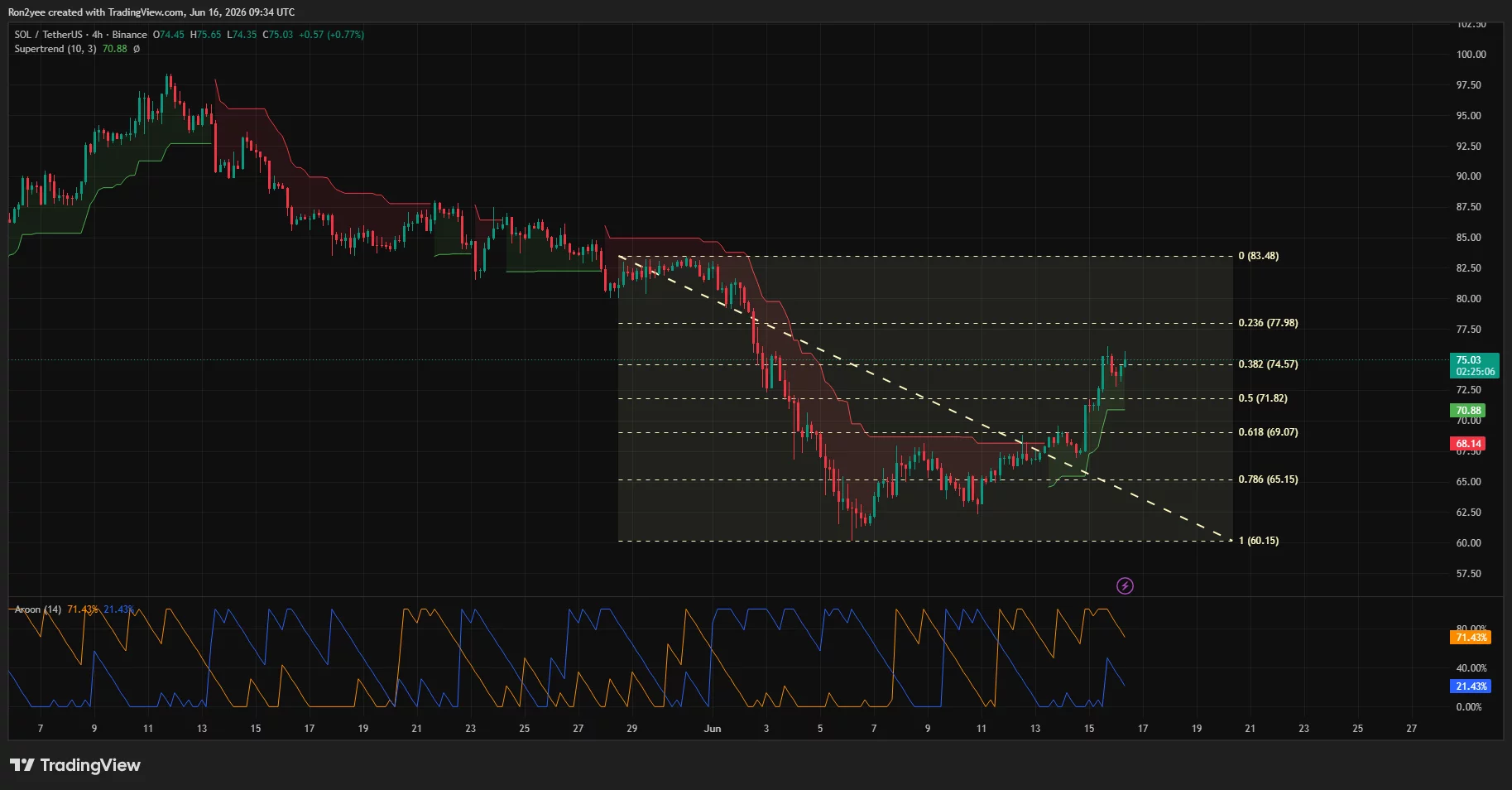
Immediate resistance sits near the 0.382 Fibonacci level at $74.6, followed by $78 and then the prior swing high around $83.5. Beyond that area, traders would likely focus on the upper half of the former consolidation range between $90 and $98.
Momentum indicators have improved alongside the price recovery. The daily RSI has moved back above 50 after briefly entering oversold territory earlier this month, while the MACD has started to turn higher after a prolonged bearish phase. On the four-hour timeframe, the Supertrend indicator remains bullish with support near $70.9.
Not all analysts are convinced the recovery is complete. In a June 16 X post, analyst Crypto Coral said Solana recently broke down from a bearish flag structure and remains near a key resistance zone.
“$SOL broke down from a bearish flag and is now retesting key resistance near the EMA. Unless bulls reclaim this level, $SOL could face another leg lower before a sustainable reversal.”
Failure at $75 could expose downside toward the June lows
A rejection near the former range floor would strengthen the case that the recent rally is merely a retest of broken support rather than the beginning of a larger trend reversal.
Under that scenario, traders would likely monitor the 50% Fibonacci retracement near $71.8 and the 61.8% level around $69.1 as the first downside targets. A break below those levels could expose support near $65 before attention shifts back to the June low around $60.
Macro risks remain present despite the latest relief rally. The market’s recent gains have been tied closely to developments surrounding the U.S.-Iran agreement and expectations that the Strait of Hormuz will remain open. Any setback in negotiations, renewed tensions in the region, or a rebound in oil prices could pressure risk assets and weaken demand for cryptocurrencies.
As such, Solana’s battle around $75 remains the key chart level. Bulls need a decisive reclaim of the former channel floor to reopen a path toward $90 and eventually $98, while sellers will look for rejection at resistance to reassert control of the trend.
Disclosure: This article does not represent investment advice. The content and materials featured on this page are for educational purposes only.

Bitcoin’s bounce appears to be running into a familiar constraint: trading momentum is improving only superficially, and market participants are still leaning heavily on whether major geopolitical risks ease. At the same time, institutional-scale buying continued, with Michael Saylor’s Strategy adding another tranche of BTC and pushing its total holdings to 846,842 Bitcoin.
On the regulatory front, the US CFTC also made a personnel move that underscores its widening use of data and blockchain analysis. In a development that links crypto enforcement and market-structure oversight, CFTC Chair Michael Selig said the agency has appointed Donald Battle—previously an adviser to the SEC’s crypto task force—as its chief data innovation officer.
Key takeaways
- Swissblock and LVRG Research both indicate Bitcoin’s recovery lacks “conviction,” pointing to weak participation and soft on-chain signals.
- Geopolitics remain a dominant driver: a potential US-Iran peace deal is expected to be signed soon, but any breakdown could raise volatility.
- The CFTC has appointed Donald Battle, an SEC crypto task force adviser with blockchain forensics experience, as chief data innovation officer.
- Strategy bought 1,587 BTC for $100 million between June 8 and 14, bringing its total holdings to 846,842 BTC.
Bitcoin’s rebound depends on peace odds, but on-chain signals stay subdued
Bitcoin’s price strength has been notable—especially after it reclaimed the $67,000 level on Monday—but analysts caution that the underlying flow of activity is not strong enough to confirm a durable trend. According to reporting that cites Swissblock and LVRG Research director Nick Ruck, the market is still operating in a “weak momentum” environment.
Ruck told Cointelegraph that while Bitcoin reclaimed $67,000, “momentum remains weak,” citing declining volume and on-chain metrics that appear stagnant. His view is that the rebound could fade quickly if confirmation doesn’t show up in participation and network data.
Swissblock echoed the same theme, stating that Bitcoin’s price-momentum measures and on-balance volume (OBV)—a commonly used gauge of buying versus selling pressure—are stuck in a “weak momentum and participation regime.” In other words, price is rising, but the market behavior around that move has not fully shifted into a sustained accumulation phase.
The timing of the next test may be geopolitical. Ruck warned that if the US-Iran peace framework fails, spillover effects—ranging from renewed instability to potential oil-market shocks—could put Bitcoin on a “volatile path.” In that scenario, geopolitical catalysts would continue to dominate crypto price action rather than technical recovery signals.
US President Donald Trump said Sunday that the US has completed a peace deal with Iran to end months of conflict, with the expectation that it would be signed on Friday. Trump also said the arrangement would reopen the Strait of Hormuz and lead the US to lift its blockade—though the details remain largely unknown, and uncertainty itself can keep risk assets sensitive.
The CFTC appoints a data-and-forensics specialist from the SEC crypto task force
The US futures regulator’s staffing move is likely to matter beyond headlines because it ties together enforcement capability, data innovation, and crypto market oversight. The CFTC announced that Donald Battle—described as an adviser to the SEC’s crypto task force—will become the agency’s chief data innovation officer.
According to a CFTC notice quoted via Cointelegraph, CFTC Chair Michael Selig said the appointment reflects Battle’s experience in “data science, blockchain forensics, programming interfaces, and cutting-edge AI solutions.” Battle previously served as a blockchain data adviser for the CFTC and worked as a crypto enforcement specialist with the Treasury Department’s Financial Crimes Enforcement Network.
The key implication for market participants is that the CFTC is positioning itself to process and act on blockchain-related information more systematically. While the agency’s broader approach to crypto regulation has been evolving for years, appointments like this suggest an internal emphasis on analytics and investigative tooling—areas that can influence how quickly regulators can identify risks, trace activity, and respond to misconduct.
The move also arrives as Congress continues to discuss changes to the roles of the CFTC and SEC in digital asset market structure. In particular, the CLARITY Act—referenced in the same coverage—would reshape aspects of responsibilities across agencies. In that context, a chief data innovation officer with forensics experience can be read as a signal that the CFTC wants to be technically prepared for whatever additional responsibilities—or compliance burdens—follow legislative change.
Strategy continues its BTC buying streak, lowering average cost basis
While technical analysts debate whether Bitcoin’s rebound has enough support, the largest publicly known buyer continues to accumulate. Strategy, the company controlled by Michael Saylor, purchased 1,587 BTC for $100 million between June 8 and 14, according to an SEC 8-K filing referenced in Cointelegraph’s report.
The filing indicates an average acquisition price of $63,024 per Bitcoin. That purchase lowered Strategy’s overall average cost basis slightly, bringing it to about $75,656. Strategy’s reported position after the transaction is 846,842 BTC accumulated at a total cost of $64.07 billion.
CoinGecko data cited in the coverage places the current BTC price around $66,216, which the article estimates values Strategy’s holdings at roughly $56.1 billion. The gap between acquisition cost and current price highlights that—even amid recovery—Strategy’s entries are still largely underwater relative to today’s market level.
Funding mechanics also remain consistent with prior activity. As noted in the report, Strategy financed the latest purchase through sales of its Class A common stock (MSTR). The structure matters for investors because it can introduce additional dilution risk even when BTC supply dynamics are supportive—particularly during periods when the BTC market isn’t yet moving with full momentum.
What to watch next for BTC and crypto markets
For traders and long-term holders, the near-term watchlist should center on whether Bitcoin’s recovery earns stronger participation signals—something Swissblock and LVRG’s commentary suggest is still missing—and on whether the US-Iran deal proceeds without disruption. On the policy side, keep an eye on how the CFTC uses its new data leadership to tighten analysis and enforcement, especially as Congress continues to work through proposals like the CLARITY Act.
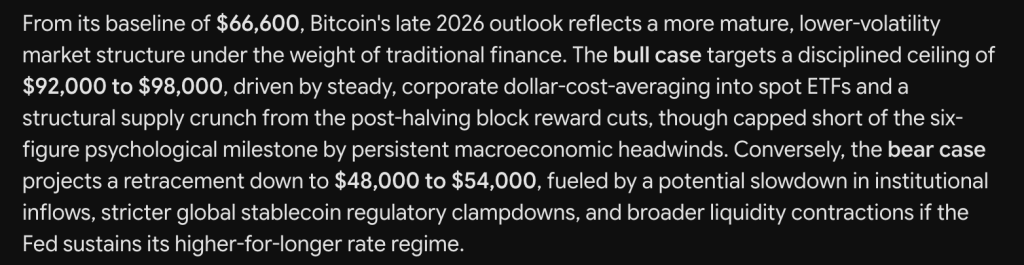
The headline is deliberately provocative, and once you read the actual prediction, you understand why. Google Gemini AI is not predicts for $150,000 or some cycle-blowoff fantasy.
Its bull case for Bitcoin by late 2026 is $92,000 to $98,000, a disciplined, almost conservative ceiling that stops just short of six figures.
For a coin that already touched $126,000 this cycle, being told the best case scenario is essentially where it was six months ago is not exactly the news the crowd wants to hear.
But that restraint is precisely what makes this prediction worth taking seriously. Gemini is not playing to the audience.
It is describing a Bitcoin that has grown up, one operating under the weight of traditional finance with a lower-volatility market structure that caps the euphoric upside in exchange for more durable institutional flows.
The post-halving supply crunch is real, corporate dollar-cost-averaging into spot ETFs is real, and both of those forces push price higher.
But persistent macroeconomic headwinds, in Gemini’s view, are the ceiling that keeps BTC from retaking six figures in this window. It is a mature market call, not a moonshot, and that is what makes it slightly uncomfortable for people who bought the $100,000 narrative.

The bear case lands at $48,000 to $54,000, fueled by a potential slowdown in institutional inflows, stricter global stablecoin regulatory clampdowns, and broader liquidity contractions if the Fed sustains higher-for-longer rates.
That is a 27% to 38% drop from current levels, not catastrophic given the distances Bitcoin has traveled before, but deeply frustrating for anyone waiting on a new all-time high.
Discover: The Best Crypto to Diversify Your Portfolio
Bitcoin Price Prediction: The Market That Grew Up And Left The Old Cycle Behind
What the daily chart shows right now is that Bitcoin is at $66,518, sitting on a ledge with real historical weight. Zoom out on this particular chart and you can see the full story, the 2024 breakout, the run to $126,000, the long unwind, the failed March recovery that stalled at $82,000, and then the most recent flush to $60,000 before the current bounce.
Price has now reclaimed the same $65,000 to $68,000 zone that served as a critical breakout level back in 2024, and the question of whether it holds as support or breaks as a trap is the most important technical question on this chart right now.
The $70,000 to $72,000 level is the first real test above, where the May breakdown began and where a significant amount of trapped supply sits.
Clearing that zone on volume would change the tone of this chart considerably, opening sight lines toward $80,000 and eventually the $92,000 to $98,000 range Gemini targets. Losing $62,000 on a daily close reopens the path toward $54,000, the top end of the bear case floor.
The RSI is the detail that cuts through the noise most cleanly. It sits at 44.75 with the signal line well below at 28.73, a gap of 16 points.
That divergence tells a specific story. Momentum was crushed to deeply oversold levels during the recent flush, and has since recovered aggressively back toward neutral while price is still finding its footing. RSI leading price in recovery is the better version of this setup, the pattern that tends to precede sustained bounces rather than bull traps.
It does not guarantee Gemini’s bull case plays out, but it does suggest the $60,000 low is more likely a floor than a waystation on the way to $48,000. The title asks you to brace for the target. The chart says the floor might already be behind us.
Discover: The Best Token Presales
You Might Like What Gemini AI Predicts About LiquidChain
The rotation is already happening. Most people will only see it in hindsight.
Large-cap crypto is not failing. It is capped. Bitcoin, Ethereum, and XRP have been pressing against the same resistance bands for weeks. The macro tailwinds keep getting delayed.
The institutional inflows keep getting pushed to next quarter. Holding assets where the upside depends on catalysts you cannot control is not a strategy. It is waiting.
A capital that has navigated enough cycles does not wait at resistance. It moves before the destination becomes obvious.
Early-stage infrastructure plays operate on different math entirely. A small enough market cap means a modest rotation produces dramatic price movement. The asymmetry exists because the market has not priced in what is being built yet. That gap between current valuation and what the project is actually worth is where the returns come from.
Multi-chain fragmentation costs DeFi real money every single day. Bitcoin, Ethereum, and Solana run completely isolated liquidity systems with no native way to connect them. Every user moving value between ecosystems absorbs that cost directly in fees, slippage, and failed transactions.
LiquidChain collapses all 3 networks into a single execution layer. One deployment. Full ecosystem access. No cross-chain tax on every interaction.
The market has not found this yet. That is the entire point.
The presale is at $0.01454 with just over $840,000 raised. Ground floor is not a marketing phrase here. It is a description of where this actually sits in its lifecycle.
Execution is unproven. Adoption is unknown. Those risks are real and worth naming directly. Established assets offer a smoother ride toward a ceiling that is already visible. This offers an earlier seat at a table that has not been set yet.
Explore the LiquidChain Presale
The post You Will Not Like Where Google Gemini AI Predicts Bitcoin Price Going in 2026 appeared first on Cryptonews.

Although most of the cryptocurrency market turned green following the announcement of a permanent deal between the US and Iran, Ripple’s token came out on top among the larger caps, surging from $1.05 at the start of the month to almost $1.30 yesterday.
However, its rally was stopped, and it now sits just under $1.25. EGRAG CRYPTO, a popular analyst who often weighs in on XRP’s price performance, believes the actual breakout confirmation is still far away.
This Is The Level
In their post on X, the analyst noted that the wick from the recent multi-year lows was “not random.” However, they added that sellers were quick to re-emerge at the key $1.30 resistance, while buyers stepped up at the lows just over $1.00. For now, XRP remains in a range between the two, and the most important levels for its positive future price performance are as follows:
 $1.11 = survival zone
$1.21 = first strength
$1.28 = structure improves
$1.35–$1.38 = bulls gaining control
$1.51 = major breakout zone
They show that XRP has managed to go above the “first strength” area, since it trades above $1.21 now. However, the path to the actual breakout confirmation requires reclaiming several other key resistance zones. The ‘final boss’ is located at $1.51, a level that XRP challenged on several occasions between February and mid-May, only to be rejected each time and driven south.
Sentiment Improves as ETFs Still in Green
CryptoPotato reported earlier that the overall sentiment around the cross-border token has improved in the past several days after it had dropped to the lowest levels in months. The analysts at Santiment Intelligence have often argued that such a substantial decline in market sentiment is typically followed by market reversals, and this was another confirmation.
One of the key reasons behind XRP’s revival is the flows into the spot Ripple ETFs. Unlike most other crypto-focused exchange-traded funds, those tracking XRP marked another green week, and Monday was also positive, albeit in a minor manner.
Additionally, the company behind the token continues to make headlines. The latest adoption news came yesterday from Gate.io as the exchange listed Ripple’s stablecoin and even launched a trading pair against XRP.
The post Ripple’s (XRP) Breakout Isn’t Real Until This Key Level Falls: Analyst appeared first on CryptoPotato.


The company that settles almost every US stock trade is putting tokenized securities on a public blockchain, and it chose Stellar. What the deal actually covers, what the $114 trillion figure really means, and why XLM jumped.
Summary
- DTCC is not tokenizing $114 trillion on Stellar; that figure refers to the assets it oversees.
- The initial scope covers Russell 1000 stocks, major index ETFs, and US Treasuries.
- Stellar was chosen for compliance-focused features, not just speed or low fees.
- XLM’s rally reflects a long-term institutional adoption bet, not direct demand from tokenized securities.
In May 2026, the Depository Trust and Clearing Corporation, the clearinghouse that sits behind nearly every stock trade in the United States, announced it would connect its tokenized securities service to Stellar, a public blockchain. It is the first time DTC-custodied securities will live on a public chain, and the news sent Stellar’s token, XLM, up more than 30% in a day with trading volume spiking over 400%. For a network long known mostly as a cross-border payments rail, the deal reframed Stellar overnight as a candidate for the core plumbing of US capital markets.
The deal has been widely covered and widely garbled, with headlines throwing around a “$114 trillion” figure that means something very different from what most readers assume. This guide explains the deal accurately: who DTCC is and why it matters, what is actually being tokenized and what is not, what the real numbers are, why Stellar was chosen, what it means for XLM, and the timeline that separates the announcement from anything going live.
The short answer
DTCC, the central clearinghouse for US securities, plans to issue tokenized versions of certain traditional assets, including Russell 1000 stocks, major index ETFs, and US Treasuries, on the Stellar blockchain. The plan was announced on May 27, 2026, runs under a three-year SEC no-action letter granted in December 2025, and targets live deployment in the first half of 2027.
The blockchain will hold tokenized securities that keep the same investor protections and entitlements as the traditional versions. XLM, Stellar’s native token, rose sharply on the news as traders priced in a major institutional use case for the network.
That is the deal. Everything else is detail and context, and the detail matters, because the most-quoted number about this deal is misleading.
Who DTCC is, and why this matters
Most people outside finance have never heard of DTCC, which is strange given that it touches almost every trade they ever make.
The Depository Trust and Clearing Corporation is the invisible backbone of US securities markets. When you buy a stock through a broker, DTCC is the entity that clears and settles the trade behind the scenes, moving ownership records and ensuring the buyer gets the share and the seller gets the cash.
Its subsidiary, the Depository Trust Company, serves as the central securities depository for the country, holding the master records of ownership for the vast majority of US stocks and bonds. DTCC processes an almost incomprehensible volume of activity, on the order of $2.5 quadrillion in securities transactions a year, and oversees more than $114 trillion in assets across US capital markets.
That backdrop is why the Stellar deal is a significant event, not another partnership press release. When a crypto-native company says it will tokenize assets, the market shrugs, because crypto-native companies tokenizing things is routine and the assets are usually small.
When DTCC, the institution that literally keeps the ownership records for American securities, decides to put tokenized versions of those securities on a public blockchain, it is the core of traditional finance stepping onto crypto rails for the first time. The credibility of the counterparty carries the whole thing, and no counterparty in US markets is more central than DTCC.
What the “$114 trillion” number actually means
Almost every headline misleads here, and getting it right separates understanding the deal from being fooled by it.
The $114 trillion figure is the total value of assets DTCC oversees across all of US capital markets. It is not the amount being tokenized on Stellar.
Headlines reading “DTCC tokenizes $114 trillion on Stellar” are wrong, and the error matters because it inflates the immediate impact by orders of magnitude. What is actually being tokenized, at least in the defined service the SEC authorized, is a specific and far smaller set of highly liquid assets: the constituents of the Russell 1000 index, which are the 1,000 largest US public companies, ETFs tracking major indices, and US Treasury bills, bonds, and notes.
Even those are not being tokenized all at once; they define the eligible universe for a phased service. The accurate way to state the deal is that DTCC is launching a defined, regulated tokenization service, initially scoped to a set of liquid blue-chip securities, on Stellar, with the $114 trillion representing the size of the institution running the experiment, not the size of the experiment.
The distinction is not pedantic. A reader who believes $114 trillion is moving onto Stellar in 2027 will badly misprice both the opportunity and the timeline.
The real significance is not the headline number. It is that the most important institution in US securities settlement chose a public blockchain at all, which is a door opening, not a flood arriving.
The deal also sits inside the broader real-world-asset wave this deal rides. That matters because DTCC is not just another crypto-native issuer testing a small tokenization product; it is the core securities market infrastructure stepping onto public blockchain rails.
What is being tokenized, precisely
Three eligible asset classes sit under the announced service, and they are worth listing plainly.
Russell 1000 stocks: tokenized representations of shares in the 1,000 largest US public companies, the index that covers roughly 93% of the investable US equity market by capitalization. Major index ETFs: tokenized versions of exchange-traded funds tracking large indices.
And US Treasuries: tokenized bills, bonds, and notes, which are already the largest tokenized asset class and how it works in the broader real-world-asset tokenization market because of their safety and liquidity. Across all three, DTCC has stressed that the tokenized assets would carry the same investor protections, entitlements, and safeguards as the traditionally held versions, which is the regulatory bridge that makes the whole thing work for institutional users.
What is not in scope, at least initially, is everything else DTCC touches: the long tail of less liquid securities, corporate bonds broadly, and the bulk of the $114 trillion. The service is deliberately narrow, built around assets liquid and standardized enough to tokenize cleanly under regulatory supervision, which is both a limitation and the reason it is credible.
Starting with Treasuries and blue-chip equities means starting with the assets least likely to create a compliance mess. That is how a careful regulated first step should look.
Why DTCC chose Stellar
Of all the blockchains DTCC could have selected, the choice of Stellar surprised parts of the market, and the reasons reveal what institutions actually want from a chain.
Stellar was chosen for compliance-oriented architecture, not raw speed or ecosystem size. The network has built-in asset controls, including the ability to freeze or claw back tokens, features that crypto purists often dislike but that regulated institutions consider essential, because no institution will issue a regulated security on a chain where a court order or compliance requirement cannot be enforced.
Stellar’s design treats tokens as native base-layer assets instead of smart-contract constructs, which simplifies the issuance and lifecycle management of a security and reduces the surface area for smart-contract bugs. The network also offers low transaction costs, high throughput, and a long operating history oriented toward payments and asset issuance, not speculative DeFi.
Notably, Stellar is the second public blockchain DTCC has connected to in its multi-chain strategy, following the Canton Network, and DTCC has signaled it will connect to multiple layer-1 and layer-2 networks over time. That context matters for tempering the Stellar-maximalist reading: DTCC is not marrying Stellar, it is adding Stellar to a roster, and the exclusivity that would make this transformative for XLM specifically is not what was announced.
Stellar won a meaningful seat at the table, not the only seat.
What it means for XLM
XLM’s price reaction was immediate and large, and understanding what it does and does not imply is the most useful thing for anyone holding or watching the token.
XLM jumped sharply on the announcement, with reports of moves above 30% in 24 hours and volume up more than 400%, as traders priced in Stellar’s transition from a payments network into a potential institutional settlement layer. The bullish logic is real: if DTCC routes meaningful tokenized-securities activity through Stellar, the network gains a flagship institutional use case that no amount of marketing could buy, and sustained on-chain activity from regulated assets could drive genuine demand for the network.
That is why the full XLM price outlook on the back of this deal now depends less on the announcement itself and more on whether real securities activity actually reaches Stellar.
A second supportive signal arrived in June 2026, when the SEC approved an active crypto ETF from T. Rowe Price that is permitted to hold XLM, adding a regulated demand channel on top of the tokenization narrative.
Equally real, and less discussed, is the caution. The deal does not directly require large amounts of XLM, because tokenized securities on Stellar are their own assets, and XLM’s role is as the network’s native token for fees and as the asset whose value reflects network usage, not as a one-for-one claim on the tokenized securities themselves.
The price move is a bet on what DTCC activity could mean for Stellar’s long-term relevance and fee generation, not a mechanical consequence of dollars flowing into XLM. And the timeline is long: nothing goes live until 2027, the service is phased, and XLM has remained volatile, even dropping 10% in a single week during the broader market weakness of mid-June despite the tokenization news.
The narrative is a multi-year thesis, not an overnight re-rating, and the token will trade on the broad market in between catalysts. That is why the regulatory backdrop shaping institutional crypto matters: institutions need legal certainty, enforceable rules, and compliant settlement mechanics before they move at scale.
The timeline: announcement is not deployment
Almost nothing has happened yet in operational terms, and that is the single most important thing to keep straight.
The sequence is worth laying out. The SEC granted DTCC a no-action letter in December 2025, authorizing a defined tokenization service for three years.
DTCC and the Stellar Development Foundation announced the Stellar connection on May 27, 2026. Production testing is expected to begin around July 2026, with wider rollout phases potentially through late 2026, and the target for tokenized assets actually becoming available on Stellar is the first half of 2027.
So the gap between the headline that moved the price and anything going live spans the better part of a year at minimum, and large institutional deployments routinely slip.
This timeline is the reality check the rest of the coverage skips. The announcement is a statement of intent backed by a regulatory authorization and a named blockchain, which is more concrete than most crypto partnerships, but it is still an intention to deploy, not a deployment.
Between now and 2027, the testnet phases will reveal which asset classes go first, how many institutions participate, and how the registered-wallet and compliance mechanics actually work in practice. Any of those could reshape the impact.
The thesis is strong and the counterparty is serious, but the calendar says patience. The price has already priced in a future that has not yet been built.
Frequently Asked Questions
What did DTCC actually announce with Stellar?
DTCC, the central clearinghouse for US securities, announced on May 27, 2026 that it will connect its tokenized securities service to the Stellar public blockchain, issuing tokenized versions of certain traditional assets, including Russell 1000 stocks, major index ETFs, and US Treasuries. It is the first time DTC-custodied securities will live on a public blockchain. The service runs under a three-year SEC no-action letter and targets live deployment in the first half of 2027.
Is DTCC really tokenizing $114 trillion on Stellar?
No, and this is the most common misunderstanding. The $114 trillion is the total value of assets DTCC oversees across all US capital markets, not the amount being tokenized on Stellar. The actual tokenization service is scoped to a defined set of liquid assets: Russell 1000 stocks, major ETFs, and US Treasuries under SEC authorization. The large number describes the size of the institution, not the size of the deal.
Why did DTCC choose Stellar over other blockchains?
Stellar was selected for its compliance-oriented design, not speed or ecosystem size. It offers built-in asset controls like freeze and clawback that regulated institutions require, treats tokens as native base-layer assets that simplify securities issuance, and has low costs and high throughput. Stellar is the second public chain in DTCC’s multi-chain strategy, after the Canton Network. It is one of several networks DTCC plans to use rather than an exclusive choice.
How does the DTCC deal affect XLM’s price?
XLM rose more than 30% on the announcement with volume up over 400%, as traders priced in Stellar becoming a potential institutional settlement layer. However, the deal does not mechanically require large amounts of XLM, since the tokenized securities are their own assets and XLM serves as the network’s native token for fees. The price move reflects a bet on Stellar’s long-term relevance and network usage, not a direct flow of money into XLM. The token remains volatile with deployment not expected until 2027.
When will tokenized assets actually go live on Stellar?
The target is the first half of 2027. Production testing is expected to begin around July 2026, with wider rollout phases potentially through late 2026, and broader availability of tokenized assets in 2027. The announcement is a statement of intent backed by an SEC no-action letter, not an operational launch. The gap between the news and anything going live spans roughly a year at minimum and could extend if the phased rollout slips.
What is real-world asset tokenization, and why does this matter?
Real-world asset tokenization means issuing blockchain-based tokens that represent ownership of traditional assets like stocks, bonds, and Treasuries. It matters because it can enable faster settlement, extended trading hours, lower operational costs, and greater asset mobility while preserving investor protections. The tokenized RWA market grew rapidly through 2025 and 2026, and DTCC putting US securities infrastructure onto a public chain is among the most significant validations of the trend. It signals that the core of traditional finance is moving toward blockchain rails.
As of June 15, 2026. Cryptocurrency markets are volatile and details can change; verify current information with official sources before acting. This article is information, not investment advice.


The new fund offering comes as bitcoin struggles to break out of a bear market, trading around $67,000, down about 23% year to date. IBIT, which debuted in January 2024, has amassed nearly $49 billion in assets, making it the largest spot bitcoin ETF on the market. The fund has seen significant outflows since the beginning of the year, though, amid lower bitcoin prices and excitement around other asset classes, including the highly anticipated initial public offerings (IPOs) of SpaceX (SPCX) and Anthropic.
But Jacobs said BlackRock sees several potential audiences for the new fund.
One group consists of income-focused investors looking to diversify beyond traditional sources such as dividend-paying stocks and bonds. Another includes bitcoin holders who remain bullish on the cryptocurrency but want to generate cash flow from their positions.
“You could imagine this could be people who have a significant portion of their wealth in bitcoin but would like to have an income stream to support their lifestyle,” Jacobs said.
A third group may be investors who have historically avoided assets such as bitcoin or gold because they do not produce cash flow.
“We’ve encountered this type of investor for years,” Jacobs said. “How can I own gold in a portfolio if it’s not generating cash in any way? This product seeks to help address that market as well.”

Google’s CEO gets the snub from pro-Palestine Stanford students

Five Reasons France Can Win 2026 FIFA World Cup: Kylian Mbappe, Ousmane Dembele, Squad Depth And More

The SpaceX IPO Sends Elon Musk And Trump’s Starlink Cronyism Into The Thermosphere


-

 Business2 days ago
No Jackpot Winner as $257 Million Prize Rolls Over to $269 Million Monday Draw
-

 Crypto World5 days ago
Oppenheimer backs SpaceX as $70 billion retail frenzy builds
-

 Fashion4 days ago
Weekend Open Thread: Tuckernuck – Corporette.com
-

 Crypto World5 days ago
Markets Rally as SpaceX IPO Looms Amid Iran Tensions and Inflation Surge
-
 Crypto World2 days ago
Zimbabwe Requires Crypto Businesses to Register Annually Under New FIU Regulations
-

 Tech3 days ago
NanoClaw integrates JFrog registries to secure AI agent downloads
-
 Sports7 days ago
Bangladesh beat Australia after 20 years in ODIs, register only their second win over six-time world champions | Cricket News
-

 Tech4 days ago
This Week In Security: Microsoft On Microsoft, Register Your Domains, Linux On ARM, And FreeBSD Joins The File Cache Club
-

 Crypto World3 days ago
Bitget enters Argentina’s regulated crypto market through PSAV registration
-
 Tech5 days ago
Dutton Ranch star claims they ‘didn’t see any disruption’ on set following Chad Feehan’s exit from Yellowstone spinoff fueled by Taylor Sheridan clash rumors
-

 NewsBeat5 days ago
El Nino has formed in the Pacific and could set records, forecasters say
-

 Business6 days ago
Thailand Ranks Second Worldwide for AI Adoption Growth, Microsoft Reports
-
 Tech6 days ago
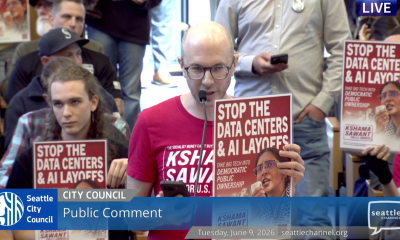
‘This is Seattle’s position on AI’: City Council votes unanimously to pause big new data centers
-

 Politics5 days ago
Politics Home | Healey Resignation Is “Colossal Failure Of Government”, Says Former Labour Defence Secretary
-
 Entertainment5 days ago
Donnie Wahlberg & More Heat Up Las Vegas at Circa’s Barry’s Downtown Prime
-

 Sports5 days ago
First Time Since 1971: Australia Register Historic Low In ODI Cricket
-
 Tech5 days ago
Opendoor Ends India Operations, Fueling a Bigger Conversation About AI and Outsourcing
-

 Politics5 days ago
Belfast burns, while Met chief points finger at Iran and Russia
-

 NewsBeat4 days ago
FBI searches office of Ohio voter registration group
-

 Business5 days ago
AT&T: Verizon's 27% Outperformance Sets Up A Solid Entry Point
You must be logged in to post a comment Login