The shift into parenthood happens in a single heartbeat, but the reality of it settles in during the quiet and dark hours of the night. For new parents, bringing a newborn home turns sleep from a natural routine into a series of anxious calculations. Every sudden sigh from the crib, unexpected stretch of silence, or a faint rustle through the baby monitor triggers a familiar dilemma. Parents often wonder if they should tiptoe into the nursery and risk waking the baby, or if they should stay put and worry.
This persistent concern of second-guessing is something almost every first-time parent shares. Traditional baby monitors have long offered a window into the nursery, but a grainy video feed often raises more questions than it answers. This leaves parents squinting at a screen in the dark. True peace of mind requires something deeper than just a live stream because parents ultimately need context.
Tracking Every Breath Without a Single Wearable
Smart Baby Monitor / Momcozy
A key aspect that stands out about the Momcozy BM08 is its contact-free monitoring technology. Instead of requiring wearable devices, special socks, clips, or sensors attached to a baby, it utilizes advanced millimeter-wave sensing technology to track breathing and heart dynamics in real time. This convenience-first engineering allows parents to stay informed while keeping their baby’s sleep environment entirely simple and comfortable.
For families, especially those going through parenthood for the first time, reducing the number of devices involved in bedtime routines can make nightly care feel much less complicated. This smart baby monitor is designed to give you that much-needed breathing room, working quietly in the background to provide deep and useful insights while remaining entirely unobtrusive in the nursery.
Taking the Experience Beyond Basic Video
Traditional baby monitors usually emphasize video and audio streams only. In contrast, the contact-free monitor expands on that basic concept by introducing intelligent monitoring features that are designed to help you stay truly connected to what is happening in the room. This system goes beyond passive observation to offer active support throughout the night.
Advertisement
Added to that, the built-in artificial intelligence can recognize the specific sound of a baby crying and respond immediately by playing soothing white noise. Such an immediate response helps create a calmer sleep environment while giving timely awareness of changes in your baby’s comfort or mood.
The monitor also includes automated detection for covered faces and can identify unusual sleep positions to send notifications when direct attention is required. Rather than forcing you to continually stare at a glowing screen, the system surfaces these important moments precisely as they happen. For busy households managing multiple responsibilities, that extra layer of intuitive awareness makes daily routines feel significantly more manageable.
Balancing Crystal Clear Vision with Everyday Convenience
Momcozy
A continuous stream of smart updates is incredibly reassuring, but it works best when paired with a sharp view of the nursery. The BM08 features a 2K HD camera that provides detailed image quality throughout the day, while its 940nm infrared night vision helps maintain a clear view of the nursery without creating visible distractions that could disturb sleep. Whether you are checking in during a daytime nap or taking a quick look during the middle of the night, the kit aims to provide a reliable visual connection.
Many parents today rely on this kind of clarity not just for basic viewing, but also for better daily organization and decision-making. To support it, this baby monitor includes customizable safe zones that allow you to define specific monitoring areas and receive notifications if your baby moves beyond those boundaries. It also generates daily sleep summaries that provide an easy-to-understand overview of sleep patterns without requiring an ongoing subscription. For parents looking to better understand their child’s habits, these insights turn a standard video feed into a practical tool for modern family life.
Securing Your Personal Data and Precious Memories
Momcozy BM08 / Momcozy
Baby monitoring systems handle some of the most personal moments for a family, and that makes digital privacy a critical consideration for any modern household. Momcozy BM08 addresses this by prioritizing robust data security. This smart baby monitor uses AES-256 encryption and complies with GDPR and CCPA standards. Parents can choose between secure local storage on an SD card or protected cloud storage options, depending on what best fits their lifestyle. As the system is actively compiling snapshots and daily milestones into shareable mini videos, your private family moments remain completely confidential.
Beyond keeping data safe, the hardware relies on a remarkably stable connection to bridge the gap between rooms. The monitor also utilizes low-latency Wi-Fi designed to minimize interference, helping ensure notifications and video feeds arrive when they’re needed most. By anchoring its smart features with dependable security and a robust connection, it lets you focus on resting easy rather than troubleshooting your technology.
Advertisement
Why This Prime Day Offer Is Worth Your Attention
Choosing a baby monitor ultimately comes down to finding a system that supports your mental well-being without taking over your life. The Momcozy Smart Baby Monitor BM08 honors that reality by replacing bulky wearable gadgets with invisible, intelligent protection. It blends advanced tracking with automated nursery support so you can stop staring anxiously at a screen and finally catch up on your own rest.
For parents looking to upgrade their nightly routine, the upcoming Prime Day season presents a practical opportunity to invest in better sleep. Running from June 14 to June 26, this limited-time deal drops the price to $179.99, a clean $70 discount when you enter the promo code BMNEWSPD at checkout. Ultimately, as parenting technology shifts toward hands-off designs, the BM08 offers a smarter way to watch over your little one without adding unnecessary complications to your evenings.
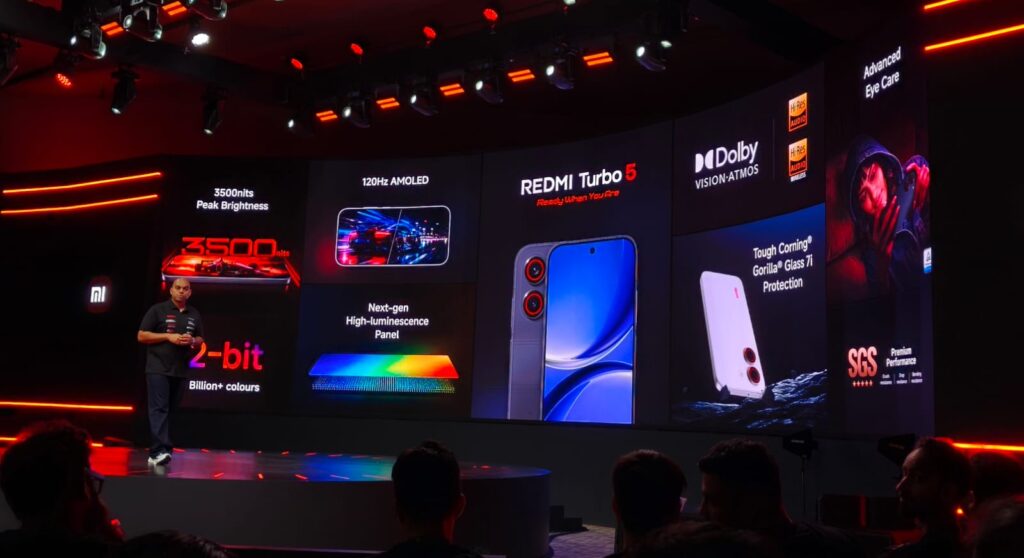
2026 hasn’t been the year we all hoped it would be. Thanks to our beloved AI companions, smartphone prices are just insane, meaning value-for-money phones have almost disappeared. To help fix this mess, somewhat, Redmi has just launched the Turbo 5 in India to much fanfare. That’s because it runs on the latest MediaTek Dimensity 8500 Ultra processor and is paired with a massive 7,540mAh battery. All this for ₹35,999 (including all discounts) could make the Turbo 5 a serious contender for performance enthusiasts in the country. Here’s what you need to know about it.
Power Packed Performance
With the Dimensity 8500 Ultra, the Turbo 5 includes LPDDR5X RAM and UFS 4.1 storage, promising faster app launches, smoother multitasking, and quicker loading times. The company is also pushing gaming as a major selling point. According to Xiaomi, the phone can support 120 fps gameplay on over 20 popular titles. To keep temperatures under control, the device uses a 3D IceLoop cooling system alongside Game Turbo Wild Boost optimizations.
Battery life has become one of the biggest battlegrounds in the smartphone market, and Xiaomi is going all-in here. The REDMI Turbo 5 features a 7,540mAh silicon-carbon battery, which is significantly larger than the 5,000mAh batteries commonly found in this segment. Xiaomi claims the phone can comfortably handle multiple days of usage depending on your workload. When it’s time to recharge, the included 100W HyperCharge adapter can reportedly take the battery to 51% in just 30 minutes. Interestingly, the phone also supports 27W reverse wired charging, allowing it to act as a power bank for accessories and even other smartphones.
What About the Rest?
On the camera front, Xiaomi has equipped the REDMI Turbo 5 with a 50MP Sony IMX882 primary sensor featuring both OIS and EIS stabilization. The camera supports 4K 60 fps video recording and includes Xiaomi’s Turbo Snap mode, which captures up to 100 consecutive photos in 4.4 seconds. Xiaomi is also bundling several AI-powered editing tools designed to simplify post-processing. While the camera setup isn’t trying to compete with dedicated camera phones, it appears capable enough for everyday photography and content creation.
The REDMI Turbo 5 features a 6.59-inch 1.5K AMOLED display with a 120Hz adaptive refresh rate and a claimed peak brightness of 3,500 nits. The panel also supports Dolby Vision, 12-bit color, and 3,840Hz PWM dimming. Xiaomi says it’s the brightest display ever used on a REDMI smartphone. As for durability, the phone comes with Gorilla Glass 7i protection, a metal frame, and premium glass on both sides. Xiaomi is also including IP66, IP68, IP69, and IP69K ratings, making this one of the most durable phones in its class on paper.
The phone will go on sale in India starting June 19 via Amazon, Mi.com, and Xiaomi retail stores.
Advertisement
12GB + 256GB: ₹40,999 (₹38,999 with launch offers)
In a nutshell: Noctua has introduced its first ever all-in-one, closed-loop liquid CPU cooling solution. The NL-LC1 is based on Asetek’s Emma V2 platform and features a custom-engineered pump noise absorber to keep sound to a minimum without sacrificing performance.
Noctua has built a three-layer acoustic soundproofing structure into its pump, which it claims reduces both air-borne noise and structure-borne vibrations. There’s also a switch to toggle between three different pump speed profiles. The unit ships with the pump in quiet mode; balance mode is said to provide additional performance headroom, and manual mode gives enthusiasts complete control over the pump’s full RPM range for maximum cooling performance.
An optional auxiliary cooling fan can be attached to the pump should you need extra airflow around near-socket components like VRMs, memory modules, or M.2 SSDs. Otherwise, a magnetic faceplate attaches to the pump.
The AIO kit is offered in three radiator sizes: 240mm, 360mm, and 420mm. The 240mm unit (model NL-LC1-24) includes a pair of NF-A12x25 G2 cooling while the 360mm variant (model NL-LC1-36) comes with three. The bigger 420mm version (model NL-LC1-42) trades in the 120mm fans for a trio of NF-A14x25 G2 fans.
Advertisement
The kit utilizes Noctua’s SecuFirm2+ mounting system for easy installation and broad socket support. Aesthetics stay true to Noctua’s signature love-it-or-hate-it brown color scheme.
Noctua CEO Roland Mossig said the performance headroom of liquid cooling has always been tempting, but they had to first ensure that acoustics and reliability met the strict standards that customers have come to expect from them. With this kit, they’ve achieved those goals, Mossig said.
Noctua’s AIO cooler is available from today over on Amazon and as you might have guessed, it doesn’t come cheap. Pricing starts at $219.90 for the 240mm kit, scaling up to $249.90 for the 360mm variant and $279.90 for the 420mm model. The optional NL-ACF1 auxiliary fan for the pump will set you back an additional $19.90. All kits come backed by a six-year warranty and include Noctua’s NT-H2 thermal paste.
Google Pixel phones and watches start receiving Android 17 today through the regular system update process. The release focuses on several practical additions that address everyday friction rather than delivering a complete visual overhaul. Owners of Pixel 6 series devices and newer can install it now through the settings menu, while phones from other manufacturers will follow over the coming months.
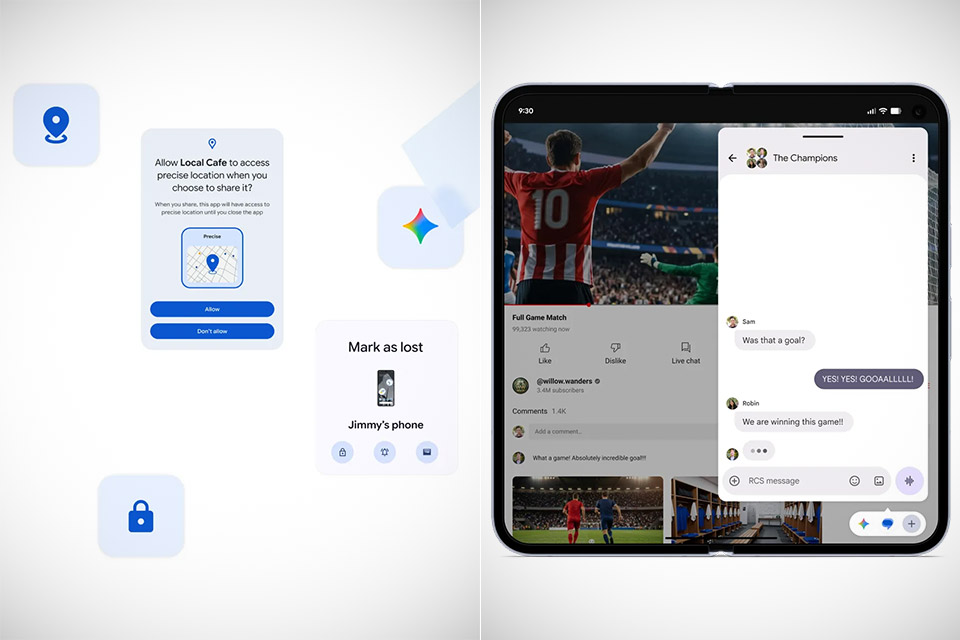
Long-pressing any app icon on the home screen now displays an option in the upper corner to turn the app into a floating bubble. Once everything is open, the bubble may be dragged about or enlarged while remaining on top of everything else. You can close it by simply sliding it to the bottom edge. Larger screens, such as the Pixel Fold or tablets, get a tiny bubble bar down the bottom that allows you to keep an eye on multiple floating windows at the same time. This makes it quite useful to keep your notes or a web browser open right next to whatever you’re viewing, allowing you to check a live score or a message thread without leaving the primary screen.
Unfold extraordinary with Google Pixel 10 Pro Fold; with Pixel’s largest screen and Gemini, Google’s most advanced AI, it’s made for…
Unlocked Android phone gives you the flexibility to change carriers and choose your own data plan[2]; it works with Google Fi, Verizon, T-Mobile…
The gearless, high-strength hinge makes it durable enough to handle about 10 years of folding[3]; plus, Pixel 10 Pro Fold is built with Corning…
Screen recording now uses a revised flow that begins in the quick settings panel and allows you to control the recording with a little floating pill. Once you’ve started recording, you may flick a switch to record your own short video at the same time, and when it’s finished, you’ll be taken to a preview screen where you can clip, delete, review, or share it without using any additional editing software. Background apps cannot consume excessive memory under the new rules, and any app that becomes overly greedy will be automatically terminated by the system. This improves the performance of your phone while also reducing battery consumption.
Advertisement
If you register your smartphone as missing on Find My Device, you must now use your biometric data to authenticate it, in addition to providing your password. This makes it far more difficult for anyone who has your passcode to disable tracking or gain access. App requests for location permission now provide explicit alternatives for granting permission to use your location exactly or approximately, as well as a one-time precise option for apps that want it for a fast job. Also, when you share your contacts, the app just receives the ones you select, not your whole address book.
Pixel phones also gain expanded Quick Share support on more models in the current lineup. Voice translation during phone calls is now available on even more devices. Photo editing in Google Photos allows you to discuss which modifications to make, and this feature is now available in a number of new countries. Generative capabilities in the Gemini app, such as converting text into a short film or creating music from a prompt, are now available on Pixels running Android 17. A few more AIy features, which were previously mentioned, will be available to qualified devices later this summer.
TL;DR: Microsoft is working on a new “location check-in” feature for its AI-powered collaboration platform. Organizations will be able to gain clearer visibility into what their employees are doing, while tenants can better organize team collaboration. The privacy concerns? Largely overblown.
Microsoft first introduced its location detection feature in December 2025. Now, the company has detailed how the capability will actually work and how users can control it. Employees concerned about a new “surveillance” layer in the corporate world can take a step back: in most cases, organizations already know a great deal about what their workers are doing during office hours and beyond.
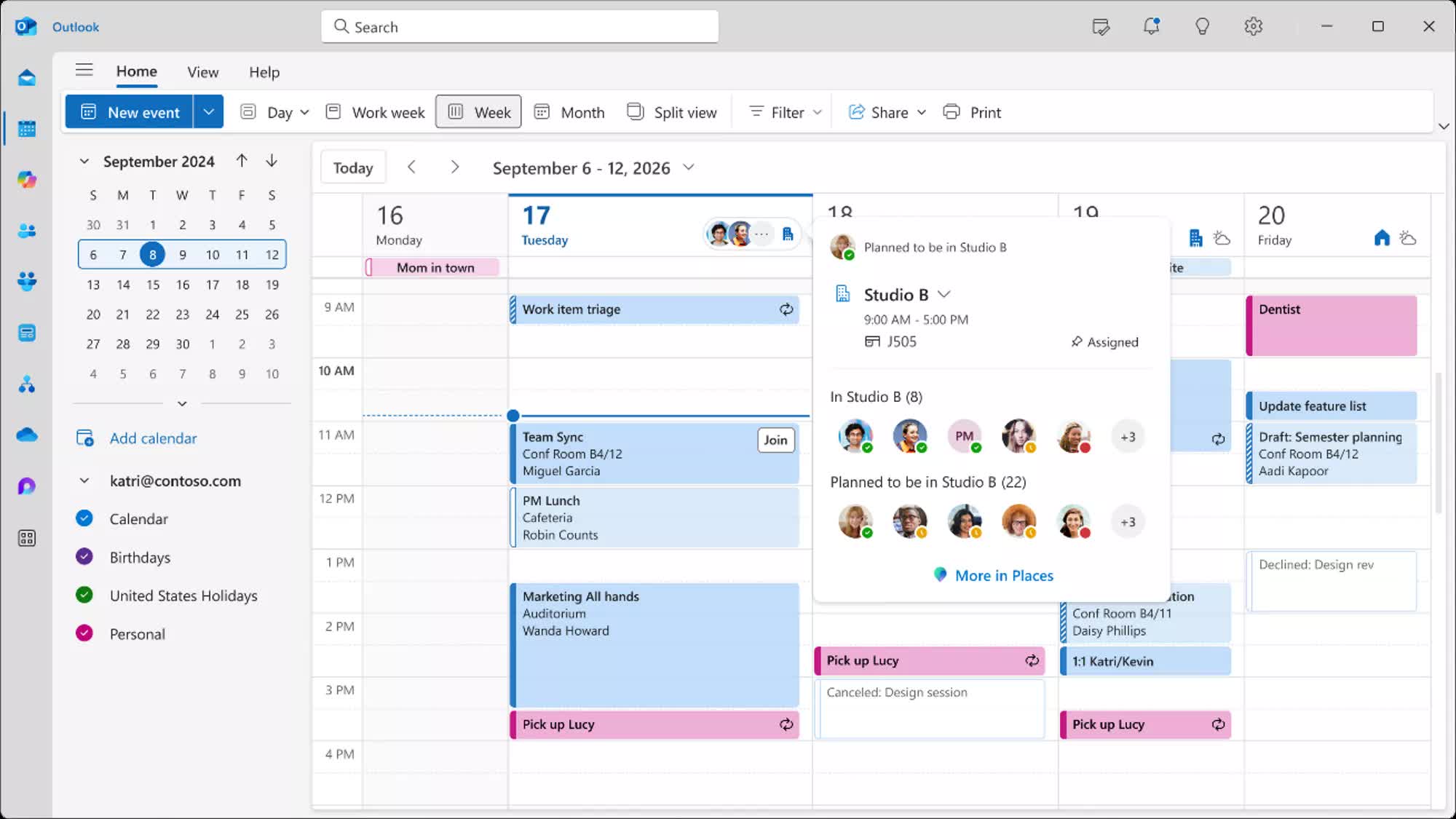
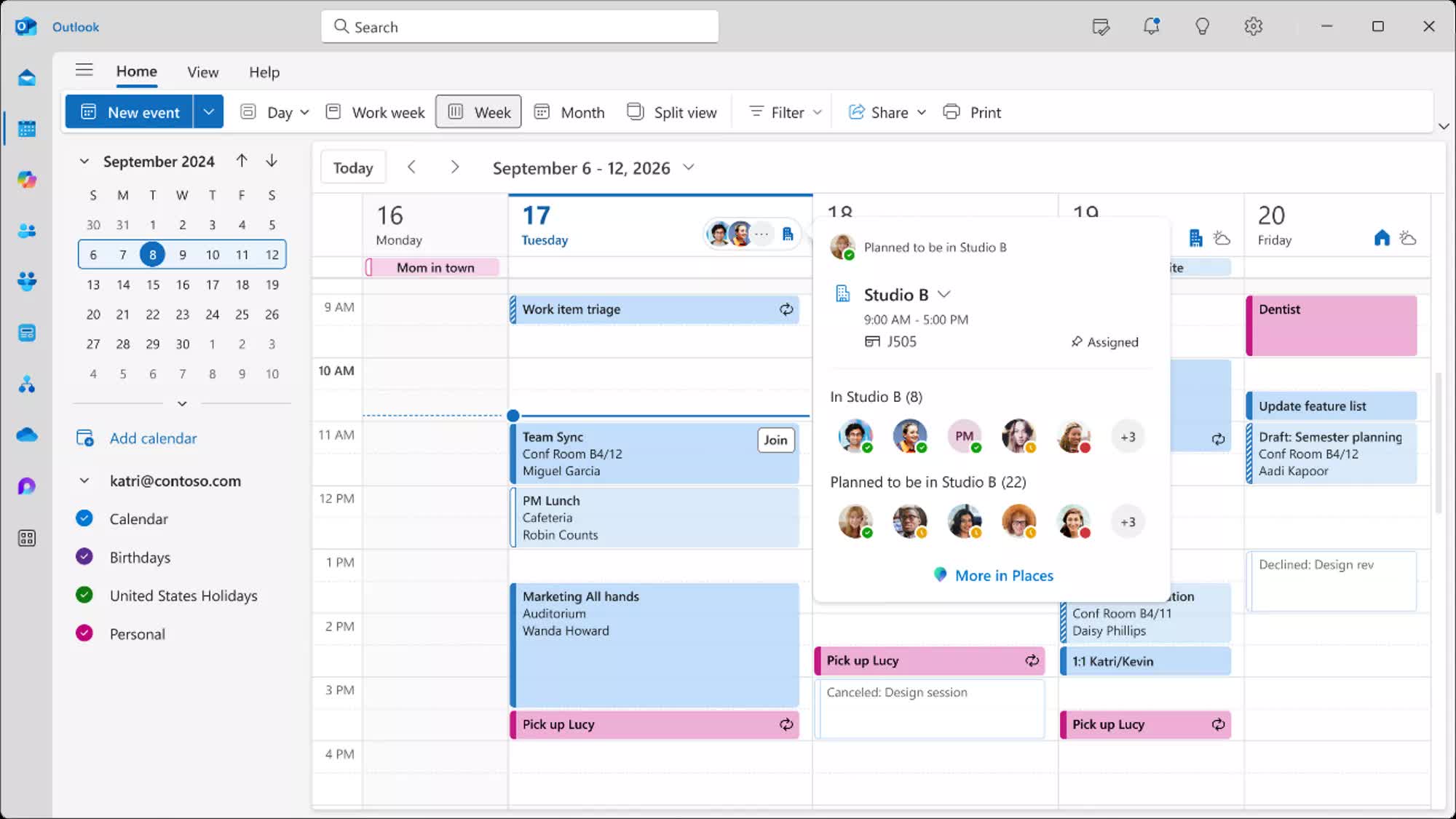
The location detection feature is officially known as workplace check-in via Wi-Fi. Microsoft says the option will become part of the Teams collaboration platform, further enhancing AI-powered capabilities in Microsoft Places. Workplace check-in is designed to improve employee coordination, Microsoft said, by providing a more accurate way to keep a worker’s location “current” when they are in the office.
Location check-in uses several presence signals from Microsoft 365, including calendar availability and Teams status. The feature can automatically update an employee’s location based on their wireless connection, but only when the device is connected to a properly configured, company-managed network.
Advertisement
Microsoft highlights how location check-in eliminates the need to manually change status in Teams. The new “experience” essentially expands existing workplace check-in options – from physical peripherals or desk terminals to wireless connectivity. Workers can get a clearer picture of where their colleagues are and what they are doing, helping them organize meetings and streamline collaboration.
The company also notes that the new location feature is built on the principle that employees remain in control. While it must be properly configured by an organization’s IT team, location check-in must also be enabled on the end user’s device. The feature does not retain location information over time, cannot store historical data, and does not function outside the corporate network infrastructure.
“Sharing workplace presence and using workplace check-in are separate decisions, so employees can choose whether their workplace presence is visible to others when working from the office,” Microsoft explained.
When it was first introduced, location check-in raised concerns among some users about its potential privacy implications. Now, many more users are arguing that privacy is largely a non-issue here. Enterprise organizations already have access to a wide range of tools and methods to monitor employee activity during office hours. The location check-in feature simply integrates this type of existing functionality into Teams and Places and is expected to arrive later this year.
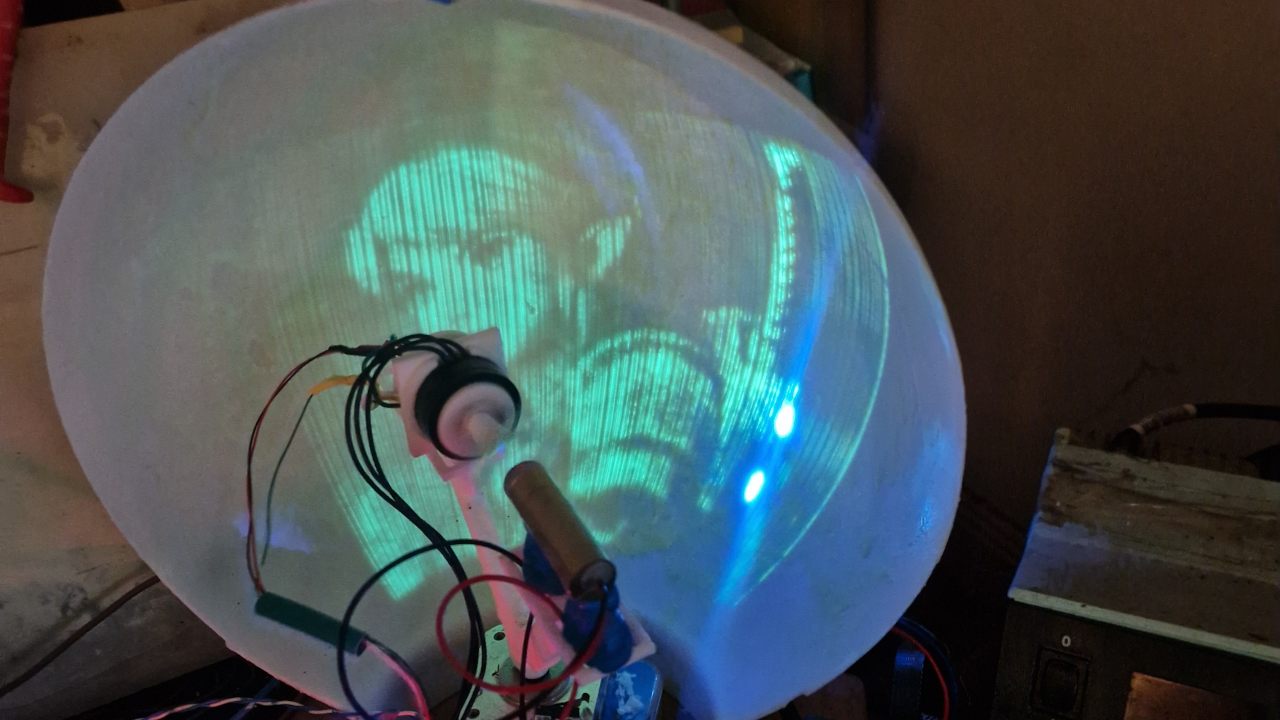
Slow-scan CRTs were never exactly common compared to their faster cousins, but given the popularity of Slow Scan TV (SSTV) amongst hams and NASA broadcasts, many of you are probably familiar with them. The slow scan rate of SSTV meant it required much less bandwidth, but in the early days you needed a CRT with a long-persistence phosphor to hold onto the image. [AJRussell]’s Glow Engine works much the same, with one key difference — instead of cathode rays, he’s using a frikkin laser beam.
In this case, the phosphor is Strontium Aluminate, the same stuff that gives most glow-in-the-dark toys and filament its kick. Energized by a 405 nm laser of questionable wattage, the phosphor will glow for several seconds, allowing the creation of an image. So while this is a laser projector, it works more like a CRT than most galvo projectors, which rely on Persistence of Vision to create an image. Here it’s persistence of fluorescence.
Because the phosphor is so slow, you don’t need the rapid scan rate you would with a laser projector, so [AJRussel] can skip the mirror drum and just mount the mirror on a gimbal motor. Field Oriented Control makes the precise sweeping of the gimbal possible, via a hall-effect sensor and the SimpleFOC library that we featured last year. The other axis just moves the laser and gimbal assembly on a big stepper. The whole thing is driven via an ESP32. The biggest downside is that the short focus range of the repurposed engraving laser means it’s smack dab in front of the screen.
This is a work in progress and still changing, so it’s not clear which — if any — of the various SSTV modes the Glow Engine can handle. Given the number of scanlines in the photos it looks like a good use case, and without trying it the timing might work, too: [AJ] reports scanning left-to-right to generate a frame takes about eight seconds, depending on the resolution, and depending on the PWM power setting on the laser the image can last up to a minute.
Qualcomm CEO Cristiano Amon said Tuesday that the company is working on over 40 different AI wearable devices — including jewelry, earbuds with cameras, pins, and watches — a sign of how aggressively the chipmaker is betting that the next major computing platform won’t be a phone.
To power that vision, Qualcomm is announcing two new offerings: a platform called Snapdragon Reality Elite for mixed-reality glasses, designed to run more powerful on-device AI, and the Scalable Turnkey AI-Ready Toolkit (START), a combination of hardware modules and a software stack for AI devices, starting with smart glasses.
Compared to its previous XR platform, the new Snapdragon Reality Elite delivers improvements of up to 60% in GPU performance, up to 30% in CPU performance, and up to 160% in NPU performance, according to the company. Percentage gains in chip specs can be hard to contextualize, but Qualcomm offers one concrete data point, saying the platform can run a 3-billion-parameter language model at 45 tokens per second — fast enough for quick, responsive AI interactions. Qualcomm says the chip will also enable better head and hand tracking, along with improved see-through capabilities.
The Snapdragon Reality Elite supports 4.4K per-eye resolution at 90 fps, a modest bump from the XR2+ Gen 2’s 4.3K per-eye resolution. (The higher the per-eye resolution and frame rate, the sharper and smoother the visual experience, which matters most for reducing the motion sickness and eye strain that’ve historically made extended headset use uncomfortable.)
Advertisement
Qualcomm says the platform is designed to power two types of devices: stand-alone video-see-through (VST) headsets, which layer digital content over a camera feed of the real world, and lightweight, tethered optical-see-through (OST) glasses, which blend digital imagery directly into your field of view. Among the first devices to use it: XREAL Project Aura, shown at Google I/O earlier this year, and an upcoming device from Play for Dream.
START, meanwhile, consists of an AR chip, a software platform, companion apps, and a white-label program aimed at helping hardware makers get to market faster. Through the white label program, the company is offering three reference designs: an audio + camera setup similar to Meta’s Ray-Ban smart glasses, a monocular display, and a binocular display.
Eyewear manufacturers Inspecs and O’Neill — owned by TitanFlex — will be among the first partners in the white label program. Qualcomm said START will expand beyond smart glasses to support other form factors in the future.
Amon’s comments, made to CNBC, flesh out the strategic logic behind both announcements. He argued that as companies seek to gather more real-world data from users to power their AI agents, a new wave of hardware startups building novel form factors will emerge, with major implications for established smartphone players like Apple and Samsung.
Advertisement
“I think there’s going to be a lot of experimentation with different form factors,” Amon said. “Right now, we have over 40 designs of those devices, and I’m telling you, the types of form factors are very, very broad.” He added, “The principle is something that you wear, something [that] is with you all the time, something that can see the world around you, so you have context and have the ability for you to access an agent and talk to the agent.”
To that end, Qualcomm is explicitly positioning itself as the foundational silicon layer for whatever comes after the smartphone. START’s white-label program, in particular, is designed to lower the barrier for new entrants.
When you purchase through links in our articles, we may earn a small commission. This doesn’t affect our editorial independence.
The T8 isn’t going to be something that absolutely everyone needs but what it does is turn any digital input into a peerless streamer with just enough EQ adjustment to help things on their way. For many people, that will be enough
Excellent and utterly stable performance
Excellent, user friendly control app
Beautifully made and finished
No digital inputs
No Google Cast
Not cheap
Key Features
Advertisement
Outputs
Optical, coaxial, AES, USB and i2S
Advertisement
Storage
Up to 16TB via internal bay
Advertisement
Audio formats
Up to 32-bit/768kHz and DSD512
Introduction
Some products have descriptions that need little in the way of further explanation. If you see an integrated amp here, it won’t take too much deductive reasoning to find out what it does. Some other products are a little more challenging in this regard though.
Advertisement
The Eversolo T8 is a network streaming transport. Effectively, it is the front half of a network streamer but, where you would expect to find analogue outputs for connection to an amplifier, the T8 is exclusively equipped with digital outputs.
This might seem a bit odd at first glance. Why would you only want the front end of a network streamer when you can spend (a lot) less and get one that has decoding built in? The answer is twofold and comes down to practicality and performance.
Advertisement
In practical terms, a great many devices we look at here have digital inputs and decoding built in. Buying a streamer means doubling up on digital boards whereas something like the T8 simply makes use of the decoding you have. Alternatively, you might already own a DAC that has superb performance and the T8 is going to be the means of unlocking that. Then, there’s a more intangible benefit.
Advertisement
Eversolo says that the engineering that has gone into the T8 offers higher performance than would be achieved by simply using a streamer or a PC you happen to have lying around. Certainly, some of the engineering on offer suggests the Eversolo should be able to do some impressive things so we should crack on and see if it does or not
Price
In the UK, the Eversolo T8 costs £1,290. It is available from a usefully broad dealer network and can be purchased online if you don’t feel you are in a position to visit a physical store. In the USA, the T8 is available for $1,380 while in Australia, it costs $2,399 AUD.
It’s worth noting that the more conventional Eversolo streamers are not exactly shabby at being used as transports either. They have a selection of digital outputs that allow them to perform the same role so, if you already own one of those and unless you need the specific outputs that the T8 offers, you might at least want to start there.
Design
Slightly less than full width design
Superb control interface
Looks and feels worth the asking price
Advertisement
Eversolo has elected to use casework that is 365mm wide for the T8 which means it’s about 10 centimetres shorter than the accepted full width size. Oddly, it’s also not a perfect match for the Z10 DAC already reviewed here so if you’re the sort of person who wants a neat stack of things the same size as each other, this might not be the product for you. The T8’s styling is usefully neutral though so it won’t look at odds with most other components.
Advertisement
Something that is carried over wholesale from other Eversolo devices is the control interface and this is emphatically A Good Thing. The main app is an absolute pleasure to use. The screen mirror function that Eversolo includes as part of it is still one of the cleverest and most underrated ideas doing the rounds in streamers (it makes adjusting the many setup menus a huge amount easier).
Image Credit (Trusted Reviews)
It looks and feels like software designed by people who have been using it day in, day out for years and who know exactly what matters. Eversolo also understands that you don’t want to have to whip your phone out every single time you want to do something which is why there are both front panel controls and a smart remote handset.
One key feature of how you perceive it is that the app assembles and caches a library on the device itself which means that moving around a large volume of stored content feels effortlessly slick (and means that browsing a library on a local drive feels exactly the same as using a NAS). If you have a large collection of your own music as opposed to mainly using streaming services, the Eversolo is pretty much as good as it gets.
Image Credit (Trusted Reviews)
Advertisement
Of course, if you do use streaming services, the Eversolo holds up pretty well there too. Streaming service provision is excellent and features like the Listen at Will feature that can shuffle from your library and subscribed streaming service as a single stream are really well implemented.
Connect functionality is present on the services that support it and it’s fully up to speed with Spotify Lossless as well. You also get AirPlay but no Google Cast or Bluetooth. This is also one of a tiny number of devices that can access Apple Music natively which puts it in pretty select company.
Advertisement
This is complemented by a standard of build and finish that justifies the term ‘immaculate.’ This isn’t a cheap bit of kit but the build and finish is pretty much flawless.
We place different values on this aspect of product design but having access to a large and easy to read display and a chassis that feels as confidence inspiring as this one does has some worth for me at least. If you are looking at a T8 as a front end for an expensive integrated amp with a DAC board or similar, it’s going to hold its own sat on the rack nearby.
Image Credit (Trusted Reviews)
Features
Selection of digital outputs…
…but no inputs
Unique networking hardware
Carefully designed internal circuitry
Internal storage option
Customisable EQ
Advertisement
The focus of the T8 is to provide a digital signal to an external DAC and to ensure that you have the most options available to do this, Eversolo has fitted it with a useful spread of connections.
As well as optical, coaxial and USB outputs (all of which are fitted to the one box streamers too), the T8 also has an AES balanced output and an i2S output which uses an HDMI socket. The USB and i2S connections support up to 768kHz PCM and DSD512 while the other three connections are 24/192kHz capable and can send DSD64 as DoP over these outputs if the connected device supports it.
Advertisement
Image Credit (Trusted Reviews)
I2S is an interesting connection and something that is becoming more common in the market. A high proportion of the top spec models from a number of Far East manufacturers include it (notably the Topping D900 reviewed here recently) because it offers a very high bandwidth clocked signal.
The catch is that ‘i2S’ covers off a wide selection of possible wiring patterns. It’s not a given your i2S equipped source will play nice with your i2S DAC. The T8 can be adjusted through no less than 8 different wiring profiles, with the different pin wirings being noted in the on screen menus. Under test, I have had the T8 work happily with i2S devices from completely different manufacturers which suggests that Eversolo’s diligence has paid off.
What you don’t get though are any digital inputs. There is a reasonable argument for removing them because some signals (HDMI being one of them) simply won’t be passed to a USB output rather negating their worth and it is reasonably likely that the device the T8 is outputting to will also have additional inputs.
Advertisement
Image Credit (Trusted Reviews)
Another feature that is unique to the T8 is an SFP fibre optic network connection which sits alongside the standard gigabit LAN port. Some of the claims being made for this connection (not really by Eversolo I hasten to add) are… probably optimistic… but it might be better to see its inclusion as a potentially handy bit of future proofing.
If there is a move to SFP equipped network hardware in the future, the T8 will converse with it without needing any form of conversion. The good news is that if this all sounds a bit much you can ignore it and there is an excellent Wi-Fi 6 implementation too.
Advertisement
Internally, the T8 differs from its one box streaming relatives. It has been designed from the outset with a view to keeping electrical and mechanical noise to an absolute minimum. A custom 4N oxygen-free copper toroidal transformer is partnered with internal wiring shielded with Teflon insulation.
Eversolo claims noise levels as low as 30μV with suppression of high-frequency interference and ground noise through precision voltage regulation and high-grade filtering components. The T8 proceeds to add an ultra-high precision femtosecond clock to the circuit for good measure; so when you do use a connection like i2S, this should ensure performance is as good as it can be.
Image Credit (Trusted Reviews)
Advertisement
Something else you’ll find in the casework is a hard drive bay on the underside. This can handle up to 16 terabytes of storage which should be enough for most needs. This means you have the scope to operate the T8 with little to no additional network hardware and no unsightly drives hanging off the back off of it.
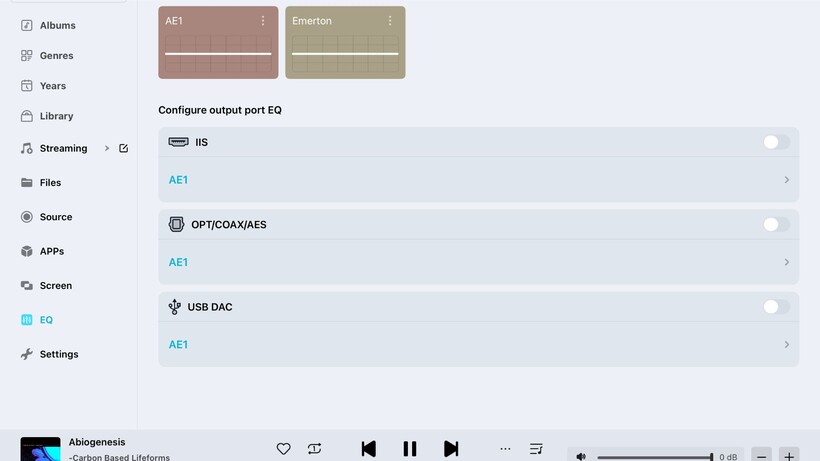
The last feature the T8 offers is an interesting one. Eversolo has updated their EQ system to include a feature they call Evotune. This can use your phone’s microphone to take readings that can be fed back into a 10 band EQ which supports frequency, gain, and Q values to adjust output to compensate for the room.
Advertisement
It also supports FIR filter import, loudness control, and dynamic compression. This is an interesting place to implement EQ because it shouldn’t technically affect the ‘character’ of your decoding and amplification. There are more sophisticated rival systems but this is a useful extra function to have.
Performance
Will be governed by the performance of the decoding it is connected to
…but superb performance is possible with upsampling and the i2S connection
Operationally bulletproof
Compared to the marathon length sections I’ve had up to this point, this one will be briefer because, even allowing for the care and attention that Eversolo has lavished on the T8, the performance of the digital input it is connected to is going to have more of an effect on your overall sound quality.
Modern DAC chips are better at rejecting errors in the incoming signal than was the case previously so the benefits of scrupulously removing them are less than they might once have been.
Advertisement
Image Credit (Trusted Reviews)
This isn’t to say that the T8 can’t prove its worth. If you have a DAC with an i2S input, the performance I’ve obtained using this connection on both DACs I’ve tested with it has been superior to any other option available. It’s not a night and day difference but Agnes Obel’s lovely Philharmonics has been slightly better defined and tonally believable played back in this way. The nature of this connection being ‘clocked’ between the two devices does seem to help with the overall performance.
If you choose a different path to using the T8, it has other virtues too. When you switch to Roon as a control point (for which the Eversolo is fully certified), the upsampling facilities become available and this works to the. Using the T8 connected to a Cambridge Audio Edge A via USB with DSD conversion enabled (so that all signals are converted before they reach the Eversolo) is something that benefits the ESS based digital board of the Cambridge Audio considerably and gives a richness and immediacy to Air’s Love 2 that is hugely engaging to listen to.
Advertisement
Image Credit (Trusted Reviews)
There is one other aspect of performance too and it’s arguably more important than detailed aspects of sound quality. The T8 is operationally bulletproof. This sample has been here a while now and at no stage during intensive and heavy handed use has the T8 so much as hinted at needing attention.
I’ve hotplugged it, moved between the dedicated app, Connect functions, Spotify and Roon at will and across multiple control points and generally behaved in a wholly unsympathetic way and it hasn’t missed a beat. Google Cast aside, it will receive content pretty much any way you choose to send it and it ensures that it never feels highly strung or demanding to use.
Advertisement
Ultimately, streamers have to give you a user experience that makes you want to keep using them and the T8 delivers on this superbly well.
Should you buy it?
Advertisement
Superb streaming interface
If you have a high quality digital input going spare, the T8 allows you to bolt on a superbly implemented streaming interface that is an absolute joy to use. If you have the option to use i2S, it’s pretty much a no brainer.
Advertisement
The engineering in the T8 is peerless but the amount of sonic difference it can make over less ornate solutions will always be relatively limited. It’s a pleasure to use… but so is Eversolo’s DMP A6 Gen2 at over £400 less.
Final Thoughts
You will need to take streaming pretty seriously to consider the Eversolo but the flexibility and reliability that it brings to its performance is every bit as important as its sonic attributes and this sheer user friendliness is likely to win it many friends.
Advertisement
How We Test
We test every streaming transport we review thoroughly over an extended period of time. We use industry standard tests to compare features properly. We’ll always tell you what we find.
We never, ever, accept money to review a product.
Find out more about how we test in our ethics policy.
Tested for several days
Tested with real world use
Full Specs
Eversolo T8 Review
UK RRP
£1290
USA RRP
$1399
AUD RRP
AU$2399
Manufacturer
–
Size (Dimensions)
230 x 315 x 88 MM
Weight
4.5 KG
Release Date
2026
Resolution
x
Connectivity
Wi-Fi 6
Colours
Black
Audio Formats
DSD (DSF,DFF,SACD ISO Support DST up to DSD512), MP3, APE, WAV, FLAC, AIF, AIFF, AAC, NRG, CUE
The UK government will ban under-16s from social media, with regulations due before Christmas and the rules taking effect in spring 2027.
To enforce it, platforms must age-check their users. In practice that means anyone opening a new account will likely have to prove they’re over 16 by uploading an ID or passing a facial age scan, the same checks that adult sites serving UK visitors have implemented since July 2025 under the Online Safety Act.
Long-standing accounts are largely exempt, but signing up fresh now triggers verification, effectively ending anonymous account creation in the UK.
Security and privacy experts warn the checks are easy to circumvent, put everyone’s ID and biometric data at risk of breaches, and were rushed in with little political scrutiny.
The announcement
Prime Minister Keir Starmer set out the plan on June 15, following a national consultation that drew more than 116,000 responses from parents, children and experts.
Advertisement
The government says nine in ten parents backed an under-16 ban, and two-thirds of young people agreed that under-16s should be kept off at least some platforms.
“That’s why we’re going further than any country in the world by banning social media for under-16s and putting wider protections in place to give kids their childhood back,” Starmer said.
“This is a line in the sand. Tech giants had their chance and failed.”
Technology Secretary Liz Kendall framed it as a fight with the platforms: “Tech companies have had countless opportunities to keep children safe, yet they have failed to act. That is why we are taking power away from the tech giants and putting it back in parents’ hands.”
Advertisement
What’s covered
The ban is modelled on Australia’s, which took effect in December 2025 and was the first of its kind.
It will cover user-to-user platforms “whose purpose is to enable social interaction” and that run algorithmic feeds. The government names Instagram, YouTube, TikTok, Snapchat, Facebook and X. Messaging services such as WhatsApp and Signal are explicitly excluded, as is YouTube Kids.
There will be a narrowly defined exemption list for educational services, e-commerce and music streaming.
The UK says it will go further than Australia.
Advertisement
High-risk features, such as livestreaming and strangers being able to contact children, will be restricted across a wider range of services, including gaming sites like Roblox (the platform stays, but features such as chat get locked down).
To avoid a “cliff-edge at 16,” those stranger-contact and livestreaming restrictions will be on by default for 16- and 17-year-olds too.
Separately, AI “romantic companion” chatbots that simulate sexual or roleplay relationships will have to enforce an 18+ minimum, with intimate functions restricted for under-18s on AI chatbots more broadly.
The government is also consulting on overnight curfews and breaks in infinite scrolling for under-18s, with detail promised in July.
Advertisement
The catch for adults: it’s the new accounts
The government’s reassurance is that most adults won’t face a fresh check.
According to a fact sheet, an account is treated as low-risk if it has been open for more than 16 years, has a credit card attached, or is linked to an email already age-verified elsewhere. Anyone who’s already verified under the existing Online Safety Act wouldn’t need to do it again.
But that carve-out is essentially a grandfather clause, and it does nothing for new accounts.
If you create a social media account from scratch after the rules land—say you want a fresh, pseudonymous handle, or you’re simply a new user—none of those passive signals apply, and the fallback is exactly what the fact sheet describes: a facial recognition check, or an ID upload.
Advertisement
In practice the regime quietly converts what’s billed as child protection into a rule that no adult can open a new account without proving their age.
It’s a lighter touch than the adult-content regime, for now.
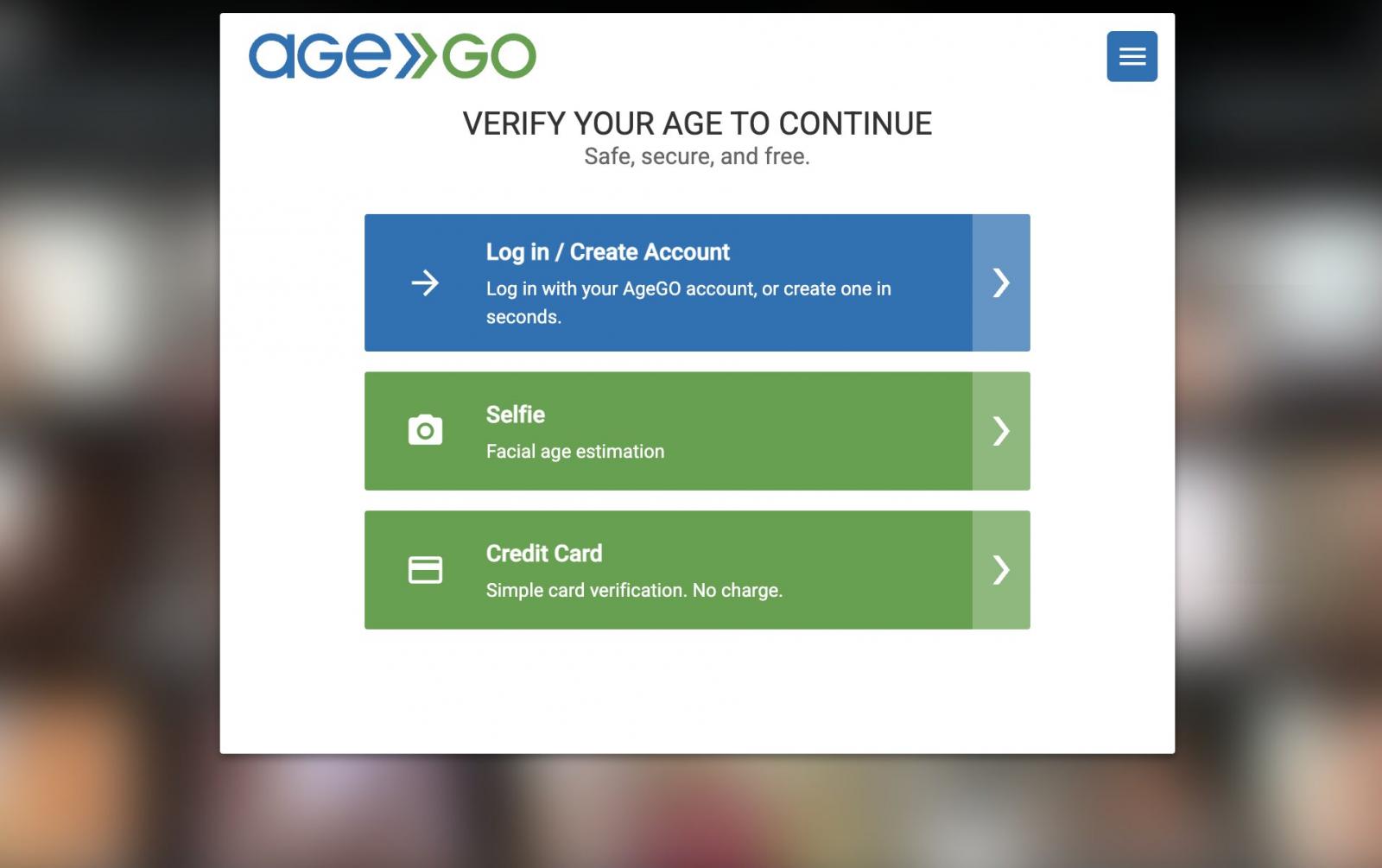
Since July 25, 2025, the Online Safety Act has required adult and other sensitive sites to run “highly effective” age checks (typically an ID upload or a facial-age selfie) for every user, with no grandfathering.
Adult sites serving UK visitors already prompt for a video selfie (for liveness) or credit card for age checks
(BleepingComputer)
Enforcement has also been aggressive. By February 2026, Ofcom had opened investigations into more than 90 platforms and issued six fines, and its remit had stretched to Reddit, X, Discord, Bluesky and AI services.
The social media age-gate doesn’t go that far yet, but it normalises the same plumbing.
Advertisement
Ofcom has been asked to run a rapid study on how to verify whether someone is over 16. The aforementioned fact sheet also notes proving you’re over 18 “could be as simple as a facial recognition check.”
The VPN loophole
The well-documented weakness is that a VPN defeats all of it. The Online Safety Act targets sites, not users, so connecting through a server outside the UK sidesteps the check.
Some VPN providers reported signup spikes of up to 1,800% when adult-site enforcement began.
Any social media age-gate inherits the same gap, and Australia’s experience bears it out. Research there found more than 60% of children were still using social media months after that country’s ban.
Advertisement
The UK government has limited room to close the loophole. A blanket VPN ban for the whole population has been ruled out.
In October 2025 a tech minister, Baroness Lloyd, told the Lords there were “no current plans to ban the use of VPNs,” citing their legitimate uses.
A children-specific clampdown is a different story. In February 2026 the government said its wellbeing consultation would examine “options to age restrict or limit children’s VPN use,” and in January 2026 the House of Lords inflicted a government defeat, voting 207 to 159 for an amendment to the then Children’s Wellbeing and Schools Bill that would require ministers to prohibit VPN providers from serving UK children.
To sort children from adults, that measure would in practice force providers to age-check every user. The amendment drew public petitions against it.
Advertisement
The Commons rejected it across several rounds of parliamentary ‘ping-pong,’ and the Act that received Royal Assent (became law) in April instead handed ministers a broad power to restrict children’s online access by regulation.
For now, nothing stops a determined adult, or a determined 15-year-old, from getting around it.
What security and privacy researchers are saying
The cybersecurity objection isn’t to the goal, but that the enforcement mechanism creates new risks while the controls themselves don’t hold up.
Dr. Siamak Shahandashti, a senior lecturer in cyber security and privacy at the University of York, pointed to fresh empirical work from Politecnico di Milano testing age-verification methods deployed on adult sites.
Advertisement
The researchers found low-to-medium robustness for nearly every method except credit-card checks. Most could be bypassed with tools and know-how within reach of “motivated minors.”
Their blunt conclusion, which Shahandashti quoted: mandated age verification currently functions as “compliance theatre.” He added that checks linked to real, physical ID could be made robust enough if clear standards were set.
Dr. Richard Gomer, a lecturer in computer science at the University of Southampton, zeroed in on the second-order risk. Enforcing an under-16 ban means age-gating everyone, and that process is itself dangerous.
Handing a passport or driving licence to platforms, he warned, exposes people to identity theft or blackmail when those records inevitably leak, something already seen under the Online Safety Act rollout.
Advertisement
He also flagged the quieter cost of the regulation pushing the web further from its original ideals of anonymous, open communication.
That data-breach risk is not hypothetical either.
Responding to the ban, the Open Rights Group (ORG) warned that over-16s will now have to surrender identity documents or biometric data to unregulated age-verification companies, pointing to Discord as a platform that already suffered a major data leak after introducing age checks.
James Baker, who runs ORG’s Platform Power and Freedom of Expression programme, argues the measures chase symptoms rather than the cause, namely the engagement-driven business models that reward harmful content, and has previously warned that the underlying powers were “rushed through without proper time for political scrutiny.”
Advertisement
Platforms aren’t on side either.
Meta and YouTube both argue that bans push teenagers toward less-regulated spaces rather than making them safer, with Meta making the case that age checks should sit on the device so users aren’t handing ID to every service separately.
The wider direction of travel
It’s worth noting where this sits. Since January 2025 the government has been building a GOV.UK Wallet and a digital driving licence, pitched partly as a way to prove your age online and in person using the facial-recognition features built into modern phones.
That’s separate from this announcement and predates it. But together they sketch a direction of travel, where proving your age is increasingly a precondition for being online in the UK.
Advertisement
Security teams log 54% of successful attacks and alert on just 14%. The rest move through your environment unseen.
The Picus whitepaper shows how breach and attack simulation tests your SIEM and EDR rules so threats stop slipping by detection.
Threat actors are abusing Steam Workshop, Valve’s community hub for downloading game-related content, to push various malware hidden in wallpaper packages.
Infected wallpapers can lead to hijacking Steam accounts, compromising the system with a backdoor, or running cryptomining processes.
Steam Workshop is a built-in content-sharing platform on Valve’s Steam gaming service where users can upload and download community-created content for games and applications.
The content includes mods, maps, skins, save files, tools, and other user-generated content such as wallpapers.
Malware in the wallpaper
In a report today, researchers at cybersecurity company Kaspersky say that the attacks abuse the Wallpaper Engine desktop customization application available on Steam, which has nearly a million reviews.
Advertisement
Wallpaper Engine supports four wallpaper types that render videos, interactive scenes, web pages that can play audio and video, and applications, which are active windows from software that Wallpaper Engine sets as the desktop background.
Application wallpapers are executable Windows applications that can include games, desktop widgets, and system monitoring tools. Kaspersky warns that the feature represents a built-in security risk and has been abused to deliver malware to Steam users.
According to the researchers, attackers took advantage of this security gap since at least late 2025, uploading malicious wallpaper files to the Steam Workshop and tricking users into installing them through Wallpaper Engine.
“We discovered dozens of these malicious application wallpapers floating around Steam Workshop, and each one had already been downloaded thousands – or even tens of thousands – of times,” Kaspersky notes.
Advertisement
Malicious wallpaper application Source: Kaspersky
Analysis of compromised wallpapers revealed that the malware is bundled either directly in the package or inside password-protected archives that the user is tricked into opening.
The payloads execute automatically the moment the user installs the wallpaper, the researchers say.
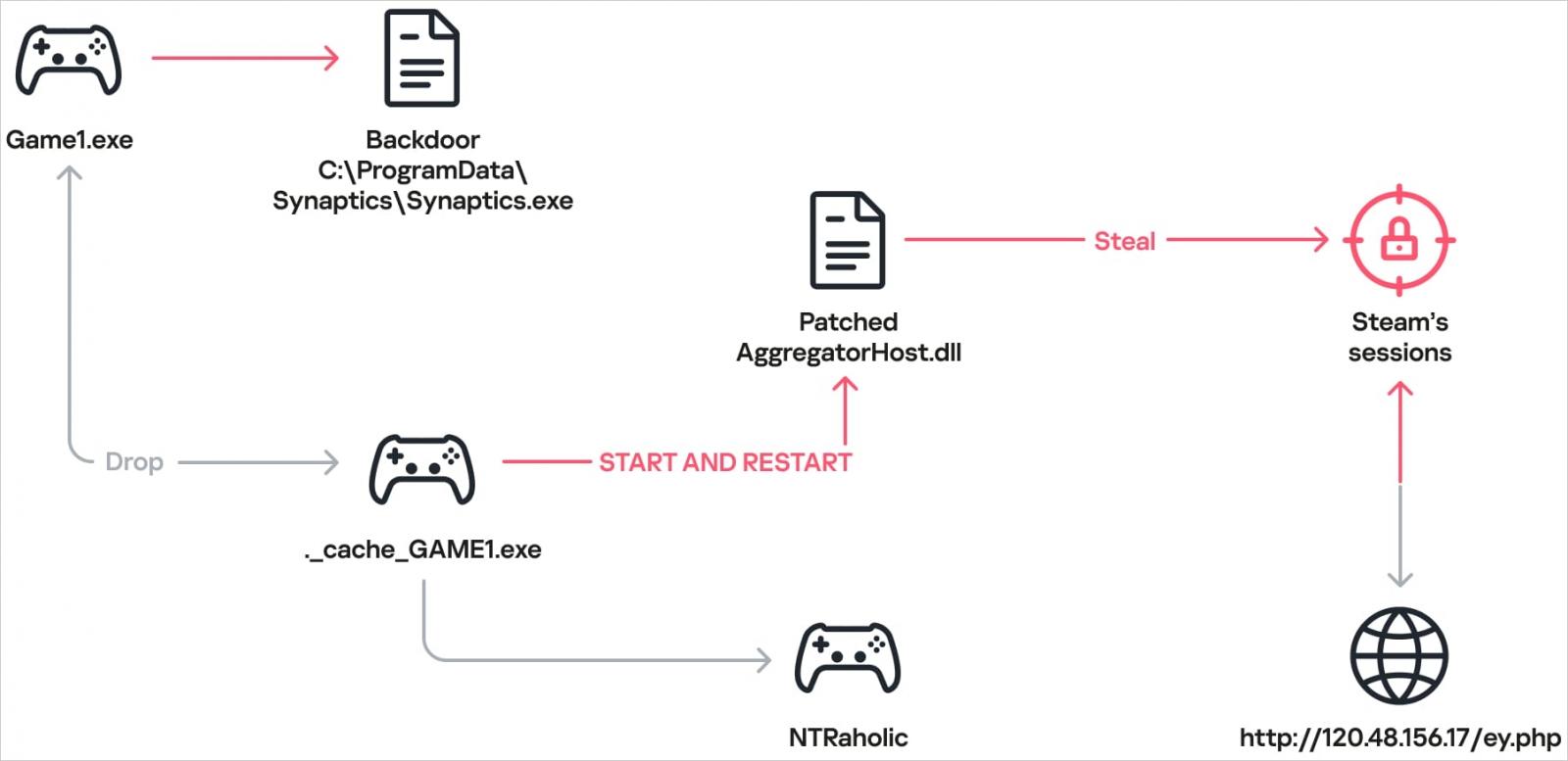
Observed attack flow Source: Kaspersky
Kaspersky tested one of these wallpapers posing as a game called NTRaholic, which launched as expected upon execution to reduce suspicion. However, a backdoor file part of the DarkKomet malware family was installed in the background.
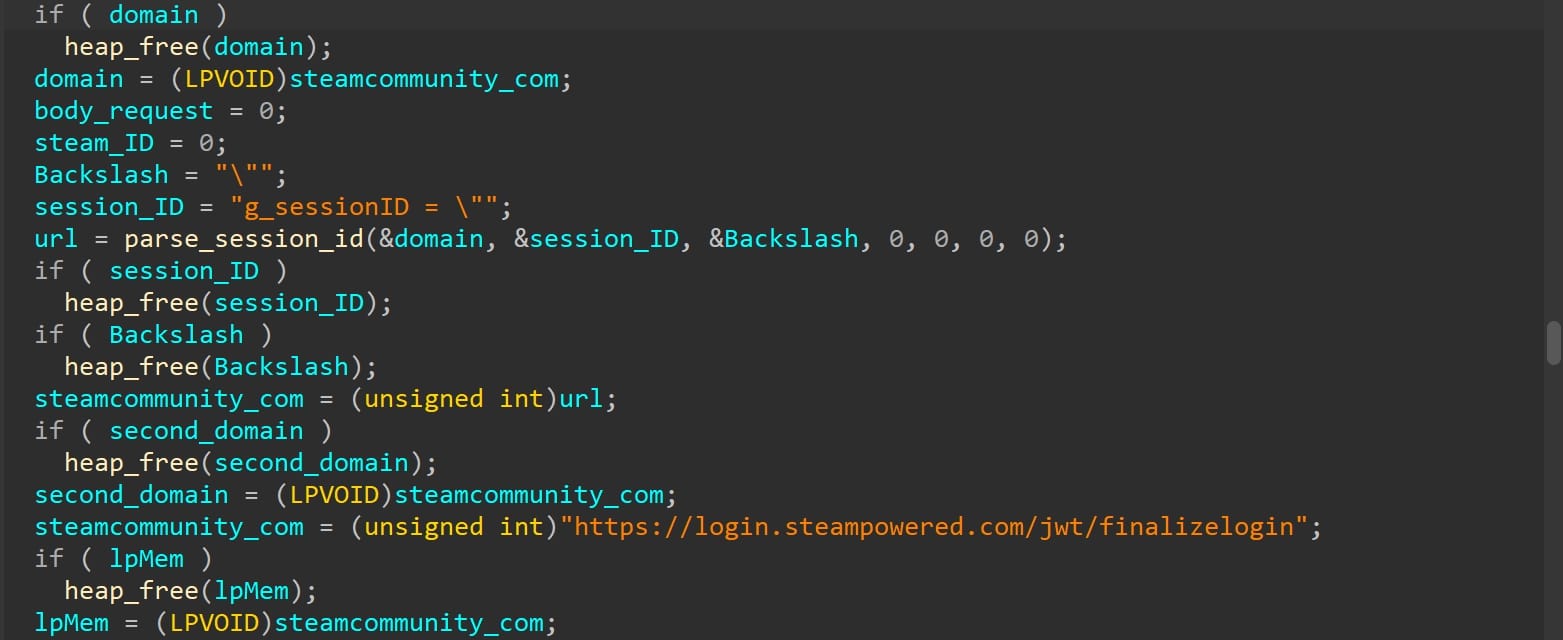
A custom version of a system library called ‘AggregatorHost.dll’ was also installed to search for Steam accounts on the computer and steal account credentials.
Stealing Steam data Source: Kaspersky
The researchers found multiple cases involving other malware families, such as the Lumma and Vidar infostealers, cryptocurrency miners, botnet loaders, RanEngine, and even ransomware strains, showing that Wallpaper Engine was abused by multiple threat actors.
While Steam has identified and removed all the malicious wallpaper applications that Kaspersky identified, but researchers are warning that threat actors are likely to submit new ones.
Apart from downloading content from trusted sources, Kaspersky recommends users to scan anything fetched from Steam Workshop using an up-to-date antivirus product.
Advertisement
Security teams log 54% of successful attacks and alert on just 14%. The rest move through your environment unseen.
The Picus whitepaper shows how breach and attack simulation tests your SIEM and EDR rules so threats stop slipping by detection.
SpaceX has agreed to acquire Cursor for $60 billion in stock, adding the popular AI coding assistant to Elon Musk’s newly public aerospace-and-AI conglomerate. CNBC reports: Cursor built a popular AI coding tool that helps software developers generate, edit and review code, and the company has experienced explosive growth since its founding in 2022. In November, Cursor said it crossed $1 billion in annualized revenue, according to a release at the time. Cursor was also ranked at No. 37 on the annual CNBC Disruptor 50 list in 2026.
[…] Musk merged SpaceX with his AI startup, xAI, earlier this year, and the Cursor deal looks set to help revitalize the company’s efforts to compete with rivals like Anthropic and OpenAI, which also offer popular coding tools. SpaceX expects the merger to close during the third quarter of this year, according to a filing with the Securities and Exchange Commission. The transaction is subject to “requisite regulatory approvals,” the filing said.































































You must be logged in to post a comment Login