

Business
Gold Eases Slightly to $4,346.60 as US-Iran Ceasefire Reduces Immediate Safe-Haven Demand

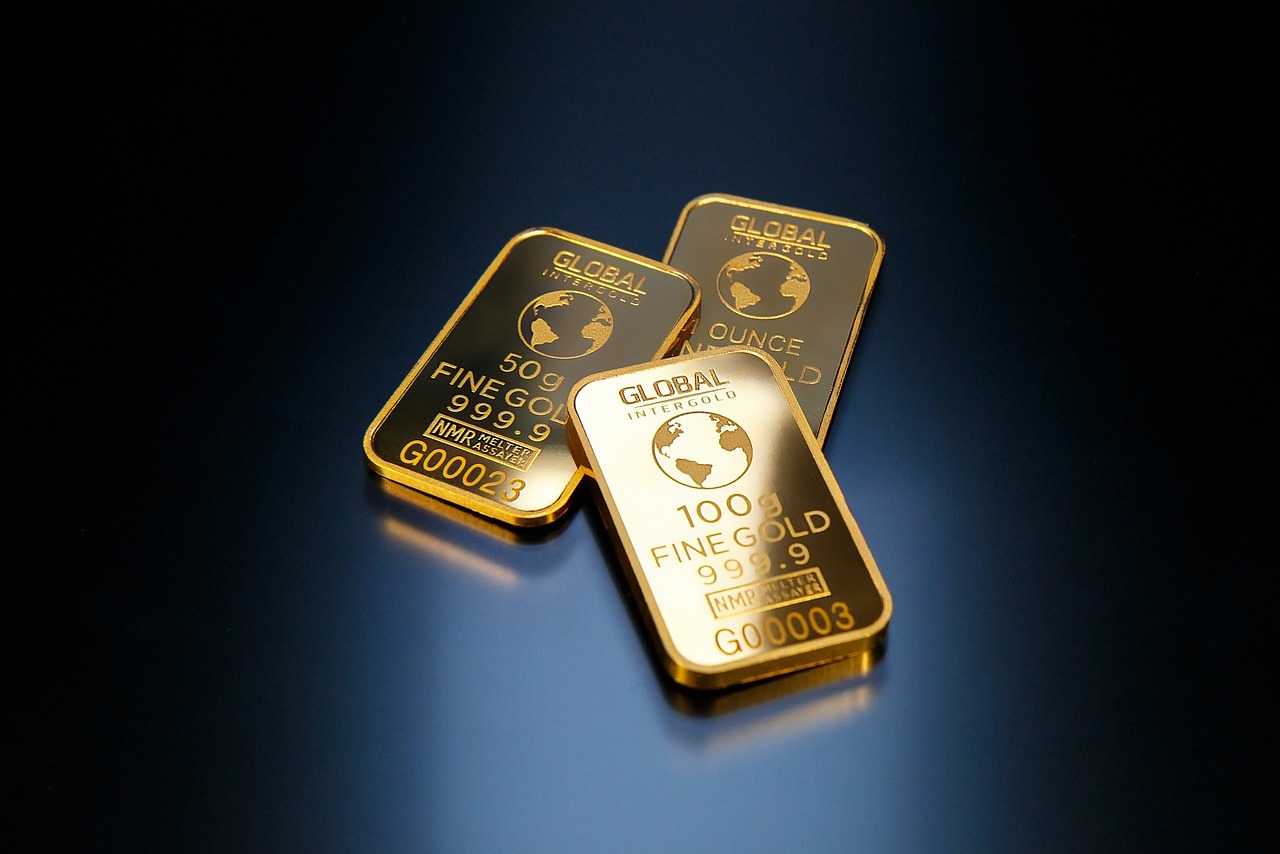
Gold prices retreated modestly on Monday, closing at $4,346.60 per ounce after falling $5.00, or 0.11%, as the US-Iran peace agreement and reopening of the Strait of Hormuz eased geopolitical tensions and diminished short-term safe-haven buying.
The small decline followed a strong run that saw gold hit multiple record highs in recent sessions, driven by uncertainty over energy supplies and broader market volatility. With the ceasefire removing a major risk premium, some investors trimmed positions in the precious metal, shifting toward riskier assets like equities that rallied on the positive news.
Despite the pullback, gold remains near historically elevated levels, supported by continued central bank purchases, persistent inflation concerns and its role as a long-term store of value. The metal has benefited from diversification demand amid global economic uncertainties, even as short-term geopolitical risks have eased.
Market Reaction to Peace Deal
The US-Iran agreement, which includes the immediate lifting of the naval blockade and restoration of shipping through the Strait of Hormuz, triggered a broad relief rally in equities and a decline in oil prices. This environment typically pressures gold as investors move into higher-yielding or growth-oriented assets.
However, analysts note that the ceasefire is preliminary, with 60 days of technical talks on Iran’s nuclear program still ahead. Lingering uncertainties around implementation and long-term stability have prevented a sharper sell-off in gold, keeping prices supported near current levels.
The VIX, Wall Street’s fear gauge, has fallen significantly, indicating reduced market anxiety. Lower volatility generally weighs on gold, which often serves as a hedge during periods of heightened uncertainty. The current reading suggests markets are functioning with more normal risk perceptions.
Central Bank Buying and Structural Support
Central banks have been net buyers of gold for several consecutive years, providing a structural bid that has helped sustain prices even during risk-on periods. Emerging market institutions, in particular, continue to diversify reserves, viewing gold as a neutral asset less susceptible to geopolitical or currency risks.
This demand has offset some of the pressure from reduced safe-haven buying tied to the Middle East situation. Gold’s performance demonstrates its dual role as both a crisis hedge and a long-term portfolio diversifier.
Investment products tracking gold, including exchange-traded funds, have seen steady flows, reflecting ongoing interest from retail and institutional investors. The metal’s ability to maintain elevated levels despite the positive geopolitical news underscores its resilience.
Economic and Policy Factors
The US Federal Reserve’s steady policy stance has contributed to a relatively stable environment for gold. With inflation moderating but still above target in some measures, the metal retains appeal as a hedge against potential future price pressures.
Lower oil prices following the Iran deal are generally positive for gold by reducing inflationary fears and supporting real yields, but the relationship is complex. In this instance, the combination of geopolitical relief and persistent structural demand outweighed any immediate pressure from falling energy costs.
The US dollar showed mixed moves, with periods of weakness providing additional tailwinds for gold priced in the greenback. Currency fluctuations remain a key variable for the precious metal’s performance.
Sector and Mining Company Impact
Gold mining companies benefited from the recent price strength, with shares in major producers advancing. Higher prices improve margins and cash flow, potentially supporting increased exploration and development activity in the sector.
The surge in gold has implications for commodity-producing nations, bolstering export revenues and government budgets. In developing economies, gold often serves as an inflation hedge and store of value for individuals navigating currency volatility.
Investor Perspectives and Strategies
Market participants offered varied interpretations of the price action. Some viewed the modest pullback as healthy consolidation after a strong run, while others saw it as a tactical response to short-term risk reduction. Gold’s ability to hold near record levels despite positive news has impressed many observers.
For investors, gold continues to serve as a portfolio diversifier, particularly in uncertain times. While the immediate geopolitical relief has reduced some demand, longer-term factors like central bank buying and inflation hedging keep the metal attractive.
Financial advisers recommend appropriate allocation based on individual risk tolerance and portfolio goals. Gold can provide stability during periods of market stress, though it does not generate income like bonds or dividends.
Looking Ahead
Attention now turns to implementation details of the US-Iran agreement and upcoming US economic indicators. Any complications in the ceasefire or unexpected inflation data could influence gold’s trajectory in the near term.
Analysts remain generally constructive on gold’s outlook, citing structural demand and its role in diversified portfolios. Sustained strength will depend on the balance between economic growth expectations and lingering uncertainties in global affairs.
As markets digest the latest diplomatic developments, gold’s performance demonstrates its enduring appeal even as broader risk appetite improves. The metal’s record run in 2026 highlights changing fundamentals, including elevated central bank buying and persistent investor demand for diversification.
The coming weeks will bring further clarity on the peace deal’s impact and gold’s reaction to evolving economic conditions. For now, the modest pullback from record highs reflects a market adjusting to reduced immediate risks while maintaining underlying support from long-term structural factors.
Gold’s ability to reach new highs amid shifting conditions underscores its unique characteristics in an evolving economic and geopolitical landscape. Investors will continue monitoring developments in the Middle East and their implications for safe-haven demand in the weeks ahead.

Business
PetVivo Holdings, Inc. (PETV) Discusses Spryng Technology Adoption and Commercial Expansion in Veterinary Practice Transcript

Andrew Eriksen
Allele Capital Partners, LLC
I think we’re live right now. So let’s jump in. Thank you, everyone, for joining today — into today’s webinar, inside the PetVivo story. What veterinarians are seeing, and how access is expanding. So my name is Andrew Eriksen. I’m a Managing Director on the Allele Capital team. We work with the PetVivo team here, and I’ll be moderating today’s call. So today, we’re going to introduce the speakers. I’ll walk through a little bit of background on the PetVivo story, talk about how their Spryng technology is being used in practice today and talk a little bit about the commercial landscape, and what they’re seeing on their side.
So we will run through the presentation. If you have any questions, there will be a Q&A chat box on either platform that you’re watching on. So submit your questions there, and we’ll make sure we get to those at the end of the call.
So without further ado, let’s jump in. I will start with some brief introductions from the team. So John, maybe you can kick things off for us and introduce yourself.
John Lai
CEO, President & Director
Thanks for having us on here. So my name is John Lai. I’m the CEO of PetVivo. I’ve been the CEO for about 14 years, and I’ll pass it off to the next person.
Andrew Eriksen
Allele Capital Partners, LLC
Dr. Juli, if you don’t mind, you can go next.


Startup sees opportunity in frozen, portion-controlled baked macaroni and cheese squares.
The move follows amendments to the existing Sebi rules, and is aimed at addressing practical challenges faced by AIFs while settling liabilities, litigation matters and residual operational expenses after the expiry of a fund’s tenure.
Under the new guidelines, AIFs and their schemes can retain liquidation proceeds beyond the liquidation or dissolution period if they have received litigation notices, regulatory communications, tax-related demands or other legal claims that may result in future liabilities. Funds can also retain proceeds for anticipated liabilities if they secure consent from at least 75% of investors by value.
Sebi has additionally permitted retention of money for residual winding-up expenses, provided the amount is supported by invoices or comparable historical expense records. Such retention for operational expenses cannot continue beyond three years from the end of the permissible fund life.
The regulator said managers must disclose the amount proposed to be retained and the estimated retention period to investors while seeking consent for anticipated liabilities.

To facilitate closure of fund structures, Sebi has also introduced an “Inoperative Fund” category. AIFs that have retained money for pending liabilities and wish to surrender their registration can apply for this status. Funds that do not retain any money but want to continue registration while awaiting the outcome of pending litigation may also seek the designation.
Applications for obtaining the status will have to be submitted directly to Sebi in a prescribed format.Once tagged as an Inoperative Fund, the AIF will not be permitted to launch new schemes and cannot charge management fees on existing schemes. Retained money must be invested only in liquid instruments permitted under Regulation 15(1)(f) of the AIF regulations.
Sebi has simultaneously granted significant compliance relief to such funds. Inoperative Funds will be exempt from several reporting and regulatory requirements, including quarterly and annual activity reports, compliance test reports, performance benchmarking submissions, periodic investor disclosures, valuation requirements and certain certification norms for key investment personnel.
The regulator has, however, mandated annual reporting of retained monies and outstanding liabilities. AIFs and Inoperative Funds must submit a status report to both Sebi and investors within 30 days of the end of every financial year until all liabilities are settled and pending amounts are distributed.
The framework has also been extended to Venture Capital Funds registered under the erstwhile Sebi (Venture Capital Funds) Regulations, 1996.
Industry participants have long sought clarity on handling residual liabilities after the formal investment period ends. In many cases, funds faced delays in winding up because of ongoing tax disputes, litigation or regulatory proceedings even after all investments had been liquidated.
The new circular seeks to address those concerns by providing a structured mechanism for retaining proceeds, reducing compliance burdens and allowing funds to formally transition into an inactive status while resolving outstanding obligations.
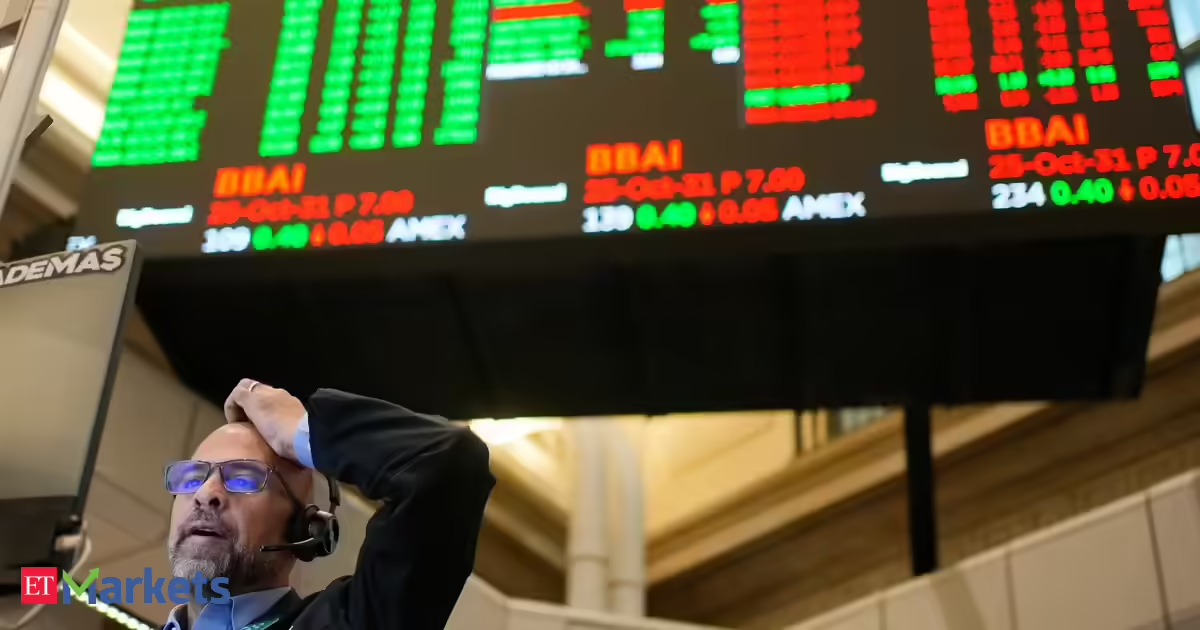
After rallying sharply on Monday on optimism about a U.S.-Iran peace deal, investors in the S&P 500 and Nasdaq took a breather even as oil prices fell to their lowest levels since early March. Shares of SpaceX rallied, but pared earlier gains. For much of the session, the rocket and AI company’s market value was above that of Amazon and it briefly surpassed Microsoft’s value.
While falling oil prices offered some support to equities, Mark Luschini, chief investment strategist at Janney Montgomery Scott in Philadelphia, said it was too difficult to build on recent steep gains in the heavyweight technology sector without a break. He noted some investor caution ahead of the U.S. Federal Reserve’s policy update due on Wednesday afternoon.
“We had a big move yesterday in the market,” said Luschini, alluding to the S&P 500’s 1.65% rally on Monday and Nasdaq’s advance of more than 3%. “We’re just digesting some of those gains and the setup in anticipation of the Fed meeting is always a little tentative.”
Also Read | SpaceX options trading debut draws record volume as investors chase rocket stock
According to preliminary data, the S&P 500 lost 41.85 points, or 0.55%, to end at 7,512.44 points, while the Nasdaq Composite lost 301.13 points, or 1.15%, to 26,382.81. The Dow Jones Industrial Average rose 345.54 points, or 0.67%, to 52,016.57.
TECHNOLOGY LAGS, FINANCIALS RISE
Investors rotated into economically sensitive sectors and sold richly valued technology stocks during the session with chip stocks falling sharply after soaring in the prior three sessions. Of the S&P 500’s 11 major industry sectors, financials and industrials rose. U.S. oil futures settled down 5.8% as some details emerged about the U.S.-Iran interim deal, which is expected to extend a tenuous ceasefire announced in April by another 60 days and reopen the Strait of Hormuz, which Iran has effectively blocked since the U.S. and Israel attacked Iran in February.
U.S. President Donald Trump said the agreement would rule out a nuclear weapon for Tehran, while a U.S. official said that it allows Iran to sell oil upon signing. The war had pushed up oil prices since it started in late February, and fanned worries about sticky inflation, which informs the U.S. central bank’s policy on interest rates. Investors are widely expecting the Fed to hold interest rates at its current 3.50% to 3.75% range on Wednesday, though they will pay close attention to new Fed Chairman Kevin Warsh’s comments on inflation, unemployment and the economic outlook.
Traders see the Fed holding rates through much of the year but have been betting on a roughly 42% chance of a 25-basis-point rate hike in December, according to CME Group’s FedWatch tool.
In individual stocks, shares of Olin sank after the chemical producer said it would acquire Huntsman in an all-stock deal valued at $2.43 billion. Huntsman shares also fell as the offer stood at a discount to the stock’s recent price.
Yum Brands shares rose after the fast-food company said it would sell its Pizza Hut chain for $2.7 billion, as it struggles with stiff competition and cautious consumer spending.
Centuria Capital Group Stapled Securities (CNECF) Analyst/Investor Day – Slideshow

Program spotlights startups focused on environmental, supply chain, regulatory challenges.
Business
John Wiley & Sons, Inc. 2026 Q4 – Results – Earnings Call Presentation (NYSE:WLY) 2026-06-16
Q4: 2026-06-16 Earnings Summary
EPS of $1.67 beats by $0.02
| Revenue of $447.94M (1.21% Y/Y) misses by $2.06M

Seeking Alpha’s transcripts team is responsible for the development of all of our transcript-related projects. We currently publish thousands of quarterly earnings calls per quarter on our site and are continuing to grow and expand our coverage. The purpose of this profile is to allow us to share with our readers new transcript-related developments. Thanks, SA Transcripts Team


World Bank readies $2 billion loan for Argentina, Ambito reports
Automaker General Motors on Tuesday announced a new partnership with defense company Lockheed Martin to scale manufacturing and expand production capabilities.
The deal was facilitated by the U.S. Department of Defense, according to Bruce Brown, GM’s vice president of strategy at GM Defense, and will focus on munitions and more.
“What makes this moment especially important is that the country needs more than great technology. It also needs the capacity to build, scale and deliver reliably,” Brown said on a call with reporters. “This is where GM can help. Across our company, we bring deep experience in advanced engineering, digital development, supply chain discipline and manufacturing at scale.”
Lockheed Chief Operating Officer Frank St. John said it was too early to say what projects it would invest in with GM Defense.
Executives from both companies said on the call that the collaboration will allow for more growth at a time when the country is ramping up its production of defense parts.
“Together, we will explore opportunities across three important areas: improving production readiness and scalable manufacturing environments; strengthening supply chains and identifying ways to increase resilience; and applying advanced manufacturing and design approaches [that] can help improve efficiency and accelerate delivery,” St. John said.
Lockheed Martin is investing $9 billion through 2030 to modernize 20 of its facilities and supply bases, St. John added. GM said it will spend $7 billion on research and development in the U.S., according to Brown.
The executives said the partnership will be focused on “high-rate manufacturing” at scale and expanding production capacity. They added that the collaboration is still in early stages and that they need to further define what the potential for future contracts may be. They are working under a memorandum of understanding.
The automaker built tanks for the country during World War II. Its GM Defense unit is one of the company’s newer but fast-growing business segments, reestablished in 2017 with customers including the U.S. Army, Secret Service and NASA.
“America is stronger when two companies with deep manufacturing roots come together to help expand speed, scale and resilience in the defense industrial base. That is why Lockheed Martin and GM are announcing this collaboration,” Brown said on the call.
The partnership comes as President Donald Trump has been pushing for more American manufacturing to bring more production and reshoring into the country. The U.S. has also seen its defense stockpiles fall because of the wars in Ukraine and Iran.
The White House has held discussions with Ford and GM about better supporting the country’s defense industry.
— CNBC’s Michael Wayland contributed to this report.


Dr. Joseph E. Jones is a professor at The University of Southern Mississippi. He writes independently about portfolio construction from a dividend growth investment perspective. All analysis, views, and assertions expressed are solely his own and are not made in any official or representative capacity. They do not reflect the views, policies, or financial interests of The University of Southern Mississippi or any affiliated entities. This research is produced fully outside the scope of Dr. Jones’s university employment. The University of Southern Mississippi does not sponsor, review, endorse, or influence this work, nor does it provide funding or other support related to these activities. Nothing herein should be construed as investment advice or as a recommendation to buy or sell any security. Readers are encouraged to consult a licensed professional before making investment decisions.
Analyst’s Disclosure: I/we have a beneficial long position in the shares of KOF, TSM either through stock ownership, options, or other derivatives. I wrote this article myself, and it expresses my own opinions. I am not receiving compensation for it (other than from Seeking Alpha). I have no business relationship with any company whose stock is mentioned in this article.
Seeking Alpha’s Disclosure: Past performance is no guarantee of future results. No recommendation or advice is being given as to whether any investment is suitable for a particular investor. Any views or opinions expressed above may not reflect those of Seeking Alpha as a whole. Seeking Alpha is not a licensed securities dealer, broker or US investment adviser or investment bank. Our analysts are third party authors that include both professional investors and individual investors who may not be licensed or certified by any institute or regulatory body.

Musk triggers wealth tax clash after net worth beats Bitcoin
12 Best TV Shows Ending in 2026

York CAMRA launches Beer Festival 2026 at Golden Slipper Inn


-

 Business2 days ago
No Jackpot Winner as $257 Million Prize Rolls Over to $269 Million Monday Draw
-

 Crypto World5 days ago
Oppenheimer backs SpaceX as $70 billion retail frenzy builds
-

 Fashion4 days ago
Weekend Open Thread: Tuckernuck – Corporette.com
-

 Crypto World5 days ago
Markets Rally as SpaceX IPO Looms Amid Iran Tensions and Inflation Surge
-
 Crypto World2 days ago
Zimbabwe Requires Crypto Businesses to Register Annually Under New FIU Regulations
-

 Tech4 days ago
NanoClaw integrates JFrog registries to secure AI agent downloads
-

 Business7 days ago
Thailand Ranks Second Worldwide for AI Adoption Growth, Microsoft Reports
-

 Tech4 days ago
This Week In Security: Microsoft On Microsoft, Register Your Domains, Linux On ARM, And FreeBSD Joins The File Cache Club
-

 Crypto World4 days ago
Bitget enters Argentina’s regulated crypto market through PSAV registration
-
 Tech5 days ago
Dutton Ranch star claims they ‘didn’t see any disruption’ on set following Chad Feehan’s exit from Yellowstone spinoff fueled by Taylor Sheridan clash rumors
-

 NewsBeat5 days ago
El Nino has formed in the Pacific and could set records, forecasters say
-

 Politics5 days ago
Politics Home | Healey Resignation Is “Colossal Failure Of Government”, Says Former Labour Defence Secretary
-
 Tech6 days ago
‘This is Seattle’s position on AI’: City Council votes unanimously to pause big new data centers
-
 Entertainment5 days ago
Donnie Wahlberg & More Heat Up Las Vegas at Circa’s Barry’s Downtown Prime
-
 Tech5 days ago
Opendoor Ends India Operations, Fueling a Bigger Conversation About AI and Outsourcing
-

 Sports5 days ago
First Time Since 1971: Australia Register Historic Low In ODI Cricket
-

 Politics5 days ago
Belfast burns, while Met chief points finger at Iran and Russia
-

 NewsBeat4 days ago
FBI searches office of Ohio voter registration group
-

 Business5 days ago
AT&T: Verizon's 27% Outperformance Sets Up A Solid Entry Point
-
 Politics5 days ago
Modi thanks Trump for wishes as US attacks Indian seafarers
You must be logged in to post a comment Login