

Crypto World
Is Avalanche Falling Behind? Social Media Debates Heat Up Over AVAX Growth Slowdown

Avalanche (AVAX) became one of the most discussed cryptocurrencies on Monday despite the broader market rally, as growing skepticism around the network fueled social media debates.
According to Santiment, many users are questioning whether Avalanche can still compete with faster-growing blockchains such as Solana and Sui.
Lagging Devs and Users
Much of the criticism has focused on concerns that developer activity, user adoption, and overall ecosystem growth are moving away from Avalanche toward rival networks. Santiment’s sentiment data revealed that market mood around AVAX has dropped sharply, pivoting from one of its most bullish phases earlier this year to one of its most bearish periods.
However, the analytics platform stated that extreme negative sentiment can sometimes create opportunities for reversals in the market. Despite the rising criticism, Avalanche continues to maintain institutional partnerships, government-linked initiatives, and its subnet technology, which remains a major feature of the network.
Meanwhile, stats from the Developer Report by Electric Capital revealed Solana leads with 795 full-time developers (each contributing 10+ days monthly), whereas Sui has 202 such developers, and Avalanche is behind with only 168. Furthermore, the total developer counts show Solana leading at 2,555, Sui at 656, and Avalanche at 484. The metric considers only original code authors, while excluding developers involved in merged pull requests, forked commits, and automated bot activity.
AVAX Market Performance
AVAX briefly moved above $7 this week as the broader crypto market recovered. The token gained nearly 4% in the past 24 hours. The rally also comes amid growing attention around FIFA’s partnership with Avalanche during the ongoing 2026 World Cup. FIFA is using a custom Avalanche blockchain to support ticketing, loyalty programs, and digital collectibles for fans across the world.
The Layer 1 network, announced in May 2025, powers FIFA Collect, the organization’s official collectibles platform developed with Modex. Fans can use Right-to-Ticket collectibles to access official World Cup tickets through a special portal before matches. The partnership has also reportedly helped Avalanche attract new users.
Zooming out, however, AVAX is still over 26% down over the past month. Additionally, the price has fallen by over 76% from its September 2026 high of $30.
The post Is Avalanche Falling Behind? Social Media Debates Heat Up Over AVAX Growth Slowdown appeared first on CryptoPotato.


Key Takeaways
- PLTR shares declined 2% to $131.94 Tuesday, now down 26% year-to-date and 36% off November 2025’s peak of $207.18.
- Wolfe Research raised its rating from Underperform to Peer Perform without issuing a price target.
- Analysts acknowledged Palantir as “the most applied enterprise AI software company” while warning it’s “the most expensive in software.”
- UBS held its Buy rating with $200 target despite growing concerns about rivals like OpenAI, Anthropic, and Databricks.
- Among 32 Wall Street analysts tracked by FactSet, the consensus rating is Overweight with an average target of $189.87, suggesting 44% upside potential.
Palantir Technologies (PLTR) received a rating boost from Wolfe Research on Tuesday. The shares declined anyway, dropping 2%.
That dynamic speaks volumes about current market sentiment toward the AI software maker.
Palantir Technologies Inc., PLTR
Shares closed at $131.94 Tuesday, continuing a difficult period that has erased 26% of the stock’s value in 2026. June alone has brought a 16% decline, leaving PLTR trading 36% beneath its all-time closing high of $207.18 reached on November 3, 2025.
Meanwhile, broader indices tell a different story: the S&P 500 has climbed 10% this year, while the Nasdaq Composite has advanced approximately 14%.
Wolfe Research analysts Alex Zukin and Joshua Tilton reinstated coverage of PLTR with a Peer Perform designation, an improvement from their previous Underperform stance. The firm did not provide a specific price target alongside the upgrade.
Their analysis presents a nuanced picture. While they recognize Palantir as the preeminent applied enterprise AI software provider with industry-leading growth rates, they simultaneously caution that the stock’s valuation “is still the most expensive in software.”
PLTR currently commands a forward price-to-earnings multiple of approximately 77.4x, dramatically higher than the S&P 500’s 21.07x ratio.
“We love the business,” Zukin stated, “and if growth trends closer to our upside scenario we could find ourselves looking at an entry point too good to ignore.” However, the analysts believe the current premium already reflects much of the anticipated growth and margin expansion.
The Ontology Advantage
The Wolfe analysts highlighted Palantir’s Ontology platform as its critical competitive edge. This proprietary database infrastructure bridges AI capabilities with human decision-making to automate enterprise operations. Zukin observed that Ontology sales momentum and backlog are gaining speed in 2026, which he views as an encouraging indicator.
Separately on Tuesday, UBS analyst Karl Keirstead reaffirmed his Buy rating alongside a $200 price target. Keirstead maintained his bullish position following discussions with Palantir leadership that centered largely on competitive dynamics.
The Competitive Landscape
The primary concern raised during the UBS meeting involved whether competitors such as OpenAI, Anthropic, and Databricks — each developing field deployment capabilities and data context infrastructure — might erode Palantir’s ontology advantage.
Palantir executives countered these concerns, emphasizing that their operating system extends far beyond simply deploying large language models or data ingestion. Management expressed confidence that LLM providers would struggle to gain significant traction in the data infrastructure layer.
With an 84% gross profit margin, Palantir demonstrates substantial pricing power and competitive strength, according to UBS.
InvestingPro data reveals that 21 analysts have recently increased their earnings projections for the company.
Additional recent analyst activity includes Rosenblatt reaffirming its Buy rating after client wins and a Google Cloud collaboration unveiled at AIPCon 10. Baird similarly upheld its Outperform rating with a $200 target following investor discussions with Palantir leadership.
On the regulatory front, the UK government has announced plans to review Palantir’s existing contract with the National Health Service.
Among the 32 firms monitored by FactSet, PLTR maintains an average Overweight recommendation with a mean price target of $189.87, implying 44% upside from current trading levels.

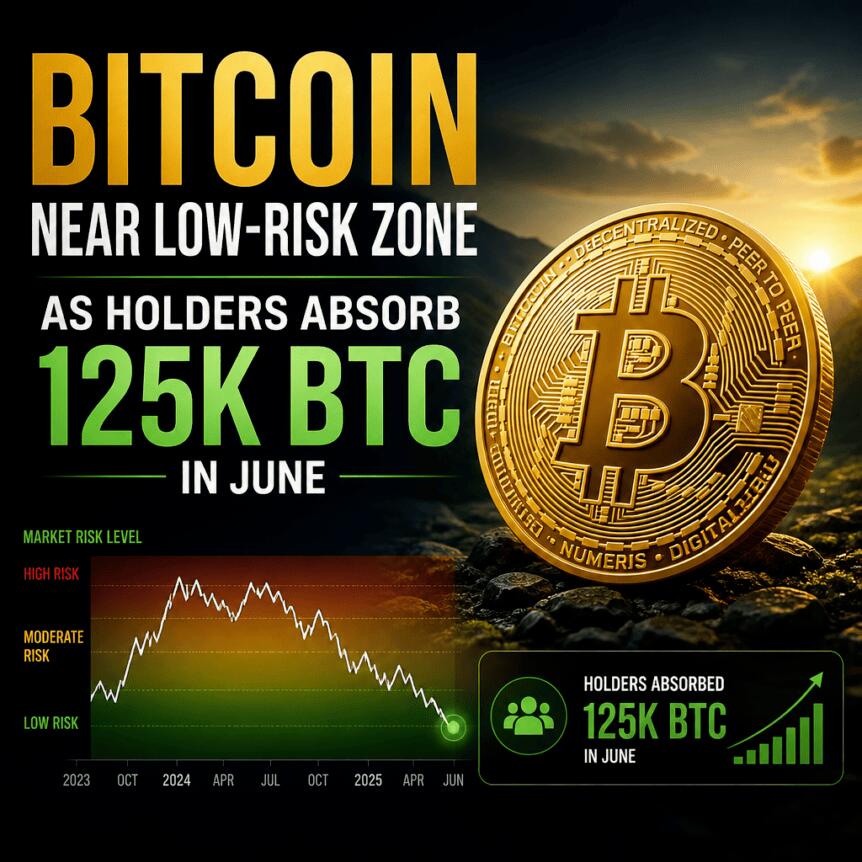
Bitcoin’s onchain and risk metrics are pointing toward a renewed accumulation-style phase, with a particularly notable signal emerging from its risk-adjusted return profile. According to CryptoQuant data, Bitcoin’s Sharpe ratio — a measure that compares returns to volatility — has fallen back toward the -20 zone that has historically lined up with major market bottoms.
At the same time, exchange balances have continued to drift lower, while wallets identified as “accumulator” addresses have shown stronger absorption behavior in early June, suggesting that supply leaving trading venues is increasingly being taken up rather than sitting idle.
Key takeaways
- CryptoQuant reports Bitcoin’s Sharpe ratio returning to -20 on June 11, a threshold that has appeared around major cycle lows in past bear markets.
- Exchange reserves have declined by roughly 80,000 BTC since February, with balances around 2.71 million BTC as of Monday.
- Accumulator address demand has risen sharply in early June, with CryptoQuant showing absorption of about 125,000 BTC between June 1 and June 14.
- Bitcoin remains below its 100-week simple moving average (SMA) for 133 straight days, and prior cycles suggest this can persist for additional months.
Sharpe ratio signals a bottom-aligned risk regime
CryptoQuant data shows Bitcoin’s Sharpe ratio reached -20 on June 11. The metric first slipped below that level on Jan. 5, 2015, and stayed there until June 12, when Bitcoin formed what the source describes as a durable bottom and moved into a recovery phase.
Similar behavior has played out in other drawdowns. From Dec. 8, 2018 through March 7, 2019, the Sharpe ratio remained under -20 for much of the bear market floor. The same pattern also appeared from Oct. 7, 2022 through Jan. 7, 2023, before Bitcoin transitioned into its next sustained bullish stretch.
Importantly, the article’s underlying data-driven claim is not that -20 precisely predicts the exact day a bottom occurs. Instead, periods when the Sharpe ratio spends time below -20 have tended to coincide with prolonged accumulation behavior — a dynamic where risk-adjusted returns look unfavorable but supply is gradually absorbed.
Exchange reserves down as accumulator wallets absorb more BTC
Onchain balance movements reinforce the risk-metric story. The analysis notes that BTC held on exchanges fell to 2.71 million on Monday, down from 2.79 million BTC in February. While exchange reserves briefly bounced to 2.73 million BTC from a late-April/early-June low of 2.65 million BTC, the source says balances have since dropped again by about 12,000 BTC over the past two weeks.
In other words, the supply available on trading venues did not simply stabilize after a brief rebound — it has continued to thin. That matters because persistent outflows from exchanges often align with less immediate selling pressure, especially when those coins are not immediately reintroduced into markets.
CryptoQuant’s “accumulator” cohort further supports that interpretation. The analysis says these accumulator addresses absorbed 125,000 BTC between June 1 and June 14. It also highlights an earlier comparison from the first two weeks of June: demand from accumulator wallets reportedly rose to 240,000 BTC from 115,000 BTC across that period, indicating that absorption accelerated rather than staying flat.
While exchange reserve decreases can be driven by many factors, the presence of stronger absorption from long-term-leaning wallets typically suggests coins are being retained. The source frames this as growing interest from wallets with a history of holding rather than distributing.
Staying under the 100-week SMA: consolidation may take time
Beyond onchain metrics, the current chart structure also fits a “build-up before trend resumption” narrative. The analysis states that Bitcoin has spent 133 consecutive days below its 100-week simple moving average (SMA). At the time of writing, that 100-week SMA is near $88,466, according to the source’s referenced calculation.
Historically, Bitcoin has often traded below the 100-week SMA for extended periods before reclaiming it. After the 2013 peak, BTC spent 378 days under the indicator while consolidating between $200 and $400. During the 2018–2019 bear market, Bitcoin remained below the 100-week SMA for 175 days and traded in a $3,000 to $6,000 range.
The longest stretch cited by the source occurred after the 2022 decline. In that cycle, Bitcoin stayed below the 100-week SMA for 532 days while trading between $16,000 and $25,000. Averaging across the three examples provided, Bitcoin spent roughly 362 days under the 100-week SMA before reclaiming it and establishing a more sustained uptrend, with those periods described as prolonged accumulation rather than immediate recoveries.
Given that the current cycle has logged 133 days below the 100-week SMA, the analysis argues that the market may still be early in a longer consolidation process. Prior examples suggest that reclaiming the trendline often comes months after the initial breakdown phase, not immediately.
What to watch next for confirmation
For investors and traders, the most important question is whether the current clustering of signals persists: the Sharpe ratio hovering around the -20 zone, continued declines in exchange reserves, and ongoing absorption by accumulator addresses. The longer Bitcoin remains under the 100-week SMA, the more likely this resembles a multi-month accumulation cycle rather than a quick mean-reversion bounce — but confirmation will depend on whether these metrics stabilize into a clear shift rather than fading back.


Uniswap's UNI token climbed 22% in 24 hours to $3.28 on $621 million in trading volume Tuesday, one day after Standard Chartered published a $100 long-term price target for the asset. The move hit the 100th percentile of CoinGecko's recent price-change distribution for UNI, meaning no comparable… Read the full story at The Defiant

Coinbase is making it easier for US customers to fold traditional markets into the same account they use for crypto. On Tuesday, the company said it now lets users transfer existing stock and ETF portfolios from other brokerages into Coinbase Advanced, its platform aimed at active traders.
The move extends Coinbase’s earlier stock and exchange-traded fund (ETF) push, which began earlier this year with access to about 6,000 securities. Coinbase says the new capability enables a direct portfolio transfer rather than requiring users to sell holdings elsewhere and recreate positions on the Coinbase platform.
Key takeaways
- Coinbase Advanced now supports portfolio transfers of stocks and ETFs via ACATS, allowing holdings to move without selling.
- The rollout builds on Coinbase’s earlier stock and ETF trading launch, expanding beyond an initial selection of roughly 6,000 securities.
- Coinbase continues to package market tools for active users, including TradingView charting and fractional share availability.
- The company’s broader trading expansion includes options, thematic equity index perpetual futures, pre-IPO perpetuals, and expanded prediction markets, with some items outside the US.
- Coinbase’s non-crypto expansion comes as its earnings have continued to track crypto market conditions, highlighting the need for more diverse revenue streams.
Portfolio transfers: the practical upgrade for US users
Coinbase’s announcement is notable not only because it adds more tradable assets, but because it targets an operational friction point for users: the hassle of moving money and rebuilding portfolios. According to a Coinbase spokesperson, transfers into Coinbase can be executed through the Automated Customer Account Transfer Service (ACATS), which supports the movement of securities and cash between brokerages without requiring the positions to be sold.
For users, this matters because it lowers the barrier to consolidation. Instead of opening a new brokerage account, selling and re-buying shares, and potentially triggering taxable events or disrupting long-term holdings, customers can shift existing portfolios into Coinbase Advanced in a more streamlined way.
Coinbase is also positioning the service with active-trader features. The company said the platform offers zero-commission trading, TradingView charting tools, fractional shares, and rewards of up to 3.5% on eligible USDC balances.
Beyond crypto: Coinbase’s effort to become a multi-asset platform
Coinbase’s latest stock and ETF capabilities reinforce a strategy that has been steadily expanding: turning the exchange from a primarily crypto-focused venue into a broader financial platform. In Tuesday’s update, Coinbase said the services are designed to compete more directly with mainstream brokerages and fintech apps by letting users manage stocks, ETFs, and cryptocurrencies from a single account.
That “single account” approach is increasingly important as users look for convenience and integrated workflows—especially those who already trade multiple asset classes. By aligning stock trading mechanics with crypto access, Coinbase is effectively trying to remove the need for parallel accounts and separate user experiences.
Still, the scope of Coinbase’s offering is not confined to cash equities. The company also outlined additional trading expansions, indicating it intends to broaden its derivatives lineup and expand where tokenized securities are available.
What else Coinbase is expanding: options, perpetuals, and prediction markets
Alongside the stock and ETF transfer feature, Coinbase detailed further upgrades to its trading offerings. The company said it is working on crypto and stock options, thematic equity index perpetual futures, pre-IPO perpetuals, and expanded prediction markets.
Coinbase also stated that tokenized stocks will be available to customers outside the United States starting next month. Some features are available immediately, while others are expected to roll out over the coming months, though Coinbase did not provide specific timelines for each item.
This sequencing suggests Coinbase is prioritizing assets and infrastructure that can be introduced quickly while continuing to build out longer-horizon products such as specialized perpetual structures and tokenized equity access beyond the US market.
Why it matters now: Coinbase’s earnings still follow crypto cycles
Coinbase is pushing deeper into stocks and ETFs at a time when investors are focused on how resilient the company’s business is beyond digital asset volatility. Coinbase’s financial results have frequently mirrored crypto price movements, and the company’s expansion appears designed to reduce dependence on trading activity tied strictly to cryptocurrency cycles.
Earlier coverage from CNBC reported that Coinbase delivered stronger-than-expected fourth-quarter 2024 earnings, with a post-election rally contributing to a 130% jump in revenue. More recently, Coinbase posted a surprise loss in the first quarter of 2026 after weaker cryptocurrency prices weighed on trading activity, according to reporting by MSN. In that period, Coinbase reported a loss of $1.49 per share on $1.41 billion in revenue, missing analysts’ expectations of 27 cents per share on $1.52 billion in revenue.
Spot crypto trading remains Coinbase’s primary source of revenue, but expanding into stocks, ETFs, and additional derivatives could help diversify income streams. Even if crypto remains dominant, broadening the product set can matter in two ways: it can attract users who want multi-asset exposure and it can potentially stabilize demand when one market segment cools.
At the same time, investors should be attentive to how quickly Coinbase’s stock and ETF business gains traction relative to crypto. The company’s roadmap includes ambitious products beyond spot markets, but the practical impact will likely depend on adoption, liquidity, and the rate at which new offerings roll out.
For now, the portfolio transfer feature is a tangible step: it lowers switching costs for stockholders who also trade crypto. The next question is how Coinbase’s broader multi-asset trading suite—especially options, perpetuals, and tokenized stocks outside the US—will scale over the coming months, and whether that scaling visibly offsets the ups and downs driven by crypto price swings.
Key takeaways:
- Bitcoin derivatives show weak conviction with 2% futures basis and elevated put options premium signaling caution.
- Institutional buying via $86 million ETF inflows plus Strategy’s (MSTR US) ongoing accumulation counters market fear.
Bitcoin (BTC) jumped above $67,000 after US President Donald Trump announced a late Sunday ceasefire deal with Iran. Despite this short-term optimism, derivatives metrics show that crypto traders remain highly skeptical, raising concerns that this sudden rally could be a massive bull trap.
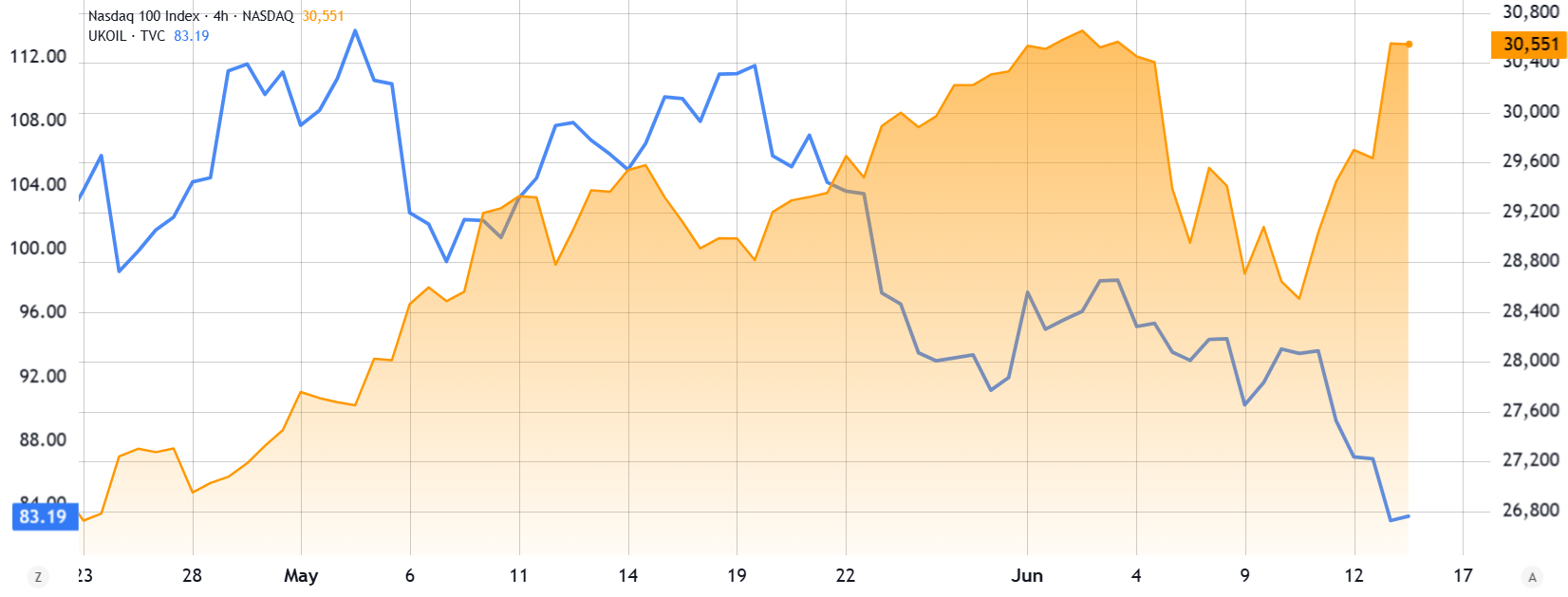
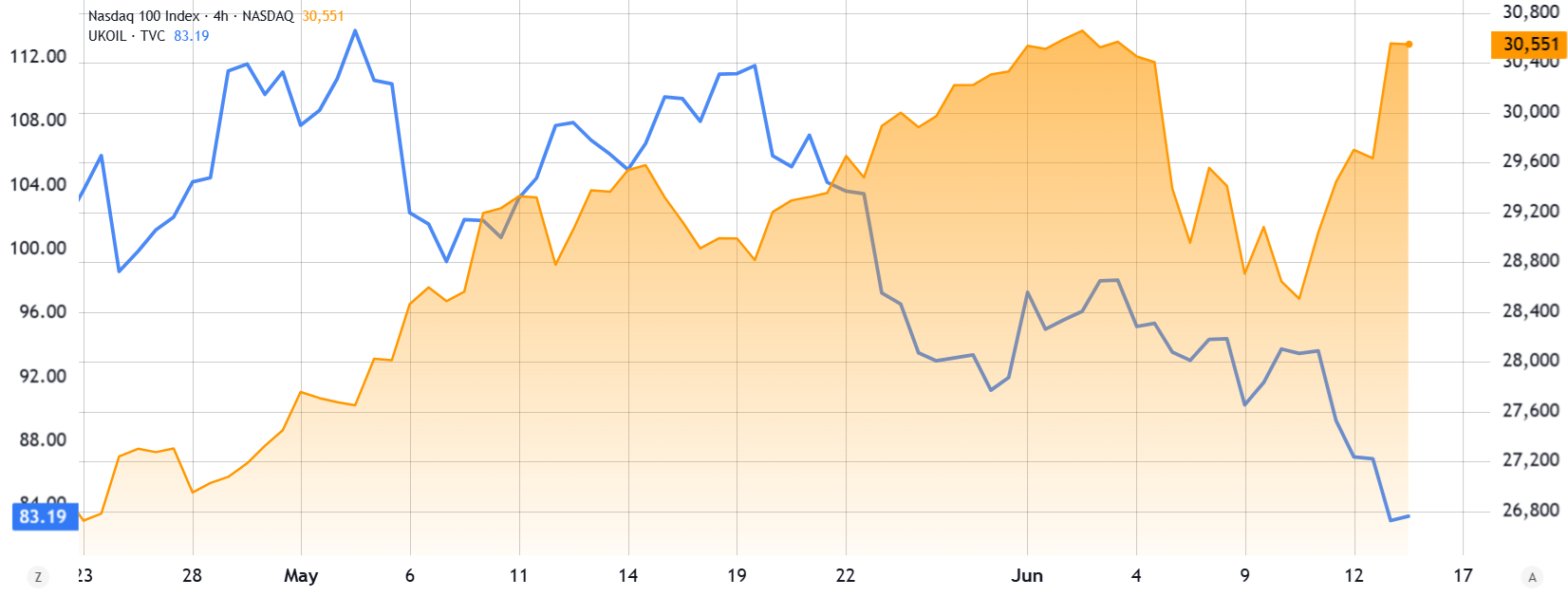
Brent crude oil (left) vs. Nasdaq 100 Index (right). Source: TradingView
Crude Brent oil declined to a 100-day low on Monday, while the Nasdaq Index gained 3%. However, Bitcoin traders remained cautious due to the lack of a final deadline and clear operational details for shipping companies following the peace deal with Iran, though an interim agreement is expected this Friday.
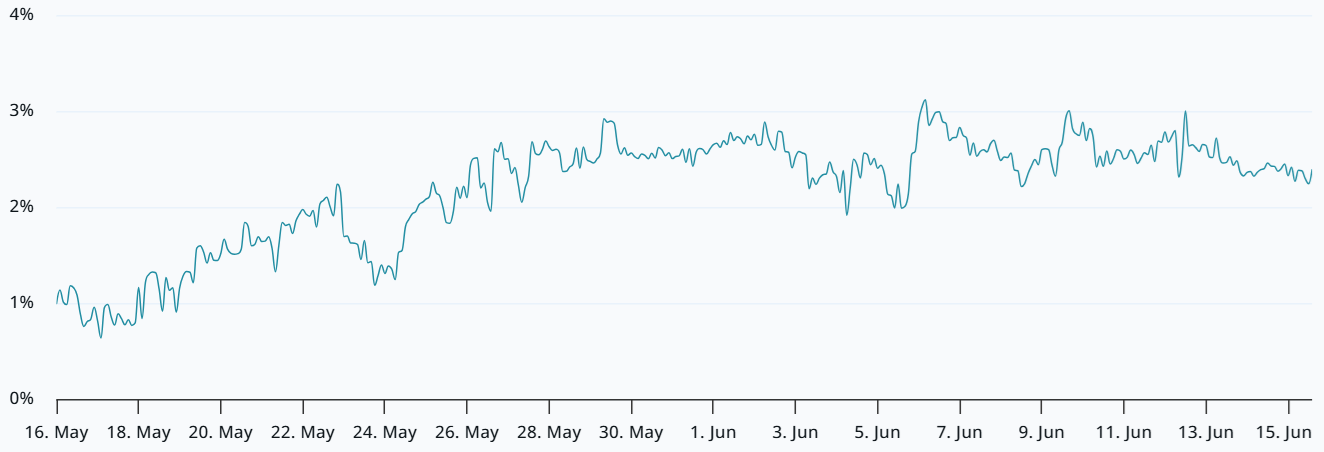
Bitcoin 2-month futures basis rate. Source: Laevitas
The Bitcoin futures annualized premium (basis rate) stood at 2% on Monday, signaling a lack of demand for leveraged bullish positions. This indicator has failed to break above the neutral 4% threshold for over 3 months, reflecting Bitcoin’s -24% year-to-date performance. Still, Bitcoin’s 4% daily spike caught short sellers off-guard, triggering $210 million in liquidations.
Bitcoin price is supported by spot ETF inflows and Strategy acquisitions
Part of the bullish sentiment stemmed from the $86 million net inflows into US-listed spot Bitcoin exchange-traded funds (ETFs) on Friday. While positive, this inflow was not nearly enough to reverse the heavy $730 million in net outflows seen since June 5. ETF activity is widely tracked as a proxy for institutional demand, bulls are likely waiting for stronger confirmation.
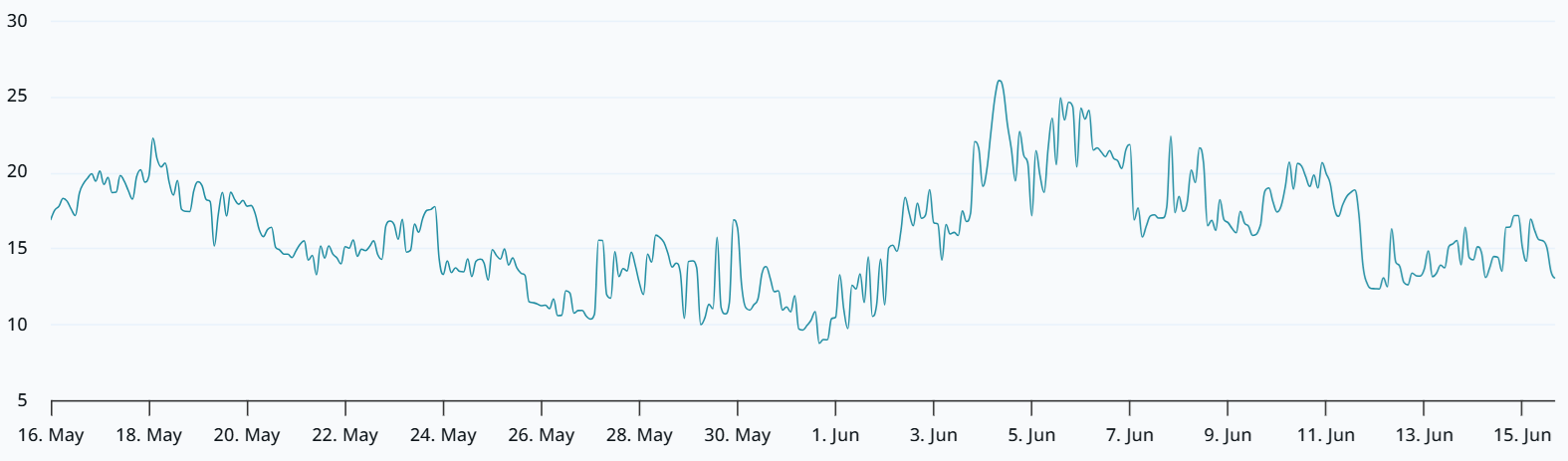
Bitcoin 30-day options skew (put-call). Source: Laevitas
The weak conviction among bulls was also evident in the options market, where traders actively avoided protection against downside risk. Bitcoin put (sell) options traded at a 16% premium over call (buy) instruments, flashing a clear warning sign of downside fear. This crypto weakness stood out even more as the Nasdaq 100 Index rallied, trading just 1% shy of its all-time high.
Traders’ skepticism is also being fueled by conflicting claims over future shipping tolls in Iran, especially since the current agreement only locks in a two-month window, according to Yahoo Finance. Meanwhile, equity investors are finding plenty of reasons for optimism elsewhere, with the artificial intelligence sector getting a massive boost from the record-breaking SpaceX (SPCX US) IPO.
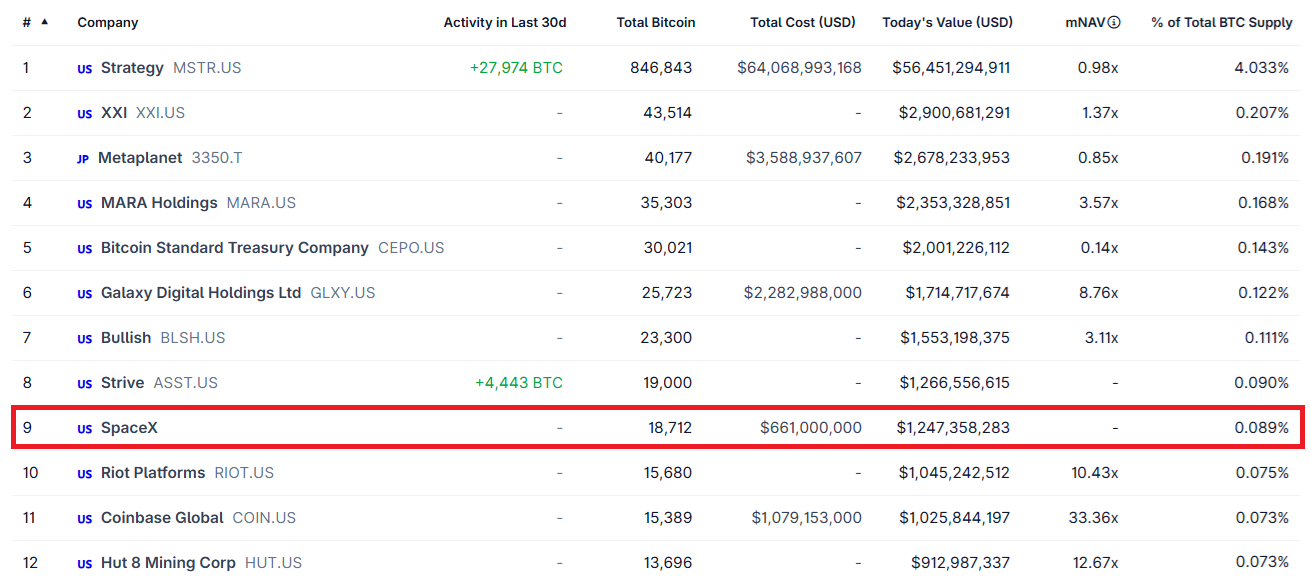
Public companies Bitcoin treasury ranking, BTC. Source: CoinGecko
SpaceX, the aerospace and artificial intelligence powerhouse founded by Elon Musk, recently secured $75 billion in the largest IPO in history. SPCX shares surged 14% on Monday, driving the company’s valuation to a massive $2.1 trillion. The multi-billionaire is a vocal proponent of cryptocurrencies, and the latest SEC filings reveal that SpaceX itself holds 18,712 Bitcoin on its balance sheet.
Related: These Bitcoin charts show how BTC price could hit $100K before October
For now, Bitcoin bears maintain control as persistent weakness across derivatives markets shows low conviction in the $60,000 support level. However, a sustained rally back above $70,000 could quickly materialize if falling oil prices continue to ease recession risks, giving the Federal Reserve more room to implement a less restrictive US monetary policy.
There is no indication of a bull trap here, especially as Strategy (MSTR US) continues to aggressively accumulate coins, completely erasing market fear of a sudden capitulation.

Key Highlights
- CervoMed (CRVO) shares surged 32.3% during premarket hours Tuesday following disclosure of a significant director transaction
- Board member Joshua Boger acquired 955,414 shares priced at $3.14 each on June 11 through a private placement arrangement
- The investment totaled approximately $3 million, executed via the Joshua S. Boger 2021 Trust
- The placement structure included one common share plus two warrant series (B and C) per unit
- Wall Street firm H.C. Wainwright maintains a Buy recommendation with a $25.00 target price on CRVO shares
Shares of CervoMed (CRVO) experienced a dramatic 32.3% surge in premarket activity Tuesday morning following the disclosure of a substantial stock purchase by board director Joshua Boger in a Form 4 regulatory filing.
Acting through the Joshua S. Boger 2021 Trust, Boger acquired 955,414 shares priced at $3.14 each on June 11. The aggregate value of this transaction reached approximately $3 million.
Prior to this filing becoming public, the stock had faced significant headwinds. CRVO shares were changing hands at $2.48 before the announcement, representing a decline of roughly 15% during the previous week and a steeper 70% pullback over the trailing six-month period.
This acquisition formed part of a private placement offering that CervoMed anticipates will yield approximately $10.5 million in total gross proceeds. The arrangement was structured through a securities purchase agreement executed on June 9 involving Boger’s trust alongside additional accredited investors.
The placement’s unit structure featured one common stock share accompanied by one Series B warrant and one Series C warrant. Series B warrants feature a $3.32 strike price, become exercisable immediately, and remain valid through June 11, 2031. Series C warrants carry a $3.14 exercise price, are similarly exercisable right away, and expire on June 11, 2027.
Notably, Chief Executive Officer John J. Alam also took part in this financing round, making it a particularly significant insider-backed transaction at the executive level.
Updated Ownership Position
After completing this transaction, Boger’s total position includes 1,795,865 shares held indirectly via two separate trusts — the JSB 2021 Trust and The Amy S. Boger 2021 Trust — along with an additional 216,817 shares owned directly.
The warrant agreements contain an ownership limitation provision. Boger and related entities are restricted from exceeding 19.99% ownership of CervoMed’s total outstanding common stock when exercising these warrants. Should exercising approach this ceiling, he has the option to instead receive pre-funded warrants subject to identical restrictions.
Before Tuesday’s premarket rally, CervoMed carried a market capitalization of $23.42 million. According to InvestingPro’s valuation analysis, fair value stands at $3.40, indicating the stock had been trading beneath that benchmark entering Tuesday’s session.
Wall Street Perspective
H.C. Wainwright has reaffirmed its Buy rating on CRVO stock with a price objective of $25.00. This recommendation followed CervoMed’s presentation of findings from its Phase 2b RewinD-LB clinical study evaluating neflamapimod at the AD/PD 2026 Conference.
The ongoing trial is assessing neflamapimod’s effectiveness in treating dementia with Lewy bodies. Results from the study indicated that participants exhibiting reduced plasma pTau181 levels experienced more pronounced clinical improvements from the therapeutic intervention.
In separate corporate news, CervoMed stockholders granted approval to all measures presented at the company’s 2026 Annual Meeting, which included the selection of eight board directors. Boger secured re-election to his director position during this voting process.
According to the Form 4 disclosure, Boger’s trust maintains ownership of 1,600,117 shares, while The Amy S. Boger 2021 Trust controls 195,748 shares, with Boger serving as sole trustee for both entities.
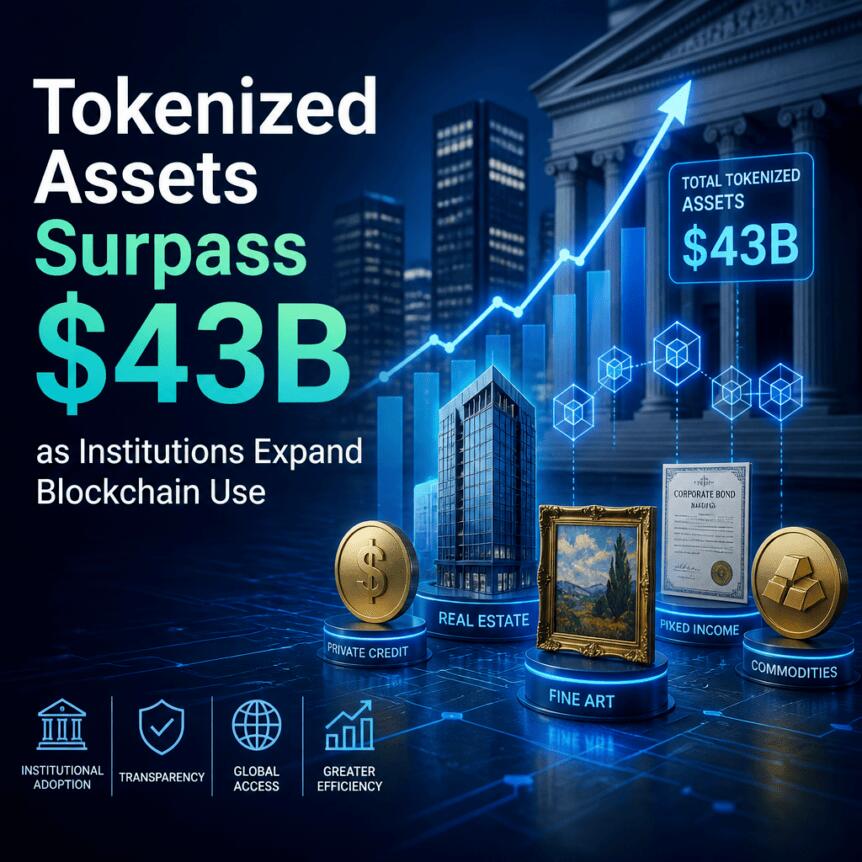
Tokenized real-world assets (RWAs) are continuing to gain ground even as broader crypto markets show softness. Data compiled from onchain metrics points to a sharp increase in the value of tokenized financial products over the past six months, underscoring how incremental adoption by issuers and infrastructure providers is gradually expanding beyond a narrow “tokenized Treasuries” narrative.
According to Token Terminal, the market for tokenized financial assets has surpassed $43 billion, representing an increase of about 37% over the last 180 days. The same figures also show that tokenized funds remain the largest slice of the sector, while other categories—commodities and tokenized stocks—still trail by a wide margin.
Key takeaways
- Token Terminal estimates tokenized onchain financial assets now exceed $43 billion, up ~37% in 180 days.
- Other trackers, including RWA.xyz, report a lower combined market value (below $33 billion), likely due to methodology differences.
- Tokenized funds account for nearly 80% of the sector’s capitalization, with commodities at 16.6% and tokenized stocks at 3.8%.
- Ethereum is still the dominant network for tokenized assets at 57.8%, but several chains collectively account for meaningful share.
- Major institutions are increasingly framing tokenization as a shift from pilots toward regulated, mainstream issuance—though many market metrics exclude stablecoins.
Why tokenized asset totals differ across trackers
The headline growth in tokenized RWAs becomes even more notable when compared with alternative market estimates. Token Terminal’s reported market size is larger than figures compiled by RWA.xyz, which puts the combined RWA market at less than $33 billion. The gap appears rooted in how each dataset defines and counts tokenized financial products.
Token Terminal’s broader inclusion criteria likely help explain the higher total, especially given how tokenized ecosystems can blend categories such as funds, credit products, and other structured yield instruments. For investors and builders, this matters: differing scopes can change how quickly the “market cap” appears to expand and can influence how readily people compare performance across dashboards.
Tokenized funds lead; the sector’s asset mix is still concentrated
While tokenized RWAs are widening in attention, Token Terminal data suggests the sector’s capitalization remains heavily concentrated. Tokenized funds make up nearly 80% of the overall market value. Commodities rank second at 16.6%, while tokenized stocks account for about 3.8%.
That ranking highlights where demand and issuance infrastructure are currently strongest. Funds, by design, can package exposure into a standardized structure, making them easier to deploy across multiple investor bases. Meanwhile, stocks and other equity-like instruments generally require more complex regulatory, custody, and operational alignment—helping explain their smaller share today even as adoption progresses.
Networks: Ethereum stays on top, but momentum is spreading
Ethereum continues to be the central settlement and issuance chain for tokenized assets, with Token Terminal putting its share at 57.8%. Other networks contribute additional—if smaller—parts of the pie: BNB Chain at 8.5%, zkSync Era at 7.5%, XRP Ledger at 5.8%, and Stellar at 5.4%.
For market participants, the multi-chain distribution is an important signal. Tokenized RWAs are not only scaling in value; they are also extending across different technical ecosystems. That can affect liquidity venues, compliance tooling, and even investor accessibility, since different networks often come with distinct integration partners and user journeys.
Issuance concentration is also visible in the top providers. Token Terminal lists Sky as the largest issuer at $6.1 billion in tokenized assets, followed by Securitize and Ondo Finance, each at $3.6 billion.
From “Treasuries first” to a broader yield ecosystem
Institutional interest in tokenization continues to move beyond academic or pilot-era discussions. Earlier this week, Standard Chartered initiated coverage of Uniswap, arguing that the UNI token could appreciate significantly by 2030 as tokenized assets increasingly move onto blockchain rails. The bank also projected that decentralized finance could reach $2.7 trillion over the same period, with growth largely driven by the expansion of tokenized financial products. (See earlier coverage: Cointelegraph’s report on Standard Chartered’s thesis.)
Meanwhile, Citigroup has framed tokenization as an industry poised to scale with improving regulatory clarity. In a base-case outlook, Citi projected tokenization reaching $5.5 trillion by 2030, and in a bull scenario up to $8.2 trillion. Citi pointed to a shift from pilots toward integration into core issuance infrastructure, identifying potential catalysts including efforts around the Depository Trust & Clearing Corporation and major market operators such as the NYSE and Nasdaq incorporating tokenization into issuance processes. (For the report referenced in the original coverage, see Citi’s Tokenization 2030 PDF.)
Stablecoins are also expected to play a major role in sector growth, even though many tokenization-focused market dashboards exclude them. That creates an analytical blind spot for readers relying solely on RWA market-cap figures: the onchain settlement layer can be expanding even if specific token categories are measured differently.
Beyond funds and credit, tokenized equities are beginning to show clearer momentum through platforms such as Ondo Markets and xStocks, reflecting a diversification trend. Binance Research previously concluded that RWA growth is becoming more diversified, with its report noting that 2026 could represent maturation from a “Treasury-dominated narrative” into a more varied yield ecosystem (as described in Cointelegraph’s earlier coverage).
For investors, the practical takeaway is that tokenized RWAs are still dominated by a small number of asset types and issuers, but the direction of travel is widening. The sector is also increasingly tied to mainstream financial infrastructure and regulated processes—an evolution that could reshape how capital moves onchain over the next cycle.
Going forward, readers should watch whether tokenization metrics continue to converge across data providers as methodologies tighten, and whether more issuance pipelines and trading venues broaden access to non-fund products like equities and commodities—areas that currently account for smaller shares but may determine the next phase of growth.


A handful of tokens continued their run while bitcoin and the rest of the crypto market stalled after the early week bounce.
Many leading altcoins are well in the green today (June 16), but Bittensor (TAO) has failed to follow the overall upswing, posting a substantial daily decline.
Even so, several analysts think it could be gearing up for a rebound that might carry it back to multi-month highs.
Big Pump Incoming?
TAO currently trades at around $268, a 7% plunge over the past 24 hours. It is important to note that its decline occured despite Grayscale’s positive remarks. Just hours ago, the digital asset management company claimed that centralized companies like Anthropic are more vulnerable to government intervention and decentralized projects like Bittensor “offer an alternative.”
“Bittensor provides open-source, permissionless access to AI through a decentralized global network,” the firm posted on X.
X user Altcoin Sherpa noted that TAO has lagged behind numerous well-known cryptocurrencies, suggesting the weakness may stem from traders pre-positioning and many already being fully allocated. At the same time, the analyst said TAO still “looks good” and that they remain invested in it.
“This current area is a bit of a resistance spot, 200d EMA + S/R level, but if it can break here, I think the low $300s is my next area up,” the X user added.
Ali Martinez also gave his two cents. He argued that TAO is approaching the top of its descending channel and predicted that a decisive break could open the door to a jump to $350 and then $420.
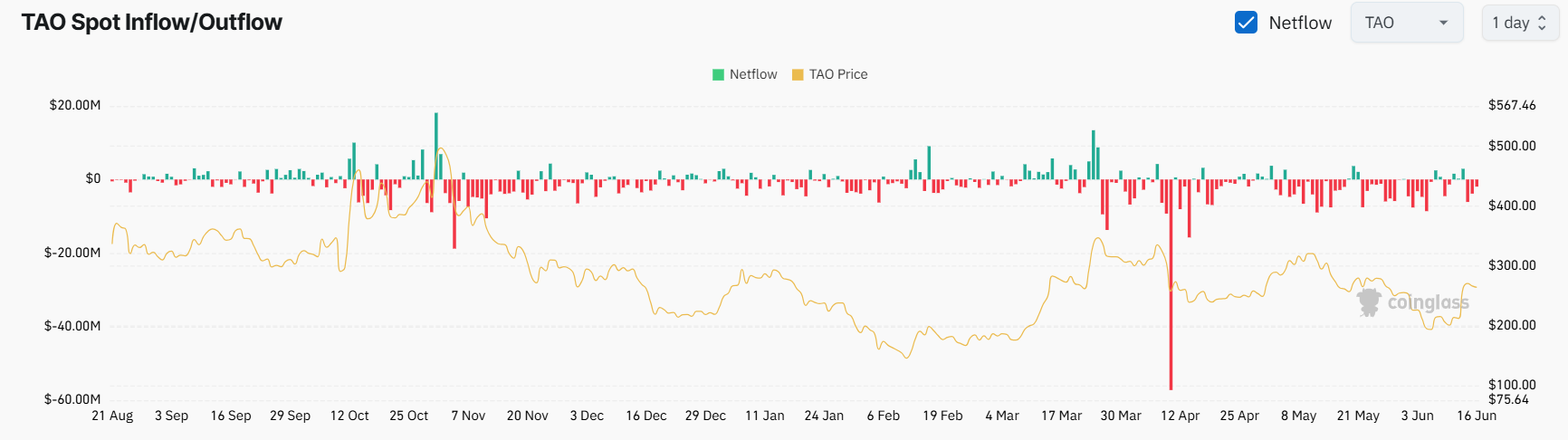
The asset’s recent exchange netflow raises the possibility of a short-term revival. Over the past few weeks, outflows have surpassed inflows, suggesting that many investors have abandoned centralized trading venues in favor of self-custody solutions, thereby reducing immediate selling pressure.
How About $500?
Another analyst who seems very fond of TAO is Michael van de Poppe. A few days back, he described the token’s chart as “phenomenal” and envisioned a potential price explosion to $500.
Shortly after, he opined that the strongest altcoins from the previous months, including TAO, could extend their solid performance in the near term, provided Bitcoin (BTC) has already bottomed.
Recall that at the start of June, the primary cryptocurrency briefly collapsed to around $59,000 – its lowest point in 19 months. And while it has recovered well above $65,000 following the peace deal between Iran and the US, some analysts believe the worst for this cycle has yet to come.
The post Bittensor (TAO) Slips 7% Daily, Yet a Price Explosion May Come Next appeared first on CryptoPotato.


State regulators got sidelined in the U.S. Department of the Treasury’s effort to implement the new U.S. stablecoin law, according to several senators from both parties who insist that the states need to be given an explicit process for proving their supervision and standards are on par with federal regulators’.
The Guiding and Establishing National Innovation for U.S. Stablecoins (GENIUS) Act to regulate stablecoin issuers is being translated into regulations across several federal financial agencies, including the Treasury. But the opening effort may not have satisfied state regulators who are trying to push their own GENIUS-related regulations, according to a Tuesday letter from the lawmakers, led by Republican Senator Cynthia Lummis, chair of the Senate Banking Committee’s crypto subcommittee.
“Treasury’s finalized principles for assessing whether state regimes are substantially similar to the federal regulatory framework are critical in this process,” according to the letter, also signed by fellow Republicans and a few Democrats, including Angela Alsobrooks, Catherine Cortez Masto and Kirsten Gillibrand. “The proposed principles were published by Treasury but did not address the timeline and procedural requirements related to state certification.”

Every bad financial decision you’ve ever made, you were in your feelings when you made it

M60/ M61 closure to continue overnight after crash damage
Palantir (PLTR) Stock Drops 2% Despite Wolfe Research Upgrade to Peer Perform


-

 Business2 days ago
No Jackpot Winner as $257 Million Prize Rolls Over to $269 Million Monday Draw
-

 Crypto World5 days ago
Oppenheimer backs SpaceX as $70 billion retail frenzy builds
-

 Fashion4 days ago
Weekend Open Thread: Tuckernuck – Corporette.com
-

 Crypto World5 days ago
Markets Rally as SpaceX IPO Looms Amid Iran Tensions and Inflation Surge
-
 Crypto World2 days ago
Zimbabwe Requires Crypto Businesses to Register Annually Under New FIU Regulations
-

 Tech4 days ago
NanoClaw integrates JFrog registries to secure AI agent downloads
-

 Business7 days ago
Thailand Ranks Second Worldwide for AI Adoption Growth, Microsoft Reports
-

 Tech4 days ago
This Week In Security: Microsoft On Microsoft, Register Your Domains, Linux On ARM, And FreeBSD Joins The File Cache Club
-

 Crypto World4 days ago
Bitget enters Argentina’s regulated crypto market through PSAV registration
-
 Tech5 days ago
Dutton Ranch star claims they ‘didn’t see any disruption’ on set following Chad Feehan’s exit from Yellowstone spinoff fueled by Taylor Sheridan clash rumors
-

 NewsBeat5 days ago
El Nino has formed in the Pacific and could set records, forecasters say
-

 Politics5 days ago
Politics Home | Healey Resignation Is “Colossal Failure Of Government”, Says Former Labour Defence Secretary
-
 Tech7 days ago
‘This is Seattle’s position on AI’: City Council votes unanimously to pause big new data centers
-
 Entertainment5 days ago
Donnie Wahlberg & More Heat Up Las Vegas at Circa’s Barry’s Downtown Prime
-
 Tech5 days ago
Opendoor Ends India Operations, Fueling a Bigger Conversation About AI and Outsourcing
-

 Sports5 days ago
First Time Since 1971: Australia Register Historic Low In ODI Cricket
-

 Politics5 days ago
Belfast burns, while Met chief points finger at Iran and Russia
-

 NewsBeat4 days ago
FBI searches office of Ohio voter registration group
-

 Business5 days ago
AT&T: Verizon's 27% Outperformance Sets Up A Solid Entry Point
-

 Politics5 days ago
Modi thanks Trump for wishes as US attacks Indian seafarers
You must be logged in to post a comment Login