

Politics
The House | National Maternity Adviser Michelle Welsh: “We Are Not Waiting For More Babies To Die”

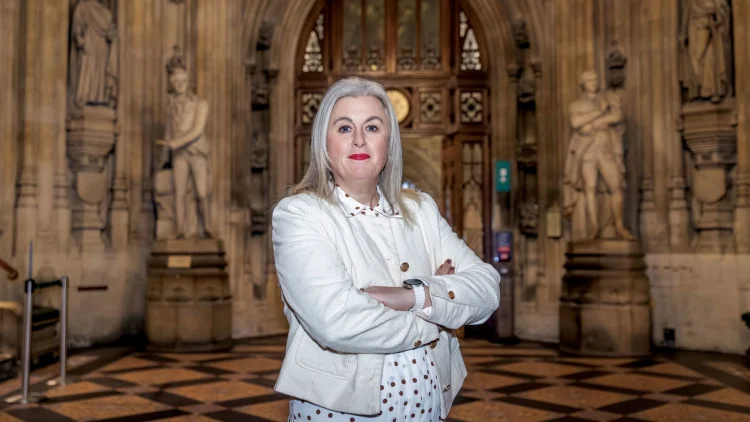

Photo by Nikki Powell

11 min read
Labour MP Michelle Welsh has just been appointed the government’s first national maternity adviser. She tells Sienna Rodgers about her personal experience of birth trauma and why she’s fighting for all mums and babies to be better treated by our maternity services
Michelle Welsh has a heart-shaped womb. It sounds beautiful. This ‘concave’ uterus did, however, contribute to her having a complicated pregnancy. “Not complicated in the sense that the baby was going to die,” she clarifies. “It should have been very straightforward: C-section.”
Particularly as her baby was breech, a C-section was what the doctors ordered. But when she went into labour before her planned caesarean, Welsh called Nottingham City Hospital, expecting they would follow their own advice to admit her straight away. Instead, the midwife told her she didn’t have time to check her file, and she would not be let onto the ward.
When Welsh was eventually admitted to the maternity unit, her waters had broken. They went to check her baby’s heartbeat; the first two machines didn’t work and the third couldn’t find one.
“No one comforted me. No one held my hand. No one explained to me what was going on,” she recalls. “I sat next to a machine when my baby had stopped moving, and the machine was flatlining. They were telling me, ‘You don’t need to have a C-section till nine o’clock.’ This was two o’clock in the morning. ‘So, you’re telling me I’ve got to wait seven hours for my baby to be born? Seven hours?’”
In telling her birth story, Welsh reveals to The House that staff performed an internal examination without consent, which amounts to assault. “I had an internal examination with no painkillers and no warning. The pain – I cannot describe the amount of pain that I was in. I was already contracting, and they hadn’t given me any painkillers,” she says.
“I can understand that there aren’t enough people on a ward. I can understand that people have done more work than what they should, so they’re rushed off their feet. I can understand somebody making a mistake because of that. What I’ll never be able to get my head around is why did they treat me, personally, so bad? With such contempt and disdain? So awful to me and my unborn baby.
“I would never, ever talk to anybody like that. I certainly wouldn’t talk to somebody like that who is vulnerable, in pain and at risk of losing their child.”
Welsh nonetheless describes herself as “lucky”. When a new midwife came on, she read her notes and saw what was happening. Next, Welsh heard an argument outside her room with a consultant, who “begrudgingly” returned and – still without having said a word to the birthing mum – admitted to the midwife, “Yeah, you’re right, we need to get her down now.”
“There was mad, mad panic, and the bit that always gets to me, that I get flashbacks about, is… sorry,” Welsh pauses. Her emotions come to the surface most when remembering the experience of her partner, Richard.
“I didn’t realise until I was in that room how significant that first nappy is: you pull it out and it’s so tiny. Richard always says when he pulled out the nappy, there was a realisation then that at any moment now there was going to be a baby, and it was going to be out, and it was going to be ours.
“I don’t know where his head was at the moment, but I think he still had complete faith that everything was going to be okay. I didn’t. I didn’t say anything to him, because I was trying to protect him in all of this.
“I felt so ill, as well. I just felt so ill. There he was, holding his baby’s first nappy, pushing a heart machine, because there was nobody to push the heart machine beside my bed, with his son’s heartbeat flatlining. That was his start to fatherhood.”
She ended up having an emergency C-section and her son, William, lived. The trauma didn’t end there, though: although she was told they would be checked on every 10 minutes, when she woke up from a nap – of, she thinks, about 90 minutes – he was covered in his own sick.
Thankfully, Welsh walked out of hospital with her baby. “Billy’s a bit of a miracle,” she says of her only child, now six years old. He came as a surprise after a decade of trying to conceive, made difficult by her polyendocrine metabolic ovarian syndrome and endometriosis.
Too many other parents have not left the same hospital with their babies. The Nottingham maternity scandal, now the largest in NHS history, has triggered a review by midwife Donna Ockenden who is investigating around 2,500 cases of baby loss and harm to mothers and babies at Nottingham University Hospitals (NUH) NHS Trust. It is running alongside an investigation by Nottingham police, ‘Operation Perth’.
Ockenden is expected to deliver her report later this month, around the same time as the final conclusions of the national maternity inquiry being conducted by Baroness Amos.
Welsh, who says she has spoken to almost 1,000 affected families, refuses to attribute these failures to NHS resourcing constraints alone. “In some cases, it’s quite clear there was a staffing issue. But in other cases,” she concludes, “it was a cultural issue.”
“I’m not saying there aren’t great people working in Nottingham – there are. But there was a systematic cultural issue within Nottingham that went on for years that was never challenged,” she adds.
“Honestly, I cannot believe – after everything I know now, and everything I’ve read – that they didn’t know they were putting my son’s life and my life in danger. I just don’t believe it. I think they were prepared to take the risk.”
The MP for Sherwood Forest was further convinced of this when, a few months ago, a critic of the Ockenden inquiry asked for an appointment at her surgery to argue against the need for it. She turned out to be on obstetrician still working at NUH. “So, not only is she sat there in front of me, she’d been involved in my care – but there she was, telling me, ‘There’s nothing to see, it’s not that bad’. That’s a problem.”
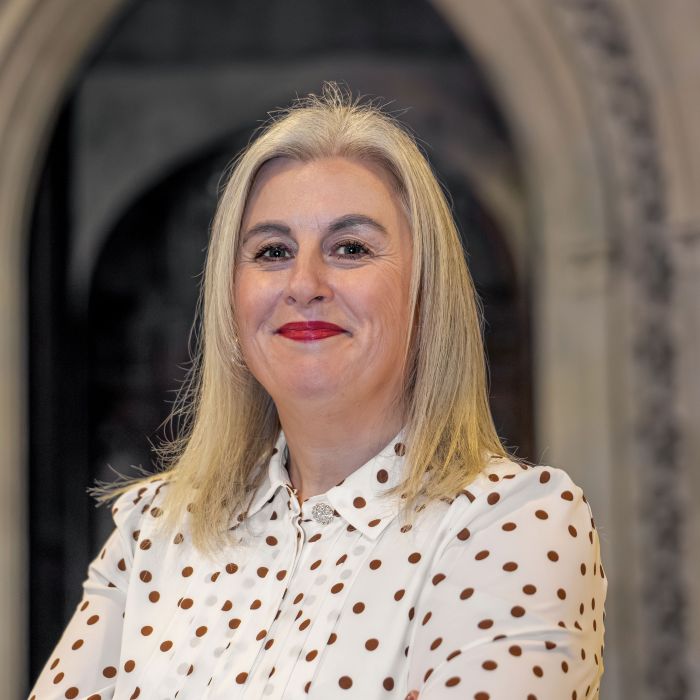
Welsh was raised on a council estate in Nottinghamshire by a postman father and a mother who worked in cafés before becoming a childminder. Growing up around “absolute poverty” shaped her politics early.
“We would get a knock on the door from someone down the road that my mom knew, who would say, ‘Have you got anything I can feed the kids for tea?’” Welsh struggled to explain the injustice of their circumstances: “These are people who would give you their last 50p, but they’re poor. How is it that these good people are poor?”
With both parents involved in Labour, Welsh joined the party at 16. She worked through sixth-form and university in elderly care, as well as doing stints in Next, Co-op, chicken and soft drinks factories. As an Oasis fan, she had a gig habit to fund. It took her years to be able to eat chicken again.
She had hoped to pursue sport, but that dream ended when she broke her leg badly while playing football at 17. Instead, she read history and politics at Leeds. From there, a US summer camp led to several years setting up projects for vulnerable children across the east coast. The stark inequalities she saw alarmed her.
Back in Britain, Welsh managed a “huge project” across Nottinghamshire for the New Labour government, supporting disadvantaged children and setting up Sure Start centres. In 2010, Coalition cuts came in: “Literally overnight, all these projects that I was running, and all this funding, was just ripped apart… It massively woke me up to the reality of what politics was all about.” She got a job for the local council leader, then MP Vernon Coaker, and was six months pregnant when he lost his seat.
Elected as the Labour MP for Sherwood Forest in 2024, Welsh became chair of the Maternity All-Party Parliamentary Group. A ‘harmed mother’ herself, she has now been appointed by government as the first-ever national maternity adviser.
Her new role, she says, does not supplant that of the maternity commissioner, which so many campaigners have called for.
“The national maternity adviser is something needed now, here in the present, but it should not be instead of a maternity commissioner. A maternity commissioner would sit up here, have a team around them, have regular data sent to them, so we don’t have another situation like Nottingham, Shrewsbury or Telford,” she explains, listing the areas recently subject to maternity inquiries.
“When data starts looking skew-whiff, not as it should be, the maternity commissioner goes to that hospital with their team. A bit like an Ofsted inspection, but in a supportive way: ‘What is going on?’ If there is something going on, they send people in straight away, no messing around. We’re not going to wait for more babies to die.”
What must go, she says, is “soft criteria” allowing NHS trusts to implement their own interpretations of recommended policies.
“You’ve only got to look at the bereavement care pathway: one will have a cupboard somewhere with some posters; others will have a really nice room; others will have a dedicated midwife. But all of them will report back to NHS England, ‘We deliver the bereavement care pathway’. Not good enough.”
Sometimes staff prioritise avoiding litigation risks, which stops them seeing patients as real people. After all, 2025 figures showed the NHS has reached the point where it spends more on maternity litigation than on running maternity services. At the same time, there is the need for more accountability. How would Welsh resolve those tensions?
“It’s hard,” she admits. But she is clear that the regulators – the Care Quality Commission, Nursing and Midwifery Council and General Medical Council – are not working.
“The CQC, the NMC, and the GMC are unfit for purpose,” the MP says. “Those three organisations need to go, and we need to establish an umbrella organisation that allows for when things go wrong, midwives, doctors, obstetricians to have a safe place to be able to say, ‘This is what went wrong, and why that happened’. Families have to have a place where they can say, ‘This went wrong. I want you to tell me what went wrong and why.’
“Does that lead to a ‘no-fault’ place? No, I don’t think it does, at this stage. To rush into that, when you have the attitudes of what I have described working in our maternity services, would be wrong.”
Families in Nottinghamshire, she points out, never received birth debriefs, which are offered as standard in London hospitals, for example. And yet many traumatised parents say they simply want to know what happened and hear the word ‘sorry’.
“Because you accept that sometimes things do go awfully wrong, but the minute people try to keep that away from you, or don’t give you your notes, or redact your notes…” she trails off.
“I passed out. I lost consciousness. There are no notes that exist that talk about the fact that I nearly dropped my baby on the floor and was unconscious for a period of time, and Richard thought I was dead. He actually thought I’d died on the table. There’s no notes anywhere. No one can tell me what happened. I have to frequently say to Richard, ‘It did happen, didn’t it?’”
She wants the right to a debrief introduced everywhere, as well as continuity of care, which would extend throughout the whole of pregnancy until at least two months after birth. “It’s not good enough that when you get home, they say, ‘You have to go to the health visitor now. We’re done with you. Sorry.’” The change sounds simple but would make a radical difference to maternal experiences.
Many campaigners say an inquiry without statutory powers is insufficient. What does the national maternity adviser think?
“I think there are questions that will still be left unanswered,” she replies. While she is confident that Amos and Ockenden will be thorough, “I also don’t think they’re going to solve everything.” Services will not improve without “big, bold policies”, the MP adds, so “we have to keep the door open” to a public inquiry.
“I get to celebrate Billy’s birthdays. I got to see Billy’s first day at school. I get to go and see his sports days, work permitting. I get to see him play guitar in a rock concert. I have spoken to hundreds and hundreds of families that have been denied that opportunity.
“Nobody makes me happier than my son. He is everything – absolutely everything – to me. And so, who am I to deny that mother or that father the answers that they need? I’m not ever going to be that person.”

As hard as it can be to admit, you can have a stroke. Your loved one can have a stroke.
Statistically, someone in the United States has a stroke every 40 seconds; every 3 minutes and 14 seconds, someone dies of a stroke. It’s not a concern to ruminate on, per se, but one to be mindful of.
For example, you might avoid habits that can increase the risk, such as being sedentary, smoking, ignoring health concerns and drinking alcohol. Knowing the clear signs of a stroke – illustrated by the BE FAST acronym – is smart, too. BE FAST stands for (problems with) balance, eyesight, facial drooping, arm weakness, speech and time or terrible headache.
However, there’s also a surprising sign of a stroke that many people don’t know, according to vascular surgeons. Hiccups.
Ahead, experts explain how hiccups can be a sign of a stroke, other commonly missed signs and when to see the doctor about this seemingly “harmless” symptom.
How hiccups can signal a stroke
To understand why hiccups can be a sign of a stroke, it’s important to understand exactly what hiccups are – particularly, how they’re connected to the brain.
“Hiccups are caused by involuntary contractions of the diaphragm, coordinated by a reflex arc involving the brainstem, particularly the medulla,” said Dr. Christopher Yi, a board-certified vascular surgeon at MemorialCare Orange Coast Medical Center in Fountain Valley, California. “In rare cases, a stroke affecting this region – most classically a lateral medullary (Wallenburg) stroke – can disrupt that reflex and trigger persistent hiccups.”
Usually, hiccups aren’t so concerning. You might get them after eating too fast, moving too quickly after eating or drinking a carbonated beverage. But if a stroke in the brainstem is causing the hiccups, they need to be taken more seriously.
“In rare cases, hiccups can be linked to a stroke – specifically a stroke affecting the brainstem,” said Dr. Adeel Popalzai, a vascular neurologist and stroke program director at Pomona Valley Hospital Medical Center.
“The brainstem is involved in the hiccup reflex pathway. When a stroke disrupts this area, it can cause persistent, uncontrollable hiccups that don’t respond to usual remedies.”
Yi affirmed that persistent hiccups have been documented in posterior circulation strokes, which affect the back of the brain. They also don’t always cause one-sided weakness (a classic symptom of a stroke) and rather present with more subtle symptoms. This makes hiccups an early and arguably clearer clue, especially when present with other neurologic abnormalities.
That last piece is vital because otherwise, a lot of us would get unnecessarily nervous when we get the hiccups, right?
“It is important to remember that hiccups alone are almost never a stroke, but persistent hiccups with other symptoms can be a warning sign,” Popalzai stressed.

Witthaya Prasongsin via Getty Images
Other commonly missed signs of a stroke
Hiccups aren’t the only symptom of a stroke that often goes ignored, especially with posterior circulation strokes.
“Many people expect a stroke to look dramatic, but some of the most dangerous strokes – especially those in the back of the brain – can present with subtle or misleading symptoms,” Popalzai warned.
The vascular surgeons listed the following symptoms:
- Sudden dizziness, vertigo or a spinning sensation
- Trouble walking, or loss of balance or coordination, which can look like clumsiness, intoxication, veering to one side, difficulty standing or coordinating movements and generalised weakness
- Visual disturbances, such as double vision, trouble focusing or loss of part of the visual field
- Difficulty swallowing
- A sudden, severe headache (particularly in hemorrhagic strokes) – it can signal a brain bleed
- Nausea and vomiting, especially when combined with dizziness or imbalance
- Sudden confusion or trouble understanding, which can present as difficulty processing information or following a conversation, and may appear as disorientation or memory trouble.
“These symptoms are often missed because they don’t fit the ‘classic’ stroke picture, but they are just as important,” Popalzai said.
When to go to the doctor about hiccups or other stroke symptoms
Since hiccups are usually no big deal (well, other than being super annoying), how do you know when you’ve got a normal bout of the hiccups versus a stroke?
According to Yi, consider medical evaluation “when they persist for more than 48 hours, become severe or disruptive or occur in conjunction with neurologic symptoms.” Examples of the latter are the same as above: dizziness, vertigo, difficulty walking, imbalance, double vision, slurred speech and trouble swallowing.
Popalzai agreed it’s best to focus on the context and associated symptoms. He encouraged calling 999 immediately if you or a loved one experiences those signs.
Additionally, having a stroke risk factor, such as high blood pressure, diabetes, heart disease, smoking or a prior stroke, is also a reason to call the doctor ASAP.
“When symptoms are sudden and unusual, it’s always better to err on the side of caution and seek medical attention,” he added.
Yi emphasised the timely nature. “When hiccups present suddenly with any of these neurologic findings, the situation should be treated as a potential stroke emergency, and immediate medical attention is warranted, as timely intervention can significantly improve outcomes,” he said.
The bottom line is that while most hiccups are harmless, they can signal a stroke when accompanied by other brain-related symptoms. Don’t let an unexpected sign of a stroke convince you that a stroke isn’t at play. Take it all seriously.
“Acting fast can save brain function, independence and life,” Popalzai said.

If you spend hours cleaning your bathroom several times a week, put the bleach down: you’re wasting a whole lot of time according to one molecular virology expert.
Emma Harding, postdoctoral researcher at the University of Oxford, has shared that using soapy water to clean your bathroom just once a week is more than enough.
The pro told 9Honey Living: “Soapy water is very effective at killing a wide range of microbes, so your regular cleaning can be done with that.”
If stuff does start getting grottier than soapy water can handle, Harding advises using disinfectant once a month.
In terms of what needs cleaning the most, the expert says that “high-touch surfaces” such as taps and showers should be the priority.
However, there is one non-negotiable – when it comes to cleaning your bathroom, the toilet is an essential.
Harding adds that if anyone in your household is unwell it is crucial to give your entire toilet and bathroom a thorough scrub when they’ve recovered to stop anyone else catching the bug.
Want to keep bugs at bay? It’s all about how you flush the loo after you’ve done your business, according to the expert.
“The bathroom is one of the dirtiest places in the house, especially if it has the toilet in the same room,” Harding explains.
“As a general rule, always flush with the lid down to prevent particles from escaping the toilet bowl and settling elsewhere.”
When you flush the toilet with the lid open, a delightful plume of germs fly out of your loo and settle on the surfaces in your bathroom.
That plume includes nasty poo and wee particles that can carry everything from E. coli to Covid-19 – so it’s really important you shut that lid before you flush.

Reform UK has been making a lot of noise about JCB’s pothole-filling machine, and with obvious reason. Voters hate potholes, and JCB is one of the most evil companies in the UK, so of course Farage & co. would want to work with them. As it turns out, though, the magical pothole machine may not be all it’s cracked up to be. And our source on that is a Reform-run council:
This is awkward.
Michael’s own Leicestershire Council have stated the Pothole Pro is impractical:https://t.co/aEICJaRFbW pic.twitter.com/NBnVXq9AfS
— Reform Party UK Exposed
 (@reformexposed) June 17, 2026
Mechanised ethnic cleansing
First things first, we should explain why we called JCB one of the most evil companies in the UK.
As we reported in September 2025, the Stop JCB campaign reported on how JCB supports “ethnic cleansing and genocide in Palestine, India, and Kashmir”. We added:
In Palestine, JCB operates through its sole dealer, the Israeli company Comasco. The corporation holds contracts with Israel’s Ministry of Defence for the same model of JCB machines the Zionist settler state uses in the demolitions and construction of settlements.
JCB has been at it for a long time, with photographers catching Israeli forces demolishing homes in the West Bank using their machinery as early as 2006. We also noted:
Currently, JCB is also complicit in Israel’s ongoing genocide in Gaza. UN Special Rapporteur Francesca Albanese listed JCB in her July report. This was among numerous companies directly aiding and profiting from the genocide. Israel has long used armoured, unbranded JCB High Mobility Engineer Excavator (HMEE) machines, known as ‘Ami’ in Hebrew, and is now using them in Gaza.
Oh, and no points for guessing which party JCB’s billionaire owner and peer Anthony Bamford supports:
JCB owner Bamford: “You can’t get away with £60k benefit handouts.”
Also billionaire brothers Anthony Bamford and Mark Bamford: Not paying a tax bill of up to £500 million.
What greedy, Farage-supporting bastards. pic.twitter.com/KZhpzajO3I
— Politics In The U.K. (@politixintheuk) May 17, 2026
Reform are all filler
Given Farage’s connection to Bamford, it’s unsurprising he made a big deal out of promoting the Zionist pothole machine:
— Politics UK (@PolitlcsUK) March 28, 2025

 WATCH: Nigel Farage arrives on stage at Reform UK’s local election launch on a JCB Pothole Pro pic.twitter.com/B9GKctAExO
Now, a Reform council has suggested Bamford’s hole plugger isn’t all it’s cracked up to be. As reported by the BBC, a 2025 report from Leicestershire County Council (LCC) found:
After two demonstrations, officers concluded that the JCB Pothole Pro did not stack up as an economical piece of kit to repair potholes in Leicestershire
Additionally:
The JCB PP is big – it’s bigger than a normal excavator, it would not be suitable for small defect repairs – the machine is too big and would close the road, it would be inefficient to travel round repairing small potholes.
Another problem was that the quantity of potholes they had to deal with meant they couldn’t:
utilise Pothole Pro’s full potential on a daily basis – which in turn would make it very inefficient
And also:
After two demonstrations, officers concluded that the JCB Pothole Pro did not stack up as an economical piece of kit to repair potholes in Leicestershire
JCB – a company which is happy for its product to be used for ethnic cleansing – suggested that LCC weren’t using the machine correctly, and that a longer test was needed. LCC aren’t the first to criticise what the machine can do anyway:
Reform UK’s ‘right first time’ pothole repairs in @NottsCC should be called ‘shite first time’.
This repair is in Council Leader Mick Barton’s own Mansfield East division: questionable workmanship, unsealed edges, lifespan roughly that of a snowflake in July. Reform UK -… pic.twitter.com/WRBFTYqAhy
— Reform Party UK Exposed
(@reformexposed) November 16, 2025
Bunged up
Given the update, it’s no wonder people are saying things like this:
Leicestershire County Council has found that JCB's pothole machine is not economically viable. I think they will find that it becomes viable when you look at JCB's £200,000 donation to Reform rather than at the extra cost to council tax payers. pic.twitter.com/BIfD4zOigp
— Parody Nigel Farage (@Parody_PM) June 16, 2026
Personally, we don’t think any council should be working with companies that facilitate ethnic cleansing. The fact that these machines may not be all they’re cracked up to be just adds insult to injury.
If Reform should replace Labour in government, we’ve no doubt there’ll be many more questionable contracts, anyway. And the real hole left to fill will be the economic one left behind when they get kicked out.
Featured image via The Canary
By Willem Moore

In today’s world, where news cycles have shrunk to seconds and social media has become the primary source of content, the role of quality journalism has undergone fundamental changes. Digital journalism now faces an unprecedented challenge: how to maintain speed of publication without sacrificing accuracy. In the midst of global information noise, the ability to properly verify information has become a necessary condition for the survival of independent media.
The Evolution of Fact-Checking in the Digital Age
Traditional verification methods based on personal contacts and official requests are now being supplemented by complex technological processes. The problem is that fake news and misinformation spread like wildfire, often outpacing official rebuttals. Modern journalists are forced to work in a state of “constant doubt,” where every piece of data is subjected to rigorous analysis.
To maintain a high level of information accuracy, newsrooms implement strict protocols. These protocols involve checking a speaker’s words and conducting technical audits of information’s digital footprint. It’s important to understand that fact-checking is a continuous process that accompanies a story at every stage of its creation.
Methodology and Journalistic Standards
Despite all changes in technology, ethical principles and related journalistic standards endure. It is crucial to achieve as much impartiality as possible when presenting information to the reader. Therefore, you can’t observe media ethics without cross-checking all the data you use and making sure you have three or more independent sources for each bit of it.
The verification process in modern newsrooms typically looks like this:
- Primary source identification and reliability assessment.
- Technical analysis of photo and video metadata.
- Cross-referencing obtained information with public records.
- Confirming event geolocation via satellite imagery.
- Contextualizing the data by means of consulting experts.
This approach minimizes the risk of spreading false news and busts your publication’s source credibility appropriately in your readers’ minds.
Digital Investigation Tools and OSINT
Amidst all the new additions to journalistic workflows, the incorporation of open-source intelligence (OSINT) definitely stands out. It is no longer possible to imagine investigative journalism without the comprehensive all-round analysis of assorted public information, such as social networks, CCTV footage, or open data records.
It is, of course, worth noting that in-depth digital research requires special sets of tools. Some data should really only be accessed anonymously for safety reasons, for example if the article you’re writing requires mining so-called darknet websites for information. Then there is all the data that is region-locked. Any professional should be familiar with the technical solutions that aid in these cases. For example, when confidentiality is needed to analyze foreign databases or avoid blocks, researchers prefer to buy SOCKS5 proxy, which provides a stable and secure connection when working with sensitive information.
Digital investigations today are impossible without mastery of reverse image search tools and social graph analysis. Journalists examine the digital footprint of every online source to ensure an account isn’t a bot or created specifically to spread disinformation.
Verifying Visual Content
When everyone with a smartphone camera is a potential witness and everyone with an AI video generation app is a potential disrupter, you have to be very careful with visual evidence. The methods used in modern news verification are rather varied, and many of them only a decade ago would have looked like something out of a sci-fi show.
Journalists analyze shadows in photos to determine the time of day. They also check weather conditions for a given day using archived meteorological data and match landscapes in videos with terrain maps. The information verification process includes checking whether an image has been edited or created using artificial intelligence. Understanding how image-processing algorithms work has become a mandatory requirement for those involved in news reporting.
Working with Public Records and Data
Access to public records has become the foundation of quality investigations. Journalists analyze financial reports, court archives, and corporate documents. This allows them to uncover hidden connections and conflicts of interest that cannot be found through simple interviews.
Effective information verification requires a systematic approach:
- Tracing asset ownership history through government databases.
- Analyzing official declarations and comparing them with actual expenditures.
- Monitoring government procurement for corrupt schemes.
- Using specialized software to process large datasets.
A proper approach ensures that reporting is based on facts, not speculation. This is critically important for maintaining an independent media outlet’s reputation.
Community-Sourced Fact-Checking
Recent years saw the rise of communities and official organizations who deal in fact-checking as a trade. These are the people who establish lines of communication with the newsroom, have their own databases of sources, and are the first to chase every important leak. The cooperation between these groups, journalists, and OSINTers helps strengthen industry-wide standards when it comes to ethical, objective, trustworthy reporting.
Verification is a collective responsibility. When journalists share methods and tools, it raises overall media literacy in society. It’s important that readers understand how information made it to a publication’s pages and what steps were taken to confirm it.
Psychological Aspects and Cognitive Biases
Working on information verification is both a technical and a psychological process. Journalists must be aware of their own cognitive biases, such as confirmation bias — where a person subconsciously seeks out facts that support their viewpoint while actively ignoring contradictory data.
Professional discipline requires setting aside emotions and approaching every source with the same level of skepticism. This is especially important when covering conflicts or political crises, where manipulating public opinion becomes a primary goal for many participants.
The Future of Verification in Media
Deepfake technologies have been with us for some time, but the recent rise in AI development has truly empowered the people behind them. Now, the web is teeming with videos that look very real despite being created with nothing but clever prompts, often in a matter of minutes. That presents extra fact-checking challenges that the industry is currently seeking solutions for.
In the nearest future, we can expect to see the emergence of automated credibility monitoring systems for digital journalism to rely on. However, even with those on hand, we’ll still need real people with their inquisitive minds and moral compasses. Critical thinking and the ability to ask the right questions is more critical than ever in the current tumultuous landscape.
Conclusion
In the modern digital age, the fight against misinformation continues to be an uphill battle. However, a lot of the tools available today also enable daring OSINT escapades to a previously unthinkable degree. Armed with rigid ethical standards and flexible digital tools, a journalist can expose the truth and deliver it to their readers.

This week, the government announced a social-media ban for under-16s in the UK. It is set to come into effect by spring next year.
While UK prime minister Keir Starmer insists nine out of 10 parents support it, the ban has not met with unanimous praise. Ian Russell, whose daughter Mollie took her own life in 2017 after viewing suicide content online, has accused Starmer of ‘political opportunism’.
Given how shallow and performative Starmer’s justification for the ban has been, it’s hard to disagree with Russell. The prime minister’s claim that social-media platforms stop ‘children doing their homework, reading, playing with their friends outside, [and] going to bed at a decent hour’ betrays a profound ignorance of just how much childhood has changed in recent decades, long before the surge of social-media use in the 2010s.
In truth, much of the harm to children, from their retreat indoors to their isolation, now being attributed to social media, began with the rise of safetyist culture during the 1990s. The state was happy to sanction the portrayal of the outside world as a dangerous, risky place. The rise of ‘stranger danger’ awareness campaigns made parents reluctant to allow their children to play outside long before TikTok. As Greg Lukianoff and Jonathan Haidt argue in The Coddling of the American Mind, social-media sites are only one side of the coin. Yes, young people today are more risk-averse and, as a result, less resilient than previous generations. But society has done just as much to confine children to their bedrooms as social media.
When I was a teenager in the late 2010s, social media could indeed be a ‘Wild West’ of strange and often unwanted content. But social-media sites also gave teenagers access to things that adult society wasn’t offering. They gave a platform for children to be free, to explore new communities and outlets, to seek out others with the same interests and passions. And they did so when physical spaces were often cut off or heavily supervised. This was particularly important during the Covid lockdowns, when the same politicians now railing against social media’s impact on the young did everything they could to keep a generation of children locked in their homes.
A social-media ban will only exacerbate young teens’ frustration over their lack of independence. It will be experienced as a loss of control they felt they had over an area of their own lives. The freedom and the space to make mistakes in real life, just as much as the online world, are important for young people. Without it, they can’t learn life lessons, be held responsible or make amends. To become independent, they need to be given the space to make decisions that have consequences in the world around them – to learn that they are part of something bigger than themselves.
That isn’t to say we need to romanticise social media. For some young people, the algorithmic echo chambers can lead to spirals of insecurity. In many ways, social-media platforms have reinforced the worst aspects of modern childhood: pressures of educational achievement and expectations of conformity lead to early adultification, while opportunities, responsibilities and freedoms in the outside world decline.
But the crux of the issue for young people growing up online is not the social-media platforms themselves. Rather, it is the prevailing culture of moral relativism and weakened adult authority. Young people lack the framework, which once would have been provided by older generations, to make sense of the intensely globalised, politicised and polarised content online.
What this speaks to is not so much the dangerous power of Big Tech, but the loss of intergenerational knowledge and communication between parents and children. Parental authority has been outsourced to so-called experts, and community experience and values have been eroded by the preoccupation with cosmopolitan norms. Parents and trusted adults have been warned against giving guidance and teaching lessons to their kids due to their allegedly outdated understanding of the world and the prejudices they may have. No wonder, then, that children have become prisoners to everything they see and hear online.
For a political class bereft of principle, social-media platforms have become a convenient bogeyman. We witnessed this in April’s Clapham unrest, when hundreds of young people wreaked havoc on the streets. This was clear evidence of a profound breakdown in parenting and policing – yet social-media platforms, particularly TikTok, were blamed as the source of the problem. Young people may have wilfully broken the rules, but the bigger issue is that the adults in the room rarely try to enforce them.
Starmer’s desire to get children back to reading, sleeping and playing outside cannot be mandated. Children’s behaviour ought to be the responsibility of parents, not No10. The social-media ban will only further erode parents’ authority. After all, if the government doesn’t trust parents, why should their children?
What we need is not a ban on social media, but a conversation about how we strengthen the lives of young people. Further weakening the authority of adults is not the way to go about this.
Like everything Keir Starmer does, his social-media ban is pointless and self-defeating. Children need a strong society to help them flourish as adults – not a stronger nanny state.
Emma Gilland is event coordinator for the Academy of Ideas and author of The Corona Generation: Coming of Age in a Crisis, written with Jennie Bristow and published by Zero Books.

Donald Trump has signalled that he is looking to increase sanctions on Russia again as the US is on the cusp of an agreement with Iran.
The US president was speaking shortly after a face-to-face conversation with his Ukrainian counterpart Volodymyr Zelenskyy at the G7 summit in France.
Trump put a waiver on countries buying sanctioned Russian oil earlier this year when global energy supplies were put under strain by the US and Israeli war in Iran.
The controversial move – which undermined years of co-ordinated efforts to punish Russia from Ukraine’s allies – came after Iran effectively shut down the major oil shipping lane, the Strait of Hormuz, in the wake of US-Israeli strikes on Tehran.
But America and Iran have now agreed to hash out a new deal in the next 60 days, and the president has suggested oil transportation will resume.
Trump told reporters at the G7: “Soon we’ll be able to do [reapply penalties against Russia] because the oil is now flowing.
“So we took sanctions off because obviously we’re not looking to impede the US, so we’re in a position to do that soon.”
Senate Democrats told Kyiv Independent in April that Russia earned an additional $150 million per day due to the waiver.
Trump’s shocking decision to ease those penalties came after more than year of yo-yoing from the US president over the Ukraine war, which he once pledged to end within the first 24 hours of his second term.
He has repeatedly rolled out the red carpet for Russia and tried to push Ukraine to give up more land in the name of peace.
But Trump’s remarks from the G7 summit could signal a wider pivot back to support for Kyiv from the White House.
Vladimir Putin is thought to be on the back foot right now in the Ukraine war, more than four years after he first started his illegal land grab.
The economic cost of the conflict, the staggering number of casualties and Kyiv’s recent strikes into the heart of Russia mean Putin is at a disadvantage.
Zelenskyy said ahead of the G7 summit that he was ready to meet his Russian counterpart in the French Alps for face-to-face negotiations, but claimed Putin was not ready to talk.
The Kremlin’s spokesperson Dmitry Peskov hit back, saying: “There are currently no official channels between Kyiv and Moscow.”
He repeated Putin’s previous claims that Zelenskyy could go to Russia if he wanted to talk.
Zelenskyy also sent an open letter to the Russian leader earlier this month calling for them to meet for further negotiations.
But Putin described the missive as “rude,” and rejected it almost immediately.
Listen to Commons People, the podcast that makes politics easy. Every week, Kevin Schofield and Kate Nicholson unpack the week’s biggest stories to keep you informed. Join us for straightforward analysis of what’s going on at Westminster.
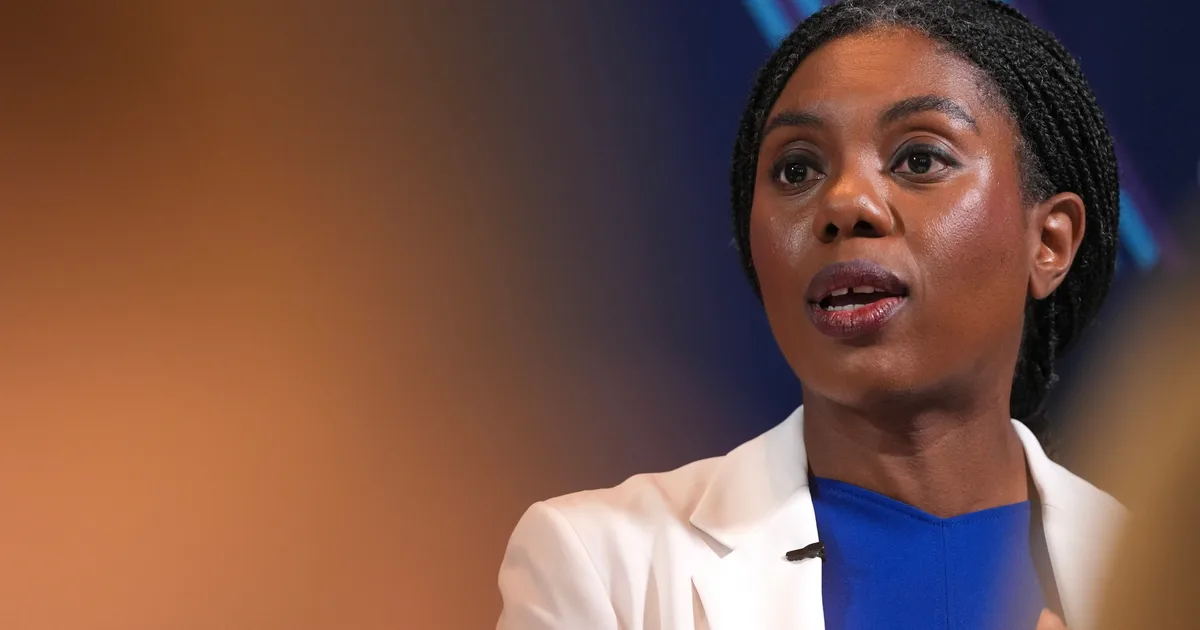
Kemi Badenoch has been told she is “not fit to be prime minister” after comparing a cabinet minister to a Nazi.
The Tory leader said education secretary Bridget Phillipson “has acted like a Gestapo officer” by ending a tax break for private schools.
Badenoch made the remark in an interview with The Spectator.
Responding on X, Phillipson said: “The Gestapo marched hundreds of thousands of innocent people to their deaths. I’ve ended private schools’ tax breaks to invest in state schools.
“No responsible leader makes vile comparisons like this. Kemi Badenoch is not fit to be Prime Minister.”
Labour MP Phil Brickell, secretary of the all party parliamentary group on Germany, called on Badenoch to apologise.
He said: “Kemi Badenoch’s characterisation of Bridget Phillipson as having ‘acted like a Gestapo officer’ over private school VAT fees are contemptible, unbecoming of any parliamentarian and demonstrate – yet again – that Badenoch is completely unfit for public office.
“Her remarks serve no purpose but to undermine the UK-Germany relationship and sow unnecessary division. Ad hominem attacks such as this inexplicable reference to Nazi-era officials should not be tolerated in our public discourse.
“I had hoped that language such as this was a thing of the past. Kemi Badenoch should withdraw her comments immediately and unreservedly apologise.”
A spokesman for Badenoch said: “Bridget Phillipson has pursued a class war on independent schools, forcing many treasured schools to shut, upending the lives of young people across the country, and sending hundreds of children into already overcrowded state schools.
“Worse still, the money from her vindictive tax raid was supposed to fund new teachers, and even the Department for Education’s own website says teacher numbers are lower than under the Conservatives.
“Instead of getting self-righteous, Phillipson should focus on her job. Or even better – stand aside for someone who isn’t out to ruin the lives of people who don’t vote Labour.”
Listen to Commons People, the podcast that makes politics easy. Every week, Kevin Schofield and Kate Nicholson unpack the week’s biggest stories to keep you informed. Join us for straightforward analysis of what’s going on at Westminster.
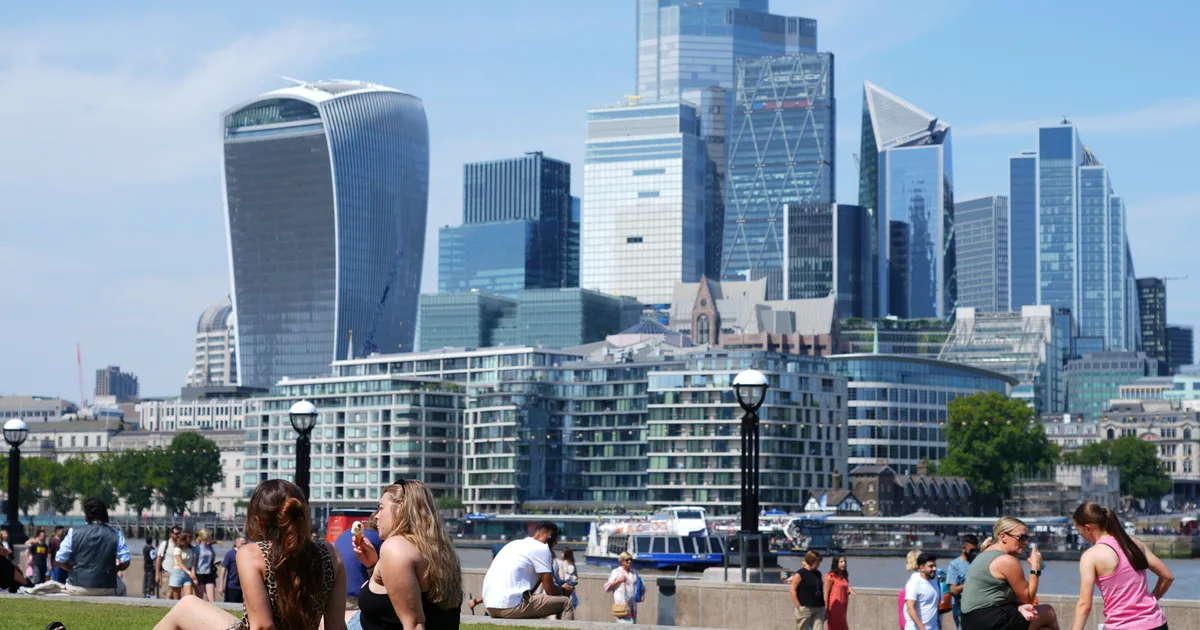
Soon after a 35°C May record-breaker, the Met Office said more heatwaves are likely in the UK this summer.
And it turns out they may be just days away from being proven right in London.
As of the time of writing (17 June), temperatures between 28°C and 30°C are expected in the capital this weekend.
Here’s what you need to know about: when that could happen, what it would take to count as an official heatwave, and why hot spells can be so insufferable in the city.
When could there be a heatwave in London this June?
The Met Office predicts our current miserable weather will take a sunnier turn on Friday, 19 June.
At that point, temperatures will rise to 29°C.
From then on, per the Met Office, Londoners can expect:
- Friday 19 June: 29°C
- Saturday 20 June: 28°C
- Sunday 21 June: 30°C.
Even if the highest of those temperatures come to pass, however, an official heatwave may still not have taken place.
When is it officially a heatwave in London?
A heatwave is defined as three back-to-back days at or above an area’s maximum temperature threshold.
Because some parts of the UK are usually hotter than others, that upper limit changes depending on location.
As you head further North or West, that threshold is set a little lower than the warmer South-East – around 25°C and 26°C.
But in London, the threshold is 28°C.
That means that it’d need to reach at least 28°C on Tuesday after the predicted Sunday and Monday temperatures to officially count (or Saturday would have to be a degree hotter than currently anticipated).
Why does London feel so hot on sunny days?
As we mentioned before, London is already in the warmer South-East. Then, there’s the infrastructure to consider.
Speaking to HuffPost UK previously, Richard Millard, senior sustainability consultant at Building Energy Experts, said that built-up areas can make already brutal UK heatwaves even more unbearable.
“Our towns and cities have a large urban heat island effect due to the amount of concrete, asphalt and such that absorbs heat and releases it slowly, making cities and towns feel hotter,” he shared.
2026′s two consecutive record-breaking May temperatures were recorded in London’s Kew Gardens this year (34.8°C and 35.1°C, respectively).
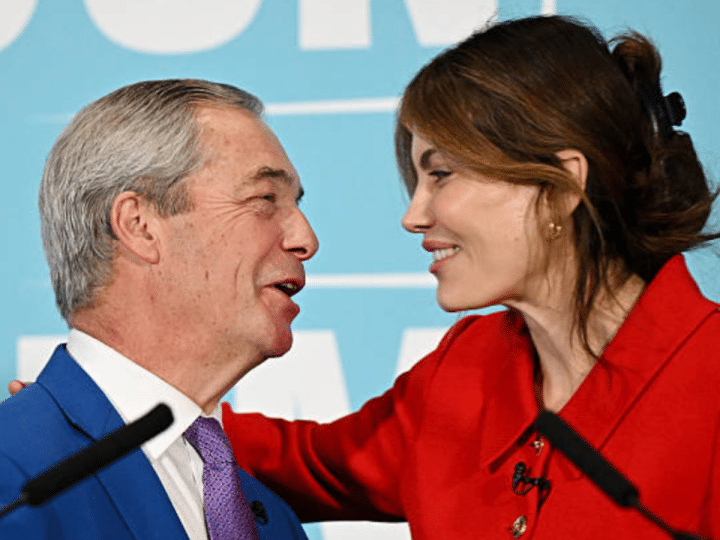
Former Tory Laila Cunningham, now a councillor for far-right ‘Reform UK’, has told the hard-right Telegraph that she has received death threats from supporters of even more extreme-right ‘Restore Britain’. Restore supporters don’t like that she is a Muslim.
No Muslim should suffer hate for being a Muslim or for the colour of their skin. But Cunningham – also Reform’s candidate in the next London mayoral election – has pandered to white supremacy and Islamophobic race-hate as a campaign tactic. In January 2026, she said that any woman wearing a burqa should be subject to arbitrary stop-and-search, because:
It has to be assumed that if you’re hiding your face, you’re hiding it for a criminal reason.
Trumpist parrot
She has also parroted Trumpist lies that “nowhere” in London is safe and that:
If you go to parts of London, it does feel like a Muslim city. The signs are written in a different language. You’ve got burqas being sold in markets.
As if that wasn’t enough, in 2025 she said she doesn’t “blame people” for hating Muslims and opposed even a definition of Islamophobia. A cynical mind might suspect she’s trying to court Muslim residents’ votes in Makerfield, where Reform hopes to win a parliamentary by-election this Thursday, 18 June 2026.
Islamophobia is disgusting. And Cunningham might want to take a look in the mirror.
Featured image via the Canary
By Skwawkbox
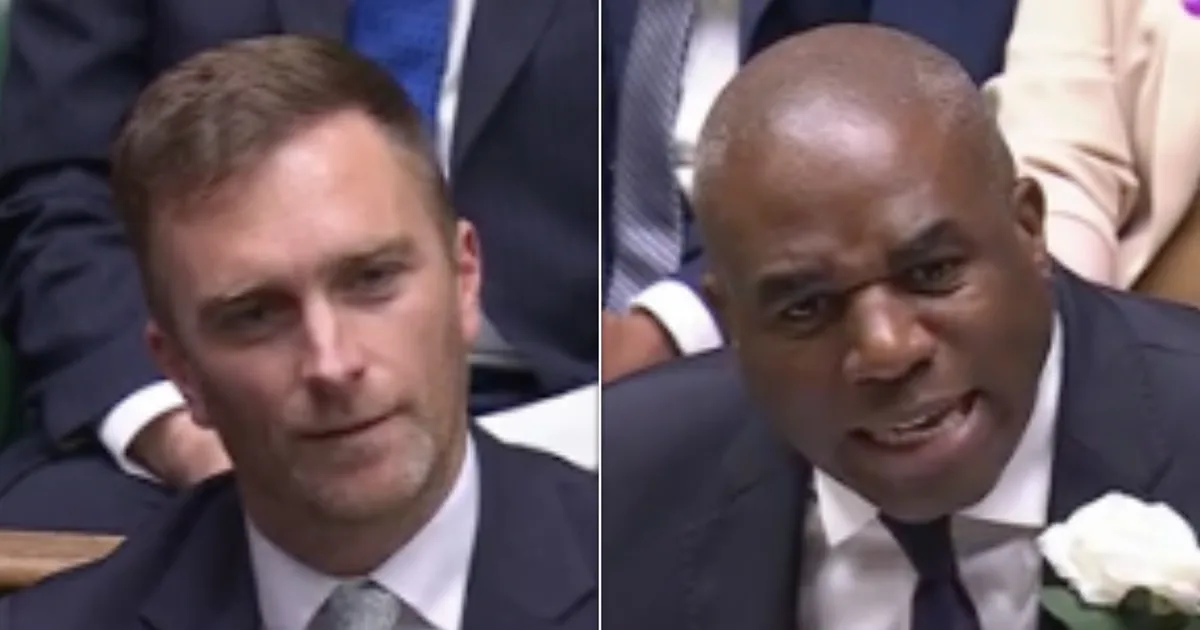
David Lammy told the Conservatives’ deputy chairman he should be “ashamed of himself” after he mocked the arson attacks targeting Keir Starmer.
Two Ukrainians set alight to the prime minister’s family home and his car in 2025 after being recruited online by a Russian-speaking Telegram user “El Money”.
Roman Lavrynovych, and Ukrainian-born Romanian national Stanislav Carpiuc were convicted of conspiracy to carry out arson attacks on Monday.
But on Tuesday, Matt Vickers joined Talk’s Peter Kyle in laughing at the incident.
The Tory MP joked about the far-right conspiracy theory that the two Ukrainian nationals found guilty of conspiring to carry out the attacks on Starmer’s property and car were “rent boys”.
So when Vickers stood up to ask about the high rates of unemployment during deputy prime minister’s questions, Lammy hit back by pointing out the MP had been “laughing and joking” about the arson attacks against Starmer only yesterday.
Standing in for Starmer, Lammy said: “I must say to this Tory deputy chairman, yesterday he was on television laughing and joking about the arson attack on the prime minister’s home.
“Laughing about a firebomb targeting the prime minister and his family.
“Not only that, he joined with promoting conspiracies about the attack and laughed along to demeaning, homophobic remarks.
“He should be ashamed of himself.
“My advice to him is to grow up, apologise, and do considerably better.”
Vickers just shook his head from the Commons’ opposition benches.
Labour chair Anna Turley later said: “It is frankly sickening that anyone would seek to laugh and joke about an appalling attack on a fellow politician’s family home.
“To do so on the same day as we stood in unity to mark the anniversary of our dear friend and much missed colleague Jo Cox, is beyond the pale.
“Matt Vickers is not fit to be an MP and if Kemi Badenoch had an ounce of integrity or respect for the safety of those who seek to serve the public, she would do the right thing and sack him today.
“Just two days ago, Kemi Badenoch rightly called out the perpetrators of the vile attack against the Prime Minister. Some issues go beyond the rough and tumble of Party politics. If she fails to act now, her words clearly will have meant nothing.”
When asked for his take on the story on Talk on Tuesday, Vickers did begin his interview by acknowledging the serious concerns around Russian influence in the UK and the subsequent impact on security.
However, he soon added: “The idea that there some secret Russian effort to destabilise the country via the prime minister… I mean, you’d leave him in office!”
Kyle laughed loudly while Vickers continued: “Let him destroy the country! Don’t distract him, because he’s doing a pretty canny job of blowing himself up.”
Referring to the false rumour spread by Russia around the attacks, Kyle asked: “Were they rent boys?”
“I’m not familiar with them,” the MP replied, smiling.
Kyle said: “His front door was firebombed wasn’t it? Why are you laughing? It wasn’t his back door, it was his front door.”
The presenter then turned to the backlash to the PM’s attempts to introduce a social media ban for under-16s, adding: “He’s trying to bring a social media ban in through the back door quite quickly, isn’t he?”
Vickers struggled to stop his laughter.
A Tory Party spokesperson said: “If you’ve got an issue with the content of the programme, I suggest taking that up with Jeremy Kyle.”
He said party leader Kemi Badenoch had outright condemned the arson attacks on Tuesday.
The spokesperson said: “If you listen to what he actually says, the content of his words isn’t actually saying anything wrong. He laughed on that part, he was purely polite to the host of a radio programme.”
Watch the Talk interview here:
Listen to Commons People, the podcast that makes politics easy. Every week, Kevin Schofield and Kate Nicholson unpack the week’s biggest stories to keep you informed. Join us for straightforward analysis of what’s going on at Westminster.
See the “Young Washington” cast side-by-side with the historical figures they portray (exclusive)

The UK city where house prices are increasing faster than anywhere else

TV Channel, Live Stream Options and Kickoff Time


-

 Business3 days ago
No Jackpot Winner as $257 Million Prize Rolls Over to $269 Million Monday Draw
-

 Crypto World6 days ago
Oppenheimer backs SpaceX as $70 billion retail frenzy builds
-

 Fashion5 days ago
Weekend Open Thread: Tuckernuck – Corporette.com
-

 Crypto World6 days ago
Markets Rally as SpaceX IPO Looms Amid Iran Tensions and Inflation Surge
-
 Crypto World3 days ago
Zimbabwe Requires Crypto Businesses to Register Annually Under New FIU Regulations
-

 Tech5 days ago
NanoClaw integrates JFrog registries to secure AI agent downloads
-

 Tech5 days ago
This Week In Security: Microsoft On Microsoft, Register Your Domains, Linux On ARM, And FreeBSD Joins The File Cache Club
-

 Crypto World4 days ago
Bitget enters Argentina’s regulated crypto market through PSAV registration
-
 Tech6 days ago
Dutton Ranch star claims they ‘didn’t see any disruption’ on set following Chad Feehan’s exit from Yellowstone spinoff fueled by Taylor Sheridan clash rumors
-

 NewsBeat6 days ago
El Nino has formed in the Pacific and could set records, forecasters say
-

 Politics6 days ago
Politics Home | Healey Resignation Is “Colossal Failure Of Government”, Says Former Labour Defence Secretary
-
 Entertainment6 days ago
Donnie Wahlberg & More Heat Up Las Vegas at Circa’s Barry’s Downtown Prime
-
 Tech6 days ago
Opendoor Ends India Operations, Fueling a Bigger Conversation About AI and Outsourcing
-

 Politics6 days ago
Belfast burns, while Met chief points finger at Iran and Russia
-

 Sports6 days ago
First Time Since 1971: Australia Register Historic Low In ODI Cricket
-

 Business6 days ago
AT&T: Verizon's 27% Outperformance Sets Up A Solid Entry Point
-

 NewsBeat5 days ago
FBI searches office of Ohio voter registration group
-
 Tech6 days ago
Anthropic is spending $150M to embed 1,000 AI fellows inside nonprofits. No degree required.
-

 Politics6 days ago
Modi thanks Trump for wishes as US attacks Indian seafarers
-
 Entertainment6 days ago
‘The Pitt’s Fan-Favorite Doctor Confirms Noah Wyle Gave His Blessing to Return [Exclusive]
You must be logged in to post a comment Login