

Crypto World
After 107 Liquidations, Andrew Tate Is Back With Big Bitcoin Bet

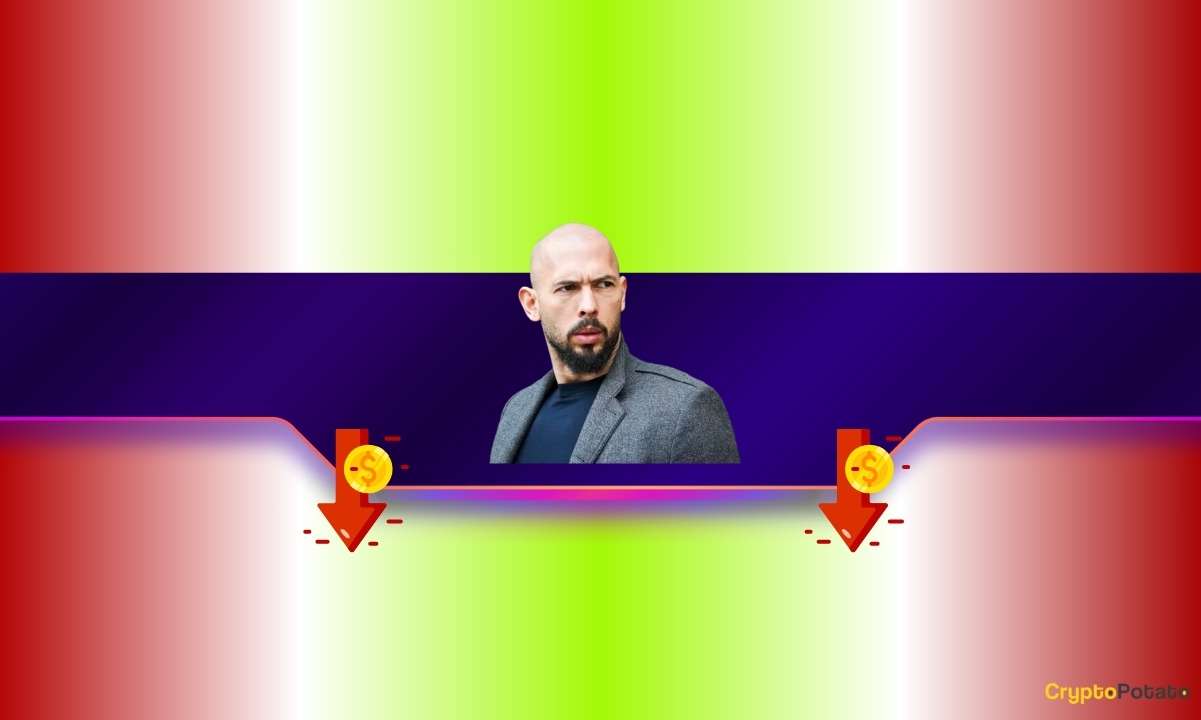
The recent price uptick in the cryptocurrency market has given some traders, including Andrew Tate, wings.
Despite his rather unsuccessful history with futures trading, the British-American social media personality and businessman has opened another major long, according to data shared by Lookonchain.
The analysts at the monitoring resource have counted 107 times in which Tate has been liquidated in the past. His new bitcoin long position is for 57.36 BTC, worth around $3.76 million.
However, the potential liquidation price is close by, at $65,216. The cryptocurrency currently trades around $65,500, and if it dips by just $300, Tate would need to act fast and provide further collateral to avoid getting wrecked again.
Andrew Tate (@Cobratate), who’s been liquidated 107 times, is back!
He opened a 40x long on 57.36 $BTC($3.76M).
Liquidation price: $65,215.87https://t.co/qqJ28jICWS pic.twitter.com/Iyq3WIUSny
— Lookonchain (@lookonchain) June 17, 2026
Aside from his unsuccessful past with futures trading, which once left him wiped out within an hour of opening a BTC long, Tate has quite the controversial history with the broader cryptocurrency industry.
A few years ago, he launched his own meme coin called DADDY, which was a direct competition to Iggy Azalea’s MOTHER. However, reports quickly raised the alarm, suggesting that many of Tate’s claims about the token are incorrect and hinting at potential insider trading.
Current data from CoinGecko shows that DADDY trades at $0.0085, down by 97% from its all-time high.
The post After 107 Liquidations, Andrew Tate Is Back With Big Bitcoin Bet appeared first on CryptoPotato.


Ethereum price is pinned under $1,800, consolidating in a tight band as the market holds its breath ahead of the FOMC rate decision. Two overlapping catalysts, macro and protocol-level, could likely help the ETH case.
On the development side, the Ethereum Foundation confirmed that testnets are already running with all planned EIPs for the Glamsterdam upgrade. It’s the combined Amsterdam execution layer and Gloas consensus layer hard fork. This also marks the final pre-public-testnet development stage.
If testing clears without major issues, mainnet activation is targeted for the second half of 2026. The upgrade directly targets L1 scalability: ePBS and BALs are designed for faster block processing and future parallel execution, while the proposed gas repricing could make simple ETH transfers up to 71% cheaper, and could retake its market share that has been taken by Solana and any major L1 rivals.
Whales have accumulated 400,000 ETH between Sunday and Monday, driving a 6% gain, but the move has since faded back into range.
Discover: The Best Token Presales
Can Ethereum Price Shoot $2,000 Soon?
Ethereum price technical structure is readable, if not definitive. Price has been capped under $1,800 intraday range, with the consolidation zone defined between $1,760 and $1,800.
The $1,800 is, of course, the first meaningful resistance cluster. Above that, $2,000 represents the breakout zone that aligns with the lower Ichimoku cloud boundary. A confirmed close above that level opens a measured move toward $2,200, with $3,000–$3,050 as the macro target if momentum sustains.

A dovish FOMC, like a surprise rate cut with easing language, triggers a relief rally. TradingView analysis even targets the $2,600–$2,700 zone on that outcome. Glamsterdam testnet progress adds a protocol-level bid.
But if Fed holds with ambiguous language. ETH stays range-bound for another week while traders wait for cleaner signals. This will likely happen as the FOMC decision is already expected to stay at 350-375bps, so the price is likely priced in
The Standard Chartered bullish ETH thesis rests partly on ETF inflow momentum, which remains intact as BlackRock’s staked ETHB product draws institutional attention. That structural bid is real, but it doesn’t override macro in the short term.
Discover: The Best Crypto to Diversify Your Portfolio
LiquidChain Targets Early-Mover Upside as Ethereum Tests Key Levels
Ethereum at $1,800 is a recovered asset, but recovery from multi-month lows means the percentage upside from here is structurally smaller than it was six months ago.
Whale accumulation and ETF inflows confirm conviction at this level, yet the range-bound price action suggests the market is pricing in uncertainty, not opportunity. That’s exactly the environment where early-stage infrastructure plays attract capital that’s rotating away from crowded large caps.
Different chains, same problem.
LiquidChain is the bridge between them. ⟁pic.twitter.com/6JcPjebA6S
— LiquidChain (@getliquidchain) April 27, 2026
LiquidChain ($LIQUID) is an L3 infrastructure project built around a specific unsolved problem: fragmented liquidity across Bitcoin, Ethereum, and Solana. Its Unified Liquidity Layer fuses BTC, ETH, and SOL execution environments into a single-step architecture.
With Liquid, developers deploy once and access all three ecosystems. The presale is currently priced at $0.0147, with $850K raised to date. Standout features include Verifiable Settlement and a Deploy-Once Architecture designed to eliminate the cross-chain friction that still costs DeFi protocols measurable slippage and latency.
LiquidChain presale is worth a closer look before the next price step-up.
The post Ethereum Price Prediction: Final Glamsterdam Tests Could Ignite ETH After FOMC appeared first on Cryptonews.
Singapore’s Monetary Authority has added Bybit to its Investor Alert List, placing one of the world’s largest crypto exchanges alongside other platforms that are not licensed to offer regulated services to users in the city-state.
Summary
- Singapore’s MAS has added Bybit to its Investor Alert List, warning that the exchange is not licensed or regulated to provide services to local users.
- The move follows Singapore’s continued push for stricter crypto compliance, weeks after MAS revoked Bsquared’s licence over regulatory breaches and false statements.
- Despite the Singapore alert, Bybit continues to expand globally and recently launched tokenized fixed income products through a partnership with Plume.
According to the Monetary Authority of Singapore (MAS), Bybit Fintech Limited and its trading platform were added to the Investor Alert List on June 17. The regulator said the list identifies entities that may be wrongly perceived as being licensed, authorized, or otherwise regulated by MAS.
Unlike an enforcement action or operating ban, the Investor Alert List serves as a public warning tool. MAS noted that the list is not exhaustive and is compiled based on information available at the time of publication. Bybit’s entry includes the exchange’s main website.
Founded by Singaporean entrepreneur Ben Zhou, Bybit has grown into the second-largest crypto exchange by trading volume globally. Despite those roots, the company already restricts Singapore users under its terms of service and has implemented measures such as geo-blocking local IP addresses.
Singapore requires firms offering digital payment token services to obtain authorization under the Payment Services Act. Exchanges that operate without the necessary approvals risk regulatory action if they solicit or serve local residents.
Singapore maintains pressure on licensed and unlicensed firms
For local investors, MAS continues to direct users to its Financial Institutions Directory to verify whether a platform holds the appropriate licenses before using its services.
The latest warning comes as Singapore maintains a strict compliance stance across the crypto sector. In May, MAS revoked the Major Payment Institution licence of Bsquared Technology after finding false or misleading statements and identifying significant weaknesses in risk management, conflict-of-interest controls, and outsourcing arrangements. The regulator also said it was reviewing whether senior officers at the firm could bear personal responsibility for the breaches.
That case stood out because Bsquared had already obtained regulatory approval before losing its licence. Together with warnings directed at unlicensed platforms, the move underscored MAS’s focus on investor protection and compliance oversight.
Elsewhere, the regulator has continued to approve firms that meet its standards. Recent approvals for crypto infrastructure providers such as BitGo have highlighted the high compliance threshold required to operate in Singapore’s regulated market.
No disruption to Bybit’s global operations has been reported following the Singapore listing. The exchange continues to offer trading services, token listings, proof-of-reserves disclosures, and other products in jurisdictions where it is permitted to operate.
Bybit had not issued a public statement on the MAS listing at the time of publication and did not immediately respond to a request for comment.
MAS’s action also follows a different regulatory outcome for Bybit in Malaysia. In April 2026, the exchange was removed from the country’s investor alert list after engaging with local regulators and addressing compliance concerns.
Bybit expands products while facing regulatory scrutiny
Outside Singapore, Bybit has continued to broaden its product lineup and compliance efforts.
Just days before the MAS alert, Bybit partnered with Plume to launch institutional fixed-income vaults through the exchange’s real-world asset section. The offering allows users to deploy stablecoins into products linked to traditional fixed-income instruments associated with PIMCO and China Merchants Bank International.
SpaceX stock launched like one of its own rockets. Within days of its debut it blasted toward $3 trillion, before settling near $2.66 trillion. Its busiest crypto market is now betting it comes back to earth.
On the perpetuals where SpaceX trades around the clock, the smart money is positioned for a fall. BeInCrypto pulled the data behind the euphoria.
A Record IPO, a $60 Billion Deal, and a Near $3 Trillion Peak
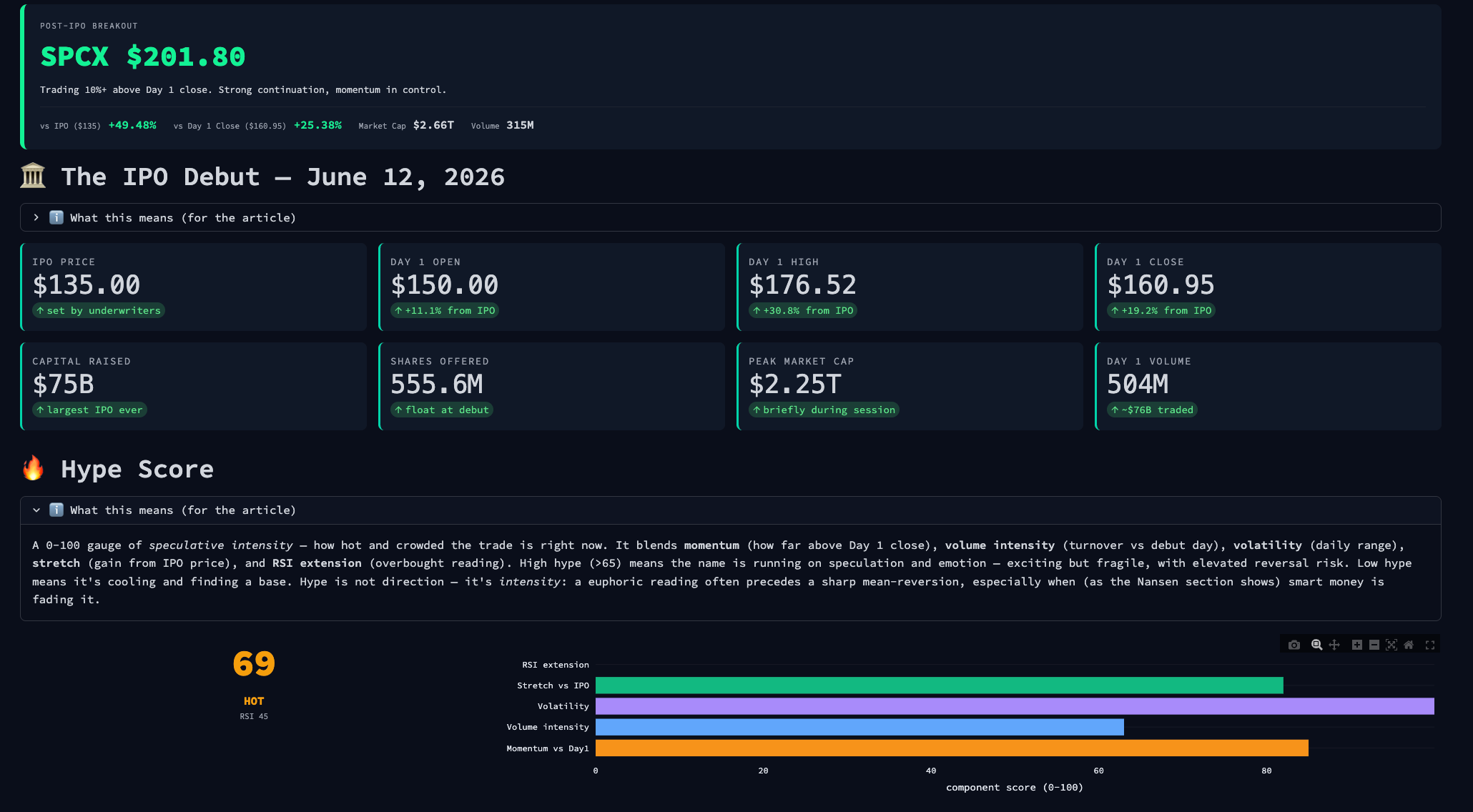
SpaceX (SPCX) priced its IPO at $135 on June 12 and raised about $75 billion, the largest listing ever. Four days later, it signed a $60 billion all-stock Cursor acquisition, buying AI coding firm Anysphere.
Want more insights like this? Sign up for Editor Harsh Notariya’s Daily Newsletter here.
The stock jumped as much as 14%. Its SpaceX market cap pushed past $2.7 trillion, briefly overtaking Amazon.

It has since cooled near $202, and its Hype Score has slipped to 69. The euphoria might just be fading.
The Warning Sits in the Crypto Market
SpaceX trades as one of the busiest Hyperliquid perpetuals, with $304 million in open interest. There, the smart money leans hard one way. Nansen data shows it is net short $20.8 million, with 91% of its exposure short.
Whales are net short $23.7 million. The three tracked cohorts combine to a $45.3 million net short bet, a one-sided bet against the rally.

They built that short from the IPO near $167 straight through the climb to $208. The smartest traders are positioned for a fall.
One Signal Still Keeps the Bulls Alive
For now, the money flow still points to buying. That is the one thing holding the rally up.
Chaikin Money Flow tracks whether money is entering or leaving an asset. It weights each move by volume, so it leans toward large, institutional orders. The reading sits positive at +0.14. That says the big money is still accumulating SpaceX, not distributing it.
Price also holds above its volume-weighted average price, or VWAP. That line is the volume-based average price institutions use to judge fair value on the day.
Trading above VWAP means buyers are paying up to get in, not waiting for lower prices. Paired with the money flow, it says accumulation has not broken yet.

The tell to watch is simple. If price holds up while that money flow rolls negative, institutions are quietly selling into strength. That gap between a steady price and a falling flow is the classic mark of distribution. For now, it has not appeared.
Flows, though, only show how SpaceX trades day to day. They say nothing about what kind of stock it really is.
Tesla Crashed After Its IPO Too
The deeper risk is the company SpaceX keeps. It trades like a Musk stock, not a space stock. Its correlation to Tesla sits near 0.12, while its tie to space peers is about negative 0.15. SpaceX moves on Musk and tech sentiment, even if the correlation is weak for now.

That matters because Tesla, Musk’s other company, also surged after its 2010 IPO before a sharp reversal. Traders see the same script. BeInCrypto reported the bear case in detail. Analyst Ted Pillows expects a 60% to 70% pump, then a brutal 50% crash.
What the Options Market Says about SpaceX (SPCX) Stock
The options market looks like one bullish offset. It is also the most double-edged read on the board. SpaceX put-to-call volume sits near 0.84, based on Barchart data. A ratio below 1 means more calls traded than puts, a crowd leaning long.
Heavy call buying can fuel a squeeze. Dealers who sell those calls hedge by buying stock, and they buy more as the price climbs. But that hedge runs in reverse. If the price falls, the same dealers sell their stock back, and the drop speeds up.
The contracts expire tomorrow, when that effect peaks. If the rally stalls below the call strikes overhead, that support unwinds fast. A call-heavy book is not a one-way bet higher. It is fuel that burns in whichever direction the price breaks first.

Note: Implied volatility, the move the options market is pricing in, runs near 170% into the two-day expiry. That is a bet on a violent swing, not a quiet drift, and it cuts both ways.
The same skew shows the crowd chasing calls while the crypto market’s smart money sells into it. The forced-selling risk sits next door, on the leveraged perps. There, longs face liquidation on a breakdown, while call buyers only lose their premium.
The chart marks the near-term line. SpaceX holds $201 as Fibonacci support, a level BeInCrypto flagged this week. A break opens $193, then $179. This week’s options expiry is the first trigger for the SpaceX stock. The bigger test is August, when early lock-ups expire and fresh shares hit the market.
Every SpaceX stock price prediction is a coin flip from here. The crowd and its call options are built for a squeeze. The smart money and the Tesla script are positioned for a flush. August settles it.
The post $45 Million in Shorts Are Betting SpaceX Stock Comes Back to Earth appeared first on BeInCrypto.
Crypto World
Novo Nordisk (NVO) Stock Under Pressure as Hackers Leak Stolen Data After Ransom Rejection

Key Points
- FulcrumSec, a cybercrime extortion operation, alleges it extracted more than 1.3 terabytes of confidential files from Novo Nordisk following the company’s decision to reject a $25 million ransom payment.
- The compromised information purportedly contains source code, confidential pharmaceutical research, clinical study documentation, and proprietary AI system files.
- The threat actors report they infiltrated the network through a GitHub access credential found in March, maintaining persistent access for more than two months.
- On June 11, Novo Nordisk publicly acknowledged a security breach involving unauthorized entry into select internal technology infrastructure and exposure of personal information.
- FulcrumSec now states it plans to pursue targeted private transactions for portions of the stolen materials while pledging to withhold patient information, employee records, and production facility data.
On June 11, Novo Nordisk publicly acknowledged a security incident, reporting that intruders had obtained unauthorized entry to a restricted set of internal technology systems. This announcement followed months during which FulcrumSec, a ransomware and extortion collective, had allegedly maintained concealed access to the pharmaceutical giant’s digital infrastructure.
At the moment of the public disclosure, NVO stock was hovering near $66. The shares have experienced downward pressure over recent months, and this cybersecurity episode introduces additional complications for investors.
According to FulcrumSec, their initial entry point was a GitHub authentication token they located in March. This credential provided them with entry to internal software repositories, which they subsequently leveraged to harvest additional login information and expand their foothold within Novo Nordisk‘s digital environment.
The group asserts it maintained undetected presence within the network for over two months. During this period, they claim to have exfiltrated approximately 1.3 terabytes of information encompassing more than 700,000 separate files.
FulcrumSec contacted undisclosed executives at Novo Nordisk with a $25 million payment demand. The pharmaceutical company responded on June 3—about 48 hours following the initial contact—using a Proton Mail account to authenticate their identity. Subsequently, Novo Nordisk refused to meet the payment terms.
Following the rejection, FulcrumSec indicates it is now pursuing selective private transactions for specific segments of the stolen information.
The threat actors informed Reuters they would actually prefer public disclosure of the materials, characterizing it as “a more effective deterrent for future companies to avoid paying.”
Contents of the Stolen Materials
FulcrumSec alleges the compromised files encompass source code, confidential details regarding both commercialized and developmental pharmaceuticals, clinical research data, and information connected to Novo Nordisk’s production operations.
The group also claims possession of internal artificial intelligence model files. This particular element carries significance considering Novo Nordisk’s publicized collaboration with OpenAI, which aimed to embed AI capabilities throughout drug development, production processes, and business operations by the end of 2026.
FulcrumSec maintains it will withhold certain data categories from release. These protected materials include documentation on thousands of staff members and medical professionals, information concerning approximately 11,500 anonymized clinical trial participants, and operational technology files from Novo Nordisk’s manufacturing locations.
The collective characterized this selective withholding as component of its “harm-reduction strategy.”
Evaluating the Threat Actor’s Legitimacy
Thomas Willkan, research director at cybersecurity organization Lab-1, informed Reuters that FulcrumSec is “usually quite legit in terms of both their capabilities and also their claims.” Willkan has maintained close surveillance of FulcrumSec since the group’s first appearance in October 2025.
Reuters noted it could not immediately authenticate the legitimacy of the materials published by the threat actors.
A representative from Novo Nordisk stated the organization “is aware of claims that data allegedly copied externally without authorisation from our systems has been published online,” and verified communication with appropriate regulatory bodies.
DataBreaches.net documented on June 15 that FulcrumSec provided alleged communications with Novo Nordisk beginning June 1, including a catalog of over 700,000 items totaling approximately 1.3 terabytes.
VX-Underground also published a report on Monday regarding an unidentified threat actor compromising Novo Nordisk. FulcrumSec maintains its intrusion represents a distinct incident from that reported breach.

Pavel Durov’s seven-step plan to rebuild Gram around Telegram is four steps in. The speed upgrade, the fee cut, the validator takeover, and the rename have all shipped. Here is what each one did, and what the three undisclosed steps might be.
Summary
- Pavel Durov’s seven step MTONGA roadmap has completed four milestones, including a speed upgrade, lower fees, Telegram’s validator takeover, and the Gram rebrand.
- Telegram has reclaimed direct influence over The Open Network, marking a major departure from the separation established after the 2020 SEC settlement.
- Three undisclosed roadmap steps remain, with traders closely watching for developments that could drive user adoption and on chain activity.
In April 2026, Pavel Durov began publishing a roadmap on his Telegram channel under a deliberately provocative name: Make TON Great Again, or MTONGA. It is a seven-step plan to transform The Open Network, the blockchain behind the token now called Gram, into the primary payment and application layer for Telegram’s roughly one billion users. Four of the seven steps have shipped. Three remain undisclosed. And each revealed step has moved the price, which is why traders treat the unannounced ones as scheduled catalysts waiting to fire.
This guide walks through what MTONGA actually is, what each of the four completed steps did, why the market has reacted the way it has, and what the three remaining steps might turn out to be. If you hold Gram, trade it, or are trying to understand why the token keeps spiking and fading, the roadmap is the framework that explains the pattern.
What MTONGA is, in one paragraph
Make TON Great Again is Durov’s name for the coordinated push, launched in April 2026, to upgrade The Open Network and bind it tightly to Telegram. The roadmap matters because it marks a reversal: Telegram built the network in 2018, abandoned it in 2020 after an SEC enforcement action, and left the independent TON Foundation to run it for years. MTONGA is Durov personally retaking the wheel, becoming the network’s largest validator, reclaiming the original Gram name, and announcing a sequence of technical and branding moves designed to make the chain fast enough and cheap enough to serve Telegram’s billion-user base. The name echoes a political slogan, but the goals are technical and strategic: speed, low fees, direct Telegram control, and a brand that Telegram’s users already recognize.
Step one: Catchain 2.0 and sub-second speed
MTONGA opened on April 9, 2026, with the upgrade that made the rest possible.
Durov announced that the network had become roughly ten times faster, with transactions confirming in under a second where they previously took around five seconds or more. The engine behind the change was Catchain 2.0, a new consensus mechanism that cut block production time from about 2.5 seconds to roughly 400 milliseconds and introduced a streaming layer that pushes updates to applications almost instantly instead of making them wait for the next block.
For users, the practical effect is that payments clear in about a second, trades execute in real time, and apps respond immediately, the responsiveness a consumer payment network needs if it is going to feel like sending a message rather than waiting on a blockchain.
There was a tradeoff worth understanding, because it touches the token’s economics.
More frequent blocks mean more validator rewards, which strengthens the incentive to stake but also raises issuance: the network’s annual inflation is expected to rise from roughly 0.6% toward 3.6% as a consequence of the faster block production. That is a meaningful increase, and it sits underneath the bull case as a quiet headwind, more tokens are created to reward the validators securing the faster chain. The speed is a genuine upgrade; the inflation bump is its cost.
Step two: the sixfold fee cut
With speed in place, the next move lowered the cost of using the network.
Base transaction fees were cut roughly sixfold, standardizing the cost at around $0.0005 per transfer regardless of network congestion. TON fees were already low compared with Ethereum or Solana, so the significance is less about the absolute saving and more about what cheap, predictable fees enable: micropayments and high-frequency applications that only make sense when each transaction costs a fraction of a cent.
A network aiming to host in-app payments, tipping, and consumer commerce for a billion people needs fees low enough that users never think about them, and the sixfold cut moves toward that, with Durov having referenced feeless transactions as a longer-term goal. The fee reduction is the economic complement to the speed upgrade: fast and nearly free is the combination a consumer payment layer requires.
Step three: Telegram becomes the largest validator
Step three was the most strategically consequential, because it changed who controls the network.
On May 4, 2026, Durov announced that Telegram would replace the Switzerland-based TON Foundation as the primary steward of The Open Network and operate as the chain’s largest validator, staking millions of tokens through the messenger’s own infrastructure.
This reversed years of deliberate separation between Telegram and the network, the separation that was built after the 2020 SEC settlement specifically to distance the company from the project. Telegram binding its corporate infrastructure and stake to the chain is the clearest signal yet that the company is committing its fate to the network, the thing the market had most wanted and most doubted since the independent foundation took over.
This move drew predictable centralization concerns, since a single dominant validator is a concentration of power, and Durov pushed back by arguing that Telegram serving as a large validator actually encourages other major players to join the validator pool as a counterbalance.
Whether that holds in practice is an open question, but the strategic point is unambiguous: after years at arm’s length, Telegram is now formally in control of the network’s direction, which is the foundation the rest of the roadmap and the entire Gram investment thesis rest on.
Step four: the Gram rename
Step four is the one most people heard about, and the one that changed the least, mechanically.
In early June, Durov announced that the native token would reclaim its original name, Gram, the name from Telegram’s 2018 whitepaper that was abandoned after the SEC forced the project to shut down in 2020.
A community vote on the TON Vote platform passed with 81.22% support, and the rename took effect on June 15, 2026, changing the token’s name and ticker from TON to GRAM while leaving the blockchain itself called The Open Network.
No token swap, migration, or claim was required: balances, addresses, staking, and contracts all carried over, and a holder of 10 Toncoin simply held 10 Gram. For most holders, the rename was a display and ticker change, not a technical event.
What made the rename matter was symbolic and strategic, not mechanical.
Reclaiming Gram reconnects the token to its origins and to the Telegram brand its users already recognize, closing a gap that always made “Toncoin” confusing to the messenger’s own audience. It also signals regulatory confidence, since reviving the name the SEC once litigated against is a statement that Telegram believes the climate has changed.
A pure rename changes no supply, no fees, and no on-chain mechanics, which is why the right way to read step four is as the branding capstone on the three technical and strategic moves that preceded it.
Why the market reacts the way it does
A clear pattern runs through all four steps, and understanding it explains why Gram keeps spiking and fading.
Markets have front-loaded the reaction into each step. The token roughly doubled from about $1.30 to a peak near $2.80 to $2.89 through the April and May announcements of the speed upgrade, fee cut, and validator takeover, pushing the market cap toward $7.6 billion and into the top 20.
Then it retraced.
The Gram rename added another double-digit candle, a roughly 19% jump toward $2.21, and then that faded too, with the token sitting near $1.67 around the time the rename actually took effect.
Each announcement produces a sharp rally that the market subsequently surrenders, which is the classic buy-the-rumor, sell-the-news rhythm applied to a roadmap with discrete, pre-signaled events.
Rallies fade because the roadmap steps, real as they are, have not yet produced the thing that would sustain a re-rating: durable user and revenue growth.
Faster blocks, cheaper fees, Telegram control, and a familiar name are all enablers; they make the network more capable of converting Telegram’s billion users into active Gram users, but they are not the conversion itself.
Until the wallet activity and payment volume show that conversion happening, each step is a promise the market rewards briefly and then discounts, which is exactly the pattern the price has traced. The steps build the runway; the takeoff is the part still unproven, and the price keeps reflecting that gap.
The three remaining steps: what they might be
Traders care most about this question, because the unannounced steps are the next catalysts.
Durov has not detailed steps five, six, and seven, but his public comments and the network’s direction point to a set of likely candidates.
Durov’s posts have referenced “performance upgrades” and “tech superiority” without specifying deliverables, which suggests at least one remaining step is further technical improvement: additional consensus refinements, more speed, or the feeless transactions he has hinted at as a longer-term goal.
A second likely theme is deeper Telegram integration, the wiring of Gram directly into the messenger’s product suite for in-app payments, tipping, and commerce, building on the USDT payments integration Telegram has already pursued as its user base nears a billion.
Reported groundwork, including a new ton.org site and improved developer tooling, points toward a developer-experience and ecosystem step designed to make building on the network faster and more attractive.
And given the rename’s regulatory symbolism and Telegram’s U.S. ambitions, a step involving expanded access, a U.S. wallet rollout, or payment partnerships is plausible, turning the network’s reach into concrete consumer use cases.
The caveat worth stating: these are educated inferences, not announcements.
Durov has revealed each step on his own timeline, usually shortly before or as it shipped, so the content and order of the final three are unknown outside Telegram.
What is known is the shape: the four completed steps moved from technical foundation (speed, fees) to strategic control (validator) to brand (rename), which suggests the remaining steps may move toward activation, turning the upgraded, Telegram-controlled, freshly branded network into one that actually converts users into economic activity.
That progression is the logic to watch as each step is revealed.
What it means for holders and traders
For holders, the roadmap is the clearest map of what to watch.
Each remaining step is a likely catalyst, and the pattern so far says the announcements produce sharp rallies that fade unless they are backed by evidence of real user and revenue growth.
The signal that matters is not the next announcement itself but whether the cumulative roadmap finally shows up in wallet activity and payment volume, the conversion that would turn the spikes into a sustained trend.
Watching the steps without watching the conversion is watching the wrong half of the story.
For traders, MTONGA is a calendar of pre-signaled events with a consistent behavioral pattern.
The front-loaded rally and subsequent fade has repeated through all four revealed steps, which makes the roadmap a tradable rhythm: the rallies have come on announcement and surrendered into the supply and the broad market between events.
The three undisclosed steps are scheduled volatility with unknown timing, and Durov’s habit of revealing each step close to delivery means the lead time is short.
The token has respected technical levels in the low $1.80s on support and stalled in the $2.80 to $2.89 zone on the roadmap-driven highs, which frames the range the steps have moved it within.
For anyone weighing the bigger picture, MTONGA is a substantive roadmap, more so than the political-slogan name suggests, and the four completed steps represent real upgrades and a real strategic reversal.
But the roadmap is the setup, not the payoff.
It makes the network capable of mass adoption without proving the adoption will come, and the three remaining steps, whatever they are, will be judged by the same standard the first four are now being judged by: not whether they ship, but whether they finally convert Telegram’s billion users into Gram’s economy.
Frequently Asked Questions
What is the Make TON Great Again roadmap?
Make TON Great Again (MTONGA) is a seven-step plan that Pavel Durov began publishing in April 2026 to upgrade The Open Network and tie it closely to Telegram.
The goal is to make the blockchain fast and cheap enough to serve as the payment and application layer for Telegram’s roughly one billion users.
Four steps have shipped: a speed upgrade, a fee cut, Telegram becoming the largest validator, and the rename of the token to Gram.
Three steps remain undisclosed.
What are the four completed MTONGA steps?
The Catchain 2.0 upgrade made the network roughly ten times faster with sub-second transaction finality.
A sixfold fee cut lowered base transaction costs to around $0.0005.
Telegram replaced the TON Foundation as the network’s primary steward and became its largest validator.
And the native token was renamed from Toncoin to Gram, reclaiming its original 2018 name.
Sources number the steps slightly differently, but these are the four revealed milestones.
What are the three remaining MTONGA steps?
Durov has not announced steps five, six, and seven.
Based on his references to “performance upgrades” and “tech superiority,” and on the network’s direction, likely candidates include further technical improvements such as feeless transactions, deeper Telegram integration for in-app payments and commerce, improved developer tooling and a new ton.org site, and possibly expanded access or payment partnerships.
These are educated inferences, not confirmed announcements.
Why does the Gram price spike and then fall after each step?
The market front-loads its reaction into each announced step, producing a sharp rally that then fades.
The token doubled from about $1.30 to nearly $2.80 through the spring announcements before retracing, and the Gram rename added a roughly 19% jump that also faded.
The rallies fade because the roadmap steps are enablers, faster, cheaper, Telegram-controlled, freshly branded, but have not yet produced the durable user and revenue growth that would sustain a re-rating.
It is a buy-the-rumor, sell-the-news pattern applied to a roadmap.
Did the Gram rename change the token’s price or supply?
No.
The rename was a name and ticker change with no effect on supply, fees, or on-chain mechanics.
A separate part of the roadmap, the Catchain 2.0 speed upgrade, does affect economics, raising expected annual inflation from roughly 0.6% toward 3.6% because more frequent blocks generate more validator rewards.
The rename itself changed nothing mechanical; price moves around it reflected market sentiment, not the name change.
Is Telegram now in control of The Open Network?
Yes, in practical terms.
In May 2026, Telegram replaced the Switzerland-based TON Foundation as the network’s primary steward and became its largest validator, staking millions of tokens through its own infrastructure.
This reversed years of deliberate separation set up after the 2020 SEC settlement.
Durov has argued that Telegram serving as a large validator strengthens rather than weakens decentralization by encouraging other validators to join as a counterbalance, though that remains an open question.
As of June 16, 2026. Cryptocurrency markets are volatile, and details can change; verify current information with official sources before acting. This article is information, not investment advice.
In addition to frequent protocol upgrades and other initiatives aimed at advancing Pi Network’s ecosystem, the Core Team launches various campaigns to engage its vast community.
The latest one, which primarily focuses on Artificial Intelligence, will conclude on a symbolic day for the Pioneers.
Less Than 2 Weeks Left
Earlier this month, Pi Network encouraged users to help grow the ecosystem by inviting Vibe coders to bring their AI-driven applications into the project’s real distribution network through Pi App Studio.
Most recently, it revealed that the initiative will run until Pi2Day. This is a special date for the community, celebrated annually on June 28 since it represents the mathematical constant 2π. The team reminded that vibe coders can easily convert their applications built through platforms like Codex, Claude Code, Replit, Cursor, or Lovable into Pi Apps.
“Pi can connect your AI-created apps with millions of engaged Pioneers, identity verification, and Pi’s utility ecosystem,” the message reads.
It is worth noting that most commenters on Pi Network’s announcement seemed frustrated, as they demanded that the team fix more serious issues, such as KYC procedures, before introducing such campaigns.
“Another day of disappointment. The handwriting is so clear. A day of another empty promise and manipulation,” one X user said.
PI Price Outlook
Details about the campaign have failed to trigger a price rebound in Pi Network’s native token, which continues to underperform. As of press time, it trades at around $0.13, which is quite close to the all-time low witnessed earlier in June and represents a 10% monthly decline.
The ongoing bearish conditions in the crypto market and the constant backlash within Pi Network’s community suggest that PI is likely to remain under pressure in the foreseeable future.
However, certain factors indicate the bulls’ pain might be over soon, and the upcoming token unlocks are a clear example. Approximately 127.5 million PI are scheduled for release over the next 30 days, averaging around 4.2 million per day, which is far less aggressive than in previous months. This doesn’t guarantee a price reversal but reduces the selling pressure, thus helping create a more stable environment for a potential recovery.
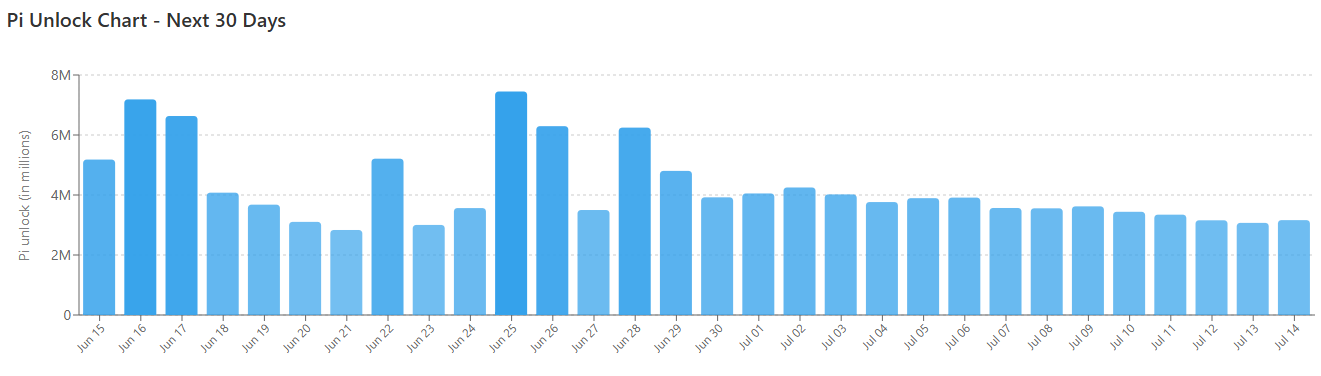
The community has also shifted its attention to the aforementioned Pi2Day, hoping the date brings meaningful ecosystem updates that could lead to an uptrend for PI. Of course, nothing is confirmed, so it is wise to manage expectations.
The post Important Pi Network (PI) Clarification Concerning All Pioneers: Details appeared first on CryptoPotato.
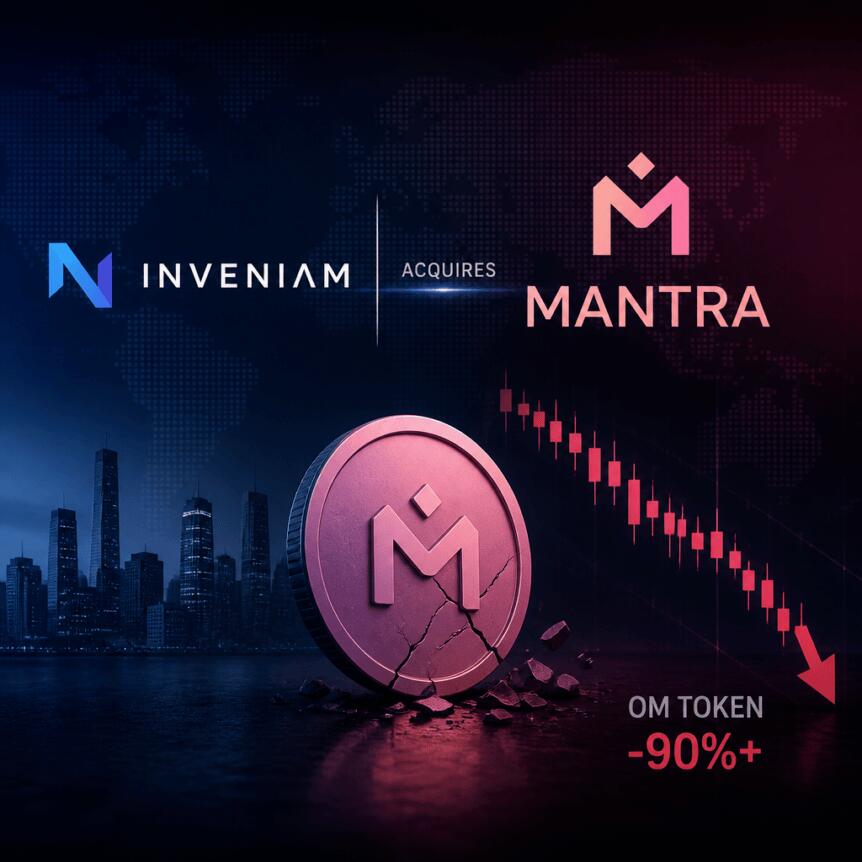
Inveniam Capital Partners has announced plans to acquire layer-1 blockchain Mantra and affiliated entities, signaling a deeper move into infrastructure tied to tokenized real-world assets (RWAs). The deal builds on Inveniam’s prior commitment to the network, after the firm made a $20 million strategic investment in Mantra in August 2025, according to the company’s Tuesday announcement.
The acquisition also follows Inveniam’s rollout of NVNM Chain, a Mantra-based layer-2 network launched on May 13. NVNM Chain is positioned to help verify assets while avoiding exposure of confidential information—an approach that aligns with the broader push to make RWA workflows more audit-friendly without compromising privacy.
Key takeaways
- Inveniam Capital Partners will acquire Mantra and affiliated entities, deepening its involvement in RWA-focused blockchain infrastructure.
- The transaction follows Inveniam’s $20 million strategic investment in Mantra in August 2025.
- Inveniam earlier launched NVNM Chain (May 13), a layer-2 designed for asset verification while preserving confidentiality.
- The deal reflects an effort to connect tokenized real-world asset rails with AI-ready, regulated private-market data.
- Mantra has recently faced severe market turbulence around its OM token, including a sharp drawdown in April 2025.
Why the Mantra acquisition matters to RWA infrastructure
Mantra’s pitch has centered on enabling RWAs to move with blockchain-based verification while addressing one of the biggest practical constraints in tokenization: how to prove claims about real-world assets without disclosing sensitive information. NVNM Chain, launched on May 13, is framed specifically around that tradeoff, supporting asset verification without revealing confidential data.
For Inveniam, acquiring the layer-1 and associated entities suggests it wants more direct control over the technical and operational foundations behind that privacy-preserving verification model. The company says this is part of an effort to accelerate delivery of “digital private markets” capabilities to broader market participants—particularly those operating in institutional and regulated contexts where compliance requirements tend to be strict.
Strategic investment precedes NVNM Chain rollout
Inveniam’s latest move did not arrive out of nowhere. In August 2025, the firm made a $20 million strategic investment in Mantra, and it later launched NVNM Chain on May 13. In its announcement, Inveniam’s leadership tied these steps together, describing the initial investment as a bet that regulated blockchain infrastructure and AI-ready private market data would need to be integrated.
According to chairman and CEO Patrick O’Meara, the acquisition is intended to expand Inveniam’s role in private-market ecosystems. “This acquisition positions us to be value-additive to the global private markets ecosystem faster,” O’Meara said. He added that the aim is to enable market operators, asset owners, and institutional private-market investors to access “digital private markets” alongside DeFi-oriented markets.
From an investor and developer standpoint, that linkage between private-market data readiness and blockchain rails is a key part of the narrative. It also highlights what Inveniam appears to be targeting: not just token issuance, but end-to-end infrastructure that can support verification workflows while remaining compatible with institutional expectations.
A turbulent stretch for Mantra and its OM token
While the acquisition represents a push deeper into infrastructure, Mantra’s recent history includes notable volatility. Earlier in the year, the company announced layoffs and restructuring after what CEO John Patrick Mullin described as the most challenging year in its history, following the collapse of the OM token and continued market pressure.
On April 13, 2025, the Mantra (OM) token suffered a steep decline. According to CoinMarketCap data, OM fell by about 90% within hours, wiping out more than $5 billion in market capitalization, the platform reported.
In a post on X, Mullin argued that the drop was driven by centralized exchange behavior rather than internal selling. He blamed “reckless forced closures initiated by centralized exchanges on OM account holders.” He also clarified that the dislocation was not caused by the team, the MANTRA Chain Association, core advisors, or investors selling tokens, adding that tokens “remain locked and subject to the published vesting periods.”
That backdrop matters for readers because it frames the risk environment surrounding Mantra—even if the company’s longer-term infrastructure goals are now moving forward under new ownership. It also suggests that any future progress will likely be judged not only by technical milestones like NVNM Chain, but by how stakeholders regain confidence after periods of disruption.
Cointelegraph asked Mantra for deal details
Cointelegraph reached out to Mantra for additional details about the acquisition, but had not received a response by publication. As a result, readers should watch for further clarification on the structure and timeline of the transaction, along with any changes to governance, development priorities, or how Inveniam plans to integrate NVNM Chain and the underlying Mantra infrastructure.
More broadly, the move reflects a continuing trend in crypto infrastructure: firms looking beyond trading networks toward the data and verification layers needed for RWAs, and increasingly tying those efforts to privacy and AI-readiness. With Inveniam now seeking full ownership of the ecosystem it previously funded, the next signals to monitor will be whether technical verification advances translate into sustained adoption and whether market confidence stabilizes after earlier volatility.
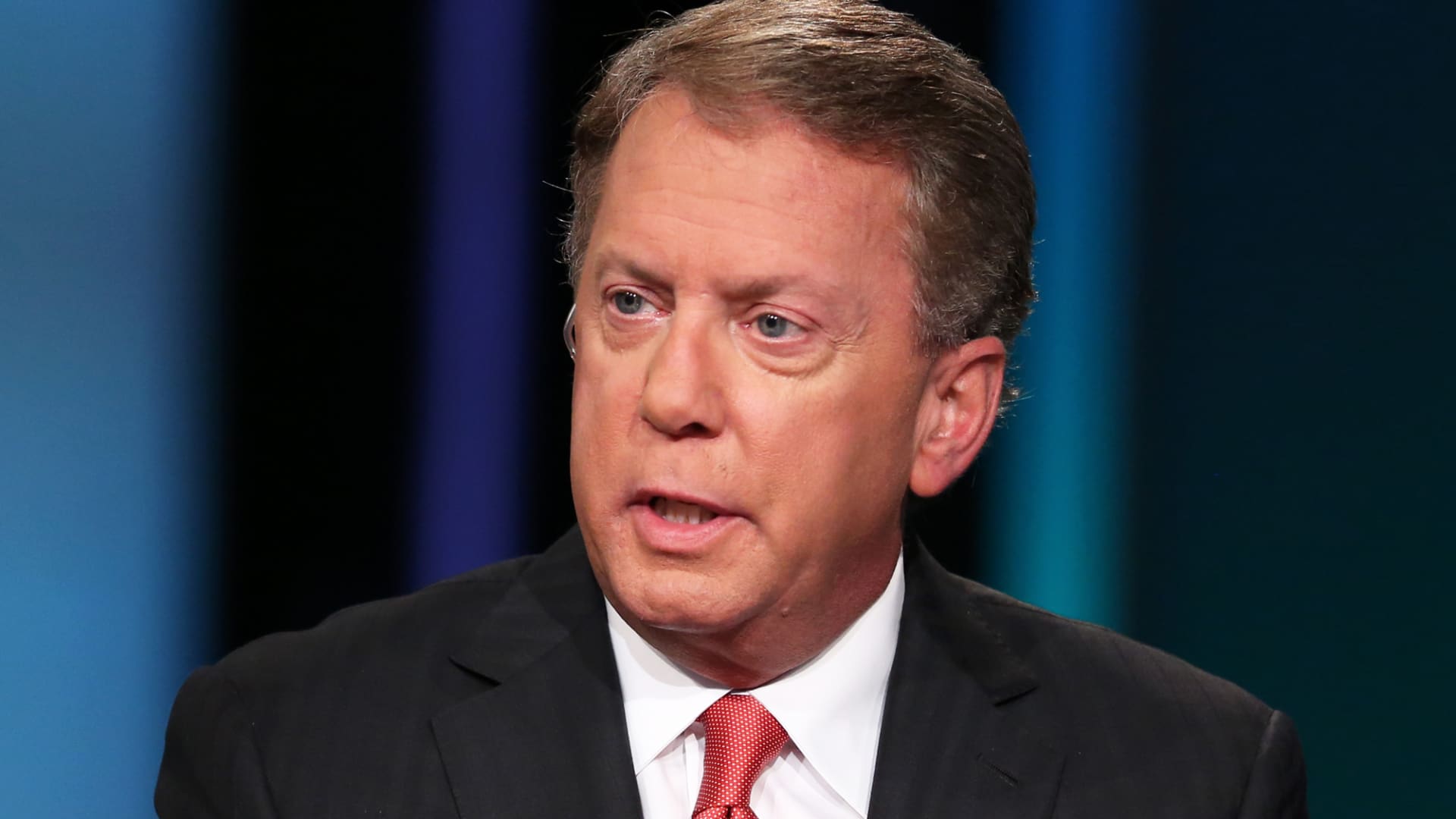
Terry Duffy, CME Group
Scott Mlyn | CNBC
CME Group‘s longtime leader Terry Duffy will step down as chief executive officer next year, succeeded by President and Chief Financial Officer Lynne Fitzpatrick.
Duffy, 67, will transition to executive chairman effective March 1, 2027, the company said Wednesday. It marks a more than two-decade run that transformed the Chicago-based exchange operator into one of the world’s largest derivatives marketplaces.
“Leading CME Group through more than 25 years of transformative growth has been among the highest honors of my life,” said Duffy in a statement.
Since becoming chairman in 2002, Duffy has overseen CME’s transformation from a floor-based exchange into a global derivatives powerhouse. He led the company’s IPO, its shift to electronic trading and industry-defining acquisitions, including the 2007 merger with the Chicago Board of Trade and the 2008 purchase of the New York Mercantile Exchange.
Duffy also guided CME through the financial crisis, the collapse of broker-dealer MF Global and sweeping changes in market structure. More recently, the company expanded through its acquisition of NEX Group, a partnership with Google Cloud and a venture with FanDuel aimed at reaching a broader retail audience.
Fitzpatrick, a 20-year veteran of CME, has served as president and chief financial officer since 2022 and has played a key role in the company’s strategy, capital allocation and investor relations efforts.
“I appreciate the confidence that he and the Board have placed in me, and I look forward to working with our investors, clients and employees around the world as we grow our core business and create value for our shareholders,” Fitzpatrick said in a statement.
Correction: CME Group made the announcement Wednesday. An earlier version misstated the day of the week.
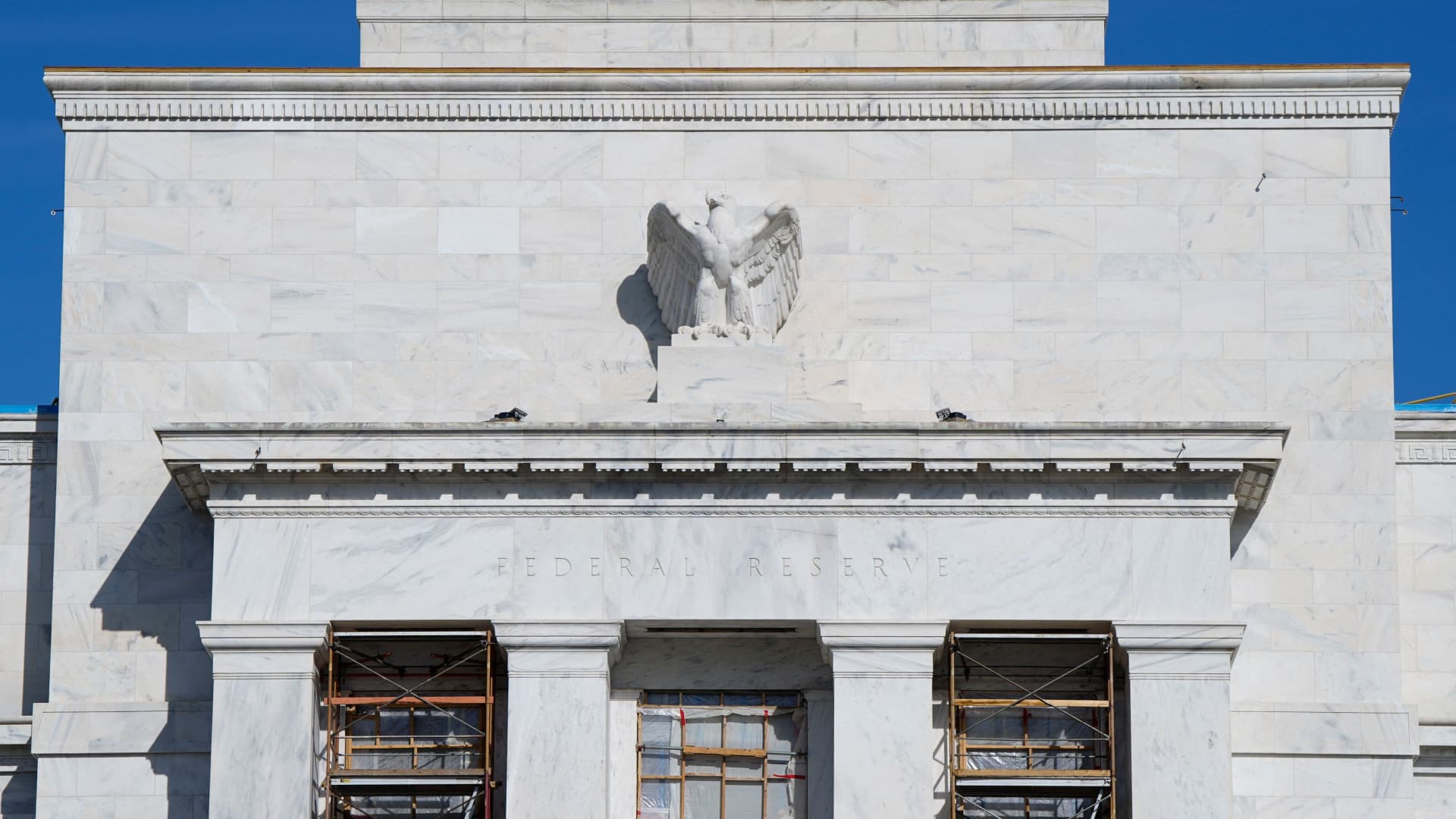
Renovations continue at the Federal Reserve Board building in Washington, D.C., U.S., November 14, 2025.
Elizabeth Frantz | Reuters
Prediction market traders think consensus will return to the Federal Reserve’s policy-setting board when new chairman Kevin Warsh presides over its June interest rate decision later Wednesday. At April’s meeting, the last under former Fed chair Jerome Powell, four members voted to dissent from policy, the most in more than 30 years.
Traders on prediction market platform Kalshi place 70% odds on zero dissents in the June vote on the 12-member Federal Open Market Committee. Odds that four members will dissents, as in April, are at just 3%.
The Fed is widely expected to hold interest rates steady on Wednesday at their current 3.50% to 3.75%, as policymakers continue to assess the extent of rising inflation due to higher oil prices stemming from the U.S.-Iran war.
At the April meeting, the Fed also held rates steady, and only one dissent disagreed with that decision. That vote was cast by now former Fed governor Stephen Miran, who consistently argued for lower interest rates.
The other three dissenters — Fed regional presidents Beth Hammack of Cleveland, Neil Kashkari of Minneapolis and Lorie Logan of Dallas — were opposed to language that hinted the central bank may cut interest rates in the future. That showed some members were worried the committee was too dovish in its outlook, and objected to signaling lower rates were coming.
More than half, or 55% of respondents in Bank of America’s June Global Fund Manager Survey said the Fed will deliver a “hawkish hold” on Wednesday.
When Warsh holds his first press conference as chairman, traders think there’s a 73% chance he’ll discuss “uncertainty,” a 43% chance he’ll mention “quantitative tightening,” and just a 20% chance he refers to President Donald Trump by name.
Correction: This story has been revised to accurately reflect the titles of Beth Hammack, Neil Kashkari and Lorie Logan. A previous version of this story misstated that they were Fed governors.
Crypto World
Startup drops first universal AI agent payment plug into Asia’s $28.9 trillion ecommerce market
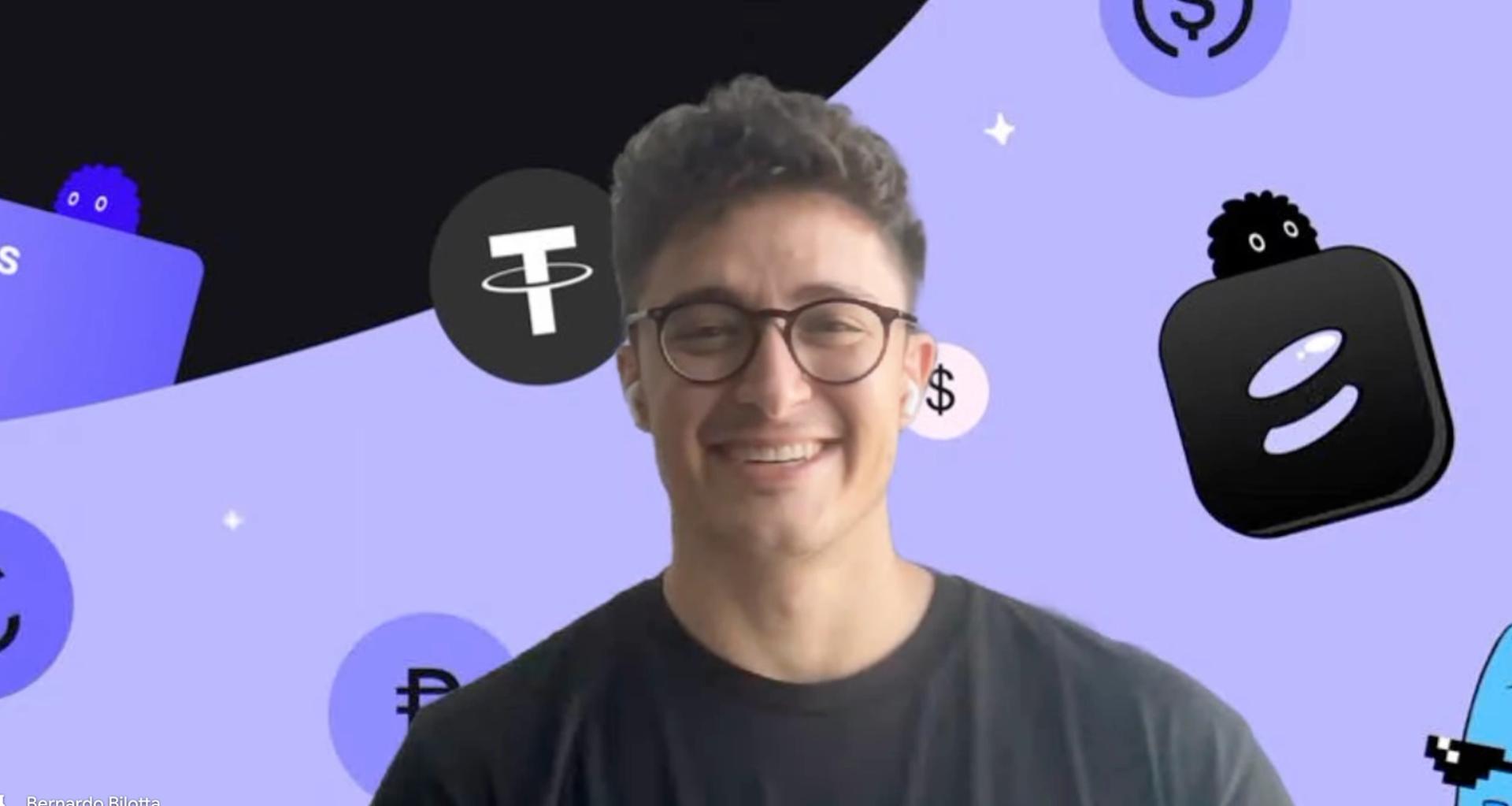
Many experts share Bilotta’s AI agent outlook, including Charles Hoskinson, founder and CEO of Cardano’s Input Output, who said that by 2035 they will become more relevant than humans.
The macro numbers support his stance. Data from the U.S. International Trade Administration via Trade.gov shows that business-to-business (B2B) e-commerce across the broader Asia-Pacific region is expanding at a 15% annual clip, with market values projected to climb past $28.9 trillion by the end of this year.
Yet, despite that explosive growth, the plumbing underneath remains broken. The problem is fundamentally an issue of legacy infrastructure and compliance, Bilotta noted.
Global financial regulations, banking protocols and identity verification checks were built strictly for humans. An autonomous AI software agent cannot pass a standard compliance check, he said or execute a payment loop unless a human manually intervenes to clear the transaction.
To bridge this structural gap, the industry requires a compliant backend middleware that acts as a universal interpreter. Bilotta explained that by dropping an Anthropic-standard Model Context Protocol (MCP) server directly into the payment infrastructure, software agents can programmatically navigate compliance, pull real-time FX quotes, and settle transactions natively across borders without human steps.
While institutional gatekeepers like Stripe and Mastercard have spent billions acquiring fiat-to-crypto APIs to secure traditional corporate treasuries, the automated machine-to-machine economy across emerging corridors remains heavily underserved.
Ethereum Price Prediction: Final Glamsterdam Tests Could Ignite ETH After FOMC
See the “Young Washington” cast side-by-side with the historical figures they portray (exclusive)

The UK city where house prices are increasing faster than anywhere else


-

 Business3 days ago
No Jackpot Winner as $257 Million Prize Rolls Over to $269 Million Monday Draw
-

 Crypto World6 days ago
Oppenheimer backs SpaceX as $70 billion retail frenzy builds
-

 Fashion5 days ago
Weekend Open Thread: Tuckernuck – Corporette.com
-

 Crypto World6 days ago
Markets Rally as SpaceX IPO Looms Amid Iran Tensions and Inflation Surge
-
 Crypto World3 days ago
Zimbabwe Requires Crypto Businesses to Register Annually Under New FIU Regulations
-

 Tech5 days ago
NanoClaw integrates JFrog registries to secure AI agent downloads
-

 Tech5 days ago
This Week In Security: Microsoft On Microsoft, Register Your Domains, Linux On ARM, And FreeBSD Joins The File Cache Club
-

 Crypto World4 days ago
Bitget enters Argentina’s regulated crypto market through PSAV registration
-
 Tech6 days ago
Dutton Ranch star claims they ‘didn’t see any disruption’ on set following Chad Feehan’s exit from Yellowstone spinoff fueled by Taylor Sheridan clash rumors
-

 NewsBeat6 days ago
El Nino has formed in the Pacific and could set records, forecasters say
-

 Politics6 days ago
Politics Home | Healey Resignation Is “Colossal Failure Of Government”, Says Former Labour Defence Secretary
-
 Entertainment6 days ago
Donnie Wahlberg & More Heat Up Las Vegas at Circa’s Barry’s Downtown Prime
-
 Tech6 days ago
Opendoor Ends India Operations, Fueling a Bigger Conversation About AI and Outsourcing
-

 Politics6 days ago
Belfast burns, while Met chief points finger at Iran and Russia
-

 Sports6 days ago
First Time Since 1971: Australia Register Historic Low In ODI Cricket
-

 Business6 days ago
AT&T: Verizon's 27% Outperformance Sets Up A Solid Entry Point
-

 NewsBeat5 days ago
FBI searches office of Ohio voter registration group
-
 Tech6 days ago
Anthropic is spending $150M to embed 1,000 AI fellows inside nonprofits. No degree required.
-

 Politics6 days ago
Modi thanks Trump for wishes as US attacks Indian seafarers
-
 Entertainment6 days ago
‘The Pitt’s Fan-Favorite Doctor Confirms Noah Wyle Gave His Blessing to Return [Exclusive]
You must be logged in to post a comment Login