

Politics
Stephen Spielberg Confirms E.T. Is ‘Moist’


Speaking to the New York Times recently, director Steven Spielberg answered an E.T. question he said he’d never been asked before.
Host of NYT podcast The Daily, Rachel Abrams, said: “The question is not original, and it’s probably only for me, but, was E.T. slimy or dry?”
The Disclosure Day director laughingly replied, “That’s a wild question.
“E.T. was a little moist,” he smiled, “but never slimy”.
He continued, “E.T. was only dry when E.T. got sick, and then E.T was dry…
“When I hear the word ‘slimy’, I think it’s… Ridley [Scott, the director of sci-fi flicks like Alien]’s, you know… alien, when the teeth come out. That’s slimy.
“E.T. never had the tendrils of drool,” Steven added (well, at least that’s… something?). “We didn’t go that far.”
Steven pushed back on Abram’s comment about the question not being original, too.
“I’ve never been asked that question before. Ever,” he stated.
The Standard has previously explained that the on-screen model was made from a metal animatronic base covered in foam latex. Whether Spielberg meant the actual model or the theoretical species to which E.T. belongs remains a mystery.
For those who still have questions about the on-screen alien – we have many – there’s more E.T. trivia.
We’ve written before at HuffPost UK about the fact that E.T. isn’t his real name.
Instead, he’s officially called Zrek.
We know this because of a nine-page treatment that Steven Spielberg and co-writer Melissa Mathison wrote to pitch a sequel for the movie called E.T. II: Nocturnal Fears.
The name Zrek was mentioned three times in the document, referring to E.T..
But alas, Spielberg said it was never meant to be.
“Sequels can be very dangerous because they compromise your truth as an artist,” he shared.
“I think a sequel to E.T. would do nothing but rob the original of its virginity. People only remember the latest episode, while the pilot tarnishes.”
If he were ever to make a follow-up film, though, it looks like he wouldn’t use artificial intelligence (AI) to render E.T.’s “moist” (shudder) skin.
Speaking to ITV recently, he said, “I would never have used AI” to create sounds in Disclosure Day.
He’d previously stated, “I’m not willing to substitute, because I don’t really believe in sentience… I don’t believe there is any substitute for the soul. I don’t think that is an algorithm that is inventible.
“Use AI as a tool, but do not use AI as the final word on anything creative. That’s where I draw the line.”


I’ve just about managed to get a new sourdough starter to bubbling good health, and have been amazed by how simple the process is.
All you need is water, flour, and time (as well as the ability to handle that day-three stench).
But just because it can be that easy, it doesn’t mean it always is. For instance, Paul Hollywood grates an organic Cox apple into his – and he’s not the only expert to recommend the method.
Here’s why that’s a great (or should I say… grate? Sorry!) idea.
Why should I grate an apple into my sourdough starter?
Of course, the step is completely optional. But given that sourdough starters are used for their wild yeasts and “good” bacteria, the addition makes sense.
A 2016 paper found that the addition of flowers, fruit, and berries to “mother” sourdough levains can stabilise the bacteria in the mixture quickly.
That’s important because in lots of ways, the formation of a strong starter is a kind of battle between “good” and “bad” bacteria.
That benefit was seen with all kinds of plant matter.
But only starters made with apple flowers (blossoms from an apple tree) or apple pulp contained multiple species of a bacterium called Acetobacter, which might make softer, taller, more flavourful loaves.
Shocker: bread legend Paul Hollywood knows what he’s doing.
How can I make a sourdough starter with apple?
Paul Hollywood grates one apple, skin-on – ” I like to use a Cox, but any organic apple will do” – into 1kg flour and 360ml water.
He recommends using organic kinds as too many chemicals might mean ”the starter may not ferment”. If the study we mentioned earlier is anything to go by, apple flowers should work too.
Mix those together and cover them in an airtight container (without touching them) for three days before your first feed.
Then, keep discarding some of the starter daily and adding flour and water to feed until it doubles in size consistently. I usually wait ’til it’s performed well three days in a row before I put mine in the fridge; I then feed it twice a week, once the day before use and once the day of.
If you use it more often, Hollywood says, keep it on the counter and feed it every three days.
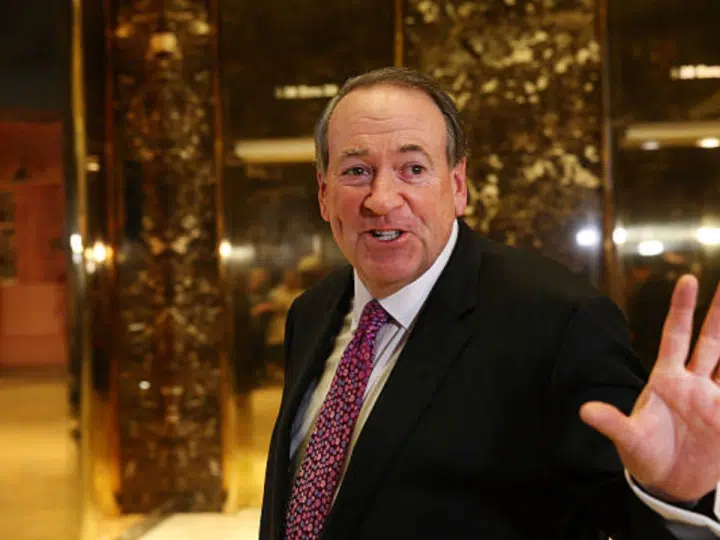
Deluded worldviews are everywhere in the Trump regime – they’re a requirement to be part of it. Few come more twisted than white nationalist and fanatical Zionist US ambassador to Israel Mike Huckabee. So twisted that Huckabee thinks Israel has a ‘right’ to take the whole of west Asia. But Huckabee even – and completely ahistorically – thinks the US wouldn’t exist at all if it wasn’t for Israel:
Back to front
Just for the record – and for Trump himself – the US has existed as an independent nation for well over 200 years. Israel was artificially created through ethnic cleansing and massacres in 1948 by Western imperialists – including, among others, the US. To the Palestinian people and anyone with a conscience, this is known as the ‘Nakba’, or catastrophe, and an ongoing catastrophe for humanity. To the likes of Huckabee, it’s apparently the salvation of the US.
Featured image via the Canary
By Skwawkbox
Politics
Politics Home Article | Labour MP Wants Tech-Facilitated Violence Against Women Defined In Law
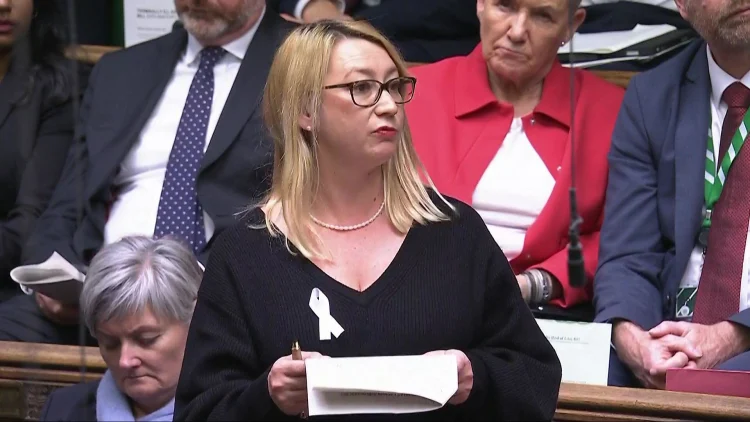

Labour Jess Asato has commenced legal proceedings against Elon Musk’s artificial intelligence company, xAI (Alamy)

5 min read
Labour MP Jess Asato has called on the government to create a legal definition of technology-facilitated violence against women and girls, arguing that stronger protections are needed to tackle the growing threat of AI-generated abuse.
Earlier this year, GrokAI – Elon Musk’s xAI company’s tool – generated non-consensual sexualised images of Asato, including bikini photos and a video showing her being chloroformed and prepared for a sexual assault.
The MP for Lowestoft, elected in 2024, has filed a civil claim in the High Court against xAI, alleging breaches of UK data protection law and misuse of private information.
Asato told PoliticsHome that the Online Safety Act, which started to come into force last year, must be strengthened to protect women, girls and other vulnerable people online.
As part of this, the Labour government should consider creating a statutory definition of technology-facilitated violence against women and girls, she said.
“At the moment, the violence against women and girls guidance from Ofcom is very comprehensive, but nobody’s following it,” she said.
“That’s partly because it doesn’t have statutory teeth, and so from my perspective, there is a very good case, which has been made for a while by the women’s sector, that the VAWG [violence against women and girls] guidance should be made mandatory and given proper regulatory status.”
Asato hopes that her case against X can set a legal precedent by testing whether an AI developer can be held liable for the design and deployment of its system, rather than the person who prompted the generation of the content.
She said she also hopes that ministers reconsider the introduction of a third-party advocacy body that could assess individual cases, collate evidence of breaches across multiple platforms, and monitor the implementation of the Online Safety Act, explaining that when she discovered the GrokAI-generated images of her, there was “nowhere else for me to go” after X said the content reported did not go against the platform’s standards.
During the passage of the Online Safety Bill, peers tabled several amendments designed to give individuals stronger representation. Baroness Kidron and others tabled an amendment to establish an Advocacy Body for Children, but it was not accepted. As it stands, Ofcom cannot investigate individual cases.
“That was a real missed opportunity,” Asato said.
“One of the problems Ofcom has is that if it’s not able to collate individual cases, it isn’t able to see the sum total of the harm that is occurring, and therefore be able to prove back to the companies that they are not following the Online Safety Act.
“Calls are definitely growing for there to be much stronger accountability, either given to Ofcom or another body entirely.”
Dex Hunter-Torricke, who spent more than a decade leading communications for some of the world’s biggest technology companies, including senior roles advising Musk, Mark Zuckerberg and Eric Schmidt, told PoliticsHome he found it “extraordinary” that the burden is placed on individuals like Asato to have to take legal action against platforms to prevent the generation of non-consensual images.
“Surely this is the entire point of passing legislation to protect people online,” he said.
“We need to have a better systemic fix for that. Most people don’t have the resources all the time to go and defend themselves, especially if that might involve a legal case. It’s very, very troubling that after so many years arguing about how to protect people online, we still don’t actually have our right mechanisms in place as a country.”
Asato has welcomed the government’s announcement that it will go ahead with a ban on certain social media platforms for under-16-year-olds, describing it as a “big, brave step”, alongside other announcements such as new plans by the government to force Big Tech companies to activate built-in features or implement technical solutions on smartphones to detect and block nude images for children.
Despite her experience on the site, Asato has decided to continue using X as a social media platform, and not say when asked whether the government should stay on it.
“Many politicians have left X for very understandable reasons of safety and well-being, but I stay on it because I don’t want to be bullied off a platform,” she said.
Another Labour MP, Alistair Strathern, has proposed a new law to make Relationships and Sex Education mandatory up to 18 to help combat violence against women and girls.
Strathern, who is co-chair of the Labour Group for Men and Boys and a former teacher, said: “For too long, children in further education have missed out because of gaps in the provision of Relationships and Sex Education.
“At a time when the worst corners of the internet are preying on teenagers, with their own harmful takes on what makes a healthy relationship, we surely owe young people far better than this.
‘My bill will put this right and make it mandatory for all settings to give children the space, support and advice they need as they navigate this formative stage. With 16-19-year-olds facing the highest rates of domestic abuse of any age group, the real-world consequences of failing to act couldn’t be clearer.”
PoliticsHome has contacted the Department for Science, Innovation and Technology for comment.
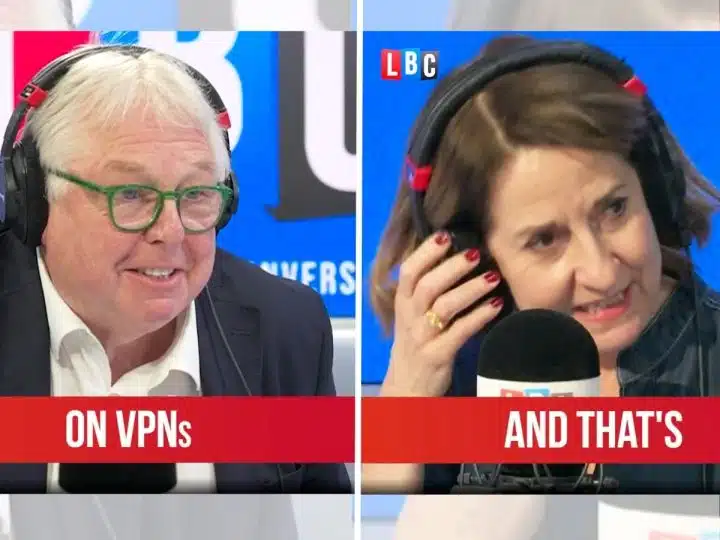
On 15 June, the government announced a social media ban for under-16s. Since the announcement, there has been much reporting on Virtual Private Networks (VPNs). This software solution allow users to spoof their location, meaning they can get around UK-specific age restrictions. Speaking on this workaround, technology secretary Liz Kendall has basically admitted the government has no solution:
Hahahaha yeah this ban is not going to work https://t.co/OlTlWZ5uZr
— Maxwell Marlow
 (@maxwell_marlow) June 16, 2026
Social media ban doesn’t keep kids safe
In the clip above, LBC host Nick Ferrari shows Kendall how quick and easy it is to connect with a VPN (answer = very). In response, Kendall explained that she’s going to return with a solution in July. This suggests she doesn’t have an answer now and won’t have one in a month, because they’ve already had half a year to figure this out.
Australia introduced its own social media ban in December 2025. As we know, VPNs are one of the ways which Australian kids have used to get around the ban. And as we also know, the majority of these kids still have social media accounts.
As the Molly Rose Foundation demonstrated:
Three in five (61%) Australian 12-15 year-olds who had accounts on restricted platforms before the ban came into force still have access to one or more accounts. Major platforms have retained a majority of their child users, with 53% of previous TikTok users, 53% of YouTube users and 52% of Instagram users still able to access an account on these platforms.
. …
Molly Rose Foundation warns this data raises major question marks about the effectiveness of Australia’s social media ban, and that given the findings it would be a ‘high stakes gamble’ for the UK to follow suit at this stage.
Today we warn that Australia’s ban is failing to act as the urgent and decisive firebreak that proponents of a ban have suggested. Instead, it risks offering parents a false sense of safety and risks letting tech firms off the hook for safety failings.
Speaking further on this point, the Canary’s Maddison Wheeldon wrote:
the problem is unregulated, unyielding tech companies and unfettered capitalism – and the government appears to have chosen to go after an easier target in young people instead of holding billionaires accountable.
Messy
Think tank director Maxwell Marlow additionally had this to say:
The political cost is too great for them to do so
— Maxwell Marlow
(@maxwell_marlow) June 16, 2026
It’s actually a very common security practice for businesses to use VPNs on their company networks. In other words, there isn’t a simple way for the government to ban VPNs, even if they wanted to. And yet again, it would be adding new layers of complexity to a solution which is already overly complicated.
As many suspect, none of this is to keep children safe; it’s to implement Digital ID by the backdoor, and to allow private companies to scrape our data. In other words, the government doesn’t care if children use VPNs or not.
Featured image via LBC
By Willem Moore

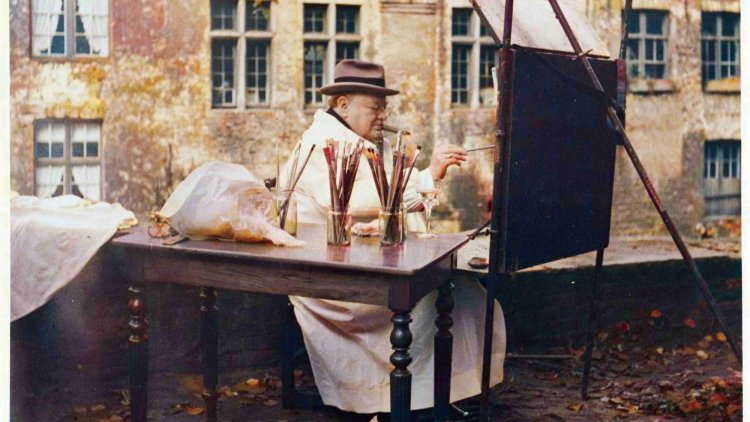
September 1946: Winston Churchill painting in Belgium | Image: © Churchill Archives Centre

5 min read
At a time of turmoil, political leaders could do no worse than seek inspiration from this revealing and enjoyable retrospective of the paintings of Winston Churchill
I was delighted, when arts minister, to learn that the Wallace Collection was planning a Winston Churchill retrospective. It might seem a surprising choice for this museum of decorative arts, but it has a splendidly Churchillian connection: the great-granddaughter of Sir Richard Wallace – the Conservative MP who left the collection to the nation – was Odette Pol-Roger. She befriended Churchill over dinner at the reopened British Embassy in Paris in 1944, reserved an entire vintage for him, and sent him a case each year for his birthday.

Image: © Churchill Heritage Ltd. Image courtesy Churchill Heritage Ltd
The wartime premier’s Nobel Prize in Literature is well-known; less so is his renown as an artist. After two of his paintings were pseudonymously accepted into Royal Academy’s Summer Exhibition, he was elected an honorary academician in 1948. A decade later, a selection of his works toured the United States, Canada, Australia and New Zealand before a hugely popular show at the Royal Academy in London – but there has been no national exhibition in the UK since his death in 1965. High time, then, for this illuminating and enjoyable show, curated by Xavier Bray and Lucy Davis.
These canvases illuminate the visual metaphors in his famous speeches
Churchill turned to painting at one of his lowest ebbs, after his dismissal as first lord of the admiralty in the wake of Gallipoli. Ejected and dejected at the age of 40, “the Muse of Painting came to my rescue”. She would remain an inspiration and comfort the rest of his life. “Painting is complete as a distraction,” he later explained. “I know of nothing which, without exhausting the body, more entirely absorbs the mind.”

Though self-effacing about his “daubs”, the apprentice was typically committed to improvement. His earliest mentor was the society portraitist and war artist Sir John Lavery. One of the most arresting images in this exhibition is the self-portrait Churchill produced at Lavery’s studio in 1915, shrouded in darkness and shadow, an echo of his turmoil that autumn.
High birth and high office allowed him to seek the advice of other artists. Sir William Nicholson – “the person who taught me most about painting” – stayed at Chartwell and tutored him in still-life, though with a Churchillian twist in the choice of subject: bottles of brandy and Johnnie Walker. Walter Sickert encouraged a greater spontaneity and more vibrant palette – seen in his Moroccan landscapes, or in his 1949 Twenty-Minute Sketch of Lake Carezza, painted en route to the inaugural session of the Council of Europe. To stop him overworking it, his wife Clementine is said to have asked a bodyguard to hide it under his bed.

Image: © Churchill Heritage Ltd. Image courtesy Churchill Heritage Ltd
The nearly 60 works selected here (from an oeuvre of over 500) amply demonstrate his development and curiosity, from hasty despatches from the Great War trenches to sophisticated studies of the state rooms at Blenheim Palace.
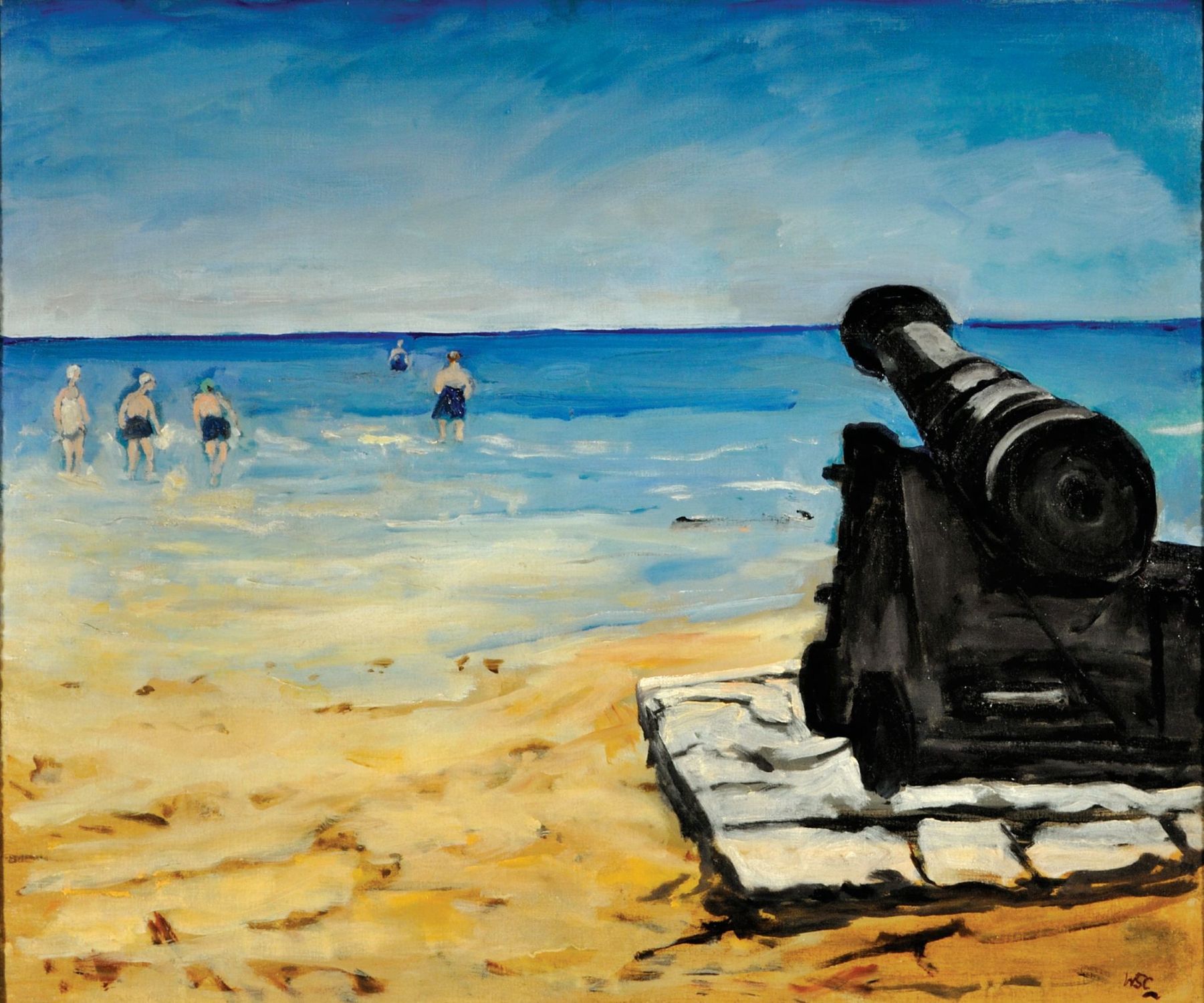
Especially revelatory is The Beach at Walmer, painted in 1938 and depicting the Churchill family paddling in Kent. The artist himself stands apart, looking out across the Channel. A Napoleonic cannon follows his gaze, echoing the warnings of the man who, within three years, would be lord warden of the Cinque Ports.
 Just as Churchill mobilised the English language and sent it into battle, these paintings show how he deployed every medium in the campaigns he waged. These canvases illuminate the visual metaphors in his famous speeches – read in the audio guide by Sir Gary Oldman – and the list of friends and allies to whom he gifted them (set out meticulously in the catalogue by Lord Roberts of Belgravia) explain how he wielded soft power both at both a personal and geopolitical level. The list of lenders reads like a Who’s Who of the allied powers; parliamentarians will recognise the works on loan from the Churchill Room and the No lobby of the Commons.
This exhibition of the great statesman’s work runs until 29 November, the day before his 152nd birthday. Any other political leaders facing turmoil between now and then might find inspiration in it.
Lord Parkinson of Whitley Bay is a Conservative peer
Winston Churchill: The Painter
Curated by: Dr Lucy Davis & Dr Xavier Bray
Venue: Wallace Collection – until 29 November

Austin Powers star Mike Myers has given the shortest of possible updates on a possible fourth entry in the hit franchise.
Austin Powers 4, which has been rumoured to be in the works as far back as 2011, has never been officially confirmed – despite Mike, who plays both the titular role and Dr Evil in the groovy flicks, expressing his interest in the past.
Previously, Deadline reported, Austin Powers director Jay Roach said the future of the franchise depended partly on the Shrek star.
“I wouldn’t say ‘never’ never, but it does depend on Mike having something that he’s inspired about and after all these years it hasn’t quite clicked yet,” the director said at the time.
“But I’m always game for anything he wants to do. He’s a genius and he helped me get started and it was a blast.”
Roach may want to get his clapboard ready, then.
During a recent episode of Trevor Noah’s World Cup Watch Party, the host read out a fan-written question: “Are we ever gonna see an Austin Powers 4?”
Myers didn’t hesitate before responding “Yes,” to which Trevor replied, “Wow. That was a quick yes”.
The caption of the Instagram video that captured the moment read, “Did Mike Myers just casually reveal Austin Powers 4?”
If the film ever does come to (lava-lamp-sourced) light – even if it’s released this year – it’ll have been after a gap of at least 24 years.
“He was frozen again for another 30 years,” one commenter joked under the Instagram post announcing the brief update (in the movie, a ’60s spy is brought back to life after being frozen for decades).
And while we still don’t know much else about the movie’s return, Mike formerly told Entertainment Tonight that he’d like to do a new installment from villain Dr Evil’s perspective.
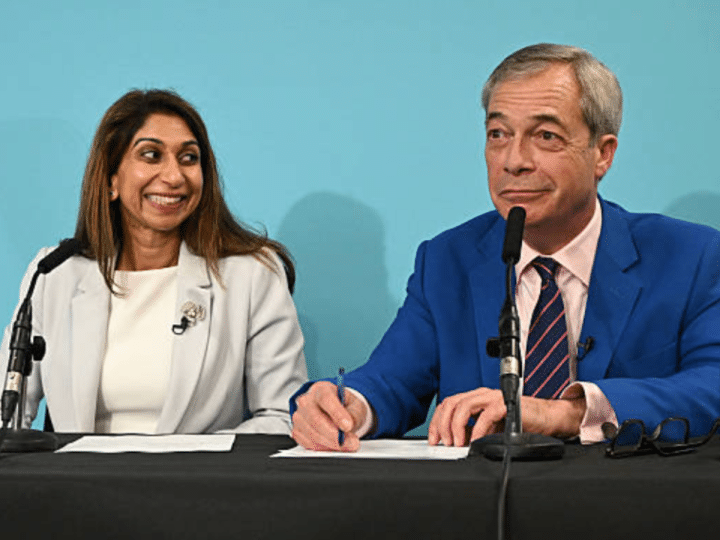
Whilst supporting sexist Robert Kenyon from Makerfield as he attempts to become MP in the upcoming by-election, Suella Braverman has announced Reform UK’s ‘Women and Motherhood Protection Act’ as she states that the far-right party will ‘back working mums’ and:
stand up for women.
Taking aim at the Labour government, Braverman argued Starmer’s party:
believes that a man can be a woman, has failed the victims of grooming gangs and will only let women down.
Watch Suella Braverman lay out how our Women & Motherhood Protection Act will back working mums. — Reform UK (@reformparty_uk) June 16, 2026
 pic.twitter.com/hn77tNFEpv
Braverman believes sexists will ‘protect women’ apparently
However, two pretty glaring issues arise here: her former party, the Conservatives, were responsible for maternity policy for nearly 15 years, and her current party platforms, empowers, and pedestals abusive, sexist men.
Announcing this virtue-signalling policy, Braverman said:
I’m here in Makerfield to support our fantastic Reform UK candidate Rob Kenyon and I’m delighted to be announcing our new policy of which I’m really proud. We want Britain to be the best country in the world for working mums.
That’s why a Reform UK government will roll out the Women’s and Motherhood Protection Act, which represents the largest set of protections for women in the workplace in British history. lost their job just because they had a baby.
As a working mum myself I find that disgraceful. It is unfair and under Reform UK that ends. We will change the law to give women more maternity protections in the workplace.
We’ll make sure that the same work gets the same pay and we will make sure that unlawful discrimination stops.
As has become typical of the bigotry-stoking, hate-fueling far-right party for the super-rich, the former Tory minister took aim at Labour citing the grooming gang scandal and the now pretty worn-out attacks against trans communities.
Then, despite having done absolutely nothing to improve rights for working women when she sat in cabinet, she insisted:
Vote Reform to stand up for women. and to back working mums.
Nevertheless, this hypocrisy becomes even more glaring as she joins Kenyon in his van in a clear attempt to rehabilitate the sexist and win over the women’s vote in the UK.
This arguably suggests that this misogynistic party has remembered that women account for half of the voting population.
Great to have @SuellaBraverman in the van to chat about our new Women & Motherhood Protection Act.
Reform will go further than any party ever has to protect women in the workplace. pic.twitter.com/IFApUv9tqg — Cllr Rob Kenyon (@RobKenyonReform) June 16, 2026
Reform promotes sexual predators – they don’t care about women
Proving the party attracts abusive men and misogynistic attitudes which increase the threats against women – in turn, failing to protect the UK’s female population – really isn’t a difficult feat.
We wrote recently about how Reform supporters in Makerfield showed no shame stating that they would choose sexual predator Jimmy Saville if it meant unseating PM Keir Starmer.
When our own Willem Moore challenged the remarks, Lee Anderson rushed to defend the grotesque glorification of a serial sexual abuser – one accused by around 450 people, 82% of whom were women with 80% abused as children.
Predictably, Anderson’s intervention backfired spectacularly. After all, any sensible adult who respects women could see the defence was indefensible. Rather than containing the outrage by showing even a shred of humility and accountability, he poured fuel on the fire by creating AI generated images which only intensified the backlash and forced the post’s eventual deletion.
Lee Anderson now complicit in a lie.
Look at the one you’ve posted. It’s not Rob Kenyon, and the logo is AI warped. Plus look at the union flag.
Why did your councillor Gemma Painter delete it and then her Facebook?
Because it was real.
Here’s also images by Stephen… pic.twitter.com/MZr7MxKiyd — Reform Party UK Exposed
 (@reformexposed) June 16, 2026
Also, the attacks at Labour – who, yes, do not deserve to stay in power – hardly proves that Reform UK are any better. After all, victims of the grooming gang scandal demanded an apology from Farage last year after he made it abundantly clear that he was interested in ‘fighting’ for victims of sexual abuse only when the perpetrators were Pakistani Muslims.
In his mind, ‘widening the scope’ brought other women in who don’t seem to get any compassion from the millionaire party leader.
One of his former employees has also called out his blatant opportunism – similar to what we are seeing with this ‘protection’ act for women – and we’ve documented numerous times where Farage has been more than happy to mix with rapists and sex traffickers.
Moreover, a female Reform councillor has quit over sexism and bullying, which is pretty telling in itself.
However, this becomes pretty depressing when you see the level of support the party is getting and the fact it stands a very real chance of gaining power in the next general election.
Women and girls NEED genuine protection – and that’s from Reform, too
Reform UK will never be a party which genuinely protects women – that is abundantly clear to see just by who they empower, and the women that they disregard.
If women are prepared to target and vilify Muslim people or asylum seekers in the UK, they have the party’s support. If they wish to draw attention to abuse from other groups, in particular those responsible for the majority of harm – pervy patriarchal white men – they go on the attack and diminish women’s traumatic experiences instead.
Therefore, this sickening attempt to glorify and rehabilitate this party of sexists and racists as somehow the ‘beacon of hope’ for women is frankly, deplorable.
The past few months have shown that women and girls need protection from Reform – not being preached to by a bunch of hypocrites.
Featured image via the Canary


The Canary has reported previously on the Business and Human Rights Centre’s Transition Minerals Tracker. And now the latest report reveals a dramatic and accelerating human rights crisis at the mines supplying the global transition to clean energy.
The figures for 2025 show a staggering 111% overall increase. There were 329 allegations of abuse linked to transition mineral mining operations worldwide, up from 156 the previous year.
The latest report examined more mines than the previous year. Across mines also appearing in the 2025 report, there were 270 allegations, an increase of 73%.
It’s the only research of its kind. And it reveals direct implications for renewable energy companies relying on these minerals and their investors:
- Nearly 70% of mines associated with at least one allegation of abuse are owned by or linked to listed companies. This represents significant material risk for investors.
- In 2025 alone, community resistance resulted in 27 mine suspensions, slowdowns or closures.
- One in seven allegations (44 out of 329) led to lawsuits or regulatory action.
- Since 2010, the report has recorded a total of 1,226 allegations of abuse, closely linked to rising social conflict around mining operations.
Despite these risks, corporate accountability remains dangerously weak. Just 10 companies and 33 mines (out of 299 tracked) accounted for 50% of all 2025 allegations.
Glencore, Rio Tinto and First Quantum Minerals led the list of most frequently implicated companies, in part due to their market dominance.
Yet concentration among a small number of actors does not diminish the systemic nature of the risk. Close to half the mines linked to allegations of abuse lacked even a basic public human rights policy. And the absence of meaningful human rights due diligence is a concern for the entire renewable energy sector.
Systemic risk across geographies and minerals
The 2026 Tracker numbers make clear that human rights risks are not confined to a handful of operations or geographies:
- Copper, which accounts for around a quarter of renewable energy mineral demand, is associated with 60% of allegations recorded since 2010.
- The risks for iron ore, bauxite, nickel and rare earth elements are also growing.
- All regions recorded a surge in allegations in 2025.
- Africa saw the sharpest rise, with 100 allegations recorded – an increase of 122% from 2024.
- South America continued to record a high number of allegations, with 97 in 2025 – nearly double from 2024.
- Workers’ rights and safety are under significant threat, with 92 allegations recorded, including 22 deaths – nearly double the 2024 figure.
Blanca Racionero Gomez of the Business and Human Rights Centre said:
This year’s data is the biggest increase we have ever seen year-to-year and makes clear that this is no longer an emerging issue. The world cannot build a clean energy future on the foundation of human rights abuses – and one built in this way will not ultimately succeed.
The minerals powering our clean energy future are being extracted at a growing human cost, with allegations of abuse up 73% in a single year [across the same mines] – and Indigenous communities, workers, environmental defenders and women paying the heaviest price.
A small number of powerful mining companies are responsible for the lion’s share of this harm – and too many are operating without even the most basic human rights policies in place.
This is a moral failure, and a strategic one: we can see communities are fighting back, mines are being shut down, and supply chains are being disrupted.
Every year of inaction risks more harm to those on the frontlines, as well as another year of risk accumulating for investors and companies who have the power, and the responsibility, to do better.
Direct consequences for investors and their renewable energy companies
There is a human rights crisis unfolding in the supply chains of renewable energy companies and this is turning into a direct risk for investors. Their portfolios are directly exposed to the reputational, financial and legal consequences, representing material financial risk.
For renewable energy companies, the picture is equally stark. Social conflict around mining operations is on the rise, with 173 cases recorded, including protests (61), strikes (10) and lawsuits or regulatory action (44). Failing to address these harms is already leading to mineral supply chain disruptions, affecting operational timelines and costs.
Gomez added:
Mining companies and their investors cannot treat human rights as a compliance exercise. Respect for human rights, fair negotiations, the Free, Prior and Informed Consent of Indigenous Peoples, and protection for people raising concerns about mining impacts are essential conditions for a successful energy transition.
Where these safeguards are absent, conflict follows. Communities resist, projects stall, supply chains become less reliable, and risks for investors and companies grow. A just transition is not only the right approach – it is the only durable one.
Featured image via the Canary
By The Canary

About 40% of Brits hadn’t finished a book in the 12 months between 2024-2025, YouGov reported.
Of those who had, 30% listened to an audiobook; 18% had ticked titles off their list through headphones, without ever picking up a physical book.
Some people think that shouldn’t “count,” though. For instance, author Nathan Bransford said in his blog, “Consuming an audiobook is a fundamentally different activity than reading. We already have a word for it: LISTENING”.
He also argued that reading from a page engages the brain differently. But not everyone agrees.
What does science say?
In 2016, Dr Beth Rogowsky, a professor specialising in language learning styles from Bloomsburg University of Pennsylvania, co-authored a study comparing comprehension rates for people listening to audiobooks to those who read from an e-reader page and another group who did both.
It tracked how much they remembered right after taking in the information and two weeks later.
Speaking to NPR, Dr Rogowsky said, “We found that there was no significant difference between reading a book using a Kindle or listening to a book or doing both – listening and reading simultaneously.”
Of course, that was only for adults who already knew how to read; the professor said physical books might be more helpful to children who can’t yet read.
But, to be fair, the “do audiobooks count?” debate does not rage among three-year-olds so much as it does those with Goodreads accounts and access to Reddit.
OK, but what about the word “reading”?
Fine, you might take in information from listening to an audiobook. But that isn’t the definition of the word reading – is it?
Well, major dictionaries don’t seem to agree about that.
Merriam-Webster defines “to read” as “to receive or take in the sense of (letters, symbols, etc.) especially [but not exclusively!] by sight or touch”.
Another definition – “to learn from what one has seen or found in writing or printing” – does not technically preclude listening.
Cambridge Dictionary, however, puts the first definition as “to look at words or symbols and understand what they mean,” and Collins Dictionary puts “look” in their main definition too.
TBH – who cares?
A very compelling article, written by visually impaired author James Tate Hill for Literary Hub, reads: “It was hard to say if the words read with my ears reached my brain differently from everything I had read with my eyes”.
For instance, he said, the narration of audiobooks placed a new layer on top of the experience – but it took “minutes” for the author’s words to override the narrator’s voice.
He identified as a “reader” thanks to his love of audiobooks, and added it “didn’t matter if I was reading or listening” to his favourite titles; “the words in my ears were the same words other people saw when they held a book in their hands.”
I have to agree. The strongest argument I can find against calling listening to audiobooks “reading” is a (disputed) semantic nuance, but I don’t find that compelling enough to stop someone calling themselves a reader if they want to (side note: self-identifying as a reader is linked to increased happiness).
It’s true that you can’t fold laundry while you’re rifling through War and Peace, and accents and pace changes are more in your control when you read from a page.
But seeing as two in five people aren’t enjoying books in any form, that information seems to land similarly whether it’s read from a page or some headphones, and that reading is good for us, whether we listen or look, I’m not particularly fussed about how it’s done.

An SAS soldier is being prosecuted for allegedly sending grisly images of dead bodies and prisoners to his Royal Air Force (RAF) officer partner. The images were from a classified mission in 2021. The prosecution lawyer says the images risked compromising operations.
The SAS is the British Army’s most secretive and elite unit. The location of the mission has not been disclosed. The Rupert Murdoch-owned Sun newspaper reported on 16 June:
The accused, known as Soldier A, also shared comrades’ names and locations of their secret bases.
Police found 1,100 classified pictures and 140 sensitive videos on his personal mobile phone, which he should not have had on missions, prosecutors said.
They allegedly included pics of corpses and prisoners from a foreign mission “which was classified secret”.
Royal Navy prosecutor Edward Hannah said:
Soldier A divulged information to her that is sensitive, including photographs of himself.
Soldier A’s girlfriend is reportedly a serving RAF officer. Hannah said:
He told her where he was and gave her information about what he was doing.
SAS case
The Sun reported:
Bulford military court heard he was serving with a “specialist unit” and was leading a “sensitive site exploitation team” responsible for seizing intelligence during or after raids.
Soldier A denies:
one charge of disclosure of information useful to the enemy and two counts of negligence of duty.
Hannah said the senior soldier had:
kept imagery while on operation which can be used to help other units.
Adding that Soldier A should have:
used his common sense to know the information was classified.
The leak could have “damaged international relations”, Hannah argued.
The special forces soldier was:
arrested in January 2022. Police seized several electronic devices from his residence and “a significant amount of operational related material” which was classified secret.
UK special forces are rarely, if ever, commented upon by the UK government. Details of where the SAS was in combat in 2021 are not known but it is apparent from the trial that there were casualties. The trial continues at Bulford court martial centre.
Featured image via the Canary
By Joe Glenton

The Fruit Paul Hollywood Insists You Start Adding To Your Sourdough

Ryanair boss slams EU rule change to flight bookings
Northland reiterates Ambarella stock rating on AI workload shift


-

 Business3 days ago
No Jackpot Winner as $257 Million Prize Rolls Over to $269 Million Monday Draw
-

 Crypto World6 days ago
Oppenheimer backs SpaceX as $70 billion retail frenzy builds
-

 Fashion5 days ago
Weekend Open Thread: Tuckernuck – Corporette.com
-

 Crypto World6 days ago
Markets Rally as SpaceX IPO Looms Amid Iran Tensions and Inflation Surge
-
 Crypto World3 days ago
Zimbabwe Requires Crypto Businesses to Register Annually Under New FIU Regulations
-

 Tech5 days ago
NanoClaw integrates JFrog registries to secure AI agent downloads
-

 Crypto World4 days ago
Bitget enters Argentina’s regulated crypto market through PSAV registration
-

 Tech5 days ago
This Week In Security: Microsoft On Microsoft, Register Your Domains, Linux On ARM, And FreeBSD Joins The File Cache Club
-
 Tech6 days ago
Dutton Ranch star claims they ‘didn’t see any disruption’ on set following Chad Feehan’s exit from Yellowstone spinoff fueled by Taylor Sheridan clash rumors
-

 NewsBeat6 days ago
El Nino has formed in the Pacific and could set records, forecasters say
-

 Politics6 days ago
Politics Home | Healey Resignation Is “Colossal Failure Of Government”, Says Former Labour Defence Secretary
-
 Entertainment6 days ago
Donnie Wahlberg & More Heat Up Las Vegas at Circa’s Barry’s Downtown Prime
-
 Tech6 days ago
Opendoor Ends India Operations, Fueling a Bigger Conversation About AI and Outsourcing
-

 Politics6 days ago
Belfast burns, while Met chief points finger at Iran and Russia
-

 Sports6 days ago
First Time Since 1971: Australia Register Historic Low In ODI Cricket
-

 NewsBeat5 days ago
FBI searches office of Ohio voter registration group
-

 Business6 days ago
AT&T: Verizon's 27% Outperformance Sets Up A Solid Entry Point
-
 Tech6 days ago
Anthropic is spending $150M to embed 1,000 AI fellows inside nonprofits. No degree required.
-

 Politics6 days ago
Modi thanks Trump for wishes as US attacks Indian seafarers
-
 Entertainment6 days ago
‘The Pitt’s Fan-Favorite Doctor Confirms Noah Wyle Gave His Blessing to Return [Exclusive]
You must be logged in to post a comment Login