Connect with us
DAPA Banner
DAPA Coin
DAPA
COIN PAYMENT ASSET
PRIVACY · BLOCKDAG · HOMOMORPHIC ENCRYPTION · RUST
ElGamal Encrypted MINE DAPA
🚫 GENESIS SOLD OUT
DAPAPAY COMING

NewsBeat

‘Imagination and creation are products of time and space’

Published

on

‘Imagination and creation are products of time and space’

Ireland’s basic income for artists has been made permanent after research showed that it boosted the economy. Other nations have similar schemes. With more homegrown artists now coming from privileged backgrounds and AI disrupting the creative industries, should the UK follow suit?

On the first weekend of July last year, Britain’s flatlining economy got a boost from two unlikely sources: heavy metal pioneers Black Sabbath and Britpop heroes Oasis. Who said rock ’n’ roll was dead?

Leaving aside for a moment the cultural significance of these iconic bands reuniting, there was an impact that could be measured in cold, hard economics.

Advertisement

Estimates suggest that Sabbath’s farewell gig in Birmingham – a city that has cut its arts budget to zero – injected £20m into the local economy. Meanwhile, the UK leg of Oasis’ tour, which kicked off in Cardiff the same weekend, provided a £1bn shot in the arm to the nation’s economy. Not bad for two bands whose members were on the dole before achieving rock star status.

Advertisement

For working-class creatives, music has long been an escape from hard lives. Less so these days. The record industry that propelled the likes of Sabbath and Oasis to fame is unrecognisable today. The collapse in physical record sales in the free-for-all streaming age has gutted the sector, leaving musicians struggling to make a living.

The loss of grassroots music venues – a third have closed in the UK over the last 20 years – has compounded the issue. Cuts to arts budgets have been similarly devastating, while the rise of generative AI poses further headaches for creatives of all stripes, not just musicians – and all that amid a cost of living crisis.

According to the charity Arts Emergency, such headwinds are having a disproportionate effect on working-class, disabled and minority ethnic artists, who have long been underrepresented in UK culture.

“It’s a time of great precarity for the cultural sector and society in general,” says Neil Griffiths, CEO of Arts Emergency. “Imagination and creation are products of time and space, but there isn’t the time and space anymore. Society is unequal, while culture is undervalued and underfunded.”

Advertisement

As a result, often only the privileged have time to create. “Just one in 10 people who work in culture in the UK are from a working-class background,” says Griffiths.

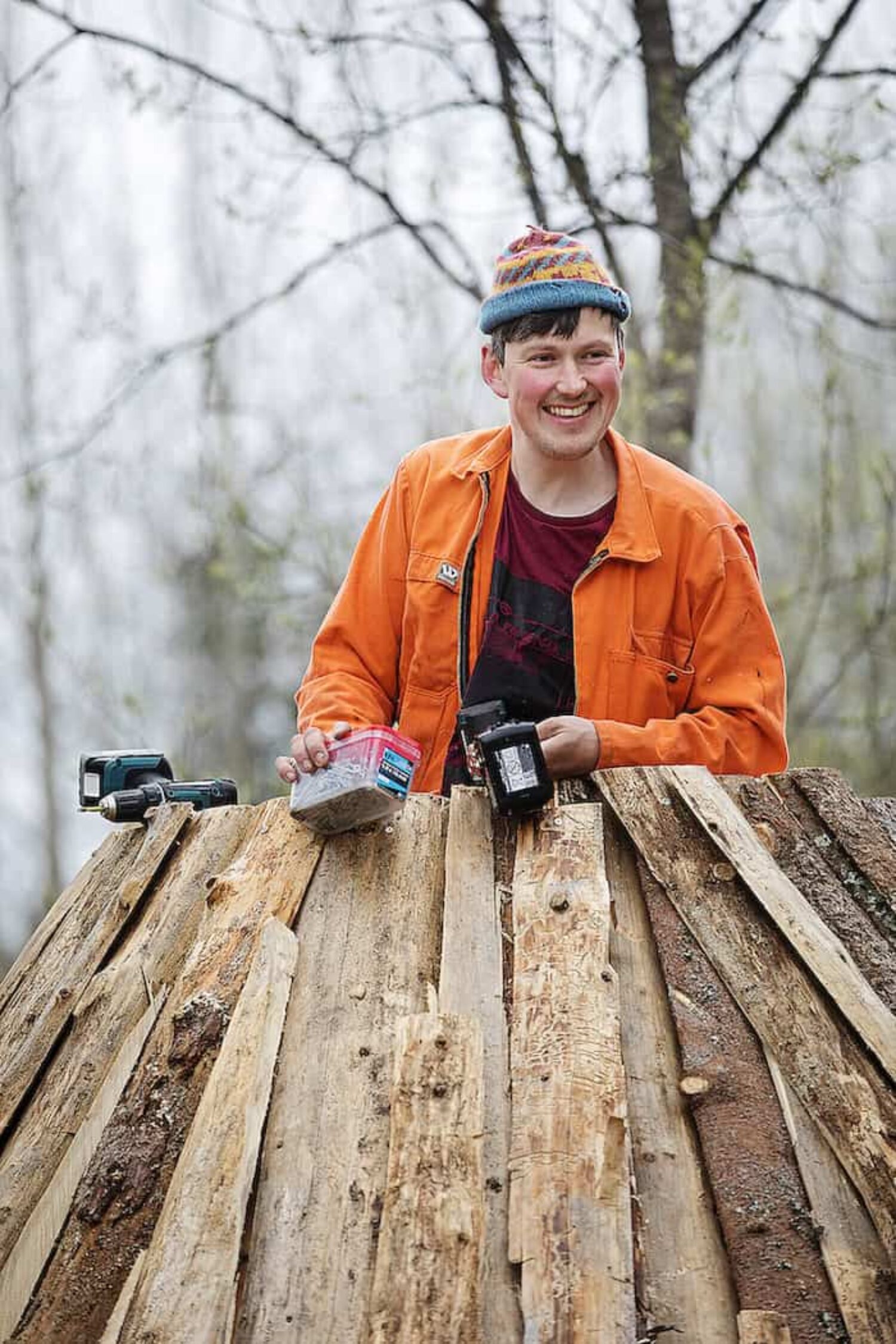
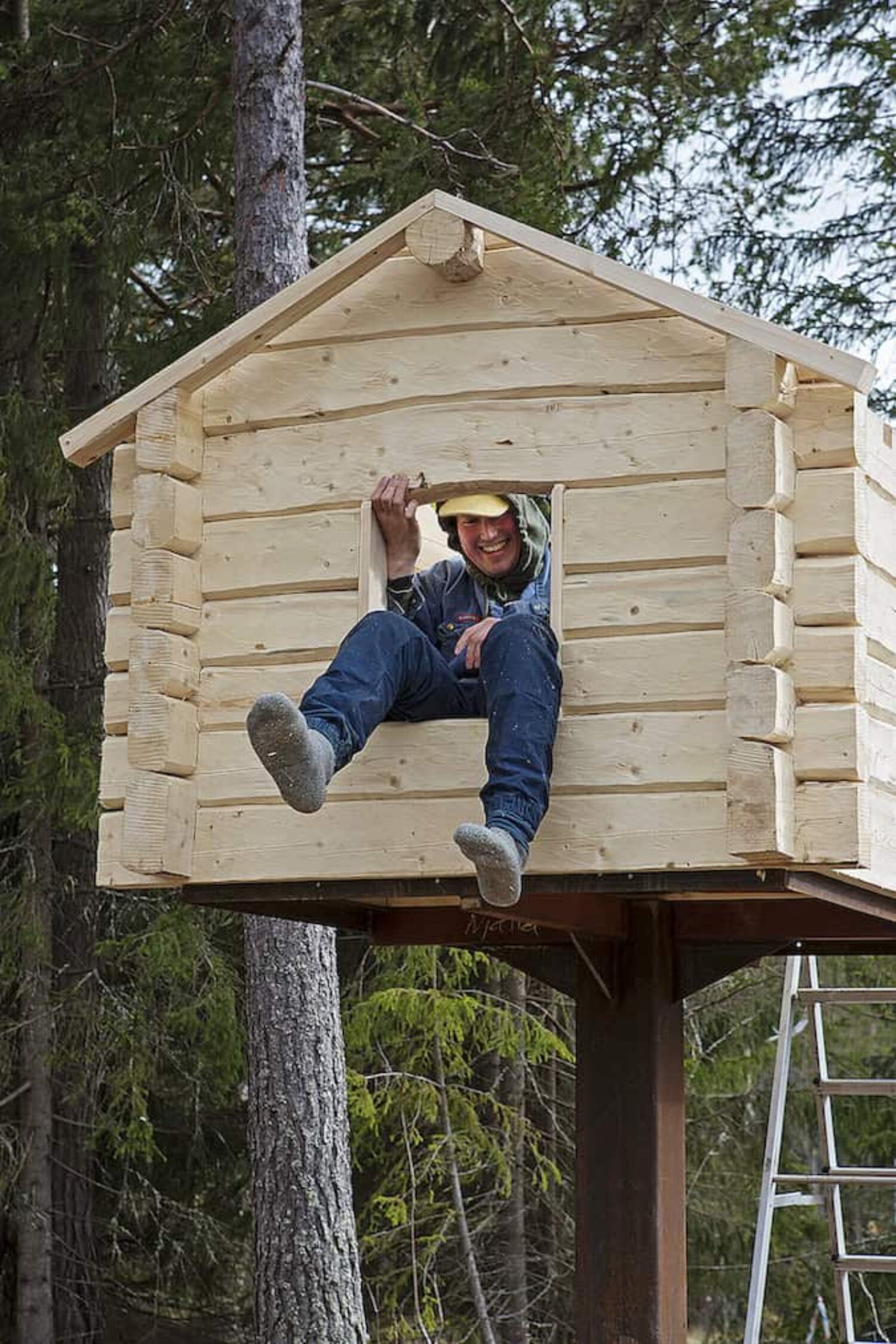
Artist Tobias Prytz, who creates large-scale installations using timber, is a beneficiary of Norway’s model for supporting artists, receiving around 330,000 NOK (£25,600) per year

Advertisement

For a country that glorifies Winston Churchill, the UK appears to have missed his memo on culture: “The arts are essential to any complete national life,” he said in a 1953 speech. “The nation owes it to itself to sustain and encourage them.”

Other nations recognise as much. In 2022, the Irish government trialled a first-of-its-kind basic income for artists to kickstart culture as the country emerged from the pandemic.

Offering participants a weekly stipend of €325 (£283), the €25m (£21m) pilot helped more than 2,000 artists. According to a study published last year, the scheme generated €100m (£87m) in “social and economic benefits” to Ireland’s economy, meaning it more than paid for itself.

Buoyed by the data, the Irish government made the scheme permanent in February. In the long history of basic income trials, it’s the first to become permanent.

Advertisement

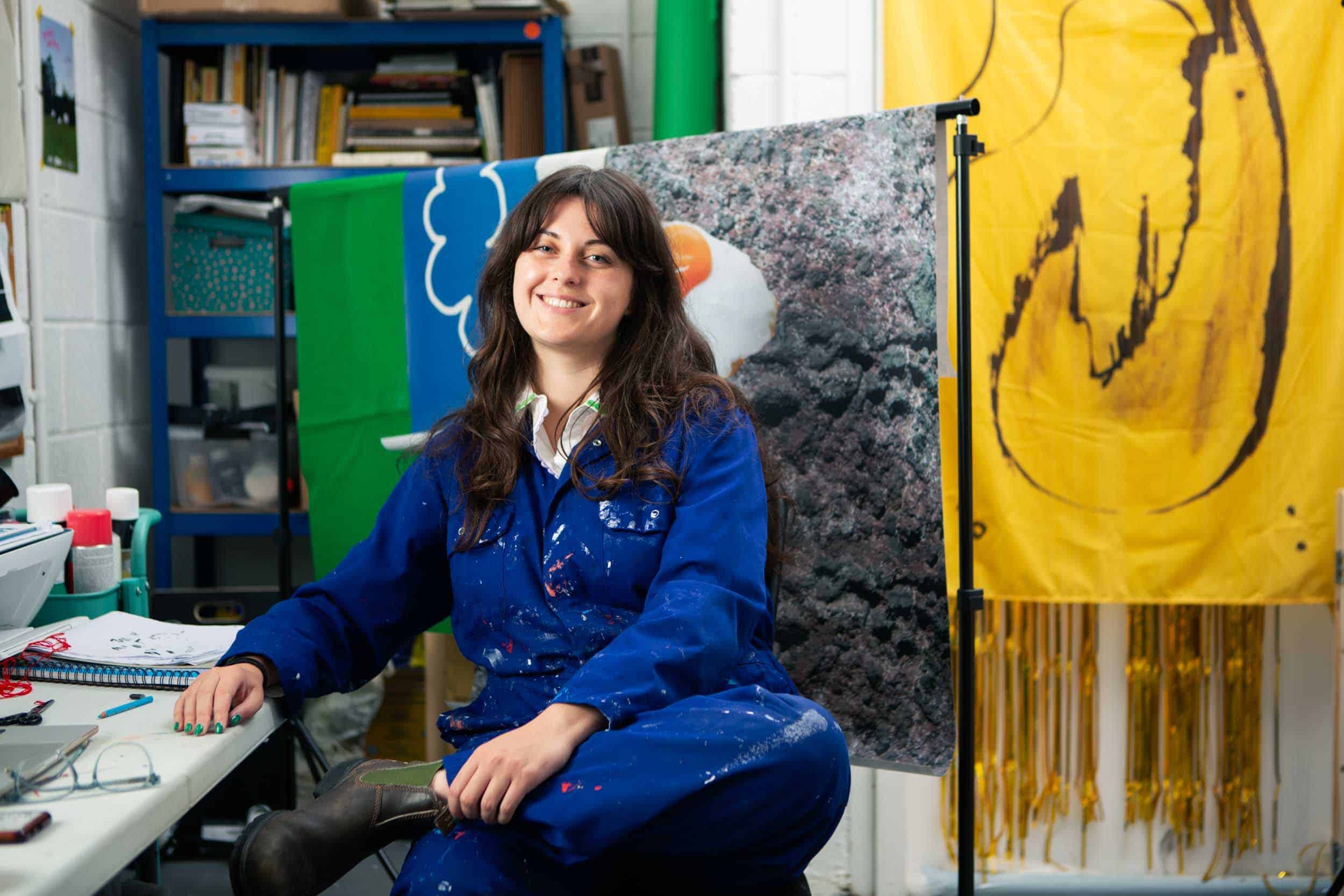
Multimedia artist Elinor O’Donovan, from Cork, is among the 2,000 creatives to have benefitted from the scheme (though at the time of going to press she was unsure whether she would re-qualify).

Imagination and creation are products of time and space but there isn’t the time and space anymore

“I don’t want to sell this idea that artists are special creatures, or whatever, but to be able to do creative work, you need time and space to think, and often that kind of creative thinking is quite difficult,” says O’Donovan.

“Before I got [the income], I worked part-time as a receptionist just to be able to afford to pay my rent. Now I work full-time as an artist. The basic income has given me the flexibility that being an artist requires.”

The income, says O’Donovan, enabled her to experiment.

Advertisement

“It’s allowed me to take risks that I wouldn’t have taken otherwise. My work is better and more ambitious. I made a film for the first time and now filmmaking is a big part of what I do. Having the extra income meant that I was able to pay other people to work with me on my film.

The Irish scheme is not without critics. Some question whether the government should be funding artists at a time when other groups are slipping through the cracks. Homelessness in Ireland is currently at a record high. The scheme is also narrow in scope; while 2,000 artists benefitted, many more applied. Universal it is not.

‘With all the shitty things that are happening in the world, to bring people together through culture has never been more important’ says artist Tobias Prytz

Advertisement

But, in an era when artwork is being used to train generative AI without their creators receiving any remuneration, Ireland’s scheme places a value on art and the people who produce it. “It’s so validating,” says O’Donovan.

While artists in the UK can apply for grants to help support their work, state funding for the arts has dried up in recent years. According to official data, local government funding for culture in England fell by 48% between 2009 and 2023. Similar declines were reported in Wales (40%) and Scotland (29%). This despite the arts sector contributing an estimated £10.6bn to the UK economy each year.

Like Ireland, Norway has pioneered its own model for supporting artists. A reboot of the traditional grant-funding concept, the statens kunstnerstipend programme offers a monthly salary to creatives for up to five years.

Advertisement

“It’s awarded to the practitioner rather than tied to a predefined project, and may be freely used for livelihood, exploration and production,” explains Trude Gomnæs Ugelstad, head of the committee for the scheme. “This design recognises that artistic development, like other research, depends on open-ended inquiry, long-time horizons and freedom to pursue directions whose outcomes cannot be fully specified in advance.

The scheme means that I don’t have to worry about money so I have more time to write my play

Artist Tobias Prytz, who creates large-scale installations using timber, is one beneficiary. He receives around 330,000 NOK (£25,600) per year, which is roughly half Norway’s average salary.

“At first I thought ‘who am I to get this money?’,” he says. “But it has given me space to develop as an artist without having to hustle between jobs. I don’t have to compromise my art.

“With all the shitty things that are happening in the world, to bring people together through culture has never been more important,” he says.

Advertisement

With research showing that engaging with culture improves health outcomes, governments have a motive beyond hard economics to support creatives. And while not every basement band will go on to be the next big thing, grassroots artists don’t need to sell out stadiums to enrich the cultural fabric of a nation.

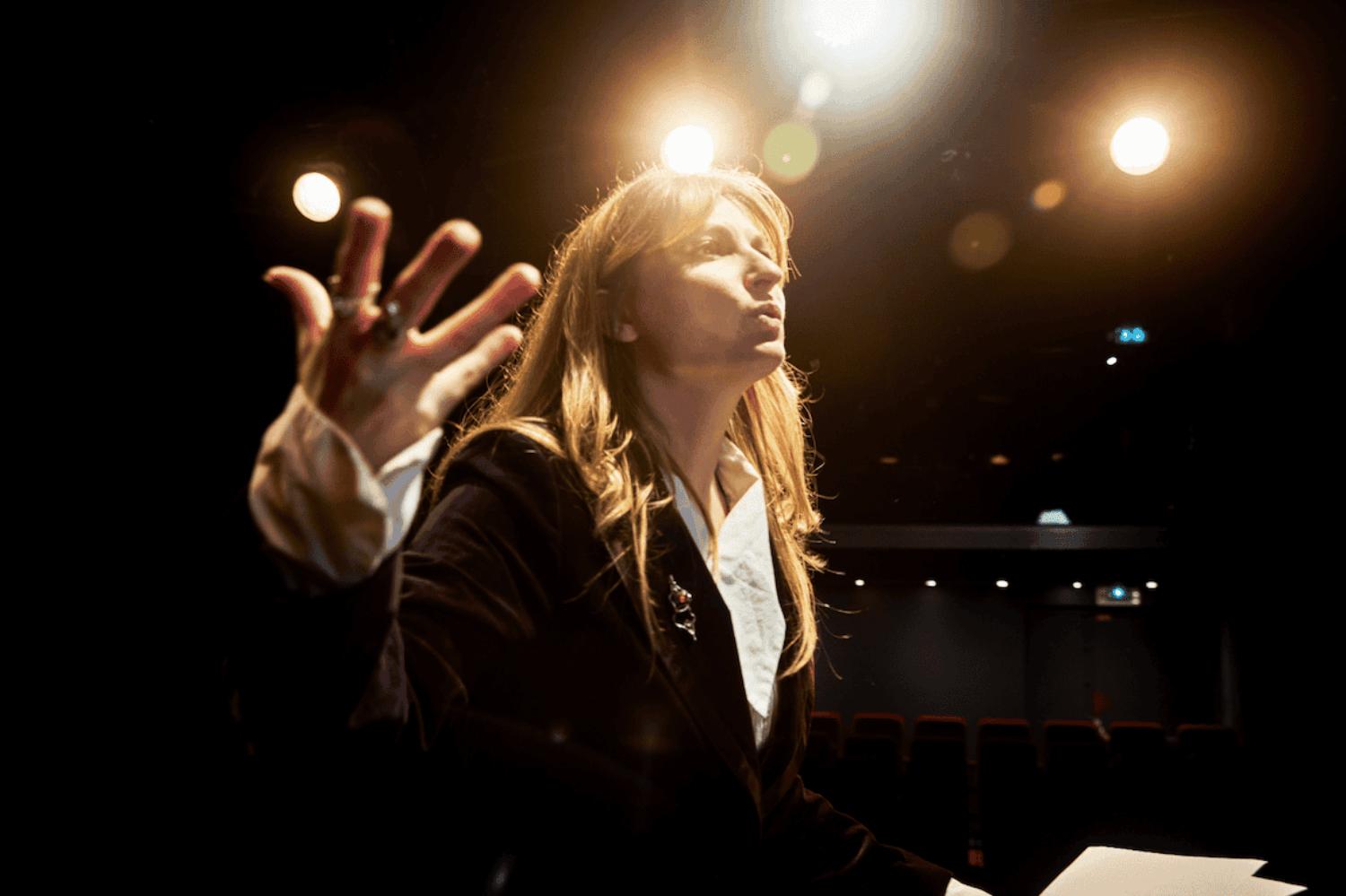
Esther Hammecker’s play was made possible in part by France’s income support scheme for artists

Advertisement

Parisian playwright Esther Hammecker is a case in point. In March, she put on her debut show in La Villette, Paris’s new cultural quarter where the city’s abattoirs used to be located. Her play– Scandaleuse, The Story of Cabaret – explores the lesser-told history of French cabaret, and was made possible in part by France’s income support scheme for artists.

“The idea that many people have of cabaret is influenced by the American vision of it, which is extremely extravagant,” she says. “But traditional French cabaret is basically just someone singing in a bistro while people have their meal. It’s more laid back, which is sort of what we’re going to do.”

Hammecker, who works part-time as an actor in a local theatre, La Scène Parisienne, is enrolled on France’s intermittents du spectacle scheme. The programme is an unemployment insurance scheme that allows performing artists and people in the entertainment industry to receive benefits during quieter periods. To qualify, participants must rack up 507 hours working in the cultural sector over a year.

“I only work at the theatre in the evenings and at weekends, so I have whole days to work on my projects,” she says. “[The scheme] means that I don’t have to worry about money or working other jobs, so I have more time to do my play.”

Advertisement

‘I only work at the theatre in the evenings and at weekends, so I have whole days to work on my projects’ says Parisian playwright Esther Hammecker

The scheme is still “stressful”, she admits. “You need to constantly find a new contract to meet your minimum hours. But it’s a blessing. I’m grateful.”

Advertisement

Given the parlous state of grassroots culture in the UK, and the myriad barriers faced by marginalised artists, there are calls to introduce a similar scheme to Ireland’s over here.

“There are risks,” admits Griffiths. “Will it capture people who are already privileged enough to be artists? Will it just be a Band-Aid when we need real structural change? And why just artists? We all need a safety net.”

“But,” he adds, “I think a basic income for artists is a pure necessity if we’re going to have anything like a thriving culture in this country. It’s vital that artists have the security and safety they need to be artists.”

Photography by Denis Vahey, Robbie Lee and Arne Terje Sæther

Advertisement

Be part of the solution

At Positive News, we’re not chasing clicks or profits for media moguls – we’re here to serve you and have a positive social impact. We can’t do this unless enough people like you choose to support our journalism.

Give once from just £1, or join 1,800+ others who contribute an average of £3 or more per month. Together, we can build a healthier form of media – one that focuses on solutions, progress and possibilities, and empowers people to create positive change.

Support Positive News

Advertisement

Source link

Continue Reading
Click to comment

You must be logged in to post a comment Login

Leave a Reply

NewsBeat

Iran’s nuclear program still must be negotiated after initial deal

Published

on

Iran's nuclear program still must be negotiated after initial deal

WASHINGTON (AP) — The interim deal between the U.S. and Iran is supposed to usher in a two-month period that would address the most divisive issue between the longtime adversaries — Tehran’s nuclear program.

Preventing Iran from attaining a nuclear bomb is a key reason that President Donald Trump said he launched the war alongside Israel in February, but the tentative agreement he has trumpeted leaves little runway to negotiate the long-running sticking point. The previous nuclear pact between Iran and world powers, which Trump pulled the U.S. from in his first term, took many months to negotiate.

Few details have been publicly released about the initial deal, set to be officially signed Friday in Switzerland, but it generally calls for reopening the Strait of Hormuz to global oil shipments, financial incentives for Iran if it meets certain benchmarks, and a 60-day period for talks on ending the country’s nuclear program.

There is deep skepticism among both Republican and Democratic lawmakers, pro-Israel advocates and Israel itself that the deal is realistic, workable or would have any effect on nuclear talks.

Advertisement

“My skepticism is Iran itself. What would a good deal look like? No enrichment. And we’ll see if we can get there,” Republican Sen. Lindsey Graham of South Carolina, a close Trump ally and longtime Iran hawk, said Tuesday. “But whether or not we can get phase two, I don’t know.”

A nuclear deal takes commitment to the details

David Schenker, director of the Arab Politics Program at the Washington Institute for Near East Policy, said that “this administration has proven that it has a hard time keeping its attention on these issues.”

Schenker, who served as assistant secretary of state for Near Eastern Affairs in the first Trump administration, questioned whether the current administration would have the wherewithal to reach a nuclear deal even if the agreement is signed Friday.

“This is the kind of thing that requires dogged attention, attention to detail and numerous technical experts involved,” he said. “Trump loses his attention, moves on, and so does the administration. It’s like they don’t understand Iran’s strategy. They didn’t get it the first time, or the second.”

Advertisement

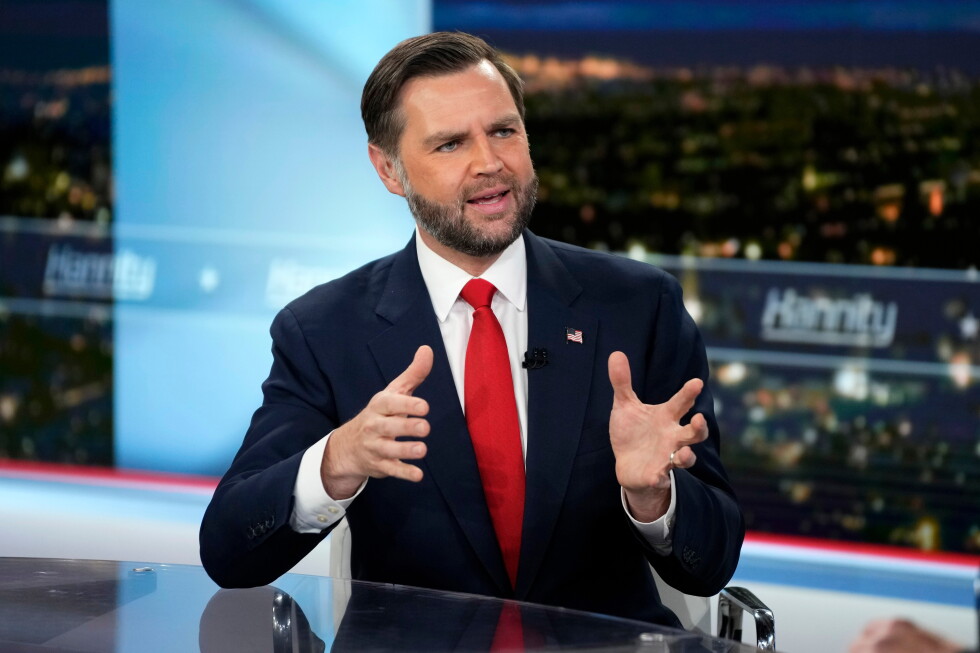
The Trump administration has maintained its confidence. Vice President JD Vance said much of the technical detail must be negotiated but that the U.S. must see action for Iran to receive incentives like sanctions relief.

“Our plan under this deal is, again, the Iranians are getting a lot of benefits so long as they dismantle that nuclear weapons program,” Vance told Megyn Kelly on her podcast Tuesday.

“People always ask me, ‘Why do you believe it this time?’ I don’t believe them,” he added. “I don’t trust anything that anybody says. I trust what people do. And the way this deal is structured is that as they do more, they receive more. As they do less, they receive less.”

Iran has long maintained its nuclear program is peaceful.

Advertisement

It took over a year and a half to get the previous nuclear deal

The 2015 Joint Comprehensive Plan of Action, or JCPOA, took more than 18 months to negotiate, starting with secret talks between U.S. and Iranian officials in Oman at the end of then-President Barack Obama’s first term.

They required dozens of direct high-level interventions from Secretary of State John Kerry and Energy Secretary Ernest Moniz, not to mention a team of dozens of technical experts traveling to Europe and elsewhere before the conclusion of the negotiations in Vienna, Austria.

Trump withdrew from the JCPOA in 2018 before most of its more contentious concessions had come into effect, and there is no indication now that Iran is willing to offer much more.

The JCPOA relied on very technical language and understandings, including limits on uranium enrichment, advanced centrifuges and heavy water production. In exchange, Iran was granted significant sanctions relief, amounting to billions of dollars.

Advertisement

As unhappy as critics were about the JCPOA — Trump called it the “worst deal ever negotiated,” while all Republicans and a number of prominent Democrats voted against it — all sides acknowledge it took more than 18 months to get to an even imperfect agreement.

Republicans say Congress must approve any deal

Republicans say any nuclear deal with Iran should be brought to Congress, as required by law. GOP Sen. Ted Cruz of Texas said he “would certainly anticipate that” the Senate will get the final say.

GOP Sen. John Kennedy of Louisiana said he had little confidence Iran would abide by any agreement.

But Sen. Roger Marshall, R-Kan., one of a handful of senators who has spoken to Vance about the agreement, said the shortened timeline could be an advantage.

Advertisement

“Iran’s modus operandi is to negotiate for the purpose of delaying, so they can rearm themselves,” Marshall said. “I think the president has to give them some type of a finite amount of time, or there’s going to be consequences. So I think it can be done.”

Sen. Tim Kaine, D-Va., noted that what could help Trump’s negotiators to hammer out a nuclear agreement in such a truncated timeline is that there is “a base” to work from following the Obama-era talks.

Still, the JCPOA “took years to put together. You had allies and even adversaries — China and Russia — around the table, you had the IAEA at the table, the Obama chief negotiator had a Nobel Prize in physics, Ernie Moniz,” Kaine said. “I don’t know that either Jared Kushner or Steve Witkoff have a Nobel Prize. So it’s going to be hard.”

Trump envoys Witkoff and Kushner, neither of whom had any prior experience in nuclear negotiations, made numerous but ultimately unsuccessful attempts to reach an agreement under Omani mediation during the first months of Trump’s second term.

Advertisement

Those tapered off after the U.S.-Israel attacks on Iranian nuclear sites in June 2025 — after which Pakistan emerged as the main facilitator.

There also is uncertainty about other issues besides nuclear that have been of concern to Arab countries, Israel, Europe and the United States.

It is not clear that any of those issues, including Iran’s ballistic missile program, its support for militant proxies in the region or repression of its own people, will be addressed by either the interim or potential longer-term agreements.

Without significant capitulations by Trump up-front, it is hard to imagine that nuclear negotiations with Iran will take only several months.

Advertisement

“A deal is better than more fighting, but the war America and Israel prosecuted against Iran has fallen short of achieving its stated objectives,” said Brian Katulis, a senior fellow at the Middle East Institute. “This agreement is mostly about cleaning up an unnecessary mess and putting the best face on it.”

___

Associated Press writers Seung Min Kim and Nathan Ellgren contributed to this report.

Advertisement

Source link

Continue Reading

NewsBeat

Will There Be A Rivals Season 3?

Published

on

Will There Be A Rivals Season 3?

Rivals fans may be a little impatient for season two to resume after its current break (it looks like we’ll have to wait months to see what happens next in the Disney+ show).

But at least we can console ourselves with the bigger picture: today, Disney confirmed the show’s on for a third season.

In a press release, Lee Mason, vice-president of scripted at Disney+ Europe, Middle East, and Africa (EMEA), commented: “The phenomenal response to Rivals is a credit to the bold, irreverent and endlessly entertaining world created by Dame Jilly Cooper, our cast, creative team and production partners at Happy Prince.”

The same release explained that the first six episodes of Rivals SE2 marked Disney+’s biggest EMEA original premiere of 2026.

Advertisement

The most recent season has also gotten rave reviews.

“We’re delighted to be bringing audiences a third season on Disney+/Hulu. Expect more ambition, more romance, more rivalries and, of course, more scandal as we return to Rutshire for another irresistible chapter,” Mason added.

Happy Prince is the production company that reportedly has the rights to much of the Rutshire Chronicles, of which Rivals is one novel.

Dominic Treadwell-Collins, the chief creative officer of Happy Prince and Alexander Lamb, added: “We’ve been delighted and overwhelmed by the audience’s response to season two of Rivals – testament to the hard work from everyone working on Rivals both on and off screen.

Advertisement

“Our one sadness is that Jilly didn’t get to witness the love for season two,” they added (author Dame Jilly Cooper, who wrote the Rutshire Chronicles, unexpectedly passed away in 2025).

“But she’s still very much with us in sprit and would be so delighted that season three has been green lit. We’re so thrilled to continue to work with Disney as we dive deeper into the Rutshire Chronicles and expand the Cooperverse even further.”

Season three will be produced by Dominic Treadwell-Collins, who also worked on A Very English Scandal; Alexander Lamb, who’s produced Ackley Bridge and EastEnders; Olivier Award-winning playwright Laura Wade of The Riot Club; and Jilly Cooper’s former agent, Felicity Blunt.

Advertisement

Source link

Continue Reading

NewsBeat

England vs Croatia LIVE: Team news and predicted line-up before World Cup opener

Published

on

Daily Mirror

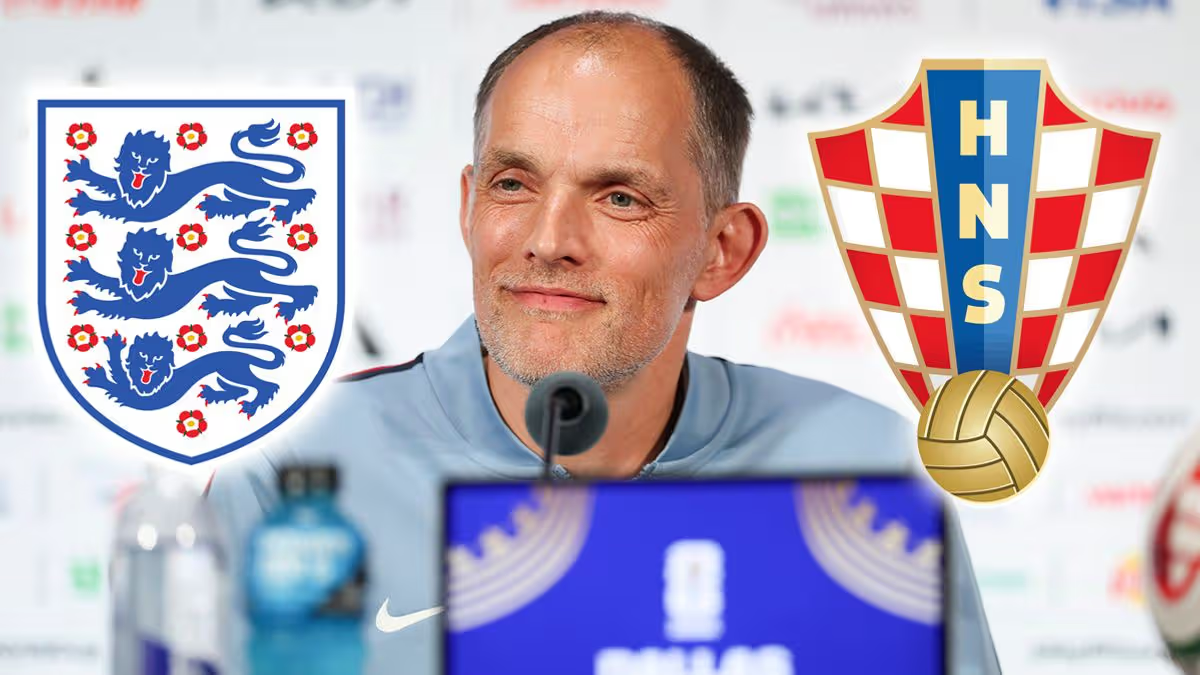
Croatia boss Zlatko Dalic has warned England his side will not ‘just defend’ in their World Cup opener. The two teams come together in Dallas on Wednesday evening to get their group campaigns underway.

The 59-year-old said: “A tough match awaits us, the start of the World Cup, and the toughest opponent possible. We’ve prepared well, and I’d be happy if we show that tomorrow.

“England is an important match, but not a decisive one. We know their quality — they are dangerous, especially down the wings, and they have one of the best strikers in the world. We will give our best, we won’t just defend, we want more. That’s how we prepared.”

Zlatko Dalic has spoken ahead of Croatia’s clash with England(Image: Getty Images)

Advertisement

Source link

Continue Reading

NewsBeat

Police issue major update after woman died following crash

Published

on

Wales Online

A 28-year-old man from Dublin has appeared in court charged with causing death by dangerous driving

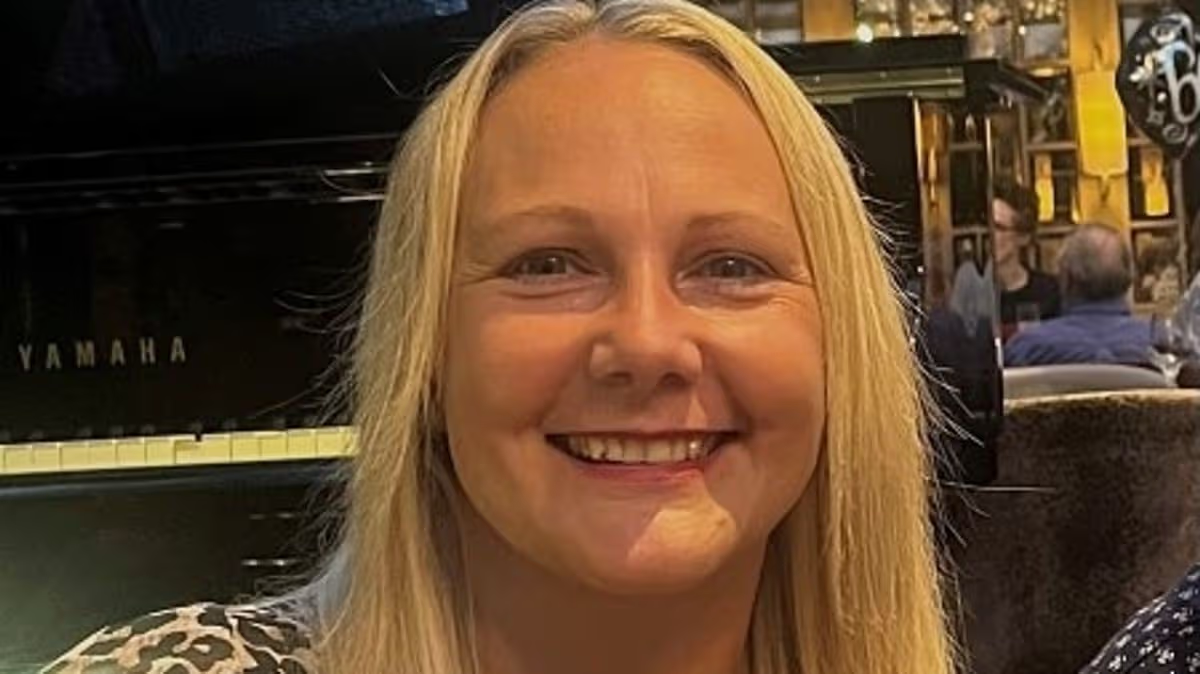
A man has been charged in connection with a fatal collision which happened over a year ago. Lydia La Polla died after being involved in a collision in Wrexham in March 2025.

In a tribute following her death the 47-year-old’s family said she had a “heart of gold” and was “always there for others”. Now North Wales Police say a 28-year-old man has been charged in connection with the fatal crash.

Michael Connors, of Landen Road, Ballyfermot, Dublin, is charged with causing death by dangerous driving and two counts of causing serious injury by dangerous driving. He was extradited to the UK after being arrested by the Garda in Dublin.

Advertisement

The crash happened shortly after 9.30pm on March 24, 2025, between Belgrave Road and Percy Road as a silver Mercedes car was involved in a police chase before colliding with a Toyota car. Two men, the driver and a passenger of the silver Mercedes, left the scene of the collision.

Ms La Polla, from Wrexham, was driving the Toyota car. She died from her injuries in hospital two days after the crash. Her husband, a passenger, was seriously injured, and a 16-year-old passenger in the Mercedes car was also seriously injured.

Connors was extradited to the UK on Tuesday after being arrested by the Garda in Dublin on March 11, 2026, in connection with the collision.

He was later charged by North Wales Police and appeared at Llandudno Magistrates’ Court on Wednesday. He was remanded into custody to appear before Mold Crown Court on July 17.

Advertisement

Chief superintendent Jaqueline Downes of North Wales Police said: “Our deepest sympathies remain with the family of Lydia La Polla following their tragic loss.

“We will continue to support them through each stage of the investigation and upcoming court proceedings. As this remains an active investigation, it is important that people do not speculate about the incident online.”

In a tribute, Ms La Polla’s family previously said she had a “true heart of gold” and was “devoted to her family”. They wrote: “We are truly devastated and heartbroken following the death of Lydia. She will be missed by family, friends, neighbours and work colleagues.

“Lydia had a true heart of gold and would always be there for others with her selfless acts of kindness. She was devoted to her family and friends.

Advertisement

“The night of Monday, March 24, has scarred us for the rest of our lives. Life will never be the same without her. We ask for privacy at this time as we grieve our loss as a family.”

Get daily breaking news updates on your phone by joining our WhatsApp community here. We occasionally treat members to special offers, promotions and ads from us and our partners. See our Privacy Notice

Source link

Advertisement
Continue Reading

NewsBeat

Prostate cancer: What are the symptoms and how is it treated as Jeremy Clarkson receives diagnosis?

Published

on

Prostate cancer: What are the symptoms and how is it treated as Jeremy Clarkson receives diagnosis?

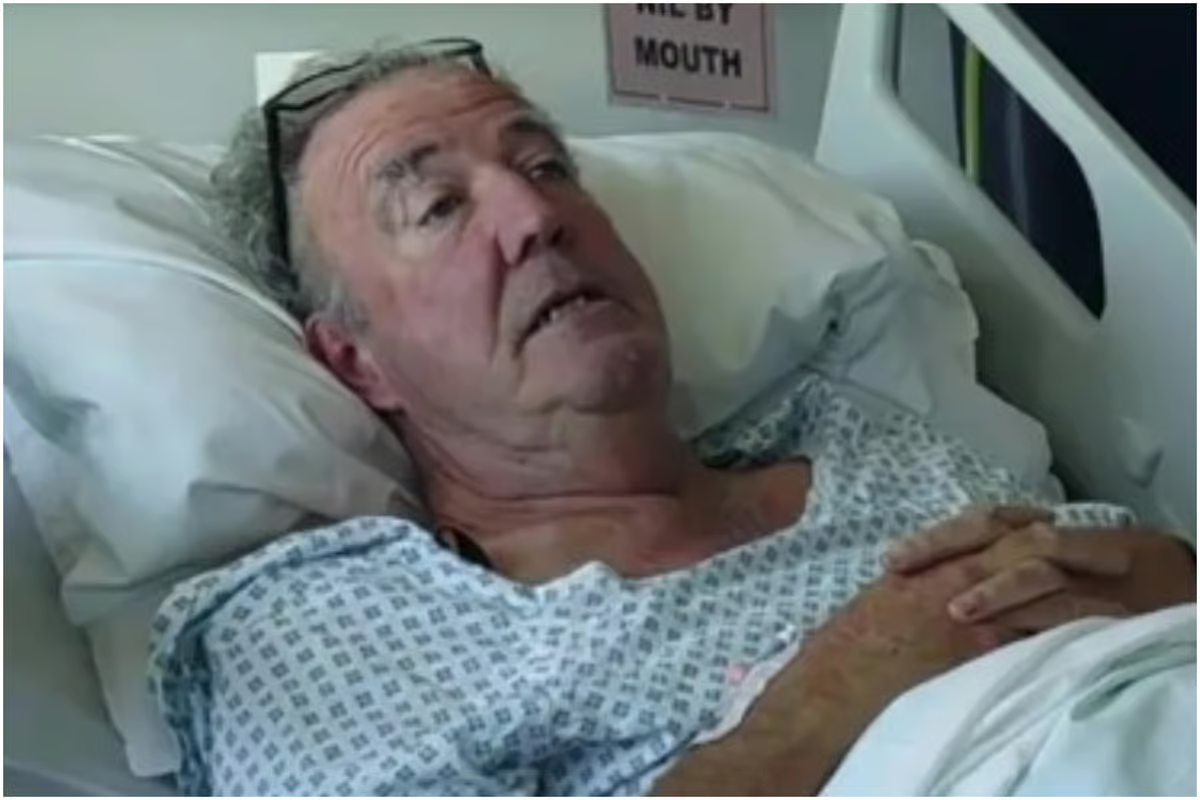
Jeremy Clarkson has revealed he has been diagnosed with an “aggressive” form of cancer.

He revealed on the series, filmed from late 2024 to September 2025, how he had been diagnosed in May last year, telling farmhand Kaleb that ten per cent of his prostate ‘where the cancer is’ is ‘dead’.

Here are common questions around prostate cancer, symptoms of the disease and forms of treatment.

Advertisement

Prostate cancer is the most common cancer affecting men and usually develops slowly over many years.

Cancer cells begin to grow in the prostate, the small gland found just below the bladder that helps make semen.

Source link

Continue Reading

NewsBeat

Convicted sex offender supervised children without telling police

Published

on

Cambridgeshire Live

The 28-year-old breached his sexual harm prevention order by seeing children unsupervised

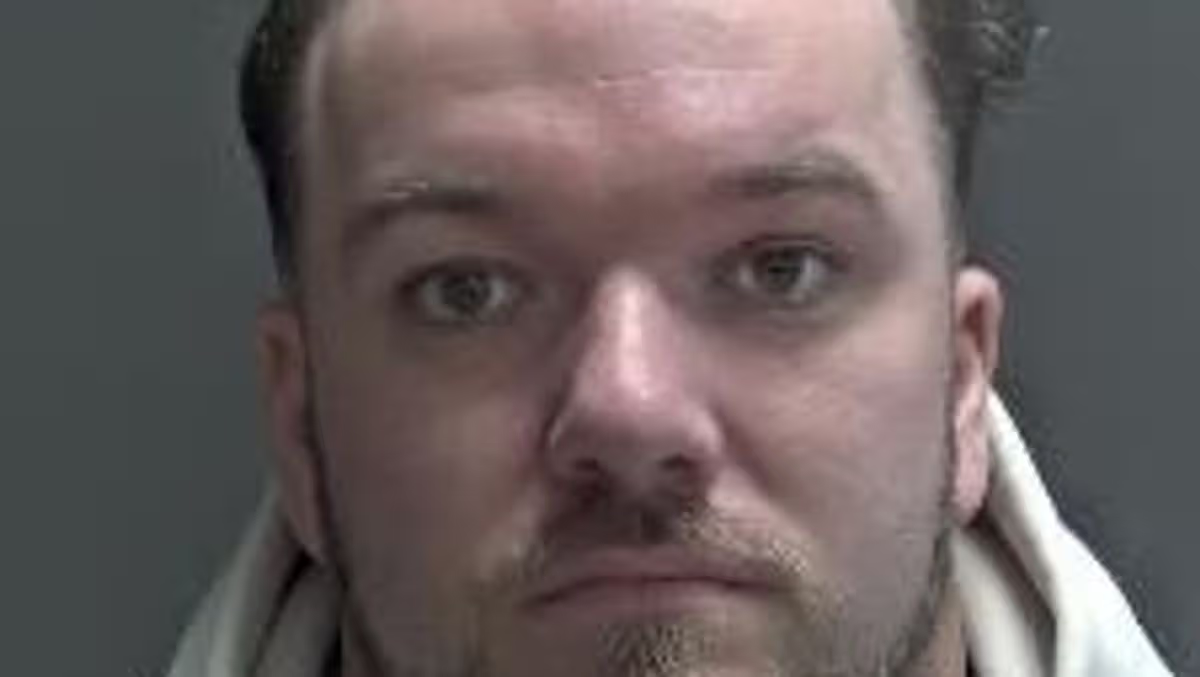
A man breached his Sexual Prevention Harm Order (SPHO) by having contact with children and failing to tell police. Lewis Garraway, 28, was handed a SHPO in 2018 after a sexual offence with a girl and serving two weeks in a young offenders institution.

Advertisement

He breached the requirements of the order and was sent to prison for 18 months in October 2021. Then in 2024, Garraway met a woman in her early 20s through a dating app.

In October that year, he met her in person for the first time and stayed at her family home in the Littleport area, where two children lived. Garraway failed to notify police, which is required under his order.

During the stay, he took one of the children to a park to play rugby without supervision, again breaching the order. The 28-year-old lied and told his girlfriend he was between properties, lost his key and had nowhere to live.

One of the woman’s family members grew suspicious and confronted Garraway after they found out about his previous offences. The family member contacted the police.

Advertisement

On June 12 at Cambridge Crown Court, Garraway, of Seagate Terrace, Long Sutton, Lincolnshire, was sentenced to one year and six months in prison after admitting breaching a SHPO and two counts of failing to comply with the Sex Offenders Register.

Investigating officer DC Claire Cummings said: “Garraway showed a complete disregard for the restrictions placed on him to protect others, particularly children.

“Sexual harm prevention orders and notification requirements are there to manage risk and safeguard the public. Breaching them is a serious offence, and we will take robust action against anyone who fails to comply.

“I would encourage anyone who has concerns about someone’s behaviour, particularly where children may be at risk, to report it to us so we can take action.”

Advertisement

Source link

Continue Reading

NewsBeat

Transfer news LIVE: Rogers wants Arsenal FC, Alvarez swap; Van Hecke deal; Tonali price; Man Utd, Chelsea latest

Published

on

Transfer news LIVE: Rogers wants Arsenal FC, Alvarez swap; Van Hecke deal; Tonali price; Man Utd, Chelsea latest

The Premier League champions are also exploring a deal for Christos Tzolis, but suggestions of a swap deal involving Atletico Madrid striker Julian Alvarez and Viktor Gyokeres are thought to be wide of the mark. Chelsea, meanwhile, are planning to reinvest the money from the Marc Cucurella sale to Real Madrid back into the squad and Lewis Hall has been mentioned as a potential replacement, though the Blues may face competition from Man United to re-sign the defender.

Source link

Continue Reading

NewsBeat

Hull City could face points deduction in Premier League

Published

on

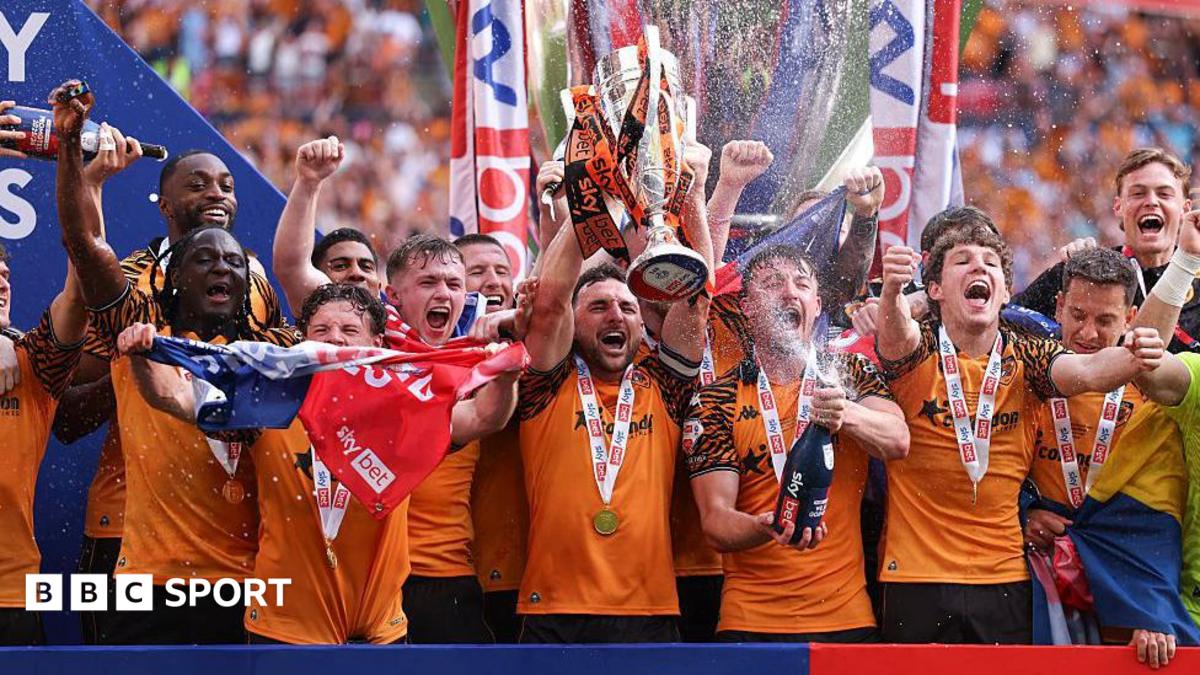
Hull City could face points deduction in Premier League

Under PSR, deductions are now set based upon on the level of the overspend, locked to a grid.

Go over the £39m limit and it is a points deduction.

It starts at three points for under £2m, then four for between £2m and £4m, five for £4m to £6m, and six points for £6m to £8m.

A club can claim back one or two points in mitigation if their accounts show a positive trend, but this would not be the case for the Tigers.

Advertisement

Hull would argue that this is not a result of regular operational overspending. It is a by-product of their success as only the promotion bonuses have caused it.

This is unlikely to hold sway, as Forest discovered in 2024 when they were docked four points, as it is a sign of sporting benefit from payments made to players.

Leicester City provide the precedent for Hull to receive the deduction in the top flight.

In 2024, Leicester managed to avoid a penalty by arguing the Premier League did not have jurisdiction.

Advertisement

This led to a change in the rules, with the two competitions inserting reciprocal clauses in their regulations.

Such collaboration between the leagues was seen in February.

The Premier League took action against Leicester for an overspend through to the 2024-25 season. The EFL agreed to apply the six-point penalty in the Championship, which ultimately caused their relegation.

PSR is being replaced on 1 July by a new system called squad cost ratio SCR). Rather than assessing losses over a three year-period, it allows clubs to spend 85% of the income they generate on their squads and is assessed annually.

Advertisement

Source link

Continue Reading

NewsBeat

‘Vicious animal’ unmasked after leaving men fighting for lives in ‘devastating’ attacks

Published

on

Daily Record

Colin Campbell attacked five complete strangers

A man described as a “vicious animal” left one man fighting for his life and another with life-changing injuries after a series of violent assaults.

Colin Campbell attacked five people he did not know. The attacks happened over a four-month period in 2025, with some of the assaults occurring while he was out on police bail.

He was jailed for seven and a half years yesterday (Tuesday). Mold Crown Court heard 24-year-old Campbell unleashed devastating single punches and headbutts on his unsuspecting victims. Recorder Neil Owen-Casey said it was “lucky” nobody was killed during the rampage, noting the attacker had caused “such devastation with your fists alone.”

Advertisement

Prosecuting, Elen Owen said the first attack happened on March 23, 2025, outside the Lorne Public House in Rhyl. After a bystander intervened in an argument, Campbell punched him unconscious. The victim suffered a fractured skull and two brain bleeds, leaving his life “in the balance,” reports NorthWalesLive.

After being bailed by police, Campbell struck again a month later inside Tinkers Bar in Rhyl, punching another victim “from nowhere” and fracturing his jaw, eye socket, and cheekbone. The victim has been left with sight and hearing issues.

In the early hours of May 3, 2025, Campbell approached a stranger in Chester, saying, “I’m going to fight you.” He then headbutted the man and punched a member of door staff who intervened, damaging his teeth. Campbell was arrested and bailed once again. Sign up for the North Wales Live newsletter sent twice daily to your inbox

Advertisement

The final and most devastating attack occurred on July 12, 2025, on Wellington Road, Rhyl. Campbell approached a father-of-five and punched him in the face, causing him to strike his head on the ground.

Police had to administer life-saving CPR at the scene. The victim underwent emergency brain surgery for a fractured skull and extensive brain bleeds. He now requires permanent care and has “little if any memory of his loved ones”. His heartbroken family stated the attack had destroyed his life.

Campbell, of Gwynfryn Avenue, Rhyl, admitted section 18 grievous bodily harm with intent, section 20 wounding, and two counts of assault causing actual bodily harm. He was also convicted after a trial for the final July wounding. The court heard he had a history of previous convictions for violence.

Defending, Sarah Yates said Campbell had a “chaotic” upbringing, mental health problems, and ADHD, which caused him to act impulsively.

Advertisement

Jailing Campbell, Recorder Owen-Casey branded him a “vicious animal”, also describing him as “selfish” and “aggressive”, who was fuelled by alcohol. He noted that Campbell’s insight into his actions had “come far too late” to prevent life-altering injuries.

Source link

Continue Reading

NewsBeat

Armed police rush to Cambridge estate after reports of ‘threats’

Published

on

Cambridgeshire Live

Multiple police vehicles rushed to the estate

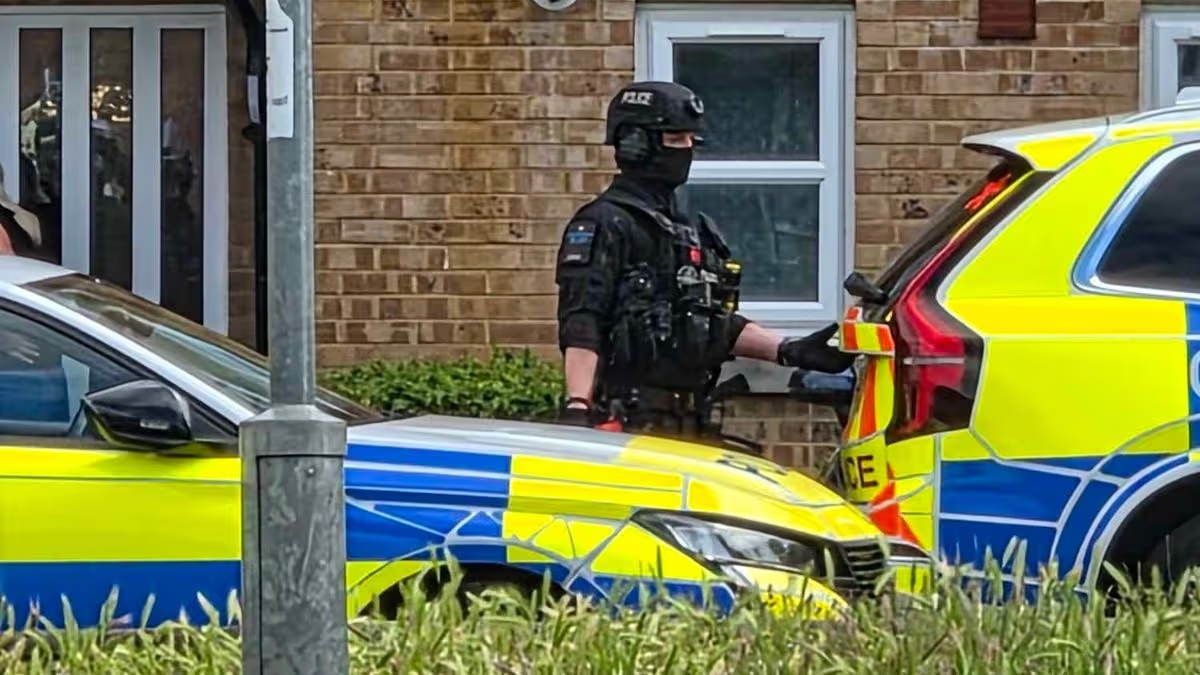
Armed police were dispatched to a Cambridge street on Wednesday (June 17). Police were called with reports that ambulance crews had been threatened with violence on Discovery Way, off Nuffield Road.

Images from Discovery Way showed multiple police cars and two ambulance vehicles. They also showed armed police officers wearing protective helmets and vests.

A police spokesperson said: “We were called at about 8.45am today (17 June) with reports of threats of violence towards ambulance crews on Discovery Way, Cambridge. Armed officers attended and a man is now in the care of the ambulance team.”

Advertisement

Do you want more of the latest Cambridgeshire news as it comes in from across the county? Sign up to our dedicated newsletter to make sure you never miss a big story from Cambridge or anywhere else in the county. You can also sign up to our dedicated Traffic and Crime newsletters for the latest updates on the topics you are most interested in .

Source link

Advertisement
Continue Reading

Trending

Copyright © 2025