

Crypto World
ASTER jumps 20% after Aster ties nearly all platform fees to token buybacks

ASTER has surged more than 20% after Aster unveiled a new tokenomics framework that commits almost all platform fee revenue to daily token buybacks and large-scale supply reductions.
Summary
- ASTER surged over 20% after Aster committed 99% of platform fees to daily token buybacks.
- Aster plans to cut ASTER supply from 8 billion to 3 billion through ongoing reserve burns.
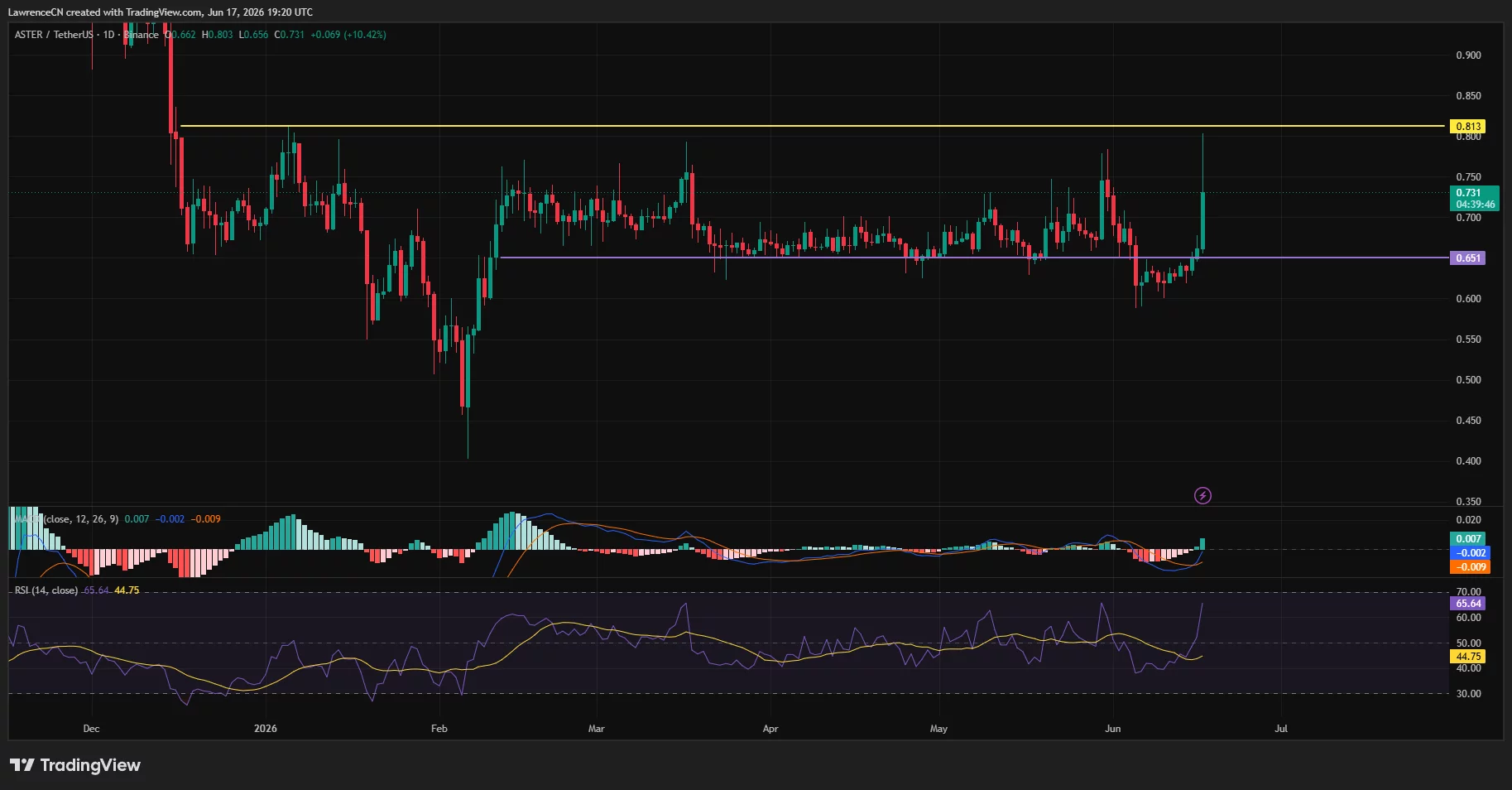
- Technical indicators turned bullish as ASTER broke above $0.65 and approached resistance near $0.81.
According to a June 17 X post by Aster, 99% of the protocol’s daily fees will now be used to purchase ASTER from the open market beginning June 17 at 12:00 PM UTC. The announcement pushed the token close to $0.80 before some profit-taking emerged, with ASTER later changing hands near $0.74, up roughly 13% over the past day.
The update introduces a second layer of supply reduction alongside the buybacks. Aster said it will remove an equal amount of ASTER from reserve holdings each day, creating what the protocol described as a 198% combined buyback-and-burn effect.
Reserve reductions will begin with the team allocation and continue until the total token supply falls from 8 billion ASTER to 3 billion.
Additional demand could also come from Aster Spot. According to the protocol, every permissionless token listing on the platform will require a 50,000 USDT fee, with all proceeds earmarked for further ASTER buybacks that will be distributed to stakers through the rewards program.
Platform fees now drive ASTER rewards
Rather than destroying purchased tokens, Aster said the acquired ASTER will be distributed to participants in its Loyalty Rewards program.
Under the revised model, each reward epoch will include a fixed allocation of 300,000 ASTER plus all tokens accumulated through daily buybacks.
Distribution will be directed to veASTER holders according to lock-weighted participation. Aster added that all buybacks will be executed through an automated daily time-weighted average price process and settled on-chain. To increase transparency, the project has also published the wallet address used for the purchases, allowing users to verify transactions independently.
By linking fee generation directly to token purchases, staking rewards and reserve reductions, the protocol has created a mechanism where higher trading activity results in larger buybacks and larger reward distributions.
Technical breakout places $0.81 resistance in focus
Market participants responded quickly to the announcement, driving ASTER above a trading range that had largely contained price action since April. On the daily chart, the token broke through support-turned-resistance near $0.65 and climbed toward the next major barrier around $0.81.
The daily chart also showed strengthening momentum indicators following the move. ASTER’s Relative Strength Index rose above 65, while the MACD produced a bullish crossover accompanied by expanding positive histogram bars, signaling stronger buying pressure.
The $0.81 region remains an important level because it coincides with several prior rejection points visible on the daily chart. A successful break above that zone could expose the token to areas not tested since late 2025, while traders may look for the former resistance near $0.65 to act as support if the rally pauses.
Disclosure: This article does not represent investment advice. The content and materials featured on this page are for educational purposes only.


Matter Labs is reshuffling its team as the company moves to a permissioned privacy chain called Prividium.
The layoffs will include senior engineers, designers, and operators who are no longer aligned with the new direction.
Founder Explains Layoff Decision.
Alex Gluchowski, the company’s CEO, confirmed the news on social media, noting that the decision followed the company’s 2024 shift toward building products for regulated financial institutions.
“Today we reduced the size of the Matter Labs team. This was my decision, and I want to explain it,” he wrote.
According to him, Prividium has since become Matter Labs’ main focus, with the firm now fully committed to building tools that help businesses move on-chain.
The founder added that as the project developed, the company gained a clearer understanding of what customers needed, which heavily influenced the direction of Prividium and the type of talent required to move it forward. As a result, some roles that made sense during earlier stages of building were no longer the best fit for the firm’s current priorities. This, he said, is what prompted the restructuring decision.
The firm’s website states that Prividium is an Ethereum-based blockchain platform for financial institutions and fintech companies that gives organizations a way to do transactions securely while being compliant. Additionally, the product is built on a privacy-focused, permissioned Layer-2 blockchain powered by zero-knowledge technology.
“To everyone leaving, thank you for what you built here, and for the standard you set,” he concluded.
Alex said the move wasn’t a reflection on the employee’s abilities and contributions, adding that the engineers, designers, and operators impacted were some of the best he has worked with. The workers who left have also reportedly been offered financial help and support as they go through the transition.
Community Remains Divided Over Job Cuts
The community’s reaction to the news has been mixed, with some excited about the project and others asking where the $450 million that Matter Labs raised to develop the product had gone.
“Could you please explain? You raised $450 million in investment to develop the product. Where’s the money? And why are you asking for more and laying people off?” they wrote.
Meanwhile, this isn’t the first time the firm has had to let go of its employees. The company also downsized its team in the midst of a pivot toward privacy-focused tools in 2024, with the firm saying that the restructuring was necessary to align its workforce with new priorities rather than a short-term cost-cutting measure.
The post ZKsync Creator Announces Layoffs as It Pivots to Permissioned Privacy Chain appeared first on CryptoPotato.


Privacy-tech firm Zama said Wednesday it is launching the first DeFi yield product for Confidential USDC, opening deposits June 23 through a vault built on Morpho and curated by Steakhouse Financial. The product extends fully homomorphic encryption from simple token transfers into a productive… Read the full story at The Defiant
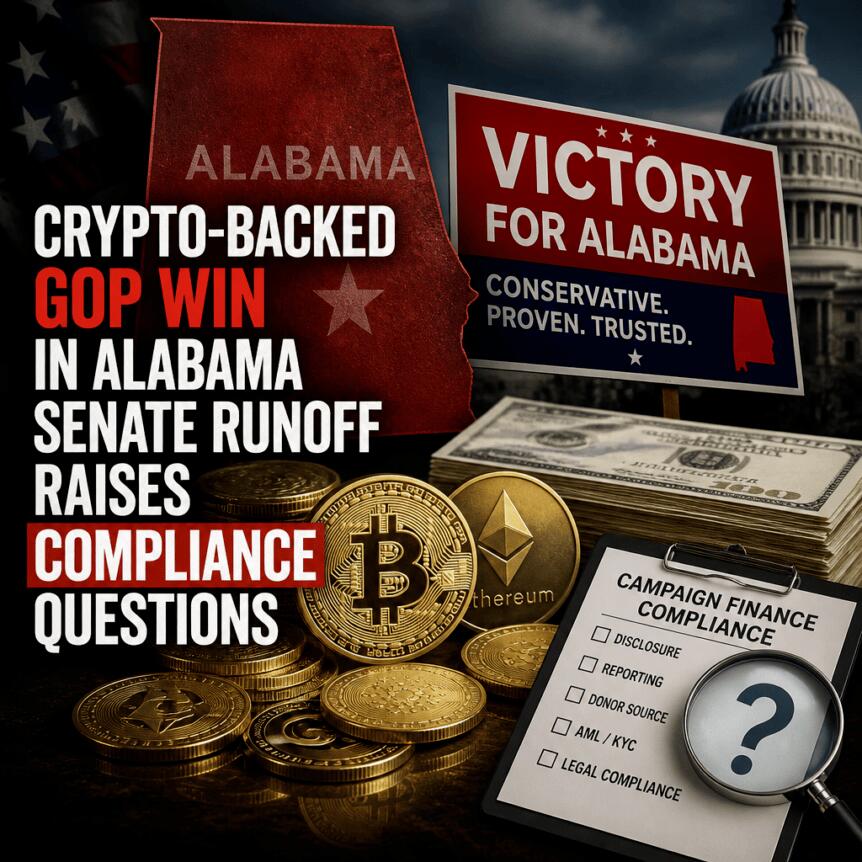
Barry Moore won the Republican primary runoff for Alabama’s U.S. Senate seat on Tuesday, defeating Democrat Everett Wess by securing 55.8% of the vote, according to NBC News. The race became necessary after neither candidate received a majority in the May 19 contest. Moore is set to take the seat held by outgoing Republican Senator Tommy Tuberville, in a development that is drawing heightened attention from the crypto political ecosystem.
Federal Election Commission (FEC) disclosures indicate that pro-crypto political committees backed by Fairshake—an advocacy group associated with cryptocurrency companies—spent more than $12 million on media and advertising to support Moore across the May 19 primary and the Tuesday runoff. Compliance-focused observers are likely to see the election as another example of how crypto-aligned political spending is scaling in U.S. federal contests, raising questions about transparency, regulatory oversight, and cross-border policy alignment.
Key takeaways
- Moore won the Alabama Republican Senate runoff against Everett Wess with 55.8% of the vote, according to NBC News.
- FEC filings show Defend American Jobs PAC—affiliated with Fairshake—spent more than $12 million on media and ads for Moore.
- Advocacy organization Stand With Crypto rated Moore “strongly supports crypto” based on public statements and his voting record in Alabama’s 1st Congressional district.
- Fairshake-related committees may have spent over $40 million across multiple states to support candidates described as “pro-crypto,” according to a Fairshake spokesperson’s remarks reported in the coverage.
FEC-backed crypto political spending in the Alabama runoff
The Alabama Senate runoff is the latest instance of large-dollar involvement by industry-aligned political committees. In this case, FEC reports attribute more than $12 million in media and ad spending to Defend American Jobs PAC, which is described as affiliated with Fairshake, during the May 19 primary and the subsequent runoff.
For institutional compliance and governance teams, the practical significance lies in the mechanics of political spending: FEC reporting requirements create a documented paper trail, but the broader network of affiliated committees and advocacy groups can complicate attribution and risk assessment. Analysts monitoring policy exposure may also view such disclosures as an early indicator of how crypto industry stakeholders anticipate legislative priorities in the next congressional session.
Cointelegraph reported that Stand With Crypto assessed Moore as “strongly supports crypto,” citing public statements and his voting record. That rating matters in compliance terms because it signals how industry groups evaluate candidates not only for their rhetoric, but for recorded legislative behavior—an approach that can inform risk frameworks for regulated entities interacting with government counterparts.
Fairshake’s scale and the “pro-crypto” strategy
Fairshake spokesperson Geoff Vetter said that the committee’s “biggest spend of the cycle” helped deliver another candidate characterized as a “pro-innovation champion,” and referenced nearly $150 million in cash available for future efforts. The statement, as reported in the coverage, also suggests an intention to expand pro-crypto legislative influence via what the spokesperson framed as a sizable “pro-crypto caucus.”
While political messaging is not itself regulatory conduct, large-scale campaign activity is often examined by policymakers and enforcement agencies in broader discussions about lobbying, political influence, and disclosure. For regulated crypto firms, the governance question is whether political engagement aligns with internal compliance expectations around transparency, conflicts of interest, and reputational risk.
Beyond Alabama, the same reporting describes Fairshake and related affiliates as potentially spending more than $40 million across several states to back candidates they consider favorable to crypto policy goals. According to the article, Defend American Jobs PAC reported holding a $193 million war chest as of January. Even without drawing conclusions about intent, such figures underscore why election-related spending is increasingly treated as a compliance and policy monitoring matter rather than a purely political story.
Industry PAC activity across multiple states
The Alabama runoff follows a pattern of multi-state, pre-general-election spending by crypto-aligned committees, including in states with scheduled primaries before the November election. The coverage notes that industry PAC spending has been visible in upcoming contests in South Carolina, Texas, California, South Dakota, and New Jersey.
In addition to Defend American Jobs PAC, the reporting highlights Protect Progress—described as a Fairshake affiliate—as having reported media buys for House-related races. Specifically, it referenced FEC disclosures for spending tied to Maryland Democrat Adrian Boafo and New York Democrat Ritchie Torres ahead of primaries set for June 23.
From a regulatory perspective, these disclosures matter because they may affect how compliance teams map political influence into policy outcomes—particularly around areas central to crypto regulation such as stablecoin frameworks, exchange oversight, market structure, and AML/KYC expectations. In the U.S., these issues span the SEC’s remit, the CFTC’s commodity and derivatives authority, and DOJ enforcement priorities, while in Europe, the MiCA framework continues to shape cross-border compliance strategies for issuers and service providers.
Institutional observers may also treat this as a reminder that U.S. political dynamics can affect timelines for implementation and rulemaking—even when the formal rulemaking process is independent. Large political spending may contribute to a favorable legislative environment, but uncertainty remains as to how quickly, and in what form, policy changes would be translated into enforceable regulatory requirements.
What happens next before the November election
With additional primaries scheduled for next week, the Alabama outcome is likely to feed into broader attention on crypto-aligned political strategy. Further FEC filings may offer clearer visibility into how affiliated committees allocate resources and how those allocations correspond to candidate positions on crypto policy.
For compliance monitoring, the key near-term focus should be on subsequent disclosure updates, candidate policy commitments, and any legislative momentum that could impact enforcement posture or regulatory priorities—particularly as lawmakers in the next Congress weigh areas ranging from campaign-finance related scrutiny to the regulation of digital asset markets.
Kalshi CEO Tarek Mansour does not see Polymarket as his main competitor. He told Front Office Sports that larger trading and betting players threaten his prediction market exchange more than its closest rival.
Mansour named derivatives giant CME Group, brokerage Robinhood and sportsbook operators as the rivals he watches most. His comments recast a fight usually framed as a two-horse race between Kalshi and Polymarket.
Why Mansour Looks Past Polymarket
Kalshi dominates the regulated US prediction market. Bank of America analysts put its share at about 91%, with Polymarket second and Underdog third.
That lead lets Mansour treat the rivalry differently, much as Kalshi already overtook Polymarket on regulated turf last year.
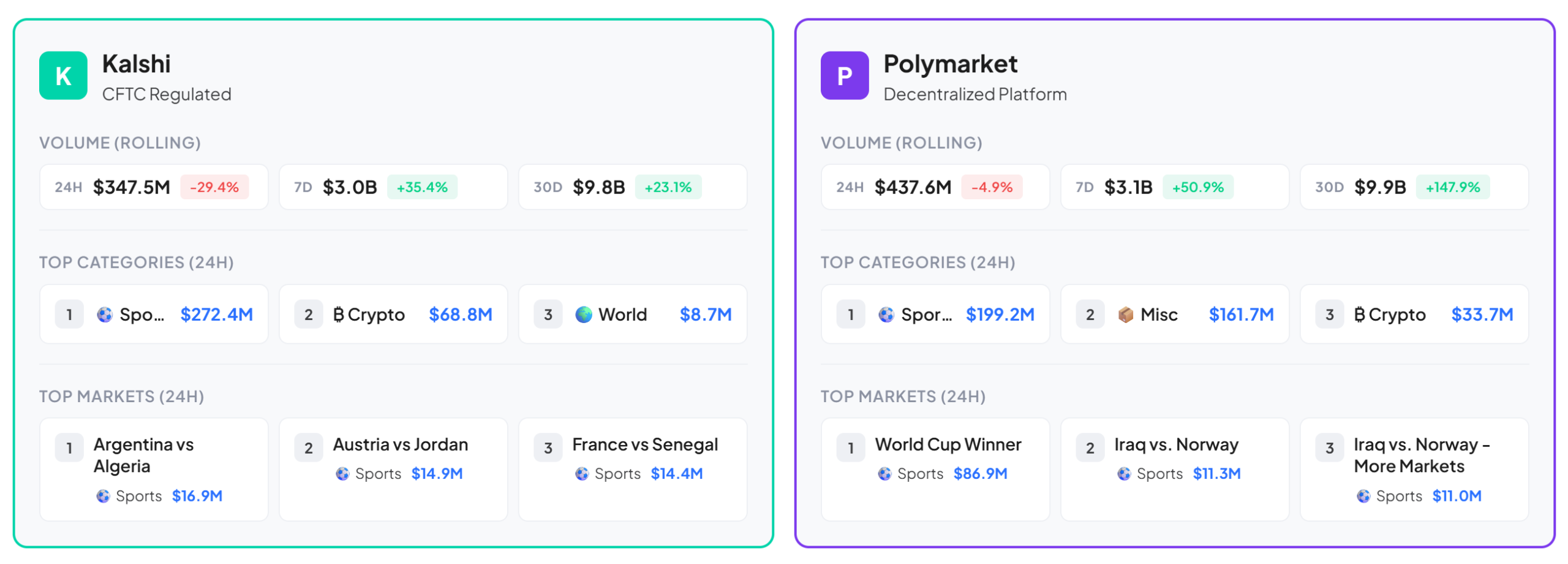
Raw volume tells a closer story. Over the past 30 days, Kalshi traded about $9.8 billion against Polymarket’s $9.9 billion, according to DeFi Rate.

Kalshi still leads where it counts. It holds roughly $1 billion of the $1.6 billion in industry open interest and lists about 97% of all active markets.

“When I think about competition, I don’t think about Polymarket, honestly, as much as some of the others,” FOS reported, citing Tarek Mansour, Kalshi CEO.
Follow us on X to get the latest news as it happens
A Wider Field of Rivals
Mansour pointed first to CME Group, which launched FanDuel Predicts with the sportsbook in December. The app trades event contracts on sports outcomes and economic data.
Robinhood complicates the picture. It built its prediction markets hub on Kalshi’s own exchange in 2025. It then began routing some World Cup and baseball contracts to Rothera, its venue with Susquehanna.
DraftKings, Novig and Coinbase have also moved into prediction markets, making second place hard to call.
Polymarket still leans on its offshore platform, which draws heavy offshore trading volume from US users on a VPN.
The 2026 World Cup lifted both, with a single World Cup winner market drawing tens of millions in daily bets.
Regulation Shapes the Rivalry
Mansour wants Polymarket to come under the regulated umbrella. He argued that insider trading cases on its international platform stain the whole industry.
Two indictments sharpened that worry. Prosecutors charged Army soldier Gannon Van Dyke in the first federal case tied to prediction market bets. He allegedly turned about $33,000 into more than $400,000 on the timing of the Maduro operation.
Weeks later, prosecutors indicted Google engineer Michele Spagnuolo. He allegedly made roughly $1.2 million betting on Google’s most-searched person of 2025.
The CFTC then proposed a 267-page rule on June 10. It would permit most sports contracts while barring in-game props, officiating bets and pre-collegiate sports, with a 45-day comment window.
Both platforms also gained reach this year when Google Finance integrated their data.
For now, Kalshi controls the compliant US market while Polymarket and a widening field chase its lead.
The comment period may decide how fast that balance shifts.
The post Kalshi CEO Says Polymarket Is Not His Main Rival, Points to 3 Bigger Threats appeared first on BeInCrypto.
TLDR:
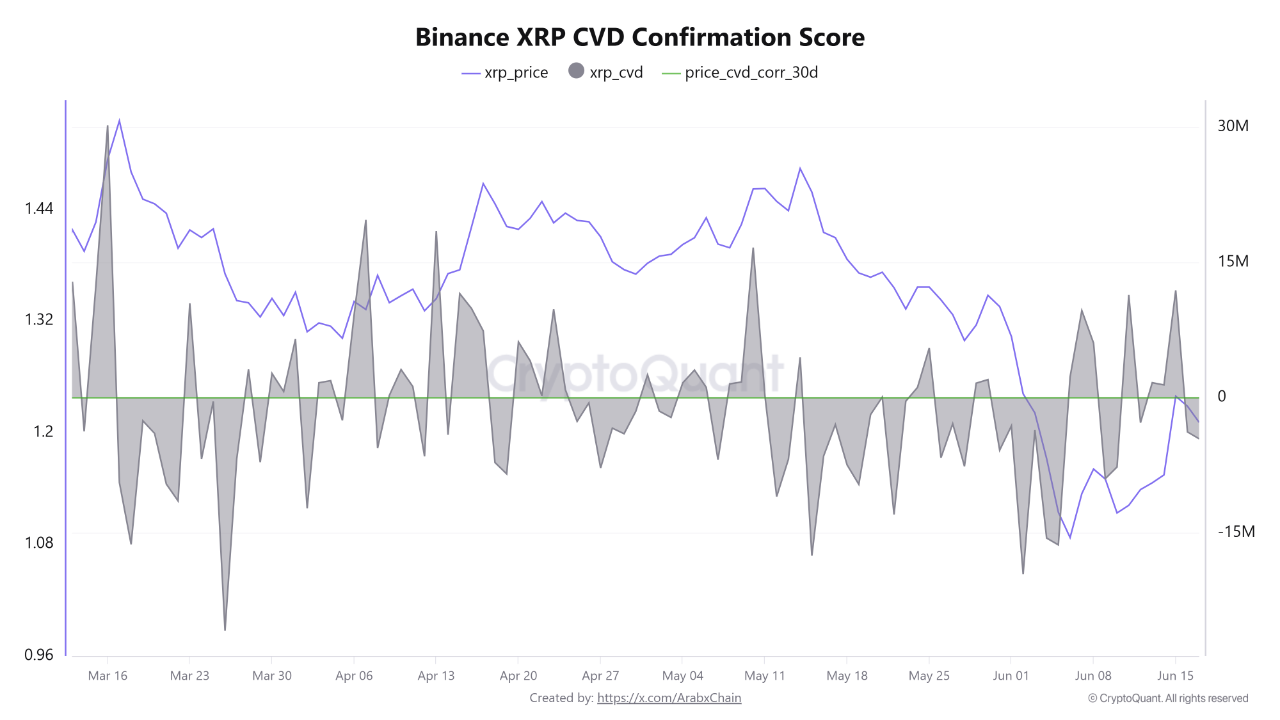
- Binance XRP CVD recorded a negative reading of -4.56M XRP, showing sell orders continue to dominate the market.
- The 30-day price-CVD correlation stands at 0.81, linking recent XRP price moves to real trading activity.
- XRP RSI climbed to 44.7 from oversold levels below 30, pointing to weakening bearish pressure and early recovery.
- XRP faces key resistance at $1.25–$1.30; a breakout could fuel recovery while failure risks a $1.10 retest.
Binance XRP CVD data continues to reflect weak buying momentum across the XRP market. The Cumulative Volume Delta recorded a negative reading of approximately -4.56 million XRP, showing that sell orders dominate over buy orders.
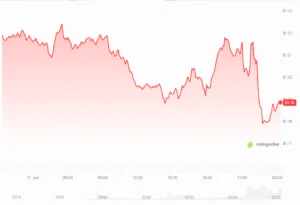
XRP traded near $1.18 with a 24-hour volume of $1.94 billion as of this writing. The token posted a 2.84% price decline in the past 24 hours but gained 7.78% over the prior seven days.
Source: Coingecko
CVD Correlation Points to Genuine Market Activity
The 30-day price-CVD correlation coefficient stands at roughly 0.81. That level points to a strong positive relationship between price movements and actual trading flows. As a result, recent XRP price action appears driven by real market activity rather than thin liquidity conditions.
Source: CryptoQuant
The relatively high correlation reading carries weight for traders monitoring XRP’s near-term direction. When price and CVD move together closely, the data tends to reflect actual supply and demand dynamics more accurately. This makes the persistently negative CVD reading more telling, not less.
Selling pressure continues to weigh on the market despite the price holding above the $1.18 level. This pattern points to ongoing distribution activity by market participants at current price levels. That activity is limiting XRP’s ability to mount a stronger recovery or build a sustained short-term uptrend.
Any shift toward positive CVD readings could provide additional support for the price and signal improving buying interest.
Conversely, continued negative readings may suggest that market conditions remain tilted in favor of sellers. Traders are closely watching CVD developments for early signs of a shift in that balance.
XRP Technical Structure Shows Early Recovery Signals
XRP on the daily timeframe is attempting a recovery after a sharp June selloff. Price dropped from the $1.35 region to a local low near $1.08 before rebounding toward $1.23. Profit-taking then pulled the price back to around $1.18.
Despite that pullback, momentum indicators are improving. The RSI has climbed to 44.7 from oversold territory below 30. That move signals weakening bearish pressure and growing buying interest in the market.
The MACD is also turning bullish, with the histogram printing positive bars. The MACD line is approaching a crossover above the signal line, which traders typically read as a shift in short-term momentum.
Volume expanded during the rebound, suggesting genuine demand rather than a weak technical bounce.
However, XRP remains below key resistance around the $1.25–$1.30 range. A break above that zone could trigger a stronger recovery phase.
Failure to clear that resistance may invite another retest of the $1.10 support area, keeping the overall picture cautious for now.


TLDR:
- The tokenized RWA market surpassed $10B in mid-2026, up from under $1B in early 2024.
- Binance Research projects a $6.78T market cap at 4% penetration, representing 645x upside.
- Around 80% of tokenized stock traders on Binance originate from emerging market regions.
- Median bStock trade size is $18.81, with 93% of all trades involving fractional ownership.
Tokenized RWA market capitalization crossed $10B in mid-2026, up from under $1B in early 2024. The tenfold growth spans tokenized equities, commodities, and ETFs. Binance Research projects the sector could reach $6.78T at 4% market penetration.
Emerging market users account for 80% of tokenized stock trading on Binance. Fractional ownership dominates, with 93% of trades below one unit and a median size of $18.81.
From $1B to $10B: A Market Rebuilt On-Chain
Tokenized RWA market growth accelerated sharply in Q4 2025, driven by a commodity price surge that pulled significant on-chain activity. Weekly tokenized asset volume peaked near $20B during that period.
Volume has since normalized, averaging $735M weekly through 2026. The infrastructure supporting this growth is also expanding, with platforms like Binance rolling out tokenized equity products known as bStocks.
Binance Research outlines four scenarios for where the tokenized RWA market could head next. A conservative case puts market cap at $203B, representing 18x upside from current levels at 0.12% penetration.
A base case projects $661B at 0.4% penetration. A bull case reaches $1.6T at 1% penetration. The exceptional case places the market at $6.78T, assuming tokenized products become default instruments across retail and institutional portfolios.
The current penetration rate sits below 0.01% of total addressable value across global equities, commodities, and ETFs.
That gap between current size and potential is what makes the Binance Research projections so wide. As @BinanceResearch noted: “The tokenized market just crossed US$10B. About a year ago it was under US$1B.”
Three structural advantages drive this growth. Tokenization extends asset access geographically, removes time restrictions through around-the-clock trading, and allows on-chain yield generation on top of underlying asset exposure. Together, these mechanics reframe how traditional assets can be held and traded.
Emerging Markets Lead as Fractional Access Reshapes Participation
Approximately 80% of bStock trading activity on Binance originates from emerging market users. Traditional brokerage access in these regions carries high account minimums, restricted availability, and elevated fees.
Trading tokenized equities with stablecoins removes the conventional off-ramp infrastructure entirely. Users avoid an average 3.6% off-ramp fee and roughly $40 in SWIFT transfer costs per transaction.
The fractional ownership data reinforces how differently users are engaging with these markets. The median bStock trade size is $18.81, against an average unit price of roughly $680.
That gap is only bridgeable through fractional trading. The 93% fractional trade rate reflects structural exclusion being removed, not speculative behavior.
Price discovery data adds another dimension to the asset class’s maturity. SPCXB, the tokenized equivalent of SPCX, independently tracked a 6.5% weekend gap while traditional markets were closed.
SPCX opened Monday within 9 basis points of where SPCXB had already marked the asset. The tokenized market had pre-discovered the move entirely.
Staking mechanics may eventually extend these properties further. If tokenized shares could be staked, locked tokens would reduce circulating float and obligate custodians to hold equivalent underlying shares.
Research from the National Bureau of Economic Research estimates that each $1 of net equity inflow lifts market capitalization by approximately $5. For individual large-cap equities, price uplift from locked supply is estimated at $0.30 to $1 per dollar locked.

WASHINGTON – Kevin Warsh‘s first meeting as Federal Reserve chairman concluded Wednesday with no change in interest rates and a nod to possible hikes ahead. The meeting also saw the removal of key language indicating a bias toward future cuts within a dramatically shorter policy statement.
The Federal Open Market Committee voted unanimously to keep its benchmark overnight borrowing rate anchored in a range of 3.5%-3.75%. The federal funds rate has held there since the central bank lowered rates by three-quarters of a percentage point in the latter part of 2025.
With a bevy of intrigue over Warsh taking the central bank helm, the meeting followed the same pattern as the others this year regarding rates but differed otherwise.
A missing dot
Fed officials, through their closely watched “dot plot” grid, removed their prior outlook for a rate cut this year and indicated that a hike is possible. However, the Summary of Economic Projections missed the participation of one member: Warsh.
Warsh has been a critic of the forecasting tool as well as other forward guidance out of the committee including projections on unemployment, inflation and gross domestic product in the SEP.
Heading into the meeting, Fed watchers had suspected Warsh wouldn’t submit his outlook, and some anticipated he might look to end the feature altogether. He confirmed at a news conference following the decision that he had declined to share a forecast and is forming task forces to overhaul major Fed operations.
“I did not submit a dot for me,” Warsh said. “It’s not helpful in the conduct of policy. I suspect by year-end, as I mentioned in my opening statements, there’ll be a review about communication broadly, press conferences, dots, meetings, and the like, transcripts, minutes. This will be part of that. I don’t want to prejudge the outcomes there, but I’m pretty open-minded about what they could be.”
Based on the 18 of 19 possible responses, the median estimate for the fed funds rate at the end 2026 is now 3.8%, up from 3.4% in the prior projections from March and signaling the committee sees at least one rate hike as necessary this year. Meeting participants were split on the path for rates this year, with eight expecting no change, one seeing a cut and nine anticipating at least one hike.
An additional dot was missing for 2028 projections.
A shorter statement
During the news conference, Warsh acknowledged the changes to the committee’s statement.
“It’s a bit shorter, a bit simpler and it dispenses with some older language,” he said. “That statement just gives you the facts, as best we can judge it.”
In addition to the rate call, which was widely anticipated in financial markets, the FOMC’s post-meeting statement also not only removed prior language seen as a nod toward an easing slant in the future but took a hatchet to the rest of it. Warsh has criticized the Fed for overcommunicating.
This week’s communique checked in at just 130 words, compared with 341 for the April 29 release following the most recent meeting. The statement offered just a brief summary of economic conditions followed by a vow to control inflation.
“Economic activity is expanding at a solid pace despite elevated uncertainty that owes, in part, to the conflict in the Middle East. Productivity growth and capital investment are strong,” the statement read. “Job gains have kept pace with the workforce, and the unemployment rate has changed little.”
“Inflation remains elevated relative to the Committee’s 2 percent goal, in part reflecting supply shocks that have driven price increases in certain sectors, including energy. The Committee will deliver price stability,” the policymakers said.
The statement also noted that the Fed would maintain its policy of “ample reserves” in the banking system, indicating there are no immediate plans to reduce the central bank’s bond holdings on its $6.7 trillion balance sheet, as Warsh has advocated.
The statement’s unanimous approval came after so-called forward guidance verbiage drew three dissents at the April meeting from presidents of regional reserve banks who wanted to preserve a two-sided option for possible hikes or cuts ahead.
Higher inflation forecast
In keeping with uncertainty over rates, officials also adjusted their indications of where policy is headed from here. The grid, which anonymously indicates the rate outlook for meeting participants, erased an earlier indication for one cut this year and pushed any reductions into 2027 and 2028 as policymakers weigh the durability of an inflation spike brought on by the Iran war.
The grid indicated a median funds rate projection of 3.8% by the end of the year – some 0.16 percentage point above the current level and suggesting that a hike is very much on the table. They continued to expect a long-run funds rate of 3.1%.
Officials altered their views on the economy, raising their outlook on inflation for 2026 to 3.6% on headline and 3.3% for core, which excludes food and energy. At the last update in March, committee members anticipated 2.7% rates for both measures. They also slightly lowered their projection for gross domestic product growth to 2.2%, down 0.2 percentage point from March, and cut the unemployment projection to 4.3%, down 0.1 percentage point.
The inflation surge has posed a quandary for policymakers who are trained to look past short-term supply shocks such as the energy spike associated with the war.
Recent inflation indicators have posted multiyear highs, with the consumer price index for May indicating a 4.2% annual inflation rate, though the core measure that excludes food and energy registered lower than the headline reading at 2.9%. Inflation has been above the Fed’s 2% target for the past five years.
Warsh told reporters that the Fed is committed to reducing inflation to 2%.
“The commitment to deliver is strong, unanimous, and unambiguous, and that’s I think an important message we’ve missed for five years, and we’re going to fix that,” Warsh said.
Though he has offered little public commentary outside of his confirmation hearing and his swearing-in on May 22 as chairman, Warsh has argued that supply-shock inflation generally should be looked through when formulating policy. He also has maintained that artificial intelligence ultimately will have a disinflationary impact on the economy as rising productivity will help ease the cost of goods and services.
Still, the case for lowering rates has been made more complicated by a surprisingly resilient labor market. Nonfarm payroll growth again defied expectations in May with a gain of 172,000 while the unemployment rate, the Fed’s most closely watched metric, was at 4.3%, unchanged over the past year.
Ahead of the decision, the market didn’t anticipate any cuts in 2026 and a quarter-point hike was expected by the end of the year, according to the CME Group’s FedWatch gauge. In the wake of the decision and Warsh’s remarks, traders were now anticipating a hike could come as early as October.
Correction: In the wake of the decision and Warsh’s remarks, traders were now anticipating a hike could come as early as October. An earlier version misstated the expected move.


The role of benchmark indexes is to describe and measure markets. Providing transparent rules, documented governance, independent oversight and clear procedures under stress requires rigor and discipline. Index providers adopt these disciplines voluntarily, drawing on standards refined over decades in other asset classes.
A new report from the Index Industry Association examines how digital asset indexes are evolving to meet these expectations — and must keep evolving as stablecoins and tokenized assets enter the picture. Transparency is rarely the loudest part of a market, but it tends to be the part that lasts.
Principled Perspectives
One market, not two: CoinDesk’s Dave LaValle on crypto and TradFi converging
The conversation about crypto in client portfolios has shifted in the past six months, and advisors who still think in terms of the old framework risk being caught flat-footed. In a new interview with The Wealth Advisor, Dave LaValle, president of CoinDesk Data & Indices, laid out why.
The clearest signal came from Wall Street. “The Morgan Stanley team launched their bitcoin ETF in early April, and a little bit more than a month in, and they’re over $230 million in assets,” LaValle said. “To amass $230 million in basically a month, it’s kind of insane.”
He framed crypto as a disruptive technology that needs two things to take hold: the tech itself, which exists, and regulatory clarity. The GENIUS Act has set a framework for stablecoins backed by U.S. Treasuries, and the CLARITY Act, addressing market structure, could reach a vote “sometime in the next month or two.”
Crypto World
Crypto industry aghast at Illinois’ new tax on holding or transferring digital assets in state budget
The crypto industry is pushing back against a new tax law in the state of Illinois that enacts a 0.2% tax on businesses transacting or storing crypto for customers in the state, but it may be too late to change it in the short-term.
The law enacts a 0.2% tax on “receiving any digital asset business activity,” according to the text of the bill, which defined digital asset business activity as “any single occurrence of exchanging, transferring or storing a digital asset as part of a business or on behalf of a customer.”
The tax applies to firms that are based in Illinois or provide services to residents of the state with total gross receipts of at least $100,000. The tax is expected to raise around $60 million, said a person following the process.
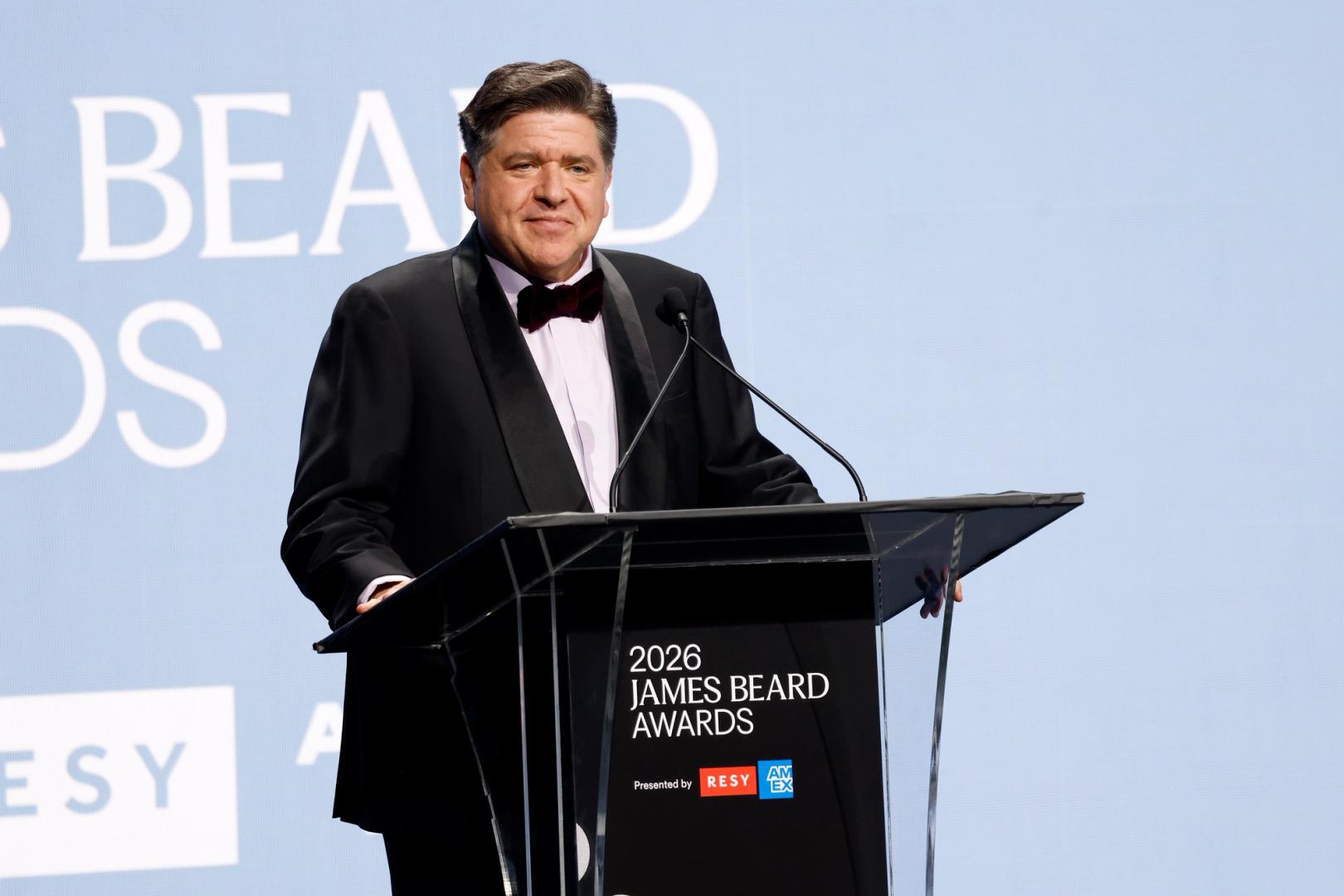
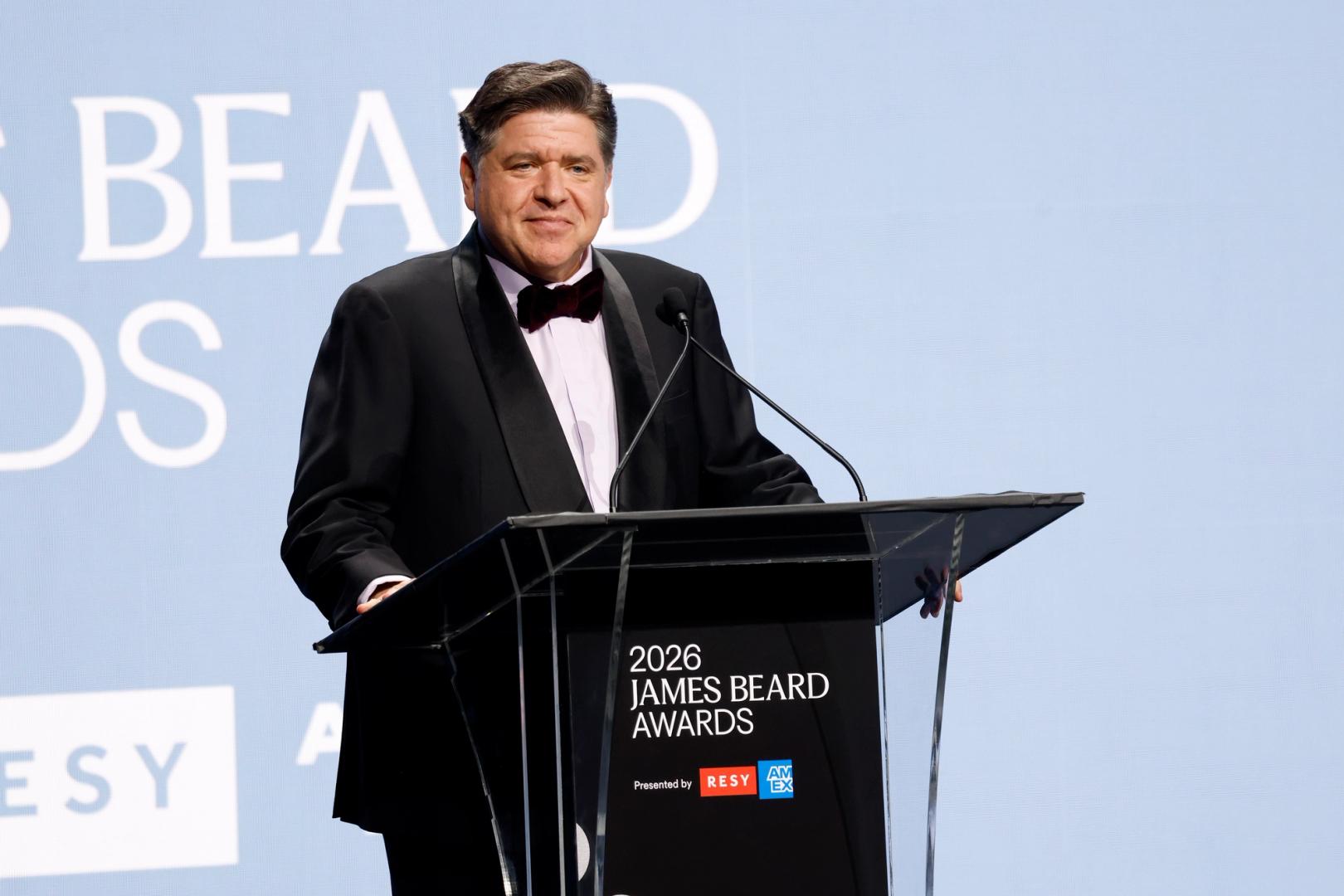
The provision was added last-minute to Illinois’ broader budget bill, according to two people following the matter, and was approved by Governor J.B. Pritzker on June 16, according to the bill’s status page. The legislation creates a roughly $56 billion budget for the 2027 fiscal year and also includes new taxes on fantasy sports, social media and other areas, ABC 7 reported.
A spokesperson for Polymarket said the company looks forward to addressing the claims.
“This action runs counter to the CFTC’s established framework for regulating prediction markets,” the spokesperson said in a statement emailed to CoinDesk.
So far, the states that have filed such a challenge against the prediction markets have met with counter suits from the CFTC, where Chairman Mike Selig has taken an aggressive legal stance defending his agency’s authority as the sole regulatory power over events contracts, which he says falls directly into the CFTC’s authority over U.S. derivatives.
And Trump has recently backed him up.
“It is critically important that the CFTC’s exclusive authority over Prediction Markets is maintained, and that they will thrive,” Trump posted on his social media site, Truth Social. “Under my leadership, we are setting ‘rules of the road’ that are the Gold Standard for the States.”
He asserted that his state-level political foes (offering names including Minnesota Governor Tim Walz and Illinois Governor J.B. Pritzker) are “SCUM” who shouldn’t be allowed to set the rules.
“It is a major Industry, and we must protect it,” Trump wrote. “Mike Selig, CFTC Chairman, and respected by all, is doing a great job.”
The CFTC has sued eight states — most recently New Mexico — and leapt into other court matters involving the sector.

The more scrutiny Andy Burnham faces, the less popular he gets

Takeaways from the G7 summit: Trump, Iran and Ukraine

Thailand Latest Updates: Economy and Financial Sector


-

 Business3 days ago
No Jackpot Winner as $257 Million Prize Rolls Over to $269 Million Monday Draw
-

 Fashion5 days ago
Weekend Open Thread: Tuckernuck – Corporette.com
-

 Crypto World6 days ago
Oppenheimer backs SpaceX as $70 billion retail frenzy builds
-

 Crypto World6 days ago
Markets Rally as SpaceX IPO Looms Amid Iran Tensions and Inflation Surge
-
Crypto World3 days ago
Zimbabwe Requires Crypto Businesses to Register Annually Under New FIU Regulations
-

 Tech5 days ago
NanoClaw integrates JFrog registries to secure AI agent downloads
-

 Crypto World5 days ago
Bitget enters Argentina’s regulated crypto market through PSAV registration
-

 Tech5 days ago
This Week In Security: Microsoft On Microsoft, Register Your Domains, Linux On ARM, And FreeBSD Joins The File Cache Club
-

 NewsBeat6 days ago
El Nino has formed in the Pacific and could set records, forecasters say
-
 Tech6 days ago
Dutton Ranch star claims they ‘didn’t see any disruption’ on set following Chad Feehan’s exit from Yellowstone spinoff fueled by Taylor Sheridan clash rumors
-

 Politics6 days ago
Politics Home | Healey Resignation Is “Colossal Failure Of Government”, Says Former Labour Defence Secretary
-
 Entertainment6 days ago
Donnie Wahlberg & More Heat Up Las Vegas at Circa’s Barry’s Downtown Prime
-
 Tech6 days ago
Opendoor Ends India Operations, Fueling a Bigger Conversation About AI and Outsourcing
-

 Politics6 days ago
Belfast burns, while Met chief points finger at Iran and Russia
-

 Sports6 days ago
First Time Since 1971: Australia Register Historic Low In ODI Cricket
-

 NewsBeat5 days ago
FBI searches office of Ohio voter registration group
-

 Business6 days ago
AT&T: Verizon's 27% Outperformance Sets Up A Solid Entry Point
-
 Tech6 days ago
Anthropic is spending $150M to embed 1,000 AI fellows inside nonprofits. No degree required.
-

 Politics6 days ago
Modi thanks Trump for wishes as US attacks Indian seafarers
-
 Entertainment6 days ago
‘The Pitt’s Fan-Favorite Doctor Confirms Noah Wyle Gave His Blessing to Return [Exclusive]
You must be logged in to post a comment Login