
Security teams log 54% of successful attacks and alert on just 14%. The rest move through your environment unseen.
The Picus whitepaper shows how breach and attack simulation tests your SIEM and EDR rules so threats stop slipping by detection.



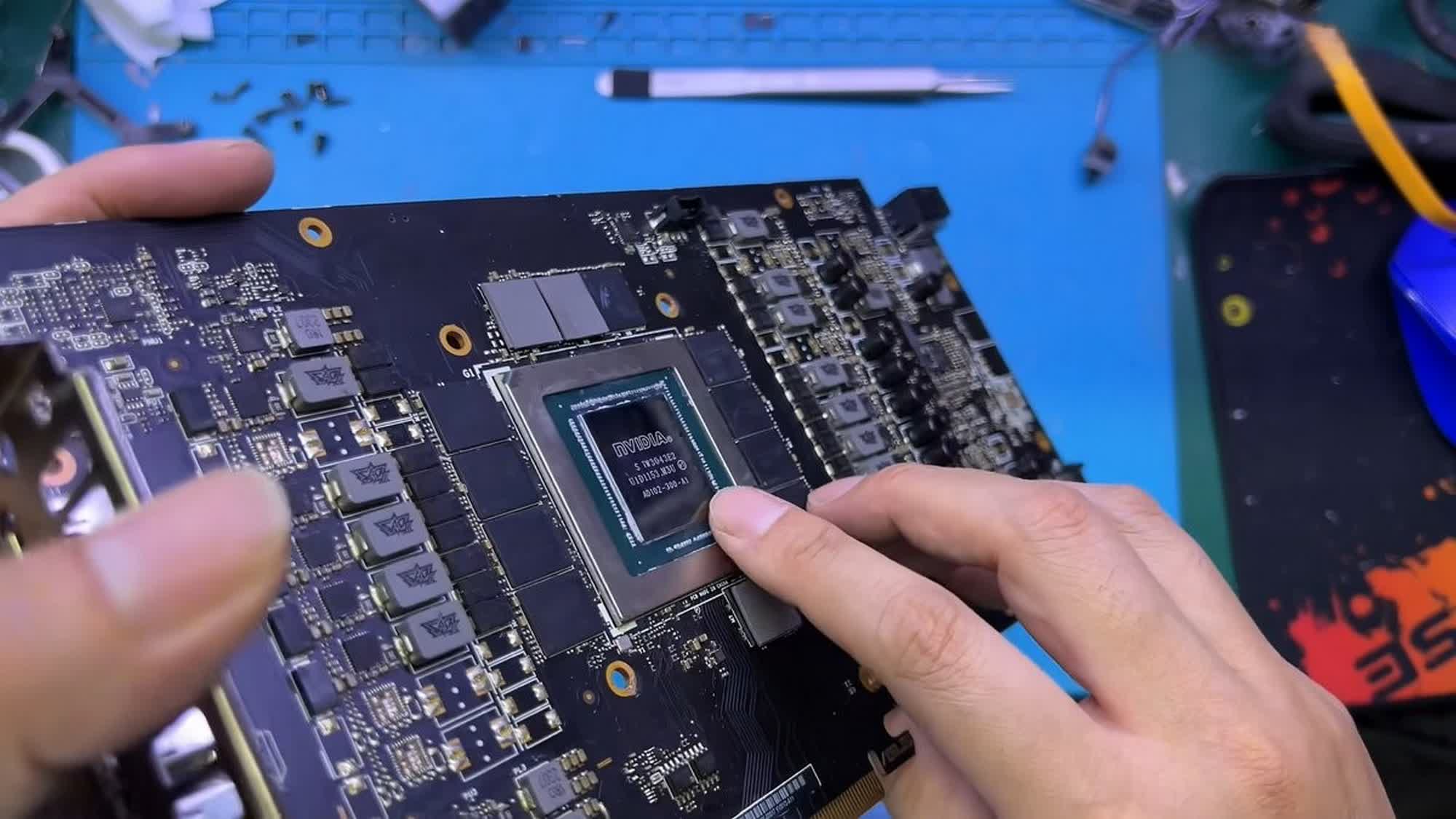
WTF?! With the AI boom driving GPU prices to record highs, scammers are capitalizing by flooding the market with counterfeit graphics cards. A new report from China suggests that fraudsters are now gluing fake plastic GPU shells onto PCBs and selling them as genuine RTX 4090 graphics cards to unsuspecting buyers.
In a video posted on the Chinese social media platform Bilibili, well-known PC hardware dealer Brother Zhang claimed that he was recently scammed into buying a counterfeit second-hand RTX 4090 for 1,500 yuan (around $221). According to Zhang, the card appeared to be a normal RTX 4090 at first glance, with the die markings reading “AD102-300-A1,” which refers to the actual GPU used in the 4090.
However, upon further investigation, he found that other markings on the die were inconsistent with original RTX GPUs, such as the font style, which did not match Nvidia’s official design. The die also had “TW 3043E2” engraved on it, suggesting it was manufactured in 2030 – an error Nvidia and its official board partners are unlikely to make.
Zhang immediately suspected that the card was not authentic, or at least that some components may have been swapped out before being sold. Once he disassembled the card for further inspection, his suspicions were confirmed: the GPU die was made of plastic rather than silicon. The memory dies were not real either.
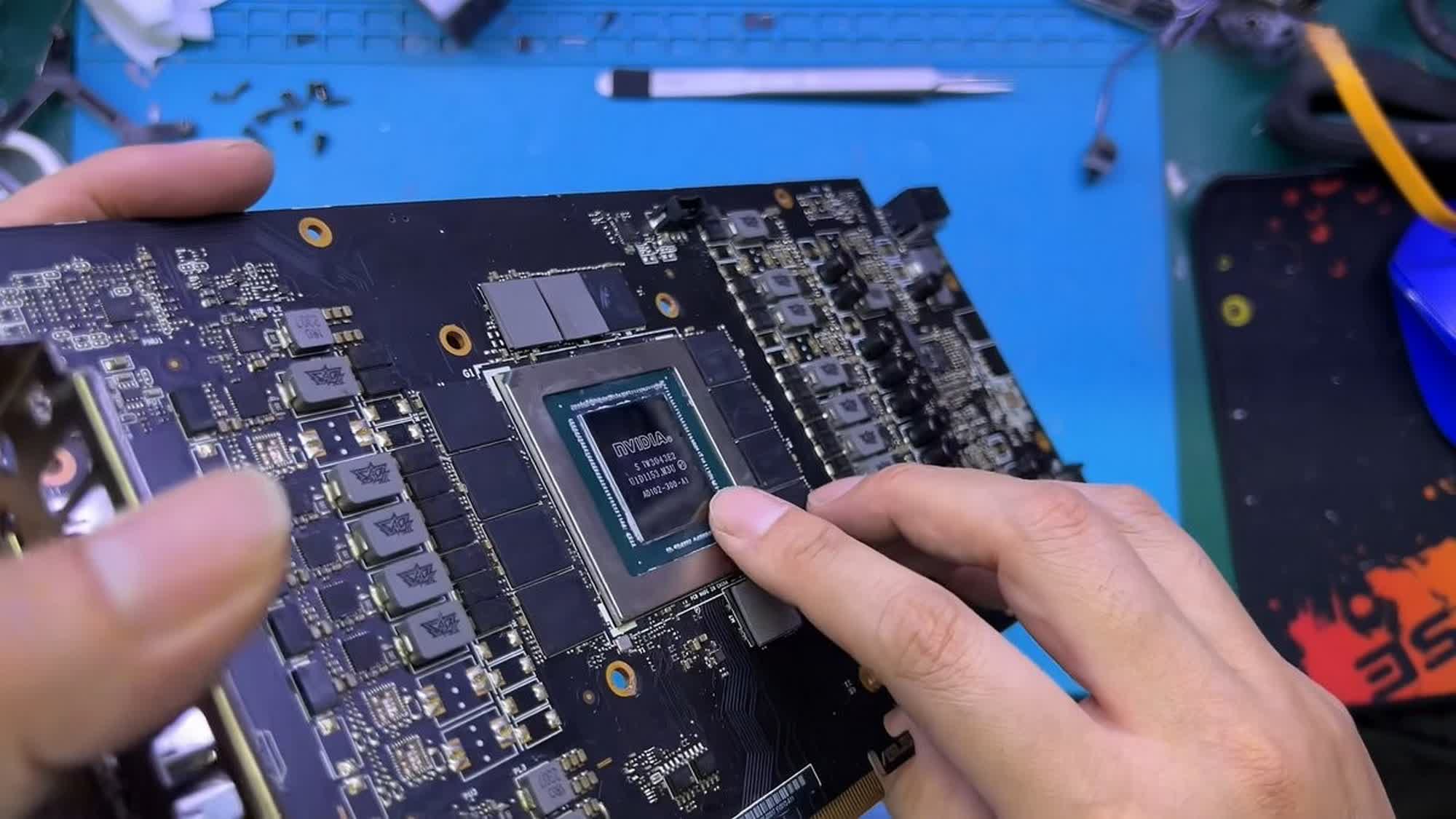
Zhang compared the fake RTX 4090 die with photographs of an original RTX 4090 board, confirming his suspicion that nearly every part of the card was counterfeit and had been glued onto the PCB to fill empty space. Other discrepancies included misplaced capacitors and a missing QR code that would have been etched onto the die had it been authentic.
It is worth noting that this is not the first time reports have surfaced of fake graphics cards being sold to unsuspecting buyers. Earlier this year, a repair shop owner came across a “near-perfect” fake RTX 4090 with laser-etched VRAM and a fake GPU core. Last year, a technician in China found that three out of four RTX 4090 cards he received for repair were fitted with RTX 3090 or RTX 3080 dies.


This week on the GeekWire Podcast: Anthropic takes its most powerful models offline after a U.S. order, with Amazon CEO Andy Jassy reportedly contributing to the concerns that helped trigger it. We talk about what it was like to use one of those models, Claude Fable, while it was available, and dig into the Amazon-Anthropic dynamic.
Then we explain how agentic AI is upending Amazon’s “working backwards” tradition, as represented by one division inside the company that is using agents to create prototypes in some cases before going through the company’s traditional PRFAQ process.
Then, an AI-powered school is arriving soon in the Seattle area. Alpha School uses AI-driven software rather than chatbots to teach core academics, frees the rest of the day for hands-on projects, and is drawing both interest from Microsoft executives and skepticism from critics.
And finally, this week’s trivia question focuses on the sensor-packed World Cup ball.
With GeekWire co-founders John Cook and Todd Bishop; edited by Curt Milton.
Subscribe to GeekWire in Apple Podcasts, Spotify, or wherever you listen.

Last Friday, citing unspecified national security concerns, the White House ordered Anthropic to restrict the export of its powerful AI models Fable and Mythos to anyone outside of the United States, as well as foreign nationals inside the country. Shortly after, the AI giant hastily pulled the plug on both models, which have now been unavailable to anyone for a week.
The episode is the first real test of whether the U.S. government can use export controls to contain frontier AI the way it has tried, with very uneven results, to contain encryption and spyware before it. And dramatic as it may sound, how this standoff gets resolved could shape not just Anthropic’s access to foreign markets but the rulebook that other AI labs will have to build around.
Some context first. Ever since Anthropic launched Mythos in April, the company has marketed it as some kind of Doomsday cyber machine that could wreak havoc on the internet if released too widely — which is why, before the ban, only around 150 vetted companies and government organizations had access to it at all. The goal was helping defenders secure their software and services before the bad guys could reach Mythos-like capabilities.
So what triggered the ban? Two subsequent events, reportedly. The first: Anthropic gave a South Korean telecom access to Mythos through its limited partner program, and U.S. officials grew alarmed after identifying the company as one they suspected had ties to China. (The company, widely reported to be SK Telecom, has denied any China connection.) Amazon CEO Andy Jassy also reportedly alerted the administration after Amazon’s own researchers, he said, found a way around Fable 5’s safeguards. Anthropic disputes the “jailbreak” label, calling it a narrow, already-patched issue rather than a wholesale defeat of the model’s safety measures.
The result was the same: the Commerce Department issued an export control directive, and Anthropic had to scramble to immediately limit access to its products — within roughly 90 minutes of being notified, by some accounts.
None of this is new, though. Governments have tried to use export controls to limit the proliferation of what they see as dangerous cyber technology for decades, but their track record has been middling at best.
The U.S. government was behind what is perhaps history’s most spectacular failure of this approach in the early to mid-1990s. At the time, computer scientists were developing encryption technologies to secure data as it traveled over the internet. One of those encryption products was called Pretty Good Privacy, or PGP, a popular software that could encrypt data and make it virtually impossible to unscramble even if intercepted as it traveled to its intended recipient over the internet.
The U.S. government initially saw PGP as a dangerous weapon, fearing it would prevent its intelligence agencies from snooping on emails as they crossed their wires. To stop the distribution of PGP, the U.S. Customs Service opened a criminal investigation against PGP’s creator Phil Zimmermann for allegedly violating arms export controls. He fought back by publishing PGP’s source code as a printed book, igniting what is known today as the “Crypto Wars.”
Zimmermann later won a key battle when the investigation was closed, paving the way for crucial end-to-end encryption algorithms such as the one used by billions of Signal and WhatsApp users.
Later during the early 2010s, researchers began discovering Western-made spyware used against dissidents in the Middle East. In response, several governments agreed to expand the Wassenaar Arrangement, an international treaty that limits the export of dual-use software and technologies that are used in both civilian and military applications.
The idea was to classify surveillance and hacking software as dual-use, thus forcing spyware makers to get export licenses to sell their products abroad.
Do you have more information about the Mythos ban? From a non-work device and network, you can contact Lorenzo Franceschi-Bicchierai securely on Signal at +1 917 257 1382, or via Telegram and Keybase @lorenzofb, or email.
But Wassenaar has always had two inherent weaknesses. There are several countries that don’t adhere to the agreement, including Israel, which houses some of the world’s most active spyware makers.
The agreement also depends on countries applying it to companies within their borders at their own discretion. For a time, the Italian government allowed one of the country’s then-top spyware makers, Hacking Team, a license to export its tools around the world, despite the company’s track record of selling spyware to oppressive governments that used it to hack journalists and human rights activists.
Since then, other countries in Europe have been lax with spyware makers like Italy. Despite numerous scandals, Europe, home to many spyware and hacking tools makers, has continually failed to curb the export of spyware to authoritarian regimes. Critics say that a recently renewed effort across the bloc of 27 member states to tackle its growing problem of spyware exports to authoritarian states “does not go far enough.”
Several spyware makers, such as Intellexa, a sanctioned consortium of spyware companies, have simply moved their operations to countries with lax export controls. Other spyware makers sought to move their operations to Saudi Arabia for similar reasons.
There have been some wins. Germany-based spyware maker FinFisher shut down in 2022 after a multi-year investigation by German prosecutors into the company for allegedly selling spyware to Turkey without an export license. Investigators previously found the FinFisher spyware had been deployed on the phones of critics of Turkey’s government.
As of the time of writing, the impasse between Anthropic and the Trump administration remains. There is a reasonable chance the administration will buckle and lift the restriction in the interest of keeping American AI companies competitive worldwide — a move that would amount to tacit acknowledgment that AI labs elsewhere, including in China, will likely reach similar capabilities regardless of what the U.S. restricts. Or, American AI companies could end up needing government approval before serving foreign customers at all, a compliance burden that would invariably dent their bottom line.
Given the past experiences that world governments have had with trying to control the reach of software, government-mandated export controls are unlikely to be the right approach to stop malicious actors from abusing powerful dual-use cyber technologies.
When you purchase through links in our articles, we may earn a small commission. This doesn’t affect our editorial independence.


A new ransomware operation named ‘Prinz Eugen’ prioritizes recently modified files for encryption and leaves no ransom note on the system.
An investigation from Threatdown, Malwarebytes’ enterprise cybersecurity arm, found that the Prinz Eugen hackers have a hands-on-keyboard style and prefer to use legitimate remote monitoring and management (RMM) software and living-off-the-land tools.
According to the researchers, initial access is likely achieved through stolen RDP credentials, followed by the manual download and execution of the main payload, ‘servertool.exe.’

In an investigated incident, the researchers observed the use of the RemotePC RMM tool and a backdoor administrator account that provided persistence.
Unlike many modern extortion operations, Prinz Eugen does not operate under the ransomware-as-a-service (RaaS) model, and its developers are not currently recruiting affiliates.
Unlike most extortion operations, Prinz Eugen is not a ransomware-as-a-service (RaaS), or at least the developers are not currently looking for affiliates.
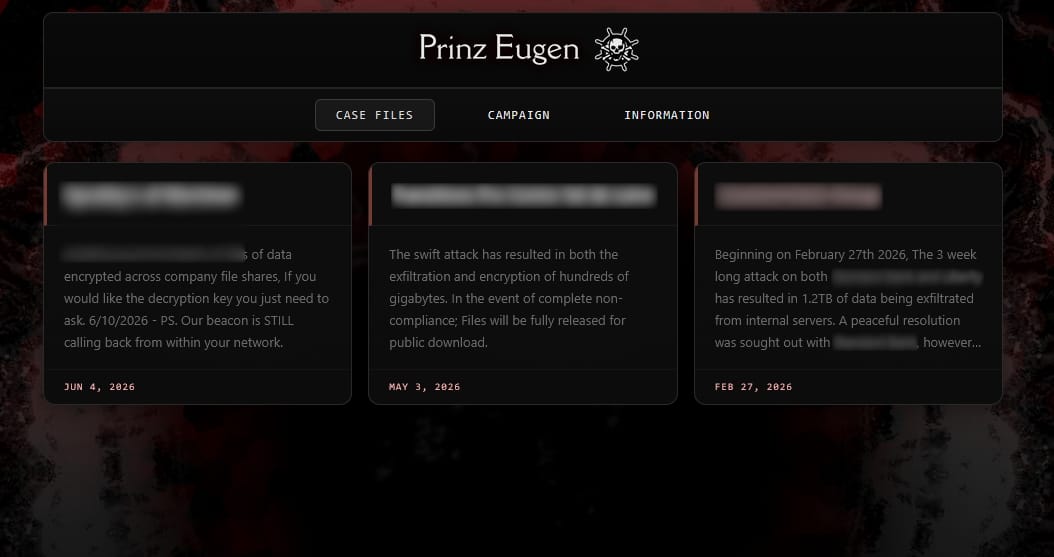
Currently, the threat actor’s data leak site only lists three victims, each one showing that the hackers engage in data encryption, exfiltration, or both. However, the cybersecurity community is aware of more organizations impacted by Prinz Eugen ransomware.
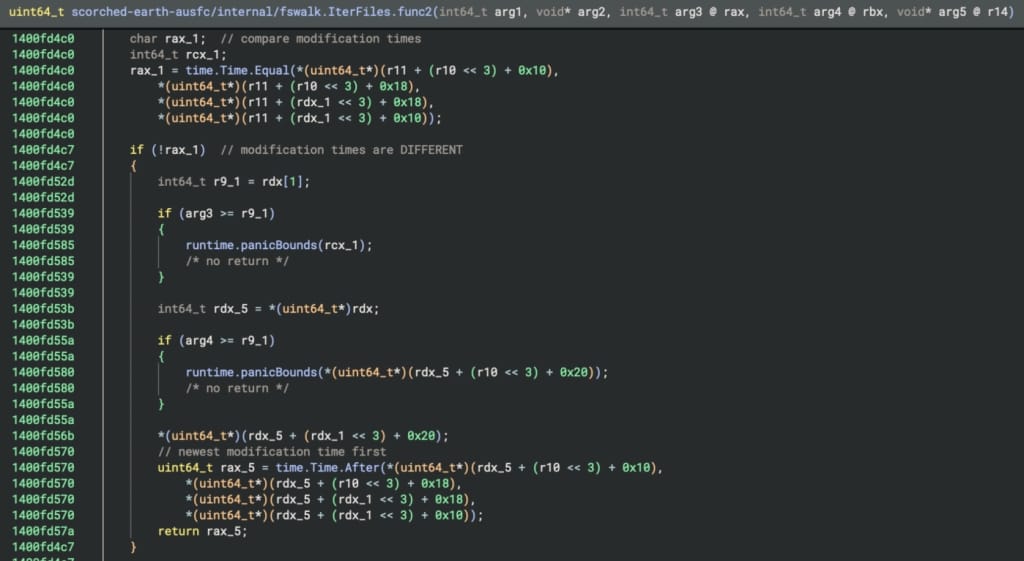
An analysis of a Prinz Eugen attack revealed that the Go-based malware prioritizes the encryption of the most recently modified files. When multiple files share the same timestamp, they are processed in alphabetical order.
Threatdown researchers believe this approach is intended to maximize the impact on victims by targeting files that are more likely to be business-critical and in active use, increasing the pressure to pay the ransom.
The analyzed sample checks directories recursively with no depth limit and no exclusions, and encrypts virtually every file except those with the .prinzeugen extension, which Prinz Eugen uses for encrypted files.
The ransomware employs ChaCha20-Poly1305 encryption with a 32-byte master key, a random initialization vector for each file, and a key derivation function based on Argon2id, SHA-256, and HKDF-SHA256.
The encryption process is carried out in 1 MB chunks, and file integrity is checked using the SHA-256 hash function.
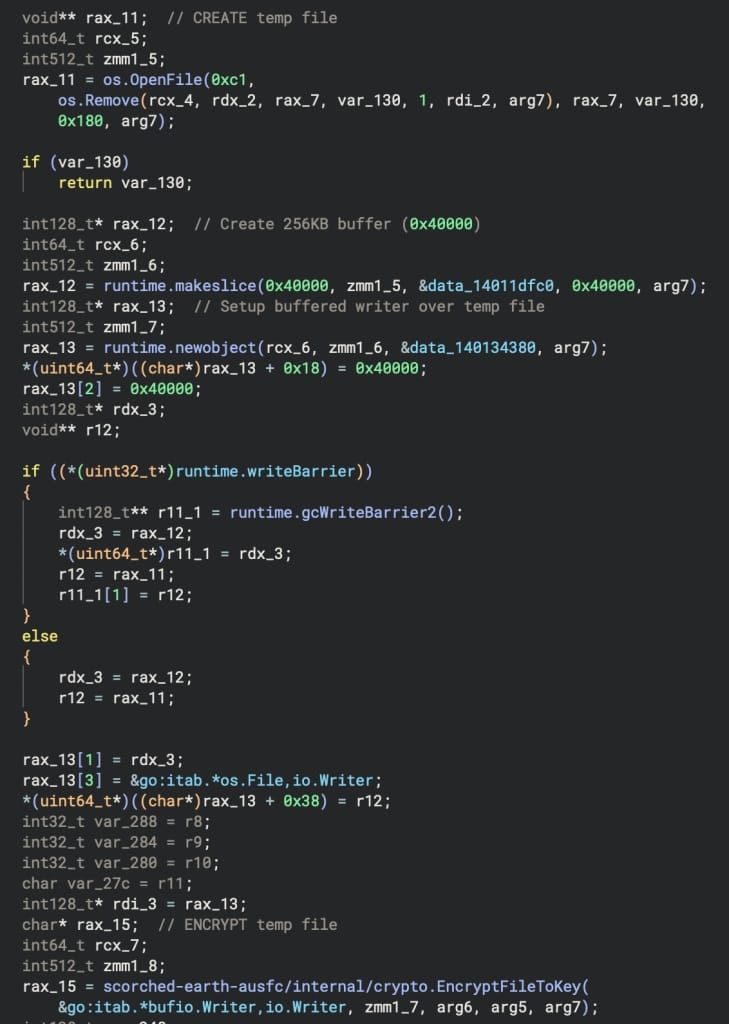
The researchers noticed that when the malware uses the –delete flag to delete the original file after encrypting it, a check occurs to make sure that the file can be decrypted before removing it from the system.
To prevent the encryption key from being retrieved, Prinz Eugen ransomware overwrites it with zeroes, forces garbage collection to eliminate it from memory, and then self-deletes from disk.
Analysis of the encryptor showed no functionality to drop a text ransom note or change the desktop wallpaper. Threatdown researchers say that the absence of a ransom note “is a tactic we see more often among organized ransomware groups.”
This is typically done to reduce the forensic footprint and make it more difficult for the extortion step to be detected automatically.
“By moving ransom communications entirely out-of-band (through direct email, phone contact, or dark-web victim portals), the actor reduces forensic artifacts and complicates automated detection of the extortion phase,” the researchers say.
The researchers identified at least five Prinz Eugen victims, saying that in the case of the Standard Bank breach, the attacker demanded a ransom of 1 BTC and was refused.
ThreatDown’s report provides a list of indicators of compromise to help both organizations and researchers analyze, detect, and defend against Prinz Eugen ransomware attacks.

Security teams log 54% of successful attacks and alert on just 14%. The rest move through your environment unseen.
The Picus whitepaper shows how breach and attack simulation tests your SIEM and EDR rules so threats stop slipping by detection.

Salome Mikadze-Struk is no stranger to adversity. The daughter of refugees, she built a software-development business as an undergraduate at the height of the COVID-19 pandemic and kept it running despite the outbreak of war in her native Ukraine. Now, she’s drawing on her experiences to mentor tech-startup founders and speak publicly about the importance of resilience in entrepreneurship.
Mikadze-Struk was studying at Georgetown University, in Washington, D.C., when COVID-19 struck. Classes went online, and she moved back to Ukraine. In the midst of that disruption she saw an opportunity to develop her business idea, called Movadex, by tapping Ukraine’s pool of talented young engineers. Then Russia invaded in early 2022, during her final semester. Taking online classes from bomb shelters and helping employees evacuate to safer parts of the country was surreal, she says, but the team kept the company afloat and she graduated later that year.
In 2023, Mikadze-Struk took a hiatus from her business to pursue an MBA at Stanford University, which she completed this year. In her precious spare time she’s been advising startups and giving talks, using her unique perspective to promote the need for resilience in entrepreneurship—something she thinks is increasingly important in the software industry as AI coding tools upend old business models.
“You need to be okay with risk, you need to be resilient. You need to be okay with disruption and okay with uncertainty,” she says, “because this is inevitably going to be part of this industry for the foreseeable future.”
Mikadze-Struk’s parents had settled in Ukraine after fleeing conflict in the Abkhazia region of Georgia in the early 1990s. “They left everything behind,” she says. “You can look on Google Maps and zoom in on where their houses were and it’s all rubble.”
Despite this backstory, Mikadze-Struk says she and her sister had a conventional middle-class upbringing in Kyiv. Her father ran a small shop and her mother was a stay-at-home mom. Her parents placed an emphasis on education and encouraged her to study hard and take part in extracurricular programs such as Ukraine’s Junior Academy of Sciences, which introduces students to research.
“They weren’t rich, so they knew that our way to make it in life was not through investments, but through merit-based accomplishments,” she says.
When Mikadze-Struk was 14, her family discovered the newly launched Ukraine Global Scholars program, a nonprofit that helps talented students secure scholarships abroad. The program helped her win a full scholarship to the Emma Willard School, a private girl’s school in Troy, N.Y.
After graduating high school in 2018, Mikadze-Struk was accepted to Georgetown to study business administration. But it was outside the classroom that her career direction began to take shape. She won a startup competition with a medical device she had developed for a school project and, while the business idea didn’t go anywhere, it sparked an interest in entrepreneurship.
Ukraine’s software industry was booming, and she began attending startup events and competitions in her home country the summer before starting college. There she met her eventual cofounder Nor Newman.
Despite both being just 18, they saw a gap in the market. The pair noticed many founders had strong ideas but lacked the technical expertise to realize them, while talented engineering students often struggled to gain real-world experience. Newman had begun informally connecting startups with his college friends, but the pair soon saw commercial potential. “We realized we could actually create our own startup studio and help startups as a team, versus just connecting people,” says Mikadze-Struk.
Then, when the COVID-19 pandemic struck in early 2020, halfway through her sophomore year, it brought both disruption and opportunity for Newman and Mikadze-Struk. While travel restrictions and lockdowns made life complicated, there was also a surge of companies looking to move their business online. “COVID really skyrocketed everything we were doing,” she says.
Sensing an opportunity, Mikadze-Struk and Newman incorporated Movadex in Ukraine in early 2020. From the start, they decided to focus on not only providing engineering talent, but also helping startups with product development. Many times, says Mikadze-Struk, a founder’s vision for the software doesn’t line up with what users actually want. “What really helped us grow is not just the engineering or quality of code, but rather a holistic approach to creating a product and actually getting into the brain of the user,” she says.
Back in Ukraine, Mikadze-Struk had to juggle this booming business with studying remotely—taking classes at night and working during the day. It was exhausting, she says, but it also allowed her to immediately apply what she learned in business classes to building her startup.
Having successfully navigated the pandemic, Mikadze-Struk was dealt another wild card. In early 2022, Russia invaded Ukraine and her life was again turned upside down. It was particularly traumatic for her family, having already been forced from their home in Georgia once by war.
 In 2023, Mikadze-Struk took an extended leave from her company to pursue an MBA at Stanford.Christie Hemm Klok
“For my parents to experience their daughters going through all the same things they had gone through was really heartbreaking,” she says. “But at the same time, because I’d heard so much about their story of resilience I had power in me to not fully break down.”
On the day of the invasion the founders told employees to take the day off and emailed clients to warn of potential disruptions. The next couple of days were spent checking on staff and evacuating as many as possible to their headquarters in Lviv, in Western Ukraine.
By the following Monday the business was back up and running. Soon afterward, they partnered with the Lviv IT Cluster business association’s nonprofit arm to help resettle refugees from the eastern part of Ukraine, where strikes were focused, and offer job placements. Throughout this period, Mikadze-Struk was also completing her final year at Georgetown remotely. “Half of my senior year was actually spent in bomb shelters,” she says.
That summer, Mikadze-Struk graduated with a bachelor’s degree in business administration and learned she had been accepted onto Stanford University’s MBA program. In 2023, she took an extended leave from Movadex and moved to California. She also gave birth to her daughter in 2024.
Balancing studies and parenthood was already a full-time job, but she continued to engage with the startup ecosystem by volunteering as a startup mentor and public speaker. Now, after graduating from Stanford, she is stepping back into a more active leadership role at Movadex, where she hopes to drive the company’s expansion into the United States. She also wants to develop a stronger focus on helping customers understand and implement AI in their businesses.
While AI is undeniably disrupting the tech industry, Mikadze-Struk, now an IEEE Senior Member, is fundamentally optimistic about its impact. “The way AI democratized access to building software and to prototyping…is just mind blowing,” she says.
But it will require a significant shift in mind-set for engineers, especially junior developers hunting for jobs. They need to “fall in love with AI” and embrace it as a powerful copilot, she says. As these tools increasingly take over the nuts-and-bolts work of coding, engineers also need to nurture higher-level skills like systems thinking and architectural design.
Perhaps most importantly, given the rapid pace at which the technology is evolving, engineers need to nurture their adaptability and resilience. “It’s both exciting and scary, because you don’t know what tomorrow will bring.”
From Your Site Articles
Related Articles Around the Web

After a conflict between guards and farmers nearly ended in violence, Tata’s Indian iPhone factory is now facing health authority accusations of contamination.
Early on June 15, 2026, India’s Tamil Nadu Pollution Board (TNPCB) was reportedly threatening to force a shutdown of Tata’s iPhone plant. It followed a series of inspections that reportedly found contaminated wastewater had reached local wells.
Tata was also accused of failing to respond to the TNPCB’s complaints, but then on June 16, the case was dropped. Tata said first that its independent study showed it was following regulations, and then that the India regulator had now “dropped any further course of action on this issue.”
Now according to Reuters, however, the local Indian health authority in the district is still pursuing a case based on complaints from local farmers. As reported to Tata, an inspection found discharge with a “severe foul smell,” and left water “unsuitable for animals to drink.”
That report to Tata also said that local people had been getting skin-related health issues due to the contamination.
Separately, a group of farmers crossed onto Tata’s land on June 15 to photograph a reportedly contaminated pond. A Tata guard is said to have fetched a firearm, after which the group claims to have said “shoot us,” before the security officer backed down.
It appears that this health investigation has been running since at least late May 2026. That’s when the TNPCB reportedly concluded its own inspections.
The factory makes back panels and other iPhone components. Tata has been growing its iPhone manufacturing since 2023 when it bought Wistron’s plant, and then went into partnership with Pegatron.
Neither Tata nor Pegatron has commented on the latest report. Apple has not commented publicly either.

The iPad Pro M5 feels like one of Apple’s most luxurious products. It’s beautifully crafted, with a seriously thin and light design that just wants to be held and interacted with. All the tablet boxes are ticked: stunning screen, plenty of power, portable build. iPadOS remains somewhat limited, and of course, all these high-end features make for a very expensive slate – but I can’t help but want to use it constantly.
Upgraded base RAM
Wi-Fi 7 support
The best screen on any tablet
iPadOS is getting better and better
Give us some fun colours
A fairly minor update

Review Price:
£999
High-end chip
The first iPad running the M5 chip, with either 12 or 16GB RAM
Two sizes
Pick between 11 and 13-inch display sizes
Fantastic Screen
The best screen on an iPad, thanks to the OLED panel
Apple’s iPad range has never been better balanced. The base model is great for students, the iPad Air M4 is an easy recommendation for just about anyone, and the iPad Pro is for those who require the very best.
The iPad Pro M5 – available in both 11-inch and 13-inch sizes – sits very much at the top of Apple’s tablet range. Starting at £999/$999 and topping out at £2399/$2399, this is a pricey piece of kit.
I have been testing the iPad Pro M5 out to find out whether this is the best iPad (or even the best tablet) and whether it really does justify that high price.
SQUIRREL_PLAYLIST_10208594
Apple doesn’t drastically change designs between generations anymore, and since we got a slimmed-down iPad with a fresh look for the M4 refresh, it was always going to be the case that we’d get the same look again here.
Sticking with the same look is no bad thing. This isn’t just the best-looking iPad, but the best-looking tablet you can buy. I don’t think anything even comes close. It’s ridiculously thin (5.3mm for the 11-inch, 5.1mm for the 13-inch) and slips easily into a bag. It’s perfectly weighted and feels great to hold even for longer periods. Even though the mid-range iPad is called ‘Air’, the Pro is much thinner and lighter.

There’s not much by way of design flourishes here, and this iPad is all about showcasing the gorgeous screen on the front.
There are a couple of buttons dotted around the sides, including power and volume up/down, and on the back, you’ve got an Apple logo in the middle and the Smart Connector towards the bottom for connecting keyboard accessories. One side is magnetic to attach the Apple Pencil Pro, and there’s a USB-C/Thunderbolt port on the bottom for charging and data transfer.
The front-facing FaceTime camera continues to sit on the long side of the tablet, making it much better to use when the tablet is docked in a keyboard case.

Even though Apple has started to add some fun colours to the iPhone Pro line, including the standout Cosmic Orange, the two hues the iPad Pro comes in are distinctly unimaginative. It would be nice to freshen up the options a little, as the grey and darker greys do little to stand out.
While it’s the 11-inch model I have in for review, I used the 13-inch M4 edition extensively, and all the dimensions are the same here. Considering how big the screen is, it remains a very portable tablet.
I loved the screen on the previous-generation iPad Pro, and as this one is the same, I love this screen too. Even a year on, the tandem OLED Ultra Retina XDR display remains unmatched, even up against displays on the best tablets.
The specs for this display include brightness levels up to 1600 nits for certain content, excellent HDR support, a 200,000:1 contrast ratio and a 264ppi for the 11-inch version. Both sizes have the same basic specs too, something that wasn’t always the case with the Pro iPads.
Specs are one thing, and the panel here certainly ticks all the boxes on paper. But in actual use, it’s even better than it sounds. Colours are wonderfully rich and immersive, without being overbearing or unrealistic. Contrast is wonderful too, a big benefit of this dual OLED panel. It’s also available with the nano-textured glass option that Apple has used on numerous laptops and Macs recently. This adds some extra texture to the panel to better handle reflections.
I’ve spent countless hours during the review period watching everything from HDR-toting Dolby Vision content from iTunes and Netflix, to scrolling through my iCloud photo library and I’m continually impressed. It’s calibrated to perfection, and even does a good job at ensuring it’s visible in sunnier environments.

This is the best screen on iPad, and really the single reason I would recommend certain people plumping for the Pro rather than the Air.
With the two 11-inch iPads next to each other, playing Spider-Man: Into the Spider-Verse, the differences in quality are obvious. The OLED displays perfect blacks, so the bars at the top and bottom of the video blend seamlessly into the bezel, rather than looking like a dark shade of grey. The colours on the Pro are far punchier too, and the higher levels of brightness allow for much HDR playback. The whole experience is made even better by the fantastic stereo speakers, which are some of the best on any tablet I have reviewed.
It’s the smoothest iPad screen too, as it remains the only option with the same adaptive 120Hz ProMotion tech as the recent iPhones.
It’s inside the tablet where the upgrades are felt this time around. The switch to the M5 chip, and the N1 networking chip, are really all that’s new here. That N1 chip supports Wi-Fi 7, a welcome upgrade that’ll deliver noticeable speed boosts for anyone with a capable router.
The actual M5 chip that comes inside depends on the storage model. The 256GB and 512GB models have an M5 with a 9-core CPU (that includes three performance cores and six efficiency cores) and a 10-core GPU. This is then painted with 12GB RAM. Apple has upgraded the base RAM from 8- to 12GB with the M5 version, and that’s always a welcome bump.
The higher-spec 1 or 2TB models have an extra performance core in the CPU, taking it to 10 and 16GB RAM. All models have 153 GB/s of memory bandwidth, 16-core neural engines, and hardware-accelerated ray tracing.
Test Data
Apple iPad Pro M5
Apple iPad Air M4
Apple iPad Pro M4 2024
Geekbench 6 single core
4081
3726
3660
Geekbench 6 multi core
16441
13286
14555
Geekbench 6 GPU
74536
52607
–
A lot of the improvements this time around are for those with AI-focused workloads. Apple’s Creator Studio, a new subscription service bundling in a selection of Pro apps, is a showcase of the tablet’s power. In Pixelmator Pro, for example, the AI editing skills and image resolution bumps are performed more quickly than on the M4-equipped tablets.

The same goes for exporting 4K footage from Final Cut Pro. It’s not a day-and-night difference, but it does shave a few seconds off, which adds up over time.
I’ve been using the iPad Pro M5 for a few months now, and I can’t think of a single instance where it has slowed down. It can handle everything, and there’s so much more headroom for it to do more things in the future.
Apple has drastically improved iPadOS recently, with better multitasking support, a better file system and the aforementioned Pro-centric apps available in Creator Studio. For those who still want an iPad to run macOS, it doesn’t – but I can get serious work done on this machine now, and that’s great.
Alongside the iPad Pro M5, Apple sells two headline accessories. Both of which I would recommend for getting the most out of the tablet. The Magic Keyboard (from £299/$299) offers a fantastic typing experience, with keys that mirror the best MacBooks, a large, responsive trackpad, and protection for the iPad when it’s in a bag.
Then there’s the Apple Pencil Pro ($129/£129), a stylus that needs little introduction. It’s a great, responsive tool for notes and drawing.

There’s a single camera on the back as the ultra-wide was ditched with the M4 redesign, leaving just a 12MP main camera. It is excellent for taking pictures of documents and for utilising AR content. It shoots 4K video too, even in the ProRes format.
When Apple redesigned the iPad Pro, there were two routes it could have taken. Use the extra space for a bigger battery, or ensure the device is as thin as possible. While I probably would have plumped for option one, there’s no doubting that launching such a slim and light tablet made waves.
So, while there’s no huge advances in battery life here compared to previous models, there’s also been no dramatic sacrifices.
I can easily get the iPad Pro M5 11-inch to last me a full workday when I am using it as a laptop replacement, and all my testing points to the battery life being virtually the same as the M4 model.
On a 12-hour flight from London to Las Vegas, I watched films the entire way and had 15% left over at the end. That’s impressive going.
As has been the case with all M-series iPads I have tested, the battery life can drain quickly during intensive tasks. Zoom calls are a real drain – an hour call can eat through as much as 15%. It’s a similar situation with lots of importing and exporting of photos and videos into Lightroom and Final Cut. If you’re using the iPad for heavier tasks, keep a plug handy.
Buy the tablet in the UK, and there will be no charger in the box, just a USB-C to USB-C cable. This is now normal for all Apple tablets. In the US, you do get a charger in the box, but it remains a slow 20W plug that offers pretty slow speeds. Instead, you should go for a 60W plug, which can charge up to 50% in roughly 30 minutes and should come as standard on such an expensive device.
The iPad Pro sets itself apart from the Air by having a superior display. The OLED panel, the 120Hz refresh rate, the far higher peak brightness are all winners in my book.
Apple has made the iPad Air M4 so good, that it should be most people’s first port of call when it comes to picking an iPad.
The iPad Pro M5 is a great tablet. It’s luxurious, beautifully made, fantastically capable and has the best screen you’ll find. It’s not going to appeal to anyone who upgraded to the redesigned M4 version, but if you’re someone who lives on an iPad and wants the very best, and are holding on to an older model, this is an excellent upgrade.
You do really need to know you’re going to get the best out of it, though. Not only is this an expensive tablet, but Apple’s cheaper slates are so good that for many, there will be no need to pay upwards of £1000/$1000. The iPad Air, in its M4 variant, is just as capable for even heavy tasks and matches many of the specs of the Pro at a much lower price.
Unlike other sites, we thoroughly test every product we review. We use industry-standard tests in order to compare features properly. We’ll always tell you what we find. We never, ever accept money to review a product.
| Apple iPad Pro M5 | |
|---|---|
| Geekbench 6 single core | 4081 |
| Geekbench 6 multi core | 16441 |
| Geekbench 6 GPU | 74536 |
| 1 hour video playback (Netflix, HDR) | 3 % |
| GFXBench – Aztec Ruins | 60 fps |
| GFXBench – Car Chase | 60 fps |
| Apple iPad Pro M5 Review | |
|---|---|
| UK RRP | £999 |
| USA RRP | $995 |
| Manufacturer | Apple |
| Screen Size | 11 inches |
| Storage Capacity | 256GB, 512GB, 1TB, 2TB |
| Rear Camera | 12MP |
| Front Camera | 12MP |
| Video Recording | Yes |
| IP rating | No |
| Battery | 31.29 Whr |
| Fast Charging | Yes |
| Size (Dimensions) | x x INCHES |
| Weight | 446 G |
| Operating System | iPadOS |
| Release Date | 2025 |
| First Reviewed Date | 16/06/2026 |
| Resolution | 2420 x 1668 |
| HDR | Yes |
| Refresh Rate | 120 Hz |
| Ports | Thunderbolt / USB 4 port |
| Chipset | Apple M5 |
| RAM | 12GB, 16GB |
| Colours | Grey, Silver |

While Apple’s new Siri AI and Apple Intelligence announcements dominated the WWDC spotlight earlier this month, the tech giant also packed iOS 27 with a number of upgrades across its everyday apps and services, including smarter bill splitting in Apple Wallet, new ways to share locations in Find My, and improved Apple Maps features.

Apple introduced an improvement to “Flyover,” the feature that provides immersive 3D views of cities and landmarks. The feature has been refreshed with more detailed visuals and smoother navigation.
The company also launched “Local Lists,” a new way for users to discover and save recommendations for restaurants, attractions, and other spots within Maps by seeing what’s trending. This could be Apple’s way to entice users away from using third-party apps for local exploration, like Google Maps or even Instagram and TikTok.

Find My is becoming more flexible with new location-sharing controls. Beginning this fall, users will be able to share their location for a custom amount of time, whether that’s a few minutes, several hours, multiple days, or until a specific date and time.
Apple is also adding the ability to temporarily pause location sharing with individual contacts until the end of the day. The changes are designed for various situations, like keeping a surprise birthday party under wraps.

Apple Wallet is getting a significant boost. One of the standout additions allows users to scan receipts using their iPhone camera and automatically split bills with friends using Apple Cash. Powered by Apple Intelligence, the feature can identify individual items on a receipt, calculate each person’s share of taxes and tips, and facilitate repayment directly through Messages or Wallet.
Wallet is also gaining support for digitizing physical membership and loyalty cards. Users can simply point their iPhone camera at a barcode or scan a digital card to save it directly into Wallet. Support is extending to Apple Watch, so passes can even be pinned to the Apple Watch Smart Stack for faster retrieval.
Travelers will benefit from a revamped hotel key experience. In addition to unlocking rooms and amenities with an iPhone or Apple Watch, guests staying at participating hotels and resorts will be able to access trip details, activity schedules, service information, and real-time updates directly within Wallet.
Apple Pay is receiving a redesigned checkout experience online and in apps. Users will be able to swipe between payment cards more easily while viewing information such as rewards balances, debit account balances, and available pay-later options. Later this year, Apple says users will also be able to add funds directly to eligible debit cards through Wallet or during Apple Pay checkout.
For merchants, Apple is expanding “Tap to Pay” on iPhone with a new feature called “Tap to Share.” Customers can connect directly with participating merchants using a simple tap to securely share information such as loyalty accounts, shipping addresses, and contact details.

Apple Music is expanding the “Lyrics Translation” feature to support seven additional language pairings, including English translations for songs in French, German, Italian, Korean, Spanish, and Japanese. “Lyrics Pronunciation” will now help users sing along to songs in languages they may not speak by displaying phonetically translated lyrics across five new language pairings.
The “AutoMix” feature, which automatically creates smoother transitions between songs, is being enhanced with more immersive mixes and is expanding beyond iPhone to Apple TV and HomePod. Apple Music subscribers are also getting access to Hi-Res Lossless Audio on Apple TV 4K, allowing users with compatible sound systems to experience studio-quality audio through tvOS.
Podcast listeners are getting a few welcome upgrades. A new “search within show” feature allows users to search directly through episodes of a specific podcast across iPhone, iPad, Mac, Apple Vision Pro, and the web. Apple is also bringing video podcasts to both Mac and Apple TV, reflecting the growing popularity of video-first podcasting.

Fitness+ is launching “Strong Through Menopause,” a three-week program featuring guided Yoga and Strength workouts designed to help people navigating perimenopause and menopause build strength, improve mobility and balance, and manage stress. Apple is also adding a new “Time to Walk” episode featuring actor Busy Philipps, who shares personal stories about her experiences with perimenopause.
All these features are available for developers to test right now through the Apple Developer Program, with a public beta arriving next month.
When you purchase through links in our articles, we may earn a small commission. This doesn’t affect our editorial independence.

Millions of discarded smartphones are added to the global electronic waste stream every year despite retaining substantial computing capability.
Researchers from the University of California, San Diego, have now partnered with Google to investigate whether retired Pixel devices can be repurposed for practical computing workloads.
The project aims to reduce waste while easing some demand for new hardware used in smaller-scale data centers.
Google Research says retired mobile devices contribute to the embodied carbon associated with manufacturing and the broader environmental cost of consumer electronics.
Rather than allowing those devices to remain unused, the research team converted older Pixel smartphones into what it describes as a general-purpose computing platform.
The approach involves removing components unnecessary for computing workloads, including displays, batteries, cameras, speakers, and outer casings.
Only the motherboard remains because it contains the system-on-chip required for processing tasks and application execution.
The researchers then replace Android with a Linux-based operating system commonly used in data centers, allowing deployment of orchestration platforms such as Kubernetes.
This process removes software overhead associated with consumer devices while enabling management tools normally found in enterprise environments.
The researchers claim that phones released only three years ago still delivered stronger single-core benchmark performance than some server configurations.
They compared those devices against systems such as the Asus RS720A-E11, which can be configured with Nvidia H200 or Nvidia RTX Pro 6000 GPUs alongside two AMD EPYC processors.
Although those server platforms remain significantly more powerful overall, the results suggested that older mobile hardware still retains useful computing value.
Testing further indicated that between 25 and 50 retired smartphones could provide computing capability comparable to a single dual-socket server-class processor.
However, the key question is not whether old smartphones can outperform modern servers, but whether they can deliver useful computing capacity at a significantly lower cost.
The research revealed that a cluster containing 20 smartphones could support an application used by a class of more than 75 students.
Instead of relying on cloud infrastructure, institutions could operate applications locally using repurposed devices already available in storage or recycling programs.
The team plans to assemble a facility using approximately 2,000 smartphones capable of supporting around 100 classes simultaneously.
They argue that the approach could provide educational institutions with computing resources at a fraction of the cost of building traditional infrastructure.
Rising prices for memory and storage components have increased the expense of deploying new systems.
This makes alternative approaches more attractive for budget-constrained organizations.
This is not the first attempt to give older mobile devices a second life, as previous studies explored using phones for monitoring systems and other computing tasks.
Even NASA repurposed the Qualcomm 801 processor, originally introduced in 2014, for navigation functions associated with the Ingenuity Mars helicopter and the Perseverance mission.
The research team expects to launch the full platform later this year while evaluating how consumer-grade hardware withstands continuous operation in a data center environment.
Via Tom’s Hardware

Follow TechRadar on Google News and add us as a preferred source to get our expert news, reviews, and opinion in your feeds.
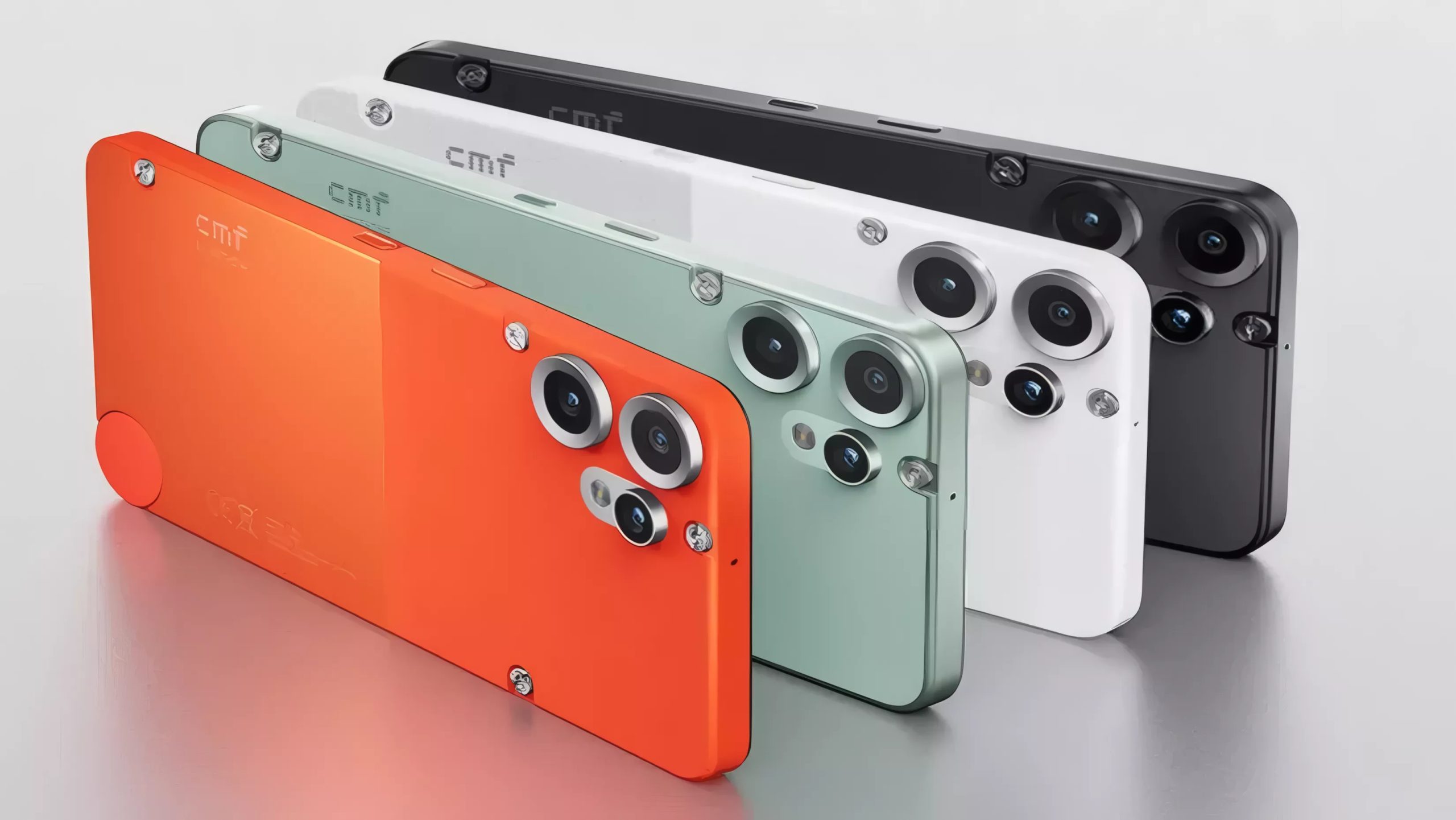
Ripple effect: The RAMpocalypse has claimed another victim. Nothing has confirmed that its next budget phone, a follow-up to the CMF Phone 2 Pro, will not launch this year. The company confirmed the cancellation is because of skyrocketing memory prices that are disrupting the tech industry in a way not seen since Covid.
Nothing co-founder Akis Evangelidis, the executive behind the CMF line, said the firm had been working on a successor to the CMF Phone 2 Pro, but current memory costs made the device impossible to release without undermining the point of the brand.
“We were working on a successor but with memory prices where they are right now, we can’t build a phone that feels like a genuine step forward at a price that makes sense for CMF. As a result, we’ve decided not to launch a new CMF phone this year,” Evangelidis wrote in an X post.
– Akis Evangelidis (@AkisEvangelidis) June 19, 2026
The decision doesn’t mean CMF phones are dead forever. Evangelidis added that CMF still has other products coming this year, including devices in entirely new categories, while Nothing’s smartphone launch plans are continuing.
CMF is Nothing’s budget-focused sub-brand. Android Authority notes that the CMF Phone 2 Pro launched in India at Rs. 18,999 (~$200) for the 8GB/128GB model and Rs. 20,999 (~$222) for the 8GB/256GB version, with the latter also reaching the US at $279. Evangelidis said that launching the same hardware today would push the price to around Rs. 30,000 to Rs. 35,000, or roughly $318 to $370.
Nothing CEO Carl Pei warned last week that the memory crisis is spreading quickly across the phone market. He said memory costs for the Phone (4a) doubled between development and launch, then doubled again afterward. He added that RAM is now more expensive than the processor or display and can account for more than half of a smartphone’s hardware bill.
“Phone prices are going up, and they’ll keep going up into next year. Since February, new phones have been launching up to $100 more expensive than their predecessors,” Pei wrote in an X post.
– Carl Pei (@getpeid) June 12, 2026
The CMF cancellation is another sign that RAMageddon continues affecting consumer products beyond PC components. Tim Cook recently confirmed that Apple price hikes are coming as iPhones could jump by $200 or more, MSI blamed memory and storage costs for its $1,800 Claw 8 EX AI+ handheld, and the wider memory crisis resurrecting DDR4 production and older GPUs. When will things get better? Not anytime soon, sadly, according to most estimations.

I quickly found that Siri AI’s bite-sized replies don’t drone on endlessly like many contemporary AI assistants, often sticking to a single paragraph. When I verbally asked for a nice beach hike route to see the sunrise near the Golden Gate Bridge, it succinctly recommended a popular trail in the Presidio neighborhood as well as an option in the Marin Headlands. Siri bolded key words in the text answer that appeared alongside the audible response for easy scanning. Since I wanted more info before heading out, I swiped down on the text answer to read additional details about each option.
Apple’s partnership with Google is a core driver behind this Siri overhaul. Google’s Gemini now helps power the voice assistant’s underlying model, Apple Intelligence. Siri’s output with this new model felt more attuned to what I was looking for, rather than just suggesting a couple of website links for me to dig through. When I asked generic questions, like “What should I do today,” Siri combed through my recent messages and highlighted recent plans I started discussing with friends but never finalized.
Another key aspect of Siri AI is hyper-personalization based on what you have on your device, whether that data is in your photos or messages. It also doesn’t keep you locked into Apple-only services; when I asked Siri to draft a text, the voice assistant confirmed if I wanted to send it through Apple’s Messages or Meta’s Messenger service.
This style of AI search requires Siri to index your phone, which means scanning and cataloging its data for easy reference. When I updated my iPhone to the developer beta for iOS 27, it took a little over a week for the device to fully index.
At WWDC 2026, Apple repeatedly referenced its privacy-preserving approach to Siri AI. As part of the company’s Private Cloud Compute, Apple claims it doesn’t store data from users and only pulls from it when you ask Siri a question. Similar to the previous version of Apple’s assistant, users who aren’t interested can turn off Siri AI in their settings.
I tested Siri AI on an iPhone 16 Pro Max, which will have many but not all of Siri AI’s features. Based on what’s been publicly released, only the iPhone Air, iPhone 17 Pro, and the iPhone 17 Max will have all the fixings, like more varied voice options. As for the rest of the lineup: Every iPhone 16 and iPhone 17 model will be able to run the new Siri, while only the iPhone 15 Pro and Pro Max will be compatible. Older models will not support this voice assistant.
Like any good tourist, I started my morning off with a visit to the Golden Gate Bridge, where there are plenty of nearby hiking trails to wander around and soak up the views. Since Siri AI is also integrated with the iPhone’s camera app, I decided to open it up and snap a quick photo of the foggy path ahead of me to see how Siri would respond.
I didn’t ask Siri any questions; I just showed it a snapshot of what I saw at the moment, and the AI tool responded with a short history of the Cypress Tree Tunnel located at Point Reyes National Seashore. Siri was right to clock the Monterey cypress trees. But the tunnel it referenced is an hour drive from where I was, potentially confusing for someone not familiar with the area.
Despite this apparent flub, the more I chatted with Siri while walking around, the more impressed I was at other functions, like helping uncover images from past adventures hidden among the thousands of photos in my camera roll.



No Jackpot Winner as $257 Million Prize Rolls Over to $269 Million Monday Draw


Weekend Open Thread: Miami – Corporette.com

Zimbabwe Requires Crypto Businesses to Register Annually Under New FIU Regulations

Matt Damon’s Viral Sci-Fi Thriller Has Taken Over HBO Max


As AI companies race to go public, who else is along for the ride?


Anthropic staff to meet White House officials next week, Axios reports

what doctors are seeing in ebike crashes

Bitcoin could crash to $48,000, if this historical pattern is triggered


Deion Sanders Shares Powerful Post After Viral Advice To Deiondra

Warning of disruption as Cardiff Crossrail works to start

Tributes to former deputy head teacher at Cambridge school among death and funeral notices


“Israel’s” ban on ICRC visits ruled illegal, but Knesset moves to stop them permanently


Financial Accounting | Last Day Revision Strategy and Booster | CMA Inter – June 2026

Kate Middleton Glare Goes Viral After Kids Booed At Royal Event


Over 400 Arch Linux packages compromised to push rootkit, infostealer


XRP ETFs Outperform As Bitcoin And Ethereum Funds Extend Outflow Trend


Invesco Quality Income Fund Q1 2026 Commentary


Singer Oliver Tree dies aged 32 in helicopter crash in Brazil

Market Preview: SpaceX (SPCX) IPO Record, Federal Reserve Meeting, and Iran Nuclear Agreement


Dick Advocaat’s Curacao scores first-ever World Cup goal against Germany

You must be logged in to post a comment Login