A Utah judge is set to decide Monday whether prosecutors crossed a line with public comments about evidence in the murder case against Tyler Robinson, who is accused of killing conservative activist Charlie Kirk.
Defense attorneys for Robinson are asking Judge Tony Graf to prevent prosecutors from pursuing the death penalty, arguing that statements made to the media about a bullet fragment recovered from Kirk’s body could unfairly influence potential jurors.
The dispute centers on comments from the Utah County Attorney’s Office after the defense revealed that early testing was inconclusive on whether the bullet fragment matched the firearm investigators say was used in the shooting.
The Utah judge in the murder case over Charlie Kirk’s killing says he will rule Monday whether prosecutors could face sanctions for comments to the media about a bullet fragment recovered from the conservative activist’s body (AFP/Getty)
Robinson’s attorneys accused prosecutors, including Deputy Utah County Attorney Christopher Ballard, of attempting to shape public opinion by discussing the ballistics evidence outside the courtroom. They argued the comments could damage Robinson’s chances of receiving a fair trial.
Prosecutors pushed back, saying they responded only after speculation surrounding the case spread publicly. Ballard told the court he did not disclose specific details about the evidence and spoke only in general terms about the challenges of ballistics testing.
Advertisement
The high-profile case has drawn intense attention and fueled unverified theories online, including speculation about possible additional suspects. Authorities and attorneys have expressed concern that misinformation could complicate efforts to select an impartial jury.
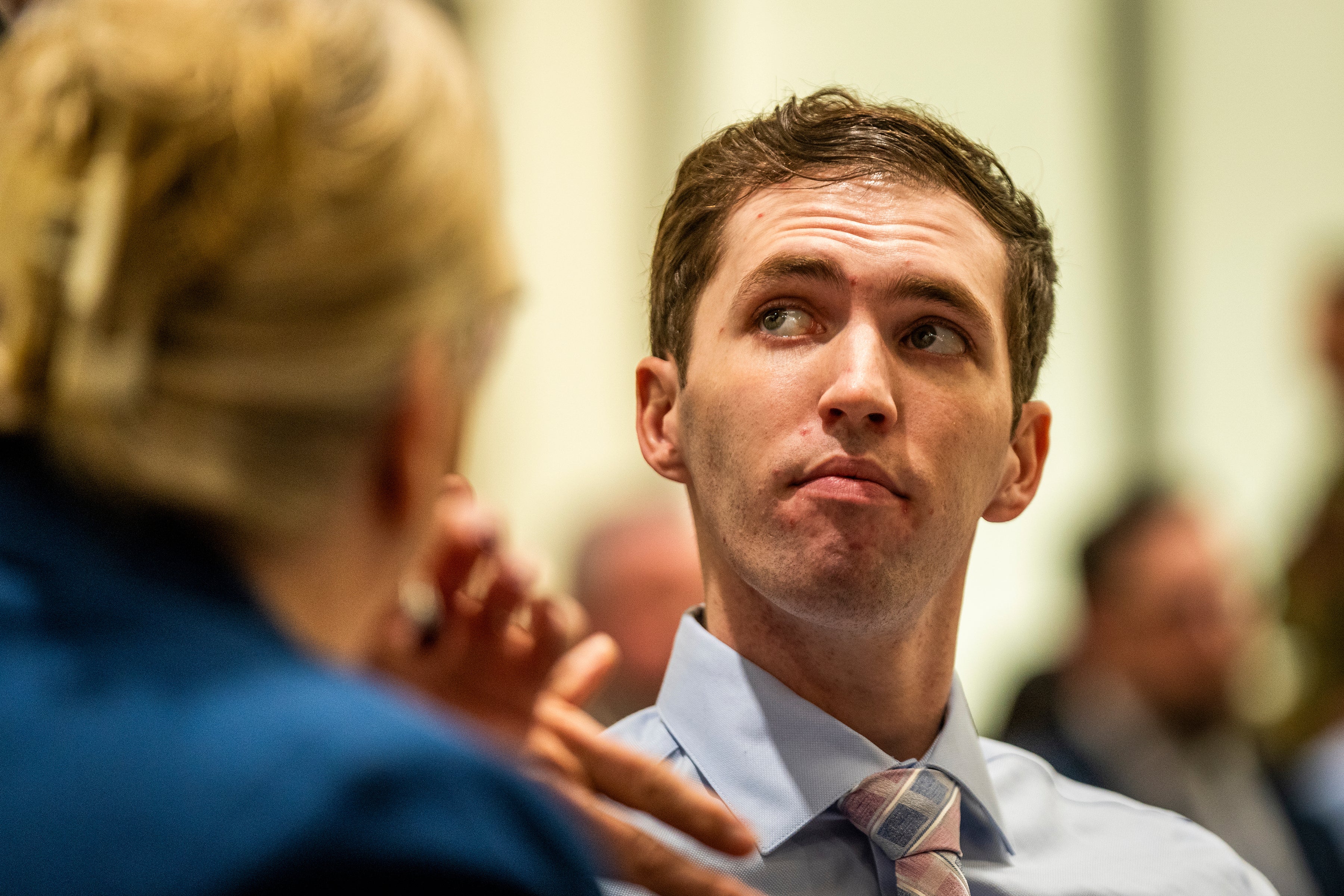
Tyler Robinson, who is accused of fatally shooting Charlie Kirk, appears during a hearing in Fourth District Court in Provo, Utah, on Dec. 11 (Rick Egan/Pool The Salt Lake Tri)
Legal experts say the defense request is unlikely to succeed. Paul Cassell, a University of Utah law professor and former federal judge, said courts typically handle concerns about media coverage by carefully screening potential jurors rather than blocking prosecutors from seeking the maximum punishment.
“It would be extraordinary” for the judge to remove the death penalty option over the comments, Cassell said.
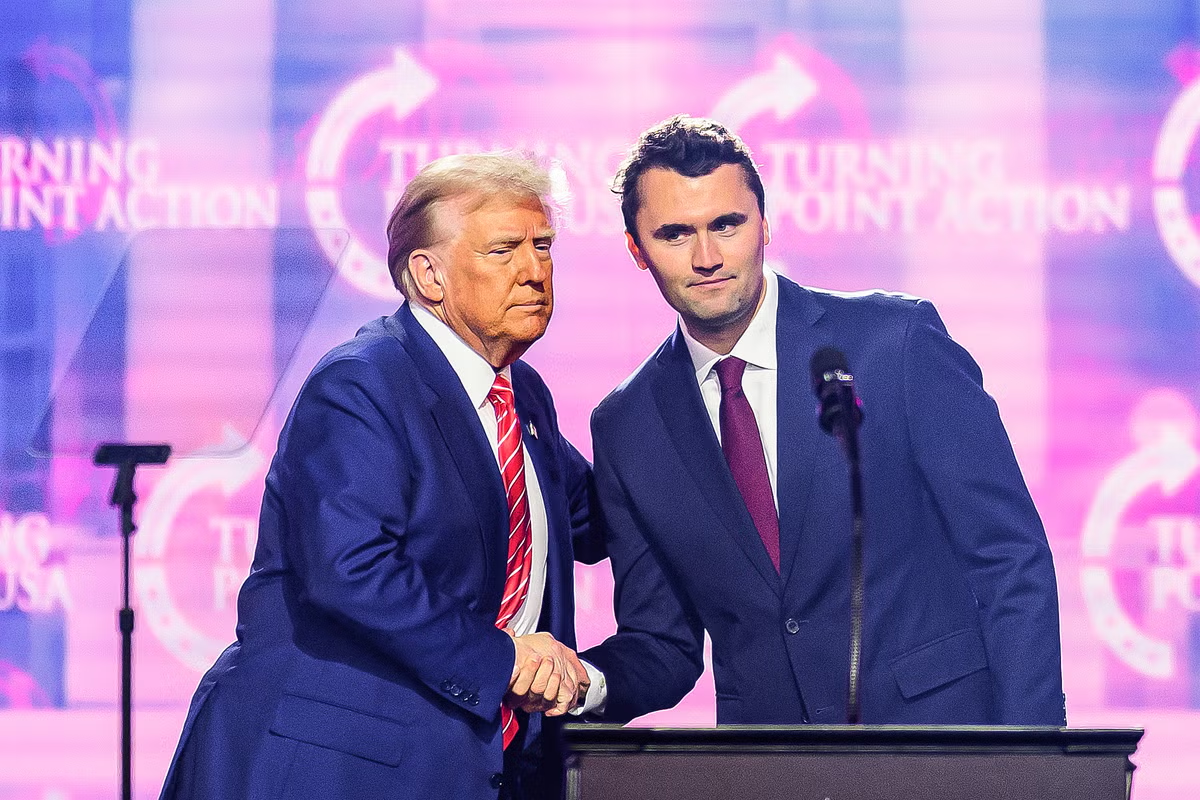
Robinson, 23, of southwestern Utah, has not entered a plea. Prosecutors have said they will seek the death penalty if he is convicted of aggravated murder in the Sept. 10 killing of Kirk, a close ally of President Donald Trump who was shot while speaking at Utah Valley University.
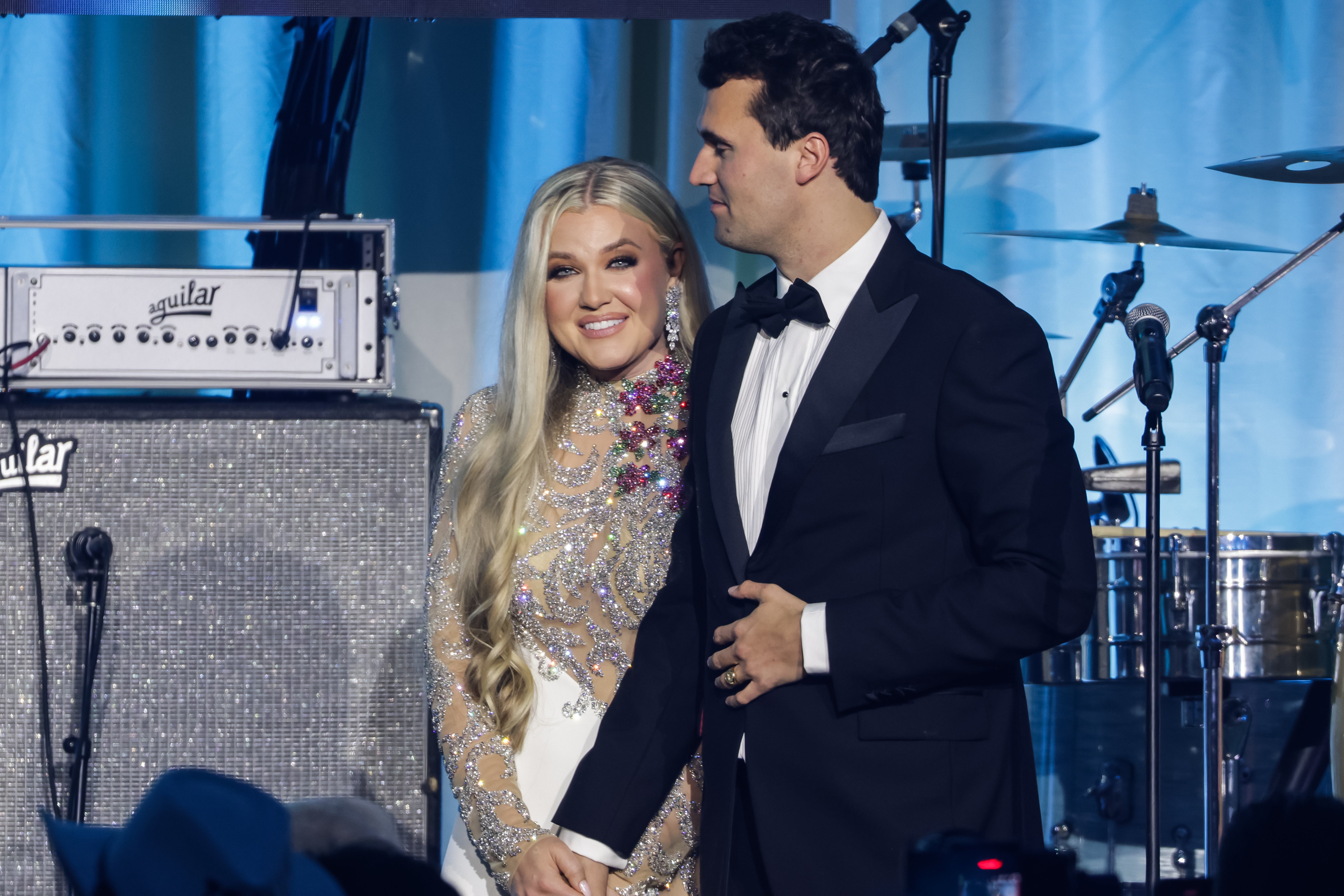
Kirk (R) and and his wife Erika Lane Frantzve (L) on stage during the Turning Point USA Inaugural-Eve Ball at the Salamander Hotel on January 19, 2025 (Getty)
Judge Graf held a hearing last week on whether prosecutors should face sanctions over their remarks. Robinson’s attorneys also pointed to a separate Utah case involving prosecutorial conduct and argued that limiting the death penalty could be an available remedy in extreme circumstances.
A key hearing is scheduled for July 6-10, when prosecutors must present evidence showing the case should proceed to trial.
Readers have been debating the free parking scheme launching in Peterborough city centre this summer, and whether it really is ‘free’ or just subsidised
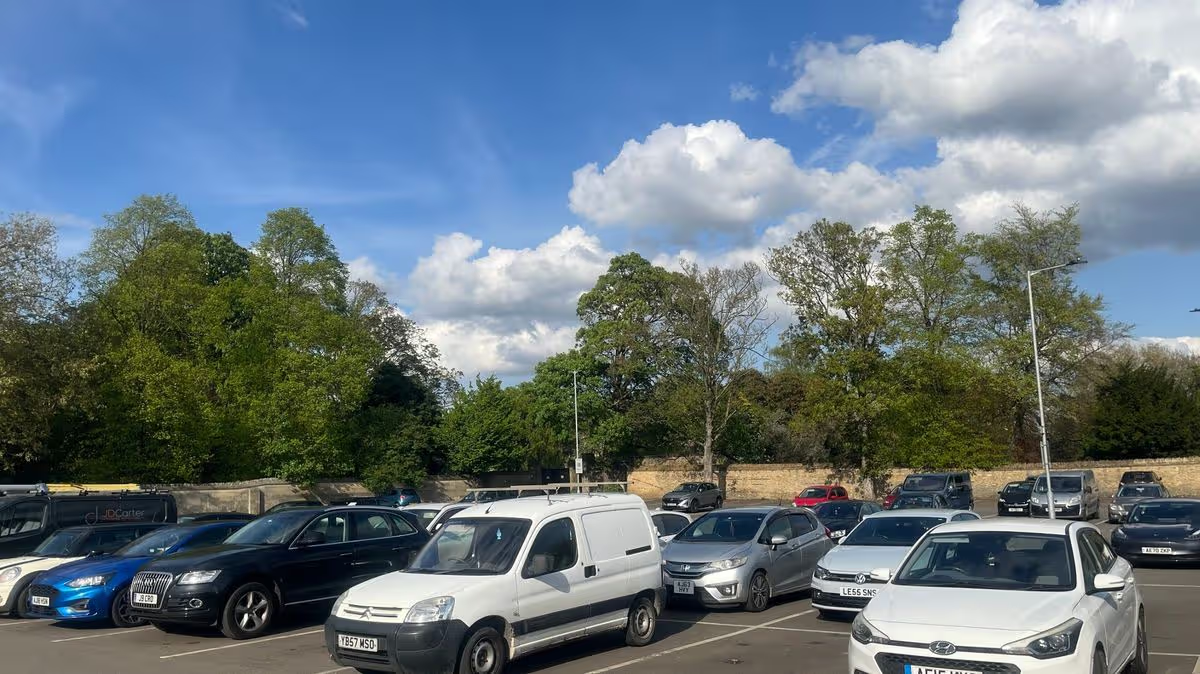
A launch date has been confirmed for free parking in Peterborough city centre. Pending approval from Peterborough City Council’s Cabinet, complimentary parking at four council-owned car parks will begin on Monday, August 3.
Advertisement
The four sites will be: Bishops Road; Car Haven; Riverside; Pleasure Fair Meadow. Parking at these locations will be free from 3pm onwards.
The initiative was promised by Mayor of Cambridgeshire and Peterborough, Paul Bristow in his manifesto. The Mayor allocated £1.5 million in his budget to introduce free parking across both Peterborough and Huntingdonshire.
“I said I would bring free parking and it’s happening this summer,” Mayor Bristow said. “I made this pledge because I believe our city centre needs a lift.”
The objective of the complimentary parking scheme, which will operate as a time-limited trial, is to generate increased footfall to support local businesses, and increase the health and vibrancy of the evening economy. Several commenters noted that the free parking being discussed is located in Peterborough rather than Cambridge.
Advertisement
One reader, Feelgood66 simply states: “I go to Ely, no problem.”
While Freddly adds: “There is no such thing as ‘free’ parking, only subsidised parking. This is just another example of the burden that car and van drivers impose on households without cars.”
Rootintootinredux writes: “Free buses were announced this week, too. Costing the taxpayer nearly £100 per person per journey.”
Bobs26 feels: “An appalling misuse of money originally intended to improve bus services.”
Advertisement
Banallbikes thinks: “It’s a start, but all car parking should be free, and then more people will visit places and support the local economy.”
While over on our Facebook page, Tarnia P comments: “Only in Peterborough. There’s no way Cambridge City Council would let people park for free.”
Robert EH replies: ” All day free parking at Park and Rides, free parking at the supermarkets and retail parks. There is no space in Cambridge for mass parking in the centre.”
Simon W says: “That’s great. I’m sure the people of Cambridge love the idea of subsidising other people’s parking through their Council Tax given how reasonably priced it is to actually park in and around Cambridge itself. Crack on.”
Advertisement
Do you think that free parking will bring people into the town? Comment below or HERE to have your say.
Keir Starmer officially resigned as leader of the Labour Party this morning while setting out a timetable for his departure as prime minister.
The PM gradually lost the support of his colleagues in the parliamentary Labour party over the last two years, following a series of unpopular policies, U-turns, and scandals engulfing some of his top team.
His premiership has come under particular pressure after his main rival, popular Labour politician Andy Burnham, won the Makerfield by-election last week.
Burnham was expected to challenge Starmer’s premiership in the coming days if he did not go of his own accord.
Advertisement
Starmer’s decision to voluntarily step down means Britain is on the way to its seventh prime minister in a decade.
But plenty of questions remain over just what happens next. Here’s what we know.
When Will The UK Get A New Prime Minister?
Starmer explained in his resignation speech that the National Executive Committee of the Labour Party will set out a timetable to make sure a new leader is in place by the start of September.
Advertisement
Nominations will open for the leadership on July 9, a week before parliament’s summer recess, and they will close on July 16.
If there is a contest, it will be completed by September 1 when MPs return to Westminster.
If there is not a contest, the UK could have a new prime minister by July 17.
Until his successor is in place – either once nominations close or after a summer contest – he will remain in post as prime minister, Starmer said.
Advertisement
Who Will Be The Next Labour Leader?
Andy Burnham is widely expected to replace Starmer as he has substantial backing across the Labour Party.
To be nominated as Labour leader and de facto prime minister, an MP needs the support of at least 20% (81 MPs) of the Parliamentary Labour Party (PLP).
Burnham is said to exceed that threshold with plenty of support from fellow MPs.
He announced on Monday that he would be running in the leadership contest.
However, there is nothing to stop other Labour MPs also throwing their hats into the ring if they also have 81 MPs backing them.
Advertisement
Wes Streetingquit as health secretary last month over frustrations with Starmer’s leadership, and previously insisted he would compete in any leadership contest.
However, he backed Burnham on Monday morning, effectively pulling out of the race.
Al Carns resigned as Armed Forces minister earlier this month too, and has heavily hinted he would run.
HuffPost UK heard foreign secretary Yvette Cooper has plenty of advocates too, especially among those who believe it’s time Labour had a female leader.
Other names have also been thrown into the mix, including former defence secretary John Healey, former deputy prime minister Angela Rayner and energy secretary Ed Miliband.
Will There Be A General Election?
Advertisement
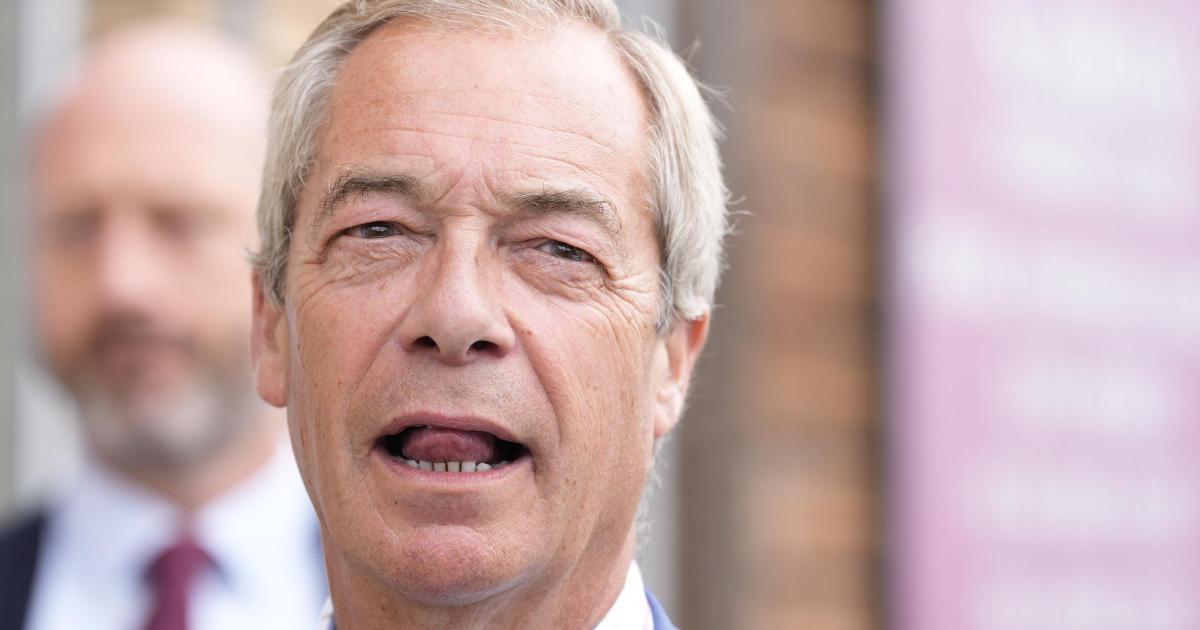
Reform UK’sNigel Farage said it was time for a general election, writing on X: “If Labour thinks it can shove another professional politician into No.10, it has another thing coming.”
His party are leading in the polls and would likely win big if voters went to the ballot box right now.
There is no legal obligation for the government to snap general election.
The current parliamentary term does not have to end until the summer of 2029, five years on from when ex-PM Rishi Sunak called a general election.
Advertisement
The Conservatives swapped Boris Johnson for Liz Truss and then again for Rishi Sunak between 2019 and 2024 without going to a public vote.
Home Office minister Mike Tapp revealed he supported the idea of a general election on Sunday, writing on X: “If a change of leader is forced by its own Party then a General Election must be called.
“That would stop the constant churn and focus all politicians on delivery, instead of work place politics. These endless ‘house of cards’ games would end and the country would benefit.”
It would be at the discretion of Starmer’s successor to hold a general election.
Advertisement
What Happens To Keir Starmer Now?
Starmer will continue to act as prime minister until July 17 at the earliest and September 1, at the very latest.
He said he will focus on his family once leaving office, so he can be “the best husband I can, to my fantastic wife Vic, who has been a rock by my side through good times and bad.”
He continued: “And being the best dad that I can to my beautiful children, who are my pride and joy.”
Advertisement
He did not touch on whether he would stay on as the MP for Holborn and St Pancras, but tradition suggests he will – at least for the time being.
Quitting that position would trigger a by-election and risk causing further upheaval for the Labour Party.
Ex-prime minister David Cameron only stood down as the MP for Witney after his successor Theresa May was firmly in place in No.10.
Though May was ousted from office in 2019 but she continued to represent Maidenhead until she chose to stand aside in 2024.
Advertisement
Boris Johnson stayed on as a backbencher for Uxbridge and South Ruislip for a year after he was forced out of Downing Street.
After her short-lived spell in Downing Street, Liz Truss remained Norfolk MP until she lost to Labour at the general election.
Rishi Sunak is still the Richmond and Northallerton MP, almost two years after he lost the general election.
Listen to Commons People, the podcast that makes politics easy. Every week, Kevin Schofield and Kate Nicholson unpack the week’s biggest stories to keep you informed. Join us for straightforward analysis of what’s going on at Westminster.
North Yorkshire Police have launched a hunt for 22-year-old Luke Downs from York after he breached his licence conditions.
This follows his release from prison, where he was jailed for possessing an offensive weapon.
RECOMMENDED READING:
Advertisement
“Extensive enquiries have been carried out to locate him but he remains wanted,” said a spokesperson for the force.
If you have seen Luke or have any information about his whereabouts, please call the police on 101, or if you wish to remain anonymous you can contact Crimestoppers on 0800 555 111 or online via their website.
If you have an immediate sighting of him or know where he is now, please call 999.
Please quote reference 12260107304 when passing on information.
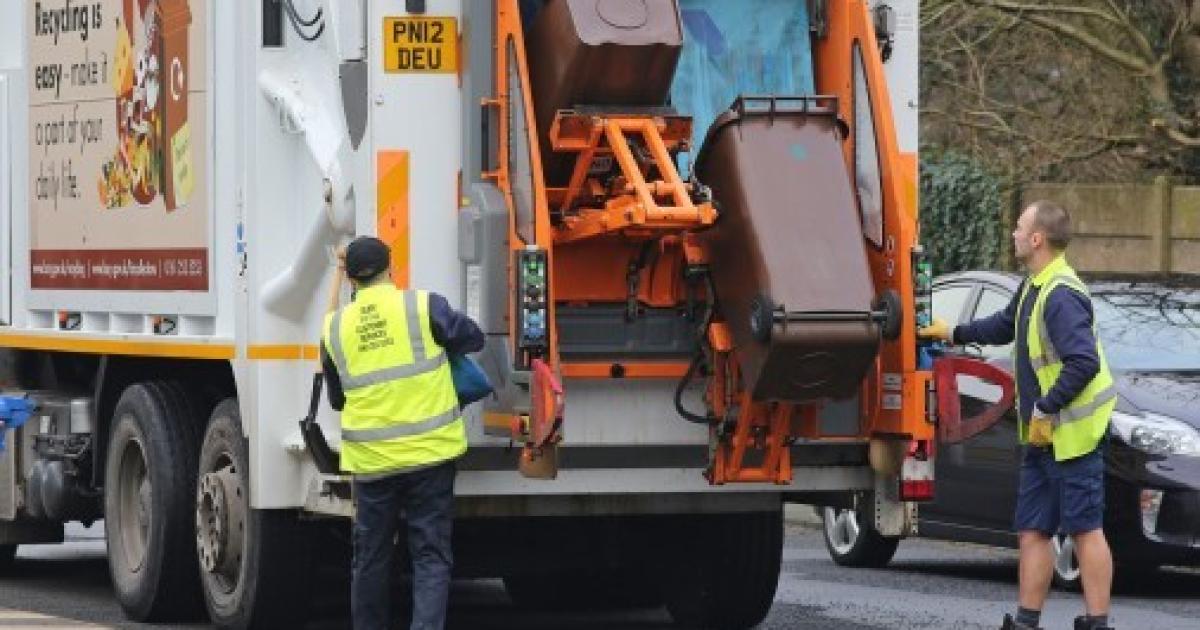
Residents are being advised that bin collection times will temporarily change this week to help protect waste collection crews during the spell of extreme heat.
From Tuesday 23 June to Friday 26 June, crews will begin collections earlier than usual, with a new start time of 6am.
The temporary change has been introduced to allow staff to carry out their work during the cooler parts of the day, reducing the risk posed by high temperatures.
Advertisement
Residents are asked to support crews by:
• Putting their bins out the night before their scheduled collection day
• Ensuring bins are ready for collection by 6am at the latest
• Leaving bins in an accessible and visible location at the kerbside
Advertisement
All collection days remain unchanged, and crews will continue to follow their normal routes.
Cllr Robert Morrisey, Bolton Council’s Executive Cabinet Member for Environmental Services, said: “This change is a short-term measure to ensure essential services can continue while prioritising the health and wellbeing of frontline staff during very hot weather.
“The council thanks residents for their cooperation and understanding during this period.”
An amber heat alert has been issued for Bolton and the rest of Greater Manchester as temperatures are set to rise reaching highs of 35C on Thursday.
This morning, Sir Keir Starmer stepped out of Downing Street accompanied by his wife Victoria to cheers and applause from his team.
In his resignation speech, Sir Keir said he will resign as leader of the Labour Party, and he has informed the King of his decision.
He began to get emotional as he thanked his wife Victoria and spoke about his children who are his “pride and joy”.
Advertisement
What happens now that Sir Keir Starmer has resigned as Prime Minister?
Following Sir Keir’s resignation, a Labour leadership race will take place within the coming weeks.
Until the next Prime Minister is confirmed, Sir Keir will continue in the role.
The Party will choose its next leader and the next occupant of 10 Downing Street.
When it comes to entering the contest, Labour’s rules mean even getting onto the ballot can be a complex process, the Press Association says.
Advertisement
First, candidates must secure the backing of 81 Labour MPs, 20% of the party’s parliamentary strength.
They then need to receive nominations from either 5% of constituency Labour parties, or three affiliated organisations (which must include two trade unions) which represent 5% of affiliated membership.
Only after passing those two stages will candidates go before the party membership.
Sir Keir Starmer in profile
Who could be the next Prime Minister?
Andy Burnham’s decision to stand in the Makerfield by-election – giving up the Greater Manchester mayoralty to become an MP – suggests he believes he has the necessary backing from the parliamentary party to get onto the ballot.
Advertisement
Former health secretary Wes Streeting has repeatedly insisted he has the 81 names required to mount a leadership bid, and has spent the weeks since his resignation setting out his stall.
Former Royal Marines officer Al Carns, who quit as armed forces minister in a row over defence funding and the treatment of Northern Ireland veterans, has also hinted he would seek to enter a leadership race, although it is unclear whether the MP, who was only elected in 2024, has the supporters required to get on the ballot paper.
Has a UK Prime Minister resigned before?
Prime Ministers resigning is a regular occurrence in UK politics.
Advertisement
Labour PM Tony Blair resigned in 2007, while his successors David Cameron, Theresa May, and Boris Johnson all stepped down from their posts.
Boris Johnson was forced to resign after the partygate scandal, and other events turned the public and much of his own party against his premiership.
In 2022, Liz Truss became the UK’s shortest-serving PM after being in the role for just 45 days before she stepped down.
Who would you like to see be the next Prime Minister? Tell us in the comments below.
In a statement outside Downing Street this morning, Monday 22 June, Starmer confirmed he would be stepping down.
He said: “Walking out this street two years ago was the proudest moment of my life, a new Labour government after years of disappointment and despair.”
READ MORE:
Advertisement
Starmer then listed off his government’s achievements, before conceding: “My party is asking whether I am best placed to lead us into the next general election.
“I accept their decision in good grace; that is why I will resign.”
Reform demands an election, and we are ready to deliver radical change.
If Labour thinks it can shove another professional politician into No 10, it has another thing coming.
In response, Farage wrote on X, formerly known as Twitter: “The Prime Minister is finished.
“I have to give Starmer some credit: even I couldn’t have predicted how quickly he would reveal himself as the most incompetent Prime Minister this country has ever had the misfortune of having.
“Starmer isn’t the first Prime Minister I’ve deposed, and he won’t be the last. David Cameron. Theresa May. Rishi Sunak. And next up – Andy Burnham.
Advertisement
“The reason each leader has failed is the same. What the political class fails to understand is that the electorate won’t accept being taken for fools.
“They cannot continue to take the votes of the people who supported them for granted, only to betray them upon having gained power. Politics is about trust.
“That is why I am calling for a general election at the soonest possible date.
“You know as well as I do that the country cannot afford to waste another week drifting from crisis to crisis.
Advertisement
“That’s why millions of you turned out in the local elections to vote for Reform councillors, and it’s why we have led in more than 300 opinion polls for well over a year.
The British public have made their voices clear in May this year and last: Britain is broken and they want a radical reforming government that will fundamentally fix our country.
“But instead, Westminster wants to crown Andy Burnham off the back of a single by-election.”
Who do you want to be the next Prime Minister? Let us know in the comments
The Caspian Sea, the largest inland body of water on Earth, is shrinking. Not fluctuating, not entering another natural cycle, but shrinking.
For decades, scientists and policymakers treated changes in the Caspian as part of the basin’s natural variability. Water levels in the sea have always risen and fallen.
But our new study shows something far more troubling: the current decline is increasingly driven by human decisions to dam and divert rivers, and by fragmented decision-making across five countries that border this body of water.
Using satellite observations together with ground-based hydrological records from rivers across all five shoreline states (Iran, Russia, Turkmenistan, Azerbaijan and Kazakhstan), we found that flow into the Caspian Sea has declined sharply over the past three decades.
Advertisement
The main reason is not declining rainfall. In fact, rain over the Volga Basin, which supplies roughly 80% of the Caspian’s inflow, has slightly increased. That finding matters because it overturns one of the most common assumptions surrounding the Caspian crisis. The common narrative has been straightforward: climate change increases evaporation, rainfall declines, and the sea shrinks.
Climate change certainly plays a role: our analysis confirms that evaporation across the Caspian has increased significantly as regional temperatures rise. But evaporation alone explains only about 40% of the observed water loss since the mid-1990s.
The remaining decline points overwhelmingly toward human activity. The Volga River has been heavily engineered for decades. Dams, reservoirs, use for irrigation, industrial consumption and navigation systems have fundamentally altered the hydrology of the basin).
Water that once flowed naturally into the Caspian is increasingly intercepted upstream. One critical but rarely discussed example is the Volga–Don canal system, which links the Caspian basin to the Black Sea through Russia’s internal waterways. Geopolitically and economically, the canal is strategically valuable. But it diverts water away from the Caspian system.
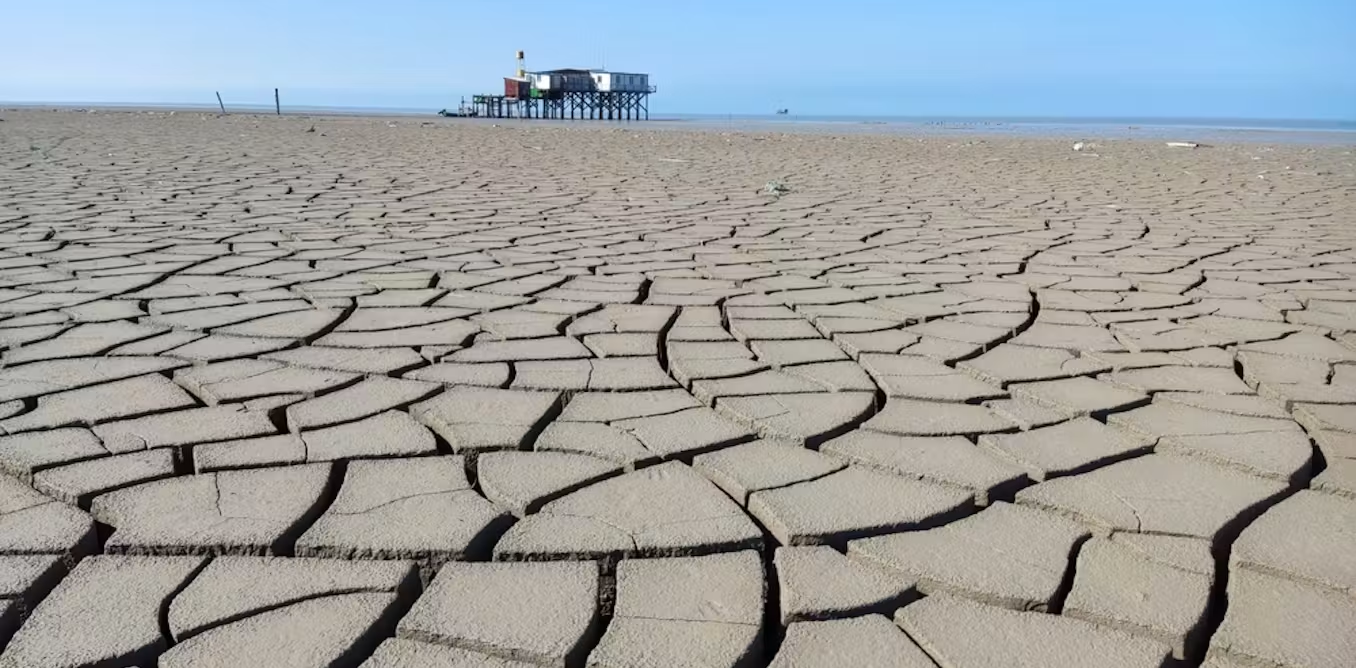
The cumulative effect is now visible from space. Since the mid-1990s, the Caspian Sea has lost roughly 24,000km² of surface area, an area approaching the size of Sicily. Water levels have fallen by about two metres.
The shallow northern Caspian, ecologically one of the most productive parts of the sea, is drying particularly rapidly. This matters because the northern Caspian is not empty water. It is a critical ecological zone supporting fisheries, wetlands, migratory birds and spawning grounds for sturgeon, the ancient fish species that produce most of the world’s caviar.
Threats to shipping
As water retreats, ecological stress intensifies. Our study also detected a long-term rise in chlorophyll-a concentrations in the northern Caspian, a key indicator of algal activity and declining water quality. In plain terms, the sea is becoming warmer, shallower and increasingly nutrient-rich: ideal conditions for harmful algal blooms.
Advertisement
This is not merely an environmental story. The Caspian region sits at the centre of major energy and trade corridors linking Europe and Asia). Russia’s north-south transport routes and China’s international development plan, the Belt and Road Initiative, plus offshore oil infrastructure and regional shipping networks all depend on the Caspian remaining navigable and stable.
Falling water levels threaten ports, shipping lanes and coastal infrastructure. Declining depths reduce cargo capacity and increase transport costs. What appears initially as an environmental issue gradually becomes an economic constraint.
Then there is the political dimension. Unlike oceans, inland seas cannot rely on global circulation to buffer local mismanagement. Their survival depends directly on the behaviour of neighbouring states. And the Caspian is surrounded by countries with competing strategic interests, uneven governance systems and limited transparency over their water use.
Advertisement
That fragmentation has become one of the greatest risks facing the sea. Although regional agreements exist, including the 2018 Aktau Convention (formally the Convention on the Legal Status of the Caspian Sea), there is still no comprehensive and enforceable system governing water allocation, hydrological monitoring or ecological protection across the basin. Data sharing remains limited. Water withdrawals are often opaque. Environmental management is fragmented.
This resembles a pattern seen repeatedly across modern environmental crises: governments prefer to discuss climate change because it externalises responsibility. It allows leaders to portray ecological decline as an unavoidable planetary process.
But the Caspian story is more uncomfortable than that. It is also a story about political choices. Rivers were dammed. Water was diverted. Wetlands were degraded. Pollution controls remained weak. Oil and gas development expanded while ecological safeguards lagged behind. Economic growth consistently outranked hydrological sustainability.
The danger is not simply that the Caspian shrinks, but that ecological thresholds may be crossed – beyond which, recovery becomes extraordinarily difficult.
Advertisement
The Aral Sea, the world’s fourth largest lake, demonstrated how quickly collapse can accelerate once a chain reaction begins. Exposed lakebeds generate dust storms. Fisheries collapse. Salinity rises. Biodiversity crashes. Local climates shift. Economic systems unravel around the drying basin.
The Caspian has not yet reached that stage – but the warning signs are becoming increasingly visible.
There is still time to slow the trajectory. However, doing so would require something historically rare in the region: long-term coordination that prioritises hydrological stability – safeguarding the sea’s natural water balance and keeping water levels from dropping past a dangerous point of ecological collapse – over short-term extraction and geopolitical competition.
This would mean transparent water accounting – the open tracking and sharing of data on exactly how much water each nation is pulling from the feeding rivers for agriculture and industry. It would mean negotiated environmental flow releases from upstream reservoirs, and recognition that the Caspian is not simply an energy corridor or a shipping route, but a fragile water system.
Advertisement
Nature eventually imposes consequences on societies that ignore those limits. The Caspian Sea is beginning to deliver that message.
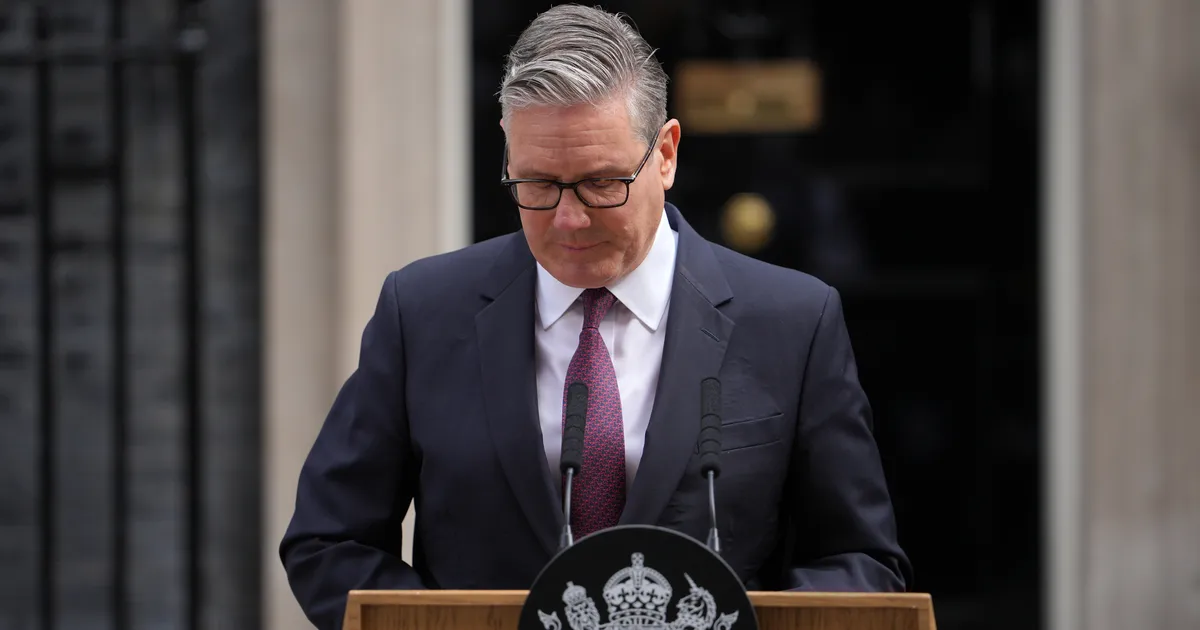
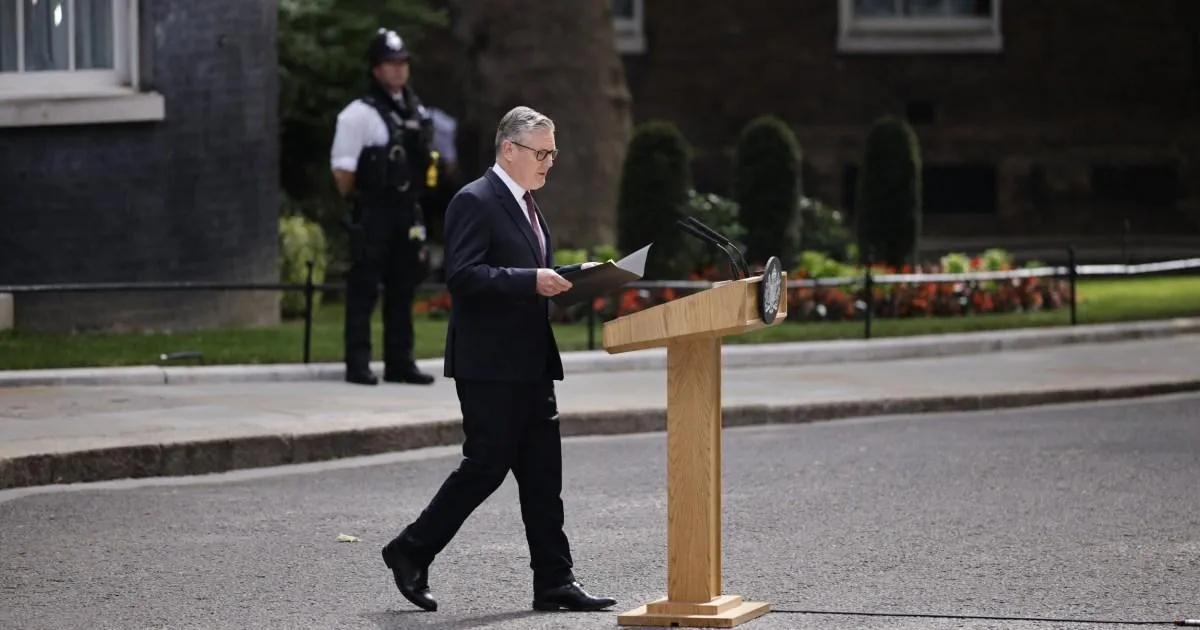
Keir Starmer steps up to the podium outside No 10 Downing Street this morning (Picture: EPA)
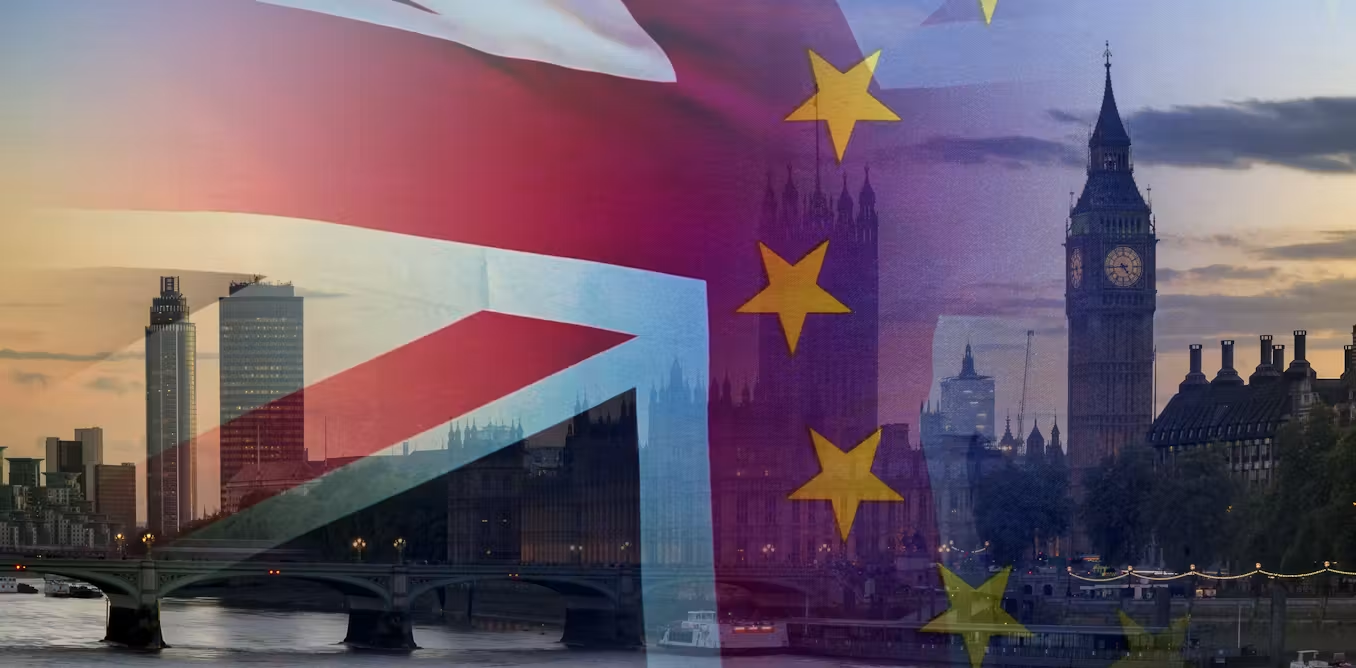
A decade on, it’s becoming clear that something about Brexit has eaten away at our minds.
When you think about the main legacies of the vote, you might come up with that massive spike in immigration. And the blue passports, of course. The economy took a hit too, though we don’t know exactly how big since the EU withdrawal lined up perfectly with Covid and the Ukraine war.
But there’s another thing that I believe the big split has done to this country, and it’s a lot more insidious.
Brexit has given us all a taste for political chaos. We can’t help ourselves.
Advertisement
And when I say ‘ourselves’, I might be talking about the crowd of political reporters to which I belong. But inevitably it has seeped out to affect ordinary members of the public, too.
In that context, it’s entirely fitting that we’re marking the tenth anniversary of the vote to leave the European Union with the sixth prime ministerial departure in that same timespan.
Everything is changing, all the time
Cut through political noise and understand how the Westminster chaos actually affects your life with Metro’s politics newsletter Alright, Gov? Sign up here.
Advertisement
You have to go a long way back in British history to find the last time anything similar happened. Clearly, that vote on June 23 2016 has had some sort of impact on our brains.
Brexit itself was only directly responsible for two of those exits, of course. Cameron wouldn’t deliver it, and May couldn’t deliver it. With Johnson, you can take your pick of the scandals. Truss ‘Liz Trussed’ the economy. And Sunak did it the old-fashioned way, by losing an election.
Boris Johnson resigning from office less than four years ago (Picture: Dan Kitwood/Getty Images)
It’s difficult to pin the downfall of Sir Keir Starmer on any single thing. The Mandelson controversy was significant, but past PMs have recovered from similar. Early setbacks like the freebies scandal could have applied to many of his predecessors.
Nigel Farage’s Reform UK has climbed to a comfortable lead at the top of the polls under his watch – but there’s a while to go before the next scheduled general election.
There was plenty of criticism over policy (winter fuel, inheritance tax, national insurance for employers) and Starmer’s personal popularity was historically bad, but you’d have to go back to Thatcher and Blair for PMs who were forced out for those reasons. And they both had 10 years.
It’s hard to shake the sense Starmer’s demise is based largely on vibes, and a gradual piling-up of many smaller things.
To be clear, much of that is fair – many Labour MPs didn’t like the culture of his Downing Street or his approach to running the country, and didn’t trust him to get the government out of its hole. More ministers have resigned under him than any other PM since 1979 at this point in their term.
Advertisement
Starmer will have spent just over two years as PM when he steps down later this year (Picture: Isabel Infantes/PA Wire)
The lack of trust, lack of faith, and lack of cohesion appears to have fed through to the public at large.
But even so, would the country be quite so willing to overthrow its leader after less than two years in power if we hadn’t become so accustomed to it over the past 10 years?
You could argue, at least, that we’re not as bothered by the prospect of unleashing political pandemonium as we once were. How could it possibly be worse than the turmoil post-Brexit?
I don’t know what the UK would have done with a Prime Minister like Keir Starmer before the EU referendum took place a decade ago tomorrow. Perhaps things would have fallen apart in a similar way – all those mistakes would have chipped away at the authority of anyone else in his position.
However, it’s evidently more dangerous to mess things up in a Parliament that has developed a regicide habit. That may be something for Andy Burnham to keep in mind.
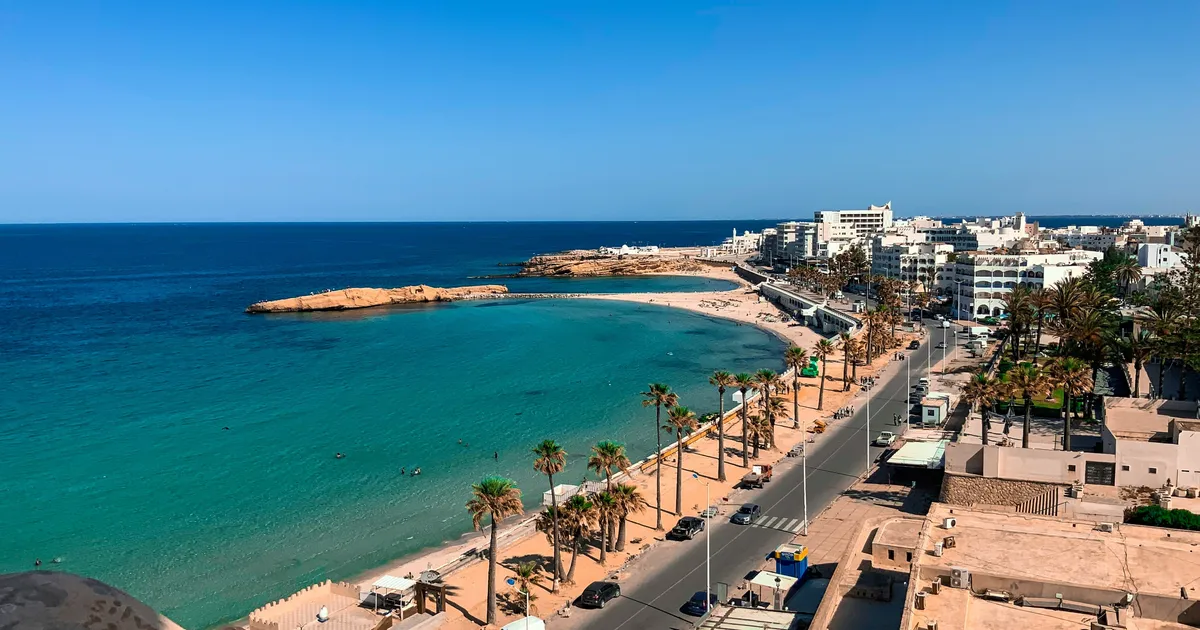
Even those who don’t usually go in for historical tours will want to see its UNESCO World Heritage Site, Carthage, founded in 9BC.
Jet2 said they introduced the new rules because of “demand from customers and independent travel agents.”
Advertisement
It will mean people “have plenty of choice when it comes to taking off to a sun-soaked destination that offers culture, cuisine, history, beaches and fantastic value for money,” they added.
Here’s when and where new UK routes will come:
When will Jet2 launch new routes to Tunisia?
They’ll start in summer, 2027.
Advertisement
Some routes will begin on May 1, 2027, while others will start on May 2 and May 7.
Which airport will the routes fly to?
They’ll fly to Enfidha–Hammamet International Airport in Tunisia.
Where will the new Jet2 routes be?
Advertisement
Birmingham Airport – every Wednesday and Saturday from 1 May 2027 to 30 October 2027.
East Midlands Airport – every Saturday from 1 May 2027 to 30 October 2027.
Leeds Bradford Airport – every Saturday from 1 May 2027 to 30 October 2027.
ManchesterAirport – every Tuesday and Friday from 7 May 2027 to 29 October 2027.
London Stansted Airport – every Wednesday and Sunday from 2 May 2027 to 31 October.
It’s hoped this could cement Tunisia as a leading Mediterranean destination
Fakhri Khalisi, acting UK director at the Tunisian National Tourist Office, said in response to the new routes: “We are delighted to welcome the launch of Jet2’s holiday and flight programmes to Tunisia starting in summer 2027.
“This announcement represents a significant milestone in our efforts to strengthen Tunisia’s position as a leading Mediterranean destination and reflects the growing confidence of major travel operators in our tourism offering.”
Tunisia saw a record-breaking number of UK tourists last year.
They have also had a 119% increase in visitiors from British and Northern Irish shores since 2019, Travel Weekly reported.
A ten-year anniversary is a good opportunity to look back on an important decision. Whether that was a marriage, a career move or a decision to leave the EU, a decade feels like an important moment for reflection.
When the UK voted (narrowly) for Brexit on June 23 2016, nobody really knew what would happen next. After all, it had never been done before.
So, what versions of leaving the EU were available at that time?
One option was for the UK to leave the EU but remain in the single market, like Norway. Or there was the chance to follow a more radical path and seek to mirror the economic example of Singapore. Another alternative was to move for much greater alignment with the US, like Canada or Mexico.
Advertisement
None of these things happened – but what if they had?
The Singapore version
Turning the UK into “Singapore-on-Thames” would have seen Brexit turn to an economic model of low taxes and light regulation. This radical-but-simple idea called for global unilateral free trade, with the UK removing tariffs so it could buy the cheapest possible goods and services from all around the world.
But importing cheap goods might have provided the UK economy with a valuable opportunity to specialise in sectors such as financial services, AI or bio-technology.
A similar thing happened to the UK after China’s exports started to fill the world when it joined the World Trade Organization in 2001. It has even been argued that Chinese imports helped British firms produce more affordable goods and services – and so created more jobs than they destroyed.
If it worked, Singapore-on-Thames would have had a genuine competitive advantage in a world stuck in escalating trade wars. And the UK economy would be driven by new technologies, delivering much-needed growth.
Singapore has low taxes and tall buildings. Rasto SK/Shutterstock
But it also would have been incredibly risky. The UK’s largest trading partner, the EU, has strict regulations on product safety and rules of origin. It is likely that unilateral-free-trade Britain would only be able to export its services and intellectual property. And Donald Trump would have probably tried to punish the UK for trading freely with China.
Advertisement
UK citizens would also need to be comfortable with foreign standards on health and safety, including for food (like chlorinated chicken) – or, indeed, no standards at all.
But in terms of potential gains from Brexit, this is probably the only version that would have provided the possibility of economic benefits over EU membership.
The Norway way
This option, often described as a “soft Brexit”, would have focused on the gains of sovereignty on non-economic issues while minimising the economic costs. The prospect of being more like Norway was even floated by Nigel Farage.
As members of the European Economic Area (EEA), the UK would own its own fish, sign its own trade deals and not be bound by further EU integration. But it would also continue to trade almost as before with its neighbours.
Advertisement
In some ways, this Brexit would have been the easiest one. EEA membership involves following EU rules and regulations without having a say on them, but this is largely what the UK has done since Brexit anyway.
Following Norway could have made the UK a richer and more efficient country. All of the time and energy that British politicians and civil servants now spend on finding ways to work with the EU could have been redirected to domestic policies.
British industries would now be busy with Europe’s rearmament effort as Norway’s already are. They would have first-tier access to the EU’s new €150 billion (£130 billion) defence fund – into which the UK can, in reality, only negotiate in piecemeal fashion.
However, as much as EEA membership gives access to the single market, it is not quite the same access that EU members enjoy. In some ways, the Norwegian version is just a bit boring. The UK would have lost some of the benefits of EU membership in exchange for some (mostly symbolic) sovereignty.
American dream
The paths to a Singaporian or Norwegian version of Brexit are effectively still available. But the world has changed so much since 2016 that many assumptions made back then are now way past their expiry date.
For example, the referendum was held during a time of extremely cordial relations between Europe and the US. Since 2011, the two blocs had been working on a trade and investment partnership, and Barack Obama was an incredibly popular figure in Europe.
If the 2016 US election had gone differently, it’s easy to imagine Brexit Britain having become a valuable bridge between the two continents. The UK could have been a booming financial hub, helping Europe and the US find their joint interests. The UK could have tried to be like Canada or Mexico, part of the North American free trade area, while also seeking close relations with Europe.
But with President Trump’s views on tariffs and Europe, this scenario is simply not available anymore.
Advertisement
The actual version
Instead of these alternatives, Brexit ended up following the path of least resistance.
Former prime minister Theresa May started out by setting up the UK’s red lines of leaving all European institutions. Her successor, Boris Johnson, formalised them in a withdrawal agreement, which was then softened by Rishi Sunak.
More recently, the current prime minister, Keir Starmer, has started a process to rejoin some EU agreements such as veterinary rules and the academic exchange programme Erasmus+.
Meanwhile, the UK has sent envoys to sign a raft of new trade agreements with the likes of Australia, New Zealand and India. But almost everywhere they went, they found a group of EU officials busy negotiating similar deals.
Advertisement
Even with these British trade deals, most analysis finds that the UK is now between 4% and 8% poorer than if it had remained in the EU.
More British voters appear to believe in ghosts (36%) than think, in hindsight, that Brexit was a good idea (30%). But while some wish to rejoin the EU, the tradeoffs today are different from ten years ago.
The reality of Brexit has also made Europeans more confident in the EU, and the bloc more open to bespoke deals. In 2016, only 33% of European citizens trusted the EU. Now, 51% of them do – much more than they do their own governments. Eurosceptic parties in France and Italy have changed their discourse.
Advertisement
Then there is the cost of borrowing money, which is much more expensive now than it was in 2016.
Arguably, one of the most frustrating features of governing Britain today is that the bond markets have made doing so a very expensive business. Further EU integration instead of Brexit could have made borrowing cheaper, to the extent that some have suggested the UK should start borrowing in euros, even without adopting the currency.
But the EU also misses Britain. While there is consensus in Europe that increasing the freedom to trade within the old continent is a priority to keep its economic relevance, the UK is missing from the table to make that happen.
If a British prime minister ever sits down in Brussels to negotiate rejoining, voters will be told the price in detail. The UK would have time to redefine its place in Europe, and try to reshape it in its image.
Advertisement
The other option – staying out – still has no definitive price tag attached to it. No one was honest enough to discuss what leaving the EU really meant – which may be why, ten years on, the ghost of Brexit still haunts UK politics.












































You must be logged in to post a comment Login