

Business
Mortgage rates tick slightly higher this week with 30-year at 6.49%


Rep. Troy Downing, R-Mont., joins Mornings with Maria to discuss President Donald Trump’s decision to cancel a housing bill signing until the Senate advances the SAVE America Act.
Mortgage rates ticked slightly higher this week, but were little changed, mortgage buyer Freddie Mac said on Thursday.
Freddie Mac’s latest Primary Mortgage Market Survey, released Thursday, showed the average rate on the benchmark 30-year fixed mortgage rose to 6.49% from last week’s reading of 6.47% and 6.52% the week before last.
The average rate on a 30-year loan was 6.77% at this time a year ago.
HOUSING AFFORDABILITY UNLIKELY TO RETURN TO MORE FAVORABLE LEVELS OF THE PAST, ECONOMIST SAYS

Mortgage rates ticked slightly higher in the last week, according to Freddie Mac. (Daniel Acker/Bloomberg via Getty Images)
“The average 30-year fixed mortgage rate was little changed this week at 6.49%,” said Sam Khater, chief economist at Freddie Mac.
“Rates have remained relatively stable over the last six weeks. Meanwhile, purchase activity eased modestly and eased modestly and refinance activity has continued to pick up recently, reflecting borrowers’ responsiveness to current rate levels,” Khater added.
The average rate on a 15-year fixed mortgage also moved slightly higher, rising to 5.84% as of Thursday. That’s an increase from last week’s reading of 5.81%, though it remains below the average rate of 5.89% from a year ago.
INCOME NEEDED TO AFFORD A MEDIAN-PRICED HOME HAS NEARLY DOUBLED SINCE 2020, REPORT FINDS
Mortgage rates are affected by several factors, including the Federal Reserve and geopolitics. Although mortgage rates aren’t directly affected by the Fed’s interest rate decisions, they closely track the 10-year Treasury yield. The 10-year yield hovered around 4.4% as of Thursday afternoon.
The latest mortgage data comes a little over a week after the Federal Reserve voted to hold its benchmark interest rate steady at a range of 3.5% to 3.75% amid concerns about stubbornly high inflation that has trended higher due to the Iran war constraining oil supplies.
Fed policymakers voted unanimously to hold rates steady because of the elevated inflation following newly-minted Fed Chair Kevin Warsh’s first policy meeting as the central bank’s leader. Their economic projections on the so-called “dot plot” showed nine members of the 17-member Federal Open Market Committee projecting a rate hike before the end of this year.

Mortgage rates have held relatively steady over the last six weeks. (Brett Coomer/Houston Chronicle via Getty Images)
FEDERAL RESERVE LEAVES INTEREST RATES UNCHANGED AS WARSH ERA BEGINS
The Commerce Department on Thursday released the personal consumption expenditures (PCE) index – the Fed’s preferred inflation gauge – which showed that headline PCE inflation was up 4.1% from a year ago, while core PCE was 3.4% higher.
Both metrics are well above the Fed’s long-run target of 2% inflation, which has diminished the market’s expectations for the central bank to cut interest rates this year.
GET FOX BUSINESS ON THE GO BY CLICKING HERE
The CME FedWatch as of Thursday shows that rates remaining at their current levels through the end of the year is the most likely outcome, while it also shows a greater probability of one or more rate hikes this year than a rate cut.


Form 4 Trulieve Cannabis Corp For: 25 June


House Speaker Johnson tries to patch things up between Trump and Congress

Wise: Q4 Confirms The Compounding Story

What does the future of work look like? The companies building the most popular AI tools are a good place to check.
While many companies across the U.S. have been struggling to get their employees to use artificial intelligence, OpenAI, Google and Anthropic are getting their workers to share complicated tasks with AI.
Copyright ©2026 Dow Jones & Company, Inc. All Rights Reserved. 87990cbe856818d5eddac44c7b1cdeb8
Form 4 Spero Therapeutics Inc For: 25 June

Southeast Asia has consolidated its position as the world’s most dynamic fintech market heading into the second half of 2026. A Money20/20 survey of more than 130 senior fintech leaders across Asia found that Southeast Asia was identified as the primary growth target by 22.9% of respondents — making it the leading destination despite a slight pullback from the prior year’s 31.4%, a sign of market maturation rather than retreat.
The drivers are structural and well-documented: a 670-million population with a median age around 30, high mobile penetration, and a legacy banking system that left hundreds of millions underserved. Fintech is now embedded in e-commerce platforms, reflecting evolving consumer behaviour where users expect financial services to be available seamlessly without switching between applications. Approximately 77% of consumers in Southeast Asia already use embedded finance through digital wallets, buy-now-pay-later services, or in-app loans, with around 75% considering it essential to their digital experience.
From payments to infrastructure
The region’s most consequential development is the rapid buildout of cross-border payment infrastructure — a direct response to the chronic friction of operating across 11 jurisdictions with distinct currencies, regulators, and banking ecosystems.
By December 2025, there were 29 QR and person-to-person payment linkages within ASEAN and with external partners, recording millions of transactions and hundreds of millions of dollars in transfers — figures cited by the 2026 Joint Statement of ASEAN finance ministers and central bank governors as evidence of maturing adoption.
Thailand sits at the centre of this buildout. In late 2025 and into 2026, the Bank of Thailand deepened bilateral QR linkages with China’s Weixin Pay, Alipay, and UnionPay QR, and advanced ASEAN Regional Payment Connectivity efforts — including the official launch of Thailand-China cross-border QR payment acceptance, enabling Chinese tourists to pay Thai merchants in RMB and Thai users to pay in CNY via linked wallets.
The growth trajectory is steep: QR cross-border payments in Thailand increased by more than 300% in 2024 compared to 2023, and in Malaysia by 550% over the same period. The tailwind from intra-ASEAN tourism is significant — intra-ASEAN visitors accounted for 42% of total regional arrivals in 2023, up from 36% in 2019, with tourism contributing roughly 8% of regional GDP and 12% of employment.
The longer-term architecture is Project Nexus, a multilateral framework backed by the Bank for International Settlements. Rather than requiring each payment system operator to build custom bilateral connections for every partner country, Project Nexus requires only a single connection to the Nexus platform — a design with significant implications for scalability. The Reserve Bank of India has already joined, potentially connecting India’s Unified Payments Interface — the world’s largest instant payment system — to the ASEAN network.
The fragmentation problem
For all the momentum, a fundamental tension persists. The same market heterogeneity that drove fintech innovation also constrains it. Vietnam’s Deputy Prime Minister, speaking at the ASEAN Future Forum 2026, warned that ASEAN would struggle to build a strong fintech ecosystem if countries remained divided by fragmented data systems, incompatible standards, and governance gaps.
ASEAN’s fintech ecosystem is expanding rapidly, but growth remains uneven due to fragmented regulation, infrastructure gaps, and highly concentrated funding that limits firms’ ability to scale and extend services to underserved populations. A fintech that achieves product-market fit in Thailand still faces a materially different regulatory stack in Indonesia, Vietnam, or the Philippines — requiring duplicated compliance infrastructure and slowing regional expansion.
Cross-border payment interoperability remains constrained by regulatory barriers, particularly around processing payments with one leg outside domestic jurisdictions, making bilateral linkages complex and difficult to scale. Existing linkages were described at the 2026 Asian Banker Summit as operationally difficult to implement, while multilateral frameworks such as Nexus are viewed as more promising but still face unresolved challenges for wholesale use cases.
A different model of disruption
What distinguishes Southeast Asian fintech is its departure from the adversarial Western playbook. Rather than pitting challengers directly against legacy banks, the region has moved toward an “impact era” in which commercial success and social good are increasingly inseparable. Fintech firms are collaborating with traditional banks while still competing in certain areas, building ecosystem infrastructure rather than chasing outright disruption — visible in practice in the partnership between Singapore’s Grab Financial and Thailand’s Kasikornbank to expand digital wallet and e-money services across the region.
The Money20/20 APAC survey found that 90.6% of executives affirmed financial inclusion and social good as a core business strategy — a figure that would have been implausible in a Western fintech context five years ago, and one that reflects both genuine intent and the commercial reality that the largest untapped markets in Southeast Asia are the unbanked and underbanked.
Thailand’s position
Thailand is one of the fastest-growing fintech markets in ASEAN and has one of the world’s largest consumer bases for fintech mobile banking. Internet and mobile banking remain the most popular e-payment channels, with transaction volumes continuing to climb through late 2025, per Bank of Thailand data.
Thailand’s foundation for digital finance is reflected in near-universal financial account ownership at 96% and mobile phone penetration at 100%. The Bank of Thailand has been instrumental in fostering fintech startups through regulatory sandboxes, and PromptPay — the real-time payment network enabling instant transactions via national IDs, phone numbers, or QR codes — has significantly accelerated cashless adoption.
The central bank’s cross-border ambitions extend well beyond the China linkage. BOT has expanded PromptPay’s coverage to other ASEAN countries as part of the ASEAN Payment Connectivity initiative, with linkages also forged beyond ASEAN to countries with strong economic ties — particularly those with large flows of migrant workers and tourists.
The outlook
The structural case for Southeast Asian fintech remains intact. Demographic tailwinds, rising incomes, and a policy environment broadly supportive of digital financial services create durable demand. The cross-border payment buildout — particularly Nexus and the expanding QR linkage network — could materially reduce the cost of regional expansion for both fintechs and the small businesses they serve.
The constraint is not demand but architecture. Proposals for an ASEAN-wide fintech sandbox to allow cross-border financial technology solutions to be tested in a controlled environment remain aspirational. Without convergence on data standards, KYC/AML frameworks, and licensing reciprocity, the region risks consolidating into a collection of sophisticated national markets rather than an integrated economic bloc. That distinction matters for investors underwriting regional growth stories — and for the millions of small enterprises and migrant workers whose access to affordable financial services depends on whether the infrastructure eventually connects.
Other People are Reading

INGLEWOOD, Calif. — The United States men’s national team can complete an unbeaten group stage when it faces Türkiye in its final Group D match at the 2026 World Cup on Thursday night.
The Americans have already secured top spot in the group with victories over Australia and Paraguay. Türkiye, meanwhile, has struggled offensively despite taking 62 shots across its first two matches without finding the net.
Kickoff is scheduled for 10 p.m. ET at SoFi Stadium. The match offers the U.S. an opportunity to build momentum heading into the knockout rounds while Türkiye seeks to salvage its tournament with at least a goal and positive result.
Team News and Lineup Considerations
U.S. coach Mauricio Pochettino faces decisions about squad rotation with the group stage already decided. Key players including Christian Pulisic have been managing injuries, while others have accumulated yellow cards that could lead to suspensions in the round of 32.
Pulisic has returned to full training after missing the Australia match with a calf issue. The coach must weigh the benefits of giving him minutes against the risk of further injury.
Defensive anchors Tyler Adams, Chris Richards and Antonee Robinson, along with forward Folarin Balogun, sit on yellow cards. Limiting their minutes or benching them entirely could preserve their availability for the knockout stage.
Türkiye enters the match desperate for offensive production. Arda Güler and Kenan Yıldız have underperformed relative to expectations, leaving the team searching for breakthroughs.
The Turks’ inability to score despite volume of shots has been a major disappointment. Their defensive organization has been solid, but clinical finishing remains elusive.
Betting Odds and Analysis
FanDuel lists the United States as -110 favorites on the 90-minute money line, with Türkiye at +260 and the draw at +300. The over/under for total goals is set at 2.5, with the over at -140.
SportsLine experts have provided various picks, including both teams to score at -158 and Ricardo Pepi as an anytime goalscorer at +165. Pepi has impressed in limited opportunities and could start if Pochettino rests Balogun.
The game’s outcome may depend heavily on Pochettino’s lineup choices. A heavily rotated U.S. side could create opportunities for Türkiye, while a strong American lineup would likely maintain control.
Tactical Outlook
The United States has demonstrated tactical flexibility and depth throughout the group stage. Their ability to control matches while creating scoring chances has been impressive.
Türkiye’s approach has focused on high pressing and volume shooting, but execution in the final third has been lacking. Improving clinical finishing will be essential if they hope to avoid an early exit.
Pochettino’s system emphasizes possession and quick transitions. The coach’s ability to integrate younger players while maintaining structure will be tested if he opts for significant rotation.
Historical Context
The United States has shown improvement in recent international competitions. Hosting the 2026 World Cup alongside Canada and Mexico provides additional motivation and home advantage.
Türkiye has a proud footballing tradition but has struggled in recent World Cup cycles. Their current campaign reflects both promise and frustration as they seek to make an impact.
The match represents an opportunity for both teams to gain valuable experience. For the U.S., maintaining momentum heading into knockouts is crucial. For Türkiye, ending the group stage positively could build confidence for future competitions.
Player Spotlight
Pulisic remains the U.S. team’s creative focal point when available. His ability to unlock defenses with dribbling and passing makes him a constant threat.
Younger American talents have stepped up throughout the tournament, demonstrating the depth Pochettino has cultivated. This development bodes well for long-term international success.
For Türkiye, Güler’s creativity and Yıldız’s potential have yet to translate into goals. Their performances against the U.S. could influence perceptions of their future international prospects.
Broader Tournament Implications
The United States’ strong group stage performance has boosted national pride and expectations heading into the knockout rounds. A positive result against Türkiye would further enhance momentum.
Türkiye’s campaign highlights the challenges of international competition. Despite early promise, converting chances has proven difficult against organized defenses.
The match at SoFi Stadium continues the World Cup’s showcase of American venues. The atmosphere is expected to be electric with strong U.S. support.
As the group stage concludes, focus shifts to the round of 32 matchups. The U.S. position as group winner provides advantageous positioning for the knockout bracket.
Looking Ahead
Pochettino’s squad selection will reveal priorities for the remainder of the tournament. Balancing player health, tactical experimentation and result-oriented play presents an interesting challenge.
Türkiye will likely adopt an aggressive approach seeking their first goal of the tournament. Their desperation could create an open, entertaining match.
The game offers valuable minutes for squad players on both sides. Depth and rotation management will be crucial as the tournament intensifies.
For American soccer fans, the match represents another opportunity to celebrate the national team’s progress on home soil. The U.S. performance throughout the group stage has exceeded many expectations.
The 2026 World Cup continues delivering compelling storylines as it moves toward the knockout stages. The United States-Türkiye matchup provides one final group stage chapter before the intensity increases.


California seeks court order to block reversal of state emission rules

Small businesses are expected to act like full media teams now. A local brand needs short videos for Instagram and TikTok. A SaaS startup needs product explainers.
An online store needs visual ads. A consultant needs educational clips. The demand is constant, but the team behind it is often one founder, one marketer, or one designer trying to do too much at once.
That is why AI animation tools are becoming more practical for small business marketing. GoEnhance is part of this new creative tool category. GoEnhance AI is an online platform for AI video and image creation, helping users transform existing visuals, restyle videos, and create more engaging content without building a full production setup.
For a small business, that matters. The problem is rarely a lack of ideas. The problem is turning those ideas into content quickly enough to keep up.
Why Small Businesses Struggle With Video Content
Video works because it gives people more context in less time. A product can be shown in use. A service can be explained visually. A brand can feel more alive than it does in a static image.
The challenge is production.
Small businesses usually do not have an in-house motion designer, editor, animator, content strategist, and social media team. Hiring an agency for every idea is expensive. Waiting for a polished production can also slow down campaigns that need to be tested quickly.
That gap creates a familiar situation: the business has product clips, founder videos, customer demos, behind-the-scenes shots, or tutorial footage sitting unused because no one has time to turn them into finished marketing assets.
AI animation tools are useful because they make existing material work harder.
The Rise of the “Micro Animation Team”
A small business does not always need a large creative department. It may need a lighter system that helps one or two people produce more visual variations.
That is the idea behind a micro animation team. It is not a formal department. It is a practical workflow where a marketer, founder, or designer uses AI tools to turn basic footage into animated content, campaign drafts, social clips, and visual tests.
The benefit is not only lower cost. It gives small teams the freedom to try more ideas before committing to a larger campaign.
| Old Workflow | Micro Animation Workflow |
| Plan one polished video for weeks | Test several animated versions quickly |
| Hire external help for every edit | Use AI tools for early drafts and variations |
| Leave old clips unused | Repurpose existing footage into new formats |
| Wait for a full campaign budget | Create lightweight content for immediate testing |
| Produce one final asset | Build several options for ads, social, or landing pages |
This does not remove the need for strategy. It simply gives small teams more room to experiment.
How Video-to-Animation Tools Fit Into Marketing
A business may already have useful video material: a product demonstration, a screen recording, a customer walkthrough, a founder talking to camera, or a simple clip from a phone. The problem is that raw footage often looks too plain for marketing.
A video to animation converter can help turn ordinary clips into stylized animated content. That can make the same message feel more playful, easier to watch, or better suited for social platforms.
The use cases are broader than many people expect:
- A software company can turn a screen tutorial into a more engaging explainer.
- An e-commerce brand can make product clips feel more campaign-ready.
- A coach or educator can make lesson snippets more visually memorable.
- A local business can refresh old video material for seasonal promotions.
- A founder can test a creative direction before paying for a full brand video.
Animation is especially useful when the original footage is informative but not visually strong. It gives the content a second life.
Why Animation Works Well for Small Business Branding
Animation gives small businesses a way to simplify. A complex service can be shown through movement. A product benefit can be highlighted without a long explanation. A dry tutorial can feel more approachable.
There is also a branding advantage. Small businesses often struggle to look consistent across platforms. One post looks polished. Another looks rushed. A third uses a completely different style. By using repeatable animation styles, a business can start building a recognizable visual language.
That consistency matters because customers rarely judge a brand from one post. They build an impression across many small encounters: a video ad, a landing page, a product demo, a social clip, and a follow-up email.
When those pieces feel connected, the business looks more professional.
AI Animation Is Not a Replacement for a Clear Message
There is a risk in treating AI animation as a shortcut for everything. A weak message will still be weak after it is animated. A confusing product pitch will not become clear just because it moves.
Small businesses should begin with the marketing question:
What should the viewer understand after watching this?
Once that is clear, AI animation becomes much more useful. The tool can support the idea, but it should not be asked to invent the entire strategy.
A good small business workflow might include:
- One clear audience
- One main message
- One visual style
- One call to action
- One review step before publishing
That sounds simple, but it is often the difference between useful content and content that only looks busy.
How Small Businesses Can Start Without Overcomplicating It
The easiest way to begin is not to redesign the whole marketing system. Pick one existing video and give it a specific job.
A product clip might become a short ad. A tutorial might become a social post. A founder clip might become a brand story. A customer education video might become a more visual explainer.
From there, test two or three versions. One could be more playful. One could be more professional. One could be designed for quick attention on social media. The goal is not to find perfection immediately. The goal is to learn what the audience actually responds to.
Small businesses often gain more from steady testing than from waiting for one perfect creative asset.
Conclusion
AI animation is giving small businesses a more realistic way to create video content. It does not replace marketing judgment, brand thinking, or human creativity. It does make production lighter, faster, and easier to repeat.
For small teams, that can be the difference between having ideas stuck in a folder and turning everyday videos into animated marketing content that can be tested, improved, and published.
Business
Toyota Stock Holds Near $167 as Recall, Leadership Changes and Buy Rating Shape the Narrative
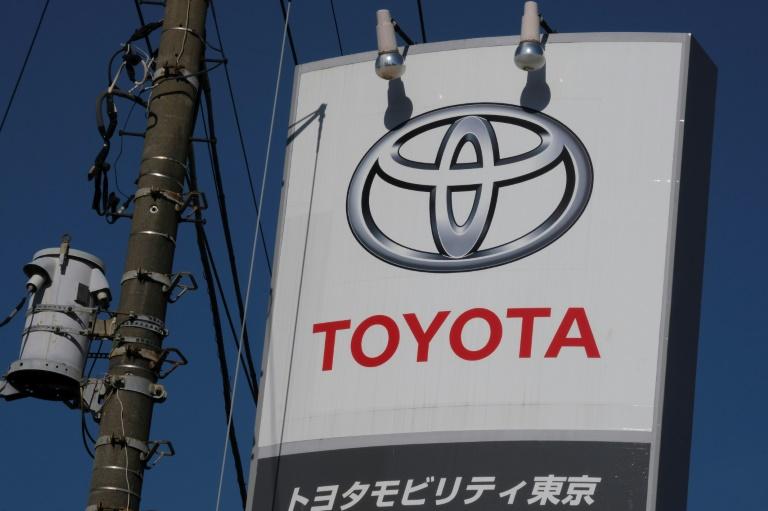
Toyota Motor’s American depositary receipts traded little changed at $167.41 on Thursday morning, down 0.21%, as the automaker continues navigating a vehicle recall, a recent leadership transition, and renewed analyst confidence even as shares remain well below their all-time high reached earlier this year.
A Significant Pullback From Record Highs
Toyota’s stock has fallen sharply from the peak it reached earlier in 2026. The all-time high Toyota stock closing price was $244.46, set on February 13, 2026. As of June 23, 2026, Toyota Motor’s American depositary receipts were trading at $166.78, with a previous close of $169.73, fluctuating within a day range of $166.72 to $167.81, while its 52-week range spans from $166.72 to $248.90 — a substantial decline of roughly a third from the stock’s yearly high.
A Recent Vehicle Safety Recall
Among the more notable recent developments affecting investor sentiment, Toyota is conducting a safety recall involving certain model year 2026 bZ and Lexus RZ vehicles in North America. Approximately 16,200 vehicles are involved in this recall, with the affected units’ electronic control unit cited as the source of the issue prompting the action.
UBS Issues a Fresh Buy Rating
Despite the recall and the stock’s broader pullback from its highs, at least one major Wall Street bank has reaffirmed its confidence in the company. Toyota Motor received a Buy rating from UBS, according to recent reporting, joining a broader chorus of analyst support for the stock even amid the year’s volatility.
Shareholders Re-Elect Toyoda, Back New CEO
In a significant corporate governance development, Toyota Motor shareholders re-elected Akio Toyoda as chairman and backed new CEO Kenta Kon as a board member at the company’s first annual meeting under the new leadership structure, endorsing the automaker’s direction at a pivotal moment for the company.
Executive Changes Across Manufacturing and Supply Chain
Beyond the board-level changes, Toyota also announced broader organizational adjustments aimed at improving operational efficiency. Toyota announced executive changes to its manufacturing, supply chain, and financial services operations designed to better serve its customers and drive continued improvement across those business lines.
A Strong Wall Street Consensus, Despite Recent Weakness
Despite the stock’s significant decline from its February peak, formal analyst coverage remains notably bullish on Toyota’s longer-term prospects. The average 12-month price target for Toyota Motor’s American depositary receipts is $256.52, with a high estimate of $290 and a low estimate of $230. Four analysts recommend buying the stock, while zero suggest selling, leading to an overall rating of Strong Buy and implying upside potential exceeding 53% from recent trading levels.
That bullish sentiment is echoed in coverage of the company’s primary Tokyo-listed shares as well. The average 12-month price target for Toyota Motor’s Tokyo shares is 3,696.9 yen, with 13 analysts recommending buying the stock and none suggesting a sell, leading to an overall Buy rating implying nearly 35% upside potential.
A Notably Bearish Technical Signal
Despite the bullish fundamental analyst consensus, short-term technical indicators have painted a far more cautious picture of the stock’s near-term momentum. Based on moving averages and other technical indicators, the daily buy/sell signal for Toyota Motor’s American depositary receipts is Strong Sell — a notable divergence from the broadly positive long-term price targets set by Wall Street analysts.
A Long History of Stock Splits
Toyota’s American depositary receipts have undergone numerous adjustments to their share structure over the company’s lengthy history as a publicly traded company. Toyota Motor’s American depositary receipts have split eight times, while the company’s primary Tokyo-listed shares have split nine times, reflecting the automaker’s decades-long history on global stock exchanges since its founding.
A Massive, Diversified Global Business
Toyota Motor Corporation designs, manufactures, assembles, and sells passenger vehicles, minivans, and commercial vehicles, and related parts and accessories in Japan, North America, Europe, Asia, Central and South America, Oceania, Africa, the Middle East, and internationally. The company operates through Automotive, Financial Services, and All Other segments, offering subcompact and compact cars, mini-vehicles, mid-size and luxury vehicles, recreational and sport-utility vehicles, pickup trucks, minivans, trucks, and buses. It also develops and sells battery and hybrid electric vehicles and batteries, and provides financial services including retail financing and leasing, wholesale financing, insurance, and credit cards. The company operates GAZOO.com, a web portal for automobile information, and offers vehicles under the Toyota and Lexus brand names.
One of the World’s Largest Employers
Reflecting the sheer scale of its global manufacturing and sales operations, Toyota Motor employs approximately 390,927 people worldwide, placing it among the largest industrial employers of any publicly traded automaker.
A Founding Dating Back Nearly a Century
Toyota Motor Corporation was founded in 1933 and is headquartered in Toyota, Japan, giving the company nearly a century of operating history as one of the world’s most established and consistently profitable automakers.
A Marketing Push Celebrating Nearly 70 Years in America
Beyond its core manufacturing and financial operations, Toyota has also continued investing in brand-building initiatives in its key North American market. A cinematic sponsored documentary marking nearly 70 years of Toyota in America is set to air on Discovery Turbo and Discovery Go, part of the company’s broader effort to reinforce its long-standing presence and reputation among American consumers.
Competitive Pressure From Chinese EV Makers
Beyond its own operational and leadership news, Toyota also faces continued competitive pressure from rapidly expanding Chinese electric vehicle manufacturers. Chinese EV maker BYD has said it aims to overtake Toyota as it plans to spend significantly to build five-minute flash chargers across Europe, underscoring the intensifying competition Toyota faces in the global transition toward electric vehicles.
With Toyota’s next earnings report scheduled for July 30, 2026, investors will be watching closely for updated guidance on how the company is navigating the bZ and Lexus RZ recall, the broader supply chain and manufacturing leadership changes announced earlier this month, and the ongoing competitive pressure from both established rivals and rapidly growing Chinese EV manufacturers. Given the substantial gap between Toyota’s current trading price and the bullish analyst price targets near $256, the stock’s near-term trajectory will likely continue to hinge on whether the company’s operational adjustments and new leadership structure can restore the momentum that drove shares to their all-time high earlier this year.

Bitcoin Power-Law Model Flags Deeper Drop as BTC Tests $58K

How Scott Disick Felt About Kourtney Kardashian’s Snub

Blue Ivy Carter Spotted in New York City in a Fear of God Essentials MLB Hoodie and Jaded London LDN Mud XL Colossus Jeans


-

 Fashion6 days ago
Weekend Open Thread: Miami – Corporette.com
-

 Entertainment5 days ago
Renter of Home in Anne Heche Crash Denies Settlement With Son
-
 Sports2 days ago
Two goals and an assist by sheer aura: Cristiano Ronaldo just entered the World Cup chat
-

 Tech3 days ago
Microsoft accidentally kills epic Outlook email threads
-

 Business5 days ago
Soccer-U.S. defends Iran World Cup travel restrictions, says discussions ongoing
-

 Politics6 days ago
Andy Burnham and the meaning of Makerfield
-

 NewsBeat6 days ago
Keir Starmer Allies Question His Chances For No 10
-

 Tech4 hours ago
A Look At A Gaggle Of Transputer Boards
-
Crypto World2 days ago
Bitcoin (BTC) Dips Below $62K, Ethereum (ETH) Plunges 6% Daily: Market Watch
-

 Crypto World2 days ago
Securitize Wraps Roubini's SEC-Registered ETF as Dubai VARA Digital Security
-
Business2 days ago
Entergy settles forward sale agreements, raises $672 million in cash proceeds
-
 Business6 days ago
Wall Street Week Ahead: Investors see Micron earnings as pulse check of AI rally momentum
-
 Crypto World6 days ago
Can Charles Hoskinson Really Rescue Cardano?
-

 Crypto World6 days ago
HIVE shares jump as $220M AI deal speeds Bitcoin mining pivot
-

 Crypto World6 days ago
Jake Chervinsky accuses CME of protecting derivatives monopoly
-

 Entertainment6 days ago
Jose Alvarado Wants Taylor Swift at More Knicks Games
-
 Tech4 days ago
Signal’s Meredith Whittaker says AI chatbots ‘are not your friends’ and calls Copilot agents a backdoor
-

 Sports11 hours ago
India vs Bangladesh LIVE Score, Women’s T20 World Cup: Bangladesh Opt To Bat; India Enter ‘Do-Or-Die’ Stage As Semi-Final Race Heats Up
-

 Tech3 days ago
Nearly 7,000 fake Amazon domains registered ahead of Prime Day 2026, researchers warn
-

 Sports7 days ago
FIFA World Cup 2026: Canada beat 9-men Qatar 6-0 to register first ever win | FIFA World Cup 2026
You must be logged in to post a comment Login