

Business
Putin Admits Fuel Shortages From Ukrainian Strikes Are ‘Not Critical’ in Rare Public Acknowledgment


MOSCOW — Russian President Vladimir Putin offered an unusually candid public acknowledgment over the weekend of widespread fuel shortages gripping the country, conceding that Ukrainian missile and drone strikes on energy infrastructure have created real difficulties for Russian motorists, businesses and the agricultural sector, even as he insisted the situation remained under control.
The shortages have been visible across Russia for months, with long lines forming at petrol stations, fuel rationing spreading to dozens of regions, and refineries repeatedly damaged by Ukrainian strikes reaching from Moscow to the Black Sea coast. In Crimea, the Russian-annexed Ukrainian peninsula, drivers have been barred from filling their tanks altogether so that available fuel can be redirected to military vehicles. Despite the visible strain, Putin had largely avoided addressing the crisis directly in public until a weekend meeting with senior officials and oil executives.
Speaking candidly at that meeting, Putin acknowledged the toll the shortages have taken on ordinary Russians.
“You’re well aware that problems persist for both motorists and businesses,” Putin told the assembled officials. “Unfortunately, there are still queues at petrol stations, and finding the right grade of petrol isn’t always easy.”
Putin also pointed to the strain on Russia’s agricultural sector, noting that the country’s harvest depended on fuel supply schedules being met on time, an acknowledgment that ties the energy crisis directly to broader concerns about food production and the domestic economy heading into the back half of the year. According to independent Russian outlet Mediazona, 56 Russian regions are currently enforcing some form of fuel restriction, underscoring how widespread the disruption has become.
In a subsequent interview with Russian state television, Putin went further, offering what diplomatic observers described as an even more open assessment of the crisis than his earlier remarks to officials.
“We are currently seeing a certain shortage, but it’s not critical,” Putin said, while acknowledging that Ukraine’s attacks were “obviously creating problems.”
He pledged to ramp up production of air defense systems to better protect Russian energy infrastructure from further strikes, and said authorities would work to accelerate repairs at refineries that have already sustained damage from Ukrainian attacks. Regarding Crimea specifically, Putin admitted the peninsula currently had only “a few days’ supply” of fuel remaining, though he expressed confidence that additional fuel would be brought in to address the shortfall soon.
The directness of Putin’s comments marks a notable departure from his typical public posture on the war’s domestic costs. BBC diplomatic correspondent James Landale, reporting from Moscow, noted that the scale of the shortages and the resulting public awareness had likely left Putin with little choice but to acknowledge the reality on the ground, even as he continued to insist, as he has throughout the conflict, that Russia’s broader war effort was making progress.
Putin’s admission regarding Crimea’s fuel difficulties carries particular symbolic weight given the peninsula’s outsized importance both to ordinary Russians and to Putin personally. Since Moscow’s occupation of Crimea began in 2014, the Kremlin has transformed the peninsula into a major military base and a strategic anchor for controlling the Black Sea, using it as a launching point for Russia’s full-scale invasion of Ukraine in 2022. Any sign of strain there carries political resonance well beyond its immediate practical impact.
During the televised interview, Putin offered an explanation for why he chose to address the issue so openly, framing Ukraine’s strategy as an attempt to fracture Russian society and erode public support for the war effort, while pushing more Russians toward favoring negotiations to end the conflict.
“We won’t give them that chance,” Putin said, adding that Ukraine’s long-range strikes were having “absolutely no impact on the situation at the front line.”
That assessment is directly disputed by officials in Kyiv, who argue that Ukraine’s deep strikes inside Russian territory serve a dual purpose: bringing the tangible costs of the war home to ordinary Russian citizens while also forcing Russian military commanders to divert air defense resources and personnel away from the front lines in eastern Ukraine to protect domestic energy infrastructure instead.
The acknowledgment comes amid a period of growing confidence in Kyiv that battlefield momentum may be shifting in Ukraine’s favor. In recent months, Ukrainian forces have launched deep strikes against targets in both St. Petersburg and Moscow, intensified attacks on Crimea, and pursued a more aggressive strategy aimed at inflicting maximum casualties along the front line. Despite that shift in tactics, the Kremlin reaffirmed Monday that its core territorial objectives remain unchanged. Kremlin spokesman Dmitry Peskov said Russia’s position continues to be that Ukrainian forces must withdraw from four southeastern regions that Moscow claims as its own, territorial claims that Kyiv categorically rejects.
In the same interview, Putin claimed that Ukraine had signaled willingness to limit hostilities and begin negotiations, though he dismissed any such overture as a tactical maneuver designed to give Kyiv time to regroup and rearm rather than a genuine push toward peace.
“It is clear why this proposal is being made, because our counter-strikes deep into Ukrainian territory are much stronger, have greater impact and are, frankly, more destructive,” Putin said.
He went on to characterize Ukraine’s own strikes against Russia as an attempted “salvation” for what he described as a Ukrainian military that has been “catastrophically” depleted by years of fighting, while making clear that Moscow had no interest in offering Kyiv’s leadership any reprieve.
“But saving the Kyiv regime is not part of our plans,” Putin said.
The rare public airing of Russia’s fuel crisis offers one of the clearest signals yet of how Ukraine’s sustained campaign against Russian energy infrastructure is registering domestically, even as both sides continue to offer starkly different assessments of how much that pressure is actually shaping the broader trajectory of the war.



I am focused on growth and dividend income. My personal strategy revolves around setting myself up for an easy retirement by creating a portfolio which focuses on compounding dividend income and growth. Dividends are an intricate part of my strategy as I have structured my portfolio to have monthly dividend income which grows through dividend reinvestment and yearly increases. Feel free to reach out to me on Seeking Alpha
Analyst’s Disclosure: I/we have a beneficial long position in the shares of CRWV, META, MSFT, GOOGL, AMZN, NVDA, ORCL either through stock ownership, options, or other derivatives. I wrote this article myself, and it expresses my own opinions. I am not receiving compensation for it (other than from Seeking Alpha). I have no business relationship with any company whose stock is mentioned in this article.
Disclaimer: I am not an investment advisor or professional. This article is my own personal opinion and is not meant to be a recommendation of the purchase or sale of stock. The investments and strategies discussed within this article are solely my personal opinions and commentary on the subject. This article has been written for research and educational purposes only. Anything written in this article does not take into account the reader’s particular investment objectives, financial situation, needs, or personal circumstances and is not intended to be specific to you. Investors should conduct their own research before investing to see if the companies discussed in this article fit into their portfolio parameters. Just because something may be an enticing investment for myself or someone else, it may not be the correct investment for you.
Seeking Alpha’s Disclosure: Past performance is no guarantee of future results. No recommendation or advice is being given as to whether any investment is suitable for a particular investor. Any views or opinions expressed above may not reflect those of Seeking Alpha as a whole. Seeking Alpha is not a licensed securities dealer, broker or US investment adviser or investment bank. Our analysts are third party authors that include both professional investors and individual investors who may not be licensed or certified by any institute or regulatory body.

From high-touch lender to fin-AI company
Speaking to ET Now, Agarwal said the company has deployed two Nvidia chips to run proprietary AI models internally, marking a shift from a traditional high-tech, high-touch lending model. The results are already visible in the numbers: cost of funds has dropped from around 12% three years ago to 10.3%, beating the company’s own 10.5% guidance, while yields have simultaneously risen roughly 10 basis points to 17.04%. Agarwal credited this combination — falling costs and rising yields — alongside ongoing AI-driven efficiencies for the company’s ability to defend its margins going forward.
Asset quality: A “collection first” philosophy
On concerns that rapid loan book expansion could hurt asset quality, Agarwal was firm that Paisalo treats itself as “a collection business first and a lending business second.” He pointed to a multi-decade track record since the company’s 1996 listing, during which asset quality stayed below 2% except during the Covid years, when it briefly rose before being brought back down within roughly six quarters. The company’s underwriting model functions more as a rejection filter than a disbursement engine, he said, with incentive structures across the organization weighted equally toward collections and growth.
No fresh equity needed for expansion
Despite pursuing aggressive growth, Agarwal said Paisalo does not need new equity capital, citing a comfortable 35% capital adequacy ratio and underleveraged 2.2x debt-to-equity position. Instead of diluting existing shareholders, promoters have been steadily raising their stake through open-market purchases — now at 46-47%, up from a low of about 26% four years ago. The company also has a $50 million foreign currency convertible bond outstanding, of which $44 million remains unconverted at a strike price of roughly Rs 48. With the stock now trading above that level, Agarwal expects meaningful conversion activity, and possibly full conversion, within the current financial year.
Four pillars driving 24-25% loan growth
Agarwal outlined four growth levers underpinning the company’s three-year AUM, revenue, and profit-doubling target: the shift to AI-led operations, aggressive distribution expansion, new product launches, and continued cost-of-capital optimization. Distribution has grown more than fivefold since 2017, expanding into 12 new states in the last three to four years to reach 5,299 distribution points across 22 states. Six new products were launched in the most recent quarter alone.

AI is already doing the heavy lifting
The scale of AI adoption at Paisalo is substantial. In just two quarters, the company processed around 160,000 loan applications through AI-enabled onboarding, alongside 125,000 servicing cases and 225,000 risk management cases handled by AI systems. It has also run roughly 250,000 quality checks across audit, credit and operations functions using AI, while scaling from zero to two AI bots and five outbound voice bots handling 350,000 multilingual calls daily in Hindi, English, and Marathi.
Opex to stay elevated near-term, then ease
Agarwal acknowledged that operating expense ratios will likely hold steady or edge up in the medium term as the company continues investing heavily in in-house AI and IT infrastructure, including a revamped sourcing app and business correspondent platform expected later this year. However, he expects opex efficiencies to materialize meaningfully over the longer term as AI-driven automation scales across the organization.
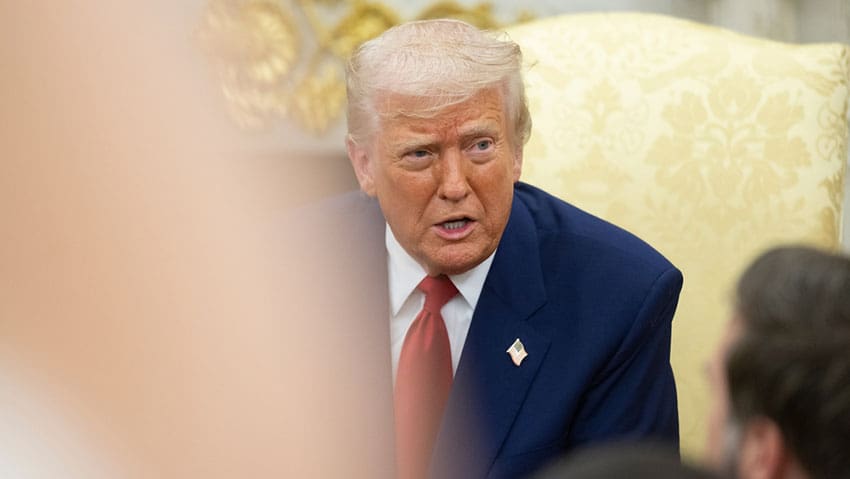
OpenAI is weighing up handing the US government a 5 per cent stake worth $43bn (£32bn) as Sam Altman moves to shore up relations with Donald Trump ahead of the ChatGPT maker’s blockbuster stock market debut.
The offer, first reported by the Financial Times, has been tabled in recent discussions with the White House as the company prepares for a $1tn flotation in New York, a listing that would rank among the largest in corporate history.
Trump has made no secret of his enthusiasm for the American taxpayer taking stakes in the leading AI developers, describing the prospect as a “beautiful thing” that would make the public rich. “There’s something very interesting about it, where it almost becomes a partnership with the American public,” he said last month. “You make them partners in this revolution. It would be a beautiful thing. It would make them rich.”
The logic behind the proposal is as much political as financial. Handing the public a direct interest in AI’s upside is seen as a way of blunting the growing backlash over the technology’s impact on jobs, a concern Altman himself has wrestled with publicly, and the relentless spread of energy-hungry data centres. Altman has previously floated the idea of a public wealth fund holding stakes in AI companies, and reports suggest he envisages rivals such as Anthropic, Google and Meta ceding similar holdings through a government vehicle.
OpenAI is currently valued at $852bn, putting a 5 per cent stake at roughly $43bn. Should the flotation hit its $1tn target, the government’s paper gain would be immediate, a point unlikely to be lost on a president who has boasted about the returns from Washington’s 10 per cent stake in Intel, taken last year at $9bn and now worth more than $60bn.
Quite where any OpenAI shares would sit remains up for debate. JD Vance, the vice-president, has said Trump favours a sovereign wealth fund, while others in the administration have suggested parking the holdings in “Trump accounts”, the investment accounts for children being established by the president. Bernie Sanders, the left-wing senator, has gone considerably further, arguing the public should own half of the AI companies outright.
The talks mark a striking shift in Washington’s posture. Having initially taken a hands-off approach to AI, the White House has become increasingly interventionist in recent months, blocking the release of Anthropic’s most powerful systems and forcing OpenAI to restrict access to its latest models, moves made against a backdrop of intensifying competition from China.
Anthropic, for its part, has proposed special taxes on the AI sector to fund a “digital dividend” for the public, a rather different route to the same political destination.
OpenAI, whose staff shared a $6.6bn payout in a secondary share sale last year, was approached for comment.

Jamie Young
Jamie is Senior Reporter at Business Matters, bringing over a decade of experience in UK SME business reporting.
Jamie holds a degree in Business Administration and regularly participates in industry conferences and workshops.
When not reporting on the latest business developments, Jamie is passionate about mentoring up-and-coming journalists and entrepreneurs to inspire the next generation of business leaders.
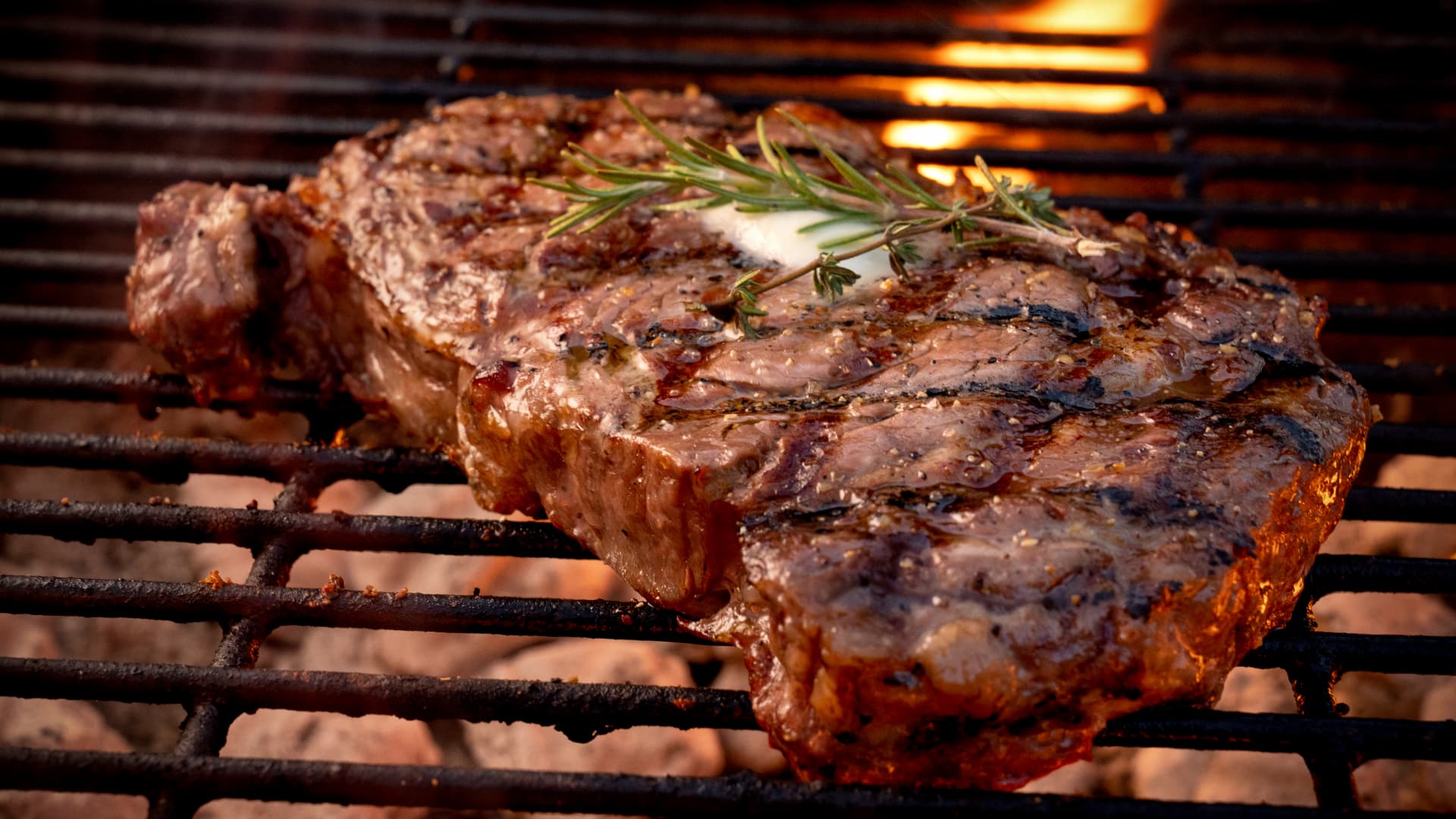

As Americans prepare to fire up their grills for the Fourth of July, they’re facing some of the highest beef prices on record.
Yet despite the sticker shock, demand for beef and steak are holding up.
Beef prices have surged after the U.S. cattle herd shrank to its smallest size in decades following years of drought, high feed costs and herd liquidation. The resulting supply crunch has driven up cattle prices and, ultimately, the cost of beef at grocery stores and on restaurant menus.
Cattle are herded in a stable on June 05, 2026 in Hamilton, Texas.
Brandon Bell | Getty Images
While prices eased slightly in May after reaching record highs in the spring, consumers are still paying near-record prices for ground beef and steaks. The average price of ground beef was $6.75 per pound in May, according to U.S. Bureau of Labor Statistics data, up nearly 13% from a year ago and just below April’s record high of $6.90. Beef steak prices averaged $12.80 per pound, up 16% from a year earlier and the second-highest level on record.
But so far, shoppers don’t appear willing to abandon their summer grilling traditions. The resilience offers another clue into consumer behavior at a time when investors are closely watching for signs of whether and where high prices are causing shoppers to pull back.
“We are seeing customer demand for steaks remain quite high, with a shift towards more premium and organic options,” a Kroger spokesperson told CNBC. “We’ve also seen beef continue to be a preferred choice during recent holidays, including Easter and Memorial Day.“
Beef has generated the largest dollar growth of any food category ahead of Independence Day, with sales rising roughly $352 million compared to last year, according to data from NielsenIQ.
“Consumers are entering the holiday with discipline, making more trips but with clear intent behind each one,” the consumer research firm said in a June report.
Steak and quality win
Cuts of beef are displayed at Handy Market on May 14, 2026 in Burbank, California.
Justin Sullivan | Getty Images
As demand for beef holds up, consumers have shown clear preferences within the segment.
NielsenIQ said consumers increasingly view steak as the centerpiece of special occasions: an “affordable luxury” where they’re willing to pay more for quality and the experience, while finding savings elsewhere when they shop for groceries.
The data also suggest consumers aren’t simply searching for the cheapest protein. Instead, many are placing a greater emphasis on quality.
Shoppers reported increasing favor toward quality claims such as USDA Prime (42%), no added hormones (40%), grass-fed (37%), and no antibiotics ever (36%) when purchasing meat, according to NielsenIQ.
“Shoppers are looking past the label and into the story behind the meat,” the firm said. “Claims tied to quality and sourcing are gaining ground as buyers seek confidence.”
The demand has also benefited others in the industry, like Omaha Steaks, which told CNBC that consumers continue to prioritize gifting steaks even as they cut back elsewhere.
“Customers are still celebrating dad with premium proteins, but they’re also being thoughtful about value and versatility,” said Nate Rempe, president and CEO of Omaha Steaks last month as Father’s Day approached.
The company said it has seen continued growth in its USDA certified tender top sirloin filet, a recently introduced value cut, with sales up 25% in the weeks heading into Father’s Day this year compared to 2025.
Restaurants have also reported seeing benefits from the dynamic. LongHorn Steakhouse, among others, has seen a rise in diners seeking out steaks.
“The guests know they’re getting high quality steaks when they come to LongHorn [Steakhouse],” said Rick Cardenas, CEO of the chain’s parent company Darden Restaurants. “They get a great value. And it doesn’t hurt that there’s a high beef inflation in the market. And so the relative value looks a little bit better.”
The key question for investors is how long the dynamic can last. Rebuilding the U.S. cattle herd could eventually increase beef supplies and ease prices, but that process takes years without the aid of imported supply.
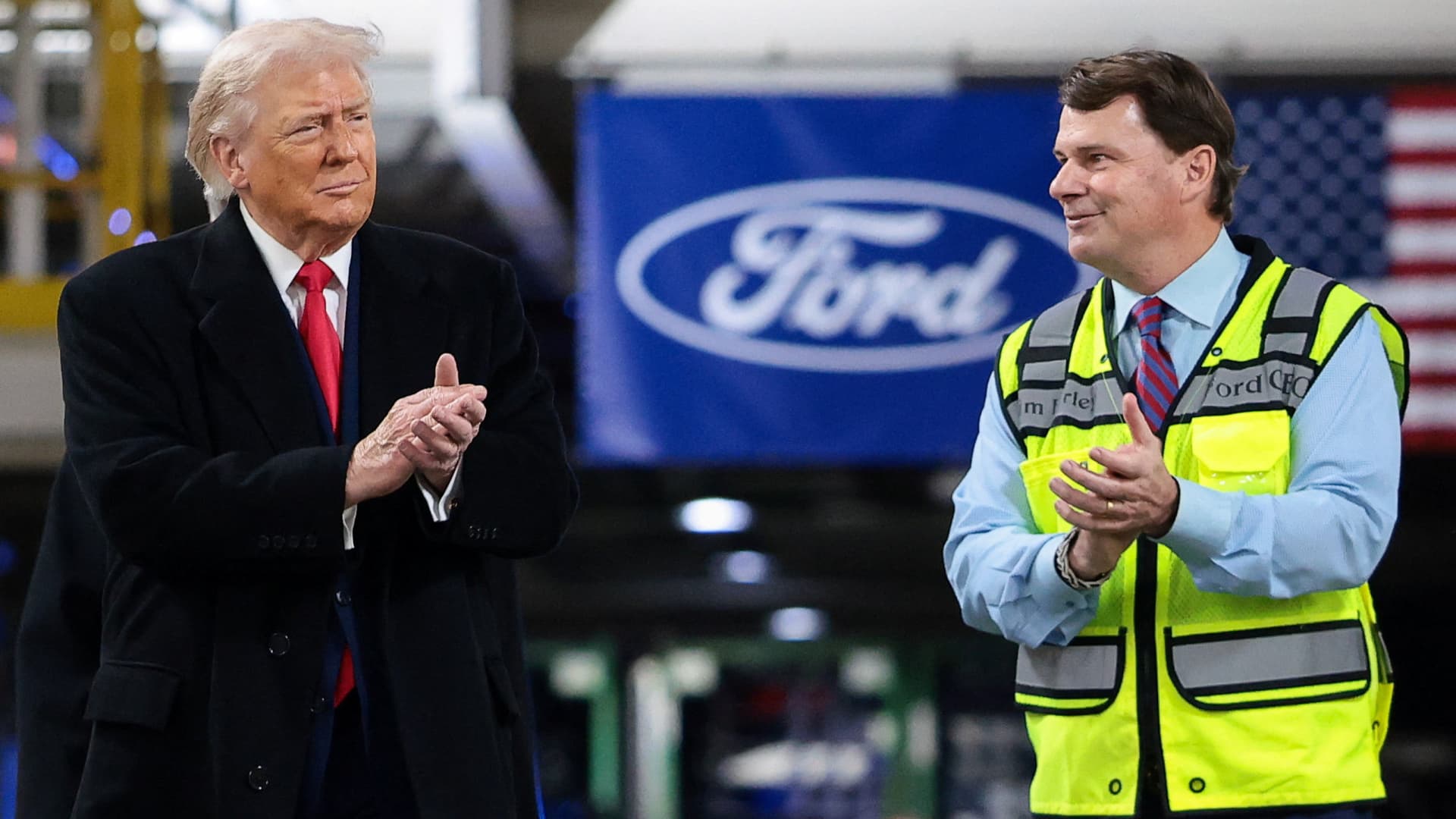
U.S. President Donald Trump and CEO of Ford Jim Farley clap, as President Trump visits a Ford production center, in Dearborn, Michigan, U.S., January 13, 2026.
Evelyn Hockstein | Reuters
DETROIT — As negotiations officially reopen for the USMCA North American trade deal, Ford Motor CEO Jim Farley is clear about what the automaker wants under the new talks: a more level playing field.
He told CNBC he wants automakers such as Ford that largely produce their vehicles domestically to be awarded under the deal. Along with that, Farley said other automakers — such as General Motors and Toyota Motor — that may produce here but also heavily rely on imported vehicles should get more penalties.
“It’s imperative that any new agreement makes it easier, not harder, to compete with U.S. makers who import from Japan, South Korea and global competitors that import from those locations,” Farley told CNBC during a phone interview Wednesday. “That’s the key for us.”
Producing in such countries is typically less expensive due to labor costs.
GM and Toyota are No. 1 and No. 2 in U.S. sales, respectively, while also being the top two importers of vehicles in 2025.
GM imported 1.17 million vehicles, or 41% of its U.S. sales, while Toyota imported more than 1.19 million units, or 47%, of its domestic sales, according to industry data.
Hyundai Motor, which plans to roughly double its amount of U.S.-produced domestic sales to 80% by 2030, was the largest importer of vehicles from South Korea, followed by GM.
Ford, meanwhile, reports it assembled more than 2 million vehicles in the U.S. last year — more than any other auto manufacturer, including 311,000 units for export to more than 60 international markets. It imported 378,000 vehicles, or 17%, of its 2.2 million sales last year.
“Ford’s a leader of U.S. auto production with the most U.S.-built vehicles but, more importantly, we import very few, and we export the most, and we have the most UAW [union] workers here,” Farley said. “So we’re very proud, especially of the ratio between what we build here and what we import.”
Farley’s comments come as the Trump administration has decided not to renew its trilateral trade pact with Canada and Mexico, instead opting to conduct annual reviews of the treaty that could eventually lead to an end to the agreement by 2036.
The auto industry represented about 18% of America’s trading with its neighboring countries last year, according to industry data, making it one of the key sectors in the discussions. Automakers and others watching the talks are concerned that reopening the deal could create additional trade uncertainty that leads to lower investments and fewer jobs.
A consortium of U.S. trade groups representing most automakers, dealers and suppliers on Wednesday voiced support for a trilateral deal like the countries currently have.
“We urge the leaders of the U.S., Canada, and Mexico to swiftly reach consensus on an extension of USMCA that preserves the existing trilateral partnership, returns to preferential treatment for qualifying goods, and continues the stability and predictability that has helped the industry thrive for the past six years,” they said in a statement.

Compass Point reiterates Applied Digital stock rating on data center milestone
Rosenblatt reiterates CoreWeave stock Buy rating amid Meta cloud reports


Dollar eases as yen gains ahead of US payrolls, chipmaker stocks struggle
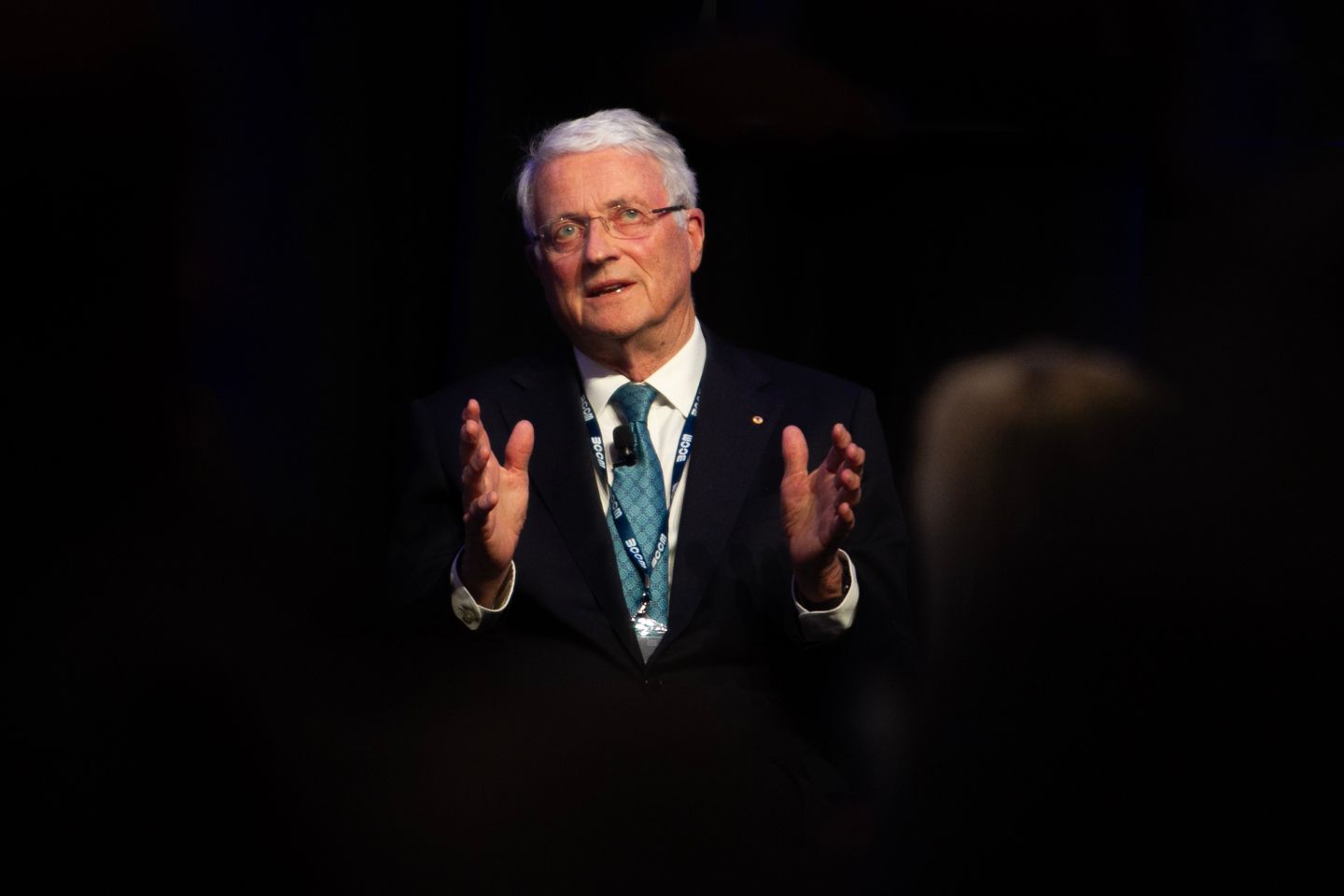
OPINION: Michael Chaney and the board of Northern Star are pushing back as a US corporate raider raises the stakes.

For months, policymakers, businesses and trade watchers in Washington had been bracing for a turbulent spring and summer around the future of the USMCA, the trade pact binding the United States, Canada and Mexico.
But, to quote former UK Prime Minister Harold Macmillan, “Events, dear boy, events.” The war with Iran has dominated Washington’s attention, stripping away much of the political heat that was expected to surround the pact’s renewal.
Instead of a noisy fight over the agreement’s future, the USMCA has slipped into the background. The Iran conflict has absorbed the White House’s attention and, in practical terms, has become one of the best developments for keeping the trade pact out of the headlines.
Earlier this year, there were concerns the US might use the renewal window to force a confrontation with Canada and Mexico, or even threaten withdrawal. President Trump had already cooled on the deal he once signed, raising questions about how aggressively Washington would approach the next phase.
But with foreign policy dominating the administration’s agenda, the US has taken a more measured approach. It has confirmed it will not extend the agreement for another 16 years, while stopping short of more dramatic action.
Part of that restraint reflects a belief inside the administration that the trade relationship has already been reshaped.
US Trade Representative Jamieson Greer argues the White House’s tariff strategy has fundamentally altered North America’s economic ties, changing the balance with Canada and Mexico in ways that make a more confrontational approach unnecessary. But if trade does become more politically driven, the US auto industry could be the biggest loser.

Bitcoin’s 5 Greatest Crashes, What Always Happened Next?

Comet from another star has a composition unlike anything else in our solar system

CoreWeave: Meta Compute Scare Is A Long-Term Buying Opportunity (CRWV)


-

 Fashion6 days ago
Weekend Open Thread: Staud – Corporette.com
-

 Politics6 days ago
The House | Manchesterism won’t survive the painful trade-offs unless it gets citizens on board
-

 Crypto World2 days ago
Strategy authorizes up to $1.25B in Bitcoin sales under new capital plan
-

 Politics6 days ago
Potential 2028er World Cup attendee leaderboard
-

 Business6 days ago
Asia stock markets slide as tech shares slump
-

 News Videos4 days ago
MAJOR BITCOIN & MARKET UPDATE!!!! (MUST WATCH ASAP!!!)
-

 Tech7 days ago
A Look At A Gaggle Of Transputer Boards
-
 Crypto World7 days ago
Dell (DELL) Shares Tumble Over 5% Following Analyst Downgrade to Hold
-

 Crypto World5 days ago
Coinbase, Circle Deepen Crypto Stock Losses Despite Resilient S&P 500
-

 Business2 days ago
Australia treasurer says alleged access of prime minister’s bank data ’incredibly concerning’
-

 Crypto World5 days ago
Kraken's xStocks Opens Bending Spoons IPO Registration to EEA Retail
-

 Sports6 days ago
FIH Pro League: India defeat Pakistan 7-1, register biggest win of campaign | Other Sports News
-

 Tech2 days ago
Anonymous researcher drops 0-day ‘exploitarium’ repo
-

 Crypto World6 days ago
Bitcoin Sparks $600M Hourly Liquidations With $65,000 Set To Become Resistance
-

 Tech4 days ago
Bluekit phishing kit adopts browser-in-the-middle for login theft
-

 Tech5 days ago
Russian hackers now target Signal backup recovery keys
-
 Crypto World6 days ago
Hyperliquid Named on Singapore MAS Investor Alert Register
-

 Crypto World6 days ago
RTX holders must register wallets before token distribution begins
-

 Sports24 hours ago
Broncos roster: OL Ben Powers (No. 74) entering final year of contract
-
 Business3 days ago
The AI boom won’t burst all at once. It will pop in ‘rolling bubbles’: Macquarie
You must be logged in to post a comment Login