Connect with us
DAPA Banner
DAPA Coin
DAPA
COIN PAYMENT ASSET
PRIVACY · BLOCKDAG · HOMOMORPHIC ENCRYPTION · RUST
ElGamal Encrypted MINE DAPA
🚫 GENESIS SOLD OUT
DAPAPAY COMING

Tech

FLOSS Weekly Episode 873: Wait, That’s Not Open Source!

Published

on

This week Jonathan chats with Andy Gryc and Aaron Basset about QNX, and the interesting Open Source history and future of that embedded OS. Why does QNX Everywhere feel more open, and why do you need to register an account to download images? All that and more — Watch to find out!

Did you know you can watch the live recording of the show right on our YouTube Channel? Have someone you’d like us to interview? Let us know, or have the guest contact us! Take a look at the schedule here.

Advertisement

Direct Download in DRM-free MP3.

If you’d rather read along, here’s the transcript for this week’s episode.


Theme music: “Newer Wave” Kevin MacLeod (incompetech.com)

Advertisement

Licensed under Creative Commons: By Attribution 4.0 License

Source link

Advertisement
Continue Reading
Click to comment

You must be logged in to post a comment Login

Leave a Reply

Tech

The Clever Physics That Makes Modern Supercars So Quick

Published

on


It’s a question that plagued car designers for over a century: How do we make a car go faster? Instinctually, one would assume that you could throw horsepower at it until you achieve the numbers you want, but that only works to a point. After all, the definition of “fast” extends beyond just how hard a car accelerates and the top speed it can hit; otherwise, supercars would more closely resemble drag cars. Rather, what makes a supercar quick is a combination of two elements: power-to-weight ratio and grip.

Power-to-weight ratio influences how quickly the car can get up to speed and how easily it maintains that speed, while grip reflects how well it holds to the road and is influenced by elements like aerodynamics and tires. Combine both elements, and presto, you have a car that’s fast on the straights and maintains speed through the corners. A fast supercar, by design, will have a lower power-to-weight ratio than your average car, as well as aero parts like functional front and rear wings, a rear diffuser, and wide tires to increase grip. All that, combined with sophisticated systems and a modern, stiff chassis, makes up the recipe for most supercars today outside of certain specialized machines like the Caterham Seven — which, for all its greatness, is remarkably one of the worst cars ever in terms of aerodynamic efficiency.

Advertisement

Of course, the actual physics behind it all are far more nuanced than that. For instance, how do weight and power determine a car’s speed, beyond the obvious “more power is more fast?” Likewise, how do large tires, aerodynamic devices, and a low center of gravity help carry that momentum?

Advertisement

Why power-to-weight ratio and balance matter

All cars need horsepower, but supercars take it a step further by (usually) having bigger engines with more power than the average car. That seems simple enough on the surface. But it’s not so straightforward. Think about it this way: The largest piston engine in the world produces over 100,000 hp, but the cargo ships it powers go only a fraction of the speed of a supercar. Similarly, some high-load big rigs produce around the same power as some supercars, but aren’t fast at all. That’s because these vehicles are all far heavier.

There’s a famous quote attributed to Sir Colin Chapman, founder of Lotus: “Simplify, then add lightness.” That formula went on to secure victories throughout the 1950s and 1960s, solidifying Lotus as an outstanding motorsports constructor and later influencing Lotus sports cars like the Elise and Exige. Put simply, having less weight to push around amplifies the horsepower an engine makes. You don’t need a massive engine to shove around a little car, which is how supercars go fast in the first place. Sure, a bigger power is nice, but weight is also a vital part of the equation.

Where that weight is placed is also vital. Supercars, much like racecars, ride close to the ground to lower their center of gravity, keeping the car balanced and planted. Engine placement also matters because engines are generally quite heavy and can affect handling. That’s why rear-engine Porsches tend to oversteer, and front-heavy cars understeer. Most modern supercars feature mid-engine layouts, affording their platforms an ideal front-to-rear weight balance.

Advertisement

Getting quicker in the corners

Balance and weight matter when cornering, too; a car turns better if there’s less mass to throw around. It’s basic Newtonian physics — the car’s mass wants to keep moving in a straight line, so the tires have to coax it to turn. This means supercars, by necessity, must have good tires and a planted chassis to turn well.

However, that’s only the tip of the iceberg. Now, we’ll get into aerodynamics. To keep things brief, the faster the car goes, the more air it must move out of the way. Some of that air becomes drag, preventing the car from going faster. A body that minimizes drag lets the car slice through the air and leave a smaller wake, granting it a higher top speed. That’s why supercars are shaped the way they are.

Advertisement

The second core component of aerodynamics rests not in drag, but in downforce. More aggressive aerodynamic elements like a pronounced front and rear wing, diffusers, and canards all work to push a car to the ground. The more force it pushes down with, the faster it can corner (generally with the trade-off of top speed). That’s why many modern supercars have movable aerodynamic devices like extendable wings — these extend to keep the cars planted at speed and retract for better aerodynamic efficiency in a straight line. Some also take advantage of ground effect, which sucks the car to the ground for even more downforce. Good examples include the McLaren F1, which had a secret pair of fans that provided downforce and decreased drag, and the GMA T.50 fan car.


Advertisement

Source link

Continue Reading

Tech

Working ‘Blackberry remake’ seen in hands-on video for the first time

Published

on

The Clicks Communicator has made its first proper appearance in action. This gives us our clearest look yet at the modern take on the BlackBerry-style smartphone. The planned launch is later this year.

In a newly published demo, Clicks showed a working pre-production version of the Communicator. This revealed how its physical keyboard, custom Android interface and hardware features come together.

While the company has previously teased the device, this is the first time it’s been seen running day-to-day apps and core features. We got the chance to play with a non-working model at CES 2026, and came away impressed.

The biggest draw remains the physical keyboard. However, the demo suggests there’s more to the Communicator than nostalgia. A vertical ribbon of favourite apps anchors the home screen. This makes it easy to jump into Gmail, Telegram, WhatsApp and Spotify without digging through an app drawer. Users can also begin typing straight from the home screen to quickly search for installed apps.

Advertisement

The keyboard itself packs a few tricks, too. The spacebar doubles as a fingerprint reader. This allows users to unlock the phone or authenticate with their thumb while keeping their hands in a natural typing position. Clicks also confirmed that more software features are on the way, including a touch-sensitive keyboard, Message Hub, Prompt Key, Signal Light and a hardware kill switch. However, these weren’t demonstrated in detail.

Advertisement

The hardware looks surprisingly well equipped for a keyboard-first phone. The Communicator includes a 3.5mm headphone jack, stereo speakers and three microphones for clearer voice calls and recordings. It also has a barometric pressure sensor to improve GPS accuracy and weather data.

Advertisement

Around the back, the removable cover reveals room for both a physical SIM card and a microSD card. The device supports storage expansion up to 2TB. The demo also showed the device connected to a 5G network. In addition, it demonstrated working Wi-Fi, Bluetooth and other core smartphone features.

Clicks stressed that the hardware is still in the pre-production stage and expects to refine the internal layout before launch. Even so, the latest demo suggests the Communicator is much closer to becoming a real product than just another nostalgic concept. The company is still targeting a Q4 release.

Advertisement

Source link

Advertisement
Continue Reading

Tech

Apple in Russia’s crosshairs, facing $52M antitrust fine

Published

on

Russia is putting pressure on Apple with a proposed $52M fine for discriminating against state-backed apps and not having them installed on every iPhone.

On June 25, the Kremlin demanded answers as to why Russian applications made by VK were removed from the App Store. Apple was accused of removing VK apps and services without “warning or explanation,” and Russia threatened to withdraw its cooperation with Apple entirely over the issue.

Now, the country has taken even stricter measures, issuing a warning to Apple, saying the company could face an almost $52 million fine for discriminating against Russian software. Russia’s Federal Antimonopoly Service said Apple devices will need to have the Max messenger and Russian search engines pre-installed.

As noted by Reuters, unless Apple complies with the demands of Russian authorities by July 15, it will face a fine equating to roughly $51.6 million. Even with the threat, though, it’s unlikely Apple will ever include Max or Russian search engines as pre-installed software on iPhones and iPads sold in the country.

Advertisement

Apple hasn’t sold its products in Russia since March 2022, after the Russian invasion of Ukraine. There are no Authorized Apple Resellers in the country, either.

Consequently, every iPhone and iPad sold in Russia makes its way into the country through the grey market. Hardware aside, the App Store remains available on iOS devices in Russia, and Apple has occasionally complied with app-related requests from Russian authorities.

Apple has removed ‘undesirable’ apps in Russia, but it won’t pre-install state software

In July 2024, Apple removed VPN apps from the App Store in Russia. In October 2024 and November 2024, the company similarly removed independent media apps that contained content labeled “undesirable” by Russian authorities.

In February 2023, Apple also paid a $12.12 million antitrust fine for forcing iOS users to rely on its in-app purchase system. After Apple Ireland was fined for breaking sanctions against Russia in March 2026, however, subscriptions and payments for Apple Services are no longer available in Russia.

Advertisement

Despite Apple’s periodic willingness to appease Russian authorities, the two continue to have a strained relationship. In September 2023, Apple warned Russian journalists of state-sponsored spyware, while Russian authorities claimed Apple was helping the United States spy on iPhone users.

Overall, Apple’s only attempts at complying with demands from Russia involve removing apps from the App Store. Beyond that, there’s little the company is seemingly willing to do.

At best, App Store users in Russia might see the return of VK apps. It’s unlikely Apple will develop a region-specific product configuration for Russia, as it does not sell its devices in the country. That ultimately means the state-backed Max app will probably never be preinstalled on iPhones in Russia.

Advertisement

Source link

Continue Reading

Tech

Apple in talks to buy RAM from banned Chinese companies

Published

on

A global memory shortage is pushing Apple to consider alternate RAM suppliers. In all likelihood, this will draw scrutiny from U.S. lawmakers.

The companies in question are ChangXin Memory Technologies Inc. and Yangtze Memory Technologies Co. The companies are on a Department of Defense list of Chinese companies believed to support Beijing’s military.

According to Bloomberg, talks are still ongoing and nothing is final yet. However, Apple’s goal is to reduce the impact of a global memory shortage, which recently caused the company to increase prices across its hardware lineup.

Outgoing CEO Tim Cook, who is set to step down in September, has appealed to the Trump administration, including Treasury Secretary Scott Bessent. Technically, Apple doesn’t need formal approval; the company would likely seek it to avoid any blowback from working with blacklisted entities.

Advertisement

Apple previously attempted to buy Chips from YMTC, specifically for iPhones to be sold in China. At the time, Marco Rubio, the top Republican on the Senate Intelligence Committee, said Apple was “playing with fire.”

Source link

Advertisement
Continue Reading

Tech

Digital resilience compounds when AI and human expertise scale together

Published

on

Presented by Splunk


Agentic AI is making IT and security teams dramatically more efficient. But it’s also removing the apprenticeship that has long produced experienced operators.

As organizations automate more of the work once performed by junior analysts and engineers, they’re confronting a challenge that’s as much about workforce design as architecture design: how to build the next generation of experts when AI handles the work that once trained them.

What the junior workforce has been doing

For two decades, the path to becoming a world-class SecOps analyst, SRE, or NetOps engineer ran through repetition.

Advertisement

Triaging false positives. Hunting through dashboards for context. Reading logs at 2 a.m. that turned out to be benign. The industry treated this work as drudgery, and in many ways it was.

But it also served as the apprenticeship.

The thousands of hours an analyst spent staring at traffic patterns built the intuition that made them invaluable when a real attack arrived. That intuition was not taught in a single course or captured in a runbook. It was accumulated through exposure, pattern recognition, failure, and escalation. Over time, this is how people earn deep analytical experience.

However, agentic AI is now beginning to automate the very tasks that once served as the training ground for that expertise. That is not a reason to slow down. The drudgery was costly. The burnout was real. Organizations should use agents to reduce toil wherever they can.

Advertisement

At the same time, as we remove that apprenticeship loop, we need to provide operators something better in its place. How organizations approach this issue today will determine the winners for the future.

Organizations that approach this deliberately will produce the operators skilled to succeed in the next decade. Organizations that punt on this may find themselves with faster systems today, but with fewer people who understand them deeply enough to govern them tomorrow.

When automation hollows out accountability

There is also a second dimension to this conversation that gets less attention than it should.

In regulated environments, the drudgery of apprenticeship is part of the accountability layer. Frameworks from SOX to PCI DSS to HIPAA to NIS2 assume there is a chain of human judgments behind a control decision.

Advertisement

Auditors do not interview models. They interview people who can explain why a system did what it did, why the decision was sound, and whether the right controls were in place.

When the population of professionals who can explain that chain begins to thin, the risk may not appear immediately. The control may still pass. The workflow may still be executed. The dashboard may still look green.

But the underlying organizational memory begins to hollow out.

This is not simply a tooling problem. It is also a workforce skill and design problem. And for organizations moving quickly on agentic adoption, the risk is closer than many think.

Advertisement

Building human expertise to govern AI

When we lose part of the accountability layer to agents, humans will step into a different type of governance role. Governing an agentic system means implementing automated guardrails that adapt to non-deterministic agent behavior and ensures agents behave appropriately under conditions no one fully anticipated. It means designing escalation criteria that catch the right anomalies without overwhelming humans with the wrong ones. It means implementing dynamic tools, alerts, and processes to review machine decisions to detect drift, bias, and reasoning failures that no individual case would reveal.

The ability to evaluate and respond to these exceptions requires judgment built over years of experience, learning pattern recognition that the old apprenticeship model used to produce.

That is why the workforce question and the architecture question are now the same question. If we expect humans to govern increasingly autonomous systems, we need intentional pathways that help people manage the scale and speed of AI systems while building the intuition and judgment in human operators required to do that work.

In the AI era, the most valuable platforms will not simply automate the most tasks. They will help people become more capable, more credible, and more essential as the systems around them become faster and more intelligent.

Advertisement

That means organizations need to invest in the full ecosystem of expertise for operators: communities that spread shared practices, certifications or other proofs that make expertise visible, and human-oriented explanations and verifications in the AI along with learning paths that build capability. Empowerment is an architecture design choice

Human empowerment is a critical part of the conversation around the practical use of AI. However, without an intentional strategy to back this up, it risks becoming the kind of phrase that means nothing because it can mean anything.

Empowerment for agentic systems cannot just be a conceptual requirement. It has to be a set of design choices baked into how systems behave. An agentic system that empowers its human operators and grows their professional skillset does four things:

1. Exposes reasoning, with the data lineage behind it

Every recommendation an agent makes should be traceable to the data it considered, the logic it applied, and the provenance of the inputs it used. Operators who can see reasoning develop judgment about when to trust it. Operators handed only conclusions do not.

Advertisement
2. Tiers authority by confidence and impact

Familiar, low-risk patterns can be handled autonomously. Novel situations or actions with meaningful blast radius should escalate by default. The boundary should be explicit and configurable by the teams that own the consequences.

3. Treats disagreements as a correction signal

When an experienced engineer overrides an agent, they are doing more than disagreeing. They are correcting the system with judgment the model did not have: a fragile dependency, a quirk in the environment, a constraint the data never saw. A system that registers the override but ignores the reasoning behind it learns nothing from the one moment a human knew better.

4. Captures resolutions as cross-domain knowledge

How an incident gets resolved is a lesson that rarely stays in one lane. A SecOps incident may expose an ITOps weakness. A network issue may trace back to business impact. When that connection lives only inside a closed ticket, the next team to hit it starts from zero. Resolutions should travel across domains, not die where they were filed.

These are not aspirational qualities. They are testable product capabilities. Leaders evaluating agentic systems should be able to identify where these capabilities live, what happens when they fail, and whether operator skill improves after deployment.

Advertisement

The next advantage is when human and AI scale together

For AI systems to be practical, trusted, and work at scale, the critical design point is for the AI to work deeply alongside and empower human operators.

As such, the agentic era is not a story about replacing humans. It is a story about redesigning the systems humans operate so that these operations can happen at machine speed and scale, while human expertise grows at the same time. Together, rather than at each other’s expense.

That outcome is not a given. It will happen only where leaders treat operator development as a priority, not an afterthought. To achieve this, agentic systems have to be intentionally designed to expose reasoning, capture learning, and route work back to humans in ways that build skill and career rather than erode both.

The agents will keep getting smarter and faster. The ability of operators who work alongside them to learn and grow in lockstep, will determine whether the next decade of digital resilience is something organizations truly own, or something they rent from a shrinking pool of expertise.

Advertisement

Learn more about how Cisco Data Fabric powered by the Splunk Platform is helping teams accelerate agentic operations.

Kamal Hathi is SVP and GM of Splunk, a Cisco Company.


Sponsored articles are content produced by a company that is either paying for the post or has a business relationship with VentureBeat, and they’re always clearly marked. For more information, contact sales@venturebeat.com.

Source link

Advertisement
Continue Reading

Tech

Anthropic launches Claude Science app for researchers and scientists

Published

on

The company said it wanted to remove the tedious procedural aspects inherent to scientific research by uniting fragmented tools, resources, file formats and databases.

Anthropic, the AI company behind Claude and Mythos, has unveiled its ‘Claude Science’ offering, which it described as “an AI workbench for scientists”.

Classified as a “public beta app” that runs using existing Claude models, Anthropic said its new product would “integrate the tools and packages that researchers most commonly use” in order to produce “auditable artifacts”, and provide “flexible access to computing resources”.

The company said it aimed to remove the tedious procedural aspects inherent to scientific research by uniting fragmented tools, resources, file formats and databases “into a single research environment where scientists can conduct all stages of their work”.

Advertisement

The app, which is now available in beta via Claude Pro, Max, Team and Enterprise plans, can help scientific users analyse literature, execute multi-step research, produce detailed artifacts, and iteratively refine figures and manuscripts prior to publication, according to its maker.

Anthropic, in a blogpost detailing the release, said that Claude Science can natively render “rich scientific artifacts, including 3D protein structures, genome browser tracks, chemical structures and more”, alongside generated plain-language descriptions of how such figures were created, to be used for later validation, record-keeping and reproduction.

The app can also handle planning and resource allocation for large-scale analyses that would typically require separate monitoring and computing capacity decisions to be made by a researcher or team, according to Anthropic.

“As the pipeline runs, a reviewer agent inspects the outputs, flagging incorrect citations, untraceable numbers and figures that don’t match their underlying code, and self-correcting as it goes,” the blogpost read.

Advertisement

The app is also said to be capable of synthesising answers to user questions through consultation of a wide range of databases and trusted sources of scientific information, which can be customised to user preferences.

Anthropic noted that in recent months, researchers have used Claude Science in beta for tasks such as single-cell RNA sequencing analysis, protein structure prediction, cheminformatics and more.

Meanwhile, Bloomberg reported that Anthropic has started to work on in-house, preclinical drug discovery schemes outside of the traditional scope of biotech and pharma research.

Earlier this week, Google Cloud Marketplace said it would begin offering two ‘large quantitative models’ (LQMs) developed by SandboxAQ later in 2026 with the aim of driving AI-assisted developments in materials science, healthcare and drug discovery.

Advertisement

SandboxAQ is already integrated with Anthropic’s Claude AI model. It claims its LQMs can offer “critical advances” in sectors such as life sciences, financial services and navigation.

In other Anthropic news, after weeks of uncertainty around the status and availability of Claude Fable 5 and Mythos 5 due to an impasse between the US government and Anthropic, the AI models had their export bans lifted by the country’s Department of Commerce yesterday (30 June).

Don’t miss out on the knowledge you need to succeed. Sign up for the Daily Brief, Silicon Republic’s digest of need-to-know sci-tech news.

Advertisement

Source link

Continue Reading

Tech

Study finds humans will talk to AI ghosts of the dead as reincarnations, and it’s pretty grim

Published

on

A new study from the University of Colorado Boulder confirms something that sounds both impressive and concerning. People find interacting with AI simulations of their dead loved ones deeply meaningful, and most will come away wanting to do it again.

The researchers call it a “generative ghost,” which is a clear reference to generative AI, but I’d still prefer to call it unsettling.

So what did the study actually find?

Doctoral candidate Jack Manning and associate professor Jed Brubaker recruited 16 participants aged 22 to 50, all of whom had lost someone close to them. 

During individual Zoom sessions, a second researcher quietly used an LLM to build a ghost of the deceased (in real time) from details provided by the participant, an AI-based reincarnation, if you will. 

Each participant chatted with two versions of the generative ghost: one that spoke in first person (“I remember going to the beach together”) and one that used third person (“She loved going to the beach with you,” where you is the participant). 

Advertisement

Participants unanimously preferred the first-person “reincarnation” over the third-person “representative,” which, I’ll admit, is the part I find most unsettling.

So who is building these, and why does it matter?

Small factual inaccuracies were forgiven during the interaction. However, wrong terms of endearment were not. For instance, when one stepfather’s ghost called his stepson “champ,” a word he’d never used, the participant nearly ended the session. 

This is the first user experience research on AI ghosts, published by the Association for Computing Machinery (via CU Boulder). And if you don’t already know, commercial services like Project December and HereAfterAI are already selling AI ghosts as a product

The study’s own participants flagged a significant concern. While everyone said they’d use a ghost again, almost all worried people who’ve lost their loved ones would become addicted to one. The lab has already initiated a follow-up study with mental health professionals to assess the psychological benefits and risks of generative ghost interactions.

Advertisement

Source link

Continue Reading

Tech

Somebody told DeepSeek to build in-browser ransomware and it gleefully complied

Published

on

You can’t ask most models to help you make “ransomware” directly, but many will be more than willing if you give them the right prompt. DeepSeek and other LLMs with fewer safety and security controls make theoretical cyberthreats – like browser-only ransomware – much more likely to be used in real-world infections, according to Check Point researchers.

The Israeli cybersecurity company analyzed a DeepSeek-generated sample in a Wednesday report that its threat hunters describe as in-browser ransomware.

Over the past year, the team has tracked almost 3,000 files attributed to DeepSeek, and classified nearly half (1,383 files) as malicious or dangerous using VirusTotal or static source analysis.

“Within this dataset, we found a sample that implemented a dangerous browser-native technique we have not observed exploited in the wild,” researcher Alexey Bukhteyev wrote

Advertisement

And while the sample was incomplete, and unable to pull off an in-the-wild infection, the security shop’s testing showed “little effort” would be required to make it attack-ready.

“Our research shows that the original incomplete DeepSeek sample can be transformed into a fully functional attack with minimal effort,” Pedro Drimel Neto, malware analysis team leader at Check Point Research, told The Register

“Very little effort is needed,” Neto said. “Low-level expertise is sufficient. You don’t need to be a sophisticated cybercriminal or advanced persistent threat group. In fact, we’ve already observed evidence of actual threat actors attempting this attack using straightforward LLM prompts.”

Known threat gets an AI boost

The risk ransomware poses to browsers isn’t a new idea. The File System Access specification lists ransomware as a security consideration, and a 2023 USENIX Security paper on Ransomware over Modern Web Browsers described how File System Access API could be abused to encrypt local files from a malicious web application.

Advertisement

The File System Access API is a browser capability, primarily supported by Chrome and Chromium-based browsers, that allows developers to build web applications, such as editors, IDEs, and creative tools, that can read, write, and manage files on the user’s local device.

“Even though it can be used to develop rich web applications, it greatly extends the attack surface, which can be abused by adversaries to cause significant harm,” Google’s Güliz Seray Tuncay and Florida International University researchers Harun Oz, Ahmet Aris, Abbas Acar, Leonardo Babun and Selcuk Uluagac wrote in 2023, long before LLMs could develop working malware and attack chains.

What’s new, according to Check Point, is that an AI model put these previously documented ideas into a “realistic and enforceable attack scenario leveraging a method that defenders had originally thought was unfeasible due to browser sandboxing limits: a DeepSeek-attributed malicious sample, generated as an all-in-one malware fantasy, connected this documented platform risk to a realistic phishing-style web application, demonstrating a viable end-to-end attack chain.”

This technique is especially appealing to attackers because it doesn’t require a native payload, APK installation, browser exploit, or root access to a compromised device. Instead, it uses social engineering – tricking a user into clicking on a malicious button – combined with a legitimate permission prompt exposed by the File System Access API in Chrome.

Advertisement

Meet InfernoGrabber 9000

This particular sample that Check Point uncovered is a Python Flask application that targets Android users. It’s named InfernoGrabber 9000, and VirusTotal calls it a “fully functional information stealer and ransomware toolkit.”

While the security sleuths don’t have the prompt submitted to DeepSeek to produce the malware, they speculate it was something along the lines of: “create a universal malicious tool that runs through the browser and collects as much victim data as possible, encrypts files, and demands ransom. In a single front-end, the generated code assembled routines and stubs for keylogging, clipboard monitoring, form and network-request interception, Discord-token collection, crypto-wallet and payment-card discovery, geolocation requests, webcam and microphone access, screenshots, local-file access, Chrome exploit stubs, ‘persistence,’ and a ransomware-style overlay.”

To be clear: the sample doesn’t actually do all of this. “A more accurate reading is that it is an AI-generated blueprint in which the model tried to translate familiar capabilities of native stealers and ransomware tools into a web page opened in the browser,” Bukhteyev wrote.

The code presents a victim-facing lure disguised as a Discord avatar AI upscaler. Clicking on the lure is intended to execute a slew of silent, harmful actions that run entirely inside the browser process. These include stealing Discord tokens, harvesting credit card numbers and cryptocurrency seed phrases, logging keystrokes, and capturing unauthorized webcam and microphone feeds. The code also includes specific routines for browser exploitation (such as targeting CVE-2023-4863), uses a hardcoded Discord webhook for data exfiltration and displays a ransomware WinLocker screen demanding Bitcoin.

Advertisement

The good news for defenders is that the sample was incomplete, and the browser’s built-in security model successfully prevents most of this functionality.

However, Check Point was able to create a working proof-of-concept for the browser-native attack using the latest DeepSeek model V4. The team had to remove some of the more explicit terms – like ransomware – from the prompt, but ultimately produced the same functionality: “a web page that asks the user for access to local files, processes them inside the browser, and leaves the user unable to recover the original content.” AKA: browser-only ransomware.

Neto told us that this type of LLM-generated code and in-browser attack is “likely happening now.”

“We expect to see this activity in the short term, if we haven’t already,” he added.

Advertisement

While traditional ransomware and extortion groups target enterprises and critical infrastructure organizations, as opposed to Android-device users, which was the focus of this research, “we have seen increased end-user ransomware activity recently,” Neto said. “What’s most concerning is that code obfuscation used in these attacks makes them difficult to spot, so there’s a real possibility that attacks using this technique are already occurring in the wild but going unnoticed.” ®

Source link

Continue Reading

Tech

Goose, a New Gay Dating App, Appears to Be a Psyop

Published

on

The Instagram Close Friends Story for @miles.sumrall shows an affable-looking guy with curly dark hair and an expertly groomed mustache beaming as he floats on the water. “You’re receiving this because you’re exactly the type of person we’re building this for,” the caption reads, accompanied by a code for an invite to a “members only community.”

The link leads to a login for Goose, a dating and friendship app for gay men with the slogan, “for the boys,” which allows users to “meet guys through the life you already have,” according to its website.

The problem is that @miles.sumrall does not appear to be real. Neither does @danielmmulugeta, the cute dark-haired influencer who shared the above caption, with the exact same verbiage, on his Close Friends’ Stories. Both accounts were created in May 2026, and have fewer than 10 posts, as well as a high following-to-follower ratio. And both of their Instagram avatars were determined with greater than 90 percent confidence to be AI-generated, according to the AI Image Detector software. A SynthID check on Google Gemini, which can help identify AI-generated images, also found that “most or all of” Miles and Daniel’s profile photos were created using Google AI.

Created by the model-influencer Derek Chadwick, as well as former BeReal growth and community manager David Aliagas, Goose positions itself as a Grindr alternative for gay men who want to build lasting relationships. At the time that it was announced, many scoffed at the idea that the app would be used for anything other than finding casual hookups. “Goose is basically Pokémon Ho,” one X user joked.

Advertisement

Still, user interest was apparently high enough that when the app launched last Thursday, it rose to #4 in the App Store’s free lifestyle downloads category, and is now ranked 33rd in lifestyle app downloads globally. And promotional content by creators like @miles.sumrall likely played a role in driving so many to download the app.

Miles and Daniel appeared in screengrabs shared on X by user @pspthe2nd, whose post alleged that the app “use[s] AI models to promote fake interest #goose.” But both of the accounts appear to be part of a much larger network of comely, seemingly AI-generated male influencers promoting the app, either by reaching out to gay men via DM or adding them to their Close Friends Stories.

Ryan Cheam, an account executive in marketing and public relations, says he first noticed a strange new Instagram account belonging to someone named @alistaircrombbie about a week ago. His bio says he works in PR at a well-known art gallery, so “I thought he was just a normal gay guy,” Cheam tells WIRED. He became suspicious, however, after Alistair DMed him inviting him to join a “curated network of guys” at Goose, sending him an invite code. A SynthID check found that “most or all” of Alistair’s profile photo was generated using Google AI.

In addition to Miles, Alistair, and Daniel, WIRED was able to identify more than two dozen similar accounts, all of which were created in May or June 2026 and featured just a few posts—a typical indication of inauthentic accounts. Many of the accounts also frequently comment on each other’s photos, including the same heart and fire emojis.

Advertisement

Often, the accounts followed potential members and added them to their Close Friends Stories, but sometimes, they directly DMed them to encourage them to sign up, as was the case with Dalton Bauer, who works in marketing and received a DM from a user named @lucalepkowski. “Hey! Okay this might feel random but felt you’d be interested :),” the message begins before inviting Bauer to the Goose community, using language identical to that of the one Cheam received from Alistair.

Source link

Advertisement
Continue Reading

Tech

The iPhone 18 Pro could launch in these three colors, and black still isn’t one of them

Published

on

iPhone Pro fans who were hoping Apple would bring back a dark color option this year might not be happy after reading this.

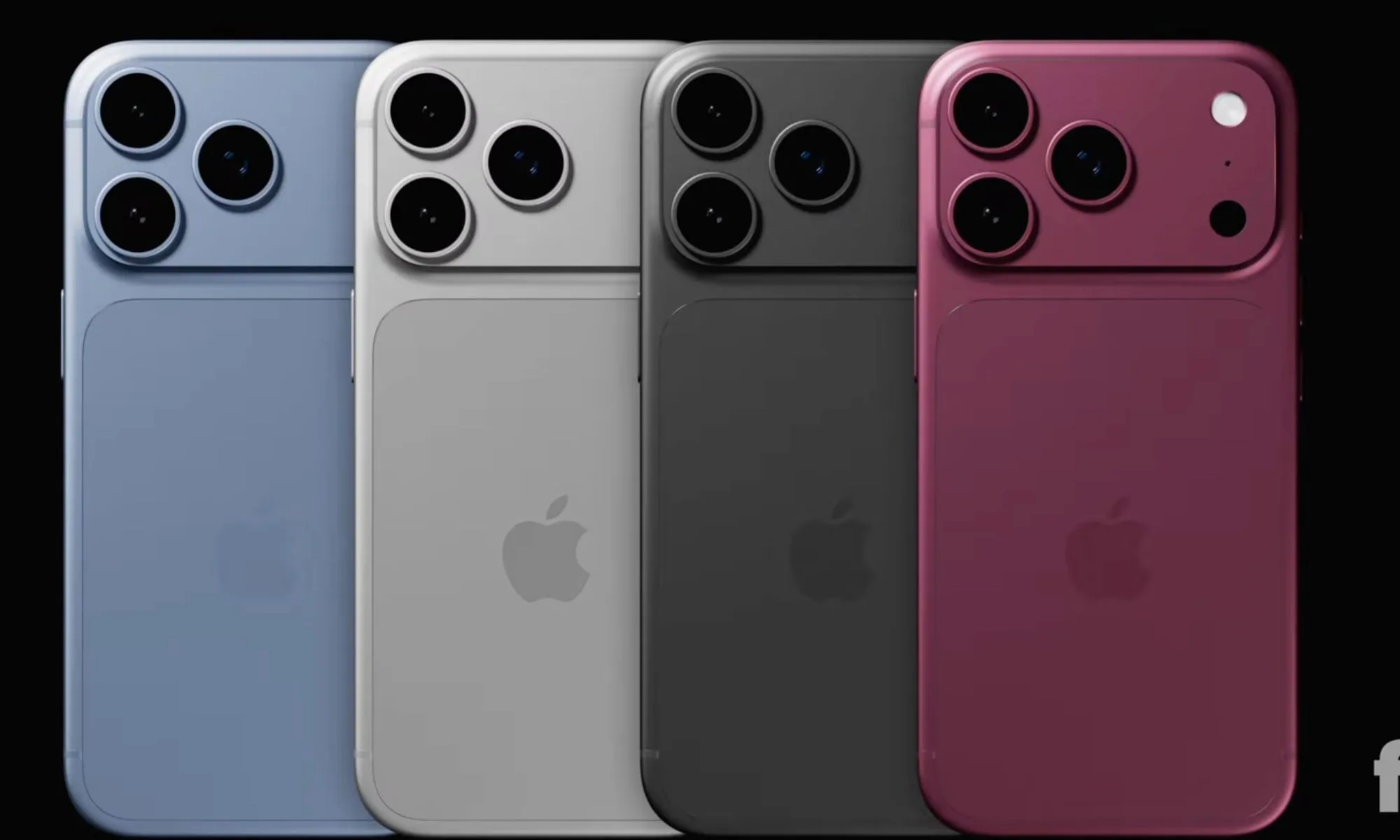
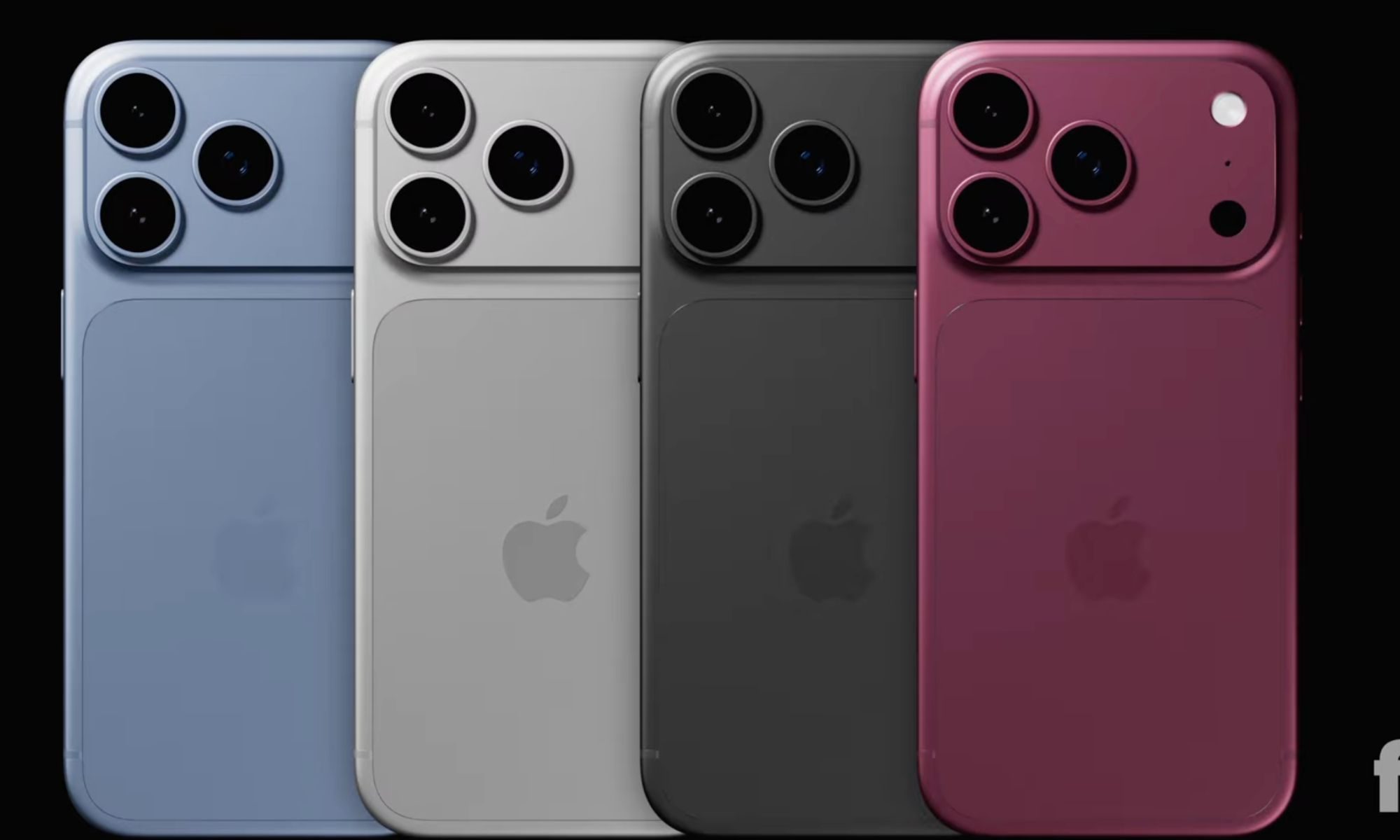
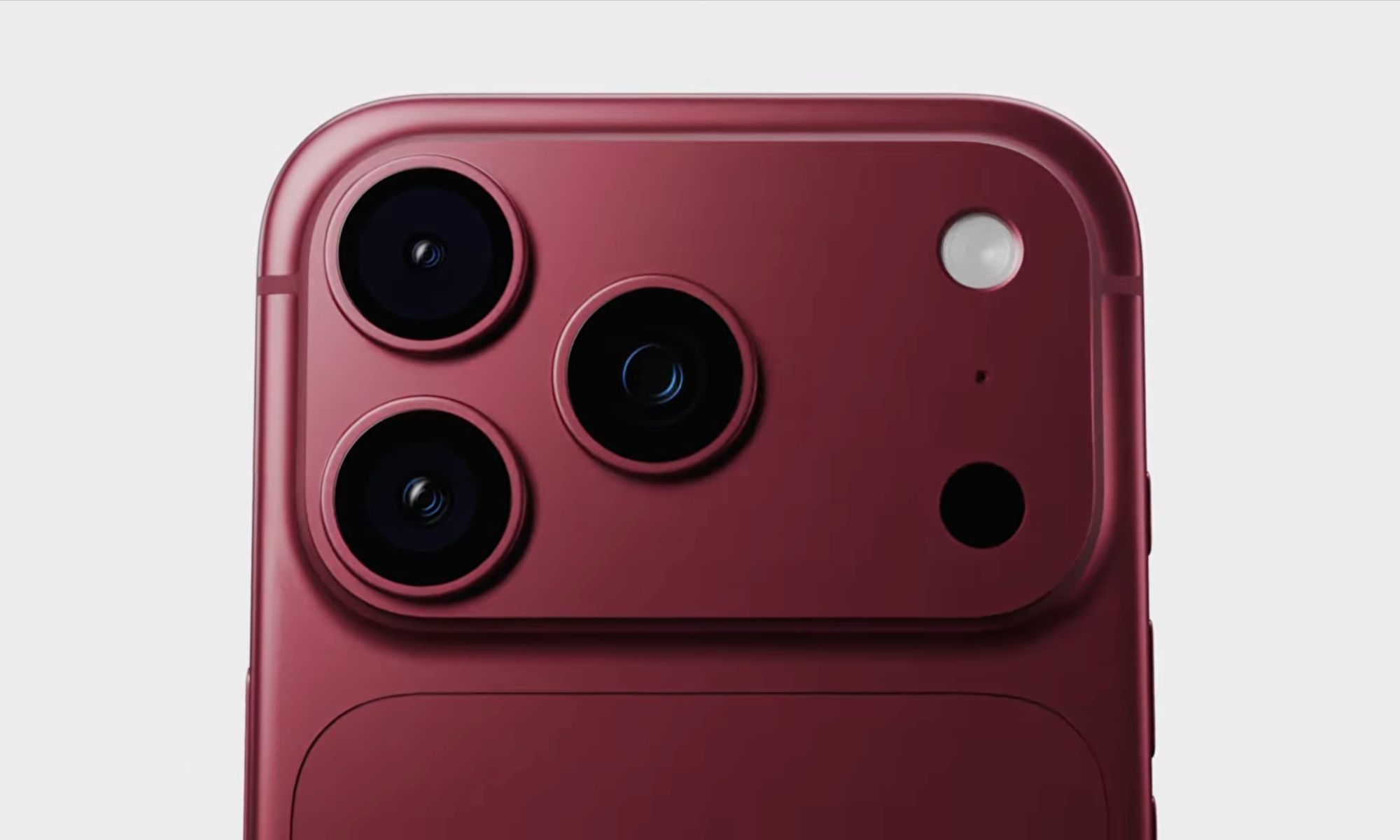
According to a new leak from Weibo tipster Instant Digital, the iPhone 18 Pro could launch in just three colors: Dark Cherry, Light Blue, and Silver-Gray. You see? Black or dark gray is not on the list.

So what exactly is being claimed here?

The three-color lineup would follow the same pattern as Apple’s iPhone 17 Pro. For those catching up, last year’s Pro iPhone launched with three options: Cosmic Orange, Deep Blue, and Silver, despite pre-launch rumors of up to five colors. 

This new leak suggests Apple may be doing it again. Instant Digital characterizes Dark Cherry as the standout marketing color, taking the role that Cosmic Orange plays in the current lineup. 

Light Blue might replace Deep Blue, and Silver-Gray would be similar to last year’s Silver, but with a potentially different shade (via 9to5Mac).

Advertisement

Is a three-color lineup actually confirmed?

Not quite. iPhone 18 Pro color rumors have shifted considerably this year. In February, a Deep Red finish was tipped as the phone’s signature color. In retrospect, it could be referring to the Dark Cherry shade.

In April, a separate leak pointed to four new finish options. For me, the lack of consensus means the colors haven’t been decided yet, though Instant Digital’s track record lends this claim some weight. 

Most recently, the drop-test footage of the iPhone 18 Pro surfaced on June 30 via a Tata Electronics data breach and showed the device in what appeared to be a gray colorway, which lines up with the Silver-Gray finish in the leak. 

The absence of black has become a running sore point for iPhone Pro customers. The iPhone 17 Pro was the first Pro model in recent years to skip black entirely, and it looks like there’s no relief in sight for the 18 Pro either.

Advertisement

Source link

Continue Reading

Trending

Copyright © 2025