

Business
EU border delays ‘not bearable’ over summer, warns airport boss


Under the EES system, digital records linked to passports track when “third country” nationals – including British and American travellers – enter and leave the so-called Schengen free movement zone, which includes 29 European countries.
However, Airlines UK and Airlines for America said the EES rollout had been inconsistent.
They added “with peak summer travel approaching and the system not yet working as it should, airlines need the commission and member states to get serious about contingency measures and take a pragmatic look at whether the current timeline is realistic”.
Steve Heapy, chief executive of Jet2, said his airline found “the continued pursuit of a policy so baffling – in cases where it has clearly not been implemented in a robust manner”.
He said allowing EES checks to be paused where systems were not ready would “result in a much better experience for holidaymakers”.
Von Massenbach said there had been a “very high level meeting in Brussels” on Wednesday, “and we see now that they start to understand that this is a situation that is not bearable, not bearable over the summer”.
Airports lobby group, ACI Europe, have written to EC president Ursula Von Der Leyen, claiming wait times at border control had now reached up to five hours in peak traffic periods, and things could worsen as the busiest time of the year approached.
It warned “airlines face half-empty planes at gate closing time, while passengers are stuck in border control queues”.
Countries do have the ability to suspend EES checks under some circumstances.
However, ACI Europe argued states needed to be allowed to pro-actively suspend the system if high volumes of passengers are expected.
An EC spokesman said that “all efforts are being made to limit the impact [of EES] on travellers from outside the EU”.
He said the impact was “limited” in “most” EU airports and where there were issues, member states had not been able to provide sufficient numbers of border guards, appropriate infrastructure and automated equipment.
He said the EC continued to offer support with the new system, and was willing to do even more “in view of the coming summer period”.

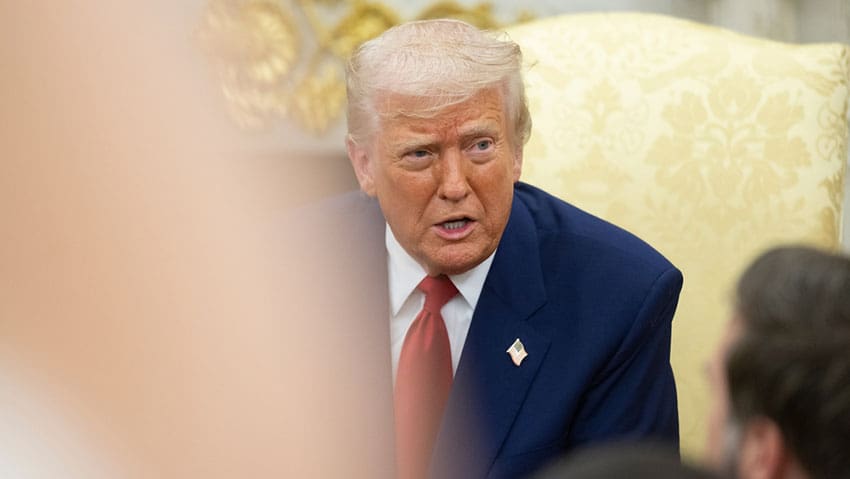
OpenAI is weighing up handing the US government a 5 per cent stake worth $43bn (£32bn) as Sam Altman moves to shore up relations with Donald Trump ahead of the ChatGPT maker’s blockbuster stock market debut.
The offer, first reported by the Financial Times, has been tabled in recent discussions with the White House as the company prepares for a $1tn flotation in New York, a listing that would rank among the largest in corporate history.
Trump has made no secret of his enthusiasm for the American taxpayer taking stakes in the leading AI developers, describing the prospect as a “beautiful thing” that would make the public rich. “There’s something very interesting about it, where it almost becomes a partnership with the American public,” he said last month. “You make them partners in this revolution. It would be a beautiful thing. It would make them rich.”
The logic behind the proposal is as much political as financial. Handing the public a direct interest in AI’s upside is seen as a way of blunting the growing backlash over the technology’s impact on jobs, a concern Altman himself has wrestled with publicly, and the relentless spread of energy-hungry data centres. Altman has previously floated the idea of a public wealth fund holding stakes in AI companies, and reports suggest he envisages rivals such as Anthropic, Google and Meta ceding similar holdings through a government vehicle.
OpenAI is currently valued at $852bn, putting a 5 per cent stake at roughly $43bn. Should the flotation hit its $1tn target, the government’s paper gain would be immediate, a point unlikely to be lost on a president who has boasted about the returns from Washington’s 10 per cent stake in Intel, taken last year at $9bn and now worth more than $60bn.
Quite where any OpenAI shares would sit remains up for debate. JD Vance, the vice-president, has said Trump favours a sovereign wealth fund, while others in the administration have suggested parking the holdings in “Trump accounts”, the investment accounts for children being established by the president. Bernie Sanders, the left-wing senator, has gone considerably further, arguing the public should own half of the AI companies outright.
The talks mark a striking shift in Washington’s posture. Having initially taken a hands-off approach to AI, the White House has become increasingly interventionist in recent months, blocking the release of Anthropic’s most powerful systems and forcing OpenAI to restrict access to its latest models, moves made against a backdrop of intensifying competition from China.
Anthropic, for its part, has proposed special taxes on the AI sector to fund a “digital dividend” for the public, a rather different route to the same political destination.
OpenAI, whose staff shared a $6.6bn payout in a secondary share sale last year, was approached for comment.

Jamie Young
Jamie is Senior Reporter at Business Matters, bringing over a decade of experience in UK SME business reporting.
Jamie holds a degree in Business Administration and regularly participates in industry conferences and workshops.
When not reporting on the latest business developments, Jamie is passionate about mentoring up-and-coming journalists and entrepreneurs to inspire the next generation of business leaders.


As Americans prepare to fire up their grills for the Fourth of July, they’re facing some of the highest beef prices on record.
Yet despite the sticker shock, demand for beef and steak are holding up.
Beef prices have surged after the U.S. cattle herd shrank to its smallest size in decades following years of drought, high feed costs and herd liquidation. The resulting supply crunch has driven up cattle prices and, ultimately, the cost of beef at grocery stores and on restaurant menus.
Cattle are herded in a stable on June 05, 2026 in Hamilton, Texas.
Brandon Bell | Getty Images
While prices eased slightly in May after reaching record highs in the spring, consumers are still paying near-record prices for ground beef and steaks. The average price of ground beef was $6.75 per pound in May, according to U.S. Bureau of Labor Statistics data, up nearly 13% from a year ago and just below April’s record high of $6.90. Beef steak prices averaged $12.80 per pound, up 16% from a year earlier and the second-highest level on record.
But so far, shoppers don’t appear willing to abandon their summer grilling traditions. The resilience offers another clue into consumer behavior at a time when investors are closely watching for signs of whether and where high prices are causing shoppers to pull back.
“We are seeing customer demand for steaks remain quite high, with a shift towards more premium and organic options,” a Kroger spokesperson told CNBC. “We’ve also seen beef continue to be a preferred choice during recent holidays, including Easter and Memorial Day.“
Beef has generated the largest dollar growth of any food category ahead of Independence Day, with sales rising roughly $352 million compared to last year, according to data from NielsenIQ.
“Consumers are entering the holiday with discipline, making more trips but with clear intent behind each one,” the consumer research firm said in a June report.
Steak and quality win
Cuts of beef are displayed at Handy Market on May 14, 2026 in Burbank, California.
Justin Sullivan | Getty Images
As demand for beef holds up, consumers have shown clear preferences within the segment.
NielsenIQ said consumers increasingly view steak as the centerpiece of special occasions: an “affordable luxury” where they’re willing to pay more for quality and the experience, while finding savings elsewhere when they shop for groceries.
The data also suggest consumers aren’t simply searching for the cheapest protein. Instead, many are placing a greater emphasis on quality.
Shoppers reported increasing favor toward quality claims such as USDA Prime (42%), no added hormones (40%), grass-fed (37%), and no antibiotics ever (36%) when purchasing meat, according to NielsenIQ.
“Shoppers are looking past the label and into the story behind the meat,” the firm said. “Claims tied to quality and sourcing are gaining ground as buyers seek confidence.”
The demand has also benefited others in the industry, like Omaha Steaks, which told CNBC that consumers continue to prioritize gifting steaks even as they cut back elsewhere.
“Customers are still celebrating dad with premium proteins, but they’re also being thoughtful about value and versatility,” said Nate Rempe, president and CEO of Omaha Steaks last month as Father’s Day approached.
The company said it has seen continued growth in its USDA certified tender top sirloin filet, a recently introduced value cut, with sales up 25% in the weeks heading into Father’s Day this year compared to 2025.
Restaurants have also reported seeing benefits from the dynamic. LongHorn Steakhouse, among others, has seen a rise in diners seeking out steaks.
“The guests know they’re getting high quality steaks when they come to LongHorn [Steakhouse],” said Rick Cardenas, CEO of the chain’s parent company Darden Restaurants. “They get a great value. And it doesn’t hurt that there’s a high beef inflation in the market. And so the relative value looks a little bit better.”
The key question for investors is how long the dynamic can last. Rebuilding the U.S. cattle herd could eventually increase beef supplies and ease prices, but that process takes years without the aid of imported supply.
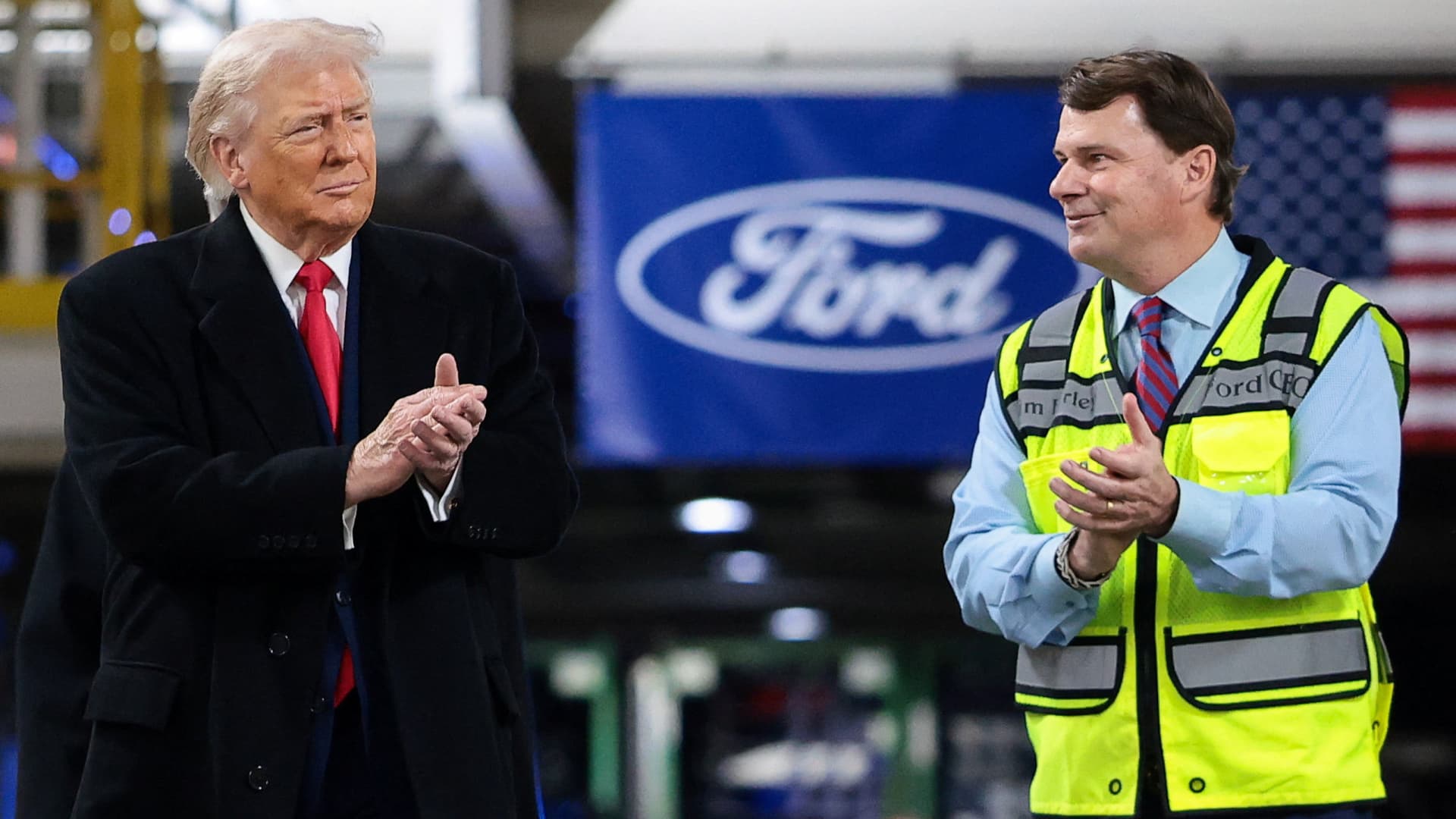
U.S. President Donald Trump and CEO of Ford Jim Farley clap, as President Trump visits a Ford production center, in Dearborn, Michigan, U.S., January 13, 2026.
Evelyn Hockstein | Reuters
DETROIT — As negotiations officially reopen for the USMCA North American trade deal, Ford Motor CEO Jim Farley is clear about what the automaker wants under the new talks: a more level playing field.
He told CNBC he wants automakers such as Ford that largely produce their vehicles domestically to be awarded under the deal. Along with that, Farley said other automakers — such as General Motors and Toyota Motor — that may produce here but also heavily rely on imported vehicles should get more penalties.
“It’s imperative that any new agreement makes it easier, not harder, to compete with U.S. makers who import from Japan, South Korea and global competitors that import from those locations,” Farley told CNBC during a phone interview Wednesday. “That’s the key for us.”
Producing in such countries is typically less expensive due to labor costs.
GM and Toyota are No. 1 and No. 2 in U.S. sales, respectively, while also being the top two importers of vehicles in 2025.
GM imported 1.17 million vehicles, or 41% of its U.S. sales, while Toyota imported more than 1.19 million units, or 47%, of its domestic sales, according to industry data.
Hyundai Motor, which plans to roughly double its amount of U.S.-produced domestic sales to 80% by 2030, was the largest importer of vehicles from South Korea, followed by GM.
Ford, meanwhile, reports it assembled more than 2 million vehicles in the U.S. last year — more than any other auto manufacturer, including 311,000 units for export to more than 60 international markets. It imported 378,000 vehicles, or 17%, of its 2.2 million sales last year.
“Ford’s a leader of U.S. auto production with the most U.S.-built vehicles but, more importantly, we import very few, and we export the most, and we have the most UAW [union] workers here,” Farley said. “So we’re very proud, especially of the ratio between what we build here and what we import.”
Farley’s comments come as the Trump administration has decided not to renew its trilateral trade pact with Canada and Mexico, instead opting to conduct annual reviews of the treaty that could eventually lead to an end to the agreement by 2036.
The auto industry represented about 18% of America’s trading with its neighboring countries last year, according to industry data, making it one of the key sectors in the discussions. Automakers and others watching the talks are concerned that reopening the deal could create additional trade uncertainty that leads to lower investments and fewer jobs.
A consortium of U.S. trade groups representing most automakers, dealers and suppliers on Wednesday voiced support for a trilateral deal like the countries currently have.
“We urge the leaders of the U.S., Canada, and Mexico to swiftly reach consensus on an extension of USMCA that preserves the existing trilateral partnership, returns to preferential treatment for qualifying goods, and continues the stability and predictability that has helped the industry thrive for the past six years,” they said in a statement.

Compass Point reiterates Applied Digital stock rating on data center milestone
Rosenblatt reiterates CoreWeave stock Buy rating amid Meta cloud reports


Dollar eases as yen gains ahead of US payrolls, chipmaker stocks struggle

OPINION: Michael Chaney and the board of Northern Star are pushing back as a US corporate raider raises the stakes.

For months, policymakers, businesses and trade watchers in Washington had been bracing for a turbulent spring and summer around the future of the USMCA, the trade pact binding the United States, Canada and Mexico.
But, to quote former UK Prime Minister Harold Macmillan, “Events, dear boy, events.” The war with Iran has dominated Washington’s attention, stripping away much of the political heat that was expected to surround the pact’s renewal.
Instead of a noisy fight over the agreement’s future, the USMCA has slipped into the background. The Iran conflict has absorbed the White House’s attention and, in practical terms, has become one of the best developments for keeping the trade pact out of the headlines.
Earlier this year, there were concerns the US might use the renewal window to force a confrontation with Canada and Mexico, or even threaten withdrawal. President Trump had already cooled on the deal he once signed, raising questions about how aggressively Washington would approach the next phase.
But with foreign policy dominating the administration’s agenda, the US has taken a more measured approach. It has confirmed it will not extend the agreement for another 16 years, while stopping short of more dramatic action.
Part of that restraint reflects a belief inside the administration that the trade relationship has already been reshaped.
US Trade Representative Jamieson Greer argues the White House’s tariff strategy has fundamentally altered North America’s economic ties, changing the balance with Canada and Mexico in ways that make a more confrontational approach unnecessary. But if trade does become more politically driven, the US auto industry could be the biggest loser.

Inside the Egg Price-Fixing Scandal That Spiked American Grocery Bills
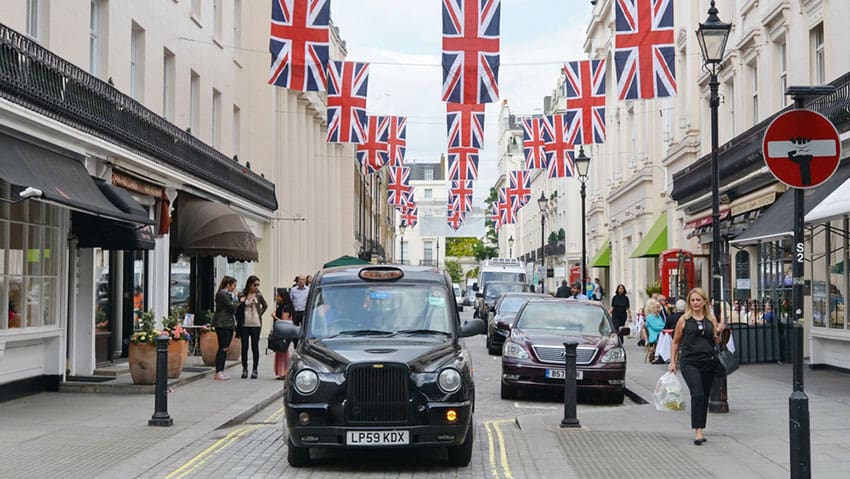
British households have taken the heaviest hit to their wealth of any advanced economy since the pandemic, a sobering benchmark for a country that once prided itself on rising prosperity.
The average Briton is now more than a fifth poorer than five years ago, according to UBS. Of the 37 countries the Swiss bank surveyed, none has seen a steeper decline.
Typical individual wealth has dropped by roughly £28,500 since 2020 once inflation is stripped out, leaving the median adult with assets of just over £95,500 last year. That makes the British marginally better off than the French, but poorer than the Dutch and the Italians, a ranking that would have seemed improbable a decade ago.
Wealth here is measured by the value of assets such as property and shares, and it has been eroded at pace after inflation surged in the wake of the pandemic and Russia’s invasion of Ukraine. Britain absorbed a worse inflation shock than most of its peers as energy costs jumped, a squeeze that continues to shape the wider picture on living standards.
A cooling housing market has deepened the slump. Remarkably, British families have fared worse over the past five years than households in Turkey, Bulgaria, Mexico and Kazakhstan.
The UBS findings underline the scale of the task facing Andy Burnham as he prepares to become the next prime minister. In his first major speech since returning to the Commons, the MP for Makerfield said this week: “We cannot go through another decade like the one we have just had. We need a new determination to raise the living standards of every person in this land.”
Separate figures from the Office for National Statistics, published on Tuesday, showed that Sir Keir Starmer had failed to deliver on his pledge to improve living standards, with families now worse off than they were before he entered Downing Street.
The UBS data show the wealth of a typical individual has tumbled by more than 23 per cent on both the mean and median measures since 2020, ground down by a spike in inflation that peaked at 11.1 per cent in October 2022.
Paul Donovan, chief economist at UBS Global Wealth Management, said: “The UK had a brief period of notably higher inflation than Europe did, and that has distorted the real numbers. You had a couple of years of quite high inflation, partly because of the various peculiarities of our energy pricing structure.”
The housing market has added to the strain. UK house prices have risen by 26 per cent since the start of 2020, according to the ONS House Price Index, but consumer prices have climbed by 32 per cent over the same stretch, meaning the real value of the money tied up in the typical home has been quietly whittled away.
Donovan added: “There is a considerable weight to real estate as a form of wealth because it is the largest asset that most people own. A change in the relative performance of your local real estate market can have a notable bearing on, in particular, the median wealth level over time.”
The fall in wealth has landed alongside incomes that have struggled to keep up with prices, a double squeeze on households. At the same time, the tax burden is set to climb to its highest level since the Second World War, driven in part by the long freeze in income tax thresholds, an issue explored in Business Matters’ coverage of Britain’s record property tax burden.
The picture is not uniformly bleak across the globe. The biggest gains came in South Korea, where average wealth rose 55 per cent, along with Russia and Croatia. Among G7 economies, the largest rise was in Japan, where median wealth climbed 51 per cent.
The data arrived as the Institute of Directors said business confidence fell again in June. Anna Leach, the group’s chief economist, said it pointed to an urgent need for ministers to back economic growth.
“Businesses need to see meaningful improvements in areas like regulatory cost, tax complexity and swiftness and consistency of government decisions to fundamentally unlock spending and get growth going,” she said.
A Treasury spokesman was more upbeat: “We have the right economic plan. Inflation is holding steady, the UK led G7 growth at the start of the year, and the IMF and OECD have both upgraded growth forecasts. Real wages have risen more in the last year than in the first ten years of the previous government.” That claim of steadier prices chimes with the latest ONS inflation reading, though for many households the damage to accumulated wealth has already been done.
Jamie Young
Jamie is Senior Reporter at Business Matters, bringing over a decade of experience in UK SME business reporting.
Jamie holds a degree in Business Administration and regularly participates in industry conferences and workshops.
When not reporting on the latest business developments, Jamie is passionate about mentoring up-and-coming journalists and entrepreneurs to inspire the next generation of business leaders.

The Future of Borderless Finance

Risa Sato joins Akari ahead of new season

Dyson’s First Handheld Fan Could Be a Heat Wave Savior, but There Are a Few Cons


-

 Fashion6 days ago
Weekend Open Thread: Staud – Corporette.com
-

 Politics6 days ago
The House | Manchesterism won’t survive the painful trade-offs unless it gets citizens on board
-

 Crypto World2 days ago
Strategy authorizes up to $1.25B in Bitcoin sales under new capital plan
-

 Politics6 days ago
Potential 2028er World Cup attendee leaderboard
-

 Business6 days ago
Asia stock markets slide as tech shares slump
-

 News Videos4 days ago
MAJOR BITCOIN & MARKET UPDATE!!!! (MUST WATCH ASAP!!!)
-

 Tech7 days ago
A Look At A Gaggle Of Transputer Boards
-
 Crypto World7 days ago
Dell (DELL) Shares Tumble Over 5% Following Analyst Downgrade to Hold
-

 Crypto World5 days ago
Coinbase, Circle Deepen Crypto Stock Losses Despite Resilient S&P 500
-

 Business2 days ago
Australia treasurer says alleged access of prime minister’s bank data ’incredibly concerning’
-

 Crypto World5 days ago
Kraken's xStocks Opens Bending Spoons IPO Registration to EEA Retail
-

 Sports6 days ago
FIH Pro League: India defeat Pakistan 7-1, register biggest win of campaign | Other Sports News
-

 Tech2 days ago
Anonymous researcher drops 0-day ‘exploitarium’ repo
-

 Crypto World6 days ago
Bitcoin Sparks $600M Hourly Liquidations With $65,000 Set To Become Resistance
-

 Tech4 days ago
Bluekit phishing kit adopts browser-in-the-middle for login theft
-

 Tech5 days ago
Russian hackers now target Signal backup recovery keys
-
 Crypto World6 days ago
Hyperliquid Named on Singapore MAS Investor Alert Register
-

 Crypto World6 days ago
RTX holders must register wallets before token distribution begins
-

 Sports24 hours ago
Broncos roster: OL Ben Powers (No. 74) entering final year of contract
-
 Business3 days ago
The AI boom won’t burst all at once. It will pop in ‘rolling bubbles’: Macquarie
You must be logged in to post a comment Login