

Crypto World
SBI Crypto Shuts Down Bitcoin Mining Pool Operations

SBI Crypto, a cryptocurrency-focused division of Japanese financial conglomerate SBI, is shutting down its Bitcoin mining pool after a five-year run.
The company announced Wednesday that it will end mining pool operations on July 31 and will stop accepting mining shares at the same time. It did not provide its rationale for closing the pool.
SBI Crypto said miners should keep directing hashrate to the pool until the cutoff so final payouts can be calculated correctly before operations end. “We would sincerely appreciate your continued support by mining with us until the final day of operation,” it said.
The shutdown marks the end of one of Japan’s better-known corporate mining pool operations and is the latest sign of SBI’s intentions to expand its broader cryptocurrency strategy beyond mining.
SBI Crypto’s BTC mining pool ranks No. 12 globally
SBI Crypto launched its Bitcoin mining pool in March 2021, entering a market that at the time was dominated by operators such as Poolin, F2Pool and Binance Pool.
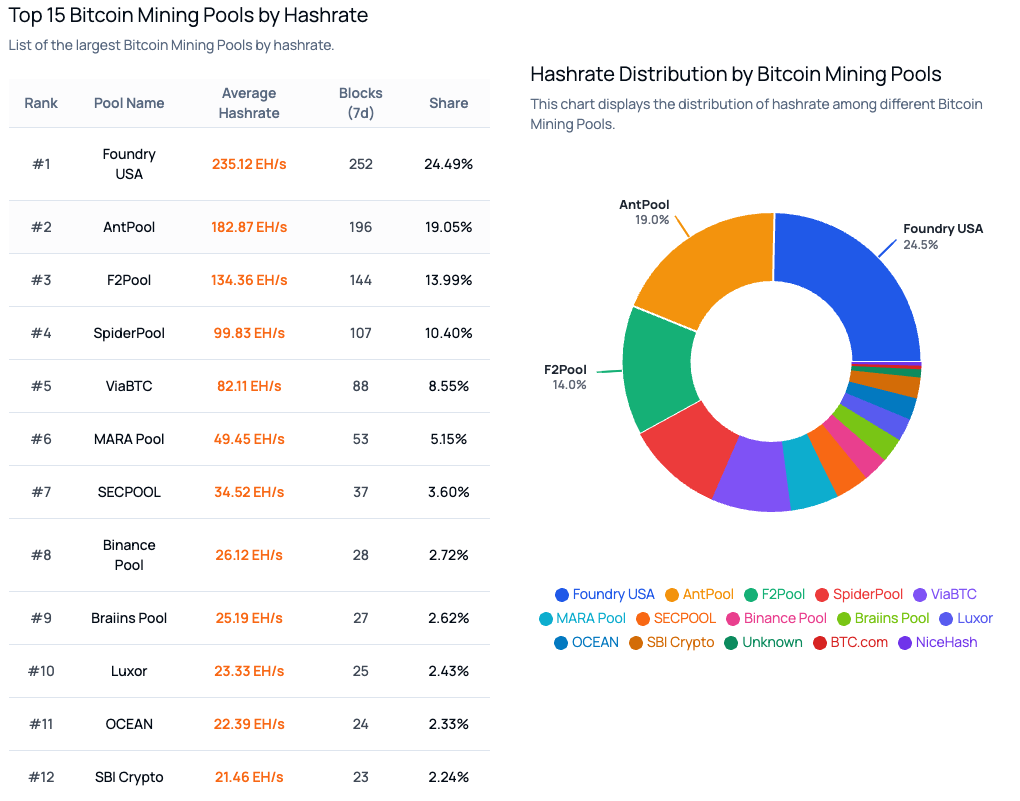
Data from SimpleMining shows SBI Crypto currently ranks as the 12th largest Bitcoin mining pool globally, with about 21.46 exahashes per second (EH/s) of hashrate and roughly 2.24% of total Bitcoin network share.
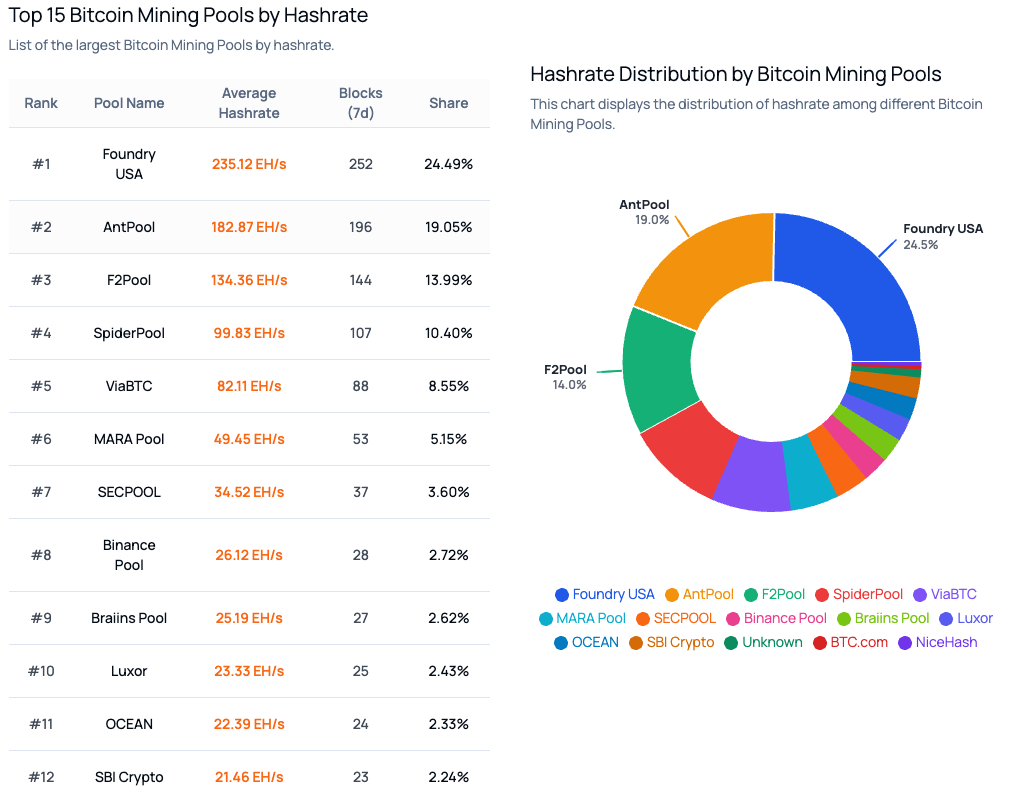
Source: SimpleMining
That places it far behind leaders like Foundry USA, which controls about 24.49% of the network, and AntPool at around 19.05%. Mid- and lower-tier mining pools such as ViaBTC and MARA Pool account for about 8.55% and 5.15% of the global Bitcoin mining hashrate, respectively.
Miner migration to alternative pools
SBI Crypto directed miners toward several alternative Bitcoin mining pool operators as it prepares to shut down its service, including Braiins, Luxor and NeoPool.
Among them, Braiins and Luxor are established mid-tier mining infrastructure providers, each controlling around 2%-3% of global Bitcoin hashrate, according to SimpleMining data. NeoPool is not included in the top-ranked pools by hashrate.
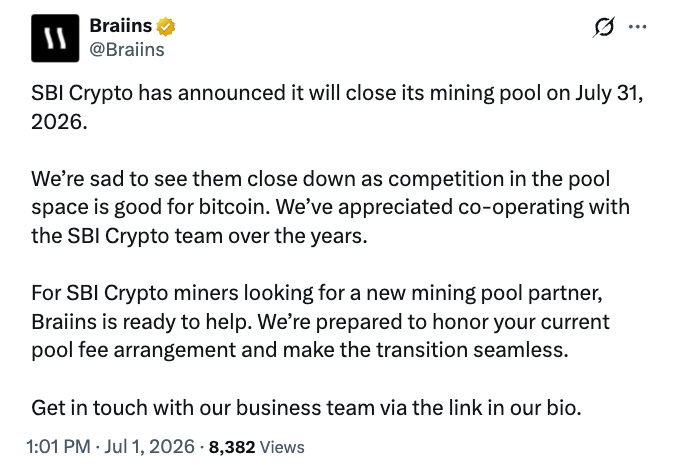
Source: Braiins
“Some operators may offer special programs or preferential conditions for clients transitioning from SBI Crypto,” the company said, adding that customers are encouraged to contact each operator directly for details.
Related: Bitcoin mining difficulty drops 10% in 11th largest downward adjustment
The shutdown comes as SBI Holdings continues to expand its broader cryptocurrency strategy beyond mining.
The company recently agreed to acquire full control of crypto exchange Bitbank in a 46.7 billion Japanese yen ($289 million) deal, aiming to create Japan’s largest cryptocurrency exchange.
SBI has also been increasing its focus on stablecoins, backing JPYSC, a new trust bank-backed Japanese yen stablecoin, and supporting Ripple’s rollout of the Ripple USD (RLUSD) stablecoin in Japan.
Magazine: Bitcoin miners are pivoting to AI, so why is the hashrate near ATHs?



Bitcoin has climbed while oil has dropped to a 125-day low after progress in U.S.-Iran negotiations and weaker-than-expected U.S. jobs data boosted risk appetite across financial markets.
Summary
- U.S.-Iran talks in Doha showed positive progress, sending oil to a 125-day low as both sides agreed to resume negotiations on July 18.
- Bitcoin gained about 2.5% after easing geopolitical tensions and weaker-than-expected U.S. jobs data reduced Fed rate hike expectations.
- Bitcoin is approaching the key $62,500 resistance, where a long-term descending trendline aligns with the 50% Fibonacci retracement.
According to Pakistan’s Ministry of Foreign Affairs, indirect talks between U.S. and Iranian negotiators concluded in Doha with mediation from Qatar and Pakistan, producing what the ministry described as “positive progress.”
The ministry said both sides agreed to resume negotiations after the funeral of former Iranian supreme leader Ali Khamenei, with July 18 indicated as the target date for the next round.
The diplomatic update followed comments from President Donald Trump, who wrote on Wednesday that the U.S.-Iran talks had been “going well” and that Iran’s denuclearization process was progressing.
As previously reported by crypto.news, Trump’s remarks had already improved investor confidence before the official confirmation from Pakistan.
Oil slides as geopolitical tensions ease
Energy markets reacted quickly after signs that negotiations would continue. West Texas Intermediate crude fell to $67.34 per barrel, while Brent crude declined to $70.39. WTI also slipped below $67.50 for the first time in 125 days, trading beneath the level seen before the U.S. launched strikes against Iran.
The move extended oil’s decline from above $100 in May, with prices breaking through several support areas around $70, $67.50 and now $67. Gasoline prices have also fallen by roughly 70 cents over the past month, adding to expectations that easing geopolitical tensions could continue to weigh on energy markets if negotiations advance further.
Although negotiators have not reached a final agreement, the scheduled July 18 meeting gives markets a window of relative stability to assess diplomatic progress. Analysts cited in the original report cautioned that negotiations remain incomplete, meaning any setback could quickly change investor sentiment.
Bitcoin targets key resistance after jobs data
Crypto markets strengthened alongside the decline in oil prices, with Bitcoin rising about 2.5% over the past 24 hours to trade near $61,542. The rally also gained support after weaker-than-expected U.S. labor market data reduced expectations that the Federal Reserve would deliver another interest rate hike this year.
According to the U.S. Bureau of Labor Statistics, the U.S. economy added 57,000 nonfarm payroll jobs in June, well below economists’ forecast of 115,000. The agency also revised May’s payroll growth lower by 43,000 jobs, ending a three-month period in which employment gains had consistently exceeded expectations. Meanwhile, the unemployment rate came in at 4.2%, slightly below the expected 4.3%, indicating that hiring slowed while the labor market remained relatively resilient.
On the technical side, Bitcoin has climbed about 2.5% over the past 24 hours to trade near $61,542 at press time. As previously reported by crypto.news, Bitcoin is approaching a decisive technical level near $62,500, where a long-standing descending trendline meets the 50% Fibonacci retracement drawn from the June 15 high to the July 1 low.
As per the report, a move above both the trendline and horizontal resistance would break the pattern that has defined the market over the past month, while failure to reclaim that area could leave the recent corrective structure intact as investors continue watching both the July 18 diplomatic talks and incoming U.S. economic data.

TLDR
- Robinhood CEO Vlad Tenev said crypto’s future growth depends on real-world assets rather than memecoins.
- Robinhood launched Stock Tokens to let eligible users trade tokenized equities around the clock.
- Tenev said tokens need underlying utility to become productive assets in financial markets.
- Robinhood plans to connect tokenized equities with DeFi lending pools and collateral use.
- Tenev said traditional financial rails will eventually move onchain through tokenization.
Robinhood CEO Vlad Tenev said crypto’s next growth phase depends on real-world assets, not speculative memecoins. His comments followed Robinhood’s launch of Stock Tokens for eligible users. The product expands tokenized equities trading and supports the company’s wider onchain finance strategy.
Robinhood Pushes Tokenized Real-World Assets
Tenev told CNBC that real-world assets will define crypto’s future. He said assets need underlying utility to become productive. He also questioned the value of creating many memecoins.
“The future of crypto is in real-world assets,” Tenev said. He added that tokens without utility lack productive value. Therefore, Robinhood wants tokenized finance tied to existing market assets.
Robinhood launched Stock Tokens on Wednesday for eligible users. The service allows 24/7 trading of tokenized equities. It also supports plans for lending pools and trading collateral.
Bitcoin Weakness Contrasts With Robinhood’s RWA Push
Bitcoin traded at $61,601.41 on Thursday morning. The asset fell 30% year to date as broader crypto markets weakened. Meanwhile, Tenev pointed to real-world assets as a stronger growth driver.
The crypto market has lost about $1 trillion in value this year. However, Robinhood sees tokenization as a bridge between crypto and markets. Tenev said real-world assets can move traditional products onto blockchain rails.
He said Bitcoin would not lose relevance despite current market pressure. Yet he argued crypto’s next phase needs more than major tokens. As a result, real-world assets remain central to Robinhood’s expansion plan.
Ethereum and DeFi Fit Robinhood’s Tokenization Plans
Ethereum also declined this year as major digital assets faced pressure. Still, DeFi remains important to Robinhood’s tokenization roadmap. The company plans to use tokenized shares in lending pools.
Robinhood wants users to deploy tokenized equities as collateral. That plan could connect real-world assets with broader DeFi trading systems. It also shows how tokenized products may support market activity.
The company is also exploring exposure to private companies like OpenAI. This move would extend real-world assets beyond public equities. Tenev said traditional rails will eventually move onchain through tokenization.
Wall Street Adoption Supports the Onchain Shift
Institutional adoption has become a bright area for the crypto industry. Wall Street firms and payments companies now test blockchain systems. Many of those efforts focus on tokenized real-world assets.
Tenev said crypto is becoming infrastructure for financial markets. “Everything that is running on traditional rails will eventually become onchain,” he said. He called tokenization “a freight train that can’t be stopped.”
Robinhood started as a retail stock trading app. However, it now uses tokenized real-world assets to expand its crypto business. Its latest launch strengthens its push into onchain market infrastructure.

Bitcoin rebounded on Wednesday as attention turned to Federal Reserve commentary on stubborn inflation. The move came alongside a rise in US Treasury yields—an environment that typically makes investors more selective about assets that don’t provide ongoing yield, including cryptocurrencies.
Still, the bounce does not appear to have fully erased underlying caution. Bitcoin recently traded near $61,490 after dipping to a 21-month low of $57,737, while institutional flows into spot Bitcoin ETFs have remained under pressure and analysts continue to debate whether recent weakness marks a durable bottom.
Key takeaways
- Bitcoin climbed after remarks tied to persistent US inflation, but higher bond yields reinforce why “non-yield” assets face ongoing scrutiny.
- Bitcoin bounced from a 21-month low, yet broader sentiment remains in “Extreme Fear” territory based on a fear/greed tracker.
- Spot Bitcoin ETFs have seen large outflows in recent weeks, with June reported as the worst month since launch for net withdrawals.
- On-chain and chart-based signals cited by analysts suggest the market may not have reached a bear-market bottom if price stays below longer-term benchmarks.
- Crypto liquidity and leverage look thinner heading into Q3 after Q2 liquidations, potentially dampening forced-selling cascades but increasing price swing risk.
Fed inflation focus meets a rate backdrop that still pressures crypto
Bitcoin’s recovery followed remarks linked to persistent inflation, reported through coverage of US Federal Reserve Chair Kevin Warsh’s comments. The positive reaction was tempered by the broader macro picture: the US five-year Treasury yield reportedly rose to 4.22%, reflecting investor demand for higher returns on government bonds.
In the same window, oil prices fell—WTI reportedly touched a four-month low—yet market participants still anticipate eventual monetary expansion. The key tension for crypto is that, regardless of how the Fed ultimately handles interest rates or balance-sheet policy, Treasury issuance and yields influence the opportunity cost of holding assets without yield.
BTC rebounds from $57,737 low, but “Extreme Fear” persists
At the time of publication, Bitcoin was trading around $61,490 after earlier trading as low as $57,737 on Wednesday, according to the same market coverage. Ether and Solana also posted gains, with ETH up about 3% and SOL up roughly 4.85%.
However, the rebound took place under an unusually cautious market mood. A fear and greed sentiment tracker cited in the coverage placed the crypto market at roughly 11 out of 100—labeled “Extreme Fear.” That matters because extreme caution can support sharp rallies, but it also suggests many investors remain positioned for downside risk rather than confident recovery.
From a longer perspective, the article noted Bitcoin remains down about a third since the start of the year, and the institutional picture has not improved. Reported flows show US spot Bitcoin ETFs experiencing significant withdrawals, including a total outflow of $4.5 billion in June—described as the largest since the ETFs launched. When institutional allocation confidence lags during a bounce, traders often treat rallies as fragile until inflows return.
PlanB: June weakness and 200-week levels imply the bottom may not be in
Beyond sentiment and ETF flows, at least one widely followed analyst argued the market has more room to fall. PlanB, referenced in the coverage, warned that Bitcoin could drop further after closing June below its 200-week moving average while still trading above its realized price.
The specific setup highlighted is that Bitcoin ended June 20.5% lower to close at $58,526—its worst monthly performance since June 2022. The same coverage placed that close below the 200-week moving average near $62,000, while still above a realized price figure around $52,000.
“All previous bear market bottoms were below realized price,” PlanB said, according to a post attributed to the analyst.
The article further cited PlanB adding that Bitcoin could still decline toward $52,000, framing the current price relationship to those two benchmarks as evidence the bear-market bottom may not yet be confirmed. For traders and portfolio managers, the practical takeaway is that technical “bounce” narratives may remain vulnerable if realized-price confirmation is not reached and ETF outflows continue to weigh on demand.
Sharplink restarts ETH accumulation, while leverage resets change Q3 dynamics
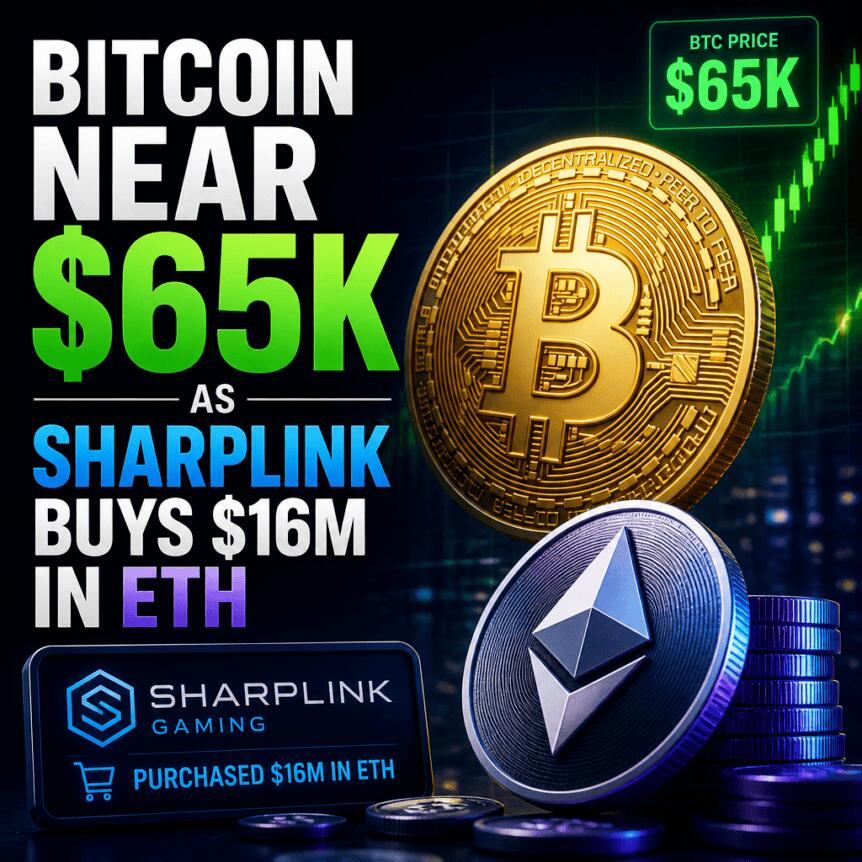
While Bitcoin-focused signals leaned cautious, one notable development in Ethereum accumulation came from Sharplink, a crypto treasury company. The coverage states Sharplink resumed buying Ether after an eight-month pause, and that it purchased $16 million worth of ETH since June 25.
On-chain data from Arkham cited in the report showed Sharplink buying 5,000 ETH on June 25 and another 5,000 ETH on June 26, with the report noting those amounts were worth about $8.5 million per day at the time of the purchases. The company also confirmed the buys in an announcement, saying it paid an average price of $1,611 per ETH.
The same coverage said Sharplink’s latest buys bring its total Ether holdings to 866,725 ETH, and quoted the company’s position that the purchases reflect a continued commitment to growing its ETH treasury as a long-term reserve asset.
Liquidity and positioning are also becoming a key story as markets move into Q3. A market update from institutional data provider Talos, cited in the article, described thinner liquidity but less leverage after Q2. According to Talos, Bitcoin and Ether long liquidations totaled $8.35 billion in Q2—an episode that coincided with spot Bitcoin ETF outflows, reduced Bitcoin buying by Strategy, and a contraction in stablecoin supply.
Talos’ framework suggests the deleveraging may reduce the likelihood of a forced-selling chain reaction heading into Q3. Yet the firm also warned that reduced order-book depth can weaken the market’s ability to absorb renewed selling pressure. In other words: the market may be less fragile in one sense, while simultaneously becoming more prone to sharper swings because there is less trading activity to buffer large orders.
What to watch next as macro pressure and positioning collide
With bond yields still elevated, ETF outflows still shaping institutional demand, and liquidity thinner after Q2’s deleveraging, the next moves in Bitcoin may hinge on whether buying interest returns alongside improved market depth—or whether rallies fade into another test of longer-term technical levels. Investors and traders should watch ETF flow data, Treasury yield direction, and whether stablecoin supply and order-book depth continue to shift as Q3 unfolds.
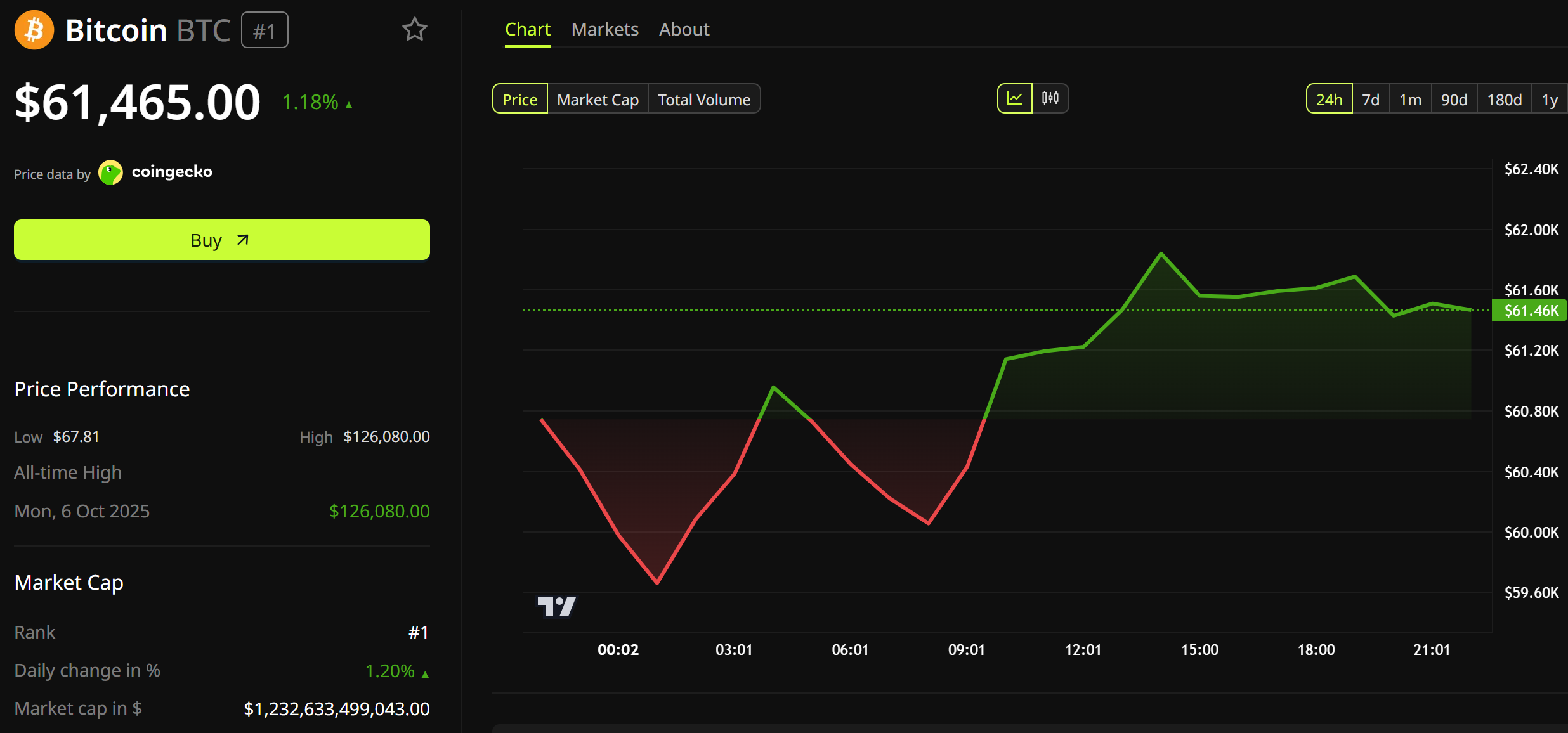
Bitcoin (BTC) nearly topped $62,000 on Thursday after US payrolls grew by just 57,000 in June, roughly half of what economists expected. The miss revived Federal Reserve rate cut hopes and forced bearish traders to exit crowded short positions.
The rebound arrived days after Bitcoin closed its worst month since June 2022, a 20.5% drop. Whether the bounce extends to $70,000 now hinges on Fed policy, ETF flows, and whale activity on exchanges.

Weak Jobs Data Explains Why Bitcoin Jumped towards $62,000
The Bureau of Labor Statistics counted 57,000 new jobs for June, far below the 113,000 consensus. According to the report, April and May payrolls were also revised down by a combined 74,000, while labor force participation slid from 61.8% to 61.5%.
Consequently, traders cut the odds of further Fed rate hikes and rotated back into risk assets. The data also landed a day after Fed Chair Kevin Warsh said inflation risks had eased, remarks that helped Bitcoin reclaim the $60,000 level on Wednesday.
Derivatives amplified the move. Roughly $450 million in crypto short positions were liquidated within 24 hours, CoinGlass data shows, as bears rushed to cover.
Bitcoin now trades near $61,465, up 1.18% over 24 hours, but even so, BTC sits 51% below its October 2025 record of $126,080 and down 44% over the past year.
ETF Outflows and Whale Deposits Cloud the Road to $70,000
Institutional demand has not confirmed the bounce. Spot Bitcoin ETFs posted $294 million in net outflows on Wednesday, market data shows, even as prices climbed. The redemptions extended June’s record $4.5 billion exit, the products’ worst month on record.

Sentiment is thawing nonetheless. CoinMarketCap’s Fear and Greed Index improved from Extreme Fear to Fear.

Similarly, Tiger Research said it has turned more constructive, arguing the market is likely in the final stage of its bear cycle.
In contrast, however, CryptoQuant flagged fresh warning signs on exchanges.
“Bitcoin is testing $60K support, and exchange deposits are flashing warning signs. BTC inflows jumped above 50K/day, ETH inflows spiked above 1.25M, and altcoin deposits hit a two-month high. Whales appear to be leading the move. Incoming volatility,” the analysts wrote in a post.
The firm added that the average deposit size doubled from 1 BTC to 2 BTC, a pattern driven by whales rather than retail. Its warning follows deepening capitulation signals tracked across on-chain data this week.
Historically, similar deposit spikes preceded sharp moves, including June’s slide when Bitcoin fell to $58,000. A failure to hold $60,000 could expose the realized price near $53,000, which CryptoQuant calls the key on-chain valuation floor.

A sustained push to $70,000 likely requires ETF flows to turn positive and July’s FOMC meeting to validate rate cut bets.
Until then, reclaiming the 20-day EMA remains the first test for bulls, while $60,000 stays the line the whole market is watching.
RSI Rebound Suggests Selling Pressure Is Fading
The daily Relative Strength Index (RSI) has climbed to 43.76, holding above its signal line at 35.59. The indicator bottomed near oversold territory in mid-June, and its recovery suggests bears are losing control.
A push above 50 would confirm the shift, especially if the broader market keeps climbing.
BTC faces a resistance cluster at $62,000, reinforced by the 20-day EMA at $62,148 and Parabolic SAR at $62,523. A daily close above it could send the price toward the 50-day EMA near $66,200, a 7.7% gain.

However, record ETF outflows may cap demand, even as long-term models point higher. Rejection here risks a retest of $58,115, and losing that floor would invalidate the recovery.
The post Why Bitcoin Jumped towards $62,000 and What Could Carry It to $70,000 appeared first on BeInCrypto.


Robinhood shares have climbed more than 6% after multiple Wall Street firms reaffirmed bullish ratings and projected further upside as the brokerage expands its global business and AI offerings.
Summary
- Robinhood shares rose over 6% as Wall Street firms reiterated Buy ratings and projected upside to $135.
- Analysts cited global expansion, AI-powered products, and crypto initiatives as key drivers of future growth.
- Robinhood expanded into Canada, the UK, and Singapore while launching its blockchain and AI trading features.
According to recent research notes from Piper Sandler, BTIG, and Mizuho, confidence in Robinhood’s long-term growth story has strengthened even after the stock’s strong rally. According to Yahoo Finance data, shares briefly traded above $115 after the Wall Street opening bell, extending their monthly gain to about 31% as investors responded to a series of new product launches and international expansion plans.
Piper Sandler maintained its Buy rating and kept a $135 price target on Robinhood, suggesting the stock still has room to appreciate. BTIG also reiterated its Buy recommendation with a $125 target. Meanwhile, Mizuho raised its target price to $130 from $115 while maintaining a Buy rating, making it one of the latest firms to increase expectations for the brokerage.
Global expansion continues to support Robinhood’s growth story
Mizuho’s latest research note argued that Robinhood could become the first true “hyperscaler” among online brokerage platforms. The firm pointed to Robinhood’s base of more than 27 million funded accounts, its easy-to-use trading platform, and its popularity among younger investors as reasons for its positive outlook.
The brokerage also believes Robinhood’s opportunity extends well beyond the United States. According to Mizuho, the company is expected to deepen its presence across Europe before eventually expanding further into Asian markets.
Recent announcements from Robinhood have added support to that outlook. The company said it now serves more than 1 million funded customers in Europe while confirming plans to launch Robinhood Crypto in the UK as part of its regional expansion.
Outside Europe, Robinhood officially introduced its crypto platform in Canada with zero trading fees for the first 90 days. The company also disclosed that it had secured a brokerage license in Singapore, giving it another foothold in the Asian market.
AI products and blockchain strategy attract fresh investor attention
Alongside its international rollout, Robinhood has continued expanding its technology offerings. The company recently introduced Robinhood Chain, a blockchain network designed to support AI-assisted token swaps, liquidity discovery, and access to tokenized real-world assets.
The blockchain launch followed the rollout of Robinhood’s Agentic trading tools, which use artificial intelligence to help users analyze markets and manage investments. According to the company, those AI-native features have gained traction among traders since their introduction.
The combination of blockchain infrastructure, AI-powered products, and expansion into new markets has coincided with stronger optimism from Wall Street analysts. Their latest forecasts suggest these initiatives could open additional revenue streams while helping Robinhood diversify beyond its traditional retail brokerage business.
Even with analysts maintaining bullish targets, short-term trading could still be affected by broader market volatility. For now, however, brokerage firms including Piper Sandler, BTIG, and Mizuho continue to argue that Robinhood’s international expansion, growing crypto business, and investment in AI technology provide a favorable foundation for further growth in the months ahead.

Michael Saylor’s Strategy has long served as the dominant corporate force behind Bitcoin buying, but that may be changing.
Bitwise Chief Investment Officer Matt Hougan believes that the company will play a much smaller role in driving the crypto asset’s demand in the next market cycle.
Next Wave of BTC Buyers
In his latest market analysis, Hougan said that Strategy’s role in the Bitcoin market has changed after the company adopted a new framework for STRC, which allows it to periodically sell the crypto to fund dividend obligations. While Hougan acknowledged that he does not expect Strategy to become a major BTC seller, he did say that the company could now buy or sell the crypto depending on market conditions rather than acting as a constant source of demand.
He added that there is no mechanism forcing Strategy to sell more than a few billion dollars’ worth of Bitcoin annually, and if the crypto asset’s prices recover, the exec still expects the company to remain a net buyer. Even so, Hougan said Strategy is unlikely to carry the same market influence it did during the previous cycle.
Instead, he expects institutional investors to emerge as the dominant force behind Bitcoin accumulation. Looking at BTC’s history, Hougan said market leadership has repeatedly shifted between different groups of buyers, moving from cypherpunks to Asian investors, then US retail participants, followed by the Grayscale Investments Bitcoin Trust and later Strategy.
The Bitwise CIO now believes the next phase will be led by institutions with significantly larger pools of capital. These include global banks, asset managers, pension funds, endowments, sovereign wealth funds, and financial advisers. According to him, this transition is already underway.
For instance, Morgan Stanley has launched proprietary Bitcoin ETFs, while Wells Fargo has started adding BTC exposure to model portfolios. He also highlighted that Texas became the first US state to fund a strategic BTC reserve, while several sovereign wealth funds and sovereign banks either already hold the crypto asset or have begun evaluating allocations.
Despite Bitcoin ETF outflows during 2026, Hougan noted that the products have attracted more than $50 billion since launching in 2024 and are now available on most major financial adviser platforms.
Strategy Slowdown May Benefit Bitcoin
A slowdown in Strategy’s Bitcoin purchases would not necessarily be bearish for the market, according to HashKey Group’s Senior Researcher Tim Sun. Speaking to CryptoPotato, Sun said that if the company is forced to slow or pause its accumulation, it would help unwind the distortion in supply and demand created by its financing-driven buying model.
Rather than relying heavily on Strategy’s purchases and ETF inflows, Bitcoin would have an opportunity to establish a stronger price floor based on genuine market demand, resulting in what Sun views as a healthier market structure.
The post Why Bitwise’s Matt Hougan Thinks Strategy’s Bitcoin Era Is Fading appeared first on CryptoPotato.
Key Highlights
- Aave V3 protocol deploys comprehensive lending infrastructure on Monad Network supporting a dozen digital assets.
- Native GHO stablecoin becomes available on Monad for enhanced borrowing capabilities and liquidity provision.
- $15 million liquidity incentive program launched by Monad Foundation for first-year ecosystem growth.
- Chainlink Smart Value Recapture technology integrated to redirect liquidation proceeds to protocol treasury.
- Strategic deployment positions Monad as emerging DeFi hub with plans for tokenized asset integration.
The decentralized finance landscape has expanded as Aave deployed its V3 lending protocol on the Monad Layer 1 blockchain. This integration delivers comprehensive lending and borrowing capabilities through a dozen supported digital assets while introducing GHO stablecoin functionality to the network. The deployment incorporates Chainlink’s Smart Value Recapture mechanism from the outset.
Comprehensive Lending Platform Arrives on Monad
The Aave V3 deployment on Monad includes support for USDT0, USDC, GHO, USDe, mUSD, AUSD, WETH, and cbBTC at the initial launch phase. Additional assets including wstETH, weETH, syrupUSDC and sUSDe round out the initial offering. This diverse selection provides network participants with extensive options for borrowing activities, yield generation, and collateral deployment immediately upon launch.
This strategic expansion broadens Aave’s presence across multiple blockchain ecosystems while simultaneously reinforcing Monad’s nascent decentralized finance infrastructure. Development teams gain immediate access to battle-tested lending mechanisms. Monad’s compatibility with Ethereum development standards enables seamless deployment of Solidity-based smart contracts with minimal modifications required.
Aave‘s implementation includes Chainlink Smart Value Recapture functionality activated at launch. This innovative feature channels a portion of liquidation-derived value directly back to protocol reserves. Consequently, the deployment delivers both enhanced liquidity infrastructure and sophisticated protocol revenue mechanisms.
Strategic Incentive Program Targets Early Adoption
Monad Foundation has pledged $15 million in incentive allocations during the inaugural year following Aave’s deployment. Additionally, the foundation committed to purchasing and maintaining 10 million GHO tokens for a minimum six-month duration. Aave DAO supplemented this initiative with an additional 500,000 GHO allocation designated for user engagement.
These financial commitments target initial liquidity establishment and stimulate borrowing demand during the critical early phase. Nevertheless, long-term platform viability depends on organic activity levels once incentive programs diminish. Monad requires genuine market participation beyond superficial total value locked metrics.
The Monad mainnet and MON token officially launched on November 24, 2025. By early June, network statistics indicated approximately $359.5 million in aggregate value locked across protocols. LlamaRisk provided assessment support for the Aave deployment while advocating conservative initial parameter settings given Monad’s limited operational track record.
Stablecoin Expansion Aligns with Tokenized Asset Momentum
GHO’s integration on Monad represents another milestone in Aave’s native stablecoin distribution strategy across diverse blockchain networks. The digital currency previously expanded operations to Base and Arbitrum networks following its 2023 introduction. Within the Monad ecosystem, GHO facilitates borrowing mechanisms, liquidity provision, and broader stablecoin utility throughout Aave markets.
This deployment coincides with accelerating interest in tokenized real-world assets within decentralized finance protocols. Centrifuge previously announced intentions to introduce tokenized Treasury securities, private credit instruments, and AAA-rated collateralized loan obligations to Monad. These asset categories could underpin sophisticated lending markets and collateral frameworks as the ecosystem matures.
Standard Chartered projects substantial expansion in decentralized finance asset valuations approaching 2030. The financial institution identified tokenized real-world assets and crypto-native demand as primary growth catalysts. Aave’s presence on Monad establishes a proven infrastructure foundation for anticipated future lending activity.
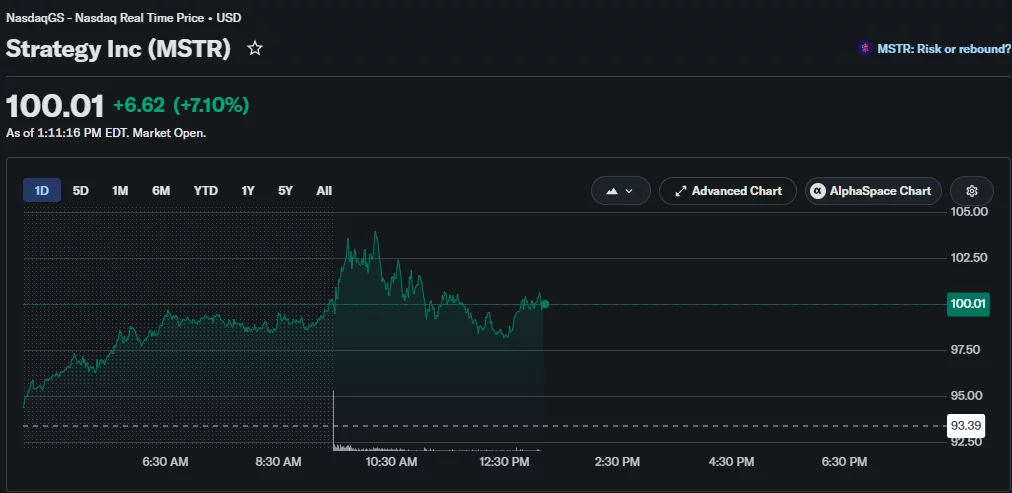
Michael Saylor has highlighted that Strategy’s open interest-to-market-cap ratio has climbed to nearly 72%, far exceeding the levels seen across the largest U.S. technology stocks as MSTR rebounds above $100 alongside Bitcoin’s recovery.
Summary
- Michael Saylor says MSTR’s open interest-to-market-cap ratio has reached nearly 72%, far ahead of major U.S. tech stocks.
- MSTR rebounded above $100 as Bitcoin climbed past $62,000, lifting other crypto-related stocks.
- Bitwise and Wall Street remain positive on Bitcoin despite recent Strategy price target cuts from Canaccord and TD Cowen.
According to a July 2 X post by Strategy co-founder Michael Saylor, MSTR currently carries an open interest-to-market-cap ratio of almost 72%, making it the highest among the companies he compared.
Tesla ranked a distant second at 16%, followed by Meta at 11%, Microsoft at 6.1%, Nvidia at 5.8%, Amazon at 4.4%, Alphabet at 4.2%, and Apple at 3.2%. The comparison comes as investors increase activity around the Bitcoin-focused stock after its recent rebound.
Heavy derivatives positioning has outpaced Big Tech peers
Open interest measures the total number of outstanding derivatives contracts tied to a stock. A high open interest-to-market-cap ratio points to unusually large positioning relative to the company’s size, although the metric alone does not indicate whether traders are betting on gains or losses because it includes both long and short positions.
Recent price action has coincided with the elevated derivatives activity. Yahoo Finance data showed MSTR rising to an intraday high of about $104 after reclaiming the psychologically important $100 level. The stock gained more than 10% during the session and has climbed over 23% from its recent low near $82 over the past five trading days. Even after the rebound, however, MSTR remains down more than 37% over the last six months.
The recovery in Strategy shares came as Bitcoin briefly traded above $62,000 after weaker-than-expected U.S. jobs data improved sentiment across risk assets. Other crypto-linked equities, including Coinbase, Robinhood, Marathon Digital, the iShares Bitcoin Trust, and Hut 8, also recorded notable gains during the session.
Wall Street still sees Bitcoin strength despite lower Strategy targets
Bitwise Chief Investment Officer Matt Hougan pointed to Strategy’s valuation as one of the indicators worth monitoring as investors search for signs that Bitcoin may be approaching a market bottom.
In his latest memo, Hougan wrote that MSTR trading at a discount to its net asset value would be one of the few signals to watch while also discussing Strategy’s recently introduced digital credit framework, under which the company could sell up to $1.25 billion worth of Bitcoin.
Hougan argued that institutional investors are likely to overtake Strategy as the largest buyers of Bitcoin over time. At the same time, he maintained that the company is unlikely to become a forced seller because, in his view, no mechanism currently exists that would require it to liquidate large portions of its Bitcoin holdings.
Commenting on the current weakness in Strategy’s securities, Hougan described the decline in MSTR and STRC as part of Bitcoin’s cyclical process rather than an isolated event.
“This is a painful but necessary part of the current crypto market cycle, as it is with all cycles.”
Wall Street analysts have nevertheless become more cautious on Strategy’s stock valuation. As previously reported by crypto.news, Canaccord lowered its price target on the company to $130 from $163, attributing the revision to Strategy’s prolonged share price decline rather than any change in its long-term Bitcoin outlook. The brokerage said its investment thesis for Bitcoin remains intact despite the lower target.
The Canaccord revision followed another recent adjustment by TD Cowen, which cut its Strategy price target to $260 from $400 while maintaining its Buy rating, indicating that although valuation expectations have been reduced, some analysts continue to back the company’s long-term exposure to Bitcoin.
BlackRock-backed Securitize has become the first newly public company to tokenize its own common stock on the same day it began trading on the New York Stock Exchange.
Summary
- Securitize has tokenized its own NYSE-listed common stock on Solana and Avalanche on its first trading day.
- The company said tokenized SECZ represents the same common shares, not a separate class of stock.
- The listing follows a $400 million SPAC deal as Securitize expands its tokenized real-world asset business.
According to Securitize, the company has launched tokenized versions of its NYSE-listed common stock under the ticker SECZ on the Solana and Avalanche blockchains. Eligible U.S. investors can access the tokenized shares through the firm’s regulated platform, while the stock itself trades publicly on the NYSE following the completion of its business combination with Cantor Equity Partners II.
The company stated that shareholder participation has already made tokenized SECZ the largest tokenized stock globally. It added that bringing its own equity onchain from the first day of public trading demonstrates the regulated infrastructure it has spent years building for tokenized securities.
Tokenized SECZ represents the same NYSE-listed shares
According to Securitize, the blockchain-based SECZ tokens represent the same common stock that trades on the New York Stock Exchange rather than a separate class of shares. The company explained that tokenization changes only the ownership format, while shareholders remain subject to the same legal, contractual, and transfer restrictions that apply to the underlying stock.
Securitize also said it expects to establish an onchain shareholder base from the first day of trading, with additional functionality and market infrastructure expected to develop as regulated tokenized securities continue to mature.
The listing follows shareholder approval of Securitize’s merger with Cantor Equity Partners II. As previously reported by crypto.news, fewer than 30% of the special purpose acquisition company’s shareholders redeemed their shares, leaving more than 71% of the trust intact before the transaction closed.
Last week, Securitize said the deal is expected to generate about $400 million in gross proceeds, including proceeds from related private investment in public equity financing and excluding transaction costs. Crypto.news previously reported that the financing included an oversubscribed $225 million private investment round.
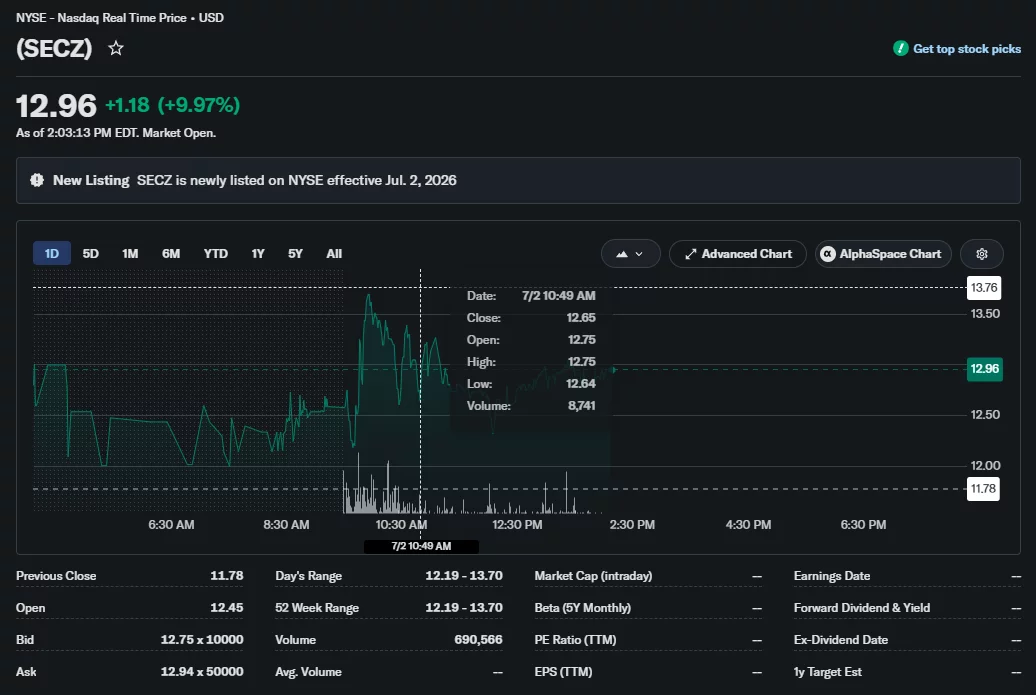
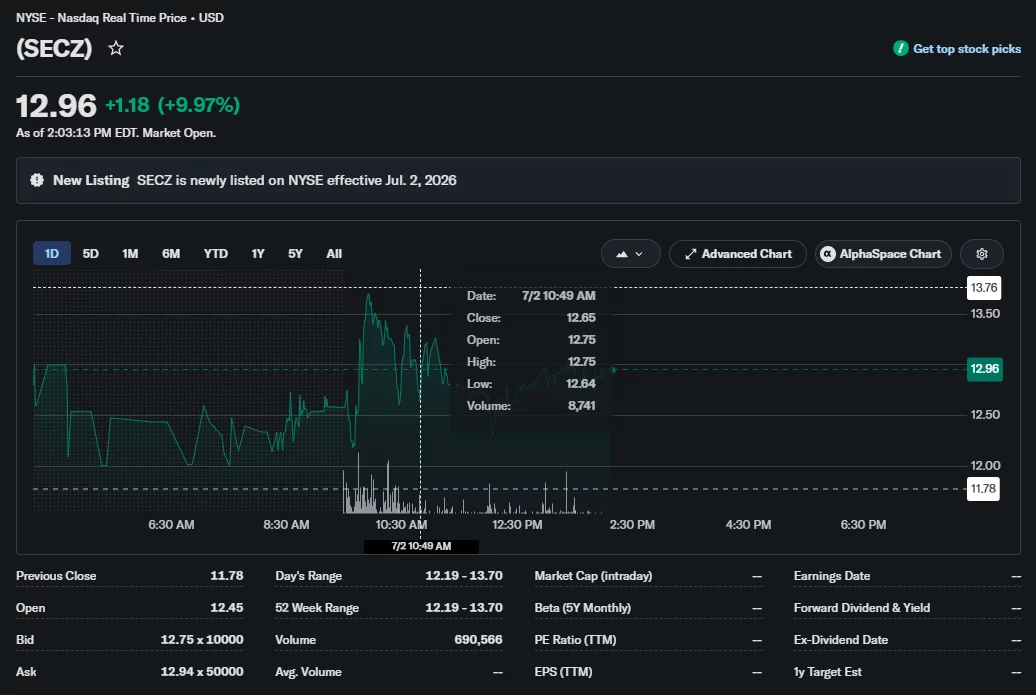
Shares of SECZ climbed by more than 10% during their first trading session, reaching above $12, according to Yahoo Finance. The gains came as Bitcoin rebounded to around $62,000, lifting several publicly traded crypto-related companies alongside the wider digital asset market.
Expansion continues beyond tokenized money market funds
Securitize’s latest move comes as the company continues expanding its tokenized asset offerings beyond money market funds. As previously reported by crypto.news, Ethena Labs plans to allocate $250 million to Securitize’s tokenized AAA-rated collateralized loan obligation fund after the product expanded to Solana.
According to crypto.news, the fund invests in U.S. dollar-denominated AAA-rated collateralized loan obligation tranches, with BNY serving as custodian of the underlying assets and acting as sub-adviser through BNY Investments.
The company has consistently stated that traditional financial assets will increasingly move onto blockchain networks through regulated, issuer-sponsored platforms. By placing its own publicly traded shares onchain at listing, Securitize is applying that approach to its own equity instead of limiting tokenization to third-party assets.
Interest in tokenized traditional financial products has also continued to grow across the asset management industry. As previously reported by crypto.news, firms including BlackRock and Franklin Templeton have expanded their presence in tokenized money market funds, adding momentum to the use of blockchain infrastructure for regulated financial products.
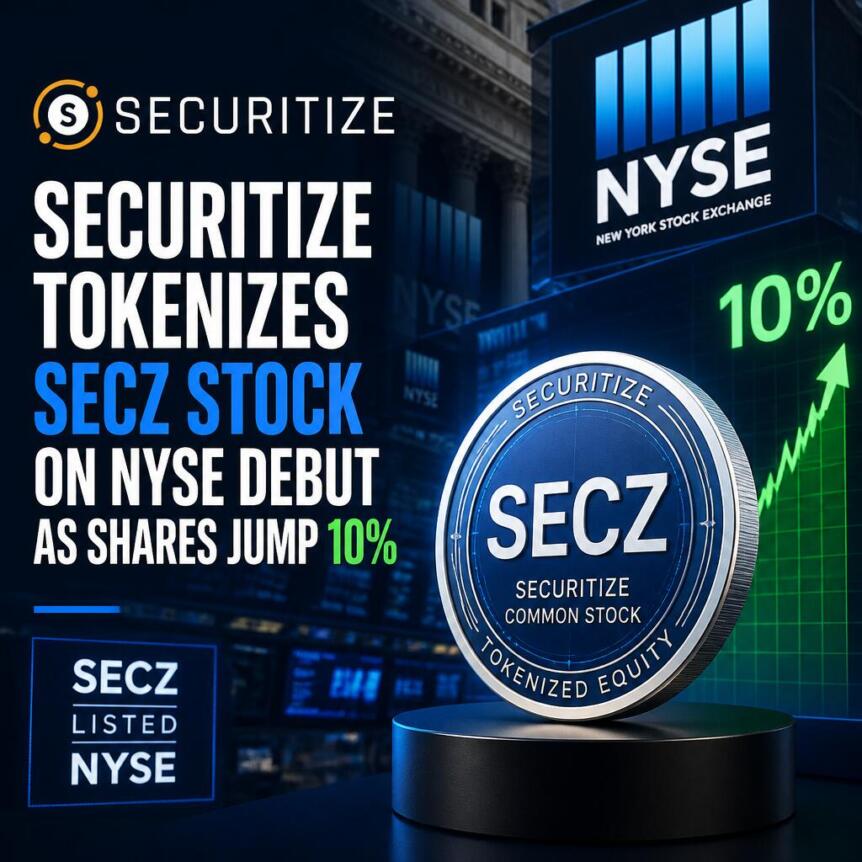
Securitize entered the public market with an onchain push that ties its NYSE debut to tokenized equity. The BlackRock-backed platform tokenized its common stock, SECZ, on Solana and Avalanche as trading began. The move also came as crypto-linked stocks rallied, while Bitcoin recovered to the $62,000 level.
Securitize Brings SECZ Shares Onchain
Securitize launched its tokenized common stock on the same day it listed on the New York Stock Exchange. The company trades under the ticker SECZ after completing its merger process with Cantor Equity Partners II. Therefore, the listing gives the tokenization firm a public-market platform and an onchain equity structure together.
The company made tokenized SECZ available to eligible U.S. users through its regulated platform. It selected Solana and Avalanche for the initial rollout, giving the stock exposure across two major blockchain networks. However, the company said the tokenized version represents the same common stock listed on the NYSE.
Securitize has long built its business around regulated tokenized assets and issuer-led market infrastructure. The company has supported tokenized funds and real-world asset products across public blockchains. As a result, its own stock tokenization marks a direct test of the model it promotes.
Tokenized Stock Keeps The Same Share Rights
Securitize said the tokenized SECZ does not create a separate share class or change the underlying stock. Instead, tokenization changes the form of ownership while the traditional share remains the same. Therefore, legal limits, transfer rules, and contractual restrictions still apply to the equity.
The company expects the launch to create an onchain shareholder base from its first day as a public firm. It also expects future market tools and utility to develop around the tokenized shares. However, the current rollout focuses on regulated access and direct representation of listed common stock.
The launch adds fresh context to the wider tokenization market, which has gained stronger institutional interest. Asset managers and blockchain firms have moved more bonds, funds, and securities onto digital rails. Consequently, Securitize’s public listing places tokenized equity closer to mainstream market infrastructure.
SECZ Stock Rises As Crypto Market Rebounds
SECZ gained more than 10% during its first trading session, according to TradingView data cited in the report. The stock traded near $12 as broader crypto-linked equities also advanced. Meanwhile, Bitcoin’s rebound to around $62,000 helped improve sentiment across the digital asset sector.
The rally followed a stronger session for several companies connected to crypto markets and blockchain infrastructure. Securitize benefited from its public debut and its tokenization announcement on the same day. Moreover, the BlackRock connection added further attention to the company’s market entrance.
The debut also arrived after Cantor Equity Partners II shareholders approved the merger that allowed the listing. That approval cleared the path for Securitize to enter public markets through the transaction. Now, the company has positioned SECZ as both an NYSE-listed stock and a regulated onchain equity product.

First cricket game in new Los Angeles stadium builds Olympic buzz
Form 4 CoreWeave Inc For: 2 July

Donovan Mitchell Condemns Personal Criticism of Jaylen Brown as NBA Executive’s Harsh Take Goes Viral


-

 Fashion6 days ago
Weekend Open Thread: Staud – Corporette.com
-

 Politics7 days ago
The House | Manchesterism won’t survive the painful trade-offs unless it gets citizens on board
-

 Crypto World3 days ago
Strategy authorizes up to $1.25B in Bitcoin sales under new capital plan
-

 Politics7 days ago
Potential 2028er World Cup attendee leaderboard
-

 Business7 days ago
Asia stock markets slide as tech shares slump
-

 News Videos4 days ago
MAJOR BITCOIN & MARKET UPDATE!!!! (MUST WATCH ASAP!!!)
-

 Crypto World5 days ago
Coinbase, Circle Deepen Crypto Stock Losses Despite Resilient S&P 500
-

 Tech3 days ago
Anonymous researcher drops 0-day ‘exploitarium’ repo
-

 Business3 days ago
Australia treasurer says alleged access of prime minister’s bank data ’incredibly concerning’
-

 Crypto World6 days ago
Kraken's xStocks Opens Bending Spoons IPO Registration to EEA Retail
-

 Sports6 days ago
FIH Pro League: India defeat Pakistan 7-1, register biggest win of campaign | Other Sports News
-

 Crypto World7 days ago
Bitcoin Sparks $600M Hourly Liquidations With $65,000 Set To Become Resistance
-

 Tech5 days ago
Bluekit phishing kit adopts browser-in-the-middle for login theft
-
Crypto World6 days ago
Hyperliquid Named on Singapore MAS Investor Alert Register
-

 Tech6 days ago
Russian hackers now target Signal backup recovery keys
-

 Crypto World7 days ago
Tether (USDT) Passes Ether in Market Cap as ETH Drops Toward $1.5K
-

 Crypto World6 days ago
RTX holders must register wallets before token distribution begins
-

 Sports2 days ago
Broncos roster: OL Ben Powers (No. 74) entering final year of contract
-
 Business3 days ago
The AI boom won’t burst all at once. It will pop in ‘rolling bubbles’: Macquarie
-

 Tech5 days ago
Claude Code turned every engineer into three. Now companies need more product thinkers
You must be logged in to post a comment Login